


Search results
Search for "binding" in Full Text gives 989 result(s) in Beilstein Journal of Organic Chemistry. Showing first 200.
Synthesis of novel alkynyl imidazopyridinyl selenides: copper-catalyzed tandem selenation of selenium with 2-arylimidazo[1,2-a]pyridines and terminal alkynes
Beilstein J. Org. Chem. 2022, 18, 863–871, doi:10.3762/bjoc.18.87
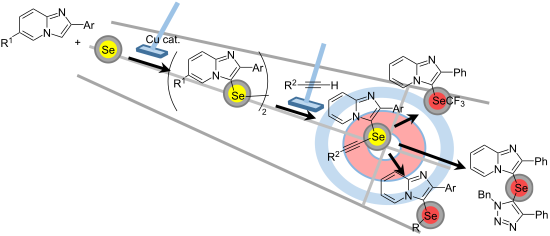
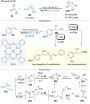
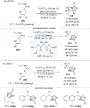
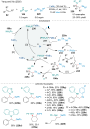
- -alkynylselenides III exhibits a binding interaction between calf-thymus DNA and human serum albumin [13]. Moreover, imidazopyridine derivatives IV with selanyl groups, 3-aryl- or alkylselanylimidazo[1,2-a]pyridines, were reported to act as potential antioxidants and showed antiproliferative activity [14][15


Post-synthesis from Lewis acid–base interaction: an alternative way to generate light and harvest triplet excitons
Beilstein J. Org. Chem. 2022, 18, 825–836, doi:10.3762/bjoc.18.83
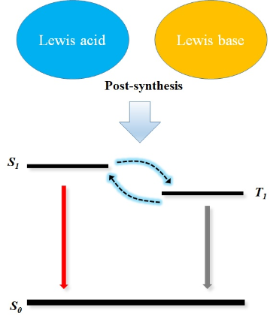
- . synthesized the conjugated polymer F8Py (compound 6 in Figure 5), in which the incorporation of the pyridine co-monomer provides a lone pair of electrons for binding Lewis acids [37]. The formation of acid–base adducts accurately regulated the band gap of the luminescent polymer. The PL spectra in solution
- compound 14 respectively with B(C6F5)3 and B(C6H5)3 by X-ray photoelectron spectroscopy (XPS) [29]. The B(1s) signal showed peaks at 190.61 and 191.08 eV, respectively. This is close to the reported characteristic B–N binding energy (190.5 eV) in B–N crystals. Despite the weak signals of boron in these two
- determined from the optimized structures of compounds 21 and 22 (Figure 13a) by DFT suggest that pyridine is a better binding site than thiophene [43]. The effect of steric hindrance on the Lewis acid–base binding should not be ignored. If there is large steric hindrance of the Lewis basic molecules, it will


The stereochemical course of 2-methylisoborneol biosynthesis
Beilstein J. Org. Chem. 2022, 18, 818–824, doi:10.3762/bjoc.18.82
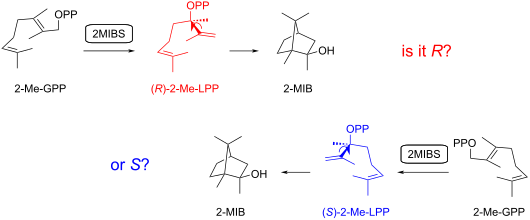
- formation of 1 (Scheme 3). In contrast to the product distribution from (R)-2-Me-LPP with 1 as the main and 10 as a side product of 2MIBS, the hydrocarbon 10 is formed from (S)-2-Me-LPP in slightly larger amounts than 1, which could be explained by an incorrect placing or incomplete binding of the active




Identification of the new prenyltransferase Ubi-297 from marine bacteria and elucidation of its substrate specificity
Beilstein J. Org. Chem. 2022, 18, 722–731, doi:10.3762/bjoc.18.72
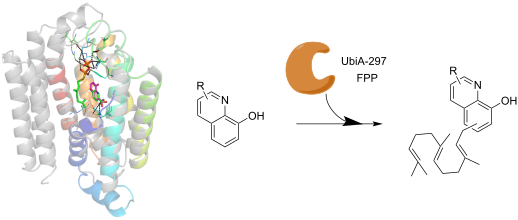
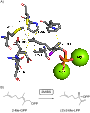
- several transmembrane α-helices and carry a conserved and distinct aspartic-rich Mg2+-binding domain. We heterologously produced UbiA-like Ptases from the bacterial genera Maribacter, Zobellia, and Algoriphagus in Escherichia coli. Investigation of their substrate scope uncovered the preferential
- binding abilities to target proteins [3]. The prenylation reaction, most often a C–C-bond-forming step between an aromatic acceptor moiety and a prenyl chain, is catalyzed by dedicated dominantly membrane-bound prenyltransferases (Ptases) [4][5][6][7]. Ptases belonging to the UbiA-superfamily are
- tyrosine (Tyr-56) residue, which likely fulfills a similar coordinative function. Furthermore, a conserved arginine residue (UbiA-297 R145) was detectable, which was located in the neighboring α-helix (R145) and in proximity to the binding motif, and was hypothesized to be involved in the coordination


Structural basis for endoperoxide-forming oxygenases
Beilstein J. Org. Chem. 2022, 18, 707–721, doi:10.3762/bjoc.18.71
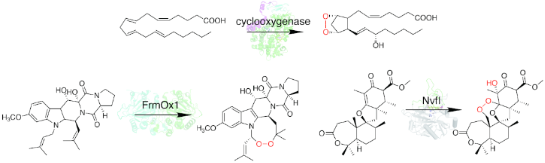
- , including the epidermal growth factor (EGF) domain, the membrane binding domain, and the catalytic domain (Figure 2A) [46][47][48][49][50][51]. The catalytic domain possesses two active sites, the cyclooxygenase- and heme-dependent peroxidase-sites, which are physically separated. The peroxidase-site
- activates the catalytic tyrosine residue, while the cyclooxygenase-site catalyzes the formation of di-peroxides. The active site of the peroxidase-site contains a heme cofactor in the solvent-exposed cleft on the opposite side of the membrane binding domain. Although the heme cofactor is located in the
- , this interaction is not essential in COX-2, suggesting that the hydrophobic interactions between the acyl chain and the active site residues in the cyclooxygenase channel are important for AA binding to COX-2 (Figure 2C) [57][58]. This is one of the major structural differences between COX-1 and COX-2


Heteroleptic metallosupramolecular aggregates/complexation for supramolecular catalysis
Beilstein J. Org. Chem. 2022, 18, 597–630, doi:10.3762/bjoc.18.62
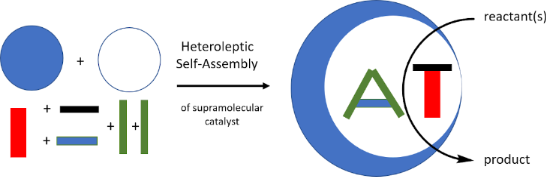
- procedure developed by Sauvage on the basis of topological control [33] has found ample use in the preparation of rotaxane-based machines and devices [34]. A key element is a macrocyclic phenanthroline with an endotopic binding site as it precludes homoleptic complex formation. A further principle
- complexes by Chan using complementary ligand binding [39], sometimes combined with conformational regulation [40], and of Newkome/Li [41] applying mainly geometric complementarity [42]. Clever utilized shape complementarity [21] for building heteroleptic palladium(II) cages whereas Crowley developed a
- procedure to kinetically metastable cages using naked Pd2+ [43][44]. The following selected structures (Figure 1) shall give a flavor of recent achievements in making fascinating heteroleptic structures using dynamic binding motifs. The availability of powerful tools for building heteroleptic aggregates has


Shift of the reaction equilibrium at high pressure in the continuous synthesis of neuraminic acid
Beilstein J. Org. Chem. 2022, 18, 567–579, doi:10.3762/bjoc.18.59
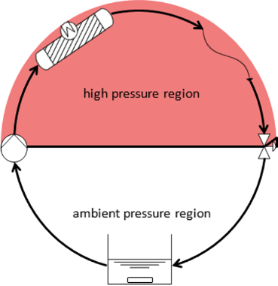
- purposes, six different carriers were used to immobilize the epimerase and aldolase (Table 1). The carriers differ in their properties (size, hydrophobicity, binding type, and porosity). The quality of immobilization was evaluated in terms of enzyme loading, activity, and reusability in repetitive batch
- affinity of pyruvate towards the enzyme (Figure 11). The calculated KM values are 91 ± 45 mM and 37 ± 10 mM at 2 MPa and 115 MPa, respectively. A volume change for the binding of pyruvate to the enzyme of 20 mL/mol was calculated from the change in the Michaelis–Menten constant. The calculated kinetic


Synthesis of a new water-soluble hexacarboxylated tribenzotriquinacene derivative and its competitive host–guest interaction for drug delivery
Beilstein J. Org. Chem. 2022, 18, 539–548, doi:10.3762/bjoc.18.56
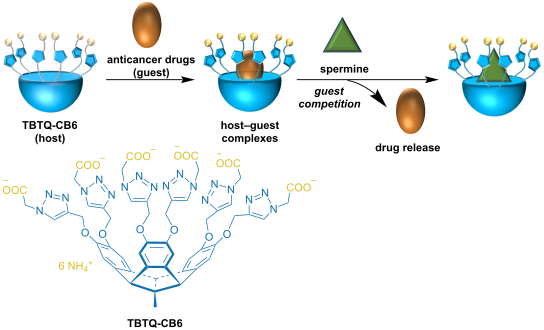
- molecule overexpressed in cancer cells, through host–guest competitive substitution since TBTQ-CB6 has a stronger binding affinity toward SM than MV and DOX. The host–guest interactions of the complexes of TBTQ-CB6 with MV, DOX and SM were investigated by NMR spectroscopy and fluorescence spectroscopy. The
- of the drugs is regulated by competitive binding of the host to some overexpressed tumor biomarker molecules, thus restoring the antitumor bioactivity of the drugs in cancer cells. We designed and synthesized a new water-soluble hexacarboxylated TBTQ derivative, TBTQ-CB6 (Scheme 1), which features a
- TBTQ-CB6DOX. Spermine (SM), an aliphatic polyamine overexpressed in some cancer cells, was expected to exhibit a higher binding affinity to the negatively charged TBTQ-CB6 host, because it exists mainly in a four positively charged form at physiological pH (about 7) [30][31]. Thus, SM was chosen as a





BINOL as a chiral element in mechanically interlocked molecules
Beilstein J. Org. Chem. 2022, 18, 508–523, doi:10.3762/bjoc.18.53
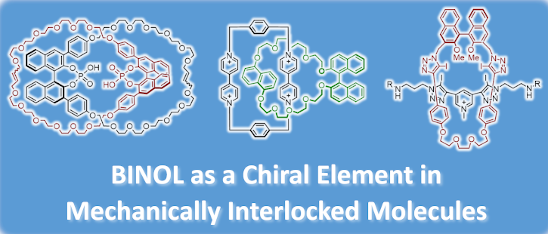
- -workers, with a strong focus on using rotaxanes with halogen-bond (XB) donors that act as binding sites for anionic guest molecules [23]. In 2017, Beer and co-workers reported the synthesis of the BINOL-containing chiral [2]rotaxanes 64 and their application for enantioselective anion recognition [63
- the thread (see Figure 16). The stereoselective binding of chiral anions by rotaxanes 64a/b was studied by 1H NMR titration experiments, using the dicationic macrocycle (S)-61-Me22+ (obtained by methylation of the triazole units in (S)-61) as a reference system. As guest molecules, the Boc-protected
- reaction, namely reaction of bis-amine 66 and bis-acid chloride 67 in the presence of the dicationic axle (S)-65. The resulting rotaxane (S)-68 (37% yield, see Figure 18) features a central chiral BINOL unit with two adjacent binding sites for anions, each made of two iodotriazole-XB donors (on the thread




Bioinspired tetraamino-bisthiourea chiral macrocycles in catalyzing decarboxylative Mannich reactions
Beilstein J. Org. Chem. 2022, 18, 486–496, doi:10.3762/bjoc.18.51
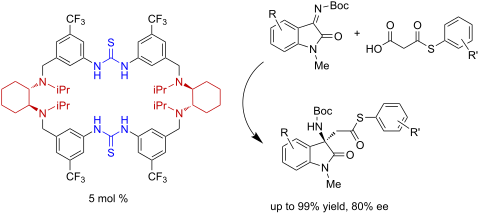
- ][10][11][12][13][14]. Among which, macrocyclic compounds have attracted extensive attentions due to their enzyme-mimicking cavity and preorganized binding sites [4][6][15][16]. Various macrocyclic compounds including the privileged scaffolds like cyclodextrins [17][18][19], calixarenes [20][21][22][23
- anion binding property and potent electrophilic activation ability [31][32][33][34][35][36]. To incorporate extra functionality, tertiary amine groups can be also embedded as Lewis base sites for realizing electrophilic/nucleophilic cooperative catalysis [37][38][39]. For this purpose, one kind of
- the above control experiments, the rigid macrocyclic framework is crucial in organizing the multiple functional sites for cooperative binding and activation. Conclusion In conclusion, a series of multifunctional tetraamino-bisthiourea chiral macrocycles were efficiently synthesized. By using a modular




Tetraphenylethylene-embedded pillar[5]arene-based orthogonal self-assembly for efficient photocatalysis in water
Beilstein J. Org. Chem. 2022, 18, 429–437, doi:10.3762/bjoc.18.45
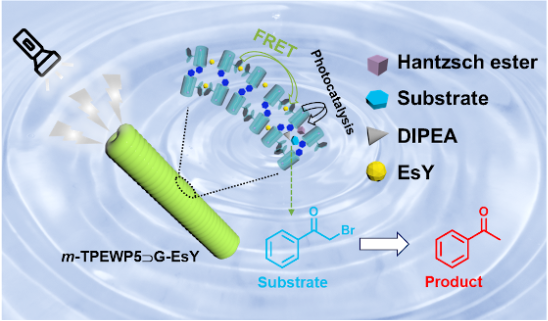
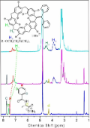
- -TPEWP5 aromatic H1 proton signal shifted to the downfield region, displaying that the guest molecule has a good binding affinity with the m-TPEWP5 host to form a stable host–guest complex. In addition, 2D NOESY NMR (Figure S2 in Supporting Information File 1) was carried out to further confirm the
- enhanced AIE effect [33][34]. To examine the binding stoichiometric ratio of the host–guest complex, Job’s plot [35] method was employed by using fluorescence titration experiments. As shown in Figure S3 (see Supporting Information File 1), the maximum mole fraction was observed at 0.5 (Figure 2b), which
- corresponds to a 1:1 binding stoichiometric ratio between G and m-TPEWP5 in the aqueous solution. Furthermore, the association constant (Ka) [36] was calculated to be 8.62 × 10⁴ M−1 based on the UV–vis titration experiment (Figure S4, Supporting Information File 1). This result further confirmed that the


![[Graphic 5]](/bjoc/content/inline/1860-5397-18-45-i7.svg?max-width=637&scale=1.18182) G-EsY self-assembled photocat...
G-EsY self-assembled photocat...


![[Graphic 15]](/bjoc/content/inline/1860-5397-18-45-i17.svg?max-width=637&scale=1.18182) G; (b) m-TPEWP5
G; (b) m-TPEWP5![[Graphic 16]](/bjoc/content/inline/1860-5397-18-45-i18.svg?max-width=637&scale=1.18182) G-EsY. [m-TPEWP5] = 1 × 10⁻⁴ M, [G] = 1 × 10⁻⁴ M, [EsY] = ...
G-EsY. [m-TPEWP5] = 1 × 10⁻⁴ M, [G] = 1 × 10⁻⁴ M, [EsY] = ...

![[Graphic 25]](/bjoc/content/inline/1860-5397-18-45-i27.svg?max-width=637&scale=1.18182) G donor assembly...
G donor assembly...

![[Graphic 43]](/bjoc/content/inline/1860-5397-18-45-i45.svg?max-width=637&scale=1.18182) G-EsY na...
G-EsY na...

![[Graphic 48]](/bjoc/content/inline/1860-5397-18-45-i50.svg?max-width=637&scale=1.18182) G-E...
G-E...
Site-selective reactions mediated by molecular containers
Beilstein J. Org. Chem. 2022, 18, 309–324, doi:10.3762/bjoc.18.35
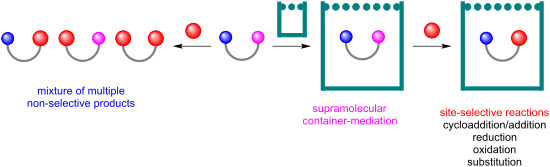
- water solubility, and, on the other hand, these kinds of water-soluble moieties could also be introduced into the structures of other hosts to help them gain some extent of water solubility. In aqueous solution, the molecular containers provide hydrophobic pockets capable of binding a wide range of
- -stoichiometric quantities of hosts because of the product inhibition effect, which arose from the entropic disadvantage of the need for binding two reactant molecules [39][40][41][42][43]. In this particular report, when the octahedral cage host A was used, the Diels–Alder reaction of 9-hydroxymethylanthracene
- promoting effect of the hydrophobic pocket of B. The origin of the catalytic behavior of the bowl host B can be explained by to two main aspects. Firstly, the bowl host B possesses an open cavity that facilitates rapid binding and dissociation of the guests. Secondly and more importantly, before the


Synthesis of novel [1,2,4]triazolo[1,5-b][1,2,4,5]tetrazines and investigation of their fungistatic activity
Beilstein J. Org. Chem. 2022, 18, 243–250, doi:10.3762/bjoc.18.29
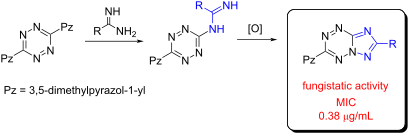
- -annulated tetrazines. These compounds, bearing a large number of heteroatoms in their structures, have additional opportunities for non-covalent bonding with a variety of biological targets. In addition, a high electrophilic character of the tetrazine ring can provide chemical binding to pathogenic objects


New advances in asymmetric organocatalysis
Beilstein J. Org. Chem. 2022, 18, 240–242, doi:10.3762/bjoc.18.28
- by a review article devoted to aza-Michael reactions of amines and amides [17]. The evolution of the understanding of noncovalent activation modes led to the realization that anion-binding is a critical feature in many transformations. Halide anions are highly relevant and widely occurring within
Anomeric 1,2,3-triazole-linked sialic acid derivatives show selective inhibition towards a bacterial neuraminidase over a trypanosome trans-sialidase
Beilstein J. Org. Chem. 2022, 18, 208–216, doi:10.3762/bjoc.18.24
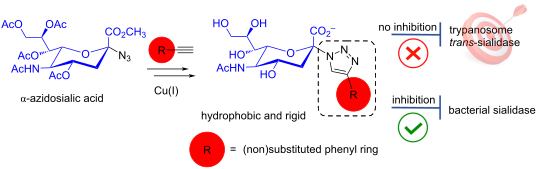
- differentiate both enzymes. Moreover, such selectivity might be reasoned based on a possible steric hindrance caused by a bulky hydrophobic loop that sits over the TcTS active site and may prevent the hydrophobic inhibitors from binding. The present study is a step forward in exploiting subtle structural
- [4]. For instance, hydrophobic pockets in the glycerol- and acetamide-binding subsites have been reported for neuraminidases [10][37] as well as for TcTS, which has a more spacious and hydrophobic active site around C9 of sialic acid [16]. Nonetheless, a simple comparison from the crystal structures
- -Lysine binding [39]. Although PLP is not a reported neuraminidase inhibitor, its main interaction in the active site could be reasoned based on previous results with sialic acid-derived phosphonate analogues. In this regard, it has been suggested that the inhibition of different strains of influenza



The role of chemistry in the success of oligonucleotides as therapeutics
Beilstein J. Org. Chem. 2022, 18, 197–199, doi:10.3762/bjoc.18.22
- forefront of solving these issues, and have introduced many chemically modified nucleotides into oligonucleotides to increase their binding affinity toward RNA targets, and to improve their stability against nucleases to slow down degradation. This strategy has been successful, and most oligonucleotide

Synthesis and late stage modifications of Cyl derivatives
Beilstein J. Org. Chem. 2022, 18, 174–181, doi:10.3762/bjoc.18.19
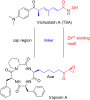
- ]. Three of these enzyme classes (I, II, and IV) contain Zn2+ within the active site, and therefore these enzymes can be affected by typical Zn2+-binding HDAC inhibitors. In cellular systems, an acetylated lysine of a histone is entering the cavity of the active site and gets coordinated to Zn2
- +. Subsequent attack of water forms a tetrahedral intermediate which results in a cleavage of the acetylated lysine. Most HDAC inhibitors act as substrate mimics and contain a zinc-binding motif. They competitively interact with the HDACs to form stable intermediates and therewith block the active site. Many
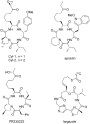
- HDACs [14]. Trichostatin contains a hydroxamic acid as zinc-binding motif, inspiring the design of a wide range of synthetic HDAC inhibitors. The essential Zn2+-binding group is attached to a non-polar linker, delivering it inside the cavity through a narrow channel. The cap region is responsible for



Asymmetric organocatalytic Michael addition of cyclopentane-1,2-dione to alkylidene oxindole
Beilstein J. Org. Chem. 2022, 18, 167–173, doi:10.3762/bjoc.18.18
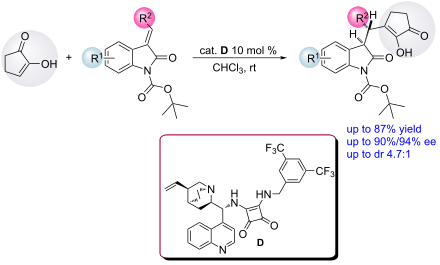
- bifunctional hydrogen-bonding catalyst would activate both CPD via a tertiary amino group of a quinuclidine moiety acting as a base via anion-binding, and an oxindole through the squaramide or thiourea moieties of the catalyst as hydrogen bond donors (Figure 1) [29][30][31][32]. Therefore, squaramide and
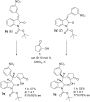
- increase the yield the substrate concentration was varied. A substantial excess of CPD (five equivalents) led to a very slow reaction and a decrease in enantioselectivity (Table 1, entry 8). It was assumed that the binding between CPD and the catalyst was stronger than the binding between the substituted


Synthesis and bioactivity of pyrrole-conjugated phosphopeptides
Beilstein J. Org. Chem. 2022, 18, 159–166, doi:10.3762/bjoc.18.17
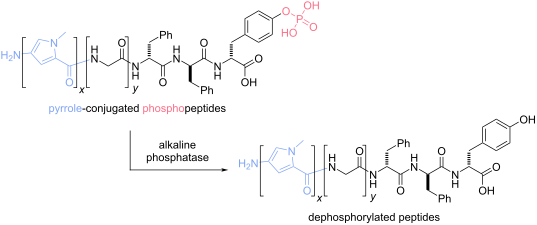
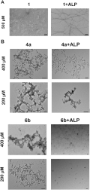
- multiple pyrroles to phosphopeptides. In addition, pyrrole has yet to be incorporated in peptides for EISA, though oligomeric pyrroles have been extensively explored for binding nucleic acids [68]. Based on a naphthyl-capped phosphopeptide (Nap-ffpy, 1), we conjugated heteroaromatic dipyrrole or tripyrrole


Ready access to 7,8-dihydroindolo[2,3-d][1]benzazepine-6(5H)-one scaffold and analogues via early-stage Fischer ring-closure reaction
Beilstein J. Org. Chem. 2022, 18, 143–151, doi:10.3762/bjoc.18.15
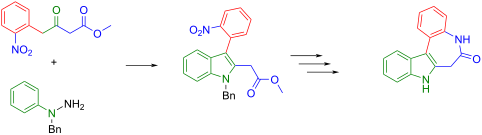
- challenge and practical synthesis is still missing in the literature. Its accessibility may enrich the arsenal of available tools for enzyme inhibitor design by increasing the number of hydrogen bonding donor and acceptor groups at the same side of the backbone, which may result in a tight binding with






Peptide stapling by late-stage Suzuki–Miyaura cross-coupling
Beilstein J. Org. Chem. 2022, 18, 1–12, doi:10.3762/bjoc.18.1
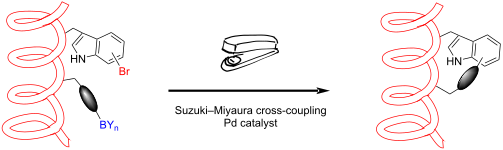
- –Miyaura cross-coupling of bromotryptophan-containing peptides of the catenin-binding domain of axin. Optimisation of the linker length in order to find a compromise between both sufficient linker rigidity and flexibility resulted in a peptide with an increased α-helicity and enhanced binding affinity to
- its native binding partner β-catenin. An increased proteolytic stability against proteinase K has been demonstrated. Keywords: accelerated molecular dynamics; halotryptophan; intrinsically disordered peptides; late-stage diversification; macrocyclisation; molecular dynamics; stapled peptides; Suzuki
- –Miyaura cross-coupling; Introduction Peptide cyclisation emerged as a popular approach to limit conformational mobility in order to enhance the binding affinity towards a biological target. Moreover, cyclic peptides are more stable against proteolytic digestion and can provide an improved membrane


Study on the interactions between melamine-cored Schiff bases with cucurbit[n]urils of different sizes and its application in detecting silver ions
Beilstein J. Org. Chem. 2021, 17, 2950–2958, doi:10.3762/bjoc.17.204
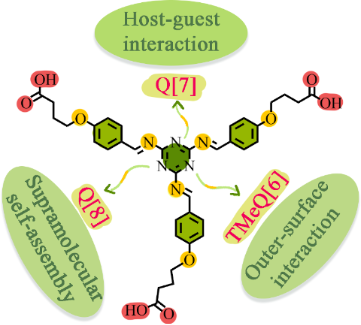
- (Supporting Information File 1, Figure S7), and the corresponding binding ability (Ka) is 1.422 × 10⁶ M−1. The host–guest interaction of Q[8]-TBT Since Q[8] has a larger cavity than Q[7], it can bind the entire TBT molecule like Q[7]. However, in the 1H NMR titration experiment (Supporting Information File 1


Iron-catalyzed domino coupling reactions of π-systems
Beilstein J. Org. Chem. 2021, 17, 2848–2893, doi:10.3762/bjoc.17.196
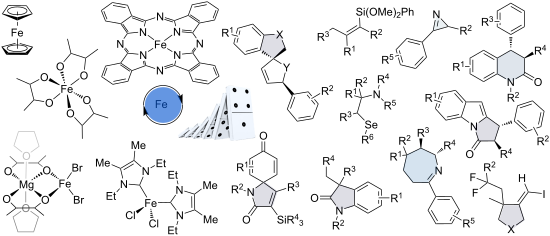
- oxidative addition, transmetallation, and reductive elimination processes. On the other hand, iron may act as a Lewis acid, activating carbon–carbon multiple bonds via π-binding or heteroatoms via σ-complexes. This can either generate the organoiron complex after nucleophilic attack or produce a carbocation













Synthesis of a novel aminobenzene-containing hemicucurbituril and its fluorescence spectral properties with ions
Beilstein J. Org. Chem. 2021, 17, 2840–2847, doi:10.3762/bjoc.17.195
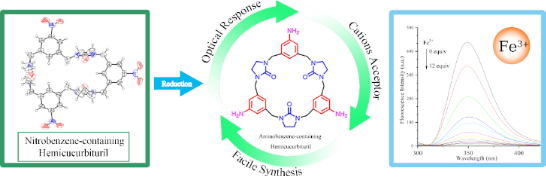
- Macrocycles with converging binding sites and functional groups hold a key position in supramolecular chemistry, which has been repeatedly confirmed by classic macrocyclic molecules, such as crown ethers, cyclodextrins, calixarenes, cucurbiturils and their homologues [1]. For the past decades, numerous
- nm, and found to be Ka = (2.1 ± 0.3) × 104 M−1, while the association constant of compound 4 binding to Cu2+ was Ka = (2.8 ± 0.1) × 103 M−1. The macrocycle binds Fe3+ much more strongly than Cu2+. The host–guest interactions between 4 and selected anions, including Cl−, Br−, I−, PF6−, BF4−, HSO4


Host–guest interaction and properties of cucurbit[8]uril with chloramphenicol
Beilstein J. Org. Chem. 2021, 17, 2832–2839, doi:10.3762/bjoc.17.194
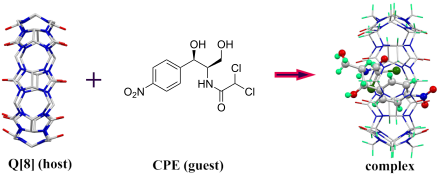
- between the assemblies. Figure 4 and Table 1 show the exothermic isotherms and thermodynamic constants obtained for the titration of CPE with Q[8] interaction using ITC. From the data, it can be seen that the reaction was enthalpy driven and its binding constant was 8.057 × 10⁵ L/mol. 1H NMR spectroscopy
- (CPE) = 30 μmol/L, (c(Q[8])/c(CPE)) = 0, 0.2, 0.4, 0.6, 0.8, 1.0; ··· 2.8), insets in (A, C) are the plot of absorbances at 278 nm of CPE. ITC data obtained for the binding of Q[8] with CPE in an aqueous solution at 25 °C. 1H NMR spectra of CPE, CPE@Q[8] and Q[8] (VD2O/VDCl = 3:2). IR spectra recorded





