Search results
Search for "flash chromatography" in Full Text gives 336 result(s) in Beilstein Journal of Organic Chemistry. Showing first 200.
Multicomponent versus domino reactions: One-pot free-radical synthesis of β-amino-ethers and β-amino-alcohols
Beilstein J. Org. Chem. 2015, 11, 66–73, doi:10.3762/bjoc.11.10
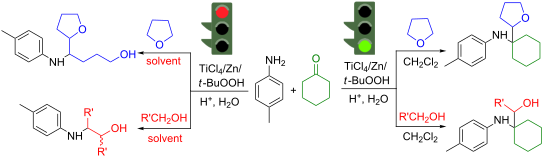
- solution was extracted with EtOAc (3 × 50 mL), and the combined organic layers were dried over Na2SO4 and concentrated in vacuum. Purification of the crude residue by flash chromatography afforded aminoalkylated ethers as the last eluting products. Yields of isolated products are based on the starting


Synthesis and characterization of pH responsive D-glucosamine based molecular gelators
Beilstein J. Org. Chem. 2014, 10, 3111–3121, doi:10.3762/bjoc.10.328
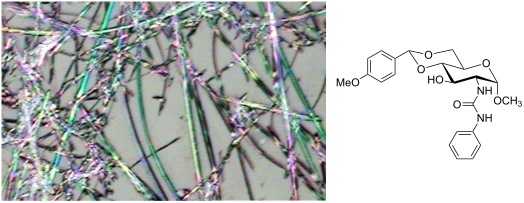
- corresponding acid chloride was added dropwise to the solution. The mixture was left stirring for 6–10 h, after which the mixture was concentrated by using a rotary evaporator. The crude residue was purified by flash chromatography by means of a hexane/DCM/MeOH gradient solvent system. The amide derivatives 7
- the mixture was concentrated by using a rotary evaporator. If needed, the crude products were purified by flash chromatography on silica gel. A DCM/MeOH gradient solvent system was used for the chromatography separation. Compound characterization data Compound 7: Pentylamide, isolated as a white solid




Synthesis of divalent ligands of β-thio- and β-N-galactopyranosides and related lactosides and their evaluation as substrates and inhibitors of Trypanosoma cruzi trans-sialidase
Beilstein J. Org. Chem. 2014, 10, 3073–3086, doi:10.3762/bjoc.10.324
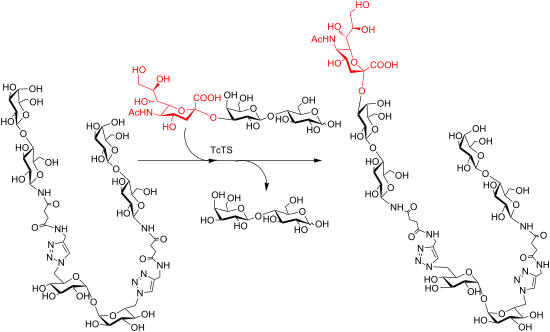
- irradiation during 50 min. The mixture was then poured into a 1:1 H2O/NH4Cl solution (20 mL) and extracted with EtOAc (4 × 15 mL). The organic layer was dried (Na2SO4), filtered, and the solvent was removed under reduced pressure. The residue was purified by flash chromatography, using the solvent system




Synthesis and characterization of a new photoinduced switchable β-cyclodextrin dimer
Beilstein J. Org. Chem. 2014, 10, 2874–2885, doi:10.3762/bjoc.10.304
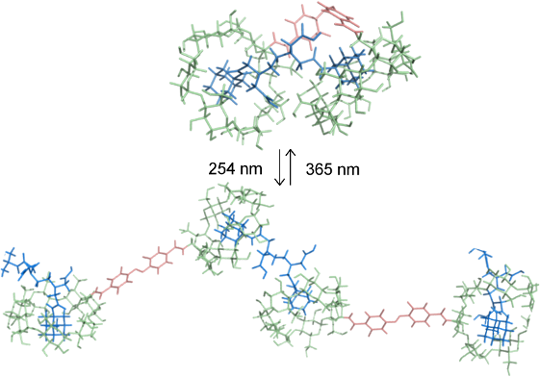
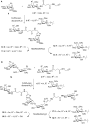
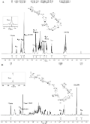
- with a yield of 49% (Scheme 1) [30]. Then, the carboxylic groups were activated by N-hydroxysuccinimide (NHS) and condensed with mono-6-amino-6-deoxy-β-cyclodextrin (β-CD-NH2) [31] in anhydrous DMF at room temperature. Flash chromatography (C18 column, H2O/MeOH 90:10 to 10:90 v/v in 20 min) afforded
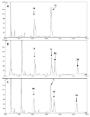
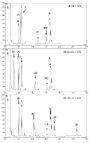
- addition of acetone, then dried under reduced pressure. The product 1 was obtained as an orange powder (m = 4.44 g) with a quantitative yield and an HPLC purity over 98%. Then, the product was purified by flash chromatography (20 min, H2O/MeOH from 90:10 to 10:90 (v/v), 40 mL·min−1) to afford compound 1



Galactan synthesis in a single step via oligomerization of monosaccharides
Beilstein J. Org. Chem. 2014, 10, 2658–2663, doi:10.3762/bjoc.10.279
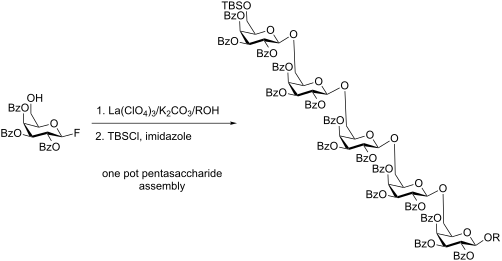
- glycosylation methods, and the rapid access to glycans in a single step is a strength of this approach. All of the oligosaccharides reported here have successfully been separated using routine normal-phase silica gel columns on a commercially available flash chromatography system. The oligomerization described


A new approach for the synthesis of bisindoles through AgOTf as catalyst
Beilstein J. Org. Chem. 2014, 10, 2206–2214, doi:10.3762/bjoc.10.228
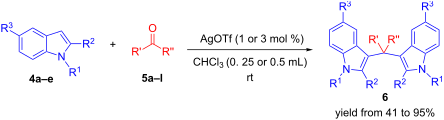
- these interesting and appealing reaction products, for which there is still a continuous demand. Experimental Purification of reaction products was carried out by flash chromatography using silica gel (0.063–0.200 mm). Analytical thin-layer chromatography was performed on 0.25 mm silical gel 60-F plates
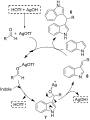
- removed under vacuum. Then, adducts 6 were finally isolated by flash chromatography (SiO2; hexane/EtOAc, 8:2). Yield for each final product is reported in Table 2. Final products should be stored under nitrogen atmosphere and in the fridge. 3,3'-(3-phenylpropane-1,1-diyl)bis(1H-indole) (6ac) Following


Exploration of C–H and N–H-bond functionalization towards 1-(1,2-diarylindol-3-yl)tetrahydroisoquinolines
Beilstein J. Org. Chem. 2014, 10, 2186–2199, doi:10.3762/bjoc.10.226
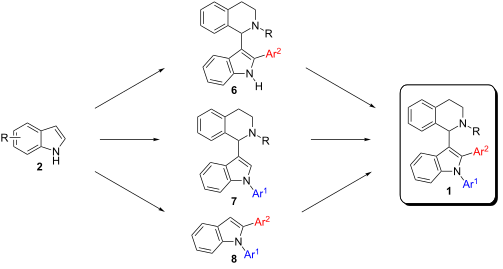
- steric situation. N-Arylation of 4 was initially attempted under the iron-catalyzed N-arylation conditions reported by Bolm [60]. Gratifyingly, the reaction of 4a with iodobenzene afforded product 7a in a good yield of 72% (86% based on re-isolated 4a) after flash chromatography (Table 3, entry 1


Synthesis of 2-substituted tryptophans via a C3- to C2-alkyl migration
Beilstein J. Org. Chem. 2014, 10, 1991–1998, doi:10.3762/bjoc.10.207
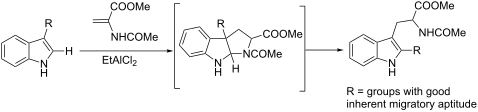
- . The crude product was purified by flash chromatography on silica gel (cyclohexane/ethyl acetate 8:2, or CH2Cl2/methanol 98:2 for 3h, as eluent) and/or crystallization. Friedel–Crafts alkylation of 3-substituted indoles. Optimization of the reaction conditions.a Synthesis of 2-benzyltryptophans 3a–j.a


Reaction of selected carbohydrate aldehydes with benzylmagnesium halides: benzyl versus o-tolyl rearrangement
Beilstein J. Org. Chem. 2014, 10, 1942–1950, doi:10.3762/bjoc.10.202
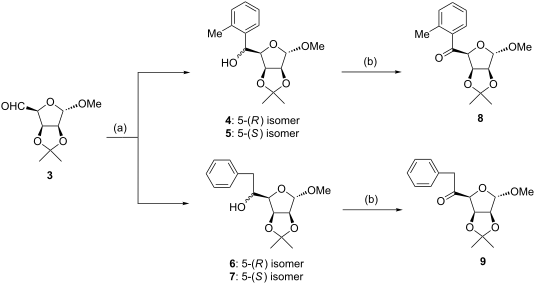
- technique. When reporting assignments of NMR signals, the data for the phenyl moiety are identified by a prime. The EI mass spectra (70 eV) were obtained on a Q-Tof Premier instrument (Waters). Column chromatography was performed as flash chromatography on Silica Gel 60 (E. Merck, 0.063–0.200 mm). The IR


Syntheses of 15N-labeled pre-queuosine nucleobase derivatives
Beilstein J. Org. Chem. 2014, 10, 1914–1918, doi:10.3762/bjoc.10.199
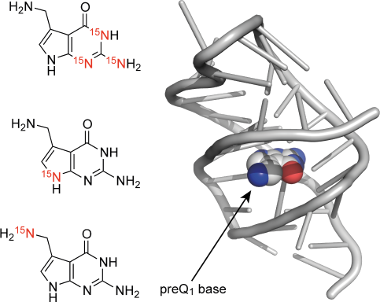
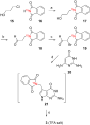
- with hydrazine hydrate. The previously published route [11] recommended N-Boc functionalization of the preQ1 base in the crude reaction mixture to enable flash chromatography on SiO2 followed by cleavage of the auxiliary function, however, although robust in handling, the yields were rather modest. We



Structure/affinity studies in the bicyclo-DNA series: Synthesis and properties of oligonucleotides containing bcen-T and iso-tricyclo-T nucleosides
Beilstein J. Org. Chem. 2014, 10, 1840–1847, doi:10.3762/bjoc.10.194
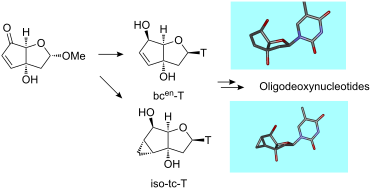
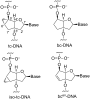
- use of compound 6 as nucleobase acceptor improved the yield of nucleosides 7α,β in general and led to an acceptable β:α = 2.5:1 ratio of anomers. Subsequent saponification of 7α,β (unseparable by flash chromatography) proved to be tricky and after testing a series of standard techniques, only
- treatment with Bu4NOH in a mixed organic/aqueous solvent gave nucleosides 8α,β in good yield. It was at this step where the two anomers could be readily separated by flash chromatography. Continuing with 8β the synthesis of 10 was concluded by standard tritylation (→ 9) and phosphitylation. To extend on the
- ,β in a ratio of β:α = 1.2:1. After standard tritylation of 11α,β the anomeric mixture 12α,β became separable by flash chromatography and the corresponding β-nucleoside 12β could be smoothly converted into the phosphoramidite 13 by standard methods. Structural properties of nucleosides To get an



Sacrolide A, a new antimicrobial and cytotoxic oxylipin macrolide from the edible cyanobacterium Aphanothece sacrum
Beilstein J. Org. Chem. 2014, 10, 1808–1816, doi:10.3762/bjoc.10.190
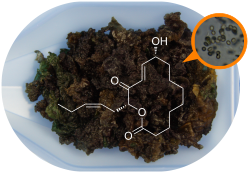
- the availability of genetic resources. Experimental General methods Cosmosil 75C18-PREP (Nacalai Tesque Inc., 75 µm) was used for ODS flash chromatography. NMR spectra were obtained by a Bruker AVANCE 500 spectrometer at 500 MHz for 1H. Residual solvent peaks at δH/δC 7.27/77.0 ppm in CDCl3 were used


One-pot stereoselective synthesis of α,β-differentiated diamino esters via the sequence of aminochlorination, aziridination and intermolecular SN2 reaction
Beilstein J. Org. Chem. 2014, 10, 1802–1807, doi:10.3762/bjoc.10.189
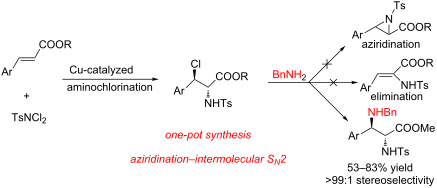
- separated, and the aqueous phase was extracted with ethyl acetate (3 × 10 mL). The combined organic layers were washed with brine, dried over anhydrous sodium sulfate, and concentrated to dryness. Purification by flash chromatography (EtOAc/hexane, from 1:20 to 1:3, v/v) provided final products 5. ORTEP


Convergent synthetic methodology for the construction of self-adjuvanting lipopeptide vaccines using a novel carbohydrate scaffold
Beilstein J. Org. Chem. 2014, 10, 1741–1748, doi:10.3762/bjoc.10.181
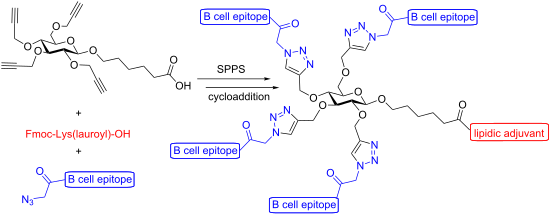
- removed during work-up. The residue was alkylated with sodium hydride and propargyl bromide in dry tetrahydrofuran (THF) to give intermediate 7, which was not isolated. The methoxy ester was hydrolyzed in situ by addition of sodium hydroxide. Acid–base extraction and purification by flash chromatography
- . Treatment of commercially available Fmoc-Lys-OH with lauroyl chloride, in the presence of diisopropylethylamine (DIPEA), gave lipidated Fmoc-lysine (8) in 35% yield after flash chromatography (Scheme 3A). The low yield could be attributed to the formation of a significant amount of a dimeric lysine


Streptopyridines, volatile pyridine alkaloids produced by Streptomyces sp. FORM5
Beilstein J. Org. Chem. 2014, 10, 1421–1432, doi:10.3762/bjoc.10.146
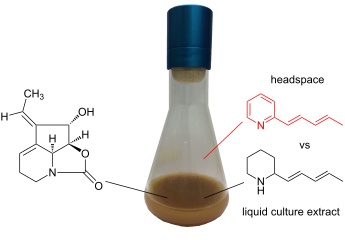
- flash chromatography using Merck silica gel 60 (70–200 mesh). Thin-layer chromatography was performed with 0.2 mm pre-coated polyester sheets (Polygram SIL (G/UV254), Macherey-Nagel). NMR spectra were obtained on either a Bruker DRX-400 (400 MHz) or an AV III-400 (400 MHz) spectrometer and were


Homochiral BINOL-based macrocycles with π-electron-rich, electron-withdrawing or extended spacing units as receptors for C60
Beilstein J. Org. Chem. 2014, 10, 1308–1316, doi:10.3762/bjoc.10.132
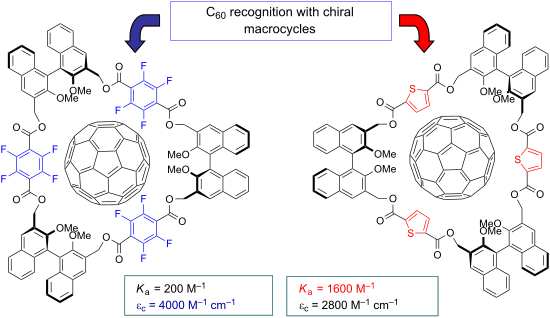
- commercially available plates. Flash chromatography was carried out by using silica gel (pore size 60 Å, 230–400 mesh). 1H and 13C NMR spectra were recorded from solutions in CDCl3 on 200 or 300 MHz spectrometer with the solvent residual proton signal or tetramethylsilane as a standard. The UV–vis
- dry CH2Cl2 under stirring and N2. The solution is stirred overnight, and then H2O (10 mL) is added. The aqueous phase is extracted with CH2Cl2 (3×), the organic phase is washed with H2O (3×) and dried (MgSO4). The products are then purified by flash chromatography. Macrocycles (R,R)-3b and (R,R,R)-4b


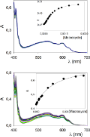
Hindered aryl bromides for regioselective palladium-catalysed direct arylation at less favourable C5-carbon of 3-substituted thiophenes
Beilstein J. Org. Chem. 2014, 10, 1239–1245, doi:10.3762/bjoc.10.123
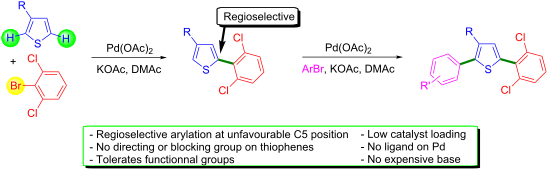
- Bruker GPX (400 MHz). GC was performed on a Shimadzu GC-2014 and GC–MS was performed on a Shimadzu QP-2010S. Chemical shifts are reported in ppm relative to CDCl3 (1H: 7.26 and 13C: 77.0). Flash chromatography was performed on silica gel (230–400 mesh). General procedure for direct arylations The aryl


Stereocontrolled synthesis of 5-azaspiro[2.3]hexane derivatives as conformationally “frozen” analogues of L-glutamic acid
Beilstein J. Org. Chem. 2014, 10, 1114–1120, doi:10.3762/bjoc.10.110
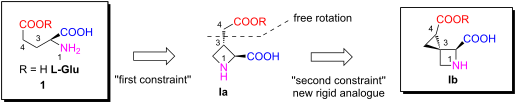
- optimized by replacing step c) CH2N2 (diazomethane) with TMSCHN2 (trimethylsilyl diazomethane). This intermediate was transformed into intermediate 17 by a Horner–Wadsworth–Emmons reaction [23][24], thereby obtaining 17 as the single E-isomer in 68% yield after purification by flash chromatography (Scheme 3
- initial attempts afforded compound 18 in 50% average yield, but also resulted in significant amounts of the undesired byproduct 19 (ratio 18:19 = 4:1 by 1H NMR), a compound difficult to separate by flash chromatography from product 18. Therefore, a thorough optimization of the reaction conditions was
- mixture at 70–90 °C for 2 h, the olefin derivative 18 was isolated in 58% yield after purification by flash chromatography. Notably, under these reaction conditions no formation of the byproduct 19 was observed. After successfully obtaining terminal olefin 18, the efforts were then focused on the


cis–trans Isomerization of silybins A and B
Beilstein J. Org. Chem. 2014, 10, 1047–1063, doi:10.3762/bjoc.10.105
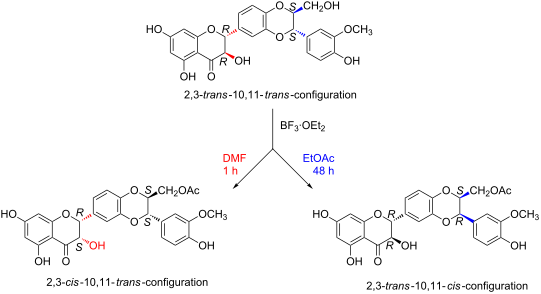
- solution of saturated NaHCO3 (100 mL), and after stirring for 10 min both phases were separated. The aqueous phase was extracted with EtOAc (3 × 50 mL), the combined organic layers were dried (Na2SO4) and evaporated. The residue after flash chromatography (CHCl3/acetone/HCO2H, 97:3:1, twice) yielded title


Visible light mediated intermolecular [3 + 2] annulation of cyclopropylanilines with alkynes
Beilstein J. Org. Chem. 2014, 10, 975–980, doi:10.3762/bjoc.10.96
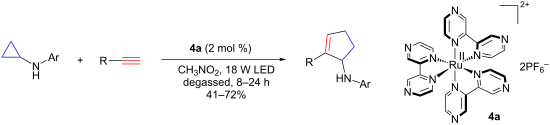
- (18 watts) positioned 8 cm from the test tube. After the reaction was complete as monitored by TLC, the mixture was diluted with diethyl ether and filtered through a short pad of silica gel. The filtrate was concentrated in vacuum and purified by silica gel flash chromatography to afford the desired


Dimerisation, rhodium complex formation and rearrangements of N-heterocyclic carbenes of indazoles
Beilstein J. Org. Chem. 2014, 10, 832–840, doi:10.3762/bjoc.10.79
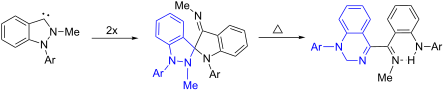
- groups. Heating of the carbene dimer results in the formation of novel quinazolines. Experimental General considerations: All reactions for the dimerisation and the rearrangement were carried out under an atmosphere of nitrogen in oven-dried glassware. Flash-chromatography was performed with silica gel






Domino reactions of 2H-azirines with acylketenes from furan-2,3-diones: Competition between the formation of ortho-fused and bridged heterocyclic systems
Beilstein J. Org. Chem. 2014, 10, 784–793, doi:10.3762/bjoc.10.74

- -diones 2a–c and 3-aryl-2H-azirines 1a–c. A mixture of azirine 1 (1 mmol) and furane-2,3-dione 2 (1 mmol) in anhydrous benzene (5 mL) was refluxed for 0.5–1 h. The solvent was removed in vacuum, and the residue was purified by flash chromatography on silica (eluent petroleum ether/ethyl acetate, 1:1


A novel family of (1-aminoalkyl)(trifluoromethyl)- and -(difluoromethyl)phosphinic acids – analogues of α-amino acids
Beilstein J. Org. Chem. 2014, 10, 722–731, doi:10.3762/bjoc.10.66
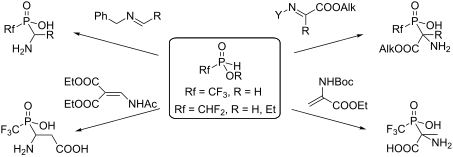
- acetaminomethylenemalonate have been used to prepare the title compounds. Experimental All reactions with P–H compounds were performed under an argon atmosphere. Flash chromatography was carried out using Merck silica gel 60 (230–400 mesh ASTM) and Aldrich ion-exchange resin Dowex WX-50. The NMR spectra were recorded on


Concise, stereodivergent and highly stereoselective synthesis of cis- and trans-2-substituted 3-hydroxypiperidines – development of a phosphite-driven cyclodehydration
Beilstein J. Org. Chem. 2014, 10, 369–383, doi:10.3762/bjoc.10.35
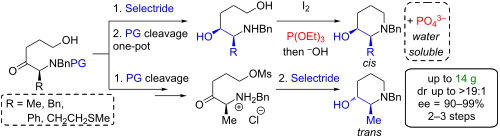
- hydrogen and subsequent Boc-protection in one pot, the diastereomers cis- and trans-16c were easily separated by flash chromatography. Thereby, we found it advantageous to perform the hydrogenolysis in the presence of HCl to protonate the released amine and then induce Boc protection after neutralisation


Synthesis of the B-seco limonoid core scaffold
Beilstein J. Org. Chem. 2014, 10, 194–208, doi:10.3762/bjoc.10.15
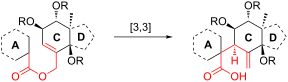
- regioselective opening [60][61] leading to the β-hydroxyketone that was temporarily masked as a TES ether. Reduction of ketone 85 with NaBH4 resulted in the formation of two diastereomeric alcohols in 2:1 ratio. To our delight flash chromatography permitted smooth separation of the two compounds. nOe studies