Search results
Search for "radicals" in Full Text gives 355 result(s) in Beilstein Journal of Organic Chemistry. Showing first 200.
Insertion of [1.1.1]propellane into aromatic disulfides
Beilstein J. Org. Chem. 2019, 15, 1172–1180, doi:10.3762/bjoc.15.114
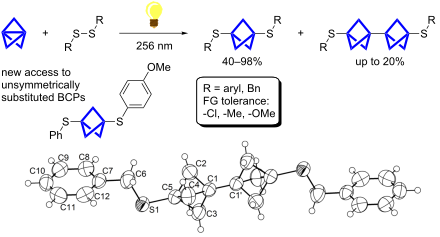
- , which was opened with free radicals in most cases. The reaction with diacetyl and subsequent oxidation leads to the important intermediate bicyclo[1.1.1]pentane-1,3-dicarboxylic acid which provides access to unsymmetrically substituted BCPs (not shown) [13]. It is assumed that the reaction of 1 with
- thiyl radicals is critical to the reaction and most aliphatic disulfides do not absorb UV light at the used wavelength, radical initiators should be taken into account for other disulfides. However, for 12 the reaction was successful without radical initiator and the BCP 13 was obtained as the main
- ]. Presumably, there are two factors contributing to the lowered yield. The bond dissociation energy (BDE) of dialkyldisulfides is higher than the BDE of diaryl disulfides [30]. Therefore lower concentrations of thiyl radicals are present to initiate the reaction. The second reason could be the absorption of


Photochemical generation of the 2,2,6,6-tetramethylpiperidine-1-oxyl (TEMPO) radical from caged nitroxides by near-infrared two-photon irradiation and its cytocidal effect on lung cancer cells
Beilstein J. Org. Chem. 2019, 15, 863–873, doi:10.3762/bjoc.15.84
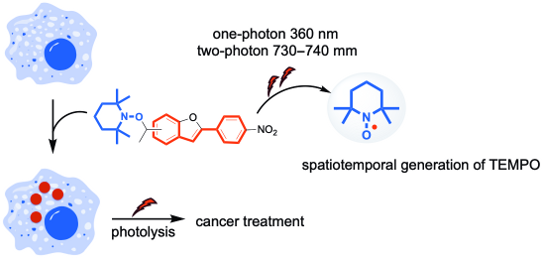
- counterparts (65.8% vs 85.5%). Keywords: caged compound; nitroxide; photolysis; radical; theranostics; two-photon; Introduction Nitroxides (aminoxyl radicals) possess a delocalized unpaired electron and exhibit negligible dimerization reactivity, making them persistent open-shell species [1][2][3][4]. In
- new caged nitroxides (nitroxide donors) 2a and 2b having the TP-responsive NPBF chromophore and the NIR TP-triggered generation of the 2,2,6,6-tetramethylpiperidine-1-oxyl (TEMPO) radical under atmospheric conditions using these species (Scheme 1). Because free radicals are cytotoxic due to their
- strong DNA-damaging activity [65], they play important roles as anticancer therapeutic agents [66]. Among the free radicals, nitroxides including the TEMPO radical have unique properties, where they can act not only as radical scavengers, but also as anticancer agents [67]. Due to the unique properties




A diastereoselective approach to axially chiral biaryls via electrochemically enabled cyclization cascade
Beilstein J. Org. Chem. 2019, 15, 795–800, doi:10.3762/bjoc.15.76
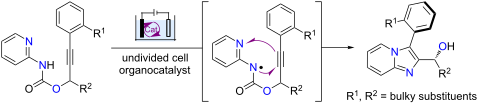
- -centered radicals (NCRs) are attractive reactive intermediates for organic synthesis as they provide opportunities for the efficient construction of C–N bonds [15][16][17][18][19]. Recently, the generation of NCRs through electron transfer-based methods has been attracting attention. Organic




Synthesis of polydicyclopentadiene using the Cp2TiCl2/Et2AlCl catalytic system and thin-layer oxidation of the polymer in air
Beilstein J. Org. Chem. 2019, 15, 733–745, doi:10.3762/bjoc.15.69
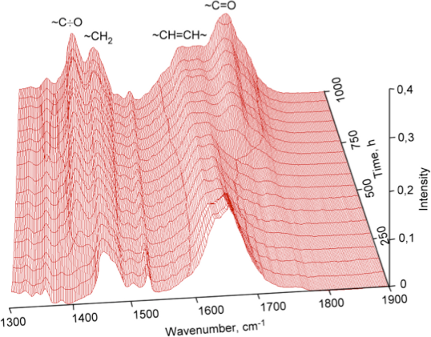
- gradually happen during the exposure time of polydicyclopentadiene thin layers in the air as a result of the oxidation of double bonds. A new vibrational band at 1410 cm−1 in the IR spectrum appears which is originating from the primary radicals which are formed alongside the chain initiation. The kinetics
- deformation vibrations and the layer exposure time in air at ambient temperature. The correlation presented in Figure 10 demonstrates that the kinetics of double bond consumption during oxidation occurs in two stages. During the first stage, the chain (formation of primary radicals) initiates, and then the
- chain process of PDCPD oxidation follows. Various mechanisms of chain initiation are possible, e.g., the formation of primary free radicals initiating the chain reaction of polymer oxidation (Equation 1). More often, the chain initiation step is described as a bimolecular interaction between oxygen and




The LANCA three-component reaction to highly substituted β-ketoenamides – versatile intermediates for the synthesis of functionalized pyridine, pyrimidine, oxazole and quinoxaline derivatives
Beilstein J. Org. Chem. 2019, 15, 655–678, doi:10.3762/bjoc.15.61
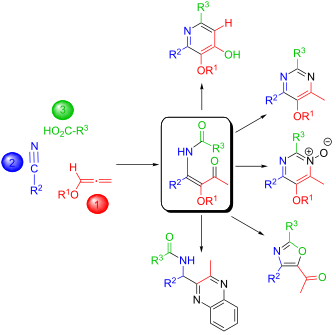
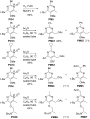
- % yield) and other compounds evidence the participation of radicals [30]. After the efficient conversion of pyrimidine N-oxide PO14 into pyrimidine PM63 no products of this type were isolated. The regioselectivity is another important feature of the Boekelheide rearrangement if alkyl groups are present at




Selective benzylic C–H monooxygenation mediated by iodine oxides
Beilstein J. Org. Chem. 2019, 15, 602–609, doi:10.3762/bjoc.15.55
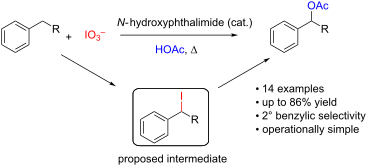
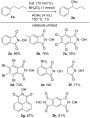
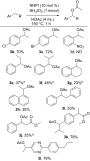
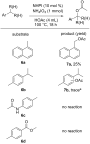
- -iodate system is functioning by a radical-based mechanism where iodine generated in situ captures formed benzylic radicals. The benzylic iodide intermediate then solvolyzes to yield the product ester. Keywords: acetoxylation; benzylic; iodate; NHPI; oxidation; radical; Introduction The ability to
- dyes and transition metal complexes, hypohalous acids, and persulfate anions [12][34][35][36][37][38][39][40]. An important class of catalyzed benzylic C–H to C–O transformations are those catalyzed by N-oxyl radicals. Specifically, N-oxyl radical catalysts based upon the N-hydroxyphthalimide (NHPI
- oxidations occur via a radical pathway mediated in part by chlorine radicals [51]. While the chloride-iodate system was effective in the functionalization of light hydrocarbons and certain model compounds, it exhibited poor functional group tolerance. Oxidation of complex hydrocarbons led to a mixture of




Tandem copper and photoredox catalysis in photocatalytic alkene difunctionalization reactions
Beilstein J. Org. Chem. 2019, 15, 351–356, doi:10.3762/bjoc.15.30
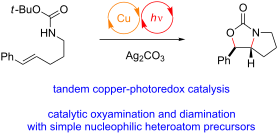
- combines the photoredox activation of electron-rich alkenes with copper(II)-mediated oxidation of electron-rich radicals as described by Kochi [18][19][20]. These studies resulted in the development of a general new protocol for oxyamination (Figure 1a) and diamination (Figure 1b) of alkenes. The mechanism
- with ground-state dioxygen to afford unstable hydroperoxy radicals that can also decompose unproductively [32][33]. Indeed, in our previous study of photocatalytic alkene difunctionalization, we found that dioxygen and similar commonly used terminal oxidants resulted in unproductive decomposition of

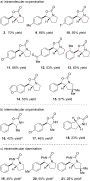
Oxidative radical ring-opening/cyclization of cyclopropane derivatives
Beilstein J. Org. Chem. 2019, 15, 256–278, doi:10.3762/bjoc.15.23
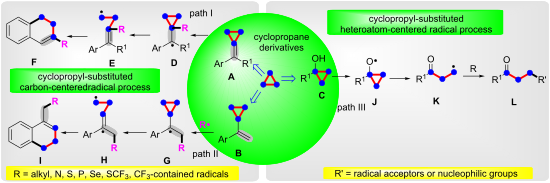
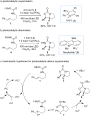
- of sufficient interest for the scientific community to further advance the application of oxidative radical strategies in the ring-opening/cyclization of cyclopropane derivatives. Keywords: cyclopropane derivatives; free radicals; ring-opening/cyclization; Introduction Cyclopropane is a cycloalkane
- several decades [39][40][41][42]. The free radical reaction was applied in a range of organic transformations because of its unique advantages such as excellent reactivity, mild conditions, functional group tolerance, and atom economy. A series of radicals, such as carbon, Se, CF3, halogen, S and N
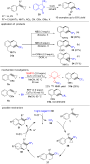
- -containing radicals, were introduced into the products through oxidative radical ring-opening/cyclization of cyclopropane derivatives. In this review, we conclude recent advance in the oxidative radical ring-opening/cyclization of cyclopropane derivatives (including methylenecyclopropanes, cyclopropyl






Adhesion, forces and the stability of interfaces
Beilstein J. Org. Chem. 2019, 15, 106–129, doi:10.3762/bjoc.15.12
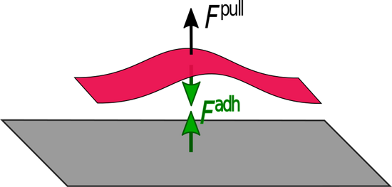
- 950 kJ/mol (N2), and 3) metallic interactions ranging between 65 kJ/mol (Hg) and 850 kJ/mol (W). Ionic and metallic interactions are the interactions in extended systems, mostly solids, whereas covalent interactions are between molecular subsystems (fragments, radicals) at localized positions, mostly


A convenient and practical synthesis of β-diketones bearing linear perfluorinated alkyl groups and a 2-thienyl moiety
Beilstein J. Org. Chem. 2018, 14, 3106–3111, doi:10.3762/bjoc.14.290
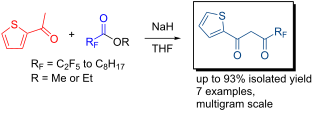
- , Moscow Region, Russian Federation D. Mendeleev University of Chemical Technology of Russia, Miusskaya sq. 9, 125047 Moscow, Russian Federation 10.3762/bjoc.14.290 Abstract A versatile and robust synthetic protocol for the preparation of β-diketones bearing 2-thienyl and perfluorinated alkyl radicals of
- ]. Diketones bearing perfluorinated radicals are very important for the design of highly effective luminescent materials based on lanthanide coordination compounds. Substitution of aliphatic radicals by perfluorinated ones in the molecules of ligands led to a significant increase in luminescence intensity due
- ). To the best of our knowledge, β-diketones with heavier linear perfluorinated radicals (C4–C8) are unknown. During the ongoing project, we needed to synthesize a family of 2-thienyl diketones with various lengths of a perfluorinated side chain. Here we intend to report a versatile and robust practical


Degenerative xanthate transfer to olefins under visible-light photocatalysis
Beilstein J. Org. Chem. 2018, 14, 3047–3058, doi:10.3762/bjoc.14.283

- proceeds through a radical chain mechanism, and thus requires an initial formation of carbon radicals A that add onto olefins 2. The subsequent reaction of the resulting alkyl radicals B with xanthates 1 provides xanthate adducts 3 with generation of carbon radicals A that maintain the radical chain
- , giving 3hb in 69% yield (Table 3, entry 7). This method is also suitable for generating α-aminoalkyl radicals from phthalimidomethyl and succinimidomethyl xanthates [64], as well as α-trifluoromethylamino xanthate 1k [65] to afford desired products 3ib–kb in good to moderate yields (Table 3, entries 8–10



Organometallic vs organic photoredox catalysts for photocuring reactions in the visible region
Beilstein J. Org. Chem. 2018, 14, 3025–3046, doi:10.3762/bjoc.14.282
- with the monomer or a monomer blend. The PI is a component which absorbs light and initiates polymerization alone whereas a photoinitiating system comprises different compounds [8][9][10]. Under irradiation, PI or PIs generate active species: free radicals and/or ions and/or acid. When the active
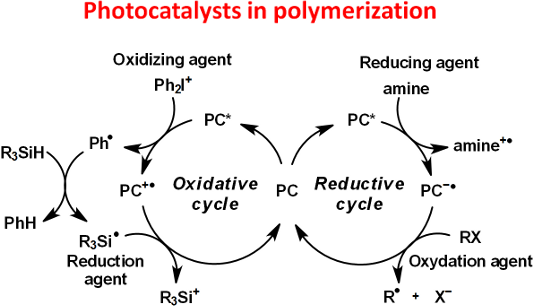
- catalytic cycles used in organic chemistry, the development of photoredox catalysis for photopolymerization reactions has been proposed. It has emerged as a significant innovation in the field of photoinitiated polymerization. Photoredox catalysis is a new strategy to generate radicals and/or cations upon
- named reduction agent, RA2 in Figure 1) by a redox reaction. In a reductive cycle, the PC* reacts first with a reduction agent (in Figure 1, RA1) which leads to PC●− and RA1●+. Then, PC can be regenerated with an oxidation agent (OA2). Radicals and cations are generated in these cycles [16]. As we can



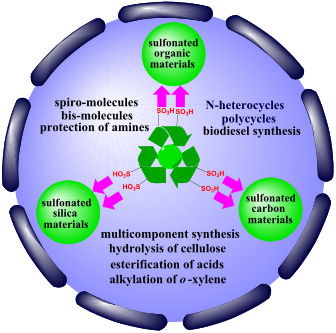
An overview on recent advances in the synthesis of sulfonated organic materials, sulfonated silica materials, and sulfonated carbon materials and their catalytic applications in chemical processes
Beilstein J. Org. Chem. 2018, 14, 2745–2770, doi:10.3762/bjoc.14.253
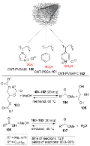
- carbonyl of acetylacetone 90 to form enamine intermediate II. In the next step, hydroxyl radicals are produced through activation of molecular oxygen in the presence of SSA. Intermediate III is created via the addition of a hydroxyl radical to enamine II. This intermediate loses hydrogen radical to form
- intermediate IV. Finally, this intermediate is split by a nucleophilic attack of hydroxyl radicals to afford byproducts (including acetic acid, acetanilide, and formic acid) and desired product. The proposed mechanism was confirmed by EPR spectrum. The SSA catalyst is an inexpensive and reusable solid acid




Learning from B12 enzymes: biomimetic and bioinspired catalysts for eco-friendly organic synthesis
Beilstein J. Org. Chem. 2018, 14, 2553–2567, doi:10.3762/bjoc.14.232
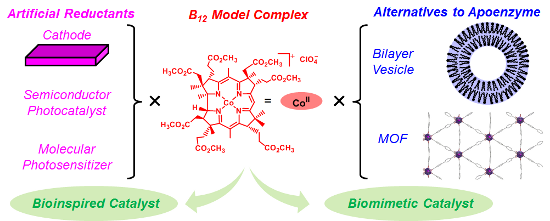
- and has an unpaired electron in the axial dz2 orbital. It acts as a high efficient “radical trap” and reacts with alkyl radicals to yield alkylcob(III)alamin (Figure 1b). Four-coordinated cob(I)alamin has a paired electron in the axial dz2 orbital, resulting in high nucleophilicity with a Pearson
- ligand. B12 is reduced to Co(I) species in the active center by reductases in sustainable processes. The partially π-conjugated system of the corrin ring is less easy to be adducted by free radicals than those of porphyrins. B12 is bound to a number of proteins and acts as a module. Different chemical
- (II) species and an alkyl radical intermediate A [54]. The prolonged lifetime of the radical intermediate A could be provided by the channel of MOF, enabling conversion to the acetyl-migrated radical B. The radicals A and B may abstract hydrogen radicals to form the reduced product and the acetyl


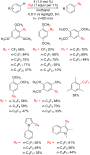
Synthesis of aryl sulfides via radical–radical cross coupling of electron-rich arenes using visible light photoredox catalysis
Beilstein J. Org. Chem. 2018, 14, 2520–2528, doi:10.3762/bjoc.14.228
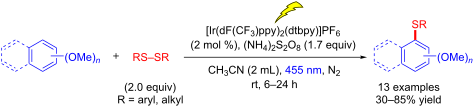
- cleavage has been reported for alkyl and aryl disulfides in an oxidative [44][45][46] and triplet sensitized mechanism [47]. It is also well known in literature that aromatic disulfides are cleaved homolytically under UV irradiation yielding the corresponding radicals [48]. A recent study from Nicewicz


Synthesis of eunicellane-type bicycles embedding a 1,3-cyclohexadiene moiety
Beilstein J. Org. Chem. 2018, 14, 2461–2467, doi:10.3762/bjoc.14.222
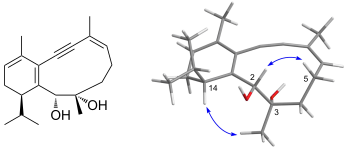
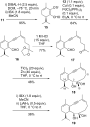
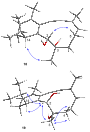
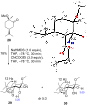
- have also been obtained (TiCl4/Zn [12][13][14][15][16][17] or TiCl3/Zn-Cu [18][19][20]), often as mixture of diastereomers. The use of samarium diiodide to achieve the pinacol coupling was not advised, since we had observed that intially formed ketyl radicals would add to the alkyne moiety [11], even





Cobalt bis(acetylacetonate)–tert-butyl hydroperoxide–triethylsilane: a general reagent combination for the Markovnikov-selective hydrofunctionalization of alkenes by hydrogen atom transfer
Beilstein J. Org. Chem. 2018, 14, 2259–2265, doi:10.3762/bjoc.14.201

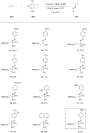
- , and medicinal chemistry [56][57], we investigated the scope of this transformation (Scheme 3). By varying the alkene substitution pattern, we determined that the coupling of tertiary radicals is more efficient than secondary radicals. For example, methallyl p-methoxybenzoate (3a) and prenyl p


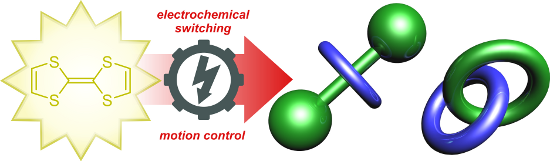
Tetrathiafulvalene – a redox-switchable building block to control motion in mechanically interlocked molecules
Beilstein J. Org. Chem. 2018, 14, 2163–2185, doi:10.3762/bjoc.14.190
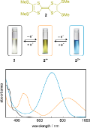
- molecular switch. A first one-electron oxidation [23] converts neutral TTF (1) into the radical-cationic species 1●+ (Figure 1). The TTF radical cation is one of the rare organic radicals that are long-term stable and even isolable. A second oxidation step yields the dication 12+. Both redox-transitions are
- paramagnetic radicals, the resulting dimer has a diamagnetic character due to radical pairing. Although the distance of ≈3.5 Å between the two 1●+ molecules in the dimer is considerably large in comparison to a C–C bond (≈1.5 Å), the interaction can be considered as a type of multi-centered two-electron bond











Hypervalent iodine compounds for anti-Markovnikov-type iodo-oxyimidation of vinylarenes
Beilstein J. Org. Chem. 2018, 14, 2146–2155, doi:10.3762/bjoc.14.188
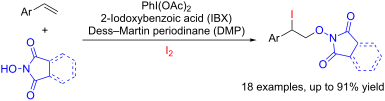
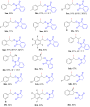
- . It was shown that the iodine atom in the prepared iodo-oxyimides can be substituted by various nucleophiles. Keywords: free radicals; hypervalent iodine; imide-N-oxyl radicals; iodination; N-hydroxyimides; oxidative functionalization; Introduction The presented work opens a new chapter in the
- chemistry of N-hydroxyimides in combination with hypervalent iodine compounds with formation of imide-N-oxyl radicals. These radicals were used as reagents for the addition to a terminal position of the double bond of styrenes with subsequent iodination of the resulting benzylic radical. It is important to
- note, that nitroxyl radicals are widely used in organic and biological chemistry, and in material design [1][2][3]. These radicals are applied in the development of monomolecular magnets [4][5], spintronics [2][6], magneto-LC effect studies [7][8], organic voltaic cells [9], electrodes for




Functionalization of graphene: does the organic chemistry matter?
Beilstein J. Org. Chem. 2018, 14, 2018–2026, doi:10.3762/bjoc.14.177
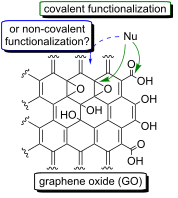
- plausibly followed by a reaction between the generated radical species (Figure 7, step c), which is based on the addition of aryl radicals to the graphene sheet. One common approach is to conduct such a functionalization in an organic solvent and to use amyl or isoamyl nitrite to generate the diazonium salt
- formation of phenolic compounds from the aryl radicals (Figure 7, step d); this formation can be considered to take place before the desired SET process with the graphene sheet (Figure 7, step b). Importantly, it has been well documented that carbon materials are some of the best known adsorbents of


β-Hydroxy sulfides and their syntheses
Beilstein J. Org. Chem. 2018, 14, 1668–1692, doi:10.3762/bjoc.14.143
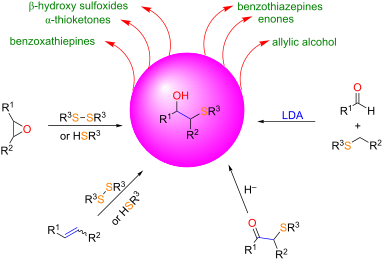
- alkyl radicals than the corresponding diaryl disulfides and benzyl radicals, respectively, are presumed to be the reasons behind the failure of the reaction to work with aliphatic alkenes [67]. 3.3. Synthesis of masked β-hydroxy sulfides via difunctionalization of alkenes Alkenes are versatile


Visible light-mediated difluoroalkylation of electron-deficient alkenes
Beilstein J. Org. Chem. 2018, 14, 1637–1641, doi:10.3762/bjoc.14.139

- with blue light is described. The reaction involves radical addition of 1,1-difluorinated radicals at the double bond followed by hydrogen atom transfer from sodium cyanoborohydride. Keywords: difluoroalkylation; organofluorine compounds; radical addition; visible light; Introduction Applications of
- fluorinated alkyl radicals is typically realized either by single-electron reduction or by radical abstraction of iodine [41][42][43]. Furthermore, the carbon–iodine bond is prone to homolytic cleavage under UV irradiation [44]. In this regard, we were inspired by the work of Ryu describing the use of
- decreased reactivity of the sulfone double bond toward fluorinated radicals. In this case, two equivalents of the alkene have to be used to achieve good yields of products 3t,u. It should also be pointed out that the reaction tolerates aromatic bromide substituents (products 3b,c,n,o), a boryl fragment


Glycosylation reactions mediated by hypervalent iodine: application to the synthesis of nucleosides and carbohydrates
Beilstein J. Org. Chem. 2018, 14, 1595–1618, doi:10.3762/bjoc.14.137
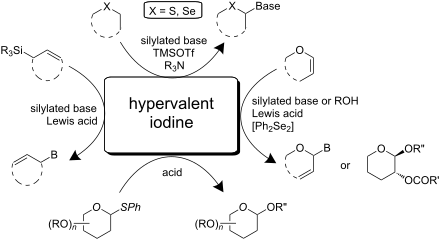
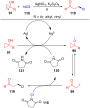
- out by treatment with diacetoxyiodobenzene and iodine under irradiation with visible light to give acetoxy acetals 130 and 131 in good yields with high stereoselectivities. As shown in Scheme 17, the reaction was expected to proceed via the formation of anomeric alkoxyl radicals, which underwent


Phosphoramidite building blocks with protected nitroxides for the synthesis of spin-labeled DNA and RNA
Beilstein J. Org. Chem. 2018, 14, 1563–1569, doi:10.3762/bjoc.14.133
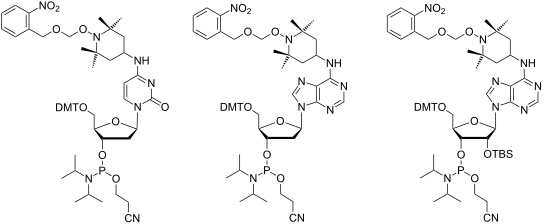
- could be incorporated by unmodified standard procedures into four different self-complementary DNA and two RNA oligonucleotides. After photochemical removal of the protective group, elimination of formic aldehyde and spontaneous air oxidation, the nitroxide radicals were regenerated in high yield. The
- hydroxylamines spontaneously reacted with air to form the nitroxide radicals in high yield [43]. Although the rigid spin labels introduced by Sigurdsson [31][32][33], Hopkins [27][29] and Engels [20][21] are generally considered advantageous for EPR studies, TEMPO-modified RNAs according to structures 1 and 3
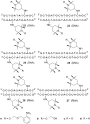
- heating to 90 °C. This step also completes the conversion of hemiacetals into nitroxide radicals 22c–27c in all cases. It should be noted, however, that palindromic duplexes may coexist in equilibrium with monomeric hairpin structures (see below). HPLC measurements gave no evidence for the formation of



Hypervalent organoiodine compounds: from reagents to valuable building blocks in synthesis
Beilstein J. Org. Chem. 2018, 14, 1508–1528, doi:10.3762/bjoc.14.128
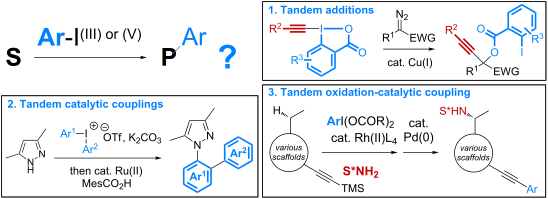
- (Scheme 4b). The intermediate Cu–Bpin, then, could undergo an oxidative addition into the CF3–I bond to give 8 that, after a CF3 radical transfer, would afford the radicals 9 and 10. Radical recombination followed by reductive elimination would finally lead to the E-product and regenerate the Cu–Bpin