Search results
Search for "red" in Full Text gives 1140 result(s) in Beilstein Journal of Organic Chemistry. Showing first 200.
Catalytic multi-step domino and one-pot reactions
Beilstein J. Org. Chem. 2024, 20, 254–256, doi:10.3762/bjoc.20.25

- in the Full Research Paper by Nath and co-workers. The newly synthesized porphyrin derivatives displayed significant red-shifted absorption and emission compared to simple meso-tetraarylporphyrins [14]. The Carlone group reports an Enders-type triple cascade reaction toward cyclohexenals, using

Photochromic derivatives of indigo: historical overview of development, challenges and applications
Beilstein J. Org. Chem. 2024, 20, 228–242, doi:10.3762/bjoc.20.23
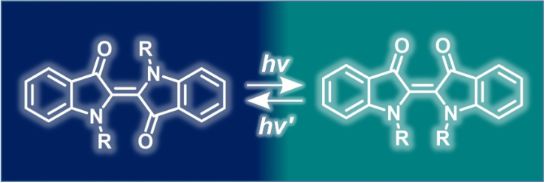
- to the presence of the electron-withdrawing ester groups. Importantly, only the Z-form of 18c was found to be stable enough with a half-life of 2.8 min at room temperature in acetonitrile (77% of Z-isomer in PSS) and 4.1 minutes in toluene (91% of Z-isomer in PSS) after irradiation with red light
- , recently attracted increased attention as red-light photoswitches. The investigation of the photophysical properties of these compounds began in 2017 with the work by Hecht, Jacquemin and co-workers [42]. In their study, a series of symmetrical as well as unsymmetrical N,N'-diaryl-substituted indigos 19a–h
- the existence of the isomeric mixtures in the dark state. Interestingly, the initial E/Z ratio was restored when the compounds were left in darkness after irradiation with red light (660 nm). The time required for the restoration of the initial state varied from 58 s (in the presence of electron





Optimizations of lipid II synthesis: an essential glycolipid precursor in bacterial cell wall synthesis and a validated antibiotic target
Beilstein J. Org. Chem. 2024, 20, 220–227, doi:10.3762/bjoc.20.22
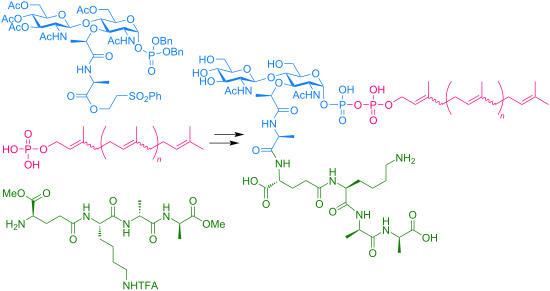
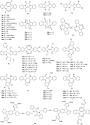
- in red and antimicrobial-binding motifs highlighted with blue arcs. R1 = H or Ac; R2 = H or Ac; R3 = OH, OMe or NH2; R4 = H or COOH; R5 = Gly5, Ala2, Ala-Ser/Ala or ᴅ-Asp; R6 = OH, OMe or NH2. These structural modifications are described in detail by Münch and co-workers [9]. For more details on


Perspectives on push–pull chromophores derived from click-type [2 + 2] cycloaddition–retroelectrocyclization reactions of electron-rich alkynes and electron-deficient alkenes
Beilstein J. Org. Chem. 2024, 20, 125–154, doi:10.3762/bjoc.20.13
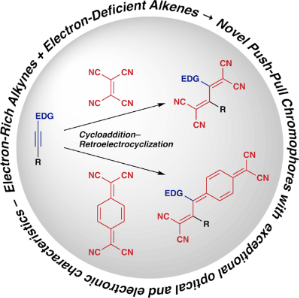
- shoulder emission at 612 nm. When the solvent was changed from toluene to benzonitrile and the polarity of the solvent increased, the emission at 612 nm remained almost unchanged, while the emission at 675 nm significantly quenched with a red shift of 35 nm. In the transient absorption spectra of 60 in


Photoinduced in situ generation of DNA-targeting ligands: DNA-binding and DNA-photodamaging properties of benzo[c]quinolizinium ions
Beilstein J. Org. Chem. 2024, 20, 101–117, doi:10.3762/bjoc.20.11
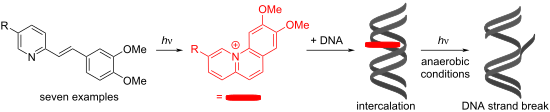
- derivatives 2b–g showed a slight bathochromic shift mostly in the range of λmax = 333–360 nm, whereas for the nitro-substituted compound 2a a stronger red shift of the absorption maximum was observed, presumably caused by the strong electron-withdrawing property of the nitro group resulting in a more
- general, the absorption maximum of the derivatives 2b–g decreased during the photoreaction with formation of new red-shifted absorption bands. Nevertheless, the new red-shifted absorption band of the amino-substituted styryl derivative 2b in MeCN was weak and very broad, indicating only negligible
- (cf. Supporting Information File 1, Figures S3C–S6C) than in polar, aprotic MeCN solution. In MeOH the photoreactions were inefficient as indicated by the lack of red-shifted bands or by formation of broad, weak absorption bands (cf. Supporting Information File 1, Figures S1, S2A, S3A, S4A, S5A, and




Electron-beam-promoted fullerene dimerization in nanotubes: insights from DFT computations
Beilstein J. Org. Chem. 2024, 20, 92–100, doi:10.3762/bjoc.20.10
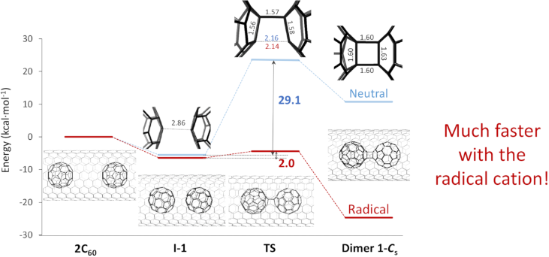
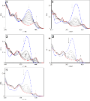
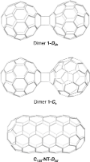
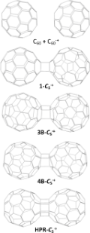
- barriers are in kcal mol−1 and distances of the most relevant bonds for the different structures are represented in Å in a zoomed image. Energy profile for C60 + C60+• radical dimerization (phase 1) computed with the periodic (P) approximation (plane waves, VASP) is represented in red, while energy




Optimizing reaction conditions for the light-driven hydrogen evolution in a loop photoreactor
Beilstein J. Org. Chem. 2024, 20, 74–91, doi:10.3762/bjoc.20.9
- operation of the reactor design concept of a guided inner circulation around the draft tube. Figure 4 shows the red channel values of ROIs for the mixing experiments with different stirring speeds (430, 560, 740, and 860 rpm). The mixing time in the draft tube only slightly depends on the stirring speed
- shot under red light, which matched the absorption properties of the dye, to obtain optimal optical visualization. Digital images extracted from videos (see Supporting Information File 2) were processed with the Python OpenCV package to quantify the mixing time (see Supporting Information File 3
- , Python code) by following the color evolution in the videos from red towards black under the red-light environment [49]. ROI used as the working zone were defined on the images when these were processed to quantify the mixing time. The three rectangles shown in Figure 3 on frame at 1.2 s showed the


Multi-redox indenofluorene chromophores incorporating dithiafulvene donor and ene/enediyne acceptor units
Beilstein J. Org. Chem. 2024, 20, 59–73, doi:10.3762/bjoc.20.8
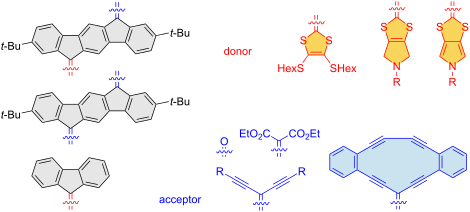
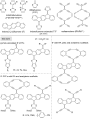
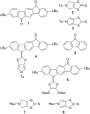
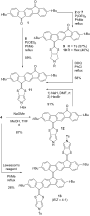
- ) and 2 (176 mg, 534 μmol) in anhydrous toluene (5 mL) and P(OEt)3 (10 mL) was heated to reflux for 5 h, resulting in a color change from orange to dark red. The reaction mixture was then allowed to cool to rt before it was concentrated under reduced pressure. The resulting dark red solid was purified
- % CH2Cl2/heptane) yielded 19 (62 mg, 66%) as a purple solid (red in solution). Rf = 0.31 (15% CH2Cl2/heptane); 1H NMR (500 MHz, CDCl3) δ 9.07 (s, 1H), 8.81 (d, J = 1.7 Hz, 1H), 7.91 (s, 1H), 7.76 (d, J = 1.7 Hz, 1H), 7.72 (d, J = 8.0 Hz, 1H), 7.65 (d, J = 8.0 Hz, 1H), 7.41 (dd, J = 8.0, 1.7 Hz, 1H), 7.37
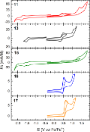
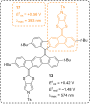
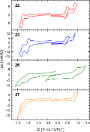
- orbitals), the dianion has an additional 6π-aromatic cyclopentadienyl anion (highlighted in green), while the cation has a 6π-aromatic 1,3-dithiolium ring (highlighted in red). ORTEP plots (50% probability) and crystal packing of compounds a) 25, b) 26, and c) 29. The respective crystal packing of each





Preparing a liquid crystalline dispersion of carbon nanotubes with high aspect ratio
Beilstein J. Org. Chem. 2024, 20, 52–58, doi:10.3762/bjoc.20.7
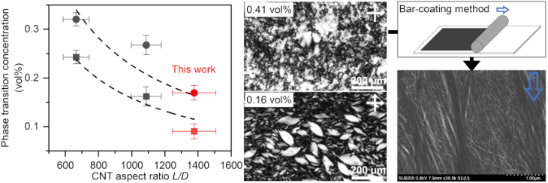
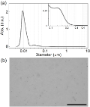
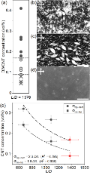
- %, respectively, as shown in Supporting Information File 1, Figure S3, which were lower than those previously obtained in the surfactant-assisted SWCNT aqueous dispersions [22][23]. Figure 2e shows the phase transition concentrations obtained in this study (L/D = 1378, red symbols) together with the previously
- examined using scanning electron microscopy (SEM) (HITACHI High-Tech, SU8200) and atomic force microscopy (AFM) (OLYMPUS, OLS-4500). Additionally, the ζ-potential of the DWCNTs was determined by measuring the ζ potential analyzer (Malvern Panalytical, ZETASIZER Pro Red label) in a disposable cell (Malvern
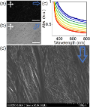
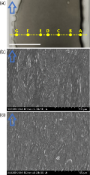
- polarizers (white double arrows). Scale bars are 400 µm. (c) Polarized optical absorption spectra with different angles ranging from 0° (red) to 90° (blue). The sear direction and polarizer are parallel at 0°. (d) SEM image of the DWCNT film. Blue outlined arrows indicate the shear direction of bar-coating


Facile access to pyridinium-based bent aromatic amphiphiles: nonionic surface modification of nanocarbons in water
Beilstein J. Org. Chem. 2024, 20, 32–40, doi:10.3762/bjoc.20.5
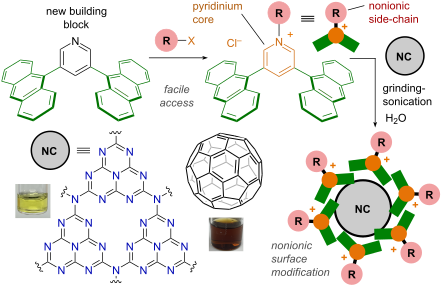
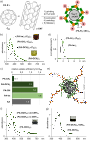
- similar to AA [12][13], indicating self-assembly via the hydrophobic effect and π-stacking interactions (Figure 3a,b). The self-assembly in water was further supported by UV–visible analysis, displaying slight red-shifts of the anthracene absorption bands relative to the spectrum in methanol (Δλmax = +3




Aldiminium and 1,2,3-triazolium dithiocarboxylate zwitterions derived from cyclic (alkyl)(amino) and mesoionic carbenes
Beilstein J. Org. Chem. 2023, 19, 1947–1956, doi:10.3762/bjoc.19.145
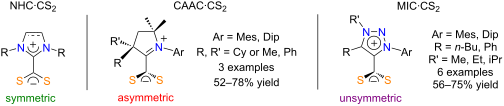
- instantaneous formation of the desired zwitterionic adducts, as evidenced by the appearance of an intense orange-red color. The solvent was removed and the residues were brought back to air, washed with n-pentane, and dried under high vacuum to afford pseudo-cross-conjugated mesomeric betaines 4a–c in high
- affinity and the higher basicity of CAACs and MICs vs NHCs [25][69][70][71] did not prevent the formation of the desired adducts using Cs2CO3 instead of KN(SiMe3)2 or NaOt-Bu, as evidenced by the appearance of revealing orange-red colors and by the emergence of a characteristic resonance for the CS2− unit
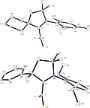
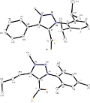
- . Crystallography Crystals of CAAC·CS2 zwitterions 4a and 4c suitable for X-ray diffraction (XRD) analysis were grown by slow diffusion of cyclohexane in a THF solution at 6 °C. Their molecular structures are depicted in Figure 3. The orange-red needles of compound 4a belonged to the trigonal space group, while


Studying specificity in protein–glycosaminoglycan recognition with umbrella sampling
Beilstein J. Org. Chem. 2023, 19, 1933–1946, doi:10.3762/bjoc.19.144
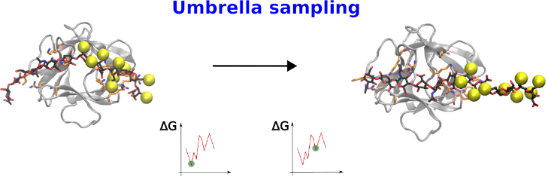
- ). Graphical representation of the ligands’ starting (in red, licorice) and final (in blue, licorice) positions in regard of the binding site of basic fibroblast factor (in yellow, new cartoon). Graphical representation of the ligand’s starting (in red, licorice) and final (in blue, licorice) poses in regard
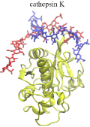
- of the binding site of acidic fibroblast factor (in yellow, new cartoon). Graphical representation of the ligand 4 starting (in red, licorice) and final (in blue, licorice) position in regard of binding site of cathepsin K (in yellow, new cartoon). Comparison of the last frame of the US simulation




Beyond n-dopants for organic semiconductors: use of bibenzo[d]imidazoles in UV-promoted dehalogenation reactions of organic halides
Beilstein J. Org. Chem. 2023, 19, 1912–1922, doi:10.3762/bjoc.19.142
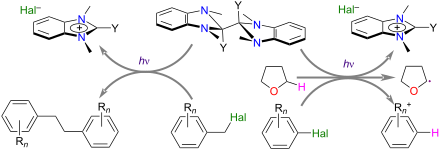
- representative temporal evolution of % conversion (blue squares), % toluene yield (red diamonds), and % bibenzyl yield (black circles) during the dark dehalogenation reaction of benzyl bromide (BnBr) using (N-DMBI)2 in THF (these data were acquired using 3 mM BnBr and 1.5 mM of (N-DMBI)2. (b) Plot of [D2]0


Biphenylene-containing polycyclic conjugated compounds
Beilstein J. Org. Chem. 2023, 19, 1895–1911, doi:10.3762/bjoc.19.141
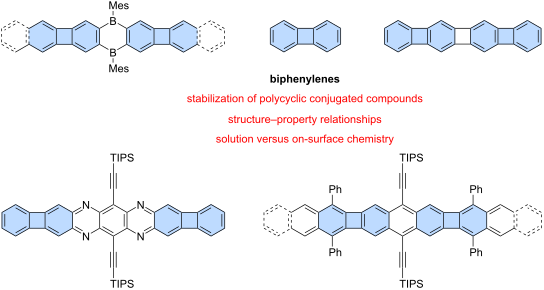
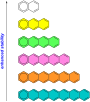
- from benzene (53a), naphthalene (53b), and anthracene (53c) with compound 52, the desired target azaacenes 54a–c were successfully obtained in yields ranging from 68% to 84% (Scheme 11). As anticipated, there was a notable red shift observed from 54a to 54c, which can be attributed to the expansion of
- 616 nm. Based on the photophysical properties of compounds 54a and 54b, which were synthesized in the previous study (Scheme 11), it is evident that the addition of the second biphenylene-fused pyrazine group to the structure leads to a substantial red shift towards the NIR region. This observation
- complexation step to isolate stable BF2 complex of 69, likely attributable to solubility issues encountered with substrate 69, prevented the incorporation of the acene backbone into the structure. Consequently, the anticipated red-shift in the absorption spectrum could not be observed as expected. Boron-doped



Aromatic systems with two and three pyridine-2,6-dicarbazolyl-3,5-dicarbonitrile fragments as electron-transporting organic semiconductors exhibiting long-lived emissions
Beilstein J. Org. Chem. 2023, 19, 1867–1880, doi:10.3762/bjoc.19.139
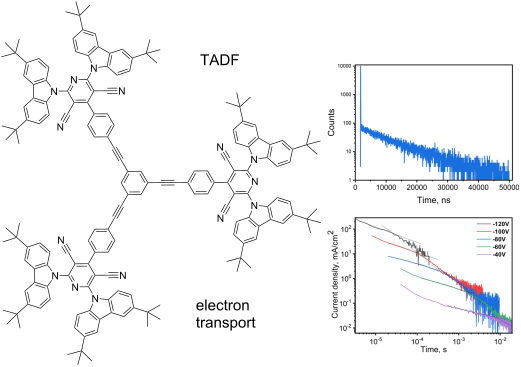
- 10 000 cd m−2, electroluminescence ranging from blue to yellow, maximum current of 15 cd/A and higher EQE than 7%. Pyridine-3,5-dicarbonitrile-based TADF materials exhibit different visible light emission spectra (Figure 1). Recently, Chen and Lu reported two new orange-red/red TADF emitters composed
- compound 8 had a slight impact on its red-shifted absorption spectra in comparison to that of other compounds (Figure 2a,b and Table 1). The photoluminescence spectra of toluene solutions of the compounds are characterized by non-structured shapes typical for ICT emissions (Figure 2c and Figure S1 in
- results of CV measurements were used to obtain the ionization potential (IPCV) and electron affinity (EACV) values of the compounds 6–9. These values were obtained using the following equations: IPCV = e (Eonset,red − Fconset + 4.8), EACV = e (Eonset,ox − Fconset + 4.8) [7]. The IPCV values fall in a


GlAIcomics: a deep neural network classifier for spectroscopy-augmented mass spectrometric glycans data
Beilstein J. Org. Chem. 2023, 19, 1825–1831, doi:10.3762/bjoc.19.134

- : GalN; orange: GlcN; green: GlcNAc; red: ManN. Synthetic IRMPD spectrum (grey trace) generated on the basis of a high resolution endogeneous experimental spectrum of GlcN (black trace) from dataset 1 using additional white noise: 10%; linear signal amplitude modulation: 5%; downsampling coefficient: 2


Selectivity control towards CO versus H2 for photo-driven CO2 reduction with a novel Co(II) catalyst
Beilstein J. Org. Chem. 2023, 19, 1766–1775, doi:10.3762/bjoc.19.129
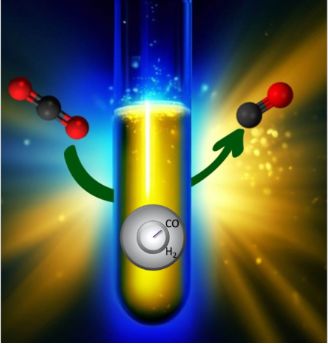
- atmosphere (Figure 4, red curves). In DMA, the electrochemical behavior changed only moderately, suggesting that the reduced complex 1 does not react promptly with carbon dioxide under these conditions. On the other hand, when a 5:1 mixture of DMA/triethanolamine (TEOA) was used as the solvent, a significant
- -centered d–d transitions. Cyclic voltammetry of complex 1 in 0.1 M TBAPF6 solution of (a) DMA and (b) DMA/TEOA 5:1 (v/v). Black curves are registered under Ar and red curves are recorded under CO2 atmosphere. A glassy-carbon disk was used as the working electrode and the internal references used are (a
- ) ferrocene and (b) decamethylferrocene. Scan rate was 100 mV s−1. Time evolution of CO (blue squares) and H2 (red triangles) with the power functional fitting (blue and red curve, respectively). Data were collected for photocatalytic tests in 5 mL DMA/TEA 7:1, [PS] = 0.5 mM; [1] = 0.025 mM; [BIH] = 10 mM


Charge carrier transport in perylene-based and pyrene-based columnar liquid crystals
Beilstein J. Org. Chem. 2023, 19, 1755–1765, doi:10.3762/bjoc.19.128
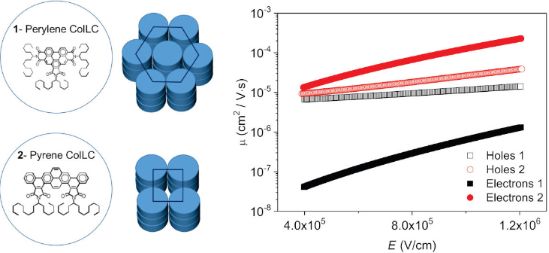
- ≈3.5 Å for all mesophases. Absorption and photoluminescence (PL) of 1 and 2 are presented in Figure 3 for solution and spin-coated film. Compound 1 shows the three well-defined bands typical of perylene absorption and PL in solution. The absorption becomes broader and the PL destructured and red
- considered. The parameters µ0 and γ implicitly include a monoenergetic trap distribution and can be obtained from fitting the SCLC regimes of the experimental J–V curves. The fits for each device are shown as red solid lines in Figure 6, and the values of µ0 and γ displayed in Table 3 were used to calculate
- absorption. AFM images of spin-coated films of compound 1 (a, c) and compound 2 (b, d) on PEDOT:PSS (a, b) and Al (c, d). Log–log plot of the J–V curves of the hole-only (a,b) and electron-only (c,d) of 1 (a,c) and 2 (b,d). The open circles are the experimental data, and the red solid lines indicate the


Quinoxaline derivatives as attractive electron-transporting materials
Beilstein J. Org. Chem. 2023, 19, 1694–1712, doi:10.3762/bjoc.19.124
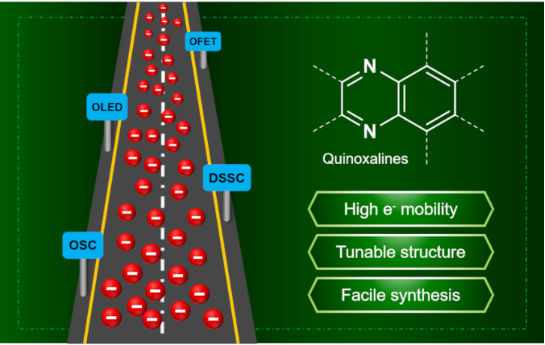
- importance of specific substitutions. While Qx44b demonstrated favorable properties such as a superior dipole moment, narrow bandgap, and red-shifted absorption, the reduced charge transfer rate presented a challenge. This analysis emphasizes the need for a delicate balance between desirable electronic
- properties and efficient charge transfer dynamics [48]. Arunkumar and colleagues demonstrated the utilization of indolocarbazole-Qx systems named ICZS4. The comprehensive investigation of ICZS4's optoelectronic properties highlighted its potential for high-performance DSSCs. The small energy gap, red-shifted
- versatility of quinoxaline derivatives in tailoring the emission properties of TADF materials. The vacuum deposited OLEDs based on Qx63 and Qx64 emitted yellow and red light, achieving EQEs of 17.3% and 15.6%, respectively [63]. You and co-workers reported the strategic design of a series of butterfly-shaped




A deep-red fluorophore based on naphthothiadiazole as emitter with hybridized local and charge transfer and ambipolar transporting properties for electroluminescent devices
Beilstein J. Org. Chem. 2023, 19, 1664–1676, doi:10.3762/bjoc.19.122
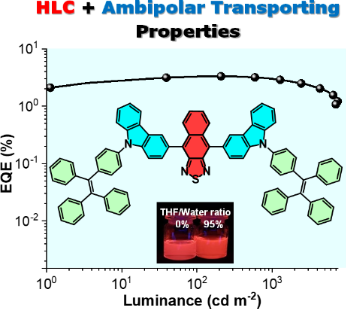
- Frontier Research Center, Vidyasirimedhi Institute of Science and Technology, Wangchan, Rayong 21210, Thailand 10.3762/bjoc.19.122 Abstract Herein, we report the synthesis and characterization of an efficient ambipolar charge-carrier-transporting deep-red fluorophore (TPECNz) based on a donor–acceptor
- twist angle between the D and A units, a strong electron deficiency of the Nz unit, and electron-donating and hole-transporting natures of carbazole, TPECNz exhibits a strong deep red emission (λem = 648 nm) with a high fluorescence quantum yield of 96%, outstanding thermal property (Tg = 236 °C), and
- ambipolar charge-carrier-transporting property with a decent balance of mobility of electrons (1.50 × 10⁻⁵ cm2 V−1 s−1) and holes (4.42 × 10⁻⁶ cm2 V−1 s−1). TPECNz is successfully employed as a non-doped emitter in an OLED which displays deep red electroluminescent emission peaked at 659 nm with CIE


Benzoimidazolium-derived dimeric and hydride n-dopants for organic electron-transport materials: impact of substitution on structures, electrochemistry, and reactivity
Beilstein J. Org. Chem. 2023, 19, 1651–1663, doi:10.3762/bjoc.19.121
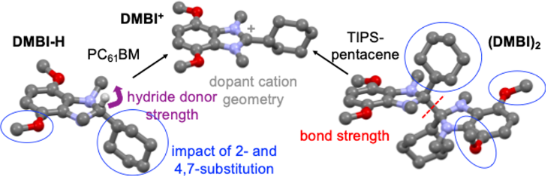
- this work (new compounds in red). Crystallographically characterized molecules related to DMBI dimers. Molecular structures from the single crystal structures of 1b2 (two crystallographically inequivalent molecules, left and center) and 1h2 (right), shown with 50% thermal ellipsoids and excluding


Sulfur-containing spiroketals from Breynia disticha and evaluations of their anti-inflammatory effect
Beilstein J. Org. Chem. 2023, 19, 1604–1614, doi:10.3762/bjoc.19.117
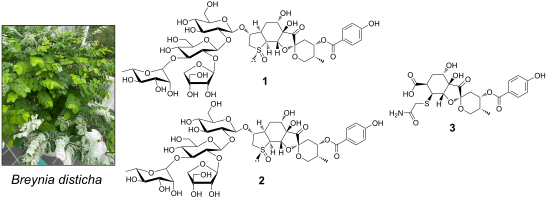
- comparisons between two groups. Dunnett’s test was used for multiple comparisons. P < 0.05 was considered statistically significant. Structures of compounds 1–7. Key HMBC (red arrows), H2BC (black bold lines), and COSY (blue bold lines) correlations in 1 and 2. a) Simplified model structures 1′ and 2′ for
- GIAO and TD-DFT calculations. b) Comparison of experimental ECD spectra of 1 (gray solid line) and 6 (black dotted line) with the Boltzmann-weighted spectra computed for 1′ (red dashed line). c) Comparison of the experimental ECD spectra of 2 (gray solid line) and 7 (black dotted line) with the
- Boltzmann-weighted spectra computed for 2′ (red dashed line). Key HMBC (red arrows), H2BC (black bold lines), and COSY (blue bold lines) correlations in compounds 3 and 4. Comparison of experimental (black solid line) and calculated (red dashed line) ECD spectra of 3. Anti-inflammatory effects of isolated



Functions of enzyme domains in 2-methylisoborneol biosynthesis and enzymatic synthesis of non-natural analogs
Beilstein J. Org. Chem. 2023, 19, 1452–1459, doi:10.3762/bjoc.19.104
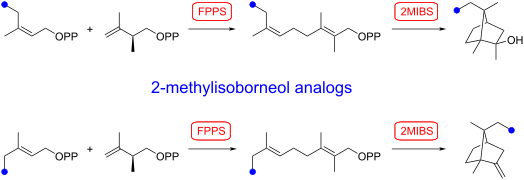
- [24], and the combination of DMAPP and IA-1 that was previously reported to yield the natural substrate of 2MIBS 2-Me-GPP [26], only two substrate combinations (DA-4 + IA-1 and DA-5 + IA-1) gave access to analogs of 1. The production of terpenoids by FPPS and 2MIBS is indicated by the red plus signs


Application of N-heterocyclic carbene–Cu(I) complexes as catalysts in organic synthesis: a review
Beilstein J. Org. Chem. 2023, 19, 1408–1442, doi:10.3762/bjoc.19.102
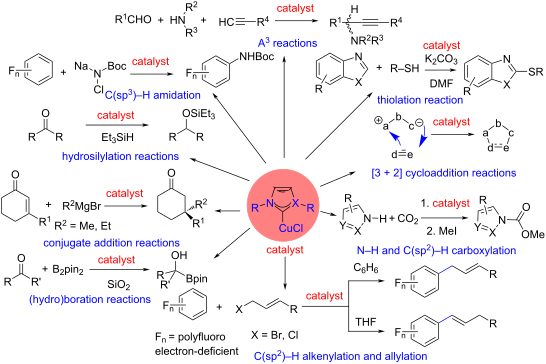
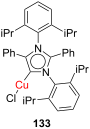
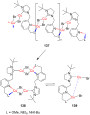
- potential (MESP) maps of two such complexes are shown in Figure 6. It is noteworthy that the intensity of the red color indicative of the negative charge density is maximum around the Cu atom conferring a nucleophilic character on it. Thus, the reaction is initiated by the nucleophilic attack of the NHC–Cu








Functional characterisation of twelve terpene synthases from actinobacteria
Beilstein J. Org. Chem. 2023, 19, 1386–1398, doi:10.3762/bjoc.19.100
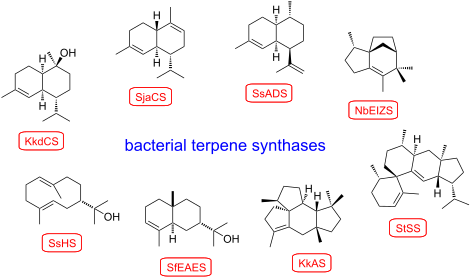
- viridis [14][15][16]. Only few terpene synthases have been characterised from other organisms, including enzymes from insects [17], octocorals [18][19], red algae [20][21], and amobae [22][23]. Despite these previous efforts, for many known terpenes still no terpene synthases catalysing their formation
- -α-eudesmol synthase from S. viridochromogenes [29][30]. In order to expand the knowledge about terpene synthase catalysis, fifteen uncharacterised terpene synthase homologs as listed in Table 1 were selected for further studies from different branches of the tree (indicated by red arrows in Figure 2
- branches indicate groups of homologous sesquiterpene synthases, green branches indicate groups of homologous diterpene synthases, and purple branches indicate groups of homologous sesterterpene synthases from which at least one representative was functionally characterised. The red arrows highlight enzymes