Search results
Search for "benzyl" in Full Text gives 1017 result(s) in Beilstein Journal of Organic Chemistry. Showing first 200.
Amino acid-based surfactants: sustainable synthesis and antimicrobial mechanisms
Beilstein J. Org. Chem. 2026, 22, 1067–1085, doi:10.3762/bjoc.22.85
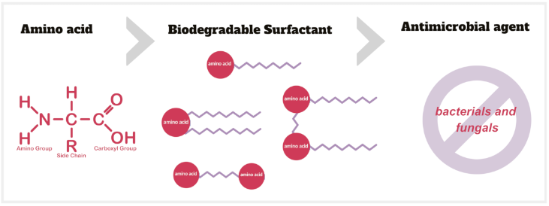
- (Table 1, entry 15) is the most potent among the series, with MIC values as low as 4–64 μg/mL against E. coli and a CMC in the micromolar range (0.006–0.015 mM) [16]. Beyond the most studied amino acids, leucine-based surfactants also exhibit structure-dependent antimicrobial activity. The benzyl leucine


Electrochemical reduction of unsaturated carbon–carbon bonds via 3d transition-metal catalysis
Beilstein J. Org. Chem. 2026, 22, 955–981, doi:10.3762/bjoc.22.75
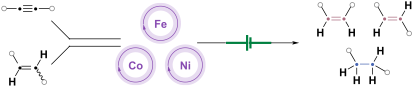
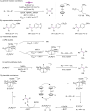
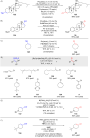
- as amino alcohol motifs, benzyl-protected acids, and thioethers without competitive reduction. As a further demonstration of the tunability of e-HAT, the challenging trans-selective alkyne semireduction was also realized under modified electrochemical conditions (Scheme 3B, ii). In contrast








Recent advances in copper-catalyzed direct hydroamination of alkenes with (hetero)aromatic amines
Beilstein J. Org. Chem. 2026, 22, 925–947, doi:10.3762/bjoc.22.73
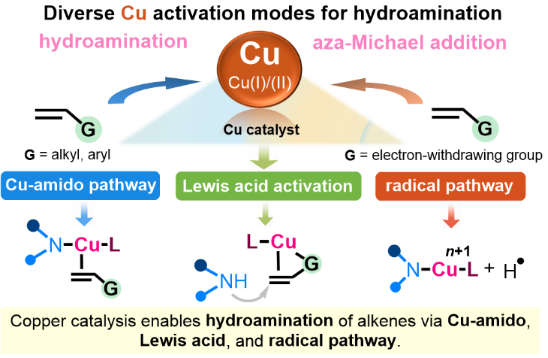
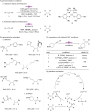
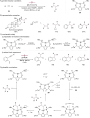
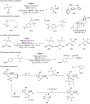
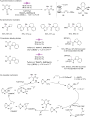
- -electron transfer process accompanied by hydrogen atom abstraction from CH3CN, generating a benzyl radical and a higher-valent organocopper intermediate V. The benzyl radical was subsequently captured by the copper species to furnish the hydroamination product while regenerating the copper catalyst







Palladium-catalyzed benzocyclization reactions of quinoline-2-carboxamides via sequential C–H/N–H functionalization
Beilstein J. Org. Chem. 2026, 22, 905–914, doi:10.3762/bjoc.22.71
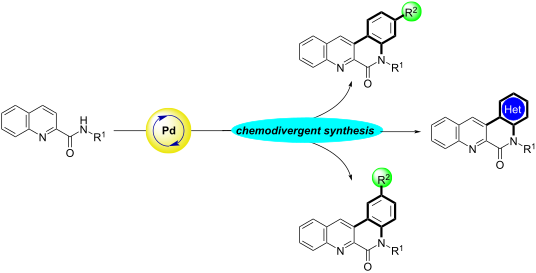
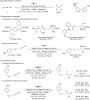
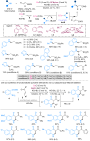
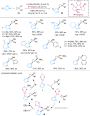
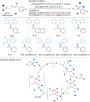
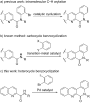
- ). The reaction with benzyl-substituted carboxamide also resulted in a low yield owing to the lower acidity of the amide proton compared with aromatic amides (Table 2, entry 10). Based on these results quinoline carboxamides 1 bearing aromatic substituents, which avoid steric effects and induce moderate




The trans-influence in gold chemistry from a catalytic perspective
Beilstein J. Org. Chem. 2026, 22, 838–856, doi:10.3762/bjoc.22.66
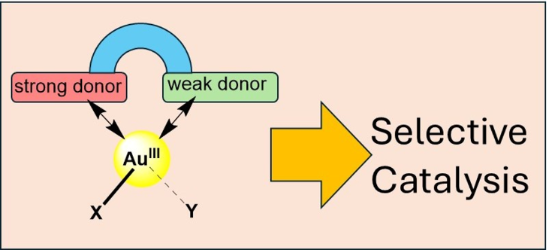
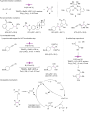
- been claimed to explain the (MeDalPhos)Au-catalysed synthesis of Heck-type olefins, including migratory alkene 2,1-insertion into a Au–aryl bond, followed by β-H elimination, to give non-conjugated benzyl alkenes [94]. This reactivity scenario has been extended to include chain walking [95]. The main


Unsymmetrical sulfoxides with sterically hindered catechol fragment: synthesis, structure, electrochemical properties, and antiradical activity
Beilstein J. Org. Chem. 2026, 22, 828–837, doi:10.3762/bjoc.22.65
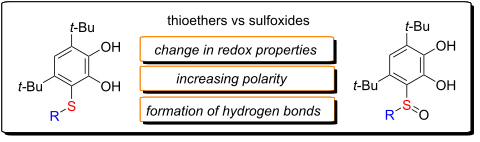
- reaction products ranges from 42 to 89%. The crystal structures of catechol sulfoxides with isopropyl, cyclopentyl, adamantyl, benzyl and 1-naphthyl moieties were established by single-crystal X-ray analysis. The possibility of forming intra- and intermolecular hydrogen bonds has been shown for these
- /3509 cm−1, respectively. For most compounds, these bands are slightly shifted to lower wavenumbers by 22–62 cm−1 relative to the corresponding thioethers. The largest shifts, ranging from 146 to 180 cm−1, are registered for compounds 6a and 7a, which contain benzyl and naphthyl substituents
- thioethers. Single-crystal X-ray diffraction analysis of catechol sulfoxides containing isopropyl, cyclopentyl, adamantyl, benzyl, and 1-naphthyl groups, combined with NMR and IR spectroscopy, revealed a consistent tendency of these sulfoxides to form intra- and intermolecular O–H···O=S hydrogen bonds both


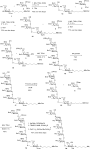
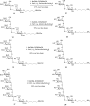
Total synthesis of the capsular polysaccharide repeating unit towards the development of a glycoconjugate vaccine against Klebsiella pneumoniae ST512
Beilstein J. Org. Chem. 2026, 22, 821–827, doi:10.3762/bjoc.22.64
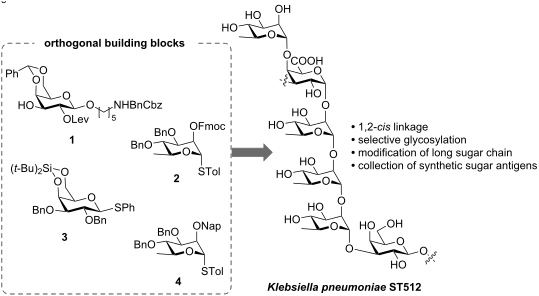
- Nap group to yield 9 (87% yield). Protection of the remaining C3-hydroxy group with a benzyl (Bn) ether furnished building block 4. To obtain building block 2, the Nap group was replaced with a fluorenylmethyloxycarbonyl protecting group (Fmoc) via a two-step sequence: DDQ-mediated deprotection (69
- ). Finally, protection of the hydroxy groups with benzyl ethers furnished building block 3 in 83% yield. With the building blocks in hand, the assembly of the hexasaccharide was pursued as outlined in Scheme 2. The synthesis commenced with the coupling of monosaccharides 1 and 2 promoted by NIS/TfOH followed


Synthesis of heterocycles based on azomethine ylides from α-amino acids (or amines) and carbonyl compounds
Beilstein J. Org. Chem. 2026, 22, 705–741, doi:10.3762/bjoc.22.55
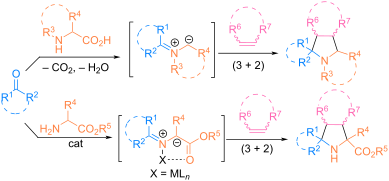
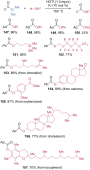
- using benzyl alcohols as aldehyde precursors to prepare fused heterocycles [84]. The authors note that the iridium-catalyzed oxidation of benzyl alcohol 108 to the corresponding aldehyde initially occurs. This is followed by condensation of the aldehyde with proline (103) and subsequent decarboxylation


Computational prediction of C–H hydricities and their use in predicting the regioselectivity of electron-rich C–H functionalisation reactions
Beilstein J. Org. Chem. 2026, 22, 603–610, doi:10.3762/bjoc.22.46
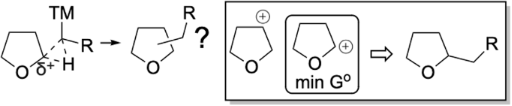
- means that an uncertainty of several kilocalories per mole is plausible for the less stable/transient subset. Consistent with this, Parker/Cheng highlight a higher uncertainty for the toluene/fluorene/9-methylanthracene-derived cations, and we observe that most of the large deviations occur in benzyl
- primarily anthracene derivatives and benzyl C–H bonds, suggesting potential systematic errors in QM computations or experimental measurements. Radical and cation stabilities generally follow the trend: tertiary > secondary > primary methyl carbon stability. Our study also explores the correlation between


![[Graphic 6]](/bjoc/content/inline/1860-5397-22-46-i8.svg?max-width=637&scale=1.18182)


Modern synthetic pathways towards eribulin and its subunits
Beilstein J. Org. Chem. 2026, 22, 495–526, doi:10.3762/bjoc.22.37
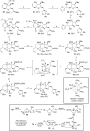
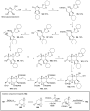
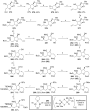
- filtrate during this process and isolated as a diastereomeric mixture of 2.6:1. At first, the benzyl moieties of 66 were cleaved off and the diol was reprotected as acetonide to afford 67. The remaining secondary alcohol was PMB-protected and the olefin was oxidatively cleaved, before addition of a








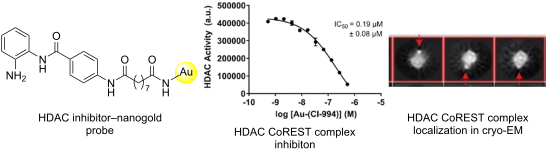
Synthesis of a HDAC inhibitor–nanogold probe for cryo-EM visualization in class I HDAC co-repressor complexes
Beilstein J. Org. Chem. 2026, 22, 480–485, doi:10.3762/bjoc.22.35
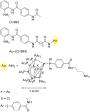
- routes (Scheme 1) [14][15][18]. Intermediates 5–7 were prepared in a manner analogous to Smalley et al. [14]. The first step in the linker synthesis for Au–(CI-994) involved a monoprotection of nonanedioic acid with a benzyl group to give 5 which proceeded in moderate yield due to the formation of the
- dibenzylated by-product. Compound 5 was then coupled to the CI-994 intermediate 3 via HATU-mediated amide bond formation to produce 6 in good yield. Removal of the benzyl protecting group was performed by catalytic hydrogenation and acid 7 was obtained in near quantitative yield. Intermediate 7 was converted
- , 67%; e) TFA, DCM, 0 °C to rt, 20 h; (f) MP-carbonate resin, MeOH, rt, 3 h, 95%; g) benzyl bromide, 1,4-dioxane/DMF 1:1, 90 °C, 19 h, 45%; h) 3, 5, HATU, DIPEA, DMF, 0 °C to rt, 40 h, 59%; i) H2, 10% Pd/C, THF, rt, 19 h, 99%; j) N-hydroxysuccinimide, EDC, DMF, 0 °C to rt, 16 h, 90%; k) TFA, DCM, 0 °C



Cone p-aminocalix[4]arenes enriched with ‘clickable’ alkyne or azide functionalities
Beilstein J. Org. Chem. 2026, 22, 399–415, doi:10.3762/bjoc.22.28
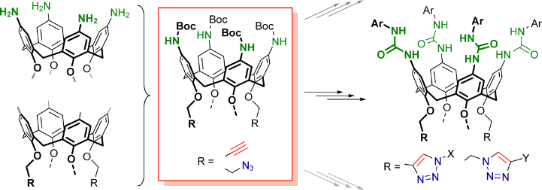
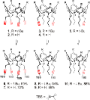
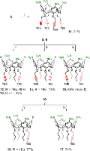
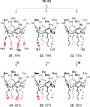
- excess benzyl azide or phenylacetylene, taken as representatives, under copper(I) catalysis, resulting in the narrow-rim triazolated macrocycles. By removing the Boc protecting groups and involving the free amino groups in reactions with p-tolyl isocyanate, a series of narrow-rim triazolated
- conditions, followed by deprotection of the amino groups, and their conversion to urea moieties (Schemes 6–9). The propargylated calix[4]arenes 24–26 were reacted with benzyl azide in the presence of CuI activated with triethylamine (20 equiv per Cu, Scheme 6). Under these conditions all three reactions were
- . Synthesis of triazolated p-aminocalix[4]arenes 37–39 from the propargylated calixarene precursors 24–26. Conditions: i) benzyl azide, CuI, Et3N, toluene, rt. Synthesis of triazolated p-aminocalix[4]arenes 40 and 41 from the 2-azidoethylated calixarene precursors 35 and 36. Conditions: i) phenylacetylene






Dialkylaminoalkylation of β-ketosulfones via ring-opening of 3-sulfonylpyrrolidines
Beilstein J. Org. Chem. 2026, 22, 383–389, doi:10.3762/bjoc.22.26
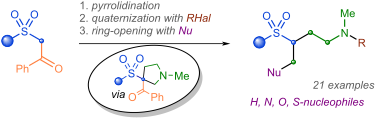
- -1-amines 4c–e,h were isolated in 40–69% yields (Scheme 2). Introduction of the m-nitro substituent led to partial resinification during the ring-cleavage step and significant decrease in the reaction outcome (products 4f,g). We have demonstrated that ethyl bromide, benzyl chloride, allyl bromide




Recent advances in the cleavage of non-activated amides
Beilstein J. Org. Chem. 2026, 22, 352–369, doi:10.3762/bjoc.22.23
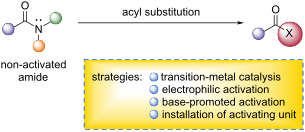
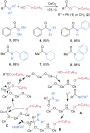
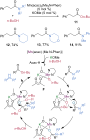
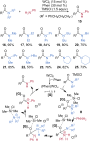
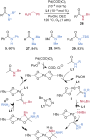
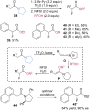
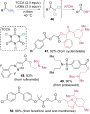
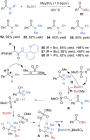
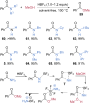
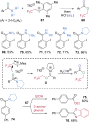
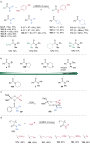
- corresponding amide products 26 were obtained using only 10−4 mol % Pd(COD)Cl2 in combination with 1-benzyl-1H-1,2,3-triazole (L1). Based on kinetic curves, TEM images, catalyst poisoning experiments, MS identification of intermediates, and EPR spectra of the crude mixture, the authors proposed two kinetically
- electrophilic benzylating reagent (Scheme 7) [55]. DPT-BM functions as an O-benzylating reagent that generates benzyl cation equivalents upon dissolution in the solvent under non-acidic conditions. Thus, the reaction of an amide with DPT-BM is proposed to form a benzyl imidate salt J, which subsequently
- undergoes hydrolysis to afford the benzyl ester 30. Under the optimized conditions, primary, secondary, and tertiary amides 12, 31–33 were successfully converted to benzyl esters in high yields. Notably, loss of enantiopurity of chiral amide 33 was not observed during esterification. Sulfuryl fluoride










Synthesis of tricyclic fused pyrrolidine nitroxides from 2-alkynylpyrrolidine-1-oxyls
Beilstein J. Org. Chem. 2026, 22, 344–351, doi:10.3762/bjoc.22.22

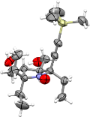
- corresponding alkynylmagnesium bromides to nitrone 1 [20]. Radicals 2d and 2e were prepared in analogy to the known procedure using trimethylsilylacetylene and benzyl propargyl ether as the terminal alkynes (Scheme 1). Nitrone 1 was treated with a 10-fold excess of alkynylmagnesium bromide prepared in situ via
- metalation of trimethylsilylacetylene or benzyl propargyl ether with ethylmagnesium bromide. After quenching, removal of the MOP protecting group, and oxidation by atmospheric oxygen the nitroxides 2d and 2e were isolated in 64% and 66% yields, respectively. Terminal alkynes can be converted into
- to the methylene groups of the propargyl and benzyl fragments, respectively, and a multiplet of phenyl group in the range of 7.30–7.40 ppm (5H). Successful aminomethylation of the ethynyl group was confirmed by the appearance of two singlets at 3.01 ppm (6H) and 4.28 ppm (2H), attributed to the




Spirobarbiturates with a pyrrolizidine moiety: synthesis, structure and biological evaluation
Beilstein J. Org. Chem. 2026, 22, 274–288, doi:10.3762/bjoc.22.20
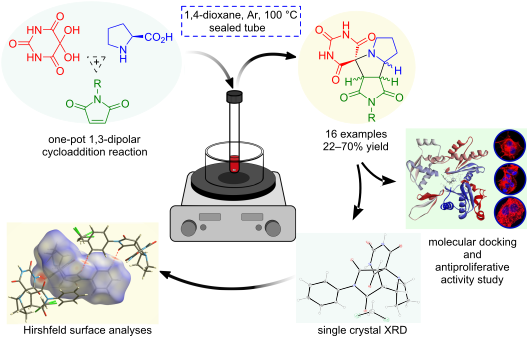
- barbiturates [25]. Other methods include the DBU-mediated stereospecific cyclopropanation of barbiturate-based olefins with benzyl chlorides, developed by Chang’s group for the synthesis of spirobarbiturate-cyclopropanes [26]. Another interesting structural fragment is the pyrrolizidine heterocycle, which is a




Arene activation via π-bond localization: concepts and opportunities
Beilstein J. Org. Chem. 2026, 22, 257–273, doi:10.3762/bjoc.22.19
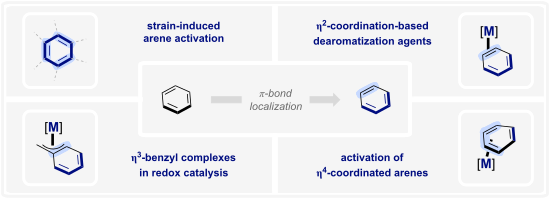
- remains untapped in catalysis, with only a few isolated examples of redox-mediated ligand substitution hinting at its feasibility [47]. η3-Benzyl complexes as intermediates in dearomative redox catalysis Binding and structure Within the landscape of redox catalysis, η3-benzyl complexes have emerged as
- principal platforms. Distinct from their η3-allyl counterparts, which readily isomerize between σ (η1) and π (η3) coordination, the η3-benzyl motif demands partial disruption of aromatic stabilization – an energetic penalty that must be compensated by the metal–ligand interaction (Scheme 5A). This challenge
- the first-of-its-kind η3-benzyl complex [70]. The resulting compound exhibited a striking upfield shift of the five aromatic proton resonances (2–5 ppm), and its C(3)–C(7) bond lengths alternated between 142 pm and 133 pm – hallmarks of π-bond localization within the arene [71][72]. Another notable




A new synthesis of Tyrian purple (6,6’-dibromoindigo) and its corresponding sulfonate salts
Beilstein J. Org. Chem. 2026, 22, 167–174, doi:10.3762/bjoc.22.10
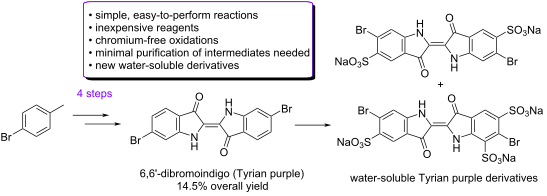
- -dimethylhydantoin (DBDMH) as an alternative bromine source led to more consistent yields (57%) of the desired benzyl bromide (Scheme 4B). Systematic variation of the stoichiometric amount of DBDMH indicated that the yield of 4-bromo-2-nitrobenzylbromide (6) was optimized using 0.6 equiv or 1.2 equiv of available
- Scheme 5A, dimethyl sulfoxide (DMSO) did not react with the benzyl bromide and instead only returned the starting material. The addition of 1.2 equivalents of silver nitrate promoted the substitution of the benzyl bromide with DMSO to yield an alkoxysulfonium ion 8 [22]. Following substitution, the


Advances in Zr-mediated radical transformations and applications to total synthesis
Beilstein J. Org. Chem. 2026, 22, 71–87, doi:10.3762/bjoc.22.3
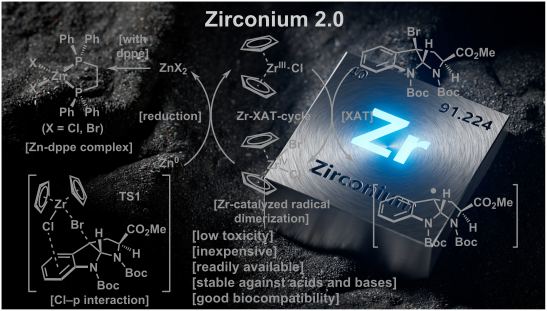
- corresponding vic-bis(dithiane) derivatives 16a–d. In 2018, Milsmann et al. reported the dimerization of benzyl bromide using a zirconium complex as a photosensitizer (Scheme 4) [14]. Heating a zirconium precursor with the pincer-type ligand 17, which can be synthesized in three steps from commercially
- a photosensitizer, together with compound 22 as a sacrificial reductant, in the dimerization of benzyl bromide (19). The desired dimerized product 20 was obtained in 40% yield. This study highlights the potential of zirconium complexes as a photoredox catalyst, pointing to promising opportunities
- development of efficient synthetic methods for its construction remains in high demand. Benzyl chlorides, which are inexpensive and readily available, have attracted attention as promising feedstocks. Against this background, Ota and Yamaguchi et al. in 2025 reported the dimerization of benzyl chlorides using








Reactivity umpolung of the cycloheptatriene core in hexa(methoxycarbonyl)cycloheptatriene
Beilstein J. Org. Chem. 2026, 22, 64–70, doi:10.3762/bjoc.22.2
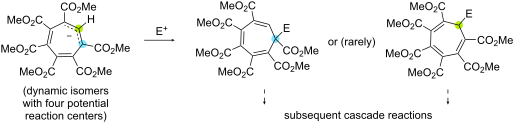
- halogenation reactions. The reactions with methyl iodide and propargyl bromide resulted in equilibrium mixtures of α-alkylated cycloheptatrienes 5d,e and the corresponding norcaradienes 6d,e. At the same time, benzyl bromide afforded pure norcaradiene 6f in a good yield. Apparently, the formation of a pure


Synthesis and applications of alkenyl chlorides (vinyl chlorides): a review
Beilstein J. Org. Chem. 2026, 22, 1–63, doi:10.3762/bjoc.22.1
- mixtures of E- and Z-isomers (Scheme 40C). Notably, in these less-selective cases, excess alkyne was required to achieve synthetically useful yields. For example, compound 221 was obtained in only 15% yield when phenylacetylene and benzyl chloride were employed in a 1:1 molar ratio. Mayr and co-workers
- hydrocarbon precursors using DDQ, followed by interception with alkynes, was reported by Shi and co-workers (Scheme 47) [154]. However, the authors did not clarify whether the corresponding benzyl chloride was formed in the absence of the alkyne trapping agent (trapping of cationic intermediate by chloride
- Rodriguez subsequently reported a slightly modified procedure in 2017 (Scheme 67) [209]. In 2008, Charette reported that treatment of benzyl bromides with “NaICHCl” furnished the corresponding styrenyl chlorides in good yields and with high E-selectivity (Scheme 68) [210]. Pace and co-workers recently























Sustainable electrochemical synthesis of aliphatic nitro-NNO-azoxy compounds employing ammonium dinitramide and their in vitro evaluation as potential nitric oxide donors and fungicides
Beilstein J. Org. Chem. 2025, 21, 2739–2754, doi:10.3762/bjoc.21.211
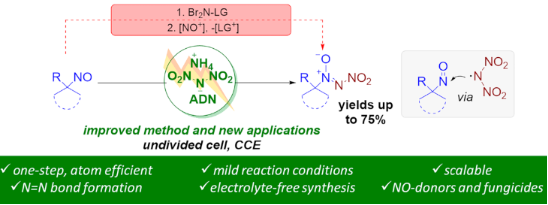
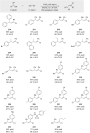
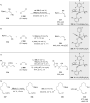
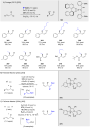
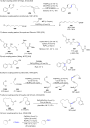
- structure of 2c was confirmed by single-crystal X-ray analysis. The benzyl moiety was also tolerated, and the corresponding product 2e was obtained in 57% yield. 2,2-Dimethyl-5-nitro-5-nitroso-1,3-dioxane (1f) was successfully employed under the reaction conditions, leading to the formation of product 2f in





Recent advancements in the synthesis of Veratrum alkaloids
Beilstein J. Org. Chem. 2025, 21, 2657–2693, doi:10.3762/bjoc.21.206
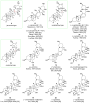
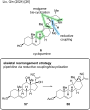
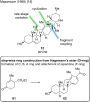
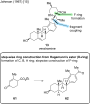
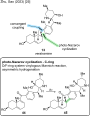
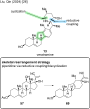
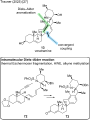
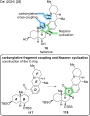
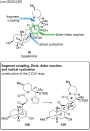
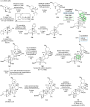
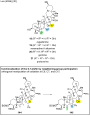
- attributed to the hindrance by the axial benzyl ether group on one side, and the C7 axial TBS ether group on the other. Removal of the silyl groups at C7 and C20 with CsF was followed by dihydroxylation of the C14,15-double bond, and the major product 105 was determined to be the desired α-diol by 1H–1H
- -NOESY and DFT calculations. The tertiary amine was masked as the hydrochloride salt with concomitant ketal deprotection, which was followed by hydrogenation to remove the benzyl protecting group to obtain (±)-4-methylenegermine hydrochloride (17·HCl) in 31 steps (LLS from commercial materials) and an
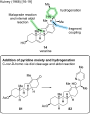
- -valerolactone). This was followed by an azide-Mitsunobu reaction and auxiliary removal with LiOBn to yield β-azido ester 115. Staudinger reduction of the azide moiety with PPh3 was accompanied by spontaneous cyclization to the lactam. The benzyl ester was converted to the aldehyde (2 steps), followed by
















Visible-light-driven NHC and organophotoredox dual catalysis for the synthesis of carbonyl compounds
Beilstein J. Org. Chem. 2025, 21, 2584–2603, doi:10.3762/bjoc.21.200
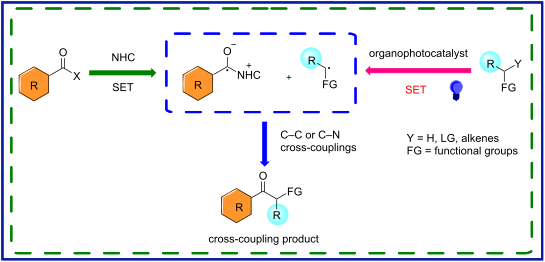
- -photocatalyst, leading to various β-aryl keto ester derivatives 20 in good to excellent yields. The key steps of the reactions undergo radical–radical cross-coupling with the alkyl ester radical E and benzyl radical B to afford the desired keto-esters 20 in up to 88% yield. This catalytic process displayed good
- catalyst. The anticipated meta-acylation product 32 was achieved through highly selective C(sp3)–C(sp3)-radical–radical cross-coupling between the cyclohexadienyl radical C and the benzyl radical species F, formed via single-electron reduction. This photochemical method overturns the traditional ortho and





Recent advances in total synthesis of illisimonin A
Beilstein J. Org. Chem. 2025, 21, 2571–2583, doi:10.3762/bjoc.21.199
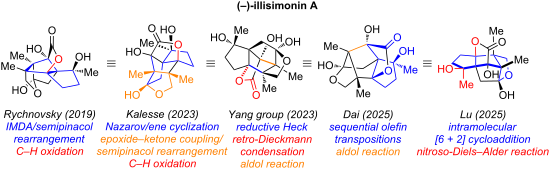
- trans-esterification to give lactone 78. The resulting tertiary alcohol was protected as its benzyl ether to afford 79. A two-step oxidation protocol, analogous to Yang’s method, introduced the C8 carbonyl group, yielding 80. The final ring was closed via an intramolecular aldol reaction following
- Yang’s conditions [30], assembling the trans-pentalene to give 81. Finally, deprotection of the benzyl ether delivered (−)-illisimonin A (1). Lu’s gram-scale synthesis of illisimonin A In 2025, the Lu group reported a gram-scale total synthesis of illisimonin A in 15 steps from commercially available