Search results
Search for "cyclizations" in Full Text gives 218 result(s) in Beilstein Journal of Organic Chemistry. Showing first 200.
Synthesis and structural elucidation of a novel bis-spirooxindole from isatin and ethylenediamine
Beilstein J. Org. Chem. 2026, 22, 813–820, doi:10.3762/bjoc.22.63
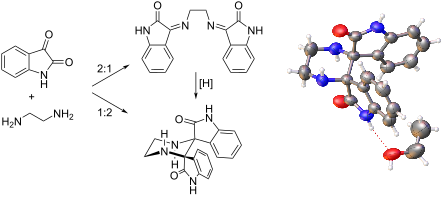
- carbonyl group with a γ-lactam system, which enables participation in a wide range of nucleophilic additions, condensations, and cyclizations [7]. As a result, isatin has proven to be a particularly powerful synthon for the construction of 2-oxindole derivatives, including a large variety of spiro-fused


Rongalite addition to dienones: diastereoselectivity in cyclic sulfone synthesis; stereochemical rationalization and prospects as a general conjugate nucleophile
Beilstein J. Org. Chem. 2026, 22, 742–752, doi:10.3762/bjoc.22.56

- , within the expected accuracy of the calculations (see also Supporting Information File 1) [30]. Similar transition states have been invoked for other cyclizations leading to 6-membered rings [31][32][33], but this is the first time that they have been computationally modeled for a sulfur nucleophile in a


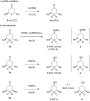


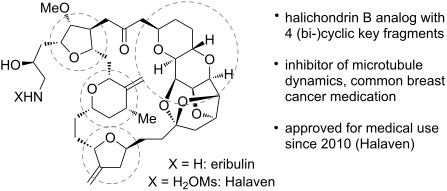
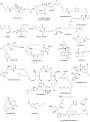
Modern synthetic pathways towards eribulin and its subunits
Beilstein J. Org. Chem. 2026, 22, 495–526, doi:10.3762/bjoc.22.37
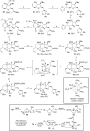
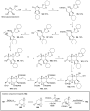
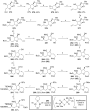
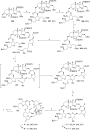
- Liu and co-workers [81]. Regioselective deprotection, oxidative cleavage, reduction with NaBH4 and Bn-protection afforded 50, which was subsequently transformed to aldehyde 51 via ozonolysis and treatment with SMe2. Next, HWE reaction and acidic treatment triggered the cyclizations towards enone 53








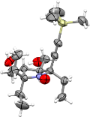
Synthesis of tricyclic fused pyrrolidine nitroxides from 2-alkynylpyrrolidine-1-oxyls
Beilstein J. Org. Chem. 2026, 22, 344–351, doi:10.3762/bjoc.22.22

- previously described for radicals 2a and 2b, but these cyclizations required heating in the presence of a base [16]. To obtain pyrazole derivatives, alkynones 6a,b were treated with hydrazine (Scheme 5). Formation of the pyrazole ring in the reaction of 6b was accompanied by partial hydrazinolysis of the




Synthesis and applications of alkenyl chlorides (vinyl chlorides): a review
Beilstein J. Org. Chem. 2026, 22, 1–63, doi:10.3762/bjoc.22.1
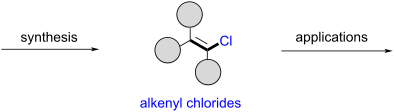
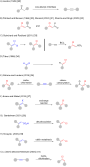
- anion). Generation of tertiary aliphatic cations and intramolecular trapping with alkenes or alkynes is well known in the context of polyene cyclizations [155]. Building on Johnson’s earlier work (Scheme 48A) [156], Fañanás and Rodríguez developed an intramolecular cationic cyclization strategy to
- -(aza)-Prins cyclization strategy (Scheme 50) [170][171][172]. This transformation furnishes synthetically versatile cyclized products bearing pendant halide functionalities, which can serve as substrates for subsequent halo-Nazarov cyclizations. The sequential nature of this approach enables rapid





















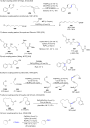


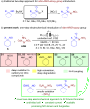
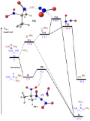
Sustainable electrochemical synthesis of aliphatic nitro-NNO-azoxy compounds employing ammonium dinitramide and their in vitro evaluation as potential nitric oxide donors and fungicides
Beilstein J. Org. Chem. 2025, 21, 2739–2754, doi:10.3762/bjoc.21.211
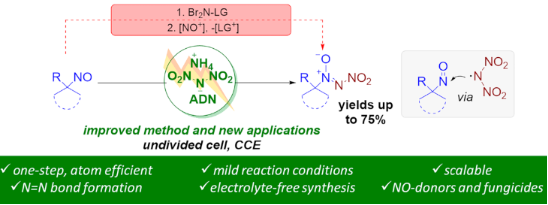
- approaches focus mainly on intramolecular radical cyclizations [42][54][55][56][57][58][59][60][61][62][63], while intermolecular [1][64][65][66][67][68] N–N coupling remains a poorly studied area. In addition to the preparation of azo compounds [69][70], intermolecular N–N coupling reactions are of





Tandem hydrothiocyanation/cyclization of CF3-iminopropargyl alcohols with NaSCN in the presence of AcOH
Beilstein J. Org. Chem. 2025, 21, 2694–2702, doi:10.3762/bjoc.21.207
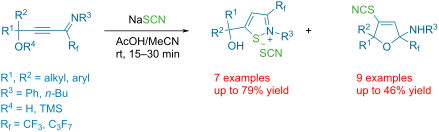
- different cyclizations due to the conjugated imine and alkyne bonds [27], and the hydroxyalkyl moiety linked to the triple bond can also act as a nucleophilic site. Another attractive feature of these compounds is the presence of the trifluoromethyl group (CF3). The latter serves as a valuable structural



Recent advances in total synthesis of illisimonin A
Beilstein J. Org. Chem. 2025, 21, 2571–2583, doi:10.3762/bjoc.21.199
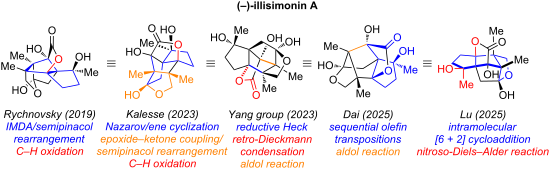
- proposed biosynthetic pathway clarifies the relationship between illisimonin A and other Illicium sesquiterpenes. Allo-cedrane-type, seco-prezizaane-type and illismonane-type Illicium sesquiterpenes are all biosynthesized from farnesyl diphosphate (2) through a series of cationic cyclizations and


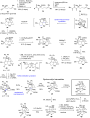


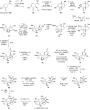


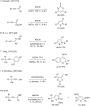
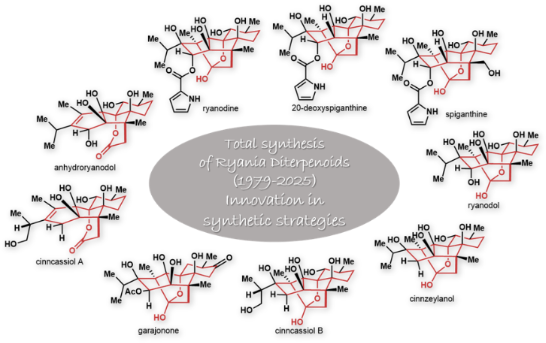
Total syntheses of highly oxidative Ryania diterpenoids facilitated by innovations in synthetic strategies
Beilstein J. Org. Chem. 2025, 21, 2553–2570, doi:10.3762/bjoc.21.198
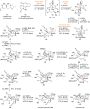
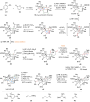
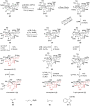
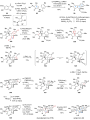
- anhydroryanodine (not shown) to the corresponding hemiacetal. However, common reducing agents proved ineffective for lactone reduction. Leveraging previous findings, the authors implemented an alternative strategy involving two sequential intramolecular reductive cyclizations to invert the configuration of the C3







Recent advances in Norrish–Yang cyclization and dicarbonyl photoredox reactions for natural product synthesis
Beilstein J. Org. Chem. 2025, 21, 2315–2333, doi:10.3762/bjoc.21.177
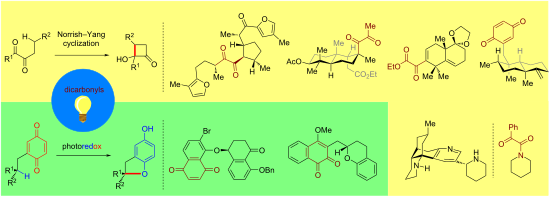
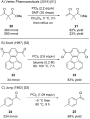
- , α-keto amides, 1,4-quinones, and 1,2-quinones in this context, have emerged as versatile substrates in Norrish–Yang cyclizations, finding widespread application in natural products synthesis. Compared to monoketones, dicarbonyls (e.g., 1,2-diketones) offer distinct advantages: (1) they generally




Enantioselective radical chemistry: a bright future ahead
Beilstein J. Org. Chem. 2025, 21, 2283–2296, doi:10.3762/bjoc.21.174
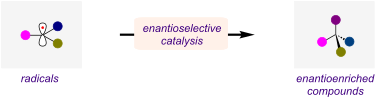
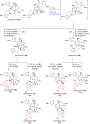
- applied in the development of enantioselective polyene cyclizations, which demonstrated the power of the catalytic strategy. In the presence of a chiral amine catalyst 16 (Scheme 3) and the mild oxidant Cu(OTf)2, polyenes with a terminal aldehyde group underwent intramolecular cyclizations affording
- , particularly involving photoredox catalysts, have led to the emerging area of photoenzymatic catalysis. Several new modes of activation successfully catalyzed by enzymes have been demonstrated [71][72][73][74]. Notable photoenzymatic reactions involving radical cyclizations have been reported. In one


Pathway economy in cyclization of 1,n-enynes
Beilstein J. Org. Chem. 2025, 21, 2260–2282, doi:10.3762/bjoc.21.173
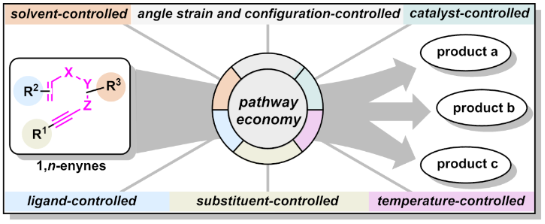
- systematically regulating reaction parameters (solvent, substituent, ligand, catalyst) in 1,n-enyne cyclizations, enabling efficient "one-to-many" transformations that drastically reduce synthetic steps and resource consumption. Review Solvent-controlled cyclization of 1,n-enynes Solvents play a multifaceted


Electrochemical cyclization of alkynes to construct five-membered nitrogen-heterocyclic rings
Beilstein J. Org. Chem. 2025, 21, 2173–2201, doi:10.3762/bjoc.21.166
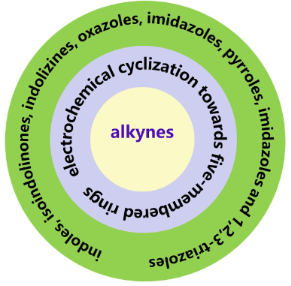
- , electrochemical cyclizations of alkynes to construct five-membered rings are highlighted. Firstly, the property and application of five-membered rings are simply introduced. After presenting the usefulness of alkynes and the general progress of electrochemical transformations, electrochemical cyclization
- ][45][46][47][48][49][50][51][52][53][54][55] have been extensively applied as facilely available starting materials to build five-membered rings for their hybrid structures with appropriate reactivities [56][57][58][59]. For example, cyclizations of silyloxyenyne [60], anionic cyclization of enediyne









Bioinspired total syntheses of natural products: a personal adventure
Beilstein J. Org. Chem. 2025, 21, 2048–2061, doi:10.3762/bjoc.21.160
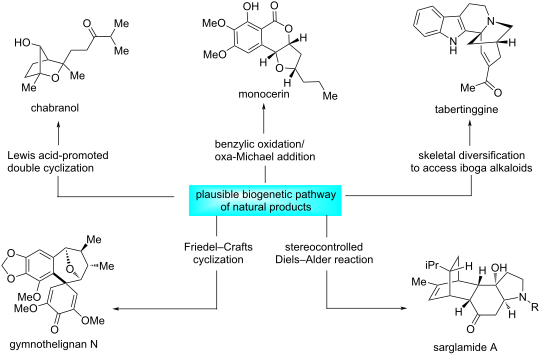
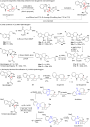
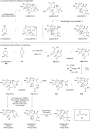
- -phellandrene provided a steric effect to the cycloaddition. Then, sarglamides D and E arose from C through acid-promoted oxy-cyclizations. This biosynthetic approach rapidly constructs the complex structure from simple precursors, thus we intended to achieve the total synthesis of sarglamides through the




Switchable pathways of multicomponent heterocyclizations of 5-amino-1,2,4-triazoles with salicylaldehydes and pyruvic acid
Beilstein J. Org. Chem. 2025, 21, 2030–2035, doi:10.3762/bjoc.21.158
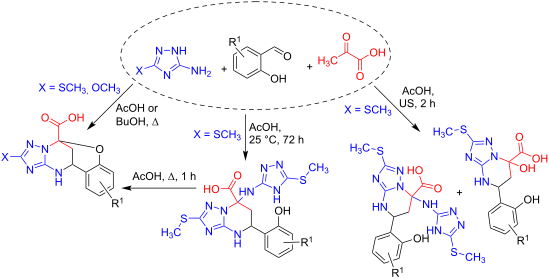
- substituted salicylaldehydes are particularly interesting because of the possibility of additional reactions and post-cyclizations involving the o-hydroxy group. It was demonstrated [10][11][12] that the multicomponent reaction of substituted 3-amino-1,2,4-triazoles, various salicylaldehydes, and acetone


α-Ketoglutaric acid in Ugi reactions and Ugi/aza-Wittig tandem reactions
Beilstein J. Org. Chem. 2025, 21, 2021–2029, doi:10.3762/bjoc.21.157
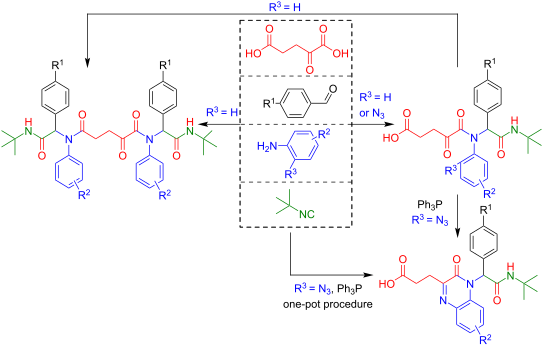
- an additional reaction center for post-cyclizations, is scarcely reported in the literature [25][30][31]. Among the numerous tandem synthetic approaches, the combination of Ugi/aza-Wittig reactions is of particular interest. In recent years, several works have been dedicated to the synthesis of
- further purification after filtration. The use of starting components containing highly reactive groups, for example, an azide group, in the Ugi reaction provides opportunities for various post-cyclizations to obtain nitrogen-containing heterocyclic systems with potential biological activity [18]. To


Chiral phosphoric acid-catalyzed asymmetric synthesis of helically chiral, planarly chiral and inherently chiral molecules
Beilstein J. Org. Chem. 2025, 21, 1864–1889, doi:10.3762/bjoc.21.145
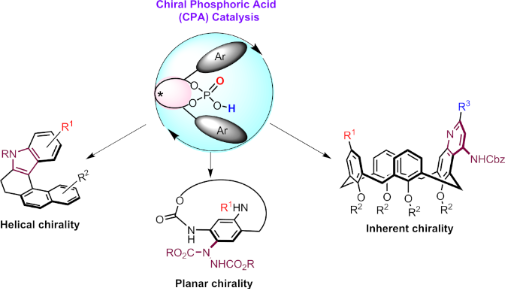
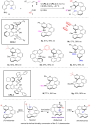
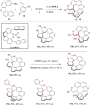
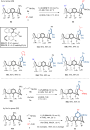
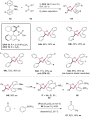
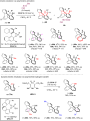
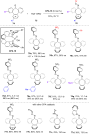
- as cyclizations, aromatic substitutions and condensations, along with asymmetric synthesis strategies, such as enantioselective desymmetrization and (dynamic) kinetic resolution, have been employed for the asymmetric construction of these chiral elements. Despite remarkable progress and significant










Transition-state aromaticity and its relationship with reactivity in pericyclic reactions
Beilstein J. Org. Chem. 2025, 21, 1613–1626, doi:10.3762/bjoc.21.125
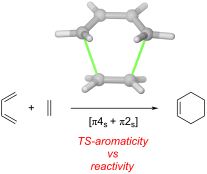
- the lower barriers computed for the Hopf cyclizations of ene–ene–ynes E=CH–CH=CH–C≡CH where the terminal CH2 group was replaced by a heteroatom (E = NH or O). Figure 8 shows the corresponding ASDs for the parent cyclization (E = CH2) and the analogous process involving the imine system (E = NH). In


Photoredox-catalyzed arylation of isonitriles by diaryliodonium salts towards benzamides
Beilstein J. Org. Chem. 2025, 21, 1480–1488, doi:10.3762/bjoc.21.110
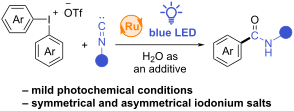
- benzamides from isonitriles as well as in multicomponent reactions with isonitriles in general. Only a few examples of photochemical cascade arylation–cyclizations of isonitriles with diaryliodonium salts have been published [31][32][33]. To bridge this gap, we propose a photoredox-mediated strategy for the


Advances in nitrogen-containing helicenes: synthesis, chiroptical properties, and optoelectronic applications
Beilstein J. Org. Chem. 2025, 21, 1422–1453, doi:10.3762/bjoc.21.106
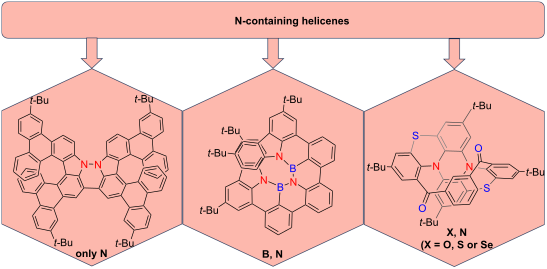
- , or selenium enables spectral tuning across the visible to near-infrared range, improved photostability, and dual-state emissive behavior. In parallel, significant progress in synthetic methodologies – including enantioselective catalysis, electrochemical cyclizations, and multicomponent reaction
- absorption and emission maxima (λabs = 399 nm, λem = 405 nm), a fluorescence quantum yield (ΦF) of 0.13, and high dissymmetry factors (|gabs| = 1.9 × 10⁻², |gabs| = 9.5 × 10⁻³ at 403 nm) [18] (Table 2). Miura and co-workers employed Pd(II)/Ag(I)-catalyzed cyclizations to construct azahelicenes, with compound

High-pressure activation for the solvent- and catalyst-free syntheses of heterocycles, pharmaceuticals and esters
Beilstein J. Org. Chem. 2025, 21, 1374–1387, doi:10.3762/bjoc.21.102
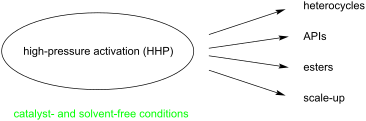
- successfully applied to several reactions; cyclizations of various types, acylations and esterifications. In addition to being efficient at a small scale, the scale up of the Paal–Knorr reaction was also achieved. Compared to the traditional benchtop alternatives the HHP-assisted approach provided several


Recent advances in oxidative radical difunctionalization of N-arylacrylamides enabled by carbon radical reagents
Beilstein J. Org. Chem. 2025, 21, 1207–1271, doi:10.3762/bjoc.21.98
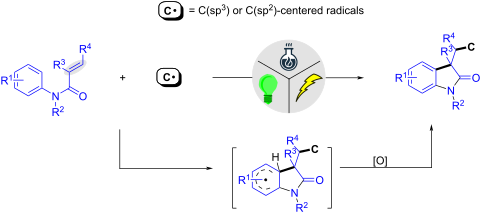
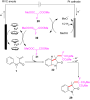
- ) catalyst is then regenerated at the Pt cathode. Protonation of D gives intermediate E, and subsequent deprotonation at the anode yields the target compound 35a. N-Arylalkenes: difluoroalkyl/trifluoroalkyl radicals While the majority of radical cyclizations involve hydrocarbon-based radicals, the




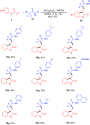


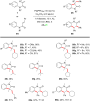


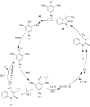


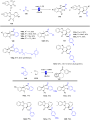


Synthesis of pyrrolo[3,2-d]pyrimidine-2,4(3H)-diones by domino C–N coupling/hydroamination reactions
Beilstein J. Org. Chem. 2025, 21, 1010–1017, doi:10.3762/bjoc.21.82
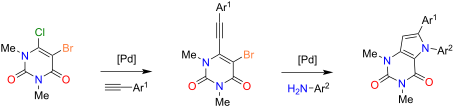
- . Keywords: alkynes; catalysis; cyclizations; domino reactions; heterocycles; Introduction Pyrimidines and purines are one of the most important heterocyclic compounds with prevalent biological functions. Both are found in nucleosides and their corresponding polymeric DNA and RNA, and hence are vital for



Recent total synthesis of natural products leveraging a strategy of enamide cyclization
Beilstein J. Org. Chem. 2025, 21, 999–1009, doi:10.3762/bjoc.21.81
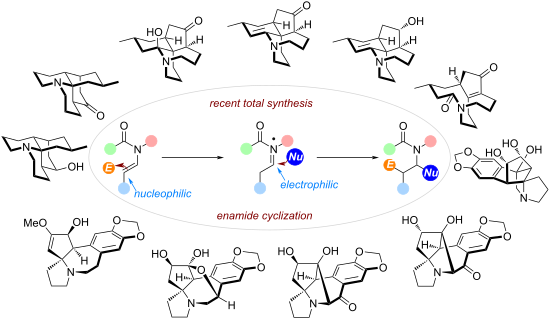
- reactions [7][8], the exploration of enamides’ nucleophilic reactivity has only gained momentum in recent years. Inspired by pioneering work from various research groups [9][10][11][12][13][14][15], the potential of enamides in nucleophilic reactions has become recognized. Among them, enamide cyclizations
- have attracted considerable attention due to their promise in the total synthesis of alkaloids [16]. Notably, these valuable compounds can be employed as efficient synthons in enamide–alkyne cycloisomerization, [n + m] cycloadditions, pericyclic reactions, and radical cyclizations. A comprehensive
- review of these advancements up until 2015 has already been documented [16]. In this review, recent breakthroughs of these enamide cyclizations will be surveyed from the viewpoint of natural product synthesis. Leveraging the enamide–alkyne cycloisomerization cyclizations, Lycopodium alkaloids




Recent advances in controllable/divergent synthesis
Beilstein J. Org. Chem. 2025, 21, 890–914, doi:10.3762/bjoc.21.73

- for the time-controlled palladium-catalyzed divergent synthesis of silacycles [43]. Metal-free temperature-controlled regiodivergent borylative cyclizations of enynes [45]. Nickel-catalyzed switchable site-selective alkene hydroalkylation by temperature regulation [46]. Copper-catalyzed