


Search results
Search for "deacylation" in Full Text gives 25 result(s) in Beilstein Journal of Organic Chemistry.
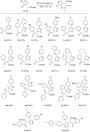
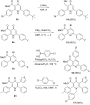
Base-promoted deacylation of 2-acetyl-2,5-dihydrothiophenes and their oxygen-mediated hydroxylation
Beilstein J. Org. Chem. 2026, 22, 192–204, doi:10.3762/bjoc.22.13
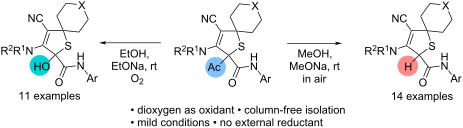
- methoxide afforded the deacylated products. Conversely, the treatment with sodium ethoxide in an oxygen saturated ethanolic solution produced 2-hydroxy substituted 2,5-dihydrothiophenes. Keywords: 2-acetyl-2,5-dihydrothiophenes; deacylation; 2-hydroxy-2,5-dihydrothiophenes; transformations; Introduction
- convenient tool for the preparation of phenols from aromatic ketones, several specific approaches have been developed for the synthesis of hydroxylated heterocycles [30][31][32][33][34]. The deacylation of ketones is also another important direction of their transformation [35][36][37][38]. Dihydrothiophenes
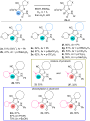
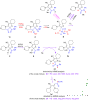
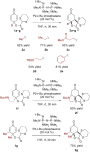
- % yield, accordingly. Next, the deacylation of 2-acetyl-2,5-dihydrothiophenes in methanolic solution was investigated (Scheme 3). Cyclohexano-, cycloheptano- and cyclooctano-spiroannulated 2-acetyl-3-morpholino-N-phenyl-2,5-dihydrothiophene-2-carboxamides in these conditions gave deacylated products in 75




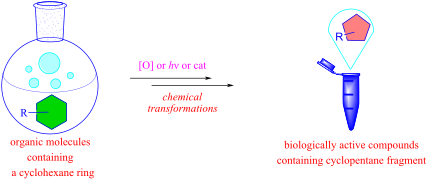
Transformation of the cyclohexane ring to the cyclopentane fragment of biologically active compounds
Beilstein J. Org. Chem. 2025, 21, 2416–2446, doi:10.3762/bjoc.21.185
- rearrangement product. However, treatment of (−)-preaustinoid A (80) with BF3·Et2O in MeCN led to an α-ketol rearrangement affording (−)-preaustinoid B (81) as the sole product in 86% yield. Presumably, this reaction proceeded through intermediate 85. Subsequently, the deacylation of the product 81 with 2.0


Recent advances in transition-metal-free arylation reactions involving hypervalent iodine salts
Beilstein J. Org. Chem. 2024, 20, 2891–2920, doi:10.3762/bjoc.20.243

- Cs2CO3 as shown in Scheme 1. The substrate scope exhibits that on using electron-deficient diaryliodonium salts as an arylating agent, α-fluoroacetamides 8 were obtained in moderate to good yields through a spontaneous arylation/deacylation cascade. The deacylation reaction is considered due to the
- reactions leads to the formation of the desired arylated α-aryl-α-fluoroacetoacetamides 7. The tetrasubstituted fluorocarbon center becomes more electrophilic in the presence of an electron-deficient aryl (Ar) group. This increased electrophilicity facilitates a base-mediated deacylation reaction, resulting




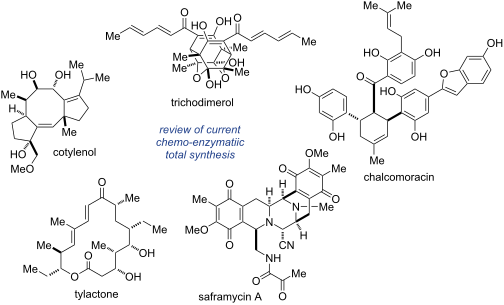
Chemo-enzymatic total synthesis: current approaches toward the integration of chemical and enzymatic transformations
Beilstein J. Org. Chem. 2024, 20, 1693–1712, doi:10.3762/bjoc.20.151
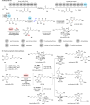
- fatty acid moiety on the C1 side chain (Scheme 9). Although the enzymatic deacylation of 94 can be catalyzed by the membrane-bound peptidase SfmE, similar chemical transformations require harsh conditions and are difficult to perform in the presence of highly reactive functional groups. To circumvent




Polymer degrading marine Microbulbifer bacteria: an un(der)utilized source of chemical and biocatalytic novelty
Beilstein J. Org. Chem. 2024, 20, 1635–1651, doi:10.3762/bjoc.20.146
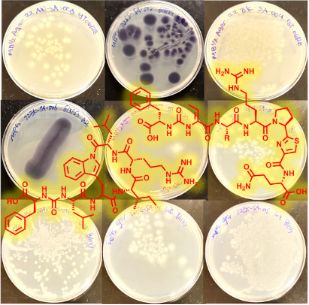
- . coli from a marine Microbulbifer sp. ALW1 [59]. Enzyme structure and site-directed mutagenesis led to the identification of key residues in the enzyme active site that participated in the hydrolytic activity [59]. Carbohydrate esterases Carbohydrate esterases (CEs) catalyze the O- or N-deacylation of




An isoxazole strategy for the synthesis of 4-oxo-1,4-dihydropyridine-3-carboxylates
Beilstein J. Org. Chem. 2022, 18, 738–745, doi:10.3762/bjoc.18.74
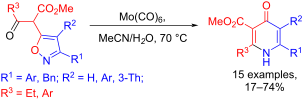
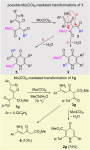
- , resulted from the deacylation of intermediate 3g, was isolated in the reaction carried out at 70 °C. This side process is probably the reason for the decrease in the yield of the target pyridone 2g. Considering that isoxazoles were previously reduced to enaminones by other reducing systems [24][25][26][27
- not detected. It is most probable that, in addition to the reductive opening of isoxazole, Mo(CO)6 catalyzes the cyclization of enaminone 3g to pyridine 2g [14]. In the absence of such catalysis, the unstable enaminone intermediate undergoes deacylation and decomposes through other destructive
- ). Isoxazole 1j with Mo(CO)6/H2O/MeCN gives the corresponding pyridone 2j in trace amounts, while the reaction of isoxazoles 1l,m,r leads to complete resinification. It is likely that one of the reasons for the decrease in the yields of pyridones 2 is the occurrence of a side reaction of deacylation of enamine




Progress and challenges in the synthesis of sequence controlled polysaccharides
Beilstein J. Org. Chem. 2021, 17, 1981–2025, doi:10.3762/bjoc.17.129
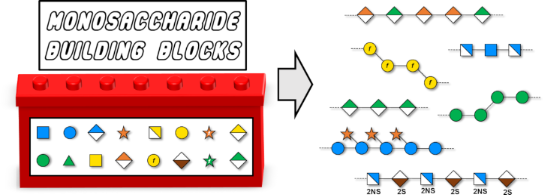
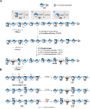
- glycosylation method was also employed to access different branched structures having β(1–3)- and β(1–6)-linked Glc appendances on a β(1–3) backbone [136]. To date, the longer β(1–3)-glucans [137][138] were obtained using a 2-O-acylated donor, to ensure β-selectivity, followed by deacylation and use of the










A cyclopeptide and three oligomycin-class polyketides produced by an underexplored actinomycete of the genus Pseudosporangium
Beilstein J. Org. Chem. 2020, 16, 1100–1110, doi:10.3762/bjoc.16.97
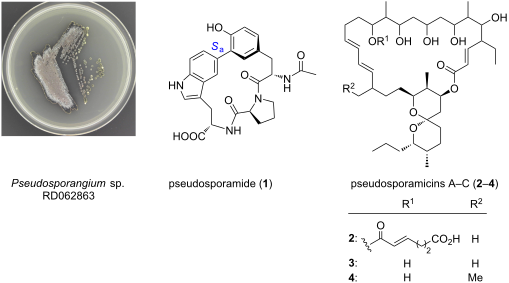
- similarly observed, except for the more shielded H-13 with a chemical shift of 4.08 ppm (as compared to 4.64 ppm for 2) due to the lack of an electron-withdrawing group. Thus, 3 was determined as a deacylation congener of 2 at C-13 (Table 2, Figure S19 in Supporting Information File 1). The NMR spectra of


Archangelolide: A sesquiterpene lactone with immunobiological potential from Laserpitium archangelica
Beilstein J. Org. Chem. 2019, 15, 1933–1944, doi:10.3762/bjoc.15.189
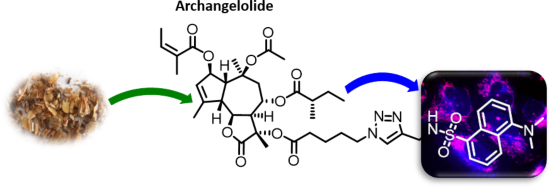
- ) of the dansyl-labeled archangelolide 5 started with a mild solvolysis of compound 1 by triethylamine in methanol. Surprisingly, the only product that we obtained after 48 h of treatment was 11-deacetylarchangelolide (3), in only 32% yield. The position in the structure of compound 1 where deacylation




One-pot activation–alkynylation–cyclization synthesis of 1,5-diacyl-5-hydroxypyrazolines in a consecutive three-component fashion
Beilstein J. Org. Chem. 2019, 15, 1360–1370, doi:10.3762/bjoc.15.136
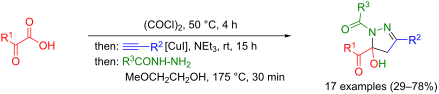
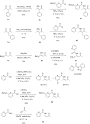
- , starting from phenylglyoxylic acid (1a), phenylacetylene (2a), and Boc-hydrazide (4a) through the formation of 1,4-diphenylbut-3-yne-1,2-dione (3a), with subsequent N-deacylation as the consequence of basic work-up (Scheme 2), furnished 5-benzoyl-3-phenyl-1H-pyrazole (6a) in 41% isolated yield. In addition
- or Brønsted acidic conditions were accompanied by simultaneous deacylation of substituent R3 finally furnishing 5-(hetero)aroyl-3-(hetero)aryl-1H-pyrazole 6a (for attempted dehydrative aromatization, see Supporting Information File 1, Table S5), as already reported for alkaline deprotection
- dimer of compound 5r (thermal ellipsoids at 30% probability). Glyoxylation–alkynylation (GA) and activation–alkynylation (AA) synthesis of alkynediones in a one-pot fashion. Consecutive three-component synthesis to give 5-benzoyl-3-phenyl-1H-pyrazole (6a) after alkaline deacylation of intermediate 5a


D-Fructose-based spiro-fused PHOX ligands: synthesis and application in enantioselective allylic alkylation
Beilstein J. Org. Chem. 2018, 14, 2082–2089, doi:10.3762/bjoc.14.182
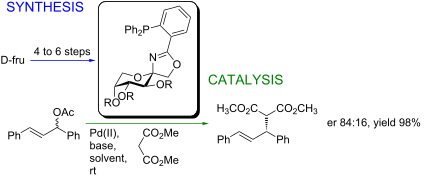
- phosphines can be used as nucleophiles for deacetylation reactions [50][51]. We suppose that the lower yields of 5f–i and 14a can be explained by partial or full deacylation of the protective groups. This explanation is also in good accordance with the fact that the yield of the ester protected PHOX ligand




Stimuli-responsive oligonucleotides in prodrug-based approaches for gene silencing
Beilstein J. Org. Chem. 2018, 14, 436–469, doi:10.3762/bjoc.14.32
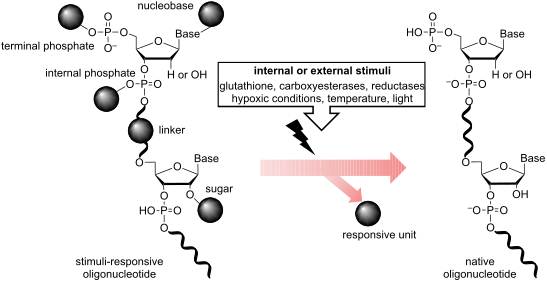
- quantitatively converted to phosphorothioate ONs by carboxyesterase-mediated deacylation followed by the removal of the resulting S-(2-mercaptoethyl) group by cyclization to episulfide. For S-acyloxymethyl phosphorothiolates, hydrolysis of the ester catalyzed by the enzymes was followed by release of
- shown to improve RNA nuclease resistance and not to hamper duplex dsRNA formation, and they are removed by cellular esterases. Indeed, 2’-O-acyloxymethyl ONs are converted to unmodified RNAs by carboxyesterase-mediated deacylation with the release of formaldehyde to produce the parent RNA (Scheme 10


Vinylphosphonium and 2-aminovinylphosphonium salts – preparation and applications in organic synthesis
Beilstein J. Org. Chem. 2017, 13, 2710–2738, doi:10.3762/bjoc.13.269

- yields by deacylation of 2-(N-acylamino)vinylphosphonium salts with methanol in the presence of DBU (Scheme 19) [34][35]. Spectroscopic properties (IR, 1H and 13C NMR) and X-ray data of the obtained 2-aminovinylphosphonium salts corresponded to the enamine tautomeric form with the domination of β-iminium
- salts 2.3.1. Deprotonated 2-aminovinylphosphonium salts in the Wittig reaction: 2-Aminovinylphosphonium salts, which are the addition products of amines to 2-propynylphosphonium bromide [33] or can be obtained by deacylation of 2-(N-acylamino)vinylphosphonium salts [34][35], have been found to have
- -benzoyloxyvinylphosphonium bromide from 2-propynyltriphenylphosphonium bromide. Synthesis of 2-aminovinylphosphonium salts via nucleophilic addition of amines to 2-propynyltriphenylphosphonium bromide. Deacylation of 2-(N-acylamino)vinylphosphonium chlorides to 2-aminovinylphosphonium salts. Resonance structures of 2


An improved preparation of phorbol from croton oil
Beilstein J. Org. Chem. 2017, 13, 1361–1367, doi:10.3762/bjoc.13.133
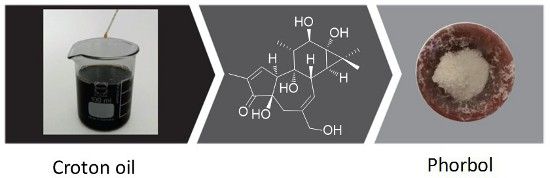
- and type-B esters and showing different stability to deacylation. Conclusion: The isolation of phorbol from croton oil is dangerous because of the toxic properties of the oil, poorly reproducible because of differences in its phorboid profile, and time-consuming because of the capricious final
- cancer prevention and treatment remains high [13]. Phorbol occurs in croton oil as a mixture of di- and triesters, generally in a ca. 1:2 ratio [6], and therefore isolation involves a deacylation step, critical because of the sensitivity of phorbol to isomerization to 4α-phorbol (2) by a base-induced
- group. Partition between methanol and hexane afforded a crude mixture of phorbol diesters, that was next tritylated. After deacylation by basic treatment and chromatography, 20-tritylphorbol (1c) was obtained, as a hydrate, in sufficient purity to be used as starting material for the esterification [18


Phosphazene-catalyzed desymmetrization of cyclohexadienones by dithiane addition
Beilstein J. Org. Chem. 2017, 13, 762–767, doi:10.3762/bjoc.13.75
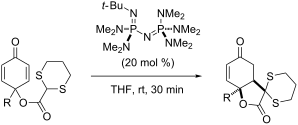
- -membered α-ketolactone (5) that would result from deprotection. We attempted to synthesize 5 via an alternative route using Cu(II)-catalyzed aerobic oxidative deacylation [76] of the β-keto ester 6 (Scheme 4) [77]. The fact that this reaction also leads to decomposition of the starting material is cause
- tethered nucleophile. Scope of the transformation. Convex facial additions. Attempted oxidative deacylation. Attempted desulfurization with Raney nickel. Carbonyl deprotection conditions. Supporting Information Supporting Information File 247: Experimental procedures, characterization data and copies of




Synthesis of highly functionalized 2,2'-bipyridines by cyclocondensation of β-ketoenamides – scope and limitations
Beilstein J. Org. Chem. 2016, 12, 1170–1177, doi:10.3762/bjoc.12.112
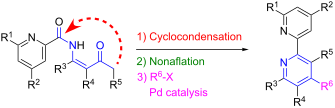
- led to undesired side reactions, e.g., deacylation or oligomerization processes. The development of the discussed pyridine syntheses by cyclocondensation reactions of β-ketoenamides was inspired by a serendipitously discovered three-component reaction of lithiated alkoxyallenes, nitriles and




Synthesis and in vitro cytotoxicity of acetylated 3-fluoro, 4-fluoro and 3,4-difluoro analogs of D-glucosamine and D-galactosamine
Beilstein J. Org. Chem. 2016, 12, 750–759, doi:10.3762/bjoc.12.75
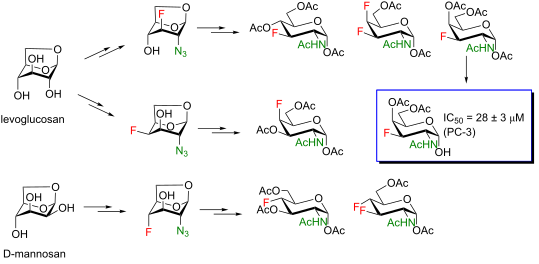
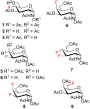
- expression of highly branched N-glycans in PC-3 cells, the 6-O-deacetylated analog 3 showed only negligible cytotoxicity [2] implying that the inhibition of proliferation and perturbation of N-glycan biosynthesis occur by different mechanisms. Increased cytotoxicity as a result of 1-O-deacylation was noted



Sacrolide A, a new antimicrobial and cytotoxic oxylipin macrolide from the edible cyanobacterium Aphanothece sacrum
Beilstein J. Org. Chem. 2014, 10, 1808–1816, doi:10.3762/bjoc.10.190
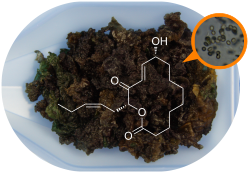
- proton, not observed in the 1H spectrum, was assigned to a hydroxy proton (9-OH). Thus, the planar structure of 1 was determined to be a new 14-membered macrolide. The stereogenic center C13 constitutes an α-acyloxy ketone moiety and deacylation catalyzed by a base may result in the loss of chirality


Allenylphosphine oxides as simple scaffolds for phosphinoylindoles and phosphinoylisocoumarins
Beilstein J. Org. Chem. 2014, 10, 996–1005, doi:10.3762/bjoc.10.99
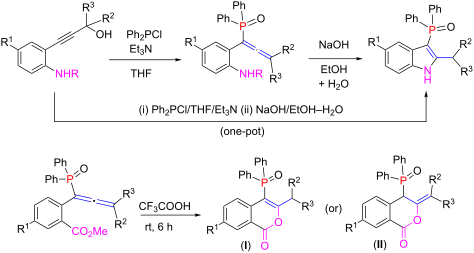
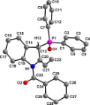
- the nitrogen lone pair on the β-carbon [24] of the allene forming addition product II or III. This upon treating with aq NaOH leads to the deacylated/debenzoylated phosphinoylindoles. In the one-pot reaction, though, the in situ generated allenylphosphine oxide first undergoes deacylation




Silica sulfuric acid: a reusable solid catalyst for one pot synthesis of densely substituted pyrrole-fused isocoumarins under solvent-free conditions
Beilstein J. Org. Chem. 2013, 9, 2344–2353, doi:10.3762/bjoc.9.269
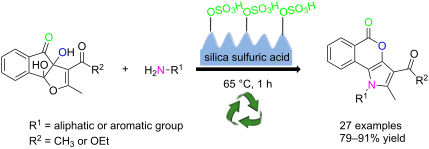
- attention of synthetic as well as medicinal chemists [7][8][9]. Various methodologies for the synthesis of isocoumarins have been reported such as the reaction of o-halobenzoic acids and 1,3-diketones through a copper-catalyzed tandem sequential cyclization/addition/deacylation process [10][11], an iridium


Synthesis of mucin-type O-glycan probes as aminopropyl glycosides
Beilstein J. Org. Chem. 2013, 9, 1867–1872, doi:10.3762/bjoc.9.218
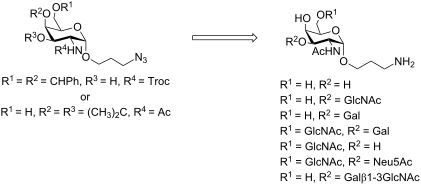
- reductively convert the N-Troc-protecting group to the corresponding amine, resulted in partial reduction of the azide group in the linker. We found that deacylation with LiOH gave better yields, cleaner reaction mixtures and moreover the conditions are compatible with other functionalities that are


Approaches to α-amino acids via rearrangement to electron-deficient nitrogen: Beckmann and Hofmann rearrangements of appropriate carboxyl-protected substrates
Beilstein J. Org. Chem. 2012, 8, 1393–1399, doi:10.3762/bjoc.8.161

- complicated by competing deacylation, hydroxamic acid formation, etc. We are only aware of two reports [8][9] of the Beckmann rearrangement of β-keto ester oximes. A particular problem was the formation of isoxazolone byproducts, which apparently limited the synthesis to α,α-disubstituted derivatives


Studies on the substrate specificity of a GDP-mannose pyrophosphorylase from Salmonella enterica
Beilstein J. Org. Chem. 2012, 8, 1219–1226, doi:10.3762/bjoc.8.136

- phosphate with 22, which afforded the desired compound, 23, in 75% yield. Hydrogenolysis of the benzyl groups and deacylation led to the formation, in 67% yield, of Manp-1P derivative 10. Synthesis of 4-methoxy derivative 11 As illustrated in Scheme 3, the synthesis of the 4-methoxy Manp-1P analogue 11


Synthesis of 4” manipulated Lewis X trisaccharide analogues
Beilstein J. Org. Chem. 2012, 8, 1134–1143, doi:10.3762/bjoc.8.126
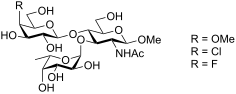
- desired protected Lex analogues. One-step global deprotection (Na/NH3) of the protected 4”-methoxy analogue, and two-step deprotections (removal of a p-methoxybenzyl with DDQ, then Zemplén deacylation) of the 4”-deoxychloro and 4”-deoxyfluoro protected Lex analogues gave the desired compounds in good
- p-methoxybenzyl group with DDQ in CH2Cl2/H2O (15:1 v/v) was followed by Zemplén deacylation, giving the target Lex analogues 4 and 5 in 78% and 75%, respectively, over the two steps. The structures of the final deprotected trisaccharides 3–5 were confirmed by HR–ESI mass spectrometry and NMR


Dependency of the regio- and stereoselectivity of intramolecular, ring-closing glycosylations upon the ring size
Beilstein J. Org. Chem. 2011, 7, 1609–1619, doi:10.3762/bjoc.7.189
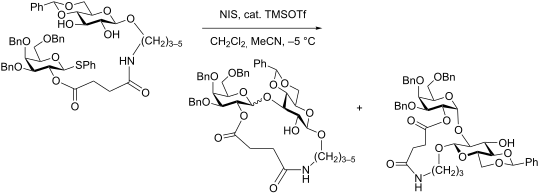
- , 2 h, 68%). Next, Zemplén deacylation of the intermediate glucoside (cat. NaOMe, MeOH, 25 °C, 16 h, 97%) and acetalation as described for compound 3a afforded compound 3b in 77% yield. Hydrogenation of the latter with Lindlar catalyst then gave 4b in 80% yield. Similarly, compounds 4c and 4d were





