Search results
Search for "pyrrolidine" in Full Text gives 267 result(s) in Beilstein Journal of Organic Chemistry. Showing first 200.
One-pot four-component sequential synthesis of S-alkyl dithiocarbamates using lipase as a biocatalyst
Beilstein J. Org. Chem. 2026, 22, 1048–1056, doi:10.3762/bjoc.22.83
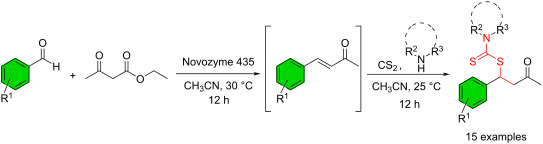
- presented in Scheme 3 and Scheme 4. As shown in Scheme 3, the reaction with cyclic amines such as pyrrolidine resulted in a higher product yield (6a, 96%) compared to piperidine (6b, 87%). Additionally, both benzaldehyde (6a, 96%) and 2-methylbenzaldehyde (6e, 92%) afforded the desired products in excellent


Synthesis of sterically shielded piperidine nitroxides via acid-catalyzed heterocyclization of β-aminoketone derivatives with ketones
Beilstein J. Org. Chem. 2026, 22, 948–954, doi:10.3762/bjoc.22.74
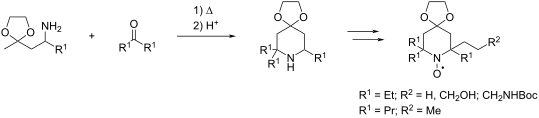
- reactions of cyclic nitrones with organometallic compounds is a fruitful approach for the synthesis of sterically shielded radicals of the pyrrolidine, imidazoline, and imidazolidine series [23], including those with functional groups in the side chains [24]. Here we applied this strategy for the synthesis
- be prepared by any of the previously used methods. Taking into account the fact that piperidine nitroxides are traditionally used as precursors of nitroxyl radicals of other types, especially the pyrroline and pyrrolidine series, this method may open up new possibilities in the chemistry of nitroxide


Synthesis of heterocycles based on azomethine ylides from α-amino acids (or amines) and carbonyl compounds
Beilstein J. Org. Chem. 2026, 22, 705–741, doi:10.3762/bjoc.22.55
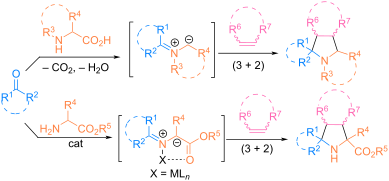
- Federation Saint Petersburg State University, Universitetskaya nab. 7/9, 199034, St. Petersburg, Russian Federation 10.3762/bjoc.22.55 Abstract This review focuses on new directions in (3 + 2) cycloaddition of azomethine ylides to alkenes, resulting in the formation of fused or spiro-fused pyrrolidine
- ]. The use of azomethine ylides as dipoles is necessary for the synthesis of pyrrolidine systems, which are often found in natural products and are important structural fragments of pharmaceuticals [5]. This method is also used to obtain pyrrolizidine derivatives, which are the structural basis of
- amines) and to demonstrate their synthetic potential using a number of examples. The main strategies for synthesizing pyrrolidine derivatives via asymmetric and non-asymmetric 1,3-dipolar cycloaddition of azomethine ylides derived from cyclic and acyclic amino acids or amino esters with various carbonyl


Molecular tweezer–peptide conjugates disrupt the protein–protein interaction between survivin and histone H3 essential in mitosis
Beilstein J. Org. Chem. 2026, 22, 557–567, doi:10.3762/bjoc.22.41
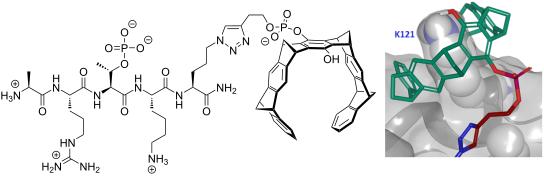
- in solution, as shown by the fluorescence polarization measurements where the K121A mutation has drastically reduced affinity. In the new crystal structure, the apolar pyrrolidine of Pro-26 occupies half of the tweezer cavity, while from the opposite side, a density that most likely corresponds to a




Dialkylaminoalkylation of β-ketosulfones via ring-opening of 3-sulfonylpyrrolidines
Beilstein J. Org. Chem. 2026, 22, 383–389, doi:10.3762/bjoc.22.26
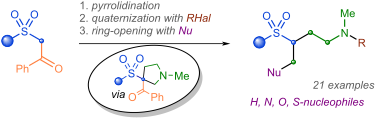
- 1). Altering the substituents at the sulfonyl group made no significant impact on the yield of the reaction. An application of β-ethoxycarbonylsulfone lowered the yield of the pyrrolidine 2f (53%), apparently due to the lower acidity and activity of its methylene group, however, increasing the
- by adding the alkyl halide directly to the cooled reaction mixture of the formed pyrrolidine without its isolation and purification, that provided higher yields of the quaternary compounds 3 rather than step by step approach. Further, we focused our attention on the search for the reaction conditions
- 4). In attempt to minimize the size of the leaving group we applied a ethoxycarbоnyl moiety instead of the benzoyl group. Thus, heating the dimethylammonium salt of pyrrolidine 2f with an excess of KOH in MeOH for 46 h provided the same product 4a in 89% yield (Table 1, entry 5). While it is




Recent advances in the cleavage of non-activated amides
Beilstein J. Org. Chem. 2026, 22, 352–369, doi:10.3762/bjoc.22.23
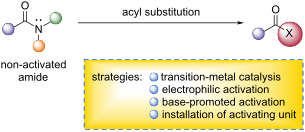
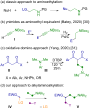
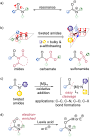
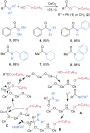
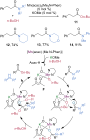
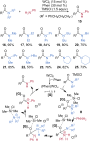
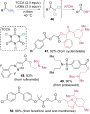
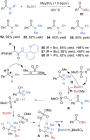
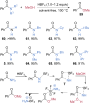
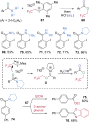
- 2.2 equivalents of 2-bromopyridine as a base, pyrrolidine-derived amides 38 were effectively activated. Subsequent addition of NFSI as the electrophilic fluorinating reagent, along with alcohols as the nucleophile, afforded the corresponding esters 39–43 in moderate yields. Mechanistically, the
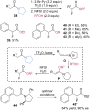
- electrophilic activation of pyrrolidine-derived amides with Tf2O and 2-bromopyridine generates a keteniminium ion O, which undergoes nucleophilic addition to form an enamine intermediate P. Subsequent electrophilic α-fluorination followed by hydrolysis produces the α-fluoroester products. Notably, the C2-chiral
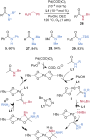
- secondary 2-iodo-N,N-dimethylbenzamides 69–71 afforded 2,2,2-trifluoroethyl 2-iodobenzoate (68) in moderate yield. Higher yields were observed when tertiary amides 72 and 73 were employed for esterification. Among these, pyrrolidine-based amide 73 exhibited the highest efficiency, furnishing the ester 68 in










Synthesis of tricyclic fused pyrrolidine nitroxides from 2-alkynylpyrrolidine-1-oxyls
Beilstein J. Org. Chem. 2026, 22, 344–351, doi:10.3762/bjoc.22.22

- -alkynyl-substituted pyrrolidine nitroxides was studied. These nitroxides have been prepared via intramolecular Huisgen cycloaddition or intramolecular alkylation in 2-pyrazolyl derivatives prepared by Michael addition–cyclocondensation of the corresponding alkynones with hydrazine. The reduction kinetics
- by ascorbate showed that the formation of the rigid tricyclic framework does not lead to a significant increase in stability of the radical center to chemical reduction. Keywords: annulated tricyclic system; nitroxide; pyrazole; pyrrolidine; triazole; Introduction Stable nitroxides are functional
- -2-ethynylpyrrolidine-1-oxyls with nucleophilic agents can lead to the formation of condensed systems involving the substituent at position 3 of the pyrrolidine ring [16]. Alkynes are broadly used in the synthesis of various heterocyclic compounds, and participation of neighboring functional groups




Spirobarbiturates with a pyrrolizidine moiety: synthesis, structure and biological evaluation
Beilstein J. Org. Chem. 2026, 22, 274–288, doi:10.3762/bjoc.22.20
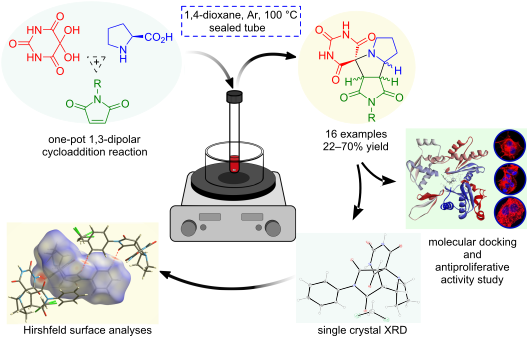
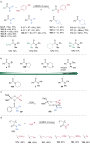
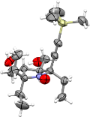
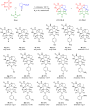
- system of two condensed pyrrolidine rings sharing a common nitrogen atom. This heterocyclic system occurs naturally in numerous plant-derived alkaloids [27][28][29][30]. Notably, most pyrrolizidine alkaloids exhibit severe hepatotoxicity, genotoxicity and cause neurological disorders in humans and
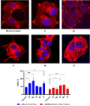
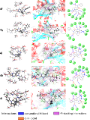
- in Supporting Information File 1, Figures S77–S79. As can be seen from the obtained results, the compounds generally have a limited antiproliferative effect against these cells in contrast to previously studied compounds that contain a cyclopropane moiety instead of a pyrrolidine one [57] and




A mild and atom-efficient four-component cascade strategy for the construction of biologically relevant 4-hydroxyquinolin-2(1H)-one derivatives
Beilstein J. Org. Chem. 2026, 22, 244–256, doi:10.3762/bjoc.22.18
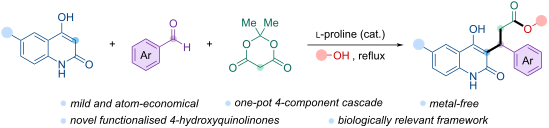
- , replacing alcohols with secondary amines (e.g., pyrrolidine) as the reaction medium did not lead to the desired amides. Experimental trials resulted in the formation of complex mixtures (as confirmed by 1H NMR), suggesting that the high reactivity of amines interferes with the selectivity of the cascade


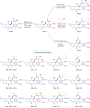
Base-promoted deacylation of 2-acetyl-2,5-dihydrothiophenes and their oxygen-mediated hydroxylation
Beilstein J. Org. Chem. 2026, 22, 192–204, doi:10.3762/bjoc.22.13
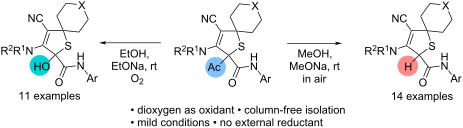
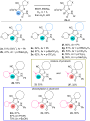
- . Pyrrolidine- and azepane-substituted cyclooctano-spiroannulated 2,5-dihydrothiophenes 1m and 1n were found to be transformed into deacetylated products in 67% (2m) and 60% (2n) yields. When experiments were performed in iPrOH or n-BuOH, we observed the formation of the deacylated product (2n) in 67 and 70
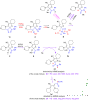
- due to the stronger donor character of the pyrrolidine moiety due to its planar structure. The formation of the deacetylated products 2n,o (Scheme 2) may be attributed to increased steric hindrance, which makes proton transfer to B in Scheme 6 more difficult. The dimethyl-1-yl moiety likely exhibits a
- lower donor character compared to pyrrolidine, but higher than that of morpholine and piperidine. As a result, a mixture of products 2l and 2l′ is formed. Starting dihydrothiophenes 1 form more stable anions B in comparison with regioisomers 4 due to the delocalization of the negative charge over the




Asymmetric Mannich reaction of aromatic imines with malonates in the presence of multifunctional catalysts
Beilstein J. Org. Chem. 2026, 22, 151–157, doi:10.3762/bjoc.22.8
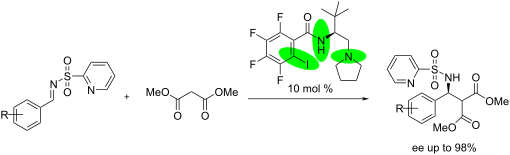
- adduct in 83% ee (Table 1, entry 9). Replacing the five-membered pyrrolidine ring in the catalyst structure with the more flexible six-membered piperidine ring (catalyst H, Table 1, entry 13) reduced its selectivity slightly (78% ee). However, the catalyst derived from phenylglycine (catalyst F) or


An Fe(II)-catalyzed synthesis of spiro[indoline-3,2'-pyrrolidine] derivatives
Beilstein J. Org. Chem. 2025, 21, 2383–2388, doi:10.3762/bjoc.21.183
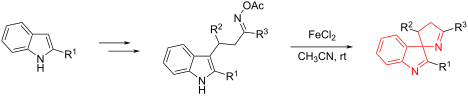
- , The Ural Branch of Russian Academy of Sciences, Goleva St. 13, 614081 Perm, Russian Federation 10.3762/bjoc.21.183 Abstract A synthetic strategy for the preparation of spiro[indoline-3,2'-pyrrolidine] derivatives has been developed, featuring a two-step sequence consisting of the reaction of 2
- -unsaturated ketone; dearomatization; indole; spirocyclization; spiro[indoline-3,2'-pyrrolidine]; Introduction Spiro[indoline-3,2'-pyrrolidine] derivatives represent an important class of organic compounds found in both natural products (e.g., coerulescine [1], horsfiline [2], and elacomine [3]) and synthetic
- synthesized spiro[indoline-3,2'-pyrrolidine] derivatives 4 were evaluated for antimicrobial activity via serial dilution assays across a concentration range of 0.5–1000 µg/mL. The minimum inhibitory concentration (MIC) and minimum bactericidal (fungicidal) concentration (MBC/MFC) against a diverse spectrum of




Rotaxanes with integrated photoswitches: design principles, functional behavior, and emerging applications
Beilstein J. Org. Chem. 2025, 21, 2345–2366, doi:10.3762/bjoc.21.179

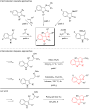
- patterns that dictate the position of the macrocycle. Later, Leigh and co-workers introduced a new strategy for dynamically controlling asymmetric catalysis using a hydrazone-based rotaxane [72]. The axle features a hydrazone photoswitch and a pseudo-meso 2,5-disubstituted pyrrolidine organocatalytic unit
- . The photoisomerization of the hydrazone modulates the position of the tetraamide macrocycle around the pyrrolidine, breaking its symmetry and switching its handedness. This dynamic control was used to adjust the enantioselectivity of an enamine-mediated conjugate addition. In 2024, the same group


Recent advances in Norrish–Yang cyclization and dicarbonyl photoredox reactions for natural product synthesis
Beilstein J. Org. Chem. 2025, 21, 2315–2333, doi:10.3762/bjoc.21.177
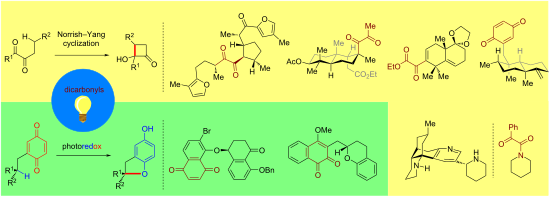
- racemic 87 was synthesized on a gram scale in 47% yield from 90 via a Norrish–Yang reaction. However, under the established photochemical conditions for generating 87, the corresponding pyrrolidine-derived species 93 is not formed (Scheme 11). In contrast, solution-phase irradiation of the same
- pyrrolidine-derived phenyl keto amide substrate 91 with blue LEDs produces the pyrrolidine-fused 4-oxazolidinone (N,O-acetal) 92, precluding preparation of the pyrrolidine analog of lycoplatyrine A (94) by this method. Compound 92 is presumably formed via either the radical mechanism [41] or possibly
- . Asymmetric total synthesis of lycoplatyrine A. Photoreaction of pyrrolidine-derived phenyl keto amide. Photoredox reactions of naphthoquinones. Synthetic study toward γ-rubromycin. Substituent-dependent conformational preferences. Total synthesis of preussomerins EG1, EG2, and EG3. Acknowledgements This




Enantioselective radical chemistry: a bright future ahead
Beilstein J. Org. Chem. 2025, 21, 2283–2296, doi:10.3762/bjoc.21.174
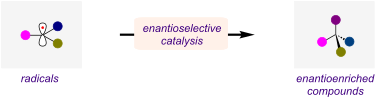
- mechanism involving single-electron oxidation of an enamine intermediate, addition of the resulting radical to the olefin, single-electron oxidation of the adduct to form a carbocationic intermediate, and intramolecular nucleophilic attack on the carbocation to form the pyrrolidine ring. The reaction


Pathway economy in cyclization of 1,n-enynes
Beilstein J. Org. Chem. 2025, 21, 2260–2282, doi:10.3762/bjoc.21.173
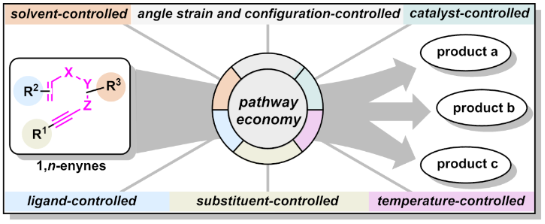
- metal-free methodology delivered synthetically versatile iodinated homoallylic alcohols bearing piperidine motifs and pyrrolidine-fused cyclopropanes. Importantly, the reaction was carried out with high operational simplicity and environmental compatibility under mild reaction conditions. In 2024, Chan
- afforded selective access to four indole derivatives through modulation of the alkyne's terminal substituents and nucleophile type (Scheme 14) [21][22]. The gold(I) catalyst activated the unsubstituted terminal alkynes to initiate a 5-exo-dig cyclization, generating a spiro[indoline-3,3'-pyrrolidine


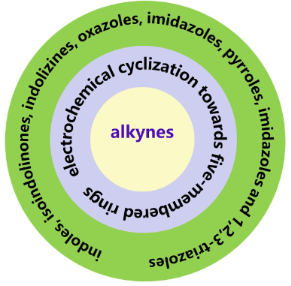
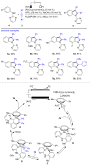
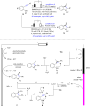
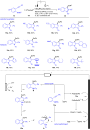
Electrochemical cyclization of alkynes to construct five-membered nitrogen-heterocyclic rings
Beilstein J. Org. Chem. 2025, 21, 2173–2201, doi:10.3762/bjoc.21.166
- emitting diodes [28]. Formyl oxazolidine (V12) was a potential candidate to protect maize from herbicide harm [29]. Thiadiazole-linked thioacetamide (S5) exhibited exceptional inhibitory activity against Synechocystis sp. PCC6803 and Cy-FBP/SBPase [30]. Pyrrolidine compound MSC2530818 could be potentially









C2 to C6 biobased carbonyl platforms for fine chemistry
Beilstein J. Org. Chem. 2025, 21, 2103–2172, doi:10.3762/bjoc.21.165


Discovery of cytotoxic indolo[1,2-c]quinazoline derivatives through scaffold-based design
Beilstein J. Org. Chem. 2025, 21, 2062–2071, doi:10.3762/bjoc.21.161
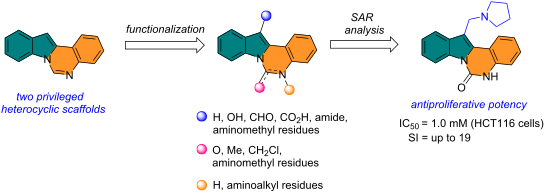
- substitution of the terminal chloride in 11 with various cyclic amines, including pyrrolidine, piperidine, and mono-tert-butoxycarbonyl (Boc)-protected piperazine, provided a set of aminoalkyl derivatives 12а–с (Scheme 4). This strategy enables the expansion of structural diversity within this scaffold and
- superior results compared to the parent structure and again pyrrolidine as the key part of the 12-aminomethyl fragment (in 10b) demonstrated the best activity. The introduction of an aminopropyl group at the position 5 of indolo[1,2-c]quinazolin-6(5H)-one (derivatives 12a–c) is also accompanied by the


Bioinspired total syntheses of natural products: a personal adventure
Beilstein J. Org. Chem. 2025, 21, 2048–2061, doi:10.3762/bjoc.21.160
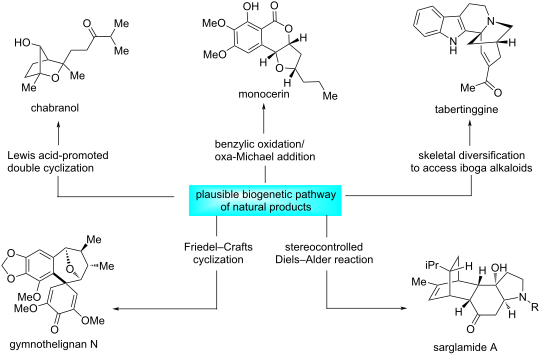
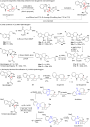
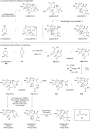
- analysis. The major one 48b was used for further study to install the pyrrolidine system. Thus, nucleophilic addition of an N,O-enolate, derived from precursor 49 with LDA, to the ketone functionality in 48b was implemented to generate a pair of inseparable regioisomers 50a and 50b, arose from C4 and C7




Aryl iodane-induced cascade arylation–1,2-silyl shift–heterocyclization of propargylsilanes under copper catalysis
Beilstein J. Org. Chem. 2025, 21, 1984–1994, doi:10.3762/bjoc.21.154
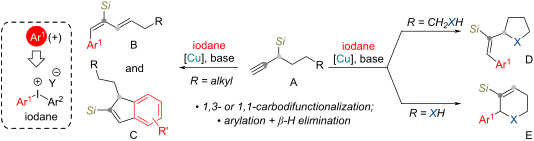
- stabilized allyl cation intermediates that undergo regioselective trapping by internal O- and N-nucleophiles furnishing functionalized heterocycles. This method provides access to tetrahydrofuran or pyrrolidine frameworks, each bearing a trifunctionalized (E)-configured vinyl side chain. The use of a shorter
- on intermediate allyl cation (Scheme 1C). The obtained tetrahydrofuran and pyrrolidine derivatives with highly substituted vinyl side-chains are regarded as privileged structures in medical chemistry [23][24]. Moreover, the resulting styryl functionality (Ph-C=C-) is often found in drug molecules as
- optimization see Supporting Information File 1. Next, we switched to internal N-nucleophiles. N-Nosylated starting material 7f under standard arylation conditions gave the 2-(1-(tert-butyldimethylsilyl)vinyl)-1-((4-nitrophenyl)sulfonyl)pyrrolidine (14) with a 56% yield. Most likely in this case sulfonamide N–H


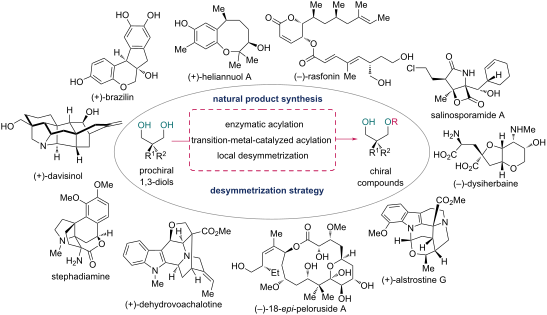
Enantioselective desymmetrization strategy of prochiral 1,3-diols in natural product synthesis
Beilstein J. Org. Chem. 2025, 21, 1932–1963, doi:10.3762/bjoc.21.151
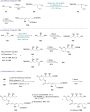
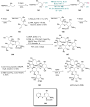
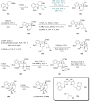
- , followed by reductive demercuration with LiBH4/Et3B to construct the pyrrolidine ring of compound 162. A three-step transformation of 162 yielded compound 163, which was subjected to base-mediated cyclization with concomitant debenzoylation to deliver oxazolidinone 164. Through a four-step sequence










Preparation of a furfural-derived enantioenriched vinyloxazoline building block and exploring its reactivity
Beilstein J. Org. Chem. 2025, 21, 1737–1741, doi:10.3762/bjoc.21.136

- successful as the reaction was stopped at the spirocycle 4d formation stage (Table 1, entry 9). The removal of the N-Alloc group in unsaturated ester S-3d was performed using a Pd catalyst and pyrrolidine as a nucleophile. The use of Pd(PPh3)4 as the catalyst led to a fast consumption of the starting


General method for the synthesis of enaminones via photocatalysis
Beilstein J. Org. Chem. 2025, 21, 1535–1543, doi:10.3762/bjoc.21.116
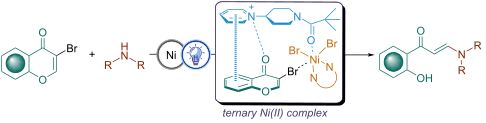
- components of drug derivative formulations, present in more than 7,000 active pharmaceutical compounds [43], the possibility of introducing a pyridine ring into the enaminone structure could be useful for the development of new drug candidates. When pyrrolidine was used as amine reagent, the target enaminone




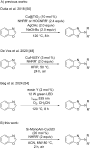
Microwave-enhanced additive-free C–H amination of benzoxazoles catalysed by supported copper
Beilstein J. Org. Chem. 2025, 21, 1462–1476, doi:10.3762/bjoc.21.108
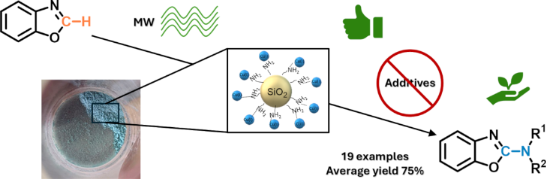
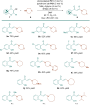
- Information File 1 for the syntheses of derivatives 1k, 1m–s). Encouragingly, all 16 amines were successfully converted to the corresponding 2-aminobenzoxazole derivatives with yields greater than 50%. Beyond piperidine, other cyclic amines, such as morpholine, piperazine, and pyrrolidine, also reacted