Search results
Search for "Fe3O4" in Full Text gives 132 result(s) in Beilstein Journal of Nanotechnology.
Applications of superparamagnetic iron oxide nanoparticles in drug and therapeutic delivery, and biotechnological advancements
Beilstein J. Nanotechnol. 2020, 11, 1092–1109, doi:10.3762/bjnano.11.94
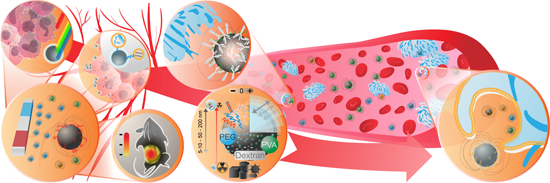
- of iron oxides in the form of magnetite (Fe3O4) or maghemite (Fe2O3) and are easy to produce through a few well-documented synthesis methods yielding different forms and structures (e.g., round, cubic, hexagonal, clusters, core–shell with gold, silica, polymers, or surfactants). A lot of research is
- magnetite (Fe3O4), maghemite (γ-Fe2O3) or hematite (α-Fe2O3) [60]. There are various geometric forms of SPIONs, which depend on the synthesis. The most extensively studied form are spherical SPIONs, followed by cubic, hexagonal, rod-like, octagonal, nanoworm, and octopod (star-shaped) SPIONs [61][62]. Non
- inefficient methodology of use, and inconsistent results [94]. The potential toxicity could be put to a good use, though. Hybrid Fe3O4/Gd2O3 loaded with cisplatin and tagged with lactoferrin and RGD (a cell endocytosis small peptide) was proved in vitro and in vivo to cross the blood–brain barrier and target


Uniform Fe3O4/Gd2O3-DHCA nanocubes for dual-mode magnetic resonance imaging
Beilstein J. Nanotechnol. 2020, 11, 1000–1009, doi:10.3762/bjnano.11.84
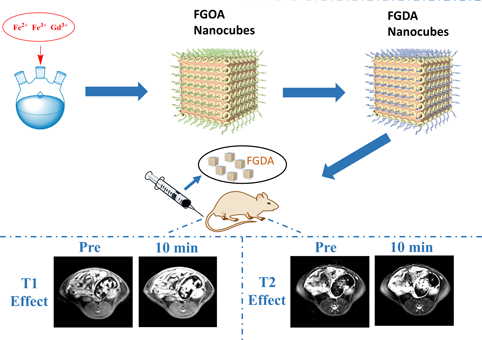
- distributed Fe3O4/Gd2O3 nanocubes for T1–T2 dual-mode MRI contrast agents were successfully designed and synthesized. In order to increase hydrophilicity and biocompatibility, the nanocubes were coated with nontoxic 3,4-dihydroxyhydrocinnamic acid (DHCA). The results show that iron (Fe) and gadolinium (Gd
- ) were homogeneously distributed throughout the Fe3O4/Gd2O3-DHCA (FGDA) nanocubes. Relaxation time analysis was performed on the images obtained from the 3.0 T scanner. The results demonstrated that r1 and r2 maximum values were 67.57 ± 6.2 and 24.2 ± 1.46 mM−1·s−1, respectively. In vivo T1- and T2
- -dihydroxyhydrocinnamic acid (DHCA); dual-mode imaging; Fe3O4/Gd2O3-DHCA nanocubes; gadolinium oxide (Gd2O3); iron(II,III) oxide (Fe3O4); magnetic resonance imaging (MRI); Introduction Magnetic resonance imaging (MRI) is a noninvasive technique that has been broadly used in the clinical field to assist in disease



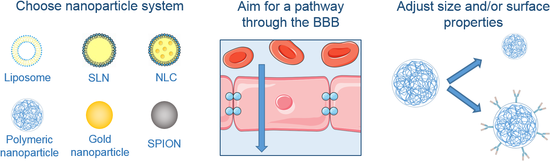
Key for crossing the BBB with nanoparticles: the rational design
Beilstein J. Nanotechnol. 2020, 11, 866–883, doi:10.3762/bjnano.11.72
- ) are based on magnetite (Fe3O4) or maghemite (γ-Fe2O3) molecules encapsulated in polysaccharides, synthetic polymers or monomer coatings and have a size range from 1 to 100 nm [21][182]. SPIONs possess interesting magnetic properties and some formulations have already been approved as MRI contrast


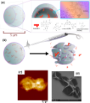
Multilayer capsules made of weak polyelectrolytes: a review on the preparation, functionalization and applications in drug delivery
Beilstein J. Nanotechnol. 2020, 11, 508–532, doi:10.3762/bjnano.11.41



Advanced hybrid nanomaterials
Beilstein J. Nanotechnol. 2019, 10, 2563–2567, doi:10.3762/bjnano.10.247

- , including double targeting, are also highlighted in several articles. Among others, nanoparticles are often used as specific agents in dual therapy and diagnostics (i.e., theranostics). In “Size-selected Fe3O4–Au hybrid nanoparticles for improved magnetism-based theranostics”, a Fe3O4–Au hybrid nanomaterial
Coating of upconversion nanoparticles with silica nanoshells of 5–250 nm thickness
Beilstein J. Nanotechnol. 2019, 10, 2410–2421, doi:10.3762/bjnano.10.231
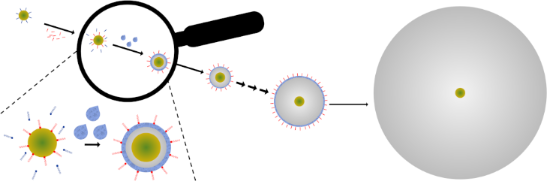
- as one has to control the water-to-surfactant ratio to prevent the formation of core-free silica NPs. In this respect, combining this technique with Stöber growth can be advantageous [50]. For example, Katagiri managed to further grow silica-coated Fe3O4 particles with a thin shell to a diameter >100


Nontoxic pyrite iron sulfide nanocrystals as second electron acceptor in PTB7:PC71BM-based organic photovoltaic cells
Beilstein J. Nanotechnol. 2019, 10, 2238–2250, doi:10.3762/bjnano.10.216
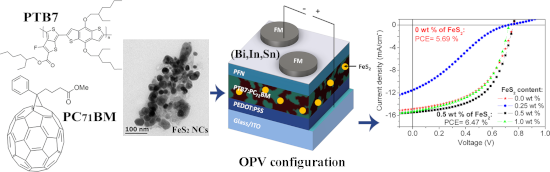
- -T:PC71BM devices. The addition of magnetic oxide nanoparticles to the OPV P3HT:PC70BM active layer has improved the lifetime and the stability of these devices with an efficiency of ≈3% [45]. On the other hand, 5 wt % Fe3O4 NPs doped into the P3HT:PCBM blend increased the PCE from 1.09 to 2.22% [46]. Lin


Targeted therapeutic effect against the breast cancer cell line MCF-7 with a CuFe2O4/silica/cisplatin nanocomposite formulation
Beilstein J. Nanotechnol. 2019, 10, 2217–2228, doi:10.3762/bjnano.10.214
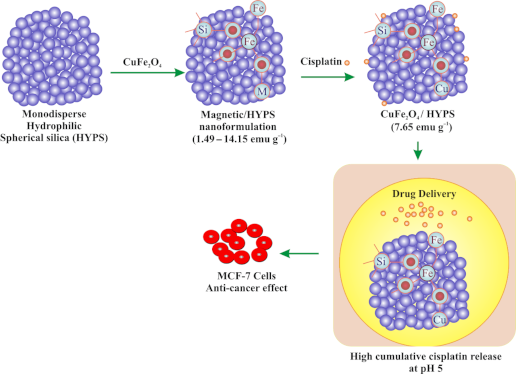
- (magnetic resonance imaging), tissue repair, and thermal ablation have been gaining considerable attention in recent years. In particular, the use of superparamagnetic iron oxide nanoparticles (SPIONs) is now advantageous as they are FDA-approved for clinical use [2]. Magnetic Fe3O4-based mesoporous silica
- magnetization can be increased with a high loading of SPIONs, the formation of a mixture of iron oxide species (α-Fe2O4, Fe3O4 and γ-Fe2O4) becomes inevitable. However, the surface of iron oxide can be modified with various transition heteroatoms including Ni, Mn, Co, and Cu, leading to family of spinel


Use of data processing for rapid detection of the prostate-specific antigen biomarker using immunomagnetic sandwich-type sensors
Beilstein J. Nanotechnol. 2019, 10, 2171–2181, doi:10.3762/bjnano.10.210
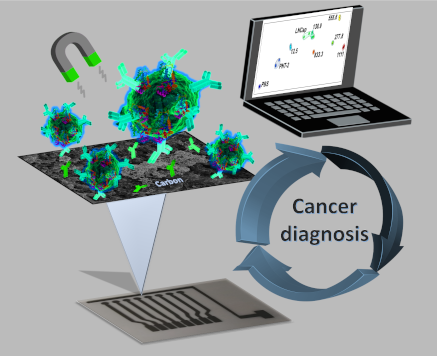
- ], including magnetic nanoparticles (MNPs) that can be exploited for their catalytic properties [10] and magnetic separation in pre-concentrating the analyte [11][12][13][14][15][16]. The most common magnetic nanoparticles used for this purpose are magnetite (Fe3O4) nanoparticles, which have a stronger
- sensing performance. Electrochemical immunosensors containing magnetic nanoparticles have been used to detect several cancer biomarkers [22][23][24]. Zhuo and co-workers detected carcinoembryonic antigen (CEA) and α-fetoprotein (AFP) with a three-layer immunosensor with Fe3O4 magnetic core modified with a
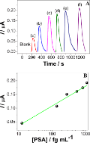


Magnetic properties of biofunctionalized iron oxide nanoparticles as magnetic resonance imaging contrast agents
Beilstein J. Nanotechnol. 2019, 10, 1964–1972, doi:10.3762/bjnano.10.193
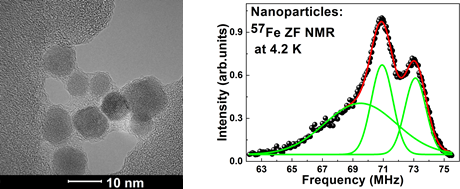
- nanoparticles located inside and outside of each capsule [11] and integration of the nanoparticles in the matrix of HSA threads, as will be discussed in this paper. The problem of distinguishing between magnetite Fe3O4 and maghemite γ-Fe2O3, both of which usually appear as synthesis products of iron oxide
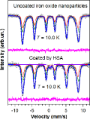
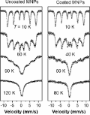
- of the structure due to the presence of both magnetite Fe3O4 and maghemite γ-Fe2O3. Another method to distinguish between Fe2+ and Fe3+ and their positions in the crystal structure is Mössbauer spectroscopy. However, the use of ionizing radiation and radioactive sources in this method limits the
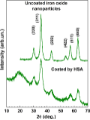
- spinel-type crystal structure with a space group, which is typical for magnetite Fe3O4 or maghemite γ-Fe2O3 [15][16]. The broad peak at 2θ = 19° and high background level in the pattern of the coated nanoparticles are due to HSA [17]. The mean size of the nanoparticles was estimated by applying the




Highly ordered mesoporous silica film nanocomposites containing gold nanoparticles for the catalytic reduction of 4-nitrophenol
Beilstein J. Nanotechnol. 2019, 10, 1368–1379, doi:10.3762/bjnano.10.135
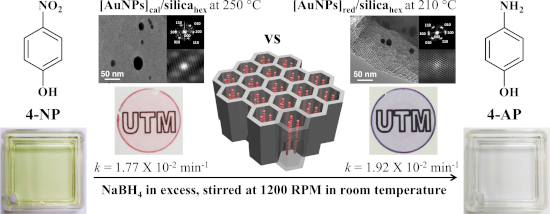
- prepared by thermal hydrogen reduction at 210 °C is due to its higher TOF value [48]. Moreover, in the same catalytic reduction of 4-NP, this TOF value is comparable to Au-Fe3O4 as a bifunctional catalyst [49]. The catalyst is active to reduce all 4-NP to 4-AP, giving a linear decomposition rate within the


The effect of magneto-crystalline anisotropy on the properties of hard and soft magnetic ferrite nanoparticles
Beilstein J. Nanotechnol. 2019, 10, 1348–1359, doi:10.3762/bjnano.10.133
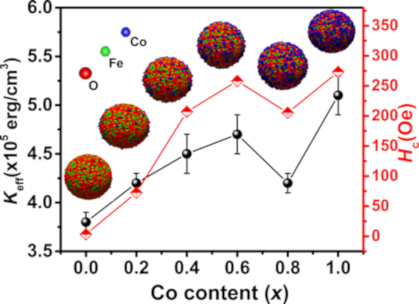
- −xO4 NPs, with x = 0–1 in steps of 0.2, from soft magnetic (Fe3O4) to hard magnetic (CoFe2O4) ferrite, with a significant variation of the magnetic anisotropy. The phase purity and the formation of crystalline NPs with a spinel structure were confirmed through Rietveld refinement. The effect of Co
- observed that the heat efficiency of soft Fe3O4 is about 4 times larger than that of hard CoFe2O4 ferrite, which was attributed to the high coercive field of samples compared with the external field amplitude. Keywords: anisotropy; cobalt; ferrite; Henkel plots; hyperthermia therapy; nanoparticles
- magnetocrystalline anisotropy at room temperature [10]. The anisotropy constant of CoFe2O4 (K = 2 × 10⁵ J·m−3) is nearly one order of magnitude larger than that of Fe3O4 [11][12][13]. Fe3O4 NPs have been studied extensively for bio-medical applications, such as drug delivery [14], magnetic resonance imaging (MRI


Photoactive nanoarchitectures based on clays incorporating TiO2 and ZnO nanoparticles
Beilstein J. Nanotechnol. 2019, 10, 1140–1156, doi:10.3762/bjnano.10.114
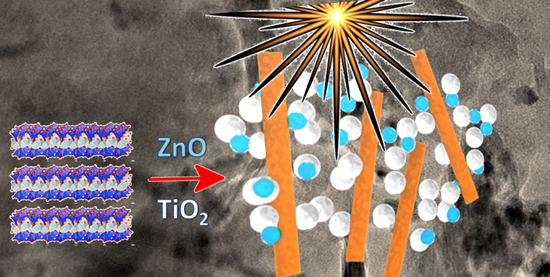
- ][132]. The incorporation of various types of NPs using neat clay and applying a two-step synthesis has been reported. A recent example of this refers to the incorporation of ZnO nanoparticles to a Fe3O4-sepiolite nanoarchitecture previously prepared by in situ formation of superparamagnetic iron-oxide
- nanoparticles on the external surface of sepiolite fibres. The resulting ZnO–Fe3O4@sepiolite nanoarchitecture exhibits photoactivity due to the ZnO NPs, and the presence of magnetite NPs facilitates the recovery by the use of a magnet (Figure 4) [133]. Moreover, the presence of iron oxide could be useful also
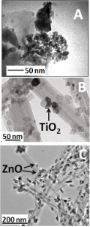
- isopropoxide; reprinted with permission from [109], copyright 2008 American Chemical Society. ZnO-Fe3O4@sepiolite nanoarchitecture prepared in two steps: First, the fiber clay is modified by assembly of magnetite NPs. After that, the ZnO NPs are added yielding a magnetic photocatalyst. The STEM images on the



Scavenging of reactive oxygen species by phenolic compound-modified maghemite nanoparticles
Beilstein J. Nanotechnol. 2019, 10, 1073–1088, doi:10.3762/bjnano.10.108
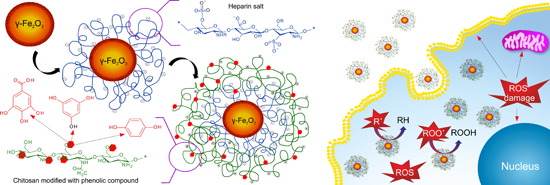
- functional groups. In this study, magnetite (Fe3O4) nanoparticles were synthetized by coprecipitation of iron(II) chloride and iron(III) chloride with ammonia and subsequently oxidized with hydrogen peroxide under mild acidic conditions. The resulting maghemite (γ-Fe2O3) has the benefit of higher chemical
- stability over Fe3O4 due to the lack of iron(II) atoms that are prone to oxidation [24]. TEM micrographs of the γ-Fe2O3 particles showed their quasi-spherical shape and a moderately broad size distribution (Figure 2a). The dispersity of the particles (Ð) was 1.25, and the number-average particle diameter





Fe3O4 nanoparticles as a saturable absorber for giant chirped pulse generation
Beilstein J. Nanotechnol. 2019, 10, 1065–1072, doi:10.3762/bjnano.10.107
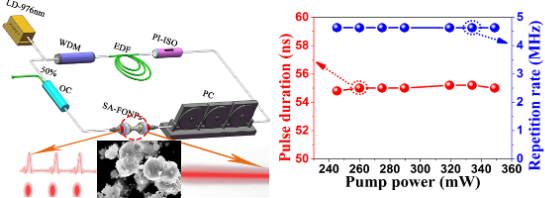
- 710119, China Hunan Key Laboratory of Super Microstructure and Ultrafast Process, School of Physics and Electronics, Central South University, Changsha and 410083, China 10.3762/bjnano.10.107 Abstract Fe3O4 nanoparticles (FONPs) are magnetic materials with a small band gap and have well-demonstrated
- , and optical modulators. Keywords: erbium laser; Fe3O4 nanoparticles; fiber lasers; saturable absorber; Introduction Fe3O4 nanoparticles (FONPs) are excellent magnetic materials, which allows for many applications in various fields such as medical transmission, microwave devices, and optical devices
- . In addition, FONPs also exhibit nonlinear photonic properties such as two-photon absorption, nonlinear scattering, and optical confinement [1][2]. Ferrous ferric oxide (Fe3O4) is a transition metal oxide that has a large third-order nonlinear optical susceptibility of χ(3) = 4.0 × 10⁻¹⁰ esu and an


Synthesis of MnO2–CuO–Fe2O3/CNTs catalysts: low-temperature SCR activity and formation mechanism
Beilstein J. Nanotechnol. 2019, 10, 848–855, doi:10.3762/bjnano.10.85
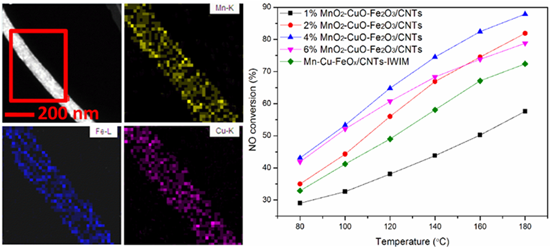
- ) of the Mn–Cu–FeOx/CNTs-IWIM catalyst appear at lower energies than those of 4% MnO2–CuO–Fe2O3/CNTs catalyst, revealing the formation of Fe3O4 [35]. Moreover, the absence of any satellites further proved the presence of Fe3O4. It is noteworthy that Fe2O3 exhibits a better low-temperature SCR activity
- than Fe3O4 [36], which is corroborated by the NO conversion measurements. The O 1s peak can be divided into three peaks (Figure 4F). The peak at 529.9 eV is attributed to lattice oxygen (designated as OL), while the binding energies at 530.5–534.0 eV are ascribed to surface oxygen (labeled as OS). The


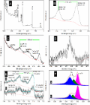


Tungsten disulfide-based nanocomposites for photothermal therapy
Beilstein J. Nanotechnol. 2019, 10, 811–822, doi:10.3762/bjnano.10.81
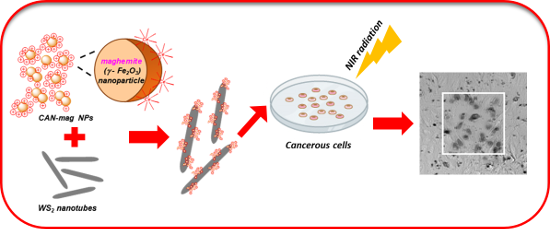
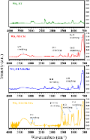
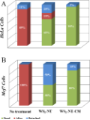
- . Then, a concentrated (24 wt %) NH4OH solution (750 µL) was added, resulting in the immediate formation of a black precipitate of magnetite (Fe3O4) nanoparticles. Sonication was continued for an additional 10 min. The liquid was decanted with the help of magnetic separation, using a 0.5 T magnet. The






Polydopamine-coated Au nanorods for targeted fluorescent cell imaging and photothermal therapy
Beilstein J. Nanotechnol. 2019, 10, 794–803, doi:10.3762/bjnano.10.79
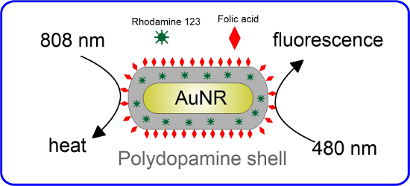
- ], Fe3O4 [35], graphene [36], and many others [37][38]. The PDA shell surface contains numerous catechol and quinone groups suitable for click conjugation with various biomolecules through Michael addition and Schiff-base reaction [39][40]. The high loading capacity and biocompatibility of the PDA layer


Magnetic-field sensor with self-reference characteristic based on a magnetic fluid and independent plasmonic dual resonances
Beilstein J. Nanotechnol. 2019, 10, 247–255, doi:10.3762/bjnano.10.23
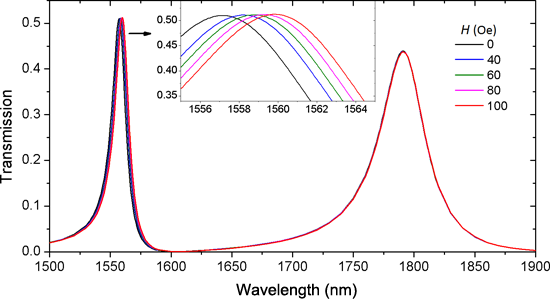
- field. It depends on the type of carrier liquid and the concentration of the magnetic fluid. nsat is the saturation value of the refractive index. In this paper, the magnetic fluid is a colloidal solution consisting of Fe3O4 nanoparticles dispersed in water with n0 = 1.4612. The concentration of the



Size-selected Fe3O4–Au hybrid nanoparticles for improved magnetism-based theranostics
Beilstein J. Nanotechnol. 2018, 9, 2684–2699, doi:10.3762/bjnano.9.251
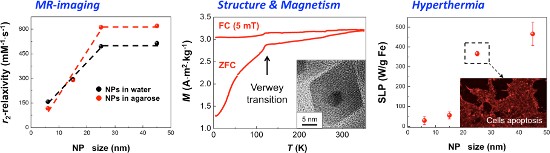
- , 117997, Russia Faculty of Physics and Center for Nanointegration Duisburg-Essen, University of Duisburg-Essen (CENIDE), Duisburg, 47057, Germany D. Mendeleev University of Chemical Technology of Russia, Moscow, 125047, Russia 10.3762/bjnano.9.251 Abstract Size-selected Fe3O4–Au hybrid nanoparticles with
- diameters of 6–44 nm (Fe3O4) and 3–11 nm (Au) were prepared by high temperature, wet chemical synthesis. High-quality Fe3O4 nanocrystals with bulk-like magnetic behavior were obtained as confirmed by the presence of the Verwey transition. The 25 nm diameter Fe3O4–Au hybrid nanomaterial sample (in aqueous
- exposure and after precultivation of the cells for 6 h with 25 nm Fe3O4–Au hybrid nanomaterials, respectively. This confirms that the improved magnetic properties of the bifunctional particles present a next step in magnetic-particle-based theranostics. Keywords: hybrid nanoparticles; magnetic


Nanocellulose: Recent advances and its prospects in environmental remediation
Beilstein J. Nanotechnol. 2018, 9, 2479–2498, doi:10.3762/bjnano.9.232
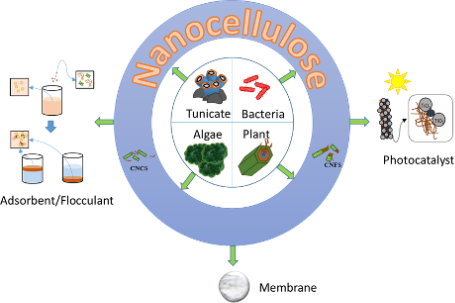
- magnetic field. As a result, magnetic nanomaterials have drawn increasing attention. Nanocellulose incorporated with other magnetic nanomaterials is presented as an excellent composite adsorbent with magnetic properties. For example, a core–shell cellulose magnetite (Fe3O4) polymeric ionic liquid magnetic
- increase its aromatic character, anion exchange capability, and hydrophilic nature of cellulose. Cellulose could also act as a stabilizer for the Fe3O4 nanoparticles to prevent crystal growth and aggregation of particles. In general, magnetic iron oxide is anchored in the polymer matrix to induce magnetic
- properties in nanocomposites such as Fe3O4@SiO2@cellulose nanocomposite and amino-functionalized magnetic cellulose nanocomposite grafted with glycidyl methacrylate followed by reaction with ethylenediamine [89]. Furthermore, a 7 wt % NaOH/12 wt % urea aqueous solvent was found useful for regenerating Cr(VI


Droplet-based synthesis of homogeneous magnetic iron oxide nanoparticles
Beilstein J. Nanotechnol. 2018, 9, 2413–2420, doi:10.3762/bjnano.9.226
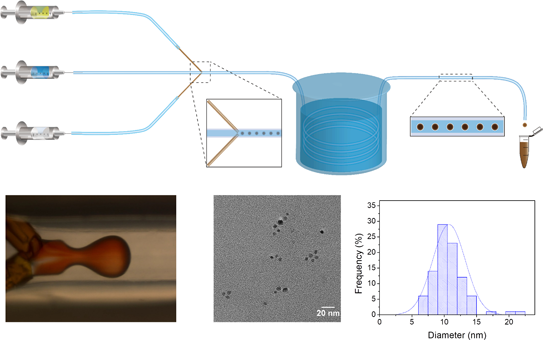
- ). To confirm the elemental composition of the nanoparticles energy-dispersive X-ray spectroscopy (EDS) was conducted after TEM imaging (Figure S2A,B in Supporting Information File 1), confirming that the particles consisted of Fe3O4. Moreover, the electron diffraction patterns were analyzed (Figure S2C
- ,D in Supporting Information File 1), finding the same spinel crystalline planes as previously reported in literature for Fe3O4 nanopowders [32]. Hence, the synthesized particles are crystalline. Regarding the yield of the reaction both synthesis delivered comparable nanoparticle yields after washing


Synthesis of a MnO2/Fe3O4/diatomite nanocomposite as an efficient heterogeneous Fenton-like catalyst for methylene blue degradation
Beilstein J. Nanotechnol. 2018, 9, 1940–1950, doi:10.3762/bjnano.9.185
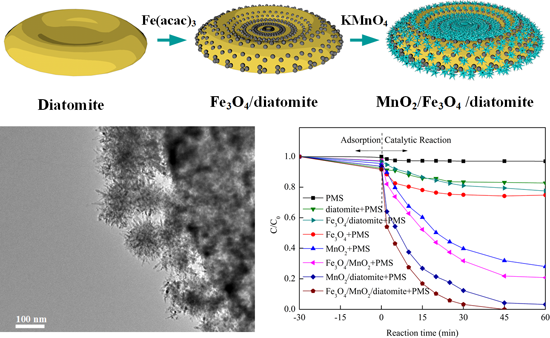
- .9.185 Abstract Heterogeneous Fenton-like catalysts with the activation of peroxymonosulfate (PMS), which offer the advantages of fast reaction rate, wide functional pH range and cost efficiency, have attracted great interest in wastewater treatment. In this study, a novel magnetic MnO2/Fe3O4/diatomite
- nanocomposite is synthesized and then used as heterogeneous Fenton-like catalyst to degrade the organic pollutant methylene blue (MB) with the activation of PMS. The characterization results show that the Fe3O4 nanoparticles and nanoflower-like MnO2 are evenly distributed layer-by-layer on the surface of
- mineralization rate of about 60% in 60 min and great recyclability with a recycle efficiency of 86.78% after five runs for MB. The probable mechanism of this catalytic system is also proposed as a synergistic effect between MnO2 and Fe3O4. Keywords: diatomite; Fenton-like oxidation; hybrid catalyst; iron(II,III


Magnetic properties of Fe3O4 antidot arrays synthesized by AFIR: atomic layer deposition, focused ion beam and thermal reduction
Beilstein J. Nanotechnol. 2018, 9, 1728–1734, doi:10.3762/bjnano.9.164
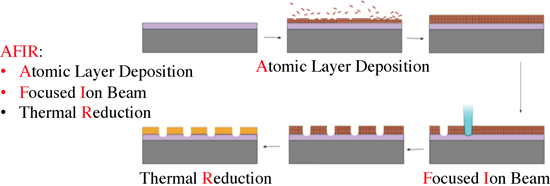
- .9.164 Abstract Magnetic films of magnetite (Fe3O4) with controlled defects, so-called antidot arrays, were synthesized by a new technique called AFIR. AFIR consists of the deposition of a thin film by atomic layer deposition, the generation of square and hexagonal arrays of holes using focused ion beam
- other techniques. As a proof of concept, we will investigate the magnetic properties of Fe3O4 antidot arrays that have never been fabricated until now. As magnetic antidots have been successfully used to preferentially capture magnetic nanoparticles within the holes [36], and as Fe3O4 is a biocompatible
- material, such new Fe3O4 antidot arrays are of interest for the future development of nano-scale biosensors. Experimental Figure 1 shows the outline of the AFIR process. Si(100) wafers with a native layer of SiO2 were coated with hematite (Fe2O3) in a Savannah S100 ALD reactor from Ultratech operated at




Cr(VI) remediation from aqueous environment through modified-TiO2-mediated photocatalytic reduction
Beilstein J. Nanotechnol. 2018, 9, 1448–1470, doi:10.3762/bjnano.9.137
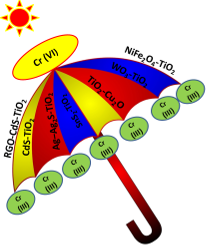
- with further increase in the calcination temperature because of the decrease in the specific surface area induced by the aggregation and agglomeration of particles [157]. TiO2/Fe3O4 composite photocatalysts were synthesized through a polymerizable sol−gel route to investigate the photocatalytic
- reduction of Cr(VI) under UV light irradiation. The anchoring of TiO2 over Fe3O4 resulted in (i) high dispersion of the active site, which is important for achieving higher reaction rate, (ii) enhancement of the photoreduction rate by decreasing the recombination of electron−hole pairs due to significant
- overlap of the TiO2 band with that of Fe3O4 and (iii) efficient separation and recyclability of the catalyst under application of an external magnetic field because of the presence of magnetic Fe3O4. Therefore, the composite photocatalysts exhibited a higher rate of photoreduction of Cr(VI) as compared to