Search results
Search for "relative humidity" in Full Text gives 145 result(s) in Beilstein Journal of Nanotechnology.
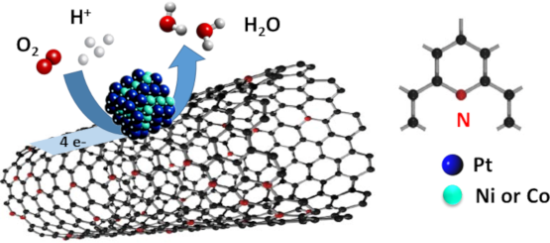
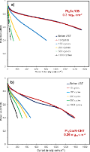
Alloyed Pt3M (M = Co, Ni) nanoparticles supported on S- and N-doped carbon nanotubes for the oxygen reduction reaction
Beilstein J. Nanotechnol. 2019, 10, 1251–1269, doi:10.3762/bjnano.10.125





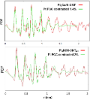


On the transformation of “zincone”-like into porous ZnO thin films from sub-saturated plasma enhanced atomic layer deposition
Beilstein J. Nanotechnol. 2019, 10, 746–759, doi:10.3762/bjnano.10.74
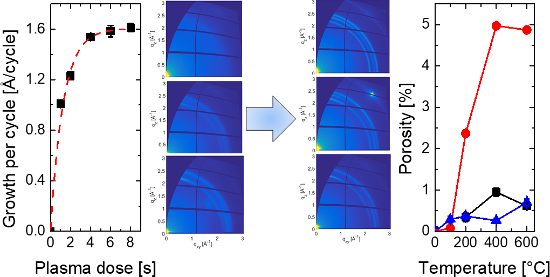
- layers, the THMS600 temperature stage was equipped with a custom-made humidity pump, and the principles of ellipsometric porosimetry (EP) were used. The relative humidity was monitored via a sensor in the measurement chamber (Sparkfun SHT-15) and tuned in the range of 0–95% [44]. In this way, pores with
- a diameter ≥0.33 nm were probed. Dry atmosphere (i.e., 0% relative humidity) was reached using a flow of N2, ensuring the removal of water from the measurement chamber. In order to tune the relative humidity, the flow of humid air is mixed with N2 and adjusted in equilibrium steps. The temperature
- of the stage was kept at room temperature, assuring that the measured relative humidity in the chamber was the same as on top of the samples. During EP with water, the variation of both refractive index (n) and water multilayer thickness/swollen thin films is reported as a function of the relative


Topochemical engineering of composite hybrid fibers using layered double hydroxides and abietic acid
Beilstein J. Nanotechnol. 2019, 10, 589–605, doi:10.3762/bjnano.10.60
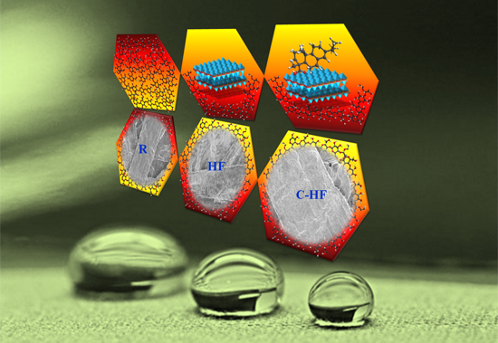
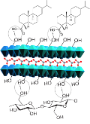
- solution. The newly formed wet hybrid fiber handsheets were pressed twice at a force of 400 ± 10 kPa between couch blotters for increased drying. Further, these handsheets were conditioned at 23 °C temperature in a room with 50% of relative humidity for 2 days. Functionalization of LDH grafted cellulose




Hydrophilicity and carbon chain length effects on the gas sensing properties of chemoresistive, self-assembled monolayer carbon nanotube sensors
Beilstein J. Nanotechnol. 2019, 10, 565–577, doi:10.3762/bjnano.10.58
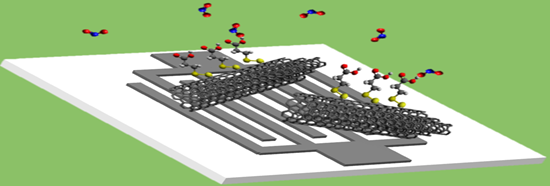
- humidified to 50% relative humidity (at 20 °C) and the same nitrogen dioxide concentrations that had been studied previously under dry conditions were measured again. These results are shown in Figure 7. As it could be expected, the presence of ambient moisture increases the sensitivity to a polar gas like
- of ambient moisture on the sensor response, the gas flow was humidified to a relative humidity of about 50%. The evolution of the sensor resistance was measured with an Agilent HP 34972A multimeter. TEM images of MWCNTs decorated with gold nanoparticles. Raman spectra for the different thiols studied


Temperature-dependent Raman spectroscopy and sensor applications of PtSe2 nanosheets synthesized by wet chemistry
Beilstein J. Nanotechnol. 2019, 10, 467–474, doi:10.3762/bjnano.10.46
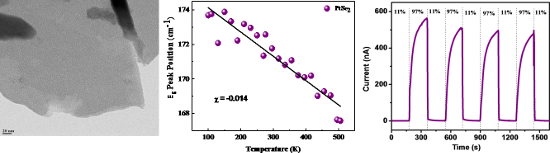
- annealed in a vacuum furnace at 170 °C to improve the contact resistance and adhesion of the nanosheets with the substrate. The humidity sensing performance was investigated by exposing the sensor device to various relative humidity (RH) levels ranging from 11.3–97.3% as described in detail previously [26
- resistance of the sensor device vs relative humidity plot. The resistance is significantly decreased from 3.75 GΩ to 0.83 MΩ. The humidity sensing mechanism for the PtSe2 sensor can be explained as follows. When the PtSe2 nanosheet sensor device was exposed to water molecules/vapors, a charge transfer
- between the water molecules and the PtSe2 nanosheets occurs. This results in the decrease in resistance of the PtSe2 nanosheet sensor device with an increase in the relative humidity. The interactions among the water molecules (electron donor) and the PtSe2 nanosheets results in an enhancement in the



Wet chemistry route for the decoration of carbon nanotubes with iron oxide nanoparticles for gas sensing
Beilstein J. Nanotechnol. 2019, 10, 105–118, doi:10.3762/bjnano.10.10
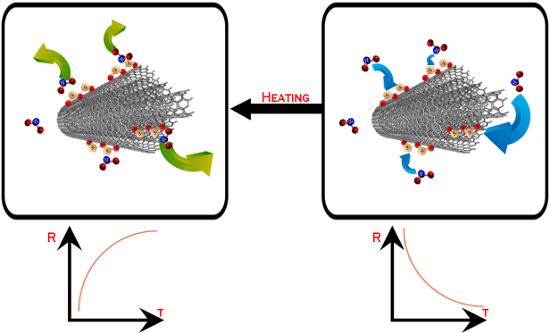
- check the effect of humidity in the performance of the sensor, a new set of measurements for NO2 were performed. In this case, the relative humidity was set to 50%. Comparing these results with the ones performed with dry air (relative humidity was around 3%), one can realize that the sensor, when




A comparison of tarsal morphology and traction force in the two burying beetles Nicrophorus nepalensis and Nicrophorus vespilloides (Coleoptera, Silphidae)
Beilstein J. Nanotechnol. 2019, 10, 47–61, doi:10.3762/bjnano.10.5
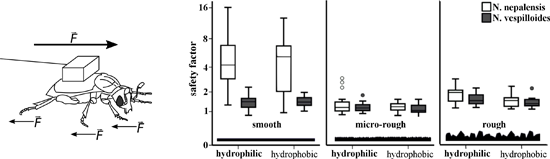
- experiments were carried out at room temperature (ca. 22 °C) and a relative humidity of ca. 50%. Friction was determined on the fore tarsus for five males and five females (n = 10). The measuring head was dragged over the surface with a load of 2 mN and a velocity of 100 µm/s. For each measurement, the



Contact splitting in dry adhesion and friction: reducing the influence of roughness
Beilstein J. Nanotechnol. 2019, 10, 1–8, doi:10.3762/bjnano.10.1
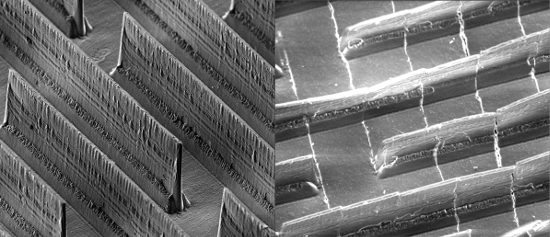
- ) operated for 180 seconds at 18 mA current and about 5 × 10⁻² Pa Ar pressure. All tests were repeated at least four times. The temperature and relative humidity in the laboratory were 23–25 °C and 45–55%, respectively. Characteristic images of tested polyvinylsiloxane (PVS) adhesive microstructures in (a


Biomimetic surface structures in steel fabricated with femtosecond laser pulses: influence of laser rescanning on morphology and wettability
Beilstein J. Nanotechnol. 2018, 9, 2802–2812, doi:10.3762/bjnano.9.262
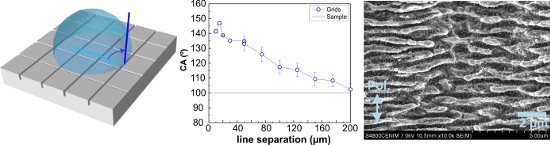
- surfaces were polished obtaining mirror-like quality with an average roughness Ra < 2 nm measured by an atomic force microscope (AFM, Agilent 5100 AFM/SPM in tapping mode). In order to avoid environmental oxidation by humidity, the samples were stored in a desiccator at 30% relative humidity. Before and



Characterization of the microscopic tribological properties of sandfish (Scincus scincus) scales by atomic force microscopy
Beilstein J. Nanotechnol. 2018, 9, 2618–2627, doi:10.3762/bjnano.9.243
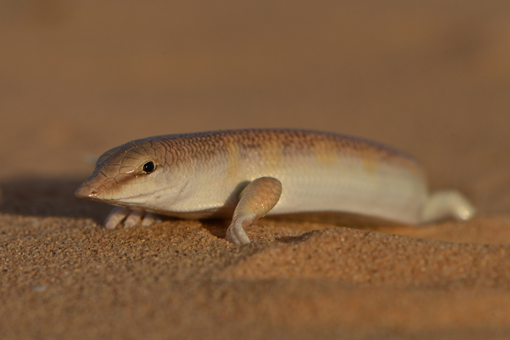
- (National Instruments, Austin, USA) code. The tests were conducted at room temperature and in air with 50% relative humidity. Sample preparation for the non-biological samples relied on grinding with SiC papers of #800 down to #4000 grid. Mechanical polishing was carried out with a 3 µm diamond suspension


Friction reduction through biologically inspired scale-like laser surface textures
Beilstein J. Nanotechnol. 2018, 9, 2561–2572, doi:10.3762/bjnano.9.238
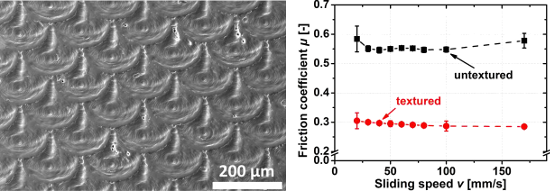
- experiments [16][23]. All tests were conducted at room temperature (25 °C) and at a relative humidity of approximately 45%. All tested pellets and discs were sonicated in isopropanol for 15 minutes before each tribological experiment in order to ensure a reproducible surface chemistry and clean samples


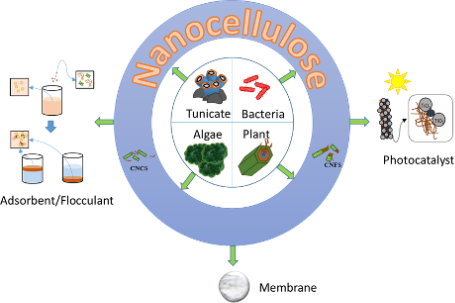
Nanocellulose: Recent advances and its prospects in environmental remediation
Beilstein J. Nanotechnol. 2018, 9, 2479–2498, doi:10.3762/bjnano.9.232


Lead-free hybrid perovskites for photovoltaics
Beilstein J. Nanotechnol. 2018, 9, 2209–2235, doi:10.3762/bjnano.9.207
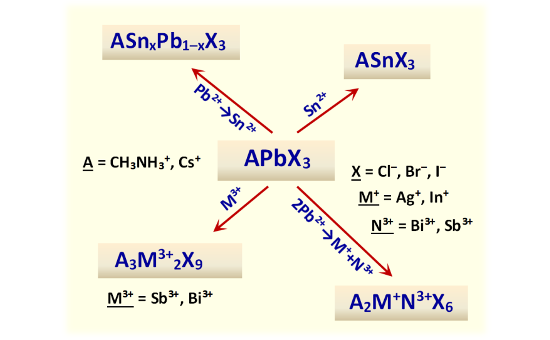
- stability, the cells retaining their characteristics after 30 days of exposure to ambient conditions (relative humidity of 50–60%) [160]. The structure and characteristics of (MA)2KBiCl6 perovskite [166] are very similar to MAPbCl3, however, the high bandgap of this material (3.04 eV) is more suitable for


Electrospun one-dimensional nanostructures: a new horizon for gas sensing materials
Beilstein J. Nanotechnol. 2018, 9, 2128–2170, doi:10.3762/bjnano.9.202
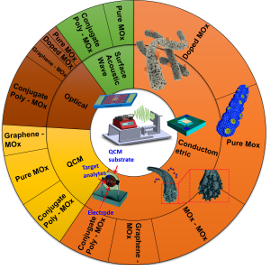
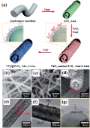
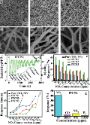
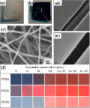
- functionalized MOx NFs with superior sensitivity and fast response in a high humidity environment (95% relative humidity (RH)). WO3 NFs functionalized by RuO2 [189] and Rh2O3 [106] NPs show improved response toward acetone at 350 °C. The fibers have an average diameter in the range 250–300 nm with no significant






Electrostatic force spectroscopy revealing the degree of reduction of individual graphene oxide sheets
Beilstein J. Nanotechnol. 2018, 9, 1146–1155, doi:10.3762/bjnano.9.106
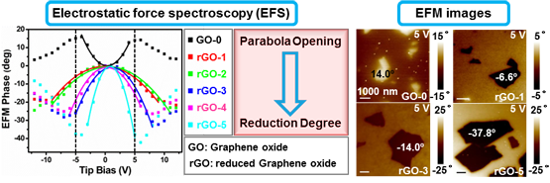
- adiabatic hoses, forming the gas transmission loop. The temperature fluctuations were below 0.2 °C and the error of humidity control was about 2% relative humidity (RH). To avoid influences on EFM or SPFM imaging from the dielectric constant change of the mica substrate, all the SPM-based operations were
- carried out under room temperature at 23 °C and at a relative humidity of 15% in order to ensure constant substrate surface properties (especially regarding the dielectric constant of the mica surface) [20]. In all the SPM operations, the NSC18/Ti-Pt (MikroMasch Co.) tip was used, which employed a silicon


Imaging of viscoelastic soft matter with small indentation using higher eigenmodes in single-eigenmode amplitude-modulation atomic force microscopy
Beilstein J. Nanotechnol. 2018, 9, 1116–1122, doi:10.3762/bjnano.9.103
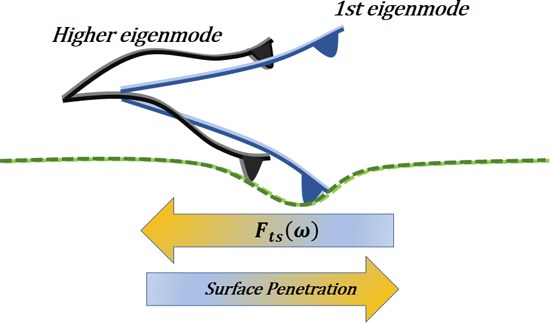
- deformational timescale in our studies (previous studies have quantified the dependence of characteristic times on the molecular weight for polystyrene [30]). In order to ensure a homogenous surface, the relative humidity was controlled to be approximately 30% during the spin-coating process. A portion of the


Scanning speed phenomenon in contact-resonance atomic force microscopy
Beilstein J. Nanotechnol. 2018, 9, 945–952, doi:10.3762/bjnano.9.87
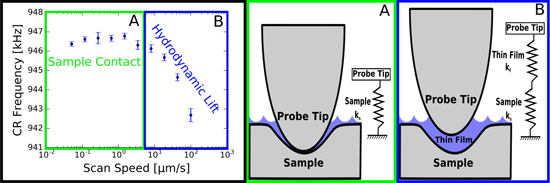
- cyanoacrylate. A razor blade was then used to cleave the sample, leaving behind a pristine sample surface. The sample was placed in a closed AFM flow-cell with an integrated relative humidity sensor. A cantilever with spring constant kL = 1.7 ± 0.2 N/m and first free resonance = 61.85 ± 0.1 kHz was mounted to
- eigenmode placed further constraints on the selection of the cantilever. A gas mixing apparatus was used to mix streams of dry and saturated N2 to achieve various levels of relative humidity in the cell. The cantilever was brought into contact with the sample at 100 nN and 300 nN. The NIST SPRITE circuit
- indented into a mica surface with a force of 100 nN in an environment with a relative humidity (RH) of 41% and scanned in a direction orthogonal to the long axis of the cantilever (scan angle of 90°). The resulting in-contact natural frequencies of the cantilever are measured while the tip is moved across


Nanoscale mapping of dielectric properties based on surface adhesion force measurements
Beilstein J. Nanotechnol. 2018, 9, 900–906, doi:10.3762/bjnano.9.84
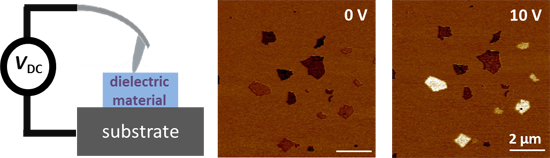
- conventional AFM modes, which is attributed to the larger tip–sample distance [30]. Moreover, in ambient electrical AFM scanning, relative humidity usually has a strong impact on image resolution and contrast [31][32]. We propose that fast mapping of the local dielectric distribution on a sample surface can be
- 18–25 °C, and relative humidity (RH) 35–60%) (Figure 2a,c). However, the contrast of the corresponding adhesion images increases significantly (Figure 2b,d). When the tip bias was lowered back to 0 V, both height and adhesion images returned to the original state before the dc voltage was applied
- at 150 nm, the Z-piezo oscillation frequency at 2.0 kHz, and the scan rate at 1 Hz. Voltage to the tip was applied using the scan parameter “tip bias”. All AFM experiments were conducted under ambient conditions at a room temperature of 18–25 °C and relative humidity of 35–60%. AFM images of the


Tuning adhesion forces between functionalized gold colloidal nanoparticles and silicon AFM tips: role of ligands and capillary forces
Beilstein J. Nanotechnol. 2018, 9, 660–670, doi:10.3762/bjnano.9.61
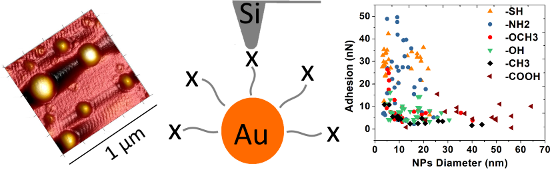
- bridges between the tip and particle [37]. The AFM force-curves are conducted at a rate of 2 kHz allowing a contact of both surfaces in the order of the milliseconds [38][39] at ambient temperature (20 °C) and relative humidity around 35 ± 5%. A pure equilibrium state ensuring the constant formation of


Humidity-dependent wound sealing in succulent leaves of Delosperma cooperi – An adaptation to seasonal drought stress
Beilstein J. Nanotechnol. 2018, 9, 175–186, doi:10.3762/bjnano.9.20
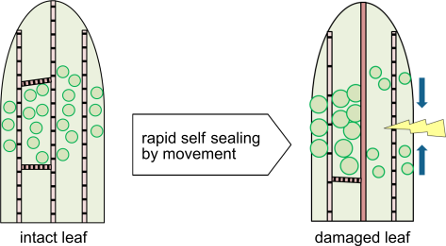
- relative humidity is 57%, and the precipitation is about 500 mm per year with 58 rainy days. In the dry winter month of September, statistically, only 2 rainy days and a relative humidity of 46% occur close to the town of Bloemfontain [16]. In the context of our experiments on self-sealing efficiency, high
- values of relative humidity can be associated with fog and the liquid water droplets with rain. The fast sealing of injuries in order to prevent dehydration might be an effective adaptation and selective advantage for D. cooperi plants growing in such semi-arid habitats. An additional aspect that may
- increase the selection pressure on an efficient self-sealing mechanism is the finding that, in the dry winter months, birds feed from D. cooperi leaves and thereby cause frequent injuries [17]. In addition to other adaptations, the ability to efficiently seal injuries, especially at low relative humidity


A robust AFM-based method for locally measuring the elasticity of samples
Beilstein J. Nanotechnol. 2018, 9, 1–10, doi:10.3762/bjnano.9.1
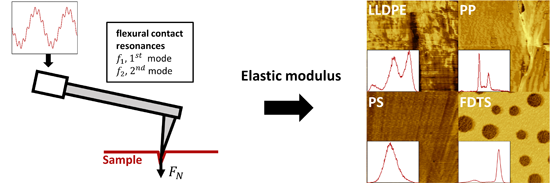
- Young’s modulus of 500 MPa was used to determine parameter α(A1). The measurements were performed in non-dry air with a relative humidity of 36% at an ambient temperature of 27 °C. Results and Discussion Force–distance and frequency shift–distance curves Before starting the investigation of the sample


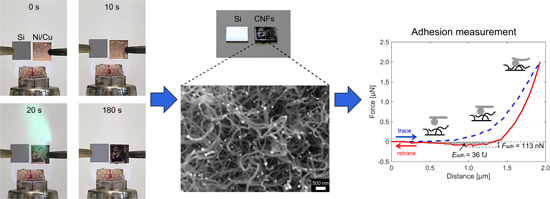
Dry adhesives from carbon nanofibers grown in an open ethanol flame
Beilstein J. Nanotechnol. 2017, 8, 2719–2728, doi:10.3762/bjnano.8.271
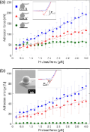
- temperatures (above ca. 25 °C) and humidity values (above ca. 50%). The critical relative humidity of this salt is about 54% at 20 °C [43]. Therefore, condensed water might oxidize the bottom copper layer in this humidity and temperature range. Such an oxide layer might, subsequently, prevent CNF growth
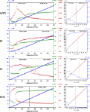
- ). All experiments are compiled in a diagram of absolute humidity as a function of the temperature. The thin solid lines represent the relative humidity. In general, CNFs grow at lower temperature and humidity. All experiments conducted with an absolute humidity larger than about 10 g/m3 were not


Exploring wear at the nanoscale with circular mode atomic force microscopy
Beilstein J. Nanotechnol. 2017, 8, 2662–2668, doi:10.3762/bjnano.8.266
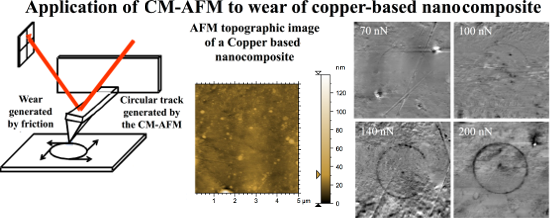
- less than 100 nm) [26]. The surface roughness, Ra, of the samples, determined from AFM topographic images of 5 × 5 µm, is 2.9 ± 0.6 nm. Wear experiments were performed with the CM-AFM mode implemented on a DI-3100 Nanoscope V controller Bruker AFM, in air, at ambient temperature and at a relative
- humidity of 30%. The AFM tips were either a unique DLC coating tip with a rectangular cantilever (from NT-MDT) or a unique silicon nitride (Si3N4) probe with a triangular cantilever. Both nominal tip radius values were 100 nm and 70 nm for the DLC and Si3N4 probes, respectively, and the cantilever


Strategy to discover full-length amyloid-beta peptide ligands using high-efficiency microarray technology
Beilstein J. Nanotechnol. 2017, 8, 2446–2453, doi:10.3762/bjnano.8.243
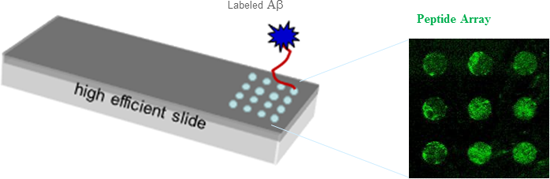
- particular, immediately after the spotting of the amyloid solution, the epoxysilane and the reference slides were inserted into a dark humidity chamber and incubated overnight at 22 °C and 95% relative humidity to immobilize the amyloid spot arrays. The slides were then blocked with BSA buffer following the
- have been stored in a humidity chamber that was provided with a constant-humidity environment at a controlled temperature (22 °C and 95% relative humidity, RH). The physical state of the amyloid peptides was then tested by TEM. TEM analysis was performed with a Jeol JEM 2010 electron microscope


Involvement of two uptake mechanisms of gold and iron oxide nanoparticles in a co-exposure scenario using mouse macrophages
Beilstein J. Nanotechnol. 2017, 8, 2396–2409, doi:10.3762/bjnano.8.239
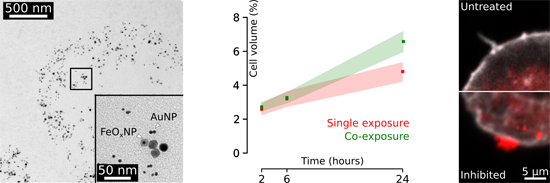
- stage temperature was kept at 3 °C, and the pressure was set to a value between 700 and 740 Pa, in most cases 720 Pa. These pressure and temperature settings created 100% relative humidity in the ESEM chamber as needed to ensure the constant coverage of the cells with a thin film of water. For every