


Search results
Search for "spin" in Full Text gives 583 result(s) in Beilstein Journal of Nanotechnology. Showing first 200.
Investigating structural and electronic properties of neutral zinc clusters: a G0W0 and G0W0Г0(1) benchmark
Beilstein J. Nanotechnol. 2024, 15, 310–316, doi:10.3762/bjnano.15.28
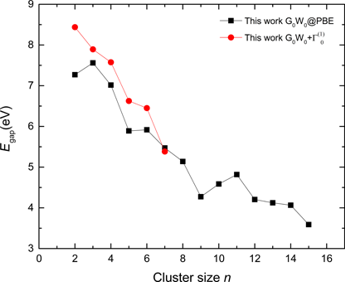
- the binding energy per atom of each cluster isomer, which can be defined as: where Etot is the total energy of the cluster after relaxation, n is the size of the cluster, and Eatom is the energy of a free atom. Here, we have also employed spin-polarized calculations to obtain the binding energies of
- Zn clusters. For metallic systems, spin effects significantly influence the total energies, and neglecting these effects can result in overestimating binding energies. The dimer binding energy obtained in our work is 0.022 eV, close to the experimental value of 0.03 eV [30]. We have also calculated


![[Graphic 14]](/bjnano/content/inline/2190-4286-15-28-i15.svg?max-width=637&scale=1.18182)
Design, fabrication, and characterization of kinetic-inductive force sensors for scanning probe applications
Beilstein J. Nanotechnol. 2024, 15, 242–255, doi:10.3762/bjnano.15.23
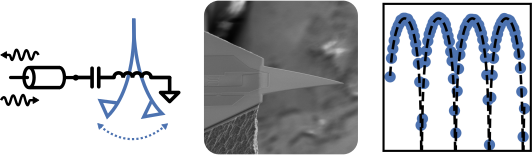
- niobium and titanium targets [33] in an ATC2200 from AJA International Inc., with a deposition rate of roughly 3 nm/min. (b) Pads and markers. A lift-off process defines the gold contact pads and alignment marks. We spin a 400 nm thick photoresist (maN1407), bake on a hotplate at 100 °C for 60 s and
- first spin a thin layer of an adhesion promoter (AR 300–80) before spinning a roughly 170 nm thick layer of the electron-beam resist ARP–6200–09 (CSAR 09), baking at 150 °C for 1 min. We expose with a dose of 110 μC/cm2 in a Voyager EBL system from Raith Nanofabrication and etch the Nb-Ti-N film using
- . Photolithography defines the chip and cantilever. We spin a 1.7 μm thick photoresist maP1225, bake at 105 °C for 2 min. We then expose with a dose of 300 mJ/cm2 in the MLA150, and develop in maD331 for 45 s. We etch through the Si-N layer using a CHF3/SF6 process with an etch rate of roughly 100 nm/min in the



Exploring disorder correlations in superconducting systems: spectroscopic insights and matrix element effects
Beilstein J. Nanotechnol. 2024, 15, 199–206, doi:10.3762/bjnano.15.19
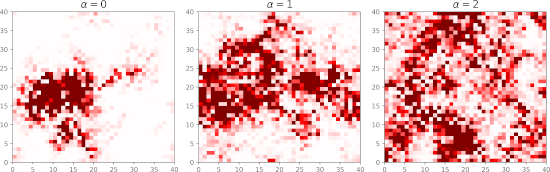
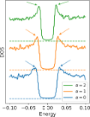
- to model the s-wave Cooper pairing [51][52], Here, the particle number operators at site i are expressed through the electron operators with spin σ. The tunneling amplitude tij = −t is assumed nonzero only for the nearest sites, μ denotes the chemical potential, Vi is the disorder potential, and g


CdSe/ZnS quantum dots as a booster in the active layer of distributed ternary organic photovoltaics
Beilstein J. Nanotechnol. 2024, 15, 144–156, doi:10.3762/bjnano.15.14
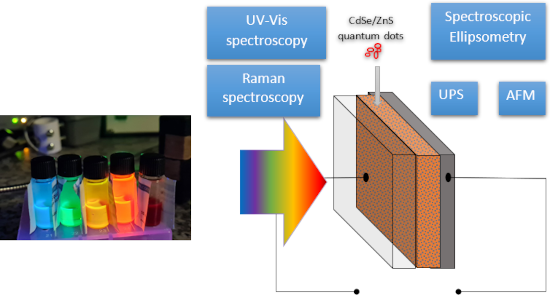
- –COOH groups, they can be easily labeled for chemical and biological applications. Low-molecular-weight organic molecules coat highly luminescent semiconductor nanocrystals. Materials and Methods Thin films, the intended active layers, were fabricated using the spin-coating method. The layers were a
- ultrasonicated for 20 s and then applied to the substrate according to the test method. The angular velocity of the spin coater was also determined by the specific test method and its required film thickness. To keep the typical ratio of the donor and acceptor equal to 1:1 and simultaneously highlight the QD




TEM sample preparation of lithographically patterned permalloy nanostructures on silicon nitride membranes
Beilstein J. Nanotechnol. 2024, 15, 1–12, doi:10.3762/bjnano.15.1
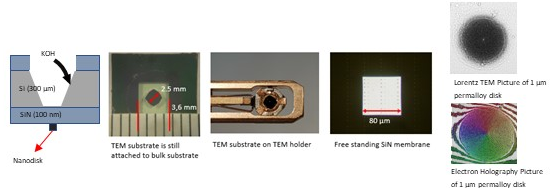
- imaging; nanodisk; nanofabrication; permalloy; Introduction The ability to study the spatial distribution of magnetization in ferromagnetic nanostructures is important for developing nanoelectronics, particularly for data storage and information processing. A vortex spin configuration has been observed
- copolymer dissolved in 1-methoxy-2-propanol with a solid content of 8%. Its viscosity is 36 mPa·s. After spinning at 4000 rpm and baking at 200 °C for 25 min, it has a thickness of around 500 nm. To spin coat a 3 mm TEM grid (Figure 2a,b), we used a special adapter (Figure 2c). The high baking temperature
- sides of the resist. There are, however, a few limitations to consider: The spin-coated resist may be inhomogeneous (edge bead effect) on smaller substrates, reducing the region where high-quality structures may be obtained. Furthermore, one cannot deposit metals at high temperature, and one has to


Spatial variations of conductivity of self-assembled monolayers of dodecanethiol on Au/mica and Au/Si substrates
Beilstein J. Nanotechnol. 2023, 14, 1169–1177, doi:10.3762/bjnano.14.97
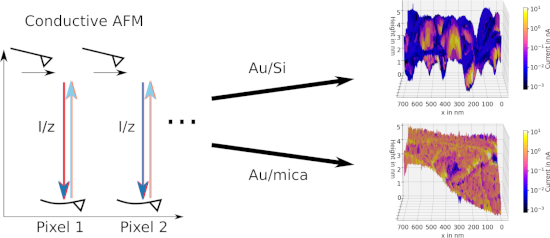
- , including many studies performed recently on SAMs of helical oligopeptides studying chiral-induced spin-selectivity [12][13][14][15]. Here, we re-examine the information that is obtained from CAFM, and we demonstrate that the nature of the metallic substrate is of critical importance. The lateral variation


Hierarchically patterned polyurethane microgrooves featuring nanopillars or nanoholes for neurite elongation and alignment
Beilstein J. Nanotechnol. 2023, 14, 1157–1168, doi:10.3762/bjnano.14.96
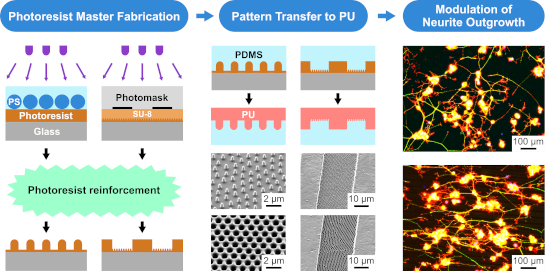
- microgrooves (“hole–groove”), respectively. (Note that for the nanoholes, the spin-coating of the second SU-8 layer occasionally results in a patchy film, probably because of some residual PDMS from the nanopillar imprinter. Investigation of the SU-8 post-exposure baking parameters during thermal imprinting
- molds The formation of the SU-8 nanopillar array was similar to that of our previous study [16]. Briefly, a thin SU-8 layer was first hard-baked on a 2.5 cm × 2.5 cm glass slide as an adhesion layer. Then, the SU-8 layer to be patterned was spin-coated using a GBL-diluted SU-8 solution (SU-8 50/GBL vol
- served as a template for creating a PDMS nanopillar structure for the capillary thermal imprinting of SU-8. An AZ1518 film was spin-coated on glass coverslips at 5000 rpm and soft-baked at 100 °C for 1.5 min. Exposure was performed at a dose of 13 mJ·cm−2 with an array of 1.1 μm polystyrene nanospheres


Properties of tin oxide films grown by atomic layer deposition from tin tetraiodide and ozone
Beilstein J. Nanotechnol. 2023, 14, 1085–1092, doi:10.3762/bjnano.14.89
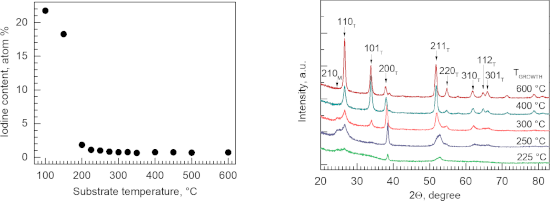
- the Sn 3d5/2 main peak at almost 4 eV lower excitation energy (ca. 487 eV) [29][40][41] and no distinct triple peak structure, while the highest of the SnO2 triplet would already overlap with the SnO spin–orbit component (the Sn 3d3/2) main peak. In our opinion, the somewhat less sharp spectral shape


Dual-heterodyne Kelvin probe force microscopy
Beilstein J. Nanotechnol. 2023, 14, 1068–1084, doi:10.3762/bjnano.14.88




A visible-light photodetector based on heterojunctions between CuO nanoparticles and ZnO nanorods
Beilstein J. Nanotechnol. 2023, 14, 1018–1027, doi:10.3762/bjnano.14.84
- process of the ZnO NRs was presented in a previous paper [63]. At the beginning, ZnO NPs (5% dispersion in ethanol) were spin-coated onto cleaned glass substrates at 3000 rpm for 30 s. Then, the sample was heat-treated at 90 °C. ZnO NRs were grown by a hydrothermal method from Zn(NO3)2·6H2O and HMTA (1:1


Low temperature atomic layer deposition of cobalt using dicobalt hexacarbonyl-1-heptyne as precursor
Beilstein J. Nanotechnol. 2023, 14, 951–963, doi:10.3762/bjnano.14.78
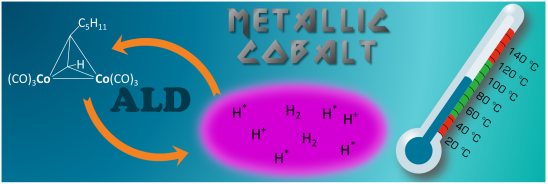
- correlates to a C=O bonding according to the results from the carbon spectrum [33]. The cobalt 2p peak is split into two parts, the 2p3/2 and the 2p1/2 component, because of the spin–orbit coupling. Cobalt in the metallic state (Co0) has a 2p3/2 peak at 777.3 eV [38] or 778.5 eV [39]. The XPS emission lines


Upscaling the urea method synthesis of CoAl layered double hydroxides
Beilstein J. Nanotechnol. 2023, 14, 927–938, doi:10.3762/bjnano.14.76
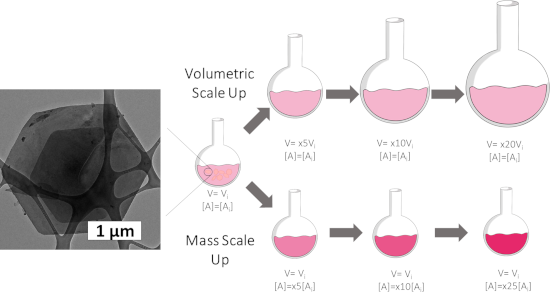
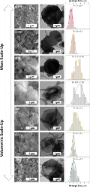
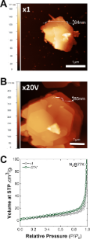
- spin-coated on a Si wafer (3000 rpm, 40 s), washed with ethanol and dried afterward. For AFM, the samples were diluted in ethanol and drop-cast on a Si/SiO2 wafer. Si/SiO2 wafers were washed by spin-coating ten droplets of acetone and ten droplets of isopropanol prior to sample deposition. Scanning


Silver-based SERS substrates fabricated using a 3D printed microfluidic device
Beilstein J. Nanotechnol. 2023, 14, 793–803, doi:10.3762/bjnano.14.65
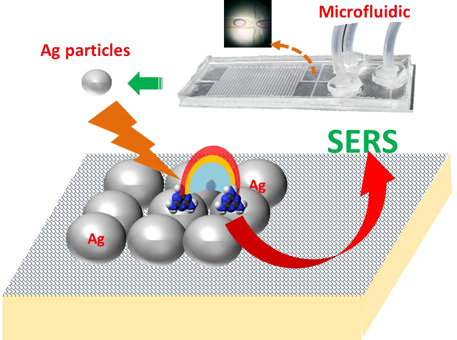
- a substrate [23]. This procedure typically requires a clean room and expensive facilities such as a photolithography machine, a spin-coater, and photoresist agents, as well as long processing times and well-trained technical staff. Additionally, the photolithography process is limited to planar



Current-induced mechanical torque in chiral molecular rotors
Beilstein J. Nanotechnol. 2023, 14, 711–721, doi:10.3762/bjnano.14.57
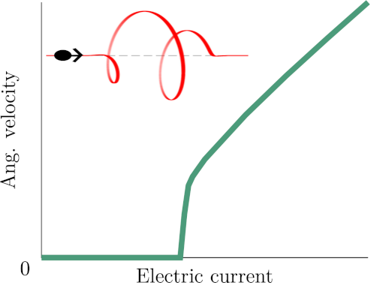
- crossover between both regimes. To exemplify our results, we employ a helical geometry. Helical molecular wires have sparked a lot of attention because of reports of spin-selective transport [16][17][18]. This phenomenon falls under the umbrella term “chirality-induced spin selectivity (CISS)”. The full
- ) Electrons carry spin angular momentum, which couples with the orbital momentum by spin–orbit interaction. Thus, reflection accompanied by a spin flip can induce angular momentum transfer. Conclusion We have investigated the classical dynamics of a molecular rotor under a particle current. The molecule was




![[Graphic 29]](/bjnano/content/inline/2190-4286-14-57-i54.svg?max-width=637&scale=1.18182)


Metal-organic framework-based nanomaterials as opto-electrochemical sensors for the detection of antibiotics and hormones: A review
Beilstein J. Nanotechnol. 2023, 14, 631–673, doi:10.3762/bjnano.14.52
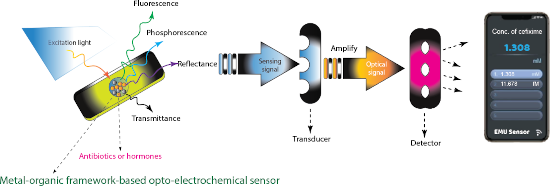
- with it and lowering its effectiveness [39][40][41]. The shift of the fluorescence spectrum to longer wavelengths with respect to the excitation spectrum is called the Stokes shift. Fluorescence relaxation processes are all spin-neutral (spin-allowed), and the electron’s spin orientation is always
- preserved. In contrast, phosphorescence is a separate phenomenon. The electron spin is inverted (spin-forbidden) as a result of a rapid (femto- to microseconds) intersystem crossing from a singlet S1 to an energetically advantageous excited triplet T1 state. After a long delay (a few milliseconds to a few
- protected by a wider radial expansion of its filled 5s2 and 5p6 subshells, which create 4f orbitals as inner orbitals. As a result, the spin–orbit interaction, which is the basis for their intriguing photophysical features, dominates the extremely minor and less significant crystal field influence on the


Titania nanoparticles for photocatalytic degradation of ethanol under simulated solar light
Beilstein J. Nanotechnol. 2023, 14, 616–630, doi:10.3762/bjnano.14.51
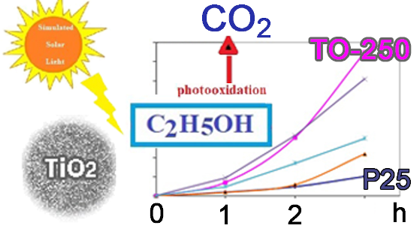
- oxidized carbon forms C–O–C/C–OH (286.1 eV) and O–C–O (289 eV), which probably formed during the synthesis [42]. No C 1s peak at ca. 281 eV (Ti–C bond) was observed, suggesting that carbon does not modify the TiO2 phase [43]. Figure 4c shows the Ti 2p peaks, where the Ti4+ 2p3/2 and Ti4+ 2p1/2 spin–orbital




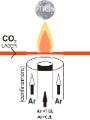
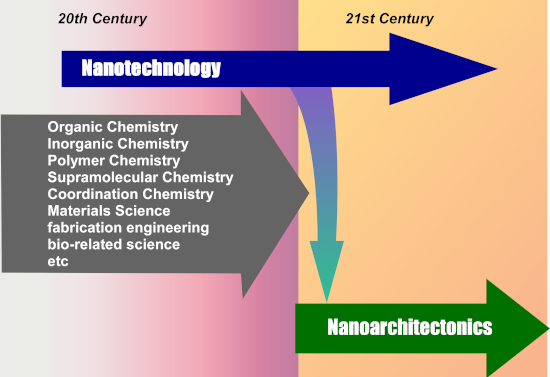
Molecular nanoarchitectonics: unification of nanotechnology and molecular/materials science
Beilstein J. Nanotechnol. 2023, 14, 434–453, doi:10.3762/bjnano.14.35
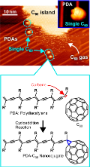
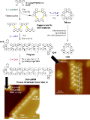
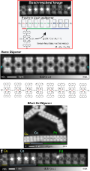
- tip was brought close enough to obtain a single-atom conductance gap, it was retracted and silicon atoms were removed. A perpendicular magnetic field was applied to explore physical phenomena such as Kondo resonance. The nanoarchitectonics of magnetic topological states due to spin polarization in
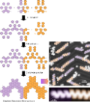
- structure, magnetism, and charge and spin transport, are very interesting for nanoscale physics. In particular, nanostructures with zigzag edges are expected to have spin-polarized electronic edge states. The synthesized structures could play a leading role in graphene-based spintronics. In addition to





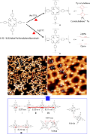
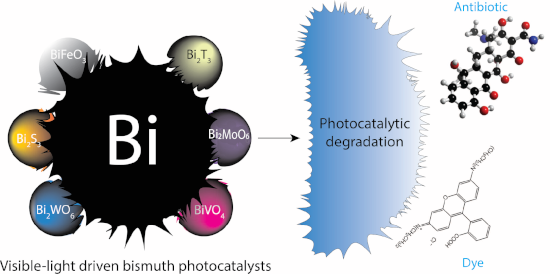
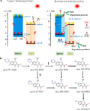
Bismuth-based nanostructured photocatalysts for the remediation of antibiotics and organic dyes
Beilstein J. Nanotechnol. 2023, 14, 291–321, doi:10.3762/bjnano.14.26


Spin dynamics in superconductor/ferromagnetic insulator hybrid structures with precessing magnetization
Beilstein J. Nanotechnol. 2023, 14, 233–239, doi:10.3762/bjnano.14.22
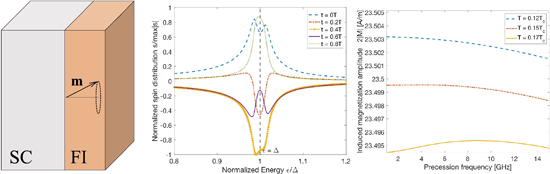
- Yaroslav V. Turkin Nataliya Pugach HSE University, Moscow 101000, Russia Vernadsky Crimean Federal University, Simferopol 295007 10.3762/bjnano.14.22 Abstract The main goal of the present work is the description of the dynamics of spin current and induced magnetization inside a superconducting
- film S that is in contact with a ferromagnetic insulator layer FI. Spin current and induced magnetization are calculated not only at the interface of the S/FI hybrid structure, but also inside the superconducting film. The new and interesting predicted effect is the frequency dependence of the induced
- magnetization with a maximum appearing at high temperatures. It is also shown that the increase of the magnetization precession frequency can drastically change the spin distribution of quasiparticles at the S/FI interface. Keywords: ferromagnetic resonance; proximity effect; superconducting spintronics


Structural, optical, and bioimaging characterization of carbon quantum dots solvothermally synthesized from o-phenylenediamine
Beilstein J. Nanotechnol. 2023, 14, 165–174, doi:10.3762/bjnano.14.17
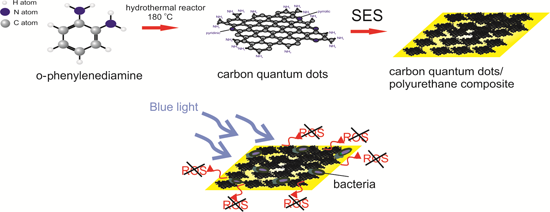
- (Shimadzu, Japan). Reactive oxygen species (ROS) production Singlet oxygen generation For EPR measurements, a Spectrometer MiniScope 300, Magnettech, Berlin, Germany was used. The instrument was operating at a nominal frequency of 9.5 GHz. 2,2,6,6-tetramethylpiperidine (TEMP) was used as a spin trap. The


Frontiers of nanoelectronics: intrinsic Josephson effect and prospects of superconducting spintronics
Beilstein J. Nanotechnol. 2023, 14, 79–82, doi:10.3762/bjnano.14.9

- –ferromagnet–superconductor (SFS) structures have been predicted and calculated [26]. A quantitative study of the density of states (DOS) in bulk superconductor/ferromagnetic (S/F) bilayers in the diffusive limit has been presented. In addition, an analysis of the dependencies of DOS on magnetic and spin–orbit
Cooper pair splitting controlled by a temperature gradient
Beilstein J. Nanotechnol. 2023, 14, 61–67, doi:10.3762/bjnano.14.7
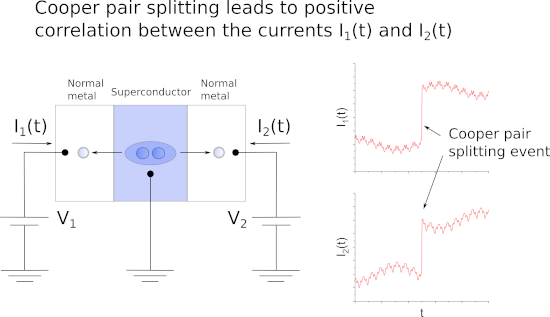
- temperature gradient across our device. In addition, voltages V1 and V2 can be applied to two normal leads, as shown in Figure 2. The Hamiltonian of this structure can be chosen in the form where are the Hamiltonians of two normal leads, denote creation and annihilation operators for an electron with a spin
- integrals are taken over the contact areas , and tr(x) denote coordinate- and spin-independent tunneling amplitudes. Let us denote the probability for N1 and N2 electrons to be transferred, respectively, through the junctions 1 and 2 during the observation time t as Pt(N1,N2). Introducing the so-called


Upper critical magnetic field in NbRe and NbReN micrometric strips
Beilstein J. Nanotechnol. 2023, 14, 45–51, doi:10.3762/bjnano.14.5
- Zahra Makhdoumi Kakhaki Antonio Leo Federico Chianese Loredana Parlato Giovanni Piero Pepe Angela Nigro Carla Cirillo Carmine Attanasio Dipartimento di Fisica “E. R. Caianiello”, Università degli Studi di Salerno, I-84084 Fisciano (Sa), Italy CNR-SPIN, c/o Università degli Studi di Salerno, I
- 0.13 ≤ x ≤ 0.38 crystallizes in the non-centrosymmetric Ti5Re24-type structure with the space group (No. 217) [9][10][11][12]. This non-centrosymmetric nature of the material leads to intriguing and unconventional physical properties such as the time-reversal symmetry breaking observed with muon-spin
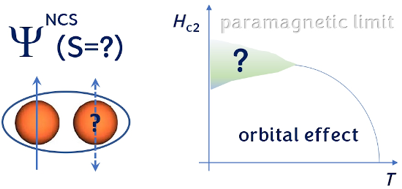
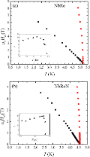
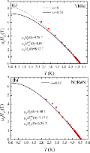
- superconductivity and both contribute to the behavior of Hc2(T), namely the orbital and the paramagnetic effect. While the former is due to the Lorentz force acting on electrons of the Cooper pairs with opposite momentum, the latter is related to splitting of the spin-singlet pairs because of the Zeeman effect

Gap-directed chemical lift-off lithographic nanoarchitectonics for arbitrary sub-micrometer patterning
Beilstein J. Nanotechnol. 2023, 14, 34–44, doi:10.3762/bjnano.14.4
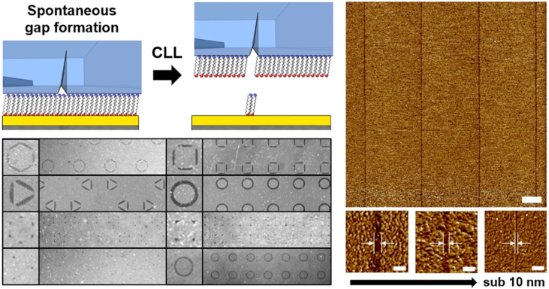
- important parameters to modulate (Scheme 1B). H is regulated by the photoresist mold in which the PDMS resin is cured in, which in turn can be controlled by spin coating speed and photoresist concentration. On the other hand, D and W are both determined by the photomask used. It is important to note that


The influence of structure and local structural defects on the magnetic properties of cobalt nanofilms
Beilstein J. Nanotechnol. 2023, 14, 23–33, doi:10.3762/bjnano.14.3
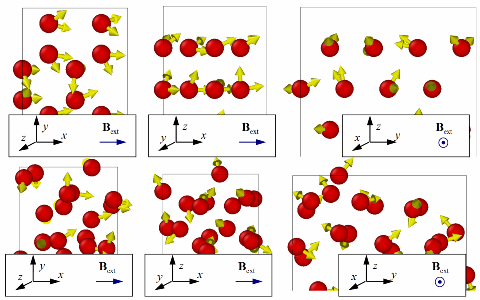
- , Academiei 3/3, Chisinau 2028, Moldova 10.3762/bjnano.14.3 Abstract The present paper considers a mathematical model describing the time evolution of spin states and magnetic properties of a nanomaterial. We present the results of two variants of nanosystem simulations. In the first variant, cobalt with a
- simulations, after pre-correction in the initial time stages, the value of spin temperature stabilized and tended to the average value. Also, the change in spin temperature occurred near the average value. The system with a real structure had a variable spin temperature compared to that of a system with an
- performance improvement can be solved with the help of spintronics devices, which are currently presented in a fairly wide variety of valuable effects: spin valves and valves in thin films and heterostructures [19][20], sensors based on the anomalous Hall effect [21], spin injection and magnetism detection





