


Search results
Search for "time dependent" in Full Text gives 233 result(s) in Beilstein Journal of Nanotechnology. Showing first 200.
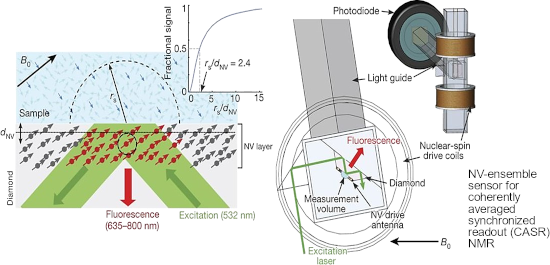
Nitrogen-vacancy centers in diamond for nanoscale magnetic resonance imaging applications
Beilstein J. Nanotechnol. 2019, 10, 2128–2151, doi:10.3762/bjnano.10.207


Nanostructured and oriented metal–organic framework films enabling extreme surface wetting properties
Beilstein J. Nanotechnol. 2019, 10, 1994–2003, doi:10.3762/bjnano.10.196
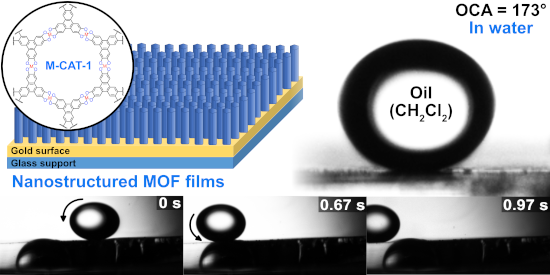
- properties with water and underwater oil-contact angles of 0° and up to 174°, respectively. The self-cleaning capability of the nanostructured, needle-like M-CAT-1 films was illustrated by measuring time-dependent oil droplet rolling-off a tilted surface. The deposition of the nanostructured Ni-CAT-1 film on
- nanostructured, needle-like Ni- and Co-CAT-1 films was illustrated by measuring time-dependent oil droplet rolling-off a tilted surface. The deposition of the nanostructured Ni-CAT-1 film on large glass substrates allowed for the realization of an efficient antifog coating. These antifog coatings enabled clear


Pulsed laser synthesis of highly active Ag–Rh and Ag–Pt antenna–reactor-type plasmonic catalysts
Beilstein J. Nanotechnol. 2019, 10, 1958–1963, doi:10.3762/bjnano.10.192
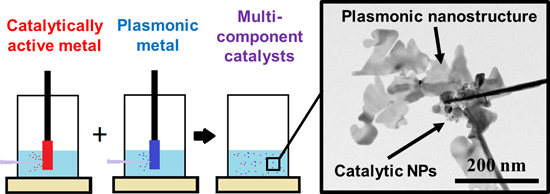
- . Afterwards, 0.015 mL of fresh aqueous 10−1 M NaBH4 was spiked into the mixture, as reducing agent, and the time-dependent absorption spectrum was recorded. As NaBH4 was used in excess, the reaction kinetics are assumed to follow a first-order rate law. The absorption peak at 400 nm (Abs400nm) forms


Synthesis and potent cytotoxic activity of a novel diosgenin derivative and its phytosomes against lung cancer cells
Beilstein J. Nanotechnol. 2019, 10, 1933–1942, doi:10.3762/bjnano.10.189
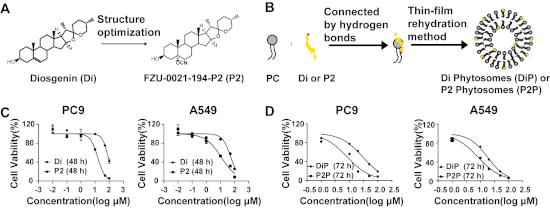
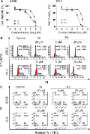
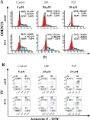
- the blank lipid nanoparticles was first investigated. As shown in Figure 4, P did not show any antiproliferative effects on A549 and PC9 cells, indicating the safety of the carrier material. DiP and P2P showed efficient antiproliferative activity in a dose- and time-dependent manner. DiP and P2P



High-tolerance crystalline hydrogels formed from self-assembling cyclic dipeptide
Beilstein J. Nanotechnol. 2019, 10, 1894–1901, doi:10.3762/bjnano.10.184
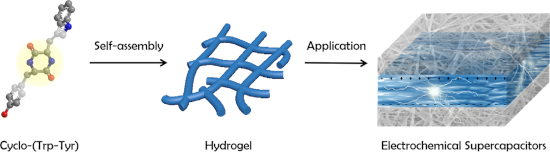
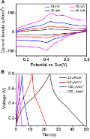
- , the modulus (both G’ and G’’) was enhanced after aging for a longer time, indicating the improvement in the mechanical capacity of the hydrogels with time. Taken together, the rheological study indicates that the CWY hydrogels possess shear-thinning and self-healing behaviors, which are time-dependent


Charge-transfer interactions between fullerenes and a mesoporous tetrathiafulvalene-based metal–organic framework
Beilstein J. Nanotechnol. 2019, 10, 1883–1893, doi:10.3762/bjnano.10.183
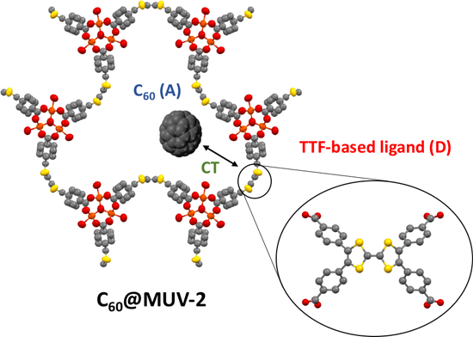
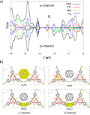
- to electronic polarization), with an exponential decay as a function of the C60…TTF intermolecular distance (Table S2, Supporting Information File 1). Time-dependent DFT molecular calculations were performed at the CAM-B3LYP/6-31G** level (see the Experimental section) to shed light onto the
- ) was employed along with the 6-31G** basis set and half of the counterpoise correction (CP) [69]. The consistency of the interaction energy trends at the B3LYP-D3/6-31G**+½CP level was confirmed by using other basis set or CP weights (Table S1, Supporting Information File 1). Time-dependent DFT (TDDFT




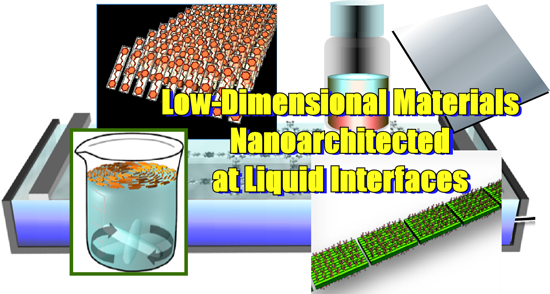
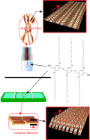
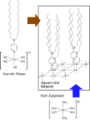
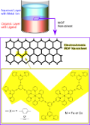
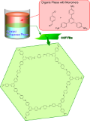
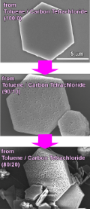
Materials nanoarchitectonics at two-dimensional liquid interfaces
Beilstein J. Nanotechnol. 2019, 10, 1559–1587, doi:10.3762/bjnano.10.153













Unipolar magnetic field pulses as an advantageous tool for ultrafast operations in superconducting Josephson “atoms”
Beilstein J. Nanotechnol. 2019, 10, 1548–1558, doi:10.3762/bjnano.10.152
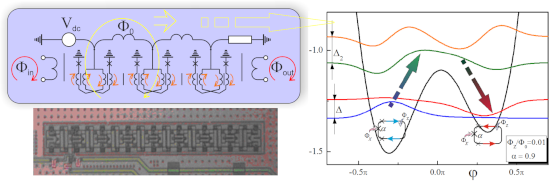
- corresponds to the initial population of the lowest energy state. The time-dependent populations for any of the considered states can be calculated as follows: Wi = |Ci(t)|2. The obtained dynamics of the system is compared to that calculated for the case in which the transitions between all the considered
- states are allowed and found as solution of the following system of equations: Subsequently, the time-dependent population transfer between the qubit states will be compared for both cases. Our goal is to provide an ultrafast transfer of population from one qubit state to another and to establish the
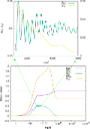
- obtain the following time-dependent amplitudes of the considered states: The time-dependent populations of different states obtained from Equation 12 and Equation 13 are presented in Figure 2. They are characterized by very fast oscillations accompanied by a rather slow modulation. The fast oscillations


Janus-micromotor-based on–off luminescence sensor for active TNT detection
Beilstein J. Nanotechnol. 2019, 10, 1324–1331, doi:10.3762/bjnano.10.131
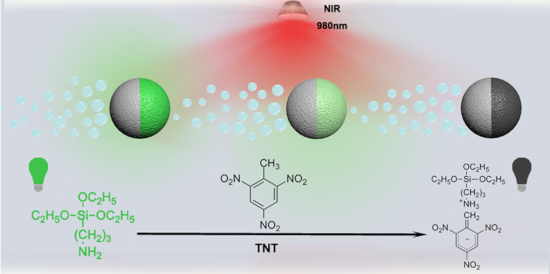
- time-dependent luminescence response of Janus UCNP capsule motors in TNT-contaminated H2O2. The motors were self-propelled for 3 min in 5% H2O2 containing 0.2 c (here, c = 1 μg mL−1) TNT and showed instant luminescence quenching, while both the UCNPs and static Janus UCNP capsule motors displayed no
- motor in 5% H2O2 with 0.5 mg mL−1 of TNT in 9 s under 980 nm laser excitation. (d) Time-dependent luminescence quenching of different samples in TNT solution with different concentrations (c = 1 μg mL−1). (e) Plot of the luminescence quenching effect of Janus UCNP capsule motors in different H2O2


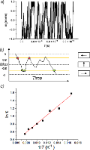
On the relaxation time of interacting superparamagnetic nanoparticles and implications for magnetic fluid hyperthermia
Beilstein J. Nanotechnol. 2019, 10, 1280–1289, doi:10.3762/bjnano.10.127
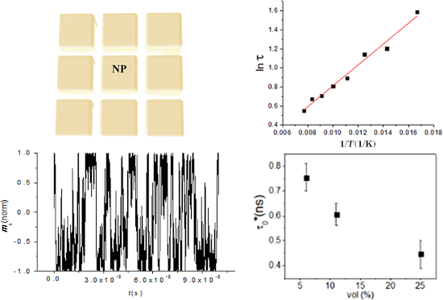
- static and time-dependent micromagnetic simulations. Keywords: magnetic hyperthermia; magnetic nanoparticles; magnetic relaxation time; micromagnetic simulation; Introduction Magnetic relaxation phenomena in nanoparticulate systems are under intensive investigation today, especially due to their
- measurements and (iii) to provide theoretical support for the specific evolution of the relaxation time constant and the anisotropy energy barrier in the Néel expression as function of interparticle interaction through a suitable exploitation of static and time-dependent micromagnetic simulations. Results and
- nanoparticle volume in each occupied cell (thus the terms MNPs and magnetic moments will be further used interchangeably). Time-dependent simulations have been performed for three different densities of nanoparticles, reflected by the following interparticle distances d1 and d2: high density (volume fraction



Serum type and concentration both affect the protein-corona composition of PLGA nanoparticles
Beilstein J. Nanotechnol. 2019, 10, 1002–1015, doi:10.3762/bjnano.10.101
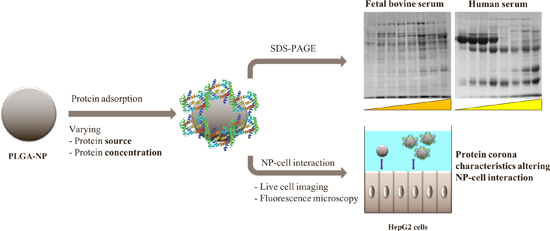
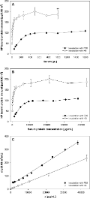
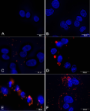
- assay, zeta potential measurements, and liquid chromatography–mass spectrometry/mass spectrometry (LC–MS/MS). Additionally, the time-dependent cell interaction of PLGA NPs in the absence or presence of a preformed protein corona was assessed by in vitro incubation experiments with the human liver cancer
- significantly at low concentration levels but becomes constant when passing to higher serum concentrations. Corona formation is a very dynamic, competitive and time-dependent process. In the early stage, low-affinity proteins with high abundance in serum, for instance, human serum albumin (HSA), adsorb onto the
- serum. Proteins were analyzed by LC–MS/MS in three independent measurements (RUN 1–3) and grouped according to their function in blood. Abbreviations: fetal bovine serum (FBS), human serum (HS), insulin-like growth factor (IGF). Time-dependent



Effects of gold and PCL- or PLLA-coated silica nanoparticles on brain endothelial cells and the blood–brain barrier
Beilstein J. Nanotechnol. 2019, 10, 941–954, doi:10.3762/bjnano.10.95
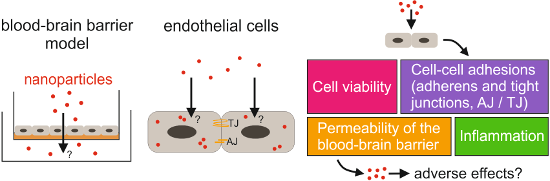
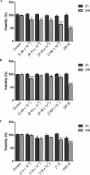
- smallest Au-NPs showed an effect on cell viability. Regardless of size, none of the NPs induced inflammation or cell morphology changes [19]. This could also be shown for primary cultured porcine brain microvessel ECs (pBMECs) exposed to Au-NPs [20]. Si-NPs elicited concentration- and time-dependent
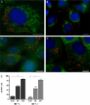
- /mL]. A time-dependent significant increase in NP uptake was obtained in rBCEC4 cells. Both PCL- and PLLA-NPs were taken up to a very similar extent. After 24 h of NP exposure, 87% and 84% of cells had taken up PCL- and PLLA-NPs, respectively (Figure 3E). Signaling pathways involved in survival
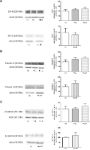
- Figure 7B and Figure 7C. Furthermore, no difference between PCL- and Au-NP-exposed cell monolayers was detected. Overall, cell monolayers are less permeable to 70 kDa FITC dextran (Figure 7C) than to 4.4 kDa TRITC dextran (Figure 7B). Discussion A concentration- and time-dependent effect of exposure to



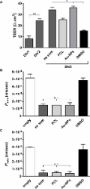
Synthesis of novel C-doped g-C3N4 nanosheets coupled with CdIn2S4 for enhanced photocatalytic hydrogen evolution
Beilstein J. Nanotechnol. 2019, 10, 912–921, doi:10.3762/bjnano.10.92
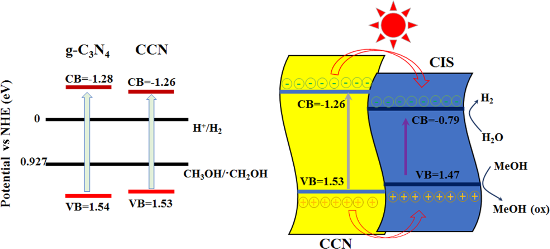
- charges apparently, leading to the enhancement of photocatalytic activity of the hybrid photocatalyst. Photocatalytic performance Time-dependent visible-light-induced photocatalytic H2 formation over different samples has been measured in the presence of methanol (sacrificial electron donor) without the
- 1s, (c) N 1s, (d) Cd 3d, (e) In 3d and (f) S 2p. (a) UV–vis spectra of g-C3N4, CCN, CdIn2S4, and CISCCN composites. (b) The plot of (αhν)2 vs photon energy (hν) for g-C3N4, CCN and CdIn2S4. Photoluminescence spectra of g-C3N4, CCN and CISCCN3 samples. (a) Time-dependent visible-light-induced


Review of time-resolved non-contact electrostatic force microscopy techniques with applications to ionic transport measurements
Beilstein J. Nanotechnol. 2019, 10, 617–633, doi:10.3762/bjnano.10.62
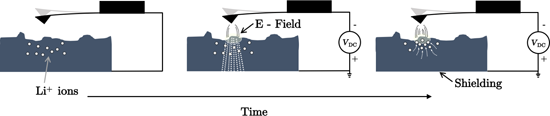
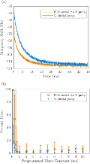
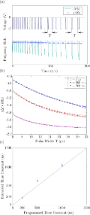
- constants are plotted as a function of the programmed time constants in Figure 3c. Extending this technique to ionic transport systems requires only the insertion of an explicit time dependence of the capacitance C(t) in place of the time-dependent voltage in Equation 8. The capacitance follows the time
- time-dependent tip–sample interaction. Application to ionic transport measurements To accurately quantify ionic transport requires the capability to fully resolve the functional form of a stretched exponential response to extract the two main parameters of interest, τ and β. To test the suitability of
- capacitance, simplifying the analysis significantly. Similar techniques may be required to extract information from samples where large time-dependent changes in capacitance and surface potential are expected. Conclusion We have reviewed several established techniques that achieve time resolution using EFM





Coexisting spin and Rabi oscillations at intermediate time regimes in electron transport through a photon cavity
Beilstein J. Nanotechnol. 2019, 10, 606–616, doi:10.3762/bjnano.10.61
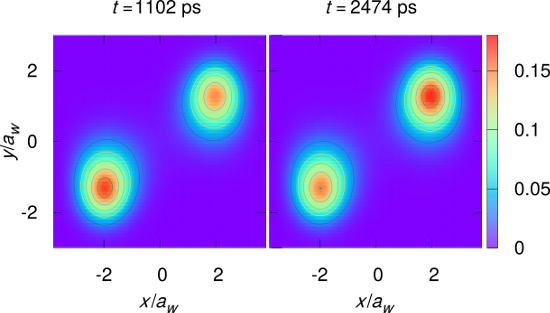
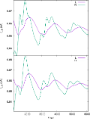
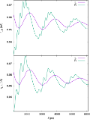
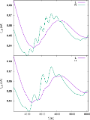
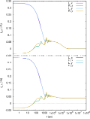
- , PO Box MG-7, Bucharest-Magurele, Romania 10.3762/bjnano.10.61 Abstract In this work, we theoretically model the time-dependent transport through an asymmetric double quantum dot etched in a two-dimensional wire embedded in a far-infrared (FIR) photon cavity. For the transient and the intermediate
- out a difference between the steady-state correlation functions in the Coulomb blocking and the photon-assisted transport regimes. Keywords: electron transport; interactions; photon cavity; photon-dressed electron states; time dependent; Introduction Experimental [1][2][3][4][5][6] and theoretical
- transport in the far-infrared (FIR) regime. The time-dependent electronic transport through a two-dimensional (2D) nanosystem patterned in a GaAs heterostructure, which is in turn embedded in a three-dimensional (3D) FIR photon cavity, generally displays three regimes: i) The switching transient regime in


![[Graphic 40]](/bjnano/content/inline/2190-4286-10-61-i49.svg?max-width=637&scale=1.418184) and photon
and photon ![[Graphic 41]](/bjnano/content/inline/2190-4286-10-61-i50.svg?max-width=637&scale=1.418184) content in the open central system as a function of time. In additio...
content in the open central system as a function of time. In additio...

![[Graphic 60]](/bjnano/content/inline/2190-4286-10-61-i69.svg?max-width=637&scale=1.418184)
![[Graphic 61]](/bjnano/content/inline/2190-4286-10-61-i70.svg?max-width=637&scale=1.418184)
![[Graphic 62]](/bjnano/content/inline/2190-4286-10-61-i71.svg?max-width=637&scale=1.418184) and
and ![[Graphic 63]](/bjnano/content/inline/2190-4286-10-61-i72.svg?max-width=637&scale=1.418184) i...
i...
![[Graphic 76]](/bjnano/content/inline/2190-4286-10-61-i85.svg?max-width=637&scale=1.418184) in the steady state. The cavity pho...
in the steady state. The cavity pho...
Gold nanoparticles embedded in a polymer as a 3D-printable dichroic nanocomposite material
Beilstein J. Nanotechnol. 2019, 10, 442–447, doi:10.3762/bjnano.10.43
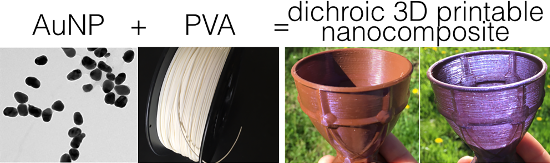
- change during the synthesis hints that the dichroic nanoparticle formation is not just seeded growth, but a more complex mechanism. Therefore, we studied the evolution of the nanoparticle formation over time using UV–vis spectroscopy and TEM (Supporting Information File 1, Figures S3 and S4). The time
- dependent study shows the formation of small gold nuclei that in time cluster together forming nanowire-like structures concomitant to the first color change. The second change of color, from ink-black to purple, is accompanied by an enhancement of the scattering, giving the purple solution a brown



Scanning probe microscopy for energy-related materials
Beilstein J. Nanotechnol. 2019, 10, 132–134, doi:10.3762/bjnano.10.12

- time-dependent changes of the surface potential occurring under illumination. This work also unravels lattice expansion phenomena under illumination in perovskite structure forming photo-absorbing materials [2]. Pablo A. Fernández Garrillo and co-workers go one step further by addressing photocarrier
Graphene–graphite hybrid epoxy composites with controllable workability for thermal management
Beilstein J. Nanotechnol. 2019, 10, 95–104, doi:10.3762/bjnano.10.9
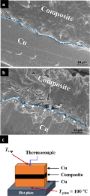
- two composite samples. While heating up, the sensor measures the temperature increase inside the sample over time. The time-dependent change in temperature is used to calculate the TD and thermal conductivity of the measured material. The measurements were conducted in air at 25 °C [67]. Electron



Pull-off and friction forces of micropatterned elastomers on soft substrates: the effects of pattern length scale and stiffness
Beilstein J. Nanotechnol. 2019, 10, 79–94, doi:10.3762/bjnano.10.8
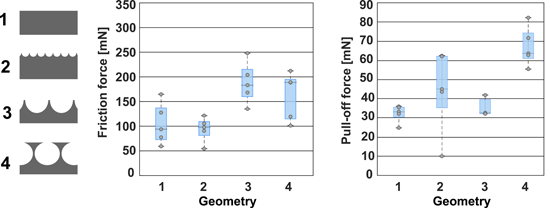
- of deformation mechanisms of the substrate in the pull-off and sliding of our adhesives could be further investigated by varying the pull-off or sliding speed, since the strain rates of both substrate and adhesives are time dependent. Conclusion We used a facile, out-of-the-cleanroom method to





Enhancement of X-ray emission from nanocolloidal gold suspensions under double-pulse excitation
Beilstein J. Nanotechnol. 2018, 9, 2609–2617, doi:10.3762/bjnano.9.242
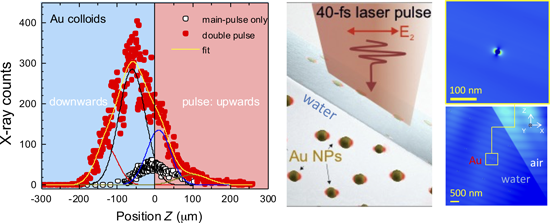
- enhancement in X-ray intensity from a water film was observed under double-pulse excitation with a pre-pulse ahead of the main pulse [26][27]. The pre-pulse irradiation with relatively low intensity induces a time-dependent laser-induced plasma (in the range of picoseconds) and ablation (in the range of
- solution surface for different Δt up to 15 ns [28]. Analyses of the relation between the time-dependent X-ray generation and the optimum laser irradiation position are still missing for other aqueous solutions, especially for experiments under ambient pressure. Previous studies, mostly with solid targets


Au–Si plasmonic platforms: synthesis, structure and FDTD simulations
Beilstein J. Nanotechnol. 2018, 9, 2599–2608, doi:10.3762/bjnano.9.241
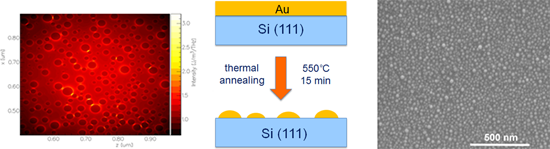
- distribution on the nanoparticle plates. One of the ways to go beyond this classical model is to add to the Maxwell’s FDTD method the quantum-mechanical description of the near-field distribution by using the time-dependent Schrödinger equations [10]. However, here one of the difficulties lies in the



Pattern generation for direct-write three-dimensional nanoscale structures via focused electron beam induced deposition
Beilstein J. Nanotechnol. 2018, 9, 2581–2598, doi:10.3762/bjnano.9.240
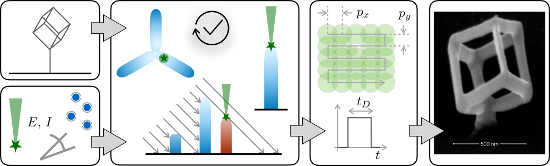
- FEBID process, a more detailed look reveals a rather high degree of complexity. During a deposition event at a predefined beam position, precursor molecules are consumed, so that the precursor coverage on all exposed surface areas is space- and time-dependent. Since the deposition rate depends on both
- the available SEs and the available precursor molecules, the deposition rate also becomes space- and time-dependent. After some characteristic time, depending, e.g., on the precursor flux and the precursor type, surface diffusion leads to a replenishment in all of those regions where the precursor
- DEs in a time-dependent fashion. For a fully satisfying solution this naturally leads again to a simulation-assisted algorithm. Here we follow a simpler strategy which works on a frame-to-frame basis and needs no preprocessing of the geometry file. Conceptually one would like to sort the DEs in one




Enhanced antineoplastic/therapeutic efficacy using 5-fluorouracil-loaded calcium phosphate nanoparticles
Beilstein J. Nanotechnol. 2018, 9, 2499–2515, doi:10.3762/bjnano.9.233
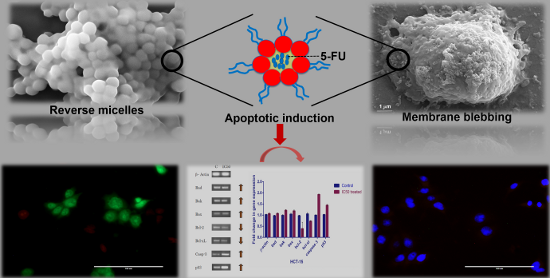
- -15) cancer cells at 48.5 μg/mL treatment. The apoptotic induction of CaP@5-FU NPs was confirmed with acridine orange/ethidium bromide (AO/EB) staining and by examining the morphological changes with Hoechst and rhodamine B staining in a time-dependent manner. The apparent membrane bleb formation was
- track the morphological changes occurring in the cells after treatment with CaP@5-FU NPs in a time-dependent manner. Hoechst 33342 can effectively stain the nucleic acid and specifically identify changes in the nucleus, whereas rhodamine B stains the cytoplasmic vesicles uniformly, enabling the


Pinning of a ferroelectric Bloch wall at a paraelectric layer
Beilstein J. Nanotechnol. 2018, 9, 2356–2360, doi:10.3762/bjnano.9.220
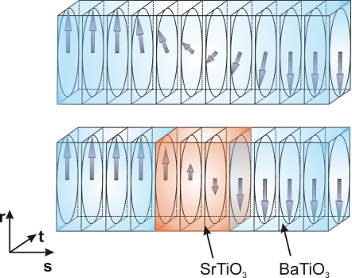
- ferroelectric Bloch walls encountering a layer of paraelectric material by means of phase-field simulation. This technique allows the relaxed domain wall profiles to be predicted by simulated annealing of the system based on numerical solution of material-specific time-dependent Ginzburg–Landau–Devonshire
- the walls in the simulation box, but there were no real constrains introduced there, only the natural limitations resulting from the standard protocol of simulated annealing procedure, governed by the time-dependent Ginzburg–Landau equation. The hysteresis loop shown in Figure 8 has been calculated

![[Graphic 2]](/bjnano/content/inline/2190-4286-9-220-i2.svg?max-width=637&scale=1.18182) -oriented 180-degree domain walls in a) pure BaTiO3, b) BaTiO3–SrTiO3 superla...
-oriented 180-degree domain walls in a) pure BaTiO3, b) BaTiO3–SrTiO3 superla...


Magnetism and magnetoresistance of single Ni–Cu alloy nanowires
Beilstein J. Nanotechnol. 2018, 9, 2345–2355, doi:10.3762/bjnano.9.219
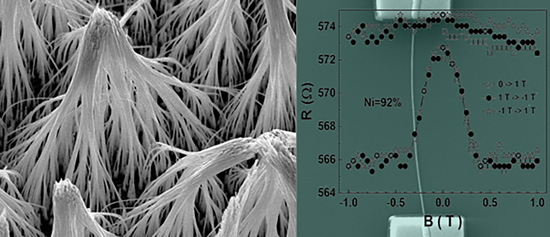
- inset of Figure 5) and that indicate a magnetization reversal through movement of domain walls. This specific magnetization reversal involving a very fast moving of transversal domains walls (400 nm in about 10−9 s) in case of nanowires of 40 nm diameter has been investigated in [33] through time
- -dependent micromagnetic simulations. Such a fast movement of the domain walls cannot be sensed in a static hysteresis loop, which will change “instantaneously” the direction of the magnetization at the “switching field” similar to the case of a S–W-like coherent rotation. Moreover, there is an equivalent





