


Search results
Search for "tunneling" in Full Text gives 316 result(s) in Beilstein Journal of Nanotechnology. Showing first 200.
Toward the use of CVD-grown MoS2 nanosheets as field-emission source
Beilstein J. Nanotechnol. 2018, 9, 1686–1694, doi:10.3762/bjnano.9.160
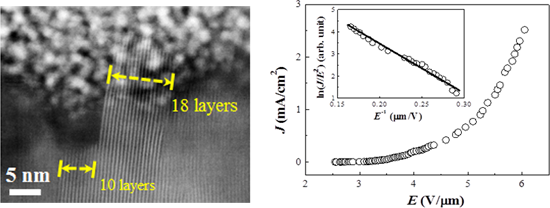
- on the FTO sample is displayed. The ln(J/E2) versus 1/E graph of the emission data is shown in the inset of Figure 6a. The linear behavior indicates that FE from the NSs is dominated by the tunneling effect. It can be seen that the density of emission current increases rapidly along with the
- cathode greatly influences the field-emission performance and the electrons are easier to be extracted from a film with more exposed edges [32]. Hence, we believe that the tip-like geometry (Figure 1d) and exposed edges (Figure 4) of the MoS2 NSs are enhancing the tunneling probability for electrons in



Josephson effect in junctions of conventional and topological superconductors
Beilstein J. Nanotechnol. 2018, 9, 1659–1676, doi:10.3762/bjnano.9.158
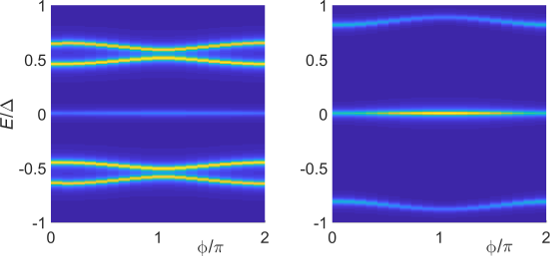
- ] then rule out a supercurrent for TS wires in the deep topological regime. We show below that unless B is inadvertently aligned with the MBS spin polarization axis, spin mixing will indeed generate a supercurrent. The S/TS leads are coupled to the QD via a tunneling Hamiltonian [70], where ψσ and ψ are
- and take real-valued tunnel amplitudes λS/TS, see Figure 1a, using a gauge where the superconducting phase difference appears via the QD–TS tunneling term. These tunnel amplitudes contain density-of-states factors for the respective leads. The operator expression for the current flowing through the
- that they include density-of-state factors again. The parameter t0 (with 0 ≤ t0 ≤ 1) determines the transparency of the SAC in the normal-conducting state [36], cf. Equation 36, Note that in Equation 41 we have again assumed spin-conserving tunneling, where only spin-↑ fermions in the SAC are tunnel


![[Graphic 75]](/bjnano/content/inline/2190-4286-9-158-i137.svg?max-width=637&scale=1.18182) = 1 in Figure 6, for different bulk Zeeman fields Vx (in meV) near the crit...
= 1 in Figure 6, for different bulk Zeeman fields Vx (in meV) near the crit...


Solid-state Stern–Gerlach spin splitter for magnetic field sensing, spintronics, and quantum computing
Beilstein J. Nanotechnol. 2018, 9, 1558–1563, doi:10.3762/bjnano.9.147
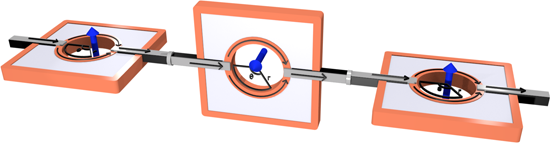
- the transfer processes between the leads and the circular edge. We will here assume that this process preserves phase coherence between the states in the leads and the TI edge states, and that it is described by a single tunneling parameter t, which we for now set to t = 1 to indicate perfect
- proportional to the identity matrix and therefore only contribute to the irrelevant α phase. Discussion We would like to end with a few comments on some of the assumptions made when deriving the above results. First of all, the tunneling parameter t, which otherwise would have multiplied the L and R matrices


Spatial Rabi oscillations between Majorana bound states and quantum dots
Beilstein J. Nanotechnol. 2018, 9, 1527–1535, doi:10.3762/bjnano.9.143
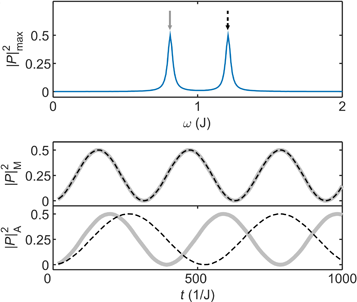
- of this amplitude equality by analyzing the spatial Rabi oscillations of the quantum states of a quantum dot that is tunneling-coupled to the Majorana bound states. Results: We find two resonant Rabi driving energies that correspond to the energy splitting due to the coupling of two spatially
- Majorana bound states that have an exponentially protected small splitting energy. As shown in Figure 1a, one of the Majorana bound states is coupled to the quantum dot with a single electron tunneling through a potential barrier. The barrier is produced by a voltage gate, which is implemented between the
- quantum dot and the Majorana island. If an ac voltage is applied to the gate, the tunneling strength between the quantum dot and the Majorana bound states will be driven periodically [39]. We show that there are two resonant driving energies that induce coherent spatial Rabi oscillations between the


Robust topological phase in proximitized core–shell nanowires coupled to multiple superconductors
Beilstein J. Nanotechnol. 2018, 9, 1512–1526, doi:10.3762/bjnano.9.142
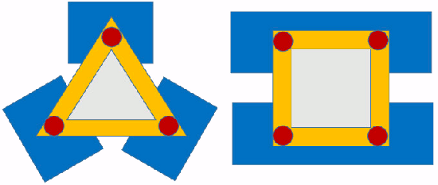
- produced in a charge transport measurement by tunneling electrons between the semiconductor wire and external electrodes attached to its ends [14][15][16][17][18][19][20][21][22][23][24]. These experiments have provided strong indications regarding the presence of Majorana bound states at the end of the


![[Graphic 30]](/bjnano/content/inline/2190-4286-9-142-i36.svg?max-width=637&scale=1.18182) ) = 0 and
) = 0 and ![[Graphic 31]](/bjnano/content/inline/2190-4286-9-142-i37.svg?max-width=637&scale=1.18182) = 0. The white areas are t...
= 0. The white areas are t...


![[Graphic 40]](/bjnano/content/inline/2190-4286-9-142-i46.svg?max-width=637&scale=1.18182) ) ≠ 0 and
) ≠ 0 and ![[Graphic 41]](/bjnano/content/inline/2190-4286-9-142-i47.svg?max-width=637&scale=1.18182) = 0. The white areas are topol...
= 0. The white areas are topol...

![[Graphic 50]](/bjnano/content/inline/2190-4286-9-142-i56.svg?max-width=637&scale=1.18182) ) ≠ 0 and
) ≠ 0 and ![[Graphic 51]](/bjnano/content/inline/2190-4286-9-142-i57.svg?max-width=637&scale=1.18182) 1 = 0,
1 = 0, ![[Graphic 52]](/bjnano/content/inline/2190-4286-9-142-i58.svg?max-width=637&scale=1.18182) 3 = π/2,
3 = π/2, ![[Graphic 53]](/bjnano/content/inline/2190-4286-9-142-i59.svg?max-width=637&scale=1.18182) 5 = −π/2. T...
5 = −π/2. T...

![[Graphic 65]](/bjnano/content/inline/2190-4286-9-142-i71.svg?max-width=637&scale=1.18182) ) ≠ 0 and
) ≠ 0 and ![[Graphic 66]](/bjnano/content/inline/2190-4286-9-142-i72.svg?max-width=637&scale=1.18182) 1 = π/2,
1 = π/2, ![[Graphic 67]](/bjnano/content/inline/2190-4286-9-142-i73.svg?max-width=637&scale=1.18182) 3 = −π/2,
3 = −π/2, ![[Graphic 68]](/bjnano/content/inline/2190-4286-9-142-i74.svg?max-width=637&scale=1.18182) 5 = π/2, and ...
5 = π/2, and ...


![[Graphic 79]](/bjnano/content/inline/2190-4286-9-142-i85.svg?max-width=637&scale=1.18182) = 3 of a triangular wi...
= 3 of a triangular wi...


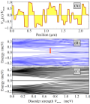
Electronic conduction during the formation stages of a single-molecule junction
Beilstein J. Nanotechnol. 2018, 9, 1471–1477, doi:10.3762/bjnano.9.138
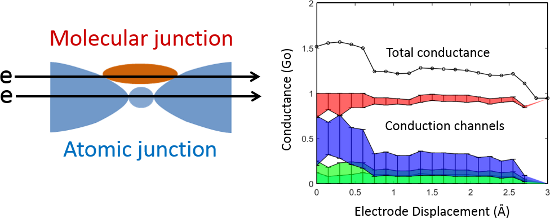
- scenarios in which a single-molecule junction is formed. Future control over such processes may pave the way for directed formation of preferred junction structures. Keywords: break junction; electron–vibration interactions; electronic transport; inelastic electron tunneling spectroscopy; molecular
- the tunneling transport regime. When vanadocene molecules are introduced, additional conductance plateaus appear below 1 G0, indicating the formation of a metal–molecule–metal junction after the Ag contact is broken. Interestingly, the introduction of molecules into the metal junction also yields new
- histograms taken before and after the introduction of vanadocene molecules. The histogram for bare Ag junctions (blue) shows a conductance peak at ≈1 G0, which is related to single-atom junctions, and a tail at low conductance due to electron tunneling after the junctions are broken. The introduction of


Robust midgap states in band-inverted junctions under electric and magnetic fields
Beilstein J. Nanotechnol. 2018, 9, 1405–1413, doi:10.3762/bjnano.9.133
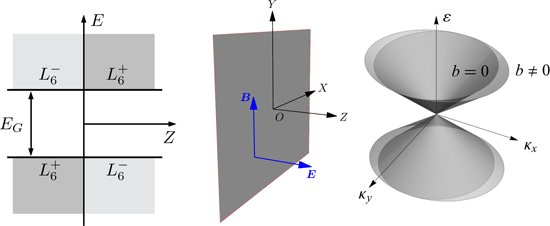
- crystalline insulator states in Pb1−xSnxSe [9]. High-resolution scanning tunneling microscopy studies of these topological crystalline insulators provided strong evidence of the coexistence of massless Dirac fermions, protected by crystal symmetry, with massive Dirac fermions consistent with crystal-symmetry

![[Graphic 1]](/bjnano/content/inline/2190-4286-9-133-i26.svg?max-width=637&scale=1.18182) and
and ![[Graphic 2]](/bjnano/content/inline/2190-4286-9-133-i27.svg?max-width=637&scale=1.18182) band-edge profile of an abrupt band-inverted junction with aligned and same-sized gaps, l...
band-edge profile of an abrupt band-inverted junction with aligned and same-sized gaps, l...


![[Graphic 35]](/bjnano/content/inline/2190-4286-9-133-i60.svg?max-width=637&scale=1.18182) and b = 0.5 as a function of the electric field. It is important...
and b = 0.5 as a function of the electric field. It is important...

Interplay between pairing and correlations in spin-polarized bound states
Beilstein J. Nanotechnol. 2018, 9, 1370–1380, doi:10.3762/bjnano.9.129
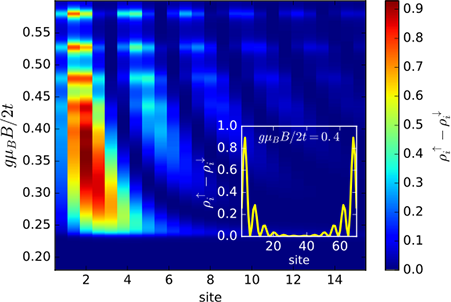
- ][13][14]. In-gap states (appearing in pairs symmetrically around the Fermi level) can be nowadays controlled electrostatically or magnetically [12] whereas their topography, spatial extent and polarization can be precisely inspected by the state-of-art tunneling measurements [15][16]. It has been
- the Kondo and the leaking Majorana quasiparticle can be confronted with each other. These magnetically polarized YSR and Majorana quasiparticles as well as the subgap Kondo effect can be experimentally verified using tunneling heterostructures with ferromagnetic lead (STM tip). Results and Discussion
- sufficiently long wire (εm = 0) the Kondo effect persists only in the spin-channel ↓, whereas for ↑ electrons there appears a dip in the spectral density at ω = 0. The resulting tunneling conductance is then partly reduced (from the perfect value 2e2/h) to the fractional value 3e2/2h [67][68][71][72][73]. In


![[Graphic 23]](/bjnano/content/inline/2190-4286-9-129-i39.svg?max-width=637&scale=1.18182) obtained for |J| < Jc in the absence of spin–orbit coupling (le...
obtained for |J| < Jc in the absence of spin–orbit coupling (le...

![[Graphic 26]](/bjnano/content/inline/2190-4286-9-129-i42.svg?max-width=637&scale=1.18182) as a function of the r...
as a function of the r...


Disorder-induced suppression of the zero-bias conductance peak splitting in topological superconducting nanowires
Beilstein J. Nanotechnol. 2018, 9, 1358–1369, doi:10.3762/bjnano.9.128
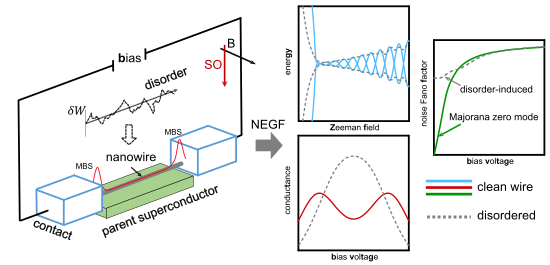
- Majorana zero mode, the noise Fano factor approaches zero in the low bias voltage limit due to the resonant Andreev tunneling. However, the Fano factor is finite in the case of a disorder-induced zero-bias peak. Keywords: conductance peak spacing; disorder; Majorana energy splitting; shot noise; zero-bias
- several experiments since 2012 [23][24][25][26][27][28][29][30]. As an important signature of MBSs in the semiconductor nanowires which are proximity-coupled to s-wave superconductors, the zero-bias conductance peak has been observed in the tunneling spectra in the presence of a finite magnetic field [23
- work, three different types of intrinsic disorder in the nanowire are considered: the fluctuations of the site-dependent chemical potential, the nonlinear tunneling between neighboring sites, and the disorder arising in the pairing as a result of inhomogeneous superconductor–semiconductor coupling. In


![[Graphic 20]](/bjnano/content/inline/2190-4286-9-128-i39.svg?max-width=637&scale=1.18182) (das...
(das...


Andreev spectrum and supercurrents in nanowire-based SNS junctions containing Majorana bound states
Beilstein J. Nanotechnol. 2018, 9, 1339–1357, doi:10.3762/bjnano.9.127
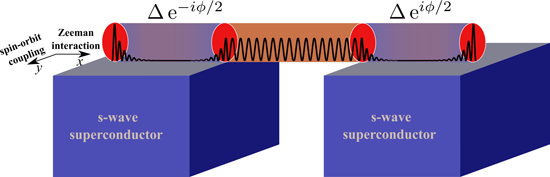
- , fault-tolerant quantum computation [4][5][6]. Tunneling into such zero-energy MBSs results in a zero-bias peak of high 2e2/h in the tunnelling conductance in normal–superconductor (NS) junctions due to perfect Andreev reflection into a particle–hole symmetric state [7]. Early tunnelling experiments in
- similar to the effect of temperature discussed above. Notice that in the tunnel regime, τ = 0.6, I() is approximately zero. For the sawtooth profile at = π is preserved and robust when τ is reduced from the fully transparent to the tunnel regime, as seen in Figure 15b. Quite remarkably, in the tunneling
- transmission, i.e., it is preserved even in the tunneling regime. And finally, we showed that reasonable fluctuations in the chemical potential μ (up to 5μ) do not affect the sawtooth profile of I() at = π. Our main contribution are summarized as follows. In short and long SNS junctions of finite length four


![[Graphic 44]](/bjnano/content/inline/2190-4286-9-127-i52.svg?max-width=637&scale=1.18182) in a short SNS j...
in a short SNS j...


![[Graphic 73]](/bjnano/content/inline/2190-4286-9-127-i81.svg?max-width=637&scale=1.18182) = 0 (a,b)...
= 0 (a,b)...


![[Graphic 84]](/bjnano/content/inline/2190-4286-9-127-i92.svg?max-width=637&scale=1.18182) ), fo...
), fo...


![[Graphic 119]](/bjnano/content/inline/2190-4286-9-127-i127.svg?max-width=637&scale=1.18182) at B = 1.5Bc. Contributions to the supercurrent for (a,b) short and ...
at B = 1.5Bc. Contributions to the supercurrent for (a,b) short and ...

![[Graphic 163]](/bjnano/content/inline/2190-4286-9-127-i171.svg?max-width=637&scale=1.18182) ), in (a,b) a short and (c,d) a long junction. (a,...
), in (a,b) a short and (c,d) a long junction. (a,...

![[Graphic 175]](/bjnano/content/inline/2190-4286-9-127-i183.svg?max-width=637&scale=1.18182) ), in (a,b) a...
), in (a,b) a...

![[Graphic 186]](/bjnano/content/inline/2190-4286-9-127-i194.svg?max-width=637&scale=1.18182) ) in (a,b) a short and (c,d) a long ...
) in (a,b) a short and (c,d) a long ...
Proximity effect in a two-dimensional electron gas coupled to a thin superconducting layer
Beilstein J. Nanotechnol. 2018, 9, 1263–1271, doi:10.3762/bjnano.9.118
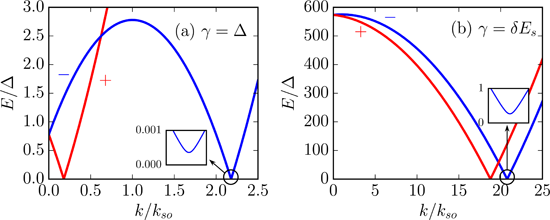
- -energy, we find that the induced gap in the presence of only Rashba spin–orbit coupling can be made comparable to the bulk gap of the superconductor only if the tunneling energy scale exceeds the large level spacing of the superconducting layer. As in the 1D case, the large tunneling energy scale induces
- , μs, and Δ the effective mass, chemical potential, and pairing potential of the superconductor, respectively. Local tunneling at the interface between the two materials is assumed to conserve both spin and momentum, where t is the tunneling amplitude. We must take the 2DEG to be located at some finite
- z2D (0 < z2D < d) due to the breakdown of the tunneling Hamiltonian approach for the case where the 2DEG is located at the boundary of the superconductor. The breakdown of the tunneling Hamiltonian results from our neglect of the thickness of the 2DEG (for related calculations in which the finite


![[Graphic 15]](/bjnano/content/inline/2190-4286-9-118-i42.svg?max-width=637&scale=1.18182) in the absence of tunneling, assuming
in the absence of tunneling, assuming ![[Graphic 16]](/bjnano/content/inline/2190-4286-9-118-i43.svg?max-width=637&scale=1.18182) an...
an...


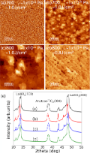
Heterostuctures of 4-(chloromethyl)phenyltrichlorosilane and 5,10,15,20-tetra(4-pyridyl)-21H,23H-porphine prepared on Si(111) using particle lithography: Nanoscale characterization of the main steps of nanopatterning
Beilstein J. Nanotechnol. 2018, 9, 1211–1219, doi:10.3762/bjnano.9.112
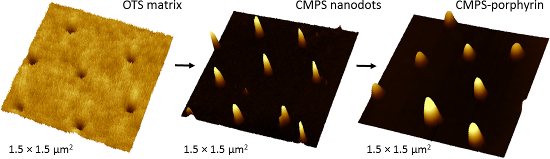
- studied with scanning tunneling microscopy (STM) to evaluate the surface conformation and molecular geometry [14]. Individual molecules of nonplanar freebase and copper-metallated tetraphenyl porphyrins adsorbed on Cu(111) were investigated using frequency modulated noncontact AFM to resolve subtle
- with a surface orientation defined by the substituents [20]. The self-assembly of manganese meso-tetra(4-pyridyl)porphyrin on Cu(111) was studied using low temperature scanning tunneling microscopy (STM) and atomic force microscopy (AFM) to resolve molecular structures by Chen et al. [21]. A


Circular dichroism of chiral Majorana states
Beilstein J. Nanotechnol. 2018, 9, 1194–1199, doi:10.3762/bjnano.9.110
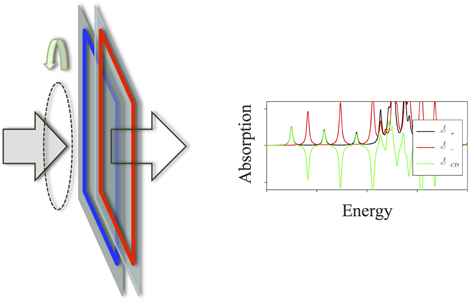
- microwave photoassisted tunneling in Majorana nanocircuits have been suggested in [27]. For chiral Majorana states in a 2D square or rectangular geometry the CD at low energies is characterized by a sequence of equally spaced peaks, corresponding to transitions of Bogoliubov–deGennes quasiparticles from


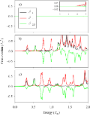
![[Graphic 14]](/bjnano/content/inline/2190-4286-9-110-i18.svg?max-width=637&scale=1.18182) . Panels a) and b) correspond to the phases in Figure 1d with one (ΔB = 2...
. Panels a) and b) correspond to the phases in Figure 1d with one (ΔB = 2...
![[Graphic 15]](/bjnano/content/inline/2190-4286-9-110-i19.svg?max-width=637&scale=1.18182) ,
, ![[Graphic 16]](/bjnano/content/inline/2190-4286-9-110-i20.svg?max-width=637&scale=1.18182) and
and ![[Graphic 17]](/bjnano/content/inline/2190-4286-9-110-i21.svg?max-width=637&scale=1.18182) defined in the main text. The shown results correspond to the spe...
defined in the main text. The shown results correspond to the spe...

![[Graphic 19]](/bjnano/content/inline/2190-4286-9-110-i23.svg?max-width=637&scale=1.18182) ,
, ![[Graphic 20]](/bjnano/content/inline/2190-4286-9-110-i24.svg?max-width=637&scale=1.18182) and
and ![[Graphic 21]](/bjnano/content/inline/2190-4286-9-110-i25.svg?max-width=637&scale=1.18182) for (a) a square of Lx = Ly = 20 LU), and for (b) a rectangle of L...
for (a) a square of Lx = Ly = 20 LU), and for (b) a rectangle of L...
Inverse proximity effect in semiconductor Majorana nanowires
Beilstein J. Nanotechnol. 2018, 9, 1184–1193, doi:10.3762/bjnano.9.109
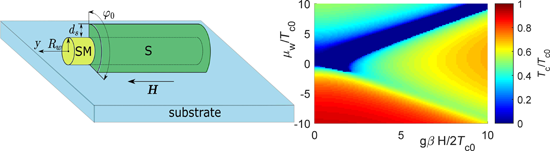
- the reverse process. These rates are determined both by the probability of electron tunneling through the barrier at the superconductor/semiconductor (S/SM) interface and the corresponding densities of states. In particular, it is important that the rate γw is proportional to the DOS in the SM
- the electrons in the subsystems, Δs(r) is the superconducting order parameter, α is the spin–orbit coupling constant, h = gβH/2 is the Zeeman energy, and H is the applied magnetic field. We consider the incoherent tunneling model, which does not conserve the momentum, e.g., due to the presence of the
- disorder at the interface. Thus, the ensemble average of the tunneling amplitudes has the form: where is the length of the order of the atomic scale. The tunneling is also assumed to be independent of energy and spin and occurs locally in time and in space, i.e., from a point r on the superconducting


Combined pulsed laser deposition and non-contact atomic force microscopy system for studies of insulator metal oxide thin films
Beilstein J. Nanotechnol. 2018, 9, 686–692, doi:10.3762/bjnano.9.63
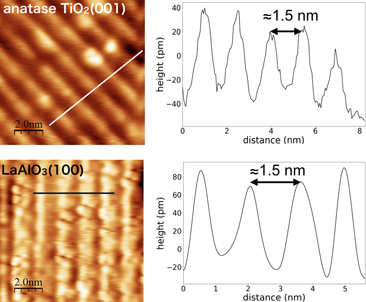
- transmission electron microscopy [5][8][9][10][11][12][13]. As atomic resolution methods, scanning probe microscopy including scanning tunneling microscopy (STM) [13][14][15][16][17][18][19][20][21][22][23][24][25][26][27][28][29][30] and non-contact atomic force microscopy (NC-AFM) [19][23][29][31][32][33][34


Electron interactions with the heteronuclear carbonyl precursor H2FeRu3(CO)13 and comparison with HFeCo3(CO)12: from fundamental gas phase and surface science studies to focused electron beam induced deposition
Beilstein J. Nanotechnol. 2018, 9, 555–579, doi:10.3762/bjnano.9.53


Revealing the interference effect of Majorana fermions in a topological Josephson junction
Beilstein J. Nanotechnol. 2018, 9, 520–529, doi:10.3762/bjnano.9.50
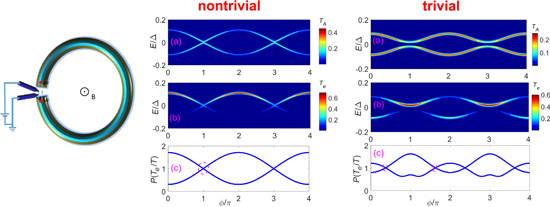
- DOS can be detected by using two STM leads or two normal leads. A single side lead can only detect the Andreev reflection tunneling process in the junction, which cannot reveal information about the interference effect in general. However, using two side leads, we can reveal information about the
- experimentally is related to ferromagnetic atomic chains, which are put on a trivial superconductor [15]. It is believed that MFs can generate a zero-bias conductance peak (ZBP) in the conductance spectrum [16][17][18][19], and indeed the signature of ZBPs has been observed in both systems in tunneling
- show that a single side lead can only detect the Andreev reflection tunneling process in the junction, which cannot reveal information about the interference effect in general. However, using the two side leads, we can display information about the interference effect of the MFs by combining Andreev


Transition from silicene monolayer to thin Si films on Ag(111): comparison between experimental data and Monte Carlo simulation
Beilstein J. Nanotechnol. 2018, 9, 48–56, doi:10.3762/bjnano.9.7
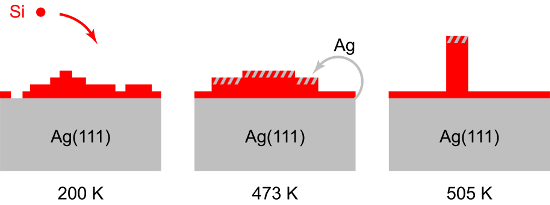
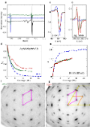
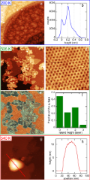
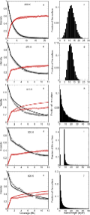
- Alberto Curcella Romain Bernard Yves Borensztein Silvia Pandolfi Geoffroy Prevot Sorbonne Universités, UPMC Univ Paris 06, CNRS-UMR 7588, Institut des NanoSciences de Paris, F-75005, Paris, France 10.3762/bjnano.9.7 Abstract Scanning tunneling microscopy (STM), Auger electron spectroscopy (AES
- spectroscopy; scanning tunneling microscopy; silicene; silicon; silver; Introduction Since their discovery in 2012 [1], silicene layers have been attracting a great interest, due to the expectation of electronic properties similar to the ones of graphene, based on theoretical studies [2]. Because of their
- ], ARPES [31] and grazing incidence X-ray diffraction [32]. The diamond-like structure of the film has been confirmed by scanning tunneling microscopy (STM) [33] and optical measurements [34]. The Ag termination of the surface has been also demonstrated by Auger electron spectroscopy (AES) [34], metastable

The role of ligands in coinage-metal nanoparticles for electronics
Beilstein J. Nanotechnol. 2017, 8, 2625–2639, doi:10.3762/bjnano.8.263
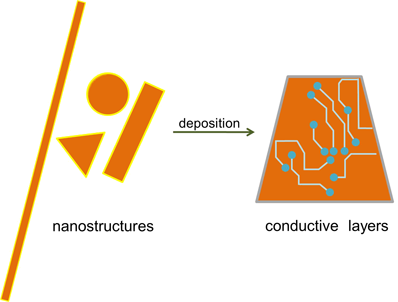
- ligands [52]. Typical conduction mechanisms within such films are tunneling or electron hopping [26][53]. An exponential dependence of the tunneling-dominated film conductivity on the number of saturated carbon–carbon bonds in the ligands has been reported [54][55]. The chemical nature of dithiols or
- allowed the electron wave functions between neighboring nanoparticles to overlap and electron transport was described by thermally activated tunneling between the particles. Locating the Fermi level of the metal in the HOMO–LUMO gap of the ligand shell provides a pathway for electrons to pass along [56
- created by the surrounding dielectric ligand shell of nanoparticles. Depending on the thickness of the barrier, electron transport has been described as quantum tunneling, electron hopping, ohmic conduction, or space-charge-limited conduction, to mention only a few [53][57][109][110]. Several reports


Inelastic electron tunneling spectroscopy of difurylethene-based photochromic single-molecule junctions
Beilstein J. Nanotechnol. 2017, 8, 2606–2614, doi:10.3762/bjnano.8.261
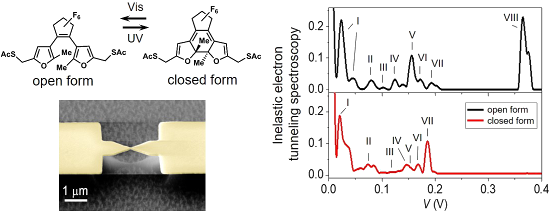
- theoretical analysis of charge transport through diarylethene-derived single-molecule devices, which are created using the mechanically controlled break-junction technique. Inelastic electron tunneling (IET) spectroscopy measurements performed at 4.2 K are compared with first-principles calculations in the
- : inelastic electron tunneling spectroscopy; molecular junction; photochromic; single molecule; Introduction Molecular junctions hold promise for the realization of novel miniaturized electronic circuits [1][2][3][4][5][6] as well as for thermoelectric energy conversion devices [7][8][9][10]. Optoelectronic
- C5F-ThM molecules [14]. The overall magnitude of the conductance of both the open and the closed form is rather small. This can be attributed to the presence of sp3 hybridized methylene groups, isolating the π-system and the thiol anchor groups. These act as efficient tunneling barriers for the


Towards molecular spintronics
Beilstein J. Nanotechnol. 2017, 8, 2464–2466, doi:10.3762/bjnano.8.245

- molecules; (magneto-)optical spectroscopy; molecular spintronics; photoelectron spectroscopy; surface science; thin films; The discovery of tunneling and giant magnetoresistance in inorganic spin valves has led to a revolution in the field of magnetic memory and the significant increase in the storage
Comparing postdeposition reactions of electrons and radicals with Pt nanostructures created by focused electron beam induced deposition
Beilstein J. Nanotechnol. 2017, 8, 2410–2424, doi:10.3762/bjnano.8.240
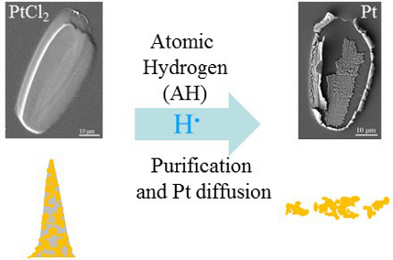
- indicate that exposure of the PtCl2 deposits to AH and the resulting purification can also lead to significant Pt atom mobility. We believe that the mobility of Pt atoms can be rationalized in the context of scanning tunneling microscopy observations made by Horch et al., who found that the diffusion of




Robust procedure for creating and characterizing the atomic structure of scanning tunneling microscope tips
Beilstein J. Nanotechnol. 2017, 8, 2389–2395, doi:10.3762/bjnano.8.238
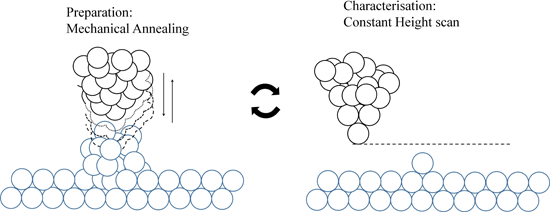
- Sumit Tewari Koen M. Bastiaans Milan P. Allan Jan M. van Ruitenbeek Huygens–Kamerlingh Onnes Laboratory, Leiden University, Niels Bohrweg 2, 2333 CA Leiden, Netherlands 10.3762/bjnano.8.238 Abstract Scanning tunneling microscopes (STM) are used extensively for studying and manipulating matter at
- to the second atomic layer. We demonstrate a controlled evolution of such tips starting from undefined tip shapes. Keywords: adatom imaging; mechanical annealing; scanning tunneling microscopy (STM); STM tip; tip apex; Introduction After the advent of the scanning tunneling microscope (STM) in 1981
- [1][2], it became possible to image conducting surfaces with atomic resolution. STM operates by bringing the apex of a fine metallic wire into tunneling distance from a surface of interest. By providing feedback in the tunnel current and scanning the tip over the surface one can make topographic maps


Surfactant-induced enhancement of droplet adhesion in superhydrophobic soybean (Glycine max L.) leaves
Beilstein J. Nanotechnol. 2017, 8, 2345–2356, doi:10.3762/bjnano.8.234
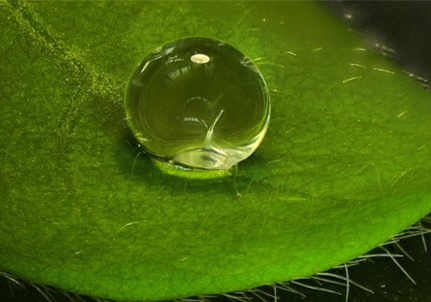
- crystal structure and scanning tunneling microscope (STM) analysis by Koch et al. [46] showed that polar groups of the primary alcohols are introverted and the nonpolar proportion is orientated to the outside of the platelet-shaped wax crystals. According to our results, it is concluded that surfactants


Ester formation at the liquid–solid interface
Beilstein J. Nanotechnol. 2017, 8, 2139–2150, doi:10.3762/bjnano.8.213
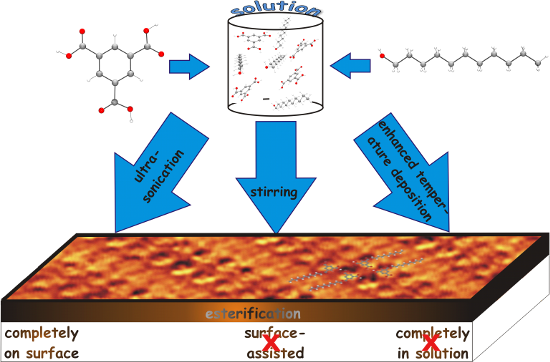
- /bjnano.8.213 Abstract A chemical reaction (esterification) within a molecular monolayer at the liquid–solid interface without any catalyst was studied using ambient scanning tunneling microscopy. The monolayer consisted of a regular array of two species, an organic acid (trimesic acid) and an alcohol
- supported. Keywords: on-surface reaction; scanning tunneling microscopy; trimesic acid; undecan-1-ol; Introduction On-surface reactions are a widespread class of chemical reactions taking place on a surface or at an interface involving active participation of two-dimensional molecular entities. This
- participation is usually beyond the role of just being a solid support for the reactants. Using scanning tunneling microscopy (STM) it is possible to actively study the elementary processes of on-surface reactions. Different types of reactions such as Ullmann coupling, imine coupling, boronic anhydridation





