


Search results
Search for "controllable" in Full Text gives 64 result(s) in Beilstein Journal of Organic Chemistry.
Electrochemical reduction of unsaturated carbon–carbon bonds via 3d transition-metal catalysis
Beilstein J. Org. Chem. 2026, 22, 955–981, doi:10.3762/bjoc.22.75
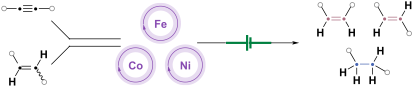
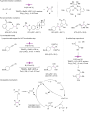
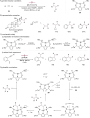
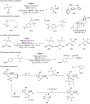
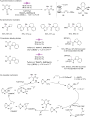
- , controllable reaction manifolds that are inaccessible under thermochemical conditions. These developments position 3d metal electrocatalysis as a versatile and programmable platform for selective hydrogenation and isotopic labeling under mild, sustainable conditions. Keywords: electrochemical reduction








A practical CO2-mediated synthesis of 5,6-carboxylated silicon-rhodamines for targeted probe development
Beilstein J. Org. Chem. 2026, 22, 915–924, doi:10.3762/bjoc.22.72
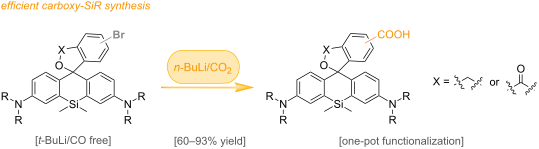
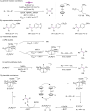
- emerged as one of the most important fluorophores for live-cell bioimaging [3][4][5][6][7] by virtue of their high brightness, excellent photostability [8][9][10], and, most importantly, tunable lactone–zwitterion (L–Z) equilibrium [11][12][13]. This distinctive feature enables controllable fluorescence



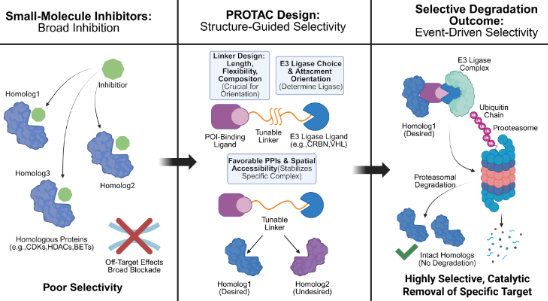
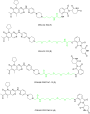
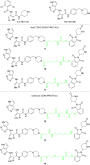
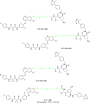
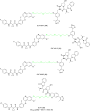
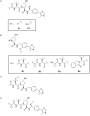
Advantages of PROTACs in achieving selective degradation of homologous protein families
Beilstein J. Org. Chem. 2026, 22, 628–661, doi:10.3762/bjoc.22.49









Configuration–packing synergy enabling integrated crystalline-state RTP and amorphous-state TADF
Beilstein J. Org. Chem. 2026, 22, 224–236, doi:10.3762/bjoc.22.16
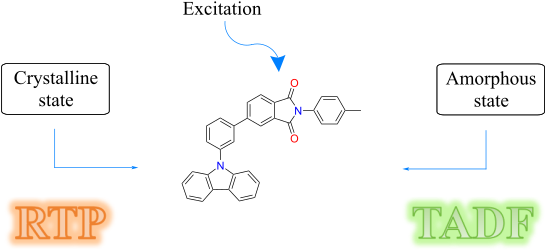
- , the triplet exciton management and channel selectivity in different phases of PI-Cz 1 were systematically studied, validating the feasibility of “configuration-packing synergy” for controllable RTP–TADF switching within the same molecule. Results and Discussion Single crystals of 1 were successfully


Rotaxanes with integrated photoswitches: design principles, functional behavior, and emerging applications
Beilstein J. Org. Chem. 2025, 21, 2345–2366, doi:10.3762/bjoc.21.179

- stoppers. The molecular motion of the macrocycle during azobenzene photoswitching was utilized to demonstrate controllable and reversible shape transformation behaviors and to perform weightlifting and cargo transporting tasks (Figure 5). Therefore, these rotaxanes highlight their potential in applications


Pathway economy in cyclization of 1,n-enynes
Beilstein J. Org. Chem. 2025, 21, 2260–2282, doi:10.3762/bjoc.21.173
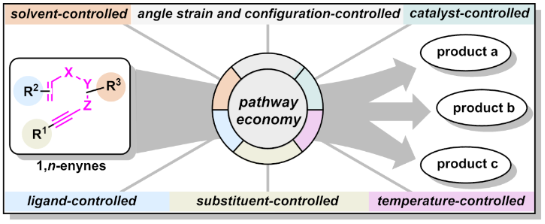
- , the Liu group developed a gold-catalyzed tandem cycloisomerization, offering controllable synthesis of either indolo[2,3-a]quinolizine or indolizino[8,7-b]indole derivatives (Scheme 10) [17]. When the indole nitrogen of the substrate was substituted with electron-donating groups (EDGs) and the alkyne
- ]quinolizine framework 46 (Scheme 10, path b). This controllable approach provided an efficient synthetic pathway for the related natural products. In 2020, a gold-catalyzed divergent synthesis of bicyclo[3.2.1]oct-2-ene and bicyclo[3.3.1]nonadiene derivatives from 1,6-cyclohexenynes was reported by Davenel et
- controllable cyclization of tryptamine-derived ynamides to synthesize two types of indole alkaloid skeletons (Scheme 13) [20]. For alkyl-substituted alkynes, the ynamide activated by BiCl3 was attacked by indole's C3-position to form spirocyclic intermediate 58. Subsequent 1,2-migration then exclusively


Bioinspired total syntheses of natural products: a personal adventure
Beilstein J. Org. Chem. 2025, 21, 2048–2061, doi:10.3762/bjoc.21.160
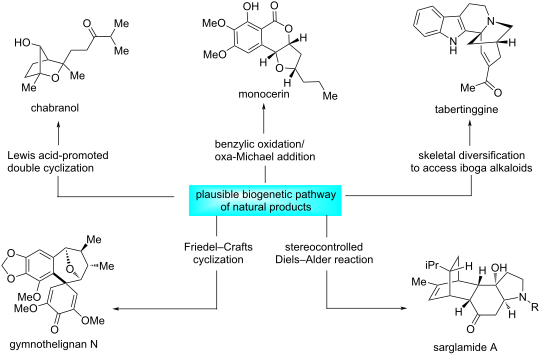
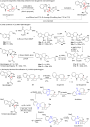
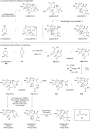
- -, chemo-, and stereoselective patterns in forming the polycycles could be trace back to same precursors or fragments, which would result in bioinspired total syntheses of natural products through controllable and selective chemical transformations. If there is only one single target molecule with an




Research progress on calixarene/pillararene-based controlled drug release systems
Beilstein J. Org. Chem. 2025, 21, 1757–1785, doi:10.3762/bjoc.21.139
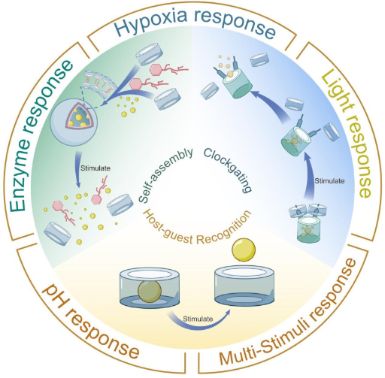
- cyclodextrins in terms of controllable functionalization [61]. In clinical applications, particularly for anticancer drug conjugation, CAs demonstrate remarkable cancer cell selectivity, minimized off-target effects, enhanced delivery efficiency, and reduced systemic toxicity. Additionally, their synthetic
- disintegration to avert reversibility. Given the benefits of the chemical stability of most aromatic macrocycles, creating stimulus-responsive complexes usually requires the guest components to undergo stimulus-triggered changes that affect their ability to bind with the host macrocycles. The controllable
- of supramolecular vesicles using WP6 and pyridine derivatives (G1) (Figure 4). This supramolecular system achieves controllable assembly and disassembly through pH responsiveness: under acidic conditions (pH 6.0), protonation of the WP6 carboxyl groups leads to vesicle disassembly; whereas in a






Continuous-flow-enabled intensification in nitration processes: a review of technological developments and practical applications over the past decade
Beilstein J. Org. Chem. 2025, 21, 1678–1699, doi:10.3762/bjoc.21.132
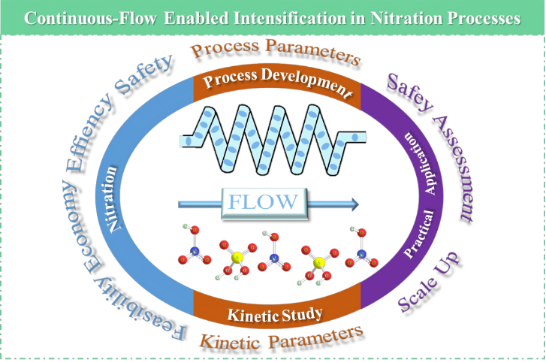
- reactions up to 2021, and summarized the characteristics of the main organic nitrating reagents discussed in their work [6]. Yang et al. developed 5-methyl-1,3-dinitro-1H-pyrazoleas a controllable nitronium ion source for mild, selective (hetero)arene nitration. This method achieves condition-controlled



Thermodynamic equilibrium between locally excited and charge transfer states in perylene–phenothiazine dyads
Beilstein J. Org. Chem. 2025, 21, 1577–1586, doi:10.3762/bjoc.21.121
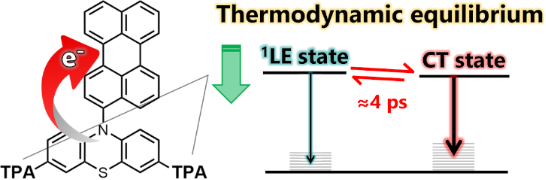
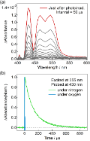
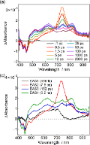
- demonstrate that precise electronic and geometric design can enable controllable excited-state behavior in orthogonal molecular systems. Keywords: charge transfer; electron transfer; molecular dyad; transient absorption; Introduction Photoinduced electron transfer and charge separation are fundamental




Advances in nitrogen-containing helicenes: synthesis, chiroptical properties, and optoelectronic applications
Beilstein J. Org. Chem. 2025, 21, 1422–1453, doi:10.3762/bjoc.21.106
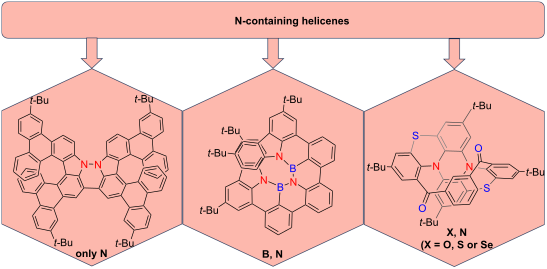
- BCPL value of 13.2 M−1 cm−1. Notably, compound 21c undergoes reversible redox interconversion to its radical cation 21c•+ and dicationic 21c2+ states via chemical oxidation, enabling controllable switching between antiaromatic and aromatic configurations. These results provide a compelling strategy for

Recent advances in controllable/divergent synthesis
Beilstein J. Org. Chem. 2025, 21, 890–914, doi:10.3762/bjoc.21.73

- development, advanced materials innovation, and fundamental molecular science research. In recent years, controllable/divergent synthetic strategies for organic functional molecules using common starting materials have garnered significant attention due to their high efficiency. This review categorizes recent
- reaction activity and selectivity differentiation, the review provides a systematic analysis of the mechanisms of critical steps through specific case studies. It is hoped that the controllable/divergent synthesis concept will spark the interest of practitioners and aficionados to delve deeper into the
- discipline and pursue novel advancements in the realm of chemical synthesis. Keywords: controllable; divergent; diverse products; switchable synthesis; Introduction In the era of synthetic organic chemistry, divergence can produce stereodivergence (including diastereodivergence and enantiodivergence) [1][2




Unraveling cooperative interactions between complexed ions in dual-host strategy for cesium salt separation
Beilstein J. Org. Chem. 2025, 21, 845–853, doi:10.3762/bjoc.21.68

- solution into chloroform and controllable release into acidic solution [32]. Very recently, it was found that the receptor L alone can further extract solid Li2SO4 into DMSO solution [33], where sulfate binding is sufficiently strong to drive the solid–liquid extraction. DFT calculations suggest that an


Origami with small molecules: exploiting the C–F bond as a conformational tool
Beilstein J. Org. Chem. 2025, 21, 680–716, doi:10.3762/bjoc.21.54
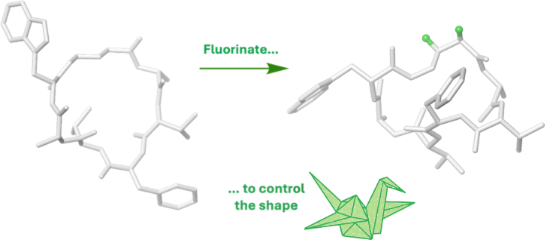
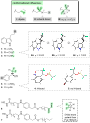
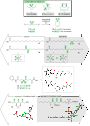
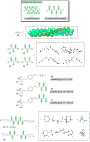
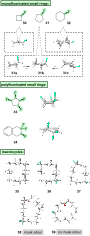
- , Figure 3). We will now consider what happens when fluorine is introduced across much, or all, of an alkyl chain. The extreme case is a perfluoroalkane, in which every hydrogen is replaced with a fluorine (e.g., I, Figure 4). Perfluoroalkanes are not usually thought of in terms of controllable molecular




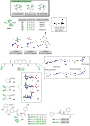
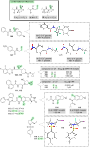


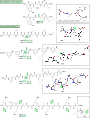


Carbonylative synthesis and functionalization of indoles
Beilstein J. Org. Chem. 2024, 20, 973–1000, doi:10.3762/bjoc.20.87
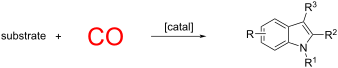
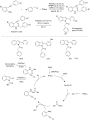
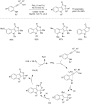
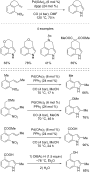
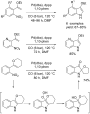
- controllable and regioselective synthesis of indol-3-α-ketoamides and indol-3-amides via the direct double- and monoaminocarbonylation of indole derivatives by using secondary amines [70]. They used Pd(dppf)Cl2 as catalyst system. The indol-3-α-ketoamides were synthesized by adding dppf as ligand, CuI as co










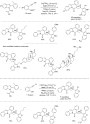


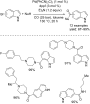
Synthesis of π-conjugated polycyclic compounds by late-stage extrusion of chalcogen fragments
Beilstein J. Org. Chem. 2024, 20, 287–305, doi:10.3762/bjoc.20.30
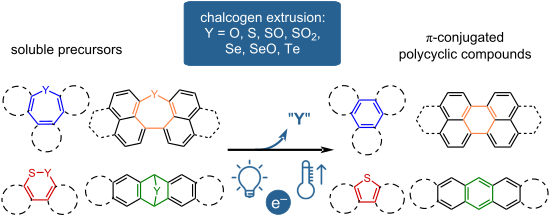
- -doped triphenylene derivative 22. In the same year, An et al. reported their investigations regarding chalcogen-doped hexa-peri-benzocoronene (HBC) derivatives and their controllable conversion into hydrocarbon nanographenes by ring contraction of the heteropine moiety [65]. The authors first tackled


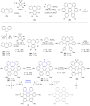


Photochromic derivatives of indigo: historical overview of development, challenges and applications
Beilstein J. Org. Chem. 2024, 20, 228–242, doi:10.3762/bjoc.20.23
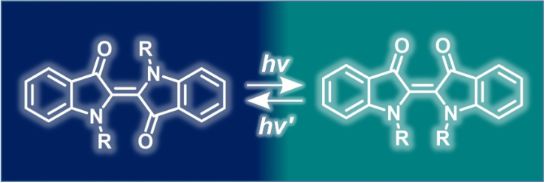
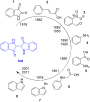
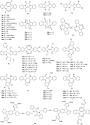
- application potential in biological systems and interactive "smart" materials that can adjust to environmental variations and respond to external light stimuli in a highly controllable manner. The prospective use of the indigoid photoswitches in photopharmacology [81][82][83][84][85][86] is especially
- appealing due to the possibility of performing the switching within the biooptical transparency window (650–900 nm) [87]. Additionally, significant structural differences (180° flip) between the E- and Z-isomers of the compounds provide a prerequisite of light-controllable geometry control in biomolecular
- isomerization of the indigo derivatives that led to the disassembly of well-shaped vesicles and formation of irregular aggregates. The thermal Z–E relaxation of the indigo scaffold provided the restoration of the vesicle structure. The system contributed to the development of red-light-controllable biomedical





Photoinduced in situ generation of DNA-targeting ligands: DNA-binding and DNA-photodamaging properties of benzo[c]quinolizinium ions
Beilstein J. Org. Chem. 2024, 20, 101–117, doi:10.3762/bjoc.20.11
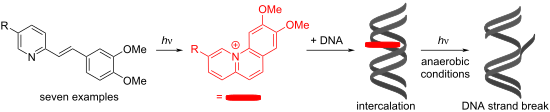
- delivered without effect to the binding site, where the DNA-binding benzoquinolizinium ligand can then be generated as needed upon irradiation. Notably, the use of light for the activation of photo-controllable DNA ligands offers several advantages because it is easy to apply, traceless, and non-invasive
- , both as photo-controllable DNA binder and as DNA-damaging photosensitizer. Still, some key parameters have to be optimized by variation of the substitution pattern. For example, the water solubility of the styrylpyridine substrates has to be increased, and the excitation wavelength for the




N-Sulfenylsuccinimide/phthalimide: an alternative sulfenylating reagent in organic transformations
Beilstein J. Org. Chem. 2023, 19, 1471–1502, doi:10.3762/bjoc.19.106
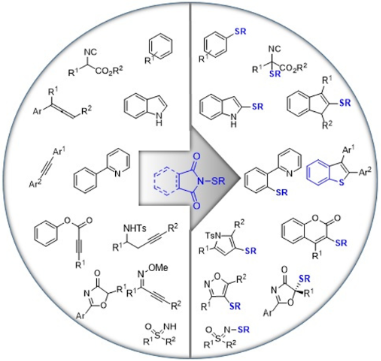
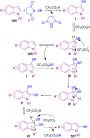
- cyclization reaction with arylpropynal hydrazones. Also, the reaction of 1-(1,3-diphenylprop-2-yn-1-ylidene)-2-phenylhydrazine 58 as the substrate with N-sulfenylsuccinimides 1 afforded fully substituted pyrazoles 59 in up to 98% yield. In 2021, a solvent-controllable approach for the construction of 3
- cyclization of β,γ-unsaturated oximes with N-(arylthio)succinimide. Synthesis of 4-chalcogenyl pyrazoles via chalcogenation/cyclization of α,β-alkynic hydrazones. Controllable synthesis of 3-thiolated pyrroles and pyrrolines. Possible mechanism for controllable synthesis of 3-thiolated pyrroles and pyrrolines




Synthesis and electrochemical properties of 3,4,5-tris(chlorophenyl)-1,2-diphosphaferrocenes
Beilstein J. Org. Chem. 2022, 18, 1338–1345, doi:10.3762/bjoc.18.139
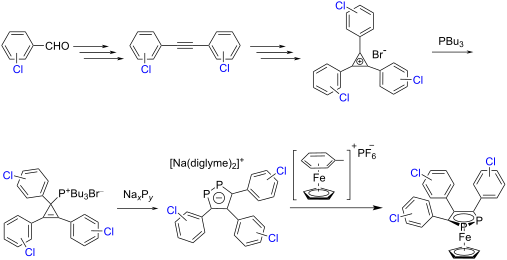
- allowed a selective and controllable conversion of NaxPy to the 1,2-diphospholide anion, in which two new C−P bonds could selectively be formed [43][44]. The obtained sodium 3,4,5-triaryl-1,2-diphospholides 7 were isolated in good purity from the reaction mixture by filtration and further washing with a




Polymer and small molecule mechanochemistry: closer than ever
Beilstein J. Org. Chem. 2022, 18, 1225–1235, doi:10.3762/bjoc.18.128
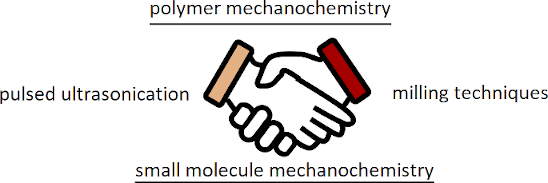
- approach have already been realized. For example, some metallopolymer-based systems now enable a controllable release of metal ions by ultrasonication to trigger or catalyze small molecule reactions in solution [16][17][18]. Complementarily, studies on mechanically releasing cargo and unmasking


Electrochemical hydrogenation of enones using a proton-exchange membrane reactor: selectivity and utility
Beilstein J. Org. Chem. 2022, 18, 1055–1061, doi:10.3762/bjoc.18.107
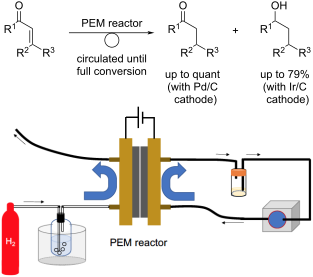
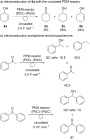
- should be controllable by the cathode catalyst and electrochemical parameters. Fortunately, we found that chemoselective reduction of enones 1 can be carried out using different cathode catalysts (Pd/C or Ir/C). Results and Discussion Electroreduction of enones to ketones First, we chose cyclohex-2-en-1





Palladium-catalyzed solid-state borylation of aryl halides using mechanochemistry
Beilstein J. Org. Chem. 2022, 18, 855–862, doi:10.3762/bjoc.18.86
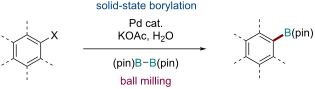
- ). The reactions were conducted in a Retch MM400 ball mill in a stainless-steel milling jar (1.5 mL) at 30 Hz using one stainless-steel ball (diameter: 5 mm) for 10 min. We used a commercially available temperature-controllable heat gun that was placed directly above the ball-milling jar to control the




Site-selective reactions mediated by molecular containers
Beilstein J. Org. Chem. 2022, 18, 309–324, doi:10.3762/bjoc.18.35
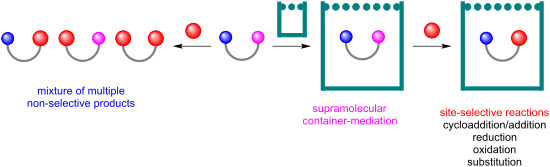
- anthracene and phthalimide guests with unusual and controllable site-selectivity mediated by organopalladium-coordinated hosts in water (Figure 1) [34]. The water-solubility of the coordinated host traced from its ionic form, and the aqueous reaction conformed with the concept of green chemistry. In previous
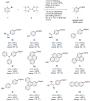
- limitations as well as developing diverse catalysis systems that would induce controllable site-selectivity. Site-selective Diels–Alder reaction of anthracene and phthalimide mediated by aqueous organopalladium-coordinated hosts A and B. Site-selective Diels–Alder and [2 + 2]-photoaddition reactions between


Allylic alcohols and amines by carbenoid eliminative cross-coupling using epoxides or aziridines
Beilstein J. Org. Chem. 2021, 17, 2385–2389, doi:10.3762/bjoc.17.155

- controllable by using enantiomerically pure coupling partners [2]. Such terminal epoxides and aziridines are readily available [3][5], while the corresponding α-lithio ethers can be accessed from enantioenriched α-stannyl ethers [25]. The enantiopure variants await future investigation. Dimerisation of α





