


Search results
Search for "enones" in Full Text gives 145 result(s) in Beilstein Journal of Organic Chemistry.
Synthesis of sterically shielded piperidine nitroxides via acid-catalyzed heterocyclization of β-aminoketone derivatives with ketones
- Mark M. Gulman,
- Yurii I. Glazachev and
- Sergey A. Dobrynin
Beilstein J. Org. Chem. 2026, 22, 948–954, doi:10.3762/bjoc.22.74
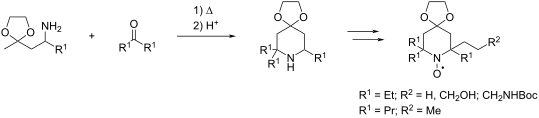
- -tetrapropyl-substituted piperidine nitroxides, and sterically shielded nitroxides with functional groups in the side chain of the heterocycle. Results and Discussion Aminodioxolanes 4a,b were obtained from enones 1a,b via a modified literature sequence [30] involving phthalimide Michael addition, dioxolane

Graphical Abstract

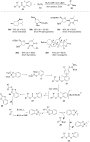
Scheme 1: Synthesis of aminodioxolanes 4a,b. TMG = 1,1,3,3-tetramethylguanidine.

Scheme 2: Acid-catalyzed heterocyclization of β-aminoketones 4a,b with diethyl and dipropyl ketones.

Scheme 3: Synthesis of piperidine nitroxides from piperidines 5a,b and organometallic reagents.

Scheme 4: Hydrogenation of carbon–carbon multiple bonds of nitroxides 7a–d.

Scheme 5: Sequential hydrogenation and dioxolane deprotection.
Recent advances in copper-catalyzed direct hydroamination of alkenes with (hetero)aromatic amines
- Hyejeong Lee and
- Yunmi Lee
Beilstein J. Org. Chem. 2026, 22, 925–947, doi:10.3762/bjoc.22.73
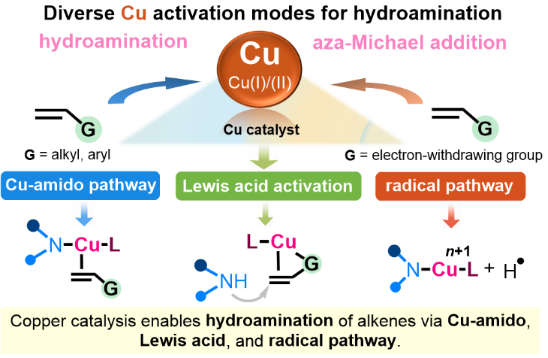
- ) were subsequently evaluated by adding aniline to activated olefins (Scheme 3) [35][36]. Using 5 mol % of the copper–amido catalyst at room temperature, the α,β-unsaturated substrates including acrylonitrile, methyl vinyl ketone, methyl acrylate, and cyclic enones were converted to the corresponding β

Graphical Abstract

Scheme 1: Mechanistic pathways in copper-catalyzed hydroamination.

Scheme 2: Synthesis of copper–amido complexes.

Scheme 3: Cu–amido catalysts studied for the aza-Michael addition of aniline to electron-deficient olefins.
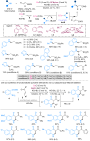
Scheme 4: Copper-catalyzed aza-Michael addition of (hetero)aromatic amines to α,β-unsaturated alkenes.

Scheme 5: Copper-catalyzed 1,6-conjugate addition of aza-heterocycles to sulfonyl dienes.

Scheme 6: Cu-catalyzed aza-Michael addition of arylamines to allylic sulfones.

Scheme 7: Cyclic(alkyl)(amino)carbene-copper-catalyzed aza-Michael addition.

Scheme 8: Aza-Michael addition enabled by Lewis acidic copper catalyst. a20 mol % bpy, 50 mol % Na2CO3.

Scheme 9: One-pot cyclization via aza-Michael addition enabled by Lewis acidic copper catalyst.

Scheme 10: Lewis acidic Cu-catalyzed tandem reaction via aza-Michael addition.

Scheme 11: Copper nanomaterials-catalyzed aza-Michael addition via Lewis acid activation and radical pathways.

Scheme 12: Copper–amido-mediated hydroamination of aniline with vinylarenes.

Scheme 13: Copper-catalyzed anti-Markovnikov hydroamination of (hetero)aromatic N–H with vinylarenes.

Scheme 14: Hydroamination of oxa- and azabenzonorbornadienes with pyrazoles.
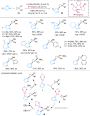
Scheme 15: Copper-catalyzed enantioselective hydroamination of cyclopropenes with pyrazoles.

Scheme 16: Copper/Brønsted acid system for hydroamination of strained alkenes.

Scheme 17: Hydroamination of allenes enabled by Lewis acidic copper catalyst.

Scheme 18: Enantioselective intramolecular hydroamination through aminocupration followed by radical processes....
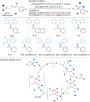
Scheme 19: Visible-light-induced copper-catalyzed hydroamination of styrenes.

Scheme 20: Lewis acid-catalyzed radical hydroamination of styrenes with isatins.
Rongalite addition to dienones: diastereoselectivity in cyclic sulfone synthesis; stereochemical rationalization and prospects as a general conjugate nucleophile
- Melina Goga,
- Hao Zong,
- James Franco,
- Jazmine Prana,
- Rudolph Michel,
- Antonia Muro,
- Elana Rubin,
- Janet Brenya,
- Henk Eshuis and
- Magnus W. P. Bebbington
Beilstein J. Org. Chem. 2026, 22, 742–752, doi:10.3762/bjoc.22.56

- oxygen, which is absent in the other sulfinates. We finally elected to examine double intermolecular conjugate addition with some commercially available enones (Scheme 7). These reactions were sluggish, but yielded the expected adducts 30, 32, and 34 as 1:1 diastereomeric mixtures (30 was obtained in a 1
- Rongalite, despite apparent lower inherent reactivity than other sulfinates, can be used to prepare sterically encumbered systems and even participate in double intermolecular conjugate additions with β-substituted enones. Our work will be of interest to other workers involved in the synthesis of sulfur

Graphical Abstract

Figure 1: Rongalite as an equivalent of the unstable hyposulfite ion.

Scheme 1: Progression of Rongalite conjugate additions.

Figure 2: Sulfone diastereomers 1a and 1b.
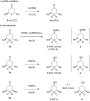
Scheme 2: Verification of relative stereochemistry by i) sulfide oxidation and ii) derivatization.

Scheme 3: Reactions of sterically hindered substrates.

Figure 3: Minimized structure of dienone 7 (calculated using the PBE0 functional [26] and the def2-SVP basis set [27]...

Figure 4: Modeling of cyclization transition states (the solvating acetic acid molecules were omitted for cla...

Figure 5: Unsuccessful substrates.

Scheme 4: Initial reactivity comparison with p-toluenesulfinate.

Scheme 5: Preparation of anticipated products in competition experiments with Rongalite and other sulfinates.

Scheme 6: Exchange experiment.

Scheme 7: Double intermolecular additions.
Synthesis of heterocycles based on azomethine ylides from α-amino acids (or amines) and carbonyl compounds
- Ekaterina V. Berezhnaya,
- Alexander I. Ponyaev,
- Vitali M. Boitsov and
- Alexander V. Stepakov
Beilstein J. Org. Chem. 2026, 22, 705–741, doi:10.3762/bjoc.22.55
- 12 with β-fluoromethyl-β,β-disubstituted enones 15 was studied, resulting in the formation of pyrrolidines 16 and 17 with two adjacent or two discrete quaternary stereocenters (Scheme 10). The regioselectivity of this reaction is controlled by the choice of a suitable chiral ligand. The authors
- enones, which trigger a 1,3-dipolar cycloaddition via copper–ruthenium catalysis [54] (Scheme 15). Further reductive hydrogenation of ketopyrrolidines proceeds to form hydroxypyrrolidines 31 in high yields and excellent diastereo-/enantioselectivity. The reaction can be used with aldimine esters with
- such as nitroalkenes and enones were completely regioselective, yielding regioisomers in which the activating group is located adjacent to the pyridyl moiety (86–96% ee). The work of Carretero's scientific group has developed effective methodologies for the enantioselective synthesis of complex

Graphical Abstract

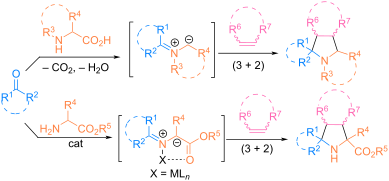
Scheme 1: Strategies for the preparation of pyrrolidine derivatives by (3 + 2) cycloaddition of azomethine yl...

Scheme 2: (3 + 2) Cycloaddition of iminoesters to dimethylmaleate.

Scheme 3: Cycloaddition of 1 with various dipolarophiles catalyzed by Ag(I)-L1.

Scheme 4: Cycloaddition of 1 with tert-butyl acrylate catalyzed by Ag(I)-L2.

Scheme 5: Cycloaddition of 1 with dimethyl maleate catalyzed by Cu(I)-L3.

Scheme 6: Cycloaddition of 1 with alkenes catalyzed by Zn(II)-t-Bu-BOX (L4).

Scheme 7: (3 + 2) Cycloaddition of iminoesters to acrylates.

Scheme 8: Catalytic double (3 + 2) cycloaddition to form pyrrolizidine derivatives.

Scheme 9: (3 + 2) Cycloaddition of iminoethers to vinyl phenyl sulfone.

Scheme 10: Regiodivergent and enantioselective synthesis of pyrrolidines 16 and 17.

Scheme 11: Substrate-controlled regioreversible "normal" and "incomplete" 1,3-dipolar cycloaddition.

Scheme 12: Enantioselective synthesis of exo-/endo-pyrrolidines.

Scheme 13: (3 + 2) Cycloaddition of iminoethers 21 to dipolarophiles 22–24.

Scheme 14: Synthesis of bicyclic pyrrolidines 29 from cyclopentene-1,3-diones.

Scheme 15: (3 + 2) Cycloaddition of aldimine esters and allyl alcohols using copper-ruthenium catalysis.

Scheme 16: Synthesis of 3,3-difluoro- and 3,3,4-trifluoropyrrolidine derivatives.

Scheme 17: Use of iminoesters from natural compounds and pharmaceuticals for reactions with 1,1-difluoro- and ...

Scheme 18: Reaction of iminoesters with 1,3-enynes.

Scheme 19: Synthesis of pyrrolidines from iminoesters and vinyl(hetero)arenes.

Scheme 20: Synthesis of exo-pyrrolidines 42 and 43.

Scheme 21: Enantioselective synthesis of heteroarylpyrrolidines 45 and 46.

Scheme 22: Catalytic reaction of (3 + 2) cycloaddition of imines 12 to benzofulvenes 47.

Scheme 23: Fullerene as a dipolarophile in (3 + 2) cycloaddition reactions.

Scheme 24: Asymmetric synthesis of optically active tetrasubstituted pyrrolidines 54.

Scheme 25: (3 + 2) Cycloaddition reaction of imines 55 and α,β-unsaturated aldehydes.

Scheme 26: Probable mechanism of enantioselective (3 + 2) cycloaddition of azomethine ylides to α,β-unsaturate...

Scheme 27: Cycloaddition between iminoesters 12 and sulfinylimines 58.

Scheme 28: (3 + 2) Cycloaddition between triarylideneacetylacetone and azomethine ylides in the presence of ti...

Scheme 29: Stereoselective synthesis of decahydropyrrolo[2,1,5-cd]indolizine 66.

Scheme 30: Synthesis of policyclic derivatives 71 and 72.

Scheme 31: Catalytic аsymmetric (3 + 2) сycloaddition of 2-pyridylimines with N-methylmaleimide.

Scheme 32: Catalytic аsymmetric (3 + 2) сycloaddition of 2-pyridylimines 1 with other dipolarophiles.

Scheme 33: Enantioselective (3 + 2) cycloaddition of silylimine with various dipolarophiles.

Scheme 34: Proposed mechanism of formation of pyrrolidines 78.

Scheme 35: Synthesis of polyheterocyclic pyrrolidines 82–91.

Scheme 36: Synthesis of spirocyclic (95) and fused (96) pyrrolidines.

Scheme 37: (3 + 2) Cycloaddition involving aromatic aldehydes 97, N-propargylmaleimide (98) and α-amino acids ...

Scheme 38: Synthesis of pyrrolizidines 106 and by-product 107.

Scheme 39: Iridium-catalyzed three-component cascade (3 + 2) cycloaddition.

Scheme 40: Intramolecular (3 + 2) cycloaddition of N-alkenylpyrrole-2-carbaldehyde 110 and α-amino acids.

Scheme 41: Three-component (3 + 2) cycloaddition involving fullerene.

Scheme 42: Four-component stereoselective one-pot synthesis of spiro-cycloadducts 119–122.

Scheme 43: Reactions of azomethine ylide 123 with cyclopropenes.

Scheme 44: Three-component reactions involving ninhydrin, cyclopropenes and acyclic α-amino acids.

Scheme 45: Reaction of cyclopropenes 138 with the N-protonated form of Ruhemann purple 137.

Scheme 46: Enantioselective (3 + 2) cycloaddition of azomethine ylides generated in situ from isatins and amin...

Scheme 47: (3 + 2) Cycloaddition of cyclohexenone 143, isatins 140 and aminomalonic diesters 141, catalyzed by...

Scheme 48: Enantioselective (3 + 2) cycloaddition of azomethine ylides generated in situ from isatins and amin...

Scheme 49: Enantioselective (3 + 2) cycloaddition of azomethine ylides generated in situ from isatins and benz...

Scheme 50: (3 + 2) Cycloaddition involving isatins, azetidine-2-carboxylic acid, maleimides or itaconimides.

Scheme 51: (3 + 2) Cycloaddition involving isatins, amino acids and tetraethylvinylidenebis(phosphonate).

Scheme 52: Synthesis of spirooxindoles 156 from triarylideneacetylacetones 155.

Scheme 53: Synthesis of spirooxindole derivatives 157–160.

Scheme 54: Synthesis of hybrid spiro-heterocycles 164–166.

Scheme 55: Formation of azomethine ylide from isatin and sarcosine.

Scheme 56: (3 + 2) Cycloaddition involving isatins, amino acids and trans-3-benzoylacrylic acid.

Scheme 57: Regioselective synthesis of spirooxindoles 170.

Scheme 58: Synthesis of hybrid spiro-heterocycles 86.

Scheme 59: (3 + 2) Cycloaddition involving acenaphthenequinones, amino acids and cyclopropenes.

Scheme 60: Synthesis of hybrid glyco-3-nitrochromane cycloadducts 179.

Scheme 61: Synthesis of spiro[indenoquinoxaline-(thia)pyrrolizidines] 90a.

Scheme 62: Three-component reactions of cyclopropenes, 11H-indeno[1,2-b]quinoxalin-11-onesand α-amino acids, s...

Scheme 63: Synthesis of hybrid glyco-3-nitrochromane cycloadducts 92.

Scheme 64: (3 + 2) Cycloaddition of 11H-benzo[4,5]imidazo[1,2-a]indol-11-one (189) with cyclopropenes and male...

Scheme 65: Diastereoselective synthesis of spiro derivatives of barbituric acid from alloxan 193, α-amino acid...

Scheme 66: Probable mechanism of formation of azomethine ylide from alloxan and ʟ-proline.

Scheme 67: Three-component reactions involving tryptanthrin 196, α-amino acids and cyclopropenes.
Dialkylaminoalkylation of β-ketosulfones via ring-opening of 3-sulfonylpyrrolidines
- Evgeny M. Buev,
- Alexander V. Pavlushin,
- Vladimir S. Moshkin and
- Vyacheslav Y. Sosnovskikh
Beilstein J. Org. Chem. 2026, 22, 383–389, doi:10.3762/bjoc.22.26
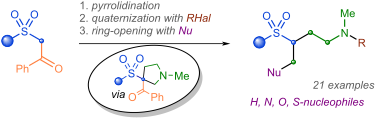
- radical addition (Figure 2c) [31]. In the continuation of our work on application of pyrrolidines as sacrificial framework for the alkylaminomethylation of enones [32][33] we turned our attention to active methylene compounds IV as precursors of pyrrolidines. Preliminary experiments demonstrated that the

Graphical Abstract

Figure 1: Valuable amino sulfonic acids and aminosulfones.
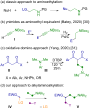
Figure 2: Selected approaches to aminoethylation.

Scheme 1: Pyrrolidination of β-ketosulfones. Reaction conditions: β-ketosulfones (4.0 mmol), sarcosine (1.2 e...

Scheme 2: Scope of the reaction. Reaction conditions: sulfone 1 (1.0 mmol), sarcosine (1.2 equiv), (CH2O)n (2...

Scheme 3: The presumable mechanism of the domino process.

Scheme 4: Reductive elimination of the nucleophiles.
Synthesis and applications of alkenyl chlorides (vinyl chlorides): a review
- Daniel S. Müller
Beilstein J. Org. Chem. 2026, 22, 1–63, doi:10.3762/bjoc.22.1
- synthesis of tetracyclic frameworks related to gibberellins (Scheme 34) [133]. The authors do not propose a mechanism for this reaction. A related reaction was recently reported by Greatrex and co-worker (not shown) [134]. Kim and co-workers reported a convenient α-chlorination of enones mediated by in situ

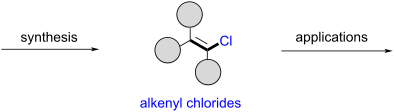
Graphical Abstract
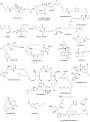
Figure 1: Representative alkenyl chloride motifs in natural products. References: Pinnaic acid [8], haterumalide ...

Figure 2: Representative alkenyl chloride motifs in pharmaceuticals and pesticides. References: clomifene [25], e...
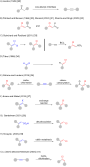
Figure 3: Graphical overview of previously published reviews addressing the synthesis of alkenyl chlorides.

Figure 4: Classification of synthetic approaches to alkenyl chlorides.

Scheme 1: Early works by Friedel, Henry, and Favorsky.

Scheme 2: Product distribution obtained by H NMR integration of crude compound as observed by Kagan and co-wo...

Scheme 3: Side reactions observed for the reaction of 14 with PCl5.

Scheme 4: Only compounds 15 and 18 were observed in the presence of Hünig’s base.

Scheme 5: Efficient synthesis of dichloride 15 at low temperatures.
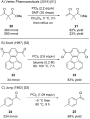
Scheme 6: Various syntheses of alkenyl chlorides on larger scale.

Scheme 7: Scope of the reaction of ketones with PCl5 in boiling cyclohexane.

Scheme 8: Side reactions occur when using excess amounts of PCl5.

Scheme 9: Formation of versatile β-chlorovinyl ketones.

Scheme 10: Mixture of PCl5 and PCl3 used for the synthesis of 49.

Scheme 11: Catechol–PCl3 reagents for the synthesis of alkenyl chlorides.

Scheme 12: (PhO)3P–halogen-based reagents for the synthesis of alkenyl halides.

Scheme 13: Preparation of alkenyl chlorides from alkenyl phosphates.

Scheme 14: Preparation of alkenyl chlorides by treatment of ketones with the Vilsmeier reagent.

Scheme 15: Preparation of electron-rich alkenyl chlorides by treatment of ketones with the Vilsmeier reagent.

Scheme 16: Cu-promoted synthesis of alkenyl chlorides from ketones and POCl3.

Figure 5: GC yield of 9 depending on time and reaction temperature.

Figure 6: Broken reaction flask after attempts to clean the polymerized residue.

Figure 7: GC yield of 9 depending on the amount of CuCl and time.

Scheme 17: Treatment of 4-chromanones with PCl3.

Scheme 18: Synthesis of alkenyl chlorides from the reaction of ketones with acyl chlorides.

Scheme 19: ZnCl2-promoted alkenyl chloride synthesis.
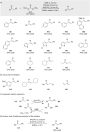
Scheme 20: Regeneration of acid chlorides by triphosgene.

Scheme 21: Alkenyl chlorides from ketones and triphosgene.
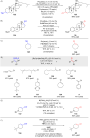
Scheme 22: Various substitution reactions.

Scheme 23: Vinylic Finkelstein reactions reported by Evano and co-workers.

Scheme 24: Challenge of selective monohydrochlorination of alkynes.

Scheme 25: Sterically encumbered internal alkynes furnish the hydrochlorination products in high yield.

Scheme 26: Recent work by Kropp with HCl absorbed on alumina.

Scheme 27: High selectivities for monhydrochlorination with nitromethane/acetic acid as solvent.

Figure 8: Functionalized alkynes which typically afford the monhydrochlorinated products.
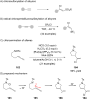
Scheme 28: Related chorosulfonylation and chloroamination reactions.
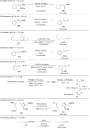
Scheme 29: Reaction of organometallic reagents with chlorine electrophiles.

Scheme 30: Elimination reactions of dichlorides to furnish alkenyl chlorides.

Scheme 31: Elimination reactions of allyl chloride 182 to furnish alkenyl chloride 183.

Scheme 32: Detailed studies by Schlosser on the elimination of dichloro compounds.

Scheme 33: Stereoselective variation caused by change of solvent.

Scheme 34: Elimination of gem-dichloride 189 to afford alkene 190.

Scheme 35: Oxidation of enones to dichlorides and in situ elimination thereof.

Scheme 36: Oxidation of allylic alcohols to dichlorides and in situ elimination thereof.

Scheme 37: Chlorination of styrenes with SOCl2 and elimination thereof.

Scheme 38: Chlorination of styrenes with SOCl2 and elimination thereof.

Scheme 39: Fluorine–chlorine exchange followed by elimination.

Scheme 40: Intercepting cations with alkynes and trapping of the alkenyl cation intermediate with chloride.

Scheme 41: Investigations by Mayr and co-workers.

Scheme 42: In situ activation of benzyl alcohol 230 with BCl3.

Scheme 43: In situ activation of benzylic alcohols with TiCl4.
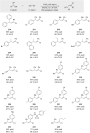
Scheme 44: In situ activation of benzylic alcohols with FeCl3.

Scheme 45: In situ activation of benzylic alcohols with FeCl3.

Scheme 46: In situ activation of aliphatic chlorides and alcohols with ZnCl2, InCl3, and FeCl3.

Scheme 47: In situ generation of benzylic cations and trapping thereof with alkynes.
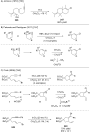
Scheme 48: Intramolecular trapping reactions affording alkenyl halides.

Scheme 49: Intramolecular trapping reactions affording alkenyl chlorides.

Scheme 50: Intramolecular trapping reactions of oxonium and iminium ions affording alkenyl chlorides.
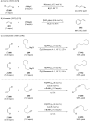
Scheme 51: Palladium and nickel-catalyzed coupling reactions to afford alkenyl chlorides.

Scheme 52: Rhodium-catalyzed couplings of 1,2-trans-dichloroethene with arylboronic esters.

Scheme 53: First report on monoselective coupling reactions for 1,1-dichloroalkenes.

Scheme 54: Negishi’s and Barluenga’s contributions.

Scheme 55: First mechanistic investigation by Johnson and co-workers.

Scheme 56: First successful cross-metathesis with choroalkene 260.

Scheme 57: Subsequent studies by Johnson.
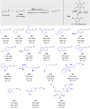
Scheme 58: Hoveyda and Schrock’s work on stereoretentive cross-metathesis with molybdenum-based catalysts.
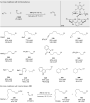
Scheme 59: Related work with (Z)-dichloroethene.
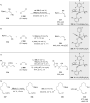
Scheme 60: Further ligand refinement and traceless protection of functional groups with HBpin.

Scheme 61: Alkenyl chloride synthesis by Wittig reaction.

Scheme 62: Alkenyl chloride synthesis by Julia olefination.

Scheme 63: Alkenyl chloride synthesis by reaction of ketones with Mg/TiCl4 mixture.

Scheme 64: Frequently used allylic substitution reactions which lead to alkenyl chlorides.
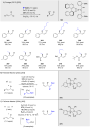
Scheme 65: Enantioselective allylic substitutions.

Scheme 66: Synthesis of alkenyl chlorides bearing an electron-withdrawing group.

Scheme 67: Synthesis of α-nitroalkenyl chlorides from aldehydes.

Scheme 68: Synthesis of alkenyl chlorides via elimination of an in situ generated geminal dihalide.

Scheme 69: Carbenoid approach reported by Pace.

Scheme 70: Carbenoid approach reported by Pace.

Scheme 71: Ring opening of cyclopropenes in the presence of MgCl2.

Scheme 72: Electrophilic chlorination of alkenyl MIDA boronates to Z- or E-alkenyl chlorides.

Scheme 73: Hydroalumination and hydroboration of alkynyl chlorides.

Scheme 74: Carbolithiation of chloroalkynes.

Scheme 75: Chlorination of enamine 420.

Scheme 76: Alkyne synthesis by elimination of alkenyl chlorides.

Scheme 77: Reductive lithiation of akenyl chlorides.

Scheme 78: Reactions of alkenyl chlorides with organolithium reagents.

Scheme 79: Reactions of alkenyl chlorides with organolithium reagents.

Scheme 80: Addition–elimination reaction of alkenyl chloride 9 with organolithium reagents.

Scheme 81: C–H insertions of lithiumcarbenoids.
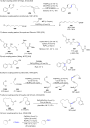
Scheme 82: Pd-catalyzed coupling reactions with alkenyl chlorides as coupling partner.

Scheme 83: Ni-catalyzed coupling of alkenylcopper reagent with alkenyl chloride 183.

Scheme 84: Ni-catalyzed coupling of heterocycle 472 with alkenyl chloride 473.

Scheme 85: Synthesis of α-chloroketones by oxidation of alkenyl chlorides.

Scheme 86: Tetrahalogenoferrate(III)-promoted oxidation of alkenyl chlorides.

Scheme 87: Chlorine–deuterium exchange promoted by a palladium catalyst.

Scheme 88: Reaction of alkenyl chlorides with thiols in the presence of AIBN (azobisisobutyronitrile).

Scheme 89: Chloroalkene annulation.
Tandem hydrothiocyanation/cyclization of CF3-iminopropargyl alcohols with NaSCN in the presence of AcOH
- Ruslan S. Shulgin,
- Ol’ga G. Volostnykh,
- Anton V. Stepanov,
- Igor’ A. Ushakov,
- Alexander V. Vashchenko and
- Olesya A. Shemyakina
Beilstein J. Org. Chem. 2025, 21, 2694–2702, doi:10.3762/bjoc.21.207
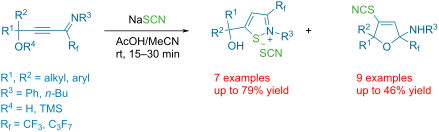
- ionic liquid- [16] or lactic acid-catalyzed [17] reactions of alkynoates, KSCN and water under ultrasound conditions as well as by the reactions of alkynoates, KSCN and water using deep eutectic solvents [18]. Reddy and co-workers [19] proposed an approach to thiocyano enones through the

Graphical Abstract
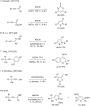
Scheme 1: Examples of hydrothiocyanation/cyclization of alkynes.

Figure 1: 1H and 19F NMR monitoring of 1a/NaSCN/AcOH (a, b) and 1g/NaSCN/AcOH (c, d) reaction mixtures in MeC...

Scheme 2: Plausible reaction mechanism.

Scheme 3: Oxidation of isothiazolium thiocyanate 2a.
Transformation of the cyclohexane ring to the cyclopentane fragment of biologically active compounds
- Natalya Akhmetdinova,
- Ilgiz Biktagirov and
- Liliya Kh. Faizullina
Beilstein J. Org. Chem. 2025, 21, 2416–2446, doi:10.3762/bjoc.21.185
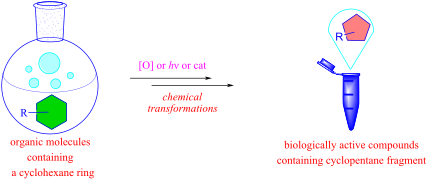
- contraction of six-membered cycles in the synthesis of functionalized cyclopentane/enones, which are biologically active compounds. The main synthetic methods of ring contraction (ozonolysis–aldol condensation, ozonolysis–Dieckmann reaction, Baeyer–Villiger cleavage–Dieckmann reaction) and rearrangements

Graphical Abstract

Scheme 1: Ozonolysis–cyclization sequence in the synthesis of echinopine A (3).

Scheme 2: Ozonolysis–cyclization sequence in the synthesis of taiwaniaquinoids 7–12.

Figure 1: Iridoid skeleton.

Scheme 3: Ozonolysis–cyclization sequence in the synthesis of compounds 17a,b, 18 and 19 with iridoid topolog...

Scheme 4: Oxidation–aldol condensation sequence in the synthesis of compounds 21 and 23 with iridoid topology....

Scheme 5: Oxidation–aldol condensation sequence in the synthesis of compounds 29 and 30 with iridoid topology....

Scheme 6: Method for ring contraction in the absence of a double bond in a six-membered ring of triterpenoids....

Scheme 7: Oxidation–Dieckmann cyclization sequence in the synthesis of a new nortriterpenoid 39.

Scheme 8: Oxidation–Dieckmann cyclization sequence in the synthesis of 18,19-di-nor-cholesterol (40).

Scheme 9: Oxidation–cyclization sequence in the synthesis of 3-ethyl-substituted betulinic acid derivatives 49...

Scheme 10: Benzilic acid-type rearrangement in the synthesis of 4β-acetoxyprobotryane-9β,15α-diol (52).

Scheme 11: Benzilic acid-type rearrangement in the synthesis of (−)-taiwaniaquinone H (11).

Scheme 12: Benzilic acid-type rearrangement in the synthesis of dactylicapnosines A (63) and B (64).

Scheme 13: Aza-benzilic acid-type rearrangement in the synthesis of (+)-stephadiamine (71).

Scheme 14: α-Ketol rearrangement in the synthesis of saffloneoside (73).

Scheme 15: Conversion of (−)-preaustinoid A (80) to (−)-preaustinoid B (81) via α-ketol rearrangement.

Scheme 16: α-Ketol rearrangement in the synthesis of 2,8-oxymethano-bridged diquinane 90.

Scheme 17: Oxidative ring contraction during the synthesis of (+)-cuparene (91) and (+)-tochuinylacetate (92).

Scheme 18: Semipinacol rearrangement in the synthesis of diterpenoids 97–100.

Scheme 19: Co-catalyzed homoallyl-type rearrangement in the syntheses of meroterpenes 106–109.

Scheme 20: Ring contraction reaction promoted by TTN·3H2O and HTIB in the synthesis of indanes.

Scheme 21: Rearrangement involving a hypervalent iodine compound in the synthesis of derivative 120.

Scheme 22: Wolff rearrangement in the synthesis of taiwaniaquinones A (7), F (8), taiwaniaquinols B (10), D (1...

Scheme 23: Wolff rearrangement in the synthesis of cheloviolene C (128), seconorrisolide B (129), and seconorr...

Scheme 24: Wolff rearrangement in the synthesis of (−)-pavidolide B (134).

Scheme 25: Wolff rearrangement in the synthesis of presilphiperfolan-8-ol (141).

Scheme 26: Photochemical rearrangement in the synthesis of cyclopentane derivatives 147a,b.

Scheme 27: Synthesis of cyclopentane derivatives 147a and 151.

Scheme 28: Photochemical rearrangement in the synthesis of cyclopentane derivative 153.

Scheme 29: Photochemical rearrangement in the synthesis of tricyclic ketones 155, 156.

Scheme 30: Photochemical rearrangement in the synthesis of cis/trans salts 160.

Figure 2: Scope of the photoinduced carboborative ring contraction of steroids. Reaction conditions: steroid ...

Scheme 31: Photoinduced carboborative ring contraction in the synthesis of artalbic acid (180).

Scheme 32: Synthetic versatility of the photoinduced carboborative ring contraction.

Scheme 33: Methods of disclosure of epoxide 189.

Scheme 34: Methods of disclosure of epoxide 190.

Scheme 35: Rearrangement of α,β-epoxy ketone 197.

Scheme 36: Acid-induced rearrangement in the synthesis of perhydrindane ketones 202 and 205.

Scheme 37: Rearrangement of epoxyketone 208 in the synthesis of huperzine Q (206).

Scheme 38: Rearrangement of epoxide 212 under the action of Grignard reagent.

Scheme 39: Semipinacol rearrangement of epoxide 220 in the synthesis of (−)-citrinadin A (217) and (+)-citrina...

Scheme 40: Semipinacol rearrangement of epoxide 225 in the synthesis of hamigeran G (223).

Scheme 41: Semipinacol rearrangement of epoxide 231 in the synthesis of (−)-spirochensilide A (228).

Scheme 42: Wagner–Meerwein rearrangement in the synthesis of compound 234 with iridoid topology.

Scheme 43: Wagner–Meerwein rearrangement in the synthesis of compound 238 with iridoid topology.

Scheme 44: Wagner–Meerwein rearrangement in the synthesis of compound 241 with iridoid topology.

Scheme 45: Wagner–Meerwein rearrangement in the synthesis of lupane derivatives 245, 246, 248, and 249.

Scheme 46: Wagner–Meerwein rearrangement in the synthesis of weisaconitine D (252) and cardiopetaline (255).

Scheme 47: Wagner–Meerwein rearrangement in the synthesis of cardiopetaline (255).
Halogenated butyrolactones from the biomass-derived synthon levoglucosenone
- Johannes Puschnig,
- Martyn Jevric and
- Ben W. Greatrex
Beilstein J. Org. Chem. 2025, 21, 2297–2301, doi:10.3762/bjoc.21.175
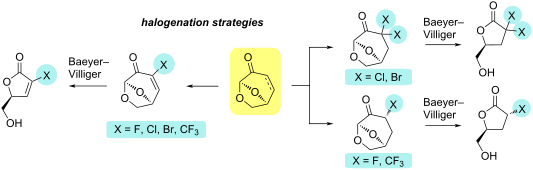
- traces of the desired product. Methods for the installation of a CF3-group on enones are limited, although approaches have been applied to quinones, uracils, flavones or arylenones via radical pathways [39][40][41][42]. As per the fluorination reactions, we envisaged that a leaving group in the β

Graphical Abstract

Figure 1: Halogen-containing butyrolactone-derived bioactives.

Scheme 1: Preparation of chlorinated and brominated lactones 8a,b and 11a,b.

Scheme 2: Preparation of fluorinated lactone 14.
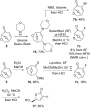
Scheme 3: Fluorination of LGO (5) and conversion to lactone 17.

Scheme 4: Trifluoromethylation of 9a,b and 15 and subsequent Baeyer–Villiger oxidation.
Enantioselective radical chemistry: a bright future ahead
- Anna C. Renner,
- Sagar S. Thorat,
- Hariharaputhiran Subramanian and
- Mukund P. Sibi
Beilstein J. Org. Chem. 2025, 21, 2283–2296, doi:10.3762/bjoc.21.174
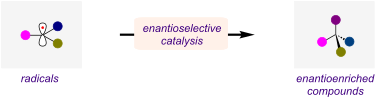
- . Melchiorre and co-workers reported a dual catalytic system that involves photoredox and chiral organocatalysts for the construction of all-carbon quaternary centers. The authors studied radical additions to β,β-disubstituted cyclic enones (Scheme 7) [29]. The dual catalytic system of tetrabutylammonium
- decatungstate (TBADT) and chiral amine 33 was able to catalyze the reaction between benzodioxoles 32 and cyclic β,β-disubstituted enones 31. Cyclic ketones 34 bearing all-carbon quaternary stereocenters at the β-position were obtained in good yields and high enantioselectivity. Enzyme-catalyzed radical

Graphical Abstract

Figure 1: Methods of radical generation (A) and general types of radical reactions (B).

Figure 2: Chiral catalysis in enantioselective radical chemistry [13-37].

Scheme 1: Diastereo- and enantioselective additions of nucleophilic radicals to N-enoyloxazolidinone and pyrr...

Scheme 2: Organocatalyzed formal [3 + 2] cycloadditions affording substituted pyrrolidines.

Scheme 3: Synthesis of a hexacyclic compound via an organocatalyzed enantioselective polyene cyclization.

Scheme 4: Nickel-catalyzed asymmetric cross-coupling reactions.

Scheme 5: Chiral cobalt–porphyrin metalloradical-catalyzed radical cyclization reactions.

Scheme 6: Enantioselective radical chaperone catalysis.

Scheme 7: Enantioselective radical addition by decatungstate/iminium catalysis.

Scheme 8: An ene-reductase-catalyzed photoenzymatic enantioselective radical cyclization/enantioselective HAT...

Scheme 9: Photoenzymatic oxidative C(sp3)–C(sp3) coupling reactions between organoboron compounds and amino a...

Scheme 10: Electrochemical α-alkenylation reactions of 2-acylimidazoles catalyzed by a chiral-at-rhodium Lewis...

Scheme 11: Regio- and enantioselective electrochemical reactions of silyl polyenolates catalyzed by a chiral n...
C2 to C6 biobased carbonyl platforms for fine chemistry
- Jingjing Jiang,
- Muhammad Noman Haider Tariq,
- Florence Popowycz,
- Yanlong Gu and
- Yves Queneau
Beilstein J. Org. Chem. 2025, 21, 2103–2172, doi:10.3762/bjoc.21.165
- intermediate furan-derived enones. Subsequent reductive amination was performed in the presence of ammonia or amines and Pd/Al2O3 under H2 pressure, providing the tetrahydrofuran-derived amines [184]. The same catalytic system could allow the one-pot preparation of tetrahydrofuran-derived secondary and
- trans-4,5-diamino-cyclopent-2-enones and 2,4-diaminocyclopent-2-enones [186]. In 2021, Coelho and Afonso prepared a silica-supported copper catalyst (Cu/SiO2-N2) by impregnation with copper nitrate, and used it for the reaction of furfural with secondary amines (alkyl, cyclic and aromatic) to produce
- trans-4,5-diaminocyclopent-2-enones in hexane/isopropanol solvent mixture under continuous flow conditions (Scheme 56). The scope could be extended to 2-substituted trans-4,5-diaminocyclopent-2-enones by using 3-substituted furfurals [187]. A copper triflate-based analogous strategy was also reported

Graphical Abstract

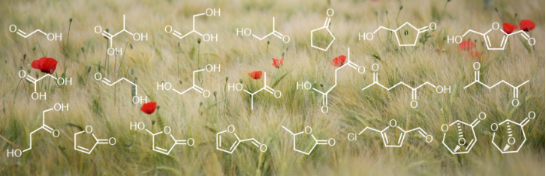
Figure 1: C2–C6 biobased carbonyl building blocks.

Scheme 1: Proposed (2 + 2) route to glycolaldehyde and glycolic acid from erythritol by Cu/AC catalyst (AC = ...

Scheme 2: Reductive amination of GCA.

Scheme 3: N-Formylation of secondary amines by reaction with GCA.

Scheme 4: Synthesis and conversion of hydroxy acetals to cyclic acetals.

Scheme 5: Synthesis of 3-(indol-3-yl)-2,3-dihydrofurans via three-component reaction of glycolaldehyde, indol...

Scheme 6: BiCl3-catalyzed synthesis of benzo[a]carbazoles from 2-arylindoles and α-bromoacetaldehyde ethylene...

Scheme 7: Cu/NCNSs-based conversion of glycerol to glycolic acid and other short biobased acids.

Scheme 8: E. coli-based biotransformation of C1 source molecules (CH4, CO2 and CO) towards C2 glycolic acid.

Scheme 9: N-Formylation of amines with C2 (a) or C3 (b) biomass-based feedstocks.

Scheme 10: Methods for the formation of propanoic acid (PA) from lactic acid (LA).

Scheme 11: Co-polymerization of biobased lactic acid and glycolic acid via a bicatalytic process.

Scheme 12: Oxidation of α-hydroxy acids by tetrachloroaurate(III) in acetic acid–sodium acetate buffer medium.

Figure 2: Selective catalytic pathways for the conversion of lactic acid (LA).

Scheme 13: Synthesis of 1,3-PDO via cross-aldol reaction between formaldehyde and acetaldehyde to 3-hydroxypro...

Scheme 14: Hydrothermal conversion of 1,3-dihydroxy-2-propane and 2,3-dihydroxypropanal to methylglyoxal.

Scheme 15: FLS-catalyzed formose reaction to synthesize GA and DHA.

Scheme 16: GCA and DHA oxidation products of glycerol and isomerization of GCA to DHA under flow conditions us...

Scheme 17: Acid-catalyzed reactions of DHA with alcohols.

Scheme 18: Synthesis of dihydroxyacetone phosphate from dihydroxyacetone.

Scheme 19: Bifunctional acid–base catalyst DHA conversion into lactic acid via pyruvaldehyde or fructose forma...

Scheme 20: Catalytic one-pot synthesis of GA and co-synthesis of formamides and formates from DHA.

Scheme 21: (a) Synthesis of furan derivatives and (b) synthesis of thiophene derivative by cascade [3 + 2] ann...

Scheme 22: Brønsted acidic ionic liquid catalyzed synthesis of benzo[a]carbazole from renewable acetol and 2-p...

Scheme 23: Asymmetric hydrogenation of α-hydroxy ketones to 1,2-diols.

Scheme 24: Synthesis of novel 6-(substituted benzylidene)-2-methylthiazolo [2,3-b]oxazol-5(6H)-one from 1-hydr...

Scheme 25: ʟ-Proline-catalyzed synthesis of anti-diols from hydroxyacetone and aldehydes.

Scheme 26: C–C-bond-formation reactions of a biomass-based feedstock aromatic aldehyde (C5) and hydroxyacetone...

Scheme 27: Ethanol upgrading to C4 bulk chemicals via the thiamine (VB1)-catalyzed acetoin condensation.

Scheme 28: One-pot sequential chemoenzymatic synthesis of 2-aminobutane-1,4-diol and 1,2,4-butanetriol via 1,4...

Scheme 29: Synthesis of 1,4-dihydroxybutan-2-one by microbial transformation.

Scheme 30: Conversion of polyols by [neocuproine)Pd(OAc)]2(OTf)2] to α-hydroxy ketones.

Scheme 31: Chemoselective oxidation of alcohols with chiral palladium-based catalyst 2.

Scheme 32: Electrochemical transformation of furfural to 5-hydroxy-2(5H)-furanone (HFO).

Scheme 33: Selective hydrodeoxygenation of HFO and oxidation to γ-butyrolactone (GBL).

Scheme 34: Photosensitized oxygenation of furan towards HFO via ozonide intermediates.

Scheme 35: Conversion of furfural to HFO and MAN by using mesoporous carbon nitride (SGCN) as photocatalyst.

Scheme 36: Synthesis of HFO from furan derivatives.

Scheme 37: Photooxidation of furfural to 5-hydroxy-2(5H)-furanone (HFO).

Scheme 38: Synthesis of Friedel–Crafts indole adduct from HFO.

Scheme 39: Conversion of HFO to α,γ-substituted chiral γ-lactones.

Scheme 40: Tautomeric transformation of HFO to formylacrylic acid.

Scheme 41: Hydrolysis of HFO to succinic acid in aqueous solution.

Scheme 42: Substitution and condensation reactions of 5-hydroxy-2(5H)-furanone (HFO).

Scheme 43: (a) Conversion of HFO towards valuable C4 chemicals and (b) anodic oxidation of 5-hydroxy-2(5H)-fur...

Figure 3: Conversion of HFO towards other natural and synthetic substances.

Scheme 44: Conversion of furfural to maleic anhydride (reaction a: VOx/Al2O3; reaction b: VPO).

Scheme 45: Conversion of furfural into succinic acid.

Scheme 46: Electro‑, photo‑, and biocatalysis for one-pot selective conversions of furfural into C4 chemicals.

Scheme 47: Production route of furfural from hemicellulose.

Scheme 48: Mechanism for xylose dehydration to furfural through a choline xyloside intermediate.

Scheme 49: Conversion of furfural to furfuryl alcohol and its derivatives.

Scheme 50: Conversion of furfural to furfuryl alcohol and 3-(2-furyl)acrolein.

Scheme 51: The aerobic oxidative condensation of biomass-derived furfural and linear alcohols.

Scheme 52: The single-step synthesis of 2-pentanone from furfural.

Scheme 53: Electrocatalytic coupling reaction of furfural and levulinic acid.

Scheme 54: Conversion of furfural to m-xylylenediamine.

Scheme 55: Conversion of furfural to tetrahydrofuran-derived amines.

Scheme 56: Formation of trans-4,5-diamino-cyclopent-2-enones from furfural.

Scheme 57: Production of pyrrole and proline from furfural.

Scheme 58: Synthesis of 1‑(trifluoromethyl)-8-oxabicyclo[3.2.1]oct-3-en-2-ones from furfural.

Scheme 59: Conversion of furfural to furfural-derived diacids.

Scheme 60: A telescope protocol derived from furfural and glycerol.

Scheme 61: A tandem cyclization of furfural and 5,5-dimethyl-1,3-cyclohexanedione.

Scheme 62: A Ugi four-component reaction to construct furfural-based polyamides.

Scheme 63: One-pot synthesis of γ-acyloxy-Cy7 from furfural.

Scheme 64: Dimerization–Piancatelli sequence toward humins precursors from furfural.

Scheme 65: Conversion of furfural to CPN.

Scheme 66: Synthesis of jet fuels range cycloalkanes from CPN and lignin-derived vanillin.

Scheme 67: Solar-energy-driven synthesis of high-density biofuels from CPN.

Scheme 68: Reductive amination of CPN to cyclopentylamine.

Scheme 69: Asymmetric hydrogenation of C=O bonds of exocyclic α,β-unsaturated cyclopentanones.

Scheme 70: Preparation of levulinic acid via the C5 route (route a) or C6 route (routes b1 and b2).

Scheme 71: Mechanism of the rehydration of HMF to levulinic acid and formic acid.

Scheme 72: Important levulinic acid-derived chemicals.

Scheme 73: Direct conversion of levulinic acid to pentanoic acid.

Scheme 74: Catalytic aerobic oxidation of levulinic acid to citramalic acid.

Scheme 75: Conversion of levulinic acid to 1,4-pentanediol (a) see ref. [236]; b) see ref. [237]; c) see ref. [238]; d) see r...

Scheme 76: Selective production of 2-butanol through hydrogenolysis of levulinic acid.

Scheme 77: General reaction pathways proposed for the formation of 5MPs from levulinic acid.

Scheme 78: Selective reductive amination of levulinic acid to N-substituted pyrroles.

Scheme 79: Reductive amination of levulinic acid to chiral pyrrolidinone.

Scheme 80: Reductive amination of levulinic acid to non-natural chiral γ-amino acid.

Scheme 81: Nitrogen-containing chemicals derived from levulinic acid.

Scheme 82: Preparation of GVL from levulinic acid by dehydration and hydrogenation.

Scheme 83: Ruthenium-catalyzed levulinic acid to chiral γ-valerolactone.

Scheme 84: Catalytic asymmetric hydrogenation of levulinic acid to chiral GVL.

Scheme 85: Three steps synthesis of ε-caprolactam from GVL.

Scheme 86: Multistep synthesis of nylon 6,6 from GVL.

Scheme 87: Preparation of MeGVL by α-alkylation of GVL.

Scheme 88: Ring-opening polymerization of five-membered lactones.

Scheme 89: Synthesis of GVL-based ionic liquids.

Scheme 90: Preparation of butene isomers from GVL under Lewis acid conditions.

Scheme 91: Construction of C5–C12 fuels from GVL over nano-HZSM-5 catalysts.

Scheme 92: Preparation of alkyl valerate from GVL via ring opening/reduction/esterification sequence.

Scheme 93: Construction of 4-acyloxypentanoic acids from GVL.

Scheme 94: Synthesis of 1,4-pentanediol (PDO) from GVL.

Scheme 95: Construction of novel cyclic hemiketal platforms via self-Claisen condensation of GVL.

Scheme 96: Copper-catalyzed lactamization of GVL.

Figure 4: Main scaffolds obtained from HMF.

Scheme 97: Biginelli reactions towards HMF-containing dihydropyrimidinones.

Scheme 98: Hantzsch dihydropyridine synthesis involving HMF.

Scheme 99: The Kabachnik–Fields reaction involving HMF.

Scheme 100: Construction of oxazolidinone from HMF.

Scheme 101: Construction of rhodamine-furan hybrids from HMF.

Scheme 102: A Groebke–Blackburn–Bienaymé reaction involving HMF.

Scheme 103: HMF-containing benzodiazepines by [4 + 2 + 1] cycloadditions.

Scheme 104: Synthesis of fluorinated analogues of α-aryl ketones.

Scheme 105: Synthesis of HMF derived disubstituted γ-butyrolactone.

Scheme 106: Functionalized aromatics from furfural and HMF.

Scheme 107: Diels–Alder adducts from HMF or furfural with N-methylmaleimide.

Scheme 108: Pathway of the one-pot conversion of HMF into phthalic anhydride.

Scheme 109: Photocatalyzed preparation of humins (L-H) from HMF mixed with spoiled HMF residues (LMW-H) and fur...

Scheme 110: Asymmetric dipolar cycloadditions on HMF.

Scheme 111: Dipolar cycloadditions of HMF based nitrones to 3,4- and 3,5-substituted isoxazolidines.

Scheme 112: Production of δ-lactone-fused cyclopenten-2-ones from HMF.

Scheme 113: Aza-Piancatelli access to aza-spirocycles from HMF-derived intermediates.

Scheme 114: Cross-condensation of furfural, acetone and HMF into C13, C14 and C15 products.

Scheme 115: Base-catalyzed aldol condensation/dehydration sequences from HMF.

Scheme 116: Condensation of HMF and active methylene nitrile.

Scheme 117: MBH reactions involving HMF.

Scheme 118: Synthesis of HMF-derived ionic liquids.

Scheme 119: Reductive amination/enzymatic acylation sequence towards HMF-based surfactants.

Scheme 120: The formation of 5-chloromethylfurfural (CMF).

Scheme 121: Conversion of CMF to HMF, levulinic acid, and alkyl levulinates.

Scheme 122: Conversion of CMF to CMFCC and FDCC.

Scheme 123: Conversion of CMF to BHMF.

Scheme 124: Conversion of CMF to DMF.

Scheme 125: CMF chlorine atom substitutions toward HMF ethers and esters.

Scheme 126: Introduction of carbon nucleophiles in CMF.

Scheme 127: NHC-catalyzed remote enantioselective Mannich-type reactions of CMF.

Scheme 128: Conversion of CMF to promising biomass-derived dyes.

Scheme 129: Radical transformation of CMF with styrenes.

Scheme 130: Synthesis of natural herbicide δ-aminolevulinic acid from CMF.

Scheme 131: Four step synthesis of the drug ranitidine from CMF.

Scheme 132: Pd/CO2 cooperative catalysis for the production of HHD and HXD.

Scheme 133: Different ruthenium (Ru) catalysts for the ring-opening of 5-HMF to HHD.

Scheme 134: Proposed pathways for preparing HXD from HMF.

Scheme 135: MCP formation and uses.

Scheme 136: Cu(I)-catalyzed highly selective oxidation of HHD to 2,5-dioxohexanal.

Scheme 137: Synthesis of N‑substituted 3‑hydroxypyridinium salts from 2,5-dioxohexanal.

Scheme 138: Ru catalyzed hydrogenations of HHD to 1,2,5-hexanetriol (a) see ref. [396]; b) see ref. [397]).

Scheme 139: Aviation fuel range quadricyclanes produced by HXD.

Scheme 140: Synthesis of HDGK from HXD and glycerol as a chain extender.

Scheme 141: Synthesis of serinol pyrrole from HXD and serinol.

Scheme 142: Synthesis of pyrroles from HXD and nitroarenes.

Scheme 143: Two-step production of PX from cellulose via HXD.

Scheme 144: Preparation of HCPN from HMF via hydrogenation and ring rearrangement.

Scheme 145: Suggested pathways from HMF to HCPN.

Scheme 146: α-Alkylation of HCPN with ethylene gas.

Scheme 147: Synthesis of 3-(hydroxymethyl)cyclopentylamine from HMF via reductive amination of HCPN.

Scheme 148: Production of LGO and Cyrene® from biomass.

Scheme 149: Synthesis of HBO from LGO and other applications.

Scheme 150: Construction of m-Cyrene® homopolymer.

Scheme 151: Conversion of Cyrene® to THFDM and 1,6-hexanediol.

Scheme 152: RAFT co-polymerization of LGO and butadienes.

Scheme 153: Polycondensation of HO-LGOL and diols with dimethyl adipate.

Scheme 154: Self-condensation of Cyrene® and Claisen–Schmidt reactions.

Scheme 155: Synthesis of 5-amino-2-(hydroxymethyl)tetrahydropyran from Cyrene®.
A convergent synthetic approach to the tetracyclic core framework of khayanolide-type limonoids
- Zhiyang Zhang,
- Jialei Hu,
- Hanfeng Ding,
- Li Zhang and
- Peirong Rao
Beilstein J. Org. Chem. 2025, 21, 926–934, doi:10.3762/bjoc.21.75
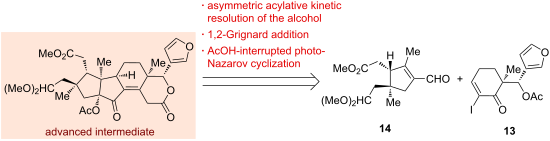
- 11 in the presence of AcOH by exposure to UV-light at 254 nm occurred exclusively to provide an inseparable mixture of 32 and 33 (Table 1, entry 5). Subsequent dehydration of the resultant mixture with SOCl2 and pyridine yielded separable enones 34 (51%) and 10 (9%) over two steps. The structure of

Graphical Abstract

Figure 1: Representative limonoid triterpenes.
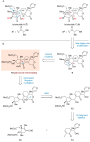
Scheme 1: Structures and retrosynthetic analysis of krishnolides A (7) and C (8).

Scheme 2: Construction of α-iodoenone 13.

Scheme 3: Construction of aldehyde 14.
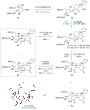
Scheme 4: Synthesis of the advanced intermediate 10 (in the X ray structure of 10 solvent molecule is omitted...
Light-enabled intramolecular [2 + 2] cycloaddition via photoactivation of simple alkenylboronic esters
- Lewis McGhie,
- Hannah M. Kortman,
- Jenna Rumpf,
- Peter H. Seeberger and
- John J. Molloy
Beilstein J. Org. Chem. 2025, 21, 854–863, doi:10.3762/bjoc.21.69
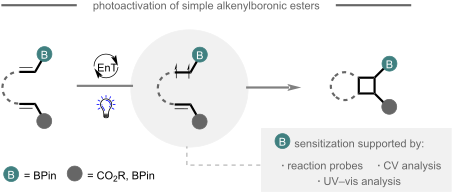
- scaffold (Figure 1A, bottom), with increasing excited state energy moving from stilbenes and conjugated dienes to simple dienes, styrenes and enones (not shown) [28]. Consequently, small truncated chromophores, such as simple alkenes remain an intractable challenge for efficient EnT due to prohibitively

Graphical Abstract
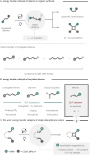
Figure 1: A) Energy transfer catalysis of alkenes in organic synthesis. B) Energy transfer catalysis of conju...
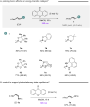
Figure 2: Probing boron effects on reactivity (A) and confirming the generation of a photostationary state eq...

Figure 3: Probing EnT catalysis enabled [2 + 2] cycloaddition of simple alkenylboronic esters.
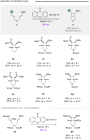
Scheme 1: Establishing the substrate scope. Conditions: 3 (1 equiv), xanthone (20 mol %), MeCN (0.03 M), unde...

Scheme 2: A) Product derivatization and B) transition-metal EnT catalysis. Reaction conditions A): 4d (1 equi...
New advances in asymmetric organocatalysis II
- Radovan Šebesta
Beilstein J. Org. Chem. 2025, 21, 766–769, doi:10.3762/bjoc.21.60
- ]. Kowalczyk and co-workers showed how asymmetric organocatalysis can benefit from mechanochemical activation. They established that Michael additions of thiomalonates to enones, catalyzed by cinchona-derived primary amines, is efficient and enantioselective under ball-milling conditions [24]. Kondratyev and

Figure 1: TreeMap chart of the top 15 Web of Science categories for 6,700 articles containing the keywords “a...
Copper-catalyzed yne-allylic substitutions: concept and recent developments
- Shuang Yang and
- Xinqiang Fang
Beilstein J. Org. Chem. 2024, 20, 2739–2775, doi:10.3762/bjoc.20.232
- -naphthol by applying a new ligand L14, leading to the rapid construction of differently substituted chiral spirocyclic enones 40a–j with high yields and enantioselectivities (Scheme 41). It is worth noting that when the C4 position of 1-naphthol was occupied, the reaction occurred at the C2 position

Graphical Abstract

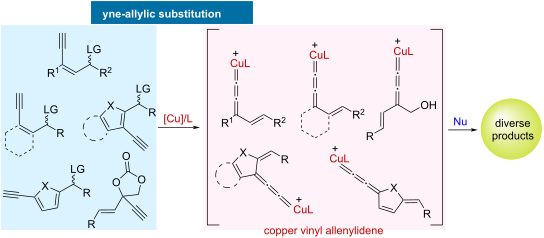
Scheme 1: Copper-catalyzed allylic and yne-allylic substitution.

Scheme 2: Challenges in achieving highly selective yne-allylic substitution.

Scheme 3: Yne-allylic substitutions using indoles and pyroles.

Scheme 4: Yne-allylic substitutions using amines.

Scheme 5: Yne-allylic substitution using 1,3-dicarbonyls.

Scheme 6: Postulated mechanism via copper acetylide-bonded allylic cation.

Scheme 7: Amine-participated asymmetric yne-allylic substitution.

Scheme 8: Asymmetric decarboxylative yne-allylic substitution.

Scheme 9: Asymmetric yne-allylic alkoxylation and alkylation.

Scheme 10: Proposed mechanism for Cu(I) system.

Scheme 11: Asymmetric yne-allylic dialkylamination.

Scheme 12: Proposed mechanism of yne-allylic dialkylamination.

Scheme 13: Asymmetric yne-allylic sulfonylation.

Scheme 14: Proposed mechanism of yne-allylic sulfonylation.

Scheme 15: Aymmetric yne-allylic substitutions using indoles and indolizines.

Scheme 16: Double yne-allylic substitutions using pyrrole.

Scheme 17: Proposed mechanism of yne-allylic substitution using electron-rich arenes.

Scheme 18: Aymmetric yne-allylic monofluoroalkylations.

Scheme 19: Proposed mechanism.
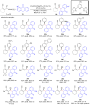
Scheme 20: Aymmetric yne-allylic substitution of yne-allylic esters with anthrones.

Scheme 21: Aymmetric yne-allylic substitution of yne-allylic esters with coumarins.

Scheme 22: Aymmetric yne-allylic substitution of with coumarins by Lin.

Scheme 23: Proposed mechanism.

Scheme 24: Amination by alkynylcopper driven dearomatization and rearomatization.

Scheme 25: Arylation by alkynylcopper driven dearomatization and rearomatization.

Scheme 26: Remote substitution/cyclization/1,5-H shift process.

Scheme 27: Proposed mechanism.

Scheme 28: Arylation or amination by alkynylcopper driven dearomatization and rearomatization.

Scheme 29: Remote nucleophilic substitution of 5-ethynylthiophene esters.

Scheme 30: Proposed mechanism.

Scheme 31: [4 + 1] annulation of yne-allylic esters and cyclic 1,3-dicarbonyls.
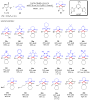
Scheme 32: Asymmetric [4 + 1] annulation of yne-allylic esters.

Scheme 33: Proposed mechanism.

Scheme 34: Asymmetric [3 + 2] annulation of yne-allylic esters.

Scheme 35: Postulated annulation step.

Scheme 36: [4 + 1] Annulations of vinyl ethynylethylene carbonates and 1,3-dicarbonyls.

Scheme 37: Proposed mechanism.

Scheme 38: Formal [4 + 1] annulations with amines.

Scheme 39: Formal [4 + 2] annulations with hydrazines.

Scheme 40: Proposed mechanism.
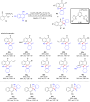
Scheme 41: Dearomative annulation of 1-naphthols and yne-allylic esters.

Scheme 42: Dearomative annulation of phenols or 2-naphthols and yne-allylic esters.

Scheme 43: Postulated annulation mechanism.

Scheme 44: Dearomative annulation of phenols or 2-naphthols.

Scheme 45: Dearomative annulation of indoles.

Scheme 46: Postulated annulation step.

Scheme 47: Asymmetric [4 + 1] cyclization of yne-allylic esters with pyrazolones.

Scheme 48: Proposed mechanism.

Scheme 49: Construction of C–C axially chiral arylpyrroles.

Scheme 50: Construction of C–N axially chiral arylpyrroles.

Scheme 51: Construction of chiral arylpyrroles with 1,2-di-axial chirality.

Scheme 52: Proposed mechanism.

Scheme 53: CO2 shuttling in yne-allylic substitution.

Scheme 54: CO2 fixing in yne-allylic substitution.

Scheme 55: Proposed mechanism.
Stereoselective mechanochemical synthesis of thiomalonate Michael adducts via iminium catalysis by chiral primary amines
- Michał Błauciak,
- Dominika Andrzejczyk,
- Błażej Dziuk and
- Rafał Kowalczyk
Beilstein J. Org. Chem. 2024, 20, 2313–2322, doi:10.3762/bjoc.20.198
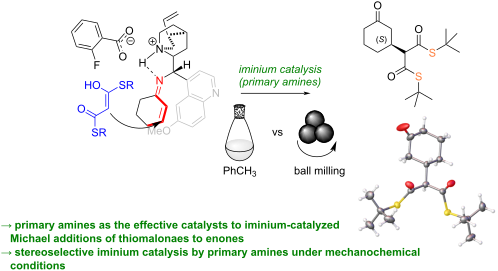
- significant advancement in mechanocatalysis. The stereoselective addition of bisthiomalonates 1–4 to cyclic enones and 4-chlorobenzylideneacetone proceeds stereoselectively under iminium activation conditions secured by chiral primary amines, in contrast to oxo-esters as observed in dibenzyl malonate addition
- nitroalkenes or guanidine-mediated addition of bisthiomalonates to maleimides, cyclic enones, and acyclic 1,4-dicarbonylbutenes, albeit at low temperatures and with relatively long reaction times, further limited to a narrow scope of thioesters (Scheme 1) [31]. Recently, we described a cinchona-squaramide
- -based catalytic system for the highly stereoselective addition of various bisthiomalonates to chalcones and dienones [29]. While recognizing the potential for greater selectivity enhancement and time savings with ball milling, hydrogen-bonding catalysis was effective only with aromatic enones, yielding

Graphical Abstract

Scheme 1: Two examples of base-catalyzed addition of thiomalonates to enones and the scope of the work.

Scheme 2: Tested reactions of cyclohexanone with dibenzyl thiomalonate 1.

Scheme 3: Impact of the bisthiomalonate on the yield and the stereoselectivity of the products.

Scheme 4: Plausible stereochemical model of the addition to cyclohexenone.

Scheme 5: Addition of bisthiomalonates 1–3 to cyclopentenone.

Scheme 6: Acyclic enone in reactions with thiomalonates 1–4.

Scheme 7: Reaction of β-ketothioesters with acceptor E1.
Multicomponent syntheses of pyrazoles via (3 + 2)-cyclocondensation and (3 + 2)-cycloaddition key steps
- Ignaz Betcke,
- Alissa C. Götzinger,
- Maryna M. Kornet and
- Thomas J. J. Müller
Beilstein J. Org. Chem. 2024, 20, 2024–2077, doi:10.3762/bjoc.20.178


Graphical Abstract

Scheme 1: Consecutive three-component synthesis of pyrazoles 1 via in situ-formed 1,3-diketones 2 [44].

Scheme 2: Consecutive three-component synthesis of 4-ethoxycarbonylpyrazoles 5 via SmCl3-catalyzed acylation ...

Scheme 3: Consecutive four-component synthesis of 1-(thiazol-2-yl)pyrazole-3-carboxylates 8 [51].

Scheme 4: Three-component synthesis of thiazolylpyrazoles 17 via in situ formation of acetoacetylcoumarins 18 ...

Scheme 5: Consecutive pseudo-four-component and four-component synthesis of pyrazoles 21 from sodium acetylac...

Scheme 6: Consecutive three-component synthesis of 1-substituted pyrazoles 24 from boronic acids, di(Boc)diim...

Scheme 7: Consecutive three-component synthesis of N-arylpyrazoles 25 via in situ formation of aryl-di(Boc)hy...

Scheme 8: Consecutive three-component synthesis of 1,3,4-substituted pyrazoles 27 and 28 from methylhydrazine...

Scheme 9: Consecutive three-component synthesis of 4-allylpyrazoles 32 via oxidative allylation of 1,3-dicarb...

Scheme 10: Pseudo-five-component synthesis of tris(pyrazolyl)methanes 35 [61].

Scheme 11: Pseudo-three-component synthesis of 5-(indol-3-yl)pyrazoles 39 from 1,3,5-triketones 38 [64].

Scheme 12: Three-component synthesis of thiazolylpyrazoles 43 [65].

Scheme 13: Three-component synthesis of triazolo[3,4-b]-1,3,4-thiadiazin-3-yl substituted 5-aminopyrazoles 47 [67]....

Scheme 14: Consecutive three-component synthesis of 5-aminopyrazoles 49 via formation of β-oxothioamides 50 [68].
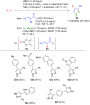
Scheme 15: Synthesis of 3,4-biarylpyrazoles 52 from aryl halides, α-bromocinnamaldehyde, and tosylhydrazine vi...

Scheme 16: Consecutive three-component synthesis of 3,4-substituted pyrazoles 57 from iodochromones 55 by Suzu...

Scheme 17: Pseudo-four-component synthesis of pyrazolyl-2-pyrazolines 59 by ring opening/ring closing cyclocon...

Scheme 18: Consecutive three-component synthesis of pyrazoles 61 [77].

Scheme 19: Three-component synthesis of pyrazoles 62 from malononitrile, aldehydes, and hydrazines [78-90].

Scheme 20: Four-component synthesis of pyrano[2,3-c]pyrazoles 63 [91].

Scheme 21: Three-component synthesis of persubstituted pyrazoles 65 from aldehydes, β-ketoesters, and hydrazin...

Scheme 22: Three-component synthesis of pyrazol-4-carbodithioates 67 [100].

Scheme 23: Regioselective three-component synthesis of persubstituted pyrazoles 68 catalyzed by ionic liquid [...

Scheme 24: Consecutive three-component synthesis of 4-halopyrazoles 69 and anellated pyrazoles 70 [102].

Scheme 25: Three-component synthesis of 2,2,2-trifluoroethyl pyrazole-5-carboxylates 72 [103].

Scheme 26: Synthesis of pyrazoles 75 in a one-pot process via carbonylative Heck coupling and subsequent cycli...

Scheme 27: Copper-catalyzed three-component synthesis of 1,3-substituted pyrazoles 76 [105].

Scheme 28: Pseudo-three-component synthesis of bis(pyrazolyl)methanes 78 by ring opening-ring closing cyclocon...

Scheme 29: Three-component synthesis of 1,4,5-substituted pyrazoles 80 [107].

Scheme 30: Consecutive three-component synthesis of 3,5-bis(fluoroalkyl)pyrazoles 83 [111].

Scheme 31: Consecutive three-component synthesis of difluoromethanesulfonyl-functionalized pyrazole 88 [114].

Scheme 32: Consecutive three-component synthesis of perfluoroalkyl-substituted fluoropyrazoles 91 [115].

Scheme 33: Regioselective consecutive three-component synthesis of 1,3,5-substituted pyrazoles 93 [116].

Scheme 34: Three-component synthesis of pyrazoles 96 mediated by trimethyl phosphite [117].

Scheme 35: One-pot synthesis of pyrazoles 99 via Liebeskind–Srogl cross-coupling/cyclocondensation [118].

Scheme 36: Synthesis of 1,3,5-substituted pyrazoles 101 via domino condensation/Suzuki–Miyaura cross-coupling ...

Scheme 37: Consecutive three-component synthesis of 1,3,5-trisubstituted pyrazoles 102 and 103 by Sonogashira ...

Scheme 38: Polymer analogous consecutive three-component synthesis of pyrazole-based polymers 107 [132].

Scheme 39: Synthesis of 1,3,5-substituted pyrazoles 108 by sequentially Pd-catalyzed Kumada–Sonogashira cycloc...

Scheme 40: Consecutive four-step one-pot synthesis of 1,3,4,5-substituted pyrazoles 110 [137].

Scheme 41: Four-component synthesis of pyrazoles 113, 115, and 117 via Sonogashira coupling and subsequent Suz...

Scheme 42: Consecutive four- or five-component synthesis for the preparation of 4-pyrazoly-1,2,3-triazoles 119...

Scheme 43: Four-component synthesis of pyrazoles 121 via alkynone formation by carbonylative Pd-catalyzed coup...

Scheme 44: Preparation of 3-azulenyl pyrazoles 124 by glyoxylation, decarbonylative Sonogashira coupling, and ...

Scheme 45: Four-component synthesis of a 3-indoloylpyrazole 128 [147].

Scheme 46: Two-step synthesis of 5-acylpyrazoles 132 via glyoxylation-Stephen–Castro sequence and subsequent c...

Scheme 47: Copper on iron mediated consecutive three-component synthesis of 3,5-substituted pyrazoles 136 [150].

Scheme 48: Consecutive three-component synthesis of 3-substituted pyrazoles 141 by Sonogashira coupling and su...

Scheme 49: Consecutive three-component synthesis of pyrazoles 143 initiated by Cu(I)-catalyzed carboxylation o...

Scheme 50: Consecutive three-component synthesis of benzamide-substituted pyrazoles 146 starting from N-phthal...

Scheme 51: Consecutive three-component synthesis of 1,3,5-substituted pyrazoles 148 [156].

Scheme 52: Three-component synthesis of 4-ninhydrin-substituted pyrazoles 151 [158].

Scheme 53: Consecutive four-component synthesis of 4-(oxoindol)-1-phenylpyrazole-3-carboxylates 155 [159].

Scheme 54: Three-component synthesis of pyrazoles 160 [160].

Scheme 55: Consecutive three-component synthesis of pyrazoles 165 [162].

Scheme 56: Consecutive three-component synthesis of 3,5-disubstituted and 3-substituted pyrazoles 168 and 169 ...

Scheme 57: Three-component synthesis of 3,4,5-substituted pyrazoles 171 via 1,3-dipolar cycloaddition of vinyl...

Scheme 58: Three-component synthesis of pyrazoles 173 and 174 from aldehydes, tosylhydrazine, and vinylidene c...

Scheme 59: Three-component synthesis of pyrazoles 175 from glyoxyl hydrates, tosylhydrazine, and electron-defi...

Scheme 60: Pseudo-four-component synthesis of pyrazoles 177 from glyoxyl hydrates, tosylhydrazine, and aldehyd...

Scheme 61: Consecutive three-component synthesis of pyrazoles 179 via Knoevenagel-cycloaddition sequence [179].

Scheme 62: Three-component synthesis of 5-dimethylphosphonate substituted pyrazoles 182 from aldehydes, the Be...

Scheme 63: Consecutive three-component synthesis of 5-(dimethyl phosphonate)-substituted pyrazoles 185 from al...

Scheme 64: Three-component synthesis of 5-(dimethyl phosphonate)-substituted pyrazoles 187 from aldehydes, the...

Scheme 65: Three-component synthesis of 5-diethylphosphonate/5-phenylsulfonyl substituted pyrazoles 189 from a...

Scheme 66: Pseudo-three-component synthesis of 3-(dimethyl phosphonate)-substituted pyrazoles 190 [185].

Scheme 67: Three-component synthesis of 3-trifluoromethylpyrazoles 193 [186].

Scheme 68: Consecutive three-component synthesis of 5-stannyl-substituted 4-fluoropyrazole 197 [191,192].

Scheme 69: Pseudo-three-component synthesis of 3,5-diacyl-4-arylpyrazoles 199 [195].

Scheme 70: Three-component synthesis of pyrazoles 204 via nitrilimines [196].

Scheme 71: Three-component synthesis of 1,3,5-substituted pyrazoles 206 via formation of nitrilimines and sali...

Scheme 72: Pseudo four-component synthesis of pyrazoles 209 from acetylene dicarboxylates 147, hydrazonyl chlo...

Scheme 73: Consecutive three-component synthesis of pyrazoles 213 via syndnones 214 [200].

Scheme 74: Consecutive three-component synthesis of pyrazoles 216 via in situ-formed diazomethinimines 217 [201].

Scheme 75: Consecutive three-component synthesis of 3-methylthiopyrazoles 219 from aldehydes, hydrazine, and 1...

Scheme 76: Three-component synthesis of 1,3,5-substituted pyrazoles 220 from aldehydes, hydrazines, and termin...

Scheme 77: Three-component synthesis of 1,3,4,5-substituted pyrazoles 222 from aldehydes, hydrazines, and DMAD ...

Scheme 78: Pseudo three-component synthesis of pyrazoles 224 from sulfonyl hydrazone and benzyl acrylate under...

Scheme 79: Titanium-catalyzed consecutive four-component synthesis of pyrazoles 225 via enamino imines 226 [211]. a...

Scheme 80: Titanium-catalyzed three-component synthesis of pyrazoles 227 via enhydrazino imine complex interme...

Scheme 81: Pseudo-three-component synthesis of pyrazoles 229 via Glaser coupling of terminal alkynes and photo...

Scheme 82: Copper(II)acetate-mediated three-component synthesis of pyrazoles 232 [216].

Scheme 83: Copper-catalyzed three-component synthesis of 1,3,4-substituted pyrazole 234 from oxime acetates, a...

Scheme 84: Three-component synthesis of 3-trifluoroethylpyrazoles 239 [218].

Scheme 85: Pseudo-three-component synthesis of 1,4-bisulfonyl-substituted pyrazoles 242 [219].

Scheme 86: Three-component synthesis of 4-hydroxypyrazole 246 [221].
Diastereoselective synthesis of highly substituted cyclohexanones and tetrahydrochromene-4-ones via conjugate addition of curcumins to arylidenemalonates
- Deepa Nair,
- Abhishek Tiwari,
- Banamali Laha and
- Irishi N. N. Namboothiri
Beilstein J. Org. Chem. 2024, 20, 2016–2023, doi:10.3762/bjoc.20.177
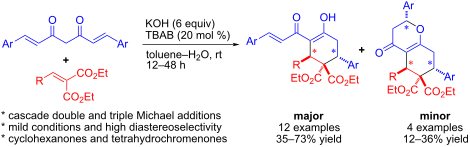
- treatment of Alzheimer's disease [3][4]. Likewise, RL91 and BHMPC are active for selective cell growth inhibition of the resistant lines (Figure 1) [5][6]. Their synthesis mainly involves a cascade Michael–aldol reaction between enones and suitable Michael donors such as β-ketosulfones, β-diketones, or

Graphical Abstract

Figure 1: Biologically active derivatives of cyclohexanones.

Scheme 1: The Michael donor–acceptor reactivity of curcumin: previous vs present work.

Scheme 2: A plausible reaction mechanism.

Figure 2: X-ray structure of 4a (CCDC 2351387).

Figure 3: Origin of stereoselectivity in the double Michael addition.

Scheme 3: Scale-up reaction.
Electrocatalytic hydrogenation of cyanoarenes, nitroarenes, quinolines, and pyridines under mild conditions with a proton-exchange membrane reactor
- Koichi Mitsudo,
- Atsushi Osaki,
- Haruka Inoue,
- Eisuke Sato,
- Naoki Shida,
- Mahito Atobe and
- Seiji Suga
Beilstein J. Org. Chem. 2024, 20, 1560–1571, doi:10.3762/bjoc.20.139
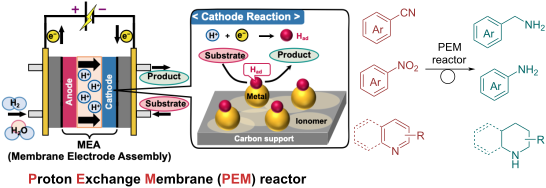
- aryl halides [42]. PEM reactors are also gaining industrial attention. Weber et al. reported a series of large-scale syntheses using PEM reactors [43]. We studied electrochemical transformations [44][45][46][47][48][49] and recently reported the selective reduction of enones using a PEM reactor [50

Graphical Abstract

Figure 1: Schematic of (a) a PEM reactor and (b) MEA.

Scheme 1: Plausible mechanism for the reduction of 1a leading to benzylamine 2a and dibenzylamine 3a.

Scheme 2: Electrochemical reduction of cyanoarenes under optimal conditions. Reaction conditions: anode catal...

Scheme 3: Scope of the electrochemical reduction of nitroarenes. Reaction conditions: anode catalyst, Pt/C; c...

Figure 2: Hypothesis of the trap of quinoline on membrane and tetrahydroquinoline and the effect of adding an...

Figure 3: Recycled use of MEA for the electroreduction of 6a in the presence of PTSA (0.10 equiv). Reaction c...

Figure 4: Recycled use of MEA for the electroreduction of 6a in the presence of PPTS (0.10 equiv). Reaction c...

Scheme 4: Scope of the electroreduction of 6 in the presence of PTSA (0.10 equiv). Reaction conditions: anode...

Scheme 5: a) Large scale synthesis of 7a and b) electoreduction of 6a using H2SO4 as a proton source.

Scheme 6: Scope of the electroreduction of 6 in the presence of PTSA (1 equiv). Reaction conditions: anode ca...
Primary amine-catalyzed enantioselective 1,4-Michael addition reaction of pyrazolin-5-ones to α,β-unsaturated ketones
- Pooja Goyal,
- Akhil K. Dubey,
- Raghunath Chowdhury and
- Amey Wadawale
Beilstein J. Org. Chem. 2024, 20, 1518–1526, doi:10.3762/bjoc.20.136
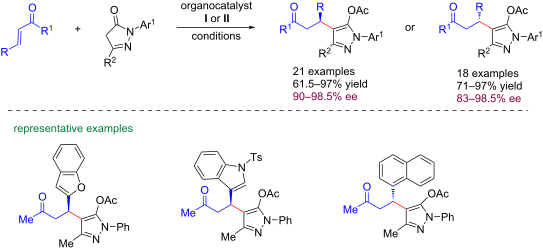
- organocatalyzed asymmetric Michael addition reaction of 4-monosubstituted pyrazol-5-ones to simple enones for the synthesis of pyrazolone derivatives [25]. Despite these progresses, arylidene/heteroarylideneacetones have remained untapped by 4-unsubstituted pyrazolin-5-ones under asymmetric organocatalytic or

Graphical Abstract

Figure 1: Selected examples of drugs and bioactive molecules bearing a pyrazole core.

Scheme 1: Representative examples of asymmetric organocatalytic conjugate addition of pyrazolin-5-ones to α,β...
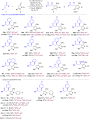
Scheme 2: Scope of substrates. Reaction conditions: 1 (0.3 mmol), 2 (0.2 mmol), 15 mol % of catalyst I, 30 mo...

Scheme 3: Synthesis of pyrazole-benzofuran and pyrazole–indole hybrid molecules. Reaction conditions: 1m or 1n...

Scheme 4: Synthesis of 3aa on preparative scale.

Figure 2: Single crystal X-ray structure of ent-3ba (CCDC 2234286).

Scheme 5: Proposed reaction mechanism.
Generation of alkyl and acyl radicals by visible-light photoredox catalysis: direct activation of C–O bonds in organic transformations
- Mithu Roy,
- Bitan Sardar,
- Itu Mallick and
- Dipankar Srimani
Beilstein J. Org. Chem. 2024, 20, 1348–1375, doi:10.3762/bjoc.20.119
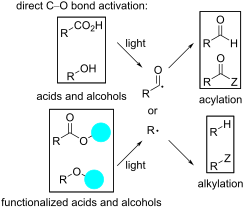
- components, such as various acrylates, α,β-unsaturated acids, enones, enals, acrylamides, vinyl phosphonates, and vinyl sulfones. Various cesium salts of oxalates also performed well using this protocol. Isopropyl and tert-butyl groups present in an adjacent position of oxalates do not disturb the reaction

Graphical Abstract
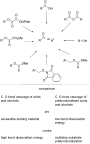
Figure 1: Generation of alkyl and acyl radicals via C–O bond breaking.

Figure 2: General photocatalytic mechanism.

Scheme 1: Photoredox-catalyzed hydroacylation of olefins with aliphatic carboxylic acids.
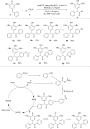
Scheme 2: Acylation–aromatization of p-quinone methides using carboxylic acids.
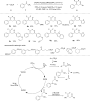
Scheme 3: Visible-light-induced deoxygenation–defluorination for the synthesis of γ,γ-difluoroallylic ketones....

Scheme 4: Photochemical hydroacylation of azobenzenes with carboxylic acids.
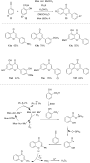
Scheme 5: Photoredox-catalyzed synthesis of flavonoids.
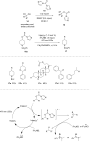
Scheme 6: Synthesis of O-thiocarbamates and photocatalytic reduction of O-thiocarbamates.
Scheme 7: Deoxygenative borylation of alcohols.

Scheme 8: Trifluoromethylation of O-alkyl thiocarbonyl substrates.
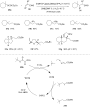
Scheme 9: Redox-neutral radical coupling reactions of alkyl oxalates and Michael acceptors.

Scheme 10: Visible-light-catalyzed and Ni-mediated syn-alkylarylation of alkynes.
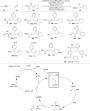
Scheme 11: 1,2-Alkylarylation of alkenes with aryl halides and alkyl oxalates.
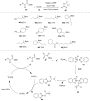
Scheme 12: Deoxygenative borylation of oxalates.

Scheme 13: Coupling of N-phthalimidoyl oxalates with various acceptors.
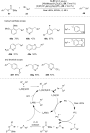
Scheme 14: Cross-coupling of O-alkyl xanthates with aryl halides via dual photoredox and nickel catalysis.

Scheme 15: Deoxygenative borylation of secondary alcohol.
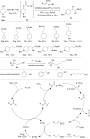
Scheme 16: Deoxygenative alkyl radical generation from alcohols under visible-light photoredox conditions.
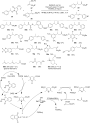
Scheme 17: Deoxygenative alkylation via alkoxy radicals against hydrogenation or β-fragmentation.
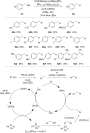
Scheme 18: Direct C–O bond activation of benzyl alcohols.
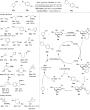
Scheme 19: Deoxygenative arylation of alcohols using NHC to activate alcohols.
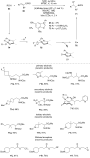
Scheme 20: Deoxygenative conjugate addition of alcohol using NHC as alcohol activator.
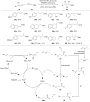
Scheme 21: Synthesis of polysubstituted aldehydes.
A Diels–Alder probe for discovery of natural products containing furan moieties
- Alyssa S. Eggly,
- Namuunzul Otgontseren,
- Carson B. Roberts,
- Amir Y. Alwali,
- Haylie E. Hennigan and
- Elizabeth I. Parkinson
Beilstein J. Org. Chem. 2024, 20, 1001–1010, doi:10.3762/bjoc.20.88
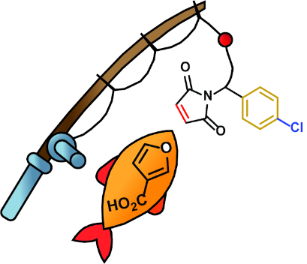
- aromatic ring, to make the compound UV-active. Previously developed probes containing both MS and UV–vis tags have proven to be successful in cell supernatant in identifying a number of functional groups including epoxides, enones, citrulline, conjugated alkenes, and others [8][9][10][11][12][13][14][15

Graphical Abstract

Figure 1: A) Bioactive natural products containing a furan ring (blue) or 3-furoic acid moiety (red): plakors...
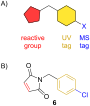
Figure 2: A) A diagram of an example of a molecular probe. B) The maleimide-based probe (6) for furans.
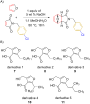
Figure 3: A) General Diels–Alder reaction scheme. B) MMF derivatives explored in this reaction.

Figure 4: A. Reaction scheme. B. Representative mass spectra of MMF5 cycloadduct 24 with 3:1 isotopic ratio p...

Figure 5: A. The UV trace (254 nm) for M145 control, M145 + probe 6, W75 control, and W75 + probe 6. M145 con...
Advancements in hydrochlorination of alkenes
- Daniel S. Müller
Beilstein J. Org. Chem. 2024, 20, 787–814, doi:10.3762/bjoc.20.72
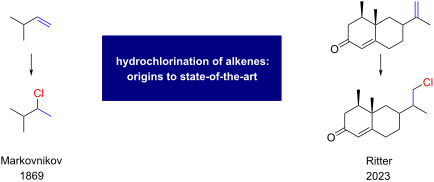
- oxidation, whereas in Nicewicz's report, the alkene is oxidized. This modification allows for a significantly larger reaction scope (Scheme 29). Terminal alkenes and several functional groups such as ethers (163), esters (165), ketones (166), nitriles (167), and enones (170) are tolerated. The

Graphical Abstract

Scheme 1: Classes of hydrochlorination reactions discussed in this review.

Figure 1: Mayr’s nucleophilicity parameters for several alkenes. References for each compound can be consulte...

Figure 2: Hydride affinities relating to the reactivity of the corresponding alkene towards hydrochlorination....

Scheme 2: Distinction of polar hydrochlorination reactions.

Scheme 3: Reactions of styrenes with HCl gas or HCl solutions.

Figure 3: Normal temperature dependence for the hydrochlorination of (Z)-but-2-ene.

Figure 4: Pentane slows down the hydrochlorination of 11.

Scheme 4: Recently reported hydrochlorinations of styrenes with HCl gas or HCl solutions.
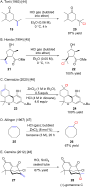
Scheme 5: Hydrochlorination reactions with di- and trisubstituted alkenes.

Scheme 6: Hydrochlorination of fatty acids with liquified HCl.

Scheme 7: Hydrochlorination with HCl/DMPU solutions.

Scheme 8: Hydrochlorination with HCl generated from EtOH and AcCl.

Scheme 9: Hydrochlorination with HCl generated from H2O and TMSCl.

Scheme 10: Regioisomeric mixtures of chlorooctanes as a result of hydride shifts.

Scheme 11: Regioisomeric mixtures of products as a result of methyl shifts.

Scheme 12: Applications of the Kropp procedure on a preparative scale.

Scheme 13: Curious example of polar anti-Markovnikov hydrochlorination.

Scheme 14: Unexpected and expected hydrochlorinations with AlCl3.
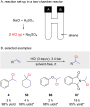
Figure 5: Ex situ-generated HCl gas and in situ application for the hydrochlorination of activated alkenes (*...
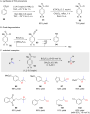
Scheme 15: HCl generated by Grob fragmentation of 92.

Scheme 16: Formation of chlorophosphonium complex 104 and the reaction thereof with H2O.

Scheme 17: Snyder’s hydrochlorination with stoichiometric amounts of complex 104 or 108.

Scheme 18: In situ generation of HCl by mixing of MsOH with CaCl2.

Scheme 19: First hydrochlorination of alkenes using hydrochloric acid.

Scheme 20: Visible-light-promoted hydrochlorination.

Scheme 21: Silica gel-promoted hydrochlorination of alkenes with hydrochloric acid.

Scheme 22: Hydrochlorination with hydrochloric acid promoted by acetic acid or iron trichloride.

Figure 6: Metal hydride hydrogen atom transfer reactions vs cationic reactions; BDE (bond-dissociation energy...

Scheme 23: Carreira’s first report on radical hydrochlorinations of alkenes.

Figure 7: Mechanism for the cobalt hydride hydrogen atom transfer reaction reported by Carreira.

Scheme 24: Radical “hydrogenation” of alkenes; competing chlorination reactions.

Scheme 25: Bogers iron-catalyzed radical hydrochlorination.

Scheme 26: Hydrochlorination instead of hydrogenation product.

Scheme 27: Optimization of the Boger protocol by researchers from Merck [88,89].

Figure 8: Proposed mechanism for anti-Markovnikov hydrochlorination by Nicewicz.

Scheme 28: anti-Markovnikov hydrochlorinations as reported by Nicewicz.

Figure 9: Mechanism for anti-Markovnikov hydrochlorination according to Ritter.

Scheme 29: anti-Markovnikov hydrochlorinations as reported by Nicewicz; rr (regioisomeric ratio) corresponds t...
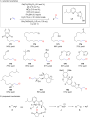
Scheme 30: anti-Markovnikov hydrochlorinations as reported by Liu.
Cyclization of 1-aryl-4,4,4-trichlorobut-2-en-1-ones into 3-trichloromethylindan-1-ones in triflic acid
- Vladislav A. Sokolov,
- Andrei A. Golushko,
- Irina A. Boyarskaya and
- Aleksander V. Vasilyev
Beilstein J. Org. Chem. 2023, 19, 1460–1470, doi:10.3762/bjoc.19.105
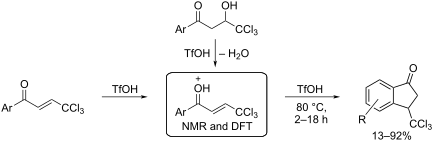
- Technical University, Institutsky per., 5, Saint Petersburg, 194021, Russia, SAMS Research Group, University of Strasbourg, Institut Charles Sadron, CNRS, 67200 Strasbourg, France 10.3762/bjoc.19.105 Abstract Trichloromethyl-substituted enones (1-aryl-4,4,4-trichlorobut-2-en-1-ones, ArCOCH=CHCCl3, CCl3
- -enones) undergo intramolecular transformation into 3-trichloromethylindan-1-ones (CCl3-indanones) in Brønsted superacid CF3SO3H (triflic acid, TfOH) at 80 °C within 2–10 h in yields up to 92%. Protonation of the carbonyl oxygen of the starting CCl3-enones by TfOH affords the key reactive intermediates
- -4,4,4-trichloro-3-hydroxybutan-1-ones; ArCOCH2CH(OH)CCl3) undergo dehydration to the corresponding CCl3-enones, which are further cyclized into CCl3-indanones. The yields of CCl3-indanones starting from CCl3-hydroxy ketones are up to 86% in TfOH at 80 °C within 3–18 h. Keywords: carbocations; enones

Graphical Abstract

Scheme 1: Generation of O-protonated and O,C-diprotonated species from substituted conjugated enones under su...

Scheme 2: Synthesis of 1-aryl-4,4,4-trichloro-3-hydroxybutan-1-ones 1a–o by condensation of acetophenones wit...

Scheme 3: Synthesis of 1-aryl-4,4,4-trichloro-3-hydroxybutan-1-ones 1p–v by acylation of electron-donating ar...

Scheme 4: Synthesis of 1-aryl-4,4,4-trichlorobut-2-en-1-ones 2 by dehydration of hydroxy ketones 1.

Scheme 5: Cyclization of 1-aryl-4,4,4-trichlorobut-2-en-1-ones 2 into 3-trichloromethylindan-1-ones 3 in TfOH....

Scheme 6: Cyclization of 1-aryl-4,4,4-trichloro-3-hydroxybutan-1-ones 1 into 3-trichloromethylindan-1-ones 3 ...

Scheme 7: Plausible mechanisms for the cyclization of compounds 1 and 2 into indanones 3 in TfOH.
α-(Aminomethyl)acrylates as acceptors in radical–polar crossover 1,4-additions of dialkylzincs: insights into enolate formation and trapping
- Angel Palillero-Cisneros,
- Paola G. Gordillo-Guerra,
- Fernando García-Alvarez,
- Olivier Jackowski,
- Franck Ferreira,
- Fabrice Chemla,
- Joel L. Terán and
- Alejandro Perez-Luna
Beilstein J. Org. Chem. 2023, 19, 1443–1451, doi:10.3762/bjoc.19.103
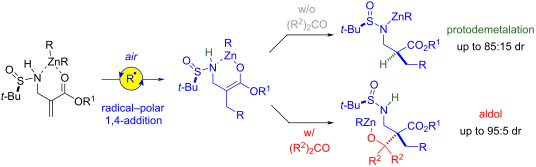
- . Trialkylboranes can react in a similar way with enones [3] whereas, distinctively, suitable acceptors for the reaction with dialkylzinc reagents also include α,β-unsaturated carboxylic acid derivatives such as α,β-unsaturated (di)esters [4][5], N-enoyloxazolidinones [6][7], N-enoyloxazolidines [8], or

Graphical Abstract

Scheme 1: Air-promoted radical chain reaction of dialkylzinc reagents with α,β-unsaturated carbonyl compounds....
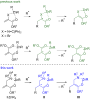
Scheme 2: Enolate formation by zinc radical transfer (SH2 on dialkylzinc reagents).

Scheme 3: Preparation of α-(aminomethyl)acrylate 10.

Scheme 4: Reaction of α-(aminomethyl)acrylate 10 with Et2Zn in the presence of air.

Scheme 5: Chemical correlation to determine the configuration of the major diastereomer of (RS)-14b.
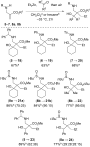
Scheme 6: Air-promoted tandem 1,4-addition–aldol condensation reactions of Et2Zn with α-(aminomethyl)acrylate...

Scheme 7: Diagnostic experiments for a radical mechanism and for enolate formation.

Scheme 8: Diagnostic experiments with N-benzyl enoate 10.

Scheme 9: Reactivity manifolds for the air-promoted tandem 1,4-addition–electrophilic substitution reaction b...



