


Search results
Search for "substituents" in Full Text gives 1786 result(s) in Beilstein Journal of Organic Chemistry. Showing first 200.
Synthesis and acaricidal activity against Varroa destructor of α- and γ-costic acid dimers
Beilstein J. Org. Chem. 2026, 22, 1088–1096, doi:10.3762/bjoc.22.87
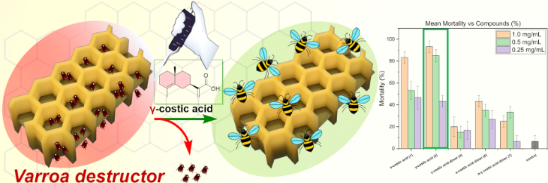
- associated substituents determined by the different ring junction in the two compounds (Figure 3), probably affecting the interaction with the biological receptors. Conclusion This study reports the synthesis of α- and γ-costic acid diesters with ethylene glycol and evaluates their acaricidal activity


Synthesis of functionalized, 13-alkyl-substituted coralyne derivatives and investigation of their interactions with duplex and abasic site-containing DNA
Beilstein J. Org. Chem. 2026, 22, 1057–1066, doi:10.3762/bjoc.22.84
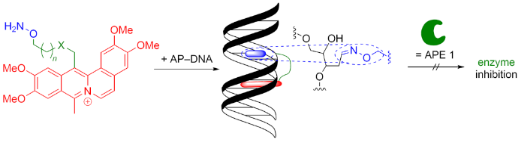
- with a more efficient preliminary DNA binding of the ligand before covalent connection. Herein, we report on our general attempts to synthesize coralyne derivatives with additional substituents in position 13 as well as exemplary studies of their ability for DNA binding and enzyme inhibition. Results


One-pot four-component sequential synthesis of S-alkyl dithiocarbamates using lipase as a biocatalyst
Beilstein J. Org. Chem. 2026, 22, 1048–1056, doi:10.3762/bjoc.22.83
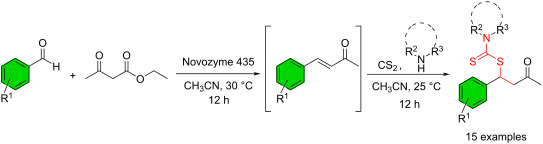
- yields, indicating that the reaction tolerates moderate steric effects. It is also noteworthy that aldehydes bearing electron-withdrawing substituents, such as 4-Cl (6c, 72%), 3-NO2 (6h, 69%), and 3-Cl (6i, 81%) led to decreased yields. Additionally, acyclic amines such as dimethylamine and diethylamine
- were treated with various Michael acceptors to yield products 6k–o (Scheme 4). Aldehydes bearing electron-withdrawing substituents, such as 4-chloro (6l, 85%) and 3-NO2 (6o, 76%) also afforded the desired products in good to excellent yields. These results indicate that the methodology is compatible


Synthesis of novel 1,2,4-oxadiazole-isoxazoline hybrids and their in silico potential with adenosine receptors
Beilstein J. Org. Chem. 2026, 22, 1033–1047, doi:10.3762/bjoc.22.82
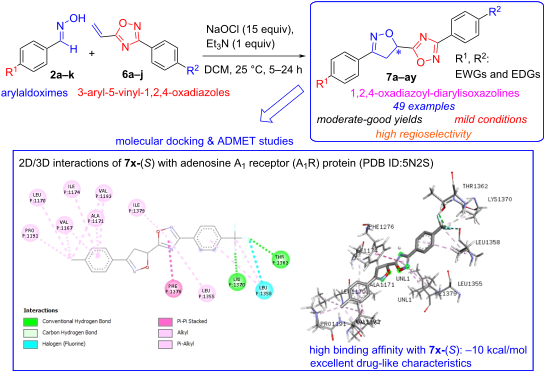
- reduced yields may be attributed to the strong electron-withdrawing p-cyano and p-nitro substituents, which decrease the nucleophilicity of the corresponding nitrile oxide dipoles through resonance effects, thereby diminishing cycloaddition efficiency. Prolonged reaction times of up to 24 hours may also


Synthesis and optical resolution of 4,5-diaminohomoadamantane: a promising scaffold for chiral ligands and bioactive compounds
Beilstein J. Org. Chem. 2026, 22, 1013–1022, doi:10.3762/bjoc.22.80
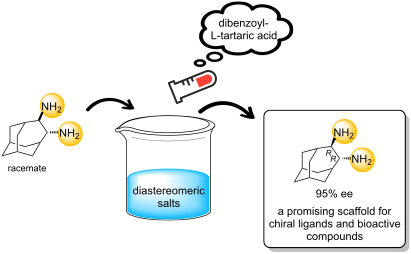
- ] are described in the literature. However, compounds of the homoadamantane family with substituents at the C-3 and C-4 [29][30][31][32][33][34][35][36][37][38] or at the C-4 and C-5 [39][40][41][42][43][44][45][46][47][48][49][50][51][52][53] positions have recently attracted more attention. At present


Z-Selective semihydrogenation of alkynes via Ni/Lewis acid synergistic catalyzed system using DMF as hydrogen source and solvent
Beilstein J. Org. Chem. 2026, 22, 1004–1012, doi:10.3762/bjoc.22.79
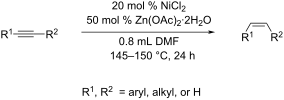
- tolerance. Ethers, halides (C–Cl, C–Br, C–F), and amides remained intact under the reaction conditions. Notably, substrates with strong electron-withdrawing substituents (e.g., –CF3 in 2f) or multiple halogen atoms (2i, 2o) were also well tolerated, affording the products in good yields and highlighting the
- mol % Zn(OAc)2·2H2O, DMF, 150 °C, 24 h), substrates bearing methyl (4b), methoxy (4c), and halogen (F for 4d, Cl for 4e, Br for 4f) substituents were smoothly converted to the corresponding styrene derivatives in 64–68% yields. Both electron-donating groups (methyl, methoxy) and halogen functional



Rh(III)-catalyzed chelation-assisted C–H activation/annulation of 2-arylimidazolines with cyclic diazo-1,3-dicarbonyl compounds: a novel approach to tetracyclic annulated derivatives of 2,3-dihydroimidazo[2,1-a]isoquinoline
Beilstein J. Org. Chem. 2026, 22, 997–1003, doi:10.3762/bjoc.22.78
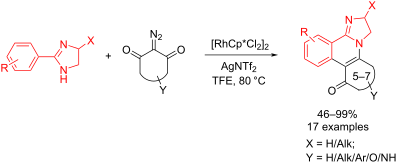
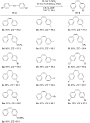
- ]isoquinoline with variation of substituents at four different positions. The structural similarity of the prepared compounds with known 2,3-dihydroimidazo[2,1-a]isoquinoline-based antitumor, anti-inflammatory, and immunosuppressive agents makes the developed approach a useful tool for the development of novel


Electrochemical reduction of unsaturated carbon–carbon bonds via 3d transition-metal catalysis
Beilstein J. Org. Chem. 2026, 22, 955–981, doi:10.3762/bjoc.22.75
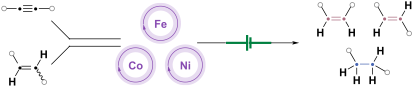
- uncontrolled overreduction in iron electrocatalysis. The reaction proceeds efficiently with internal diarylalkynes bearing both electron-donating and electron-withdrawing substituents, while functional groups typically sensitive to reductive conditions, such as aryl halides and arylboronic esters, are well
- ) voltammetry revealed that hydrogen evolution reactivity is strongly dependent on the electronic properties of the ligand environment (Scheme 8B). Notably, this electronic modulation is directly reflected in the rate constant for Co(III)–H formation. Catalysts bearing electron-withdrawing substituents exhibit








Synthesis of sterically shielded piperidine nitroxides via acid-catalyzed heterocyclization of β-aminoketone derivatives with ketones
Beilstein J. Org. Chem. 2026, 22, 948–954, doi:10.3762/bjoc.22.74
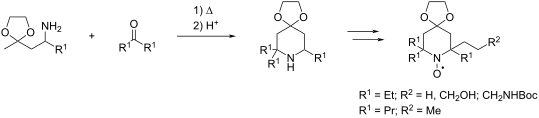
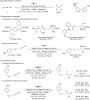
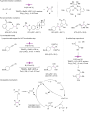
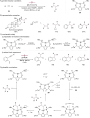
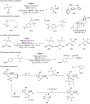
- Chemical Kinetics and Combustion, Siberian Branch of the Russian Academy of Sciences, Novosibirsk, 630090, Russia 10.3762/bjoc.22.74 Abstract The capabilities of modern methods for the synthesis of sterically shielded piperidine nitroxides with acyclic substituents are largely limited to symmetrical
- tetraethyl structures and do not allow the introduction of functional groups into position 2. We propose an alternative approach that allows for the variation of substituents adjacent to the nitroxyl group, which significantly expands the potential of sterically hindered nitroxides for promising applications
- subsequent reaction with moderately basic organometallic reagents, such as 2-alkynyl- and 2-allylmagnesium halides, enables the facile introduction of diverse substituents, including those with functional groups. If necessary, the multiple carbon–carbon bonds in the side chain can be subjected to


Recent advances in copper-catalyzed direct hydroamination of alkenes with (hetero)aromatic amines
Beilstein J. Org. Chem. 2026, 22, 925–947, doi:10.3762/bjoc.22.73
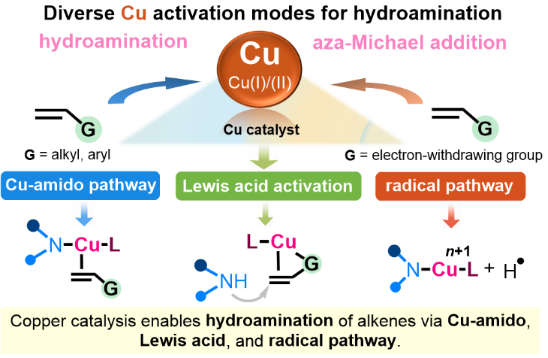
- , and α,β-unsaturated carbonyl compounds, to afford the corresponding β-amino products 3 in excellent yields (up to 99%). This method exhibited high functional group tolerance on aromatic amine substrates, including those with electron-donating and electron-withdrawing substituents, without
- Scheme 7, the use of an air- and moisture-stable (CAAC)Cu–Cl catalyst in the presence of KOt-Bu enabled the efficient hydroamination of activated olefins 12 bearing electron-withdrawing groups such as esters, nitriles, and sulfone substituents. Under these conditions, various anilines reacted efficiently
- ester substituents. Notably, the reaction outcome was highly dependent on the reaction conditions. Although mild conditions favored C–N bond formation, high temperatures promoted alternative pathways, such as aromatic substitution, indicating that the C–N bond formation was reversible under Lewis acidic







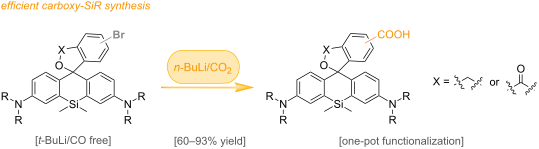
A practical CO2-mediated synthesis of 5,6-carboxylated silicon-rhodamines for targeted probe development
Beilstein J. Org. Chem. 2026, 22, 915–924, doi:10.3762/bjoc.22.72
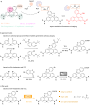
- molecular design framework (Figure 1a). Conformational restriction and optimization of amino substituents have been widely employed to enhance brightness and photostability [8][37][38][39], whereas extension of π-conjugation and electronic tuning have expanded the emission of SiR dyes from the far-red to
- the near-infrared region, reaching up to 740 nm [21][22][40]. In addition, modulation of the L–Z equilibrium through tuning of N-substituents has enabled the development of fluorogenic and spontaneously blinking SiR probes with finely controlled off–on behavior [11][26][28][41]. However, despite the



Palladium-catalyzed benzocyclization reactions of quinoline-2-carboxamides via sequential C–H/N–H functionalization
Beilstein J. Org. Chem. 2026, 22, 905–914, doi:10.3762/bjoc.22.71
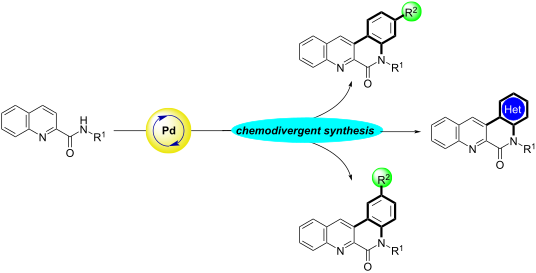
- ). The optimized conditions were used to investigate the substrate scope of this C–H/N–H functionalized reaction. First, the substituents at the amido group of quinoline-2-carboxamides 1 were examined (Table 2). The C–H/N–H functionalization reactions afforded good to excellent yields, regardless of the
- presence of a non-substituted phenyl group or various substituents at the 4-position of the phenyl moiety (Table 2, entries 1–5). In contrast, the quinoline-2-carboxamide containing a 4-nitrophenyl group gave the corresponding product in a low yield (Table 2, entry 6). This result indicated that an
- ). The reaction with benzyl-substituted carboxamide also resulted in a low yield owing to the lower acidity of the amide proton compared with aromatic amides (Table 2, entry 10). Based on these results quinoline carboxamides 1 bearing aromatic substituents, which avoid steric effects and induce moderate




Cascade transformation of 2-(diazoacetyl)-2H-azirines to 2-aroyl-3-hydroxy-1H-pyrroles via condensation with aromatic aldehydes
Beilstein J. Org. Chem. 2026, 22, 897–904, doi:10.3762/bjoc.22.70
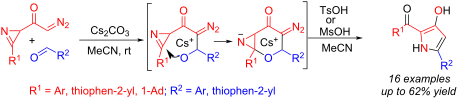
- impossibility of trans-fusion. The trans configuration forces the bridgehead substituents onto opposite sides of the rings. This rigid geometric requirement severely distorts the sp³ bond angles at the fusion carbons, generating immense, destabilizing angle and torsional strain across the fused system. In fact


Diastereodivergent electrophilic trapping of α-boryl lithium derivatives
Beilstein J. Org. Chem. 2026, 22, 882–887, doi:10.3762/bjoc.22.68
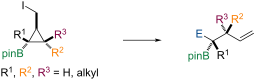
- range of electrophiles to give boronic esters bearing vicinal tri- and tetrasubstituted stereocenters in good yields and high diastereoselectivities. Notably, substrates bearing alkyl substituents display the opposite sense of diastereoselectivity to previously studied aryl-substituted analogues. The
- reaction. We were particularly interested in examining cases with alkyl (5) instead of aryl substituents in 2 on C2 (Scheme 2). We initiated the investigation into the selectivity of the transformation with the synthesis of a library of cyclopropylmethyl iodides 5a–i, using our previously reported
- length and branching of the R1 substituent (from Me, Et to Bu, and Cy) resulted in a slight decrease in diastereomeric ratios, providing 6e–g in moderate yields and selectivities. To our delight, the reaction proceeded even when three alkyl substituents were present (5h, R1 = R3 = Me, R2 = allyl




The trans-influence in gold chemistry from a catalytic perspective
Beilstein J. Org. Chem. 2026, 22, 838–856, doi:10.3762/bjoc.22.66
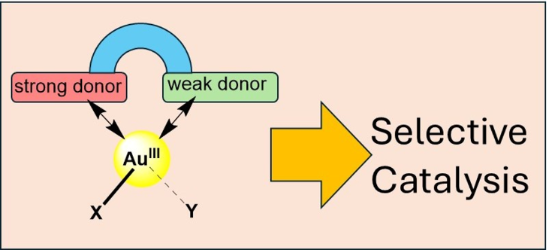
- complexes. Both terminal and internal alkynes could be inserted, with a wide variety of functional groups including alkyl, aryl, OH, COOH, amide and aldehyde substituents, but not DMAD. The excellent stereo- and regiochemical selectivity could be explained by a bimolecular mechanism, as confirmed by DFT


Unsymmetrical sulfoxides with sterically hindered catechol fragment: synthesis, structure, electrochemical properties, and antiradical activity
Beilstein J. Org. Chem. 2026, 22, 828–837, doi:10.3762/bjoc.22.65
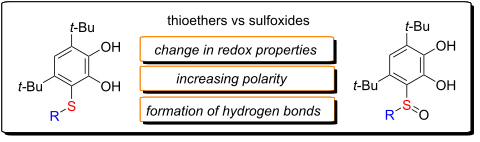
- the reaction with the 2,2′-diphenyl-1-picrylhydrazyl radical (DPPH) and the 2,2′-azinobis(3-ethylbenzothiazoline-6-sulfonic acid) radical cation (ABTS+•). In both assays, the lowest IC50 values among the studied catechol sulfoxides were found for compounds bearing isopropyl and tert-butyl substituents
- /3509 cm−1, respectively. For most compounds, these bands are slightly shifted to lower wavenumbers by 22–62 cm−1 relative to the corresponding thioethers. The largest shifts, ranging from 146 to 180 cm−1, are registered for compounds 6a and 7a, which contain benzyl and naphthyl substituents
- as two bands at 3522 and 3282 cm−1, whereas for sulfoxide 5a, they are observed at 3509 and 3276 cm−1. For sulfoxides containing primary/secondary aliphatic substituents (1a, 3a, 4a, 6a) or a 1-naphthyl moiety (7a), the second redox stage proceeds as an irreversible process in the potential range of


Synthetic study of vic-bromination of diarylacetylenes, easy purification and separation
Beilstein J. Org. Chem. 2026, 22, 795–802, doi:10.3762/bjoc.22.61
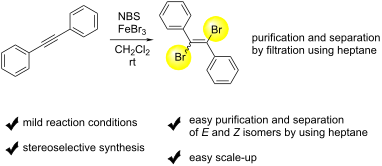
- scope and limitations by using various diarylacetylenes bearing the substituents on the benzene ring at para-position. The results were summarized in Table 2. Depending on the product's characteristics, either heptane or methanol was used for purification and separation. The reaction of 1,2-di-p



Halogenated azobenzene acrylates: from efficient solution photoswitching to stable solid-state photochromic materials
Beilstein J. Org. Chem. 2026, 22, 782–794, doi:10.3762/bjoc.22.60
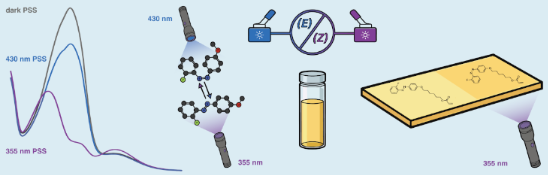
- halogenated azobenzene acrylate monomers bearing fluorine, chlorine or bromine substituents is reported. The monomers were prepared via a facile three-step synthetic route involving azo-coupling, O-alkylation and O-acylation. Apart from the steady electrochemical properties, halogen substitution proved to be


Preparation of 3-(alkylamino)imidazo[1,2-a]pyridine-2-carbaldehydes via Kornblum oxidation and unexpected ring-opening reactions of the corresponding alcohols under oxidative conditions
Beilstein J. Org. Chem. 2026, 22, 763–770, doi:10.3762/bjoc.22.58
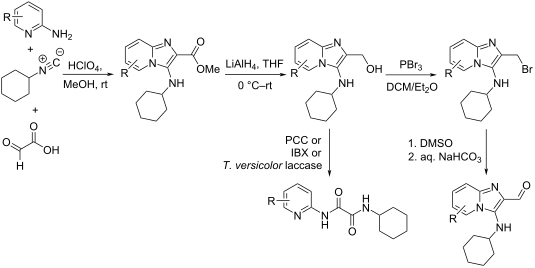
- 7 could be accessed from the corresponding 2-bromo derivative as shown in Figure 2 (top). Halogen substituents or a cyano group were planned at positions 5 and 6 of the imidazo[1,2-a]pyridine ring and the ortho-chloroaniline moiety was envisaged to be appended directly to position 2 because our
- 60% yield (Scheme 2). Interestingly, there appears to be only one report, in the patent literature [27], of a compound (15) containing both 2-carboxylic acid and 3-alkylamino substituents (Figure 3). The unsubstituted 3-aminoimidazo[1,2-a]pyridine-2-carboxylic acid (16) has also been reported [28


Synthesis and biological evaluation of new brassinosteroid analogs with C-22 benzoate function
Beilstein J. Org. Chem. 2026, 22, 753–762, doi:10.3762/bjoc.22.57
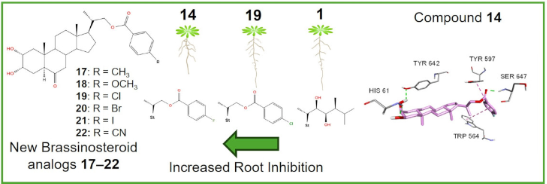
- characterization of new brassinosteroid (BR) analogs, in which substituents with different electronegativities and molecular sizes have been attached to a C-22 benzoate function, are described. The biological activities of all new compounds were evaluated by using the rice lamina inclination test (RLIT) and
- ]. Based on the preliminary and promissing results obtained for castasterone analogs 13 and 14, it was decided to expand this study by considering the 2α,3α diol function in ring A, a ketone function at C-6, and C-22 benzoate-function with various substituents, of different electronegativities and sizes in
- atom, are as active as the positive control 1, whereas compound 17, with a p-methyl group, is more active than 1. On the other hand, analogs 18, 20, 21 and 22, which are substituted with OCH3, Br, I and CN groups, are half as active as 12. These results indicate that small substituents with no


Synthesis of heterocycles based on azomethine ylides from α-amino acids (or amines) and carbonyl compounds
Beilstein J. Org. Chem. 2026, 22, 705–741, doi:10.3762/bjoc.22.55
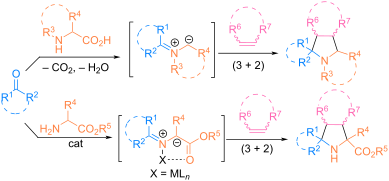
- electron-withdrawing substituents have been widely studied; acrylates, vinyl sulfones, maleimides, β-nitrostyrenes, fumarates, and maleates have been used most frequently [28][29]. Reactions of aromatic and heteroaromatic olefins containing both electron-donating and electron-withdrawing groups in the
- stronger bonds with the ligands [42]. In [49][50], a variety of dipolarophiles 22–24 containing electron-withdrawing substituents was demonstrated, which can participate in the 1,3-dipolar cycloaddition catalyzed by chiral copper complexes Cu(I) or Cu(II) with arylimines of glycine or alanine methyl esters
- the possibility of using racemic cyclopentene-1,3-diones 28 as dipolarophiles in 1,3-dipolar cycloaddition reactions using the chiral complex Ag(I)/TF-BiphamPhos (L3) (Scheme 14). The authors used various substituted diones 28 containing aromatic and aliphatic substituents, for example, silyloxy


Photoorganocatalytic trifluoromethylation of (het)arenes in green conditions
Beilstein J. Org. Chem. 2026, 22, 662–671, doi:10.3762/bjoc.22.50
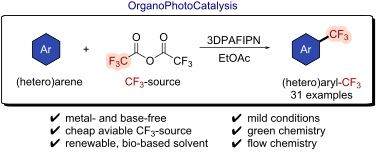
- that CF3· behaves as an electrophilic radical [31][32], it was expected to react preferentially with electron-rich substrates compared to electron-neutral or electron-deficient ones. To probe this trend, trifluoromethylation was examined with substrates bearing donor substituents (methoxyarenes) and
- the meta-isomer formed in noticeably higher proportion than the para-isomer. The introduction of a methyl substituent into the anisole framework significantly altered the reactivity, with a strong dependence on the relative position of the substituents. For the meta-substituted substrate, the yield of
- ortho- or para-position, only moderate yields were obtained (50% and 45% for 15 and 16, respectively). When both methyl substituents occupied meta-positions, the yield increased markedly to 92% for 17, with 10% of the product corresponding to the doubly trifluoromethylated derivative. Interestingly




Hydrogen production from formic acid catalyzed by NHC–Cu complexes
Beilstein J. Org. Chem. 2026, 22, 620–627, doi:10.3762/bjoc.22.48
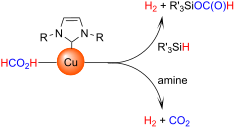
- observed by using complexes bearing an NHC ligand with N-alkyl substituents or a saturated backbone (Table 1, entries 5 and 6). Finally, the effect of the bulkiness of the ligand was investigated. In the presence of [Cu(Cl)(IPr*)] (5) bearing a sterically demanding NHC, 36% conversion was achieved while



Computational prediction of C–H hydricities and their use in predicting the regioselectivity of electron-rich C–H functionalisation reactions
Beilstein J. Org. Chem. 2026, 22, 603–610, doi:10.3762/bjoc.22.46
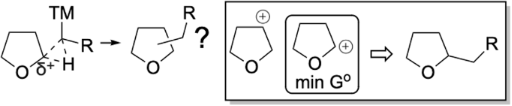
- out, “the reacting C–H bond tends to be electron-rich or adorned with substituents that can stabilise the formation of a developing positive charge.” It is thus possible that predicted hydricities could help predict the regioselectivity of such reactions. However, hydricity and BDEs both follow the


![[Graphic 6]](/bjoc/content/inline/1860-5397-22-46-i8.svg?max-width=637&scale=1.18182)


Regioselective approach to 5-arylsulfonylisoxazoles and their antimicrobial activity
Beilstein J. Org. Chem. 2026, 22, 592–602, doi:10.3762/bjoc.22.45
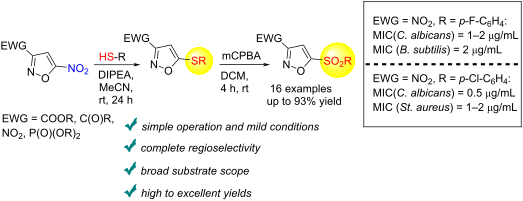
- nucleophilic aromatic substitution with thiophenols followed by oxidation with m-chloroperbenzoic acid (mCPBA). The scope of the reactions was explored, demonstrating high yields across a variety of functional groups and substituents. Optimized conditions enabled selective oxidation of thioaryl groups to
- 4-unsubstituted isoxazoles with various aryl substituents in position 3 [24][25] (approach B). One example describes the Ru-catalyzed reaction of nitrile oxide with alkynyl sulfone providing 5-sulfonylisoxazole with high regioselectivity [26] (approach C). Despite the widespread application of
- the SNAr reactions with 3-nitro- and 3-methoxycarbonyl-substituted 5-nitroisoxazoles 1a and 1g. The obtained results revealed that the nature of the substituents in the isoxazole cycle as well as in the aromatic ring of thiophenols does not have a noticeable influence on the reaction yields. The SNAr





