


Search results
Search for "TBAI" in Full Text gives 52 result(s) in Beilstein Journal of Organic Chemistry.
Hypervalent iodine compounds for anti-Markovnikov-type iodo-oxyimidation of vinylarenes
- Igor B. Krylov,
- Stanislav A. Paveliev,
- Mikhail A. Syroeshkin,
- Alexander A. Korlyukov,
- Pavel V. Dorovatovskii,
- Yan V. Zubavichus,
- Gennady I. Nikishin and
- Alexander O. Terent’ev
Beilstein J. Org. Chem. 2018, 14, 2146–2155, doi:10.3762/bjoc.14.188
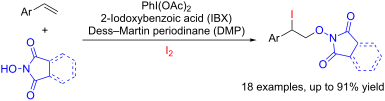
- %) was obtained using PhI(OAc)2 (Table 1, entry 2). Other iodine-based oxidants, such as PhI(OCOCF3)2 (Table 1, entry 10, yield 31%), IBX (Table 1, entries 11 and 12, yield 32–54%), DMP (Table 1, entries 13–14, yield 52%), showed less efficacy in this process. Peroxide oxidants, such as TBHP, TBAI/TBHP
- ). Prolongation of the reaction time to 24 h led to a slight decrease in the yield of 3aa (Table 1, entry 3) due to its instability under the reaction conditions. The possibility of using iodide salts (NaI and TBAI) was shown in Entries 8 and 9, however, the yield of 3aa in that cases is lower than in the case of

Graphical Abstract

Scheme 1: Difunctionalization of double C=C bond with the formation of C–O and C–I bonds.

Scheme 2: Iodo-oxyimidation of styrenes 1a–k with preparation of products 3aa–ka, 3ab–db, 3fb, 3hb, and 3kb.
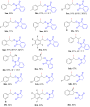
Figure 1: Scope of the iodo-oxyimidation of vinylarenes with I2/PhI(OAc)2 system. Reaction conditions: vinyla...

Figure 2: Molecular structure of 3ca. Atoms are presented as anisotropic displacement parameters (ADP) ellips...

Scheme 3: The proposed mechanism of iodo-oxyimidation of styrene (1a) using the NHPI/I2/PhI(OAc)2 system with...

Figure 3: CV curves of styrene (1a, purple), NHPI (2a, red), I2 (blue) and PhI(OAc)2 (green) in 0.1 M n-Bu4NBF...

Scheme 4: Gram-scale synthesis of compound 3aa.

Scheme 5: Synthetic utility of the iodo-oxyimides 3aa and 3ab.
Iodine(III)-mediated halogenations of acyclic monoterpenoids
- Laure Peilleron,
- Tatyana D. Grayfer,
- Joëlle Dubois,
- Robert H. Dodd and
- Kevin Cariou
Beilstein J. Org. Chem. 2018, 14, 1103–1111, doi:10.3762/bjoc.14.96
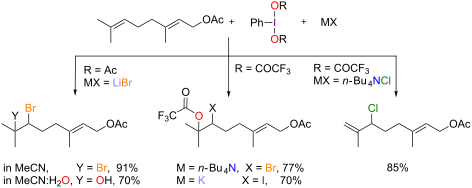
- 5a was obtained in 70% yield (Table 1, entry 7). Interestingly, no traces of the diiodo compound were observed even if the hypervalent iodine(III) reagent was slowly added. Transposing the previously optimized bromo(trifluoro)acetoxylation conditions but using TBAI instead of KI did not improve the
- yield and reaction times and excess reagents were required to reach completion (Table 1, entry 8). Using directly 1.5 equivalents of both PIFA and TBAI did not suffice to improve the yield, whether in acetonitrile or in dichloromethane (Table 1, entries 9 and 10). When chlorination was attempted with a

Graphical Abstract

Figure 1: Halogenated terpenoids from natural sources.

Scheme 1: Previously developed bromo-functionalizations of polyprenoids using iodine(III) reagents.

Figure 2: Selected monoterpenoids used in this study.

Scheme 2: Dibromination of acyclic monoterpenoids.

Scheme 3: Bromo(trifluoro)acetoxylation of acyclic monoterpenoids.

Scheme 4: Bromohydroxylation of acyclic monoterpenoids.

Scheme 5: Iodo(trifluoro)acetoxylation of acyclic monoterpenoids.

Scheme 6: Chlorination of acyclic monoterpenoids.

Scheme 7: General mechanism proposal for the formation of 2–6 and control experiments.
Bromide-assisted chemoselective Heck reaction of 3-bromoindazoles under high-speed ball-milling conditions: synthesis of axitinib
- Jingbo Yu,
- Zikun Hong,
- Xinjie Yang,
- Yu Jiang,
- Zhijiang Jiang and
- Weike Su
Beilstein J. Org. Chem. 2018, 14, 786–795, doi:10.3762/bjoc.14.66
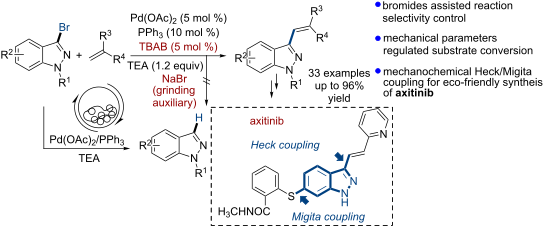
- . Currently, the Heck reaction is usually carried out by adding an excess of phase-transfer catalyst such as tetrabutylammonium bromide (TBAB) or tetrabutylammonium iodide (TBAI) to increase the reaction yield under both solvent-heating [19][20][21][22][23] and solvent-free conditions [24][25][26][27
- , TBAI or tetrabutylammonium chloride (TBAC) did not provide a satisfactory result (Table S1, entries 3 and 4). It was interesting to find that using bromide salts (LiBr, NaBr, KBr and TBAB) as additives, not only the conversion rate of 1a was increased, but also the side-product 4a was suppressed

Graphical Abstract

Scheme 1: Representative pharmaceutically useful indazoles.

Scheme 2: Model Heck reaction of 3-bromo-N-methyl-1H-indazole (1a) and n-butyl acrylate (2a). (173 stainless-...

Figure 1: Investigation of additives in the Heck reaction: 1a (1.5 mmol), 2a (2.25 mmol), Pd(OAc)2 (5 mol %),...

Scheme 3: The control experiments. aTEA (1.8 mmol), silica gel (5.0 g), bPd(OAc)2 (5 mol %), PPh3 (10 mol %),...

Scheme 4: Plausible reaction pathway.

Figure 2: Influence of milling time and rotation speed on the Heck reaction: 1a (1.5 mmol), 2a (2.25 mmol), P...

Figure 3: Influence of the milling ball filling degree with different size on the Heck reaction: 1a (1.5 mmol...
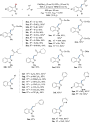
Scheme 5: Examination of the substrate scope. Reaction conditions: 1 (1.5 mmol), 2 (2.25 mmol), Pd(OAc)2 (5 m...

Scheme 6: Synthesis of axitinib by mechanochemical Heck–Migita coupling. Reagents and conditions: (i) NBS, Na...
One-pot preparation of 4-aryl-3-bromocoumarins from 4-aryl-2-propynoic acids with diaryliodonium salts, TBAB, and Na2S2O8
- Teppei Sasaki,
- Katsuhiko Moriyama and
- Hideo Togo
Beilstein J. Org. Chem. 2018, 14, 345–353, doi:10.3762/bjoc.14.22
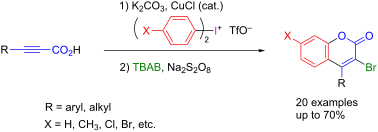
- mixture of 1,2-dichloroethane (DCE) and water at 90 °C was carried out to give 3-bromo-4-phenylcoumarin (3Aa) in 68% yield (Table 2, entry 7). When the iodocyclization of phenyl ester 2Aa with tetrabutylammonium iodide (TBAI, 2.0 equiv)/Na2S2O8 (1.5 equiv) was carried out, the yield of iodocyclization

Graphical Abstract

Scheme 1: One-pot preparation of 4-aryl-3-bromocoumarins 3 from 3-aryl-2-propynoic acids 1 with diphenyliodon...

Scheme 2: One-pot preparation of 3-bromo-4-phenylcoumarins 3a from 3-phenyl-2-propynoic acid (1a) with daryli...

Scheme 3: Derivatization of 3-bromo-4-phenylcoumarin.
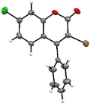
Figure 1: ORTEP of 3-bromo-7-chloro-4-phenylcoumarin (3Da).

Scheme 4: Possible reaction pathway.
5-Aminopyrazole as precursor in design and synthesis of fused pyrazoloazines
- Ranjana Aggarwal and
- Suresh Kumar
Beilstein J. Org. Chem. 2018, 14, 203–242, doi:10.3762/bjoc.14.15
- in situ intramolecular cyclization of 5-aminopyrazole-4-caroxylate 35 with β-haloaldehydes 36 via the corresponding imine derivative was carried out in presence of Pd(PPh3)2Cl2 (1.0 mol %), Cu2O (1.0 mol %), 1,10-phenanthroline (2.0 mol %), TBAI (6 mol %), by Batra et al. [50] to generate the

Graphical Abstract

Figure 1: Selected examples of drugs with fused pyrazole rings.

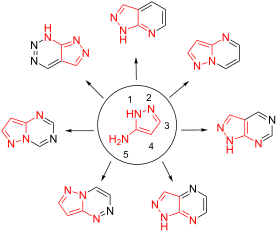
Figure 2: Typical structures of some fused pyrazoloazines from 5-aminopyrazoles.

Scheme 1: Regiospecific synthesis of 4 and 6-trifluoromethyl-1H-pyrazolo[3,4-b]pyridines.

Scheme 2: Synthesis of pyrazolo[3,4-b]pyridine-6-carboxylates.

Scheme 3: Synthesis of 1,4,6-triaryl-1H-pyrazolo[3,4-b]pyridines with ionic liquid .

Scheme 4: Synthesis of coumarin-based isomeric tetracyclic pyrazolo[3,4-b]pyridines.

Scheme 5: Synthesis of 6-substituted pyrazolo[3,4-b]pyridines under Heck conditions.

Scheme 6: Microwave-assisted palladium-catalyzed synthesis of pyrazolo[3,4-b]pyridines.

Scheme 7: Acid-catalyzed synthesis of pyrazolo[3,4-b]pyridines via enaminones.

Scheme 8: Synthesis of pyrazolo[3,4-b]pyridines via aza-Diels–Alder reaction.

Scheme 9: Synthesis of macrocyclane fused pyrazolo[3,4-b]pyridine derivatives.

Scheme 10: Three-component synthesis of 4,7-dihydro-1H-pyrazolo[3,4-b]pyridine derivatives.

Scheme 11: Ultrasonicated synthesis of spiro[indoline-3,4'-pyrazolo[3,4-b]pyridine]-2,6'(1'H)-diones.

Scheme 12: Synthesis of spiro[indoline-3,4'-pyrazolo[3,4-b]pyridine] derivatives under conventional heating co...

Scheme 13: Nanoparticle-catalyzed synthesis of pyrazolo[3,4-b]pyridine-spiroindolinones.

Scheme 14: Microwave-assisted multicomponent synthesis of spiropyrazolo[3,4-b]pyridines.

Scheme 15: Unexpected synthesis of naphthoic acid-substituted pyrazolo[3,4-b]pyridines.

Scheme 16: Multicomponent synthesis of variously substituted pyrazolo[3,4-b]pyridine derivatives.

Scheme 17: Three-component synthesis of 4,7-dihydropyrazolo[3,4-b]pyridines and pyrazolo[3,4-b]pyridines.

Scheme 18: Synthesis of pyrazolo[3,4-b]pyridine-5-spirocycloalkanediones.

Scheme 19: Ultrasound-mediated three-component synthesis of pyrazolo[3,4-b]pyridines.

Scheme 20: Multicomponent synthesis of 4-aryl-3-methyl-1-phenyl-4,6,8,9-tetrahydropyrazolo [3,4-b]thiopyrano[4...

Scheme 21: Synthesis of 2,3-dihydrochromeno[4,3-d]pyrazolo[3,4-b]pyridine-1,6-diones.

Scheme 22: FeCl3-catalyzed synthesis of o-hydroxyphenylpyrazolo[3,4-b]pyridine derivatives.

Scheme 23: Ionic liquid-mediated synthesis of pyrazolo[3,4-b]pyridines.

Scheme 24: Microwave-assisted synthesis of pyrazolo[3,4-b]pyridines.

Scheme 25: Multicomponent synthesis of pyrazolo[3,4-b]pyridine-5-carbonitriles.

Scheme 26: Unusual domino synthesis of 4,7-dihydropyrazolo[3,4-b]pyridine-5-nitriles.

Scheme 27: Synthesis of 4,5,6,7-tetrahydro-4H-pyrazolo[3,4-b]pyridines under conventional heating and ultrasou...

Scheme 28: L-Proline-catalyzed synthesis of of pyrazolo[3,4-b]pyridine.

Scheme 29: Microwave-assisted synthesis of 5-aminoarylpyrazolo[3,4-b]pyridines.

Scheme 30: Microwave-assisted multi-component synthesis of pyrazolo[3,4-e]indolizines.

Scheme 31: Synthesis of fluoropropynyl and fluoroalkyl substituted pyrazolo[1,5-a]pyrimidine.

Scheme 32: Acid-catalyzed synthesis of pyrazolo[1,5-a]pyrimidine derivatives.

Scheme 33: Chemoselective and regiospecific synthesis of 2-(3-methylpyrazol-1’-yl)-5-methylpyrazolo[1,5-a]pyri...

Scheme 34: Regioselective synthesis of 7-trifluoromethylpyrazolo[1,5-a]pyrimidines.

Scheme 35: Microwave-assisted synthesis of 7-trifluoromethylpyrazolo[1,5-a]pyrimidine carboxylates.

Scheme 36: Microwave and ultrasound-assisted synthesis of 7-trifluoromethylpyrazolo[1,5-a]pyrimidines.

Scheme 37: Base-catalyzed unprecedented synthesis of pyrazolo[1,5-a]pyrimidines via C–C bond cleavage.

Scheme 38: Synthesis of aminobenzothiazole/piperazine linked pyrazolo[1,5-a]pyrimidines.

Scheme 39: Synthesis of aminoalkylpyrazolo[1,5-a]pyrimidine-7-amines.

Scheme 40: Synthesis of pyrazolo[1,5-a]pyrimidines from condensation of 5-aminopyrazole 126 and ethyl acetoace...

Scheme 41: Synthesis of 7-aminopyrazolo[1,5-a]pyrimidines.

Scheme 42: Unexpected synthesis of 7-aminopyrazolo[1,5-a]pyrimidines under solvent free and solvent-mediated c...

Scheme 43: Synthesis of N-(4-aminophenyl)-7-aryloxypyrazolo[1,5-a]pyrimidin-5-amines.

Scheme 44: Base-catalyzed synthesis of 5,7-diarylpyrazolo[1,5-a]pyrimidines.

Scheme 45: Synthesis of 6,7-dihydropyrazolo[1,5-a]pyrimidines in PEG-400.

Scheme 46: Synthesis of 7-heteroarylpyrazolo[1,5-a]pyrimidine-3-carboxamides.

Scheme 47: Synthesis of 7-heteroarylpyrazolo[1,5-a]pyrimidine derivatives under conventional heating and micro...

Scheme 48: Synthesis of N-aroylpyrazolo[1,5-a]pyrimidine-5-amines.

Scheme 49: Regioselective synthesis of ethyl pyrazolo[1,5-a]pyrimidine-7-carboxylate.

Scheme 50: Sodium methoxide-catalyzed synthesis of 3-cyano-6,7-diarylpyrazolo[1,5-a]pyrimidines.

Scheme 51: Synthesis of various pyrazolo[3,4-d]pyrimidine derivatives.

Scheme 52: Synthesis of hydrazinopyrazolo[3,4-d]pyrimidine derivatives.

Scheme 53: Synthesis of N-arylidinepyrazolo[3,4-d]pyrimidin-5-amines.

Scheme 54: Synthesis of pyrazolo[3,4-d]pyrimidinyl-4-amines.

Scheme 55: Iodine-catalyzed synthesis of pyrazolo[3,4-d]pyrimidinones.

Scheme 56: Synthesis of ethyl 6-amino-2H-pyrazolo[3,4-d]pyrimidine-4-carboxylate.

Scheme 57: Synthesis of 4-substituted-(3,6-dihydropyran-4-yl)-1H-pyrazolo[3,4-d]pyrimidines.

Scheme 58: Synthesis of 1-(2,4-dichlorophenyl)pyrazolo[3,4-d]pyrimidin-4-yl carboxamides.

Scheme 59: Synthesis of 5-(1,3,4-thidiazol-2-yl)pyrazolo[3,4-d]pyrimidine.

Scheme 60: One pot POCl3-catalyzed synthesis of 1-arylpyrazolo[3,4-d]pyrimidin-4-ones.

Scheme 61: Synthesis of 4-amino-N1,C3-dialkylpyrazolo[3,4-d]pyrimidines under Suzuki conditions.

Scheme 62: Microwave-assisted synthesis of pyrazolo[3,4-b]pyrazines.

Scheme 63: Synthesis and derivatization of pyrazolo[3,4-b]pyrazine-5-carbonitriles.

Scheme 64: Synthesis of 2-thioxo-pyrazolo[1,5-a][1,3,5]triazin-4-ones.

Scheme 65: Synthesis of 2,3-dihydropyrazolo[1,5-a][1,3,5]triazin-4(1H)-one.

Scheme 66: Synthesis of pyrazolo[1,5-a][1,3,5]triazine-8-carboxylic acid ethyl ester.

Scheme 67: Microwave-assisted synthesis of 4,7-dihetarylpyrazolo[1,5-a][1,3,5]triazines.

Scheme 68: Alternative synthetic route to 4,7-diheteroarylpyrazolo[1,5-a][1,3,5]triazines.

Scheme 69: Synthesis of 4-aryl-2-ethylthio-7-methylpyrazolo[1,5-a][1,3,5]triazines.

Scheme 70: Microwave-assisted synthesis of 4-aminopyrazolo[1,5-a][1,3,5]triazine.

Scheme 71: Synthesis of pyrazolo[3,4-d][1,2,3]triazines from pyrazol-5-yl diazonium salts.

Scheme 72: Synthesis of 2,5-dihydropyrazolo[3,4-e][1,2,4]triazines.

Scheme 73: Synthesis of pyrazolo[5,1-c][1,2,4]triazines via diazopyrazolylenaminones.

Scheme 74: Synthesis of pyrazolo[5,1-c][1,2,4]triazines in presence of sodium acetate.

Scheme 75: Synthesis of various 7-diazopyrazolo[5,1-c][1,2,4]triazine derivatives.

Scheme 76: One pot synthesis of pyrazolo[5,1-c][1,2,4]triazines.

Scheme 77: Synthesis of 4-amino-3,7,8-trinitropyrazolo-[5,1-c][1,2,4]triazines.

Scheme 78: Synthesis of tricyclic pyrazolo[5,1-c][1,2,4]triazines by azocoupling reaction.
CF3SO2X (X = Na, Cl) as reagents for trifluoromethylation, trifluoromethylsulfenyl-, -sulfinyl- and -sulfonylation. Part 1: Use of CF3SO2Na
- Hélène Guyon,
- Hélène Chachignon and
- Dominique Cahard
Beilstein J. Org. Chem. 2017, 13, 2764–2799, doi:10.3762/bjoc.13.272
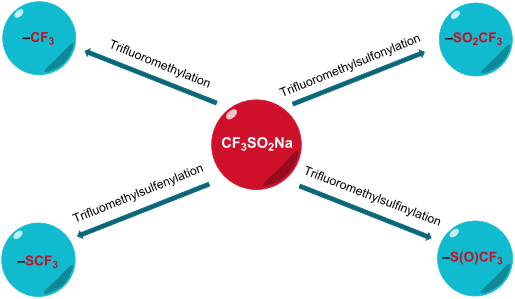

Graphical Abstract

Scheme 1: Trifluoromethylation of enol acetates by Langlois.

Scheme 2: Trifluoromethylation of (het)aryl enol acetates.

Scheme 3: Mechanism for the trifluoromethylation of enol acetates.

Scheme 4: Oxidative trifluoromethylation of unactivated olefins and mechanistic pathway.
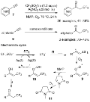
Scheme 5: Oxidative trifluoromethylation of acetylenic substrates.

Scheme 6: Metal free trifluoromethylation of styrenes.

Scheme 7: Synthesis of α-trifluoromethylated ketones by oxytrifluoromethylation of heteroatom-functionalised ...
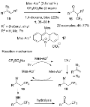
Scheme 8: Catalysed photoredox trifluoromethylation of vinyl azides.

Scheme 9: Oxidative difunctionalisation of alkenyl MIDA boronates.

Scheme 10: Synthesis of β-trifluoromethyl ketones from cyclopropanols.

Scheme 11: Aryltrifluoromethylation of allylic alcohols.

Scheme 12: Cascade multicomponent synthesis of nitrogen heterocycles via azotrifluoromethylation of alkenes.

Scheme 13: Photocatalytic azotrifluoromethylation of alkenes with aryldiazonium salts and CF3SO2Na.

Scheme 14: Copper-promoted intramolecular aminotrifluoromethylation of alkenes with CF3SO2Na.

Scheme 15: Oxytrifluoromethylation of alkenes with CF3SO2Na and hydroxamic acid.

Scheme 16: Manganese-catalysed oxytrifluoromethylation of styrene derivatives.

Scheme 17: Oxytrifluoromethylation of alkenes with NMP/O2 and CF3SO2Na.

Scheme 18: Intramolecular oxytrifluoromethylation of alkenes.

Scheme 19: Hydrotrifluoromethylation of styrenyl alkenes and unactivated aliphatic alkenes.

Scheme 20: Hydrotrifluoromethylation of electron-deficient alkenes.

Scheme 21: Hydrotrifluoromethylation of alkenes by iridium photoredox catalysis.

Scheme 22: Iodo- and bromotrifluoromethylation of alkenes by CF3SO2Na/I2O5 or CF3SO2Na / NaBrO3.

Scheme 23: N-methyl-9-mesityl acridinium and visible-light-induced chloro-, bromo- and SCF3 trifluoromethylati...

Scheme 24: Carbotrifluoromethylation of N-arylacrylamides with CF3SO2Na / TBHP by Lipshutz.

Scheme 25: Carbotrifluoromethylation of N-arylacrylamides with CF3SO2Na/TBHP reported by Lei.

Scheme 26: Carbotrifluoromethylation of N-arylacrylamides with CF3SO2Na/(NH4)2S2O8.

Scheme 27: Metal-free carbotrifluoromethylation of N-arylacrylamides with CF3SO2Na/K2S2O8 reported by Wang.

Scheme 28: Metal-free carbotrifluoromethylation of N-arylacrylamides with CF3SO2Na/PIDA reported by Fu.

Scheme 29: Metal-free cascade trifluoromethylation/cyclisation of N-arylmethacrylamides (a) and enynes (b) wit...

Scheme 30: Trifluoromethylation/cyclisation of N-arylcinnamamides: Synthesis of 3,4-disubstituted dihydroquino...

Scheme 31: Trifluoromethylation/cyclisation of aromatic-containing unsaturated ketones.

Scheme 32: Chemo- and regioselective cascade trifluoromethylation/heteroaryl ipso-migration of unactivated alk...

Scheme 33: Copper-mediated 1,2-bis(trifluoromethylation) of alkenes.

Scheme 34: Trifluoromethylation of aromatics with CF3SO2Na reported by Langlois.

Scheme 35: Baran’s oxidative C–H trifluoromethylation of heterocycles.

Scheme 36: Trifluoromethylation of acetanilides and anilines.

Scheme 37: Trifluoromethylation of heterocycles in water.

Scheme 38: Trifluoromethylation of coumarins in a continuous-flow reactor.

Scheme 39: Oxidative trifluoromethylation of coumarins, quinolines and pyrimidinones.

Scheme 40: Oxidative trifluoromethylation of pyrimidinones and pyridinones.

Scheme 41: Phosphovanadomolybdic acid-catalysed direct C−H trifluoromethylation.

Scheme 42: Oxidative trifluoromethylation of imidazopyridines and imidazoheterocycles.

Scheme 43: Oxidative trifluoromethylation of imidazoheterocycles and imidazoles in ionic liquid/water.
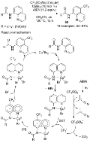
Scheme 44: Oxidative trifluoromethylation of 8-aminoquinolines.

Scheme 45: Oxidative trifluoromethylation of various 8-aminoquinolines using the supported catalyst CS@Cu(OAc)2...

Scheme 46: Oxidative trifluoromethylation of the naphthylamide 70.

Scheme 47: Oxidative trifluoromethylation of various arenes in the presence of CF3SO2Na and sodium persulfate.
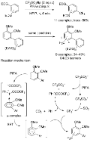
Scheme 48: Trifluoromethylation of electron-rich arenes and unsymmetrical biaryls with CF3SO2Na in the presenc...

Figure 1: Trifluoromethylated coumarin and flavone.

Scheme 49: Metal-free trifluoromethylation catalysed by a photoredox organocatalyst.

Scheme 50: Quinone-mediated trifluoromethylation of arenes and heteroarenes.

Scheme 51: Metal- and oxidant-free photochemical trifluoromethylation of arenes.

Scheme 52: Copper-mediated trifluoromethylation of arenediazonium tetrafluoroborates.

Scheme 53: Oxidative trifluoromethylation of aryl- and heteroarylboronic acids.
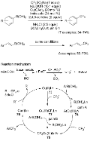
Scheme 54: Oxidative trifluoromethylation of aryl- and vinylboronic acids.

Scheme 55: Oxidative trifluoromethylation of unsaturated potassium organotrifluoroborates.

Scheme 56: Oxidative trifluoromethylation of (hetero)aryl- and vinyltrifluoroborates.

Scheme 57: Copper−catalysed decarboxylative trifluoromethylation of cinnamic acids.

Scheme 58: Iron-mediated decarboxylative trifluoromethylation of α,β-unsaturated carboxylic acids.

Scheme 59: Cu/Ag-catalysed decarboxylative trifluoromethylation of cinnamic acids.

Scheme 60: I2O5-Promoted decarboxylative trifluoromethylation of cinnamic acids.

Scheme 61: Silver(I)-catalysed denitrative trifluoromethylation of β-nitrostyrenes.
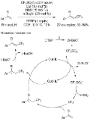
Scheme 62: Copper-catalysed direct trifluoromethylation of styrene derivatives.
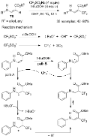
Scheme 63: Transition-metal-free synthesis of β-trifluoromethylated enamines.

Scheme 64: I2O5-mediated iodotrifluoromethylation of alkynes.

Scheme 65: Silver-catalysed tandem trifluoromethylation/cyclisation of aryl isonitriles.

Scheme 66: Photoredox trifluoromethylation of 2-isocyanobiphenyls.

Scheme 67: Trifluoromethylation of potassium alkynyltrifluoroborates with CF3SO2Na.
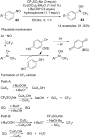
Scheme 68: N-trifluoromethylation of nitrosoarenes with CF3SO2Na (SQ: semiquinone).

Scheme 69: Trifluoromethylation of disulfides with CF3SO2Na.

Scheme 70: Trifluoromethylation of thiols with CF3SO2Na/I2O5.
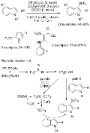
Scheme 71: Electrophilic trifluoromethylsulfenylation by means of CF3SO2Na/(EtO)2P(O)H/CuCl/DMSO.

Scheme 72: Electrophilic trifluoromethylsulfenylation by means of CF3SO2Na/(EtO)2P(O)H/TMSCl.
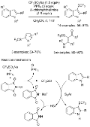
Scheme 73: Electrophilic trifluoromethylsulfenylation by means of CF3SO2Na/PPh3/N-chlorophthalimide.

Scheme 74: Electrophilic trifluoromethylsulfenylation by means of CF3SO2Na/PCl3.

Scheme 75: Electrophilic trifluoromethylsulfenylation by means of CF3SO2Na/PCl3.

Scheme 76: Trifluoromethylsulfenylation of aryl iodides with in situ generated CuSCF3 (DMI: 1,3-dimethyl-2-imi...

Scheme 77: Pioneering trifluoromethylsulfinylation of N, O, and C-nucleophiles.

Scheme 78: Trifluoromethylsulfinylation of (1R,2S)-ephedrine (Im: imidazole; DIEA: N,N-diisopropylethylamine).

Scheme 79: Trifluoromethylsulfinylation of substituted benzenes with CF3SO2Na/CF3SO3H.

Scheme 80: Trifluoromethylsulfinylation of indoles with CF3SO2Na/P(O)Cl3.

Scheme 81: Trifluoromethylsulfinylation of indoles with CF3SO2Na/PCl3.

Scheme 82: Formation of triflones from benzyl bromides (DMA: dimethylacetamide).

Scheme 83: Formation of α-trifluoromethylsulfonyl ketones, esters, and amides.

Scheme 84: Allylic trifluoromethanesulfonylation of aromatic allylic alcohols.

Scheme 85: Copper-catalysed couplings of aryl iodonium salts with CF3SO2Na.

Scheme 86: Palladium-catalysed trifluoromethanesulfonylation of aryl triflates and chlorides with CF3SO2Na.

Scheme 87: Copper-catalysed coupling of arenediazonium tetrafluoroborates with CF3SO2Na.

Scheme 88: Synthesis of phenyltriflone via coupling of benzyne with CF3SO2Na.

Scheme 89: Synthesis of 1-trifluoromethanesulfonylcyclopentenes from 1-alkynyl-λ3-bromanes and CF3SO2Na.

Scheme 90: One-pot synthesis of functionalised vinyl triflones.

Scheme 91: Regioselective synthesis of vinyltriflones from styrenes.

Scheme 92: Trifluoromethanesulfonylation of alkynyl(phenyl) iodonium tosylates by CF3SO2Na.

Scheme 93: Synthesis of thio- and selenotrifluoromethanesulfonates.
Synthesis of ergostane-type brassinosteroids with modifications in ring A
- Vladimir N. Zhabinskii,
- Darya A. Osiyuk,
- Yuri V. Ermolovich,
- Natalia M. Chaschina,
- Tatsiana S. Dalidovich,
- Miroslav Strnad and
- Vladimir A. Khripach
Beilstein J. Org. Chem. 2017, 13, 2326–2331, doi:10.3762/bjoc.13.229
- , NaI, DMF, 150 °C (83%); (c) KOH, MeOH, 65 °C (96%). (a) MCPBA, CH2Cl2, 20 °C (90%); (b) NBS, DME, 20 °C; (c) KOH, MeOH, 20 °C (85% over 2 steps). (a) BnBr, DMAP, Bu2SnO, TBAI, DIPEA, 110 °C (94%); (b) PCC, CH2Cl2, 20 °C (84%); (c) H2, Pd/C, 20 °C (99%); (d) NaBH4, EtOH, −25 °C (61%); (e) KOH, MeOH, 65
- °C (96%). (a) TsCl, DMAP, Py, 30 °C (91%); (b) Py, 115 °C (65%); (c) KOH, MeOH, 20 °C (52%). (a) NaBH4, EtOH, −25 °C (49%); (b) KOH, MeOH, 65 °C (85%). (a) Anisaldehyde, TMSCl, MeOH, 20 °C; (b) BnBr, DMAP, Bu2SnO, TBAI, DIPEA, 110 °C (86% over 2 steps); (c) PCC, CH2Cl2, 20 °C (81%); (d) H2, Pd/C, 20

Graphical Abstract

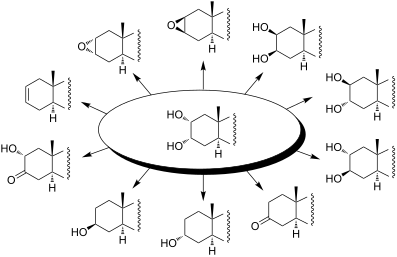
Scheme 1: Structural features of epicastasterone (1), epibrassinolide (2) and A-ring units 3–12 of BS biosynt...

Scheme 2: (a) Ac2O, Py, DMAP, 60 °C; (b) K2CO3, MeOH, 20 °C (97% over 2 steps); (c) TCDI, DMAP, THF, 65 °C (7...

Scheme 3: (a) MsCl, Py, 20 °C (95%); (b) Zn, NaI, DMF, 150 °C (83%); (c) KOH, MeOH, 65 °C (96%).

Scheme 4: (a) MCPBA, CH2Cl2, 20 °C (90%); (b) NBS, DME, 20 °C; (c) KOH, MeOH, 20 °C (85% over 2 steps).

Scheme 5: (a) BnBr, DMAP, Bu2SnO, TBAI, DIPEA, 110 °C (94%); (b) PCC, CH2Cl2, 20 °C (84%); (c) H2, Pd/C, 20 °...

Scheme 6: (a) TsCl, DMAP, Py, 30 °C (91%); (b) Py, 115 °C (65%); (c) KOH, MeOH, 20 °C (52%).

Scheme 7: (a) NaBH4, EtOH, −25 °C (49%); (b) KOH, MeOH, 65 °C (85%).

Scheme 8: (a) Anisaldehyde, TMSCl, MeOH, 20 °C; (b) BnBr, DMAP, Bu2SnO, TBAI, DIPEA, 110 °C (86% over 2 steps...
Mechanochemical synthesis of small organic molecules
- Tapas Kumar Achar,
- Anima Bose and
- Prasenjit Mal
Beilstein J. Org. Chem. 2017, 13, 1907–1931, doi:10.3762/bjoc.13.186
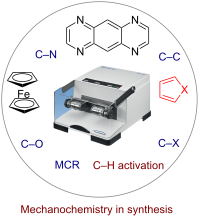
- . Mal and co-workers reported a metal free, solvent-free and room temperature synthesis of amide bonds at 62–75% yield under ball-milling (21 Hz) from aromatic aldehydes and N-chloramine in presence of 20 mol % of tetrabutylammonium iodide (TBAI) and 2.0 equiv of TBHP (Scheme 16) [79]. Aromatic

Graphical Abstract

Scheme 1: Mechanochemical aldol condensation reactions [48].

Scheme 2: Enantioselective organocatalyzed aldol reactions under mechanomilling. a) Based on binam-(S)-prolin...

Scheme 3: Mechanochemical Michael reaction [51].

Scheme 4: Mechanochemical organocatalytic asymmetric Michael reaction [52].

Scheme 5: Mechanochemical Morita–Baylis–Hillman (MBH) reaction [53].

Scheme 6: Mechanochemical Wittig reactions [55].

Scheme 7: Mechanochemical Suzuki reaction [56].

Scheme 8: Mechanochemical Suzuki–Miyaura coupling by LAG [57].

Scheme 9: Mechanochemical Heck reaction [59].

Scheme 10: a) Sonogashira coupling under milling conditions. b) The representative example of a double Sonogas...

Scheme 11: Copper-catalyzed CDC reaction under mechanomilling [67].

Scheme 12: Asymmetric alkynylation of prochiral sp3 C–H bonds via CDC [68].

Scheme 13: Fe(III)-catalyzed CDC coupling of 3-benzylindoles [69].

Scheme 14: Mechanochemical synthesis of 3-vinylindoles and β,β-diindolylpropionates [70].

Scheme 15: Mechanochemical C–N bond construction using anilines and arylboronic acids [78].

Scheme 16: Mechanochemical amidation reaction from aromatic aldehydes and N-chloramine [79].

Scheme 17: Mechanochemical CDC between benzaldehydes and benzyl amines [81].

Scheme 18: Mechanochemical protection of -NH2 and -COOH group of amino acids [85].

Scheme 19: Mechanochemical Ritter reaction [87].

Scheme 20: Mechanochemical synthesis of dialkyl carbonates [90].

Scheme 21: Mechanochemical transesterification reaction using basic Al2O3 [91].

Scheme 22: Mechanochemical carbamate synthesis [92].

Scheme 23: Mechanochemical bromination reaction using NaBr and oxone [96].

Scheme 24: Mechanochemical aryl halogenation reactions using NaX and oxone [97].

Scheme 25: Mechanochemical halogenation reaction of electron-rich arenes [88,98].

Scheme 26: Mechanochemical aryl halogenation reaction using trihaloisocyanuric acids [100].

Scheme 27: Mechanochemical fluorination reaction by LAG method [102].

Scheme 28: Mechanochemical Ugi reaction [116].

Scheme 29: Mechanochemical Passerine reaction [116].

Scheme 30: Mechanochemical synthesis of α-aminonitriles [120].

Scheme 31: Mechanochemical Hantzsch pyrrole synthesis [121].

Scheme 32: Mechanochemical Biginelli reaction by subcomponent synthesis approach [133].

Scheme 33: Mechanochemical asymmetric multicomponent reaction[134].

Scheme 34: Mechanochemical Paal–Knorr pyrrole synthesis [142].

Scheme 35: Mechanochemical synthesis of benzothiazole using ZnO nano particles [146].

Scheme 36: Mechanochemical synthesis of 1,2-di-substituted benzimidazoles [149].

Scheme 37: Mechanochemical click reaction using an alumina-supported Cu-catalyst [152].

Scheme 38: Mechanochemical click reaction using copper vial [155].

Scheme 39: Mechanochemical indole synthesis [157].

Scheme 40: Mechanochemical synthesis of chromene [158].

Scheme 41: Mechanochemical synthesis of azacenes [169].

Scheme 42: Mechanochemical oxidative C-P bond formation [170].

Scheme 43: Mechanochemical C–chalcogen bond formation [171].

Scheme 44: Solvent-free synthesis of an organometallic complex.

Scheme 45: Selective examples of mechano-synthesis of organometallic complexes. a) Halogenation reaction of Re...

Scheme 46: Mechanochemical activation of C–H bond of unsymmetrical azobenzene [178].

Scheme 47: Mechanochemical synthesis of organometallic pincer complex [179].

Scheme 48: Mechanochemical synthesis of tris(allyl)aluminum complex [180].

Scheme 49: Mechanochemical Ru-catalyzed olefin metathesis reaction [181].

Scheme 50: Rhodium(III)-catalyzed C–H bond functionalization under mechanochemical conditions [182].

Scheme 51: Mechanochemical Csp2–H bond amidation using Ir(III) catalyst [183].

Scheme 52: Mechanochemical Rh-catalyzed Csp2–X bond formation [184].

Scheme 53: Mechanochemical Pd-catalyzed C–H activation [185].

Scheme 54: Mechanochemical Csp2–H bond amidation using Rh catalyst.

Scheme 55: Mechanochemical synthesis of indoles using Rh catalyst [187].

Scheme 56: Mizoroki–Heck reaction of aminoacrylates with aryl halide in a ball-mill [58].

Scheme 57: IBX under mechanomilling conditions [8].

Scheme 58: Thiocarbamoylation of anilines; trapping of reactive aryl-N-thiocarbamoylbenzotriazole intermediate...
The chemistry and biology of mycolactones
- Matthias Gehringer and
- Karl-Heinz Altmann
Beilstein J. Org. Chem. 2017, 13, 1596–1660, doi:10.3762/bjoc.13.159

Graphical Abstract

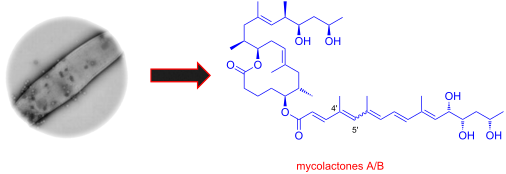
Figure 1: Initial proposal for the core macrolactone structure (left) and the established complete structure ...
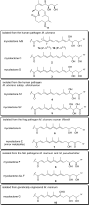
Figure 2: Mycolactone congeners and their origins.

Figure 3: Misassigned mycolactone E structure according to Small et al. [50] (11) and the correct structure (6) f...

Figure 4: Schematic illustration of Kishi’s improved mycolactone TLC detection method exploiting derivatizati...

Figure 5: Fluorescent probes derived from natural mycolactone A/B (1a,b) or its synthetic 8-desmethyl analogs...

Figure 6: Tool compounds used by Pluschke and co-workers for elucidating the molecular targets of mycolactone...

Figure 7: Synthetic strategies towards the extended mycolactone core. A) General strategies. B) Kishi’s appro...

Scheme 1: Kishi’s 1st generation approach towards the extended core structure of mycolactones. Reagents and c...

Scheme 2: Kishi’s 2nd generation approach towards the extended core structure of mycolactones. Reagents and c...

Scheme 3: Kishi’s 3rd generation approach towards the extended core structure of mycolactones. Reagents and c...

Scheme 4: Negishi’s synthesis of the extended core structure of mycolactones. Reagents and conditions: a) (i) ...

Scheme 5: Burkart’s (incomplete) 1st generation approach towards the extended core structure of mycolactones....
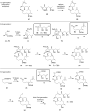
Scheme 6: Burkart’s (incomplete) 1st, 2nd and 3rd generation approach towards the extended mycolactone core s...

Scheme 7: Altmann’s synthesis of alkyl iodide 91. Reagents and conditions: a) (i) PMB-trichloroacetimidate, T...

Scheme 8: Final steps of Altmann’s synthesis of the extended core structure of mycolactones. Reagents and con...

Scheme 9: Basic principles of the Aggarwal lithiation–borylation homologation process [185,186].

Scheme 10: Aggarwal’s synthesis of the C1–C11 fragment of the mycolactone core. Reagents and conditions: a) Cl...

Scheme 11: Aggarwal’s synthesis of the linear C1–C20 fragment of the mycolactone core. Reagents and conditions...

Figure 8: Synthetic strategies towards the mycolactone A/B lower side chain.

Scheme 12: Gurjar and Cherian’s synthesis of the C1’–C8’ fragment of the mycolactone A/B pentaenoate side chai...

Scheme 13: Gurjar and Cherian’s synthesis of the benzyl-protected mycolactone A/B pentaenoate side chain. Reag...

Scheme 14: Kishi’s synthesis of model compounds for elucidating the stereochemistry of the C7’–C16’ fragment o...

Scheme 15: Kishi’s synthesis of the mycolactone A/B pentaenoate side chain. (a) (i) NaH, (EtO)2P(O)CH2CO2Et, T...

Scheme 16: Feringa and Minnaard's incomplete synthesis of mycolactone A/B pentaenoate side chain. Reagents and...

Scheme 17: Altmann’s approach towards the mycolactone A/B pentaenoate side chain. Reagents and conditions: a) ...

Scheme 18: Negishi’s access to the C1’–C7’ fragment of mycolactone A. Reagents and conditions: a) (i) n-BuLi, ...

Scheme 19: Negishi’s approach to the C1’–C7’ fragment of mycolactone B. Reagents and conditions: a) (i) DIBAL-...

Scheme 20: Negishi’s synthesis of the C8’–C16’ fragment of mycolactone A/B. Reagents and conditions: a) 142, BF...

Scheme 21: Negishi’s assembly of the mycolactone A and B pentaenoate side chains. Reagents and conditions: a) ...

Scheme 22: Blanchard’s approach to the mycolactone A/B pentaenoate side chain. a) (i) Ph3P=C(Me)COOEt, CH2Cl2,...

Scheme 23: Kishi’s approach to the mycolactone C pentaenoate side chain exemplified for the 13’R,15’S-isomer 1...

Scheme 24: Altmann’s (unpublished) synthesis of the mycolactone C pentaenoate side chain. Reagents and conditi...

Scheme 25: Blanchard’s synthesis of the mycolactone C pentaenoate side chain. Reagents and conditions: a) (i) ...

Scheme 26: Kishi’s synthesis of the tetraenoate side chain of mycolactone F exemplified by enantiomer 165. Rea...

Scheme 27: Kishi’s synthesis of the mycolactone E tetraenoate side chain. Reagents and conditions: a) (i) CH2=...

Scheme 28: Wang and Dai’s synthesis of the mycolactone E tetraenoate side chain. Reagents and conditions: a) (...

Scheme 29: Kishi’s synthesis of the dithiane-protected tetraenoate side chain of the minor oxo-metabolite of m...

Scheme 30: Kishi’s synthesis of the mycolactone S1 and S2 pentaenoate side chains. Reagents and conditions: a)...

Scheme 31: Kishi’s 1st generation and Altmann’s total synthesis of mycolactone A/B (1a,b) and Negishi’s select...

Scheme 32: Kishi’s 2nd generation total synthesis of mycolactone A/B (1a,b). Reagents and conditions: a) 2,4,6...

Scheme 33: Blanchard’s synthesis of the 8-desmethylmycolactone core. Reagents and conditions: a) (i) TsCl, TEA...

Scheme 34: Altmann’s (partially unpublished) synthesis of the C20-hydroxylated mycolactone core. Reagents and ...

Scheme 35: Altmann’s and Blanchard’s approaches towards the 11-isopropyl-8-desmethylmycolactone core. Reagents...

Scheme 36: Blanchard’s synthesis of the saturated variant of the C11-isopropyl-8-desmethylmycolactone core. Re...

Scheme 37: Structure elucidation of photo-mycolactones generated from tetraenoate 224.

Scheme 38: Kishi’s synthesis of the linear precursor of the photo-mycolactone B1 lower side chain. Reagents an...

Scheme 39: Kishi’s synthesis of the photo-mycolactone B1 lower side chain. Reagents and conditions: a) LiTMP, ...

Scheme 40: Kishi’s synthesis of a stabilized lower mycolactone side chain. Reagents and conditions: a) (i) TBD...
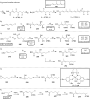
Scheme 41: Blanchard’s variation of the C12’,C13’,C15’ stereocluster. Reagents and conditions: a) (i) DIBAL-H,...

Scheme 42: Blanchard’s synthesis of aromatic mycolactone polyenoate side chain analogs. Reagents and condition...

Scheme 43: Small’s partial synthesis of a BODIPY-labeled mycolactone derivative and Demangel’s partial synthes...

Scheme 44: Blanchard’s synthesis of the BODIPY-labeled 8-desmethylmycolactones. Reagents and conditions: a) (i...
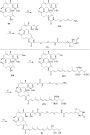
Scheme 45: Altmann’s synthesis of biotinylated mycolactones. Reagents and conditions: a) (i) CDI, THF, rt, 2 d...

Figure 9: Kishi’s elongated n-butyl carbamoyl mycolactone A/B analog.
Transition-metal-catalyzed synthesis of phenols and aryl thiols
- Yajun Liu,
- Shasha Liu and
- Yan Xiao
Beilstein J. Org. Chem. 2017, 13, 589–611, doi:10.3762/bjoc.13.58

- stoichiometric amount of Cu(OAc)2 in the presence of Ag2CO3 and TBAI as additives in DMF at 100 °C (Scheme 26). Notably, their protocol was so efficient that the reactions could accomplish within 1 hour. The substrate scope showed benzamides bearing both electron-donating groups and electron-withdrawing groups

Graphical Abstract

Figure 1: Examples of drugs bearing phenol or aryl thiol as central structural motifs.

Scheme 1: Hydroxylation of aryl halides using biphenylphosphine as ligand.

Scheme 2: Hydroxylation of aryl halides using tert-butylphosphine as ligand.

Scheme 3: Hydroxylation of aryl halides using imidazole typed phosphine ligands.

Scheme 4: [Pd(cod)(CH2SiMe3)2] catalyzed hydroxylation of aryl halides.

Scheme 5: Pd/PANI catalyzed hydroxylation of hydroxylation of aryl halides.

Scheme 6: MCM-41-dzt-Pd catalyzed hydroxylation of aryl halides.

Scheme 7: Hydroxylation of aryl halides using dibenzoylmethane as ligand.

Scheme 8: Hydroxylation of aryl halides using 2,2’-bipyridine as ligand.

Scheme 9: Hydroxylation of aryl bromides using imidazolyl pyridine as ligand.

Scheme 10: Hydroxylation of aryl halides using DMEDA as ligand.

Scheme 11: Hydroxylation of aryl halides using PAO as ligand.

Scheme 12: Hydroxylation of aryl halides using D-glucose as ligand.

Scheme 13: Hydroxylation of aryl halides using INDION-770 as ligand.

Scheme 14: PEG-400 mediated hydroxylation of aryl halides.

Scheme 15: Hydroxylation of aryl halides using glycolic acid as ligand.

Scheme 16: Hydroxylation of aryl halides using L-sodium ascorbate as ligand.

Scheme 17: Difunctionalized ethanes mediated hydroxylation of aryl iodides.

Scheme 18: Hydroxylation of aryl halides using 2-methyl-8-hydroxylquinoline as ligand.

Scheme 19: Hydroxylation of aryl halides using 8-hydroxyquinolin-N-oxide as ligand.

Scheme 20: Hydroxylation of aryl halides using lithium pipecolinate as ligand.

Scheme 21: Hydroxylation of aryl halides using L-lithium prolinate.

Scheme 22: Hydroxylation of aryl halides using triethanolamine as ligand.

Scheme 23: CuI-nanoparticle-catalyzed hydroxylation of aryl halides.

Scheme 24: Cu-g-C3N4-catalyzed hydroxylation of aryl bromides.

Scheme 25: Cu(OAc)2-mediated hydroxylation of (2-pyridyl)arenes.

Scheme 26: Removable pyridine moiety directed hydroxylation of arenes.

Scheme 27: Removable quinoline moiety directed hydroxylation of arenes.

Scheme 28: CuCl2 catalyzed hydroxylation of benzimidazoles and benzoxazoles.

Scheme 29: Disulfide-directed C–H hydroxylation.

Scheme 30: Pd(OAc)2-catalyzed hydroxylation of diarylpyridines.

Scheme 31: PdCl2-catalyzed hydroxylation of 2-arylpyridines.

Scheme 32: PdCl2-catalyzed hydroxylation of 2-arylpyridines.

Scheme 33: Pd(OAc)2-catalyzed hydroxylation of 2-arylpyridines.

Scheme 34: Pd(CH3CN)2Cl2-catalyzed hydroxylation of 2-arylpyridines.

Scheme 35: Pd(OAc)2-catalyzed hydroxylation of benzothiazolylarenes.

Scheme 36: Pd(OAc)2 catalyzed hydroxylation of benzimidazolylarenes.

Scheme 37: Dioxane mediated hydroxylation of 2-heteroarylarenes.

Scheme 38: Hydroxylation of oxime methyl ester.

Scheme 39: CN-directed meta-hydroxylation.

Scheme 40: Pd(OAc)2-catalyzed hydroxylation of benzoic acids.

Scheme 41: Pd(OAc)2-catalyzed hydroxylation of biaryl or aryl alkyl ketones.

Scheme 42: Pd(OAc)2 and Pd(TFA)2 catalyzed hydroxylation of aryl ketones.

Scheme 43: Pd(OAc)2 catalyzed hydroxylation of aryl ketones.

Scheme 44: Pd(TFA)2-catalyzed hydroxylation of aryl phosphonates.

Scheme 45: Hydroxy group directed hydroxylation.

Scheme 46: [Ru(O2CMes)2(p-cymene)] catalyzed hydroxylation of benzamides and aryl ketones.

Scheme 47: [RuCl2(p-cymene)]2-catalyzed hydroxylation of benzamides and carbamates.

Scheme 48: [RuCl2(p-cymene)]2 catalyzed hydroxylation of benzaldehydes.

Scheme 49: [RuCl2(p-cymene)]2 catalyzed hydroxylation of ethyl benzoates, benzamides and carbamates.

Scheme 50: Different regioselective ortho-hydroxylation.

Scheme 51: Ruthenium-complex-catalyzed hydroxylation of flavones.

Scheme 52: Vanadium-catalyzed hydroxylation of arenes.

Scheme 53: VOSiW-catalyzed hydroxylation of arenes.

Scheme 54: Synthesis of aryl thiols using thiourea as thiol source.

Scheme 55: Synthesis of aryl thiols using alkyl thiol as thiol source.

Scheme 56: Synthesis of 1-thionaphthol using HS-TIPS as thiol source.

Scheme 57: Synthesis of aryl thiols using sodium thiosulfate as thiol source.

Scheme 58: Synthesis of thiophenol using thiobenzoic acid as thiol source.

Scheme 59: Synthesis of aryl thiols using sulfur powder as thiol source.

Scheme 60: CuI-nanoparticles catalyzed synthesis of aryl thiols.

Scheme 61: Synthesis of aryl thiols using Na2S·5H2O as thiol source.

Scheme 62: Synthesis of aryl thiols using 1,2-ethanedithiol as thiol source.
Nucleophilic displacement reactions of 5′-derivatised nucleosides in a vibration ball mill
- Olga Eguaogie,
- Patrick F. Conlon,
- Francesco Ravalico,
- Jamie S. T. Sweet,
- Thomas B. Elder,
- Louis P. Conway,
- Marc E. Lennon,
- David R. W. Hodgson and
- Joseph S. Vyle
Beilstein J. Org. Chem. 2017, 13, 87–92, doi:10.3762/bjoc.13.11
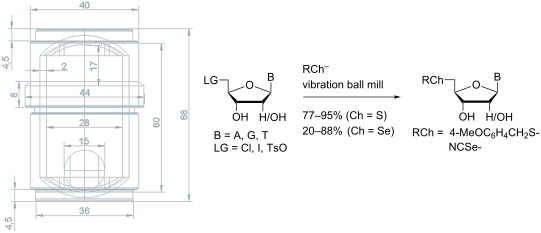
- following addition of NaI (500, 50 or 5 mol %) or TBAI (50 or 5 mol %). Following the successful application of VBM using a thiolate nucleophile, we were prompted to explore related reactions of alkylselenols. However, the sensitivity of such compounds towards aerial oxidation meant that, in our hands, an
- ) remained untransformed during (dry) VBM or liquid-assisted grinding (LAG) in the presence of DMF with excess KSeCN (3 equiv). As found previously, the addition of catalytic TBAI (vide supra) did not alter this outcome nor did the use of a larger excess (5 equiv) of selenocyanate. The addition of DMF to the

Graphical Abstract

Scheme 1: Model reactions of 5′-chloro-5′-deoxyadenosine (1a) with 4-methoxybenzylthiolate salts used to opti...

Scheme 2: Thiolate displacement reactions of 5′-derivatised nucleosides using VBM.

Scheme 3: Selenocyanate displacement reactions of 5′-derivatised nucleosides using liquid-assisted grinding (...
New approaches to organocatalysis based on C–H and C–X bonding for electrophilic substrate activation
- Pavel Nagorny and
- Zhankui Sun
Beilstein J. Org. Chem. 2016, 12, 2834–2848, doi:10.3762/bjoc.12.283
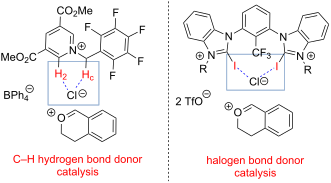
- atoms covalently bonded to a benzylic carbon (Scheme 8). In 2016 Maruoka and Shirakawa followed up the aforementioned studies by demonstrating that tetraalkylammonium salts L5, L6, L11 and L12 as well as TBAI could activate imines toward aza-Diels–Alder reaction with Danishefsky’s diene (Scheme 9) [51

Graphical Abstract

Figure 1: Electrophile Activation by Hydrogen Bond Donors [1-16].

Figure 2: Early examples of C–H hydrogen bonds and their recent use in supramolecular chemistry [18,19,32-34].

Scheme 1: Design of 1,2,3-triazole-based catalysts for trityl group transfer through chloride anion binding b...

Scheme 2: Examples of chiral triazole-based catalysts for anion activation designed by Mancheno and co-worker...

Scheme 3: Application of chiral triazole-based catalysts L3 and L4 for counterion activation of pyridinium, q...

Scheme 4: Ammonium salt anion binding via C–H hydrogen bonds in solid state [40-45,50,51].
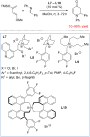
Scheme 5: Early examples of ammonium salts being used for electrophilic activation of imines in aza-Diels–Ald...
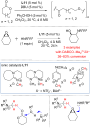
Scheme 6: Ammonium salts as hydrogen bond-donor catalysts by Bibal and co-workers [53,54].

Scheme 7: Tetraalkylammonium catalyst (L6)-catalyzed dearomatization of isoquinolinium salts [50].

Scheme 8: Tetraalkylammonium catalyst L6 complexation to halogen-containing substrates [51].

Scheme 9: Tetraalkylammonium-catalyzed aza-Diels–Alder reaction by Maruoka and co-workers [52].
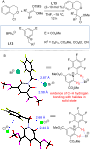
Scheme 10: (A) Alkylpyridinium catalysts L13-catalyzed reaction of 1-isochroman and silyl ketene acetals by Be...
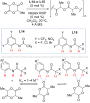
Scheme 11: Mixed N–H/C–H two hydrogen bond donors L14 and L15 as organocatalysts for ROP of lactide by Bibal a...

Scheme 12: Examples of stable complexes based on halogen bonding [68,69].

Scheme 13: Interaction between (−)-sparteine hydrobromide and (S)-1,2-dibromohexafluoropropane in the cocrysta...

Scheme 14: Iodine-catalyzed reactions that are computationally proposed to proceed through halogen bond to car...

Scheme 15: Transfer hydrogenation of phenylquinolines catalyzed by haloperfluoroalkanes by Bolm and co-workers ...

Scheme 16: Halogen bond activation of benzhydryl bromides by Huber and co-workers [82].

Scheme 17: Halogen bond-donor-catalyzed addition to oxocarbenium ions by Huber and co-workers [89].

Scheme 18: Halogen bond-donor activation of α,β-unsaturated carbonyl compounds in the [2 + 4] cycloaddition re...

Scheme 19: Halogen bond donor activation of imines in the [2 + 4] cycloaddition reaction of imine and Danishef...
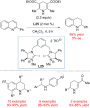
Scheme 20: Transfer hydrogenation catalyzed by a chiral halogen bond donor by Tan and co-workers [91].

Scheme 21: Allylation of benzylic alcohols by Takemoto and co-workers [92].

Scheme 22: NIS induced semipinacol rearrangement via C–X bond cleavage [93].
Efficient syntheses of climate relevant isoprene nitrates and (1R,5S)-(−)-myrtenol nitrate
- Sean P. Bew,
- Glyn D. Hiatt-Gipson,
- Graham P. Mills and
- Claire E. Reeves
Beilstein J. Org. Chem. 2016, 12, 1081–1095, doi:10.3762/bjoc.12.103
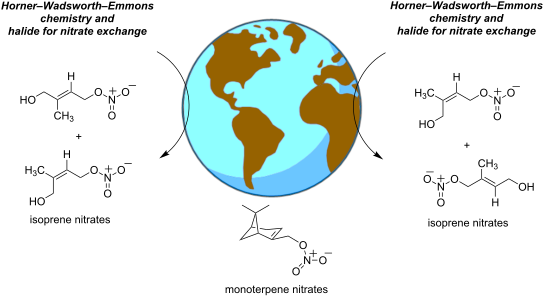
- with bromoacetone was a requirement for an efficient ‘bromide to nitrate’ substitution. Changing tactics we opted to generate the more reactive iodoacetone in situ from chloroacetone (42) and a stoichiometric quantity of tetra-n-butylammonium iodide (TBAI). Gratifyingly the iodoacetone reacted readily
- further 16 hours, the majority of (E)-60 had reacted as judged by TLC and 1H NMR analysis. Removing the sodium chloride via a simple filtration was more advantageous than the previously employed organic soluble and more expensive TBAI (Scheme 6). Straightforward flash-column purification afforded (E)-10

Graphical Abstract

Scheme 1: Simplified overview outlining how a small number of different IPNs are synthesised and are able to ...

Scheme 2: Protocols for the synthesis of O-nitrated alcohols using (±)-isoprene epoxide and 2° alcohols as st...

Scheme 3: Attempted synthesis of O-nitrate ester rac-19 and rac-20 synthesis.

Scheme 4: Olah et al. O-nitrated alcohol syntheses of 23–33 using N-nitro-2,4-6-trimethylpyridinium tetrafluo...

Scheme 5: O-nitration study using 22 and the alcohols 34–37.

Scheme 6: Silver nitrate mediated synthesis of 2-oxopropyl nitrate 43.

Scheme 7: Application of isoprene for the synthesis of precursors to IPNs and synthesis via ‘halide for nitra...

Scheme 8: Synthesis of (E)-3-methyl-4-chlorobut-2-en-1-ol ((E)-60) and (Z)-3-methyl-4-chlorobut-2-en-1-ol ((Z...

Scheme 9: Using NOESY interactions to establish the conformations of the C=C bonds within (E)-10 and (Z)-9.

Scheme 10: Synthesis of isoprene nitrates (E)-11 and (Z)-12 from ketone 63.

Scheme 11: Attempted synthesis of rac-8 from O-mesylate rac-71.

Scheme 12: Synthesis of O-nitrate 73 from O-mesylate 72.

Scheme 13: Attempted synthesis of 2° alcohol containing 1° nitrate ester rac-19 and the unexpected synthesis o...

Scheme 14: Synthesis of monoterpene derived (1R,5S)-(−)-myrtenol nitrate 86.
Synthesis, antimicrobial and cytotoxicity evaluation of new cholesterol congeners
- Mohamed Ramadan El Sayed Aly,
- Hosam Ali Saad and
- Shams Hashim Abdel-Hafez
Beilstein J. Org. Chem. 2015, 11, 1922–1932, doi:10.3762/bjoc.11.208
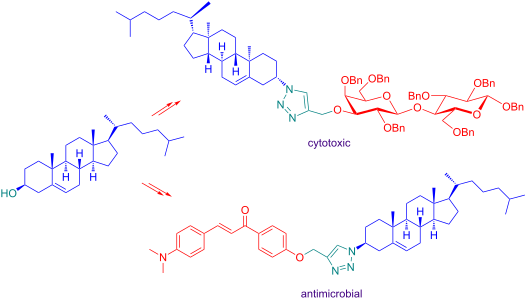
- : (a) Propargyl bromide, NaH, Et2O/DMF (quant. for both 26 and 30); (b) 3, CuSO4·5H2O, L-AsAc, THF/H2O (89% for 27 and 74% for 31); (c) H2, Pd/C 10%, MeOH. A: Ring A of the lactose moiety, B: Ring B of the lactose moiety. Reagents and conditions: (a) Bu2SnO, MeOH; propargyl bromide, TBAI, Tol (92%); (b

Graphical Abstract

Figure 1: Structure of ceragenin (CSA-8) and selected cholesterol conjugates.
Scheme 1: Reagents and conditions: (a) CBr4, PPh3, DCM (74%); (b) NaN3, DMF, 100 °C (63%); (c) CuSO4·5H2O, L-...

Scheme 2: Reagents and conditions: (a) NaN3, DMF, 100 °C (9b, 47%); (b) CuSO4·5H2O, L-AsAc, THF/H2O [11a, n =...

Scheme 3: Reagents and conditions: CuSO4·5H2O, L-AsAc, THF/H2O (96%).

Scheme 4: Reagents and conditions: (a) 1, TMSOTF, CH3CN, rt (74%); (b) NaOMe, MeOH (84%); (c) NaOH; HCl (pH 5...

Scheme 5: Reagents and conditions: (a) 9a, TMSOTF, DCM, rt (19%); (b) 10, CuSO4·5H2O, L-AsAc, THF/H2O (62%); ...

Scheme 6: Reagents & conditions: (a) Propargyl bromide, NaH, Et2O/DMF (quant. for both 26 and 30); (b) 3, CuSO...

Scheme 7: Reagents and conditions: (a) Bu2SnO, MeOH; propargyl bromide, TBAI, Tol (92%); (b) CuSO4·5H2O, L-As...

Figure 2: In vitro antimicrobial activity of some new cholesterol derivatives against E.coli, S. aureus. A. f...

Figure 3: Cytotoxicity effect of some new cholesterol derivatives on the PC3 cell line. Doxorubicin (Dox) was...
Multivalent polyglycerol supported imidazolidin-4-one organocatalysts for enantioselective Friedel–Crafts alkylations
- Tommaso Pecchioli,
- Manoj Kumar Muthyala,
- Rainer Haag and
- Mathias Christmann
Beilstein J. Org. Chem. 2015, 11, 730–738, doi:10.3762/bjoc.11.83
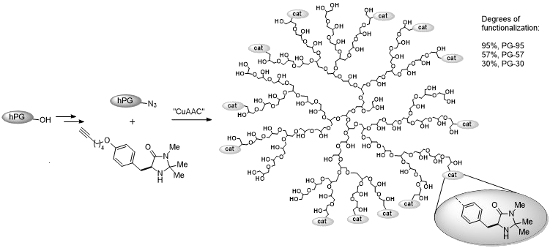
- ), NaH (1.1 equiv), 6-chloro-1-hexyne (1.3 equiv), TBAI (0.01 equiv), DMF, 25 °C, 16 h, 88%. Initial screening on the Friedel–Crafts alkylation of N-methylpyrrole (11) with trans-cinnamaldehyde (12).a Influence of temperature in the Friedel–Crafts alkylation.a Catalyst loading study.a Dilution

Graphical Abstract

Scheme 1: Synthesis of hyperbranched polyglycerol-supported and G1 dendronized imidazolidin-4-ones 4a–c and 8...

Scheme 2: Synthesis of tyrosine-based imidazolidin-4-one 5. Reaction conditions: (a) 9 (1.0 equiv), MeNH2 (5....
Synthesis of carbohydrate-scaffolded thymine glycoconjugates to organize multivalency
- Anna K. Ciuk and
- Thisbe K. Lindhorst
Beilstein J. Org. Chem. 2015, 11, 668–674, doi:10.3762/bjoc.11.75
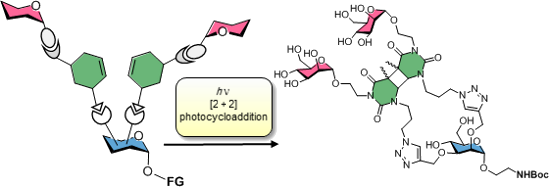
- optimized procedure employing DBU and TBAI at rt [5] over two days to deliver the protected glycothymine derivative 12 in 64% yield. The acetyl protecting groups were cleaved employing Zemplén’s procedure [30]. During work-up with acidic ionic exchange resin, surprisingly cleavage of the isopropylidene

Graphical Abstract

Figure 1: Cartoon of a divalent carbohydrate-scaffolded molecular architecture that allows control of the fle...

Scheme 1: Synthesis of carbohydrate-scaffolded dimeric thymine 7 and intramolecular photocycloaddition. The i...
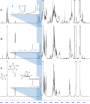
Figure 2: 1H NMR spectra (all in D2O, 500 MHz) of mannoside 7 (A) and of the irradiation product (8) after 3 ...
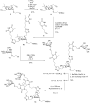
Scheme 2: Synthesis of carbohydrate-scaffolded dimeric glycothymine 13 and intramolecular photocycloaddition....

Figure 3: 1H NMR spectra (all in D2O, 500 MHz) of mannoside 13 (A) and of the irradiation product (14) after ...
Synthesis of the furo[2,3-b]chromene ring system of hyperaspindols A and B
- Danielle L. Paterson and
- David Barker
Beilstein J. Org. Chem. 2015, 11, 265–270, doi:10.3762/bjoc.11.29
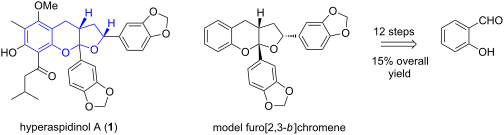
- -methylenedioxybenzene and t-butyllithium) to give ketone 17 in 84% yield (Scheme 2). Allylation of ketone 17 proved problematic with the use of strong bases such as LDA and LiHMDS, giving none of the desired product. However, the use of allyl bromide and NaH in the presence of TBAI, in THF at reflux, gave the desired
- h, 14%. Reagents and conditions: (i) H3C(CH3O)NH·HCl, n-BuLi, THF, −78 °C, 4 h, 81%; (ii) 1-bromo-3,4-methylenedioxybenzene, t-BuLi, THF, −78 °C, 3 h, 84%; (iii) NaH, allyl bromide, TBAI, THF, 65 °C, 20 h, 95%; (iv) ethylene glycol, pTSA, toluene, reflux, 16 h, 44%; (v) OsO4, NMO, t-BuOH, H2O, THF

Graphical Abstract

Figure 1: Hyperaspidinols A (1) and B (2) and other compounds 3-6 from Hypericum chinense.
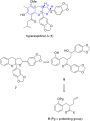
Figure 2: Hyperaspidinol A (1), target compound 7 and proposed precursors.

Scheme 1: Reagents and conditions: (i) triethylphosphonoacetate, DBU, THF, 48 h, 94%; (ii) H2, 10% Pd/C, EtOA...

Scheme 2: Reagents and conditions: (i) H3C(CH3O)NH·HCl, n-BuLi, THF, −78 °C, 4 h, 81%; (ii) 1-bromo-3,4-methy...

Figure 3: NOESY correlations in isomers 7a and 7b.

Figure 4: 3D representation of 7a.

Figure 5: 3D representation of 7b.

Figure 6: Possible mechanism for the formation of furo[2,3-b]chromenes 7a and 7b.
Relay cross metathesis reactions of vinylphosphonates
- Raj K. Malla,
- Jeremy N. Ridenour and
- Christopher D. Spilling
Beilstein J. Org. Chem. 2014, 10, 1933–1941, doi:10.3762/bjoc.10.201
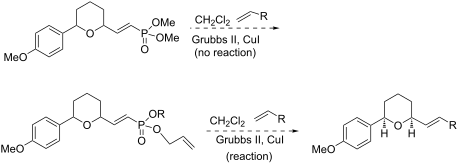
- ) failed to react at all with methyl acrylate under similar conditions, even with higher catalyst loading and extended reaction times. Initially, the synthesis of the allyl vinylphosphonate esters was achieved using a transesterification reaction catalysed by tetra n-butylammonium iodide (TBAI) (Scheme 5
- ) [28]. A solution of the vinylphosphonate 12b, 1.1 equivalents of allyl bromide and 5 mol % TBAI in toluene was heated at reflux for 7 hours to give a 53% conversion to both the mono- and diallyl vinylphosphonates 14a and 14b in a 10:1 ratio. The overall conversion could be improved with excess allyl
- bromide, increasing the amount of TBAI and prolonged heating times, either at reflux or in a microwave reactor. The ratio of di- to mono-allyl phosphonate esters increases with the duration of reaction. A subsequent reaction of vinylphosphonate 12b employing 5 equivalents of allyl bromide, 5 mol % TBAI

Graphical Abstract

Scheme 1: Palladium catalysed reaction of phosphono allylic carbonates.

Figure 1: Natural products prepared using vinyl phosphonate intermediates.

Scheme 2: Approaches to the synthesis of centrolobine.

Scheme 3: Relay ring closing metathesis and relay cross metathesis.

Scheme 4: Cross metathesis reactions of vinyl phosphonates.

Scheme 5: Transesterification of phosphonate esters.

Scheme 6: Relay cross metathesis of mono-allyl vinylphosphonates with methyl acrylate.

Scheme 7: Relay cross metathesis of mono-allyl vinylphosphonates with styrenes.

Scheme 8: Ring closing vs relay cross metathesis.

Scheme 9: Relay cross metathesis of diallyl vinylphosphonates with methyl acrylate.

Scheme 10: A cross metathesis reaction of both mono- and diallyl vinylphosphonates with methyl acrylate.

Scheme 11: A proposed mechanism for the relay cross metathesis reaction of allyl vinylphosphonates.

Scheme 12: A proposed mechanism for the TBAI catalysed transesterification.

Scheme 13: A selective synthesis of mono-allyl phosphonates.
Atherton–Todd reaction: mechanism, scope and applications
- Stéphanie S. Le Corre,
- Mathieu Berchel,
- Hélène Couthon-Gourvès,
- Jean-Pierre Haelters and
- Paul-Alain Jaffrès
Beilstein J. Org. Chem. 2014, 10, 1166–1196, doi:10.3762/bjoc.10.117

- TBAB (tetrabutylammonium bromide), TBAI (tetrabutylammonium iodide), TMAC (tetramethylammonium chloride) or 18-crown-6. The best result was obtained with TBAB and 18-crown-6 catalysts in a CH2Cl2/water or AcOEt/water mixture (yields included from 72 to 85%). The carbamate anion is another nucleophilic

Graphical Abstract

Scheme 1: Pioneer works of Atherton, Openshaw and Todd reporting on the synthesis of phosphoramidate starting...

Scheme 2: Mechanisms 1 (i) and 2 (ii) suggested by Atherton and Todd in 1945; adapted from [1].

Scheme 3: Two reaction pathways (i and ii) to produce chlorophosphate 2. Charge-transfer complex observed whe...

Scheme 4: Mechanism of the Atherton–Todd reaction with dimethylphosphite according to Roundhill et al. (adapt...

Scheme 5: Synthesis of dialkyl phosphate from dialkyl phosphite (i) and identification of chloro- and bromoph...

Scheme 6: Synthesis of chiral phosphoramidate with trichloromethylphosphonate as the suggested intermediate (...
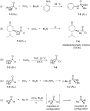
Scheme 7: Selection of results that address the question of the stereochemistry of the AT reaction (adapted f...

Scheme 8: Synthesis of phenoxy spirophosphorane by the AT reaction (adapted from [34]).

Scheme 9: Suggested mechanism of the Atherton–Todd reaction, (i) and (ii) formation of chlorophosphate with a...

Scheme 10: AT reaction in biphasic conditions (adapted from [38]).

Scheme 11: AT reaction with iodoform as halide source (adapted from [37]).

Scheme 12: AT reaction with phenol at low temperature in the presence of DMAP (adapted from [40]).

Scheme 13: Synthesis of a triphosphate by the AT reaction starting with the preparation of chlorophosphate (ad...

Scheme 14: AT reaction with sulfonamide (adapted from [42]).

Scheme 15: Synthesis of a styrylphosphoramidate starting from the corresponding aniline (adapted from [43]).

Scheme 16: Use of hydrazine as nucleophile in AT reactions (adapted from [48]).

Scheme 17: AT reaction with phenol as a nucleophilic species; synthesis of dioleyl phosphate-substituted couma...

Scheme 18: Synthesis of β-alkynyl-enolphosphate from allenylketone with AT reaction (adapted from [58]).

Scheme 19: Synthesis of pseudohalide phosphate by using AT reaction (adapted from [67]).

Scheme 20: AT reaction with hydrospirophosphorane with insertion of CO2 in the product (adapted from [69]).

Scheme 21: AT reaction with diaryl phosphite (adapted from [70]).

Scheme 22: AT reaction with O-alkyl phosphonite (adapted from [71]).

Scheme 23: Use of phosphinous acid in AT reactions (adapted from [72]).

Scheme 24: AT reaction with secondary phosphinethiooxide (adapted from [76]).

Scheme 25: Use of H-phosphonothioate in the AT reaction (adapted from [78]).

Scheme 26: AT-like reaction with CuI as catalyst and without halide source (adapted from [80]).

Scheme 27: Reduction of phenols after activation as phosphate derivatives (adapted from [81] i ; [82], ii; and [83], iii).

Scheme 28: Synthesis of medium and large-sized nitrogen-containing heterocycles (adapted from [85]).

Scheme 29: Synthesis of arylstannane from aryl phosphate prepared by an AT reaction (adapted from [86]).

Scheme 30: Synthesis and use of aryl dialkyl phosphate for the synthesis of biaryl derivatives (adapted from [89])....

Scheme 31: Synthesis of aryl dialkyl phosphate by an AT reaction from phenol and subsequent rearrangement yiel...

Scheme 32: Selected chiral phosphoramidates used as organocatalyst; i) chiral phosphoramidate used in the pion...

Scheme 33: Determination of ee of H-phosphinate by the application of the AT reaction with a chiral amine (ada...

Scheme 34: Chemical structure of selected flame retardants synthesized by AT reactions; (BDE: polybrominated d...

Scheme 35: Transformation of DOPO (i) and synthesis of polyphosphonate (ii) by the AT reaction (adapted from [117] ...

Scheme 36: Synthesis of lipophosphite (bisoleyl phosphite) and cationic lipophosphoramidate with an AT reactio...

Scheme 37: Use of AT reactions to produce cationic lipids characterized by a trimethylphosphonium, trimethylar...

Scheme 38: Cationic lipid synthesized by the AT reaction illustrating the variation of the structure of the li...

Scheme 39: Helper lipids for nucleic acid delivery synthesized with the AT reaction (adapted from [130]).

Scheme 40: AT reaction used to produce red/ox-sensitive cationic lipids (adapted from [135]).

Scheme 41: Alkyne and azide-functionalized phosphoramidate synthesized by AT reactions,(i); illustration of so...

Scheme 42: Cationic lipids exhibiting bactericidal action – arrows indicate the bond formed by the AT reaction...

Scheme 43: β-Cyclodextrin-based lipophosphoramidates (adapted from [138]).

Scheme 44: Polyphosphate functionalized by an AT reaction (adapted from [139]).

Scheme 45: Synthesis of zwitterionic phosphocholine-bound chitosan (adapted from [142]).

Scheme 46: Synthesis of AZT-based prodrug via an AT reaction (adapted from [143]).
Synthesis of new enantiopure poly(hydroxy)aminooxepanes as building blocks for multivalent carbohydrate mimetics
- Léa Bouché,
- Maja Kandziora and
- Hans-Ulrich Reissig
Beilstein J. Org. Chem. 2014, 10, 213–223, doi:10.3762/bjoc.10.17
- of the carbonyl group and deprotection. Conditions: a) NaBH4, EtOH, 0 °C, 40 min to 16 h; b) TBAF (1 M THF), THF, 0 °C, 10 min to 3.5 h. [TBAF = tetra-n-butylammonium fluoride] Synthesis of propargylic ether 18. Conditions: a) propargyl bromide, NaOH, TBAI, H2O/CH2Cl2, −20 °C → rt, 7 d; b) NaBH4
- , EtOH, 0 °C, 4 h; c) TBAF (1 M THF), THF, 0 °C → rt, 3 d. [TBAI = tetra-n-butylammonium iodide] Synthesis of tricyclic compound 20, bicyclic azide 24 and bicyclic amine 25. Conditions: a) MsCl, Et3N, CH2Cl2, 0 °C → rt, 5 h; b) NaBH4, EtOH, 0 °C, 6 to 16 h; c) NaN3, DMF, reflux, 16 to 46 h; d) Et3N, DMF

Graphical Abstract

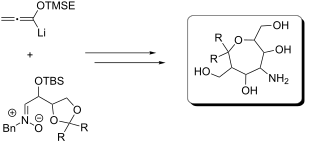
Scheme 1: General approach to enantiopure the poly(hydroxy)aminopyrans D (n = 0) and the aminooxepanes D (n =...

Scheme 2: Synthesis of (Z)-nitrone 3. Conditions: a) 1. p-Bromobenzaldehyde dimethylacetal, TFA, DMF, rt, 5 d...

Scheme 3: Synthesis of 1,2-oxazines syn-7, syn-9 and syn-10. Conditions: a) n-BuLi, THF, −40 °C, 15 min; b) 1...

Figure 1: Proposed transition structure for the addition of lithiated TMSE-allene 5 to chiral nitrones 3, 6 a...

Scheme 4: Synthesis of ketones 11, 12 and 13 with a bicyclic 1,2-oxazine skeleton by Lewis acid-induced rearr...

Scheme 5: Proposed extended chair-like conformation with Zimmerman–Traxler-type transition state.

Figure 2: GOESY–NMR spectrum (CDCl3, 500 MHz) of bicyclic 1,2-oxazine 13: irradiation of the 2-H proton. [GOE...

Scheme 6: Synthesis of triols 14, 15 and 16 by reduction of the carbonyl group and deprotection. Conditions: ...

Scheme 7: Synthesis of propargylic ether 18. Conditions: a) propargyl bromide, NaOH, TBAI, H2O/CH2Cl2, −20 °C...

Scheme 8: Synthesis of tricyclic compound 20, bicyclic azide 24 and bicyclic amine 25. Conditions: a) MsCl, Et...

Scheme 9: Hydrogenolyses of bicyclic and tricyclic 1,2-oxazines 14, 15 and 20 to aminooxepanes 26, 27 and 28....

Figure 3: Proposed structures of the observed side products 29 and 30 during the hydrogenolyses of 14 and 15.
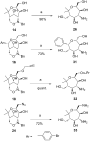
Scheme 10: Hydrogenolyses of bicyclic 1,2-oxazines to aminooxepanes 26, 31 and 32 and to diaminooxepane 33 und...
Enantioselective synthesis of planar chiral ferrocenes via palladium-catalyzed annulation with diarylethynes
- Yan-Chao Shi,
- Rong-Fei Yang,
- De-Wei Gao and
- Shu-Li You
Beilstein J. Org. Chem. 2013, 9, 1891–1896, doi:10.3762/bjoc.9.222
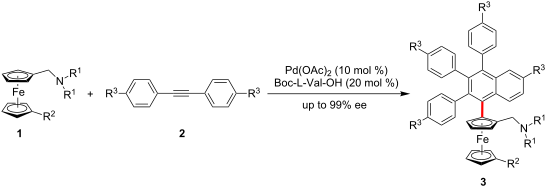
- details, see Supporting Information File 1). Lowering the reaction temperature to 60 °C, excellent enantioselectivity (97% ee) could be obtained, but with a decreased yield as the starting material was not fully consumed (entry 12, Table 1). When TBACl (entry 14, Table 1) or TBAI (entry 15, Table 1) was

Graphical Abstract

Scheme 1: Design of the planar chiral P,N-ligand.

Scheme 2: Synthesis of planar chiral P,N-ligand (Sp)-L1.

Scheme 3: Pd-catalyzed asymmetric allylic alkylation and amination reactions with (Sp)-L1.
Synthesis of mucin-type O-glycan probes as aminopropyl glycosides
- David Benito-Alifonso,
- Rachel A. Jones,
- Anh-Tuan Tran,
- Hannah Woodward,
- Nichola Smith and
- M. Carmen Galan
Beilstein J. Org. Chem. 2013, 9, 1867–1872, doi:10.3762/bjoc.9.218
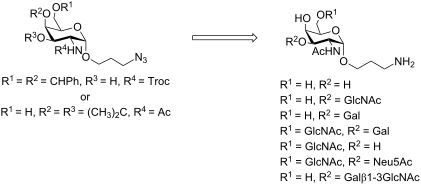
- % overall yield. The sequence involved temporary protection of the free hydroxy at C-3 by reaction with acetic anhydride and pyridine, SN2 displacement of the chloride in monosaccharide 9 with n-tetrabutylammonium iodide (n–TBAI) in refluxing acetonitrile followed by the addition of NaN3. Ester removal was

Graphical Abstract

Figure 1: Structure of mucin-type oligosaccharide fragments synthesized.

Scheme 1: Synthesis of glycan targets 2–4.

Scheme 2: Synthesis of disaccharide targets 5 and 6.

Scheme 3: Orthogonal approach into core 3 target 7.
Iron-catalyzed decarboxylative alkenylation of cycloalkanes with arylvinyl carboxylic acids via a radical process
- Jincan Zhao,
- Hong Fang,
- Jianlin Han and
- Yi Pan
Beilstein J. Org. Chem. 2013, 9, 1718–1723, doi:10.3762/bjoc.9.197
- reactions. Additionally, metal-free methodologies, which use TBHP, PhI(OAc)2, TBAI, I2 or Lewis/Brønsted acids, have also been employed for cross-dehydrogenative coupling reactions [48][49][50][51][52][53][54][55][56][57]. Owing to the general low reactivity of cycloalkane C(sp3)–H bonds, the direct

Graphical Abstract

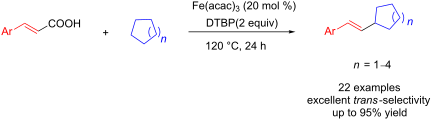
Scheme 1: Fe(acac)3-catalyzed alkenylation of cyclohexane. Catalytic conditions: cinnamic acid (1) (0.3 mmol)...

Scheme 2: Fe(acac)3-catalyzed alkenylation of cyclopentan, cycloheptane and cyclooctane. Catalytic conditions...

Scheme 3: A plausible pathway for the reaction.
Glycosylation efficiencies on different solid supports using a hydrogenolysis-labile linker
- Mayeul Collot,
- Steffen Eller,
- Markus Weishaupt and
- Peter H. Seeberger
Beilstein J. Org. Chem. 2013, 9, 97–105, doi:10.3762/bjoc.9.13
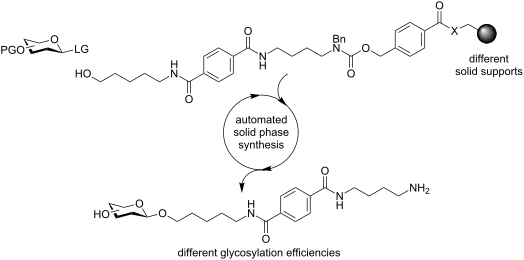
- functionalized with linker 1 (Scheme 4). Coupling to both chloro-functionalized Merrifield resin 16 and Jandajel 17 was achieved by a tetrabutylammonium iodide (TBAI) mediated substitution in the presence of Cs2CO3. Capping of unreacted chlorides by cesium acetate and subsequent acidic hydrolysis of the THP
- 2 steps; (f) TFA, DCM, rt, 99%; (g) NHS, DCC, DMAP, CH3CN, DCM, rt, 63%; (h) 2 M aq NaOH, THF, 55 °C, 92%; (i) p-TsOH·H2O, MeOH, DCM, rt, 94%; (j) Pd(OAc)2, HCOONH4, MeOH, H2O, 90%. Coupling of linker 1 to different resins. Reactions and conditions: (a) 1. 1 and 16 or 17, Cs2CO3, DMF, TBAI, 60 °C; 2
- . CsOAc, TBAI, DMF, 60 °C; 3. p-TsOH·H2O, MeOH, DCM, rt; (b) 1. 1 and 18, 19, 20, 21 or 22, HOBt, DIC, DMF, rt; 2. Ac2O, pyridine, DCM, rt; 3. p-TsOH·H2O, MeOH, DCM, rt; (c) 1. 2 and 18, 19, 20 or 22, pyridine, DCM, rt; 2. Ac2O, pyridine, DCM, rt; 3. 1, Cs2CO3, DMF, TBAI, 60 °C; 4. CsOAc, TBAI, DMF, 60 °C

Graphical Abstract

Scheme 1: Solid-phase synthesis of biopolymers. X represents a reactive site such as an amino group for pepti...
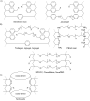
Figure 1: Different resins used for solid-phase synthesis. (A) Hydrophobic PS resins. (B) Water-compatible re...

Scheme 2: Design of linker 1. Cleavage by hydrogenolysis from a solid support reveals a conjugation site for ...

Scheme 3: Synthesis of linker 1. Reactions and conditions: (a) NEt3, DCM, rt, 84%; (b) DHP, pyridinium p-tolu...

Scheme 4: Coupling of linker 1 to different resins. Reactions and conditions: (a) 1. 1 and 16 or 17, Cs2CO3, ...

Scheme 5: Model glycosylation by using an automated oligosaccharide synthesizer. Reactions and conditions: (a...

Figure 2: Representative HPLC chromatograms of glycosylation experiments on PS-based and water-compatible res...

Scheme 6: Glycosylation of 34 to linker 23 and subsequent Staudinger reduction of the azide. Reactions and co...
Acylsulfonamide safety-catch linker: promise and limitations for solid–phase oligosaccharide synthesis
- Jian Yin,
- Steffen Eller,
- Mayeul Collot and
- Peter H. Seeberger
Beilstein J. Org. Chem. 2012, 8, 2067–2071, doi:10.3762/bjoc.8.232
- -TsOH·H2O, DCM, 86%; (g) LiOH·H2O, THF/H2O, reflux, 95%; (h) 4-sulfamoylbenzoic acid, DCC, DMAP, DCM/DMF, 60%. Functionalization of different resins. Reagents and conditions: (a) Cs2CO3, DMF, TBAI, Merrifield chloride resin; (b) CsOAc, DMF, TBAI; (c) p-TsOH·H2O, MeOH; (d) DIC, HOBt, DCM, Merrifield amine
- resin; (e) Ac2O, pyridine; (f) (COCl)2, DMF (cat), 99%; (g) TentaGel amine resin, DCM, pyridine, then Ac2O; (h) 10, Cs2CO3, DMF, TBAI. Glycosylation and cleavage reactions for analysis. Reagents and conditions: (a) automated glycosylations using 17, 18 or 19; (b) NaOMe, MeOH. Further investigations of

Graphical Abstract

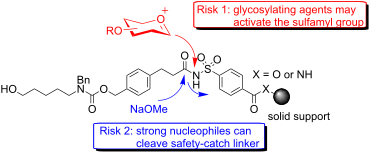
Figure 1: Structures of two novel linkers on different resins.
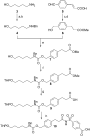
Scheme 1: Synthesis of a new acylsulfonamide safety-catch linker. Reagents and conditions: (a) benzaldehyde, ...

Scheme 2: Functionalization of different resins. Reagents and conditions: (a) Cs2CO3, DMF, TBAI, Merrifield c...

Scheme 3: Glycosylation and cleavage reactions for analysis. Reagents and conditions: (a) automated glycosyla...

Scheme 4: Further investigations of safety-catch linker. Reagents and conditions: (a) NaOMe, MeOH; (b) 19, NI...



