Search results
Search for "acidity" in Full Text gives 296 result(s) in Beilstein Journal of Organic Chemistry. Showing first 200.
Quantifying the ability of the CF2H group as a hydrogen bond donor
Beilstein J. Org. Chem. 2025, 21, 189–199, doi:10.3762/bjoc.21.11
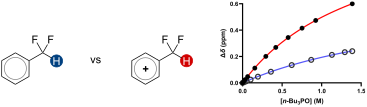
- established methods, including 1H NMR-based hydrogen bond acidity determination, UV–vis spectroscopy titration with Reichardt's dye, and 1H NMR titration using tri-n-butylphosphine oxide as a hydrogen bond acceptor. Our experiments reveal that the direct attachment of the CF2H group to cationic aromatic
- by hydrogen bond acidity [47][48] which is derived from the 1H NMR chemical shift difference of a given proton in DMSO-d6 and CDCl3, the CF2H group is generally a stronger donor than the methyl group but substantially weaker than the OH or amide NH groups [19][20]. These results collectively indicate
- that, although the CF2H group mimics hydroxy or thiol groups, it is a generally less effective hydrogen bond donor. Given that the HB donation ability of a particular functional group usually increases with increasing Brønsted acidity [49] we chose to incorporate the CF2H group into the backbone of N



Surprising acidity for the methylene of 1,3-indenocorannulenes?
Beilstein J. Org. Chem. 2024, 20, 3144–3150, doi:10.3762/bjoc.20.260
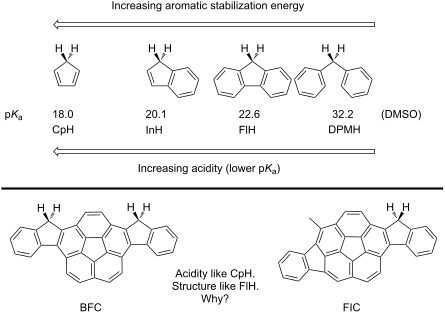
- of the first acidity constant (pKa) for BFC (27.6 in CH3CN) and FIC (27.8 in CH3CN) shows the methylene protons to be significantly more acidic than those in related cyclopentadiene (32 in CH3CN), indene (34 in CH3CN), or fluorene (37 in CH3CN) and comparable to the methine of 9
- -perfluorophenylfluorene (28.14 in CH3CN). This work reports quantitative pKa values of BFC and FIC, places those values in a broadened context of CpH-cognate hydrocarbon acidity and presents a Clar–Loschmidt graph perspective to help understand the “surprises”. Keywords: acidity; aromatic hydrocarbon; Clar sextet
- ; Loschmidt group element; molecular graph; Introduction A classic textbook tetrad linking hydrocarbon acidity to aromatic stabilization energy comprises cyclopentadiene (CpH), indene (InH), fluorene (FlH), and diphenylmethane (DPMH) [1][2], with pKa values in DMSO equal to 18 [3], 20.1 [3], 22.6 [3], and


C–C Coupling in sterically demanding porphyrin environments
Beilstein J. Org. Chem. 2024, 20, 2784–2798, doi:10.3762/bjoc.20.234
- one, may have slowed down the protodeboronation process, as substrates with electron-withdrawing groups are postulated to increase the Lewis acidity of the boronic acid, which may allow an increased incidence of protodeboronation to occur. It is also known that aryl–B(Pin) complexes have a greater


Computational design for enantioselective CO2 capture: asymmetric frustrated Lewis pairs in epoxide transformations
Beilstein J. Org. Chem. 2024, 20, 2668–2681, doi:10.3762/bjoc.20.224
- positions. These substituents will have two main effects on the FLP. First, they will alter the Lewis acidity and basicity of the LA and LB centres, respectively; second, they may induce steric hindrance. The first effect is perhaps the most intriguing to consider, as the acidity and basicity of the LA/LB
- centres are indicative of the FLP’s reactivity [45][46]. Thus, substituents must be selected to ensure a broad spectrum of acidity and basicity of the LA and LB. Different methods for determining these properties have been described in the literature. Because of their easy computation, the proton affinity
- [43] and fluoride ion affinity [44] were selected to compute the basicity and acidity of the systems considered. By selecting the substituents presented in Figure 4, FIAs spanning a range of 60 kcal·mol−1 and PAs spanning a range of 48 kcal·mol−1 were obtained (Figure S3, Supporting Information File 1


O,S,Se-containing Biginelli products based on cyclic β-ketosulfone and their postfunctionalization
Beilstein J. Org. Chem. 2024, 20, 2143–2151, doi:10.3762/bjoc.20.184
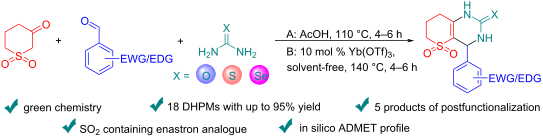
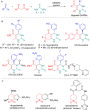
- ). However, increasing acidity and using trifluoroacetic acid (Table 1, entry 17) did not improve the overall yield. We also tried microwave activation conditions since this is a known technique for reactions of this type [32], but unfortunately, we did not find any improvement in the yield (Table 1, entry



Factors influencing the performance of organocatalysts immobilised on solid supports: A review
Beilstein J. Org. Chem. 2024, 20, 2129–2142, doi:10.3762/bjoc.20.183
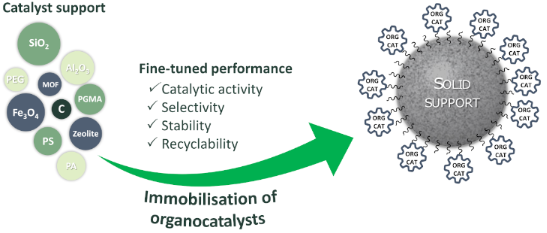
- binding with an electron-withdrawing group. This acidity can result in stronger hydrogen bonds between the substrate and the catalyst C30, which contains a bis(trifluoromethyl)phenyl-modified squaramide moiety. This stronger interaction potentially enhances the catalyst–substrate interaction, allowing for


The Groebke–Blackburn–Bienaymé reaction in its maturity: innovation and improvements since its 21st birthday (2019–2023)
Beilstein J. Org. Chem. 2024, 20, 1839–1879, doi:10.3762/bjoc.20.162
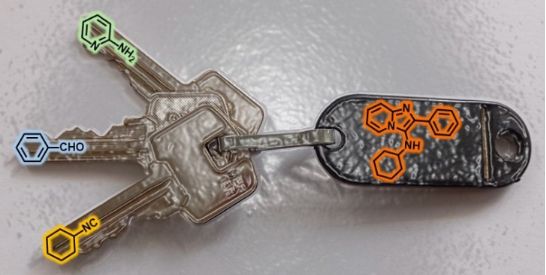
- a [1,5]-H shift [19], indazolo[3’,2’:2,3]imidazo[1,5-c]quinazolin-6(5H)-one 18 (Scheme 7) [20]. The favorable host–guest interaction between 14 and the reactants (demonstrated by 2D NMR and FTIR spectroscopy as well as by scanning electron micrography), combined with the acidity of the succinyl






Ring opening of photogenerated azetidinols as a strategy for the synthesis of aminodioxolanes
Beilstein J. Org. Chem. 2024, 20, 1671–1676, doi:10.3762/bjoc.20.148
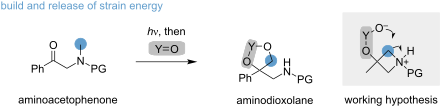
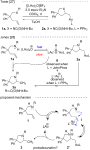
- 73% yield. Mechanistically, we believe that the hemiketal protonates the azetidine before a nucleophilic attack can occur. Therefore, the ring opening is critical to the acidity of the transient hemiacetals and to the basicity of the respective azetidines, explaining the unsuccessful attempts with 3a
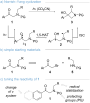
- . Dioxolanes 11 and 16 are inherently stable and we were unable to cleave the ketal after reaction. Thus, we investigated the feasibility to use boronic acids in the ring-opening reaction (Scheme 3c). Phenylboronic acid 17 is known to exhibit a similar acidity as the corresponding hemiketals providing a



Benzylic C(sp3)–H fluorination
Beilstein J. Org. Chem. 2024, 20, 1527–1547, doi:10.3762/bjoc.20.137

- facilitating HAT to produce a benzylic radical. Fluorine-atom-transfer (FAT) with Selectfluor then gave the benzyl fluoride. The low acidity of phenylacetic acids in polar aprotic solvents disfavoured decarboxylation (via an SET pathway) promoting HAT from the benzylic position. By using a mixture of 1:1 MeCN
- radical cation II. The acidity of benzylic protons is augmented after oxidation of the adjacent π-system, facilitating rapid proton transfer at this position, resulting in benzylic radical III [13][88]. Single-electron oxidation of the resulting benzylic radical is facile and expected to occur readily








Synthesis of 2-benzyl N-substituted anilines via imine condensation–isoaromatization of (E)-2-arylidene-3-cyclohexenones and primary amines
Beilstein J. Org. Chem. 2024, 20, 1468–1475, doi:10.3762/bjoc.20.130
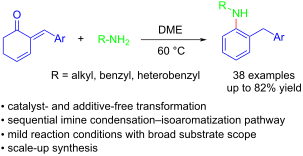
- pathway appeared to proceed via self-tautomerization, since 2-benzylphenol 5f was separated in 43% yield along with only 23% yield of normal product 4fa. When 4-CN substituted 3-cyclohexanone was investigated, phenol 5o was isolated exclusively. This was probably due to the significantly enhanced acidity


A comparison of structure, bonding and non-covalent interactions of aryl halide and diarylhalonium halogen-bond donors
Beilstein J. Org. Chem. 2024, 20, 1428–1435, doi:10.3762/bjoc.20.125
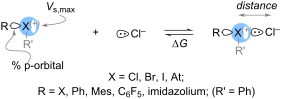
- electropositive σ-hole region, which is quantitatively described by Vs,max on the halogen, though other factors have also been considered (Scheme 1a) [1][2][3][4][23][24][25]. Huber and co-workers have posed the question: “Is There a Single Ideal Parameter for Halogen-Bonding Based Lewis Acidity?”, and concluded




Light on the sustainable preparation of aryl-cored dibromides
Beilstein J. Org. Chem. 2024, 20, 1076–1087, doi:10.3762/bjoc.20.95
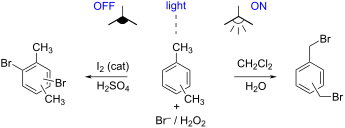
- decreasing acidity throughout the reaction progress. Since acidity was claimed to have a crucial role [63][64], we contemplated the addition of a small amount of sulphuric acid (Table 2, entry 4). This adjustment led to a significant enhancement towards 3b, resulting in a respectable 57 mol % selectivity


Enantioselective synthesis of β-aryl-γ-lactam derivatives via Heck–Matsuda desymmetrization of N-protected 2,5-dihydro-1H-pyrroles
Beilstein J. Org. Chem. 2024, 20, 940–949, doi:10.3762/bjoc.20.84
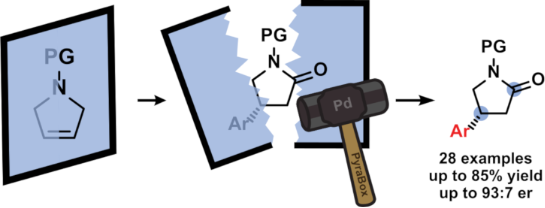
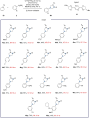
- products) were found to be somehow unstable when concentrated to dryness during work-up. We hypothesize that a possible cause of such instability might consist in the formation of a highly electrophilic iminium ion upon protonation of the hemiaminal ether by silica or glassware acidity and further




Three-component N-alkenylation of azoles with alkynes and iodine(III) electrophile: synthesis of multisubstituted N-vinylazoles
Beilstein J. Org. Chem. 2024, 20, 891–897, doi:10.3762/bjoc.20.79
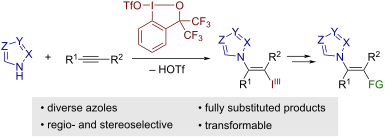
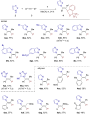
- ) resulted in 4aa as the major adduct, accompanied by the tetrazole adducts 4ja and 4ja’ (the ratio 4aa/4ja/4ja’ = 71:21:8; Scheme 3b). Superficially, these results appear correlated with the acidity of the corresponding azoles (pKa value: pyrazole, 19.8; 1,2,3-triazole, 13.9; tetrazole, 8.2), with the



Evaluation of the enantioselectivity of new chiral ligands based on imidazolidin-4-one derivatives
Beilstein J. Org. Chem. 2024, 20, 684–691, doi:10.3762/bjoc.20.62
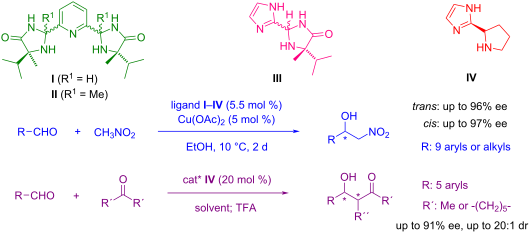
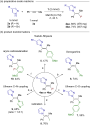
- derivatives possess similar enantioselectivity. However, compound IV is less catalytically active, probably due to the lower acidity of protonated 1H-imidazole than 1H-tetrazole [17]. Conclusion In this study, we successfully synthesised enantiomerically pure stereoisomers of 2,2'-(pyridin-2,6-diyl)-bis


Regioselective quinazoline C2 modifications through the azide–tetrazole tautomeric equilibrium
Beilstein J. Org. Chem. 2024, 20, 675–683, doi:10.3762/bjoc.20.61
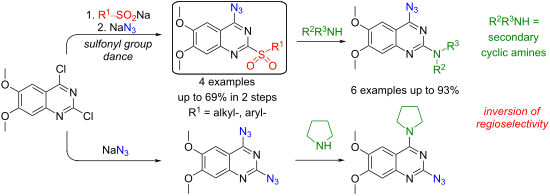
- reactivity in the SNAr reactions in comparison to polar solvents such as DMSO and DMF. This is explained by solvent hydrogen bond acidity and basicity descriptors α and β, for example, α(DMSO) = 0, β(DMSO) = 0.88, α(MeOH) = 0.43, β(MeOH) = 0.47. The rate constant of the SNAr process escalates with an


HPW-Catalyzed environmentally benign approach to imidazo[1,2-a]pyridines
Beilstein J. Org. Chem. 2024, 20, 628–637, doi:10.3762/bjoc.20.55
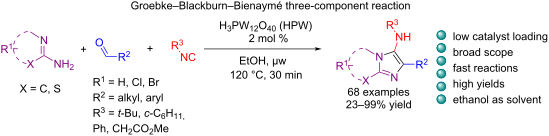
- expensive, extremely dangerous, strong oxidizing, and even explosive. In this scenario, heteropolyacids emerge as greener and safer alternatives due to their very strong Brønsted acidity. In particular, phosphotungstic acid (HPW) is an economical and green attractive catalyst for being cheap, non-toxic, and




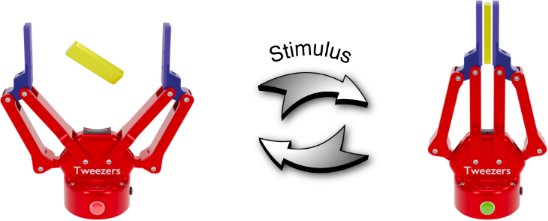
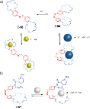
Switchable molecular tweezers: design and applications
Beilstein J. Org. Chem. 2024, 20, 504–539, doi:10.3762/bjoc.20.45




Ligand effects, solvent cooperation, and large kinetic solvent deuterium isotope effects in gold(I)-catalyzed intramolecular alkene hydroamination
Beilstein J. Org. Chem. 2024, 20, 479–496, doi:10.3762/bjoc.20.43
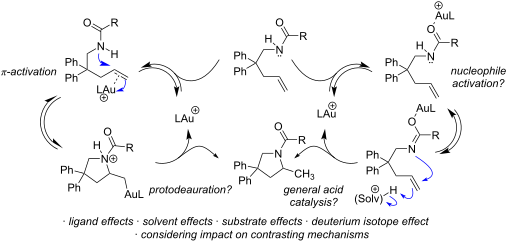
- withdrawing than an o-biphenyl, so presumably Lewis acidity is boosted here. Observations on ligand effect and decomposition Ligand effects on rates of hydroamination are amplified with slower reacting substrates and lower amounts of MeOH (higher relative amounts of bulk solvent methylene chloride). With the
- effect of MeOH co-solvent on the 1a → 3a transformation was due to its role as a hydrogen bonding donor (proton source), or due to its role as a hydrogen bonding acceptor (Lewis base) [44]. To this end, we examined the impact of different alcohols (varied acidity and polarity) and different non-protic
- with alkene but also the urea carbonyl. The Bronsted acidity of the urea would be increased by coordination to gold, and if such coordination is key to enabling reactivity, this would confirm the higher reactivity of urea 1a. The divergent behavior of sulfonamide 1d does not find an easy explanation







Green and sustainable approaches for the Friedel–Crafts reaction between aldehydes and indoles
Beilstein J. Org. Chem. 2024, 20, 379–426, doi:10.3762/bjoc.20.36
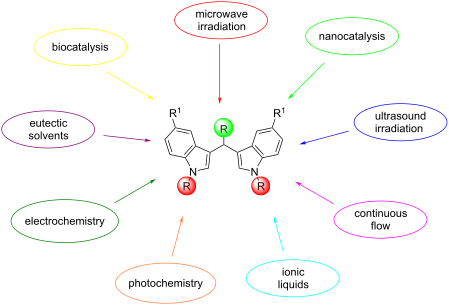
- were some issues that held back the universality of this protocol [125]. More recently, in 2022, Kaur et al. utilized CdS nanostructures which possess good Lewis acidity for the heterogeneous catalysis of various organic transformations including the synthesis of BIMs as shown by Chabukswar and his




Substitution reactions in the acenaphthene analog of quino[7,8-h]quinoline and an unusual synthesis of the corresponding acenaphthylenes by tele-elimination
Beilstein J. Org. Chem. 2024, 20, 243–253, doi:10.3762/bjoc.20.24
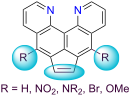
- equilibrium) under the action of an excess of nucleophiles as bases. Such dianions are characteristic of acenaphthene and have been repeatedly detected in subsequent transformations [18][19]. In our case, the CH-acidity of the CH2CH2 bridge should be even higher under the action of pyridine rings, and, if
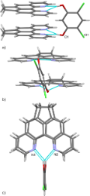
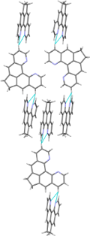
- 3.353 Å). Interestingly, as the acidity of the neighboring component in the crystal structure and the degree of proton transfer from it to the nitrogen atoms of quinoquinoline 5 decrease, the internitrogen distance regularly increases (N…N, Å): 2.709 (HCl), 2.808 (4,6-dichlororesorcinol), 2.813–2.835




Anion–π catalysis on carbon allotropes
Beilstein J. Org. Chem. 2023, 19, 1881–1894, doi:10.3762/bjoc.19.140
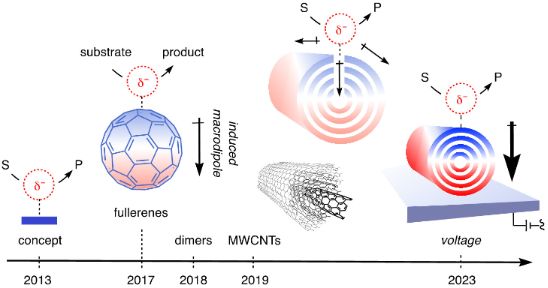
- because it took some time to find the benchmark reaction needed to develop the catalysts (Figure 2) [2]. With this operational enolate chemistry in hand, it quickly became clear that increasing π acidity at the same time decreases the stability of the catalyst [3][4][5]. This suggested that induced rather
- below that of unsubstituted NDIs despite stronger π acidity. Supported by experimental and computational data, this poor performance of dyad 46 was explained by lone-pair π interactions of the fullerene with the donating oxygens. These lone-pair π interactions were even more impactful on the sulfone
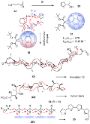
- level. Compared to the sulfoxides in 46, the catalytic activity of dyad 47 decreased rather than increased despite stronger π acidity. Supported by computational predictions [80][81], record activities in anion–π catalysis with fullerene dimers called for higher oligomers. However, synthetic efforts




Effects of the aldehyde-derived ring substituent on the properties of two new bioinspired trimethoxybenzoylhydrazones: methyl vs nitro groups
Beilstein J. Org. Chem. 2023, 19, 1713–1727, doi:10.3762/bjoc.19.125
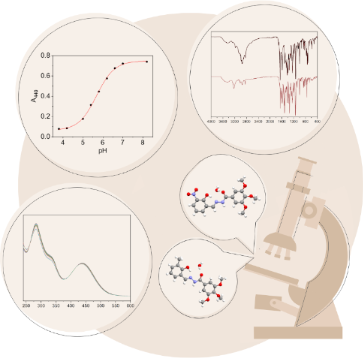
- ; phenol acidity; ring substituents; XRD; Introduction N-Acylhydrazones are a class of compounds that contain the hydrazonic functional group (–NH–N=C–) attached to an acyl group, which can be modified to generate a range of different structures with varying properties [1]. The versatility of this class
- (hdz-NO2). It is expected that those substituents impact the chemical (e.g., acidity and hydrolysis susceptibility) as well as the structural and spectroscopic properties of the compounds. Results and Discussion The methyl-substituted hdz-CH3 and its nitro-containing analogue hdz-NO2 were isolated as
- the phenol: an apparent value of 5.68 ± 0.02 was obtained. In spite of this difference in acidity, both hydrazones are stable at physiological-like conditions, especially hdz-CH3, as deprotonation of the phenol group also impacts the basicity of N1, increasing it and thus turning hdz-NO2 more




Synthesis of 5-arylidenerhodanines in L-proline-based deep eutectic solvent
Beilstein J. Org. Chem. 2023, 19, 1537–1544, doi:10.3762/bjoc.19.110

- obstacle to their use as solvent in syntheses. Acidity and alkalinity of DES may also have a significant impact in designing organic reactions. In 2003, Abbott described a DES formed by combination of choline chloride (ChCl) and urea in a 1:2 ratio with a melting point of 12 °C [15]. This DES was further


Complexes of resorcin[4]arene with secondary amines: synthesis, solvent influence on “in-out” structure, and theoretical calculations of non-covalent interactions
Beilstein J. Org. Chem. 2023, 19, 1525–1536, doi:10.3762/bjoc.19.109
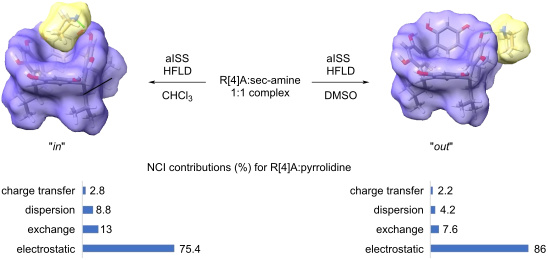
- detached, with the proton of the hydroxy group in the resorcinol unit of the anion R[4]A− located opposite to the unit from which a proton had previously been detached exhibiting the highest acidity (lowest value pKa2-2 = 9.86). The next two protons of the hydroxy groups in the anion R[4]A− are “less
- acidic”, which seems to explain the position of the amine molecules in the 1:2 complex. Interestingly, the “proton acidity” in the anions R[4]A2− (pKa3 = 11.28) and R[4]A3− (pKa4 = 11.45) is more than two orders of magnitude lower than the first proton of the hydroxy group in R[4]A (pKa1 = 9.23). This
- chains, complexes with 1:2 stoichiometry are formed. This stoichiometry is justified by calculations of the acidity of protons of hydroxy groups in the R[4]A molecule. These complexes are highly ionic because of their very low solubility in non-polar solvents. Complexes with higher stoichiometry are not