Search results
Search for "catalytic" in Full Text gives 1707 result(s) in Beilstein Journal of Organic Chemistry. Showing first 200.
Cone p-aminocalix[4]arenes enriched with ‘clickable’ alkyne or azide functionalities
Beilstein J. Org. Chem. 2026, 22, 399–415, doi:10.3762/bjoc.22.28
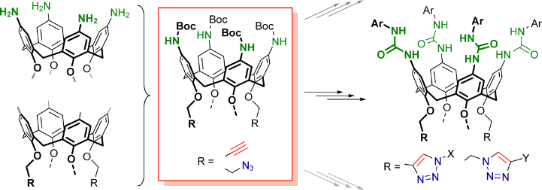
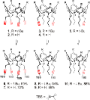
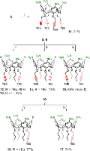
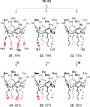
- narrow rim was obtained in 97% yield. Still, the deprotection of calixarene 23 to the desired propargyl ether 26 was far from complete even under heating, which significantly reduced the yield of this compound (Scheme 4). The difference in the efficiency of catalytic removal of the TBS groups observed
- for calixarenes 21–23 may be due to a reaction rate enhancement upon increasing the number of TBS-protected propargyl groups attached to the same calixarene core. Tentatively, this rate enhancement may be due to entrapment of the catalytic F– and/or water molecule(s) inside a pocket formed by the four
- hampering or preventing a catalytic hydrogenation of these compounds. On the other hand, in calixarenes 31 and 32, which are immediate products of the selective reduction of the nitro groups in compounds 29 and 30 under neutral or basic conditions, the free amino groups may be alkylated by a neighboring






Non-central chirality in organic chemistry
Beilstein J. Org. Chem. 2026, 22, 370–371, doi:10.3762/bjoc.22.24

- remote from the reaction site. Second, non-central chiral frameworks remain fertile ground for catalyst design, not only as derivatives of established motifs but also as newly conceived architectures that redefine how chirality can be embedded into catalytic systems. Third, the pronounced chiroptical and
Recent advances in the cleavage of non-activated amides
Beilstein J. Org. Chem. 2026, 22, 352–369, doi:10.3762/bjoc.22.23
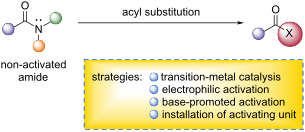
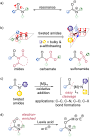
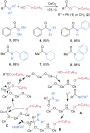
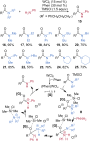
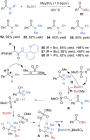
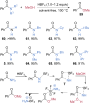
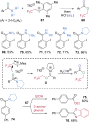
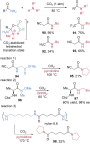
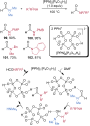
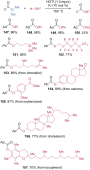
- , respectively. N-Phenylbenzamide (5) also afforded 1 in 86% yield. Secondary and tertiary acetamides 6–8 were also successfully cleaved, affording the product 2 in high yields. The CeO2 catalyst was recyclable, although a slight decrease in yield was observed upon reuse. Notably, catalytic activity was fully
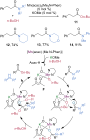
- for the hydrolysis of amides (Scheme 3) [47]. In the presence of a catalytic amount of Nb2O5, N,N-dialkylamides 3 and 4 and anilides 5 and 10 were efficiently converted into the corresponding carboxylic acids 9 in high yields, and the Nb2O5 catalyst could be successfully recycled. The authors proposed
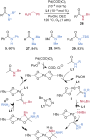
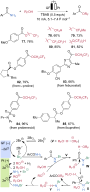
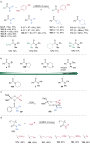
- good to high yields. The authors proposed that a manganese–potassium heterodinuclear alkoxylate complex F, formed from Mn(acac)2(Me2N-Phen), potassium methoxide, and n-butanol, serves as the key catalytic species. The dinuclear complex stabilizes the relevant transition states and intermediates










Synthesis of tricyclic fused pyrrolidine nitroxides from 2-alkynylpyrrolidine-1-oxyls
Beilstein J. Org. Chem. 2026, 22, 344–351, doi:10.3762/bjoc.22.22

- catalytic system comprising PPh3, CuI, and Pd(PPh3)2Cl2. This procedure afforded alkynones 6a,b in the yields of 75% and 44%, respectively (Scheme 3). In the IR spectra of 6a,b intense bands were observed at 2212–2214 and 1645–1647 cm−1, assigned to vibrations of the triple bond, and the conjugated carbonyl




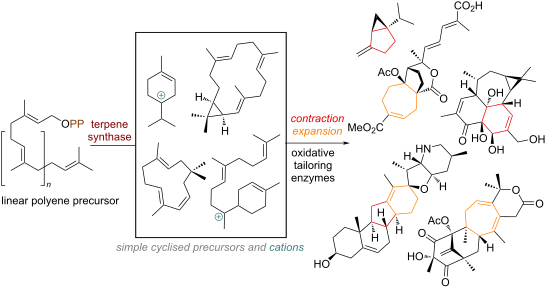
Ring contraction and ring expansion reactions in terpenoid biosynthesis and their application to total synthesis
Beilstein J. Org. Chem. 2026, 22, 289–343, doi:10.3762/bjoc.22.21






Arene activation via π-bond localization: concepts and opportunities
Beilstein J. Org. Chem. 2026, 22, 257–273, doi:10.3762/bjoc.22.19
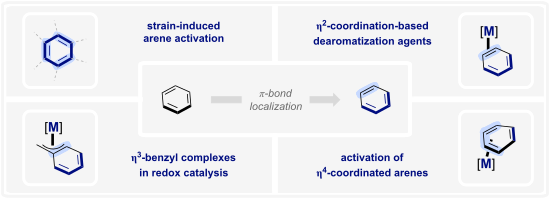
- as well as transition metal coordination to aromatic fragments in an η2-, η3-, and η4-fashion. The structural and reactivity consequences of these perturbations are analyzed in detail, and representative examples of stoichiometric and, where available, catalytic applications in synthesis are
- dearomatization is poised to open the door to new avenues of synthetic discovery. However, unlocking the full potential of arene π-bond localization as a synthetic strategy is contingent on its successful translation into a catalytic framework, which fundamentally requires the activation to be external. The
- following sections therefore focus on the selective disruption of aromaticity through the formation of transition metal–arene π-complexes. Transient and reversible coordination of transition metals to aromatic π-systems is a key feature of many catalytic transformations, with the oxidative addition of




A mild and atom-efficient four-component cascade strategy for the construction of biologically relevant 4-hydroxyquinolin-2(1H)-one derivatives
Beilstein J. Org. Chem. 2026, 22, 244–256, doi:10.3762/bjoc.22.18
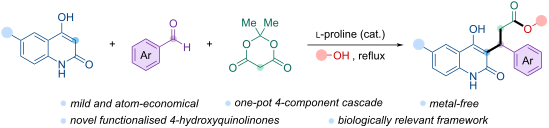
- the presence of catalytic DMF in ethanol (Scheme 3a) [40]. A small amount of ethanol ensured homogeneity of the reaction mixture, allowed gradual temperature increase, and prevented sudden charring. DMF, with its high boiling point, acted as a homogenizer by preventing solidification after ethanol


Synthesis of diaryl phosphates using phytic acid as a phosphorus source
Beilstein J. Org. Chem. 2026, 22, 213–223, doi:10.3762/bjoc.22.15
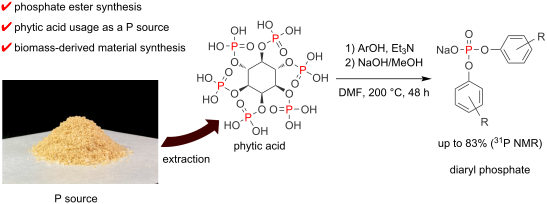
- esters could be slightly improved by using a catalytic amount of 1-butylimidazole; however, in the present work, a catalyst was not employed to simplify the purification step. The reaction temperature in this process should have been set to 230 °C. However, at this temperature, a burnt black material was




Screwing the helical chirality through terminal peri-functionalization
Beilstein J. Org. Chem. 2026, 22, 205–212, doi:10.3762/bjoc.22.14
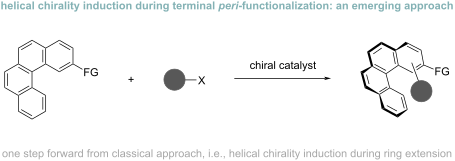
- [22][23]. A very recent study also highlighted their potential application in biological interfaces [1], thus highlighting the versatility of helicenes in medicine along with next-generation materials and catalytic systems. Due to the above-mentioned applications of chiral helicenes various synthetic
- through a catalytic kinetic resolution (KR) process was developed by Liu and co-workers [32]. The authors screened a range of organocatalysts, i.e., Takemoto’s thiourea catalyst, (S,S)-1,2-cyclohexanediamine-derived thioureas, cinchona alkaloid-derived thiourea, and squaramides to achieve the desired
- and with excellent enantioselectivities. The catalytic system operated under mild conditions within a practical timeframe and demonstrated broad substrate tolerance, providing a range of chiral helicenes. Notably, unsymmetrical phosphine oxides also underwent smooth Michael addition, with excellent


Base-promoted deacylation of 2-acetyl-2,5-dihydrothiophenes and their oxygen-mediated hydroxylation
Beilstein J. Org. Chem. 2026, 22, 192–204, doi:10.3762/bjoc.22.13
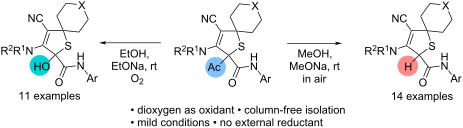
- Oxidative transformations are an important area of modern organic synthesis [1], producing a broad range of valuable synthetic products for the industry. A variety of catalytic reactions were developed for the oxidative conversions of unsaturated compounds [2][3][4][5], alcohols [6][7], alkanes [8][9][10
- 1A) [15][16]. Oxidative rearrangements of carbonyl compounds are based on Dakin [17] and Baeyer–Villiger reactions [18] and their modifications. Cyclic and acyclic ketones were oxidized to afford lactones and esters, accordingly, involving catalytic reactions with hydrogen peroxide [19][20][21][22
- ], oxygen [23][24] or with m-CPBA (Scheme 1B) [25][26] or non-catalytic transformations [27]. The few known oxidative transformations of o- or p-hydroxy-substituted aromatic ketones, that in most cases lead to phenols, involve the use of hydrogen peroxide as an oxygen source (Scheme 1C) [20][25][26




Asymmetric Mannich reaction of aromatic imines with malonates in the presence of multifunctional catalysts
Beilstein J. Org. Chem. 2026, 22, 151–157, doi:10.3762/bjoc.22.8
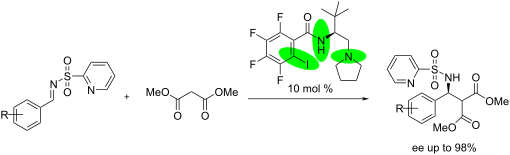
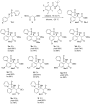
- ], halogen bonding is more frequently employed as a component of multifunctional catalytic systems [23][24][25]. Multifunctionality of the catalyst is essential to intensify weak noncovalent interactions. Results and Discussion As a continuation of our previous studies [18][24], we now report an asymmetric
- catalyst and the imine and malonate attacks from si-face affording the product in S-configuration (Figure 2). To demonstrate the utility of the elaborated catalytic system, the Mannich reaction between aromatic imines, both with electron-withdrawing and electron-donating substituents in the phenyl ring
- method and applications of obtained products are under study. Experimental General procedure for the catalytic asymmetric Mannich reaction Catalyst E (2.7 mg, 0.0057 mmol, 0.01 equiv) was weighed into a reaction vessel, imine (0.057 mmol, 1.0 equiv) and toluene (285 µL) were added. The mixture was


Total synthesis of natural products based on hydrogenation of aromatic rings
Beilstein J. Org. Chem. 2026, 22, 88–122, doi:10.3762/bjoc.22.4
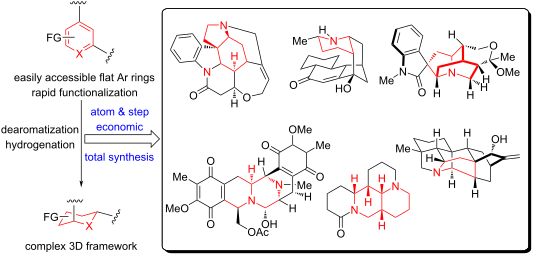
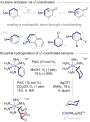
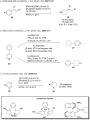
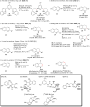
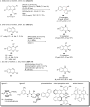
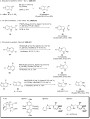
- saturation the aromatic ring facilitates synthetic chemists to efficiently synthesize natural products with complex three-dimensional structures. Recent advances in catalyst and ligand design have enabled unprecedented progress in the catalytic hydrogenation of (hetero)aromatic systems. Quinoline
- , isoquinoline, pyridine, and related substrates can now be reduced with high efficiency and stereoselectivity, providing efficient access to saturated and partially saturated architectures vital to synthetic chemistry. Furthermore, catalytic asymmetric aromatic hydrogenation has facilitated the asymmetric total
- synthesis of complex natural products and pharmaceutical agents. This review highlights recent advances in catalytic (hetero)arene hydrogenation, with a focus on its application in natural product synthesis. Keywords: aromatic rings; dearomatization; hydrogenation; natural products; total synthesis











Advances in Zr-mediated radical transformations and applications to total synthesis
Beilstein J. Org. Chem. 2026, 22, 71–87, doi:10.3762/bjoc.22.3
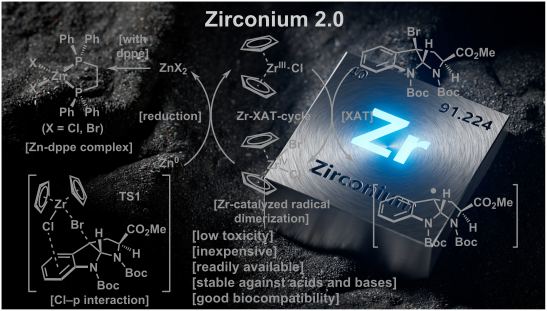
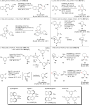
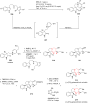
- and accelerating the whole process. Zr-mediated catalytic radical reactions In recent years, numerous chemical transformations employing photoredox catalysts in combination with catalytic amounts of zirconium complexes have been reported. In this section, representative examples of such reactions are
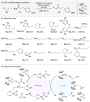
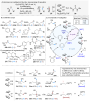
- the strong affinity of zirconium for halogens, they developed a catalytic system to address this issue. Treatment of alkyl chloride 34 with zirconocene bistosylate in the presence of an Ir-photoredox catalyst promoted halogen atom transfer to generate alkyl radical 35. This radical then abstracted a
- yields. The catalytic system was further extended to the borylation of alkyl chlorides. (Scheme 7B). Under XAT conditions with B2(cat)2, the in situ-generated alkyl radical was trapped by diborane compound to form intermediate 39, which was subsequently converted into pinacol boronate 40 upon treatment








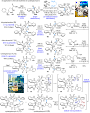
Synthesis and applications of alkenyl chlorides (vinyl chlorides): a review
Beilstein J. Org. Chem. 2026, 22, 1–63, doi:10.3762/bjoc.22.1
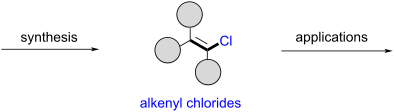
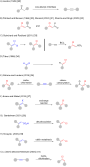
- stereocontrolled olefin metathesis with molybdenum catalysts to access trisubstituted alkenes including alkenyl chlorides (Figure 3H) [39]. Two recent reviews by Lu [40] and Nishiwaki [41] provide overviews of current developments in the hydrochlorination of alkynes, highlighting emerging catalytic strategies
- of the desired products (Scheme 20B). The authors proposed that BTC functions by regenerating benzoyl chloride in situ from benzoic acid, thereby allowing the use of benzoyl chloride in catalytic quantities (Scheme 20C). Under similar conditions – benzoyl chloride (2.2 equiv), room temperature
- ZnCl2·etherate exhibits superior catalytic activity compared to anhydrous ZnCl2. Although counterintuitive from the standpoint of Lewis acidity, this enhanced reactivity was attributed to the significantly improved solubility of the etherate complex, which compensates for its diminished intrinsic Lewis

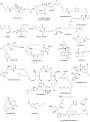



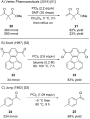


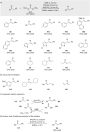

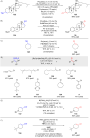


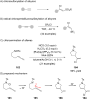












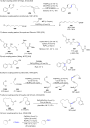


Total synthesis of asperdinones B, C, D, E and terezine D
Beilstein J. Org. Chem. 2025, 21, 2730–2738, doi:10.3762/bjoc.21.210
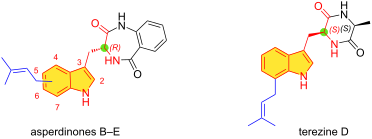
- Discussion Adopting approach A, we considered prenylation of the known methyl (2S)-((tert-butoxycarbonyl)amino)-3-(7-iodo-1H-indol-3-yl)propanoate (7) [30] with prenylzinc bromide using a catalytic system reported by Buchwald. In that study, Buchwald’s group achieved the C-6 prenylation of 6-bromoindole in


Visible-light-driven NHC and organophotoredox dual catalysis for the synthesis of carbonyl compounds
Beilstein J. Org. Chem. 2025, 21, 2584–2603, doi:10.3762/bjoc.21.200
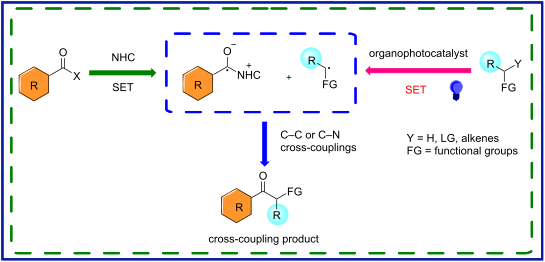
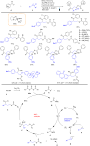
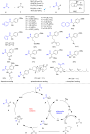
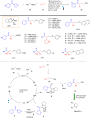
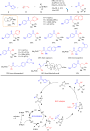
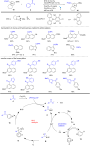
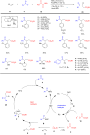
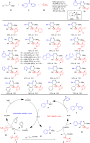
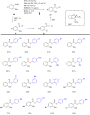
- carbonyl compounds and pharmaceutically relevant intermediates. Moreover, this catalytic system operates under green and sustainable conditions, tolerating a broad range of functional groups and substrate scope, and utilizes low-cost, atom-economical, non-toxic starting materials. Keywords: dual catalysis
- functional groups are found in various drugs, natural products, and optoelectronic materials. In the last three decades, N-heterocyclic carbenes (NHCs) have been renowned as versatile organocatalysts, including thiazolium, imidazolium, and triazolium moieties. NHCs are extensively used in many catalytic
- equivalents, which is crucial in dual or triple catalytic cycles. The electron-rich carbene center facilitates faster SET processes in photocatalytic reactions. Triazolium-based NHCs exhibit higher oxidative and photochemical stability, making them well-suited for visible-light-driven catalytic

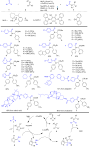



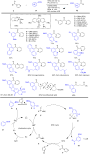

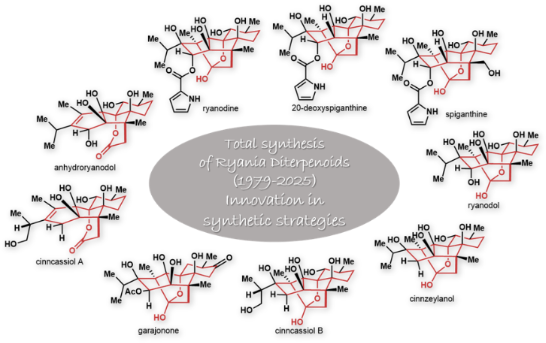
Total syntheses of highly oxidative Ryania diterpenoids facilitated by innovations in synthetic strategies
Beilstein J. Org. Chem. 2025, 21, 2553–2570, doi:10.3762/bjoc.21.198
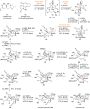
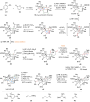
- atmosphere significantly suppressed side reactions, yielding the cyclized product in excellent yield and selectivity. This indicates that N-formylsaccharin, beyond acting as a CO-releasing agent, may function as a ligand in the catalytic cycle to regulate the palladium catalyst’s activity and stability







Pentacyclic aromatic heterocycles from Pd-catalyzed annulation of 1,5-diaryl-1,2,3-triazoles
Beilstein J. Org. Chem. 2025, 21, 2524–2534, doi:10.3762/bjoc.21.194
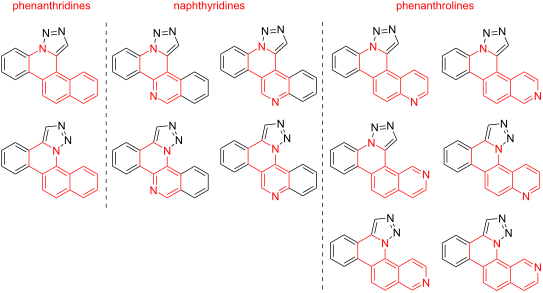
- modification of the base-catalyzed conditions reported by Kwok [53], where a stoichiometric plus additional catalytic amount of tetraethylammonium hydroxide base in DMSO solvent was used to promote tandem trimethylsilyl deprotection and cycloaddition in one preparation (Figure 3). Isolated yields of this


Palladium-catalyzed regioselective C1-selective nitration of carbazoles
Beilstein J. Org. Chem. 2025, 21, 2479–2488, doi:10.3762/bjoc.21.190
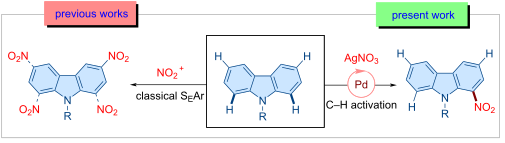
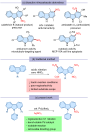
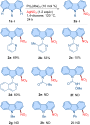
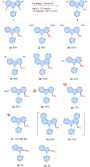
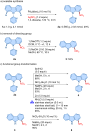
- catalytic pathway through a series of experiments (Scheme 5). To probe the nature of the C–H activation step, the reaction was conducted in fully deuterated methanol as both cosolvent and solvent (Scheme 5a). No H/D scrambling was observed at the C1 position of the recovered starting material 1a, suggesting
- palladacycle 6 as the catalyst, and the desired nitrated product 2a was obtained in 48% yield (Scheme 5c). This result supports the involvement of palladacycle intermediate 6 in the catalytic cycle. Proposed mechanism Based on our experimental results and related literature precedents [68][69][74][75][76][77
- ][78][79][80], a plausible catalytic cycle is proposed (Figure 2). The catalytic cycle commences with the formation of active palladium(II) species 7 in the presence of AgNO3. Coordination of the pyridyl group of 1a to Pd(NO₃)₂ is followed by irreversible C–H bond cleavage via cyclopalladation to form


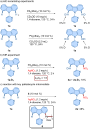
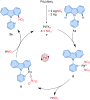
Synthesis of the tetracyclic skeleton of Aspidosperma alkaloids via PET-initiated cationic radical-derived interrupted [2 + 2]/retro-Mannich reaction
Beilstein J. Org. Chem. 2025, 21, 2470–2478, doi:10.3762/bjoc.21.189
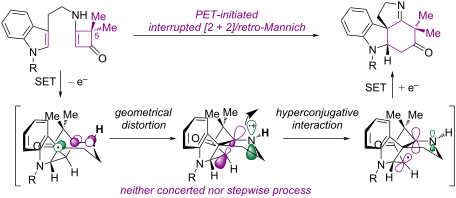
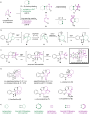
- undergo reductive SET in the presence of [FCNIr(II)Pic]−. This leads to the regeneration of [FCNIr(III)Pic] to complete the catalytic cycle and formation of the final product via proton transfer. Intrinsic reaction coordinate (IRC) analysis showed the reaction coordinate connecting the transition state


Ex-situ generation of gaseous nitriles in two-chamber glassware for facile haloacetimidate synthesis
Beilstein J. Org. Chem. 2025, 21, 2465–2469, doi:10.3762/bjoc.21.188
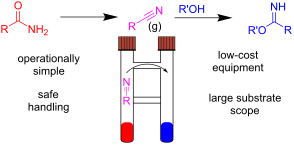
- trifluoroacetimidates to be more stable than their trichloroacetimidate counterparts [25]. Since these early examples trichloroacetimidates have become one of the most common glycosyl donors used in catalytic glycosylation, whereas the trifluoroacetimidates have received much less attention. Results and Discussion We
- used building blocks in glycosylations. For the synthesis chamber (A) was loaded with trifluoroacetamide (6 equiv) in pyridine. In the other chamber (B), the hemiacetal (ca. 500 mg, 1 equiv) was dissolved in CH2Cl2 together with a catalytic amount of DBU. Upon addition of trifluoroacetic anhydride


The intramolecular stabilizing effects of O-benzoyl substituents as a driving force of the acid-promoted pyranoside-into-furanoside rearrangement
Beilstein J. Org. Chem. 2025, 21, 2456–2464, doi:10.3762/bjoc.21.187
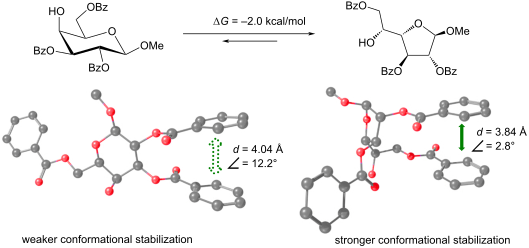
- observed another example of the PIF-rearrangement [31] where treatment with catalytic amounts of TfOH in CH2Cl2 unexpectedly shifted the equilibrium between selectively protected galactoside 1 and furanoside 2 in favor of the furanose form (Figure 3A), thus opening a new route towards Galf-containing



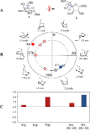

Catalytic enantioselective synthesis of selenium-containing atropisomers via C–Se bond formations
Beilstein J. Org. Chem. 2025, 21, 2447–2455, doi:10.3762/bjoc.21.186
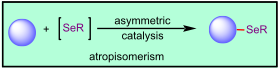
- Atropisomers are not only prevalent in biologically active natural products and pharmaceuticals, but they have also garnered increasing attention for their effectiveness as ligands and catalysts in the field of catalytic asymmetric synthesis. Asymmetric catalysis serves as a key strategy for the
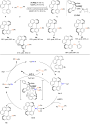
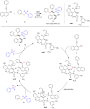
- currently lacking. This review aims to provide an overview of recent developments in the catalytic enantioselective synthesis of selenium-containing atropisomers via C–Se bond formation. We hope this review will serve as a valuable reference for researchers interested in further exploring this area
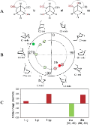
- participate in various types of asymmetric reactions, significantly improving the selectivity of reactions (Figure 1) [10][11][12][13][14]. Catalytic asymmetric synthesis is the main method to construct chiral organic selenium-containing compounds. Centrally chiral selenium-containing compounds can be




Transformation of the cyclohexane ring to the cyclopentane fragment of biologically active compounds
Beilstein J. Org. Chem. 2025, 21, 2416–2446, doi:10.3762/bjoc.21.185
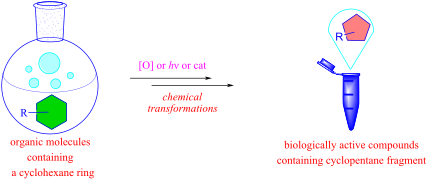
- 111 led to (±)-preterrenoid (107) with 68% yield, which was subjected to stereoselective oxidation with magnesium monoperoxyphthalate (MMPP) to give (±)-terrenoid (108) as a single diastereomer. Subsequent treatment of the key precursor 108 with catalytic amounts of NaOMe in MeOH resulted in
- of reactivity, they are environmentally sustainable alternatives to heavy metals. The advantage of hypervalent catalytic systems based on iodine lies in their reusability [63]. The oxidative contraction of the tetralone cycle 117 depended on the stoichiometric amounts of iodine(III)-based chiral


The high potential of methyl laurate as a recyclable competitor to conventional toxic solvents in [3 + 2] cycloaddition reactions
Beilstein J. Org. Chem. 2025, 21, 2389–2415, doi:10.3762/bjoc.21.184
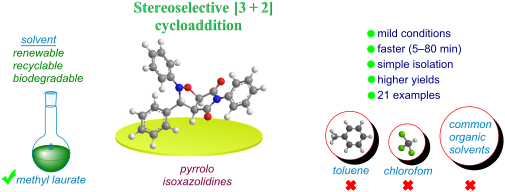
- is fully consumed by the end of the five-minute reaction period. In academic and industrial communities alike, there is a high level of interest in catalytic methods of Green Chemistry that allow stereoselective transformations [125][126][127][128]. It is imperative to develop stereoselective
- synthetic methods for cycloaddition reactions. In this study, a series of natural organic compounds from diverse classes and an acetonide [129] derivative were selected for investigation, with a focus on their potential catalytic effects in relation to the alteration of cis/trans product distribution under