Search results
Search for "chemical biology" in Full Text gives 179 result(s) in Beilstein Journal of Organic Chemistry.
Total synthesis: an enabling science
Beilstein J. Org. Chem. 2023, 19, 474–476, doi:10.3762/bjoc.19.36
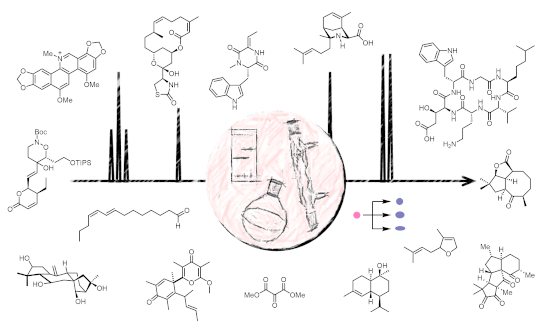
- the success of total synthesis and can be a source of new discoveries. Indeed, as a science allowing the preparation of useful functional compounds, it is strongly connected to biological and medicinal studies, while the development of natural-product-based tools for chemical biology often requires


Transition-metal-catalyzed C–H bond activation as a sustainable strategy for the synthesis of fluorinated molecules: an overview
Beilstein J. Org. Chem. 2023, 19, 448–473, doi:10.3762/bjoc.19.35
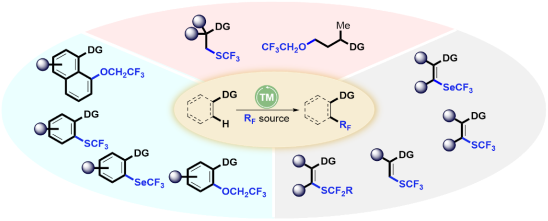
- ; palladium; synthetic method; Introduction Nowadays, fluorinated molecules represent an indispensable class of molecules in chemistry and in chemical biology. Thanks to the unique properties of the fluorine atom or fluorinated groups to modulate biological and physicochemical properties of the parent non








Asymmetric synthesis of a stereopentade fragment toward latrunculins
Beilstein J. Org. Chem. 2023, 19, 428–433, doi:10.3762/bjoc.19.32
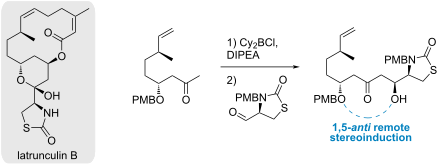
- synthesize latrunculin analogues for chemical biology studies. In particular, our initial goal was to protect an inactive lactol-opened form of latrunculins, which could cyclize in vivo upon deprotection under a specific stimulus (light or enzyme, for instance) for biological applications. This challenge


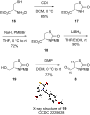


Revisiting the bromination of 3β-hydroxycholest-5-ene with CBr4/PPh3 and the subsequent azidolysis of the resulting bromide, disparity in stereochemical behavior
Beilstein J. Org. Chem. 2023, 19, 91–99, doi:10.3762/bjoc.19.9
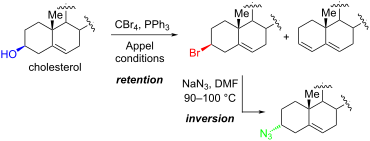
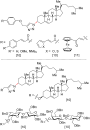
- cholesterol biosynthesis (statins). However, the side effects of these drugs are controversial. Therefore, synthetic cholesterol derivatives came into focus for recent applications in chemical biology and materials science [6]. The advances have been summarized in comprehensive reviews [7][8]. In previous


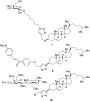


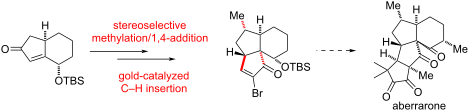
Synthetic study toward the diterpenoid aberrarone
Beilstein J. Org. Chem. 2022, 18, 1625–1628, doi:10.3762/bjoc.18.173
- Liang Shi Zhiyu Gao Yiqing Li Yuanhao Dai Yu Liu Lili Shi Hong-Dong Hao Department Shaanxi Key Laboratory of Natural Products & Chemical Biology, College of Chemistry & Pharmacy, Northwest A&F University, Yangling, Shaanxi 712100, China State Key Laboratory of Chemical Oncogenomics, Guangdong


Solid-phase total synthesis and structural confirmation of antimicrobial longicatenamide A
Beilstein J. Org. Chem. 2022, 18, 1560–1566, doi:10.3762/bjoc.18.166
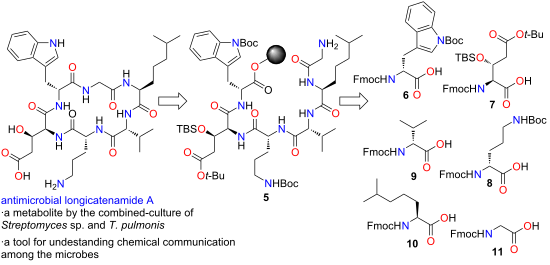
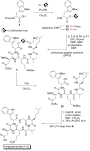
- serve as both drug leads and research tools for chemical biology [1]. Because the rediscovery rate of these compounds has increased in the last few decades, new approaches to explore natural products are in demand [2]. To this end, the combined-culture strategy has been applied to discover new natural



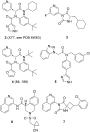
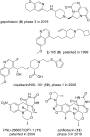
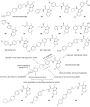
On drug discovery against infectious diseases and academic medicinal chemistry contributions
Beilstein J. Org. Chem. 2022, 18, 1355–1378, doi:10.3762/bjoc.18.141
- chemists consider? Grant-wise, the last 40 years have seen the rise of chemical biology and the discovery of many types of large constructs providing tools often useful for life science but far less effective in human medicine. An excellent review [226] has recently listed these approaches but even if they
- have to some degree improved the arsenal of compounds available for human medicine, the inherent pharmacological limitations of these large chemical constructs remains a major issue [227]. This means that for most health problems, “classic” medicinal chemistry is not going to be replaced by chemical
- biology. To contribute to medicinal chemistry, one axis remains to provide chemical libraries with new chemical entities, another would be to reconsider previous leads and attempt to improve them. A concern for the first axis is that securing a grant for the synthesis of series of drug-like molecules







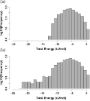
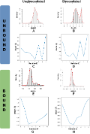
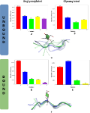
Computational model predicts protein binding sites of a luminescent ligand equipped with guanidiniocarbonyl-pyrrole groups
Beilstein J. Org. Chem. 2022, 18, 1322–1331, doi:10.3762/bjoc.18.137
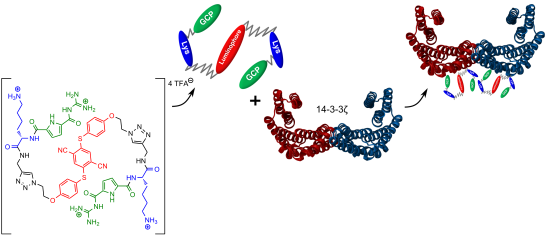
- Department of Molecular Biology II, Center for Medical Biotechnology (ZMB), University of Duisburg-Essen, Universitätsstraße 5, 45141 Essen, Germany Laboratory of Chemical Biology, Department of Biomedical Engineering and Institute for Complex Molecular Systems, Eindhoven University of Technology, PO Box 513




Identification of the new prenyltransferase Ubi-297 from marine bacteria and elucidation of its substrate specificity
Beilstein J. Org. Chem. 2022, 18, 722–731, doi:10.3762/bjoc.18.72
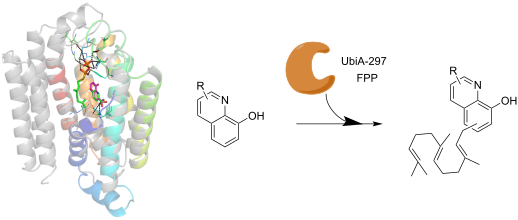
- Jamshid Amiri Moghaddam Huijuan Guo Karsten Willing Thomas Wichard Christine Beemelmanns Chemical Biology Leibniz Institute for Natural Product Research and Infection Biology e.V., Hans-Knöll-Institute, Beutenbergstraße 11a, 07745 Jena, Germany Bio Pilot Plant, Leibniz Institute for Natural


Amamistatins isolated from Nocardia altamirensis
Beilstein J. Org. Chem. 2022, 18, 360–367, doi:10.3762/bjoc.18.40
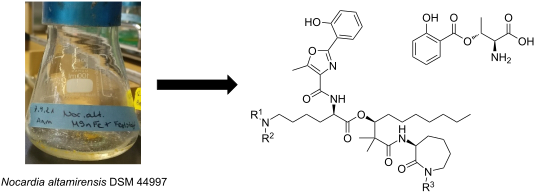
- Till Steinmetz Wolf Hiller Markus Nett Department of Biochemical and Chemical Engineering, Laboratory of Technical Biology, TU Dortmund University, Emil-Figge-Strasse 66, 44227 Dortmund, Germany Department of Chemistry and Chemical Biology, TU Dortmund University, Germany 10.3762/bjoc.18.40


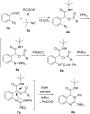
New efficient synthesis of polysubstituted 3,4-dihydroquinazolines and 4H-3,1-benzothiazines through a Passerini/Staudinger/aza-Wittig/addition/nucleophilic substitution sequence
Beilstein J. Org. Chem. 2022, 18, 286–292, doi:10.3762/bjoc.18.32
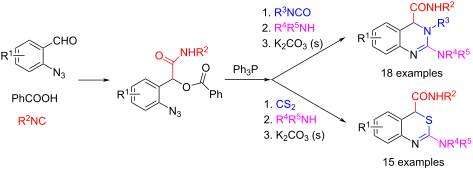
- Long Zhao Mao-Lin Yang Min Liu Ming-Wu Ding Key Laboratory of Pesticide & Chemical Biology of Ministry of Education, Hubei International Scientific and Technological Cooperation Base of Pesticide and Green Synthesis, Central China Normal University, Wuhan, 430079, P. R. China 10.3762/bjoc.18.32




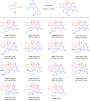
Bifunctional thiourea-catalyzed asymmetric [3 + 2] annulation reactions of 2-isothiocyanato-1-indanones with barbiturate-based olefins
Beilstein J. Org. Chem. 2022, 18, 25–36, doi:10.3762/bjoc.18.3
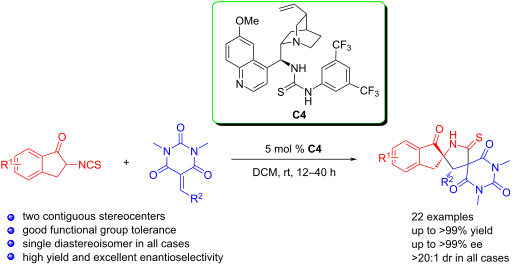
- availability of these compounds will provide promising candidates for chemical biology and drug discovery. Experimental General information Commercially available compounds were used without further purification. Solvents were dried according to standard procedures. Column chromatography was performed with




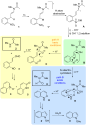
A photochemical C=C cleavage process: toward access to backbone N-formyl peptides
Beilstein J. Org. Chem. 2021, 17, 2932–2938, doi:10.3762/bjoc.17.202
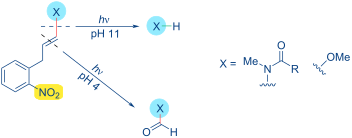
- concept described here might be useful for the synthetic unmasking of relatively sensitive imido structures. For chemical biology applications, the results point to a far more diverse photochemistry than previously assumed for vinylogous photocleavage systems. Although formyl hydrolysis to the “expected


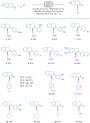
Electrocatalytic C(sp3)–H/C(sp)–H cross-coupling in continuous flow through TEMPO/copper relay catalysis
Beilstein J. Org. Chem. 2021, 17, 2650–2656, doi:10.3762/bjoc.17.178
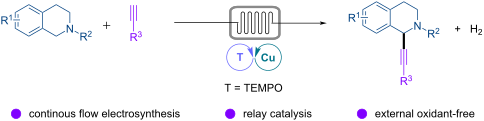
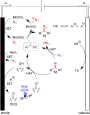
- Bin Guo Hai-Chao Xu Key Laboratory of Chemical Biology of Fujian Province and College of Chemistry and Chemical Engineering, Xiamen University, People’s Republic of China 10.3762/bjoc.17.178 Abstract Electrocatalytic dehydrogenative C(sp3)–H/C(sp)–H cross-coupling of tetrahydroisoquinolines with




Enantioenriched α-substituted glutamates/pyroglutamates via enantioselective cyclopropenimine-catalyzed Michael addition of amino ester imines
Beilstein J. Org. Chem. 2021, 17, 2077–2084, doi:10.3762/bjoc.17.134
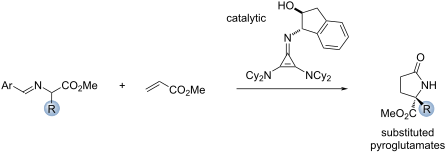
- Zara M. Seibel Jeffrey S. Bandar Tristan H. Lambert Department of Chemistry, Columbia University, New York, New York 10027, USA Department of Chemistry and Chemical Biology, Cornell University, Ithaca, New York 14853, USA 10.3762/bjoc.17.134 Abstract A procedure for the enantioselective synthesis


Sustainable manganese catalysis for late-stage C–H functionalization of bioactive structural motifs
Beilstein J. Org. Chem. 2021, 17, 1733–1751, doi:10.3762/bjoc.17.122

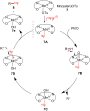
- operationally simple fluorination strategy suitable for bioactive structural motifs. Manganese-catalyzed late-stage C–H azidation In organic synthesis, organic azides are of considerable significance in the fields of medicinal chemistry, chemical biology, and nanotechnology as they can participate in elegant
- -containing peptide 37g. Conclusion Metal-catalyzed late-stage functionalization has shown significant potential in the fields of medicinal chemistry, agrochemistry, and chemical biology. While transition metal catalysis has been a reliable and efficient strategy for late-stage functionalization, it suffers








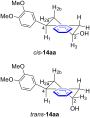
Cascade intramolecular Prins/Friedel–Crafts cyclization for the synthesis of 4-aryltetralin-2-ols and 5-aryltetrahydro-5H-benzo[7]annulen-7-ols
Beilstein J. Org. Chem. 2021, 17, 1481–1489, doi:10.3762/bjoc.17.104
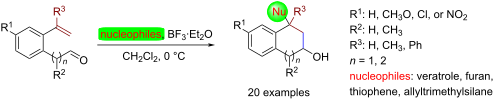
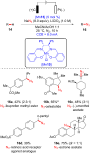
- + antagonist, and exhibits promising anti-oxidant properties. 4-Phenyl-2-propionamidotetralin (4-P-PDOT, 3, Figure 1) [5] is a melatonin MT2 selective antagonist that can be used to map melatonin receptor subtypes in tissue and serves as a chemical biology tool to identify sub-type selective analogues with




Beyond ribose and phosphate: Selected nucleic acid modifications for structure–function investigations and therapeutic applications
Beilstein J. Org. Chem. 2021, 17, 908–931, doi:10.3762/bjoc.17.76
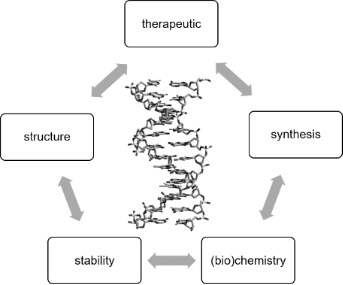
- Christopher Liczner Kieran Duke Gabrielle Juneau Martin Egli Christopher J. Wilds Department of Chemistry and Biochemistry, Concordia University, Montréal, Québec H4B 1R6, Canada Department of Biochemistry, Vanderbilt Institute of Chemical Biology, and Center for Structural Biology, School of




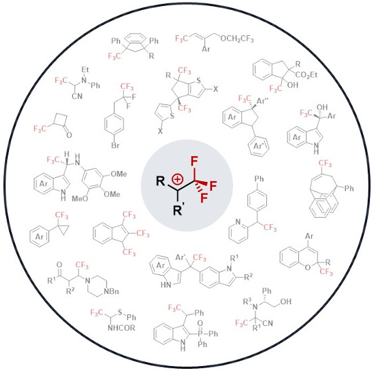
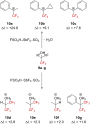
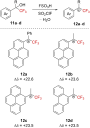
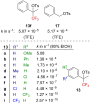
CF3-substituted carbocations: underexploited intermediates with great potential in modern synthetic chemistry
Beilstein J. Org. Chem. 2021, 17, 343–378, doi:10.3762/bjoc.17.32
- beneficial effects generally resulting from the introduction of these fluorinated motifs [13], also participated in this development. These fluorine effects are nowadays remarkably established in many domains, including medicinal, organic, and organometallic chemistry, catalysis, chemical biology, and

















19F NMR as a tool in chemical biology
Beilstein J. Org. Chem. 2021, 17, 293–318, doi:10.3762/bjoc.17.28
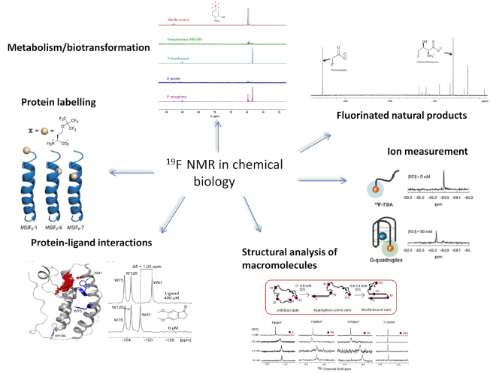
- use of 19F NMR in the broad field of chemical biology [Cobb, S. L.; Murphy, C. D. J. Fluorine Chem. 2009, 130, 132–140] and present here a summary of the literature from the last decade that has the technique as the central method of analysis. The topics covered include the synthesis of new
- biosynthesis and biodegradation of fluorinated organic compounds is also described. Keywords: biotransformation; chemical biology; fluorine; 19F NMR; probes; protein structure; Introduction Although fluorine is abundant in the environment, it is not a nutrient nor is it a feature of biochemistry for most
- important element in the broader space of chemical biology [2]. Many commercial and industrial compounds are fluorinated, including refrigerants, degreasers, drugs, pesticides and anti-stick materials, and consequently there is a high degree of interaction between fluorinated compounds and nature [3


Comparative ligand structural analytics illustrated on variably glycosylated MUC1 antigen–antibody binding
Beilstein J. Org. Chem. 2020, 16, 2540–2550, doi:10.3762/bjoc.16.206

- biological interaction, searching for structural data, and then searching for the molecular rationale. This is the connection between biology, chemical biology, and chemistry. The Galaxy project is a popular open web-based platform for accessible, reproducible, and transparent computational research [1




Automated high-content imaging for cellular uptake, from the Schmuck cation to the latest cyclic oligochalcogenides
Beilstein J. Org. Chem. 2020, 16, 2007–2016, doi:10.3762/bjoc.16.167
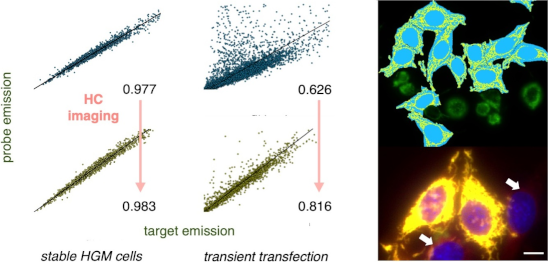
- Remi Martinent Javier Lopez-Andarias Dimitri Moreau Yangyang Cheng Naomi Sakai Stefan Matile School of Chemistry and Biochemistry, National Centre of Competence in Research (NCCR) Chemical Biology, University of Geneva, Geneva, Switzerland 10.3762/bjoc.16.167 Abstract Recent progress with
- for help with the high-content microscopy and analysis, J. A. Kritzer (Tufts University) and M. Hensel (Osnabrück University) for providing materials, and the Bioimaging and ACCESS platforms for services. Funding We thank the University of Geneva, the NCCR Chemical Biology, the NCCR Molecular Systems




A cyclopeptide and three oligomycin-class polyketides produced by an underexplored actinomycete of the genus Pseudosporangium
Beilstein J. Org. Chem. 2020, 16, 1100–1110, doi:10.3762/bjoc.16.97
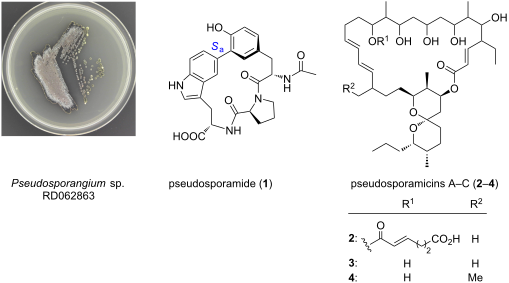
- ], medium supplements for selective microbial/cell culture [6][7][8], or biochemical reagents for pharmacological/chemical biology studies [9] and continue to be indispensable to support and improve human welfare and social life. In recent years, in accordance with the advancement of genome and in silico


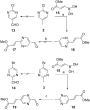
Design and synthesis of diazine-based panobinostat analogues for HDAC8 inhibition
Beilstein J. Org. Chem. 2020, 16, 628–637, doi:10.3762/bjoc.16.59
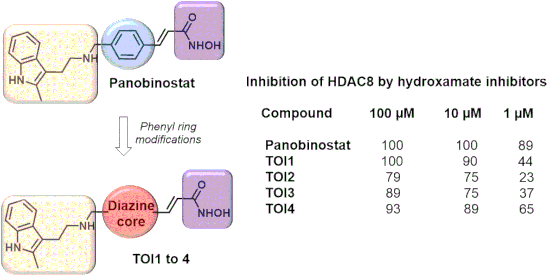
- , TN 38112, USA Department of Chemical Biology and Therapeutics, St. Jude Children’s Research Hospital, Memphis, TN 38105-3678, USA 10.3762/bjoc.16.59 Abstract Guided by computational analysis, herein we report the design, synthesis and evaluation of four novel diazine-based histone deacetylase




Opening up connectivity between documents, structures and bioactivity
Beilstein J. Org. Chem. 2020, 16, 596–606, doi:10.3762/bjoc.16.54
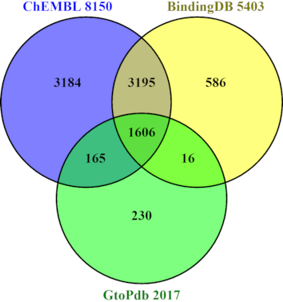
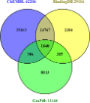
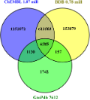
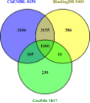
- discovery and chemical biology. Over the last decade commercial sources have manually extracted DARCP from ≈300,000 documents encompassing ≈7 million compounds interacting with ≈10,000 targets. Over a similar time, the Guide to Pharmacology, BindingDB and ChEMBL have carried out analogues DARCP extractions
- . However, in the broader context of bioactive chemistry, it becomes indivisible from the related domains of chemical biology (directed towards mechanistic insight rather that direct drug discovery), enzymology, pharmacology, and toxicology in addition to the development of insecticides or herbicides
- have initiated D-C feeds in PubChem but two of these, Prous Science Drugs of the Future and Nature Communications, ceased in 2012 and 2014 respectively. This has left only Nature Chemical Biology and Nature Chemistry as still active with 12481 and 15276 author-specified CID structures respectively