Search results
Search for "chemical reactions" in Full Text gives 157 result(s) in Beilstein Journal of Organic Chemistry.
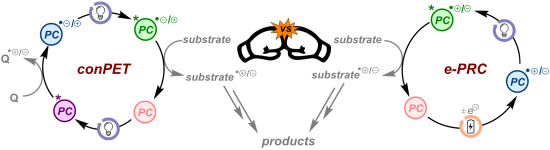
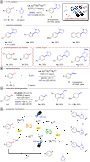
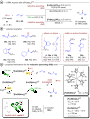
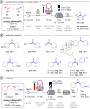
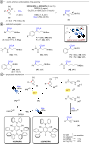
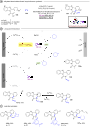
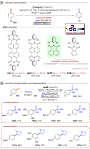
Photoredox catalysis harvesting multiple photon or electrochemical energies
Beilstein J. Org. Chem. 2023, 19, 1055–1145, doi:10.3762/bjoc.19.81

























Recommendations for performing measurements of apparent equilibrium constants of enzyme-catalyzed reactions and for reporting the results of these measurements
Beilstein J. Org. Chem. 2023, 19, 303–316, doi:10.3762/bjoc.19.26
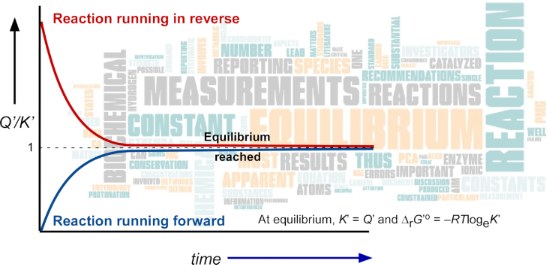
- biochemical reaction and the many chemical reactions that accompany it is the hydrolysis reaction of ATP (adenosine 5’-triphosphate) to {ADP (adenosine 5’-diphosphate) + phosphate}: The apparent reaction quotient for this reaction is And the apparent equilibrium constant is Here, (aq) denotes that the
- individual chemical reactions. And, the value of ΔrN(H+) for the (overall) biochemical reaction can be calculated by using appropriate weighting factors for the values of ΔrN(H+) for each chemical reaction in this ensemble of chemical reactions. Thus, in general, ΔrN(H+) does not have an integral value
- . Corresponding to each of these chemical reactions, there is an equilibrium constant K. Thus, for Equation 5 where a is the activity of the specified species. Note that the determination of K′ relies on measured total concentrations and should be reported without any corrections for activity coefficients

Friedel–Crafts acylation of benzene derivatives in tunable aryl alkyl ionic liquids (TAAILs)
Beilstein J. Org. Chem. 2023, 19, 212–216, doi:10.3762/bjoc.19.20
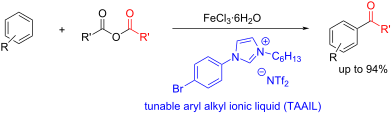
- compounds, acylation is possible by an organic acid chloride/acid anhydride and a Lewis acid [6][7]. In the course of the development of ionic liquids (ILs) as a reaction medium for chemical reactions [8][9], the Friedel–Crafts reaction was also examined [10][11][12][13][14][15][16]. First protocols were


Revisiting the bromination of 3β-hydroxycholest-5-ene with CBr4/PPh3 and the subsequent azidolysis of the resulting bromide, disparity in stereochemical behavior
Beilstein J. Org. Chem. 2023, 19, 91–99, doi:10.3762/bjoc.19.9
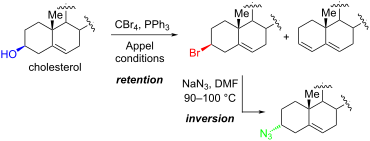
- leaving group at the 3β-position, have a unique feature in their chemical reactions. In these steroids, the breaking of the C3–X bond is facilitated by the formation of a cationic strained cyclopropane intermediate, which is formed by translocation of the C5–π bond electrons to the homoallylic carbon atom




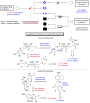
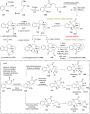
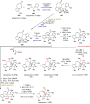
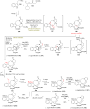
Combining the best of both worlds: radical-based divergent total synthesis
Beilstein J. Org. Chem. 2023, 19, 1–26, doi:10.3762/bjoc.19.1
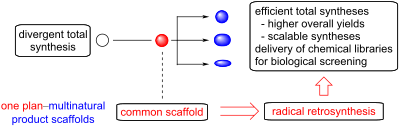
- chemoselective manner [3]. The development of persistent radicals [4] as synthons in chemical synthesis, coupled with the advancements in generating and manipulating transient radicals [5] as cross-coupling partners in an array of chemical reactions, gives access to a wide variety of “new” retrosynthetic








Inline purification in continuous flow synthesis – opportunities and challenges
Beilstein J. Org. Chem. 2022, 18, 1720–1740, doi:10.3762/bjoc.18.182
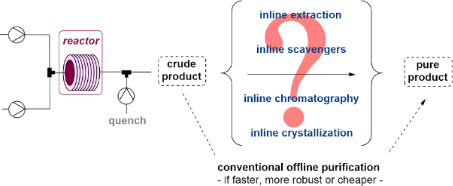
- flexibility at low cost or exploit standardized flow reactor modules readily available from various vendors. The growing popularity of flow chemistry over the last two decades has led to many developments to streamline important chemical reactions, overcome limitations due to highly unstable intermediates
- ][19] due to the advantageous dimensioning inherent in flow chemistry setups. With further advances in these fields underway, many applications also achieve more sustainable chemical processing by intensifying chemical reactions, reducing solvent and energy consumption, and replacing stoichiometric
- process. One question which is thereby of great importance is whether inline purification is required to improve the overall process. This is an important question as the removal of impurities and spent reagents typically facilitates subsequent chemical reactions in a telescoped multistep sequence. In




Supramolecular approaches to mediate chemical reactivity
Beilstein J. Org. Chem. 2022, 18, 1463–1465, doi:10.3762/bjoc.18.152

- , Salerno, Italy 10.3762/bjoc.18.152 Nature continuously inspires scientists to design novel prototypes of artificial systems with more and more advanced functions and properties [1][2]. In this regard, one of the greatest innovations was the discovery that small molecules can catalyze/mediate chemical
- reactions by a biomimetic approach [3][4]. Very recently, many efforts have been devoted to study supramolecular catalysis processes [5][6][7][8][9][10][11][12][13][14] in which macrocyclic hosts, self-assembled capsules and metallo-cages were employed as catalysts or nanocontainers. The primary
On drug discovery against infectious diseases and academic medicinal chemistry contributions
Beilstein J. Org. Chem. 2022, 18, 1355–1378, doi:10.3762/bjoc.18.141
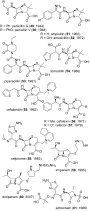
- with such information, the use of modern chemical reactions as well as the reinvestigation of old synthetic pathways and the help of modern purification and analytical tools are likely to provide new insights and opportunities to reach new chemical entities. The series of books [276] on heterocycle
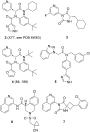
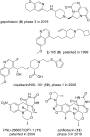
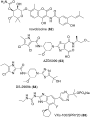
- [288][289][290][291][292][293]. Moreover, the use/design of new chemical reactions may lead to hard-to-get and original analogues possibly better than the one reported. One example, depicted in Scheme 2, would be the fluorination, under superacid conditions [294], of the highly elaborated anticancer







Cyclodextrin-based Schiff base pro-fragrances: Synthesis and release studies
Beilstein J. Org. Chem. 2022, 18, 1346–1354, doi:10.3762/bjoc.18.140
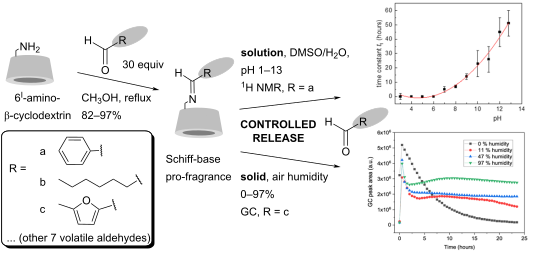
- industry, the covalent bond that links the fragrance to its substrate must be cleaved under environmental conditions found in everyday life, and the substrate should be non-volatile and non-toxic [17]. Typical triggers that may be used for mild chemical reactions are temperature, enzymatic or pH-dependent
Polymer and small molecule mechanochemistry: closer than ever
Beilstein J. Org. Chem. 2022, 18, 1225–1235, doi:10.3762/bjoc.18.128
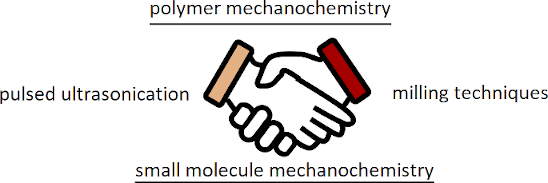
- also provided mounting evidence that ball milling and manual grinding, techniques typically used in small molecule mechanochemistry, could trigger chemical reactions in multimechanophore polymers [30], nonsymmetric mechanophores embedded in polymer systems [31], and mixtures of mechanochromic polymers


Dienophilic reactivity of 2-phosphaindolizines: a conceptual DFT investigation
Beilstein J. Org. Chem. 2022, 18, 1217–1224, doi:10.3762/bjoc.18.127
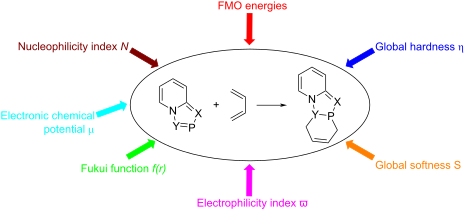
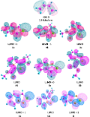
- nucleophilicity (N) [25][26] indices are other useful descriptors that explain relative reactivities of molecules in chemical reactions [27]. The electrophilicity indices of 2-phosphaindolizines also decrease in the same order as observed on the basis of global hardness and electronic chemical potential


First example of organocatalysis by cathodic N-heterocyclic carbene generation and accumulation using a divided electrochemical flow cell
Beilstein J. Org. Chem. 2022, 18, 979–990, doi:10.3762/bjoc.18.98
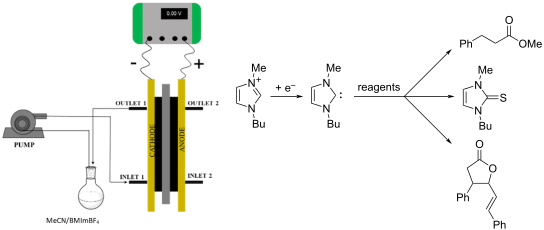
- 1,3-diketones [21], etc. Electrosynthesis is considered as a more sustainable approach to perform chemical reactions, and an interesting alternative to conventional synthetic methods both in laboratory and industry processes. In fact, the electron may be considered to be a clean reagent, which


Inductive heating and flow chemistry – a perfect synergy of emerging enabling technologies
Beilstein J. Org. Chem. 2022, 18, 688–706, doi:10.3762/bjoc.18.70
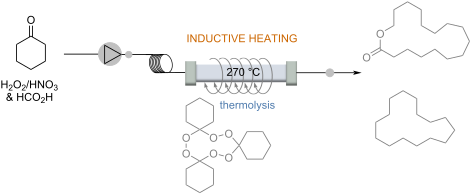
- reaction medium and lead to significant accelerations of chemical reactions. It is also important that the reactor wall is not exposed to the high temperatures in this process, which has safety implications. Finally, the desired temperature is reached more quickly compared to convective heating and better
- performed chemical reactions. Interesting examples are MagTrieveTM, which contains CrO2 and nickel peroxide (NiO2). Both were mixed with MagSilicaTM and used as fixed-bed materials (Scheme 11, case C) [75]. At this point, it is important to note that CrO2, despite its paramagnetic properties, does not heat


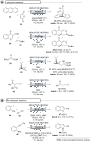
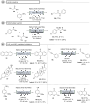
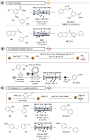


Tetraphenylethylene-embedded pillar[5]arene-based orthogonal self-assembly for efficient photocatalysis in water
Beilstein J. Org. Chem. 2022, 18, 429–437, doi:10.3762/bjoc.18.45
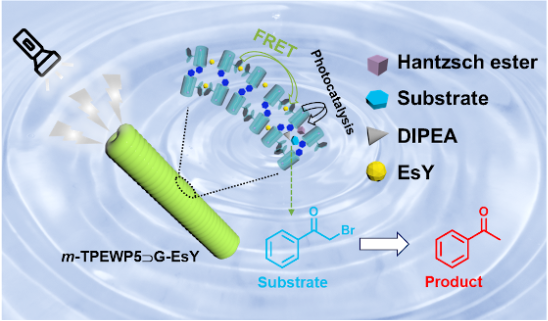
- to improve the efficiency of chemical reactions in water [26]. Until now, various macrocyclic host-assisted supramolecular donor–acceptor systems have been developed based on the FRET process and further utilized for different photochemical reactions [27][28]. For instance, Yi et al. [29] developed a


![[Graphic 5]](/bjoc/content/inline/1860-5397-18-45-i7.svg?max-width=637&scale=1.18182) G-EsY self-assembled photocat...
G-EsY self-assembled photocat...
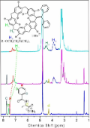


![[Graphic 15]](/bjoc/content/inline/1860-5397-18-45-i17.svg?max-width=637&scale=1.18182) G; (b) m-TPEWP5
G; (b) m-TPEWP5![[Graphic 16]](/bjoc/content/inline/1860-5397-18-45-i18.svg?max-width=637&scale=1.18182) G-EsY. [m-TPEWP5] = 1 × 10⁻⁴ M, [G] = 1 × 10⁻⁴ M, [EsY] = ...
G-EsY. [m-TPEWP5] = 1 × 10⁻⁴ M, [G] = 1 × 10⁻⁴ M, [EsY] = ...

![[Graphic 25]](/bjoc/content/inline/1860-5397-18-45-i27.svg?max-width=637&scale=1.18182) G donor assembly...
G donor assembly...

![[Graphic 43]](/bjoc/content/inline/1860-5397-18-45-i45.svg?max-width=637&scale=1.18182) G-EsY na...
G-EsY na...

![[Graphic 48]](/bjoc/content/inline/1860-5397-18-45-i50.svg?max-width=637&scale=1.18182) G-E...
G-E...
Menadione: a platform and a target to valuable compounds synthesis
Beilstein J. Org. Chem. 2022, 18, 381–419, doi:10.3762/bjoc.18.43
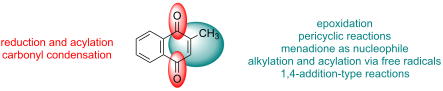
- menadione, a synthetic naphthoquinone belonging to the vitamin K group. This compound can be synthesized by different methods and it has a broad range of biological and synthetic applications, which will be highlighted in this review. Keywords: cancer; chemical reactions; 2-methyl-1,4-naphthoquinone


Synthetic reactions driven by electron-donor–acceptor (EDA) complexes
Beilstein J. Org. Chem. 2021, 17, 771–799, doi:10.3762/bjoc.17.67

- electron transfer and forming a pair of radical ions trapped in the solvent cage. The pair of radical ions escapes the solvent cage by diffusion to give radical ions, which could initiate chemical reactions or reverse electron transfer (Scheme 1) [6]. The continuously increasing demand for sustainable


[2 + 1] Cycloaddition reactions of fullerene C60 based on diazo compounds
Beilstein J. Org. Chem. 2021, 17, 630–670, doi:10.3762/bjoc.17.55
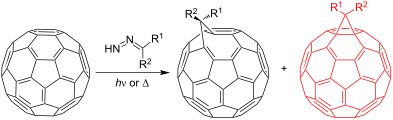
- nitrogen occurs according to Scheme 3: Subsequently, it was shown in papers on the chemical reactions of C60 that this reaction allows substituents to be present in phenyl rings, which implies a general applicability for the development of functionalized fullerene derivatives. Treatment of C60 with an
Multiswitchable photoacid–hydroxyflavylium–polyelectrolyte nano-assemblies
Beilstein J. Org. Chem. 2021, 17, 166–185, doi:10.3762/bjoc.17.17
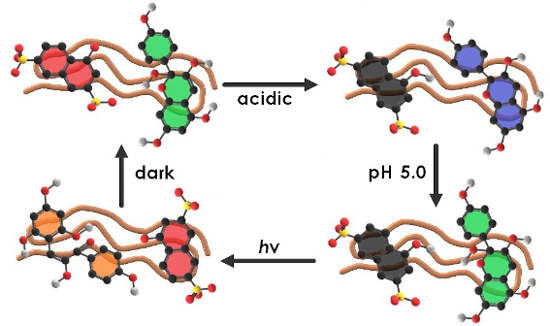
- building blocks for the ternary electrostatic self-assembly, forming well-defined supramolecular assemblies with tunable sizes of 50 to 500 nm. Due to the network of possible chemical reactions for the anthocyanidin and the excited-state dissociation of the photoacid upon irradiation, different ways to
- , systems which respond to more than one external trigger have become of great interest [68][69][70][71][72][73]. Hydroxyflavylium cations can exhibit a network of different chemical reactions enabling these molecules to perform as a molecular level optical memory [74][75][76][77][78]. The network of
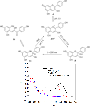
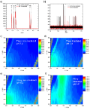
- MicroCal ITC data analysis software for Origin 7.0. Top: pelargonidin cation (Flavy) and network of chemical reactions; bottom: corresponding UV–vis spectra of the different states of Flavy. Characterization of Flavy: a) 1H NMR spectrum at pH 7.0 (form A) before and after irradiation; b) 13C NMR spectrum




An atom-economical addition of methyl azaarenes with aromatic aldehydes via benzylic C(sp3)–H bond functionalization under solvent- and catalyst-free conditions
Beilstein J. Org. Chem. 2020, 16, 3093–3103, doi:10.3762/bjoc.16.259
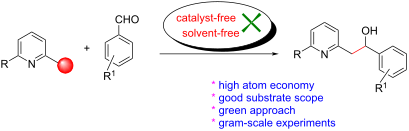
- chemical reactions [40]. These conversions play a vital role for the syntheses of active pharmaceutical ingredients as these approaches reduce the contamination in an industrial setting. In addition, the replacement of toxic reagents by environmentally benign reagents can decrease pollution to some extent


Controlled decomposition of SF6 by electrochemical reduction
Beilstein J. Org. Chem. 2020, 16, 2948–2953, doi:10.3762/bjoc.16.244
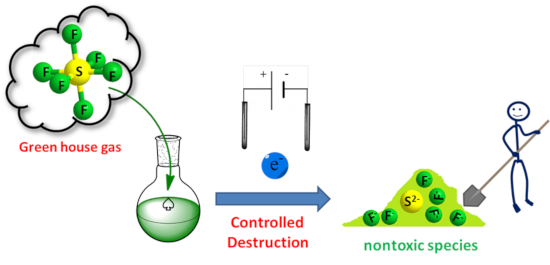
- macroelectrodes, the current density on microelectrodes is very high. This allows a better current sensitivity in electrochemical measurements (cyclic voltametrics, polarization curve …) providing the study of rapid electron and coupled chemical reactions. In comparison to macroelectrodes, their small size leads


Photosensitized direct C–H fluorination and trifluoromethylation in organic synthesis
Beilstein J. Org. Chem. 2020, 16, 2151–2192, doi:10.3762/bjoc.16.183
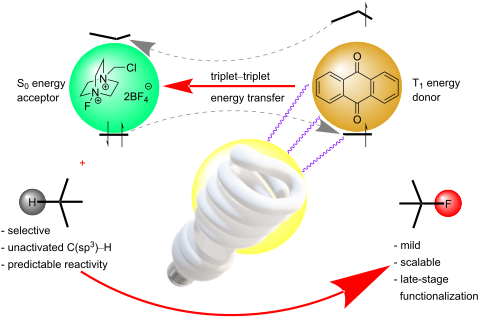
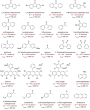
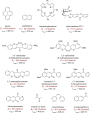
- unprecedented attention to photochemistry [70][71]. Increasing interest in photochemistry is often attributed to the ability to access radical intermediates that are otherwise difficult or impossible to obtain by classical chemistry but that can achieve unique chemical reactions complementary to two-electron




Mechanochemical green synthesis of hyper-crosslinked cyclodextrin polymers
Beilstein J. Org. Chem. 2020, 16, 1554–1563, doi:10.3762/bjoc.16.127
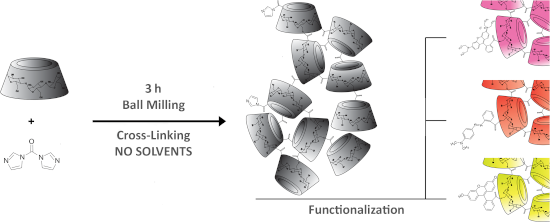
- drive and control chemical reactions, for example, using grinding or milling to transfer energy to chemical bonds [11]. Mechanochemical transformations are well established in inorganic chemistry and they are easily transferable to an industrial scale [12][13]. Mechanochemistry in organic chemistry




Heterogeneous photocatalysis in flow chemical reactors
Beilstein J. Org. Chem. 2020, 16, 1495–1549, doi:10.3762/bjoc.16.125
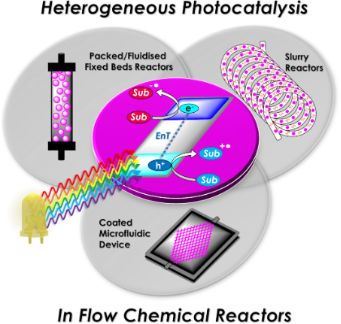
- emissions and subsequent environmental damage, much of the scientific community has shifted its focus to the development of sustainable methodologies, particularly in synthetic chemistry. The prospect of utilising light as a renewable source of energy to drive chemical reactions is an appealing solution to
- topic in 2019 alone (Figure 1A). The credit for the development of this field is often given to MacMillan [24], Yoon [25], and Stephenson [26], whose seminal papers in 2008 and 2009 elegantly demonstrated the photocatalytic ability of ruthenium–bipyridyl complexes to drive chemical reactions with










Disposable cartridge concept for the on-demand synthesis of turbo Grignards, Knochel–Hauser amides, and magnesium alkoxides
Beilstein J. Org. Chem. 2020, 16, 1343–1356, doi:10.3762/bjoc.16.115
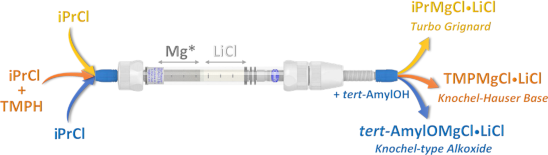
- system photos, and ODR prototype protocols) and all experimental data of the chemical reactions (optimization, packed-bed particle size study, and concentration determination) and NMR spectra. Supporting Information File 58: Additional experimental data. Acknowledgements We thank Bernat Moreno (https


Aldehydes as powerful initiators for photochemical transformations
Beilstein J. Org. Chem. 2020, 16, 833–857, doi:10.3762/bjoc.16.76
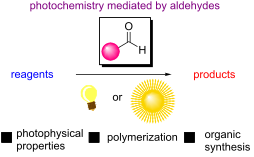
- are useful photocatalysts, the corresponding aldehydes are not so widely utilized to promote chemical reactions. In this review, our goal was to summarize the photophysical properties of aromatic aldehydes, highlight the use of aldehydes as photoinitiators in polymerization reactions, and provide all