


Search results
Search for "multicomponent reaction" in Full Text gives 140 result(s) in Beilstein Journal of Organic Chemistry.
Multicomponent syntheses of pyrazoles via (3 + 2)-cyclocondensation and (3 + 2)-cycloaddition key steps
Beilstein J. Org. Chem. 2024, 20, 2024–2077, doi:10.3762/bjoc.20.178

- cross-coupling and radical chemistry, as well as providing versatile synthetic approaches to pyrazoles. This overview summarizes the most important MCR syntheses of pyrazoles based on ring-forming sequences in a flashlight fashion. Keywords: cycloaddition; cyclocondensation; multicomponent reaction
- -dicarbonyl compounds and their one-pot transformation pave the way for MCR syntheses of pyrazoles. 1,3-Dicarbonyl compounds can, for example, be generated in situ from enolates and carboxylic acid chlorides. They can be converted to the corresponding pyrazoles 1 in a consecutive multicomponent reaction with
- dihydropyridines, specifically 3,5-acyl-1,4 dihydropyridines 77, are well suited for undergoing ring opening-ring closing cyclocondensation with hydrazine in a pseudo-multicomponent reaction to give bis(pyrazolyl)methanes 78 (Scheme 28) [106]. Interestingly, the use of ester derivatives leads to the formation of




Diastereoselective synthesis of highly substituted cyclohexanones and tetrahydrochromene-4-ones via conjugate addition of curcumins to arylidenemalonates
Beilstein J. Org. Chem. 2024, 20, 2016–2023, doi:10.3762/bjoc.20.177
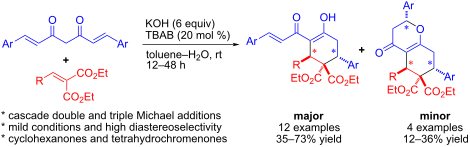
- cascade triple-Michael (Michael/Michael/oxa-Michael) reaction between curcumins and isatylidene malononitriles, giving spiro-oxindoles in excellent yields and diastereoselectivities [36]. Sahu et al. introduced a one-pot multicomponent reaction of curcumin, arylaldehyde and 2-aminobenzothiazole to


Novel oxidative routes to N-arylpyridoindazolium salts
Beilstein J. Org. Chem. 2024, 20, 1906–1913, doi:10.3762/bjoc.20.166
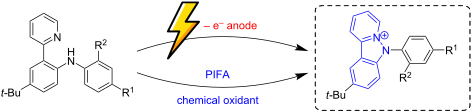
- was formed. When TEMPO was used as a mediator, S3 was isolated in 10% yield, along with the starting amine (18%) and the tetraarylhydrazine as the main product (50%). In the case of the diarylnitroxide, a complicated multicomponent reaction mixture was formed. Besides the products mentioned above, it


The Groebke–Blackburn–Bienaymé reaction in its maturity: innovation and improvements since its 21st birthday (2019–2023)
Beilstein J. Org. Chem. 2024, 20, 1839–1879, doi:10.3762/bjoc.20.162
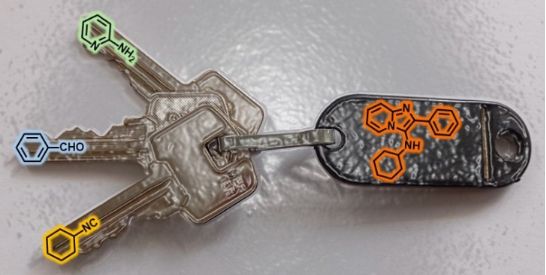
- considered old enough to be a key-holder to his family's home, and thus hold a symbolic 'senior' position in the family. Similarly, we can think of the GBB reaction in 2019 as having received the key-holder from the multicomponent reaction family, occupying now a senior position within it. The success
- applied also to the GBB reaction in the past, as reported by Guchhait et al. in 2013 [29] and Dömling et al. in 2015 [30], however, in both cases an external acid was required for the multicomponent reaction to occur. The recent report by Salunke et al., instead, exploits the presence of in situ generated
- /domino reaction, one-pot stepwise synthesis and multicomponent reaction. In the one-pot cascade reaction, the complexity of heterocycles was achieved due to the presence of functional groups formed in the GBB reaction which allow further reactions to occur. In the case of one-pot stepwise synthesis, the


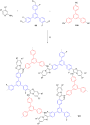
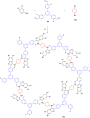


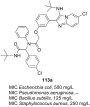


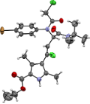
Ugi bisamides based on pyrrolyl-β-chlorovinylaldehyde and their unusual transformations
Beilstein J. Org. Chem. 2024, 20, 1773–1784, doi:10.3762/bjoc.20.156
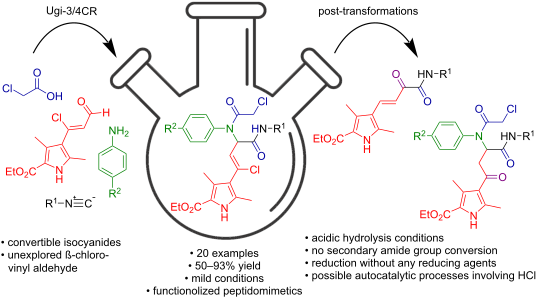
- heterylidenepyruvic acid. An optimized synthetic protocol for this transformation was elaborated and a plausible sequence involving the elimination of the 2-chloroacetamide moiety and the conversion of the β-chlorovinyl fragment into a vinyl one is provided. Keywords: convertible isocyanides; multicomponent reaction
- 10d. Based on the above facts, we have proposed a plausible transformation sequence for the formation of amides 10 and ketobisamides 12 (Scheme 6). Conclusion Thus, in this work, the multicomponent reaction of pyrrole-containing β-chlorovinylaldehyde, para-substituted anilines, monochloroacetic acid




Harnessing unprotected deactivated amines and arylglyoxals in the Ugi reaction for the synthesis of fused complex nitrogen heterocycles
Beilstein J. Org. Chem. 2024, 20, 1758–1766, doi:10.3762/bjoc.20.154
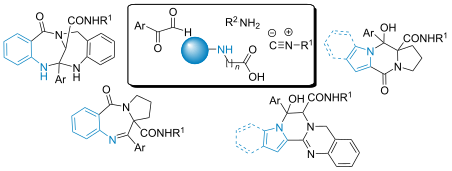
- Ugi reaction. The reduced nucleophilic character of the amino group of the anthranilic acid, indole-2-carboxylic acid, pyrrole-2-carboxylic acid or N-phenylglycine allowed the use of these compounds in this multicomponent reaction without triggering competitive reactions. The presence of an additional


Syntheses and medicinal chemistry of spiro heterocyclic steroids
Beilstein J. Org. Chem. 2024, 20, 1713–1745, doi:10.3762/bjoc.20.152
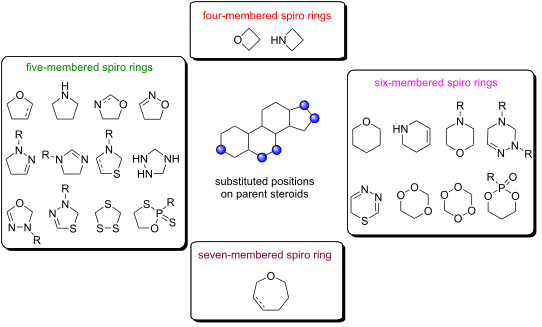
- through a one-pot multicomponent reaction (MCR) involving the reaction of substituted 2-aminopyridines, isocyanides, and the cholestanone derivatives 56 [36]. The reactions were conducted in dimethyl sulfoxide at 70 °C, and catalysed by propylphosphonic anhydride (T3P®), providing high yields in all cases


Synthesis of 2-benzyl N-substituted anilines via imine condensation–isoaromatization of (E)-2-arylidene-3-cyclohexenones and primary amines
Beilstein J. Org. Chem. 2024, 20, 1468–1475, doi:10.3762/bjoc.20.130
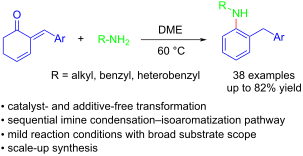
- of anilines through Brønsted acid or transition-metal-promoted conversion of 2-cyclohexanone oximes [15][16][17][18] (Scheme 1, (2)). Moreover, Strauss and co-workers described a green, multicomponent reaction of aromatic aldehydes, 2-cyclohexenone and amines to afford 2-arylmethyl N-substituted


Rapid construction of tricyclic tetrahydrocyclopenta[4,5]pyrrolo[2,3-b]pyridine via isocyanide-based multicomponent reaction
Beilstein J. Org. Chem. 2024, 20, 1436–1443, doi:10.3762/bjoc.20.126
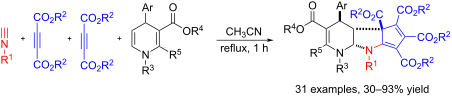
- not need any base promotor (Table 1, entry 17 and 18). It was also found that the yield of product 4a cannot be increased when the reaction time was prolonged to three hours (Table 1, entry 19). Thus, the optimized reaction conditions for this multicomponent reaction were successfully established
- clearly showed that this reaction has a wide scope of substrates. The obtained compounds 4a–t have four chiral carbon atoms. The multicomponent reaction might result in several diastereomers. On the basis of TLC analysis and 1H NMR spectra of the crude products, only one relative stereochemistry was
- heterocyclic chemistry. Experimental General procedure for the multicomponent reaction To a round flask was added alkyl isocyanide (0.1 mmol), dialkyl but-2-ynedioate (0.5 mmol), 5,6-unsubstitued 1,4-dihydropyridine (0.1 mmol) and acetonitrile (5.0 mL). The solution was stirred at reflux temperature for nearly


Mechanistic investigations of polyaza[7]helicene in photoredox and energy transfer catalysis
Beilstein J. Org. Chem. 2024, 20, 1236–1245, doi:10.3762/bjoc.20.106
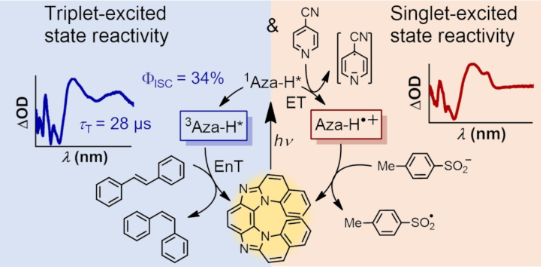
- /H2O (9:1). The low reduction potential of singlet-excited Aza-H (PC•+/PC* = –1.87 V vs SCE) led us to propose that the singlet-excited photocatalyst is oxidized by 4-cyanopyridine (4CP) (4CP/4CP•− = −1.81 V vs SCE) as the first step in this multicomponent reaction (Scheme 1, left). The oxidized




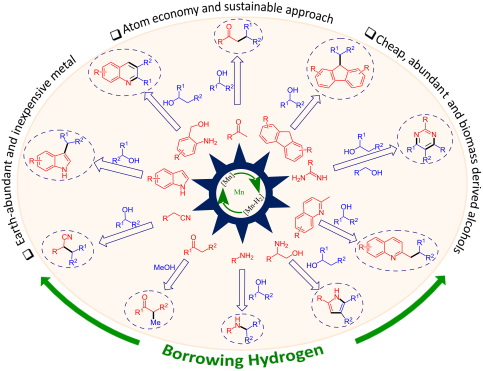
Manganese-catalyzed C–C and C–N bond formation with alcohols via borrowing hydrogen or hydrogen auto-transfer
Beilstein J. Org. Chem. 2024, 20, 1111–1166, doi:10.3762/bjoc.20.98


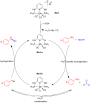


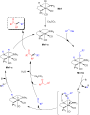

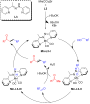


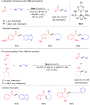


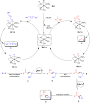


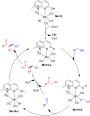


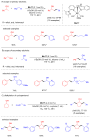

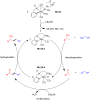


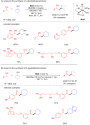
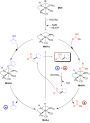


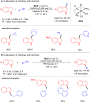


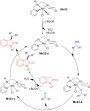


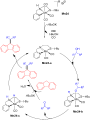

Innovative synthesis of drug-like molecules using tetrazole as core building blocks
Beilstein J. Org. Chem. 2024, 20, 950–958, doi:10.3762/bjoc.20.85
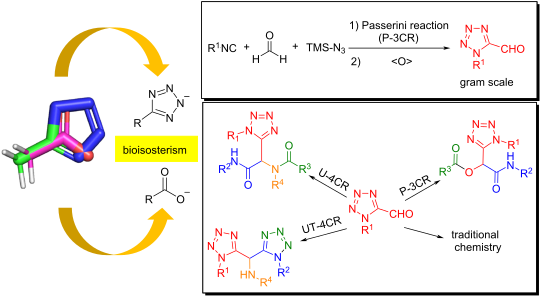
- . It aims to meet the growing demand for tetrazole-based compound libraries and novel scaffolds, which are challenging to synthesize through other methods. Keywords: building blocks; green chemistry; multicomponent reaction; Passerini tetrazole reaction; tetrazole; Ugi reaction; Introduction The

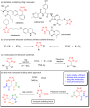

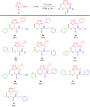


One-pot Ugi-azide and Heck reactions for the synthesis of heterocyclic systems containing tetrazole and 1,2,3,4-tetrahydroisoquinoline
Beilstein J. Org. Chem. 2024, 20, 912–920, doi:10.3762/bjoc.20.81
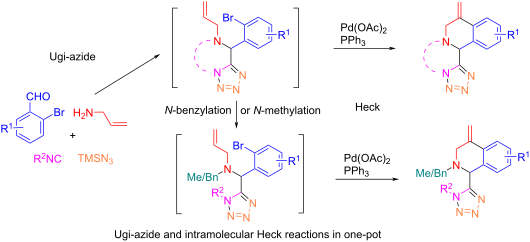
- to use 1 mmol of 5a with 10 mol % Pd(OAc)2 and 20 mol % PPh3, 2 equiv of K2CO3 in 3 mL CH3CN at 105 °C for 3 h under N2 atmosphere which afforded product 6a in 70% yield (Table 1, entry 3). The combination of an initial multicomponent reaction with post-condensation reactions in one-pot is a good


Palladium-catalyzed three-component radical-polar crossover carboamination of 1,3-dienes or allenes with diazo esters and amines
Beilstein J. Org. Chem. 2024, 20, 661–671, doi:10.3762/bjoc.20.59
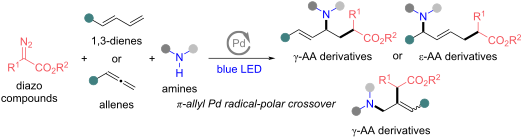
- multicomponent reaction protocol. Keywords: carboamination; diazo chemistry; palladium catalysis; radical-polar crossover; three-component reaction; Introduction Since the discovery of the existence of non-canonical amino acids (AAs) in organisms, such structural motifs have attracted considerable attention
- diverse derivatizations further highlight the practical utility of this MCR protocol. Background (a and b) and proposed carboamination MCR with diazo esters (c). a) Selected bioactive γ- and ε-amino acid derivatives. b) Multicomponent reaction strategies with diazo compounds. c) Our design: a radical MCR



HPW-Catalyzed environmentally benign approach to imidazo[1,2-a]pyridines
Beilstein J. Org. Chem. 2024, 20, 628–637, doi:10.3762/bjoc.20.55
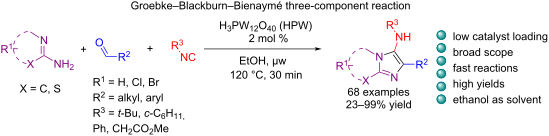
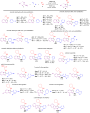
- formation, essential for the GBB-3CR mechanism. Moderate yields were obtained with the use of 2-aminothiazole derivatives (4yy–aaa). These lower yields did not change using MeOH as a solvent or increasing the amount of HPW used. The use of aliphatic aldehydes in the GBB multicomponent reaction for the
- synthesis of imidazo[1,2-a]pyridines is not as usual, given that Schiff bases from aliphatic aldehydes are found to be less stable and readily polymerize in comparison to stable Schiff bases of aromatic aldehydes. Nonetheless, our protocol for the HPW-catalyzed GBB multicomponent reaction proved to be very
- imidazo[1,2-a]pyridine core [13]. Examples of application of HPW as catalyst in the synthesis of heterocyclic compounds through multicomponent reaction approaches. a) Reported phosphomolybdic acid-catalyzed synthesis of imidazo[1,2-a]pyridines via GBB-3CR. b) Attempts to reproduce the results reported in




Copper-catalyzed multicomponent reaction of β-trifluoromethyl β-diazo esters enabling the synthesis of β-trifluoromethyl N,N-diacyl-β-amino esters
Beilstein J. Org. Chem. 2024, 20, 212–219, doi:10.3762/bjoc.20.21
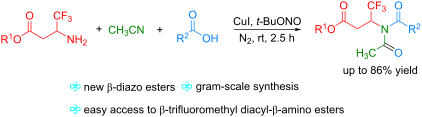
- IKERBASQUE, Basque Foundation for Science, Alameda Urquijo 36-5, Plaza Bizkaia, 48011 Bilbao, Spain 10.3762/bjoc.20.21 Abstract An efficient multicomponent reaction of newly designed β-trifluoromethyl β-diazo esters, acetonitrile, and carboxylic acids via an interrupted esterification process under copper
- General procedure for copper-catalyzed multicomponent reaction of β-amino esters Into a flask were added amines 1 (0.4 mmol), acids 3 (0.1 mmol), CuI (20 mol %), and CH3CN (2 mL). Then, the mixture was stirred at room temperature under a nitrogen atmosphere and t-BuONO (0.4 mmol) was added dropwise




Decarboxylative 1,3-dipolar cycloaddition of amino acids for the synthesis of heterocyclic compounds
Beilstein J. Org. Chem. 2023, 19, 1677–1693, doi:10.3762/bjoc.19.123
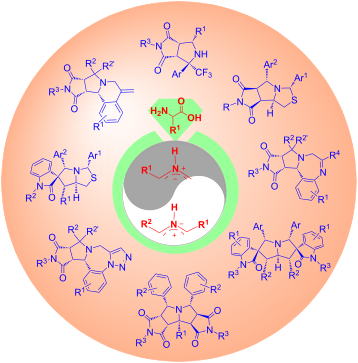
- -type AMYs in multicomponent, one-pot, and stepwise reactions for the synthesis of diverse heterocycles related to some bioactive compounds and natural products. Keywords: [3 + 2] cycloaddition; decarboxylation; 1,3-dipolar; double cycloaddition; one-pot synthesis; multicomponent reaction; semi




Morpholine-mediated defluorinative cycloaddition of gem-difluoroalkenes and organic azides
Beilstein J. Org. Chem. 2023, 19, 1545–1554, doi:10.3762/bjoc.19.111
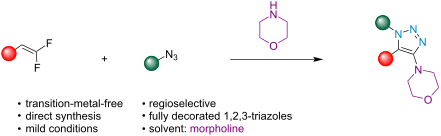
- generated via an azide–alkyne cycloaddition or a multicomponent reaction between carbonyls and azides [17]. α-Trifluoromethyl (α-CF3) carbonyls were recently utilized to generate NH-1,2,3-triazoles and fully substituted 1,2,3-triazoles [28][29]. However, there are no reports of a formal [3 + 2


Acetaldehyde in the Enders triple cascade reaction via acetaldehyde dimethyl acetal
Beilstein J. Org. Chem. 2023, 19, 1243–1250, doi:10.3762/bjoc.19.92
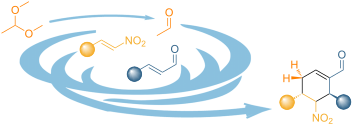
- enantioselectivity. Keywords: acetaldehyde; acetaldehyde dimethyl acetal; cascade reaction; multicomponent reaction; organocatalysis; Introduction Multicomponent reactions (MCRs) are chemical processes that involve three or more compounds, in which the product contains all the atoms of the reagents, except for


Selective construction of dispiro[indoline-3,2'-quinoline-3',3''-indoline] and dispiro[indoline-3,2'-pyrrole-3',3''-indoline] via three-component reaction
Beilstein J. Org. Chem. 2023, 19, 1234–1242, doi:10.3762/bjoc.19.91
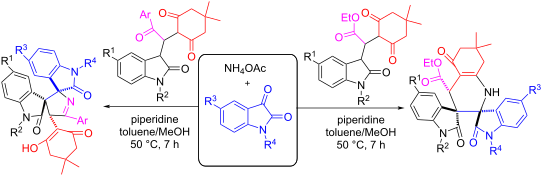
- substituent. A plausible reaction mechanism is proposed to explain the formation of the different spirooxindoles. Keywords: cascade reaction; dimedone; isatin; 3-methyleneoxindole; multicomponent reaction; spirooxindole; Introduction Spirooxindole is one important privileged structural skeleton and is found
- -phenacylideneoxindoles resulted in the two different novel dispirooxindole skeletons. Conclusion In summary, we have investigated the base-promoted multicomponent reaction of 3-methyleneoxindoles, dimedone, isatins and ammonium acetate. The reaction showed very interesting molecular diversity and diastereoselectivity



Synthesis of imidazo[1,2-a]pyridine-containing peptidomimetics by tandem of Groebke–Blackburn–Bienaymé and Ugi reactions
Beilstein J. Org. Chem. 2023, 19, 727–735, doi:10.3762/bjoc.19.53
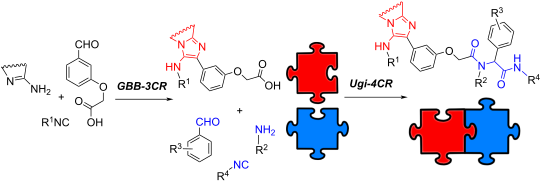
- –Bienaymé reaction; imidazo[1,2-a]pyridine; isocyanide; multicomponent reaction; peptidomimetic; Ugi reaction; Introduction The use of isocyanide multicomponent reactions (IMCR) to prepare biologically active compounds is one of the most promising tools in modern organic and medicinal chemistry. Therefore
- attention to another isocyanide multicomponent reaction – the Ugi reaction [21], which is one of the most important methods for the synthesis not only of peptidomimetics but also of other types of complex organic compounds. The presence of several diversity points and modification of starting components for
- , chloroform and some other typical solvents). Therefore, it was not surprising to us that the usual stirring of the starting materials in methanol at 50 °C was not successful for this multicomponent reaction. Increasing the temperature to 75 °C also did not give any positive results. Therefore, we tried to


Palladium-catalyzed enantioselective three-component synthesis of α-arylglycine derivatives from glyoxylic acid, sulfonamides and aryltrifluoroborates
Beilstein J. Org. Chem. 2023, 19, 719–726, doi:10.3762/bjoc.19.52
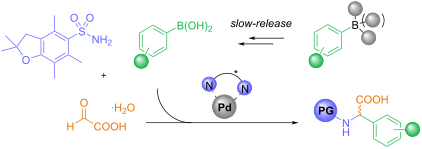
- products. Keywords: amino acids; asymmetric catalysis; multicomponent reaction; palladium catalysis; Petasis reaction; sulfonamides; Introduction α-Amino acids play a crucial role in every aspect of our human life [1]. They are important synthetic intermediates in the chemical industry and used for the
- imine species provide a very flexible approach to the arylglycine scaffold [2][9]. The Petasis borono-Mannich reaction constitutes a prominent example for such an imine-based multicomponent reaction (Scheme 1a). The reaction of glyoxylic acid, an amine component and an arylboronic acid offers a highly




Strategies in the synthesis of dibenzo[b,f]heteropines
Beilstein J. Org. Chem. 2023, 19, 700–718, doi:10.3762/bjoc.19.51

- . through a multicomponent reaction system [57]. The authors provided a series of substituted derivatives through Pd/Rh-catalysed domino coupling. The reaction proceeded via a Suzuki coupling, followed by an in situ Buchwald–Hartwig amination. The authors reported moderate to good yields in a series with


Functionalization of imidazole N-oxide: a recent discovery in organic transformations
Beilstein J. Org. Chem. 2022, 18, 1575–1588, doi:10.3762/bjoc.18.168
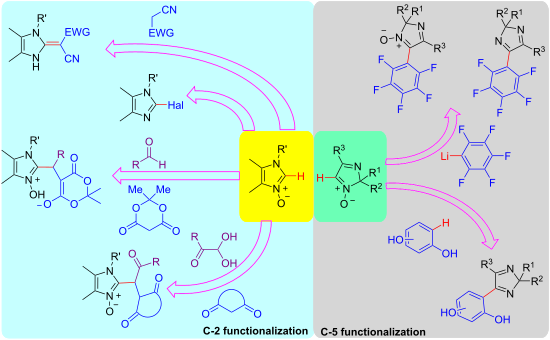
- summarized so that the chemists, researchers, and pharmaceutical industries find its effectiveness in near future for the synthesis of potent, novel, and non-toxic drug molecules. Keywords: functionalization; imidazole N-oxide; mechanistic insights; multicomponent reaction; nucleophilic substitution
- tosyl halogenides. Solvent-free chlorination reaction of imidazole N-oxides. Multicomponent reaction of imidazole N-oxides 28 with Meldrum’s acid (26) and aldehydes. Multicomponent reaction of imidazole N-oxides with CH-acids and aldehydes. Reaction conditions: aThe mixture of 2-unsbstituted imidazole 1




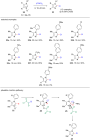

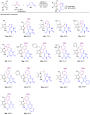


Molecular diversity of the base-promoted reaction of phenacylmalononitriles with dialkyl but-2-ynedioates
Beilstein J. Org. Chem. 2022, 18, 991–998, doi:10.3762/bjoc.18.99

- prolonging the reaction time could not increase the yield of the product 3a. Therefore, the functionalized 5-hydroxy-cyclopent-1-ene derivatives can be conveniently prepared in satisfactory yield in very simple reaction conditions. It should be pointed that a similar triethylamine-promoted multicomponent
- reaction of phenacyl bromide, malononitrile, dialkyl but-2-ynedioate, and triphenylphosphine has been already reported, in which diethyl 3-phenyl-5,5-dicyanocyclopent-2-ene-1,2-dicarboxylates were produced by further elimination of a hydroxy group [30]. In the present reaction, the hydroxy group is still





