


Search results
Search for "one-pot" in Full Text gives 871 result(s) in Beilstein Journal of Organic Chemistry. Showing first 200.
Ex-situ generation of gaseous nitriles in two-chamber glassware for facile haloacetimidate synthesis
Beilstein J. Org. Chem. 2025, 21, 2465–2469, doi:10.3762/bjoc.21.188
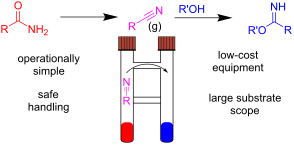
- sufficient to be used in a subsequent reaction, hence demonstrating the advantage of using a two-chamber system compared to a one-pot setup, where excess reagents would be present in the crude. As mentioned in the introduction, trifluoroacetonitrile is often used to synthesize a variety of heterocycles via


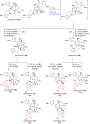
Transformation of the cyclohexane ring to the cyclopentane fragment of biologically active compounds
Beilstein J. Org. Chem. 2025, 21, 2416–2446, doi:10.3762/bjoc.21.185
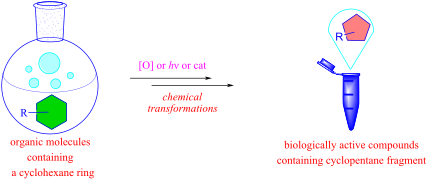
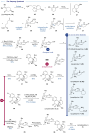
- completed by converting the exocyclic methyl ester 144 to an aldehyde145 using a one-pot DIBAL-H/Dess–Martin procedure followed by the removal of TMS protecting group using a stoichiometric Wilkinson’s catalyst (Scheme 25). The authors noted that, in the final stages of reduction and oxidation, yields were


Comparative analysis of complanadine A total syntheses
Beilstein J. Org. Chem. 2025, 21, 2334–2344, doi:10.3762/bjoc.21.178
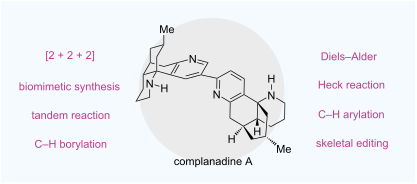
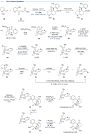
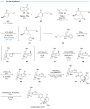
- in four steps. Subsequent conjugate addition of the lithium anion of TMS-acetonitrile to 15, followed by careful one-pot protonation of the resulting enolate with ethyl salicylate and TMS removal with CsF, gave 16 bearing three properly arranged substituents. Grignard 1,2-addition to ketone 16
- . to forge the C2–C3’ bipyridyl linkage and produce 56 in good yield [30]. From 56, a one-pot Cbz removal and pyridine N-oxide reduction completed their total synthesis of complanadine A. In addition, 56 also served as a key intermediate for their synthesis of complanadine B, which was achieved via a
- TMSN3 recently developed by Xu and co-workers [34]. Mukaiyama conjugate addition between 60 and 61 promoted by Tf2NH followed by a one-pot enol ether hydrolysis gave 62 as a mixture of inconsequential stereoisomers. Subsequent oxidative cleavage of the terminal olefin of 62 using ozonolysis followed by



Recent advances in Norrish–Yang cyclization and dicarbonyl photoredox reactions for natural product synthesis
Beilstein J. Org. Chem. 2025, 21, 2315–2333, doi:10.3762/bjoc.21.177
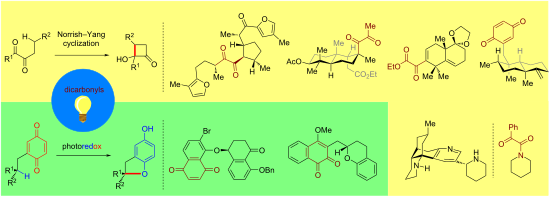
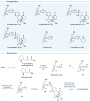
- by the Yang group [22]. Installation of the hydroxymethyl group in 4 was achieved through sequential formylation and reduction. Compound 4 then underwent a one-pot, substrate-controlled diastereoselective Johnson−Claisen rearrangement/acetylation to install ester 5. Treating 5 with m-CPBA (meta
- delivered 68. A one-pot desilylation/oxidation of 67 produced an aldehyde, which was subject to selective nucleophilic addition in the presence of a ketone, allowing for access to the furan precursor 68 [37]. Oxidation–cyclization–aromatization of 68 with Dess–Martin periodinane (DMP) constructed the
- – was prepared from (+)-pulegone (77) through a six-step manipulation involving epoxidation, epoxide opening with sodium thiophenolate and subsequent concomitant retro-aldol, sulfoxidation, a one pot α-alkylation with acrylonitrile proceeding to thermal syn-elimination of phenylsulfenic acid, ketone




Halogenated butyrolactones from the biomass-derived synthon levoglucosenone
Beilstein J. Org. Chem. 2025, 21, 2297–2301, doi:10.3762/bjoc.21.175
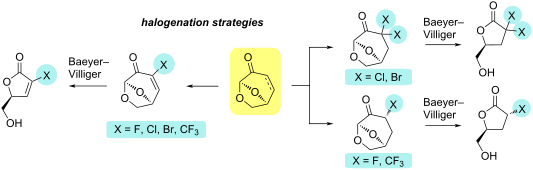
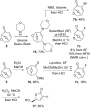
- oxymethylene bridge in the 2D NOESY NMR spectrum. Given the instability of fluoro-ketone 13, a one-pot procedure was developed in which the reaction mixture containing 13 was subjected to the Baeyer–Villiger oxidation with H2O2 giving the fluorinated and stable lactone 14, which is the expected kinetic product



Pd-catalyzed dehydrogenative arylation of arylhydrazines to access non-symmetric azobenzenes, including tetra-ortho derivatives
Beilstein J. Org. Chem. 2025, 21, 2234–2242, doi:10.3762/bjoc.21.170
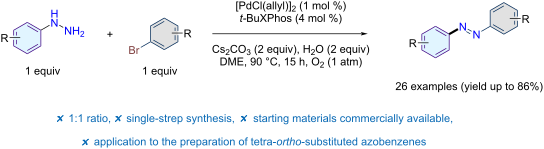
- regioselectivity issues, multistep procedures, and limited applicability to tetra-ortho-substituted structures. Herein, we describe a direct, one-pot Pd-catalyzed dehydrogenative C–N coupling between aryl bromides and arylhydrazines to access non-symmetric azobenzenes. The use of bulky phosphine ligands and
- a Pd-catalyzed three-step sequence to access a wide range of non-symmetric azobenzenes (Figure 1b, bottom) [43][44]. Inspired by these approaches and building on recent advances in the dehydrogenation of 1,2-diarylhydrazines to azobenzenes [45][46][47][48][49][50], we developed a one-pot strategy
- azobenzenes; b) previous Pd-catalyzed methods for the synthesis of non-symmetric azobenzenes; c) this work: Pd-catalyzed dehydrogenative C–N coupling of arylhydrazine. a) Proposed catalytic cycle for the one-pot palladium-catalyzed dehydrogenative C–N coupling for the synthesis of azobenzene from


Thiadiazino-indole, thiadiazino-carbazole and benzothiadiazino-carbazole dioxides: synthesis, physicochemical and early ADME characterization of representatives of new tri-, tetra- and pentacyclic ring systems and their intermediates
Beilstein J. Org. Chem. 2025, 21, 2220–2233, doi:10.3762/bjoc.21.169
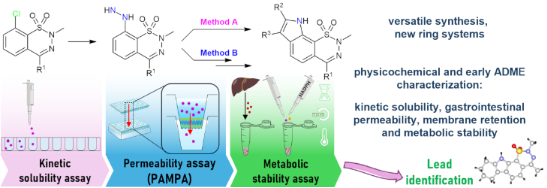
- synthesis [18][19][20][21]. Sudhakara et al. described the advantages of using bismuth nitrate as catalyst in the synthesis of hydrazones and in the one-pot Fischer synthesis of indoles from ketones and hydrazines [22][23]. Adopting this method, hydrazone intermediates 7a–j were obtained by treatment of
- conditions. Finally, we were able to achieve the Fischer cyclization of compounds 7a–j by using p-toluenesulfonic acid monohydrate as catalyst in boiling toluene (method A, step 2) [26][27]. On the other hand, the one-pot synthesis of target compounds 3a–j starting from hydrazino derivatives 5a,b was
- derivatives 10a,b exhibiting an extended aromatic ring system were isolated instead of the expected primarily formed congeners 11a,b, due to in situ oxidation of the C–C bond. Alternatively, when the one-pot method (method B, bismuth nitrate pentahydrate + PPA, MeOH, closed vial, 110 °C) was applied for the


Synthesis of triazolo- and tetrazolo-fused 1,4-benzodiazepines via one-pot Ugi–azide and Cu-free click reactions
Beilstein J. Org. Chem. 2025, 21, 2202–2210, doi:10.3762/bjoc.21.167
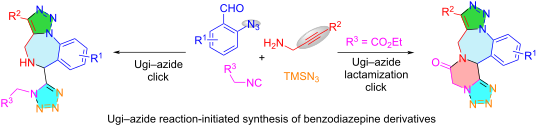
- /bjoc.21.167 Abstract A one-pot Ugi–azide reaction followed by intramolecular Cu-free azide–alkyne cycloaddition generates a polycyclic scaffold 7 bearing polycyclic triazole, tetrazole, and benzodiazepine rings. This method could be extended for obtaining a more complicated scaffold 8 containing a
- piperazinone ring. Keywords: benzodiazepine; click reaction; multicomponent reaction; one-pot; piperazinone; polycyclic; triazole; tetrazole; Ugi–azide reaction; Introduction Triazole, tetrazole, and benzodiazepine are privileged heterocyclic rings commonly found in drug molecules and functional materials [1
- ]. We herein propose a one-pot synthesis involving an Ugi–azide 4-component (4-CR) reaction followed by lactamization and azide–alkyne cycloaddition for assembling triazole-fused and tetrazole-tethered 1,4-benzodiazepines 7 and triazole-, tetrazole-, and piperazinone-fused 1,4-benzodiazepines 8 (Scheme


C2 to C6 biobased carbonyl platforms for fine chemistry
Beilstein J. Org. Chem. 2025, 21, 2103–2172, doi:10.3762/bjoc.21.165
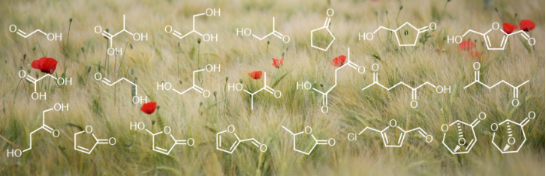
- reaction, while the catalyst Lewis base sites produce fructose (Scheme 19) [93]. Shi et al. [94] reported a novel strategy to synthesize glycolic acid (GA), a very important building block of biodegradable polymers as already stressed in the C2 section. The catalytic one-pot synthesis of GA and co
- high reactivity of HFO permitted that a limited loading of catalyst could be employed. The reduction of the Friedel–Crafts adduct gave the targeted indoyl lactones with good yield (Scheme 38) [123]. Bos and Riguet reported the one pot synthesis of α,γ-substituted chiral γ-lactones from HFO. The
- Meerwein–Ponndorf–Verley reduction, while acetaldehyde is generated in situ by ethanol oxidation (Scheme 50). The equilibrium allows furfural to be simultaneously converted into furfuryl alcohol and 3-(2-furyl)acrolein in one pot through a redox reaction. The highest mass conversion rate of furfural can


Multicomponent reactions IV
Beilstein J. Org. Chem. 2025, 21, 2082–2084, doi:10.3762/bjoc.21.163
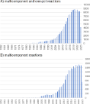
- optimization of promising lead structures has therefore inspired the development of powerful synthetic strategies. A glance at Web of Science reveals that one-pot methods and multicomponent reactions (MCRs) [1] have attracted steadily increasing attention within the scientific community over the past 25 years
- (Figure 1). According to a quick Web of Science [2] keyword search of "multicomponent reaction" and "one-pot reaction" (Figure 1A) and "multicomponent reaction" (Figure 1B) filtered by publication year, the impressive sum of 136,658 publications on multicomponent (Figure 1A) and one-pot reactions and
- , even allow changes in conditions from one step to the next. In essence, MCRs embody a reactivity-driven concept [4] within the broader family of one-pot methodologies. This thematic issue on multicomponent reactions continues the previously published editions from 2011 [5], 2014 [6], and 2019 [7] and
Further elaboration of the stereodivergent approach to chaetominine-type alkaloids: synthesis of the reported structures of aspera chaetominines A and B and revised structure of aspera chaetominine B
Beilstein J. Org. Chem. 2025, 21, 2072–2081, doi:10.3762/bjoc.21.162
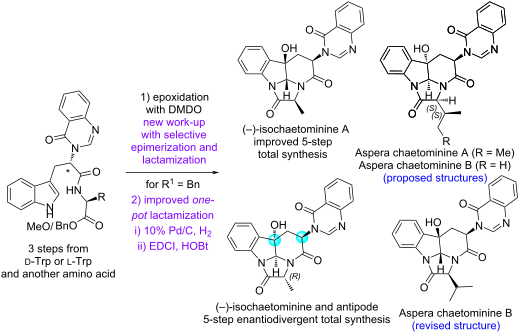
- generation of our synthetic strategy to chaetominine-type alkaloids featuring two modifications of the last step of our 4 to 6-step approach. Firstly, by employing EDCI/HOBt as the coupling system for the last step of the one-pot O-debenzylation–lactamization reaction, the overall yield of our previous total
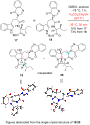
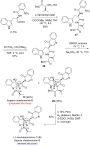
- reported structures of alkaloids aspera chaetominines A and B have been synthesized. Moreover, the four-step synthesis of the reported structure of aspera chaetominine B generated another diastereomer that was converted in one-pot to (–)-isochaetominine C, which turned out to be the revised structure of
- (13) for aspera chaetominine B. To our delight, one-pot catalytic debenzylation–lactamization of 29 afforded lactamization product (–)-isochaetominine C (6). The 1H and 13C NMR data of compound 6 matched those of natural aspera chaetominine B suggesting that aspera chaetominine B is




Bioinspired total syntheses of natural products: a personal adventure
Beilstein J. Org. Chem. 2025, 21, 2048–2061, doi:10.3762/bjoc.21.160
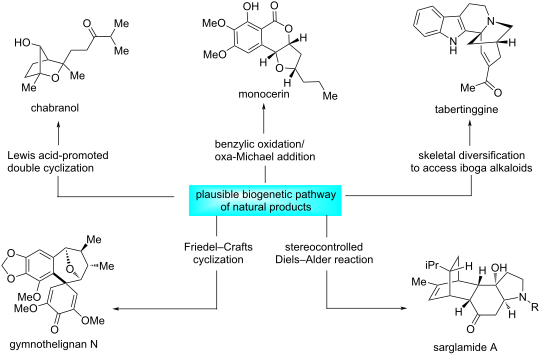
- TBS protection in one pot. Oxidation of the primary alcohol using Swern oxidation gave the hydroxy aldehyde 3, which was activated with a formal silicon cation to trigger the Prins cyclization terminated by the tertiary alcohol, affording silylated bicycle 9 directly through the designed bioinspired
- cyclization of tryptamine 26a with keto-diester intermediate 27 followed with a lactamization reaction in one-pot to access the γ-lactam moiety in product 28a, which was obtained after Boc protection. Base-promoted aldol reaction of lactam 28a with aldehyde 29 gave rise to alcohol 30a, which subsequently
- underwent dehydroxylation protocol involving base-promoted mesylate elimination and catalytic hydrogenation reactions, providing 31a. Reduction of lactam and ester in one pot with LiAlH4 and acid-promoted hydrolysis of ketal protection to ketone furnished 32a. Finally, oxidation of the primary alcohol to




α-Ketoglutaric acid in Ugi reactions and Ugi/aza-Wittig tandem reactions
Beilstein J. Org. Chem. 2025, 21, 2021–2029, doi:10.3762/bjoc.21.157
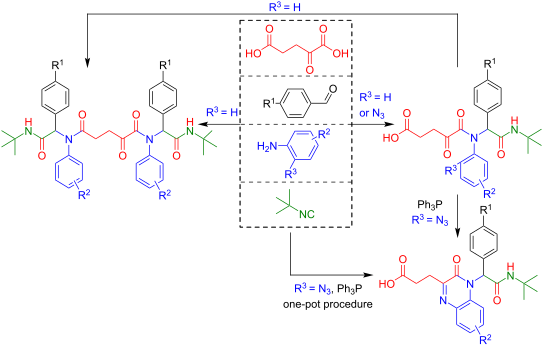
- substituted 3-(3-oxo-3,4-dihydroquinoxalin-2-yl)propanoic acids containing a pharmacophore quinoxalinone moiety. The tandem Ugi/aza-Wittig combination was also carried out in a one-pot procedure without isolation of the intermediate. Keywords: α-ketoglutaric acid; aza-Wittig reaction; multicomponent reaction
- this case a carboxyl proton. In order to avoid the step of isolation of the intermediate azide derivatives 8, we also studied a one-pot method for the synthesis of compounds 9. For this KGA 1, aldehydes 2a,b, azidoanilines 7b,c, and tert-butyl isocyanide (4) were stirred in methanol at 45 °C for 24
- Ugi and aza-Wittig reactions involving α-ketoglutaric acid and o-azidonanilines is an efficient method for the preparation of earlier unavailable quinoxalinone derivatives and can be carried out as a one-pot procedure without isolation of an intermediate azide-containing Ugi reaction product. Both


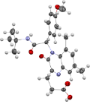
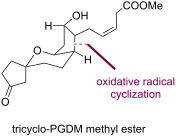
Asymmetric total synthesis of tricyclic prostaglandin D2 metabolite methyl ester via oxidative radical cyclization
Beilstein J. Org. Chem. 2025, 21, 1964–1972, doi:10.3762/bjoc.21.152
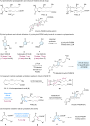
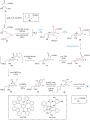
- as a single diastereomer. Subsequently, one-pot transesterification and palladium-catalyzed decarboxylative allylation delivered compound 25 in 72% yield. Next, we expected that we could perform a chemo- and diastereoselective reduction of the ketone to introduce the hydroxy group at C9 in a single
- stereochemistry at C9. Therefore, alcohol 32 was subjected to a one-pot Mitsunobu reaction, hydrolyzation, and spirolactonization to give the corresponding alcohol 26 with inversed configuration at C9. Finally, terminal alkene 26 was transformed by Dai’s Ru-catalyzed Z-selective cross-metathesis with 33 [9][40
- construct cyclopentanols with three contiguous stereogenic centers in compound 4. Our total synthesis also features an efficient cross-metathesis reaction to produce photoredox-catalyzed radical cyclization reaction precursor 27, a one-pot transesterification and palladium-catalyzed decarboxylative



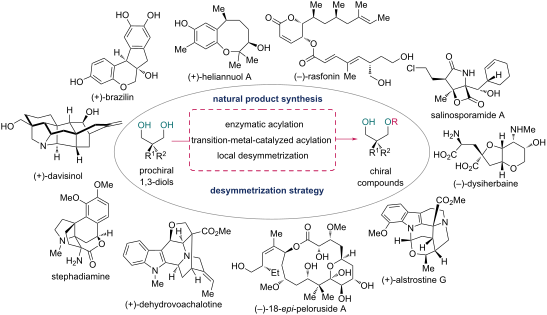
Enantioselective desymmetrization strategy of prochiral 1,3-diols in natural product synthesis
Beilstein J. Org. Chem. 2025, 21, 1932–1963, doi:10.3762/bjoc.21.151
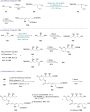
- transformation of 145, compound 146 was oxidized with Dess-Martin periodinane (DMP). Subsequent reductive amination with fragment 139 provided an intermediate, which underwent the second reductive amination using formaldehyde. This one-pot process with concomitant deprotection afforded acid 147 in 70% yield over
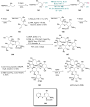
- ring was assembled via a one-pot mercuriocyclization/reductive demercuration of 153 followed by two-step diol-deprotection to access compound 154. Using trifluoromethylmethyldioxirane, which was generated in situ from trifluoroacetone, Oxone®, and disodium ethylenediaminetetraacetate dihydrate (Na2EDTA










Chiral phosphoric acid-catalyzed asymmetric synthesis of helically chiral, planarly chiral and inherently chiral molecules
Beilstein J. Org. Chem. 2025, 21, 1864–1889, doi:10.3762/bjoc.21.145
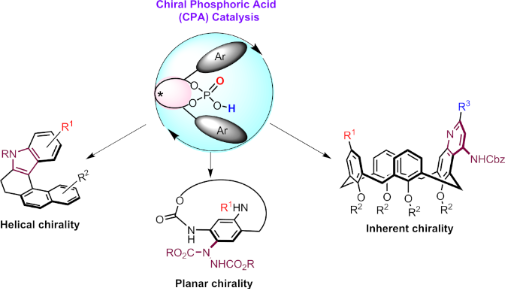
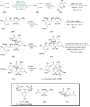
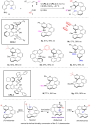
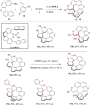
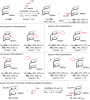
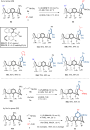
- acid substrates 43 which, upon treatment with ynamide 44, yielded the vinyl acetate intermediate INT-A (Scheme 13). Subsequently, the one-pot CPA-catalyzed intramolecular esterification of this intermediate afforded the planarly chiral macrocycles 45 with good yield and high enantioselectivity
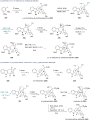
- enamide 6a and various aldehydes 7 to break the symmetry of substrates 52, which was followed by a one-pot oxidative aromatization mediated by DDQ to yield the quinoline-containing inherently chiral calix[4]arenes 53 (Scheme 15). Notably, the prochiral calix[4]arenes bearing a disubstitution pattern on









Photoswitches beyond azobenzene: a beginner’s guide
Beilstein J. Org. Chem. 2025, 21, 1808–1853, doi:10.3762/bjoc.21.143
- -triazoles 28 can be obtained by click chemistry (Scheme 6B) via one-pot deprotection of 26 and Cu(I)-catalysed reaction with an azide [43][44]. Heteroarylimines 31a,b can be easily obtained by condensation of a (hetero)aromatic aldehyde 30a,b with a (hetero)aromatic amine 29a,b [36][37][38] (Scheme 7). The




Fe-catalyzed efficient synthesis of 2,4- and 4-substituted quinolines via C(sp2)–C(sp2) bond scission of styrenes
Beilstein J. Org. Chem. 2025, 21, 1799–1807, doi:10.3762/bjoc.21.142
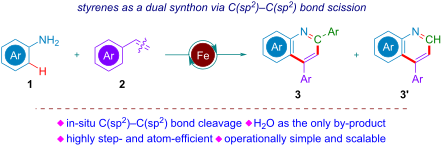
- 26% yield. Then, in reaction 3, a one-pot, two-step reaction involving phenylglyoxalic acid (2aa) was carried out. In step 1, compounds 1a and 2aa were stirred at room temperature for 5 minutes in the presence of a catalyst and an additive. Subsequently, in step 2, styrene (2a) was added, and the




Structural analysis of stereoselective galactose pyruvylation toward the synthesis of bacterial capsular polysaccharides
Beilstein J. Org. Chem. 2025, 21, 1671–1677, doi:10.3762/bjoc.21.131

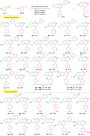
- , a one-pot synthesis approach was applied to successfully and quickly construct disaccharide 10. In this protocol, donor 7 was first activated by the TolSCl/AgOTf promoter and reacted with 6 to form compound 8. The reaction progress was monitored by thin-layer chromatography. Subsequently, in the
- same reaction mixture, in situ activation of disaccharide donor 8 and acceptor 9 using TolSCl/AgOTf reagent combination was introduced. This two-step, one-pot glycosylation gave a 42% yield of disaccharide 10, maintaining good β-stereoselectivity at the galactosyl linkage (α/β = 1:5.8). The 2
- pyruvate ketals. The modified galactose moiety was then used for the synthesis of the trisaccharide PS A1 precursor via a one-pot glycosylation strategy, where the glycosylation product was efficiently formed based on differences in acceptor reactivity. The synthetic protocol was concise, yielding


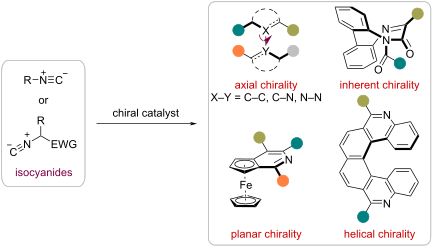
Catalytic asymmetric reactions of isocyanides for constructing non-central chirality
Beilstein J. Org. Chem. 2025, 21, 1648–1660, doi:10.3762/bjoc.21.129
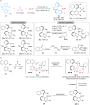
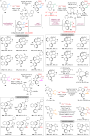
- as the cross-partner [54]. By employing Ag2CO3 and L6 as the catalyst, axially chiral N-arylindoles 55 were synthesized in 36–94% yield with 26–90% ee (Scheme 8d). Building on such results, a one-pot procedure involving DKR, hydrolysis, and lactamization was developed, enabling a practical synthesis




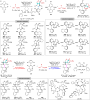
Chemical synthesis of glycan motifs from the antitumor agent PI-88 through an orthogonal one-pot glycosylation strategy
Beilstein J. Org. Chem. 2025, 21, 1587–1594, doi:10.3762/bjoc.21.122

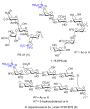
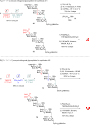
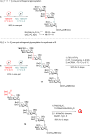
- Academy of Sciences, Kunming 650201, China 10.3762/bjoc.21.122 Abstract Chemical synthesis of monophosphorylated glycan motifs from the antitumor agent PI-88 has been achieved through an orthogonal one-pot glycosylation strategy on the basis of glycosyl ortho-(1-phenylvinyl)benzoates, which not only
- accelerated synthesis, but also precluded the potential issues inherent to one-pot glycan assembly associated with thioglycosides. The following aspects were featured in synthetic approaches: 1) synthesis of trisaccharide and tetrasaccharide PI-88 glycans via [1 + 1 + 1] and [1 + 1 + 1 + 1] one-pot orthogonal
- glycosylation, respectively; 2) synthesis of PI-88 glycan motif pentasaccharide via [1 + 1 + 1] and [1 + 1 + 3] one-pot orthogonal glycosylation; 3) synthesis of hexasaccharide via [1 + 1 + 1] and [1 + 1 + 1 + 3] one-pot assembly. Keywords: carbohydrates; chemical synthesis; glycosyl ortho-(1-phenylvinyl



Azide–alkyne cycloaddition (click) reaction in biomass-derived solvent CyreneTM under one-pot conditions
Beilstein J. Org. Chem. 2025, 21, 1544–1551, doi:10.3762/bjoc.21.117
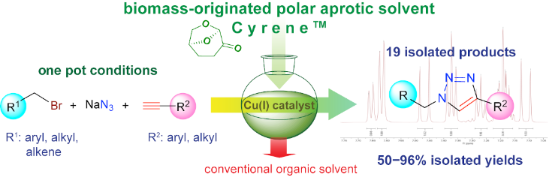
- CyreneTM, as a biomass-originated polar aprotic solvent, could be utilized as an alternative reaction medium for one-pot copper(I)-catalyzed azide–alkyne cycloaddition (click or CuAAC) reactions, for the synthesis of various 1,2,3-triazoles under mild conditions. Nineteen products involving N-substituted-4
- -phenyl-1H-1,2,3- and 1-allyl-4-substituted-1H-1,2,3-triazoles were synthesized under one-pot conditions and isolated with good to excellent yields (50–96%) and purity (>98%). The observed results represent an example that proves that biomass-derived safer solvents can be introduced into a synthetically
- further the applicability of the present synthetic method. Due to the excellent solvating power of CyreneTM, the “one-pot” synthesis of 1,2,3-triazoles could be proposed to eliminate the preparation and isolation steps of azide components. This could open an even greener and facile protocol for CuAAC


Heterologous biosynthesis of cotylenol and concise synthesis of fusicoccane diterpenoids
Beilstein J. Org. Chem. 2025, 21, 1489–1495, doi:10.3762/bjoc.21.111
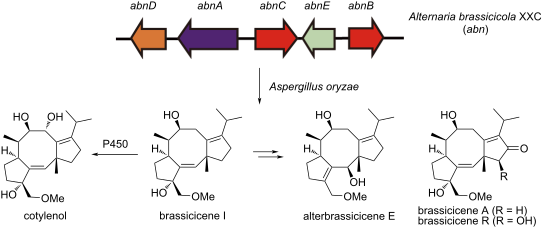
- Nozaki–Hiyama–Kishi reaction and a one-pot Prins cyclization/transannular hydride transfer to construct the 5-8-5 tricyclic scaffold. Enzymatic oxidations were used to install the hydroxy group at the C-3 position. Ten fusicoccanes were synthesized in 8–13 steps each. Despite these efforts, a strategy


Copper catalysis: a constantly evolving field
Beilstein J. Org. Chem. 2025, 21, 1477–1479, doi:10.3762/bjoc.21.109
- reactions, are separately debated. In addition, mechanistic insights into the reaction of heteropolycyclic systems, cycloadditions, and aza-Diels–Alder reactions are provided. This is important because multicomponent, one-pot reactions have gained interest as potentially more economic, efficient, and
- , who focus on the preparation of phenethylamines and phenylisopropylamines via reduction of substituted β-nitrostyrenes using a system of sodium borohydride and copper(II) chloride [9]. The transformations are performed in one pot and proceed under mild conditions. The β-nitrostyrene products could be
Advances in nitrogen-containing helicenes: synthesis, chiroptical properties, and optoelectronic applications
Beilstein J. Org. Chem. 2025, 21, 1422–1453, doi:10.3762/bjoc.21.106
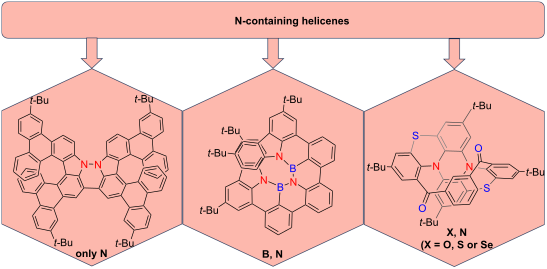
- the optical, chiroptical, and stimuli-responsive behavior of azahelicenes, providing strategic design avenues for next-generation chiral optoelectronic materials. In 2023, Langer’s group synthesized a series of double aza[4,6]helicenes 18a–l featuring diverse peripheral substituents through a one-pot
- characterized a series of length-variable aza[n]helicenes 31a–f via a one-pot intramolecular cyclodehydrogenation [45] (Table 9). Notably, compounds 31e and 31f represent the first examples of triple-layered heterohelicenes with fully conjugated frameworks. All members of the series demonstrate high solubility
- , Tanaka’s group synthesized benzannulated double aza[9]helicene 32a and its alkylated derivatives 32b and 32c via a one-pot oxidative fusion strategy [46]. Compared to the parent compound 32a (ΦF = 0.07), compounds 32b and 32c exhibit significantly enhanced ΦF (0.35), red-shifted absorption bands, and |gabs




