Search results
Search for "stereogenic centers" in Full Text gives 135 result(s) in Beilstein Journal of Organic Chemistry.
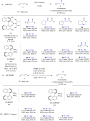
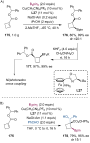
Asymmetric tandem conjugate addition and reaction with carbocations on acylimidazole Michael acceptors
Beilstein J. Org. Chem. 2023, 19, 881–888, doi:10.3762/bjoc.19.65

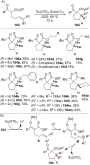
- construction of stereogenic centers using polar organometallics [1]. In this way, 1,4-additions of typical organometallics such as dialkylzinc, Grignard reagents, and trialkylaluminum have been developed [2][3][4][5][6][7][8][9]. Recently, also Cu-catalyzed conjugate additions of organozirconium [10][11] or


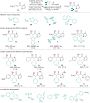


Enolates ambushed – asymmetric tandem conjugate addition and subsequent enolate trapping with conventional and less traditional electrophiles
Beilstein J. Org. Chem. 2023, 19, 593–634, doi:10.3762/bjoc.19.44
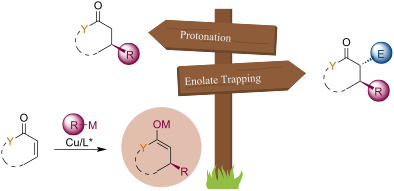
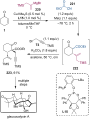
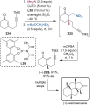
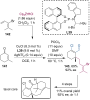
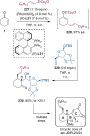
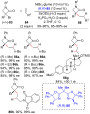
- . Application in total synthesis As shown before, asymmetric tandem conjugate additions followed by enolate trapping are robust methodologies for synthesizing complex structures with multiple stereogenic centers. For this reason, such stereoselective procedures are commonly used in total synthesis (Figure 2
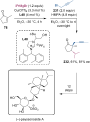
- contains six contiguous stereogenic centers out of which four are all-carbon quaternary stereocenters. The authors have achieved the stereoselective synthesis of waihoensene for the first time with a 3.8% overall yield (15 steps) (Scheme 59). The construction of the triquinane core included a Cu-catalyzed


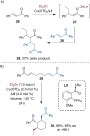






Asymmetric synthesis of a stereopentade fragment toward latrunculins
Beilstein J. Org. Chem. 2023, 19, 428–433, doi:10.3762/bjoc.19.32
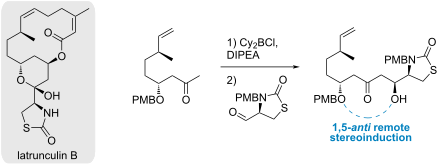
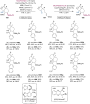
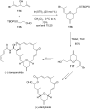
- analogue synthesis, starting from (+)-β-citronellene. Key stereoselective transformations involve an asymmetric Krische allylation, an aldol reaction under 1,5-anti stereocontrol, and a Tishchenko–Evans reduction accompanied by a peculiar ester transposition, allowing to install key stereogenic centers of
- of an unsaturated fourteen- or sixteen-membered macrolactone decorated by an ʟ-cysteine-derived 2-oxo-1,3-thiazolidin-4-yl substitutent, and the presence of five stereogenic centers forming a 1,2,4,6,9-stereopentade (Figure 1). In latrunculins A (1) and B (2) three of them are embedded in a lactol


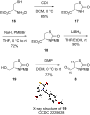


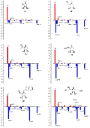
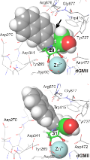
Synthesis, α-mannosidase inhibition studies and molecular modeling of 1,4-imino-ᴅ-lyxitols and their C-5-altered N-arylalkyl derivatives
Beilstein J. Org. Chem. 2023, 19, 282–293, doi:10.3762/bjoc.19.24
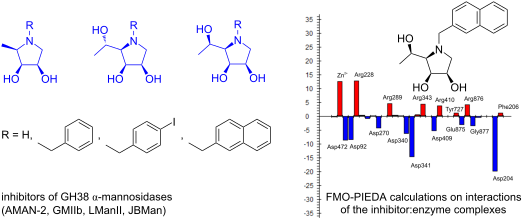
- configurations of all its stereogenic centers match those of swainsonine. Furthermore, DIM is a micromolar GMII inhibitor, which is easily accessible on a large scale from ᴅ-mannose by well-established methods [15][29]. In general, improvements of physicochemical and inhibitory properties of monocyclic


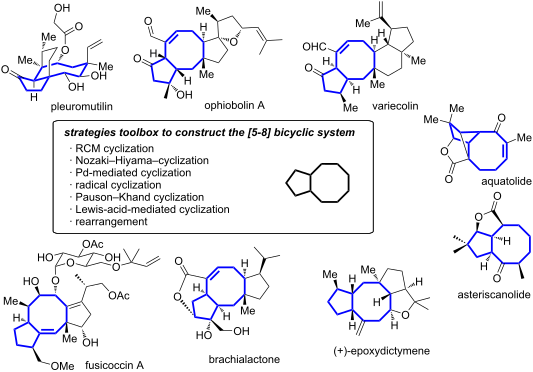
Strategies to access the [5-8] bicyclic core encountered in the sesquiterpene, diterpene and sesterterpene series
Beilstein J. Org. Chem. 2023, 19, 245–281, doi:10.3762/bjoc.19.23
- compound 24 was rationalized by an isomerization of the double bond prior to the cyclization step. Isolated from the Ecuadorian liverwort Anastrophyllum auritum in 1994, ent-fusicoauritone (28) is a diterpene presenting a fusicoccan skeleton with a β-hydroxyketone on the A-ring and 5 stereogenic centers
- backbone with 8 fused rings, a unique [7-8] bicyclic motif, an oxa-bridge over the cyclooctane ring, and the presence of 12 stereogenic centers [36]. The strategy proposed by the authors was to carry out a RCM reaction to elaborate the cyclooctene ring from functionalized intermediate 66, prepared as a
- -8-6-5] tetracyclic all-carbon system with 10 stereogenic centers (Scheme 15). This natural product was isolated from two Gentianella plant species, namely G. nitida and G. alborosea used in Peruvian traditional medicine. The first report of its synthesis was given in 2014 by Hog and co-workers [46


1,4-Dithianes: attractive C2-building blocks for the synthesis of complex molecular architectures
Beilstein J. Org. Chem. 2023, 19, 115–132, doi:10.3762/bjoc.19.12
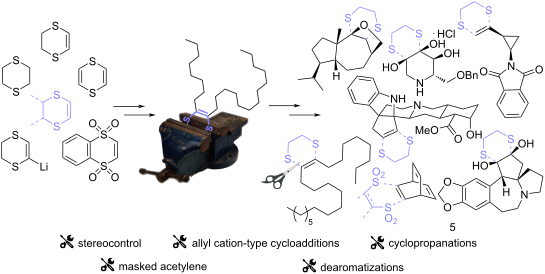
- a stereocontrolled manner. Stereogenic centers on the ethylenedithiol tethering group can give modest levels of stereoinduction (Scheme 11b), despite the relatively remote relationship between the stereogenic centers [60][61]. Guaragna, Palumbo, D’Alonzo and co-workers have very productively used










Combining the best of both worlds: radical-based divergent total synthesis
Beilstein J. Org. Chem. 2023, 19, 1–26, doi:10.3762/bjoc.19.1
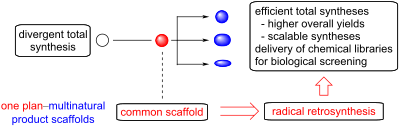
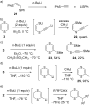
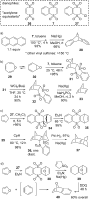
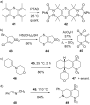
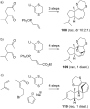
- and final dehydration by Burgess reagent provided the total syntheses of magninoids A (104) and C (103, Scheme 8). Divergent total synthesis of crinipellins (Xie and Ding 2022) [53]: Crinipellins are highly congested tetraquinane natural products comprising 6–10 stereogenic centers, three of which are



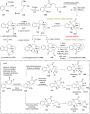


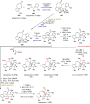

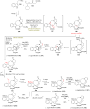


Synthesis of (−)-halichonic acid and (−)-halichonic acid B
Beilstein J. Org. Chem. 2022, 18, 1629–1635, doi:10.3762/bjoc.18.174
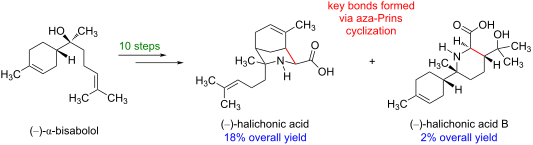
- aminobisabolene sesquiterpenoid halichonic acid ((+)-1) from the sponge Halichondra sp. (Figure 1) [4]. This amino acid natural product features a rigid 3-azabicyclo[3.3.1]nonane ring system containing four stereogenic centers within the piperidine ring. In 2021, the same group re-isolated (+)-1 from the sponge
- Axinyssa sp. along with the structurally related compound halichonic acid B ((+)-2) [5]. Structurally, (+)-2 is a pipecolic acid derivative containing a cyclohexenyl ring as a substituent group. This compound also features four stereogenic centers (three of which are located within the piperidine ring) and
- the resulting tertiary carbocation to occupy equatorial positions (14), establishing the observed trans-relationship between these groups while simultaneously setting two new stereogenic centers. As before, one can envision several different fates for the tertiary carbocation present in 14. Although


Synthetic study toward the diterpenoid aberrarone
Beilstein J. Org. Chem. 2022, 18, 1625–1628, doi:10.3762/bjoc.18.173
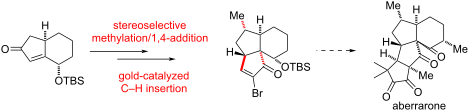
- tetracyclic carbon skeleton yet-to-be found in Pseudopterogorgia elisabethae species, although related cyclohexane-angularly-fused triquinane systems have been found in waihoensene (3), conidiogenone (4), lycopodium alkaloids magellamine (5) and lycojaponicumin C (6) (Figure 1). Its seven stereogenic centers


Characterization of a new fusicoccane-type diterpene synthase and an associated P450 enzyme
Beilstein J. Org. Chem. 2022, 18, 1396–1402, doi:10.3762/bjoc.18.144
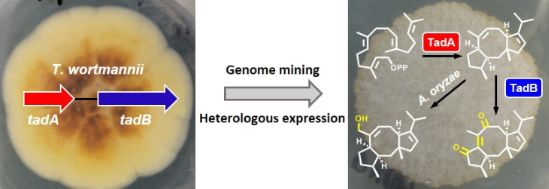
- stereogenic centers at C2, C6, C10, and C14 introduced during the two cyclization steps, FC-type diterpene synthases (DTSs) could be divided into 16 subtypes [20]. Furthermore, considering the modes of potential carbocation rearrangement and final carbocation quenching, there might be more FC-type DTSs in



Vicinal ketoesters – key intermediates in the total synthesis of natural products
Beilstein J. Org. Chem. 2022, 18, 1236–1248, doi:10.3762/bjoc.18.129
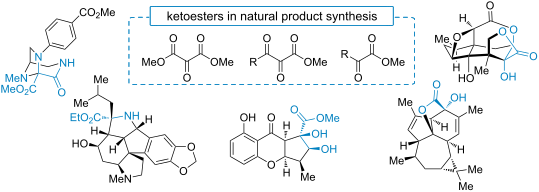
- -tricarbonyl compound 108 to set two stereogenic centers and correct one via an intramolecular aldol addition (108 → 109; Scheme 18) [34]. The vic-tricarbonyl compound 108 was synthesized via DMDO oxidation from α-diazo-β-ketoester 107, which was easily accessible from 5-methoxy-4H-chromen-4-one (106). The


Enzymes in biosynthesis
Beilstein J. Org. Chem. 2022, 18, 1131–1132, doi:10.3762/bjoc.18.116
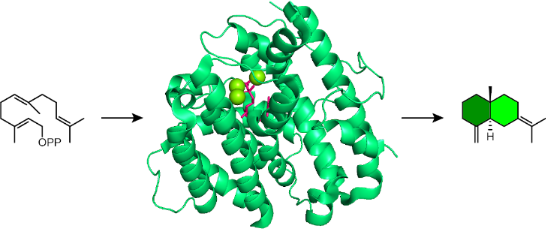
- proceed through multistep cationic cascade reactions and usually produce a polycyclic terpene hydrocarbon or alcohol with multiple stereogenic centers. While these transformations require only a single enzyme, polyketide and nonribosomal peptide biosyntheses are catalyzed by megasynthases that follow an

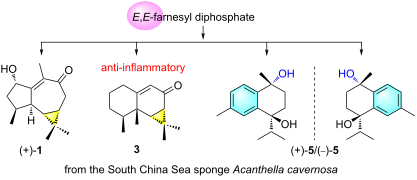
Anti-inflammatory aromadendrane- and cadinane-type sesquiterpenoids from the South China Sea sponge Acanthella cavernosa
Beilstein J. Org. Chem. 2022, 18, 916–925, doi:10.3762/bjoc.18.91
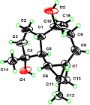
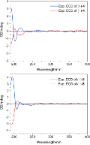
- configuration determination of natural products with stereogenic centers near the chromophore groups [20], was applied, since there is an α,β-unsaturated ketone chromophore nearby C-5 and C-2 in compound (+)-1. Thus, the theoretical ECD spectrum of (+)-1 was calculated by the DFT calculation method at the b3lyp






Unusual highly diastereoselective Rh(II)-catalyzed dimerization of 3-diazo-2-arylidenesuccinimides provides access to a new dibenzazulene scaffold
Beilstein J. Org. Chem. 2022, 18, 533–538, doi:10.3762/bjoc.18.55
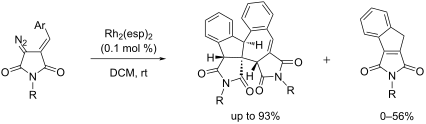
- diastereomer 2a is indicative of a sequence of concerted processes with an unambiguous stereochemistry control at each step where stereogenic centers are formed. Dibenzoazulenodipyrroles 2 have a pronounced three-dimensional character which make this chemotype promising as probe for protein–protein


A resorcin[4]arene hexameric capsule as a supramolecular catalyst in elimination and isomerization reactions
Beilstein J. Org. Chem. 2022, 18, 337–349, doi:10.3762/bjoc.18.38
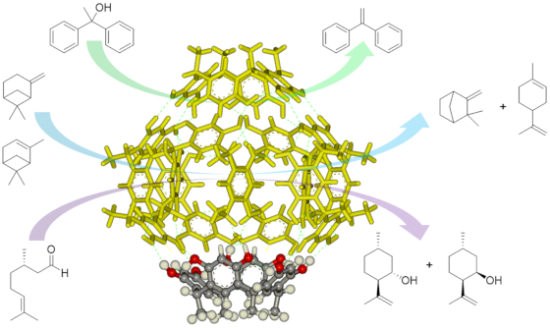
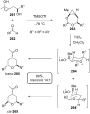
- , isolated from oils distilled from citronella plants, which is very effective as a repellent and antifungal. In the presence of Brønsted or Lewis acids (S)-citronellal undergoes an intramolecular carbonyl–ene cyclization reaction forming two new stereogenic centers, which turns out into four possible


Unexpected chiral vicinal tetrasubstituted diamines via borylcopper-mediated homocoupling of isatin imines
Beilstein J. Org. Chem. 2022, 18, 303–308, doi:10.3762/bjoc.18.34
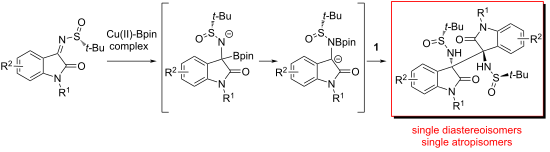
- because they can serve as key synthetic intermediates in the construction of complex natural products [17][18][19][20][21][22][23]. Particularly challenging is the placement of the two C3/C3’ contiguous quaternary stereogenic centers, just as they are found in various alkaloids, such as those belonging to
- space group P212121. The presence of sulfur anomalous scatters allowed to unequivocally establish the absolute configurations, which reads S at the chiral center C2 and R at the C10 (C numbering as in Figure 1). The absolute configuration of the two sulfur stereogenic centers is confirmed to be R


A study on selective transformation of norbornadiene into fluorinated cyclopentane-fused isoxazolines
Beilstein J. Org. Chem. 2021, 17, 2051–2066, doi:10.3762/bjoc.17.132
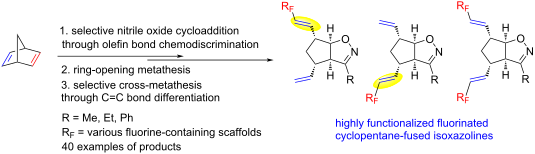
- multiple stereogenic centers. The synthesis involved selective cycloadditions, with subsequent ROM of the formed cycloalkene-fused isoxazoline scaffolds and selective CM by chemodifferentiation of the olefin bonds of the resulting alkenylated derivatives. Various experimental conditions were applied for




Asymmetric organocatalyzed synthesis of coumarin derivatives
Beilstein J. Org. Chem. 2021, 17, 1952–1980, doi:10.3762/bjoc.17.128
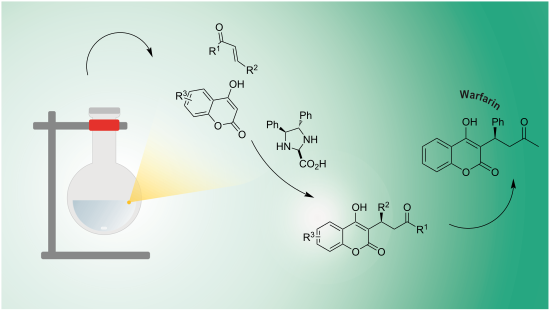
- stereogenic centers. Review A plethora of highly effective small‐molecule organocatalysts have enriched the field of organic synthesis [27], including chiral proline derivatives, N‐heterocyclic carbenes, chiral thioureas and Brønsted acids as well as phase‐transfer catalysts (PTC), such as the quaternary
- dihydrocinchonine 26 in combination with trifluoracetic acid (TFA) as Brønsted acid [39]. The reaction provides pyranocoumarins 25 with three vicinal stereogenic centers in high regio-, diastereo- and enantioselectivities through a tandem allylic alkylation/intramolecular oxa-Michael addition (Scheme 7). A
- /indandione-fused spirocyclopentanes 104 bearing four contiguous stereogenic centers, was described by Chen et al. [68]. This transformation was catalyzed by a cinchona-thiourea derivative 105 furnishing the spiro compounds with good to high yield and enantioselectivity (Scheme 33). In this method two




Methodologies for the synthesis of quaternary carbon centers via hydroalkylation of unactivated olefins: twenty years of advances
Beilstein J. Org. Chem. 2021, 17, 1565–1590, doi:10.3762/bjoc.17.112
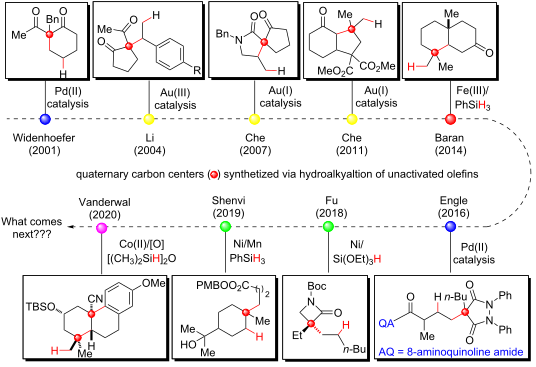
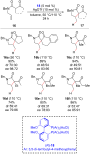
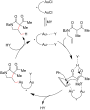
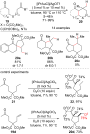
- synthesis of new bioactive compounds [1][2]. A careful view of the carbon backbone of these natural molecules reveals their high molecular complexity [3][4][5], which can be described by the presence of multiple stereogenic centers in the same molecule, a substantial fraction of sp3 hybridized carbons (Fsp3
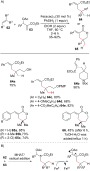
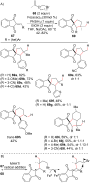
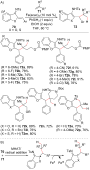
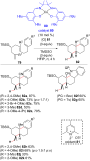
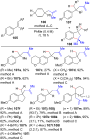
- stereogenic centers were constructed by this cascade reaction. As exemplified above (Scheme 23), the hypothesized enolate intermediate produced in the radical conjugate addition promoted by a MHAT process could be engaged in sequential reactions, offering a range of possibilities for the design of new













N-tert-Butanesulfinyl imines in the asymmetric synthesis of nitrogen-containing heterocycles
Beilstein J. Org. Chem. 2021, 17, 1096–1140, doi:10.3762/bjoc.17.86

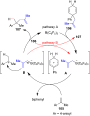
- . Starting imine 135 with two well-defined stereogenic centers at the hydrocarbon backbone were prepared as a mixture of (RS)- and (SS)-diastereoisomers from ᴅ-glutamic acid. After nucleophilic addition to the imine, a successive cyclization–desulfinylation occurred to give the corresponding piperidinone


Prins cyclization-mediated stereoselective synthesis of tetrahydropyrans and dihydropyrans: an inspection of twenty years
Beilstein J. Org. Chem. 2021, 17, 932–963, doi:10.3762/bjoc.17.77
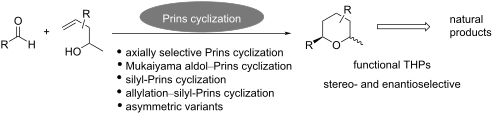
- 302 and substituted aromatic aldehydes 303 to form hexahydro-1H-benzo[f]isochromenes 305 with three new contiguous stereocenters in high enantio- and diastereoselectivity [112]. The three new contiguous stereogenic centers formed resulted from an attack of the alkene to the Si-face of the oxocarbenium








Circularly polarized luminescent systems fabricated by Tröger's base derivatives through two different strategies
Beilstein J. Org. Chem. 2021, 17, 52–57, doi:10.3762/bjoc.17.6
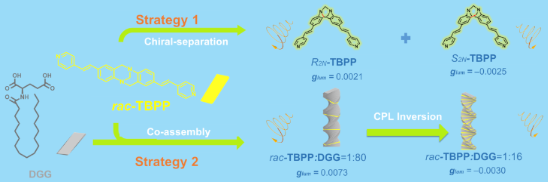
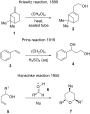
- the co-assembly strategy. The cogels show significant CPL emission and stoichiometry-controlled inversion of chirality due to the hydrogen bonding interactions and packing modes in the supramolecular co-assemblies. Owing to TB special V-shaped structure, rigid conformation, and nitrogen stereogenic
- centers make it and its derivatives useful building blocks to construct CPL-active materials and to develop chiral phosphorescent materials in future. Ground-state and excited-state chirality of R2N-TBPP and S2N-TBPP. (a) CD spectra of R2N-TBPP and S2N-TBPP. (b) CPL spectra of R2N-TBPP and S2N-TBPP


Ring-closing metathesis of prochiral oxaenediynes to racemic 4-alkenyl-2-alkynyl-3,6-dihydro-2H-pyrans
Beilstein J. Org. Chem. 2020, 16, 2757–2768, doi:10.3762/bjoc.16.226
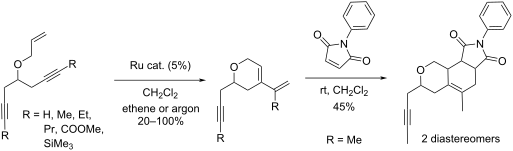
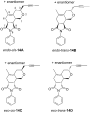
- and 13 Hexahydropyranoisoindole 14 contains four stereogenic centers and hence can form 8 possible diastereoisomers. Due to fixed configuration of maleimide 13, four possible diastereoisomers come into account (Figure 4). With the aim to disclose the most probable candidates for the experimentally




A heterobimetallic tetrahedron from a linear platinum(II)-bis(acetylide) metalloligand
Beilstein J. Org. Chem. 2020, 16, 2701–2708, doi:10.3762/bjoc.16.220
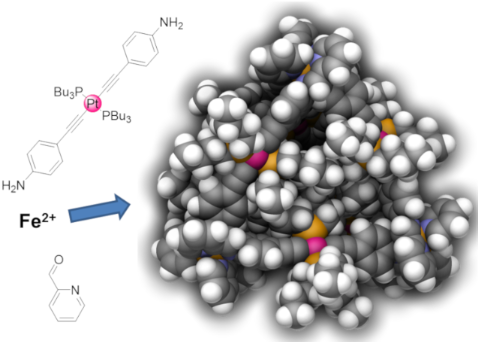
- : red – iron, white – platinum, orange – phosphorous, blue – nitrogen, grey – carbon. Hydrogen atoms are omitted for clarity. The stereogenic centers are defined in the schematic tetrahedra. Stepwise assembly of the heterobimetallic tetrahedron 4, starting from 4-ethynylaniline (1) and trans-[Pt(PBu3


Copper-catalyzed enantioselective conjugate addition of organometallic reagents to challenging Michael acceptors
Beilstein J. Org. Chem. 2020, 16, 212–232, doi:10.3762/bjoc.16.24
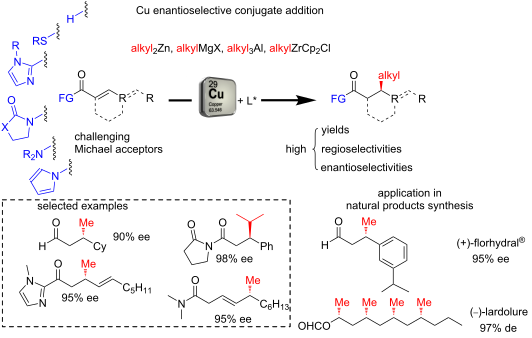
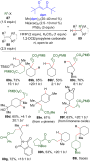
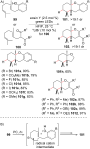
- controlling multiple stereogenic centers in a minimum number of steps is nowadays one of the most important challenges in organic chemistry for the synthesis of complex chiral molecules. The transition metal (TM)-catalyzed enantioselective conjugate addition (ECA) of nucleophiles to electron-deficient alkenes
- described, allowing to produce the highly functionalized deoxypropionate fragment 30 in good overall yields and excellent stereocontrol for all stereogenic centers (up to 98:2 dr). α,β-Unsaturated acylimidazoles The pioneering and successful use of α,β-unsaturated acylimidazoles as Michael acceptors in