


Search results
Search for "H-bonding" in Full Text gives 129 result(s) in Beilstein Journal of Organic Chemistry.
Recent advances in photocatalyzed reactions using well-defined copper(I) complexes
Beilstein J. Org. Chem. 2020, 16, 451–481, doi:10.3762/bjoc.16.42
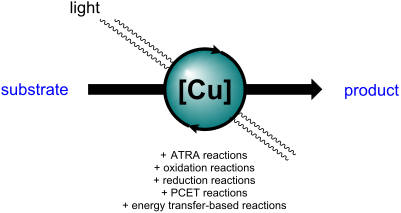
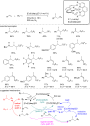
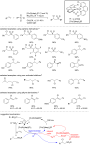
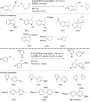
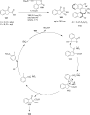
- structure and to carry out an SET when excited by light. This approach represents the first report describing the design of a Cu-based photocatalyst able to carry out an SET and an activation of the substrate, in this case through H-bonding. This close proximity increased the yield of the transformation and
- reaction was excellent as bromides, phenols, thioethers, esters, boronic esters, and heterocycles, including pyridine and quinolines, were well tolerated. The authors carried out mechanistic studies and demonstrated the H-bonding ability of their catalyst by NMR studies. The following mechanism was






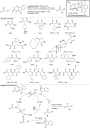


Synthesis and characterization of bis(4-amino-2-bromo-6-methoxy)azobenzene derivatives
Beilstein J. Org. Chem. 2019, 15, 3000–3008, doi:10.3762/bjoc.15.296
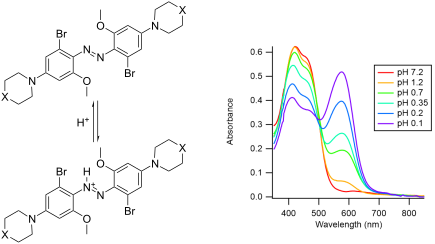
- elevated pKa of 1 has been attributed to resonance stabilization of the azonium cation together with intramolecular H-bonding between the azonium proton and methoxy groups in ortho-position to the azo double bond [10]. Since the azonium ion 1 forms under physiological conditions, i.e., at neutral pH value


Why do thioureas and squaramides slow down the Ireland–Claisen rearrangement?
Beilstein J. Org. Chem. 2019, 15, 2948–2957, doi:10.3762/bjoc.15.290
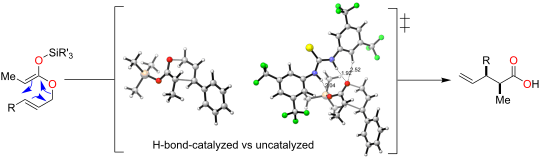
- hydrogen-donating organocatalysts and kinetic experiments suggest that the catalysts bind stronger to the starting silyl ketene acetals than to transition structures thus leading to inefficient rearrangement reactions. Keywords: DFT calculations; green solvents; H-bonding catalysts; Ireland–Claisen
- . For this, we have compared the uncatalyzed Ireland–Claisen rearrangement with three hydrogen-bond-catalyzed reactions. As model H-bonding catalysts, we selected diphenylthiourea, Schreiner thiourea, and the corresponding squaramide with bis(trifluoromethyl)phenyl groups. We have evaluated both the (E
- , which agrees well with the DFT calculated values. These kinetic measurements support the notion that H-bonding catalysts bind stronger to starting silyl ketene acetals and thus prevent it from undergoing Ireland–Claisen rearrangement. For more details, see Supporting Information File 1. Conclusion


Anion-driven encapsulation of cationic guests inside pyridine[4]arene dimers
Beilstein J. Org. Chem. 2019, 15, 2486–2492, doi:10.3762/bjoc.15.241
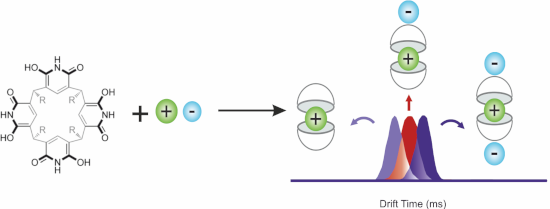
- (Figure S1, Supporting Information File 1). This is surprising due to differences in H-bonding geometry between dimers of 1 or 2. Previously in case of hexameric capsules heterohexamers of pyridinearene and resorcinarene were not observed [5]. The PF6− anion was observed to be bound to the pyridine[4




Sugar-derived oxazolone pseudotetrapeptide as γ-turn inducer and anion-selective transporter
Beilstein J. Org. Chem. 2019, 15, 2419–2427, doi:10.3762/bjoc.15.234
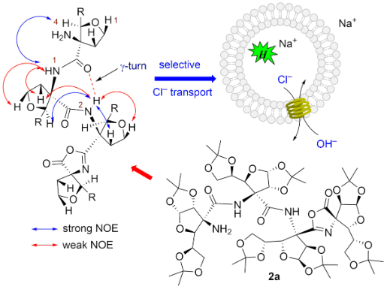
- intramolecular H-bonding was supported by the DMSO-d6 titration studies. Thus, 5 μL of DMSO-d6 was sequentially added (up to 50 μL) to the CDCl3 solution of 2a and change in δ value of NH protons was monitored by the 1H NMR [26]. The NH(I) proton showed the higher change in chemical shift ∆δ = 0.2 ppm indicating
- weak (I)NH···NH2 intramolecular H-bonding. The NH(II) showed smaller ∆δ = 0.13 ppm suggesting strong (II)NH···O=C intramolecular bonding (Figure 3). This fact was further supported by a temperature-dependent 1H NMR study [27][28]. The temperature-dependent 1H NMR of 2a in CDCl3 as solvent at 283–323 K
- was recorded that showed a higher Δδ/ΔT value of 6.2 × 10⁻³ ppm/K for NH(I) indicating its involvement in weak intramolecular H-bonding. For NH(II) the lower Δδ/ΔT value of 3.7 × 10⁻³ ppm/K supported its association in strong intramolecular hydrogen bonding with C=O leading to the γ-turn formation


![[Graphic 2]](/bjoc/content/inline/1860-5397-15-234-i4.svg?max-width=637&scale=1.18182) lucigenin (A). Conce...
lucigenin (A). Conce...
Small anion-assisted electrochemical potential splitting in a new series of bistriarylamine derivatives: organic mixed valency across a urea bridge and zwitterionization
Beilstein J. Org. Chem. 2019, 15, 2277–2286, doi:10.3762/bjoc.15.220
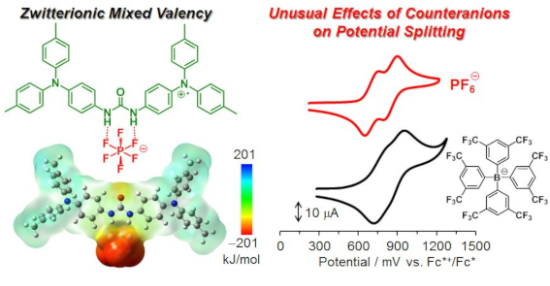
- were investigated to realize electrochemically controlled H-bonding [23][24][25][26][27][28][29][30][31][32][33][34][35][36]. Especially, oxidation-active ureas are an important class of such compounds [25][26]. In the neutral state, ureas can provide two NH protons for multiple H-bonding, as often
- (Figure 1) [44]. The electrochemically control of H-bonding would have a dramatic impact on the field of mixed valency, which is striving to utilize charge delocalization for molecular devices. However, there is a lack of basic knowledge about the influence of an excess of supporting electrolytes on the
- maps of 1b+ (Figure 3, bottom). From these regions, 1b+ can form electrostatic interactions with negatively charged species. Indeed, an optimized structure of a complex of 1b+ and PF6− was obtained and featured an intermolecular H-bonding between the N–H proton and the F atom of hexafluorophosphate


Multiple threading of a triple-calix[6]arene host
Beilstein J. Org. Chem. 2019, 15, 2092–2104, doi:10.3762/bjoc.15.207
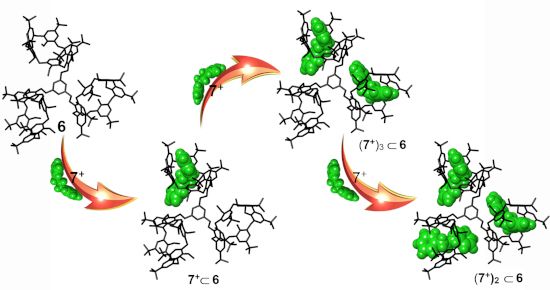
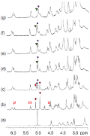
- . This result was also confirmed by the minimum-energy structure of (7+)36 obtained by molecular mechanics calculations (Figure 6), which evidenced the typical stabilizing H-bonding interactions between the ammonium groups and the oxygen atoms of the calix[6]-wheels. Analogous results were obtained when




![[Graphic 2]](/bjoc/content/inline/1860-5397-15-207-i6.svg?max-width=637&scale=1.18182) 6, (7+)2
6, (7+)2


Tautomerism as primary signaling mechanism in metal sensing: the case of amide group
Beilstein J. Org. Chem. 2019, 15, 1898–1906, doi:10.3762/bjoc.15.185
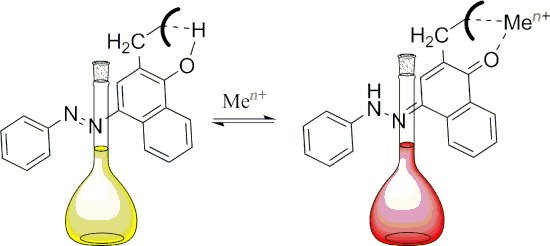
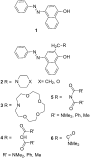
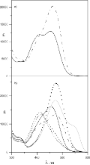
- and chloroform). Having in mind the theoretical predictions discussed above, the existence of the keto tautomer in solution is surprising. This behavior might mean that either the enol stabilizing intramolecular H-bonding is not strong enough and can be broken by the solvent or there are





A heteroditopic macrocycle as organocatalytic nanoreactor for pyrroloacridinone synthesis in water
Beilstein J. Org. Chem. 2019, 15, 1505–1514, doi:10.3762/bjoc.15.152
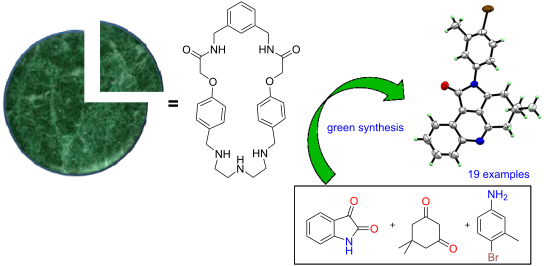
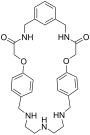
- ][47][48][49][50]. The multifunctional macrocycle BATA-MC (Figure 1) has been successfully applied as a wheel in the molecular rotors fields [51]. Considering its multiple binding sites (π-interactions, H-bonding site, cavity), we investigated the catalytic activity of this macrocycle. BATA-MC was
- is a molecular assembly of BATA-MC single molecules which may provide a suitable organic environment to the starting materials by π-interaction and H-bonding, and inevitably orients them into the necessary reactive positions. To represent the simple catalytic activity, we have chosen a part of the
- sites along with H-bonding donor/acceptor site. So, it may also be associated to the nanoreactor to approach the enaminoketone. Then, consecutive cyclization and ring opening of isatin (translactamization) affords intermediate C which undergoes cyclocondensation to furnish the final product F



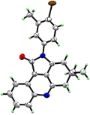


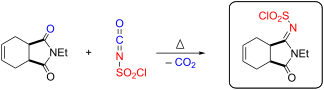
An anomalous addition of chlorosulfonyl isocyanate to a carbonyl group: the synthesis of ((3aS,7aR,E)-2-ethyl-3-oxo-2,3,3a,4,7,7a-hexahydro-1H-isoindol-1-ylidene)sulfamoyl chloride
Beilstein J. Org. Chem. 2019, 15, 931–936, doi:10.3762/bjoc.15.89
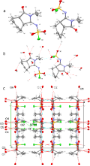
- the polymeric H-bonding geometries shown in Figure 2a. We provide crystallographic data and structural refinement details in the experimental section. Compound 10 crystallizes in the monoclinic space group C2/c. The C–C (cyclohexene) distances are in the typical single bond range [1.491(3)–1.356(3) Å




Ring-opening metathesis of some strained bicyclic systems; stereocontrolled access to diolefinated saturated heterocycles with multiple stereogenic centers
Beilstein J. Org. Chem. 2018, 14, 2698–2707, doi:10.3762/bjoc.14.247
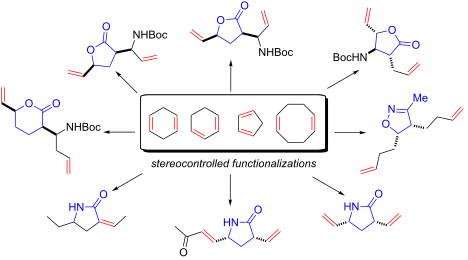
- of the behavior of the catalyst efficiency is a rather difficult task. Metathesis reactions are known to be often catalyst or substrate dependent. Electronic or steric factors, and chelation effects may contribute to the outcome of metathesis in view of the yield. Moreover, possible H-bonding


Synthesis of functionalised β-keto amides by aminoacylation/domino fragmentation of β-enamino amides
Beilstein J. Org. Chem. 2018, 14, 2602–2606, doi:10.3762/bjoc.14.238
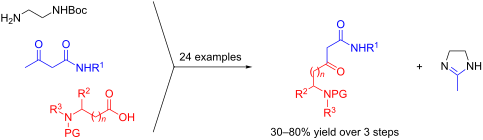
- takes place after the addition of NaOAc (Scheme 4). It can be hypothesized that in acidic media the ammonium species 7, resulting from the deprotection of 3 followed by protonation, exists predominantly as an imino tautomer, stabilised by intramolecular H-bonding. Such a tautomer would be susceptible to


Calix[6]arene-based atropoisomeric pseudo[2]rotaxanes
Beilstein J. Org. Chem. 2018, 14, 2112–2124, doi:10.3762/bjoc.14.186
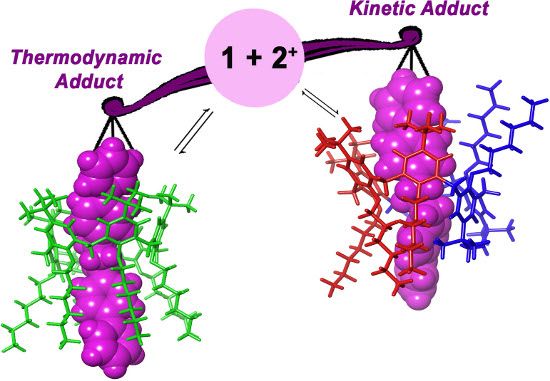
- ). Differently, in the DFT-optimized structure of 2+11,2,3-alt atropoisomer (Figure 7, right), the stabilization of the 2+11,2,3-alt atropoisomer was brought, principally by two H-bonding interactions between the ammonium group of 2+ and the oxygen atoms of anti-oriented phenol rings of 1 with an average N···O


![[Graphic 2]](/bjoc/content/inline/1860-5397-14-186-i3.svg?max-width=637&scale=1.18182) 1cone and 2+
1cone and 2+


First thia-Diels–Alder reactions of thiochalcones with 1,4-quinones
Beilstein J. Org. Chem. 2018, 14, 1834–1839, doi:10.3762/bjoc.14.156
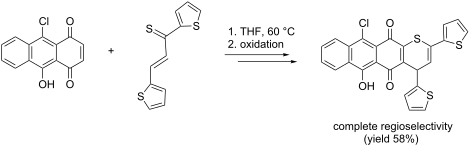
- attacks the more electrophilic C-atom, we postulate that compounds 4i–l and not their isomers 5a–d are formed in these reactions. This assumption is supported by the intramolecular H-bonding, which enhances the electrophilicity of C(3) in the dienophile 2d. Finally, the structure of 4k was established by


Synthesis and photophysical studies of a multivalent photoreactive RuII-calix[4]arene complex bearing RGD-containing cyclopentapeptides
Beilstein J. Org. Chem. 2018, 14, 1758–1768, doi:10.3762/bjoc.14.150
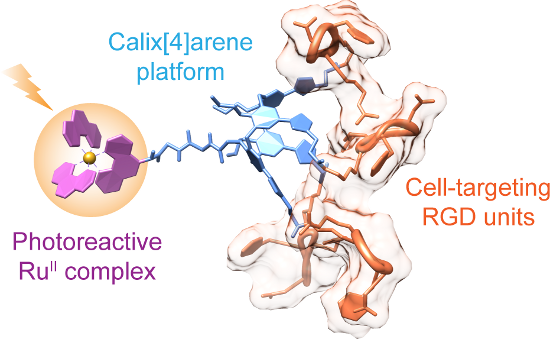
- and the cyclic pentapeptides. This large variation in the distance is due to the flexibility of the linkers between the calixarene platform and the RGDfK units, together with the many possibilities of H-bonding between: (i) oxygen atoms at C=O in the linker and the hydrogen atoms of (N–H) of arginine
- integrins. However, the possible H-bonding interactions between neighboring RGD units could be a drawback in view of the accessibility of the arginine groups to interact with the integrins. Photophysical properties of RuII-calixarene conjugate 9 The absorption and emission spectra of Ru-calix(RGD)4





Host–guest complexes of conformationally flexible C-hexyl-2-bromoresorcinarene and aromatic N-oxides: solid-state, solution and computational studies
Beilstein J. Org. Chem. 2018, 14, 1723–1733, doi:10.3762/bjoc.14.146
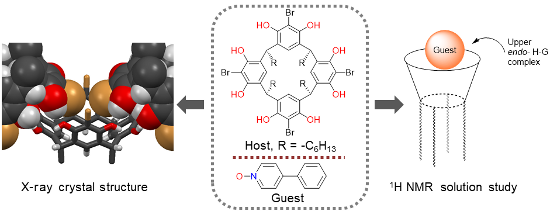
- tilted towards the hydroxy group of the host molecule to form intermolecular negative charge assisted H-bonding, C–H···O [48], interactions with a distance of 1.49 Å. In order to gain insights into lower-rim cavity binding sites from a qualitative analysis standpoint, a molecular electrostatic potential
- (i.e., H-bonding and C–H···π) interactions in both the upper-rim endo cavity and the lower-rim site present in 3@BrC6. Based on QTAIM, the presence of a bond path between the donor and the acceptor atoms containing a (3, −1) bond critical point (BCPs; highlighted as small blue circles in Figure S1


Design, synthesis and structure of novel G-2 melamine-based dendrimers incorporating 4-(n-octyloxy)aniline as a peripheral unit
Beilstein J. Org. Chem. 2018, 14, 1704–1722, doi:10.3762/bjoc.14.145
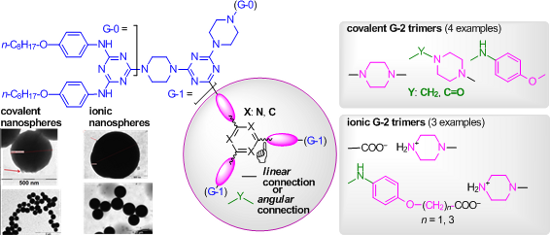
- initial trimesic tris-carboxylate anion (δ–, Figure 7a). Besides the electrostatic attraction between the tris-carboxylate anion and the P-1 piperazin-1-ium melamine G-1 cations, the occurrence of important H-bonding three interactions (>COδ(b)–···H(ax or eq)-NH+<) were identified, being supported by the
NH2+]3(–OOC)3C6H3 (Figure 1, linear connection, as a six-membered chelate, to the m-trivalent core), the H-bonding network in model 10 determined simpler angular connections of the P-1 piperazin-1-ium melamine G-1 cations around the trimesic tris-carboxylate anion core in a statistically favoured




Recent advances in phosphorescent platinum complexes for organic light-emitting diodes
Beilstein J. Org. Chem. 2018, 14, 1459–1481, doi:10.3762/bjoc.14.124
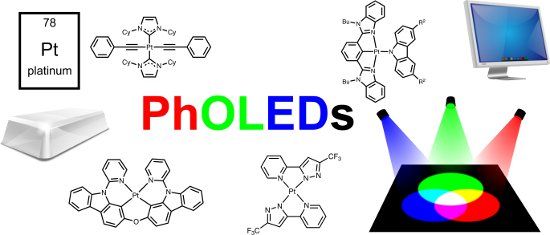
- these particular heteroleptic complexes was switched on notably. Apart from reduced geometry distortions within a rigid environment, the presence in some cases of interligand H-bonding interactions further contributed to efficiently suppress nonradiative decay channels. More importantly, these






Novel unit B cryptophycin analogues as payloads for targeted therapy
Beilstein J. Org. Chem. 2018, 14, 1281–1286, doi:10.3762/bjoc.14.109
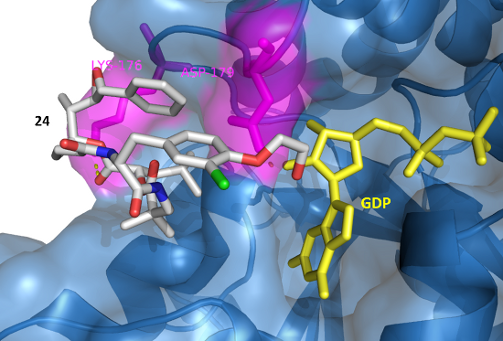
- and benzyl group of subunit A are pointing away from the binding pocket. Docking of 24 to β-tubulin. Surface and backbone of β-tubulin are shown in blue, GDP in yellow. H-bonding (yellow dots) was detected with Lys176 and Asp179 in magenta. The benzyl group and the epoxide of subunit A are directed


A survey of chiral hypervalent iodine reagents in asymmetric synthesis
Beilstein J. Org. Chem. 2018, 14, 1244–1262, doi:10.3762/bjoc.14.107
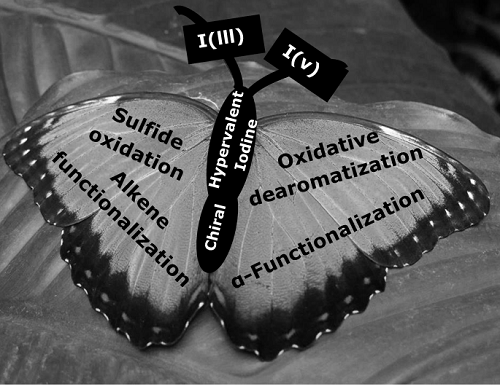
- different dienophiles furnished Diels–Alder adducts 35 with excellent enantioselectivity. Intramolecular H-bonding and the presence of an achiral alcohol as additive helped them to achieve outstanding enantioselectivity (up to 99%) even when using very low catalyst loadings (1–10 mol %, Scheme 6) Ciufolini



An overview of recent advances in duplex DNA recognition by small molecules
Beilstein J. Org. Chem. 2018, 14, 1051–1086, doi:10.3762/bjoc.14.93
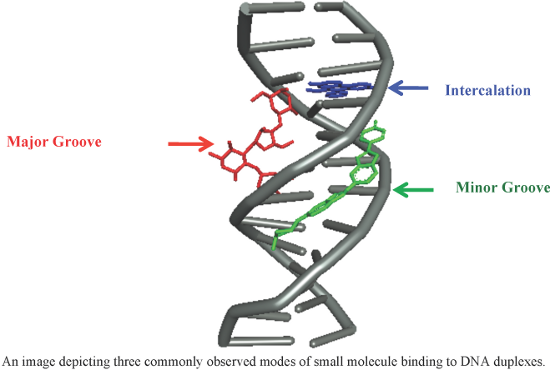
- heterocyclic rings such as furan 62 and 63 [126], thiophene 64 [127] and pyridine 65 (Figure 11) [128]. These conjugates exhibit potent antibacterial and antiprotozoal activity with much reduced toxicity. It was further concluded that π-stacking, H-bonding with the floor of the minor groove along with




Phosphodiester models for cleavage of nucleic acids
Beilstein J. Org. Chem. 2018, 14, 803–837, doi:10.3762/bjoc.14.68
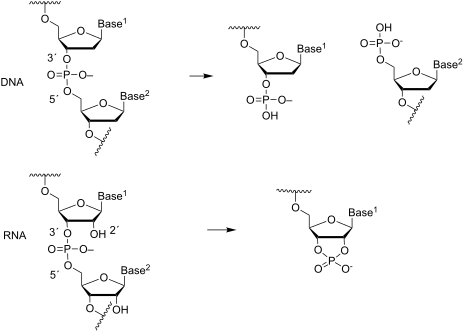
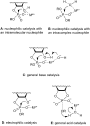
- -bonding to one of the non-bridging oxygens concerted, but upon elongation of the P–O3´ bond, the basicity of this non-bonding oxygen is decreased and the basicity of the departing O3´ is increased. Owing to this change, the H-bond to phosphate is weakened and H-bonding to O3´ is strengthened. While the
- other nucleophile, including solvent water or hydroxide ion, is able to compete. The large ribozymes have to provide a solvent-free environment that suppresses the nucleophilic attack of the vicinal 2´-OH by intrachain H-bonding and promotes the attack of an external nucleophile by appropriate
- , one order of magnitude faster than the cleavage of the zwitterion. This observation has led to the conclusion that the monoanion reacts through a minor tautomer having the 2´-OH deprotonated and the amino group protonated. The protonated amino group may facilitate the attack of the 2´-oxyanion by H



Recent advances in synthetic approaches for medicinal chemistry of C-nucleosides
Beilstein J. Org. Chem. 2018, 14, 772–785, doi:10.3762/bjoc.14.65
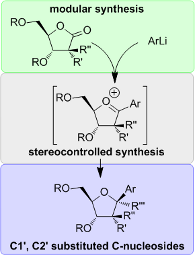
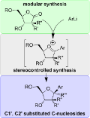
- that the triphosphate of 24 (24-TP) was incorporated opposite U and C of an RNA template by the influenza polymerase [74]. These experiments indicate that the H-bonding motifs of 24 allow it to mimic both A and G (Figure 10A) [74]. Despite the mis-incorporation, an unmodified sugar moiety may not


An uracil-linked hydroxyflavone probe for the recognition of ATP
Beilstein J. Org. Chem. 2018, 14, 747–755, doi:10.3762/bjoc.14.63
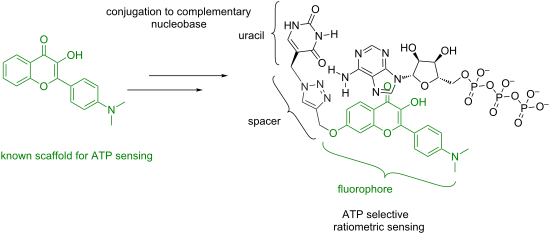
- conformation for the possible H-bonding. From the synthetic point of view the introduction of an uracil moiety can reasonably be accomplished at position 7 of DMHF with the appropriate C5-functionalized uracil derivative. The synthetic accessibility and the short spacer unit between the fluorophore and
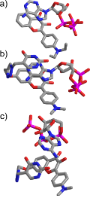
- which is stabilized through the base-pair interactions 42 kcal/mol is obtained. The energies mentioned above are in accordance with the number and strength of the H-bonding and π-stacking interactions. Based on the numerical results, it can be stated that the formation of the base-pair interactions




Recent progress in the racemic and enantioselective synthesis of monofluoroalkene-based dipeptide isosteres
Beilstein J. Org. Chem. 2017, 13, 2637–2658, doi:10.3762/bjoc.13.262
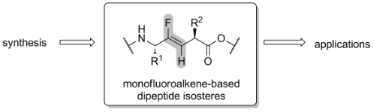
- dipeptide isostere Lys-ψ[(Z)-CF=CH]-Lys into a fusion inhibitory peptide active against HIV 1, SC29EK, was investigated [49]. Weak to moderate anti-HIV activity was observed for the fluorinated analogues, but the potency was always lower than for SC29EK. This suggested than the H-bonding behaviour was





