Search results
Search for "chromophores" in Full Text gives 143 result(s) in Beilstein Journal of Organic Chemistry.
Chemical tuning of photoswitchable azobenzenes: a photopharmacological case study using nicotinic transmission
Beilstein J. Org. Chem. 2019, 15, 2812–2821, doi:10.3762/bjoc.15.274
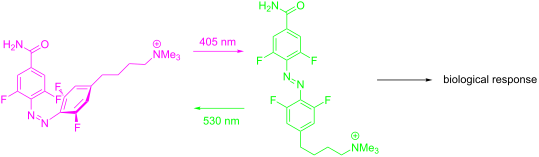
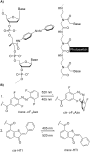
- maintains the near-ideal chemical properties of Hecht’s 4FAB chromophores [12][13] (see below). The final synthetic challenge was the installation of a maleimide onto chromophore 2. The original AB photoswitchable probes which were cross-linked to cysteine mutants had amides with a reverse orientation [19




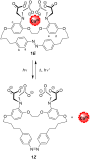
Photoreversible stretching of a BAPTA chelator marshalling Ca2+-binding in aqueous media
Beilstein J. Org. Chem. 2019, 15, 2801–2811, doi:10.3762/bjoc.15.273
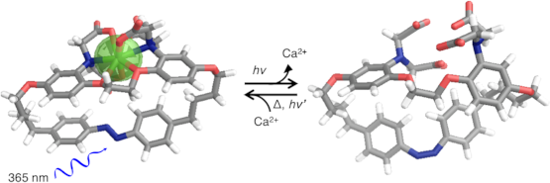
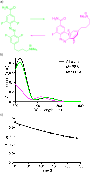
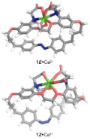
- (Figure S3, Supporting Information File 1). On repeating this cycle, slow decomposition was observed, estimated at 14% after 3 cycles. Calcium binding by hosts 1E and 1Z was investigated by spectrophotometry, specifically monitoring aromatic ring chromophores which give rise to absorption bands observed




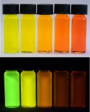
Emission solvatochromic, solid-state and aggregation-induced emissive α-pyrones and emission-tuneable 1H-pyridines by Michael addition–cyclocondensation sequences
Beilstein J. Org. Chem. 2019, 15, 2684–2703, doi:10.3762/bjoc.15.262
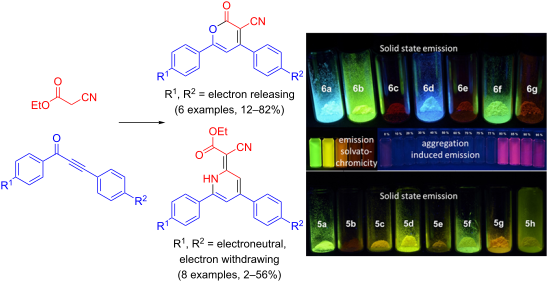
- achieved [4]. Small molecule organic fluorophores are particularly advantageous due to the potential of a tailored fine-tuning of their photophysical properties through synthetic modifications [5]. Based on their structural features, functionalized organic chromophores, containing N-, O- or S-atoms, are
- molecular aggregation in the solid state causes fluorescence quenching [16]. In recent years, we have coined diversity-oriented syntheses of functional chromophores by multicomponent strategies [17][18], opening accesses to substance libraries for systematic studies of structure–property relationships on




Arylisoquinoline-derived organoboron dyes with a triaryl skeleton show dual fluorescence
Beilstein J. Org. Chem. 2019, 15, 2612–2622, doi:10.3762/bjoc.15.254
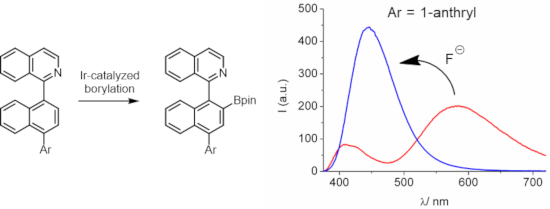
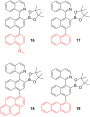
- couplings and then transformed into boronic acid esters by employing an Ir(I)-catalyzed reaction. The chromophores show dual emission behavior, where the long-wavelength emission band can reach maxima close to 600 nm in polar solvents. The fluorescence quantum yields of the dyes are generally in the range
- ratiometric response by the build-up of a hypsochromically shifted emission signal. Keywords: anions; dyes; fluorescence; laser-flash photolysis; organoboron; Introduction Boron-containing tri- and tetra-coordinated chromophores have attracted considerable interest due to their often peculiar and highly



In search of visible-light photoresponsive peptide nucleic acids (PNAs) for reversible control of DNA hybridization
Beilstein J. Org. Chem. 2019, 15, 2500–2508, doi:10.3762/bjoc.15.243
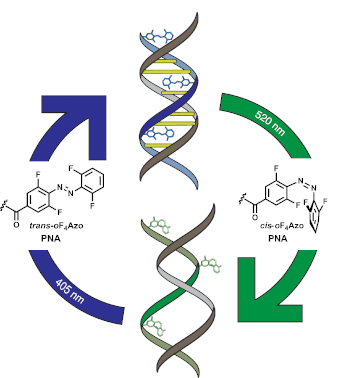
- the PNAs, UV–vis spectroscopy of 20 μM solutions in phosphate buffer (10 mM NaH2PO4, 150 mM NaCl, pH 7.4) confirmed that PNA incorporation did not significantly affect the photochromism (Figures S24, S20, S30 and S33, Supporting Information File 1). This verifies the integrity of the chromophores



Fluorescent phosphorus dendrimers excited by two photons: synthesis, two-photon absorption properties and biological uses
Beilstein J. Org. Chem. 2019, 15, 2287–2303, doi:10.3762/bjoc.15.221
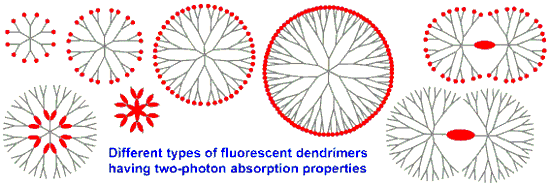
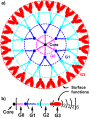
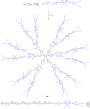
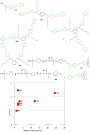
- , thanks to through-space interactions. Modelling suggested that changing the relative orientation/distance of the chromophores would allow cooperative TPA enhancement to be achieved [51]. Thus, multistilbazole molecular structures of different topologies and number of dipolar chromophores, including small








Small anion-assisted electrochemical potential splitting in a new series of bistriarylamine derivatives: organic mixed valency across a urea bridge and zwitterionization
Beilstein J. Org. Chem. 2019, 15, 2277–2286, doi:10.3762/bjoc.15.220
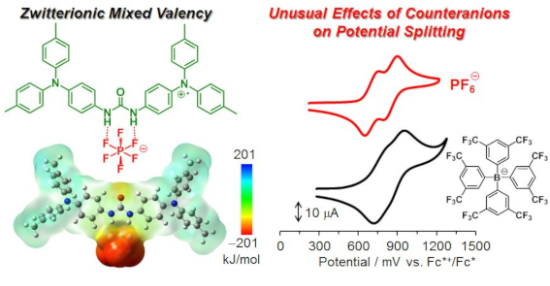
- Information File 1). When the electrolysis is performed at E1/22 + 0.15 V, the first band deriving from the π–π* transition of the NAr3•+ moiety increased in intensity (Supporting Information File 1, Figure S10), reflecting the presence of two chromophores in the generated two-electron-oxidized species 1b2


Synthesis and properties of sulfur-functionalized triarylmethylium, acridinium and triangulenium dyes
Beilstein J. Org. Chem. 2019, 15, 2133–2141, doi:10.3762/bjoc.15.210
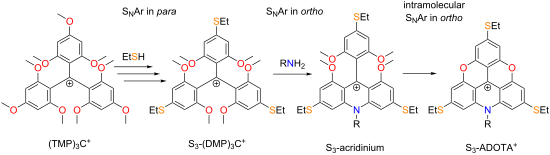
- efficiency was observed by Kotaskova et al. for fluorescein derivatives with one alkylthio group in the 3 position replacing an -OH/-O− group [51]. The origin of reduced fluorescence quantum yields in dyes with alkylthio donor groups in their chromophores is not clear at this point. It may result from


α-Photooxygenation of chiral aldehydes with singlet oxygen
Beilstein J. Org. Chem. 2019, 15, 2076–2084, doi:10.3762/bjoc.15.205
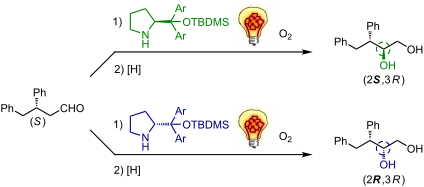
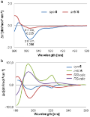
- anti’-6 obtained from the reaction with diarylprolinol silyl ether (R)-18 (Table 1, entry 5) were analyzed using electronic circular dichroism spectroscopy (ECD) and TD-DFT methods. So-called in situ methodology with dimolybdenum tetraacetate (19) acting as auxiliary chromophores which proved a very



Naphthalene diimides with improved solubility for visible light photoredox catalysis
Beilstein J. Org. Chem. 2019, 15, 2043–2051, doi:10.3762/bjoc.15.201
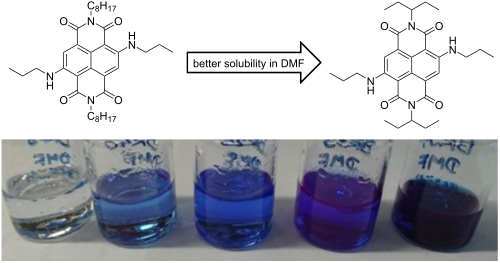
- solubility. In general, NDIs are electron-poor chromophores. The diamino substituents of cNDIs 2–6 are expected to increase the charge-transfer character of their photoexcited states in order to shift their absorption into the visible light and to improve their photoredox catalytic power. The photoredox

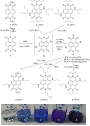


Multicomponent reactions III
Beilstein J. Org. Chem. 2019, 15, 1974–1975, doi:10.3762/bjoc.15.192

- of synthetic efficiency. Biologically and pharmaceutically relevant scaffolds are likewise tackled as chromophores, methodology development and conceptual design of macro(hetero)cycles go hand in hand with MCR-based heterocyclic chemistry. As in the previous thematic issues also this issue opens the
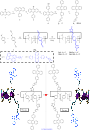
Synthesis, enantioseparation and photophysical properties of planar-chiral pillar[5]arene derivatives bearing fluorophore fragments
Beilstein J. Org. Chem. 2019, 15, 1601–1611, doi:10.3762/bjoc.15.164
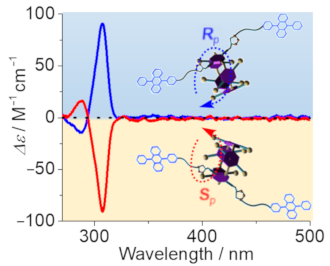
- chemical introduction of chromophores onto the rims of pillar[5]arene has been applied to allow its use as receptors for molecular sensing or biological applications [30][31][32][33]. It occurred to us that connecting fluorophores with strong absorptions in the visible range and with a high fluorescence
- quantum yield are beneficial for the application of pillar[5]arene in these fields. Perylene (Py) and 9,10-diphenylanthracene (DPA) are well known for their desirable absorption and high fluorescence quantum yield. These chromophores possess unique photophysical properties and have been widely used as
- . Aggregates with an average diameter of 531 nm are formed in 60% water (Figure S23, Supporting Information File 1) [52]. Exciton coupling CD (ECCD) signals were not observed for both compounds, even when adding more than 90% water, demonstrating that the chromophores DPA or Py units were not asymmetrically



One-pot activation–alkynylation–cyclization synthesis of 1,5-diacyl-5-hydroxypyrazolines in a consecutive three-component fashion
Beilstein J. Org. Chem. 2019, 15, 1360–1370, doi:10.3762/bjoc.15.136
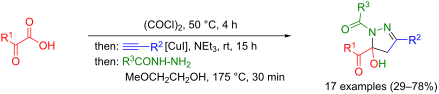
- ingredients [8][9][10][11], as ligands [12][13], and as chromophores [14][15][16], the partially unsaturated 2H-pyrazolines have particularly attracted attention for instance as antibacterial [17], anti-inflammatory [18], antidiabetic [19], and antidepressive [20] agents. Especially, 1-acylpyrazolines have


Bambusuril analogs based on alternating glycoluril and xylylene units
Beilstein J. Org. Chem. 2019, 15, 1268–1274, doi:10.3762/bjoc.15.124
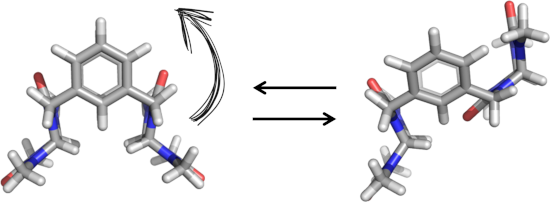
- spectroscopy was not possible due to the low absorption of bambusurils within the UV–vis region. Therefore, we decided to investigate the synthesis of bambusuril derivatives and analogs containing chromophores in their structure. Initially we tested post-macrocyclic functionalization resulting in bambusurils


Self-assembly behaviors of perylene- and naphthalene-crown macrocycle conjugates in aqueous medium
Beilstein J. Org. Chem. 2019, 15, 1203–1209, doi:10.3762/bjoc.15.117
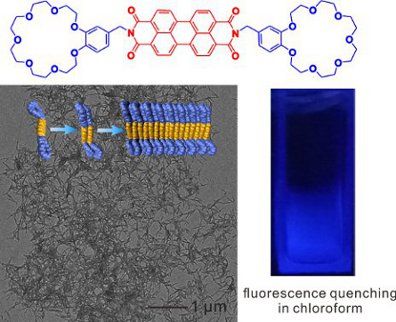
- with their linear glycol chain counterparts, B21C7 shows great potential to be an easy-to-accessed building block to probe the non-covalent interactions and chemical transformations influenced by water molecules. Perylene diimide (PDI) and naphthalene diimide (NDI) are polycyclic aromatic chromophores
- state [93][94]. When more polar solvent MeCN or MeOH were used, merely a broad and very weak absorption band was observed. All the weak and disappearing bands indicate the overlapping of PDI chromophores to form J-type aggregates in polar solvents [84]. The intensities of the characteristic absorption


Photochemical generation of the 2,2,6,6-tetramethylpiperidine-1-oxyl (TEMPO) radical from caged nitroxides by near-infrared two-photon irradiation and its cytocidal effect on lung cancer cells
Beilstein J. Org. Chem. 2019, 15, 863–873, doi:10.3762/bjoc.15.84
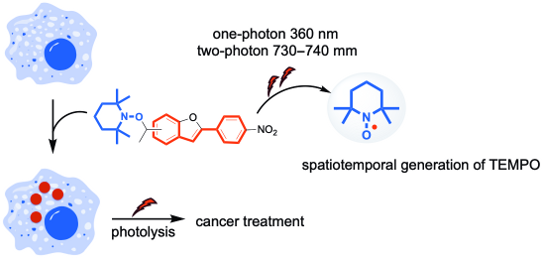
- ). However, in general, chromophores do not absorb at such long wavelengths and the photon energy is too low for bond-cleavage reactions to generate (i.e., uncage) functional molecules. For example, the bond-dissociation energy of the weak PhCH2–OPh, linkage is reported to be 52.1 kcal mol−1 [43]. These




Synthesis and fluorescent properties of N(9)-alkylated 2-amino-6-triazolylpurines and 7-deazapurines
Beilstein J. Org. Chem. 2019, 15, 474–489, doi:10.3762/bjoc.15.41
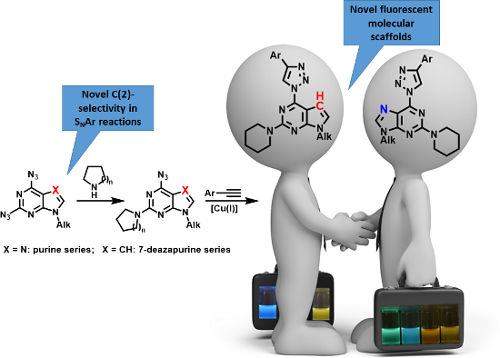
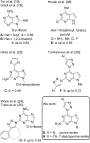
- purines and 7-deazapurines. Results and Discussion We have recently observed significant fluorescence in the triazolylpurine and triazolyl-7-deazapurine series [25][29][40][41]. Therefore, we developed synthetic methods that can provide structurally related chromophores of the purine and 7-deazapurine





Application of olefin metathesis in the synthesis of functionalized polyhedral oligomeric silsesquioxanes (POSS) and POSS-containing polymeric materials
Beilstein J. Org. Chem. 2019, 15, 310–332, doi:10.3762/bjoc.15.28
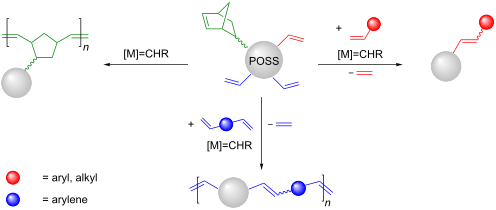
- properties of the POSS-based dendritic molecule not only by changing the chromophore but also by providing tailored steric interactions between bridges and/or chromophores was proved [14]. Interestingly, the 4’-vinylbiphenyl-3,5-dicarbaldehyde group modified macromolecule (Figure 5d) displayed the ability to


N-Arylphenothiazines as strong donors for photoredox catalysis – pushing the frontiers of nucleophilic addition of alcohols to alkenes
Beilstein J. Org. Chem. 2019, 15, 52–59, doi:10.3762/bjoc.15.5
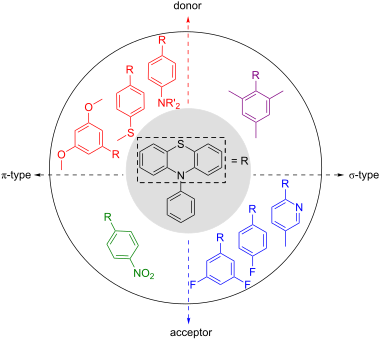
- processes. Conclusion One of the major current challenges in photoredox catalysis is the design of chromophores suitable for the most reductive chemical reactions, like for instance reductions by alkaline metals, affording reaction conditions that are easier to handle. While solid sodium comes up with a


Degenerative xanthate transfer to olefins under visible-light photocatalysis
Beilstein J. Org. Chem. 2018, 14, 3047–3058, doi:10.3762/bjoc.14.283

- of the iridium-based photocatalyst that triggers the radical chain process [27]. Results and Discussion Over the last decade, there has been a remarkable advance in synthetic chemistry that takes advantage of various chromophores (either metallic or organic) having visible-light charge transfer

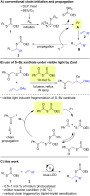


Organometallic vs organic photoredox catalysts for photocuring reactions in the visible region
Beilstein J. Org. Chem. 2018, 14, 3025–3046, doi:10.3762/bjoc.14.282
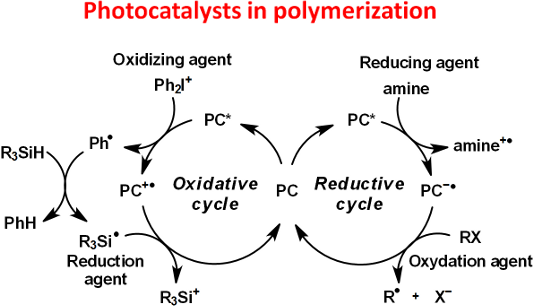
- described in this reference. By their broad absorptions extending from 350 to 450 nm, theses complexes are excellent candidates for photoinitiation in the visible range. Moreover, the reactivity of the chromophores can be tuned by the counter anion, PF6− being less nucleophilic than BF4−. In this context
- ][52]. Thanks to the ability of some chromophores to transfer electrons when irradiated, they can participate in catalytic processes. These later catalytic processes can be widely applied to organic synthesis or photopolymerization [17]. More than just a “metal-free” alternative, some chromophores



Microfluidic light-driven synthesis of tetracyclic molecular architectures
Beilstein J. Org. Chem. 2018, 14, 2418–2424, doi:10.3762/bjoc.14.219
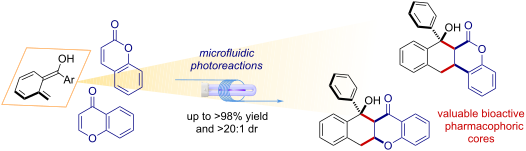
- different reaction partners, allowing the light-promoted construction of biologically active natural products [8]. With this aim, electron-deficient chromophores, such as 3-coumarincarboxylates D, have been used as competent reaction partners of 2-MBPs A, furnishing 3-benzylated chromanones E through a


Applications of organocatalysed visible-light photoredox reactions for medicinal chemistry
Beilstein J. Org. Chem. 2018, 14, 2035–2064, doi:10.3762/bjoc.14.179
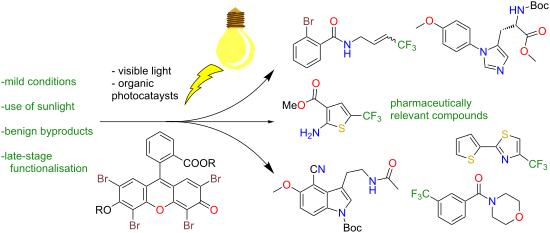
- process through which energy is transferred between chromophores via non-radiative dipole–dipole coupling. It is generally assumed that the non-radiative processes occur at a much slower rate than radiative processes. As such, the lifetime of S1 (τs1) is roughly equal to the lifetime of fluorescence (τf


Strong binding and fluorescence sensing of bisphosphonates by guanidinium-modified calix[5]arene
Beilstein J. Org. Chem. 2018, 14, 1840–1845, doi:10.3762/bjoc.14.157
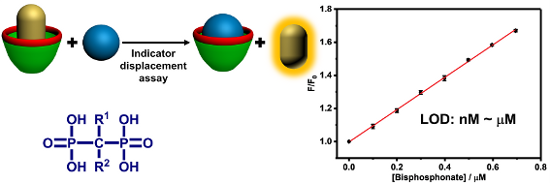
- particularly suitable for the detection of analytes lacking chromophores. The key factor in IDA is the rational design of artificial receptors that are capable of binding analytes strongly and specifically. Calixarenes are the third generation of macrocyclic receptors after crown ethers and cyclodextrins. Due