Search results
Search for "configuration" in Full Text gives 1071 result(s) in Beilstein Journal of Organic Chemistry. Showing first 200.
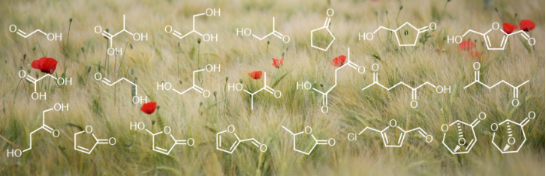
C2 to C6 biobased carbonyl platforms for fine chemistry
Beilstein J. Org. Chem. 2025, 21, 2103–2172, doi:10.3762/bjoc.21.165


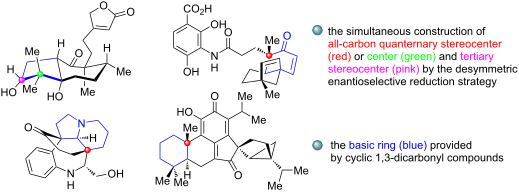
The application of desymmetric enantioselective reduction of cyclic 1,3-dicarbonyl compounds in the total synthesis of terpenoid and alkaloid natural products
Beilstein J. Org. Chem. 2025, 21, 2085–2102, doi:10.3762/bjoc.21.164
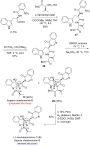
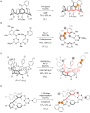
- . Additionally, there is a lack of corresponding pharmacological activity studies. In 2021, the group of Han completed the first enantioselective total synthesis of (+)-toxicodenane A (16) and determined its absolute configuration by employing an early-stage desymmetric enantioselective reduction of a 1,3
- Prins cyclization produced the oxa-bridged product 88. Finally, ozonolysis of 88 followed by Wittig reaction of the resultant ketone and subsequent reduction accomplished the total synthesis of (+)-toxicodenane A (16). The authors eventually confirmed that the absolute configuration of (+)-16 was 4S,5S


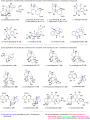


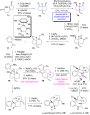

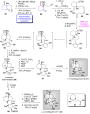


Further elaboration of the stereodivergent approach to chaetominine-type alkaloids: synthesis of the reported structures of aspera chaetominines A and B and revised structure of aspera chaetominine B
Beilstein J. Org. Chem. 2025, 21, 2072–2081, doi:10.3762/bjoc.21.162
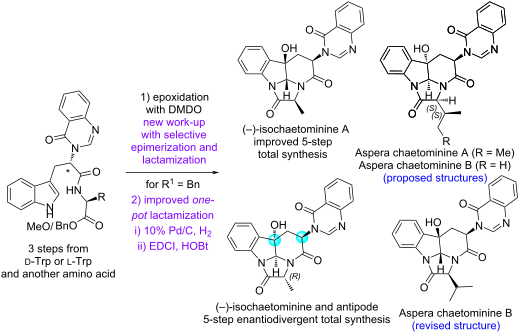
- absolute configuration was unambiguously determined by the comparison with the reported compound chaetominine (1)” [32]. The only information regarding the absolute configuration mentioned in the text is as follows: “aspera chaetominine A (1) was presumably biosynthesized from ʟ-isoleucine, ʟ-valine
- (–)-isochaetominine C (6), whose absolute configuration is tentatively assigned as 2R,3R,11S,14R. It is worth noting that compound 13 has been obtained in our previous investigation [63]. However, the 1H and 13C NMR spectra were recorded in DMSO-d6 which prevent a direct comparison with the data of aspera


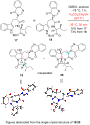


Measuring the stereogenic remoteness in non-central chirality: a stereocontrol connectivity index for asymmetric reactions
Beilstein J. Org. Chem. 2025, 21, 1995–2006, doi:10.3762/bjoc.21.155
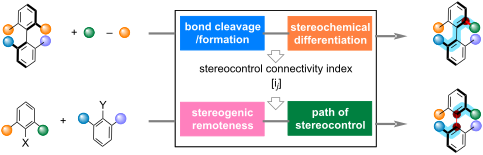
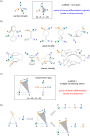
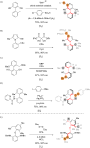
- formed in the product. 2.2 Determine, according to the Cahn–Ingold–Prelog (CIP) rules, the atoms that distinguish the newly created stereogenic element's configuration. These are the atoms whose identities represent the first point of difference between the set of substituents in assigning the
- configuration of the new stereogenic element. One or two sets of atoms could be identified. a) These atoms labeled in step 1 are considered higher in priority than any other atoms. b) If the comparison is down to between an atom already labeled in step 1 and one other atom, such comparison and this set of atoms
- index (Scheme 2). A detailed process for assigning the index is shown in Scheme 2A for asymmetric hydrogenation of 2-butanone [1]. The atoms involved in bond cleavage and bond formation are highlighted in orange color. The atoms responsible for assignment of the stereochemical configuration of the





Asymmetric total synthesis of tricyclic prostaglandin D2 metabolite methyl ester via oxidative radical cyclization
Beilstein J. Org. Chem. 2025, 21, 1964–1972, doi:10.3762/bjoc.21.152
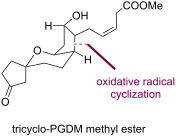
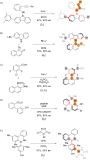
- -metathesis reaction smoothly in the presence of the Hoveyda–Grubbs second-generation catalyst to afford the enone 13 in 63% yield with the desired trans-configuration. Enone 13 was then subjected to the Pd/C-catalyzed hydrogenation to give the thermodynamically favored bicyclic hemiketal 21 in 92% yield as
- stereochemistry at C9. Therefore, alcohol 32 was subjected to a one-pot Mitsunobu reaction, hydrolyzation, and spirolactonization to give the corresponding alcohol 26 with inversed configuration at C9. Finally, terminal alkene 26 was transformed by Dai’s Ru-catalyzed Z-selective cross-metathesis with 33 [9][40



Synthesis of N-doped chiral macrocycles by regioselective palladium-catalyzed arylation
Beilstein J. Org. Chem. 2025, 21, 1917–1923, doi:10.3762/bjoc.21.149
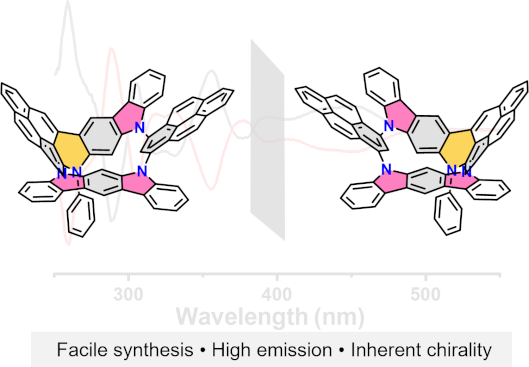
- , theoretical calculations were performed to evaluate the energy barriers of isomerization. As shown in Figure S3 (Supporting Information File 1), the configuration observed in the crystal structure has the lower energy by 24.0 kcal mol−1 than that of the isomeric structure with two pyrene units at the same
- with a Daicel Chiralpak IF column (Figure S1, Supporting Information File 1). The absolute configuration of the separated enantiomers of MC1 was determined based on the calculated CD spectra (Figure S4, Supporting Information File 1). The first fraction was defined as the (+)-enantiomer, and the second




Stereoselective electrochemical intramolecular imino-pinacol reaction: a straightforward entry to enantiopure piperazines
Beilstein J. Org. Chem. 2025, 21, 1897–1908, doi:10.3762/bjoc.21.147
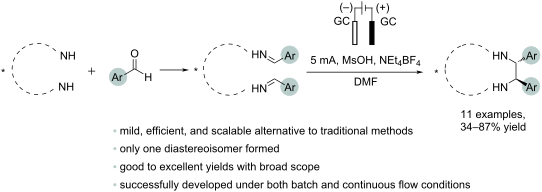
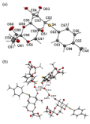
- absolute configuration of the piperazine formed, a pure sample of compound 2b derived from (1R,2R)-trans-diaminocyclohexane was crystallized from a chloroform solution resulting in the formation of white crystals suitable for single crystal X-ray diffraction studies. The absolute configuration of the





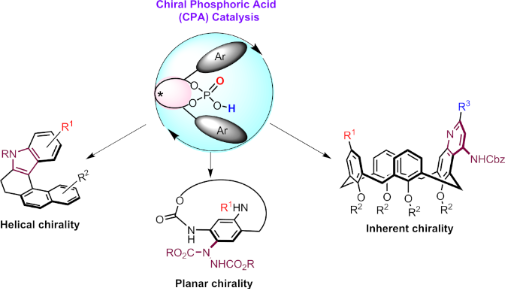
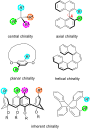
Chiral phosphoric acid-catalyzed asymmetric synthesis of helically chiral, planarly chiral and inherently chiral molecules
Beilstein J. Org. Chem. 2025, 21, 1864–1889, doi:10.3762/bjoc.21.145
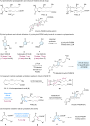
- reaction produced the imine 16a which, upon treatment with Pd(PPh3)2Cl2 and KHMDS, led to furan ring formation and the generation of hetero[7]helicene 17a while maintaining the stereochemical configuration. Through this methodology, a range of elongated [7]- and [8]heterohelicenes 17b–d incorporating both
- enantioselective synthesis of planarly chiral macrocycles through a dynamic kinetic resolution approach [15]. Despite bearing an amino group on the phenyl ring, the configuration of the macrocyclic paracyclophane 32 was found to be unstable at room temperature. Consequently, by employing a CPA-catalyzed asymmetric
- the efficient asymmetric synthesis of inherently chiral eight-membered N-heterocycle 6,7-diphenyldibenzo[e,g][1,4]diazocines (DDDs), which displayed a rigid saddle-shaped configuration [16]. Starting from readily available [1,1'-biphenyl]-2,2'-diamines 62 and benzyl compounds 63, the asymmetric









Photoswitches beyond azobenzene: a beginner’s guide
Beilstein J. Org. Chem. 2025, 21, 1808–1853, doi:10.3762/bjoc.21.143
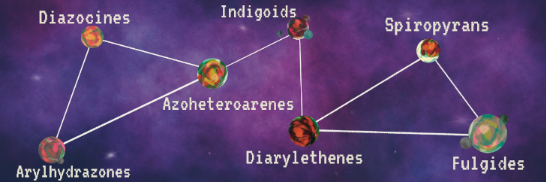
- stable isomer is not always intuitive, and several early studies focused on this aspect [96][105][106]. For small substituents (H, Me, CN) in aprotic solvents and in the absence of other external factors, the equilibrium is usually shifted towards the least hindered configuration, regardless of the
- irradiation [118] (Figure 20). The primary example of a diarylethene is stilbene: it was discovered that upon irradiation, stilbene would not only switch between the E- (I) and Z-configuration (II) but also, in its Z-configuration, it would undergo a 6π-electrocyclisation (III) (see Scheme 39) [119]. However




[3 + 2] Cycloaddition of thioformylium methylide with various arylidene-azolones in the synthesis of 7-thia-3-azaspiro[4.4]nonan-4-ones
Beilstein J. Org. Chem. 2025, 21, 1791–1798, doi:10.3762/bjoc.21.141
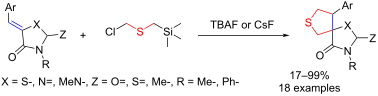
- relative configuration (cis or trans) of the substituents. Therefore, the structures of the obtained compounds were determined by single crystal X-ray analysis (Figure 1). Thus, all the obtained derivatives of oxo-rhodanine 6, rhodanine 8 and imidazolone 9 had a cis configuration, while the derivatives of
- thiohydantoin 7, on the contrary, have a trans configuration of two vicinal stereocenters (Scheme 3 and Figure 1). Thus, in all cases we have obtained, probably, the most thermodynamically favorable isomers. This result allows us to assume a stepwise mechanism of the ylide addition to the double bond of
- thiohydantoin derivatives, since the initial compounds 2 had a predominant Z-configuration. At the same time, for cases 1, 3 and 4, both a synchronous and stepwise mechanism are possible. The discovered stereochemistry of the reaction correlates well with the previously obtained data, when the most



3,3'-Linked BINOL macrocycles: optimized synthesis of crown ethers featuring one or two BINOL units
Beilstein J. Org. Chem. 2025, 21, 1719–1729, doi:10.3762/bjoc.21.134
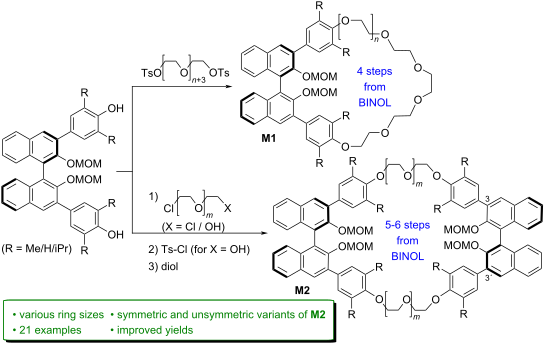
- macrocycles Me/H/iPr-M22 in good yields of 59/78/77%. Again, we applied this protocol for the synthesis of the unsymmetric derivative HiPr-M22, this time in two diastereomeric forms. In the unsymmetric case, the introduction of two BINOL units with opposite configuration does not furnish a meso-compound, so


Approaches to stereoselective 1,1'-glycosylation
Beilstein J. Org. Chem. 2025, 21, 1700–1718, doi:10.3762/bjoc.21.133
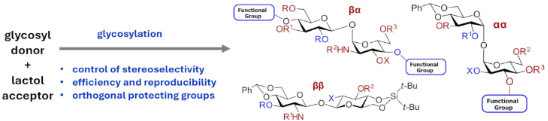
- traditionally presents challenges such as modest stereoselectivity, the formation of various diastereomeric by-products and moderate yields. The configuration of the glycosidic linkage (ββ, αα or βα) is the most important factor in choosing an appropriate glycosylation approach, alongside the specific
- exploiting the participation effect of the neighboring protecting group [43][44], employing anomeric lactols as acceptors is more complex as lactols with the desired configuration are frequently difficult to obtain (e.g., through anomerization). In addition to the nature of the leaving group and promoter
- formation of an α-glycoside on the donor side [54]. On the acceptor side, the β-configuration was favored due to steric hindrance from the C-2 phthalimido group in the triacetylated GalN-lactol acceptors 6 or 3,4-di-O-benzylated acceptors 8, resulting in kinetically controlled formation of β,α-1,1


Continuous-flow-enabled intensification in nitration processes: a review of technological developments and practical applications over the past decade
Beilstein J. Org. Chem. 2025, 21, 1678–1699, doi:10.3762/bjoc.21.132
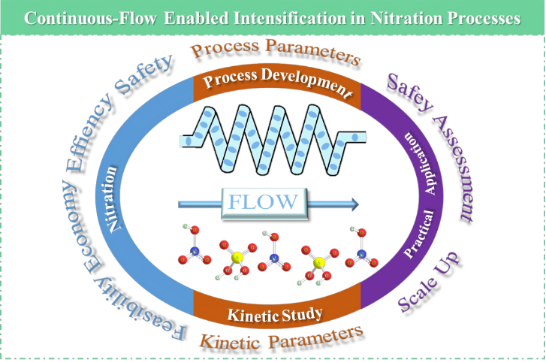
- system configuration strategies, critical process parameters and operating ranges, performance evaluation metrics, universal methodologies for kinetics analysis, safety assessment protocols, and scale-up approaches. The presented content aims to offer actionable guidance for researchers and engineers



Structural analysis of stereoselective galactose pyruvylation toward the synthesis of bacterial capsular polysaccharides
Beilstein J. Org. Chem. 2025, 21, 1671–1677, doi:10.3762/bjoc.21.131

- , and the immunological properties may base on R/S-configuration. However, precisely controlling the formation of R- and S-isomers and identifying the correct conformer can be challenging due to the structural similarities between these two isomers. Researchers have recently developed strategies to
- define the stereochemistry of pyruvate ketals as either R- or S-configurations. Typically, S-configuration exhibits 13C NMR shifts between δ 17–24 ppm and 1H NMR shifts δ 1.60–2.10 ppm, whereas the R-configuration shows 13C shifts downfield at δ 24-27 ppm and 1H shifts at δ 1.40–2.00 ppm [19][20][21][22
- produce solid compound 6. A single crystal of compound 6 was obtained through recrystallization using ethyl acetate and n-hexane. The X-ray structural data provided direct evidence supporting the R-configuration (Figure 2a). The material crystallized in the monoclinic space group P21, with cell dimensions


Synthesis of optically active folded cyclic dimers and trimers
Beilstein J. Org. Chem. 2025, 21, 1603–1612, doi:10.3762/bjoc.21.124
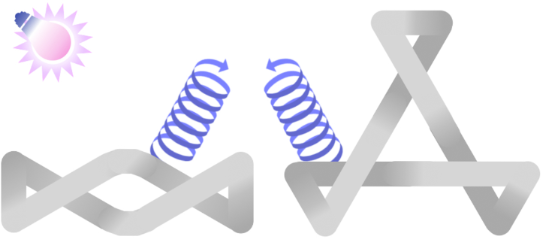
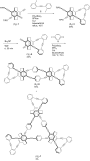
- observed between the dimer and trimer, despite the same absolute configuration of the planar chiral [2.2]paracyclophane units, which was reproduced by theoretical studies. Keywords: circularly polarized luminescence; oligomer; [2.2]paracyclophane; planar chirality; Introduction Cyclophane is a general
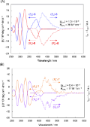
- same absolute configuration. The |glum| value of 7 was 0.4 × 10⁻³ (Figure S18A, Supporting Information File 1), which was lower than that of 6. In the case of the film states of 6 and 7, low PL brightness and intermolecular random orientation of fluorophores resulted in noisy CPL signals. The CD
- | values of the ordered of 10–4–10–3. The chiroptical properties of dimers and trimers showed opposite Cotton effects and CPL signals, despite the same absolute configuration of the planar chiral [2.2]paracyclophane crossing points. The π-conjugation system of the dimer that exhibited CPL was highly curved



pH-Controlled isomerization kinetics of ortho-disubstituted benzamidines: E/Z isomerism and axial chirality
Beilstein J. Org. Chem. 2025, 21, 1568–1576, doi:10.3762/bjoc.21.120
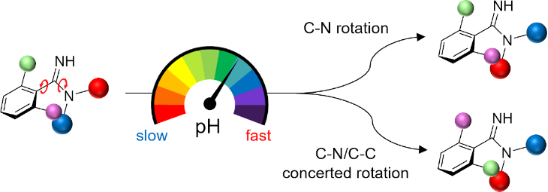
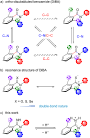
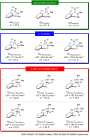
- states (TSs) were found depending on the configuration of the amidine N–H and the rotational direction. The C–N bond rotation of the molecular form of amidine was calculated to be 68 kJ·mol−1 for Z-amidine and 71 kJ·mol−1 for E-amidine. Protonation of the amidine moiety drastically increases the
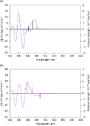
- separation of the two peaks, HPLC analysis of each separated component showed single peaks, suggesting that the E and Z isomers of amidine 2 trifluoroacetate salt could be separated by standard RP-HPLC. The configuration of the amidine moiety of each component was characterized by NOE experiments (for



Facile synthesis of hydantoin/1,2,4-oxadiazoline spiro-compounds via 1,3-dipolar cycloaddition of nitrile oxides to 5-iminohydantoins
Beilstein J. Org. Chem. 2025, 21, 1552–1560, doi:10.3762/bjoc.21.118

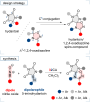
- determined by the configuration of the spiro-core, while still allowing for the possibility of relative rotation to facilitate better binding to the targets. Furthermore, it appears to be as exceedingly advantageous from a synthesis perspective, as it enables the application of methods that have been



Highly distinguishable isomeric states of a tripodal arylazopyrazole derivative on graphite through electron/hole-induced switching at ambient conditions
Beilstein J. Org. Chem. 2025, 21, 1496–1507, doi:10.3762/bjoc.21.112
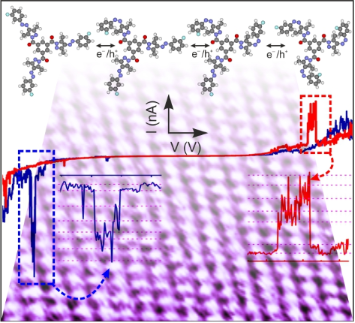
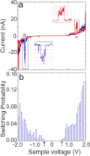
- conformational switching of a tripodal azopyrazole derivative (FNAAP) in its ultra-thin films on a HOPG surface at ambient conditions. Most of the molecules (>98%) in the film are in the EEE configuration and form a hexagonal close-packed assembly. Molecules within the condensed phase of EEE isomeric states were



Wittig reaction of cyclobisbiphenylenecarbonyl
Beilstein J. Org. Chem. 2025, 21, 1454–1461, doi:10.3762/bjoc.21.107
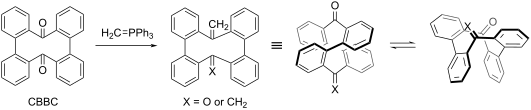
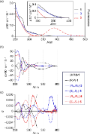
- (P,P)-1, whose configuration was previously confirmed [17]. The (P,P)-figure-eight conformation of CBBC 1 corresponds to the (Ra,Ra)-bathtub conformation, whose configuration is based on the axial chirality of the biaryl segment. Consequently, the 1st fractions of 3 and 5 were determined to be (Sa,Sa
- circle and red triangle mean selected signals due to figure-eight and bathtub conformations, respectively. Simulated dynamics of bis-olefin 5 at the B3LYP/6-31G(d) level of theory. The description for the configuration of A and B are based on the helical chirality of the 1,1-diphenylethylene units and



Advances in nitrogen-containing helicenes: synthesis, chiroptical properties, and optoelectronic applications
Beilstein J. Org. Chem. 2025, 21, 1422–1453, doi:10.3762/bjoc.21.106
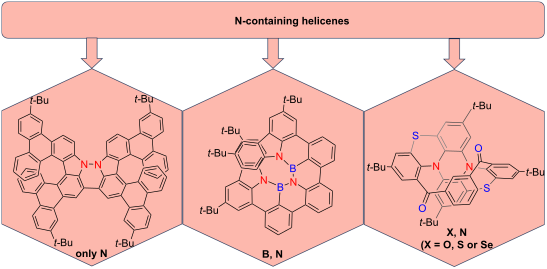
- units, as well as extending π-conjugated frameworks, are widely employed strategies for achieving longer-wavelength emission in optoelectronic materials. Inspired by the electronic configuration of borazine, boron has emerged as a valuable electron-accepting counterpart to electron-donating nitrogen in

Tautomerism and switching in 7-hydroxy-8-(azophenyl)quinoline and similar compounds
Beilstein J. Org. Chem. 2025, 21, 1404–1421, doi:10.3762/bjoc.21.105
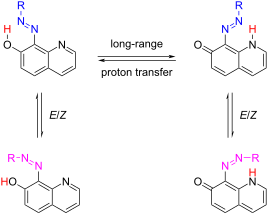
- constructed by us [92]. The configuration allows to use two light sources whose beams path orthogonally through a cuvette. The absorbance spectra were measured using a fiber-optic micro-spectrometer QE 65000 (Ocean Optics, Inc., Dunedin, FL, USA) with approximately 0.7 nm spectral resolution in the range 250




Reactions of acryl thioamides with iminoiodinanes as a one-step synthesis of N-sulfonyl-2,3-dihydro-1,2-thiazoles
Beilstein J. Org. Chem. 2025, 21, 1397–1403, doi:10.3762/bjoc.21.104
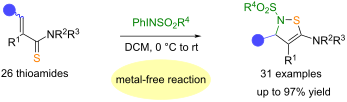
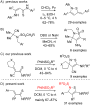
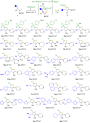
- , the atom N(2) deviates from the RMS plane S(1)C(3)C(4)C(5) by 0.461 Å. The atom of the N(1) morpholine fragment has a planar configuration with significant asymmetry in the lengths of C–N bonds. Due to the electron-acceptor effects of substituents, the C(3)‒H bond exhibits significant polarity and is



N-Salicyl-amino acid derivatives with antiparasitic activity from Pseudomonas sp. UIAU-6B
Beilstein J. Org. Chem. 2025, 21, 1388–1396, doi:10.3762/bjoc.21.103
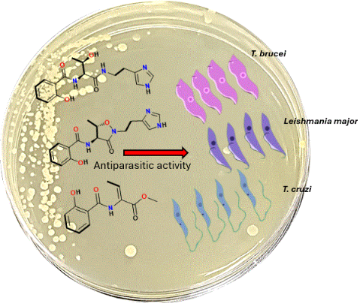
- the biogenesis of this heterocyclisation leading to the pseudomonine biosynthesis [23]. The absolute configuration of the threonine residue in compounds 1 and 2 was assigned as ʟ, based on the derivatization of 1 and 2 hydrolysates with ʟ-FDAA, a Marfey’s reagent, followed by chromatographic profiling
- configuration to that of 3, evidenced by a medium through space correlation between the amide proton, H-8 (δH 9.9) and the methyl, H3-12 (δH 1.76) in the NOESY spectrum (see Figure 2 and Supporting Information File 1, Figure S23). Based on HRESIMS, 1D and 2D NMR data, the structure of compound 4, was confirmed


Oxetanes: formation, reactivity and total syntheses of natural products
Beilstein J. Org. Chem. 2025, 21, 1324–1373, doi:10.3762/bjoc.21.101
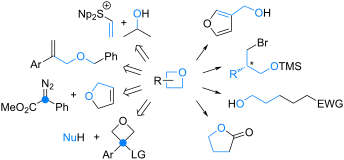
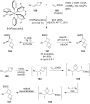
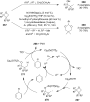
- : aliphatic > allylic > benzylic. In case of trisubstituted C=C bonds, the cyclisation proceeded with retention of configuration, however, higher reaction temperatures were required due to the increased steric hindrance. Competition experiments revealed a preference for 4-exo ring closure over 5-exo, 6-exo
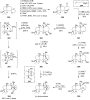
- % yield. Interestingly, only the xylono-lactone showed complete inversion of the configuration at C-2 while the lyxono-lactone showed complete retention of the configuration. The ribono- and arabinono-lactone displayed predominant retention and inversion, respectively. Switching the triflyl group for the








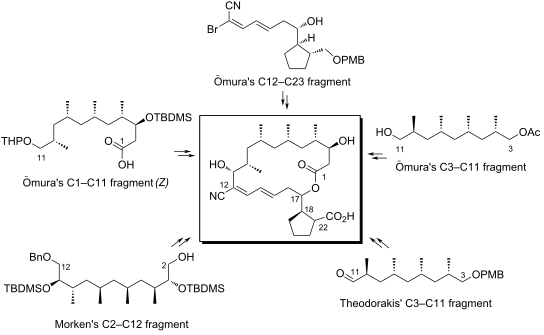
Synthetic approach to borrelidin fragments: focus on key intermediates
Beilstein J. Org. Chem. 2025, 21, 1135–1160, doi:10.3762/bjoc.21.91
- a cancer therapeutic, exhibiting anti-inflammatory, anti-angiogenic, antimicrobial, antifungal, and antimalarial activities. While Keller-Schierlein first determined its chemical structure, Anderson later confirmed its absolute configuration using X-ray crystallography [16]. During the screening of
- sediment in Yalongwan, China [22]. The C14–C15 olefin geometry of borrelidins G and H (Table 1, entries 10 and 11) exhibited a Z-configuration, as confirmed by NOESY correlations. Borrelidins J–L (Table 1, entries 13–15) were isolated from an endophytic Streptomyces sp. NA06554 from Aster tataricus in Aba
- borrelidin [38]. They highlighted a significant limitation in existing methods for constructing the deoxypropionate unit of borrelidin, which features four 1,3-alternating methyl groups with a syn,syn,anti-configuration. These methods typically required at least three synthetic steps to iteratively form each