


Search results
Search for "ester" in Full Text gives 1547 result(s) in Beilstein Journal of Organic Chemistry. Showing first 200.
Ni-promoted reductive cyclization cascade enables a total synthesis of (+)-aglacin B
Beilstein J. Org. Chem. 2025, 21, 2548–2552, doi:10.3762/bjoc.21.197
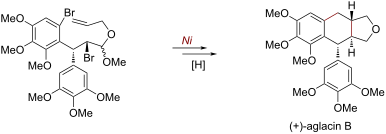
- File 1). The generated ester 10 was then converted into the corresponding acyl chloride by saponification and subsequent reaction with pivaloyl chloride. The resulting acyl chloride was then trapped by (S)-4-phenyl-2-oxazolidinone (11) to produce the desired α,β-unsaturated amide 7. Next, the


Isoorotamide-based peptide nucleic acid nucleobases with extended linkers aimed at distal base recognition of adenosine in double helical RNA
Beilstein J. Org. Chem. 2025, 21, 2513–2523, doi:10.3762/bjoc.21.193
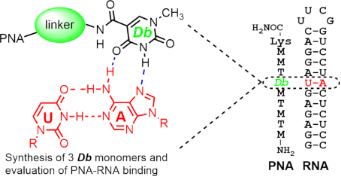
- % of the final desired monomer 8 was also isolated in the coupling step, presumably due to hydrolysis of the allyl ester in the iron reduction step. The remaining allyl ester 7 was deallylated via Pd(PPh3)4 to afford the monomer 8 in 51% yield. Db2 Synthesis Db2 was prepared through a convergent
- perform equally well using conventional heating methods. Aniline 10 and carboxylic acid 13 were combined under standard (HBTU) amide coupling conditions to afford benzyl ester 14 in 52% yield. Compound 14 was subsequently debenzylated via hydrogenolysis to afford the target Db2 monomer 15 in 77% yield
- -nitroaniline into benzyl acrylate to afford compound 17 in 57% yield (Scheme 3). Aniline 17 then was subjected to a three-step Boc protection, nitro reduction, and coupling with isoorotic acid derivative 6 that afforded 18 in 39% yield over 3 steps. The benzyl ester was then cleaved under hydrogenolysis


Assembly strategy for thieno[3,2-b]thiophenes via a disulfide intermediate derived from 3-nitrothiophene-2,5-dicarboxylate
Beilstein J. Org. Chem. 2025, 21, 2489–2497, doi:10.3762/bjoc.21.191
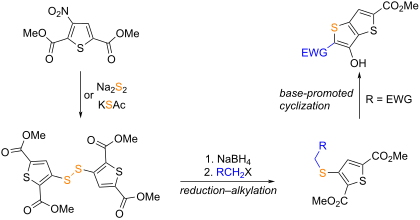
- the nucleophilic substitution of the nitro group in 2-nitrobenzonitriles using Na2S in a DMF/water medium, followed by alkylation of the resulting 2-cyanophenylthiolates and subsequent cyclization [31]. However, in our case, the reaction of ester 1 with Na2S in either acetone or a DMF/water mixture
- to be an unsuitable route for nucleophilic substitution of its nitro group. Next, we explored an alternative route using potassium thioacetate (KSAc) as a softer nucleophile. Unexpectedly, the reaction of ester 1 with KSAc in acetone gave a mixture of products other than the desired 3-AcS-substituted
- , necessitates consideration of a reaction mechanism beyond straightforward nucleophilic substitution of the nitro group in ester 1. Although the initial reaction probably involves a nucleophilic attack by the S-nucleophile on the activated thiophene ring, resulting in displacement of the nitro group, the


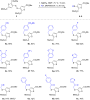

Transformation of the cyclohexane ring to the cyclopentane fragment of biologically active compounds
Beilstein J. Org. Chem. 2025, 21, 2416–2446, doi:10.3762/bjoc.21.185
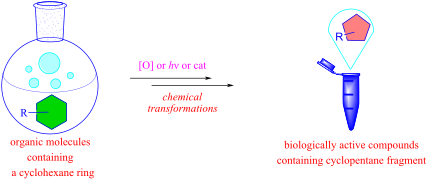
- pentacyclic structure, 2,11-dioxo-A-norolean-12,18(19)-dien-30-oic acid 39, from pharmaceutical 18,19-dehydroglycyrrhetic acid (18,19-dehydro-GLA) 33. Compound 33 was converted to its methyl ester 34 and oxidized by pyridinium dichromate (PDC) in CH2Cl2 to 3-oxo-18,19-dehydro-GLA 35 with a 75% yield. α
- -Ethylformylation of compound 35 and subsequent oxidation of ketoenol 36 with 30% aqueous H2O2 in the presence of a 28% MeONa/MeOH solution resulted in the formation of a diacid, which was then converted into dimethyl ester 37 with a yield of 55%. Refluxing ester 37 with an excess of t-BuOK in benzene gave acid 39
- with a yield of 53% yield. The excess of base (t-BuOK) caused simultaneous decarboxylation and hydrolysis of ester 37, forming the new nortriterpenoid 39 with a pentacyclic ring A (Scheme 7). In the work of Rath et al. [32], a similar method was proposed for the interconversion of cycles in the


The high potential of methyl laurate as a recyclable competitor to conventional toxic solvents in [3 + 2] cycloaddition reactions
Beilstein J. Org. Chem. 2025, 21, 2389–2415, doi:10.3762/bjoc.21.184
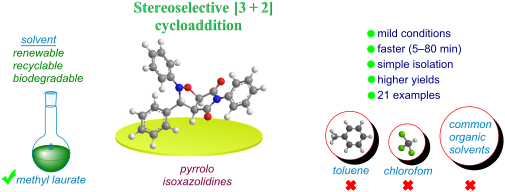
- characteristics, arising from the ester group and the non-polar hydrocarbon chain, respectively. The nitrone contains a polar functional group (N–O) and two aromatic rings, which serve to generate both polar and dispersion forces. Consequently, these findings indicate that fatty acid methyl esters may possess







Synthetic study toward vibralactone
Beilstein J. Org. Chem. 2025, 21, 2376–2382, doi:10.3762/bjoc.21.182

- , although the corresponding enone product was not isolated. Facing a dead-end, the synthetic route to precursor 14 needed to be revised. From 15, after sodium methoxide-mediated ring opening of lactone, the Fráter–Seebach alkylation [39][40][41] was applied to afford β-hydroxy ester 18. At this stage, the
- the β-lactone was converted into the linear methyl ester 19 to decrease the potential steric hinderance associated with the fused bicyclic skeleton, substrates containing a free hydroxy group or the corresponding TES ether still failed to close the cyclopentene ring. In this scenario, it was necessary


Rotaxanes with integrated photoswitches: design principles, functional behavior, and emerging applications
Beilstein J. Org. Chem. 2025, 21, 2345–2366, doi:10.3762/bjoc.21.179

- macrocycle occurs along a thread containing fumaramide and succinic amide ester units as recognition sites, with highly fluorescent perylene bisimide and pyrene serving as stoppers [67]. The macrocycle features two pyridine units that, upon protonation, effectively quench the fluorescence of both


Comparative analysis of complanadine A total syntheses
Beilstein J. Org. Chem. 2025, 21, 2334–2344, doi:10.3762/bjoc.21.178
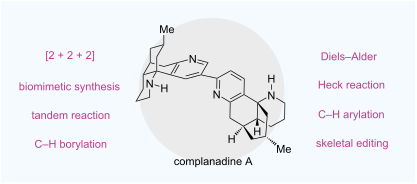
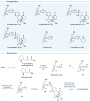
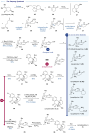
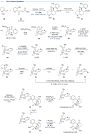
- lycodine 34 underwent Ir-catalyzed C3–H borylation mainly guided by steric factors to provide boronic ester 35 in 75% yield. With the boronic ester handle at the C3 position, the subsequent Suzuki–Miyaura cross coupling between 35 and 33 occurred smoothly to deliver pseudo-dimer 36, which upon acidic
- used in the Sarpong synthesis was again utilized here to introduce a boronic ester at the C3 position, which was further converted to 3-bromopyridine 55 with CuBr2. With both 54 and 55, Tsukano and co-workers employed a remarkable pyridine N-oxide directed C–H arylation method developed by Fagnou et al
- skeleton and the newly developed C–H borylation to install a boronic ester handle at the desired position for a Suzuki–Miyaura cross coupling to build the C2–C3’ linkage which was hidden in bis(trimethylsilyl)butadiyne (20) of the Siegel synthesis. Both the groups of Tsukano and Dai utilized a pyridine N



Recent advances in Norrish–Yang cyclization and dicarbonyl photoredox reactions for natural product synthesis
Beilstein J. Org. Chem. 2025, 21, 2315–2333, doi:10.3762/bjoc.21.177
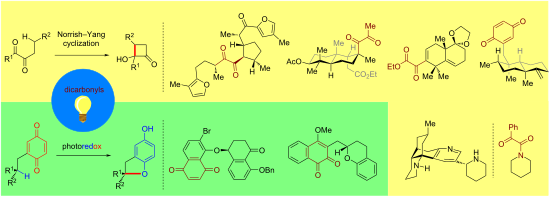
- by the Yang group [22]. Installation of the hydroxymethyl group in 4 was achieved through sequential formylation and reduction. Compound 4 then underwent a one-pot, substrate-controlled diastereoselective Johnson−Claisen rearrangement/acetylation to install ester 5. Treating 5 with m-CPBA (meta
- . This transformation proceeded via sequential regio- and stereoselective Norrish−Yang annulation, followed by intramolecular lactonization mediated by 12a. Notably, when the ethyl ester in 12 was replaced with a methyl group to form 14 with R = Et (Scheme 3), photoreaction of 14 led to 15 in 95% yield
- drives this migration, due to the highly sterically congested environment – exacerbated by the 1,3-strain between the methyl groups at C10 and C14. The observed 1,2-methyl migration also underscores the critical role of the preinstalled ester group in 12: it suppresses potential methyl migration




Halogenated butyrolactones from the biomass-derived synthon levoglucosenone
Beilstein J. Org. Chem. 2025, 21, 2297–2301, doi:10.3762/bjoc.21.175
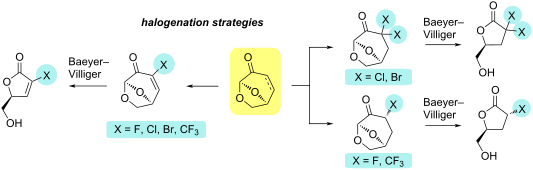
- the intermediate formate ester. Fluorination of enamine 9a with Selectfluor (SF) resulted only in hydrolysis with conditions adapted from Peng and Shreeves work [28]; and likewise, the base-promoted (KOt-Bu, LHMDS) fluorination of ketone 6 with Selectfluor was unsuccessful. However, when ketone 6 was



Enantioselective radical chemistry: a bright future ahead
Beilstein J. Org. Chem. 2025, 21, 2283–2296, doi:10.3762/bjoc.21.174
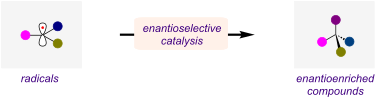
- diazoester 24 to furnish a Co(III)-bonded α-ester radical (α-Co(III)-ester radical) with extrusion of nitrogen was proposed by the authors. Further steps include (a) 5-exo cyclization by α-Co(III)-ester radical and (b) homolytic substitution at the carbon atom by 3-exo-tet-cyclization to generate bicyclic


Pathway economy in cyclization of 1,n-enynes
Beilstein J. Org. Chem. 2025, 21, 2260–2282, doi:10.3762/bjoc.21.173
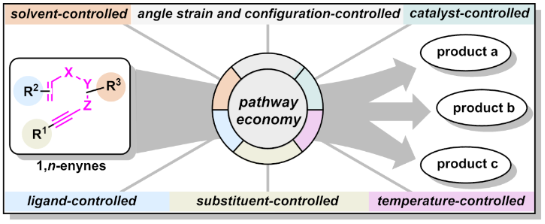
- ] intermediate 62 (Scheme 14, path a). When a less nucleophilic indole was used as the nucleophile, a Wagner–Meerwein rearrangement occurred, leading to the formation of a pyrido[4,3-b]indole product 63. When Hantzsch ester (HEH) was used as the nucleophile, the imine intermediate 62 was reduced to product 64
- Wagner–Meerwein rearrangement from the six-membered spirocyclic intermediate 88. The addition of Hantzsch ester or indole as the nucleophile effectively trapped the imine intermediate 88, preventing Wagner–Meerwein rearrangement and yielding spirocyclic indole framework 90 (Scheme 19, path a). When PPh3
- intermediate 167. Subsequent treatment with triethylamine/pinacol induced ring closure, affording the phenanthreno[1,3-b]cyclobutane borate ester 168. In contrast, when the temperature was elevated to 60 °C, the reaction underwent a BCl3-driven skeletal rearrangement involving methyl migration and alkyne


Research towards selective inhibition of the CLK3 kinase
Beilstein J. Org. Chem. 2025, 21, 2250–2259, doi:10.3762/bjoc.21.172
- series of molecules: the ones without chlorine in meta position on this group (series a) and the others which kept this chlorine, like in DB18 (series b). These syntheses are reported in Scheme 2. A Suzuki-type Pd-catalyzed coupling of 7a with 4-(methoxycarbonyl)phenylboronic acid dimethyl ester (8) gave
- reagent the 3-(methoxycarbonyl)phenylboronic acid ester 11. All derivatives have spectral and analytical data in agreement with the proposed structures (see experimental section and Supporting Information File 1). Kinase inhibition studies Our molecules have been submitted first to a primary screening
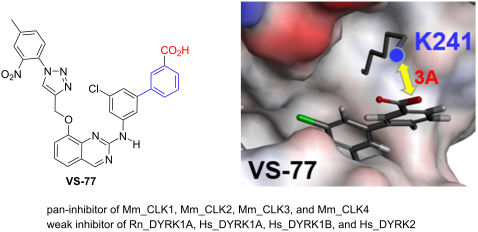
- also evidenced by the better affinity for DYRK1A of the acidic molecules as compared to their ester analogues. Therefore, this new interaction could explain the higher affinity of VS-77 toward Hs_DYRK1A, as compared to DB-18. Conclusion In the present work, we disclosed a new strategy to improve the


A chiral LC–MS strategy for stereochemical assignment of natural products sharing a 3-methylpent-4-en-2-ol moiety in their terminal structures
Beilstein J. Org. Chem. 2025, 21, 2243–2249, doi:10.3762/bjoc.21.171
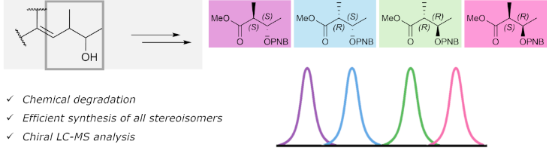
- the stereochemical assignment of (+)-capsulactone (1). Keywords: chemical degradation; chiral LC–MS analysis; methyl 3-hydroxy-2-methylbutanoate; 3-methylpent-4-en-2-ol moiety; p-nitrobenzoyl ester; Introduction Configurational elucidation of natural products is essential for progress in diverse
- derivatization. Several derivatization methods using chiral anisotropic reagents, including α-methoxy-α-trifluoromethylphenylacetic acid (MTPA), phenylglycine methyl ester (PGME), and Marfey’s reagents, are widely used [8][9][10], although their applicability is restricted by the presence of specific functional
- investigated. First, alcohol 3 was converted to (R)-MTPA ester 4 (Scheme 1B). Despite numerous attempts to optimize the chromatographic conditions, the resulting diastereomers could not be separated (Figure S1, Supporting Information File 1). Next, p-bromobenzoyl ester 5 was synthesized (Scheme 1B). Although


Pd-catalyzed dehydrogenative arylation of arylhydrazines to access non-symmetric azobenzenes, including tetra-ortho derivatives
Beilstein J. Org. Chem. 2025, 21, 2234–2242, doi:10.3762/bjoc.21.170
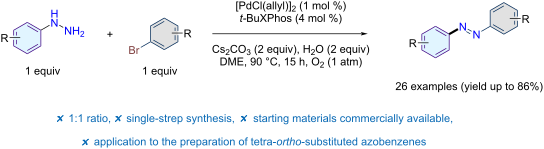
- azobenzenes were obtained in purified yields between 70 and 85%. Various functional groups at the ortho- or para-position were well tolerated in this reaction, including electron-withdrawing groups such as trifluoromethoxy (3c, 69%), nitrile (3e, 81%), methyl ester (3h, 74%), N,N-dimethylamide (3i, 73%) and


A m-quaterphenyl probe for absolute configurational assignments of primary and secondary amines
Beilstein J. Org. Chem. 2025, 21, 2211–2219, doi:10.3762/bjoc.21.168
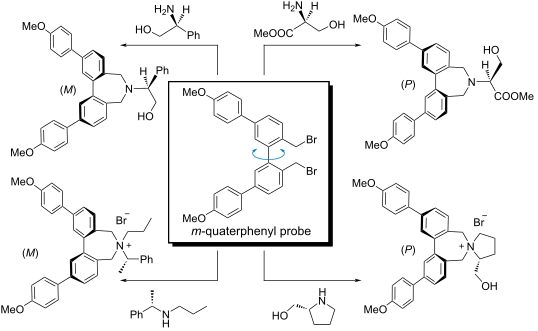
- Cotton effects compared with (S)-2a. We consider that the hydroxymethyl group is sterically more hindered than the planar phenyl groups in the conjugates. This tendency is the same as that of the previously reported 1–(S)-2-phenylethylamine conjugates [41]. The CD spectra of 1-ʟ-amino acid ester
- conjugates (S)-2d,e exhibited positive first and negative second Cotton effects indicating that the two long axes in the methoxybiphenyl chromophores constitute a P twist. The methyl ester group is estimated to be sterically more hindered than the planar ester carbonyl group in (S)-2d,e. The CD spectra of
- the methylene protons. In contrast, in the M conformer, the medium-sized methyl group (denoted as M) is located near the seven-membered ring, reducing the steric repulsion involving the hydroxymethyl group with the methylene protons. Moreover, considering that the phenyl ring and the ester carbonyl


Synthesis of triazolo- and tetrazolo-fused 1,4-benzodiazepines via one-pot Ugi–azide and Cu-free click reactions
Beilstein J. Org. Chem. 2025, 21, 2202–2210, doi:10.3762/bjoc.21.167
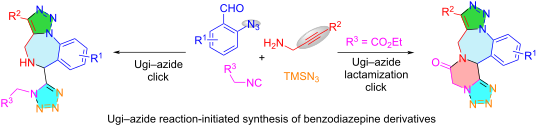
- 2). Functional groups including ester, azido, and alkynyl present in the starting materials are responsible for the post-Ugi transformations. Results and Discussion We first attempted the Ugi–azide 4-CR at a 0.2 mmol scale with equal molar amounts of 2-azidobenzaldehyde (1a), propargylamine (2a


Electrochemical cyclization of alkynes to construct five-membered nitrogen-heterocyclic rings
Beilstein J. Org. Chem. 2025, 21, 2173–2201, doi:10.3762/bjoc.21.166
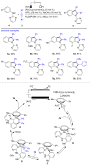
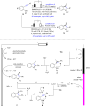
- in 66%–87% yields. Boc-amino ester (2e), dipeptide (2f), apivalate ester (2g) and ethinyl estradiol (2h) skeletons were also tolerated well. According to the previous works [163] and the experimental results, the authors proposed a plausible mechanism. Firstly, the anodic oxidation of [Cp2Fe
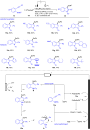
- involved at the ethyne moiety like substituted phenyl (30b–e), benzodioxole (30f), naphthyl (30g), thienyl (30h), pyridinyl (30i), furyl (30j), benzofuranyl (30k), alkyl (30l, 30m), cycloalkyl (30n–p) and trimethylsilyl (30r). This reaction was also compatible with benzyl ester (30s), propynyl ester (30t
- rt for 9 h. The reaction was compatible with numerous amines such as substituted benzylamines 46b–d, 1-(2-naphthyl)methanamine 46e, 3,4-methylenedioxybenzylamine 46f, furfurylamine 46g and 2-thiophenemethylamine 46h. Alkynes with ester and trifluoromethyl groups worked well under this reaction









C2 to C6 biobased carbonyl platforms for fine chemistry
Beilstein J. Org. Chem. 2025, 21, 2103–2172, doi:10.3762/bjoc.21.165
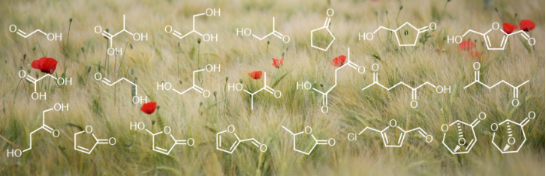
- level of oxygen content in biomass, small molecules arising from biomass often possess a carbonyl group. This is why biobased platform molecules possessing a carbonyl group, either under the form of an aldehyde, a ketone, an acid or an ester, play a dominant role in biobased chemistry. This review aims


The application of desymmetric enantioselective reduction of cyclic 1,3-dicarbonyl compounds in the total synthesis of terpenoid and alkaloid natural products
Beilstein J. Org. Chem. 2025, 21, 2085–2102, doi:10.3762/bjoc.21.164
- modification of the terminal double bond afforded ketoaldehyde 31. The 2-bromoallylation [15] of 31 with boronic ester 32 stereoselectively constructed the C3–OH group to give homoallylic alcohol 33. Next, a successive manipulation by removal of TBS group, CSA-catalyzed ketalization, and DMP oxidation of the
- hydroxyketone 86 in 60% yield with 92% ee and 8.4:1 dr. A secondary hydroxy-directed Grignard reagent addition of 86 followed by selective protection, generated alcohol ester 87. After one recrystallization, the ee value of 87 could be increased to 99%. Subsequently, TMSOTf-promoted transacetalation and in situ
- ,8R,11R based on the X-ray single-crystal analysis of its corresponding p-bromobenzoic ester (not shown). Total synthesis of (−)-conidiogenones B–F and (−)-12β-hydroxyconidiogenone C Conidiogenones are unique diterpenoids which possess a highly congested 6/5/5/5-fused framework with four all-carbon


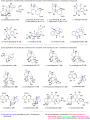


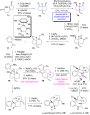

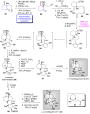


Further elaboration of the stereodivergent approach to chaetominine-type alkaloids: synthesis of the reported structures of aspera chaetominines A and B and revised structure of aspera chaetominine B
Beilstein J. Org. Chem. 2025, 21, 2072–2081, doi:10.3762/bjoc.21.162
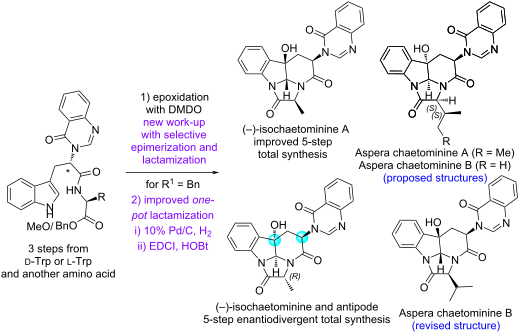
- ], we re-synthesized tripepetide derivative 25 from ᴅ-tryptophan (ᴅ-Trp) and ʟ-isoleucine (ʟ-Ile) methyl ester hydrochloride salt (24) in three steps (Scheme 4). Treating 25 with DMDO followed by work-up with a saturated aqueous solution of Na2SO3 at 30 °C provided the proposed structure of aspera




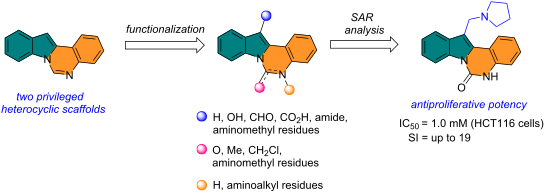
Discovery of cytotoxic indolo[1,2-c]quinazoline derivatives through scaffold-based design
Beilstein J. Org. Chem. 2025, 21, 2062–2071, doi:10.3762/bjoc.21.161
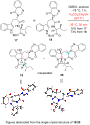
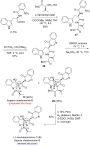
- interest, compound 2 applied as a useful substrate for a Baeyer–Villiger oxidation mediated by oxone, which selectively converted the aldehyde to the formate ester, yielding 6-oxo-5,6-dihydroindolo[1,2-c]quinazolin-12-yl formate (4). Subsequent hydrolysis of 4 furnished indolo[1,2-c]quinazoline-6,12-dione


Bioinspired total syntheses of natural products: a personal adventure
Beilstein J. Org. Chem. 2025, 21, 2048–2061, doi:10.3762/bjoc.21.160
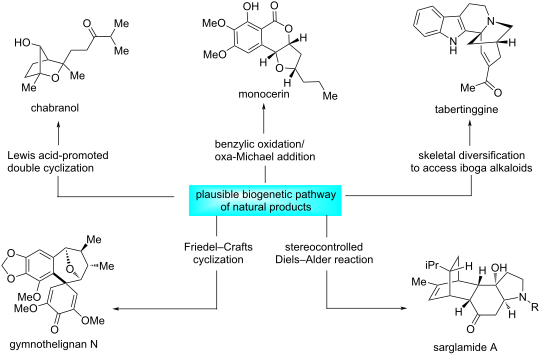
- reduction of ketone using SmI2 and propionaldehyde provided 15 diastereoselectively. Friedel–Crafts cyclization using trimethyl orthoformate and TMSOTf provided the cyclic acetal moiety to be oxidized with PDC, delivering the isocoumarin skeleton in 16. Chemoselective removal of the ester with the lactone
- underwent dehydroxylation protocol involving base-promoted mesylate elimination and catalytic hydrogenation reactions, providing 31a. Reduction of lactam and ester in one pot with LiAlH4 and acid-promoted hydrolysis of ketal protection to ketone furnished 32a. Finally, oxidation of the primary alcohol to




Aryl iodane-induced cascade arylation–1,2-silyl shift–heterocyclization of propargylsilanes under copper catalysis
Beilstein J. Org. Chem. 2025, 21, 1984–1994, doi:10.3762/bjoc.21.154
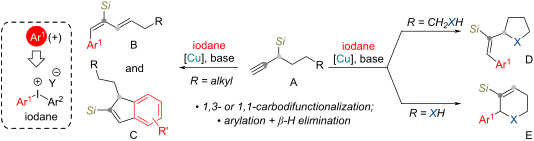
- reaction [17] and a [4 + 2] annulation reaction between o-carboxylic ester-containing diaryl-λ3-iodanes and some terminal alkynes [18]. Looking to expand the possibilities for terminal alkyne carbofunctionalization, we turned our attention to propargylsilanes, which are prone to undergo cationic
- internal nucleophiles (Scheme 4), that could be used instead of the alcohol. The carboxylic acid-containing silane 7 (R = COOH), which was obtained by stepwise oxidation of the alcohol 7d, failed to give the desired lactone 8t product due to O-arylation of the carboxylic acid, leading to phenyl alkyl ester
- formation. Its silylated version (7, where R = COOSi(Me)3) only resulted in starting material degradation. Interestingly, tert-butyl ester 7e (R = COOt-Bu) provided the desired arylated lactone 8t, along with the protodecupration product 13, which was formed in excess under the standard arylation conditions


Photochemical reduction of acylimidazolium salts
Beilstein J. Org. Chem. 2025, 21, 1973–1983, doi:10.3762/bjoc.21.153
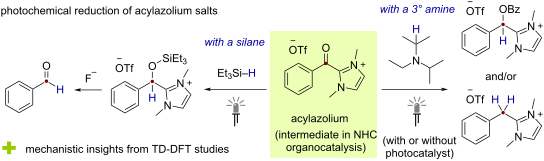
- offer many synthetic advantages while the wide availability of chiral NHCs can also allow for high levels of enantioselectivity. As effective enamine and active ester derivatives, Breslow and acylazolium intermediates A and B typically react via classical two-electron polar mechanisms, however, recent





