


Search results
Search for "intramolecular" in Full Text gives 1424 result(s) in Beilstein Journal of Organic Chemistry. Showing first 200.
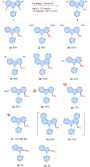
Pentacyclic aromatic heterocycles from Pd-catalyzed annulation of 1,5-diaryl-1,2,3-triazoles
Beilstein J. Org. Chem. 2025, 21, 2524–2534, doi:10.3762/bjoc.21.194
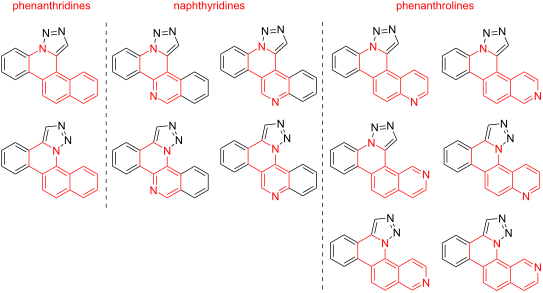
- other bioactive properties [37][38][39][40][41][42][43][44]. In contrast, examples of 1,5-diaryl-1,2,3-triazoles with quinoline or isoquinoline subunits are lacking [45]. The neighboring proximity of the arene subunits in such 1,5-regioisomers allows for potential intramolecular annulation to form
- , quinolone, or isoquinoline subunit of each analog paired with the ortho-bromophenyl group, only a single pentacyclic regioisomer was possible upon intramolecular annulation [46]. A similar two-step approach as that used to prepare 13–18 was used to prepare the target pentacyclic aromatic heterocycles 31–36


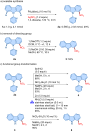
Palladium-catalyzed regioselective C1-selective nitration of carbazoles
Beilstein J. Org. Chem. 2025, 21, 2479–2488, doi:10.3762/bjoc.21.190
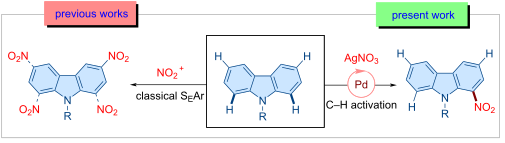
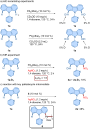
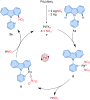
- that the cyclopalladation step is irreversible. To further investigate the nature of the C–H activation step, an intramolecular kinetic isotope effect (KIE) experiment was performed using monodeuterated substrate 1a-D1. A modest KIE value of kH/kD = 1.5 was observed under standard reaction conditions


The intramolecular stabilizing effects of O-benzoyl substituents as a driving force of the acid-promoted pyranoside-into-furanoside rearrangement
Beilstein J. Org. Chem. 2025, 21, 2456–2464, doi:10.3762/bjoc.21.187
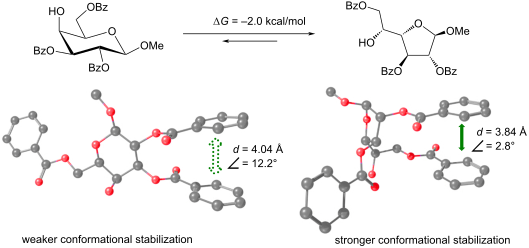
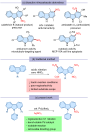
- van-der-Waals interactions between phenyl rings of the benzoate substituents are crucial for the stabilization of the furanoside isomer. This outcome could not be rationalized within the framework of conventional carbohydrate chemistry, as the key intramolecular interactions determining the
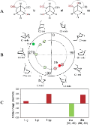
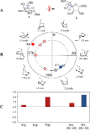
- five-membered ring due to the formation of an intramolecular hydrogen bond (Figure 2A). It has been shown that furanoside is preferentially formed in nonpolar solvents such as toluene. This form was successfully fixed and purified as benzoate derivative. Bulky substituents can also stabilize the
- oligosaccharides. Observed prevalence of furanose formation could not be explained by using common concepts of carbohydrate chemistry since the intramolecular interactions that determine the outcome occur outside the carbohydrate cycle. In order to explain the factors regulating the prevalence of furanoside forms




Transformation of the cyclohexane ring to the cyclopentane fragment of biologically active compounds
Beilstein J. Org. Chem. 2025, 21, 2416–2446, doi:10.3762/bjoc.21.185
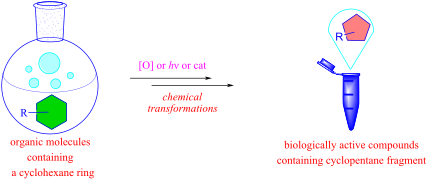
- and Favorskii reaction), using oxidants based on thallium and iodine, with a focus on recent works published in the period from 2014 to 2024. Review 1 Recyclization A common method for converting cyclohexene 1 into cyclopentene 2 is the ozonolytic cleavage of the double bond followed by intramolecular
- . as a method for ring contraction of the cyclohexene ring to produce cytostatic taiwaniaquinoids [13][14][15]. Compound 4, derived from (–)-abietic acid, was subjected to an oxidative cleavage reaction to produce ketoaldehyde 5. Subsequent intramolecular aldol cyclization using 1,8-diazobicyclo[5.4.0
- method for the synthesis of cyclopentane derivatives through oxidative cleavage of the double bond in Diels–Alder adducts of LG with 1,3-butadiene and piperylene (3E-penta-1,3-diene), followed by an intramolecular aldol condensation of the resulting dialdehydes was described in [19]. The dicarbonyl


The high potential of methyl laurate as a recyclable competitor to conventional toxic solvents in [3 + 2] cycloaddition reactions
Beilstein J. Org. Chem. 2025, 21, 2389–2415, doi:10.3762/bjoc.21.184
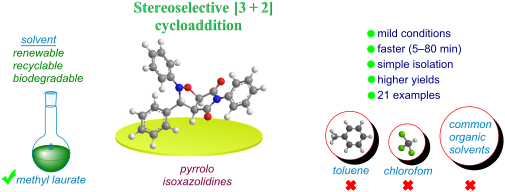
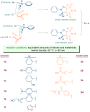
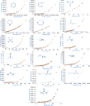
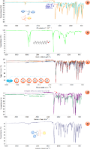
- 1,3-dipole and/or dipolarophile and therefore, in some cases, cis-diastereoselectivity arises [85][114][115][116][117]. For instance, in the [3 + 2] cycloaddition reactions examined in earlier studies, intramolecular H-bonding, facilitated by the amide or alcohol functionality present in the nitrone






An Fe(II)-catalyzed synthesis of spiro[indoline-3,2'-pyrrolidine] derivatives
Beilstein J. Org. Chem. 2025, 21, 2383–2388, doi:10.3762/bjoc.21.183
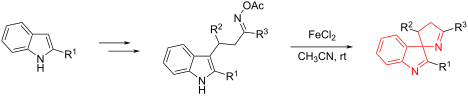
- . For instance, an intramolecular SN2-type cyclization of β-3-indolyl ketone oximes using MsCl and Et₃N affords spiro[indoline-3,2'-pyrrolidines] (Scheme 1, path f) [13]. A subsequent Cu-catalyzed spirocyclization of β-3-indolyl ketone oxime acetates was developed. This process involves homolytic N–O
- bond cleavage to generate an N-imidoyl radical intermediate that undergoes intramolecular cyclization to yield the spirocyclic product (Scheme 1, path g) [14]. Notably, iron is known to exhibit similar behavior in single-electron transfer (SET) processes [15][16][17]. In fact, we previously




Synthetic study toward vibralactone
Beilstein J. Org. Chem. 2025, 21, 2376–2382, doi:10.3762/bjoc.21.182

- vibralactone, a potent inhibitor of pancreatic lipase, is reported. The synthesis of the challenging all-carbon quaternary center within the cyclopentene ring was achieved through intramolecular alkylidene carbene C–H insertion. Keywords: alkylidene carbene; C–H insertion; total synthesis; vibralactone
- and ClpP2 and it could be utilized as a probe to study the activity and structure of the ClpP1P2 complex from Listeria monocytogenes [25]. Previously, Snider and co-worker reported the first total synthesis of vibralactone (6) employing Birch reductive alkylation, intramolecular aldol reaction and
- ketal moiety was removed and the resulting intermediate underwent Wittig olefination to yield vinyl chloride 20. Subsequent hydrolysis and intramolecular esterification furnished intermediate 21, which was then subjected to C–H insertion [42][43][44]. To our disappointment, this ring closure still did


Rotaxanes with integrated photoswitches: design principles, functional behavior, and emerging applications
Beilstein J. Org. Chem. 2025, 21, 2345–2366, doi:10.3762/bjoc.21.179

- biomembrane-compatible rotaxanes are promising for designing artificial ion transporters to address channelopathies. Song and co-workers developed a system in which the azobenzene in the axle is encapsulated within a chiral β-cyclodextrin, affording a self-locked [1]rotaxane [15]. The intramolecular host


Comparative analysis of complanadine A total syntheses
Beilstein J. Org. Chem. 2025, 21, 2334–2344, doi:10.3762/bjoc.21.178
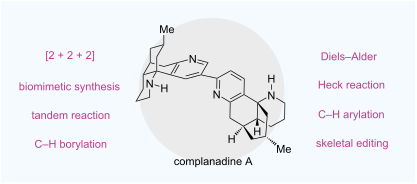
- these lycopodium alkaloids [12]. Lysine could be advanced to 4-(2-piperidyl)acetoacetate (7) and pelletierine (8), which would react with each other to deliver phlegmarine (9). Double oxidation of 9 would give 10 for a subsequent intramolecular Mannich-type cyclization to forge the C4–C13 bond and
- intramolecular cyclization to afford alkyne–nitrile 19 for the first [2 + 2 + 2] cycloaddition with bis(trimethylsilyl)butadiyne (20). This transformation proceeded smoothly under thermal conditions with CpCo(CO)2 to afford 21 as the major regioisomer (rr = 25:1) [22]. Removal of the two TMS groups and
- underwent ketone release and amine-ketone condensation to form iminium ion 27. Under the same acidic conditions, enamide 26 underwent hydrolysis and tautomerization to form enol 28. Conjugate addition of enol 28 to iminium ion 27 gave 29 for the subsequent intramolecular Mannich cyclization to deliver 30



Recent advances in Norrish–Yang cyclization and dicarbonyl photoredox reactions for natural product synthesis
Beilstein J. Org. Chem. 2025, 21, 2315–2333, doi:10.3762/bjoc.21.177
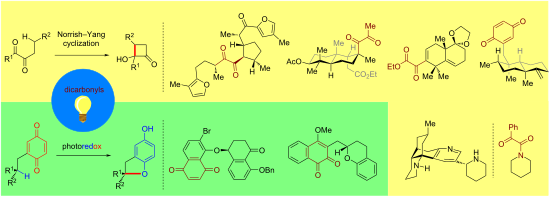
- singlet state, which undergoes intersystem crossing (ISC) to form the excited triplet state B. An intramolecular 1,5-hydrogen atom transfer (HAT) then ensues, producing the 1,4-diradical C, which can be converted into diverse products such as alkenes and enols (Scheme 1a). Notably, the 1,4-diradical
- ]. In contrast to the direct radical coupling in Norrish–Yang cyclization, the distal biradical F, formed from quinone E through a pathway analogous to that of C in the photoredox process, subsequently undergoes intramolecular SET to generate a zwitterion G. This intermediate is then trapped by the
- . This transformation proceeded via sequential regio- and stereoselective Norrish−Yang annulation, followed by intramolecular lactonization mediated by 12a. Notably, when the ethyl ester in 12 was replaced with a methyl group to form 14 with R = Et (Scheme 3), photoreaction of 14 led to 15 in 95% yield




Enantioselective radical chemistry: a bright future ahead
Beilstein J. Org. Chem. 2025, 21, 2283–2296, doi:10.3762/bjoc.21.174
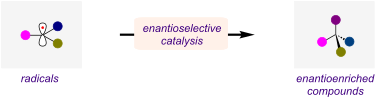
- transferred to the radical. Important processes of this kind are hydrogen atom transfer (HAT) and halogen atom abstraction. An intramolecular group transfer reaction can result in the net migration of a functional group. Addition of a radical to a π-bond (carbon–carbon or carbon–heteroatom) is another common
- radical reaction and can occur either intermolecularly or as an intramolecular cyclization reaction. Radical coupling or combination is a possible transformation that is more feasible when one of the radicals is relatively stabilized (a persistent radical). Trapping a radical with a transition metal is
- mechanism involving single-electron oxidation of an enamine intermediate, addition of the resulting radical to the olefin, single-electron oxidation of the adduct to form a carbocationic intermediate, and intramolecular nucleophilic attack on the carbocation to form the pyrrolidine ring. The reaction


Pathway economy in cyclization of 1,n-enynes
Beilstein J. Org. Chem. 2025, 21, 2260–2282, doi:10.3762/bjoc.21.173
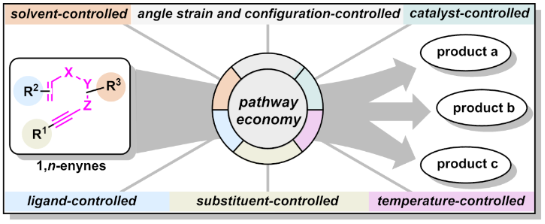
- radical initiated intramolecular cascade cyclization of 1,n-enynes to provide structurally diverse heterocycles (Scheme 4) [11]. Solvent selection dictated divergent reaction pathways under I2/TBHP oxidation. When an acetonitrile/water mixed solvent was used, iodine radical addition to the alkyne
- ligand-controlled Au(I)-catalyzed intramolecular hydroarylation overcame key challenges of poor regioselectivity and limited applicability to electron-deficient substrates. In 2018, a gold-catalyzed divergent cyclization to access heteropolycyclic frameworks was reported by the Shi group (Scheme 18) [26
- constraints promoted intramolecular Friedel–Crafts cyclization via intermediate 84 to form spiro-polycycle 86 (Scheme 18, path b). The ligand-dependent gold(I)-catalyzed cyclization provided modular access to therapeutically significant fused polycyclic heterocyclic scaffolds via regioselective ring expansion


Research towards selective inhibition of the CLK3 kinase
Beilstein J. Org. Chem. 2025, 21, 2250–2259, doi:10.3762/bjoc.21.172
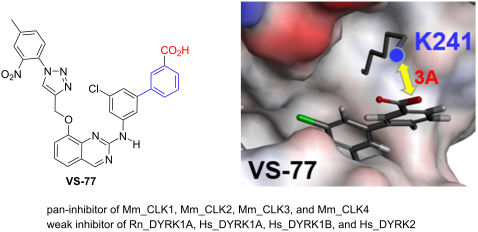
- decided to prepare also the same molecules with hydrogen instead of the chlorine in meta position of the anilino group. Our previous work on DB18 suggested indeed that the chlorine atom is implicated in intramolecular halogen–π interaction, ending in a conformational constraint and ligand rigidity [24


A m-quaterphenyl probe for absolute configurational assignments of primary and secondary amines
Beilstein J. Org. Chem. 2025, 21, 2211–2219, doi:10.3762/bjoc.21.168
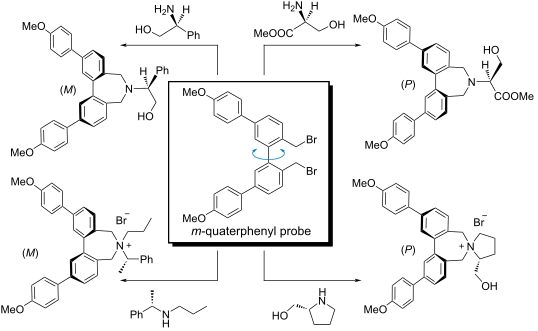
- group are planar, while the methyl group is more sterically demanding in three-dimensional space, this conformational model is supported (Table S1 in Supporting Information File 1). Although intramolecular electronic interactions should also be considered, the twist of the phenyl chromophores can be


Synthesis of triazolo- and tetrazolo-fused 1,4-benzodiazepines via one-pot Ugi–azide and Cu-free click reactions
Beilstein J. Org. Chem. 2025, 21, 2202–2210, doi:10.3762/bjoc.21.167
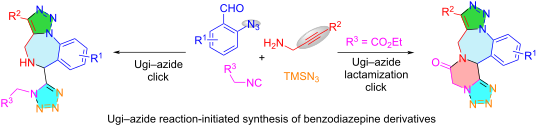
- /bjoc.21.167 Abstract A one-pot Ugi–azide reaction followed by intramolecular Cu-free azide–alkyne cycloaddition generates a polycyclic scaffold 7 bearing polycyclic triazole, tetrazole, and benzodiazepine rings. This method could be extended for obtaining a more complicated scaffold 8 containing a
- . After evaporation of the solvent MeOH, the residue was redissolved in 2 mL of MeCN and heated at 130 °C for 2 h in a sealed vial to give product 7a in 90% yield after purification via Cu-free intramolecular click reaction (Scheme 3C) [46]. This Cu-free intramolecular cyclization provides key practical
- , the reaction of 0.2 mmol each of 1a and 2a led to the formation of Int-I which then reacted with 0.2 mmol each of 9 and 4 to form 1,5-DS-T 5b which consequently underwent lactamization to form 6a followed by an intramolecular click reaction to afford highly condensed polycyclic product 8a in 92


Electrochemical cyclization of alkynes to construct five-membered nitrogen-heterocyclic rings
Beilstein J. Org. Chem. 2025, 21, 2173–2201, doi:10.3762/bjoc.21.166
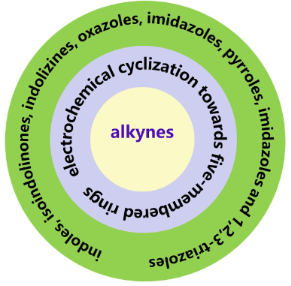
- characteristics. Electrochemical construction of five-membered rings from alkynes attracted increasing attention due to the notable advantages of electrochemical transformations and facile access of alkynes. Indole skeletons were constructed successfully through electrochemical intramolecular coupling of ethynyl
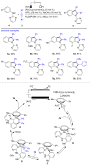
- ]. Besides, electrochemical cyclization of alkynes is also an important access towards indoles. In 2016, Xu reported the electrochemical intramolecular coupling of urea derivatives to form substituted indoles (Scheme 1) [162]. Using [Cp2Fe] (5 mol %) as the redox catalyst, the intramolecular coupling of
- , A proceeded an intramolecular nucleophilic attack by N and deprotonation to finish 15a. The other possible pathway was radical route, in which PhSe• dimerized to reform 14a or added to C≡C bond in 13a to afford B. The subsequent anodic oxidation of B gave C, which underwent nucleophilic cyclization









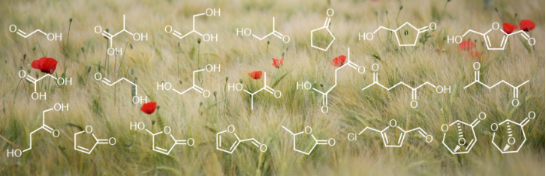
C2 to C6 biobased carbonyl platforms for fine chemistry
Beilstein J. Org. Chem. 2025, 21, 2103–2172, doi:10.3762/bjoc.21.165
- –Crafts alkylation products were then converted into an intermediate tryptaldehyde that underwent intramolecular olefination to form the targeted product [34]. Glycolic acid (GA) The growing impact of fossil fuel consumption has heightened the need for advancing renewable energy technologies. One
- and hydroxyketones. The catalyst could be recovered and reused five times without decreasing its selectivity and activity. Mechanistically, the reaction involves a Heyns-type rearrangement and subsequent intramolecular olefination (Scheme 22) [96]. Arandia et al. reported the application of the
- reaction involves the enantioselective organocatalyzed transfer of boronic acid to HFO followed by an intramolecular diastereoselective Passerini-type reaction. Varying the boronic acid enabled to reach high yields (Scheme 39) [124]. The tautomeric transformation of HFO to cis-β-formylacrylic acid was


The application of desymmetric enantioselective reduction of cyclic 1,3-dicarbonyl compounds in the total synthesis of terpenoid and alkaloid natural products
Beilstein J. Org. Chem. 2025, 21, 2085–2102, doi:10.3762/bjoc.21.164
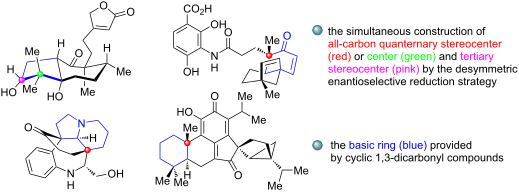
- steps, respectively. As shown in Scheme 6 [58], the Cu-catalyzed 1,4-conjugated addition of 71 [59] with vinylMgBr followed by intramolecular Claisen condensation furnished bicyclic diketone 72 on a gram scale. Notably, for such a bicyclic substrate, it is quite challenging to achieve desymmetric
- intramolecular Diels–Alder reaction generated tricyclo[3.2.1.02,7]-octene 113. A two-step transformation including HAT hydrogenation and acetal C–H oxidation with RuCl3/NaIO4, 113 was converted into ketoester 114. The TFA-mediated C13–C15 bond cleavage of 114 proceed smoothly to give ring-opening products, which
- transformations of 121 generated bromodiene 122. Next, the metal–halogen exchange/intermolecular addition of 122 with aldehyde (+)-123 and in situ PtCl2-promoted hydrolysis and hydration gave tricyclic product 124. The BnMe3NOH-mediated intramolecular Michael/aldol cascade reaction of 124 constructed the C/D





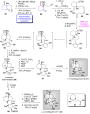


Bioinspired total syntheses of natural products: a personal adventure
Beilstein J. Org. Chem. 2025, 21, 2048–2061, doi:10.3762/bjoc.21.160
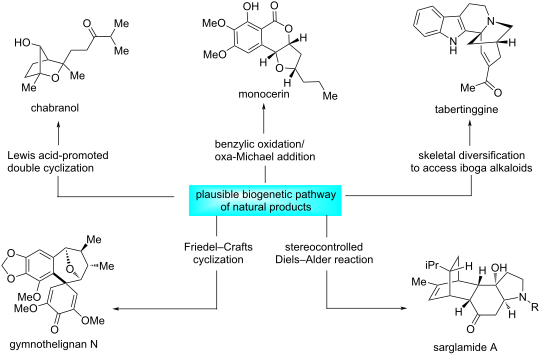
- . By analyzing the structure, we supposed that there might exist an inversed pathway in which tabertinggine could be converted into the ibogamine aza-[2.2.2] bridged skeleton through intramolecular aza-Michael addition of the enone moiety to form the C21–N bond and a subsequent C16–N bond cleavage
- might undergo benzylic oxidations and intramolecular dehydration to access a diaryltetrahydrofuran (THF) skeleton. Then, oxidation of one aryl group through phenol oxidation would generate a putative cyclohexadienone intermediate to be further captured by the other phenol to access eupodienone through a




α-Ketoglutaric acid in Ugi reactions and Ugi/aza-Wittig tandem reactions
Beilstein J. Org. Chem. 2025, 21, 2021–2029, doi:10.3762/bjoc.21.157
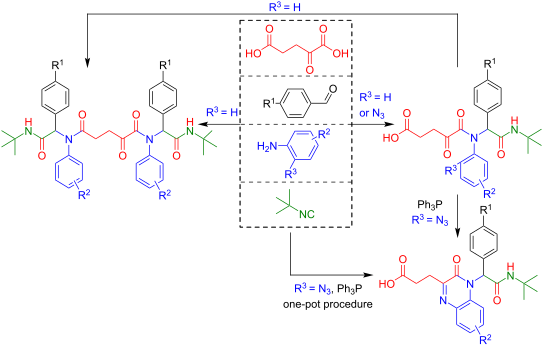
- in 33–93% yields (Scheme 3; Table 3). According to the literature [31][53], this reaction proceeds through the formation of an iminophosphorane intermediate (Scheme 3), the product of a Staudinger reaction, which, however, was not isolated because it easily undergoes intramolecular cyclization on a


Aryl iodane-induced cascade arylation–1,2-silyl shift–heterocyclization of propargylsilanes under copper catalysis
Beilstein J. Org. Chem. 2025, 21, 1984–1994, doi:10.3762/bjoc.21.154
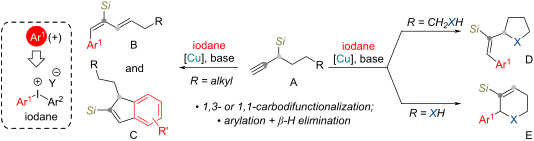
- rearrangements via the 1,2-silyl shift, enabled by the β-cation-stabilizing properties of silyl groups [19][20]. This phenomenon has been successfully employed in 1,3-difunctionalization events in both intermolecular [21] and intramolecular fashion [22] (Scheme 1B). Thus far such propargylsilane rearrangements
- likely formed via the allylic cation intermediate Int-1 (Scheme 2), from where on two competing mechanistic pathways are possible. Deprotonation of the β-H and reductive elimination affords diene 10. Alternatively, an intramolecular cyclization leads to silylindenes 11. We were interested to see whether
- described by us recently, among other possible transformations [21][22]. Interestingly, the addition of O-nucleophiles to form 1,3-carbofunctionalization products, can only be achieved in an intramolecular fashion. In the presence of an excess (5 equiv) of external an O-nucleophile R–OX (alcohol, carboxylic


Asymmetric total synthesis of tricyclic prostaglandin D2 metabolite methyl ester via oxidative radical cyclization
Beilstein J. Org. Chem. 2025, 21, 1964–1972, doi:10.3762/bjoc.21.152
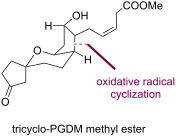
- proposed mechanism to 21 involved the formation of an electron-deficient, resonance-stabilized radical species, followed by intramolecular alkylation of the unactivated alkene to generate radical 29 via a diastereoselective 5-exo-trig cyclization step. Radical intermediate 29 was trapped by 2,4,6

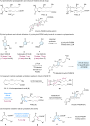


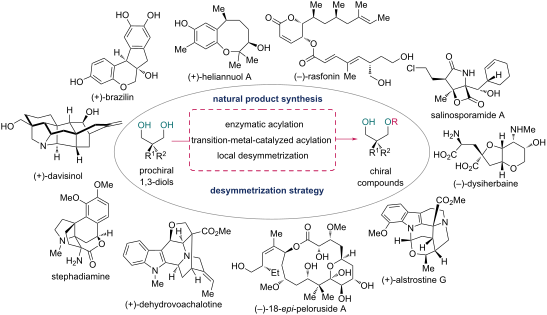
Enantioselective desymmetrization strategy of prochiral 1,3-diols in natural product synthesis
Beilstein J. Org. Chem. 2025, 21, 1932–1963, doi:10.3762/bjoc.21.151
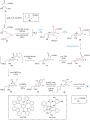
- intramolecular cyclization of 16 generated benzofuran 17 in 83% yield. After protecting the phenolic hydroxy group of 17, cross-metathesis (CM) with allylic alcohol 18 catalyzed by 13 furnished intermediate 19. Desilylation of 19 produced heliannuol G (20) and heliannuol H (21), with the structure of 21
- in intramolecular [7-exo] and [8-endo] cyclization, furnishing the 7-membered cyclic ether 40 and 8-membered cyclic ether 41, respectively. Finally, MOM deprotection produced (−)-heliannuol D (42) and (+)-heliannuol A (43). In 2002, Chênevert and co-workers completed the total synthesis of (S)-α
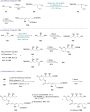
- suppress potential intramolecular acyl migration. To further improve the optical purity of monoester 53, a Pseudomonas aeruginosa lipase-mediated kinetic resolution was performed with ethoxyvinyl butyrate 54, ultimately achieving monoester 53 with 97% ee in 60% yield and the diester 53a. With










Stereoselective electrochemical intramolecular imino-pinacol reaction: a straightforward entry to enantiopure piperazines
Beilstein J. Org. Chem. 2025, 21, 1897–1908, doi:10.3762/bjoc.21.147
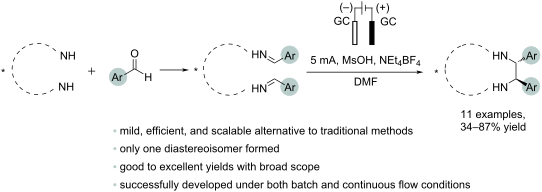
- Margherita Gazzotti Fabrizio Medici Valerio Chiroli Laura Raimondi Sergio Rossi Maurizio Benaglia Dipartimento di Chimica, Università degli Studi di Milano, via Golgi 19, IT-20133 Milano, Italy 10.3762/bjoc.21.147 Abstract The stereoselective electroreductive intramolecular coupling of chiral
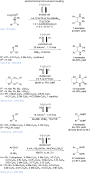
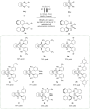
- for different N-benzyl benzaldimines in moderate to good yields. In 1991, Shono’s research group described the electroreductive intramolecular coupling of aromatic diimines, carried out in DMF in the presence of methanesulfonic acid in a divided cell equipped with a lead cathode, a carbon rod anode
- , and a ceramic diaphragm [44]. This method was found to be effective for synthesizing trans-2,3-diarylpiperazines through the intramolecular reductive coupling of 1,2-diimines and seven- and eight-membered heterocycles which were obtained in moderate to good yields via the cyclization of 1,3- and 1,4





Preparation of spirocyclic oxindoles by cyclisation of an oxime to a nitrone and dipolar cycloaddition
Beilstein J. Org. Chem. 2025, 21, 1890–1896, doi:10.3762/bjoc.21.146
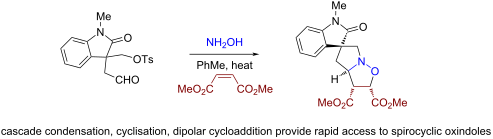
- -containing compounds makes use of intramolecular 1,3-dipolar cycloaddition reactions [15], including examples with nitrone ylides [16][17][18][19][20][21][22]. Our research group has exploited this approach for the synthesis of alkaloids such as myrioxazine A and aspidospermidine [23][24]. With a nitrone 1,3
- approach. This generates the desired spirooxindole connected to a bicyclic amine, with functionality related to the natural products. It is likely that unactivated dipolarophiles could be successful in related intramolecular cycloadditions [18]. Hence this approach could allow access the spirooxindole and





