


Search results
Search for "transition metal complexes" in Full Text gives 105 result(s) in Beilstein Journal of Organic Chemistry.
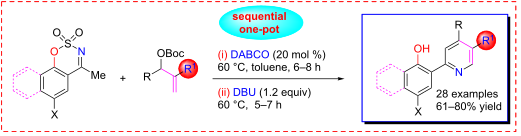
DABCO- and DBU-promoted one-pot reaction of N-sulfonyl ketimines with Morita–Baylis–Hillman carbonates: a sequential approach to (2-hydroxyaryl)nicotinate derivatives
- Soumitra Guin,
- Raman Gupta,
- Debashis Majee and
- Sampak Samanta
Beilstein J. Org. Chem. 2018, 14, 2771–2778, doi:10.3762/bjoc.14.254
- products [4], medicines [5], chelating agents in transition metal complexes [6][7], and material science [8][9]. Pyridine derivatives such as vitamins B6, B3 (niacin), and nicotinamide adenine dinucleotide (NAD) play a significant role in the metabolism process of living organisms. Consequently, many

Graphical Abstract

Figure 1: Drugs and agrochemicals having a nicotinic acid derivative.

Scheme 1: One-pot access to (2-hydroxyaryl)pyridines.

Scheme 2: A possible mechanism for this sequential reaction.
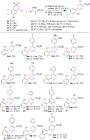
Scheme 3: Substrate scope for (2-hydroxyaryl)nicotinates syntheses. The reaction was performed with 1a–e (0.2...

Scheme 4: One-pot synthesis of (2-hydroxyaryl)nicotinonitriles 5ak–5am.
Recent advances in phosphorescent platinum complexes for organic light-emitting diodes
- Cristina Cebrián and
- Matteo Mauro
Beilstein J. Org. Chem. 2018, 14, 1459–1481, doi:10.3762/bjoc.14.124
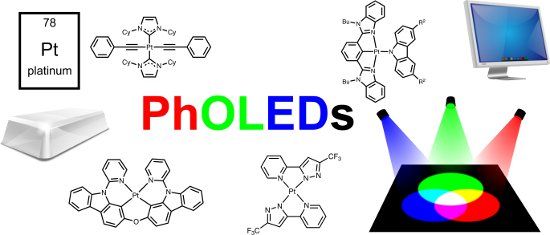
- organometallic compounds based on heavy transition metal complexes (TMCs) are an appealing research topic of enormous current interest. Amongst all different fields in which they found valuable application, development of emitting materials based on TMCs have become crucial for electroluminescent devices such as

Graphical Abstract

Figure 1: Molecular structure of neutral platinum(II) complex 1 bearing four monodentate ligands; cy = cycloh...

Figure 2: Chemical structure of the dinuclear Pt complexes 2a–b and 3 [20].

Figure 3: Molecular structure of platinum(II) complexes bearing isoquinolinylpyrazolates; dip = 2,6-diisoprop...

Figure 4: Selected neutral platinum(II) complexes featuring dianionic biazolate and neutral bipyridines [27].

Figure 5: Selected neutral platinum(II) complexes from bipyrazolate and carbene-based chelates [34,35].

Figure 6: Cyclometalated thiazol-2-ylidene platinum(II) complexes with different acetylacetonate ligands [37].

Figure 7: Neutral platinum(II) complexes 13–15 bearing azolate ligands [13].

Figure 8: Chemical structure of neutral platinum(II) complexes 16–18 bearing azine-pyrazolato bidentate ligan...
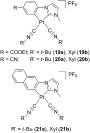
Figure 9: Molecular structure of carbene-containing cyclometallated alkynylplatinum(II) complexes 19–21 [41].

Figure 10: Chemical structure of platinum(II) complexes 22a–d bearing asymmetric C^N^N tridentate ligands [53].
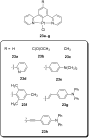
Figure 11: Chemical structure of platinum(II) complexes 23 bearing bis-cyclometalating 2,6-dipyridylbenzene ty...

Figure 12: Molecular structure of dendritic carbazole-containing alkynyl-platinum(II) complexes 24a–d [62].

Figure 13: Molecular structure of bipolar alkynyl-platinum(II) complexes 25 bearing carbazole and electron-acc...

Figure 14: Molecular structures of neutral platinum(II) complexes comprising donor-acceptor alkynyls (26) or e...

Figure 15: Chemical structure of the asymmetric Pt(II) derivatives 28 bearing triazole and tetrazole moieties ...

Figure 16: Molecular structure of the tetradentate platinum complexes 29–32 bearing N^C^C^N and C^C^C^N ligand...

Figure 17: Chemical structure of the tetradentate Pt complexes 33–38 based on N^C^C^N-type of ligands [80-84].

Figure 18: Chemical structure of the macrocyclic tetradentate platinum complexes reported by Wang and co-worke...

Figure 19: Molecular structure of complex 41–46 [88,89].

Figure 20: Molecular structure of asymmetric derivatives 47–49 based on triaryl-type of bridge [90].

Figure 21: Chemical structure of the asymmetric tetradentate derivatives 50 and 51 based on spirofluorene link...

Figure 22: Molecular structure of the pyridylazolate-based complexes 52–54 reported by Chi and co-workers [97].
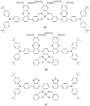
Figure 23: Chemical structure of the red-to-NIR emitting complexes 55–57 bearing donor–acceptor triphenylamino...

Figure 24: Molecular structures of the Pt(IV) derivatives 58 and 59 employed as triplet emitters in solution-p...
AuBr3-catalyzed azidation of per-O-acetylated and per-O-benzoylated sugars
- Jayashree Rajput,
- Srinivas Hotha and
- Madhuri Vangala
Beilstein J. Org. Chem. 2018, 14, 682–687, doi:10.3762/bjoc.14.56
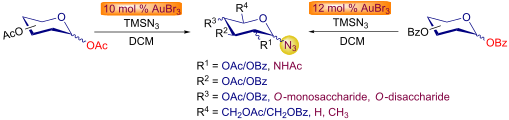
- -benzoylated disaccharides needed 2–3 h of heating at 55 °C. Keywords: acylated sugars; azidation; gold(III) bromide; N-glycoside; oxophilicity; Introduction The past few decades had seen the enrichment of transition metal complexes in various glycosylation strategies [1]. In particular, gold complexes with


Recent advances on organic blue thermally activated delayed fluorescence (TADF) emitters for organic light-emitting diodes (OLEDs)
- Thanh-Tuân Bui,
- Fabrice Goubard,
- Malika Ibrahim-Ouali,
- Didier Gigmes and
- Frédéric Dumur
Beilstein J. Org. Chem. 2018, 14, 282–308, doi:10.3762/bjoc.14.18
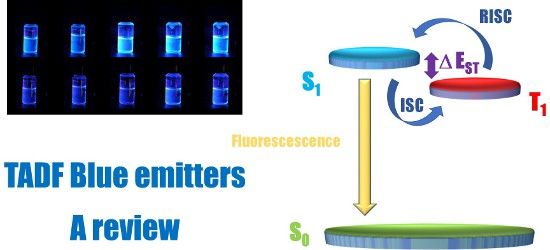
- % for phosphorescent OLEDs [5]. As drawback, triplet emitters are transition-metal complexes mostly based on iridium, platinum and osmium and the scarcity of these metals on Earth, their toxicity and high cost make these materials unsuitable candidates for a mass-production of OLEDs [6]. However

Graphical Abstract

Figure 1: Radiative deactivation pathways existing in fluorescent, phosphorescent and TADF materials.
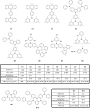
Figure 2: Boron-containing TADF emitters B1–B10.

Figure 3: Diphenylsulfone-based TADF emitters D1–D7.

Figure 4: Triazine-based TADF emitters T1–T3, T5–T7 and azasiline derivatives T3 and T4.

Figure 5: Triazine-based TADF emitters T8, T9, T11–T14 and carbazole derivative T10.

Figure 6: Triazine-based TADF emitters T15–T19.

Figure 7: Triazine- and pyrimidine-based TADF emitters T20–T26.

Figure 8: Pyrimidine-based TADF emitters T27–T30.

Figure 9: Triazine-based TADF polymers T31–T32.

Figure 10: Phenoxaphosphine oxide and phenoxathiin dioxide-based TADF emitters P1 and P2.

Figure 11: CN-Substituted pyridine and pyrimidine derivatives CN-P1–CN-P8.

Figure 12: CN-Substituted pyridine derivatives CN-P9 and CN-P10.

Figure 13: Phosphine oxide-based TADF blue emitters PO-1–PO-3.

Figure 14: Phosphine oxide-based TADF blue emitters PO-4–PO-9.

Figure 15: Benzonitrile-based emitters BN-1–BN-5.

Figure 16: Benzonitrile-based emitters BN-6–BN-11.

Figure 17: Benzoylpyridine-carbazole hybrid emitters BP-1–BP-6.

Figure 18: Benzoylpyridine-carbazole hybrid emitters BP-7–BP-10.

Figure 19: Triazole-based emitters Trz-1 and Trz-2.

Figure 20: Triarylamine-based emitters TPA-1–TPA-3.

Figure 21: Distribution of the CIE coordinates of ca. 90 blue TADF emitters listed in this review.
Pd(OAc)2/Ph3P-catalyzed dimerization of isoprene and synthesis of monoterpenic heterocycles
- Dominik Kellner,
- Maximilian Weger,
- Andrea Gini and
- Olga García Mancheño
Beilstein J. Org. Chem. 2017, 13, 1807–1815, doi:10.3762/bjoc.13.175
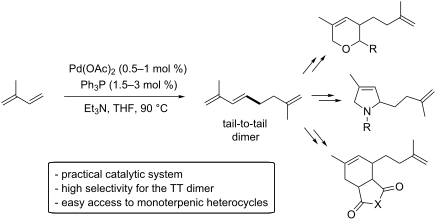
- formed: tail-to-tail, head-to-tail, tail-to-head and head-to-head (Figure 1). In addition to the linear dimeric products, cyclic monoterpenes such as limonene can also be formed as byproducts. A number of transition metal complexes can be used as catalysts in the dimerization of isoprene. In one hand

Graphical Abstract

Figure 1: Isoprene as chemical building block in nature and organic synthesis.

Scheme 1: Pd-catalyzed dimerization of isoprene.

Scheme 2: Putative mechanism for the Pd(OAc)2-catalyzed dimerization of isoprene.

Scheme 3: Functionalization of the isoprene-dimer 2-TT to substituted O- and N-heterocycles.
Synthesis of 1-indanones with a broad range of biological activity
- Marika Turek,
- Dorota Szczęsna,
- Marek Koprowski and
- Piotr Bałczewski
Beilstein J. Org. Chem. 2017, 13, 451–494, doi:10.3762/bjoc.13.48
- diesters: In 1951, Gilmore has demonstrated that use of esters, rather than free arylpropionic acids in phosphoric acid, in the presence of phosphorus pentoxide also led to 1-indanones in equally good or even better yields [32]. Transition metal complexes have been used by Negishi et al. as catalysts in
- using lithium, nickel and palladium catalysts (Scheme 15). A general mechanism illustrating the role of transition metal complexes and CO in this reaction is shown in Scheme 15. Cyclic esters were also used in the syntheses of 1-indanones. Thus, by adding β-propiolactone to aluminum chloride in benzene

Graphical Abstract

Figure 1: Biologically active 1-indanones and their structural analogues.

Figure 2: Number of papers about (a) 1-indanones, (b) synthesis of 1-indanones.

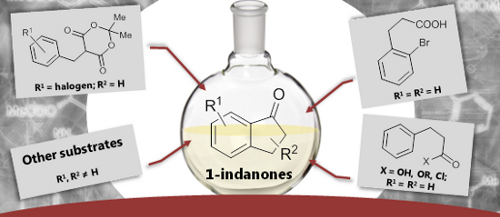
Scheme 1: Synthesis of 1-indanone (2) from hydrocinnamic acid (1).

Scheme 2: Synthesis of 1-indanone (2) from 3-(2-bromophenyl)propionic acid (3).

Scheme 3: Synthesis of 1-indanones 5 from 3-arylpropionic acids 4.

Scheme 4: Synthesis of kinamycin (9a) and methylkinamycin C (9b).

Scheme 5: Synthesis of trifluoromethyl-substituted arylpropionic acids 12, 1-indanones 13 and dihydrocoumarin...

Scheme 6: Synthesis of 1-indanones 16 from benzoic acids 15.

Scheme 7: Synthesis of 1-indanones 18 from arylpropionic and 3-arylacrylic acids 17.

Scheme 8: The NbCl5-induced one-step synthesis of 1-indanones 22.

Scheme 9: Synthesis of biologically active 1-indanone derivatives 26.

Scheme 10: Synthesis of enantiomerically pure indatraline ((−)-29).

Scheme 11: Synthesis of 1-indanone (2) from the acyl chloride 30.

Scheme 12: Synthesis of the mechanism-based inhibitors 33 of coelenterazine.

Scheme 13: Synthesis of the indane 2-imidazole derivative 37.

Scheme 14: Synthesis of fluorinated PAHs 41.

Scheme 15: Synthesis of 1-indanones 43 via transition metal complexes-catalyzed carbonylative cyclization of m...

Scheme 16: Synthesis of 6-methyl-1-indanone (46).

Scheme 17: Synthesis of 1-indanone (2) from ester 48.

Scheme 18: Synthesis of benzopyronaphthoquinone 51 from the spiro-1-indanone 50.

Scheme 19: Synthesis of the selective endothelin A receptor antagonist 55.

Scheme 20: Synthesis of 1-indanones 60 from methyl vinyl ketone (57).

Scheme 21: Synthesis of 1-indanones 64 from diethyl phthalate 61.

Scheme 22: Synthesis of 1-indanone derivatives 66 from various Meldrum’s acids 65.

Scheme 23: Synthesis of halo 1-indanones 69.

Scheme 24: Synthesis of substituted 1-indanones 71.

Scheme 25: Synthesis of spiro- and fused 1-indanones 73 and 74.

Scheme 26: Synthesis of spiro-1,3-indanodiones 77.

Scheme 27: Mechanistic pathway for the NHC-catalyzed Stetter–Aldol–Michael reaction.

Scheme 28: Synthesis of 2-benzylidene-1-indanone derivatives 88a–d.

Scheme 29: Synthesis of 1-indanone derivatives 90a–i.

Scheme 30: Synthesis of 1-indanones 96 from o-bromobenzaldehydes 93 and alkynes 94.

Scheme 31: Synthesis of 3-hydroxy-1-indanones 99.

Scheme 32: Photochemical preparation of 1-indanones 103 from ketones 100.

Scheme 33: Synthesis of chiral 3-aryl-1-indanones 107.

Scheme 34: Photochemical isomerization of 2-methylbenzil 108.

Scheme 35: Synthesis of 2-hydroxy-1-indanones 111a–c.

Scheme 36: Synthesis of 1-indanone derivatives 113 and 114 from η6-1,2-dioxobenzocyclobutene complex 112.

Scheme 37: Synthesis of nakiterpiosin (117).

Scheme 38: Synthesis of 2-alkyl-1-indanones 120.

Scheme 39: Synthesis of fluorine-containing 1-indanone derivatives 123.

Scheme 40: Synthesis of 2-benzylidene and 2-benzyl-1-indanones 126, 127 from the chalcone 124.

Scheme 41: Synthesis of 2-bromo-6-methoxy-3-phenyl-1-indanone (130).

Scheme 42: Synthesis of combretastatin A-4-like indanones 132a–s.

Figure 3: Chemical structures of investigated dienones 133 and synthesized cyclic products 134–137.

Figure 4: Chemical structures of 1-indanones and their heteroatom analogues 138–142.

Scheme 43: Synthesis of 2-phosphorylated and 2-non-phosphorylated 1-indanones 147 and 148 from β-ketophosphona...

Scheme 44: Photochemical synthesis of 1-indanone derivatives 150, 153a, 153b.

Scheme 45: Synthesis of polysubstituted-1-indanones 155, 157.

Scheme 46: Synthesis of 1-indanones 159a–g from α-arylpropargyl alcohols 158 using RhCl(PPh3)3 as a catalyst.

Scheme 47: Synthesis of optically active 1-indanones 162 via the asymmetric Rh-catalyzed isomerization of race...

Scheme 48: Mechanism of the Rh-catalyzed isomerization of α-arylpropargyl alcohols 161 to 1-indanones 162.

Figure 5: Chemical structure of abicoviromycin (168) and its new benzo derivative 169.

Scheme 49: Synthesis of racemic benzoabicoviromycin 172.

Scheme 50: Synthesis of [14C]indene 176.

Scheme 51: Synthesis of indanone derivatives 178–180.

Scheme 52: Synthesis of racemic pterosin A 186.

Scheme 53: Synthesis of trans-2,3-disubstituted 1-indanones 189.

Scheme 54: Synthesis of 3-aryl-1-indanone derivatives 192.

Scheme 55: Synthesis of 1-indanone derivatives 194 from 3-(2-iodoaryl)propanonitriles 193.

Scheme 56: Synthesis of 1-indanones 200–204 by cyclization of aromatic nitriles.

Scheme 57: Synthesis of 1,1’-spirobi[indan-3,3’-dione] derivative 208.

Scheme 58: Total synthesis of atipamezole analogues 211.

Scheme 59: Synthesis of 3-[4-(1-piperidinoethoxy)phenyl]spiro[indene-1,1’-indan]-5,5’-diol hydrochloride 216.

Scheme 60: Synthesis of 3-arylindan-1-ones 219.

Scheme 61: Synthesis of 2-hydroxy-1-indanones 222.

Scheme 62: Synthesis of the 1-indanone 224 from the THP/MOM protected chalcone epoxide 223.

Scheme 63: Synthesis of 1-indanones 227 from γ,δ-epoxy ketones 226.

Scheme 64: Synthesis of 2-hydroxy-2-methylindanone (230).

Scheme 65: Synthesis of 1-indanone derivatives 234 from cyclopropanol derivatives 233.

Scheme 66: Synthesis of substituted 1-indanone derivatives 237.

Scheme 67: Synthesis of 7-methyl substituted 1-indanone 241 from 1,3-pentadiene (238) and 2-cyclopentenone (239...

Scheme 68: Synthesis of disubstituted 1-indanone 246 from the siloxydiene 244 and 2-cyclopentenone 239.

Scheme 69: Synthesis of 5-hydroxy-1-indanone (250) via the Diels–Alder reaction of 1,3-diene 248 with sulfoxid...

Scheme 70: Synthesis of halogenated 1-indanones 253a and 253b.

Scheme 71: Synthesis of 1-indanones 257 and 258 from 2-bromocyclopentenones 254.

Scheme 72: Synthesis of 1-indanone 261 from 2-bromo-4-acetoxy-2-cyclopenten-1-one (260) and 1,2-dihydro-4-viny...

Scheme 73: Synthesis of 1-indanone 265 from 1,2-dihydro-7-methoxy-4-vinylnaphthalene (262) and bromo-substitut...

Scheme 74: Synthesis of 1-indanone 268 from dihydro-3-vinylphenanthrene 266 and 4-acetoxy-2-cyclopenten-1-one (...

Scheme 75: Synthesis of 1-indanone 271 from phenylselenyl-substituted cyclopentenone 268.

Scheme 76: Synthesis of 1-indanone 272 from the trienone 270.

Scheme 77: Synthesis of the 1-indanone 276 from the aldehyde 273.

Scheme 78: Synthesis of 1-indanones 278 and 279.

Scheme 79: Synthesis of 1-indanone 285 from octa-1,7-diyne (282) and cyclopentenone 239.

Scheme 80: Synthesis of benz[f]indan-1-one (287) from cyclopentenone 239 and o-bis(dibromomethyl)benzene (286)....

Scheme 81: Synthesis of 3-methyl-substituted benz[f]indan-1-one 291 from o-bis(dibromomethyl)benzene (286) and...

Scheme 82: Synthesis of benz[f]indan-1-one (295) from the anthracene epidioxide 292.

Scheme 83: Synthesis of 1-indanone 299 from homophthalic anhydride 298 and cyclopentynone 297.

Scheme 84: Synthesis of cyano-substituted 1-indanone derivative 301 from 2-cyanomethylbenzaldehyde (300) and c...

Scheme 85: Synthesis of 1-indanone derivatives 303–305 from ketene dithioacetals 302.

Scheme 86: Synthesis of 1-indanones 309–316.

Scheme 87: Mechanism of the hexadehydro-Diels–Alder (HDDA) reaction.

Scheme 88: Synthesis of 1-indenone 318 and 1-indanones 320 and 321 from tetraynes 317 and 319.

Scheme 89: Synthesis of 1-indanone 320 from the triyn 319.

Scheme 90: Synthesis 1-indanone 328 from 2-methylfuran 324.

Scheme 91: Synthesis of 1-indanones 330 and 331 from furans 329.

Scheme 92: Synthesis of 1-indanone 333 from the cycloadduct 332.

Scheme 93: Synthesis of (S)-3-arylindan-1-ones 335.

Scheme 94: Synthesis of (R)-2-acetoxy-1-indanone 338.

Figure 6: Chemical structures of obtained cyclopenta[α]phenanthrenes 339.

Scheme 95: Synthesis of the benzoindanone 343 from arylacetaldehyde 340 with 1-trimethylsilyloxycyclopentene (...
Organometallic chemistry
- Bernd F. Straub,
- Rolf Gleiter,
- Claudia Meier and
- Lutz H. Gade
Beilstein J. Org. Chem. 2016, 12, 2216–2221, doi:10.3762/bjoc.12.213
- studied the electronic structure of organo-transition metal complexes by extended Hückel model calculations [14][17][20][28][39][49][50][54][57]. In 1978, he completed his habilitation in Erlangen, mentored by Paul von Ragué Schleyer, and was promoted to professor in 1980. Following a three-month visiting
- the very few chemists with a history of research and teaching in theoretical, organic and inorganic chemistry. His research interests combined all three fields, with a focus on homogeneous catalysis with transition metal complexes. Bidentate donor ligands with a small bite angle such as bis(di-tert

Figure 1: Peter Hofmann.
Rearrangements of organic peroxides and related processes
- Ivan A. Yaremenko,
- Vera A. Vil’,
- Dmitry V. Demchuk and
- Alexander O. Terent’ev
Beilstein J. Org. Chem. 2016, 12, 1647–1748, doi:10.3762/bjoc.12.162
- . Finally, the decomposition of 62 gives esters 59a–f. A number of other modern oxidizing systems are based on transition metal-peroxo complexes. The use of transition metal complexes were also used as catalysts for the Baeyer–Villiger reaction and the first example was documented in 1978 [196][214]. For
- example, Mo(VI) peroxo complexes 64 and 65 were employed as the catalysts and 90% H2O2 served as the oxidizer (Table 5). The results obtained from the reactions using molybdenum systems have stimulated the search for new catalysts based on transition metal complexes. The usage of the platimum complex

Graphical Abstract
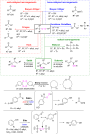
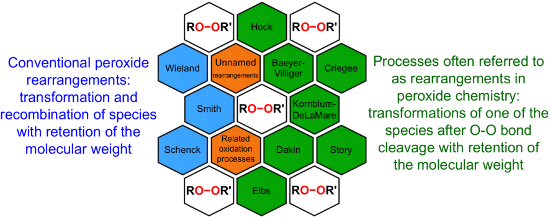
Figure 1: The named transformations considered in this review.

Scheme 1: The Baeyer–Villiger oxidation.

Scheme 2: The general mechanism of the peracid-promoted Baeyer–Villiger oxidation.

Scheme 3: General mechanism of the Lewis acid-catalyzed Baeyer–Villiger rearrangement.

Scheme 4: The theoretically studied mechanism of the BV oxidation reaction promoted by H2O2 and the Lewis aci...

Scheme 5: Proton movements in the transition states of the Baeyer–Villiger oxidation.

Scheme 6: The dependence of the course of the Baeyer–Villiger oxidation on the type of O–O-bond cleavage in t...
Scheme 7: The acid-catalyzed Baeyer–Villiger oxidation of cyclic epoxy ketones 22.

Scheme 8: Oxidation of isophorone oxide 29.

Scheme 9: Synthesis of acyl phosphate 32 from acyl phosphonate 31.

Scheme 10: Synthesis of aflatoxin B2 (36).

Scheme 11: The Baeyer–Villiger rearrangement of ketones 37 to lactones 38.

Scheme 12: Synthesis of 3,4-dimethoxybenzoic acid (40) via Baeyer–Villiger oxidation.

Scheme 13: Oxone transforms α,β-unsaturated ketones 43 into vinyl acetates 44.

Scheme 14: The Baeyer–Villiger oxidation of ketones 45 using diaryl diselenide and hydrogen peroxide.

Scheme 15: Baeyer–Villiger oxidation of (E)-2-methylenecyclobutanones.

Scheme 16: Oxidation of β-ionone (56) by H2O2/(BnSe)2 with formation of (E)-2-(2,6,6-trimethylcyclohex-1-en-1-...

Scheme 17: The mechanism of oxidation of ketones 58a–f by hydrogen peroxide in the presence of arsonated polys...

Scheme 18: Oxidation of ketone (58b) by H2O2 to 6-methylcaprolactone (59b) catalyzed by Pt complex 66·BF4.

Scheme 19: Oxidation of ketones 67 with H2O2 in the presence of [(dppb}Pt(µ-OH)]22+.

Scheme 20: The mechanism of oxidation of ketones 67 in the presence of [(dppb}Pt(µ-OH)]22+ and H2O2.

Scheme 21: Oxidation of benzaldehydes 69 in the presence of the H2O2/MeReO3 system.

Scheme 22: Oxidation of acetophenones 72 in the presence of the H2O2/MeReO3 system.

Scheme 23: Baeyer–Villiger oxidation of 2-adamantanone (45c) in the presence of Sn-containing mesoporous silic...

Scheme 24: Aerobic Baeyer–Villiger oxidation of ketones 76 using metal-free carbon.

Scheme 25: A regioselective Baeyer-Villiger oxidation of functionalized cyclohexenones 78 into a dihydrooxepin...

Scheme 26: The oxidation of aldehydes and ketones 80 by H2O2 catalyzed by Co4HP2Mo15V3O62.

Scheme 27: The cleavage of ketones 82 with hydrogen peroxide in alkaline solution.

Scheme 28: Oxidation of ketones 85 to esters 86 with H2O2–urea in the presence of KHCO3.

Scheme 29: Mechanism of the asymmetric oxidation of cyclopentane-1,2-dione 87a with the Ti(OiPr)4/(+)DET/t-BuO...

Scheme 30: The oxidation of cis-4-tert-butyl-2-fluorocyclohexanone (93) with m-chloroperbenzoic acid.

Scheme 31: The mechanism of the asymmetric oxidation of 3-substituted cyclobutanone 96a in the presence of chi...

Scheme 32: Enantioselective Baeyer–Villiger oxidation of cyclic ketones 98.

Scheme 33: Regio- and enantioselective Baeyer–Villiger oxidation of cyclic ketones 101.

Scheme 34: The proposed mechanism of the Baeyer–Villiger oxidation of acetal 105f.

Scheme 35: Synthesis of hydroxy-10H-acridin-9-one 117 from tetramethoxyanthracene 114.

Scheme 36: The Baeyer–Villiger oxidation of the fully substituted pyrrole 120.

Scheme 37: The Criegee rearrangement.

Scheme 38: The mechanism of the Criegee reaction of a peracid with a tertiary alcohol 122.

Scheme 39: Criegee rearrangement of decaline ethylperoxoate 127 into ketal 128.

Scheme 40: The ionic cleavage of 2-methoxy-2-propyl perester 129.

Scheme 41: The Criegee rearrangement of α-methoxy hydroperoxide 136.
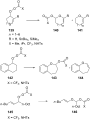
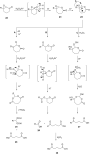
Scheme 42: Synthesis of enol esters and acetals via the Criegee rearrangement.

Scheme 43: Proposed mechanism of the transformation of 1-hydroperoxy-2-oxabicycloalkanones 147a–d.

Scheme 44: Transformation of 3-hydroxy-1,2-dioxolanes 151 into diketone derivatives 152.

Scheme 45: Criegee rearrangement of peroxide 153 with the mono-, di-, and tri-O-insertion.

Scheme 46: The sequential Criegee rearrangements of adamantanes 157a,b.

Scheme 47: Synthesis of diaryl carbonates 160a–d from triarylmethanols 159a–d through successive oxygen insert...

Scheme 48: The synthesis of sesquiterpenes 162 from ketone 161 with a Criegee rearrangement as one key step.

Scheme 49: Synthesis of trans-hydrindan derivatives 164, 165.

Scheme 50: The Hock rearrangement.

Scheme 51: The general scheme of the cumene process.

Scheme 52: The Hock rearrangement of aliphatic hydroperoxides.
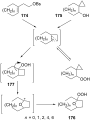
Scheme 53: The mechanism of solvolysis of brosylates 174a–c and spiro cyclopropyl carbinols 175a–c in THF/H2O2....

Scheme 54: The fragmentation mechanism of hydroperoxy acetals 178 to esters 179.

Scheme 55: The acid-catalyzed rearrangement of phenylcyclopentyl hydroperoxide 181.

Scheme 56: The peroxidation of tertiary alcohols in the presence of a catalytic amount of acid.

Scheme 57: The acid-catalyzed reaction of bicyclic secondary alcohols 192 with hydrogen peroxide.

Scheme 58: The photooxidation of 5,6-disubstituted 3,4-dihydro-2H-pyrans 196.

Scheme 59: The oxidation of tertiary alcohols 200a–g, 203a,b, and 206.

Scheme 60: Transformation of functional peroxide 209 leading to 2,3-disubstitued furans 210 in one step.

Scheme 61: The synthesis of carbazoles 213 via peroxide rearrangement.

Scheme 62: The construction of C–N bonds using the Hock rearrangement.

Scheme 63: The synthesis of moiety 218 from 217 which is a structural motif in the antitumor–antibiotic of CC-...

Scheme 64: The in vivo oxidation steps of cholesterol (219) by singlet oxygen.

Scheme 65: The proposed mechanism of the rearrangement of cholesterol-5α-OOH 220.

Scheme 66: Photochemical route to artemisinin via Hock rearrangement of 223.

Scheme 67: The Kornblum–DeLaMare rearrangement.

Scheme 68: Kornblum–DeLaMare transformation of 1-phenylethyl tert-butyl peroxide (225).

Scheme 69: The synthesis 4-hydroxyenones 230 from peroxide 229.

Scheme 70: The Kornblum–DeLaMare rearrangement of peroxide 232.

Scheme 71: The reduction of peroxide 234.

Scheme 72: The Kornblum–DeLaMare rearrangement of endoperoxide 236.

Scheme 73: The rearrangement of peroxide 238 under Kornblum–DeLaMare conditions.

Scheme 74: The proposed mechanism of rearrangement of peroxide 238.

Scheme 75: The Kornblum–DeLaMare rearrangement of peroxides 242a,b.

Scheme 76: The base-catalyzed rearrangements of bicyclic endoperoxides having electron-withdrawing substituent...

Scheme 77: The base-catalyzed rearrangements of bicyclic endoperoxides 249a,b having electron-donating substit...

Scheme 78: The base-catalyzed rearrangements of bridge-head substituted bicyclic endoperoxides 251a,b.

Scheme 79: The Kornblum–DeLaMare rearrangement of hydroperoxide 253.

Scheme 80: Synthesis of β-hydroxy hydroperoxide 254 from endoperoxide 253.

Scheme 81: The amine-catalyzed rearrangement of bicyclic endoperoxide 263.

Scheme 82: The base-catalyzed rearrangement of meso-endoperoxide 268 into 269.

Scheme 83: The photooxidation of 271 and subsequent Kornblum–DeLaMare reaction.

Scheme 84: The Kornblum–DeLaMare rearrangement as one step in the oxidation reaction of enamines.

Scheme 85: The Kornblum–DeLaMare rearrangement of 3,5-dihydro-1,2-dioxenes 284, 1,2-dioxanes 286, and tert-but...

Scheme 86: The Kornblum–DeLaMare rearrangement of epoxy dioxanes 290a–d.

Scheme 87: Rearrangement of prostaglandin H2 292.

Scheme 88: The synthesis of epicoccin G (297).

Scheme 89: The Kornblum–DeLaMare rearrangement used in the synthesis of phomactin A.

Scheme 90: The Kornblum–DeLaMare rearrangement in the synthesis of 3H-quinazolin-4-one 303.

Scheme 91: The Kornblum–DeLaMare rearrangement in the synthesis of dolabriferol (308).

Scheme 92: Sequential transformation of 3-substituted 2-pyridones 309 into 3-hydroxypyridine-2,6-diones 311 in...

Scheme 93: The Kornblum–DeLaMare rearrangement of peroxide 312 into hydroxy enone 313.

Scheme 94: The Kornblum–DeLaMare rearrangement in the synthesis of polyfunctionalized carbonyl compounds 317.

Scheme 95: The Kornblum–DeLaMare rearrangement in the synthesis of (Z)-β-perfluoroalkylenaminones 320.

Scheme 96: The Kornblum–DeLaMare rearrangement in the synthesis of γ-ketoester 322.

Scheme 97: The Kornblum–DeLaMare rearrangement in the synthesis of diterpenoids 326 and 328.

Scheme 98: The synthesis of natural products hainanolidol (331) and harringtonolide (332) from peroxide 329.

Scheme 99: The synthesis of trans-fused butyrolactones 339 and 340.

Scheme 100: The synthesis of leucosceptroid C (343) and leucosceptroid P (344) via the Kornblum–DeLaMare rearra...

Scheme 101: The Dakin oxidation of arylaldehydes or acetophenones.

Scheme 102: The mechanism of the Dakin oxidation.

Scheme 103: A solvent-free Dakin reaction of aromatic aldehydes 356.

Scheme 104: The organocatalytic Dakin oxidation of electron-rich arylaldehydes 358.

Scheme 105: The Dakin oxidation of electron-rich arylaldehydes 361.

Scheme 106: The Dakin oxidation of arylaldehydes 358 in water extract of banana (WEB).

Scheme 107: A one-pot approach towards indolo[2,1-b]quinazolines 364 from indole-3-carbaldehydes 363 through th...

Scheme 108: The synthesis of phenols 367a–c from benzaldehydes 366a-c via acid-catalyzed Dakin oxidation.

Scheme 109: Possible transformation paths of the highly polarized boric acid coordinated H2O2–aldehyde adduct 3...

Scheme 110: The Elbs oxidation of phenols 375 to hydroquinones.

Scheme 111: The mechanism of the Elbs persulfate oxidation of phenols 375 affording p-hydroquinones 376.

Scheme 112: Oxidation of 2-pyridones 380 under Elbs persulfate oxidation conditions.

Scheme 113: Synthesis of 3-hydroxy-4-pyridone (384) via an Elbs oxidation of 4-pyridone (382).

Scheme 114: The Schenck rearrangement.

Scheme 115: The Smith rearrangement.

Scheme 116: Three main pathways of the Schenck rearrangement.

Scheme 117: The isomerization of hydroperoxides 388 and 389.

Scheme 118: Trapping of dioxacyclopentyl radical 392 by oxygen.

Scheme 119: The hypothetical mechanism of the Schenck rearrangement of peroxide 394.

Scheme 120: The autoxidation of oleic acid (397) with the use of labeled isotope 18O2.

Scheme 121: The rearrangement of 18O-labeled hydroperoxide 400 under an atmosphere of 16O2.

Scheme 122: The rearrangement of the oleate-derived allylic hydroperoxides (S)-421 and (R)-425.

Scheme 123: Mechanisms of Schenck and Smith rearrangements.

Scheme 124: The rearrangement and cyclization of 433.

Scheme 125: The Wieland rearrangement.

Scheme 126: The rearrangement of bis(triphenylsilyl) 439 or bis(triphenylgermyl) 441 peroxides.

Scheme 127: The oxidative transformation of cyclic ketones.

Scheme 128: The hydroxylation of cyclohexene (447) in the presence of tungstic acid.

Scheme 129: The oxidation of cyclohexene (447) under the action of hydrogen peroxide.

Scheme 130: The reaction of butenylacetylacetone 455 with hydrogen peroxide.

Scheme 131: The oxidation of bridged 1,2,4,5-tetraoxanes.

Scheme 132: The proposed mechanism for the oxidation of bridged 1,2,4,5-tetraoxanes.

Scheme 133: The rearrangement of ozonides.

Scheme 134: The acid-catalyzed oxidative rearrangement of malondialdehydes 462 under the action of H2O2.

Scheme 135: Pathways of the Lewis acid-catalyzed cleavage of dialkyl peroxides 465 and ozonides 466.

Scheme 136: The mechanism of the transformation of (tert-butyldioxy)cyclohexanedienones 472.

Scheme 137: The synthesis of Vitamin K3 from 472a.

Scheme 138: Proposed mechanism for the transformation of 478d into silylated endoperoxide 479d.

Scheme 139: The rearrangement of hydroperoxide 485 to form diketone 486.

Scheme 140: The base-catalyzed rearrangement of cyclic peroxides 488a–g.

Scheme 141: Synthesis of chiral epoxides and aldols from peroxy hemiketals 491.

Scheme 142: The multistep transformation of (R)-carvone (494) to endoperoxides 496a–e.

Scheme 143: The decomposition of anthracene endoperoxide 499.

Scheme 144: Synthesis of esters 503 from aldehydes 501 via rearrangement of peroxides 502.

Scheme 145: Two possible paths for the base-promoted decomposition of α-azidoperoxides 502.

Scheme 146: The Story decomposition of cyclic diperoxide 506a.

Scheme 147: The Story decomposition of cyclic triperoxide 506b.

Scheme 148: The thermal rearrangement of endoperoxides A into diepoxides B.

Scheme 149: The transformation of peroxide 510 in the synthesis of stemolide (511).

Scheme 150: The possible mechanism of the rearrangement of endoperoxide 261g.

Scheme 151: The photooxidation of indene 517.

Scheme 152: The isomerization of ascaridole (523).

Scheme 153: The isomerization of peroxide 525.

Scheme 154: The thermal transformation of endoperoxide 355.

Scheme 155: The photooxidation of cyclopentadiene (529) at a temperature higher than 0 °C.

Scheme 156: The thermal rearrangement of endoperoxides 538a,b.

Scheme 157: The transformation of peroxides 541.

Scheme 158: The thermal rearrangements of strained cyclic peroxides.

Scheme 159: The thermal rearrangement of diacyl peroxide 551 in the synthesis of C4-epi-lomaiviticin B core 553....

Scheme 160: The 1O2 oxidation of tryptophan (554) and rearrangement of dioxetane intermediate 555.

Scheme 161: The Fe(II)-promoted cleavage of aryl-substituted bicyclic peroxides.

Scheme 162: The proposed mechanism of the Fe(II)-promoted rearrangement of 557a–c.

Scheme 163: The reaction of dioxolane 563 with Fe(II) sulfate.

Scheme 164: Fe(II)-promoted rearrangement of 1,2-dioxane 565.

Scheme 165: Fe(II) cysteinate-promoted rearrangement of 1,2-dioxolane 568.

Scheme 166: The transformation of 1,2-dioxanes 572a–c under the action of FeCl2.

Scheme 167: Fe(II) cysteinate-promoted transformation of tetraoxane 574.

Scheme 168: The CoTPP-catalyzed transformation of bicyclic endoperoxides 600a–d.

Scheme 169: The CoTPP-catalyzed transformation of epoxy-1,2-dioxanes.

Scheme 170: The Ru(II)-catalyzed reactions of 1,4-endoperoxide 261g.

Scheme 171: The Ru(II)-catalyzed transformation as a key step in the synthesis of elyiapyrone A (610) from 1,4-...

Scheme 172: Peroxides with antimalarial activity.

Scheme 173: The interaction of iron ions with artemisinin (616).

Scheme 174: The interaction of FeCl2 with 1,2-dioxanes 623, 624.

Scheme 175: The mechanism of reaction 623 and 624 with Fe(II)Cl2.

Scheme 176: The reaction of bicyclic natural endoperoxides G3-factors 631–633 with FeSO4.

Scheme 177: The transformation of terpene cardamom peroxide 639.
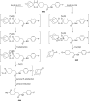
Scheme 178: The different ways of the cleavage of tetraoxane 643.

Scheme 179: The LC–MS analysis of interaction of tetraoxane 646 with iron(II)heme 647.

Scheme 180: The rearrangement of 3,6-epidioxy-1,10-bisaboladiene (EDBD, 649).

Scheme 181: Easily oxidized substrates.

Scheme 182: Biopathway of synthesis of prostaglandins.

Scheme 183: The reduction and rearrangements of isoprostanes.

Scheme 184: The partial mechanism for linoleate 658 oxidation.

Scheme 185: The transformation of lipid hydroperoxide.

Scheme 186: The acid-catalyzed cleavage of the product from free-radical oxidation of cholesterol (667).

Scheme 187: Two pathways of catechols oxidation.

Scheme 188: Criegee-like or Hock-like rearrangement of the intermediate hydroperoxide 675 in dioxygenase enzyme...

Scheme 189: Carotinoides 679 cleavage by carotenoid cleavage dioxygenases.
Ring-whizzing in polyene-PtL2 complexes revisited
- Oluwakemi A. Oloba-Whenu,
- Thomas A. Albright and
- Chirine Soubra-Ghaoui
Beilstein J. Org. Chem. 2016, 12, 1410–1420, doi:10.3762/bjoc.12.135
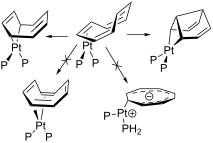
- ; density functional theory (DFT); hapototropic rearrangements; HOMO–LUMO interactions; polyene-ML2 complexes; ring-whizzing; Introduction Polyene–transition metal complexes were found to undergo fluxional rearrangements as early as 1956 with the preparation of Cp2Fe(CO)2 [1]. The migration of an MLn unit

Graphical Abstract

Figure 1: The four coordination geometries for d10 polyene-ML2 complexes along with their hapto numbers and e...

Figure 2: The important valence orbitals of a d10 ML2 group, 5–7, along with the computed structures of Pt(PH3...

Figure 3: The empty degenerate set of π orbitals in the cyclopropenium cation is shown on the left side. On t...

Figure 4: Two unoccupied MOs for Cp+ are shown on the left side. The two stationary points for Cp–Pt(dpe)+ ar...

Figure 5: The half-filled degenerate π orbitals in cyclobutadiene. The computed ground state (15) and transit...
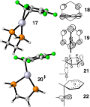
Figure 6: The ground and transition state for ring whizzing in F6C6–Pt(dpe), 17 and 20, respectively. The dom...
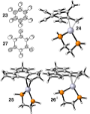
Figure 7: The LUMO, 23, and HOMO, 27, in 6-radialene. The optimized η2 ground states are shown in 24 and 25 w...

Figure 8: Two representations for the half-filled e2u set of π orbitals in cyclooctatetraene.

Figure 9: The stationary points found on the potential energy surface of C8F8–Pt(dpe). For clarity the groups...

Figure 10: The two important bonding interactions for transition state 31 are drawn in 33 and 34.

Figure 11: Three other coordination geometries that did not lead to new stationary points are shown in 35–37.

Figure 12: The LUMO and LUMO+1 shown in 38 and 39, respectively. The four stationary points found for pentalen...
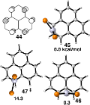
Figure 13: The LUMO of the phenalenium cation is given in 44. The structures of the three stationary points fo...

Figure 14: A top view of two stationary points found for F8C10–Pt(dpe); 48 is the ground state and 50, represe...

Figure 15: At top view of the η4, 52, and η4, 54, transition states along with the η2, 53, intermediate.
Bi- and trinuclear copper(I) complexes of 1,2,3-triazole-tethered NHC ligands: synthesis, structure, and catalytic properties
- Shaojin Gu,
- Jiehao Du,
- Jingjing Huang,
- Huan Xia,
- Ling Yang,
- Weilin Xu and
- Chunxin Lu
Beilstein J. Org. Chem. 2016, 12, 863–873, doi:10.3762/bjoc.12.85
- [1][2][3][4][5][6][7][8][9][10][11][12]. A number of transition metal complexes of NHCs containing pyridine [13], pyrimidine [14], pyrazole [15][16], naphthyridine [17], pyridazine [18], and phenanthroline [19][20] donating groups have been studied in metal-catalyzed organic transformations. Recently

Graphical Abstract

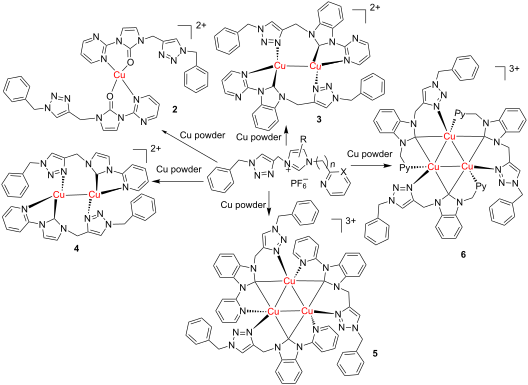
Scheme 1: Synthesis of copper complexes 2–6.

Figure 1: X-ray diffraction structure of copper(II) complex 2 with thermal ellipsoids drawn at 30% probabilit...

Figure 2: ORTEP the cationic section of [Cu2(L2)2](PF6)2 (3). Thermal ellipsoids are drawn at the 30% probabi...

Figure 3: ORTEP drawing of [Cu2(L3)2](PF6)2 (4). Thermal ellipsoids are drawn at the 30% probability level. H...

Figure 4: ORTEP drawing of [Cu3(L4)3](PF6)3 (5). Thermal ellipsoids are drawn at the 30% probability level. H...
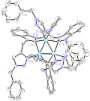
Figure 5: ORTEP drawing of [Cu3(L5)3](PF6)3 (6). Thermal ellipsoids are drawn at the 30% probability level. H...

Figure 6: Yield vs reaction time of different copper complex. The reaction was carried out in acetonitrile-d3...
A modular approach to neutral P,N-ligands: synthesis and coordination chemistry
- Vladislav Vasilenko,
- Torsten Roth,
- Clemens K. Blasius,
- Sebastian N. Intorp,
- Hubert Wadepohl and
- Lutz H. Gade
Beilstein J. Org. Chem. 2016, 12, 846–853, doi:10.3762/bjoc.12.83
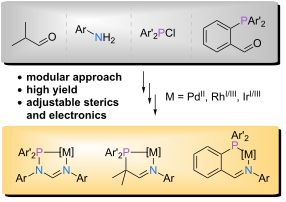
- have a significant influence on the binding geometry und coordination properties of these bidentate P,N-donors. Keywords: P,N-ligands; phosphanylformamidines; phosphine imines; transition metal complexes; Introduction P,N-ligands have been applied in a wide variety of chemical reactions ranging from
- folded, whereas complexes of L3 exhibit a strong deviation from planarity. In summary, these results may be utilized for the design, preparation and structural elucidation of novel late transition metal complexes. Investigations into their potential as precatalysts for organic transformations are

Graphical Abstract

Figure 1: P,N-ligand frameworks studied in this work.

Scheme 1: Synthesis of N-phosphanylformamidines 2 and 3. Reaction conditions: (i) t-BuLi, THF, −78 °C to rt, ...

Scheme 2: Synthesis of phosphanylformamidines 5 and 7. Reaction conditions: (i) t-BuLi, THF, −78 °C to rt, 1 ...

Scheme 3: Synthesis of complexes [2-M(cod)]X, [3-M(cod)]X, [5-M(cod)]X and [7-M(cod)]X. M = Rh, Ir; X = BF4− ...

Figure 2: Molecular structures of [2a-Rh(cod)]+ (A), [5-Ir(cod)]+ (B), and [7-Rh(cod)]+ (C,D). Anisotropic di...

Figure 3: Coordination of ligands 2a and 5 to Rh(III) and Ir(III) precursors. Yields: [2a-Cp*RhCl]BF4 = 87%, [...

Figure 4: Molecular structures of [2a-Cp*IrI]+ (left) and [5-Cp*IrI]+ (right). Anisotropic displacement ellip...

Figure 5: Formation of palladium complexes of ligands 2a, 5 and 7. (A) Formation of [2a-PdCl2] and [2a-PdCl]2...

Figure 6: Molecular structures of [2a-PdCl2] (left) and [5-Pd(2-Me-allyl)]+ (right). Anisotropic displacement...
Scope and limitations of the dual-gold-catalysed hydrophenoxylation of alkynes
- Adrián Gómez-Suárez,
- Yoshihiro Oonishi,
- Anthony R. Martin and
- Steven P. Nolan
Beilstein J. Org. Chem. 2016, 12, 172–178, doi:10.3762/bjoc.12.19
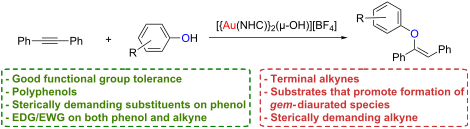
- metal and main-group chemistry [10][11][12][13]. We have been interested in exploring the use of NHC ligands in transition metal complexes for the development of highly active and well-defined catalysts. One of our main interests during the last decade has been to study the use of gold–NHC species as

Graphical Abstract

Scheme 1: Dual-gold-catalysed hydrophenoxylation of alkynes.
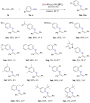
Scheme 2: Exploring the functional group tolerance. Reaction conditions: 1a (0.50 mmol, 1 equiv), 2a–o (0.55 ...

Scheme 3: Hydrophenoxylation using polyphenols. Reaction conditions: 1a (1 mmol, 2 equiv), 2p–s (0.50 mmol, 1...

Scheme 4: Hydrophenoxylation of (un)symmetrical alkynes. Reaction conditions: 1b–k (0.50 mmol, 1 equiv), 2t (...

Scheme 5: Regioselective hydrophenoxylation of unsymmetrical alkynes. Reaction conditions: 1l–p (1 equiv), 2a...
Versatile deprotonated NHC: C,N-bridged dinuclear iridium and rhodium complexes
- Albert Poater
Beilstein J. Org. Chem. 2016, 12, 117–124, doi:10.3762/bjoc.12.13
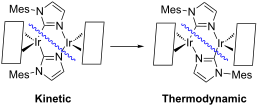
- bond [7][8], which favored the synthesis of new NHCs and to their use as ligands in transition metal complexes. The latter complexes were usually obtained by an easy replacement of a phosphine by the new NHC ligand, displaying a very high stability under many catalytic conditions. Furthermore, NHCs

Graphical Abstract

Scheme 1: Equilibrium between the monoiridum complex bearing a C-bound anionic imidazolide and its correspond...

Scheme 2: Experimental routes to the “equilibrium” between 3H-H and 3H-T.

Figure 1: View of the molecular structure of a) 3H-H and b) 3H-T. Hydrogen atoms have been omitted for the sa...

Figure 2: Steric maps for the NHC ligand of 3H-H, coordinated to iridium by a) carbene or b) nitrogen. The is...

Scheme 3: Equilibrium between complexes 3–6, in the presence of CO, PMe3, and MeI.

Figure 3: View of the molecular structure of a) 4H-H and b) 4H-T (main distances in Å).

Figure 4: View of the molecular structure of 6. Hydrogen atoms have been omitted for the sake of clarity (mai...
Recent advances in metathesis-derived polymers containing transition metals in the side chain
- Ileana Dragutan,
- Valerian Dragutan,
- Bogdan C. Simionescu,
- Albert Demonceau and
- Helmut Fischer
Beilstein J. Org. Chem. 2015, 11, 2747–2762, doi:10.3762/bjoc.11.296
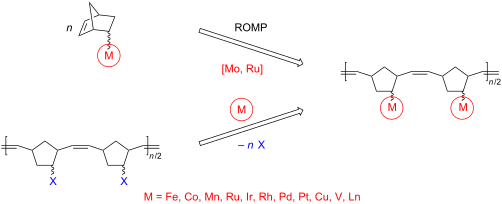
- as prepared by controlled living ring-opening metathesis polymerization (ROMP) of the respective metal-incorporating monomers. Ferrocene- and other metallocene-modified polymers, macromolecules including metal-carbonyl complexes, polymers tethering early or late transition metal complexes, etc. are

Graphical Abstract

Scheme 1: Synthesis of homopolymers containing ferrocenyl and tetraethylene glycol groups.

Scheme 2: Synthesis of redox-robust triazolylbiferrocenyl polymers 4.

Scheme 3: Synthesis of cobaltocenium-containing polymers by ROMP.

Scheme 4: Cobaltocenium-appending copolymers by the ROMP approach (X = PF6, Y = BPh4 or Cl).

Scheme 5: Cobalt-containing polymers by click and ROMP approach.

Scheme 6: Synthesis of new cobalt-integrating block copolymers.

Scheme 7: Two alternative routes for the synthesis of redox-active cobalticenium-tethered polyelectrolytes.

Scheme 8: Oxanorbornene monomers for the synthesis of Ru-containing polymers by ROMP.

Scheme 9: ROMP synthesis of Ru-containing homopolymers.

Scheme 10: Synthesis of diblock copolymers incorporating ruthenium.

Scheme 11: Synthesis of Ru triblock copolymers.

Scheme 12: Synthesis of cross-linked Ru-containing triblock copolymers.

Scheme 13: Synthesis of Ir-containing homopolymers by ROMP.

Scheme 14: Monomers for Ir- and Os-containing ROMP polymers.

Scheme 15: ROMP block copolymers integrating Ir in their side chains.

Scheme 16: Synthesis of Rh-containing block copolymers.

Scheme 17: Access to rhodocenium-containing metallopolymers by ROMP.

Scheme 18: Synthesis of homopolymers equipped with Cu coordination centers.

Scheme 19: Synthesis of Cu-containing copolymers (spacer = –(CH2)5–; >C=O).

Scheme 20: Synthesis of polynorbornene bearing a polyoxometalate (POM) cluster in the side chain.

Scheme 21: Synthesis of Eu-containing copolymers by a ROMP-based route.
Easy access to heterobimetallic complexes for medical imaging applications via microwave-enhanced cycloaddition
- Nicolas Desbois,
- Sandrine Pacquelet,
- Adrien Dubois,
- Clément Michelin and
- Claude P. Gros
Beilstein J. Org. Chem. 2015, 11, 2202–2208, doi:10.3762/bjoc.11.239
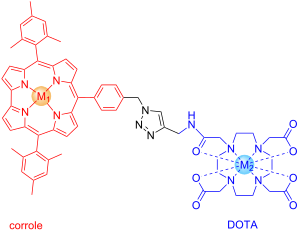
- forming highly stable transition metal complexes making them efficient delivery vehicles for radioisotopes. The radioactive 64Cu2+-porphyrin is known to be extremely stable. Shi et al. [19] have described an easy and efficient radiolabeling of the porphyrin macroring with 64Cu. Mukai et al. [20] have

Graphical Abstract

Figure 1: Selected ligands for the copper(I)-catalyzed Huisgen cycloaddition.

Scheme 1: Structure of different bimetallic complexes 5–7.

Scheme 2: Synthesis of 8a,b and 9a–d. (i) for 8a: THF, N2, Cu(OAc)2·H2O, rt 15 min; for 8b: GaCl3 0.114 M in ...

Scheme 3: Synthesis of 10a,b and 12a,b. (i) For 10a: Milli-Q water, Gd(NO3)3·5H2O, 50 °C, 17 h, pH 8.0; for 1...
Synthesis and structures of ruthenium–NHC complexes and their catalysis in hydrogen transfer reaction
- Chao Chen,
- Chunxin Lu,
- Qing Zheng,
- Shengliang Ni,
- Min Zhang and
- Wanzhi Chen
Beilstein J. Org. Chem. 2015, 11, 1786–1795, doi:10.3762/bjoc.11.194
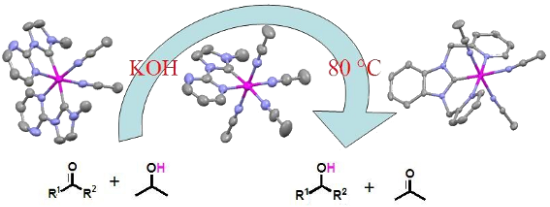
- carbenes (NHCs) have been recognized as a class of strong donating ligands which can stabilize various metal complexes of catalytic importance. Transition metal complexes bearing NHCs are more stable to air, moisture, heat, and tolerant toward oxidation compared to phosphine ligands [1][2][3][4][5][6][7

Graphical Abstract

Scheme 1: Synthesis of complexes 1 and 2.

Figure 1: Structural view of 1 showing 30% thermal ellipsoids. All hydrogen atoms and PF6− were omitted for c...

Figure 2: Structural view of 2 showing 30% thermal ellipsoids. All hydrogen atoms and PF6− were omitted for c...

Scheme 2: Synthesis of 3.

Figure 3: Structural view of 3 showing 50% thermal ellipsoids. All hydrogen atoms and PF6− were omitted for c...

Scheme 3: Synthesis of complexes 4 and 5.

Figure 4: Structural view of 4 showing 30% thermal ellipsoids. All hydrogen atoms and PF6− were omitted for c...

Figure 5: Structural view of 5 showing 30% thermal ellipsoids. All hydrogen atoms and PF6− were omitted for c...
Preparative semiconductor photoredox catalysis: An emerging theme in organic synthesis
- David W. Manley and
- John C. Walton
Beilstein J. Org. Chem. 2015, 11, 1570–1582, doi:10.3762/bjoc.11.173
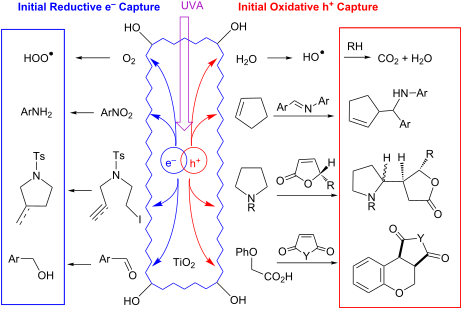
- , uncommon reaction sequences. Homogeneous PRCs form one class that encompasses soluble organic dyes [1] as well as transition metal complexes; particularly those of Ru and Ir. Study of the latter markedly escalated from 2008 thanks to papers from the groups of MacMillan [2], Yoon [3] and Stephenson [4]. The

Graphical Abstract

Figure 1: Production and utilization of h+ and e– by photoactivation of a semiconductor.

Figure 2: Photoredox activity of TiO2 with moist air.

Scheme 1: TiO2 promoted oxidation of phenanthrene [29].

Scheme 2: SCPC assisted additions of allylic compounds to diazines and imines [40-42].
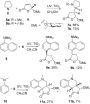
Scheme 3: TiO2 promoted addition and addition–cyclization reactions of tert-amines with electron-deficient al...

Scheme 4: Reactions of amines promoted by Pt-TiO2 [48,49].

Scheme 5: P25 Promoted alkylations of N-phenylmaleimide with diverse carboxylic acids [53,54]. aAccompanied by R–R d...

Scheme 6: SCPC cyclizations of aryloxyacetic acids with suitably sited alkene acceptors [54]. aYields in brackets...
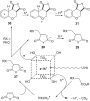
Scheme 7: TiO2 promoted reactions of aryloxyacetic acids with maleic anhydride and maleimides [53,54].

Scheme 8: Photoredox addition–cyclization reactions of aryloxyacetic and related acids promoted by maleimide [63]....

Scheme 9: SCPC promoted homo-couplings and macrocyclizations with carboxylic acids [64].

Scheme 10: TiO2 promoted alkylations of alkenes with silanes [66] and thiols [67].

Scheme 11: TiO2 reduction of a nitrochromenone derivative [70].
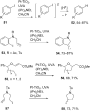
Scheme 12: TiO2 mediated hydrodehalogenations and cyclizations of organic iodides [71].

Scheme 13: TiO2 promoted hydrogenations of maleimides, maleic anhydride and aromatic aldehydes [79].
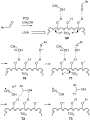
Scheme 14: Mechanistic sketch of SCPC hydrogenation of aryl aldehydes.
Ruthenium indenylidene “1st generation” olefin metathesis catalysts containing triisopropyl phosphite
- Stefano Guidone,
- Fady Nahra,
- Alexandra M. Z. Slawin and
- Catherine S. J. Cazin
Beilstein J. Org. Chem. 2015, 11, 1520–1527, doi:10.3762/bjoc.11.166
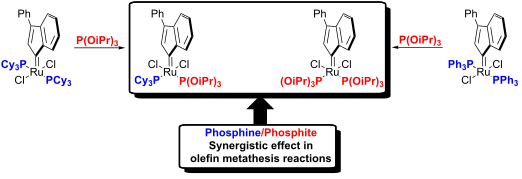
- shorten or provide alternative synthetic pathways for the synthesis of natural products displaying complex chemical structures [5][6][7][8][9]. Ru-based pre-catalysts are known to be more air-, moisture- and functional-group tolerant compared to early transition metal complexes [10][11][12][13]. In

Graphical Abstract

Figure 1: Examples of ruthenium complexes used in olefin metathesis reactions.

Scheme 1: Synthesis of the mixed phosphine/phosphite complex 1.

Figure 2: Molecular structure of mixed phosphine/phosphite complex 1. Hydrogen atoms are omitted for clarity.

Scheme 2: Synthesis of the bis-phosphite complex 2.

Figure 3: Molecular structure of 2 and the ylide 3. Hydrogen atoms and solvent molecules are omitted for clar...

Figure 4: Reaction profiles of mixed phosphine/phosphite 1 and phosphine-based Ind-I in the RCM of 4 (lines a...
A hybrid electron donor comprising cyclopentadithiophene and dithiafulvenyl for dye-sensitized solar cells
- Gleb Sorohhov,
- Chenyi Yi,
- Michael Grätzel,
- Silvio Decurtins and
- Shi-Xia Liu
Beilstein J. Org. Chem. 2015, 11, 1052–1059, doi:10.3762/bjoc.11.118
- ]. Although devices with the most commonly used dyes based on polypyridyl transition-metal complexes show excellent photovoltaic performances with high power conversion efficiencies of over 11% [4], metal-free organic dyes have significant advantages in several aspects. These comprise for example large molar

Graphical Abstract

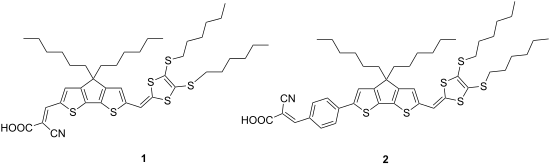
Figure 1: Chemical structures of the target dyes 1 and 2.

Scheme 1: Synthetic routes to the target dyes 1 (top) and 2 (bottom).

Figure 2: Cyclic voltammograms of 1 (blue line), 2 (red line) and 6 (black line) in CH2Cl2 (0.1 M Bu4NPF6; Pt...

Figure 3: Electronic absorption spectra of 1 (blue line) and 2 (red line) in CH2Cl2 solutions.

Figure 4: Photovoltaic performance of the two sensitizers. Photocurrent density (J) as a function of voltage ...
Mechanical stability of bivalent transition metal complexes analyzed by single-molecule force spectroscopy
- Manuel Gensler,
- Christian Eidamshaus,
- Maurice Taszarek,
- Hans-Ulrich Reissig and
- Jürgen P. Rabe
Beilstein J. Org. Chem. 2015, 11, 817–827, doi:10.3762/bjoc.11.91

Graphical Abstract

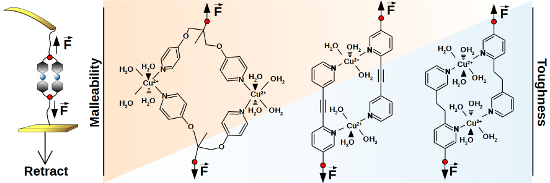
Figure 1: Expected coordination complexes of monovalent and bivalent structures (1 and 2a–c, respectively) wi...
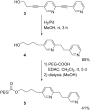
Scheme 1: Synthesis of pyridine-PEG conjugate 5.
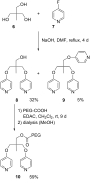
Scheme 2: Synthesis of pyridine-PEG conjugate 10.

Figure 2: Principle of the SMFS experiment. During retraction of the sample, possible interactions are probed...

Figure 3: Potential energy diagrams according to the KBE model for simultaneous and successive bond rupture a...

Figure 4: Most probable rupture forces plotted over their corresponding loading rate. Each point denotes for ...

Figure 5: Possible rupture mechanism describing the extraordinary long rupture length of system 2c. Starting ...

Figure 6: Most probable rupture forces at a logarithmic loading rate of 8.5 in relation to the corresponding ...
TTFs nonsymmetrically fused with alkylthiophenic moieties
- Rafaela A. L. Silva,
- Bruno J. C. Vieira,
- Marta M. Andrade,
- Isabel C. Santos,
- Sandra Rabaça,
- Dulce Belo and
- Manuel Almeida
Beilstein J. Org. Chem. 2015, 11, 628–637, doi:10.3762/bjoc.11.71
- derivatives have been reported in the last 40 years and many have been at the basis of several conducting, superconducting and other important electronic materials [2][3][4][5][6]. Bisdithiolene–transition metal complexes with square planar structures can be seen as inorganic TTF analogues, in which a
- transition metal replaces the central double bond. They have similar frontier orbitals to TTF and have been also at the basis of several electronic materials [7]. An additional connection between the TTF derivatives and the bisdithiolene–transition metal complexes was recently provided by complexes with
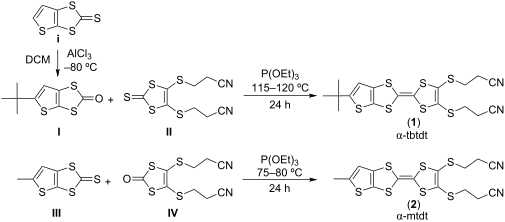
- converted to transition metal complexes based on extended thiophene/TTF-fused dithiolene ligands. They were obtained by cross-coupling reactions between alkylated thio and oxo compounds. The incorporation of these alkyl groups in the thiophenic ring is expected to increase the solubility of these TTFs and

Graphical Abstract

Scheme 1: Molecular diagrams of α-tbtdt (1) and α-mtdt (2), and related TTF-type donors.

Scheme 2: Synthetic route for compounds 1 and 2.

Figure 1: Cyclic voltammogram of α-tbtdt (1) and α-mtdt (2) (10−3 M) in dichloromethane versus Ag/AgNO3, with ...

Figure 2: ORTEP view and atomic numbering scheme of I with thermal ellipsoids at 50% probability level.

Figure 3: Molecular herringbone bi-chains in the crystal structure of I: a) view along the molecular planes a...
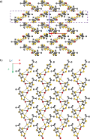
Figure 4: Crystal structure of I a) view along the b axis, b) Partial view of one layer of bi-chains in the a...

Figure 5: ORTEP views and atomic numbering scheme of α-tbtdt (1) with thermal ellipsoids at 50% probability l...
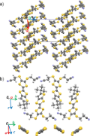
Figure 6: Crystal structure of 1 a) view along the b axis; b) Partial view of one chain in the b,c plane (top...

Figure 7: ORTEP views and atomic numbering scheme of a) (α-mtdt)+ and b) [Au(mnt)2 ]− in compound 3, with the...

Figure 8: Crystal structure of 3 a) viewed along the b axis and b) partial view showing the alternated A–D–A–...
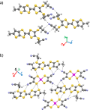
Figure 9: Detail of the crystal structure of 3 showing the short contacts between stacks.
Photocatalytic nucleophilic addition of alcohols to styrenes in Markovnikov and anti-Markovnikov orientation
- Martin Weiser,
- Sergej Hermann,
- Alexander Penner and
- Hans-Achim Wagenknecht
Beilstein J. Org. Chem. 2015, 11, 568–575, doi:10.3762/bjoc.11.62
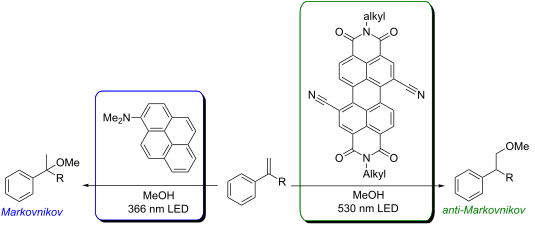
- light sources, the research field of photoredox catalysis has tremendously grown over the past decade [1][2][3][4][5][6][7]. Transition metal complexes, mainly [Ru(bpy)3]2+ [7], were most often used as photocatalysts, whereas the potential of organic compounds and dyes has not yet been fully exploited
- their potential and versatile applicability in chemical syntheses. Their non-photochemical counterparts require acids, bases or transition metal complexes as catalysts [10]. The first examples of photochemical olefin aminations were reported by Cookson et al. [11] and Kawanisi et al. [12] in the 1960s

Graphical Abstract

Scheme 1: Photooxidation of the substrate and reductive quenching of the photocatalyst (left) vs photoreducti...

Scheme 2: Mechanism of the Markovnikov-type photocatalytic addition of methanol to 1,1-diphenylethylene (1) a...

Scheme 3: Intramolecular photocatalytic addition with substrate 3; reaction conditions: 3 (2 mM), Py (2 mM), ...

Scheme 4: Proposed mechanism of the anti-Markovnikov-type photocatalytic addition of methanol to 1,1-diphenyl...

Figure 1: Conversion of substrate 1 and formation of product 5 observed during photocatalysis with PDI in the...

Figure 2: Conversion of substrate 1 (black dashed) and formation of product 5 (red solid) observed during pho...

Figure 3: Spectra of PDI before (dotted black) and after excitation (red), then every 2 min until ground stat...

Scheme 5: Intramolecular additions of substrates 8 and 10 to demonstrate the effect of different electron den...
Cross-dehydrogenative coupling for the intermolecular C–O bond formation
- Igor B. Krylov,
- Vera A. Vil’ and
- Alexander O. Terent’ev
Beilstein J. Org. Chem. 2015, 11, 92–146, doi:10.3762/bjoc.11.13
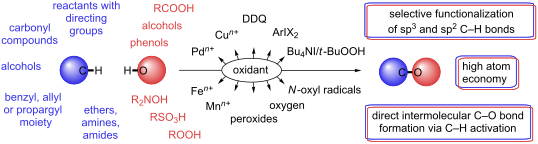
- the hydrogen transfer catalyzed by transition metal complexes. In these reactions, compounds with a double bond or a C–Hal bond act as oxidants (hydrogen acceptors). Examples of these reactions with aldehydes or primary alcohols as C–H reagents are given in Table 2. Crotononitrile, acetone, and benzyl

Graphical Abstract

Scheme 1: Cross-dehydrogenative coupling.

Scheme 2: Cross-dehydrogenative C–O coupling.

Scheme 3: Regioselective ortho-acetoxylation of meta-substituted arylpyridines and N-arylamides.

Scheme 4: ortho-Acyloxylation and alkoxylation of arenes directed by pyrimidine, benzoxazole, benzimidazole a...

Scheme 5: Cu(OAc)2/AgOTf/O2 oxidative system in the ortho-alkoxylation of arenes.
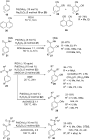
Scheme 6: Pd(OAc)2/persulfate oxidative system in the ortho-alkoxylation and acetoxylation of arenes with nit...
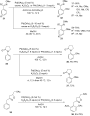
Scheme 7: ortho-Acetoxylation and methoxylation of O-methyl aryl oximes, N-phenylpyrrolidin-2-one, and (3-ben...

Scheme 8: Ruthenium-catalyzed ortho-acyloxylation of acetanilides.

Scheme 9: Acetoxylation and alkoxylation of arenes with amide directing group using Pd(OAc)2/PhI(OAc)2 oxidat...

Scheme 10: Alkoxylation of azoarenes, 2-aryloxypyridines, picolinamides, and N-(1-methyl-1-(pyridin-2-yl)ethyl...

Scheme 11: Acetoxylation of compounds containing picolinamide and quinoline-8-amine moieties using the Pd(OAc)2...

Scheme 12: (CuOH)2CO3 catalyzed oxidative ortho-etherification using air as oxidant.

Scheme 13: Copper-catalyzed aerobic alkoxylation and aryloxylation of arenes containing pyridine-N-oxide moiet...

Scheme 14: Cobalt-catalyzed aerobic alkoxylation of arenes and alkenes containing pyridine N-oxide moiety.

Scheme 15: Non-symmetric double-fold C–H ortho-acyloxylation.

Scheme 16: N-nitroso directed ortho-alkoxylation of arenes.

Scheme 17: Selective alkoxylation and acetoxylation of alkyl groups.

Scheme 18: Acetoxylation of 2-alkylpyridines and related compounds.

Scheme 19: Acyloxylation and alkoxylation of alkyl fragments of substrates containing amide or sulfoximine dir...

Scheme 20: Palladium-catalyzed double sp3 C–H alkoxylation of N-(quinolin-8-yl)amides for the synthesis of sym...

Scheme 21: Copper-catalyzed acyloxylation of methyl groups of N-(quinolin-8-yl)amides.

Scheme 22: One-pot acylation and sp3 C–H acetoxylation of oximes.

Scheme 23: Possible mechanism of oxidative esterification catalyzed by N-heterocyclic nucleophilic carbene.

Scheme 24: Oxidative esterification employing stoichiometric amounts of aldehydes and alcohols.

Scheme 25: Selective oxidative coupling of aldehydes with alcohols in the presence of amines.

Scheme 26: Iodine mediated oxidative esterification.

Scheme 27: Oxidative C–O coupling of benzyl alcohols with methylarenes under the action of Bu4NI/t-BuOOH syste...

Scheme 28: Oxidative coupling of methyl- and ethylarenes with aromatic aldehydes under the action of Bu4NI/t-B...

Scheme 29: Cross-dehydrogenative C–O coupling of aldehydes with t-BuOOH in the presence of Bu4NI.

Scheme 30: Bu4NI-catalyzed α-acyloxylation reaction of ethers and ketones with aldehydes and t-BuOOH.

Scheme 31: Oxidative coupling of aldehydes with N-hydroxyimides and hexafluoroisopropanol.

Scheme 32: Oxidative coupling of alcohols with N-hydroxyimides.

Scheme 33: Oxidative coupling of aldehydes and primary alcohols with N-hydroxyimides using (diacetoxyiodo)benz...

Scheme 34: Proposed mechanism of the oxidative coupling of aldehydes and N-hydroxysuccinimide under action of ...

Scheme 35: Oxidative coupling of aldehydes with pivalic acid (172).

Scheme 36: Oxidative C–O coupling of aldehydes with alkylarenes using the Cu(OAc)2/t-BuOOH system.

Scheme 37: Copper-catalyzed acyloxylation of C(sp3)-H bond adjacent to oxygen in ethers using benzyl alcohols.

Scheme 38: Oxidative C–O coupling of aromatic aldehydes with cycloalkanes.

Scheme 39: Ruthenium catalyzed cross-dehydrogenative coupling of primary and secondary alcohols.

Scheme 40: Cross-dehydrogenative C–O coupling reactions of β-dicarbonyl compounds with sulfonic acids, acetic ...

Scheme 41: Acyloxylation of ketones, aldehydes and β-dicarbonyl compounds using carboxylic acids and Bu4NI/t-B...

Scheme 42: Acyloxylation of ketones using Bu4NI/t-BuOOH system.

Scheme 43: Cross-dehydrogenative C–O coupling of β-dicarbonyl compounds and their heteroanalogues with N-hydro...

Scheme 44: Cross-dehydrogenative C–O coupling of β-dicarbonyl compounds and their heteroanalogues with t-BuOOH....

Scheme 45: Oxidative C–O coupling of 2,6-dialkylphenyl-β-keto esters and thioesters with tert-butyl hydroxycar...

Scheme 46: α’-Acyloxylation of α,β-unsaturated ketones using KMnO4.

Scheme 47: Possible mechanisms of the acetoxylation at the allylic position of alkenes by Pd(OAc)2.

Scheme 48: Products of the oxidation of terminal alkenes by Pd(II)/AcOH/oxidant system.

Scheme 49: Acyloxylation of terminal alkenes with carboxylic acids.

Scheme 50: Synthesis of linear E-allyl esters by cross-dehydrogenative coupling of terminal alkenes wih carbox...

Scheme 51: Pd(OAc)2-catalyzed acetoxylation of Z-vinyl(triethylsilanes).

Scheme 52: α’-Acetoxylation of α-acetoxyalkenes with copper(II) chloride in acetic acid.

Scheme 53: Oxidative acyloxylation at the allylic position of alkenes and at the benzylic position of alkylare...

Scheme 54: Copper-catalyzed alkoxylation of methylheterocyclic compounds using di-tert-butylperoxide as oxidan...

Scheme 55: Oxidative C–O coupling of methylarenes with β-dicarbonyl compounds or phenols.

Scheme 56: Copper-catalyzed esterification of methylbenzenes with cyclic ethers and cycloalkanes.

Scheme 57: Oxidative C–O coupling of carboxylic acids with toluene catalyzed by Pd(OAc)2.

Scheme 58: Oxidative acyloxylation at the allylic position of alkenes with carboxylic acids using the Bu4NI/t-...

Scheme 59: Cross-dehydrogenative C–O coupling of carboxylic acids with alkylarenes using the Bu4NI/t-BuOOH sys...

Scheme 60: Oxidative C–O cross-coupling of methylarenes with ethyl or isopropylarenes.

Scheme 61: Phosphorylation of benzyl C–H bonds using the Bu4NI/t-BuOOH oxidative system.

Scheme 62: Selective C–H acetoxylation of 2,3-disubstituted indoles.

Scheme 63: Acetoxylation of benzylic position of alkylarenes using DDQ as oxidant.

Scheme 64: C–H acyloxylation of diarylmethanes, 3-phenyl-2-propen-1-yl acetate and dimethoxyarene using DDQ.

Scheme 65: Cross-dehydrogenative C–O coupling of 1,3-diarylpropylenes and 1,3-diarylpropynes with alcohols.

Scheme 66: One-pot azidation and C–H acyloxylation of 3-chloro-1-arylpropynes.

Scheme 67: Cross-dehydrogenative C–O coupling of 1,3-diarylpropylenes, (E)-1-phenyl-2-isopropylethylene and is...

Scheme 68: Cross-dehydrogenative C–O coupling of alkylarenes and related compounds with N-hydroxyphthalimide.

Scheme 69: Acetoxylation at the benzylic position of alkylarenes mediated by N-hydroxyphthalimide.

Scheme 70: C–O coupling of methylarenes with aromatic carboxylic acids employing the NaBrO3/NaHSO3 system.

Scheme 71: tert-Butyl peroxidation of allyl, propargyl and benzyl ethers catalyzed by Fe(acac)3.

Scheme 72: Cross-dehydrogenative C–O coupling of ethers with carboxylic acids mediated by Bu4NI/t-BuOOH system....

Scheme 73: Oxidative acyloxylation of dimethylamides and dioxane with 2-aryl-2-oxoacetic acids accompanied by ...

Scheme 74: tert-Butyl peroxidation of N-benzylamides and N-allylbenzamide using the Bu4NI/t-BuOOH system.

Scheme 75: Cross-dehydrogenative C–O coupling of aromatic carboxylic acids with ethers using Fe(acac)3 as cata...

Scheme 76: Cross-dehydrogenative C–O coupling of cyclic ethers with 2-hydroxybenzaldehydes using iron carbonyl...
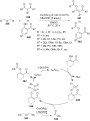
Scheme 77: Cross-dehydrogenative C–O coupling of ethers with β-dicarbonyl compounds and phenols using copper c...

Scheme 78: Cross-dehydrogenative C–O coupling of 2-hydroxybenzaldehyde with dioxane catalyzed by Cu2(BPDC)2(BP...

Scheme 79: Ruthenium chloride-catalyzed acyloxylation of β-lactams.

Scheme 80: Ruthenium-catalyzed tert-butyl peroxydation amides and acetoxylation of β-lactams.

Scheme 81: PhI(OAc)2-mediated α,β-diacetoxylation of tertiary amines.

Scheme 82: Electrochemical oxidative methoxylation of tertiary amines.

Scheme 83: Cross-dehydrogenative C–O coupling of ketene dithioacetals with carboxylic acids in the presence of...

Scheme 84: Cross-dehydrogenative C–O coupling of enamides with carboxylic acids using iodosobenzene as oxidant....

Scheme 85: Oxidative alkoxylation, acetoxylation, and tosyloxylation of acylanilides using PhI(O(O)CCF3)2 in t...

Scheme 86: Proposed mechanism of the oxidative C–O coupling of actetanilide with O-nucleophiles in the presenc...

Scheme 87: Three-component coupling of aldehydes, anilines and alcohols involving oxidative intermolecular C–O...

Scheme 88: Oxidative coupling of phenols with alcohols.

Scheme 89: 2-Acyloxylation of quinoline N-oxides with arylaldehydes in the presence of the CuOTf/t-BuOOH syste...

Scheme 90: Cross-dehydrogenative C–O coupling of azoles with primary alcohols.

Scheme 91: Oxidation of dipyrroles to dipyrrins and subsequent oxidative alkoxylation in the presence of Na3Co...

Scheme 92: Oxidative dehydrogenative carboxylation of alkanes and cycloalkanes to allylic esters.

Scheme 93: Pd-catalyzed acetoxylation of benzene.
An improved procedure for the preparation of Ru(bpz)3(PF6)2 via a high-yielding synthesis of 2,2’-bipyrazine
- Danielle M. Schultz,
- James W. Sawicki and
- Tehshik P. Yoon
Beilstein J. Org. Chem. 2015, 11, 61–65, doi:10.3762/bjoc.11.9
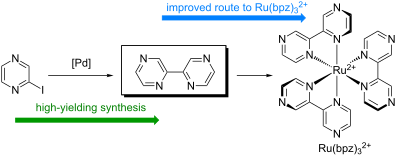
- couplings [13][14], and photooxygenation reactions [15][16]. Similarly, Zheng has reported oxidatively initiated indole synthesis [17] and [3 + 2] cycloaddition [18][19] reactions using photocatalyst 2. Finally, a variety of transition metal complexes bearing bipyrazyl ligands have been prepared and
- of bpz. An improved synthesis of this ligand would be useful both in the context of the growing interest in photoredox catalysis as well as other organometallic and inorganic applications of bpz-supported transition metal complexes. Our optimization studies for the reductive coupling of 2

Graphical Abstract

Figure 1: Influence of ligand structure on photoredox behavior.

Scheme 1: Pd-catalyzed reductive coupling of 2-chloropyrazine.

Scheme 2: Preparative-scale synthesis of Ru(bpz)3(PF6)2.
A novel 4-aminoantipyrine-Pd(II) complex catalyzes Suzuki–Miyaura cross-coupling reactions of aryl halides
- Claudia A. Contreras-Celedón,
- Darío Mendoza-Rayo,
- José A. Rincón-Medina and
- Luis Chacón-García
Beilstein J. Org. Chem. 2014, 10, 2821–2826, doi:10.3762/bjoc.10.299
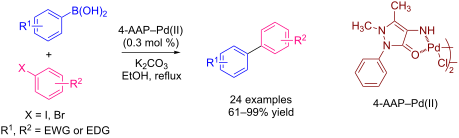
- -free catalysts for SM coupling reactions. Transition metal complexes that have shown a wide range of biological activity are those containing the pyrazolone derivative 4-aminoantipyrine (4-amino-1,5-dimethyl-2-phenyl-1H-pyrazol-3(2H)-one, or simply “4-AAP”) [18]. Pyrazoles, in general, are one of the
- complexes of 4-AAP have shown anti-inflammatory, analgesic, antiviral, antipyretic, antirheumatic and antimicrobial activity [20][21]. Despite the potential biological importance of 4-AAP, the catalytic activity of its transition metal complexes for C–C bond formation have not yet been investigated. Herein
- most important classes of bioactive heterocycles, having attracted increasing interest to the pharmaceutical, chemical and agricultural industries over the past decade, and in recent years a number of research articles have been published specifically about 4-AAP [19]. Analogues and transition metal

Graphical Abstract

Scheme 1: Synthesis of 4-aminoantipyrine-Pd(II) complex.

Scheme 2: Reaction of different aryl halides with substituted arylboronic acids. Reaction conditions: phenylb...



