Search results
Search for "zinc" in Full Text gives 372 result(s) in Beilstein Journal of Organic Chemistry. Showing first 200.
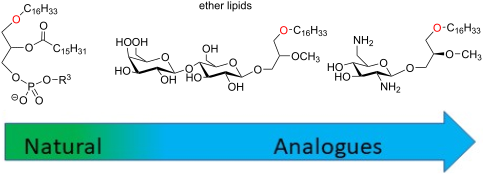
Synthesis of ether lipids: natural compounds and analogues
Beilstein J. Org. Chem. 2023, 19, 1299–1369, doi:10.3762/bjoc.19.96


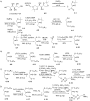


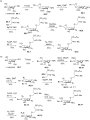


Unravelling a trichloroacetic acid-catalyzed cascade access to benzo[f]chromeno[2,3-h]quinoxalinoporphyrins
Beilstein J. Org. Chem. 2023, 19, 1216–1224, doi:10.3762/bjoc.19.89
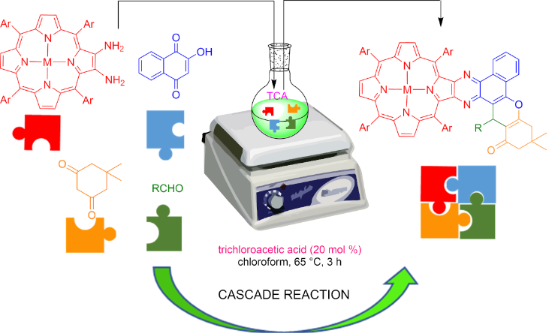
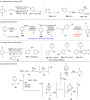
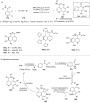
- ) porphyrins were transformed to the corresponding free base and zinc(II) benzo[f]chromeno[2,3-h]quinoxalinoporphyrins under standard demetallation and zinc insertion conditions. The absorption and emission properties of the obtained porphyrins were investigated by using UV–visible and fluorescence
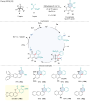
- copper complexes of benzo[f]chromeno[2,3-h]quinoxalinoporphyrins 3–7 were converted to the corresponding free-base porphyrinoids 9–13 through a standard demetallation process using conc. H2SO4 in CHCl3 under cooling conditions (Scheme 1). On complexation with zinc by using Zn(OAc)2 in CHCl3/MeOH, free
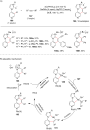
- -base porphyrins 9, 10 and 13 afforded zinc(II) benzo[f]chromeno[2,3-h]quinoxalinoporphyrins 14–16 in good yields (Scheme 1). The proposed mechanistic pathway for the formation of copper(II) benzo[f]chromeno[2,3-h]quinoxalinoporphyrins 3–8 under one-pot operation is presented in Figure 1. At the


Clauson–Kaas pyrrole synthesis using diverse catalysts: a transition from conventional to greener approach
Beilstein J. Org. Chem. 2023, 19, 928–955, doi:10.3762/bjoc.19.71
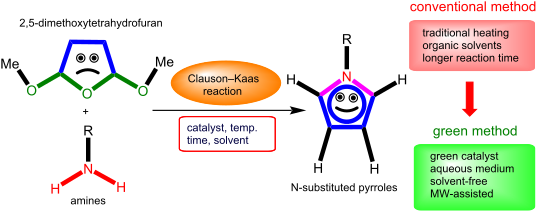
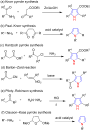
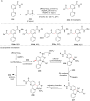
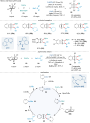
- method using a zinc catalyst. The synthesis of pyrrole derivatives 47 were achieved in moderate to excellent yields without using any co-catalyst, ligands or bases by stirring various aniline derivatives 46 with 2,5-dimethoxytetrahydrofuran (2) in the presence of 5 mol % of Zn(OTf)2 for 8 hours at 70 °C
- . Many zinc catalysts (Zn(OTf)2, Et2Zn, ZnI2, Zn powder, anhydrous ZnCl2, Zn(NO3)2⋅6H2O, ZnSO4⋅H2O, Zn(OAc)2⋅2H2O and ZnO), reaction temperature, time, and catalyst loading was screened for the optimization. After optimizations, 5 mol % Zn(OTf)2 as catalyst, reaction time for 8 h, and temperature of 70
- -substituted pyrroles 43. Synthesis of N-substituted pyrroles 45 by using Co catalyst Co/NGr-C@SiO2-L. Zinc-catalyzed synthesis of N-arylpyrroles 47. Silica sulfuric acid-catalyzed synthesis of pyrrole derivatives 49. Bismuth nitrate-catalyzed synthesis of pyrroles 51. L-(+)-tartaric acid-choline chloride




Asymmetric tandem conjugate addition and reaction with carbocations on acylimidazole Michael acceptors
Beilstein J. Org. Chem. 2023, 19, 881–888, doi:10.3762/bjoc.19.65

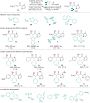
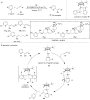
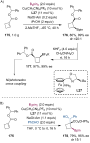
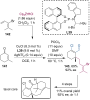
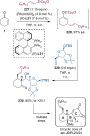
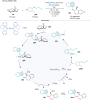
- 10.3762/bjoc.19.65 Abstract We present here a stereoselective tandem reaction based on the asymmetric conjugate addition of dialkylzinc reagents to unsaturated acylimidazoles followed by trapping of the intermediate zinc enolate with carbocations. The use of a chiral NHC ligand provides chiral zinc
- enolates in high enantiomeric purities. These enolates are reacted with highly electrophilic onium compounds to afford densely substituted acylimidazoles. DFT calculations helped to understand the reactivity of the zinc enolates derived from acylimidazoles and allowed their comparison with metal enolates
- the reaction temperature led to improved reaction outcomes (Supporting Information File 1, Table S1, entries 2 and 11). We have continued the evaluation of reaction conditions for improving the diastereoselectivity of the reaction. We have tested transmetallation of the in situ-generated zinc enolate




Pyridine C(sp2)–H bond functionalization under transition-metal and rare earth metal catalysis
Beilstein J. Org. Chem. 2023, 19, 820–863, doi:10.3762/bjoc.19.62
















Honeycomb reactor: a promising device for streamlining aerobic oxidation under continuous-flow conditions
Beilstein J. Org. Chem. 2023, 19, 752–763, doi:10.3762/bjoc.19.55
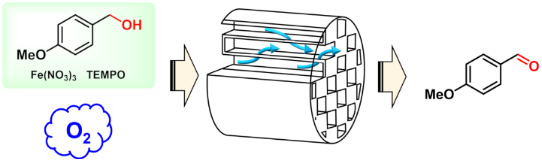
- . From the viewpoint of application to pharmaceutical manufacturing, the residual amount of copper must be controlled according to ICH Q3D [41]. Iron and zinc have low toxicity and are not listed in ICH Q3D. In comparison with the initial reaction rate of 60 min, Fe(NO3)3/TEMPO in Table 1, entry 3 shows


Photocatalytic sequential C–H functionalization expediting acetoxymalonylation of imidazo heterocycles
Beilstein J. Org. Chem. 2023, 19, 666–673, doi:10.3762/bjoc.19.48
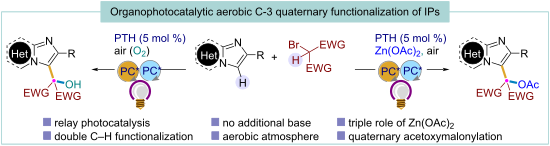
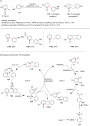
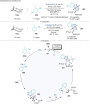
- from academia and industry. Herein, we report a direct C-3 acetoxymalonylation of imidazo heterocycles using relay C–H functionalization enabled by organophotocatalysis starring zinc acetate in the triple role of an activator, ion scavenger as well as an acetylating reagent. The mechanistic
- investigation revealed a sequential sp2 and sp3 C–H activation, followed by functionalization driven by zinc acetate coupled with the photocatalyst PTH. A variety of imidazo[1,2-a]pyridines and related heterocycles were explored as substrates along with several active methylene reagents, all generating the
- degassed conditions with or without water only delivered a trace amount (<5%) of the desired products, indicating that aerial oxygen plays a crucial role in the second catalytic cycle for the conversion of 5 to 3a or 4a (Scheme 3C). To determine the role of zinc acetate, a standard reaction of 1a and 2a in




Enolates ambushed – asymmetric tandem conjugate addition and subsequent enolate trapping with conventional and less traditional electrophiles
Beilstein J. Org. Chem. 2023, 19, 593–634, doi:10.3762/bjoc.19.44
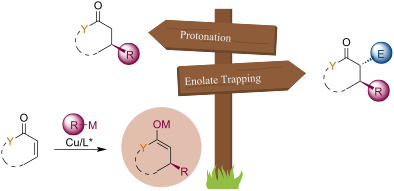
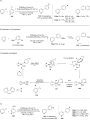
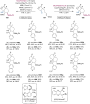
- were successfully employed in asymmetric conjugate additions (ACA) [3][4][5][6][7][8][9], mainly organozinc [10], Grignard [11][12][13], trialkylaluminum [14], or organozirconium reagents [15]. Additions with these reagents lead to corresponding zinc, magnesium, aluminum, and zirconium enolates, which
- Following the seminal work of Feringa in 1997 [21], the tandem asymmetric organozinc conjugate addition followed by subsequent aldol reaction was scarcely applied in the last decade. Welker and Woodward studied the reaction of zinc enolates 2 with chiral acetals 3 (Scheme 2) [22]. The Lewis acid (TiCl4 or
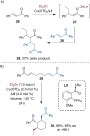
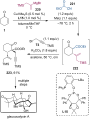
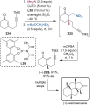
- ) [34]. Encouraged by this, they have also attempted an intramolecular tandem conjugate addition/Michael reaction sequence, which has resulted in the expected cyclization product 30 in a diastereopure form (Scheme 7B). Zinc enolates readily react with allyl iodides 31 or the structurally similar Stork








Phenanthridine–pyrene conjugates as fluorescent probes for DNA/RNA and an inactive mutant of dipeptidyl peptidase enzyme
Beilstein J. Org. Chem. 2023, 19, 550–565, doi:10.3762/bjoc.19.40
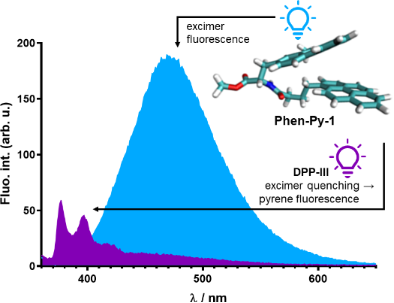
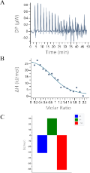
- ) inactive enzyme mutant E451A was examined by fluorimetric titrations and ITC titrations and it was found that Phen-Py-1 binds to the protein with a high affinity (Table 3). This protein is a mono-zinc metalloexopeptidase and hydrolyses dipeptides from the N-termini of substrates that consist of at least




Transition-metal-catalyzed domino reactions of strained bicyclic alkenes
Beilstein J. Org. Chem. 2023, 19, 487–540, doi:10.3762/bjoc.19.38
- arnottianum Maxim which possesses some antibiotic properties [34]. Mechanistically, the authors proposed the reaction begins with the in situ reduction of Ni(II) to Ni(0) by zinc to generate Ni(0) which undergoes oxidative addition with the organo iodide to yield Ni(II) intermediate 11. Coordination of 11 to











Transition-metal-catalyzed C–H bond activation as a sustainable strategy for the synthesis of fluorinated molecules: an overview
Beilstein J. Org. Chem. 2023, 19, 448–473, doi:10.3762/bjoc.19.35
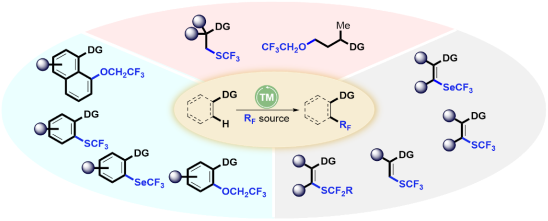
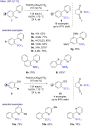
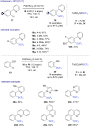
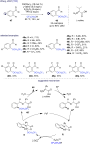
- functionalization of other heteroaromatic derivatives (24j, 87% yield). It should be noted that the presence of zinc triflate, a Lewis acid, was used for the activation of the electrophilic source VI. Cobalt catalysis: In 2017, Wang described the Cp*Co(III)-catalyzed trifluoromethylthiolation of 2-phenylpyridine








CuAAC-inspired synthesis of 1,2,3-triazole-bridged porphyrin conjugates: an overview
Beilstein J. Org. Chem. 2023, 19, 349–379, doi:10.3762/bjoc.19.29
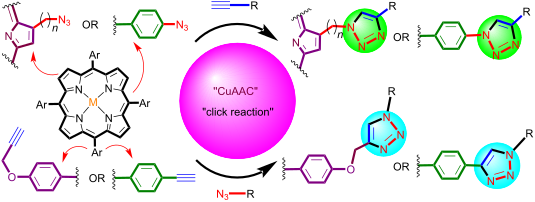
- . First, copper and zinc derivatives of the porphyrin-coumarin conjugates 11a–20a were synthesized in excellent yields by the click reaction between copper(II)-2-azido-5,10,15,20-tetraphenylporphyrin (4) or zinc(II)-2-azidomethyl-5,10,15,20-tetraphenylporphyrin (5) and various alkyne-substituted coumarins
- 6–10 in the presence of CuSO4·5H2O and ascorbic acid in DMF at 80 °C (Scheme 2). Further, the corresponding free-base porphyrins 11b–20b were obtained in good yields after demetallation of copper and zinc porphyrins under acidic conditions. Also, their zinc analogues 11c–15c were obtained by the
- treatment of free-base porphyrins with zinc acetate. The photophysical studies of these synthesized conjugates revealed that some of them show substantial intramolecular energy transfer between porphyrin and coumarin moieties. Similar to coumarins, synthetic and naturally occurring xanthones also possess




1,4-Dithianes: attractive C2-building blocks for the synthesis of complex molecular architectures
Beilstein J. Org. Chem. 2023, 19, 115–132, doi:10.3762/bjoc.19.12
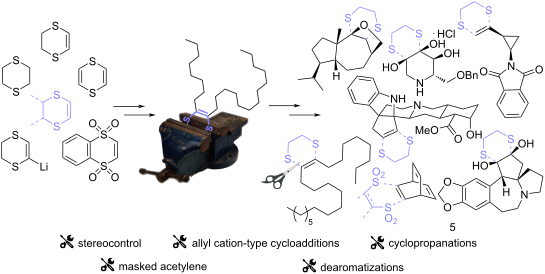
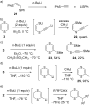
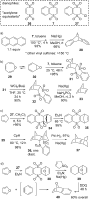
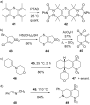
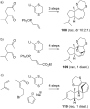
- , including cross-coupling-type chemistries on a conformationally stable cis-vinyl zinc building block. 3 Diels–Alder reactivity of 1,4-dithiin-based dienophiles and dienes Vinyl sulfones and vinyl sulfoxides are classical synthetic equivalents of ethylene in Diels–Alder reactions, and have been widely used
- metalation of 1,4-dithiins affords stable heteroaryl-magnesium and heteroaryl-zinc-like reagents that can be used in coupling reactions at higher temperatures [43][44]. Dithiin-based dienophiles and their use in synthesis [33][49][50][51][52][53][54]. Dithiin-based dienes and their use in synthesis [55][56










Synthesis and characterisation of new antimalarial fluorinated triazolopyrazine compounds
Beilstein J. Org. Chem. 2023, 19, 107–114, doi:10.3762/bjoc.19.11
- lead compounds without the need for de novo synthesis [5]. Baran et al. has developed an operationally simple, radical-based functionalisation strategy that allows direct transformation of C–H bonds to C–C bonds in a practical manner [11]. This strategy involves the utilisation of sodium and zinc
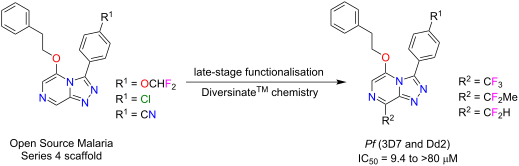
- evaluation. The incorporation of fluoroalkyl groups at the C8 position of three OSM leads (4–6) was performed using Diversinate™ chemistry following the previously described method (Scheme 2) [14]. The Diversinate™ reagents used in this study were zinc trifluoromethanesulfinate (TFMS), sodium 1,1
- -difluoroethanesulfinate (DFES) and zinc difluoromethanesulfinate (DFMS). In brief, a mixture of the respective scaffold, Diversinate™ (2 equiv), and TFA (5 equiv) in DMSO/CH2Cl2/H2O (5:5:2) was stirred for 30 min at room temperature and cooled to 4 °C. Then, aqueous tert-butyl hydroperoxide (TBHP, 70%, 3 equiv) was


Revisiting the bromination of 3β-hydroxycholest-5-ene with CBr4/PPh3 and the subsequent azidolysis of the resulting bromide, disparity in stereochemical behavior
Beilstein J. Org. Chem. 2023, 19, 91–99, doi:10.3762/bjoc.19.9
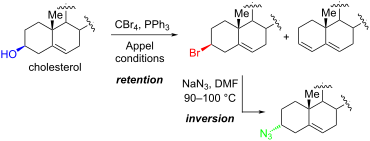
- retention of configuration at C3 [17]. In 2008, a direct dehydroxyazidation of cholesterol by treatment of the steroid with a zinc azide–pyridine complex, diisopropyl azodicarboxylate (DIAD), and PPh3 was described [18]. This Mitsunobu-like reaction occurred with complete inversion at C3 to afford 3α


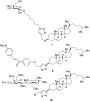


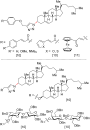
Combining the best of both worlds: radical-based divergent total synthesis
Beilstein J. Org. Chem. 2023, 19, 1–26, doi:10.3762/bjoc.19.1
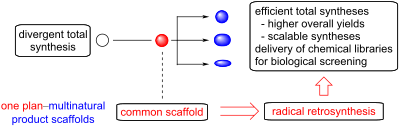
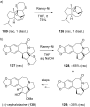
- nickel-mediated decarboxylative Giese reactions and decarboxylative radical zinc-mediated cross-coupling reactions of redox-active esters, established from previous works of the group [27][28], for the key C–C bonds of the diverse congeners. To this end, a hypothetical intermediate 3 was envisioned for
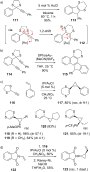
- chiral aldehyde 127 and Boc-protected amine 128, followed by zinc reduction of the nitro group and subsequent protection of the amine by a tosyl group in 27% overall yield. Irradiating 129 with blue light at 30 W in the presence of 1 mol % of [Ir(dtbbpy)(ppy)2]PF6 and 5 equiv of KHCO3 in THF resulted in








Rhodium-catalyzed intramolecular reductive aldol-type cyclization: Application for the synthesis of a chiral necic acid lactone
Beilstein J. Org. Chem. 2022, 18, 1642–1648, doi:10.3762/bjoc.18.176
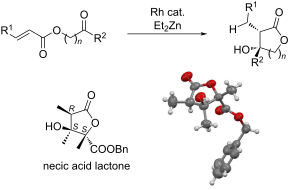
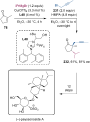
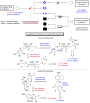
- complex 5 from [RhCl(cod)]2 and Et2Zn would generate predominantly the corresponding E-enolate 6 via 1,4-reduction, which is stabilized through η6 binding with benzene ring of the substrate. Subsequent transmetalation with zinc species 4 readily reacts with the carbonyl group to form the intramolecular C


Efficient synthesis of aziridinecyclooctanediol and 3-aminocyclooctanetriol
Beilstein J. Org. Chem. 2022, 18, 1539–1543, doi:10.3762/bjoc.18.163
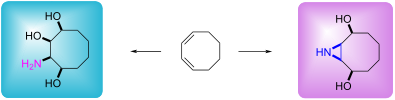
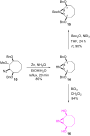
- cyclooctene endoperoxide, prepared by photooxygenation of cis,cis-1,3-cyclooctadiene, with zinc gave a cyclooctenediol and then benzylation of the hydroxy group yielded dibenzylated cyclooctene. Oxidation of the latter compound by OsO4/NMO followed by mesylation of the hydroxy group provided bis(benzyloxy
- cis,cis-1,3-cyclooctadiene. Results and Discussion The synthesis of the diol 5, which was prepared by reduction of the endoperoxide 4 with zinc was carried out as described in the literature [18]. Treatment of the diol 5 with benzyl bromide and NaH in DMF gave the corresponding (dibenzyloxy


Mechanochemical synthesis of unsymmetrical salens for the preparation of Co–salen complexes and their evaluation as catalysts for the synthesis of α-aryloxy alcohols via asymmetric phenolic kinetic resolution of terminal epoxides
Beilstein J. Org. Chem. 2022, 18, 1416–1423, doi:10.3762/bjoc.18.147
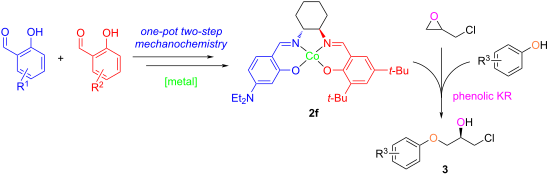
- the unsymmetrical salens with zinc, copper, and cobalt was studied and the chiral Co–salen complex 2f was obtained in 98% yield. Hydrolytic kinetic resolution (HKR) of epichlorohydrin with water catalyzed by complex 2f (0.5 mol %) was explored and resulted in 98% ee, suggesting complex 2f could serve


On drug discovery against infectious diseases and academic medicinal chemistry contributions
Beilstein J. Org. Chem. 2022, 18, 1355–1378, doi:10.3762/bjoc.18.141
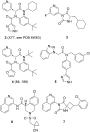
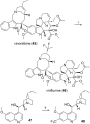
- example of a very late stage functionalization of molecule would be the use of zinc sulfinate chemistry [297] which, as depicted here, allowed to introduce in one step a trifluoromethyl group on the hydroquinidine 47 and access the otherwise rather hard-to-get compound 48. In fact, CH functionalization is







Polymer and small molecule mechanochemistry: closer than ever
Beilstein J. Org. Chem. 2022, 18, 1225–1235, doi:10.3762/bjoc.18.128
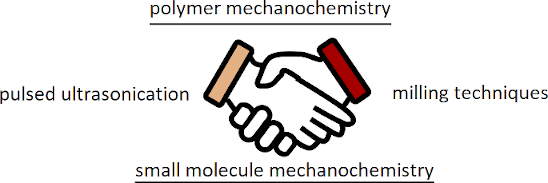
- mechanically labile bonds or not, and whether it is a hydrocarbon [50], contains heteroatoms [51], or is inorganic in nature. With regards to the latter, ceramic piezoelectric materials such as barium titanate (BaTiO3) or zinc oxide (ZnO) are materials that can accumulate electric charge in the structure in


Scope of tetrazolo[1,5-a]quinoxalines in CuAAC reactions for the synthesis of triazoloquinoxalines, imidazoloquinoxalines, and rhenium complexes thereof
Beilstein J. Org. Chem. 2022, 18, 1088–1099, doi:10.3762/bjoc.18.111
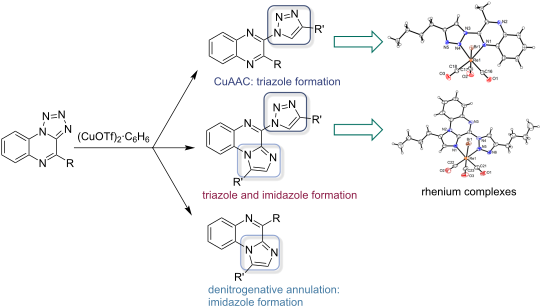
- desired product 16 whereas addition of zinc powder seems to have different effects depending on the derivative (see Supporting Information File 1). We could then show that the conversion of tetrazoles to both triazoles and imidazoles can occur together in the same molecule. When bis(tetrazolo)[1,5-a:5',1


Synthesis and HDAC inhibitory activity of pyrimidine-based hydroxamic acids
Beilstein J. Org. Chem. 2022, 18, 837–844, doi:10.3762/bjoc.18.84
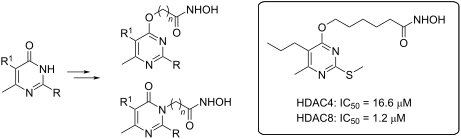
- their catalytic site, while the remaining 7 isoforms of class III, known as sirtuins, are dependent on the NAD+ coenzyme [3][4]. According to current knowledge, HDAC inhibitors usually have several structural subunits: a zinc chelating group, a hydrophobic linker, and a hydrophobic (usually aromatic
- ) cap [1][2][5]. One of the most commonly used zinc chelating groups in HDACs inhibitors is a hydroxamic acid moiety (–CONHOH) [6][7][8][9][10][11][12][13][14][15]. The ability of hydroxamic acids to form chelates with various metal cations, including the Zn2+ ion found in the catalytic center of most


Complementarity of solution and solid state mechanochemical reaction conditions demonstrated by 1,2-debromination of tricyclic imides
Beilstein J. Org. Chem. 2022, 18, 746–753, doi:10.3762/bjoc.18.75

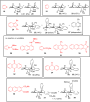
- was replaced by the Zn/Cu couple which was prepared without any metal activation by in situ ball milling of zinc and copper dusts. The advantage of the ball milling process is that the whole procedure is operationally very simplified. The reactive alkene generated was trapped in situ by several dienes
- , irradiation and electrochemistry as methods of chemical activation [8]. Based upon our experience in applications of this method to organic synthesis [9][10][11][12], we recognized its potential for the adjustment of conditions in zinc-mediated debromination reactions. Highly reactive dienophiles such as




Inductive heating and flow chemistry – a perfect synergy of emerging enabling technologies
Beilstein J. Org. Chem. 2022, 18, 688–706, doi:10.3762/bjoc.18.70
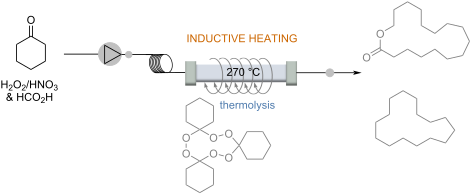
- , e.g., from the metals magnesium or zinc, (thermal) activation is required. This was demonstrated for the Reformatzky reaction (Scheme 11, case B) [53][74], in which zinc powder was mixed with MagSilicaTM and positioned inside the flow reactor. For example, 2-bromopropanoic acid ethyl ester (52) and
- acetophenone 51 were reacted in a heated fixed-bed reactor with the mediation of zinc to give the Reformatsky product 53, and, as commonly observed, in significantly improved yields compared to the corresponding batch processes. Oxidations, especially metal oxide-based variants, are among the most frequently