


Search results
Search for "acid catalysis" in Full Text gives 114 result(s) in Beilstein Journal of Organic Chemistry.
Silica-supported sulfonic acids as recyclable catalyst for esterification of levulinic acid with stoichiometric amounts of alcohols
Beilstein J. Org. Chem. 2016, 12, 2173–2180, doi:10.3762/bjoc.12.207
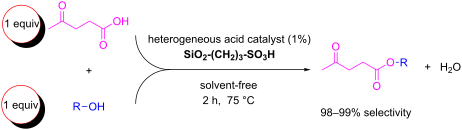
- of our interest in acid catalysis [36][37][38], we prepared a set of solid materials for the esterification of levulinic acid. Upon preliminary screening, supported sulfonic acids seemed promising candidates. They were prepared following a reported procedure by the tethering method [39], which

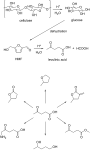


Ionic liquids as transesterification catalysts: applications for the synthesis of linear and cyclic organic carbonates
Beilstein J. Org. Chem. 2016, 12, 1911–1924, doi:10.3762/bjoc.12.181
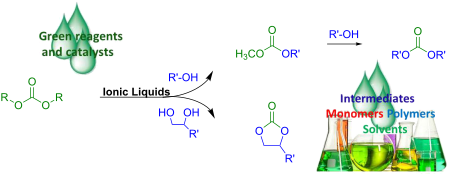
- organic carbonates by ionic-liquid catalysis goes back approximately five years. Both acidic and basic ionic liquids were employed as catalysts for the pursuit of this scope. The following section is divided into two topics: the first focuses on basic catalysis, and the second on acid catalysis. Basic
- -methylimidazolium chloride as the catalyst (Figure 4). With a 10 mol % ionic liquid loading, the transesterification reaction of DMC with eighteen different alcohols ROH yielded the desired unsymmetrical carbonates (Figure 4) under mild reaction conditions (80 °C, DMC:ROH in 1:1 ratio) [69]. Acid catalysis: In the


The hydrolysis of geminal ethers: a kinetic appraisal of orthoesters and ketals
Beilstein J. Org. Chem. 2016, 12, 1467–1475, doi:10.3762/bjoc.12.143
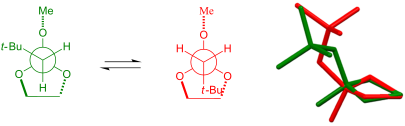
- -breaking work on acid catalysis [4], to more recent investigations as models for glycosidic bond cleavage [5], orthoesters have been examined using a range of methods, solvents (i.e., water, methanol, dioxane, and mixtures thereof), and conditions [6][7]. It has been difficult to draw upon this disparate
- rate constants (kobs) were determined using the rate equation integrated over time, using 1H NMR spectroscopy to evaluate relative concentrations at 25 ± 0.5 °C. Having already established [1] that specific acid catalysis is more likely to be the dominant mechanism operating in jet fuel/water mixtures


Synergistic chiral iminium and palladium catalysis: Highly regio- and enantioselective [3 + 2] annulation reaction of 2-vinylcyclopropanes with enals
Beilstein J. Org. Chem. 2016, 12, 1340–1347, doi:10.3762/bjoc.12.127
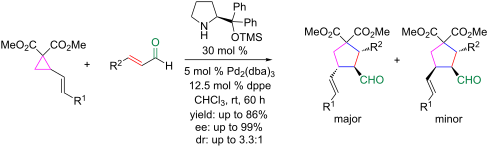
- bond and sterically blocks the attack of the C=N iminium ion functionality posed by the bulky amine catalyst. In parallel, a LA promotes to open the D–A cyclopropanes 2. The cooperative activation of two independent substrates by respective iminium and Lewis acid catalysis may enable an unprecedented


Art, auto-mechanics, and supramolecular chemistry. A merging of hobbies and career
Beilstein J. Org. Chem. 2016, 12, 362–376, doi:10.3762/bjoc.12.40
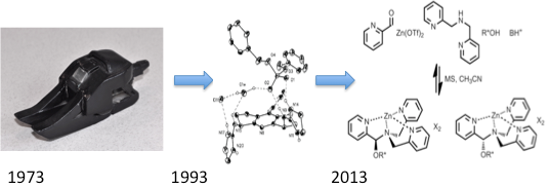
- synthetic receptors we created were designed to answer basic science questions about enzyme mechanisms [19][47], rate enhancements from ion-pairing and general acid-catalysis [48], as well as reveal the strengths of hydrogen bonding. Interspersed among this work using synthetic receptors there was a




Synthesis and biological evaluation of a novel MUC1 glycopeptide conjugate vaccine candidate comprising a 4’-deoxy-4’-fluoro-Thomsen–Friedenreich epitope
Beilstein J. Org. Chem. 2015, 11, 155–161, doi:10.3762/bjoc.11.15
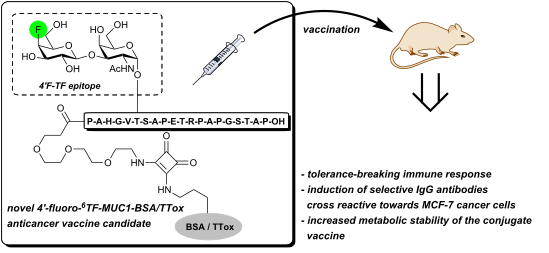
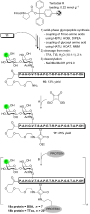
- ’-fluoro-TF SPPS building block 11 started by conversion of peracetylated D-glucose 1 into β-thio-glycoside 2 [45][46] under Lewis acid catalysis in 81% yield (Scheme 1). Subsequent Zemplén deacetylation [47], followed by 4,6-benzylidene acetal formation and acetylation provided fully protected precursor 3




Facile synthesis of 1H-imidazo[1,2-b]pyrazoles via a sequential one-pot synthetic approach
Beilstein J. Org. Chem. 2014, 10, 2338–2344, doi:10.3762/bjoc.10.243
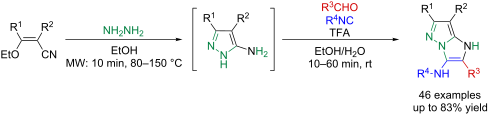
- on Lewis acid catalysis, though better results were obtained by using a catalytic amount of TFA in EtOH (Table 1, entries 5–7). From the aspect of an operationally simple green protocol, a mixture of water and EtOH as reaction medium yielded optimum results in terms of isolated yield, reaction time


Multicomponent reactions in nucleoside chemistry
Beilstein J. Org. Chem. 2014, 10, 1706–1732, doi:10.3762/bjoc.10.179
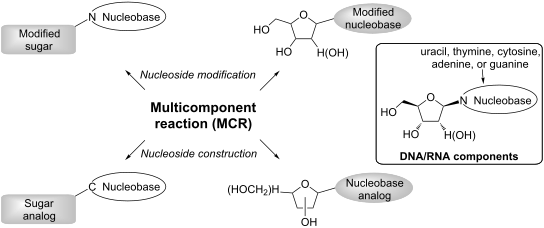
- target compounds 113 and 114 were assembled from the three-component mixture of D-ribose, a derivative of salicylic aldehyde, and thiosemicarbazide under Lewis acid-catalysis and microwave irradiation. In comparison with analogous reactions carried out with mineral support (i.e., Montmorillonite K-10


Use of activated enol ethers in the synthesis of pyrazoles: reactions with hydrazine and a study of pyrazole tautomerism
Beilstein J. Org. Chem. 2014, 10, 752–760, doi:10.3762/bjoc.10.70

- , nitrile), acetylacetone, and nitroacetates with trialkyl orthoformate 1 (Scheme 1). Transesterification can be avoided if 1 bears the same alkyl group as 2. The reaction can be carried out with or without Lewis acid catalysis [2]. Pyrazoles constitute a large group of pharmacologically active compounds



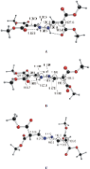
Silver and gold-catalyzed multicomponent reactions
Beilstein J. Org. Chem. 2014, 10, 481–513, doi:10.3762/bjoc.10.46
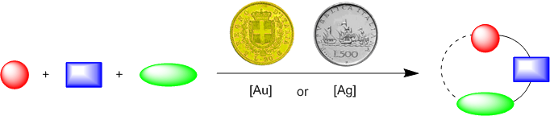
- -catalyzed process described in Scheme 31 takes advantage of the usual formation of 43 which undergoes a [3 + 3]-cycloaddition reaction with cyclopropanes 59 under nickel perchlorate catalysis. Cycloaddition reactions of activated cyclopropanes with nitrones under Lewis acid catalysis have been previously


Studies on the interaction of isocyanides with imines: reaction scope and mechanistic variations
Beilstein J. Org. Chem. 2014, 10, 12–17, doi:10.3762/bjoc.10.3
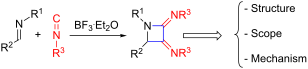
- Barcelona, Spain 10.3762/bjoc.10.3 Abstract The interaction of imines with isocyanides has been studied. The main product results from a sequential process involving the attack of two units of isocyanide, under Lewis acid catalysis, upon the carbon–nitrogen double bond of the imine to form the 4-membered


New developments in gold-catalyzed manipulation of inactivated alkenes
Beilstein J. Org. Chem. 2013, 9, 2586–2614, doi:10.3762/bjoc.9.294
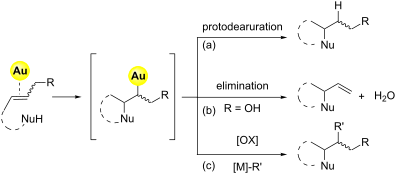
- formed via a standard hydroamination reaction (Scheme 14, path a), compound 55 was formed via Brønsted acid catalysis because of the enhancement of alcohol acidity due to gold coordination (Scheme 14, path b). Under these conditions various pyrrolidines and piperidines were obtained in excellent yields


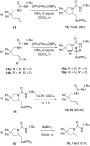

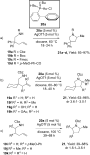
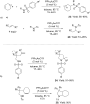


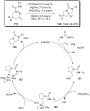
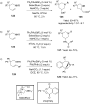

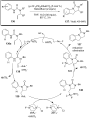


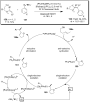
A combined continuous microflow photochemistry and asymmetric organocatalysis approach for the enantioselective synthesis of tetrahydroquinolines
Beilstein J. Org. Chem. 2013, 9, 2457–2462, doi:10.3762/bjoc.9.284
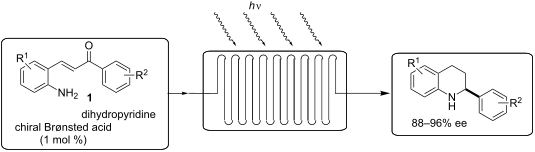
- the synthesis of tetrahydroquinolines from readily available 2-aminochalcones using a combination of photochemistry and asymmetric Brønsted acid catalysis. The photocylization and subsequent reduction was performed with catalytic amount of chiral BINOL derived phosphoric acid diester and Hantzsch
- uniform irradiation through the entire reactor and the complete reaction medium, in comparison with reactions performed in conventional batch systems. Here we report the development of continuous-flow photochemical reaction in combination with asymmetric Brønsted acid catalysis for the synthesis of


Gold(I)-catalysed one-pot synthesis of chromans using allylic alcohols and phenols
Beilstein J. Org. Chem. 2013, 9, 1797–1806, doi:10.3762/bjoc.9.209
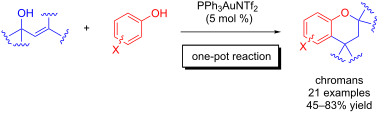
- chroman-containing targets [19][20][21]. Nevertheless, there are still a few drawbacks with these methods, for example, they usually require a large excess of substrate (e.g. ~30-fold excess), and in the case of acid catalysis, also poor yields when the phenol is not para-substituted. Therefore, it would


Gallium-containing polymer brush film as efficient supported Lewis acid catalyst in a glass microreactor
Beilstein J. Org. Chem. 2013, 9, 1698–1704, doi:10.3762/bjoc.9.194
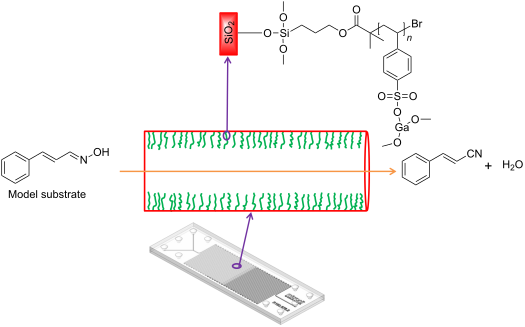
- model substrate, and for the formation of oxazoles by ring closure of ortho-hydroxy oximes. The catalytic activity of the microreactor could be maintained by periodic reactivation by treatment with GaCl3. Keywords: dehydration of oximes; flow chemistry; gallium; microreactors; Lewis acid catalysis
- easy fabrication of the catalytic device by filling the channels with functional catalytic particles, however, heat transfer limitations and pressure drop developing along the microchannel are serious drawbacks [7]. The literature contains numerous examples of Lewis acid catalysis [8][9][10][11
- ]. However, only a limited number of papers are known dealing with heterogeneous Lewis acid catalysis, where a Lewis acid is tethered onto a solid surface like silica or gold [12][13]. Furthermore, to the best of our knowledge, there are no examples of the immobilization of a Lewis acid to a microreactor


Mild and efficient cyanuric chloride catalyzed Pictet–Spengler reaction
Beilstein J. Org. Chem. 2013, 9, 1235–1242, doi:10.3762/bjoc.9.140
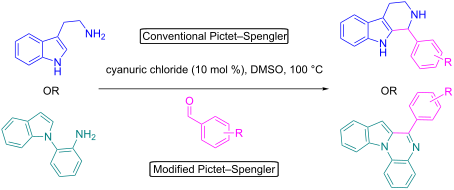
- -dimethylaminobenzaldehyde. These aldehydes failed to produce the cyclized product in desired yield under conventional Brønsted acid catalysis and often produced the oxidized products under harsher reaction conditions. TCT under an inert atmosphere allowed for a clean reaction with a broad substrate scope and application


Camera-enabled techniques for organic synthesis
Beilstein J. Org. Chem. 2013, 9, 1051–1072, doi:10.3762/bjoc.9.118
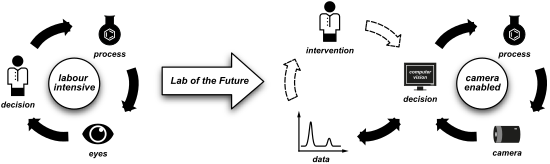
- setup that might not otherwise be available. Suzuki–Miyaura reaction performed within a microfluidic system. The product is observed by high-speed microscope photography, which shows a precipitate forming within the microdroplets. Friedel–Crafts reactions performed by using solid-acid catalysis at high


Diastereoselective synthesis of nitroso acetals from (S,E)-γ-aminated nitroalkenes via multicomponent [4 + 2]/[3 + 2] cycloadditions promoted by LiCl or LiClO4
Beilstein J. Org. Chem. 2013, 9, 838–845, doi:10.3762/bjoc.9.96
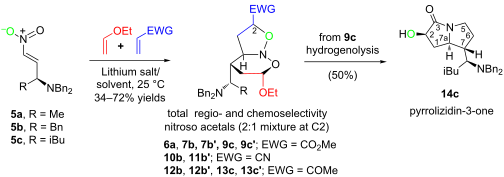
- the Lewis acid catalysis by cation–substrate interaction have been utilized to explain this enhancement of the reaction rate [12][13][14]. In the case of nitroalkene cycloadditions, performed in the presence of a Lewis acid, it is well documented that the rate acceleration effect caused by the Lewis


Asymmetric Brønsted acid-catalyzed aza-Diels–Alder reaction of cyclic C-acylimines with cyclopentadiene
Beilstein J. Org. Chem. 2012, 8, 1819–1824, doi:10.3762/bjoc.8.208
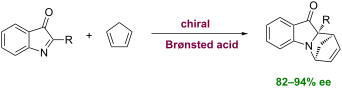
- ). To optimize the reaction conditions further we evaluated the catalyst loading and solvent. However, the reduction of catalyst loading from 5 to 1 mol % resulted in a significant decrease in enantioselectivity (Table 1, entries 8 and 9). In our previous studies in asymmetric Brønsted acid catalysis


The Amadori rearrangement as glycoconjugation method: Synthesis of non-natural C-glycosyl type glycoconjugates
Beilstein J. Org. Chem. 2012, 8, 1619–1629, doi:10.3762/bjoc.8.185

- 1 and a suitable amine under acid catalysis (Scheme 1). The reaction is known to be very sensitive to the nature of the carbohydrate substrate, the acid catalyst, and the amino component, as well as to the temperature and duration. Additionally, some challenges accompany the reaction limiting its


Approaches to α-amino acids via rearrangement to electron-deficient nitrogen: Beckmann and Hofmann rearrangements of appropriate carboxyl-protected substrates
Beilstein J. Org. Chem. 2012, 8, 1393–1399, doi:10.3762/bjoc.8.161

- cleaved under acid catalysis, either to the carboxylic acid or directly to the ester, as demonstrated previously [16]. This carboxyl protection prevents the strategy from complications arising from the opportunistic side reactions observed in previous studies [8][9][13]. This has enabled the execution of


Organocatalysis
Beilstein J. Org. Chem. 2012, 8, 1358–1359, doi:10.3762/bjoc.8.156
- -molecular-weight organic compounds, in which a metal is not part of the active principle. Organocatalysts donate or remove electrons or protons as their activation mode, hence defining four distinct subareas: Lewis base and Lewis acid catalysis on the one hand, and Brønsted base and Brønsted acid catalysis
Asymmetric organocatalytic decarboxylative Mannich reaction using β-keto acids: A new protocol for the synthesis of chiral β-amino ketones
Beilstein J. Org. Chem. 2012, 8, 1279–1283, doi:10.3762/bjoc.8.144
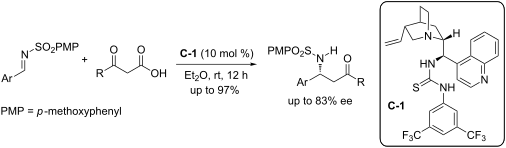
- great practical value. Indeed, direct approaches such as asymmetric enamine catalysis [14][15][16][17] and Brønsted acid catalysis [18] have been reported, through the activation of ketones or aryl imines [19]. However, substrates for the enamine activation are limited to only acetone and cyclic alkyl


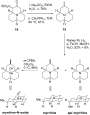
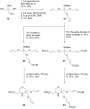
Two-directional synthesis as a tool for diversity-oriented synthesis: Synthesis of alkaloid scaffolds
Beilstein J. Org. Chem. 2012, 8, 850–860, doi:10.3762/bjoc.8.95
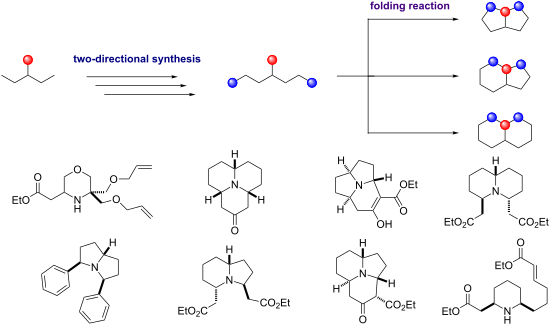
- particular reference to the synthesis of polycyclic alkaloid scaffolds. Keywords: alkaloids; cascade reactions; chemical diversity; diversity-oriented synthesis; Lewis acid catalysis; two-directional synthesis; Introduction Diversity-oriented synthesis (DOS) aims to prepare structurally diverse compound



An intramolecular inverse electron demand Diels–Alder approach to annulated α-carbolines
Beilstein J. Org. Chem. 2012, 8, 829–840, doi:10.3762/bjoc.8.93
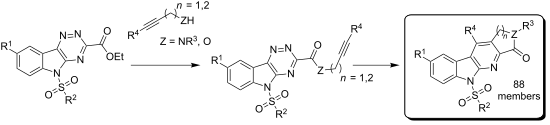
- cycloaddition of 17a. Preparation of N-protected isatin-derived 1,2,4-triazines 8.a Lewis acid catalysis of amidation of triazine 8a.a IEDDA reaction conditions of 13a to give cycloadduct 14a.a Amidation-IEDDA sequence to α-carbolines 14 from triazine 8a.a Library synthesis matrix.a Supporting Information





