Search results
Search for "acidic conditions" in Full Text gives 400 result(s) in Beilstein Journal of Organic Chemistry. Showing first 200.
Synthesis of (−)-halichonic acid and (−)-halichonic acid B
Beilstein J. Org. Chem. 2022, 18, 1629–1635, doi:10.3762/bjoc.18.174
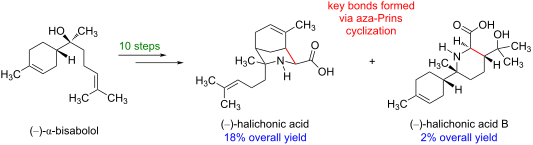
- organic co-solvent), and slow decomposition occurred under acidic conditions at elevated temperatures. Alternative methods to cleave the benzamide using sodium peroxide [11] or triethyloxonium tetrafluoroborate [12] were also unsuccessful, giving either no reaction or significant decomposition


Formal total synthesis of macarpine via a Au(I)-catalyzed 6-endo-dig cycloisomerization strategy
Beilstein J. Org. Chem. 2022, 18, 1589–1595, doi:10.3762/bjoc.18.169
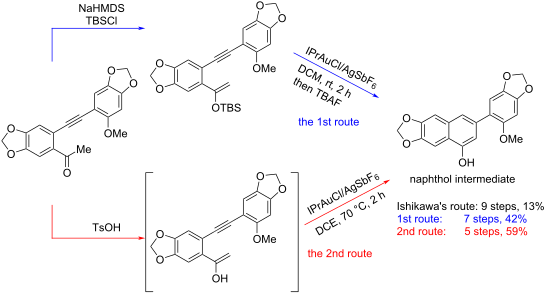
- ] as the substrate for the gold-catalyzed cycloisomerization in the presence of protonic acid. It was supposed that alkynyl ketone 9 would undergo enolization under the acidic conditions, followed by a gold-catalyzed cycloisomerization to provide the naphthol 12. To test the idea, alkynyl ketone 9 was


New triazole-substituted triterpene derivatives exhibiting anti-RSV activity: synthesis, biological evaluation, and molecular modeling
Beilstein J. Org. Chem. 2022, 18, 1524–1531, doi:10.3762/bjoc.18.161
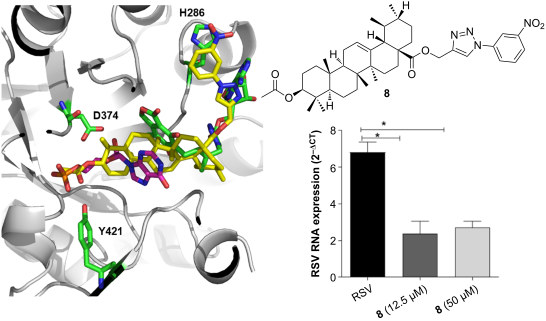
- . Initially, 1-azido-3-nitrobenzene (c) was obtained from m-nitroaniline (a) (Scheme 1) with excellent yields (98%), as previously described [41]. The protection of the 3β-OH group of the triterpene skeleton was carried out by acetylation using acetic anhydride to prevent cleavage in acidic conditions, which


Preparation of an advanced intermediate for the synthesis of leustroducsins and phoslactomycins by heterocycloaddition
Beilstein J. Org. Chem. 2022, 18, 1385–1395, doi:10.3762/bjoc.18.143
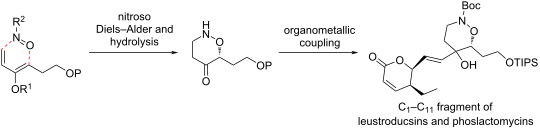
- advantages over the related enol silyl ethers [24][25]: they are more stable towards acidic conditions, their electronic character contributes to high regioselectivity in cycloaddition reactions, and they can be converted to many other functions, including their hydrolysis to ketones [26]. In the other hand
- phosphates can be hydrolysed under basic, acidic or reductive conditions [26]. Although acidic conditions could not be used due to the lability of the nitrogen Boc-protecting group, we found that the TIPS-protected cycloadduct 10b could be cleanly transformed into the ketone 11b with excess Red-Al [28


Cyclodextrin-based Schiff base pro-fragrances: Synthesis and release studies
Beilstein J. Org. Chem. 2022, 18, 1346–1354, doi:10.3762/bjoc.18.140
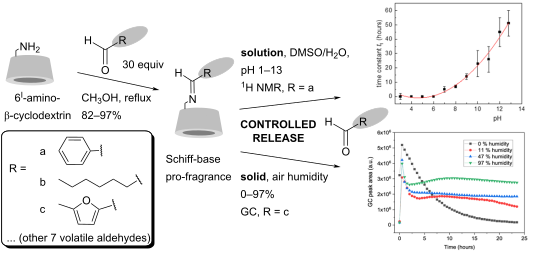
- monotonic (except for low pH values). A substantial difference is seen between acidic conditions, under which the imino-β-CD is unstable, and the benzaldehyde releases fast over the time course investigated, and basic conditions, under which the benzaldehyde is released slowly. In all cases, equilibrium
- bond decomposition that Shiff base hydrolysis is very fast in acidic conditions and slows down when going to higher pH values. Multiple headspace extraction experiments revealed the role of pH and the presence of supramolecular interaction between aldehyde and β-CD on the rate of aldehyde release from
From amines to (form)amides: a simple and successful mechanochemical approach
Beilstein J. Org. Chem. 2022, 18, 1210–1216, doi:10.3762/bjoc.18.126
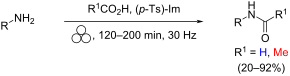
- ). Better results were observed when p-Ts-Im was used under acidic conditions (see Table 1, entries 6 and 7). A slight enhancement in yields was observed when 20 balls (Ø = 3 mm, mtot = 6.5 g) were used instead of one ball. Recent studies on the effect of the size and number of milling balls pointed out
Derivatives of benzo-1,4-thiazine-3-carboxylic acid and the corresponding amino acid conjugates
Beilstein J. Org. Chem. 2022, 18, 1195–1202, doi:10.3762/bjoc.18.124
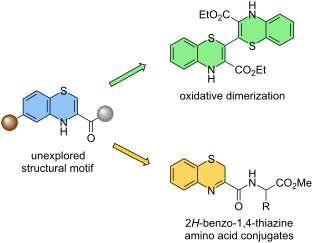
- transform into a green-blue chromophore in the presence of peroxides or redox-active metal ions under acidic conditions, creating a potential detection method for such entities [29]. Additionally, the same structure was used for the preparation of a benzo-1,4-thiazine-based cyanine chromophore, which showed
- tested (see Supporting Information File 1). Next, compounds 17a and 17b were brominated in the α-position using Br2 under acidic conditions. Finally, cyclization reaction with 2-aminothiophenol (8a) in dry diethyl ether at 0 °C gave benzo-1,4-thiazines 19a and 19b in good yield. Interestingly, the
Electrochemical formal homocoupling of sec-alcohols
Beilstein J. Org. Chem. 2022, 18, 1062–1069, doi:10.3762/bjoc.18.108
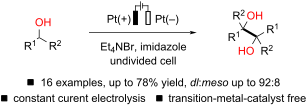
- ][41][42][43][44]. The group of Wang recently reported the sacrificial anode-free electroreduction of benzophenone derivatives to afford vic-1,2-diols using over-stoichiometric NaN3 under acidic conditions, but appropriate precautions should be taken for in situ-generated explosive and toxic HN3 [45




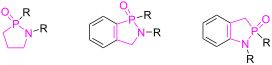
Synthetic strategies for the preparation of γ-phostams: 1,2-azaphospholidine 2-oxides and 1,2-azaphospholine 2-oxides
Beilstein J. Org. Chem. 2022, 18, 889–915, doi:10.3762/bjoc.18.90
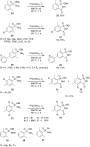
- )dithiophosphinic acid 58, respectively. On the other hand, methyl 2-aminobenzyl(phenyl)phosphinate (53) was hydrolyzed under acidic conditions and neutralized with ammonia to give zwitterionic 2-aminobenzyl(phenyl)phosphinic acid 54. It was heated at 230 °C under reduced pressure to generate 2-phenyl-1,3








Synthesis of odorants in flow and their applications in perfumery
Beilstein J. Org. Chem. 2022, 18, 754–768, doi:10.3762/bjoc.18.76
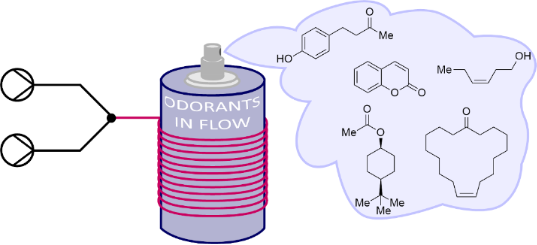
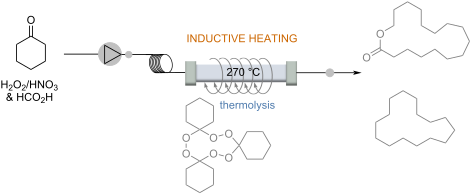
- under acidic conditions to the corresponding triperoxides which form macrocyclic structures at high temperatures, e.g., juniper lactone (56) [49]. Despite the elegance of this access, the safety of this process is questionable complicating the large-scale production in batch. Very recently, Kirschning


Inductive heating and flow chemistry – a perfect synergy of emerging enabling technologies
Beilstein J. Org. Chem. 2022, 18, 688–706, doi:10.3762/bjoc.18.70
- was cyclized under acidic conditions with Amberlyst 15TM ion exchange resin embedded inside the flow reactor. However, successful conversion to an industrial process was hindered by the fact that polymerization of the starting material myrcene (85) could not be suppressed, leading to fouling of the




Bioinspired tetraamino-bisthiourea chiral macrocycles in catalyzing decarboxylative Mannich reactions
Beilstein J. Org. Chem. 2022, 18, 486–496, doi:10.3762/bjoc.18.51
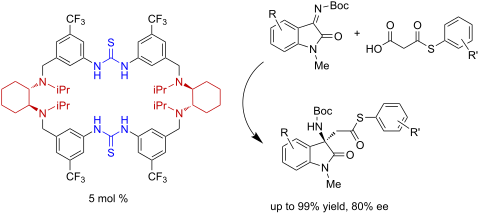
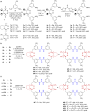
- the nitro groups by SnCl2 under acidic conditions gave the bisamine fragments 4a–f in 83–98% yields. The bisamine fragments were further converted to the bisisothiocyanates 5a–f by reaction with 1,1'-thiocarbonyldiimidazole in 66–89% yields. Having the bisamine and bisisothiocyanate fragments in hand




Synthesis of 3,4,5-trisubstituted isoxazoles in water via a [3 + 2]-cycloaddition of nitrile oxides and 1,3-diketones, β-ketoesters, or β-ketoamides
Beilstein J. Org. Chem. 2022, 18, 446–458, doi:10.3762/bjoc.18.47

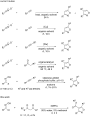
- phosphate buffer under weakly acidic conditions (pH 4.0) at room temperature for 15–24 h and generated 3,5-disubstituted isoxazolines and 3,4,5-trisubstituted isoxazoles in good yields (Figure 1) [28]. Notably, no metal catalysts were used in this method. The development of organic reactions in water not
- oxide and strained alkenes has been used to achieve the high-density functionalization of oligodeoxyribonucleotides [29]. However, the alkenes need to be highly strained in order for this reaction to occur without the need for an additional metal catalyst. As an alternative to the mild acidic conditions



Asymmetric organocatalytic Michael addition of cyclopentane-1,2-dione to alkylidene oxindole
Beilstein J. Org. Chem. 2022, 18, 167–173, doi:10.3762/bjoc.18.18
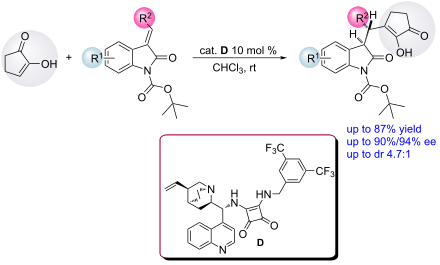
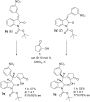
- diastereoisomer increased. A similar trend was observed when starting from the enantiomerically enriched 3a (Table 2, entry 3). It has been shown that substituted oxindoles can be converted to indolopyrans via intramolecular cyclisation [33]. We also tried synthesizing 4H-pyrans in acidic conditions but no


Ready access to 7,8-dihydroindolo[2,3-d][1]benzazepine-6(5H)-one scaffold and analogues via early-stage Fischer ring-closure reaction
Beilstein J. Org. Chem. 2022, 18, 143–151, doi:10.3762/bjoc.18.15
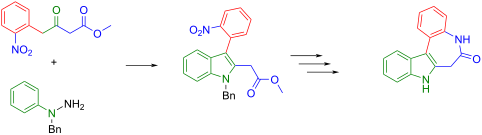
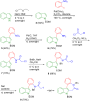
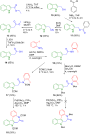
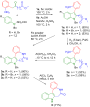
- the nitro group but also to cyclization and the reductive elimination of bromine to afford 3a. The synthesis of 3b could be realized in 58% yield by using iron powder under acidic conditions. Reaction of methyl 5-(2-nitrophenyl)-4-oxopentanoate [44] and 1-benzyl-1-phenylhydrazine [36] hydrochloride in






Stepwise PEG synthesis featuring deprotection and coupling in one pot
Beilstein J. Org. Chem. 2021, 17, 2976–2982, doi:10.3762/bjoc.17.207

- are acceptable although those with narrow molecular weight distribution are always desirable. These PEGs can be synthesized conveniently by polymerization of ethylene oxide under basic or acidic conditions [7]. The polymerization methods are inexpensive and PEGs with high molecular weight can be
- ][26]. Perhaps, the most widely used methods in academia and in industry involve the use of monomers such as compound 1, which contain the acid-labile DMTr protecting group. PEG elongation is achieved by deprotection under acidic conditions, purifying the intermediate, and setting up a separate
- under basic conditions to give 7. Removal of the DMTr group of 7 under acidic conditions gave 6, which was tosylated to give 2. This route is longer than the other two, but the products of all the steps are easy to purify, and it is our preferred route. With the monomer 2 in hand, the stepwise synthesis


A photochemical C=C cleavage process: toward access to backbone N-formyl peptides
Beilstein J. Org. Chem. 2021, 17, 2932–2938, doi:10.3762/bjoc.17.202
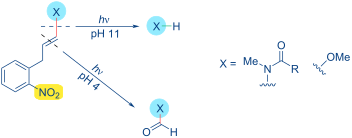
- nitroso 3, and related compounds 4 and 5 are all consistent with the classical C–X cleavage mechanism and with hydrolysis of the presumed oxonium intermediate 6’, but are inconsistent with the production of formyl products. In contrast, photoirradiation of the same alkenyl ether 6 under acidic conditions
- . Unfortunately, no products other than the formyl compound were isolated after photocleavage of compound 1 or 6 in acidic conditions. Instead, when irradiation of alkenyl amide 1 was conducted in acetone, crude NMR analysis indicated the appearance of product 8 as well as new peaks in the aromatic region
- calculated from crude 1H NMR using residual CD3OD peaks as internal standard. (a) Photocleavage of compound 6 under acidic conditions. Yields determined by 1H NMR using residual CD3OD as an internal standard. (b–d) Selectivity of photocleavage of alkenyl amide 1 as a function of pH. Product percentage of N


Host–guest interaction and properties of cucurbit[8]uril with chloramphenicol
Beilstein J. Org. Chem. 2021, 17, 2832–2839, doi:10.3762/bjoc.17.194
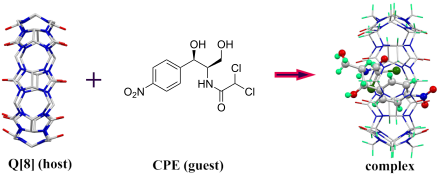
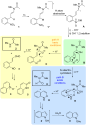
- hydrochloric acid solution (VD2O/VDCl = 3:2) was used as the NMR solvent. Consequently, the interaction between Q[8] and CPE in hydrochloric acid solution was studied (Figure 3C and D). The results show that the molar ratio of CPE and Q[8] was 1:1 under acidic conditions, which was the same as that observed


Synthesis of new pyrazolo[1,2,3]triazines by cyclative cleavage of pyrazolyltriazenes
Beilstein J. Org. Chem. 2021, 17, 2773–2780, doi:10.3762/bjoc.17.187
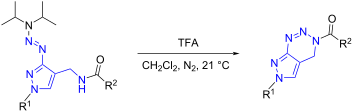
- of the intermediate diazo compounds under acidic conditions [22] (Scheme 1). The structurally related 3,7-dihydro-4H-pyrazolo[3,4-d][1,2,3]triazin-4-ones 3 (Figure 1) which are substituted in position N-7 can be obtained in the same manner as described in Scheme 1, if the substitution position R1 in


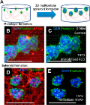
Cryogels: recent applications in 3D-bioprinting, injectable cryogels, drug delivery, and wound healing
Beilstein J. Org. Chem. 2021, 17, 2553–2569, doi:10.3762/bjoc.17.171
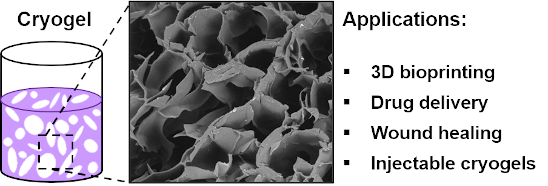
- cryogels have also been prepared comprising polyamidoamine (PAMAM) dendrimers, whereby the cryogels were stable under acidic conditions, and degrade at physiological solution pH (7.4) [47]. 3.3. Dual temperature and pH-responsive cryogels During cryogel design and production a diverse range of starting






Silica gel and microwave-promoted synthesis of dihydropyrrolizines and tetrahydroindolizines from enaminones
Beilstein J. Org. Chem. 2021, 17, 2543–2552, doi:10.3762/bjoc.17.170
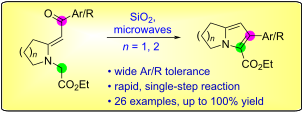
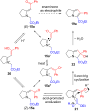
- vinylogous amides such as 11, however, we fortuitously found substituted 2,3-dihydro-1H-pyrrolizines 12 as unexpected products when intermediates 11 were exposed to acidic conditions, including treatment with acetic acid or even during chromatography on silica gel (Scheme 1) [18]. In these cyclizations the
- system instead of the C6–C7 bond. A brief survey of alternative conditions for the cyclization revealed that the acidic conditions under which pyrrolizine formation took place were essential, although the nature of the acid proved to be critical (Table 1). Starting material was recovered unchanged when
- can be effective as a consequence of the solid selectively absorbing the microwave energy and facilitating reaction at its surface, while the nonpolar solvent absorbs relatively little microwave energy and remains at a milder temperature. The weakly acidic conditions appear to serve several functions




Synthesis of new substituted 7,12-dihydro-6,12-methanodibenzo[c,f]azocine-5-carboxylic acids containing a tetracyclic tetrahydroisoquinoline core structure
Beilstein J. Org. Chem. 2021, 17, 2511–2519, doi:10.3762/bjoc.17.168
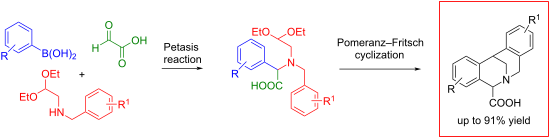
- amino acid 6a was subjected to cyclization under different acidic conditions (not shown). The reaction of 6a with TiCl4 or SnCl4 in DCM at 0 °C led exclusively to the formation of 7a (TLC analysis) but it was impossible to isolate the product in a pure form probably due to the formation of the salts


Strategies for the synthesis of brevipolides
Beilstein J. Org. Chem. 2021, 17, 2399–2416, doi:10.3762/bjoc.17.157
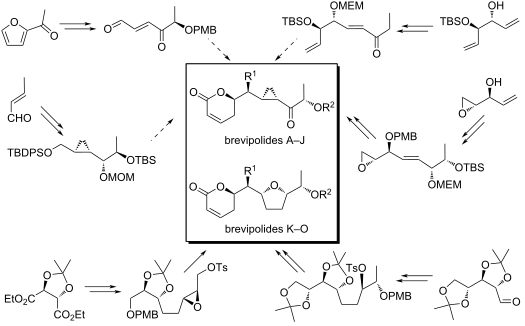
- derivative in 80% yield. The TBS protecting group was removed under acidic conditions to give secondary alcohol 93 (85%). Afterwards, the 5,6-dihydro-α-pyrone functionality was constructed by applying a cross-metathesis protocol and the stereochemistry at C6’ was inverted with (E)-p-methoxycinnamic acid (17


Halides as versatile anions in asymmetric anion-binding organocatalysis
Beilstein J. Org. Chem. 2021, 17, 2270–2286, doi:10.3762/bjoc.17.145
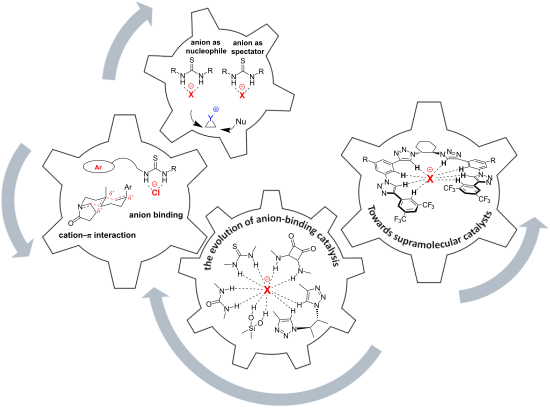
- aromatic aldehydes under weakly acidic conditions. Anion-binding catalyst development in the enantioselective addition of silyl ketene acetals to 1-chloroisochromane (73). Limiting factors and influences on catalyst activation and anion abstraction. a) Macrocyclic bis-thiourea catalyst in a



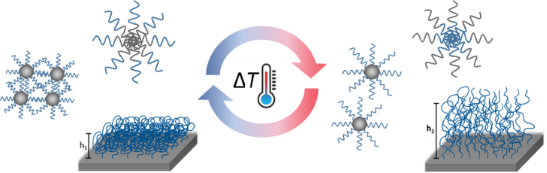
Constrained thermoresponsive polymers – new insights into fundamentals and applications
Beilstein J. Org. Chem. 2021, 17, 2123–2163, doi:10.3762/bjoc.17.138