


Search results
Search for "catalyzed" in Full Text gives 1870 result(s) in Beilstein Journal of Organic Chemistry. Showing first 200.
Measuring the stereogenic remoteness in non-central chirality: a stereocontrol connectivity index for asymmetric reactions
Beilstein J. Org. Chem. 2025, 21, 1995–2006, doi:10.3762/bjoc.21.155
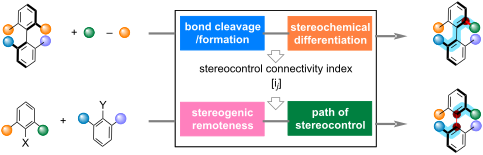
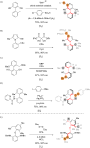
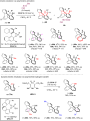
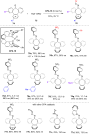
- stereochemical differentiation should at least be traced to the two pilot atoms that are directly attached, but not within the stereogenic plane – similar to the assignment of stereochemistry for cyclophanes. This way, the asymmetric Pd-catalyzed coupling [19][20] would be assigned as [30] (Scheme 5B and 5C). On





Aryl iodane-induced cascade arylation–1,2-silyl shift–heterocyclization of propargylsilanes under copper catalysis
Beilstein J. Org. Chem. 2025, 21, 1984–1994, doi:10.3762/bjoc.21.154
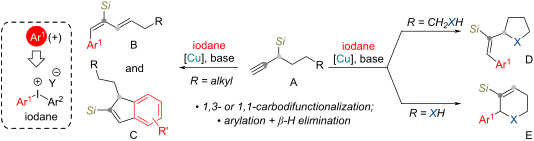
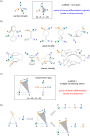
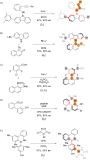
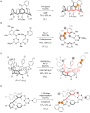
- , LV-1006, Riga, Latvia 10.3762/bjoc.21.154 Abstract A novel copper-catalyzed arylation strategy for propargylsilanes utilizing diaryl-λ3-iodanes has been developed, enabling a cascade sequence involving 1,2-silyl migration and heterocyclization. The β-silicon effect facilitates the formation of
- the reagents of choice for arylation reactions, where an umpolung of reactivity is required [1]. Arylations employing diaryl-λ3-iodanes can be performed under metal-free [2] or metal-catalyzed conditions. For alkyne arylations [Cu] [3] or [Pd] catalysis [4][5][6] is typically employed. Internal
- species are limited to aryl- [7][8][10] or heteroaryl groups [7][8]. In one example methyl ethers were used [9]. Under [Pd]-catalyzed conditions a syn-type addition is observed [8][11], while [Cu] catalysts promote anti-addition [7][10]. In substrates prone to cationic rearrangements (or hydride shifts


Photochemical reduction of acylimidazolium salts
Beilstein J. Org. Chem. 2025, 21, 1973–1983, doi:10.3762/bjoc.21.153
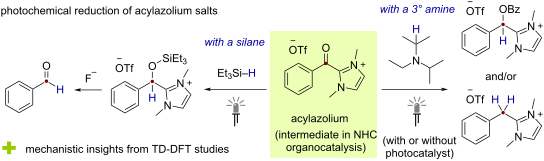
- 22, 14195 Berlin, Germany School of Natural and Environmental Sciences, Newcastle University, Bedson Building, Newcastle upon Tyne, NE1 7RU, UK 10.3762/bjoc.21.153 Abstract Light-mediated methodologies for the reduction of acylazolium species generated during N-heterocyclic carbene (NHC)-catalyzed
- suitably electrophilic substrate at the carboxylic acid oxidation level provides an acylazolium species B, which typically reacts directly with nucleophiles or may first be transformed into the corresponding enolate derivative. Regardless of the individual pathway, NHC-catalyzed reactions of this type
- acid derivative substrates [16]. Over the last few years, a wide range of valuable NHC-catalyzed transformations have also been developed that incorporate redox steps. As an enamine species, single-electron oxidation of a Breslow intermediate is comparatively favored with the resulting open shell


Asymmetric total synthesis of tricyclic prostaglandin D2 metabolite methyl ester via oxidative radical cyclization
Beilstein J. Org. Chem. 2025, 21, 1964–1972, doi:10.3762/bjoc.21.152
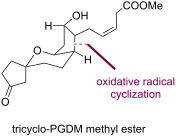
- (±)-4 from pentacyclic starting materials 5 and 6, respectively (Scheme 1B). In 2021, Dai reported the total synthesis of (±)-4 from cyclopentanol 7, in which the bicyclic spiroketal moiety and (Z)-3-butenoate side chain were formed via a palladium-catalyzed carbonylative spirolactonization and Z
- were developed. A straightforward transformation was designed involving a cross-metathesis of the C13–C14 double bond and a palladium-catalyzed decarboxylative allylation [32] as the key steps. With 14 in hand, we investigated the feasibility of cross-metathesis of the C13–C14 double bond. Initially
- -metathesis reaction smoothly in the presence of the Hoveyda–Grubbs second-generation catalyst to afford the enone 13 in 63% yield with the desired trans-configuration. Enone 13 was then subjected to the Pd/C-catalyzed hydrogenation to give the thermodynamically favored bicyclic hemiketal 21 in 92% yield as

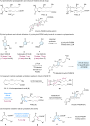


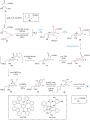
Enantioselective desymmetrization strategy of prochiral 1,3-diols in natural product synthesis
Beilstein J. Org. Chem. 2025, 21, 1932–1963, doi:10.3762/bjoc.21.151
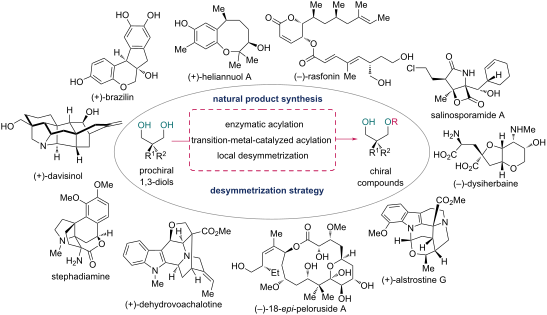
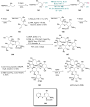
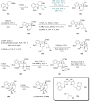
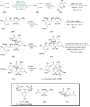
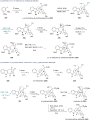
- biologically active molecules. Based on the reaction types, three strategies are discussed: enzymatic acylation, transition-metal-catalyzed acylation, and local desymmetrization. Keywords: asymmetric synthesis; desymmetrization; 1,3-diols; natural product; total synthesis; Introduction Natural products
- -catalyzed acylation, and local desymmetrization. In this review, we cover total syntheses that utilize enantioselective desymmetrization of prochiral 1,3-diols. Review Desymmetrization via enzymatic acylation Enzymatic reactions represent one of the most useful tools in total synthesis. Through combination
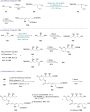
- general mechanism of a reaction catalyzed by lipases is illustrated in Scheme 1. Additionally, the diverse three-dimensional structures of lipases confer enantioselectivity in lipase-catalyzed esterification [24][25]. Moreover, their commercial availability makes lipases an attractive option for preparing










Synthesis of N-doped chiral macrocycles by regioselective palladium-catalyzed arylation
Beilstein J. Org. Chem. 2025, 21, 1917–1923, doi:10.3762/bjoc.21.149
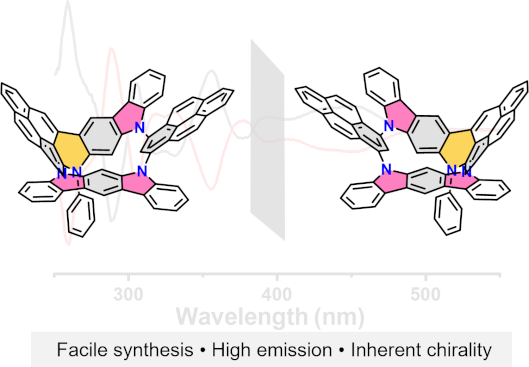
- Road, Hong Kong, China Materials Innovation Institute for Life Sciences and Energy (MILES), HKU-SIRI, Shenzhen, China 10.3762/bjoc.21.149 Abstract A series of nitrogen (N)-doped macrocycles was successfully synthesized through palladium-catalyzed arylation. X-ray crystallographic characterization
- palladium (Pd)-catalyzed arylation of aza[14]metacyclophane derivatives. By modulating the substitutions on the N atoms, two isomeric macrocycles, a C1-symmetric one as the minor fraction (MC1) and a C2v-symmetric one as the major product (MC2), were successfully obtained when 4-tert-butylphenyl groups were
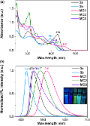
- through circular dichroism (CD) and circularly polarized luminescence (CPL) spectroscopy. Results and Discussion The syntheses of N-doped macrocycles MC1–3 are shown in Scheme 1. Diamines 1a and 1b were synthesized by double Pd-catalyzed C–N coupling reaction of 4,6-dichlorobenzene-1,3-diamine with phenyl




Chiral phosphoric acid-catalyzed asymmetric synthesis of helically chiral, planarly chiral and inherently chiral molecules
Beilstein J. Org. Chem. 2025, 21, 1864–1889, doi:10.3762/bjoc.21.145
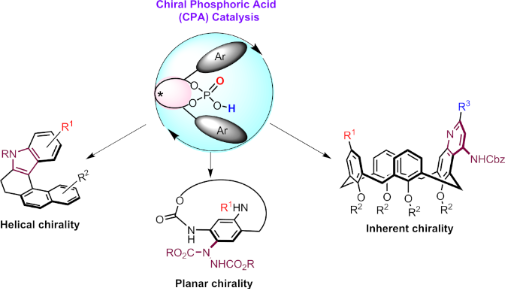
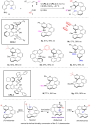
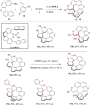
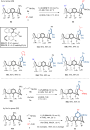
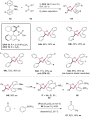
- , the application of CPA catalysis in the asymmetric synthesis of other forms of molecular chirality has received less attention. While List and co-workers reported the first CPA-catalyzed asymmetric synthesis of helically chiral azahelicenes through the Fischer indole synthesis back in 2014 [12], the
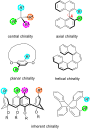
- second CPA-catalyzed asymmetric synthesis of helicenes was not achieved until 2023 [13][14]. Similarly, the CPA-catalyzed asymmetric synthesis of planarly chiral [15] and inherently chiral [16] molecules was not disclosed until 2022. In this Review, we have comprehensively summarized the recent
- advancements in the CPA-catalyzed asymmetric synthesis of various distinct chiral elements, encompassing helically, planarly and inherently chiral molecules. The Review is structured based on the various types of chiral elements, presenting a representative substrate scope for each method, showcasing the










Systematic pore lipophilization to enhance the efficiency of an amine-based MOF catalyst in the solvent-free Knoevenagel reaction
Beilstein J. Org. Chem. 2025, 21, 1854–1863, doi:10.3762/bjoc.21.144
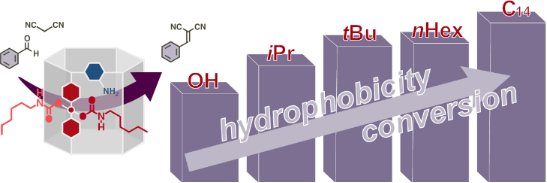
- environment, suppressing the hydrolysis reaction that would return the starting materials [36]. Thus, in this work, we investigate the influence of pore lipophilicity on the amine-catalyzed Knoevenagel condensation. The Knoevenagel condensation reaction is a vital organic reaction involving the condensation
- malononitrile to form benzylidenemalononitrile (BMN). In a typical primary amine-catalyzed Knoevenagel condensation, the amine would undergo imine condensation with benzaldehyde. The imine would then deprotonate malononitrile, and the resulting carbanion would react with the imine, releasing the final product
- ×20 magnification. Right: ratios of BMN:HPMM products for each catalyst. Probable mechanisms for the Knoevenegel condensation reaction between benzaldehyde and malononitrile catalyzed by a MOF-immobilized amine to form benzylidenemalononitrile (BMN). A) Mechanism in which the amine catalyst first


Fe-catalyzed efficient synthesis of 2,4- and 4-substituted quinolines via C(sp2)–C(sp2) bond scission of styrenes
Beilstein J. Org. Chem. 2025, 21, 1799–1807, doi:10.3762/bjoc.21.142
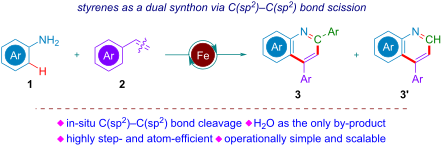
- -disubstituted and 4-substituted quinoline molecules. The developed strategy involves an earth-abundant Fe-catalyzed C(sp2)–C(sp2) bond cleavage of styrene, followed by the hydroamination of the cleaved synthons with arylamines and subsequent C–H annulation to yield two valuable quinoline derivatives. Key
- strategies have been explored in recent decades for the synthesis of structurally diverse quinolines. Among them, transition-metal-catalyzed multicomponent reactions (MCRs) have emerged as particularly effective for constructing complex quinoline-based heterocycles [26][27][28]. Catalytic pathways such as
- [53]. In this work, the authors used a stoichiometric amount of Zn(OTf)3 as a Lewis acid catalyst and air as the oxidant for the reaction. Jana and colleagues demonstrated an atom-efficient pseudo-three-component C–H annulation reaction catalyzed by Yb and Cu, which involved nitrosoarenes and styrene




Synthesis of chiral cyclohexane-linked bisimidazolines
Beilstein J. Org. Chem. 2025, 21, 1786–1790, doi:10.3762/bjoc.21.140
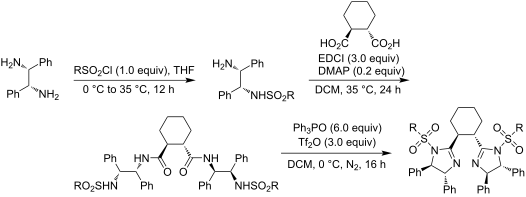
- bisimidazolines are efficient chiral ligands in metal-catalyzed asymmetric organic transformations. Chiral cyclohexane-linked bisimidazolines were prepared from optically active cyclohexane-1,2-dicarboxylic acid and 1,2-diphenylethane-1,2-diamines via the monosulfonylation of 1,2-diphenylethane-1,2-diamines
- bisoxazolines [1][2][3][4][5][6][7][8][9] and bisimidazolines [10][11][12][13][14][15] are efficient chiral ligands and have been widely applied in various metal-catalyzed asymmetric organic transformations. Various chiral bisoxazoline ligands have been prepared from diacids and enantiopure vicinal amino
- alcohols and utilized in different metal-catalyzed asymmetric organic reactions [1][2][3][4][5][6][7][8][9]. In comparison with bisoxazoline ligands, relatively less attention has been paid to bisimidazoline ligands [10][11][12][13][14][15]. Some well investigated bisimidazoline ligands are pyridine-linked


Research progress on calixarene/pillararene-based controlled drug release systems
Beilstein J. Org. Chem. 2025, 21, 1757–1785, doi:10.3762/bjoc.21.139
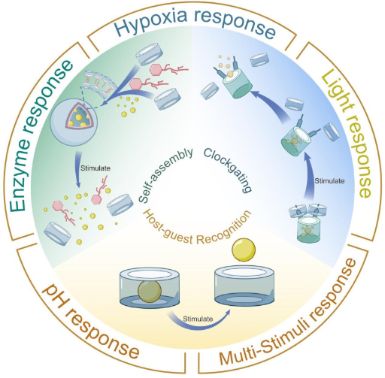
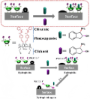
- Cu-catalyzed click chemistry to construct a photo-responsive macroscopic switch. This switch can achieve photo-controlled chiral reversible recognition of (1R,2S)-1-amino-2-indanol through changes in contact angle, and it holds promise for applications in chiral drug controlled release and other






Preparation of a furfural-derived enantioenriched vinyloxazoline building block and exploring its reactivity
Beilstein J. Org. Chem. 2025, 21, 1737–1741, doi:10.3762/bjoc.21.136

- electrolysis conditions and its removal was compatible with the double bond and acetal functions in ester 3d (see Supporting Information File 1 for attempts of other protecting groups such as Boc, Troc, and tfa). However, Pd-catalyzed N-Alloc deprotection induced isomerization of the double bond leading to the
- of products in copper-catalyzed 1,4-addition of phenylmagnesium bromide, Giese reaction with 2-iodopropane, Simmons‒Smith or Johnson–Corey–Chaykovsky cyclopropanation, hydroboration reaction with 9-BBN, and Diels–Alders reaction with Danishevsky diene. Gratifyingly, it was found that vinyloxazoline S


Convenient alternative synthesis of the Malassezia-derived virulence factor malassezione and related compounds
Beilstein J. Org. Chem. 2025, 21, 1730–1736, doi:10.3762/bjoc.21.135
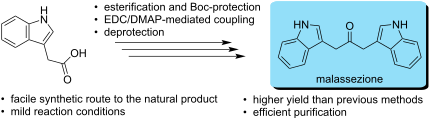
- ]. Unfortunately, testing of malassezione is limited by the lack of a convenient synthesis. Indeed, beyond isolating the compound from cultured M. furfur [11][20], the only reported synthetic route to malassezione is via an iron-catalyzed Fukuyama-type indole synthesis, which afforded the compound in low yield [18
- subsequent iron-catalyzed reaction afforded 1 in only 35% yield. To avoid the low-yielding preparation of the isonitrile, we elected to use commercially available indole-3-acetic acid as the starting material, and to utilize an approach similar to that described for the synthesis of dibenzylketones from the
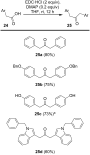
- debenzylated by Pd-catalyzed hydogenation to cleanly yield 25c. This affords a route to such compounds bearing hydroxylated aromatic groups that employs milder conditions than previously reported [22][24]. Finally, we prepared N,N′-dibenzylmalassezione (25d). Initially, this compound was prepared with the


Approaches to stereoselective 1,1'-glycosylation
Beilstein J. Org. Chem. 2025, 21, 1700–1718, doi:10.3762/bjoc.21.133
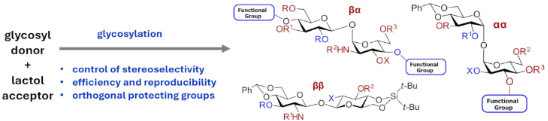
- . tuberculosis [121]. The TMS-glycosides were prepared from the corresponding hemiacetals by acid-catalyzed silylation, involving a silica gel-promoted in situ anomerization of the O-TMS-β-glycoside to its more thermodynamically stable α-counterpart [121]. This protocol enabled the efficient synthesis of TMS


Continuous-flow-enabled intensification in nitration processes: a review of technological developments and practical applications over the past decade
Beilstein J. Org. Chem. 2025, 21, 1678–1699, doi:10.3762/bjoc.21.132
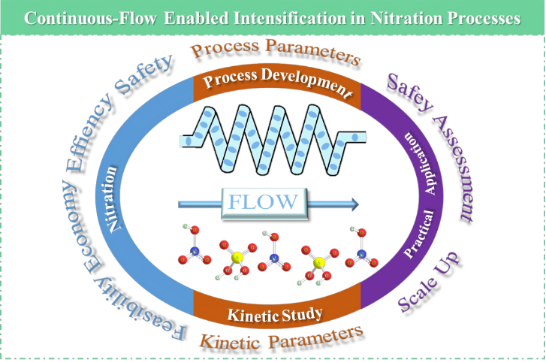
- latent failure modes (e.g., reactor fouling due to precipitation of polynitro by-products or acid-catalyzed polymer formation) that conventional short-term experiments often overlook but are especially prevalent in continuous nitration systems. This systematic validation approach enables predictive
- analysis revealed an autocatalytic profile at 45 °C characterized by a distinct 50-second induction period preceding measurable conversion [59]. The ionic mechanism, particularly well-established for aromatic substrates, involves the acid-catalyzed generation of nitronium ion (NO2+) through nitric acid



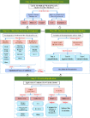
Influence of the cation in hypophosphite-mediated catalyst-free reductive amination
Beilstein J. Org. Chem. 2025, 21, 1661–1670, doi:10.3762/bjoc.21.130
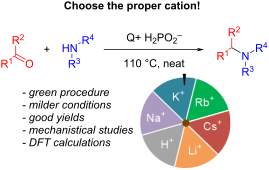
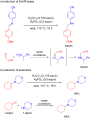
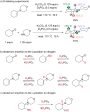
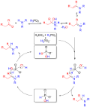
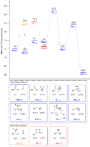
- Scientific) and readily available in bulk quantities compound. In organic synthesis, it is most commonly used in metal-catalyzed reductions where NaH2PO2 serves as a molecular hydrogen donor [6][7][8][9][10][11][12][13][14][15][16]. However, recent studies demonstrated application of hypophosphites as a


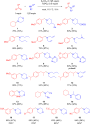
Catalytic asymmetric reactions of isocyanides for constructing non-central chirality
Beilstein J. Org. Chem. 2025, 21, 1648–1660, doi:10.3762/bjoc.21.129
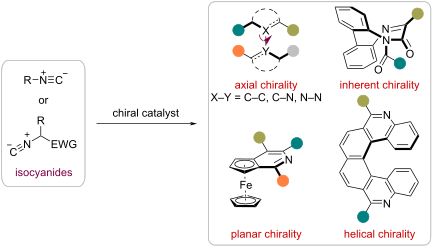
- ], insertion reactions [16][17][18], cycloaddition reactions (e.g., [4 + 1], [3 + 2]) [19][20], and others [21][22][23]. Particularly, isocyanides have been widely exploited toward the preparation of centrally chiral structures through transition-metal-catalyzed or organocatalytic asymmetric reactions [24][25
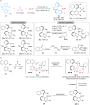
- reaction type and the chirality type of resulting products. Perspective Isocyanide-based transformations Palladium-catalyzed isocyanide insertion reactions In 2018, Luo, Zhu, and co-workers developed a palladium-catalyzed enantioselective reaction between ferrocene-derived vinyl isocyanides 1 and aryl
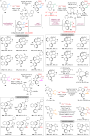
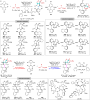
- ). However, the diastereoselectivity is modest (1.7:1), likely resulting from insufficient chiral induction during the indolinone-forming step. Moving forward, this strategy was applied in the construction of axial chirality by the same group. In 2021, they reported a Pd(OAc)2/L2-catalyzed imidoylative




Photocatalysis and photochemistry in organic synthesis
Beilstein J. Org. Chem. 2025, 21, 1645–1647, doi:10.3762/bjoc.21.128
- thematic issue that visible light increases the reaction rate of palladium-catalyzed Negishi cross-couplings [34]. The integration of enabling technologies has also contributed to the success of photocatalytic organic synthesis [35]. Automated reaction platforms, high-throughput experimentation techniques
- , and flow chemistry are being harnessed to push the limits of light-driven reactions [36]. Terada and colleagues show in this thematic issue how flow chemistry is used to significantly improve the yield of a π-Lewis acidic metal-catalyzed cyclization–radical addition sequence [37]. Recently, chemists

Formal synthesis of a selective estrogen receptor modulator with tetrahydrofluorenone structure using [3 + 2 + 1] cycloaddition of yne-vinylcyclopropanes and CO
Beilstein J. Org. Chem. 2025, 21, 1639–1644, doi:10.3762/bjoc.21.127
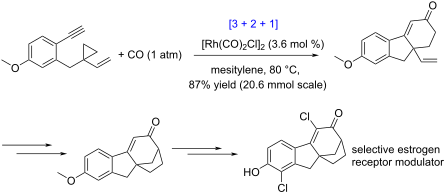
- University, Beijing, 100871, China 10.3762/bjoc.21.127 Abstract A formal synthesis of product VI with tetrahydroflurenone structure as selective estrogen receptor modulator has been realized. The Rh-catalyzed [3 + 2 + 1] reaction of yne-vinylcyclopropanes and CO (20 mmol scale, in 87% yield) for building
- . Applying the traditional solvent dioxane for the [Rh(CO)2Cl]2 catalyzed [3 + 2 + 1] reaction (the catalyst loading was increased from 5 mol % to 10 mol %) gave 9 in only 26% yield. To our delight, the reaction yield could be improved to 87% by using mesitylene [30] as the solvent and the loading of [Rh(CO


Transition-state aromaticity and its relationship with reactivity in pericyclic reactions
Beilstein J. Org. Chem. 2025, 21, 1613–1626, doi:10.3762/bjoc.21.125
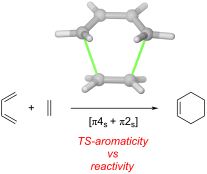
- Cope rearrangements [20]. More recently, Alabugin and co-workers reported that the gold(I)-catalyzed propargyl rearrangement depicted in Scheme 1b also follows a concerted oxonia Claisen pathway (via an aromatic TS) rather than through a higher barrier 6-endo-dig cyclization [21], which provides
- concerted mechanisms has not been considered. For instance, very little is known about the influence of TS-aromaticity (if any) on the barrier heights of catalyzed pericyclic reactions and related transformations. Our group has been focused on this aspect in recent years by exploring the interplay between
- this perspective article, we shall show the relationship between transition-state aromaticity and reactivity in representative pericyclic reactions. Perspective Lewis acid-catalyzed Diels–Alder cycloadditions It is well-established that catalytic amounts of a Lewis acid (LA) can significantly


3-Aryl-2H-azirines as annulation reagents in the Ni(II)-catalyzed synthesis of 1H-benzo[4,5]thieno[3,2-b]pyrroles
Beilstein J. Org. Chem. 2025, 21, 1595–1602, doi:10.3762/bjoc.21.123
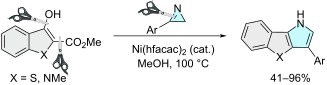
- method for the synthesis of 3-arylbenzo[4,5]thieno[3,2-b]pyrroles has been developed via pyrrole ring annulation to the aromatic benzo[b]thiophene system, using 3-arylazirines as a N‒C=C synthon. The reaction is catalyzed by Ni(hfacac)2 and proceeds through the azirine ring opening across the N=C3 bond
- arenes with azirines. These include the [3 + 2] cycloaddition of azirines to arynes (Scheme 1, reaction 1) [10][11][12], Pd-catalyzed reaction of azirines with iodoarenes (Scheme 1, reaction 2) [13], and reaction of 2-aroylazirines with naphthols (Scheme 1, reaction 3) [8]. The [3 + 2] annulation
- heteroaromatic system have been reported to date. The formation of dihydrobenzofuro[3,2-b]pyrrole cycloadducts as by-products has been observed in the synthesis of aziridines by the transition metal-catalyzed reaction of benzofurans with 3-arylazirines [16]. This paper presents the use of azirines as annulation

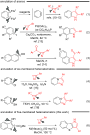


Thermodynamic equilibrium between locally excited and charge transfer states in perylene–phenothiazine dyads
Beilstein J. Org. Chem. 2025, 21, 1577–1586, doi:10.3762/bjoc.21.121
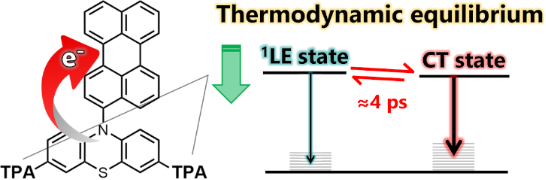
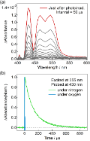
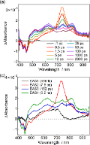
- -catalyzed cross-coupling reactions between bromo-substituted perylene or phenothiazine precursors and appropriate donor or linker units, followed by purification via column chromatography and gel permeation chromatography (Figures S18–S21 in Supporting Information File 1). The details of the syntheses are




Azide–alkyne cycloaddition (click) reaction in biomass-derived solvent CyreneTM under one-pot conditions
Beilstein J. Org. Chem. 2025, 21, 1544–1551, doi:10.3762/bjoc.21.117
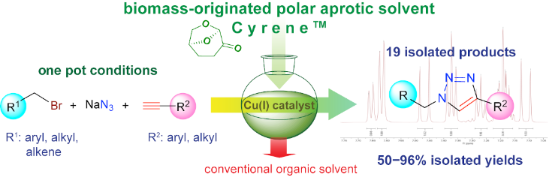
- CyreneTM, as a biomass-originated polar aprotic solvent, could be utilized as an alternative reaction medium for one-pot copper(I)-catalyzed azide–alkyne cycloaddition (click or CuAAC) reactions, for the synthesis of various 1,2,3-triazoles under mild conditions. Nineteen products involving N-substituted-4
- important transformation exhibiting higher chemical and environmental safety. Keywords: alternative solvent; click chemistry; cycloaddition; CyreneTM; 1,2,3-triazoles; Introduction In the past few decades, transition-metal-catalyzed coupling and addition reactions have represented one of the most powerful
- methods, the copper(I)-catalyzed azide–alkyne cycloaddition (CuAAC) reaction, the so-called click reaction [7], has received substantial attention for the selective synthesis of various 1,2,3-triazoles that are of utmost importance in the synthesis of biologically active compounds such as active


General method for the synthesis of enaminones via photocatalysis
Beilstein J. Org. Chem. 2025, 21, 1535–1543, doi:10.3762/bjoc.21.116
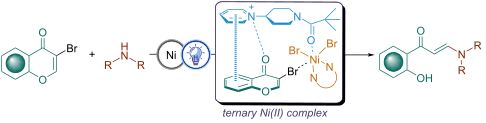
- enaminones has attracted much attention over the past decades. Kuwano’s group described the synthesis of enaminones from ethyl ketones via a nickel-catalyzed selective β-amination (Scheme 1A) [31]. The preparation of enaminones can also be achieved by the reaction of aldehydes and calcium carbide in the
- presence of amines and CuI as catalyst, as reported by Zhang and co-workers (Scheme 1B) [32]. On the other hand, Li et al. disclosed a silver-catalyzed amination of propargyl alcohols to afford enaminones (Scheme 1C) [33]. Although these new methods provide a wide variety of enaminones, there are
- -mediated reaction for the synthesis of enaminones from 3-bromochromones (Scheme 1D). Initially, a Ni(II)-catalyzed hydroamination protocol affords the intermediate 2-amino-3-bromochromanones, which upon photocatalytic dehalogenation and subsequent opening of the heterocyclic ring provide the corresponding




Calcium waste as a catalyst in the transesterification for demanding esters: scalability perspective
Beilstein J. Org. Chem. 2025, 21, 1520–1527, doi:10.3762/bjoc.21.114
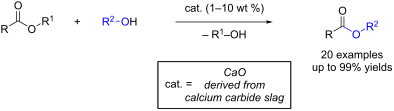
- . Commercial CaO catalyzed the transesterification with an 81% yield of fatty acid methyl esters (Table 1, entry 2). Ca(OH)2 showed weak transesterification activity and the yield of fatty acid methyl ester mixture was 26% (Table 1, entry 3). Similar results were obtained for the uncalcined carbide slag (CS25





