


Search results
Search for "diazo" in Full Text gives 161 result(s) in Beilstein Journal of Organic Chemistry.
Reusable and highly enantioselective water-soluble Ru(II)-Amm-Pheox catalyst for intramolecular cyclopropanation of diazo compounds
- Hamada S. A. Mandour,
- Yoko Nakagawa,
- Masaya Tone,
- Hayato Inoue,
- Nansalmaa Otog,
- Ikuhide Fujisawa,
- Soda Chanthamath and
- Seiji Iwasa
Beilstein J. Org. Chem. 2019, 15, 357–363, doi:10.3762/bjoc.15.31
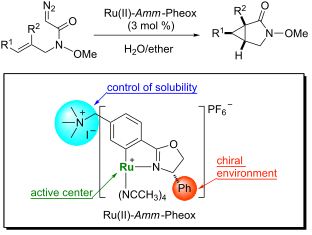
- Hibarigaoka, Tempaku-Cho, Toyohashi 441-8580, Japan 10.3762/bjoc.15.31 Abstract A reusable and highly enantioselective catalyst for the intramolecular cyclopropanation of various diazo ester and Weinreb amide derivatives was developed. The reactions catalyzed by a water-soluble Ru(II)-Amm-Pheox catalyst
- intramolecular cyclopropanation of a variety of diazo compounds such as diazoacetates and diazoacetamides in a biphasic medium. Diazoacetates were tested in our catalytic system because they are widely used for intramolecular cyclopropanation reactions and also the resulted lactones are widely distributed in
- ][36]. Diazoacetamides, in particular, diazo Weireb amides were tested in our catalytic system because the resulting cyclopropane products can be easily converted into the corresponding aldehydes, ketones, and alcohols [37][38][39][40][41][42][43][44][45][46][47][48]. Results and Discussion Asymmetric

Graphical Abstract

Figure 1: A comparison of the solubility of Ru(II)-Pheox (cat. 1) and Ru(II)-Amm-Pheox (cat. 2).

Scheme 1: Intramolecular cyclopropanation of various trans-allylic diazo Weinreb amide derivatives catalyzed....

Scheme 2: Synthetic transformation of cyclopropane products 2d and 2f.
Synthesis of 1,2-divinylcyclopropanes by metal-catalyzed cyclopropanation of 1,3-dienes with cyclopropenes as vinyl carbene precursors
- Jesús González,
- Alba de la Fuente,
- María J. González,
- Laura Díez de Tejada,
- Luis A. López and
- Rubén Vicente
Beilstein J. Org. Chem. 2019, 15, 285–290, doi:10.3762/bjoc.15.25

- –vinyl carbenes generated from vinyldiazoacetates (Scheme 1b) [14][15][16]. This reaction has been fruitfully exploited, although it is inherently limited by the restricted availability of potentially explosive diazo compounds. Consequently, the use of alternative vinyl carbene precursors is highly

Graphical Abstract

Scheme 1: Typical syntheses of 1,2-divinylcyclopropanes and rationale hypothesis for their syntheses from cyc...

Scheme 2: Synthesis of 1,2-divinylcyclopropane 3a: Optimization studies. aIsolated yield. bDetermined by 1H N...
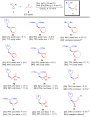
Scheme 3: Synthesis of 1,2-divinylcyclopropanes 3 from cyclopropenes 1 and unbiased 1,3-dienes 2: Scope. (Yie...

Scheme 4: Rh-catalyzed intramolecular cyclopropanation with dienylcyclopropene 4 (the trans/cis ratio is rela...

Scheme 5: Zn- or Rh-catalyzed reactions of cyclopropenes 1 with furan (6) and 1,4-cyclohexadiene (8) and comp...
Gold-catalyzed ethylene cyclopropanation
- Silvia G. Rull,
- Andrea Olmos and
- Pedro J. Pérez
Beilstein J. Org. Chem. 2019, 15, 67–71, doi:10.3762/bjoc.15.7
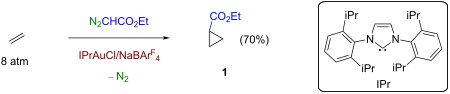
- transfer; cyclopropane; cyclopropylcarboxylate; ethylene cyclopropanation; ethyl diazoacetate; gold catalysis; Introduction Nowadays the olefin cyclopropanation through metal-catalyzed carbene transfer starting from diazo compounds to give olefins constitutes a well-developed tool (Scheme 1a), with an
- exquisite control of chemo-, enantio- and/or diastereoselectivity being achieved [1][2]. Previous developments have involved a large number of C=C-containing substrates but, to date, the methodology has not been yet employed with the simplest olefin, ethylene, for synthetic purposes [3]. Since diazo
- = tetrakis(3,5-bis(trifluoromethyl)phenyl)borate) catalyzes the ethylene cyclopropanation with ethyl diazoacetate as the carbene precursor, under mild conditions, with moderate yields (ca. 70%, EDA-based). Results and Discussion Diazo compounds N2=CRR’ usually react with metal complexes of groups 8–11 with

Graphical Abstract

Scheme 1: (a) General metal-catalyzed olefin cyclopropanation reaction with diazo compounds. (b) The ethylene...

Scheme 2: Routes toward ethyl cyclopropanecarboxylate (1). (a) Ethylene cyclopropanation described by De Brui...

Figure 1: Effect of the pressure of ethylene on the yields of ethyl cyclopropanecarboxylate in the reaction o...
Molecular iodine-catalyzed one-pot multicomponent synthesis of 5-amino-4-(arylselanyl)-1H-pyrazoles
- Camila S. Pires,
- Daniela H. de Oliveira,
- Maria R. B. Pontel,
- Jean C. Kazmierczak,
- Roberta Cargnelutti,
- Diego Alves,
- Raquel G. Jacob and
- Ricardo F. Schumacher
Beilstein J. Org. Chem. 2018, 14, 2789–2798, doi:10.3762/bjoc.14.256
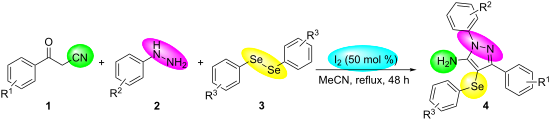
- -(phenylselanyl)-1H-pyrazol-5-amine was submitted to an oxidative dehydrogenative coupling to produce a diazo compound confirmed by X-ray analysis. Keywords: diaryl diselenide; diazo compound; 1H-pyrazole; molecular iodine; multicomponent reaction; Introduction Selenium-containing compounds are of great
- hydroperoxide in dichloromethane at room temperature for 2 h, the respective diazo aromatic compound 6 could be obtained in 50% yield (Scheme 5). As can be seen, the reaction proceeded smoothly allowing formation of the new N=N bond without cleavage of the C–Se bond under the oxidant media and the presence of
- -(phenylselanyl)-1H-pyrazol-5-amine proved to be a promising starting material for synthesizing new diazo compounds with higher added value. The protocol described here can be considered a valuable tool for the advance of the synthesis and pharmacological studies of selenium-containing pyrazoles and derivatives

Graphical Abstract

Scheme 1: Synthesis of selanyl-pyrazoles and their derivatives previously described.

Scheme 2: Multicomponent reaction proposed in this work.

Scheme 3: Direct selanylation reaction of 5-amino-pyrazole 5a with diphenyl diselenide (3a) under the optimiz...

Scheme 4: Proposed reaction mechanism.

Scheme 5: Synthesis of diazo pyrazole derivative 6.

Figure 1: Molecular structure of compound 6. The hydrogen atoms are omitted for clarity [27].
Novel photochemical reactions of carbocyclic diazodiketones without elimination of nitrogen – a suitable way to N-hydrazonation of C–H-bonds
- Liudmila L. Rodina,
- Xenia V. Azarova,
- Jury J. Medvedev,
- Dmitrij V. Semenok and
- Valerij A. Nikolaev
Beilstein J. Org. Chem. 2018, 14, 2250–2258, doi:10.3762/bjoc.14.200
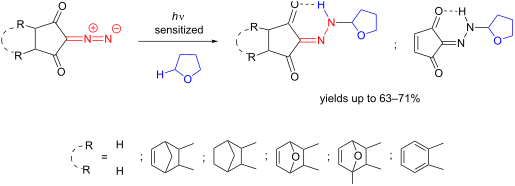
- , 3 Nobel st., Russia 10.3762/bjoc.14.200 Abstract The sensitized photoexcitation of 2-diazocyclopentane-1,3-diones in the presence of THF leads to the insertion of the terminal N-atom of the diazo group into the α-С–Н bond of THF, producing the associated N-alkylhydrazones in yields of up to 63–71
- with up to 90–97% yield. Keywords: C–H insertion; diazo compounds; excited state; photochemistry; Wolff rearrangement; Introduction Photochemical reactions of diazocarbonyl compounds are well-known transformations in the synthesis of the diversified acyclic, carbo- and heterocyclic structures [1][2
- ][3][4][5]. A direct irradiation of diazo compounds by UV light usually gives rise to nitrogen elimination and generation of carbenes [6][7][8][9][10] or ketenes [11][12][13][14][15][16][17][18] and their ensuing transformations. On the other hand, photochemical reactions of diazocarbonyl compounds

Graphical Abstract

Figure 1: The structures of carbocyclic diazodiketones 1a–g and C–H-donating tetrahydrofuran used in the proj...

Figure 2: Molecular structure of hydrazone 2b as determined by X-ray analysis data (Olex2 plot with 50% proba...

Scheme 1: Photochemical cycloelimination of furans from hydrazones 2d,e.

Scheme 2: Different pathways of diazodiketones 1 light-induced reactions in the singlet (reaction I) and trip...
Hypervalent organoiodine compounds: from reagents to valuable building blocks in synthesis
- Gwendal Grelier,
- Benjamin Darses and
- Philippe Dauban
Beilstein J. Org. Chem. 2018, 14, 1508–1528, doi:10.3762/bjoc.14.128
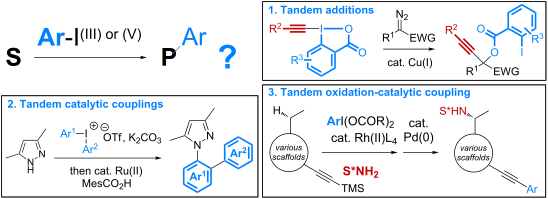
- including the cleavage of the triple bond and the fragmentation of the carboxylate unit, would finally lead to the furans 24 and the formamide 25. The group of Waser has discovered an atom-economical multi-component process between alkynylbenziodoxolones 22 and diazo compounds, which is catalyzed by the
- benzoate motif and the alkynyl group are obtained from various acceptor or donor–acceptor diazo compounds 30, while the use of vinyldiazo derivatives 32 leads to enynes 33 arising from the vinylogous addition of the carboxylate. Significantly, the benzoyloxy-alkynylation reaction can be applied to the late
- , the same group has demonstrated the ability to perform the reaction with TIPS-EBX 37 in an enantioselective manner using the cyclopropylbisoxazoline ligand 38 (Scheme 12) [47]. Starting from various acceptor diazo compounds, the gem-addition of the carboxylate and the alkyne proceeds with ees of up to

Graphical Abstract

Scheme 1: Strategies to address the issue of sustainability with polyvalent organoiodine reagents.
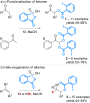
Scheme 2: Functionalization of ketones and alkenes with IBX.

Scheme 3: Functionalization of pyrroles with DMP.

Scheme 4: Catalytic benzoyloxy-trifluoromethylation reported by Szabó.

Scheme 5: Catalytic benzoyloxy-trifluoromethylation reported by Mideoka.

Scheme 6: Catalytic 1,4-benzoyloxy-trifluoromethylation of dienes.

Scheme 7: Catalytic benzoyloxy-trifluoromethylation of allylamines.

Scheme 8: Catalytic benzoyloxy-trifluoromethylation of enynes.

Scheme 9: Catalytic benzoyloxy-trifluoromethylation of allenes.

Scheme 10: Alkynylation of N-(aryl)imines with EBX for the formation of furans.

Scheme 11: Catalytic benzoyloxy-alkynylation of diazo compounds.

Scheme 12: Catalytic asymmetric benzoyloxy-alkynylation of diazo compounds.

Scheme 13: Catalytic 1,2-benzoyloxy-azidation of alkenes.

Scheme 14: Catalytic 1,2-benzoyloxy-azidation of enamides.

Scheme 15: Catalytic 1,2-benzoyloxy-iodination of alkenes.

Scheme 16: Seminal study with cyclic diaryl-λ3-iodane.

Scheme 17: Synthesis of alkylidenefluorenes from cyclic diaryl-λ3-iodanes.

Scheme 18: Synthesis of alkyne-substituted alkylidenefluorenes.

Scheme 19: Synthesis of phenanthrenes from cyclic diaryl-λ3-iodanes.

Scheme 20: Synthesis of dibenzocarbazoles from cyclic diaryl-λ3-iodanes.

Scheme 21: Synthesis of triazolophenantridines from cyclic diaryl-λ3-iodanes.

Scheme 22: Synthesis of functionalized benzoxazoles from cyclic diaryl-λ3-iodanes.

Scheme 23: Sequential difunctionalization of cyclic diaryl-λ3-iodanes.

Scheme 24: Double Suzuki–Miyaura coupling reaction of cyclic diaryl-λ3-iodanes.

Scheme 25: Synthesis of a δ-carboline from cyclic diaryl-λ3-iodane.

Scheme 26: Synthesis of N-(aryl)carbazoles from cyclic diaryl-λ3-iodanes.

Scheme 27: Synthesis of carbazoles from cyclic diaryl-λ3-iodanes.

Scheme 28: Synthesis of carbazoles and acridines from cyclic diaryl-λ3-iodanes.

Scheme 29: Synthesis of dibenzothiophenes from cyclic diaryl-λ3-iodanes.

Scheme 30: Synthesis of various sulfur heterocycles from cyclic diaryl-λ3-iodanes.

Scheme 31: Synthesis of dibenzothioheterocycles from cyclic diaryl-λ3-iodanes.

Scheme 32: Synthesis of dibenzosulfides and dibenzoselenides from cyclic diaryl-λ3-iodanes.

Scheme 33: Synthesis of dibenzosulfones from cyclic diaryl-λ3-iodanes.

Scheme 34: Seminal study with linear diaryl-λ3-iodanes.

Scheme 35: N-Arylation of benzotriazole with symmetrical diaryl-λ3-iodanes.

Scheme 36: Tandem catalytic C–H/N–H arylation of indoles with diaryl-λ3-iodanes.

Scheme 37: Tandem N-arylation/C(sp2)–H arylation with diaryl-λ3-iodanes.

Scheme 38: Catalytic intermolecular diarylation of anilines with diaryl-λ3-iodanes.

Scheme 39: Catalytic synthesis of diarylsulfides with diaryl-λ3-iodanes.

Scheme 40: α-Arylation of enolates using [bis(trifluoroacetoxy)iodo]arenes.

Scheme 41: Mechanism of the α-arylation using [bis(trifluoroacetoxy)iodo]arene.

Scheme 42: Catalytic nitrene additions mediated by [bis(acyloxy)iodo]arenes.

Scheme 43: Tandem of C(sp3)–H amination/sila-Sonogashira–Hagihara coupling.

Scheme 44: Tandem reaction using a λ3-iodane as an oxidant, a substrate and a coupling partner.

Scheme 45: Synthesis of 1,2-diarylated acrylamidines with ArI(OAc)2.
Atom-economical group-transfer reactions with hypervalent iodine compounds
- Andreas Boelke,
- Peter Finkbeiner and
- Boris J. Nachtsheim
Beilstein J. Org. Chem. 2018, 14, 1263–1280, doi:10.3762/bjoc.14.108
- -catalysed reaction with diazo compounds 42 (Scheme 22) [56]. This strategy is not only atom economic regarding the applied hypervalent iodine reagent but also with regard to the chosen substrate. The metal carbene species generated from the diazo compounds displays nucleophilic as well as electrophilic
- reactivity at the same carbon atom and only gaseous dinitrogen is produced as stoichiometric waste. The reaction provides oxyalkynylated products 43 in high yields and addresses a broad scope of diazo derivatives 42 and EBX compounds 36a. For diazo compounds bearing hydrogen, alkyl or aryl groups (R1
- of elemental nitrogen is lost over the course of the reaction. The overall AE is only diminished by the necessity to use two equivalents of the diazo compound (AE = 74% for 43b). Furthermore, an enantioselective version of this oxyalkynylation (for R1 = H) was developed [57]. Employing a chiral

Graphical Abstract

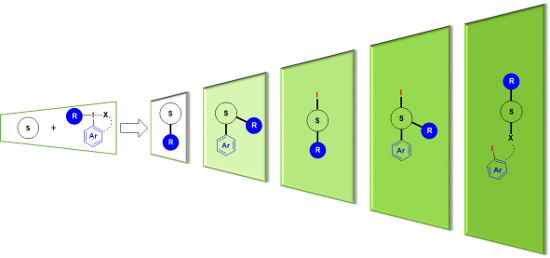
Scheme 1: Overview of different types of iodane-based group-transfer reactions and their atom economy based o...

Scheme 2: (a) Structure of diaryliodonium salts 1. (b) Diarylation of a suitable substrate A with one equival...

Scheme 3: Synthesis of biphenyls 3 and 3’ with symmetrical diaryliodonium salts 1.

Scheme 4: Synthesis of diaryl thioethers 5.
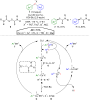
Scheme 5: Synthesis of two distinct S-aryl dithiocarbamates 7 and 7’ from one equivalent of diaryliodonium sa...

Scheme 6: Synthesis of substituted isoindolin-1-ones 9 from 2-formylbenzonitrile 8 and the postulated reactio...

Scheme 7: Domino C-/N-arylation of indoles 10.

Scheme 8: Domino modification of N-heterocycles 12 via in situ-generated directing groups.

Scheme 9: Synthesis of triarylamines 17 through a double arylation of anilines.
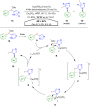
Scheme 10: Selective conversion of novel aryl(imidazolyl)iodonium salts 1b to 1,5-disubstituted imidazoles 18.

Scheme 11: Selected examples for the application of cyclic diaryliodonium salts 19.

Scheme 12: Tandem oxidation–arylation sequence with (dicarboxyiodo)benzenes 20.

Scheme 13: Oxidative α-arylation via the transfer of an intact 2-iodoaryl group.

Scheme 14: Tandem ortho-iodination/O-arylation cascade with PIDA derivatives 20b.

Scheme 15: Synthesis of meta-N,N-diarylaminophenols 28 and the postulated mechanism.

Scheme 16: (Dicarboxyiodo)benzene-mediated metal-catalysed C–H amination and arylation.

Scheme 17: Postulated mechanism for the amination–arylation sequence.

Scheme 18: Auto-amination and cross-coupling of PIDA derivatives 20c.

Scheme 19: Tandem C(sp3)–H olefination/C(sp2)–H arylation.

Scheme 20: Atom efficient functionalisations with benziodoxolones 36.

Scheme 21: Atom-efficient synthesis of furans 39 from benziodoxolones 36a and their further derivatisations.

Scheme 22: Oxyalkynylation of diazo compounds 42.

Scheme 23: Enantioselective oxyalkynylation of diazo compounds 42’.

Scheme 24: Iron-catalysed oxyazidation of enamides 45.
One hundred years of benzotropone chemistry
- Arif Dastan,
- Haydar Kilic and
- Nurullah Saracoglu
Beilstein J. Org. Chem. 2018, 14, 1120–1180, doi:10.3762/bjoc.14.98
- benzotropones 11 and 12 (Scheme 14 and Scheme 33) [78]. Diazo compound 76 was prepared from 4,5-benzotropone hydrazone under oxidative conditions. Irradiation of matrix-isolated 7-diazo-7H-benzo[7]annulene (76) afforded a mixture of triplet 7H-benzo[7]annulenylidene (77), 2,3-benzobicyclo[4.1.0]hepta-2,4,6
- ], while the allenic rearrangement product 183 for the carbene 75 was not detected in the photolysis of a diazo compound (Scheme 33) [78]. 2,3-Benzotropone (12) was converted to gem-dichloride 187 to achieve diazirine as carbene precursor (Scheme 33) [77][144]. 3.2.2. Ring-expansion reactions via a tropone
- of azo, nitro, and amino derivatives of 6-hydroxy-2,3-benzotropone (239) (Scheme 42) [164]. While 7-amino derivative 264 was prepared via diazo coupling of 239 with diazotized p-toluidine in a pyridine solution followed by hydrogenation, the nitration of 239 in acetic acid solution afforded nitro

Graphical Abstract

Scheme 1: Tropone (1), tropolone (2) and their resonance structures.

Figure 1: Natural products containing a tropone nucleus.

Figure 2: Possible isomers 11–13 of benzotropone.

Scheme 2: Synthesis of benzotropones 11 and 12.

Scheme 3: Oxidation products of benzotropylium fluoroborate (16).

Scheme 4: Oxidation of 7-bromo-5H-benzo[7]annulene (22).

Scheme 5: Synthesis of 4,5-benzotropone (11) using o-phthalaldehyde (27).

Scheme 6: Synthesis of 4,5-benzotropone (11) starting from oxobenzonorbornadiene 31.

Scheme 7: Acid-catalyzed cleavage of oxo-bridge of 34.

Scheme 8: Synthesis of 4,5-benzotropone (11) from o-xylylene dibromide (38).

Scheme 9: Synthesis of 4,5-benzotropone (11) via the carbene adduct 41.

Scheme 10: Heck coupling strategy for the synthesis of 11.

Scheme 11: Synthesis of benzofulvalenes via carbonyl group of 4,5-benzotropone (11).

Figure 3: Some cycloheptatrienylium cations.

Scheme 12: Synthesis of condensation product 63 and its subsequent oxidative cyclization products.

Figure 4: A novel series of benzo[7]annulenes prepared from 4,5-benzotropone (11).

Scheme 13: Preparation of substituted benzo[7]annulene 72 using the Mukaiyama-Michael reaction.

Figure 5: Possible benzo[7]annulenylidenes 73–75.

Scheme 14: Thermal and photochemical decomposition of 7-diazo-7H-benzo[7]annulene (76) and the trapping of int...

Scheme 15: Synthesis of benzoheptafulvalene 86.

Scheme 16: Synthesis of 7-(diphenylmethylene)-7H-benzo[7]annulene (89).

Scheme 17: Reaction of 4,5-benzotropone (11) with dimethyl diazomethane.

Scheme 18: Synthesis of dihydrobenzomethoxyazocine 103.

Scheme 19: Synthesis and reducibility of benzo-homo-2-methoxyazocines.

Scheme 20: Synthesis of 4,5-benzohomotropones 104 and 115 from 4,5-benzotropones 11 and 113.

Scheme 21: A catalytic deuterogenation of 4,5-benzotropone (11) and synthesis of 5-monosubstituted benzo[7]ann...

Scheme 22: Synthesis of methyl benzo[7]annulenes 131 and 132.

Scheme 23: Ambident reactivity of halobenzo[7]annulenylium cations 133a/b.

Scheme 24: Preparation of benzo[7]annulenylidene–iron complexes 147.

Scheme 25: Synthesis of 1-ethynylbenzotropone (150) and the etheric compound 152 from 4,5-benzotropone (11) wi...

Scheme 26: Thermal decomposition of 4,5-benzotropone (11).

Scheme 27: Reaction of 4,5-benzotropone (11) with 1,2-ethanediol and 1,2-ethanedithiol.

Scheme 28: Conversions of 1-benzosuberone (162) to 2,3-benzotropone (12).

Scheme 29: Synthesis strategies for 2,3-bezotropone (12) using 1-benzosuberones.

Scheme 30: Oxidation-based synthesis of 2,3-benzotropone (12) via 1-benzosuberone (162).

Scheme 31: Synthesis of 2,3-benzotropone (12) from α-tetralone (171) via ring-expansion.

Scheme 32: Preparation of 2,3-benzotropone (12) by using of benzotropolone 174.

Figure 6: Benzoheptafulvenes as condensation products of 2,3-benzotropone (12).

Scheme 33: Conversion of 2,3-benzotropone (12) to tosylhydrazone salt 182 and gem-dichloride 187.

Figure 7: Benzohomoazocines 191–193 and benzoazocines 194–197.

Scheme 34: From 2,3-benzotropone (12) to carbonium ions 198–201.

Scheme 35: Cycloaddition reactions of 2,3-benzotropone (12).
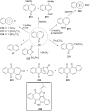
Scheme 36: Reaction of 2,3-benzotropone (12) with various reagents and compounds.

Figure 8: 3,4-Benzotropone (13) and its resonance structure.

Scheme 37: Synthesis of 6,7-benzobicyclo[3.2.0]hepta-3,6-dien-2-one (230).

Figure 9: Photolysis and thermolysis products of 230.

Figure 10: Benzotropolones and their tautomeric structures.

Scheme 38: Synthesis strategies of 4,5-benzotropolone (238).

Scheme 39: Synthesis protocol for 2-hydroxy-4,5-benzotropone (238) using oxazole-benzo[7]annulene 247.

Figure 11: Some quinoxaline and pyrazine derivatives 254–256 prepared from 4,5-benzotropolone (238).

Scheme 40: Nitration product of 4,5-benzotropolone (238) and its isomerization to 1-nitro-naphthoic acid (259)....

Scheme 41: Synthesis protocol for 6-hydroxy-2,3-benzotropone (239) from benzosuberone (162).
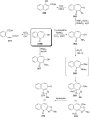
Scheme 42: Various reactions via 6-hydroxy-2,3-benzotropone (239).

Scheme 43: Photoreaction of 6-hydroxy-2,3-benzotropone (239).

Scheme 44: Synthesis of 7-hydroxy-2,3-benzotropone (241) from benzosuberone (162).

Scheme 45: Synthesis strategy for 7-hydroxy-2,3-benzotropone (241) from ketone 276.

Scheme 46: Synthesis of 7-hydroxy-2,3-benzotropone (241) from β-naphthoquinone (280).

Scheme 47: Synthesis of 7-hydroxy-2,3-benzotropone (241) from bicyclic endoperoxide 213.

Scheme 48: Synthesis of 7-hydroxy-2,3-benzotropone (241) by ring-closing metathesis.

Figure 12: Various monosubstitution products 289–291 of 7-hydroxy-2,3-benzotropone (241).

Scheme 49: Reaction of 7-hydroxy-2,3-benzotropone (241) with various reagents.

Scheme 50: Synthesis of 4-hydroxy-2,3-benzotropones 174 and 304 from diketones 300/301.

Scheme 51: Catalytic hydrogenation of diketones 300 and 174.

Scheme 52: Synthesis of halo-benzotropones from alkoxy-naphthalenes 306, 307 and 310.

Figure 13: Unexpected byproducts 313–315 during synthesis of chlorobenzotropone 309.

Figure 14: Some halobenzotropones and their cycloadducts.

Scheme 53: Multisep synthesis of 2-chlorobenzotropone 309.

Scheme 54: A multistep synthesis of 2-bromo-benzotropone 26.

Scheme 55: A multistep synthesis of bromo-2,3-benzotropones 311 and 316.

Scheme 56: Oxidation reactions of 8-bromo-5H-benzo[7]annulene (329) with some oxidants.

Scheme 57: Synthesis of 2-bromo-4,5-benzotropone (26).

Scheme 58: Synthesis of 6-chloro-2,3-benzotropone (335) using LiCl and proposed intermediate 336.

Scheme 59: Reaction of 7-bromo-2,3-benzotropone (316) with methylamine.

Scheme 60: Reactions of bromo-2,3-benzotropones 26 and 311 with dimethylamine.

Scheme 61: Reactions of bromobenzotropones 311 and 26 with NaOMe.

Scheme 62: Reactions of bromobenzotropones 26 and 312 with t-BuOK in the presence of DPIBF.

Scheme 63: Cobalt-catalyzed reductive cross-couplings of 7-bromo-2,3-benzotropone (316) with cyclic α-bromo en...

Figure 15: Cycloadduct 357 and its di-π-methane rearrangement product 358.

Scheme 64: Catalytic hydrogenation of 2-chloro-4,5-benzotropone (311).

Scheme 65: Synthesis of dibromo-benzotropones from benzotropones.

Scheme 66: Bromination/dehydrobromination of benzosuberone (162).

Scheme 67: Some transformations of isomeric dibromo-benzotropones 261A/B.

Scheme 68: Transformations of benzotropolone 239B to halobenzotropolones 369–371.

Figure 16: Bromobenzotropolones 372–376 and 290 prepared via bromination/dehydrobromination strategy.

Scheme 69: Synthesis of some halobenzotropolones 289, 377 and 378.

Figure 17: Bromo-chloro-derivatives 379–381 prepared via chlorination.

Scheme 70: Synthesis of 7-iodo-3,4-benzotropolone (382).

Scheme 71: Hydrogenation of bromobenzotropolones 369 and 370.

Scheme 72: Debromination reactions of mono- and dibromides 290 and 375.

Figure 18: Nitratation and oxidation products of some halobenzotropolenes.
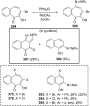
Scheme 73: Azo-coupling reactions of some halobenzotropolones 294, 375 and 378.

Figure 19: Four possible isomers of dibenzotropones 396–399.

Figure 20: Resonance structures of tribenzotropone (400).

Scheme 74: Two synthetic pathways for tribenzotropone (400).

Scheme 75: Synthesis of tribenzotropone (400) from dibenzotropone 399.

Scheme 76: Synthesis of tribenzotropone (400) from 9,10-phenanthraquinone (406).

Scheme 77: Synthesis of tribenzotropone (400) from trifluoromethyl-substituted arene 411.

Figure 21: Dibenzosuberone (414).

Figure 22: Reduction products 415 and 416 of tribenzotropone (400).

Figure 23: Structures of tribenzotropone dimethyl ketal 417 and 4-phenylfluorenone (412) and proposed intermed...

Figure 24: Structures of benzylidene- and methylene-9H-tribenzo[a,c,e][7]annulenes 419 and 420 and chiral phos...

Figure 25: Structures of tetracyclic alcohol 422, p-quinone methide 423 and cation 424.

Figure 26: Structures of host molecules 425–427.

Scheme 78: Synthesis of non-helical overcrowded derivatives syn/anti-431.

Figure 27: Hexabenzooctalene 432.

Figure 28: Structures of possible eight isomers 433–440 of naphthotropone.

Scheme 79: Synthesis of naphthotropone 437 starting from 1-phenylcycloheptene (441).

Scheme 80: Synthesis of 10-hydroxy-11H-cyclohepta[a]naphthalen-11-one (448) from diester 445.

Scheme 81: Synthesis of naphthotropone 433.

Scheme 82: Synthesis of naphthotropones 433 and 434 via cycloaddition reaction.

Scheme 83: Synthesis of naphthotropone 434 starting from 452.

Figure 29: Structures of tricarbonyl(tropone)irons 458, and possible cycloadducts 459.

Scheme 84: Synthesis of naphthotropone 436.

Scheme 85: Synthesis of precursor 465 for naphthotropone 435.

Scheme 86: Generation of naphthotropone 435 from 465.

Figure 30: Structures of tropylium cations 469 and 470.

Figure 31: Structures of tropylium ions 471+.BF4−, 472+.BF4−, and 473+.BF4−.

Scheme 87: Synthesis of tropylium ions 471+.BF4− and 479+.ClO4−.

Scheme 88: Synthesis of 1- and 2-methylanthracene (481 and 482) via carbene–carbene rearrangement.

Figure 32: Trapping products 488–490.

Scheme 89: Generation and chemistry of a naphthoannelated cycloheptatrienylidene-cycloheptatetraene intermedia...

Scheme 90: Proposed intermediates and reaction pathways for adduct 498.

Scheme 91: Exited-state intramolecular proton transfer of 505.

Figure 33: Benzoditropones 506 and 507.

Scheme 92: Synthesis of benzoditropone 506e.

Scheme 93: Synthetic approaches for dibenzotropone 507 via tropone (1).

Scheme 94: Formation mechanisms of benzoditropone 507 and 516 via 515.

Scheme 95: Synthesis of benzoditropones 525 and 526 from pyromellitic dianhydride (527).

Figure 34: Possible three benzocyclobutatropones 534–536.

Scheme 96: Synthesis of benzocyclobutatropones 534 and 539.

Scheme 97: Synthesis attempts for benzocyclobutatropone 545.

Scheme 98: Generation and trapping of symmetric benzocyclobutatropone 536.

Scheme 99: Synthesis of chloro-benzocyclobutatropone 552 and proposed mechanism of fluorenone derivatives.

Scheme 100: Synthesis of tropolone analogue 559.

Scheme 101: Synthesis of tropolones 561 and 562.

Figure 35: o/p-Tropoquinone rings (563 and 564) and benzotropoquinones (565–567).

Scheme 102: Synthesis of benzotropoquinone 566.

Scheme 103: Synthesis of benzotropoquinone 567 via a Diels–Alder reaction.

Figure 36: Products 575–577 through 1,2,3-benzotropoquinone hydrate 569.

Scheme 104: Structures 578–582 prepared from tropoquinone 567.

Figure 37: Two possible structures 583 and 584 for dibenzotropoquinone, and precursor compound 585 for 583.
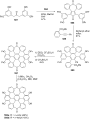
Scheme 105: Synthesis of saddle-shaped ketone 592 using dibenzotropoquinone 584.
Addition of dithi(ol)anylium tetrafluoroborates to α,β-unsaturated ketones
- Yu-Chieh Huang,
- An Nguyen,
- Simone Gräßle,
- Sylvia Vanderheiden,
- Nicole Jung and
- Stefan Bräse
Beilstein J. Org. Chem. 2018, 14, 515–522, doi:10.3762/bjoc.14.37
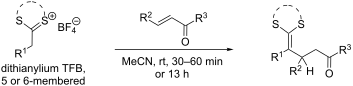
- Discussion Addition to α,β-unsaturated ketones Since we could show the benefits of a use of dithi(ol)anylium TFBs instead of ketene 1,3-dithioacetals for the addition of diazo components [31], we were interested in a more general use of dithi(ol)anylium TFBs for the addition to electrophiles in α-position to

Graphical Abstract

Scheme 1: Previously reported procedure for the addition of ketene dithioacetals to α,β-unsaturated ketones [33] ...

Scheme 2: Addition of dithi(ol)anylium TFBs to α,β-unsaturated non-cyclic ketones.

Scheme 3: Addition of dithi(ol)anylium TFBs to α,β-unsaturated cyclic ketones.

Scheme 4: Single versus double addition of ketones to dithiolanylium TFB 1e. adr was calculated from the 1H N...

Scheme 5: The scope of the presented protocol demonstrated by examples including the use of additional electr...

Scheme 6: Synthesis of diene dithioacetals 18a and 18b by addition of ynone 17 to α-alkyl or aryl-substitued ...
Stimuli-responsive oligonucleotides in prodrug-based approaches for gene silencing
- Françoise Debart,
- Christelle Dupouy and
- Jean-Jacques Vasseur
Beilstein J. Org. Chem. 2018, 14, 436–469, doi:10.3762/bjoc.14.32
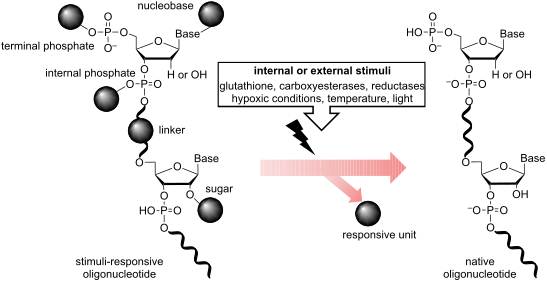
- suitable reagent, which generally is a diazo derivative bearing a photoresponsive moiety, or b) incorporation of an appropriate photocaged phosphoramidite during the solid-supported ON synthesis [73][78]. The advantage of the first approach is that the functionalization results from a reaction with
- available unmodified ONs, while the second approach first requires the synthesis of a modified unit followed by its incorporation into ON during solid-phase synthesis. However, the first approach is far less efficient than the second one because the labeling of phosphodiester linkages with diazo compounds
- is not specific to a given phosphodiester in siRNA and cannot be controlled in location and the amount of caging units, yielding a random mixture of ONs. Moreover, diazo compounds exhibit certain reactivity toward nucleobases that can lead to undesired side reactions [74]. Considering their RNAi

Graphical Abstract

Scheme 1: Demasking under reducing agents of ON prodrugs modified as phosphotriesters with A) benzyl groups [13] ...

Scheme 2: A) Synthesis via phosphoramidite chemistry and B) demasking under the reducing environment of 2’-O-...

Scheme 3: Synthesis via phosphoramidite chemistry of various 2’-O-alkyldithiomethyl (RSSM)-modified RNAs bear...

Scheme 4: A) siRNA conjugates to cholesterol [19] and B) PNA conjugates to a triphenylphosphonium [20] through a disu...

Scheme 5: Synthesis via phosphoramidite chemistry and deprotection mediated by nitroreductase/NADH of hypoxia...

Scheme 6: Synthesis via phosphoramidite chemistry and conversion mediated by nitroreductase/NADH of hypoxia-a...

Scheme 7: Incorporation of O6-(4-nitrobenzyl)-2’-deoxyguanosine into an ON prone to form a G-quadruplex struc...

Scheme 8: Synthesis and mechanism for the demasking of ON prodrugs from A) S-acylthioethyl phosphotriester [29] a...

Figure 1: Oligothymidylates bearing A) 2,2-bis(ethoxycarbonyl)-3-(pivaloyloxy)propyl- and B) 2-cyano-2(2-phen...

Figure 2: Oligothymidylates containing esterase and thermo-labile (4-acetylthio-2,2-dimethyl-3-oxobutyl) phos...

Scheme 9: Phosphoramidites and the corresponding RNA prodrugs protected as A) t-Bu-SATE, B) OH-SATE and C) A-...

Scheme 10: Mechanism of the hydrolysis of 2’-O-acyloxymethyl ONs mediated by carboxyesterases [46]. The hydrolysis...

Scheme 11: Synthesis of partially 2’-O-PivOM-modified RNAs [49] and 2’-O-PiBuOM-modified RNAs [53] using their corresp...

Figure 3: A) 2’-O-amino and guanidino-containing acetal ester phosphoramidites and B) 2’-O-(amino acid) aceta...

Scheme 12: Prodrugs of tricyclo-ONs functionalized with A) ethyl (tcee-T) and B) hexadecyl (tchd-T) ester func...

Scheme 13: Demasking mechanism of fma thiophosphate triesters in CpG ODN upon heat action [58].

Scheme 14: Thermolytic cleavage of the hydroxy-alkylated thiophosphate and phosphato-/thiophosphato-alkylated ...

Scheme 15: Synthesis via phosphoramidite chemistry and thermolytic cleavage of alkylated (diisopropyl, diethyl...

Scheme 16: Synthesis of thermosensitive prodrugs of ODNs containing fma thiophosphate triesters combined to po...

Scheme 17: Caging of deoxycytidine in methylphosphonate ONs by using the thermolabile phenylsulfonylcarbamoyl ...

Figure 4: Biotinylated 1-(5-(aminomethyl)-2-nitrophenyl)ethyl phosphoramidite used to cage the 5’-end of a si...

Scheme 18: Introduction and cleavage of 1-(4,5-dimethoxy-2-nitrophenyl)ethyl (DMNPE) [74] and cyclododecyl-DMNPE (...

Scheme 19: Post-synthetic introduction of a thioether-enol phosphodiester (TEEP) linkage into a DNAzyme by the...

Scheme 20: A) NPP dT and dG phosphoramidites [91,92] and B) NPOM U and G phosphoramidites [83] used to introduce photocag...

Scheme 21: Introduction of the photocaged 3-NPOM nucleobase into phosphorothioate antisense and morpholino ant...

Scheme 22: Control of the activity of an antisense ODN using a photocaged hairpin [82]. Formation of the hairpin s...

Scheme 23: Control of alternative splicing using phosphorothioate (PS) 2’-OMe-photocaged ONs resulting from th...

Scheme 24: A) Light activation of a photocaged DNAzyme incorporating 3-NPOM thymidine in its catalytic site [87]; ...

Scheme 25: Incorporation of 3-(6-nitropiperonyloxymethyl) (NPOM) thymidine and 4-nitropiperonylethyl (NPE) deo...

Scheme 26: Synthesis of a photocaged DNA decoy from a 3-NPOM thymidine phosphoramidite and release of the NPOM...

Scheme 27: Synthesis of a caged DNA decoy hairpin containing a 7-nitroindole nucleotide and release of the mod...

Figure 5: Caged-2’-adenosines used by MacMillan et al [93,94] (X = O) and Piccirilli et al [95] (X = S) to study RNA mec...

Scheme 28: Synthesis of circular ODNs containing a photolabile linker as described by Tang et al. [101,104].

Scheme 29: Control of RNA digestion with RNase H using light activation of a photocaged hairpin [97].

Scheme 30: Photocontrol of RNA degradation using caged circular antisense ODNs containing a photoresponsive li...

Scheme 31: Control of RNA translation using an “RNA bandage” consisting of two short 2’-OMe ONs linked togethe...

Scheme 32: Control of alternative splicing using photocaged ONs resulting from the incorporation of an o-nitro...

Scheme 33: A) Light deactivation of a photocaged DNAzyme incorporating one photocleavable spacer in its cataly...

Scheme 34: Solid-phase synthesis of a caged vit E-siRNA conjugate and its release upon UV irradiation [106].

Scheme 35: Synthesis of a siRNA conjugated to a nanoparticle (NP) via a cyclooctene heterolinker from a siRNA-...
Progress in copper-catalyzed trifluoromethylation
- Guan-bao Li,
- Chao Zhang,
- Chun Song and
- Yu-dao Ma
Beilstein J. Org. Chem. 2018, 14, 155–181, doi:10.3762/bjoc.14.11
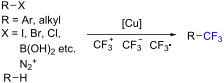
- proceeded via radical intermediates (Scheme 25), which is analogous to Sandmeyer halogenations of diazonium salts. First, the trifluoromethyl copper(I) species is generated from TMSCF3 and copper salt. Then, Cu(I)CF3 transfers one electron to the diazonium salt affording Cu(II)CF3 and a diazo radical
- following by the formation of an aryl radial from the diazo radical through the release of nitrogen. Finally, the aryl radical reacts with Cu(II)CF3 furnishing the trifluoromethylated product along with copper(I) salt. Compared with Fu’s method, this process needs an extra step to generate the diazionium
- (tpy) and a small amount of water as the co-solvent. A range of arenediazonium tetrafluoroborates were smoothly converted to the corresponding analogues in acceptable yields. A mechanistic study indicated that a radical process was involved in this conversion (Scheme 28). First, the diazo radical

Graphical Abstract

Figure 1: Selected examples of pharmaceutical and agrochemical compounds containing the trifluoromethyl group....

Scheme 1: Introduction of a diamine into copper-catalyzed trifluoromethylation of aryl iodides.
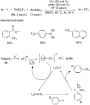
Scheme 2: Addition of a Lewis acid into copper-catalyzed trifluoromethylation of aryl iodides and the propose...

Scheme 3: Trifluoromethylation of heteroaromatic compounds using S-(trifluoromethyl)diphenylsulfonium salts a...

Scheme 4: The preparation of a new trifluoromethylation reagent and its application in trifluoromethylation o...

Scheme 5: Trifluoromethylation of aryl iodides using CF3CO2Na as a trifluoromethyl source.

Scheme 6: Trifluoromethylation of aryl iodides using MTFA as a trifluoromethyl source.

Scheme 7: Trifluoromethylation of aryl iodides using CF3CO2K as a trifluoromethyl source.
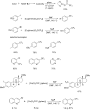
Scheme 8: Trifluoromethylation of aryl iodides and heteroaryl bromides using [Cu(phen)(O2CCF3)] as a trifluor...

Scheme 9: Trifluoromethylation of aryl iodides with DFPB and the proposed mechanism.

Scheme 10: Trifluoromethylation of aryl iodides using TCDA as a trifluoromethyl source. Reaction conditions: [...

Scheme 11: The mechanism of trifluoromethylation using Cu(II)(O2CCF2SO2F)2 as a trifluoromethyl source.

Scheme 12: Trifluoromethylation of benzyl bromide reported by Shibata’s group.

Scheme 13: Trifluoromethylation of allylic halides and propargylic halides reported by the group of Nishibayas...

Scheme 14: Trifluoromethylation of propargylic halides reported by the group of Nishibayashi.

Scheme 15: Trifluoromethylation of alkyl halides reported by Nishibayashi’s group.

Scheme 16: Trifluoromethylation of pinacol esters reported by the group of Gooßen.

Scheme 17: Trifluoromethylation of primary and secondary alkylboronic acids reported by the group of Fu.

Scheme 18: Trifluoromethylation of boronic acid derivatives reported by the group of Liu.

Scheme 19: Trifluoromethylation of organotrifluoroborates reported by the group of Huang.

Scheme 20: Trifluoromethylation of aryl- and vinylboronic acids reported by the group of Shibata.

Scheme 21: Trifluoromethylation of arylboronic acids via the merger of photoredox and Cu catalysis.

Scheme 22: Trifluoromethylation of arylboronic acids reported by Sanford’s group. Isolated yield. aYields dete...

Scheme 23: Trifluoromethylation of arylboronic acids and vinylboronic acids reported by the group of Beller. Y...

Scheme 24: Copper-mediated Sandmeyer type trifluoromethylation using Umemoto’s reagent as a trifluoromethylati...

Scheme 25: Copper-mediated Sandmeyer type trifluoromethylation using TMSCF3 as a trifluoromethylation reagent ...

Scheme 26: One-pot Sandmeyer trifluoromethylation reported by the group of Gooßen.

Scheme 27: Copper-catalyzed trifluoromethylation of arenediazonium salts in aqueous media.

Scheme 28: Copper-mediated Sandmeyer trifluoromethylation using Langlois’ reagent as a trifluoromethyl source ...

Scheme 29: Trifluoromethylation of terminal alkenes reported by the group of Liu.

Scheme 30: Trifluoromethylation of terminal alkenes reported by the group of Wang.

Scheme 31: Trifluoromethylation of tetrahydroisoquinoline derivatives reported by Li and the proposed mechanis...
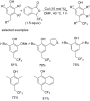
Scheme 32: Trifluoromethylation of phenol derivatives reported by the group of Hamashima.
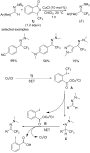
Scheme 33: Trifluoromethylation of hydrazones reported by the group of Baudoin and the proposed mechanism.

Scheme 34: Trifluoromethylation of benzamides reported by the group of Tan.

Scheme 35: Trifluoromethylation of heteroarenes and electron-deficient arenes reported by the group of Qing an...

Scheme 36: Trifluoromethylation of N-aryl acrylamides using CF3SO2Na as a trifluoromethyl source.

Scheme 37: Trifluoromethylation of aryl(heteroaryl)enol acetates using CF3SO2Na as the source of CF3 and the p...

Scheme 38: Trifluoromethylation of imidazoheterocycles using CF3SO2Na as a trifluoromethyl source and the prop...

Scheme 39: Copper-mediated trifluoromethylation of terminal alkynes using TMSCF3 as a trifluoromethyl source a...

Scheme 40: Improved copper-mediated trifluoromethylation of terminal alkynes reported by the group of Qing.

Scheme 41: Copper-catalyzed trifluoromethylation of terminal alkynes reported by the group of Qing.
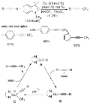
Scheme 42: Copper-catalyzed trifluoromethylation of terminal alkynes using Togni’s reagent and the proposed me...

Scheme 43: Copper-catalyzed trifluoromethylation of terminal alkynes using Umemoto’s reagent reported by the g...

Scheme 44: Copper-catalyzed trifluoromethylation of 3-arylprop-1-ynes reported by Xiao and Lin and the propose...
Rh(II)-mediated domino [4 + 1]-annulation of α-cyanothioacetamides using diazoesters: A new entry for the synthesis of multisubstituted thiophenes
- Jury J. Medvedev,
- Ilya V. Efimov,
- Yuri M. Shafran,
- Vitaliy V. Suslonov,
- Vasiliy A. Bakulev and
- Valerij A. Nikolaev
Beilstein J. Org. Chem. 2017, 13, 2569–2576, doi:10.3762/bjoc.13.253
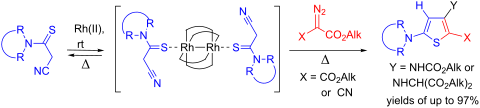
- was also shown that α-cyanothioacetamides easily interact with dirhodium carboxylates to give rather stable 2:1 complexes, resulting in an evident decrease in the efficiency of the catalytic process at moderate temperatures (20–30 °C). Keywords: [4 + 1]-annulation; catalysis; diazo compounds; domino
- domino reactions of diazo compounds with intermediate formation of ylides [7][8][9][10][11][12][13][14][15][16][17][18][19][20][21]. Thus, it was for example shown that ammonium or oxonium ylides generated in the course of intermolecular processes can be easily trapped by ketones, imines, α,β-unsaturated
- thioamides 1a–e of cyanoacetic acid (differing in the structure of substituents in the amino fragment) and diazoesters of three types: acyclic diazomalonates 2a,b, their cyclic analogue, 5-diazo-2,2-dimethyl-1,3-dioxane-4,6-dione (diazo Meldrum’s acid, 2c), as well as α-cyanodiazoacetic ester 2d were used in

Graphical Abstract

Scheme 1: General scheme for intramolecular heterocylization of intermediate X-ylides.

Figure 1: Thioamides 1a–e, diazoesters 2a–d and Rh(II)-catalysts used in the project.

Figure 2: The structures of compounds 4a and 3b according to the data of X-ray analysis (Olex2 plot with 50% ...

Scheme 2: Rh(II)-Catalyzed reactions of α-diazocyanoacetic ester 2d with α-cyanothioacetamides 1a–e.

Figure 3: The structure of thiophene 5c according to the data of X-ray analysis (Olex2 plot with 50% probabil...

Scheme 3: Interaction of thioacetamide 1e with dirhodium pivalate to produce complex 6e.

Figure 4: The structure of the complex 6e according to the data of X-ray analysis (Olex2 plot with 50% probab...

Scheme 4: The assumed mechanism for the formation of thiophenes 3, 5.

Scheme 5: The plausible mechanism for the formation of thiophenes 4.
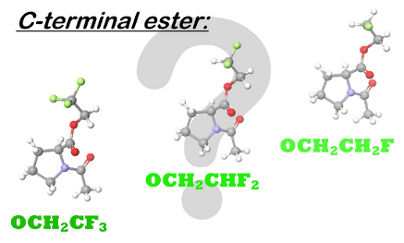
Hydrolysis, polarity, and conformational impact of C-terminal partially fluorinated ethyl esters in peptide models
- Vladimir Kubyshkin and
- Nediljko Budisa
Beilstein J. Org. Chem. 2017, 13, 2442–2457, doi:10.3762/bjoc.13.241
- added to a solution of N-acetylproline in water (2.5 mL). The mixture was stirred at room temperature for 16 hours. Then, trifluoroacetic acid (0.1 mL) was added, and the mixture was stirred for an additional hour to quench residual diazo compound. The solution was then freeze-dried. Purification of the
- crude material on a silica gel column afforded 30 mg of 4 as a clear oil (yield 20%). When the diazo compound was generated in an acetonitrile/water (1:1) mixture (4.5 mL), no heating was applied, and N-acetylproline was added to the yellowish mixture 5 min after mixing the amine with the nitrite. From

Graphical Abstract

Figure 1: A. Dependence of the lipophilicity (logP) on the number of fluorine atoms in a partially fluorinate...
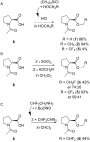
Scheme 1: Synthesis of the model compounds.

Figure 2: Kinetics of the C-terminal ester hydrolysis.

Figure 3: Partitioning of the esters 1–5 between octan-1-ol and water. Insert: comparison with the other part...

Scheme 2: Amide isomerism in the N-acetylprolyl fragment.

Figure 4: Enhancement of the trans/cis thermodynamic preferences in the ester models as a function of the sol...
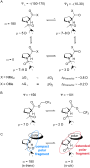
Scheme 3: A. Four-state conformational equilibrium model used by Siebler et al. [72] for explanations of the elev...

Scheme 4: Elevation of the trans/cis ratio in derivatives of N-acyl proline may result from the enhanced n→π*...

Scheme 5: Synthesis of the model peptides.
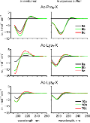
Figure 5: Mean residue molar circular dichroism (Δε) of peptides 8–10 in methanol (left) and aqueous phosphat...

Figure 6: Conformational analysis of the peptides by 1H DOSY NMR (D2O, 298 K). The theoretical values were ca...

Figure 7: Hydrolysis of the C-terminal 2,2-difluoroethyl esters of the oligopeptides in buffered deuterium ox...
Conjugated nitrosoalkenes as Michael acceptors in carbon–carbon bond forming reactions: a review and perspective
- Yaroslav D. Boyko,
- Valentin S. Dorokhov,
- Alexey Yu. Sukhorukov and
- Sema L. Ioffe
Beilstein J. Org. Chem. 2017, 13, 2214–2234, doi:10.3762/bjoc.13.220
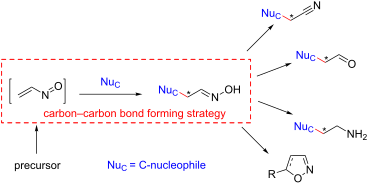
- observed. Triphenylarsonium ylides were also studied in the reaction with nitrosoalkenes, yet lower yields of isoxazolines 93 were obtained as compared to sulfonium ylides [11]. Following the same reaction pattern, Cheng and co-workers [84] applied diazo compounds 96 instead of sulfonium ylides 92 in the
- reaction with α-bromo ketoximes 1 (Scheme 36). The reaction requires a copper catalyst, which transforms the diazo compound 96 into a metal carbene complex 97. The latter reacts with a nitrosoalkene intermediate NSA (formed from α-bromo ketoxime 1) producing isoxazoline 93 with recovery of the catalyst
- . Unfortunately, the reaction is complicated by a concurrent [3 + 2]-cycloaddition of diazo compounds 96 to nitrosoalkenes leading to N-nitrosopyrazoles 98 via intermediates 99. A substantial improvement of this isoxazoline ring-forming strategy was recently introduced by Li et al. [85], who achieved the

Graphical Abstract

Scheme 1: Precursors of nitrosoalkenes NSA.

Scheme 2: Reactions of cyclic α-chlorooximes 1 with 1,3-dicarbonyl compounds.

Scheme 3: C-C-coupling of N,N-bis(silyloxy)enamines 3 with 1,3-dicarbonyl compounds.

Scheme 4: Reaction of N,N-bis(silyloxy)enamines 3 with nitronate anions.

Scheme 5: Reaction of α-chlorooximes TBS ethers 2 with ester enolates.

Scheme 6: Assembly of bicyclooctanone 14 via an intramolecular cyclization of nitrosoalkene NSA2.

Scheme 7: A general strategy for the assembly of bicyclo[2.2.1]heptanes via an intramolecular cyclization of ...

Scheme 8: Stereochemistry of Michael addition to cyclic nitrosoalkene NSA3.

Scheme 9: Stereochemistry of Michael addition to acyclic nitrosoalkenes NSA4.

Scheme 10: Stereochemistry of Michael addition to γ-alkoxy nitrosoalkene NSA5.

Scheme 11: Oppolzer’s total synthesis of 3-methoxy-9β-estra(1,3,5(10))trien(11,17)dione (25).

Scheme 12: Oppolzer’s total synthesis of (+/−)-isocomene.

Figure 1: Alkaloids synthesized using stereoselective Michael addition to conjugated nitrosoalkenes.

Scheme 13: Weinreb’s total synthesis of alstilobanines A, E and angustilodine.

Scheme 14: Weinreb’s approach to the core structure of apparicine alkaloids.

Scheme 15: Weinreb’s synthesis of (+/−)-myrioneurinol via stereoselective conjugate addition of malonate to ni...

Scheme 16: Reactions of cyclic α-chloro oximes with Grignard reagents.

Scheme 17: Corey’s synthesis of (+/−)-perhydrohistrionicotoxin.

Scheme 18: Addition of Gilman’s reagents to α,β-epoxy oximes 53.

Scheme 19: Addition of Gilman’s reagents to α-chlorooximes.

Scheme 20: Reaction of silyl nitronate 58 with organolithium reagents via nitrosoalkene NSA12.

Scheme 21: Reaction of β-ketoxime sulfones 61 and 63 with lithium acetylides.

Scheme 22: Electrophilic addition of nitrosoalkenes NSA14 to electron-rich arenes.

Scheme 23: Addition of nitrosoalkenes NSA14 to pyrroles and indoles.

Scheme 24: Reaction of phosphinyl nitrosoalkenes NSA15 with indole.

Scheme 25: Reaction of pyrrole with α,α’-dihalooximes 70.

Scheme 26: Synthesis of indole-derived psammaplin A analogue 72.

Scheme 27: Synthesis of tryptophanes by reduction of oximinoalkylated indoles 68.

Scheme 28: Ottenheijm’s synthesis of neoechinulin B analogue 77.

Scheme 29: Synthesis of 1,2-dihydropyrrolizinones 82 via addition of pyrrole to ethyl bromopyruvate oxime.

Scheme 30: Kozikowski’s strategy to indolactam-based alkaloids via addition of indoles to ethyl bromopyruvate ...

Scheme 31: Addition of cyanide anion to nitrosoalkenes and subsequent cyclization to 5-aminoisoxazoles 86.

Scheme 32: Et3N-catalysed addition of trimethylsilyl cyanide to N,N-bis(silyloxy)enamines 3 leading to 5-amino...

Scheme 33: Addition of TMSCN to allenyl N-siloxysulfonamide 89.

Scheme 34: Reaction of nitrosoallenes NSA16 with malodinitrile and ethyl cyanoacetic ester.

Scheme 35: [4 + 1]-Annulation of nitrosoalkenes NSA with sulfonium ylides 92.

Scheme 36: Reaction of diazo compounds 96 with nitrosoalkenes NSA.

Scheme 37: Tandem Michael addition/oxidative cyclization strategy to isoxazolines 100.
Phosphonic acid: preparation and applications
- Charlotte M. Sevrain,
- Mathieu Berchel,
- Hélène Couthon and
- Paul-Alain Jaffrès
Beilstein J. Org. Chem. 2017, 13, 2186–2213, doi:10.3762/bjoc.13.219
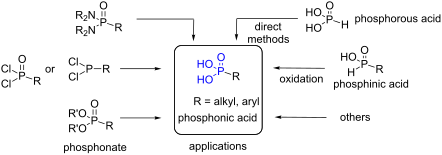
- induced the silylation of diethyl phosphonate but also the phosphoramidate and the phosphinate functional groups. Other phosphonic acids possessing different functionalities including phosphine 56 [183], trimethylsilyl 57 [184], diazo 58 [185] or styrene 59 [186] moieties were also prepared efficiently

Graphical Abstract

Figure 1: Summary of the synthetic routes to prepare phosphonic acids detailed in this review. The numbers in...

Figure 2: Chemical structure of dialkyl phosphonate, phosphonic acid and illustration of the simplest phospho...

Figure 3: Illustration of some phosphonic acid exhibiting bioactive properties. A) Phosphonic acids for biome...

Figure 4: Illustration of the use of phosphonic acids for their coordination properties and their ability to ...

Figure 5: Hydrolysis of dialkyl phosphonate to phosphonic acid under acidic conditions.

Figure 6: Examples of phosphonic acids prepared by hydrolysis of dialkylphosphonate with HCl 35% at reflux (16...

Figure 7: A) and B) Observation of P–C bond breaking during the hydrolysis of phosphonate with concentrated H...

Figure 8: Mechanism of the hydrolysis of dialkyl phosphonate with HCl in water.

Figure 9: Hydrolysis of bis-tert-butyl phosphonate 28 into phosphonic acid 29 [137].

Figure 10: A) Hydrolysis of diphenyl phosphonate into phosphonic acid in acidic media. B) Examples of phosphon...

Figure 11: Suggested mechanism occurring for the first step of the hydrolysis of diphenyl phosphonate into pho...

Figure 12: A) Hydrogenolysis of dibenzyl phosphonate to phosphonic acid. B) Compounds 33, 34 and 35 were prepa...

Figure 13: A) Preparation of phosphonic acid from diphenyl phosphonate with the Adam’s catalyst. B) Compounds ...

Figure 14: Suggested mechanism for the preparation of phosphonic acid from dialkyl phosphonate using bromotrim...

Figure 15: A) Reaction of the phosphonate-thiophosphonate 37 with iodotrimethylsilane followed by methanolysis...

Figure 16: Synthesis of hydroxymethylenebisphosphonic acid by reaction of tris(trimethylsilyl) phosphite with ...

Figure 17: Synthesis of the phosphonic acid disodium salt 48 by reaction of mono-hydrolysed phosphonate 47 wit...

Figure 18: Phosphonic acid synthesized by the sequence 1) bromotrimethylsilane 2) methanolysis or hydrolysis. ...

Figure 19: Polyphosphonic acids and macromolecular compounds prepared by the hydrolysis of dialkyl phosphonate...

Figure 20: Examples of organometallic complexes functionalized with phosphonic acids that were prepared by the...

Figure 21: Side reaction observed during the hydrolysis of methacrylate monomer functionalized with phosphonic...

Figure 22: Influence of the reaction time during the hydrolysis of compound 76.

Figure 23: Dealkylation of dialkyl phosphonates with boron tribromide.

Figure 24: Dealkylation of diethylphosphonate 81 with TMS-OTf.

Figure 25: Synthesis of substituted phenylphosphonic acid 85 from the phenyldichlorophosphine 83.

Figure 26: Hydrolysis of substituted phenyldichlorophosphine oxide 86 under basic conditions.

Figure 27: A) Illustration of the synthesis of chiral phosphonic acids from phosphonodiamides. B) Examples of ...

Figure 28: A) Illustration of the synthesis of the phosphonic acid 98 from phosphonodiamide 97. B) Use of cycl...

Figure 29: Synthesis of tris(phosphonophenyl)phosphine 109.

Figure 30: Moedritzer–Irani reaction starting from A) primary amine or B) secondary amine. C) Examples of phos...

Figure 31: Phosphonic acid-functionalized polymers prepared by Moedritzer–Irani reaction.

Figure 32: Reaction of phosphorous acid with imine in the absence of solvent.

Figure 33: A) Reaction of phosphorous acid with nitrile and examples of aminomethylene bis-phosphonic acids. B...

Figure 34: Reaction of carboxylic acid with phosphorous acid and examples of compounds prepared by this way.

Figure 35: Synthesis of phosphonic acid by oxidation of phosphinic acid (also identified as phosphonous acid).

Figure 36: Selection of reaction conditions to prepare phosphonic acids from phosphinic acids.

Figure 37: Synthesis of phosphonic acid from carboxylic acid and white phosphorus.

Figure 38: Synthesis of benzylphosphonic acid 136 from benzaldehyde and red phosphorus.

Figure 39: Synthesis of graphene phosphonic acid 137 from graphite and red phosphorus.
Synthesis of benzannelated sultams by intramolecular Pd-catalyzed arylation of tertiary sulfonamides
- Valentin A. Rassadin,
- Mirko Scholz,
- Anastasiia A. Klochkova,
- Armin de Meijere and
- Victor V. Sokolov
Beilstein J. Org. Chem. 2017, 13, 1932–1939, doi:10.3762/bjoc.13.187
- sultams with a pyramidal nitrogen atom and a sulfur atom in the apex positions were prepared from the same kind of starting materials in good to excellent yields [20]. Quite recently, Xu et al. employed 1-diazo-1-ethoxycarbonylmethanesulfonamides for the synthesis of benzo-γ-sultams. The key step in the
- latter transformation was a rhodium octanoate-catalyzed intramolecular carbenoid insertion into an ortho CAr–H bond (Scheme 1) [21][22], which proceeded with good yields in most cases. However, with non-equivalent aryl ortho-positions in the starting diazo compounds, mixtures of regioisomers – virtually

Graphical Abstract

Scheme 1: A previous and a new approach to arene-annelated sultams.

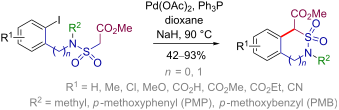
Scheme 2: Pd-catalyzed cyclization of (2-iodophenyl)sulfonamides 3 and 5.

Scheme 3: Preparation of 4-methoxybenzyl-protected methyl 2-(N-o-iodoarylsulfamoyl)acetates 8. Reagents and c...
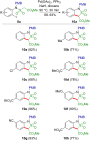
Scheme 4: Synthesis of arene-annelated sultams 10 by Pd-catalyzed intramolecular arylation of a C–H acidic me...

Figure 1: Structure of methyl 5-chloro-1-(4-methoxybenzyl)-1,3-dihydrobenzo[c]isothiazole-3-carboxylate-2,2-d...

Scheme 5: Palladium-catalyzed transformation of N-(2-iodophenyl)-N-(4-methoxybenzyl-benzylsulfonamide 12. Ar ...

Scheme 6: Palladium-catalyzed intramolecular arylation to yield a benzannelated six-membered sultam 21. Ar = ...

Scheme 7: An attempted and a successful removal of the PMB group from the sultam 10a.
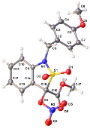
Figure 2: Structure of methyl 1-(4-methoxybenzyl)-3-(nitrooxy)-1,3-dihydrobenzo[c]isothiazole-3-carboxylate-2...
A novel application of 2-silylated 1,3-dithiolanes for the synthesis of aryl/hetaryl-substituted ethenes and dibenzofulvenes
- Grzegorz Mlostoń,
- Paulina Pipiak,
- Róża Hamera-Fałdyga and
- Heinz Heimgartner
Beilstein J. Org. Chem. 2017, 13, 1900–1906, doi:10.3762/bjoc.13.185
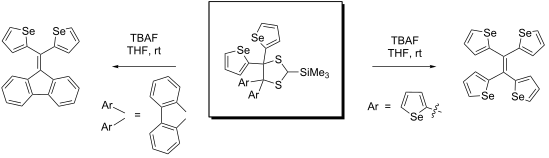
- applied [14]. Another approach, which opens access to diverse ethenes, is the ‘two-fold extrusion reaction’, which comprises the [3 + 2]-cycloaddition of a diazo compound with a thiocarbonyl dipolarophile and subsequent elimination of N2 followed by sulfur extrusion [15][16][17]. In our continuing studies
- on [3 + 2]-cycloadditions with thioketones and diazo compounds, we turned our attention to hetaryl thioketones [18]. It turned out that the presence of the hetaryl groups strongly influences the reactivity of these dipolarophiles in reactions with diazomethane (CH2N2, Schönberg reaction) [19][20][21

Graphical Abstract

Scheme 1: Reactions of diphenyl and phenyl selenophen-2-yl thioketones with diazomethane (CH2N2; Sel = seleno...

Scheme 2: Reaction of diaryl thioketones with trimethylsilyldiazomethane (TMS-CHN2).

Scheme 3: Formation of tetraaryl/hetarylethenes 9 from the reaction of TMS-CHN2 with diaryl/hetaryl thioketon...

Scheme 4: Synthesis of dibenzofulvenes 9g–k.

Scheme 5: a) Mechanistic explanation for formation of ethenes 9 from dithiolanes of type 6 and b) desilylatio...
Contribution of microreactor technology and flow chemistry to the development of green and sustainable synthesis
- Flavio Fanelli,
- Giovanna Parisi,
- Leonardo Degennaro and
- Renzo Luisi
Beilstein J. Org. Chem. 2017, 13, 520–542, doi:10.3762/bjoc.13.51
- " for safety reasons, such as those involving diazo compounds, hydrazine, azides, phosgene, cyanides and other hazardous chemicals could be performed with relatively low risk using flow technology [72][73][74][75][76]. Several research groups investigated this aspect, as highlighted by several available
- reviews [77][78]. Here we describe very recent reports with the aim to highlight the potential of flow chemistry in the field of hazardous chemistry under a greener perspective. Diazo compounds are recognized as versatile reagents in organic synthesis. Nevertheless, diazo compounds are also considered
- highly energetic reagents [79][80]. For this reason, the in situ generation of such reagents has been investigated under flow conditions. Moody and co-workers reported a new method for the in situ generation of diazo compounds as precursors of highly reactive metal carbenes (Scheme 16) [81]. As reported

Graphical Abstract

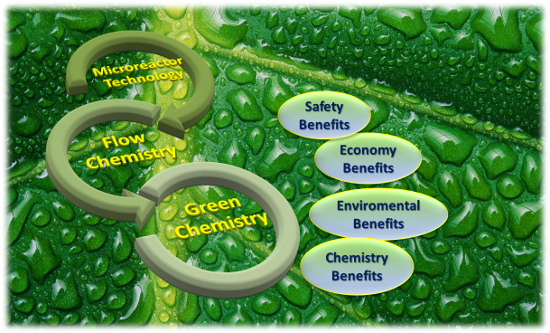
Figure 1: Microreactor technologies and flow chemistry for a sustainable chemistry.

Scheme 1: A flow microreactor system for the generation and trapping of highly unstable carbamoyllithium spec...

Scheme 2: Flow synthesis of functionalized α-ketoamides.

Scheme 3: Reactions of benzyllithiums.

Scheme 4: Trapping of benzyllithiums bearing carbonyl groups enabled by a flow microreactor. (Adapted with pe...

Scheme 5: External trapping of chloromethyllithium in a flow microreactor system.

Scheme 6: Scope for the direct tert-butoxycarbonylation using a flow microreactor system.

Scheme 7: Control of anionic Fries rearrangement reactions by using submillisecond residence time. (Adapted w...

Figure 2: Chip microreactor (CMR) fabricated with six layers of polyimide films. (Reproduced with permission ...

Scheme 8: Flow microreactor system for lithiation, borylation, Suzuki–Miyaura coupling and selected examples ...

Scheme 9: Experimental setup for the flow synthesis of 2-fluorobi(hetero)aryls by directed lithiation, zincat...

Scheme 10: Experimental setup for the coupling of fluoro-substituted pyridines. (Adapted with permission from [53]...

Scheme 11: Continuous flow process setup for the preparation of 11 (Reproduced with permission from [54], copyrigh...
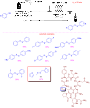
Scheme 12: Continuous-flow photocatalytic oxidation of thiols to disulfides.

Scheme 13: Trifluoromethylation by continuous-flow photoredox catalysis.

Scheme 14: Flow photochemical synthesis of 6(5H)-phenanthridiones from 2-chlorobenzamides.

Scheme 15: Synthesis of biaryls 14a–g under photochemical flow conditions.

Scheme 16: Flow oxidation of hydrazones to diazo compounds.

Scheme 17: Synthetic use of flow-generated diazo compounds.

Scheme 18: Ley’s flow approach for the generation of diazo compounds.
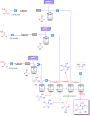
Scheme 19: Iterative strategy for the sequential coupling of diazo compounds.

Scheme 20: Integrated synthesis of Bakuchiol precursor via flow-generated diazo compounds.

Scheme 21: Kappe’s continuous-flow reduction of olefines with diimide.

Scheme 22: Multi-injection setup for the reduction of artemisinic acid.

Scheme 23: Flow reactor system for multistep synthesis of (S)-rolipram. Pumps are labelled a, b, c, d and e; L...

Figure 3: Reconfigurable modules and flowcharts for API synthesis. (Reproduced with permission from [85], copyrig...

Figure 4: Reconfigurable system for continuous production and formulation of APIs. (Reproduced with permissio...
Synthesis of 1-indanones with a broad range of biological activity
- Marika Turek,
- Dorota Szczęsna,
- Marek Koprowski and
- Piotr Bałczewski
Beilstein J. Org. Chem. 2017, 13, 451–494, doi:10.3762/bjoc.13.48
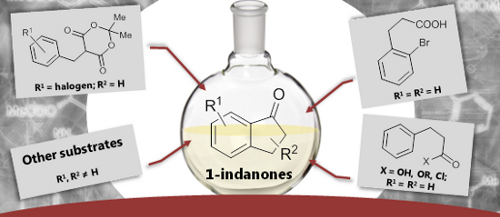
- reactions leading to intermediates 197 and 198 [85]. The authors have also synthesized other fluorenone derivatives 200–204 by using this method (Scheme 56). 1.6 From diazo compounds Hashimoto et al. have proposed the synthesis of optically active 1,1’-spirobi[indan-3,3’-dione] derivative 208 (up to 80
- % enantiomeric excess) from bis(α-diazo-β-keto ester) 205 [86]. The key step of this synthesis was a double intramolecular C–H insertion process catalyzed by dirhodium(II) tetrakis[N-phthaloyl-(R or S)-tert-leucinate]. The resulting spiroindanone derivative 207 obtained from the intermediate 206, underwent
- , potentially more selective than known compounds [87]. Transformation of diazo compounds 209 into 1-indanone derivatives 210, catalyzed by rhodium acetate, has been one of the steps in the total synthesis of atipamezole analogues 211 (Scheme 58). The most common symptom of the menopause is hot flash, which is

Graphical Abstract

Figure 1: Biologically active 1-indanones and their structural analogues.

Figure 2: Number of papers about (a) 1-indanones, (b) synthesis of 1-indanones.

Scheme 1: Synthesis of 1-indanone (2) from hydrocinnamic acid (1).

Scheme 2: Synthesis of 1-indanone (2) from 3-(2-bromophenyl)propionic acid (3).

Scheme 3: Synthesis of 1-indanones 5 from 3-arylpropionic acids 4.

Scheme 4: Synthesis of kinamycin (9a) and methylkinamycin C (9b).

Scheme 5: Synthesis of trifluoromethyl-substituted arylpropionic acids 12, 1-indanones 13 and dihydrocoumarin...

Scheme 6: Synthesis of 1-indanones 16 from benzoic acids 15.

Scheme 7: Synthesis of 1-indanones 18 from arylpropionic and 3-arylacrylic acids 17.

Scheme 8: The NbCl5-induced one-step synthesis of 1-indanones 22.

Scheme 9: Synthesis of biologically active 1-indanone derivatives 26.

Scheme 10: Synthesis of enantiomerically pure indatraline ((−)-29).

Scheme 11: Synthesis of 1-indanone (2) from the acyl chloride 30.

Scheme 12: Synthesis of the mechanism-based inhibitors 33 of coelenterazine.

Scheme 13: Synthesis of the indane 2-imidazole derivative 37.

Scheme 14: Synthesis of fluorinated PAHs 41.

Scheme 15: Synthesis of 1-indanones 43 via transition metal complexes-catalyzed carbonylative cyclization of m...

Scheme 16: Synthesis of 6-methyl-1-indanone (46).

Scheme 17: Synthesis of 1-indanone (2) from ester 48.

Scheme 18: Synthesis of benzopyronaphthoquinone 51 from the spiro-1-indanone 50.

Scheme 19: Synthesis of the selective endothelin A receptor antagonist 55.

Scheme 20: Synthesis of 1-indanones 60 from methyl vinyl ketone (57).

Scheme 21: Synthesis of 1-indanones 64 from diethyl phthalate 61.

Scheme 22: Synthesis of 1-indanone derivatives 66 from various Meldrum’s acids 65.

Scheme 23: Synthesis of halo 1-indanones 69.

Scheme 24: Synthesis of substituted 1-indanones 71.

Scheme 25: Synthesis of spiro- and fused 1-indanones 73 and 74.

Scheme 26: Synthesis of spiro-1,3-indanodiones 77.

Scheme 27: Mechanistic pathway for the NHC-catalyzed Stetter–Aldol–Michael reaction.

Scheme 28: Synthesis of 2-benzylidene-1-indanone derivatives 88a–d.

Scheme 29: Synthesis of 1-indanone derivatives 90a–i.

Scheme 30: Synthesis of 1-indanones 96 from o-bromobenzaldehydes 93 and alkynes 94.

Scheme 31: Synthesis of 3-hydroxy-1-indanones 99.

Scheme 32: Photochemical preparation of 1-indanones 103 from ketones 100.

Scheme 33: Synthesis of chiral 3-aryl-1-indanones 107.

Scheme 34: Photochemical isomerization of 2-methylbenzil 108.

Scheme 35: Synthesis of 2-hydroxy-1-indanones 111a–c.

Scheme 36: Synthesis of 1-indanone derivatives 113 and 114 from η6-1,2-dioxobenzocyclobutene complex 112.

Scheme 37: Synthesis of nakiterpiosin (117).

Scheme 38: Synthesis of 2-alkyl-1-indanones 120.

Scheme 39: Synthesis of fluorine-containing 1-indanone derivatives 123.

Scheme 40: Synthesis of 2-benzylidene and 2-benzyl-1-indanones 126, 127 from the chalcone 124.

Scheme 41: Synthesis of 2-bromo-6-methoxy-3-phenyl-1-indanone (130).

Scheme 42: Synthesis of combretastatin A-4-like indanones 132a–s.

Figure 3: Chemical structures of investigated dienones 133 and synthesized cyclic products 134–137.

Figure 4: Chemical structures of 1-indanones and their heteroatom analogues 138–142.

Scheme 43: Synthesis of 2-phosphorylated and 2-non-phosphorylated 1-indanones 147 and 148 from β-ketophosphona...

Scheme 44: Photochemical synthesis of 1-indanone derivatives 150, 153a, 153b.

Scheme 45: Synthesis of polysubstituted-1-indanones 155, 157.

Scheme 46: Synthesis of 1-indanones 159a–g from α-arylpropargyl alcohols 158 using RhCl(PPh3)3 as a catalyst.

Scheme 47: Synthesis of optically active 1-indanones 162 via the asymmetric Rh-catalyzed isomerization of race...

Scheme 48: Mechanism of the Rh-catalyzed isomerization of α-arylpropargyl alcohols 161 to 1-indanones 162.

Figure 5: Chemical structure of abicoviromycin (168) and its new benzo derivative 169.

Scheme 49: Synthesis of racemic benzoabicoviromycin 172.

Scheme 50: Synthesis of [14C]indene 176.

Scheme 51: Synthesis of indanone derivatives 178–180.

Scheme 52: Synthesis of racemic pterosin A 186.

Scheme 53: Synthesis of trans-2,3-disubstituted 1-indanones 189.

Scheme 54: Synthesis of 3-aryl-1-indanone derivatives 192.

Scheme 55: Synthesis of 1-indanone derivatives 194 from 3-(2-iodoaryl)propanonitriles 193.

Scheme 56: Synthesis of 1-indanones 200–204 by cyclization of aromatic nitriles.

Scheme 57: Synthesis of 1,1’-spirobi[indan-3,3’-dione] derivative 208.

Scheme 58: Total synthesis of atipamezole analogues 211.

Scheme 59: Synthesis of 3-[4-(1-piperidinoethoxy)phenyl]spiro[indene-1,1’-indan]-5,5’-diol hydrochloride 216.

Scheme 60: Synthesis of 3-arylindan-1-ones 219.

Scheme 61: Synthesis of 2-hydroxy-1-indanones 222.

Scheme 62: Synthesis of the 1-indanone 224 from the THP/MOM protected chalcone epoxide 223.

Scheme 63: Synthesis of 1-indanones 227 from γ,δ-epoxy ketones 226.

Scheme 64: Synthesis of 2-hydroxy-2-methylindanone (230).

Scheme 65: Synthesis of 1-indanone derivatives 234 from cyclopropanol derivatives 233.

Scheme 66: Synthesis of substituted 1-indanone derivatives 237.

Scheme 67: Synthesis of 7-methyl substituted 1-indanone 241 from 1,3-pentadiene (238) and 2-cyclopentenone (239...

Scheme 68: Synthesis of disubstituted 1-indanone 246 from the siloxydiene 244 and 2-cyclopentenone 239.

Scheme 69: Synthesis of 5-hydroxy-1-indanone (250) via the Diels–Alder reaction of 1,3-diene 248 with sulfoxid...

Scheme 70: Synthesis of halogenated 1-indanones 253a and 253b.

Scheme 71: Synthesis of 1-indanones 257 and 258 from 2-bromocyclopentenones 254.

Scheme 72: Synthesis of 1-indanone 261 from 2-bromo-4-acetoxy-2-cyclopenten-1-one (260) and 1,2-dihydro-4-viny...

Scheme 73: Synthesis of 1-indanone 265 from 1,2-dihydro-7-methoxy-4-vinylnaphthalene (262) and bromo-substitut...

Scheme 74: Synthesis of 1-indanone 268 from dihydro-3-vinylphenanthrene 266 and 4-acetoxy-2-cyclopenten-1-one (...

Scheme 75: Synthesis of 1-indanone 271 from phenylselenyl-substituted cyclopentenone 268.

Scheme 76: Synthesis of 1-indanone 272 from the trienone 270.

Scheme 77: Synthesis of the 1-indanone 276 from the aldehyde 273.

Scheme 78: Synthesis of 1-indanones 278 and 279.

Scheme 79: Synthesis of 1-indanone 285 from octa-1,7-diyne (282) and cyclopentenone 239.

Scheme 80: Synthesis of benz[f]indan-1-one (287) from cyclopentenone 239 and o-bis(dibromomethyl)benzene (286)....

Scheme 81: Synthesis of 3-methyl-substituted benz[f]indan-1-one 291 from o-bis(dibromomethyl)benzene (286) and...

Scheme 82: Synthesis of benz[f]indan-1-one (295) from the anthracene epidioxide 292.

Scheme 83: Synthesis of 1-indanone 299 from homophthalic anhydride 298 and cyclopentynone 297.

Scheme 84: Synthesis of cyano-substituted 1-indanone derivative 301 from 2-cyanomethylbenzaldehyde (300) and c...

Scheme 85: Synthesis of 1-indanone derivatives 303–305 from ketene dithioacetals 302.

Scheme 86: Synthesis of 1-indanones 309–316.

Scheme 87: Mechanism of the hexadehydro-Diels–Alder (HDDA) reaction.

Scheme 88: Synthesis of 1-indenone 318 and 1-indanones 320 and 321 from tetraynes 317 and 319.

Scheme 89: Synthesis of 1-indanone 320 from the triyn 319.

Scheme 90: Synthesis 1-indanone 328 from 2-methylfuran 324.

Scheme 91: Synthesis of 1-indanones 330 and 331 from furans 329.

Scheme 92: Synthesis of 1-indanone 333 from the cycloadduct 332.

Scheme 93: Synthesis of (S)-3-arylindan-1-ones 335.

Scheme 94: Synthesis of (R)-2-acetoxy-1-indanone 338.

Figure 6: Chemical structures of obtained cyclopenta[α]phenanthrenes 339.

Scheme 95: Synthesis of the benzoindanone 343 from arylacetaldehyde 340 with 1-trimethylsilyloxycyclopentene (...
Catalytic Wittig and aza-Wittig reactions
- Zhiqi Lao and
- Patrick H. Toy
Beilstein J. Org. Chem. 2016, 12, 2577–2587, doi:10.3762/bjoc.12.253
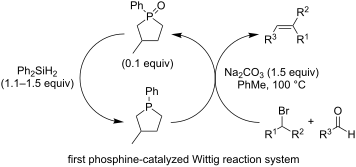
- catalytic diaza-Wittig reactions (Scheme 20) [38]. In these reactions 76 (from the reduction of 44) was the catalyst that transformed diazo group containing starting materials 77 into pyridazine derivatives 78. In these reactions 44 was actually added to the reaction mixtures as the pre-catalyst that was

Graphical Abstract

Scheme 1: Prototypical Wittig reaction involving in situ phosphonium salt and phosphonium ylide formation.

Scheme 2: Bu3As-catalyzed Wittig-type reactions.

Scheme 3: Ph3As-catalyzed Wittig-type reactions using Fe(TCP)Cl and ethyl diazoacetate for arsonium ylide gen...

Figure 1: Recyclable polymer-supported arsine for catalytic Wittig-type reactions.

Scheme 4: Bu2Te-catalyzed Wittig-type reactions.

Scheme 5: Polymer-supported telluride catalyst cycling.

Scheme 6: Stable and odourless telluronium salt pre-catalyst for Wittig-type reactions.

Scheme 7: Phosphine-catalyzed Wittig reactions.

Figure 2: Various phosphine oxides used as pre-catalysts.

Scheme 8: Enantioselective catalytic Wittig reaction reported by Werner.

Scheme 9: Base-free catalytic Wittig reactions reported by Werner.

Scheme 10: Catalytic Wittig reactions reported by Lin.

Scheme 11: Catalytic Wittig reactions reported by Plietker.

Scheme 12: Prototypical aza-Wittig reaction involving in situ iminophosphorane formation.

Scheme 13: First catalytic aza-Wittig reaction reported by Campbell.

Scheme 14: Intramolecular catalytic aza-Wittig reactions reported by Marsden.

Scheme 15: Catalytic aza-Wittig reactions in 1,4-benzodiazepin-5-one synthesis.

Scheme 16: Catalytic aza-Wittig reactions in benzimidazole synthesis.
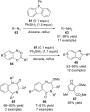
Scheme 17: Phosphine-catalyzed Staudinger and aza-Wittig reactions.

Scheme 18: Catalytic aza-Wittig reactions in 4(3H)-quinazolinone synthesis.

Scheme 19: Catalytic aza-Wittig reactions of in situ generated carboxylic acid anhydrides.

Scheme 20: Phosphine-catalyzed diaza-Wittig reactions.
The in situ generation and reactive quench of diazonium compounds in the synthesis of azo compounds in microreactors
- Faith M. Akwi and
- Paul Watts
Beilstein J. Org. Chem. 2016, 12, 1987–2004, doi:10.3762/bjoc.12.186
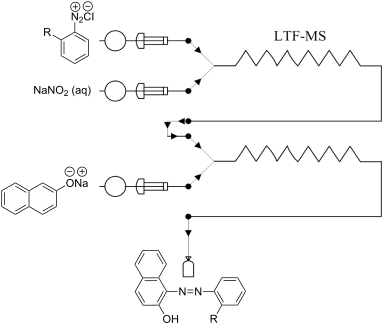
- transfer synthesis’ in micro-chips for a diazo-coupling reaction [23]. The authors did not however employ a phase transfer catalyst, but rather the principle to increase the reaction selectivity in the diazo coupling of 5-methylresorcinol (10) to p-nitrobenzene diazonium tetrafloroborate (11) in a biphasic

Graphical Abstract

Scheme 1: PTSA-catalyzed diazotization and azo coupling reaction.

Scheme 2: Ferric hydrogen sulfate (FHS) catalyzed azo compound synthesis.

Scheme 3: Synthesis of azo compounds in the presence of silica supported boron trifluoride.

Scheme 4: Phase transfer catalyzed azo coupling of 5-methylresorcinol in microreactors.

Scheme 5: Synthesis of yellow pigment 12 in a micro-mixer apparatus.

Scheme 6: Continuous flow synthesis of Sudan II azo dye in LTF-MS microreactors.

Figure 1: pH profile plot at constant flow rate of 0.03 mL/min.

Figure 2: pH profile plot at a constant flow rate of 0.7 mL/min.

Scheme 7: Azo coupling reaction under acidic conditions.

Figure 3: pH profile plot at a constant flow rate of 0.03 mL/min.

Figure 4: pH profile plot at constant flow rate of 0.7 mL/min.

Figure 5: Temperature profile plot at constant pH 5.66.

Figure 6: Schematic representation of the microreactor set up.

Figure 7: Schematic representation of the microreactor set up.

Figure 8: Scaled up microreactor set up: PTFE tubing i.d. 1.5 mm a) Chemyx Fusion 100 classic syringe pump, b...
Unusual reactions of diazocarbonyl compounds with α,β-unsaturated δ-amino esters: Rh(II)-catalyzed Wolff rearrangement and oxidative cleavage of N–H-insertion products
- Valerij A. Nikolaev,
- Jury J. Medvedev,
- Olesia S. Galkina,
- Ksenia V. Azarova and
- Christoph Schneider
Beilstein J. Org. Chem. 2016, 12, 1904–1910, doi:10.3762/bjoc.12.180
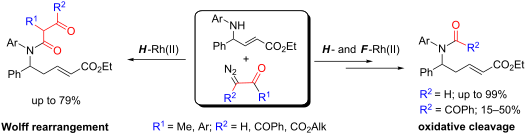
- products. These oxidation processes are mediated by Rh(II) catalysts possessing perfluorinated ligands. The formation of pyrrolidine structures, characteristic for catalytic reactions of diazoesters, was not observed in these processes at all. Keywords: diazo compounds; N–H-insertion; oxidation cleavage
- intermediates generated from diazo compounds (ammonium, oxonium, C=X-ylides and others) to react with a variety of electrophiles/nucleophiles yielding complex and challenging organic molecules from relatively straightforward initial compounds [9][10]. The research group by Hu and co-workers elaborated recently
- system of the amino ester to afford N-arylpyrrolidines B (Scheme 1). It was suggested that this strategy for the synthesis of pyrrolidines could be extended to diazo compounds of other types and structures, and, as with diazoesters, multi-substituted pyrrolidines are the principal reaction products in

Graphical Abstract

Scheme 1: Catalytic reactions of diazocarbonyl compounds with unsaturated δ-amino esters.

Figure 1: The structures of the starting compounds 1–3 and catalysts used in this study.

Scheme 2: The assumed pathway for the occurance of amides 6a–c by way of the catalytic Wolff rearrangement.

Scheme 3: The assumed mechanism for the formation of the amides 4 and 7 during oxidative cleavage of the N–H-...
On the cause of low thermal stability of ethyl halodiazoacetates
- Magnus Mortén,
- Martin Hennum and
- Tore Bonge-Hansen
Beilstein J. Org. Chem. 2016, 12, 1590–1597, doi:10.3762/bjoc.12.155

- briefly studied the thermal, non-catalytic cyclopropanation of styrenes and compared the results to the analogous Rh(II)-catalyzed reactions. Keywords: carbenes; catalysis; cyclopropanation; halo diazoacetates; half-lives; thermal stability; Introduction The chemistry of diazo compounds has fascinated
- organic chemists ever since Theodor Curtius synthesized ethyl diazoacetate (EDA, 1) for the first time in 1883 [1]. Even today, after more than a century of research, diazo compounds still play an important role in state-of-the-art organic chemistry in areas such as for example C–H functionalization [2
- ]. The synthesis and properties of diazo compounds have been a topic of much interest, particularly relevant are their thermal stability and sensitivity towards Brønsted and Lewis acids. The monograph by Regitz and Maas gives an excellent overview on their preparation and properties [3]. The thermal

Graphical Abstract

Figure 1: Relative stability and nucleophilicity of non-stabilized (R = H, alkyl) diazo compounds (left) and ...

Scheme 1: Synthesis of ethyl halodiazoacetates [11].

Figure 2: a) The decay of 2b in toluene-d8 at 35 °C. b) The plot of log(Δ[2b]) vs time.

Scheme 2: Proposed rate determining step for the thermal decomposition of 2a–c.

Figure 3: Transition-state energies (kcal/mol) for the release of N2 and formation of the singlet carbenes. T...

Figure 4: Thermal stability of 1 and 2a–c, and the α-substituents’ contribution to π-donation.

Figure 5: NBO atomic charges and IR stretching frequencies calculated [21] and experimentally recorded for 1 and ...

Figure 6: NBO atomic charges of the singlet carbenes from 1 and 2a,b, and d.

Figure 7: Relative thermal stability of halodiazoacetates (red color).

Figure 8: Relative nucleophilicity of halodiazoacetates (red color).
Multicomponent reactions: A simple and efficient route to heterocyclic phosphonates
- Mohammad Haji
Beilstein J. Org. Chem. 2016, 12, 1269–1301, doi:10.3762/bjoc.12.121
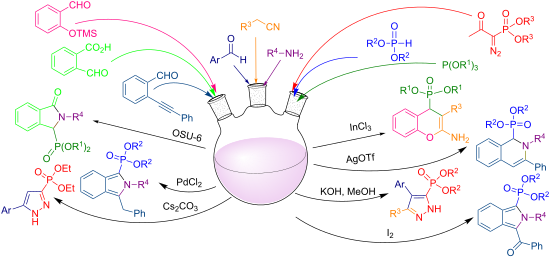
- prepare phosponylpyrazoles 217 in the presence of KOH in MeOH in 73–95% yields (Scheme 44) [82]. Based on their explanation, the treatment of dimethyldiazomethylphosphonate 213 with a nucleophilic base generates diazo compound 215. The subsequent [3 + 2] cycloaddition reaction of 215 with Knoevenagel
- developed for the preparation of different 3-carbo-5-phosphonylpyrazoles 223 (Scheme 45) [83]. The corresponding phosphonylpyrazoles 223 were formed via a Claisen–Schmidt/1,3-dipolar cycloaddition/oxidation process under basic conditions in MeOH in 30–91% yields. The dual reactivity of diethyl (1-diazo-2

Graphical Abstract

Scheme 1: The Biginelli condensation.

Scheme 2: The Biginelli reaction of β-ketophosphonates catalyzed by ytterbium triflate.

Scheme 3: Trimethylchlorosilane-mediated Biginelli reaction of diethyl (3,3,3-trifluoropropyl-2-oxo)phosphona...

Scheme 4: Biginelli reaction of dialkyl (3,3,3-trifluoropropyl-2-oxo)phosphonate with trialkyl orthoformates ...

Scheme 5: p-Toluenesulfonic acid-promoted Biginelli reaction of β-ketophosphonates, aryl aldehydes and urea.

Scheme 6: General Kabachnik–Fields reaction for the synthesis of α-aminophosphonates.

Scheme 7: Phthalocyanine–AlCl catalyzed Kabachnik–Fields reaction of N-Boc-piperidin-4-one with diethyl phosp...

Scheme 8: Kabachnik–Fields reaction of isatin with diethyl phosphite and benzylamine.

Scheme 9: Magnetic Fe3O4 nanoparticle-supported phosphotungstic acid-catalyzed Kabachnik–Fields reaction of i...

Scheme 10: The Mg(ClO4)2-catalyzed Kabachnik–Fields reaction of 1-tosylpiperidine-4-one.

Scheme 11: An asymmetric version of the Kabachnik–Fields reaction for the synthesis of α-amino-3-piperidinylph...

Scheme 12: A classical Kabachnik–Fields reaction followed by an intramolecular ring-closing reaction for the s...

Scheme 13: Synthesis of (S)-piperidin-2-phosphonic acid through an asymmetric Kabachnik–Fields reaction.

Scheme 14: A modified diastereoselective Kabachnik–Fields reaction for the synthesis of isoindolin-1-one-3-pho...

Scheme 15: A microwave-assisted Kabachnik–Fields reaction toward isoindolin-1-ones.

Scheme 16: The synthesis of 3-arylmethyleneisoindolin-1-ones through a Horner–Wadsworth–Emmons reaction of Kab...

Scheme 17: An efficient one-pot method for the synthesis of ethyl (2-alkyl- and 2-aryl-3-oxoisoindolin-1-yl)ph...

Scheme 18: FeCl3 and PdCl2 co-catalyzed three-component reaction of 2-alkynylbenzaldehydes, anilines, and diet...

Scheme 19: Three-component reaction of 6-methyl-3-formylchromone (75) with hydrazine derivatives or hydroxylam...

Scheme 20: Three-component reaction of 6-methyl-3-formylchromone (75) with thiourea, guanidinium carbonate or ...

Scheme 21: Three-component reaction of 6-methyl-3-formylchromone (75) with 1,4-bi-nucleophiles in the presence...

Scheme 22: One-pot three-component reaction of 2-alkynylbenzaldehydes, amines, and diethyl phosphonate.

Scheme 23: Lewis acid–surfactant combined catalysts for the one-pot three-component reaction of 2-alkynylbenza...

Scheme 24: Lewis acid catalyzed cyclization of different Kabachnik–Fields adducts.

Scheme 25: Three-component synthesis of N-arylisoquinolone-1-phosphonates 119.

Scheme 26: CuI-catalyzed three-component tandem reaction of 2-(2-formylphenyl)ethanones with aromatic amines a...

Scheme 27: Synthesis of 1,5-benzodiazepin-2-ylphosphonates via ytterbium chloride-catalyzed three-component re...

Scheme 28: FeCl3-catalyzed four-component reaction for the synthesis of 1,5-benzodiazepin-2-ylphosphonates.

Scheme 29: Synthesis of indole bisphosphonates through a modified Kabachnik–Fields reaction.

Scheme 30: Synthesis of heterocyclic bisphosphonates via Kabachnik–Fields reaction of triethyl orthoformate.

Scheme 31: A domino Knoevenagel/phospha-Michael process for the synthesis of 2-oxoindolin-3-ylphosphonates.

Scheme 32: Intramolecular cyclization of phospha-Michael adducts to give dihydropyridinylphosphonates.

Scheme 33: Synthesis of fused phosphonylpyrans via intramolecular cyclization of phospha-Michael adducts.

Scheme 34: InCl3-catalyzed three-component synthesis of (2-amino-3-cyano-4H-chromen-4-yl)phosphonates.

Scheme 35: Synthesis of phosphonodihydropyrans via a domino Knoevenagel/hetero-Diels–Alder process.

Scheme 36: Multicomponent synthesis of phosphonodihydrothiopyrans via a domino Knoevenagel/hetero-Diels–Alder ...

Scheme 37: One-pot four-component synthesis of 1,2-dihydroisoquinolin-1-ylphosphonates under multicatalytic co...

Scheme 38: CuI-catalyzed four-component reactions of methyleneaziridines towards alkylphosphonates.

Scheme 39: Ruthenium–porphyrin complex-catalyzed three-component synthesis of aziridinylphosphonates and its p...

Scheme 40: Copper(I)-catalyzed three-component reaction towards 1,2,3-triazolyl-5-phosphonates.

Scheme 41: Three-component reaction of acylphosphonates, isocyanides and dialkyl acetylenedicarboxylate to aff...

Scheme 42: Synthesis of (4-imino-3,4-dihydroquinazolin-2-yl)phosphonates via an isocyanide-based three-compone...

Scheme 43: Silver-catalyzed three-component synthesis of (2-imidazolin-4-yl)phosphonates.

Scheme 44: Three-component synthesis of phosphonylpyrazoles.

Scheme 45: One-pot three-component synthesis of 3-carbo-5-phosphonylpyrazoles.

Scheme 46: A one-pot two-step method for the synthesis of phosphonylpyrazoles.

Scheme 47: A one-pot method for the synthesis of (5-vinylpyrazolyl)phosphonates.

Scheme 48: Synthesis of 1H-pyrrol-2-ylphosphonates via the [3 + 2] cycloaddition of phosphonate azomethine yli...

Scheme 49: Three-component synthesis of 1H-pyrrol-2-ylphosphonates.

Scheme 50: The classical Reissert reaction.

Scheme 51: One-pot three-component synthesis of N-phosphorylated isoquinolines.

Scheme 52: One-pot three-component synthesis of 1-acyl-1,2-dihydroquinoline-2-phosphonates and 2-acyl-1,2-dihy...

Scheme 53: Three-component reaction of pyridine derivatives with ethyl propiolate and dialkyl phosphonates.

Scheme 54: Three-component reactions for the phosphorylation of benzothiazole and isoquinoline.

Scheme 55: Three-component synthesis of diphenyl [2-(aminocarbonyl)- or [2-(aminothioxomethyl)-1,2-dihydroisoq...

Scheme 56: Three-component stereoselective synthesis of 1,2-dihydroquinolin-2-ylphosphonates and 1,2-dihydrois...

Scheme 57: Diphosphorylation of diazaheterocyclic compounds via a tandem 1,4–1,2 addition of dimethyl trimethy...

Scheme 58: Multicomponent reaction of alkanedials, acetamide and acetyl chloride in the presence of PCl3 and a...

Scheme 59: An oxidative domino three-component synthesis of polyfunctionalized pyridines.

Scheme 60: A sequential one-pot three-component synthesis of polysubstituted pyrroles.

Scheme 61: Three-component decarboxylative coupling of proline with aldehydes and dialkyl phosphites for the s...

Scheme 62: Three-component domino aza-Wittig/phospha-Mannich sequence for the phosphorylation of isatin deriva...

Scheme 63: Stereoselective synthesis of phosphorylated trans-1,5-benzodiazepines via a one-pot three-component...

Scheme 64: One-pot three-component synthesis of phosphorylated 2,6-dioxohexahydropyrimidines.
The synthesis of functionalized bridged polycycles via C–H bond insertion
- Jiun-Le Shih,
- Po-An Chen and
- Jeremy A. May
Beilstein J. Org. Chem. 2016, 12, 985–999, doi:10.3762/bjoc.12.97
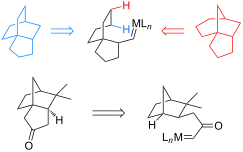
- major product, with the minor product coming from the predicted second-most preferred conformation 84. The May group also showed that the cascade reaction could be initiated from hydrazones. In the course of this work, it was discovered that NaOSiMe3 was a superior base for hydrazone to diazo conversion
- gold ketocarbenes 104 from alkynes (Scheme 22) [95]. Those carbenes are then capable of further transformations, including C–H bond insertion and the reaction with other alkynes. Notably, this approach avoids the use of unstable diazo compounds. The Zhang group also demonstrated that the gold carbenes

Graphical Abstract

Figure 1: Bridged polycyclic natural products.

Figure 2: Strategic limitations.

Scheme 1: Bridged rings from N–H bond insertions.

Scheme 2: The synthesis of deoxystemodin.

Scheme 3: A model system for ingenol.

Scheme 4: Formal synthesis of platensimycin.

Scheme 5: The formal synthesis of gerryine.

Scheme 6: Copper-catalyzed bridged-ring synthesis.
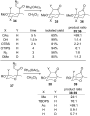
Scheme 7: Factors influencing insertion selectivity.

Scheme 8: Bridged-lactam formation.

Scheme 9: The total synthesis of (+)-codeine.

Scheme 10: A model system for irroratin.

Scheme 11: The utility of 1,6-insertion.

Scheme 12: Piperidine functionalization.

Scheme 13: Wilkinson’s catalyst for C–H bond insertion.

Scheme 14: Bridgehead insertion and the total synthesis of albene and santalene.

Scheme 15: The total synthesis of neopupukean-10-one.

Scheme 16: An approach to phomoidride B.

Scheme 17: Carbene cascade for fused bicycles.

Scheme 18: Cascade formation of bridged rings.

Scheme 19: Conformational effects.

Scheme 20: Hydrazone cascade reaction.

Scheme 21: Mechanistic studies.

Scheme 22: Gold carbene formation from alkynes.

Scheme 23: Au-catalyzed bridged-bicycle formation.

Scheme 24: Gold carbene/alkyne cascade.

Scheme 25: Gold carbene/alkyne cascade with C–H bond insertion.

Scheme 26: Platinum cascades.

Scheme 27: Tungsten cascade.



