Search results
Search for "epoxidation" in Full Text gives 174 result(s) in Beilstein Journal of Organic Chemistry.
Synergistic approach to polycycles through Suzuki–Miyaura cross coupling and metathesis as key steps
Beilstein J. Org. Chem. 2018, 14, 2468–2481, doi:10.3762/bjoc.14.223
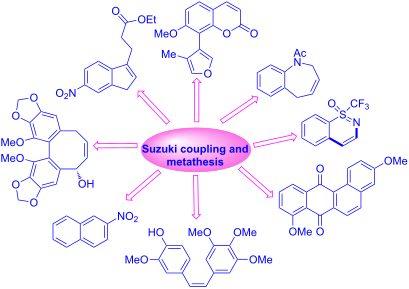
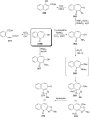
- 108 (89%). Then, MnO2 oxidation of compound 108 offered the keto derivative in 90% yield. Corey–Bakshi–Shibata (CBS) reduction of the resulting keto derivative produced the hydroxy compound 109 (85%, ee 98%). Eventually, hydroxy olefin 109 was subjected to Sharpless asymmetric epoxidation to generate


One-pot synthesis of epoxides from benzyl alcohols and aldehydes
Beilstein J. Org. Chem. 2018, 14, 2308–2312, doi:10.3762/bjoc.14.205
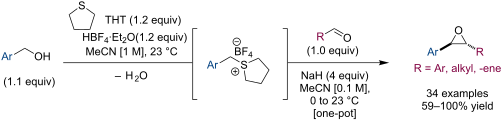
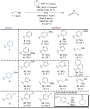
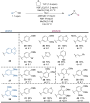
- through in situ generation of sulfonium salts from benzyl alcohols and their subsequent deprotonation for use in Corey–Chaykovsky epoxidation of aldehydes. The generality of the method is exemplified by the synthesis of 34 epoxides that were made from an array of electronically and sterically varied
- its original disclosure, particular in the area of asymmetric synthesis [22][23][24]. Other notable advancements include the expansion of its scope by using organic bases and a one-pot oxidation/epoxidation sequence of benzyl alcohols with manganese dioxide and an exogenous sulfonium salt [25][26
- -workers [27] has demonstrated that these can be generated from inexpensive benzyl alcohols in the presence of tetrafluoroboric acid and a thio-trapping agent. Unfortunately, isolation of the salt was still required for use in epoxidation of carbonyl groups. Inspired by these aforementioned precedents, we



Studies towards the synthesis of hyperireflexolide A
Beilstein J. Org. Chem. 2018, 14, 2106–2111, doi:10.3762/bjoc.14.185
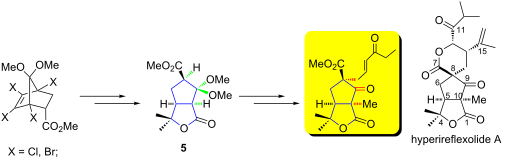
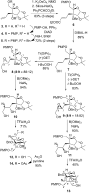
- doublet with coupling constant 15.8 Hz (trans-configuration) for the α-proton of enone [34][35][36][37]. After successfully synthesizing the side chain via cross-metathesis, our next task was the steresoselective epoxidation of (E)-enone 11. Unfortunately, the stereoselective epoxidation of 11 under basic
- conditions were unsuccessful [38], which prevented completion of the proposed synthetic sequence. Conclusion In conclusion, synthetic studies towards hyperireflexolide A, the synthetic precursor α,β-unsaturated ketone 11 was synthesized. Failure of the stereoselective epoxidation of 11 prevented completion
- of the proposed synthetic sequence. Future studies will include the stereoselective epoxidation of 11 followed by opening of the epoxide and lactonization or 1,4-nucleophilic addition to the α,β-unsaturated ketone 11 followed by epoxidation of the resulted enolate with subsequent lactonization to


Recent advances in hypervalent iodine(III)-catalyzed functionalization of alkenes
Beilstein J. Org. Chem. 2018, 14, 1813–1825, doi:10.3762/bjoc.14.154
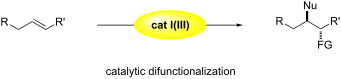
- epoxidation products. Not only terminal styrenes but also internal alkenes were suitable to this reaction, affording the anti-diamination products. The exact mode of stereoinduction with the new catalyst 23 was examined, and the single crystal X-ray structural analysis of 26 revealed that a water molecule


β-Hydroxy sulfides and their syntheses
Beilstein J. Org. Chem. 2018, 14, 1668–1692, doi:10.3762/bjoc.14.143
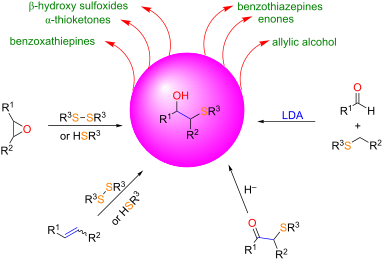
- presence of the hydroxy functional group acting as a transition-state analog. The synthesis of the inhibitors commenced with the conversion of aldehyde 127 into alkene 128 via a Wittig reaction followed by epoxidation to furnish epoxide 129. Regioselective opening of the epoxide ring with a thiolate gave


Recent applications of chiral calixarenes in asymmetric catalysis
Beilstein J. Org. Chem. 2018, 14, 1389–1412, doi:10.3762/bjoc.14.117
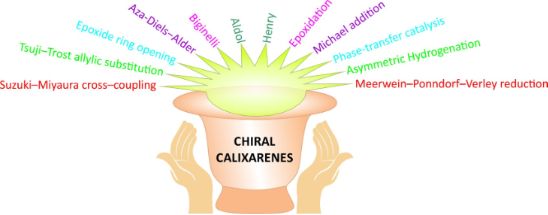
- reaction in the following order: phase-transfer catalysis, Henry reaction, Suzuki–Miyaura cross-coupling and Tsuji–Trost allylic substitution, hydrogenation, Michael addition, aldol and multicomponent Biginelli reactions, epoxidation, Meerwein−Ponndorf−Verley reduction, aza-Diels−Alder and epoxide ring
- six-membered-ring transition state similar to that described earlier by Feng et al. [69]. Epoxidation In 2014 Sciotto et al. reported the synthesis of two novel calix[4]arene–salen ligands 105a,b in 1,3-alternate conformation. Reaction of the salen ligands with appropriate metal acetate salt according
- to the Scheme 31, led to the formation of uranyl and manganese complexes 106a,b–107a,b [70]. While Mn(III) complexes 107a,b have been used as catalysts for asymmetric epoxidation of styrene and substituted styrenes in the presence of NaClO as an oxygen donor and 4-phenylpyridine N-oxide (4-PPNO) as a


One hundred years of benzotropone chemistry
Beilstein J. Org. Chem. 2018, 14, 1120–1180, doi:10.3762/bjoc.14.98








A stereoselective and flexible synthesis to access both enantiomers of N-acetylgalactosamine and peracetylated N-acetylidosamine
Beilstein J. Org. Chem. 2018, 14, 856–860, doi:10.3762/bjoc.14.71
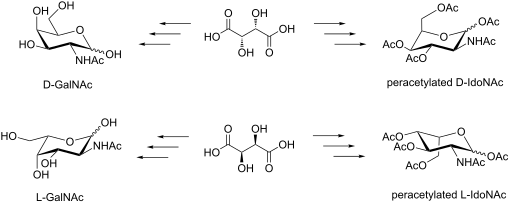
- configuration at C4 and C5 of the target compounds 5a and 5b. After the C4-chain of tartaric acid has been extended by two carbon atoms resulting in compounds 4a and 4b, two new stereocenters have been introduced by Sharpless epoxidation [17][18]. We applied this approach for the epoxidation of 4a with L
- -diethyl tartrate (L-DET) directing the reaction towards the D-galacto-configured epoxythreitol 5a. Alternatively, epoxidation of 4b with D-DET was used to access L-galacto-configured epoxythreitol 5b. A procedure by Miyashita et al. [19] for nucleophilic substitution of epoxides by an azide functionality
- , this approach was additionally adapted for the synthesis of peracetylated D-N-acetylidosamine 2c. Therefore, the epoxidation of 4a was performed with D-DET instead of L-DET, resulting in D-epoxythreitol 5c (Scheme 4). Performing the presented, optimized reaction sequence resulted in the formation of


Volatiles from the tropical ascomycete Daldinia clavata (Hypoxylaceae, Xylariales)
Beilstein J. Org. Chem. 2018, 14, 135–147, doi:10.3762/bjoc.14.9
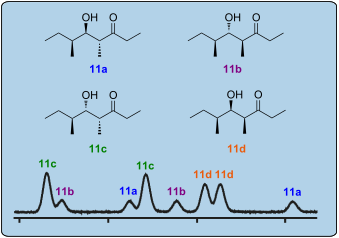
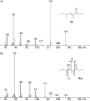
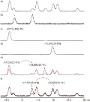
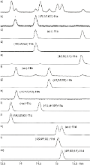
- with DIBAl-H to 26 that was converted into the epoxide 27a by Sharpless epoxidation with (+)-L-DET. Treatment with TBSOTf and Hünig’s base resulted in opening of the epoxide with concomitant hydride migration to yield 28a. The stereochemical course for this reaction has been reported by Jung and
- File 1) were identical to previously reported data [38]. The allyl alcohol 26 was also used in a Sharpless epoxidation with (−)-D-DET to give 27b that was converted into (4S,5R,6S)-11d via the same sequence of steps with a total yield of 6% via seven steps. Starting from the alcohol 24, two more








The synthesis of the 2,3-difluorobutan-1,4-diol diastereomers
Beilstein J. Org. Chem. 2017, 13, 2883–2887, doi:10.3762/bjoc.13.280
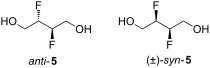
- alkene was cis-configured, its introduction was possible from the start (Scheme 3). Hence, following literature procedures [24][25][26], the reaction of cis-1 with 2,2-dimethoxypropane and subsequent epoxidation led to 7. However, epoxide opening with Et3N·3HF was accompanied by acetonide rearrangement
- -butynediol (13) by LiAlH4 to give trans-1 [27] was followed by benzylation [28] and epoxidation with m-CPBA to give (±)-trans-2 [28]. When the reaction was performed on a small scale, excess m-CPBA and the byproduct 3-chlorobenzoic acid were removed by extraction with a saturated Na2S2O3 solution. However


Herpetopanone, a diterpene from Herpetosiphon aurantiacus discovered by isotope labeling
Beilstein J. Org. Chem. 2017, 13, 2458–2465, doi:10.3762/bjoc.13.242
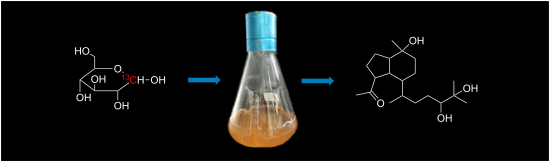
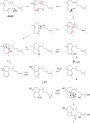
- cation. Eventually, the addition of OH− would lead to an α-cadinol-type diterpene. For the ring contraction, we would propose a two-step sequence of epoxidation and rearrangement [24], which would directly lead to the acetyl group in 1. Recently, heterologous expression of the terpene cyclase Haur_2987

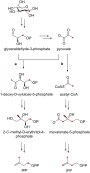

Synthesis of ergostane-type brassinosteroids with modifications in ring A
Beilstein J. Org. Chem. 2017, 13, 2326–2331, doi:10.3762/bjoc.13.229
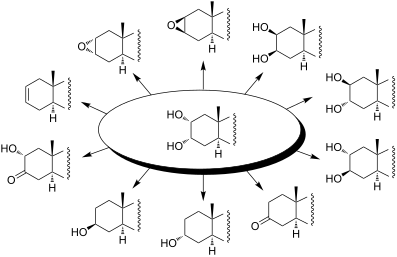
- ,3α-, and 2β,3β-dihydroxy-, 3-keto-, 3α- and 3β-hydroxy-, 2α-hydroxy-3-keto-) were synthesized from 2α,3α-diols in a few simple steps (Corey–Winter reaction, epoxidation, oxidation, hydride reduction, etc.). Keywords: biosynthetic precursors; brassinosteroids; diols; epibrassinolide; epicastasterone


Homologated amino acids with three vicinal fluorines positioned along the backbone: development of a stereoselective synthesis
Beilstein J. Org. Chem. 2017, 13, 2316–2325, doi:10.3762/bjoc.13.228

- an attempted Sharpless asymmetric epoxidation reaction using (+)-DET (Scheme 3); however, none of the desired product 28a was observed in this case, presumably due to a substrate/catalyst mismatch effect. Therefore, the epoxidation reaction was re-attempted using (−)-DET (Scheme 3); this successfully
- afforded the syn,anti-epoxy alcohol 28b with good stereoselectivity, albeit in poor yield. One reason for the low yield of 28b was the difficulty in its chromatographic separation from the byproducts of the epoxidation reaction. Nevertheless, a sufficient quantity of 28b was obtained to proceed some way
- 27 (Scheme 3). Compound 35 was carried through the same set of reactions that were described previously for substrate 27 (Scheme 3). Thus, 35 underwent a cross metathesis reaction to furnish 36 in good yield (Scheme 4). Compound 36 then became the substrate for a Sharpless asymmetric epoxidation


Synthesis of 2-aminosuberic acid derivatives as components of some histone deacetylase inhibiting cyclic tetrapeptides
Beilstein J. Org. Chem. 2017, 13, 2153–2156, doi:10.3762/bjoc.13.214

- to provide the desired 2-aminoheptenoic acid derivative 11. Several syntheses of this important amino acid have appeared which include Lubell’s palladium-catalyzed allylation [15], Riera’s asymmetric epoxidation protocol [16], Rich’s enolate amination [17] and Hruby’s asymmetric alkylation [18] of a


The chemistry and biology of mycolactones
Beilstein J. Org. Chem. 2017, 13, 1596–1660, doi:10.3762/bjoc.13.159
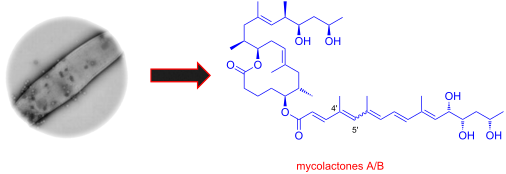
- obtained according to literature procedures [133], thus setting the stereochemistry at C12. The five-step sequence from 20 to vinyl iodide 21 included a (poorly diastereoselective) epoxidation, epoxide opening with a propynyl anion and a hydrozirconation/iodination reaction to generate the vinyl iodide









Urea–hydrogen peroxide prompted the selective and controlled oxidation of thioglycosides into sulfoxides and sulfones
Beilstein J. Org. Chem. 2017, 13, 1139–1144, doi:10.3762/bjoc.13.113
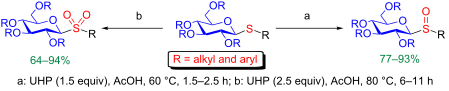
- within 1.5 h. However, corresponding sulfone was obtained in a moderated yield due to instability which undergoes partial amount of decomposition. In general, olefins functional groups are known to undergo epoxidation or dihydroxylation with different oxidizing agents (e.g. m-CPBA, t-BuOOH, oxone, etc

Fluorinated cyclohexanes: Synthesis of amine building blocks of the all-cis 2,3,5,6-tetrafluorocyclohexylamine motif
Beilstein J. Org. Chem. 2017, 13, 728–733, doi:10.3762/bjoc.13.72
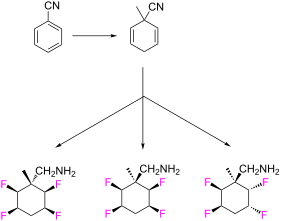
- elimination. Results and Discussion The Birch reduction of benzonitrile 6 followed by in situ methylation with iodomethane generated cyclohexadiene 7 as previously described [13][14]. Cyclohexadiene 7 was then subjected to a double epoxidation protocol using mCPBA [1][11][15][16]. This generated three



Studies directed toward the exploitation of vicinal diols in the synthesis of (+)-nebivolol intermediates
Beilstein J. Org. Chem. 2017, 13, 571–578, doi:10.3762/bjoc.13.56
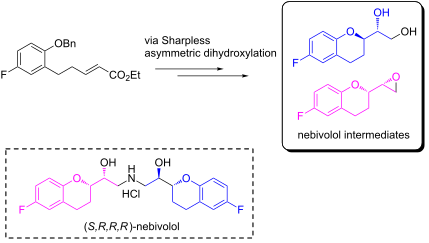
- 1, method 1). For this purpose, the necessary epoxide 6 could be obtained from the parent E-allylic alcohol through Sharpless asymmetric epoxidation (SAE) [11]. However, the corresponding parent Z-allylic alcohol appears to be not suitable to provide 7 under SAE conditions [20]. This has eliminated
- reaction [34] to obtain the β-hydroxy-α-tosyloxy esters 24 and 25, respectively (Scheme 6). Panda and co-worker applied a three-step reaction sequence involving epoxidation/debenzylation/epoxide ring-opening to convert the β-hydroxy-α-tosyloxy ester into the corresponding 2-substituted chroman derivative
- formation. Further we speculated that compound 26, in the presence of a base, might undergo a simultaneous epoxidation–intramolecular epoxide-ring opening to produce 27 (Scheme 7) as the corresponding benzoxepin ring formation via intramolecular displacement of –OTs group by ArO− is unresponsive [23]. To


cis-Diastereoselective synthesis of chroman-fused tetralins as B-ring-modified analogues of brazilin
Beilstein J. Org. Chem. 2016, 12, 2816–2822, doi:10.3762/bjoc.12.280
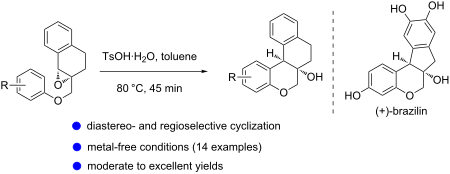
- the synthesis of carbo- and heterocyclic compounds [21][22][23][24]. The easy accessibility of racemic and enantiomerically pure epoxy substrates through a number of well-established epoxidation methods coupled with procedural simplicity, high atom economy, regio- and stereoselectivity of IFCEA


Chemical probes for competitive profiling of the quorum sensing signal synthase PqsD of Pseudomonas aeruginosa
Beilstein J. Org. Chem. 2016, 12, 2784–2792, doi:10.3762/bjoc.12.277
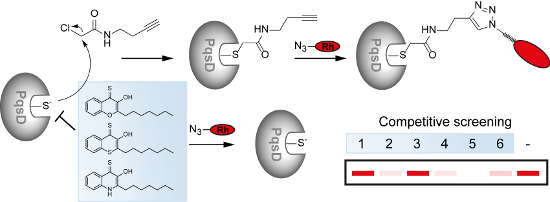
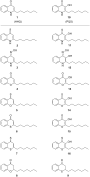
- ) can be used for the synthesis of 1-O-PQS (13) was explored by epoxidation with subsequent ring opening in 41%. Thus, 1-O-PQS (13) could be produced in just two steps with an overall yield of 25% (Scheme 1). The synthesis of 1-S-PQS (15) was previously accomplished by a two-step synthesis of



A versatile route to polythiophenes with functional pendant groups using alkyne chemistry
Beilstein J. Org. Chem. 2016, 12, 2682–2688, doi:10.3762/bjoc.12.265
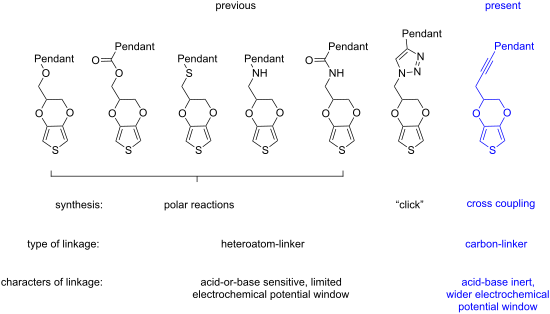
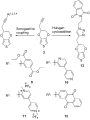
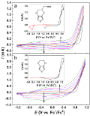
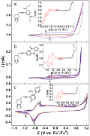
- ether linkage. Furthermore, substantial differences between ProDOT and EDOT polymers regarding their electrochemical properties have been described [29]. Scheme 2 shows the synthesis of pyEDOT 3. It starts with glycidol that can be economically prepared by the epoxidation of allyl alcohol [30]. The


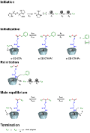
Radical polymerization by a supramolecular catalyst: cyclodextrin with a RAFT reagent
Beilstein J. Org. Chem. 2016, 12, 2495–2502, doi:10.3762/bjoc.12.244
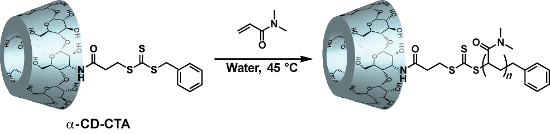
- , including hydrolysis reactions [10][11][12][13][14][15], C–H bond activation [34][35][36], olefin epoxidation [37][38][39], Diels–Alder reactions [40][41][42], 1,3-dipole cycloadditions [43][44], and polymerizations [45][46][47], among others. Selective substrate recognition and activation are essential


Useful access to enantiomerically pure protected inositols from carbohydrates: the aldohexos-5-uloses route
Beilstein J. Org. Chem. 2016, 12, 2343–2350, doi:10.3762/bjoc.12.227
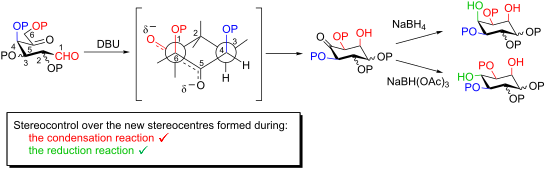
- [8][9][10][11][12][13]; 2) elaboration of the six carbon atom skeleton of either a) tetrahydroxycyclohexene derivatives [14][15] (synthetic or natural conduritols) through stereoselective cis-hydroxylation or epoxidation–hydrolysis of the double bond or b) benzene [16][17] or halo-benzenes [18][19


The direct oxidative diene cyclization and related reactions in natural product synthesis
Beilstein J. Org. Chem. 2016, 12, 2104–2123, doi:10.3762/bjoc.12.200
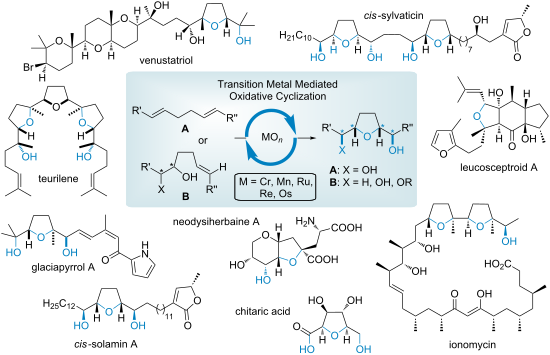
- . Likewise, syntheses of fragments of natural products applying an oxidative cyclization protocol [1][2] and sequential epoxidation/cyclization procedures [3] are not in the scope of this article and are therefore not covered. Previous review articles concerning oxidative diene cyclization chemistry can be
- diastereoisomeric lactone 52 in 76% yield. This lactone (52) was converted to enediol 53 in a further few steps. The second THF ring was then established using an epoxidation–cyclization sequence. Thus, asymmetric Sharpless epoxidation (SAE) [103][104] yielded an intermediary oxirane (not shown in Scheme 12) which
- Laurentia venustra and exhibited antiviral activity against vesicular stomatitis virus (VSV) and herpes simplex virus type 1 (HSV-1) [157]. Hashimoto et al. reported a total synthesis of the natural product in 1988 [158][159] employing a vanadium-catalyzed epoxidation as a key step in the stereoselective






Synthesis of the C8’-epimeric thymine pyranosyl amino acid core of amipurimycin
Beilstein J. Org. Chem. 2016, 12, 1765–1771, doi:10.3762/bjoc.12.165
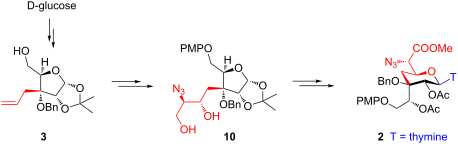
- -glucose derived alcohol 3 in 13 steps and 14% overall yield. Thus, the Sharpless asymmetric epoxidation of allyl alcohol 7 followed by trimethyl borate mediated regio-selective oxirane ring opening with azide, afforded azido diol 10. The acid-catalyzed 1,2-acetonide ring opening in 10 concomitantly led to
- oxocarbenium ion at C1 to which concomitant addition of a hydroxy group (present in the side chain at C3) will give the requisite pyranose ring skeleton. Intermediate B could be derived from the allyl alcohol C by using the Sharpless asymmetric epoxidation followed by regioselective epoxide ring opening with
- Sharpless asymmetric epoxidation (SAE) [16][17]. Thus, allyl alcohol 7 was subjected for SAE first using (+)-DET that afforded a diastereomeric mixture of epoxy alcohols 8 and 9 in the ratio of 88:12 (based on the 1H NMR analysis) in 85% yield. Similarly, use of (–)-DET in SAE afforded epoxide 8 and 9 in