


Search results
Search for "fluoride" in Full Text gives 362 result(s) in Beilstein Journal of Organic Chemistry. Showing first 200.
Menadione: a platform and a target to valuable compounds synthesis
- Acácio S. de Souza,
- Ruan Carlos B. Ribeiro,
- Dora C. S. Costa,
- Fernanda P. Pauli,
- David R. Pinho,
- Matheus G. de Moraes,
- Fernando de C. da Silva,
- Luana da S. M. Forezi and
- Vitor F. Ferreira
Beilstein J. Org. Chem. 2022, 18, 381–419, doi:10.3762/bjoc.18.43
- developed based on other oxidizing agents, such as cobalt(III) fluoride [85], phenyliodine(III) bis(trifluoroacetate) (PIFA) [86] and tert-butyl hydroperoxide [87] (Table 3). In 1999, Tomatsu and co-workers performed the synthesis of menadione (10) through demethylation of 2-methyl-1,4-dimethoxynaphthalene
- (19), using cobalt(III) fluoride as oxidizing agent (Table 3, entry 1) [85]. The obtained results showed that the cobalt(III) fluoride catalyst was comparable with other oxidizing agents already well-established for this synthesis, like silver(II) oxide and ammonium cerium(IV) nitrate. Cobalt(III
- ) fluoride proved to be a good oxidizing agent for the synthesis of menadione (10). This approach furnished 10 in 92% yield, although the reaction required a longer reaction time compared to the few minutes using AgO and CAN. Another problem associated with the use of oxidizing metallic agents is the

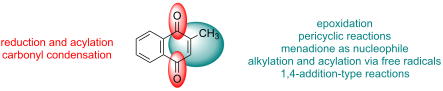
Graphical Abstract

Figure 1: Natural bioactive naphthoquinones.

Figure 2: Chemical structures of vitamins K.

Figure 3: Redox cycle of menadione.

Scheme 1: Selected approaches for menadione synthesis using silver(I) as a catalyst.

Scheme 2: Methylation approaches for the preparation of menadione from 1,4-naphthoquinone using tert-butyl hy...

Scheme 3: Methylation approach of 1,4-naphthoquinone using i) rhodium complexes/methylboronic acid and ii) bi...

Scheme 4: Synthesis of menadione (10) from itaconic acid.

Scheme 5: Menadione synthesis via Diels–Alder reaction.

Scheme 6: Synthesis of menadione (10) using p-cresol as a synthetic precursor.

Scheme 7: Synthesis of menadione (10) via demethoxycarbonylating annulation of methyl methacrylate.

Scheme 8: Furan 34 used as a diene in a Diels–Alder reaction for the synthesis of menadione (10).

Scheme 9: o-Toluidine as a dienophile in a Diels–Alder reaction for the synthesis of menadione (10).

Scheme 10: Representation of electrochemical synthesis of menadione.

Figure 4: Reaction sites and reaction types of menadione as substrate.

Scheme 11: DBU-catalyzed epoxidation of menadione (10).

Scheme 12: Phase-transfer catalysis for the epoxidation of menadione.

Scheme 13: Menadione epoxidation using a hydroperoxide derived from (+)-norcamphor.

Scheme 14: Enantioselective Diels–Alder reaction for the synthesis of asymmetric quinone 50 catalyzed by a chi...

Scheme 15: Optimized reaction conditions for the synthesis of anthra[9,1-bc]pyranone.

Scheme 16: Synthesis of anthra[9,1-bc]furanone, anthra[9,1-bc]pyridine, and anthra[9,1-bc]pyrrole derivatives.

Scheme 17: Synthesis of derivatives employing protected trienes.

Scheme 18: Synthesis of cyclobutene derivatives of menadione.

Scheme 19: Menadione reduction reactions using sodium hydrosulfite.

Scheme 20: Green methodology for menadiol synthesis and pegylation.

Scheme 21: Menadione reduction by 5,6-O-isopropylidene-ʟ-ascorbic acid under UV light irradiation.

Scheme 22: Selected approaches of menadione hydroacetylation to diacetylated menadiol.

Scheme 23: Thiele–Winter reaction catalyzed by Bi(OTf)3.

Scheme 24: Carbonyl condensation of menadione using resorcinol and a hydrazone derivative.

Scheme 25: Condensation reaction of menadione with thiosemicarbazide.

Scheme 26: Condensation reaction of menadione with acylhydrazides.

Scheme 27: Menadione derivatives functionalized with organochalcogens.

Scheme 28: Synthesis of selenium-menadione conjugates derived from chloromethylated menadione 84.

Scheme 29: Menadione alkylation by the Kochi–Anderson method.

Scheme 30: Menadione alkylation by diacids.

Scheme 31: Menadione alkylation by heterocycles-substituted carboxylic acids.

Scheme 32: Menadione alkylation by bromoalkyl-substituted carboxylic acids.

Scheme 33: Menadione alkylation by complex carboxylic acids.

Scheme 34: Kochi–Anderson method variations for the menadione alkylation via oxidative decarboxylation of carb...

Scheme 35: Copper-catalyzed menadione alkylation via free radicals.

Scheme 36: Nickel-catalyzed menadione cyanoalkylation.

Scheme 37: Iron-catalyzed alkylation of menadione.

Scheme 38: Selected approaches to menadione alkylation.

Scheme 39: Menadione acylation by photo-Friedel–Crafts acylation reported by Waske and co-workers.

Scheme 40: Menadione acylation by Westwood procedure.

Scheme 41: Synthesis of 3-benzoylmenadione via metal-free TBAI/TBHP system.

Scheme 42: Michael-type addition of amines to menadione reported by Kallmayer.

Scheme 43: Synthesis of amino-menadione derivatives using polyalkylamines.

Scheme 44: Selected examples for the synthesis of different amino-substituted menadione derivatives.

Scheme 45: Selected examples of Michael-type addition of complex amines to menadione (10).

Scheme 46: Addition of different natural α-amino acids to menadione.

Scheme 47: Michael-type addition of amines to menadione using silica-supported perchloric acid.

Scheme 48: Indolylnaphthoquinone or indolylnaphthalene-1,4-diol synthesis reported by Yadav et al.

Scheme 49: Indolylnaphthoquinone synthesis reported by Tanoue and co-workers.

Scheme 50: Indolylnaphthoquinone synthesis from menadione by Escobeto-González and co-workers.

Scheme 51: Synthesis of menadione analogues functionalized with thiols.

Scheme 52: Synthesis of menadione-derived symmetrical derivatives through reaction with dithiols.

Scheme 53: Mercaptoalkyl acids as nucleophiles in Michael-type addition reaction to menadione.

Scheme 54: Reactions of menadione (10) with cysteine derivatives for the synthesis of quinoproteins.

Scheme 55: Synthesis of menadione-glutathione conjugate 152 by Michael-type addition.
Multi-faceted reactivity of N-fluorobenzenesulfonimide (NFSI) under mechanochemical conditions: fluorination, fluorodemethylation, sulfonylation, and amidation reactions
- José G. Hernández,
- Karen J. Ardila-Fierro,
- Dajana Barišić and
- Hervé Geneste
Beilstein J. Org. Chem. 2022, 18, 182–189, doi:10.3762/bjoc.18.20
- distinctive peak at 65.8 ppm in the 19F NMR spectrum (Scheme 3g), which was assigned to phenylsulfonyl fluoride (PhSO2F) [35], a byproduct often obtained in reactions with NFSI [36][37]. Trying to improve the rheology of the reaction mixture and to increase the basicity of the medium, we milled 3a and NFSI in
- reactivity of pyridine derivatives with NFSI, which are known to generate phenylsulfonyl fluoride via a transient generation of N-sulfonylpyridinium salts [37]. Analysis by 19F NMR spectroscopy of the crude reaction mixture of 3b and NFSI revealed the presence of PhSO2F (Scheme 3d), thus confirming the
- capacity of the nitrogen with the lone electron pair in 3b, and probably in 3a, to react with NFSI at the sulfonyl group to facilitate the formation of phenylsulfonyl fluoride (Scheme 3c). Other imidazole derivatives such as 2-methylimidazole (3c) and benzimidazole (3d) also underwent sulfonylation

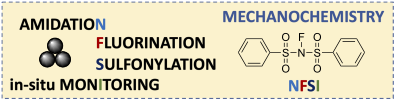
Graphical Abstract

Scheme 1: Examples of mechanochemical reactions using NFSI.

Scheme 2: Mechanochemical fluorination of arenes 1 with NFSI. (a) Product distributions and reaction conditio...

Figure 1: Time-resolved 2D plots of the mechanochemical reaction of: (a) 1c (0.59 mmol), NFSI (1.0 equiv), an...

Scheme 3: (a–f) Reactions of substrates 3 with NFSI. Reaction conditions: Substrates 3 (0.734 mmol) were mill...

Scheme 4: Regioselective C-3 mechanochemical amidation of 5 with NFSI.
Mechanistic studies of the solvolysis of alkanesulfonyl and arenesulfonyl halides
- Malcolm J. D’Souza and
- Dennis N. Kevill
Beilstein J. Org. Chem. 2022, 18, 120–132, doi:10.3762/bjoc.18.13
- and Scott showed [9] that in 50% acetone/50% water at 0.5 °C, a hydroxide ion was about 106 times more reactive than a water molecule towards benzenesulfonyl chloride. Also, for the same solvent, at 25.0 °C, they found [10] that the fluoride, with a considerably stronger carbon–halogen bond, reacted
- at least four orders of magnitude slower than the chloride as regards the solvolytic replacement of the halogen present in the benzenesulfonyl halide. For the reactions of the fluoride in 20% dioxane at 91 °C, the m-nitro derivative was shown to be subject to a strong nucleophilic catalysis by

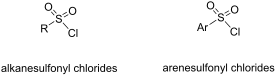
Graphical Abstract

Scheme 1: Organic reactions where the breaking of a C–X bond involves the formation of a high energy ion-pair...

Scheme 2: The chemical structures for the 1-adamantyl substrate, 2-adamantyl substrate, and the S-methyldiben...

Figure 1: The SN2 reaction plot of log (k/ko) vs (1.26 NT + 0.65 YCl) for the solvolyses of benzesulfonyl chl...

Figure 2: The SN2 reaction plot of log (k/ko) vs (1.35 NT + 0.70 YCl) for the solvolyses of 2-thiophenesulfon...
Peptide stapling by late-stage Suzuki–Miyaura cross-coupling
- Hendrik Gruß,
- Rebecca C. Feiner,
- Ridhiwan Mseya,
- David C. Schröder,
- Michał Jewgiński,
- Kristian M. Müller,
- Rafał Latajka,
- Antoine Marion and
- Norbert Sewald
Beilstein J. Org. Chem. 2022, 18, 1–12, doi:10.3762/bjoc.18.1
- Pd source together with the water-soluble Buchwald ligand sulfonated SPhos (sSPhos) and potassium fluoride as a base. The reaction was performed in a solvent mixture of dimethoxyethane, ethanol and water (DME/EtOH/H2O 9:9:2) at 120 °C under microwave irradiation for 30 min (Scheme 1) [78]. The

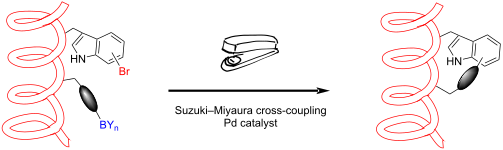
Graphical Abstract

Scheme 1: Synthesis of SMC stapled axin CBD peptides. Reaction conditions: (a) Pd2(dba)3, sSPhos, KF, DME/EtO...

Scheme 2: Overview of the different cross-linkages obtained by intramolecular SMC. A) General structure of SM...

Figure 1: Analysis of the secondary structure by circular dichroism: CD spectra of both isomers of stapled pe...

Figure 2: In vitro binding affinities to β-catenin determined by competitive fluorescence polarisation assays....

Figure 3: Cleavage sites of Proteinase K digestion indicated by a red arrow.
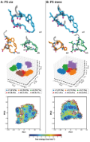
Figure 4: Principal component analysis (PCA) of the macrocycle’s non-hydrogen atoms in the two isomers of P5....
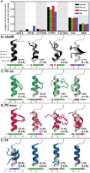
Figure 5: Molecular modelling of the conformational preferences of the SMC stapled peptides P5 (with cis or t...
Iron-catalyzed domino coupling reactions of π-systems
- Austin Pounder and
- William Tam
Beilstein J. Org. Chem. 2021, 17, 2848–2893, doi:10.3762/bjoc.17.196
- products in appreciable yield. Alkenyl fluoride, chloride, and bromide substrates 51/52 were found to be amenable to the reaction although with varying degrees of success, likely due to the competing base-promoted 1,2-elimination. With the cyclopropylidene-functionalized substrates 50a, ring-cleavage led

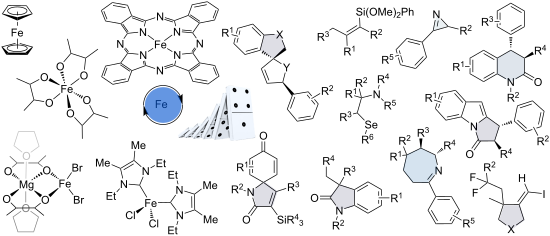
Graphical Abstract

Figure 1: Price comparison among iron and other transition metals used in catalysis.

Scheme 1: Typical modes of C–C bond formation.

Scheme 2: The components of an iron-catalyzed domino reaction.

Scheme 3: Iron-catalyzed tandem cyclization and cross-coupling reactions of iodoalkanes 1 with aryl Grignard ...
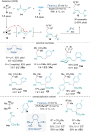
Scheme 4: Three component iron-catalyzed dicarbofunctionalization of vinyl cyclopropanes 14.
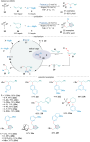
Scheme 5: Three-component iron-catalyzed dicarbofunctionalization of alkenes 21.

Scheme 6: Double carbomagnesiation of internal alkynes 31 with alkyl Grignard reagents 32.

Scheme 7: Iron-catalyzed cycloisomerization/cross-coupling of enyne derivatives 35 with alkyl Grignard reagen...
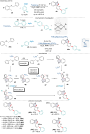
Scheme 8: Iron-catalyzed spirocyclization/cross-coupling cascade.
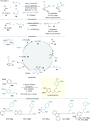
Scheme 9: Iron-catalyzed alkenylboration of alkenes 50.
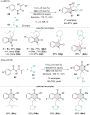
Scheme 10: N-Alkyl–N-aryl acrylamide 60 CDC cyclization with C(sp3)–H bonds adjacent to a heteroatom.

Scheme 11: 1,2-Carboacylation of activated alkenes 60 with aldehydes 65 and alcohols 67.
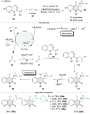
Scheme 12: Iron-catalyzed dicarbonylation of activated alkenes 68 with alcohols 67.
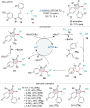
Scheme 13: Iron-catalyzed cyanoalkylation/radical dearomatization of acrylamides 75.

Scheme 14: Synergistic photoredox/iron-catalyzed 1,2-dialkylation of alkenes 82 with common alkanes 83 and 1,3...

Scheme 15: Iron-catalyzed oxidative coupling/cyclization of phenol derivatives 86 and alkenes 87.

Scheme 16: Iron-catalyzed carbosulfonylation of activated alkenes 60.

Scheme 17: Iron-catalyzed oxidative spirocyclization of N-arylpropiolamides 91 with silanes 92 and tert-butyl ...

Scheme 18: Iron-catalyzed free radical cascade difunctionalization of unsaturated benzamides 94 with silanes 92...

Scheme 19: Iron-catalyzed cyclization of olefinic dicarbonyl compounds 97 and 100 with C(sp3)–H bonds.

Scheme 20: Radical difunctionalization of o-vinylanilides 102 with ketones and esters 103.

Scheme 21: Dehydrogenative 1,2-carboamination of alkenes 82 with alkyl nitriles 76 and amines 105.

Scheme 22: Iron-catalyzed intermolecular 1,2-difunctionalization of conjugated alkenes 107 with silanes 92 and...

Scheme 23: Four-component radical difunctionalization of chemically distinct alkenes 114/115 with aldehydes 65...

Scheme 24: Iron-catalyzed carbocarbonylation of activated alkenes 60 with carbazates 117.
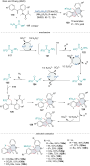
Scheme 25: Iron-catalyzed radical 6-endo cyclization of dienes 119 with carbazates 117.

Scheme 26: Iron-catalyzed decarboxylative synthesis of functionalized oxindoles 130 with tert-butyl peresters ...
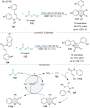
Scheme 27: Iron‑catalyzed decarboxylative alkylation/cyclization of cinnamamides 131/134.

Scheme 28: Iron-catalyzed carbochloromethylation of activated alkenes 60.

Scheme 29: Iron-catalyzed trifluoromethylation of dienes 142.

Scheme 30: Iron-catalyzed, silver-mediated arylalkylation of conjugated alkenes 115.

Scheme 31: Iron-catalyzed three-component carboazidation of conjugated alkenes 115 with alkanes 101/139b and t...

Scheme 32: Iron-catalyzed carboazidation of alkenes 82 and alkynes 160 with iodoalkanes 20 and trimethylsilyl ...

Scheme 33: Iron-catalyzed asymmetric carboazidation of styrene derivatives 115.

Scheme 34: Iron-catalyzed carboamination of conjugated alkenes 115 with alkyl diacyl peroxides 163 and acetoni...

Scheme 35: Iron-catalyzed carboamination using oxime esters 165 and arenes 166.

Scheme 36: Iron-catalyzed iminyl radical-triggered [5 + 2] and [5 + 1] annulation reactions with oxime esters ...

Scheme 37: Iron-catalyzed decarboxylative alkyl etherification of alkenes 108 with alcohols 67 and aliphatic a...

Scheme 38: Iron-catalyzed inter-/intramolecular alkylative cyclization of carboxylic acid and alcohol-tethered...

Scheme 39: Iron-catalyzed intermolecular trifluoromethyl-acyloxylation of styrene derivatives 115.

Scheme 40: Iron-catalyzed carboiodination of terminal alkenes and alkynes 180.

Scheme 41: Copper/iron-cocatalyzed cascade perfluoroalkylation/cyclization of 1,6-enynes 183/185.

Scheme 42: Iron-catalyzed stereoselective carbosilylation of internal alkynes 187.

Scheme 43: Synergistic photoredox/iron catalyzed difluoroalkylation–thiolation of alkenes 82.

Scheme 44: Iron-catalyzed three-component aminoazidation of alkenes 82.

Scheme 45: Iron-catalyzed intra-/intermolecular aminoazidation of alkenes 194.

Scheme 46: Stereoselective iron-catalyzed oxyazidation of enamides 196 using hypervalent iodine reagents 197.
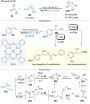
Scheme 47: Iron-catalyzed aminooxygenation for the synthesis of unprotected amino alcohols 200.

Scheme 48: Iron-catalyzed intramolecular aminofluorination of alkenes 209.
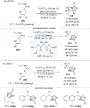
Scheme 49: Iron-catalyzed intramolecular aminochlorination and aminobromination of alkenes 209.

Scheme 50: Iron-catalyzed intermolecular aminofluorination of alkenes 82.

Scheme 51: Iron-catalyzed aminochlorination of alkenes 82.

Scheme 52: Iron-catalyzed phosphinoylazidation of alkenes 108.
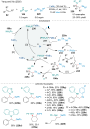
Scheme 53: Synergistic photoredox/iron-catalyzed three-component aminoselenation of trisubstituted alkenes 82.
Synthetic strategies toward 1,3-oxathiolane nucleoside analogues
- Umesh P. Aher,
- Dhananjai Srivastava,
- Girij P. Singh and
- Jayashree B. S
Beilstein J. Org. Chem. 2021, 17, 2680–2715, doi:10.3762/bjoc.17.182
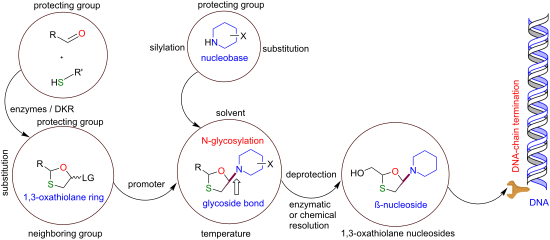
- could have been due to an in situ chelation process. The level of selectivity was determined by HPLC to be >300:1 in favor of the β-configured cis-isomers (racemic mixture of 80a and 80b) [30]. Further, the desilylation using tetrabutylammonium fluoride (TBAF) gave racemic (±)-BCH-189 (1c). Chu et al

Graphical Abstract

Figure 1: Representative modified 1,3-oxathiolane nucleoside analogues.

Figure 2: Mechanism of antiviral action of 1,3-oxathiolane nucleosides, 3TC (1) and FTC (2), as chain termina...

Figure 3: Synthetic strategies for the construction of the 1,3-oxathiolane sugar ring.

Scheme 1: Synthesis of 4 from benzoyloxyacetaldehyde (3a) and 2-mercapto-substituted dimethyl acetal 3na.

Scheme 2: Synthesis of 8 from protected glycolic aldehyde 3b and 2-mercaptoacetic acid (3o).

Scheme 3: Synthesis of 20 from ᴅ-mannose (3c).

Scheme 4: Synthesis of 20 from 1,6-thioanhydro-ᴅ-galactose (3d).

Scheme 5: Synthesis of 8 from 2-(tert-butyldiphenylsilyloxy)methyl-5-oxo-1,2-oxathiolane (3m).

Scheme 6: Synthesis of 20a from ʟ-gulose derivative 3f.

Scheme 7: Synthesis of 31 from (+)-thiolactic acid 3p and 2-benzoyloxyacetaldehyde (3a).

Scheme 8: Synthesis of 35a from 1,4-dithiane-2,5-diol (3q) and glyoxylic acid (3g) hydrate.

Scheme 9: Synthetic routes toward 41 through Pummerer reaction from methyl 2-mercaptoacetate (3j) and bromoac...

Scheme 10: Strategy for the synthesis of 2,5-substituted 1,3-oxathiolane 41a using 4-nitrobenzyl glyoxylate an...

Scheme 11: Synthesis of 44 by a resolution method using Mucor miehei lipase.

Scheme 12: Synthesis of 45 from benzoyloxyacetaldehyde (3a) and 2-mercaptoacetaldehyde bis(2-methoxyethyl) ace...

Scheme 13: Synthesis of 46 from 2-mercaptoacetaldehyde bis(2-methoxyethyl) acetal (3nc) and diethyl 3-phosphon...

Scheme 14: Synthesis of 48 from 1,3-dihydroxyacetone dimer 3l.

Scheme 15: Approach toward 52 from protected alkene 3rb and lactic acid derivative 51 developed by Snead et al....

Scheme 16: Recent approach toward 56a developed by Kashinath et al.

Scheme 17: Synthesis of 56a from ʟ-menthyl glyoxylate (3h) hydrate by DKR.

Scheme 18: Possible mechanism with catalytic TEA for rapid interconversion of isomers.

Scheme 19: Synthesis of 35a by a classical resolution method through norephedrine salt 58 formation.

Scheme 20: Synthesis of 63 via [1,2]-Brook rearrangement from silyl glyoxylate 61 and thiol 3nb.

Scheme 21: Combined use of STS and CAL-B as catalysts to synthesize an enantiopure oxathiolane precursor 65.

Scheme 22: Synthesis of 1 and 1a from glycolaldehyde dimer 64 and 1,4-dithiane-2,5-diol (3q) using STS and CAL...

Scheme 23: Synthesis of 68 by using Klebsiella oxytoca.

Scheme 24: Synthesis of 71 and 72 using Trichosporon taibachii lipase and kinetic resolution.

Scheme 25: Synthesis of 1,3-oxathiolan-5-ones 77 and 78 via dynamic covalent kinetic resolution.

Figure 4: Pathway for glycosidic bond formation.

Scheme 26: First synthesis of (±)-BCH-189 (1c) by Belleau et al.

Scheme 27: Enantioselective synthesis of 3TC (1).

Scheme 28: Synthesis of cis-diastereomer 3TC (1) from oxathiolane propionate 44.

Scheme 29: Synthesis of (±)-BCH-189 (1c) via SnCl4-mediated N-glycosylation of 8.

Scheme 30: Synthesis of (+)-BCH-189 (1a) via TMSOTf-mediated N-glycosylation of 20.

Scheme 31: Synthesis of 3TC (1) from oxathiolane precursor 20a.

Scheme 32: Synthesis of 83 via N-glycosylation of 20 with pyrimidine bases.

Scheme 33: Synthesis of 85 via N-glycosylation of 20 with purine bases.

Scheme 34: Synthesis of 86 and 87 via N-glycosylation using TMSOTf and pyrimidines.

Scheme 35: Synthesis of 90 and 91 via N-glycosylation using TMSOTf and purines.

Scheme 36: Synthesis of 3TC (1) via TMSI-mediated N-glycosylation.

Scheme 37: Stereoselective N-glycosylation for the synthesis of 1 by anchimeric assistance of a chiral auxilia...

Scheme 38: Whitehead and co-workers’ approach for the synthesis of 1 via direct N-glycosylation without an act...

Scheme 39: ZrCl4-mediated stereoselective N-glycosylation.

Scheme 40: Plausible reaction mechanism for stereoselective N-glycosylation using ZrCl4.

Scheme 41: Synthesis of enantiomerically pure oxathiolane nucleosides 1 and 2.

Scheme 42: Synthesis of tetrazole analogues of 1,3-oxathiolane nucleosides 97.

Scheme 43: Synthetic approach toward 99 from 1,3-oxathiolane 45 by Camplo et al.

Scheme 44: Synthesis of 100 from oxathiolane phosphonate analogue 46.

Scheme 45: Synthetic approach toward 102 and the corresponding cyclic thianucleoside monophosphate 102a by Cha...

Scheme 46: Synthesis of emtricitabine (2) from 1,4-dithiane-2,5-diol (3q) and glyoxylic acid (3g).

Scheme 47: Synthesis of 1 and 2, respectively, from 56a–d using iodine-mediated N-glycosylation.

Scheme 48: Plausible mechanism for silane- and I2-mediated N-glycosylation.

Scheme 49: Pyridinium triflate-mediated N-glycosylation of 35a.

Scheme 50: Possible pathway for stereoselective N-glycosylation via in situ chelation with a metal ligand.

Scheme 51: Synthesis of novel 1,3-oxathiolane nucleoside 108 from oxathiolane precursor 8 and 3-benzyloxy-2-me...

Scheme 52: Synthesis of 110 using T-705 as a nucleobase and 1,3-oxathiolane derivative 8 via N-glycosylation.

Scheme 53: Synthesis of 1 using an asymmetric leaving group and N-glycosylation with bromine and mesitylene.

Scheme 54: Cytidine deaminase for enzymatic separation of 1c.

Scheme 55: Enzymatic resolution of the monophosphate derivative 116 for the synthesis of (−)-BCH-189 (1) and (...

Scheme 56: Enantioselective resolution by PLE-mediated hydrolysis to obtain FTC (2).

Scheme 57: (+)-Menthyl chloroformate as a resolving agent to separate a racemic mixture 120.

Scheme 58: Separation of racemic mixture 1c by cocrystal 123 formation with (S)-(−)-BINOL.
Recent advances in the tandem annulation of 1,3-enynes to functionalized pyridine and pyrrole derivatives
- Yi Liu,
- Puying Luo,
- Yang Fu,
- Tianxin Hao,
- Xuan Liu,
- Qiuping Ding and
- Yiyuan Peng
Beilstein J. Org. Chem. 2021, 17, 2462–2476, doi:10.3762/bjoc.17.163
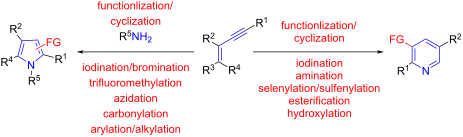
- intramolecular nucleophilic attack by azide and the following deprotonation by a fluoride anion provide the final product 8 (Scheme 5). The derivatization of sulfonated aminonicotinates 8 could easily be achieved. Desulfonylation of aminonicotinate 8b proceeded smoothly in the presence of triflic acid (2.0 equiv

Graphical Abstract

Scheme 1: Ag/I2-mediated electrophilic annulation of 2-en-4-ynyl azides 1.

Scheme 2: The proposed mechanism of Ag-catalyzed aza-annulation.

Scheme 3: The proposed mechanism of I2-mediated aza-annulation.

Scheme 4: Copper-catalyzed amination of (E)-2-en-4-ynyl azides 1.
Scheme 5: The proposed mechanism of copper-catalyzed amination.

Scheme 6: The derivatization of sulfonated aminonicotinates.

Scheme 7: Copper-catalyzed chalcogenoamination of (E)-2-en-4-ynyl azides 1.

Scheme 8: The possible mechanism of chalcogenoamination.

Scheme 9: The derivatization of 5‑selenyl- and 5-sulfenyl-substituted nicotinates.

Scheme 10: The tandem reaction of nitriles, Reformatsky reagents, and 1,3-enynes.

Scheme 11: Nickel-catalyzed [4 + 2]-cycloaddition of 3-azetidinones with 1,3-enynes.

Scheme 12: Electrophilic iodocyclization of 2-nitro-1,3-enynes to pyrroles.

Scheme 13: Electrophilic halogenation of 2-trifluoromethyl-1,3-enynes to pyrroles.

Scheme 14: Copper-catalyzed cascade cyclization of 2-nitro-1,3-enynes with amines.

Scheme 15: Tandem cyclization of 2-nitro-1,3-enynes, Togni reagent II, and amines.

Scheme 16: Tandem cyclization of 2-nitro-1,3-enynes, TMSN3, and amines.

Scheme 17: Cascade cyclization of 6-hydroxyhex-2-en-4-ynals to pyrroles.

Scheme 18: Au/Ag-catalyzed oxidative aza-annulation of 1,3-enynyl azides.

Scheme 19: The plausible mechanism of Au/Ag-catalyzed oxidative aza-annulation.

Scheme 20: Synthesis of 2-tetrazolyl-substituted 3-acylpyrroles from enynals.

Scheme 21: CuH-catalyzed coupling reaction of 1,3-enynes and nitriles to pyrroles.

Scheme 22: The mechanism of CuH-catalyzed coupling of 1,3-enynes and nitriles to pyrroles.
Strategies for the synthesis of brevipolides
- Yudhi D. Kurniawan and
- A'liyatur Rosyidah
Beilstein J. Org. Chem. 2021, 17, 2399–2416, doi:10.3762/bjoc.17.157
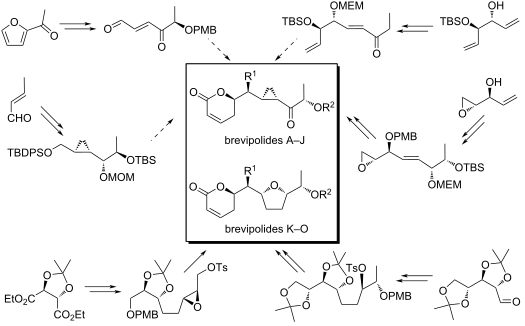
- ester 56 was achieved through reaction of 55 with the pre-activated acid 17 with N,N’-diisopropylcarbodiimide (DIC) and DMAP. Removal of the TBS protection with a fluoride source and succeeding Mitsunobu inversion with 3-butenoic acid (37) went smoothly to give ester 57. This intermediate accommodated

Graphical Abstract

Figure 1: Structures of brevipolides A–O (1 – 15).

Scheme 1: Retrosynthetic analysis of brevipolide H (8) by Kumaraswamy.

Scheme 2: Attempt to synthesize brevipolide H (8) by Kumaraswamy. (R,R)-Noyori cat. = RuCl[N-(tosyl)-1,2-diph...

Scheme 3: Attempt to synthesize brevipolide H (8) by Kumaraswamy (continued).

Scheme 4: Retrosynthetic analysis of brevipolide H (8) by Hou.

Scheme 5: Synthesis ent-brevipolide H (ent-8) by Hou.

Scheme 6: Retrosynthetic analysis of brevipolide H (8) by Mohapatra.

Scheme 7: Attempt to synthesize brevipolide H (8) by Mohapatra.

Scheme 8: Attempt to synthesize brevipolide H (8) by Mohapatra (continued). (+)-(IPC)2-BCl = (+)-B-chloro-dii...

Scheme 9: Retrosynthetic analysis of brevipolide H (8) by Hou.

Scheme 10: Synthesis of brevipolide H (8) by Hou.

Scheme 11: Retrosynthetic analysis of brevipolide M (13) by Sabitha.

Scheme 12: Synthesis of brevipolide M (13) by Sabitha.

Scheme 13: Retrosynthetic analysis of brevipolides M (13) and N (14) by Sabitha.

Scheme 14: Synthesis of brevipolides M (13) and N (14) by Sabitha.
Halides as versatile anions in asymmetric anion-binding organocatalysis
- Lukas Schifferer,
- Martin Stinglhamer,
- Kirandeep Kaur and
- Olga García Macheño
Beilstein J. Org. Chem. 2021, 17, 2270–2286, doi:10.3762/bjoc.17.145
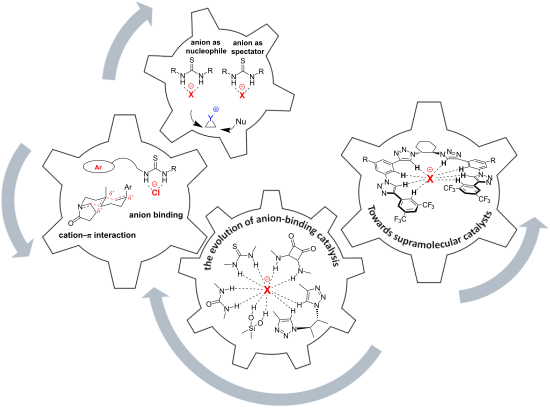
- between the catalyst and the substrate, which exclusively stabilize the transition state that forms the major enantiomer. Furthermore, Gouverneur and co-workers established an enantioselective nucleophilic fluorination protocol using a chiral bis-urea catalyst 41 and CsF as an inorganic fluoride source
- (Scheme 9a) [18]. By employing in situ-generated meso-episulfonium ions, they were able to synthesize β-fluorosulfides 39 in high yields up to 98% and enantioselectivities up to 94% ee. The key step in this transformation is the formation of the noncovalent catalyst–fluoride complex III during the phase
- -transfer step. This provides low amounts of reactive, nucleophilic fluoride in the nonpolar solution, circumventing thereby selectivity and reactivity issues owing to the high basicity of alkali metal fluorides [58][59][60][61][62]. By modifying the reaction conditions, the same group was also able to

Graphical Abstract
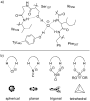
Figure 1: a) Binding interactions in the chloride channel of E. coli. and b) examples of chloride, cyanide, n...

Figure 2: a) H-bond vs anion-binding catalysis and b) activation modes in anion-binding catalysis.

Scheme 1: First proposed anion-binding mechanism in the thiourea-catalyzed acetalization of benzaldehyde.

Scheme 2: a) Thiourea-catalyzed enantioselective acyl-Pictet–Spengler reaction of tryptamine-derived imines 4...

Scheme 3: Proposed mechanism of the thiourea-catalyzed enantioselective Pictet–Spengler reaction of hydroxyla...

Scheme 4: a) Thiourea-catalyzed intramolecular Pictet–Spengler-type cyclization of hydroxylactam-derived N-ac...

Scheme 5: Enantioselective Reissert-type reactions of a) (iso)quinolines with silyl ketene acetals, and b) vi...

Figure 3: Role of the counter-anion: a) Anion acting as a spectator and b) anion participating directly as th...

Scheme 6: Enantioselective selenocyclization catalyzed by squaramide 28.

Scheme 7: Desymmetrization of meso-aziridines catalyzed by bifunctional thiourea catalyst 31.

Scheme 8: Anion-binding-catalyzed desymmetrization of a) meso-aziridines catalyzed by chiral triazolium catal...

Scheme 9: Bis-urea-catalyzed enantioselective fluorination of a) β-bromosulfides and b) β-haloamines by Gouve...

Scheme 10: a) Bifunctional thiourea anion-binding – basic/nucleophilic catalysts. Selected applications in b) ...

Scheme 11: Thiourea-catalyzed enantioselective polycyclization reaction of hydroxylactams 51 through cation–π ...

Scheme 12: Enantioselective aza-Sakurai cyclization of hydroxylactams 56 implicating additional cation–π and L...

Scheme 13: Enantioselective tail-to-head cyclization of neryl chloride derivatives.

Scheme 14: Cation–π interactions in anion binding-catalyzed asymmetric addition reactions: a) addition of indo...

Scheme 15: Bisthiourea catalyzed oxa-Pictet–Spengler reaction of indole-based alcohols and aromatic aldehydes ...

Scheme 16: Anion-binding catalyst development in the enantioselective addition of silyl ketene acetals to 1-ch...

Scheme 17: a) Macrocyclic bis-thiourea catalyst in a diastereoselective glycosylation reaction. b) Competing SN...

Scheme 18: a) Folding mechanism of oligotriazoles upon anion recognition. b) Representative tetratriazole 82 c...

Scheme 19: Switchable chiral tetratriazole catalyst 86 in the enantioselective addition of silyl ketene acetal...
Progress and challenges in the synthesis of sequence controlled polysaccharides
- Giulio Fittolani,
- Theodore Tyrikos-Ergas,
- Denisa Vargová,
- Manishkumar A. Chaube and
- Martina Delbianco
Beilstein J. Org. Chem. 2021, 17, 1981–2025, doi:10.3762/bjoc.17.129
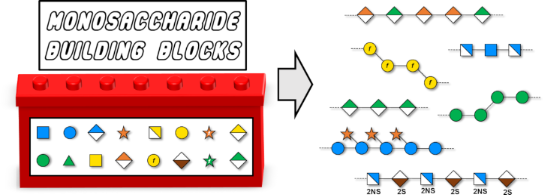
- (LG, e.g., phosphate, fluoride, nucleotide) are polymerized by the enzyme to form the desired polysaccharide (Figure 1A). Several classes of enzymes are available, including hydrolases, phosphorylases, sucrases, glycosyltransferases, and glycosynthases [19][20][21][22]. An excellent overview of the
- polymerization of cellobiose fluoride 1 was achieved using a cellulase produced from Trichoderma viride (Scheme 1A). The DP of the acetylated product was shown to be at least 22. Using a purified version of this enzyme, it was possible to obtain a synthetic analogue of Cellulose I [64]. A rough control of DPs
- produced polysaccharides with controlled substitution, but no control over the length [107]. Similarly, XG fragments prepared by enzymatic degradation of XGs were converted to the fluoride donors and used in the subsequent glycosynthase-catalyzed transformations. (XXXG)3, (XLLG)3, and XXXG-GGGG-XXXG were

Graphical Abstract

Figure 1: Overview of the methods available for the synthesis of polysaccharides. For each method, advantages...

Figure 2: Overview of the classes of polysaccharides discussed in this review. Each section deals with polysa...

Scheme 1: Enzymatic and chemical polymerization approaches provide cellulose oligomers with a non-uniform dis...

Scheme 2: AGA of a collection of cellulose analogues obtained using BBs 6–9. Specifically placed modification...

Figure 3: Chemical structure of the different branches G, X, L, F commonly found in XGs. Names are given foll...

Scheme 3: AGA of XG analogues with defined side chains. The AGA cycle includes coupling (TMSOTf), Fmoc deprot...

Figure 4: Synthetic strategies and issues associated to the formation of the β(1–3) linkage.
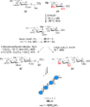
Scheme 4: Convergent synthesis of β(1–3)-glucans using a regioselective glycosylation strategy.

Scheme 5: DMF-mediated 1,2-cis glycosylation. A) General mechanism and B) examples of α-glucans prepared usin...

Scheme 6: Synergistic glycosylation strategy employing a nucleophilic modulation strategy (TMSI and Ph3PO) in...

Scheme 7: Different approaches to produce xylans. A) Polymerization techniques including ROP, and B) enzymati...

Scheme 8: A) Synthesis of arabinofuranosyl-decorated xylan oligosaccharides using AGA. Representative compoun...

Scheme 9: Chemoenzymatic synthesis of COS utilizing a lysozyme-catalyzed transglycosylation reaction followed...
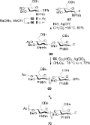
Scheme 10: Synthesis of COS using an orthogonal glycosylation strategy based on the use of two different LGs.
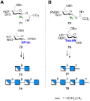
Scheme 11: Orthogonal N-PGs permitted the synthesis of COS with different PA.

Scheme 12: AGA of well-defined COS with different PA using two orthogonally protected BBs. The AGA cycle inclu...

Scheme 13: A) AGA of β(1–6)-N-acetylglucosamine hexasaccharide and dodecasaccharide. AGA includes cycles of co...

Figure 5: ‘Double-faced’ chemistry exemplified for ᴅ-Man and ʟ-Rha. Constructing β-Man linkages is considerab...

Figure 6: Implementation of a capping step after each glycosylation cycle for the AGA of a 50mer oligomannosi...

Scheme 14: AGA enabled the synthesis of a linear α(1–6)-mannoside 100mer 93 within 188 h and with an average s...

Scheme 15: The 151mer branched polymannoside was synthesized by a [30 + 30 + 30 + 30 + 31] fragment coupling. ...

Figure 7: PG stereocontrol strategy to obtain β-mannosides. A) The mechanism of the β-mannosylation reaction ...
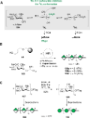
Scheme 16: A) Mechanism of 1,2-cis stereoselective glycosylation using ManA donors. Once the ManA donor is act...

Figure 8: A) The preferred 4H3 conformation of the gulosyl oxocarbenium ion favors the attack of the alcohol ...

Scheme 17: AGA of type I rhamnans up to 16mer using disaccharide BB 115 and CNPiv PG. The AGA cycle includes c...

Figure 9: Key BBs for the synthesis of the O-antigen of Bacteroides vulgatus up to a 128mer (A) and the CPS o...

Figure 10: Examples of type I and type II galactans synthesized to date.

Figure 11: A) The DTBS PG stabilizes the 3H4 conformation of the Gal oxocarbenium ion favoring the attack of t...

Figure 12: Homogalacturonan oligosaccharides synthesized to date. Access to different patterns of methyl-ester...

Figure 13: GlfT2 from Mycobacterium tuberculosis catalyzes the sequential addition of UPD-Galf donor to a grow...

Figure 14: The poor reactivity of acceptor 137 hindered a stepwise synthesis of the linear galactan backbone a...

Scheme 18: AGA of a linear β(1–5) and β(1–6)-linked galactan 20mer. The AGA cycle includes coupling (NIS/TfOH)...

Figure 15: The 92mer arabinogalactan was synthesized using a [31 + 31 + 30] fragment coupling between a 31mer ...

Scheme 19: Synthesis of the branched arabinofuranose fragment using a six component one-pot synthesis. i) TTBP...

Figure 16: A) Chemical structure and SNFG of the representative disaccharide units forming the GAG backbones, ...

Figure 17: Synthetic challenges associated to the H/HS synthesis.

Scheme 20: Degradation of natural heparin and heparosan generated valuable disaccharides 150 and 151 that can ...

Scheme 21: A) The one-step conversion of cyanohydrin 156 to ʟ-iduronamide 157 represent the key step for the s...
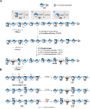
Scheme 22: A) Chemoenzymatic synthesis of heparin structures, using different types of UDP activated natural a...

Scheme 23: Synthesis of the longest synthetic CS chain 181 (24mer) using donor 179 and acceptor 180 in an iter...

Scheme 24: AGA of a collection of HA with different lengths. The AGA cycle includes coupling (TfOH) and Lev de...
Development of N-F fluorinating agents and their fluorinations: Historical perspective
- Teruo Umemoto,
- Yuhao Yang and
- Gerald B. Hammond
Beilstein J. Org. Chem. 2021, 17, 1752–1813, doi:10.3762/bjoc.17.123
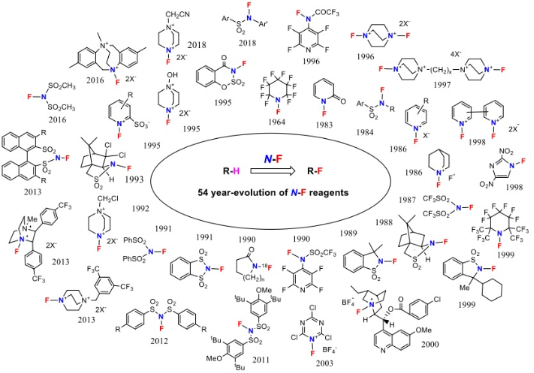
- agents are essential for the wide-spread advancement of organofluorine chemistry to non-specialist chemists. Alternatives to F2, such as perchloryl fluoride (FClO3) [10] and the O-F reagents such as CF3OF [11], CF2(OF)2 [11], CsOSO2OF [12], CF3COOF [13], and CH3COOF [14] have been used as fluorinating
- useful electrophilic or radical fluorinating agents by virtue of their easy handling, efficiency, and selectivity. These non-hygroscopic nature and stability make them easier to handle than nucleophilic fluoride reagents. Potassium fluoride (KF) and naked fluoride anion salts are extremely sensitive to
- fluorination of pyridine or 2-fluoropyridine in anhydrous hydrogen fluoride [17][18] (Scheme 2). Not surprisingly, 1-1 did not become a popular reagent. In 1967, Banks et al. reported reactions of 1-1 with piperidine and triphenylphosphine, -arsine, and -stibine (Scheme 3, entries 1 and 2) [19]. The former

Graphical Abstract

Scheme 1: Fluorination with N-F amine 1-1.

Scheme 2: Preparation of N-F amine 1-1.

Scheme 3: Reactions of N-F amine 1-1.

Scheme 4: Synthesis of N-F perfluoroimides 2-1 and 2-2.

Scheme 5: Synthesis of 1-fluoro-2-pyridone (3-1).

Scheme 6: Fluorination with 1-fluoro-2-pyridone (3-1).

Figure 1: Synthesis of N-F sulfonamides 4-1a–g.
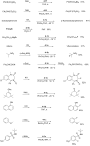
Scheme 7: Fluorination with N-F reagent 4-1b,c,f.

Scheme 8: Fluorination of alkenyllithiums with N-F 4-1h.

Scheme 9: Synthesis of N-fluoropyridinium triflate (5-4a).

Scheme 10: Synthetic methods for N-F-pyridinium salts.

Figure 2: Synthesis of various N-fluoropyridinium salts. Note: athis yield was the one by the improved method...

Scheme 11: Fluorination power order of N-fluoropyridinium salts.

Scheme 12: Fluorinations with N-F salts 5-4.

Scheme 13: Fluorination of Corey lactone 5-7 with N-F-bis(methoxymethyl) salt 5-4l.

Scheme 14: Fluorination with NFPy.

Scheme 15: Synthesis of the N-F reagent, N-fluoroquinuclidinium fluoride (6-1).

Scheme 16: Fluorinations achieved with N-F fluoride 6-1.

Scheme 17: Synthesis of N-F imides 7-1a–g.

Scheme 18: Fluorination with (CF3SO2)2NF, 7-1a.
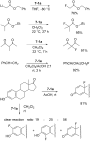
Scheme 19: Fluorination reactions of various substrates with 7-1a.

Scheme 20: Synthesis of N-F triflate 8-1.

Scheme 21: Synthesis of chiral N-fluoro sultams 9-1 and 9-2.
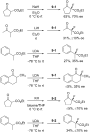
Scheme 22: Fluorination with chiral N-fluoro sultams 9-1 and 9-2.

Scheme 23: Synthesis of saccharin-derived N-fluorosultam 10-2.

Scheme 24: Fluorination with N-fluorosultam 10-2.

Scheme 25: Synthesis of N-F reagent 11-2.

Scheme 26: Fluorination with N-F reagent 11-2.

Scheme 27: Synthesis and reaction of N-fluorolactams 12-1.

Scheme 28: Synthesis of NFOBS 13-2.

Scheme 29: Fluorination with NFOBS 13-2.

Scheme 30: Synthesis of NFSI (14-2).
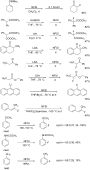
Scheme 31: Fluorination with NFSI 14-2.

Scheme 32: Synthesis of N-fluorosaccharin (15-1) and N-fluorophthalimide (15-2).

Scheme 33: Synthesis of N-F salts 16-3.
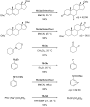
Scheme 34: Fluorination with N-F salts 16-3.

Figure 3: Monofluorination with Selectfluor (16-3a).

Figure 4: Difluorination with Selectfluor (16-3a).

Scheme 35: Transfer fluorination of Selectfluor (16-3a).
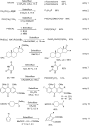
Scheme 36: Fluorination of substrates with Selectfluor (16-3a).

Scheme 37: Synthesis of chiral N-fluoro-sultam 17-2.

Scheme 38: Asymmetric fluorination with chiral 17-2.

Figure 5: Synthesis of Zwitterionic N-fluoropyridinium salts 18-2a–h.

Scheme 39: Fluorinating power order of zwitterionic N-fluoropyridinium salts.

Scheme 40: Fluorination with zwitterionic 18-2.

Scheme 41: Activation of salt 18-2h with TfOH.

Scheme 42: Synthesis of NFTh, 19-2.

Scheme 43: Fluorination with NFTh, 19-2.

Scheme 44: Synthesis of 3-fluorobenzo-1,2,3-oxathiazin-4-one 2,2-dioxide (20-2).

Scheme 45: Fluorination with 20-2.

Scheme 46: Synthesis of N-F amide 21-3.

Scheme 47: Fluorination with N-F amide 21-2.

Scheme 48: Synthesis of N,N’-difluorodiazoniabicyclo[2.2.2]octane salts 22-1.

Scheme 49: One-pot synthesis of N,N’-difluoro-1,4-diazoniabicyclo[2.2.2]octane bistetrafluoroborate salt (22-1d...

Figure 6: Fluorination of anisole with 22-1a, d, e.
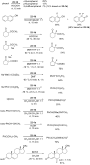
Scheme 50: Fluorination with N,N’-diF bisBF4 22-1d.

Scheme 51: Synthesis of bis-N-F reagents 23-1–5.
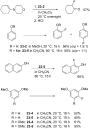
Scheme 52: Fluorination with 23-2, 4, 5.

Figure 7: Synthesis of N,N’-difluorobipyridinium salts 24-2.

Figure 8: Controlled fluorination of N,N’-diF 24-2.

Scheme 53: Fluorinating power of N,N’-diF salts 24-2 and N-F salt 5-4a.
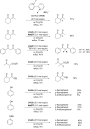
Scheme 54: Fluorination reactions with SynfluorTM (24-2b).

Scheme 55: Additional fluorination reactions with SynfluorTM (24-2b).

Scheme 56: Synthesis of N-F 25-1.

Scheme 57: Fluorination of polycyclic aromatics with 25-1.

Scheme 58: Synthesis of 26-1 and dimethyl analog 26-2.

Scheme 59: Fluorination with reagents 26-1, 26-2, 1-1, and 26-3.

Scheme 60: Synthesis of N-F reagent 27-2.

Scheme 61: Synthesis of chiral N-F reagents 27-6.

Scheme 62: Synthesis of chiral N-F 27-7–9.
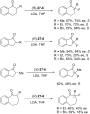
Scheme 63: Asymmetric fluorination with 27-6.

Scheme 64: Synthesis of chiral N-F reagents 28-3.

Scheme 65: Asymmetric fluorination with 28-3.

Scheme 66: Synthesis of chiral N-F reagents 28-7.

Figure 9: Asymmetric fluorination with 28-7.

Scheme 67: In situ formation of N-fluorinated cinchona alkaloids with SelectfluorTM.
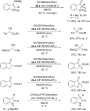
Scheme 68: Asymmetric fluorination with N-F alkaloids formed in situ.

Scheme 69: Synthesis of N-fluorocinchona alkaloids with Selectfluor.

Scheme 70: Asymmetric fluorination with 30-1–4.

Scheme 71: Transfer fluorination from various N-F reagents.

Figure 10: Asymmetric fluorination of silyl enol ethers.

Scheme 72: Synthesis of N-fluoro salt 32-2.

Scheme 73: Reactivity of N-fluorotriazinium salt 32-2.

Scheme 74: Synthesis of bulky N-fluorobenzenesulfonimide NFBSI 33-3.

Scheme 75: Comparison of NFSI and NFBSI.

Scheme 76: Synthesis of p-substituted N-fluorobenzenesulfonimides 34-3.

Figure 11: Asymmetric fluorination with 34-3 and a chiral catalyst 34-4.

Scheme 77: 1,4-Fluoroamination with Selecfluor and a chiral catalyst.

Figure 12: Asymmetric fluoroamination with 35-5a, b.

Scheme 78: Synthesis of Selectfluor analogs 35-5a, b.

Scheme 79: Synthesis of chiral dicationic DABCO-based N-F reagents 36-5.
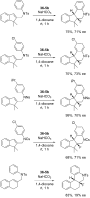
Scheme 80: Asymmetric fluorocyclization with chiral 36-5b.

Scheme 81: Synthesis of chiral 37-2a,b.

Scheme 82: Asymmetric fluorination with chiral 37-2a,b.

Scheme 83: Asymmetric fluorination with chiral 37-2b.

Scheme 84: Reaction of indene with chiral 37-2a,b.

Scheme 85: Synthesis of Me-NFSI, 38-2.

Scheme 86: Fluorination of active methine compounds with Me-NFSI.

Scheme 87: Fluorination of malonates with Me-NFSI.

Scheme 88: Fluorination of keto esters with Me-NFSI.

Scheme 89: Synthesis of N-F 39-3 derived from the ethylene-bridged Tröger’s base.

Scheme 90: Fluorine transfer from N-F 39-3.

Scheme 91: Fluorination with N-F 39-3.

Scheme 92: Synthesis of SelectfluorCN.

Scheme 93: Bistrifluoromethoxylation of alkenes using SelectfluorCN.

Figure 13: Synthesis of NFAS 41-2.

Scheme 94: Radical fluorination with different N-F reagents.

Scheme 95: Radical fluorination of alkenes with NFAS 41-2.

Scheme 96: Radical fluorination of alkenes with NFAS 41-2f.

Scheme 97: Decarboxylative fluorination with NFAS 41-2a,f.

Scheme 98: Fluorine plus detachment (FPD).

Figure 14: FPD values of representative N-F reagents in CH2Cl2 and CH3CN (in parentheses). Adapted with permis...

Scheme 99: N-F homolytic bond dissociation energy (BDE).

Figure 15: BDE values of representative N-F reagents in CH3CN. Adapted with permission from ref. [127]. Copyright 2...

Figure 16: Quantitative reactivity scale for popular N-F reagents. Adapted with permission from ref. [138], publish...

Scheme 100: SET and SN2 mechanisms.

Scheme 101: Radical clock reactions.

Scheme 102: Reaction of potassium enolate of citronellic ester with N-F reagents, 10-1, NFSI, and 8-1.

Scheme 103: Reaction of compound IV with Selectfluor (OTf) and NFSI.

Scheme 104: Reaction of TEMPO with Selecfluor.
Sustainable manganese catalysis for late-stage C–H functionalization of bioactive structural motifs
- Jongwoo Son
Beilstein J. Org. Chem. 2021, 17, 1733–1751, doi:10.3762/bjoc.17.122

- . Initially, resting Mn(TMP)F undergoes oxidation, generating oxomanganese(V) complex O=Mn(TMP)F (5A), followed by H-abstraction of the substrate 1 or 3, providing HO–Mn(TMP)F (5B) and a C-centered radical. The trans-difluoro-substituted Mn(TMP) intermediate 5C, generated by an excess of the fluoride source
- radioisotope for positron emission tomography (PET) in clinical and preclinical research is 18F. Radiopharmaceuticals should be prepared at the late stage of the entire synthetic protocol because of the short half-lives of radioisotopes [26][27][28][29]. In their study, the authors used an aqueous 18F-fluoride
- solution obtained by the nuclear reaction using a cyclotron, and manganese–salen complex 7 was used as a fluoride transfer catalyst, which facilitated late-stage C–H radiofluorination, affording the corresponding radiofluorinated bioactive molecules 8a–h. In general, the regioselectivity of fluorination

Graphical Abstract

Scheme 1: Mn-catalyzed late-stage fluorination of sclareolide (1) and complex steroid 3.

Figure 1: Proposed reaction mechanism of C–H fluorination by a manganese porphyrin catalyst.

Scheme 2: Late-stage radiofluorination of biologically active complex molecules.
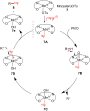
Figure 2: Proposed mechanism of C–H radiofluorination.

Scheme 3: Late-stage C–H azidation of bioactive molecules. a1.5 mol % of Mn(TMP)Cl (5) was used. bMethyl acet...

Figure 3: Proposed reaction mechanism of manganese-catalyzed C–H azidation.

Scheme 4: Mn-catalyzed late-stage C–H azidation of bioactive molecules via electrophotocatalysis. a2.5 mol % ...
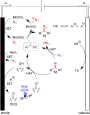
Figure 4: Proposed reaction mechanism of electrophotocatalytic azidation.
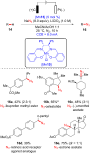
Scheme 5: Manganaelectro-catalyzed late-stage azidation of bioactive molecules.
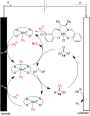
Figure 5: Proposed reaction pathway of manganaelectro-catalyzed late-stage C–H azidation.

Scheme 6: Mn-catalyzed late-stage amination of bioactive molecules. a3 Å MS were used. Protonation with HBF4⋅...

Figure 6: Proposed mechanism of manganese-catalyzed C–H amination.
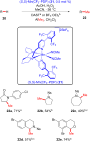
Scheme 7: Mn-catalyzed C–H methylation of heterocyclic scaffolds commonly found in small-molecule drugs. aDAS...
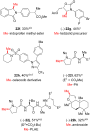
Scheme 8: Examples of late-stage C–H methylation of bioactive molecules. aDAST activation. bFor insoluble sub...
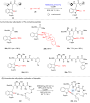
Scheme 9: A) Mn-catalyzed late-stage C–H alkynylation of peptides. B) Intramolecular late-stage alkynylative ...

Figure 7: Proposed reaction mechanism of Mn(I)-catalyzed C–H alkynylation.

Scheme 10: Late-stage Mn-catalyzed C–H allylation of peptides and bioactive motifs.

Scheme 11: Intramolecular C–H allylative cyclic peptide formation.

Scheme 12: Late-stage C–H glycosylation of tryptophan analogues.

Scheme 13: Late-stage C–H glycosylation of tryptophan-containing peptides.

Scheme 14: Late-stage C–H alkenylation of tryptophan-containing peptides.

Scheme 15: A) Late-stage C–H macrocyclization of tryptophan-containing peptides and B) traceless removal of py...
Double-headed nucleosides: Synthesis and applications
- Vineet Verma,
- Jyotirmoy Maity,
- Vipin K. Maikhuri,
- Ritika Sharma,
- Himal K. Ganguly and
- Ashok K. Prasad
Beilstein J. Org. Chem. 2021, 17, 1392–1439, doi:10.3762/bjoc.17.98
- -isobutyrylguanine, N-benzoylcytosine, 6-O-allylhypoxanthine or N,N-dibenzoyldiaminopurine in 53 to 83% yield. The desilylation of the nucleosides 3a–f with tetrabutylammonium fluoride in tetrahydrofuran (THF) led to the formation of six different double-headed nucleosides 4a–f (Scheme 1) [38][39]. The synthesized
- (Scheme 17) [54]. The tert-butyldimethylsilyl-protected (TBDMS) nucleoside 76 was first hydrolyzed using NaOH, which was followed by TBDMS deprotection using tetra-n-butylammonium fluoride (TBAF) in tetrahydrofuran (THF) to afford the double-headed nucleoside 77. The TBDMS-protected nucleoside 73 was

Graphical Abstract

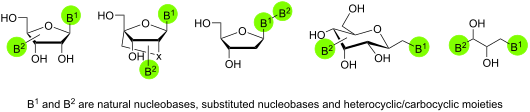
Figure 1: Double-headed nucleosides. B1 and B2 = nucleobases or heterocyclic/carbocyclic moieties; L = linker....

Scheme 1: Synthesis of 2′-(pyrimidin-1-yl)methyl- or 2′-(purin-9-yl)methyl-substituted double-headed nucleosi...

Scheme 2: Synthesis of double-headed nucleoside 7 having two cytosine moieties.

Scheme 3: Synthesis of double-headed nucleoside 2′-deoxy-2′-C-(2-(thymine-1-yl)ethyl)-uridine (11).

Scheme 4: Double-headed nucleosides 14 and 15 obtained by click reaction.

Scheme 5: Synthesis of the double-headed nucleoside 19.

Scheme 6: Synthesis of the double-headed nucleosides 24 and 25.

Scheme 7: Synthesis of double-headed nucleosides 28 and 29.

Scheme 8: Synthesis of double-headed nucleoside 33.

Scheme 9: Synthesis of double-headed nucleoside 37.

Scheme 10: Synthesis of the double-headed nucleoside 1-(5′-O-(4,4′-dimethoxytrityl)-2′-C-((4-(pyren-1-yl)-1,2,...

Scheme 11: Synthesis of triazole-containing double-headed ribonucleosides 46a–c and 50a–e.

Scheme 12: Synthesis of double-headed nucleosides 54a–g.

Scheme 13: Synthesis of double-headed nucleosides 59 and 60.

Scheme 14: Synthesis of the double-headed nucleosides 63 and 64.

Scheme 15: Synthesis of double-headed nucleosides 66a–c.

Scheme 16: Synthesis of benzoxazole-containing double-headed nucleosides 69 and 71 from 5′-amino-5′-deoxynucle...

Scheme 17: Synthesis of 4′-C-((N6-benzoyladenin-9-yl)methyl)thymidine (75) and 4′-C-((thymin-1-yl)methyl)thymi...

Scheme 18: Synthesis of double-headed nucleosides 5′-(adenine-9-yl)-5′-deoxythymidine (79) and 5′-(adenine-9-y...

Scheme 19: Synthesis of double-headed nucleosides 85–87 via reversed nucleosides methodology.

Scheme 20: Double-headed nucleosides 91 and 92 derived from ω-terminal-acetylenic sugar derivatives 90a,b.

Scheme 21: Synthesis of double-headed nucleosides 96a–g.

Scheme 22: Synthesis of double-headed nucleosides 100 and 103.

Scheme 23: Double-headed nucleosides 104 and 105 with a triazole motif.

Scheme 24: Synthesis of the double-headed nucleosides 107 and 108.

Scheme 25: Synthesis of double-headed nucleoside 110 with additional nucleobase in 5′-(S)-C-position joined th...

Scheme 26: Synthesis of double-headed nucleosides 111–113 with additional nucleobases in the 5′-(S)-C-position...

Scheme 27: Synthesis of double-headed nucleoside 114 by click reaction.

Scheme 28: Synthesis of double-headed nucleosides 118 with an additional nucleobase at the 5′-(S)-C-position.

Scheme 29: Synthesis of bicyclic double-headed nucleoside 122.

Scheme 30: Synthesis of double-headed nucleosides 125a–c derived from 2′-amino-LNA.

Scheme 31: Double-headed nucleoside 127 obtained by click reaction.

Scheme 32: Synthesis of double-headed nucleoside 130.

Scheme 33: Double-headed nucleosides 132a–d and 134a–d synthesized by Sonogashira cross coupling reaction.

Scheme 34: Synthesis of double-headed nucleosides 137 and 138 via Suzuki coupling.

Scheme 35: Synthesis of double-headed nucleosides 140 and 141 via Sonogashira cross coupling reaction.

Scheme 36: Synthesis of double-headed nucleoside 143.

Scheme 37: Synthesis of the double-headed nucleoside 146.

Scheme 38: Synthesis of 5-C-alkynyl-functionalized double-headed nucleosides 151a–d.

Scheme 39: Synthesis of 5-C-triazolyl-functionalized double-headed nucleosides 154a, b.

Scheme 40: Synthesis of double-headed nucleosides 157a–c.

Scheme 41: Synthesis of double-headed nucleoside 159, phosphoramidite 160 and the corresponding nucleotide mon...

Scheme 42: Synthesis of double-headed nucleoside 163, phosphoramidite 164 and the corresponding nucleotide mon...

Scheme 43: Synthesis of double-headed nucleoside 167, phosphoramidite 168, and the corresponding nucleotide mo...

Scheme 44: Synthesis of double-headed nucleoside 171, phosphoramidite 172, and the corresponding nucleotide mo...

Scheme 45: Synthesis of double-headed nucleoside 175, phosphoramidite 176, and the corresponding nucleotide mo...

Scheme 46: Synthesis of double-headed nucleoside 178.

Scheme 47: Synthesis of the double-headed nucleosides 181 and 183.

Scheme 48: Alternative synthesis of the double-headed nucleoside 183.

Scheme 49: Synthesis of double-headed nucleoside 188 through thermal [2 + 3] sydnone–alkyne cycloaddition reac...

Scheme 50: Synthesis of the double-headed nucleosides 190 and 191.

Scheme 51: Synthesis of 1-((5S)-2,3,4-tri-O-acetyl-5-(2,6-dichloropurin-9-yl)-β-ᴅ-xylopyranosyl)uracil (195).

Scheme 52: Synthesis of hexopyranosyl double-headed pyrimidine homonucleosides 200a–c.

Figure 2: 3′-C-Ethynyl-β-ᴅ-allopyranonucleoside derivatives 201a–f.

Scheme 53: Synthesis of 3′-C-(1,4-disubstituted-1,2,3-triazolyl)-double-headed pyranonucleosides 203–207.

Scheme 54: Synthesis of 3′-C-(1,4-disubstituted-1,2,3-triazolyl)-double-headed pyranonucleosides 208 and 209.

Scheme 55: Synthesis of 3′-C-(1,4-disubstituted-1,2,3-triazolyl)-double-headed pyranonucleoside 210.

Scheme 56: Synthesis of double-headed acyclic nucleosides (2S,3R)-1,4-bis(thymine-1-yl)butane-2,3-diol (213a) ...

Scheme 57: Synthesis of double-headed acyclic nucleosides (2R,3S)-1,4-bis(thymine-1-yl)butane-2,3-diol (213c) ...

Scheme 58: Synthesis of double-headed acetylated 1,3,4-oxadiazino[6,5-b]indolium-substituted C-nucleosides 218b...

Scheme 59: Synthesis of double-headed acyclic nucleoside 222.
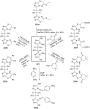
Scheme 60: Synthesis of functionalized 1,2-bis(1,2,4-triazol-3-yl)ethane-1,2-diols 223a–f.

Scheme 61: Synthesis of acyclic double-headed 1,2,4-triazino[5,6-b]indole C-nucleosides 226–231.
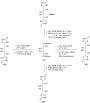
Scheme 62: Synthesis of double-headed 1,3,4-thiadiazoline, 1,3,4-oxadiazoline, and 1,2,4-triazoline acyclo C-n...

Scheme 63: Synthesis of double-headed acyclo C-nucleosides 240–242.

Scheme 64: Synthesis of double-headed acyclo C-nucleoside 246.

Scheme 65: Synthesis of acyclo double-headed nucleoside 250.

Scheme 66: Synthesis of acyclo double-headed nucleoside 253.

Scheme 67: Synthesis of acyclo double-headed nucleosides 259a–d.

Scheme 68: Synthesis of acyclo double-headed nucleoside 261.
A comprehensive review of flow chemistry techniques tailored to the flavours and fragrances industries
- Guido Gambacorta,
- James S. Sharley and
- Ian R. Baxendale
Beilstein J. Org. Chem. 2021, 17, 1181–1312, doi:10.3762/bjoc.17.90
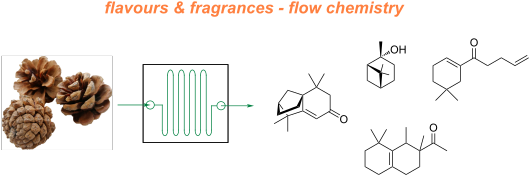

Graphical Abstract

Figure 1: Representative shares of the global F&F market (2018) segmented on their applications [1].

Figure 2: General structure of an international fragrance company [2].

Figure 3: The Michael Edwards fragrance wheel.

Figure 4: Examples of oriental (1–3), woody (4–7), fresh (8–10), and floral (11 and 12) notes.

Figure 5: A basic depiction of batch vs flow.

Scheme 1: Examples of reactions for which flow processing outperforms batch.

Scheme 2: Some industrially important aldol-based transformations.

Scheme 3: Biphasic continuous aldol reactions of acetone and various aldehydes.

Scheme 4: Aldol synthesis of 43 in flow using LiHMDS as the base.

Scheme 5: A semi-continuous synthesis of doravirine (49) involving a key aldol reaction.

Scheme 6: Enantioselective aldol reaction using 5-(pyrrolidin-2-yl)tetrazole (51) as catalyst in a microreact...

Scheme 7: Gröger's example of asymmetric aldol reaction in aqueous media.

Figure 6: Immobilised reagent column reactor types.

Scheme 8: Photoinduced thiol–ene coupling preparation of silica-supported 5-(pyrrolidin-2-yl)tetrazole 63 and...

Scheme 9: Continuous-flow approach for enantioselective aldol reactions using the supported catalyst 67.

Scheme 10: Ötvös’ employment of a solid-supported peptide aldol catalyst in flow.

Scheme 11: The use of proline tetrazole packed in a column for aldol reaction between cyclohexanone (65) and 2...

Scheme 12: Schematic diagram of an aminosilane-grafted Si-Zr-Ti/PAI-HF reactor for continuous-flow aldol and n...

Scheme 13: Continuous-flow condensation for the synthesis of the intermediate 76 to nabumetone (77) and Microi...

Scheme 14: Synthesis of ψ-Ionone (80) in continuous-flow via aldol condensation between citral (79) and aceton...

Scheme 15: Synthesis of β-methyl-ionones (83) from citral (79) in flow. The steps are separately described, an...

Scheme 16: Continuous-flow synthesis of 85 from 84 described by Gavriilidis et al.

Scheme 17: Continuous-flow scCO2 apparatus for the synthesis of 2-methylpentanal (87) and the self-condensed u...

Scheme 18: Chen’s two-step flow synthesis of coumarin (90).

Scheme 19: Pechmann condensation for the synthesis of 7-hydroxyxcoumarin (93) in flow. The setup extended to c...

Scheme 20: Synthesis of the dihydrojasmonate 35 exploiting nitro derivative proposed by Ballini et al.

Scheme 21: Silica-supported amines as heterogeneous catalyst for nitroaldol condensation in flow.

Scheme 22: Flow apparatus for the nitroaldol condensation of p-hydroxybenzaldehyde (102) to nitrostyrene 103 a...

Scheme 23: Nitroaldol reaction of 64 to 105 employing a quaternary ammonium functionalised PANF.

Scheme 24: Enantioselective nitroaldol condensation for the synthesis of 108 under flow conditions.

Scheme 25: Enatioselective synthesis of 1,2-aminoalcohol 110 via a copper-catalysed nitroaldol condensation.

Scheme 26: Examples of Knoevenagel condensations applied for fragrance components.

Scheme 27: Flow apparatus for Knoevenagel condensation described in 1989 by Venturello et al.

Scheme 28: Knoevenagel reaction using a coated multichannel membrane microreactor.

Scheme 29: Continuous-flow apparatus for Knoevenagel condensation employing sugar cane bagasse as support deve...

Scheme 30: Knoevenagel reaction for the synthesis of 131–135 in flow using an amine-functionalised silica gel. ...

Scheme 31: Continuous-flow synthesis of compound 137, a key intermediate for the synthesis of pregabalin (138)...
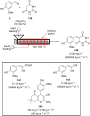
Scheme 32: Continuous solvent-free apparatus applied for the synthesis of compounds 140–143 using a TSE. Throu...

Scheme 33: Lewis et al. developed a spinning disc reactor for Darzens condensation of 144 and a ketone to furn...

Scheme 34: Some key industrial applications of conjugate additions in the F&F industry.

Scheme 35: Continuous-flow synthesis of 4-(2-hydroxyethyl)thiomorpholine 1,1-dioxide (156) via double conjugat...

Scheme 36: Continuous-flow system for Michael addition using CsF on alumina as the catalyst.

Scheme 37: Calcium chloride-catalysed asymmetric Michael addition using an immobilised chiral ligand.

Scheme 38: Continuous multistep synthesis for the preparation of (R)-rolipram (173). Si-NH2: primary amine-fun...

Scheme 39: Continuous-flow Michael addition using ion exchange resin Amberlyst® A26.

Scheme 40: Preparation of the heterogeneous catalyst 181 developed by Paixão et al. exploiting Ugi multicompon...

Scheme 41: Continuous-flow system developed by the Paixão’s group for the preparation of Michael asymmetric ad...

Scheme 42: Continuous-flow synthesis of nitroaldols catalysed by supported catalyst 184 developed by Wennemers...

Scheme 43: Heterogenous polystyrene-supported catalysts developed by Pericàs and co-workers.

Scheme 44: PANF-supported pyrrolidine catalyst for the conjugate addition of cyclohexanone (65) and trans-β-ni...

Scheme 45: Synthesis of (−)-paroxetine precursor 195 developed by Ötvös, Pericàs, and Kappe.

Scheme 46: Continuous-flow approach for the 5-step synthesis of (−)-oseltamivir (201) as devised by Hayashi an...

Scheme 47: Continuous-flow enzyme-catalysed Michael addition.

Scheme 48: Continuous-flow copper-catalysed 1,4 conjugate addition of Grignard reagents to enones. Reprinted w...

Scheme 49: A collection of commonly encountered hydrogenation reactions.

Figure 7: The ThalesNano H-Cube® continuous-flow hydrogenator.

Scheme 50: Chemoselective reduction of an α,β-unsaturated ketone using the H-Cube® reactor.

Scheme 51: Incorporation of Lindlar’s catalyst into the H-Cube® reactor for the reduction of an alkyne.

Scheme 52: Continuous-flow semi-hydrogenation of alkyne 208 to 209 using SACs with H-Cube® system.

Figure 8: The standard setups for tube-in-tube gas–liquid reactor units.

Scheme 53: Homogeneous hydrogenation of olefins using a tube-in-tube reactor setup.
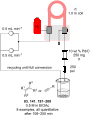
Scheme 54: Recyclable heterogeneous flow hydrogenation system.

Scheme 55: Leadbeater’s reverse tube-in-tube hydrogenation system for olefin reductions.

Scheme 56: a) Hydrogenation using a Pd-immobilised microchannel reactor (MCR) and b) a representation of the i...

Scheme 57: Hydrogenation of alkyne 238 exploiting segmented flow in a Pd-immobilised capillary reactor.

Scheme 58: Continuous hydrogenation system for the preparation of cyrene (241) from (−)-levoglucosenone (240).

Scheme 59: Continuous hydrogenation system based on CSMs developed by Hornung et al.

Scheme 60: Chemoselective reduction of carbonyls (ketones over aldehydes) in flow.

Scheme 61: Continuous system for the semi-hydrogenation of 256 and 258, developed by Galarneau et al.

Scheme 62: Continuous synthesis of biodiesel fuel 261 from lignin-derived furfural acetone (260).

Scheme 63: Continuous synthesis of γ-valerolacetone (263) via CTH developed by Pineda et al.

Scheme 64: Continuous hydrogenation of lignin-derived biomass (products 265, 266, and 267) using a sustainable...

Scheme 65: Ru/C or Rh/C-catalysed hydrogenation of arene in flow as developed by Sajiki et al.

Scheme 66: Polysilane-immobilized Rh–Pt-catalysed hydrogenation of arenes in flow by Kobayashi et al.

Scheme 67: High-pressure in-line mixing of H2 for the asymmetric reduction of 278 at pilot scale with a 73 L p...
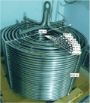
Figure 9: Picture of the PFR employed at Eli Lilly & Co. for the continuous hydrogenation of 278 [287]. Reprinted ...

Scheme 68: Continuous-flow asymmetric hydrogenation using Oppolzer's sultam 280 as chiral auxiliary.
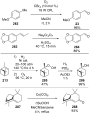
Scheme 69: Some examples of industrially important oxidation reactions in the F&F industry. CFL: compact fluor...

Scheme 70: Gold-catalysed heterogeneous oxidation of alcohols in flow.
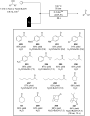
Scheme 71: Uozumi’s ARP-Pt flow oxidation protocol.

Scheme 72: High-throughput screening of aldehyde oxidation in flow using an in-line GC.

Scheme 73: Permanganate-mediated Nef oxidation of nitroalkanes in flow with the use of in-line sonication to p...

Scheme 74: Continuous-flow aerobic anti-Markovnikov Wacker oxidation.

Scheme 75: Continuous-flow oxidation of 2-benzylpyridine (312) using air as the oxidant.

Scheme 76: Continuous-flow photo-oxygenation of monoterpenes.

Scheme 77: A tubular reactor design for flow photo-oxygenation.

Scheme 78: Glucose oxidase (GOx)-mediated continuous oxidation of glucose using compressed air and the FFMR re...

Scheme 79: Schematic continuous-flow sodium hypochlorite/TEMPO oxidation of alcohols.

Scheme 80: Oxidation using immobilised TEMPO (344) was developed by McQuade et al.

Scheme 81: General protocol for the bleach/catalytic TBAB oxidation of aldehydes and alcohols.

Scheme 82: Continuous-flow PTC-assisted oxidation using hydrogen peroxide. The process was easily scaled up by...

Scheme 83: Continuous-flow epoxidation of cyclohexene (348) and in situ preparation of m-CPBA.

Scheme 84: Continuous-flow epoxidation using DMDO as oxidant.

Scheme 85: Mukayama aerobic epoxidation optimised in flow mode by the Favre-Réguillon group.

Scheme 86: Continuous-flow asymmetric epoxidation of derivatives of 359 exploiting a biomimetic iron catalyst.

Scheme 87: Continuous-flow enzymatic epoxidation of alkenes developed by Watts et al.

Scheme 88: Engineered multichannel microreactor for continuous-flow ozonolysis of 366.

Scheme 89: Continuous-flow synthesis of the vitamin D precursor 368 using multichannel microreactors. MFC: mas...

Scheme 90: Continuous ozonolysis setup used by Kappe et al. for the synthesis of various substrates employing ...

Scheme 91: Continuous-flow apparatus for ozonolysis as developed by Ley et al.

Scheme 92: Continuous-flow ozonolysis for synthesis of vanillin (2) using a film-shear flow reactor.

Scheme 93: Examples of preparative methods for ajoene (386) and allicin (388).

Scheme 94: Continuous-flow oxidation of thioanisole (389) using styrene-based polymer-supported peroxytungstat...

Scheme 95: Continuous oxidation of thiosulfinates using Oxone®-packed reactor.

Scheme 96: Continuous-flow electrochemical oxidation of thioethers.

Scheme 97: Continuous-flow oxidation of 400 to cinnamophenone (235).

Scheme 98: Continuous-flow synthesis of dehydrated material 401 via oxidation of methyl dihydrojasmonate (33).

Scheme 99: Some industrially important transformations involving Grignard reagents.

Scheme 100: Grachev et al. apparatus for continuous preparation of Grignard reagents.

Scheme 101: Example of fluidized Mg bed reactor with NMR spectrometer as on-line monitoring system.

Scheme 102: Continuous-flow synthesis of Grignard reagents and subsequent quenching reaction.

Figure 10: Membrane-based, liquid–liquid separator with integrated pressure control [52]. Adapted with permission ...

Scheme 103: Continuous-flow synthesis of 458, an intermediate to fluconazole (459).

Scheme 104: Continuous-flow synthesis of ketones starting from benzoyl chlorides.

Scheme 105: A Grignard alkylation combining CSTR and PFR technologies with in-line infrared reaction monitoring....

Scheme 106: Continuous-flow preparation of 469 from Grignard addition of methylmagnesium bromide.

Scheme 107: Continuous-flow synthesis of Grignard reagents 471.

Scheme 108: Preparation of the Grignard reagent 471 using CSTR and the continuous process for synthesis of the ...

Scheme 109: Continuous process for carboxylation of Grignard reagents in flow using tube-in-tube technology.

Scheme 110: Continuous synthesis of propargylic alcohols via ethynyl-Grignard reagent.

Scheme 111: Silica-supported catalysed enantioselective arylation of aldehydes using Grignard reagents in flow ...

Scheme 112: Acid-catalysed rearrangement of citral and dehydrolinalool derivatives.

Scheme 113: Continuous stilbene isomerisation with continuous recycling of photoredox catalyst.

Scheme 114: Continuous-flow synthesis of compound 494 as developed by Ley et al.

Scheme 115: Selected industrial applications of DA reaction.

Scheme 116: Multistep flow synthesis of the spirocyclic structure 505 via employing DA cycloaddition.

Scheme 117: Continuous-flow DA reaction developed in a plater flow reactor for the preparation of the adduct 508...

Scheme 118: Continuous-flow DA reaction using a silica-supported imidazolidinone organocatalyst.

Scheme 119: Batch vs flow for the DA reaction of (cyclohexa-1,5-dien-1-yloxy)trimethylsilane (513) with acrylon...

Scheme 120: Continuous-flow DA reaction between 510 and 515 using a shell-core droplet system.

Scheme 121: Continuous-flow synthesis of bicyclic systems from benzyne precursors.

Scheme 122: Continuous-flow synthesis of bicyclic scaffolds 527 and 528 for further development of potential ph...

Scheme 123: Continuous-flow inverse-electron hetero-DA reaction to pyridine derivatives such as 531.

Scheme 124: Comparison between batch and flow for the synthesis of pyrimidinones 532–536 via retro-DA reaction ...

Scheme 125: Continuous-flow coupled with ultrasonic system for preparation of ʟ-ascorbic acid derivatives 539 d...

Scheme 126: Two-step continuous-flow synthesis of triazole 543.

Scheme 127: Continuous-flow preparation of triazoles via CuAAC employing 546-based heterogeneous catalyst.

Scheme 128: Continuous-flow synthesis of compounds 558 through A3-coupling and 560 via AgAAC both employing the...

Scheme 129: Continuous-flow photoinduced [2 + 2] cycloaddition for the preparation of bicyclic derivatives of 5...

Scheme 130: Continuous-flow [2 + 2] and [5 + 2] cycloaddition on large scale employing a flow reactor developed...

Scheme 131: Continuous-flow preparation of the tricyclic structures 573 and 574 starting from pyrrole 570 via [...

Scheme 132: Continuous-flow [2 + 2] photocyclization of cinnamates.

Scheme 133: Continuous-flow preparation of cyclobutane 580 on a 5-plates photoreactor.

Scheme 134: Continuous-flow [2 + 2] photocycloaddition under white LED lamp using heterogeneous PCN as photocat...

Figure 11: Picture of the parallel tube flow reactor (PTFR) "The Firefly" developed by Booker-Milburn et al. a...

Scheme 135: Continuous-flow acid-catalysed [2 + 2] cycloaddition between silyl enol ethers and acrylic esters.

Scheme 136: Continuous synthesis of lactam 602 using glass column reactors.

Scheme 137: In situ generation of ketenes for the Staudinger lactam synthesis developed by Ley and Hafner.

Scheme 138: Application of [2 + 2 + 2] cycloadditions in flow employed by Ley et al.

Scheme 139: Examples of FC reactions applied in F&F industry.

Scheme 140: Continuous-flow synthesis of ibuprofen developed by McQuade et al.

Scheme 141: The FC acylation step of Jamison’s three-step ibuprofen synthesis.

Scheme 142: Synthesis of naphthalene derivative 629 via FC acylation in microreactors.

Scheme 143: Flow system for rapid screening of catalysts and reaction conditions developed by Weber et al.

Scheme 144: Continuous-flow system developed by Buorne, Muller et al. for DSD optimisation of the FC acylation ...

Scheme 145: Continuous-flow FC acylation of alkynes to yield β-chlorovinyl ketones such as 638.

Scheme 146: Continuous-flow synthesis of tonalide (619) developed by Wang et al.

Scheme 147: Continuous-flow preparation of acylated arene such as 290 employing Zr4+-β-zeolite developed by Kob...

Scheme 148: Flow system applied on an Aza-FC reaction catalysed by the thiourea catalyst 648.

Scheme 149: Continuous hydroformylation in scCO2.

Scheme 150: Two-step flow synthesis of aldehyde 655 through a sequential Heck reaction and subsequent hydroform...

Scheme 151: Single-droplet (above) and continuous (below) flow reactors developed by Abolhasani et al. for the ...

Scheme 152: Continuous hydroformylation of 1-dodecene (655) using a PFR-CSTR system developed by Sundmacher et ...

Scheme 153: Continuous-flow synthesis of the aldehyde 660 developed by Eli Lilly & Co. [32]. Adapted with permissio...

Scheme 154: Continuous asymmetric hydroformylation employing heterogenous catalst supported on carbon-based sup...

Scheme 155: Examples of acetylation in F&F industry: synthesis of bornyl (S,R,S-664) and isobornyl (S,S,S-664) ...

Scheme 156: Continuous-flow preparation of bornyl acetate (S,R,S-664) employing the oscillating flow reactor.

Scheme 157: Continuous-flow synthesis of geranyl acetate (666) from acetylation of geraniol (343) developed by ...

Scheme 158: 12-Ttungstosilicic acid-supported silica monolith-catalysed acetylation in flow.

Scheme 159: Continuous-flow preparation of cyclopentenone 676.

Scheme 160: Two-stage synthesis of coumarin (90) via acetylation of salicylaldehyde (88).

Scheme 161: Intensification process for acetylation of 5-methoxytryptamine (677) to melatonin (678) developed b...

Scheme 162: Examples of macrocyclic musky odorants both natural (679–681) and synthetic (682 and 683).

Scheme 163: Flow setup combined with microwave for the synthesis of macrocycle 686 via RCM.

Scheme 164: Continuous synthesis of 2,5-dihydro-1H-pyrroles via ring-closing metathesis.

Scheme 165: Continuous-flow metathesis of 485 developed by Leadbeater et al.

Figure 12: Comparison between RCM performed using different routes for the preparation of 696. On the left the...

Scheme 166: Continuous-flow RCM of 697 employed the solid-supported catalyst 698 developed by Grela, Kirschning...

Scheme 167: Continuous-flow RORCM of cyclooctene employing the silica-absorbed catalyst 700.

Scheme 168: Continuous-flow self-metathesis of methyl oleate (703) employing SILP catalyst 704.

Scheme 169: Flow apparatus for the RCM of 697 using a nanofiltration membrane for the recovery and reuse of the...

Scheme 170: Comparison of loadings between RCMs performed with different routes for the synthesis of 709.
Metal-free glycosylation with glycosyl fluorides in liquid SO2
- Krista Gulbe,
- Jevgeņija Lugiņina,
- Edijs Jansons,
- Artis Kinens and
- Māris Turks
Beilstein J. Org. Chem. 2021, 17, 964–976, doi:10.3762/bjoc.17.78
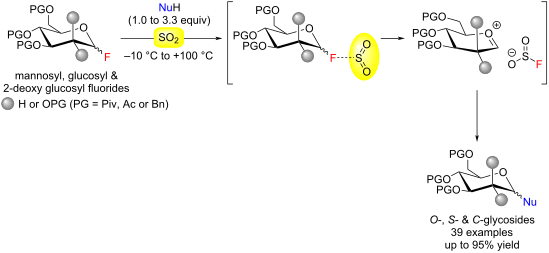
- covalently bind Lewis basic fluoride ions in a relatively stable fluorosulfite anion (FSO2−). Herein we report the application of liquid SO2 as a promoting solvent for glycosylation with glycosyl fluorides without any external additive. By using various temperature regimes, the method is applied for both
- equilibrium. Keywords: fluorosulfite; glycosyl fluoride; Lewis acid; liquid sulfur dioxide; metal-free glycosylation; Introduction The glycosylation reaction is still one of the most important and basic synthetic strategies in carbohydrate chemistry that provides access to the various types of
- –base (HSAB) theory the fluoride leaving group is considered to be a hard Lewis base [12][13]. Consequently, a series of fluoride-activating systems containing hard Lewis acidic centers have been published following the first report [7][14][15][16][17]. Among these promoters Sn(II) species (SnCl2–AgX, X

Graphical Abstract

Scheme 1: Scope of glycosyl acceptors for glycosylation with pivaloyl-protected mannosyl fluoride α-1a in liq...

Scheme 2: Glycosylation of binucleophiles 7a,b in liquid SO2.

Scheme 3: Pivaloyl-protected glucosyl fluoride β-9 as a glycosyl donor in liquid SO2.

Scheme 4: Benzyl protected manno- and glucopyranosyl fluorides α-15 and 16 as glycosyl donors in liquid SO2. ...

Scheme 5: 2-Deoxy glycosyl fluoride α-19 as a glycosyl donor in liquid SO2.
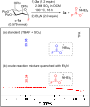
Figure 1: Detection of the FSO2− species by 19F NMR (471 MHz, D2O).

Figure 2: Computational study of reaction mechanism α-11 + MeOH → α-13c in the presence of and in absence of ...
Prins cyclization-mediated stereoselective synthesis of tetrahydropyrans and dihydropyrans: an inspection of twenty years
- Asha Budakoti,
- Pradip Kumar Mondal,
- Prachi Verma and
- Jagadish Khamrai
Beilstein J. Org. Chem. 2021, 17, 932–963, doi:10.3762/bjoc.17.77
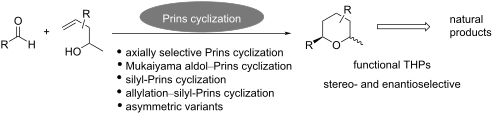
- alkoxycarbenium ion intermediate 282, which is followed by a sequential cyclization to form secondary carbocation 283, which in the presence of fluoride ions affords 284, as shown in Scheme 66. Banerjee et al. explored the reactivity of cyclopropane carbaldehydes 285 with 3-butyn-1-ol in the presence of TiX4 for

Graphical Abstract

Scheme 1: General strategy for the synthesis of THPs.
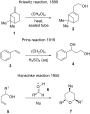
Scheme 2: Developments towards the Prins cyclization.

Scheme 3: General stereochemical outcome of the Prins cyclization.

Scheme 4: Regioselectivity in the Prins cyclization.

Scheme 5: Mechanism of the oxonia-Cope reaction in the Prins cyclization.

Scheme 6: Cyclization of electron-deficient enantioenriched alcohol 27.

Scheme 7: Partial racemization through 2-oxonia-Cope allyl transfer.

Scheme 8: Partial racemization by reversible 2-oxonia-Cope rearrangement.

Scheme 9: Rychnovsky modification of the Prins cyclization.

Scheme 10: Synthesis of (−)-centrolobine and the C22–C26 unit of phorboxazole A.

Scheme 11: Axially selective Prins cyclization by Rychnovsky et al.

Scheme 12: Mechanism for the axially selectivity Prins cyclization.

Scheme 13: Mukaiyama aldol–Prins cyclization reaction.

Scheme 14: Application of the aldol–Prins reaction.

Scheme 15: Hart and Bennet's acid-promoted Prins cyclization.

Scheme 16: Tetrahydropyran core of polycarvernoside A as well as (−)-clavoslide A and D.

Scheme 17: Scheidt and co-workers’ route to tetrahydropyran-4-one.

Scheme 18: Mechanism for the Lewis acid-catalyzed synthesis of tetrahydropyran-4-one.

Scheme 19: Hoveyda and co-workers’ strategy for 2,6-disubstituted 4-methylenetetrahydropyran.

Scheme 20: Funk and Cossey’s ene-carbamates strategy.

Scheme 21: Yadav and Kumar’s cyclopropane strategy for THP synthesis.

Scheme 22: 2-Arylcylopropylmethanolin in centrolobine synthesis.

Scheme 23: Yadav and co-workers’ strategy for the synthesis of THP.

Scheme 24: Yadav and co-workers’ Prins–Ritter reaction sequence for 4-amidotetrahydropyran.

Scheme 25: Yadav and co-workers’ strategy to prelactones B, C, and V.

Scheme 26: Yadav and co-workers’ strategy for the synthesis of (±)-centrolobine.
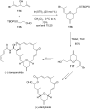
Scheme 27: Loh and co-workers’ strategy for the synthesis of zampanolide and dactylolide.

Scheme 28: Loh and Chan’s strategy for THP synthesis.

Scheme 29: Prins cyclization of cyclohexanecarboxaldehyde.

Scheme 30: Prins cyclization of methyl ricinoleate (127) and benzaldehyde (88).

Scheme 31: AlCl3-catalyzed cyclization of homoallylic alcohol 129 and aldehyde 130.

Scheme 32: Martín and co-workers’ stereoselective approach for the synthesis of highly substituted tetrahydrop...

Scheme 33: Ene-IMSC strategy by Marko and Leroy for the synthesis of tetrahydropyran.

Scheme 34: Marko and Leroy’s strategy for the synthesis of tetrahydropyrans 146.

Scheme 35: Sakurai dimerization/macrolactonization reaction for the synthesis of cyanolide A.

Scheme 36: Hoye and Hu’s synthesis of (−)-dactyloide by intramolecular Sakurai cyclization.

Scheme 37: Minehan and co-workers’ strategy for the synthesis of THPs 157.

Scheme 38: Yu and co-workers’ allylic transfer strategy for the construction of tetrahydropyran 161.

Scheme 39: Reactivity enhancement in intramolecular Prins cyclization.

Scheme 40: Floreancig and co-workers’ Prins cyclization strategy to (+)-dactyloide.

Scheme 41: Panek and Huang’s DHP synthesis from crotylsilanes: a general strategy.

Scheme 42: Panek and Huang’s DHP synthesis from syn-crotylsilanes.

Scheme 43: Panek and Huang’s DHP synthesis from anti-crotylsilanes.

Scheme 44: Roush and co-workers’ [4 + 2]-annulation strategy for DHP synthesis [82].

Scheme 45: TMSOTf-promoted annulation reaction.

Scheme 46: Dobb and co-workers’ synthesis of DHP.

Scheme 47: BiBr3-promoted tandem silyl-Prins reaction by Hinkle et al.

Scheme 48: Substrate scope of Hinkle and co-workers’ strategy.

Scheme 49: Cho and co-workers’ strategy for 2,6 disubstituted 3,4-dimethylene-THP.

Scheme 50: Furman and co-workers’ THP synthesis from propargylsilane.

Scheme 51: THP synthesis from silyl enol ethers.

Scheme 52: Rychnovsky and co-workers’ strategy for THP synthesis from hydroxy-substituted silyl enol ethers.

Scheme 53: Li and co-workers’ germinal bissilyl Prins cyclization strategy to (−)-exiguolide.

Scheme 54: Xu and co-workers’ hydroiodination strategy for THP.

Scheme 55: Wang and co-workers’ strategy for tetrahydropyran synthesis.

Scheme 56: FeCl3-catalyzed synthesis of DHP from alkynylsilane alcohol.

Scheme 57: Martín, Padrón, and co-workers’ proposed mechanism of alkynylsilane Prins cyclization for the synth...

Scheme 58: Marko and co-workers’ synthesis of 2,6-anti-configured tetrahydropyran.

Scheme 59: Loh and co-workers’ strategy for 2,6-syn-tetrahydropyrans.

Scheme 60: Loh and co-workers’ strategy for anti-THP synthesis.

Scheme 61: Cha and co-workers’ strategy for trans-2,6-tetrahydropyran.
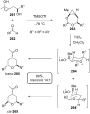
Scheme 62: Mechanism proposed by Cha et al.

Scheme 63: TiCl4-mediated cyclization to trans-THP.

Scheme 64: Feng and co-workers’ FeCl3-catalyzed Prins cyclization strategy to 4-hydroxy-substituted THP.

Scheme 65: Selectivity profile of the Prins cyclization under participation of an iron ligand.

Scheme 66: Sequential reactions involving Prins cyclization.

Scheme 67: Banerjee and co-workers’ strategy of Prins cyclization from cyclopropane carbaldehydes and propargy...

Scheme 68: Mullen and Gagné's (R)-[(tolBINAP)Pt(NC6F5)2][SbF6]2-catalyzed asymmetric Prins cyclization strateg...

Scheme 69: Yu and co-workers’ DDQ-catalyzed asymmetric Prins cyclization strategy to trisubstituted THPs.

Scheme 70: Lalli and Weghe’s chiral-Brønsted-acid- and achiral-Lewis-acid-promoted asymmetric Prins cyclizatio...

Scheme 71: List and co-workers’ iIDP Brønsted acid-promoted asymmetric Prins cyclization strategy.

Scheme 72: Zhou and co-workers’ strategy for chiral phosphoric acid (CPA)-catalyzed cascade Prins cyclization.

Scheme 73: List and co-workers’ approach for asymmetric Prins cyclization using chiral imidodiphosphoric acid ...
Beyond ribose and phosphate: Selected nucleic acid modifications for structure–function investigations and therapeutic applications
- Christopher Liczner,
- Kieran Duke,
- Gabrielle Juneau,
- Martin Egli and
- Christopher J. Wilds
Beilstein J. Org. Chem. 2021, 17, 908–931, doi:10.3762/bjoc.17.76
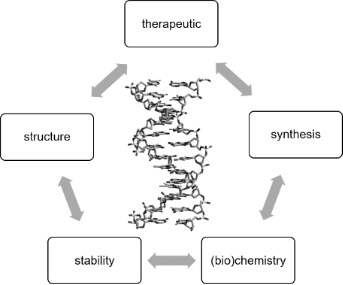
- iodide and silver oxide. The protected adenine base was regenerated by treatment with ammonia followed by benzoylation. Once the methyl group was incorporated into these ribonucleosides, the TIPDS group was selectively removed by tetrabutylammonium fluoride (TBAF) or hydrochloric acid treatment, followed

Graphical Abstract

Figure 1: Structures of the chemically modified oligonucleotides (A) N3' → P5' phosphoramidate linkage, (B) a...

Scheme 1: Synthesis of a N3' → P5' phosphoramidate linkage by solid-phase synthesis. (a) dichloroacetic acid;...

Figure 2: Crystal structures of (A) N3' → P5' phosphoramidate DNA (PDB ID 363D) [71] and (B) amide (AM1) RNA in c...

Scheme 2: Synthesis of a phosphorodithioate linkage by solid-phase synthesis. (a) detritylation; (b) tetrazol...

Figure 3: Close-up view of a key interaction between the PS2-modified antithrombin RNA aptamer and thrombin i...

Scheme 3: Synthesis of the (S)-GNA thymine phosphoramidite from (S)-glycidyl 4,4'-dimethoxytrityl ether. (a) ...

Figure 4: Surface models of the crystal structures of RNA dodecamers with single (A) (S)-GNA-T (PDB ID 5V1L) [54]...

Figure 5: Structures of 2'-O-alkyl modifications. (A) 2'-O-methoxy RNA (2'-OMe RNA), (B) 2'-O-(2-methoxyethyl...

Scheme 4: Synthesis of the 2'-OMe uridine from 3',5'-O-(tetraisopropyldisiloxane-1,3-diyl)uridine. (a) Benzoy...

Scheme 5: Synthesis of the 2'-O-MOE uridine from uridine. (a) (PhO)2CO, NaHCO3, DMA, 100 °C; (b) Al(OCH2CH2OCH...
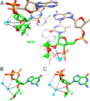
Figure 6: Structure of 2'-O-(2-methoxyethyl)-RNA (MOE-RNA). (A) View into the minor groove of an A-form DNA d...

Figure 7: Structures of locked nucleic acids (LNA)/bridged nucleic acids (BNA) modifications. (A) LNA/BNA, (B...

Scheme 6: Synthesis of the uridine LNA phosphoramidite. (a) i) NaH, BnBr, DMF, ii) acetic anhydride, pyridine...

Scheme 7: Synthesis of the 2'-fluoroarabinothymidine. (a) 30% HBr in acetic acid; (b) 2,4-bis-O-(trimethylsil...

Figure 8: Sugar puckers of arabinose (ANA) and arabinofluoro (FANA) nucleic acids compared with the puckers o...

Figure 9: Structures of C4'-modified nucleic acids. (A) 4'-methoxy, (B) 4'-(2-methoxyethoxy), (C) 2',4'-diflu...

Scheme 8: Synthesis of the 4'-F-rU phosphoramidite. (a) AgF, I2, dichloromethane, tetrahydrofuran; (b) NH3, m...

Scheme 9: Synthesis of the thymine FHNA phosphoramidite. (a) thymine, 1,8-diazabicyclo[5.4.0]undec-7-ene, ace...

Scheme 10: Synthesis of the thymine Ara-FHNA phosphoramidite. (a) i) trifluoromethanesulfonic anhydride, pyrid...

Figure 10: Crystal structures of (A) FHNA and (B) Ara-FHNA in modified A-form DNA decamers (PDB IDs 3Q61 and 3...
Synthesis of bis(aryloxy)fluoromethanes using a heterodihalocarbene strategy
- Carl Recsei and
- Yaniv Barda
Beilstein J. Org. Chem. 2021, 17, 813–818, doi:10.3762/bjoc.17.70
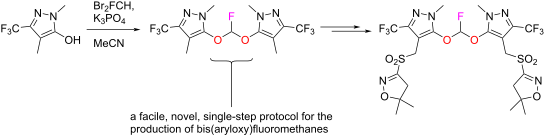
- led us to attempt to displace a single fluoride ion from 5 with the anion of 6 (Scheme 3), with fluorophilic calcium hydroxide as a base, in analogy to a report where phenoxide moieties are introduced to the anomeric position of a fluorinated sugar [9]. This gave only traces of 4, while adjustments in

Graphical Abstract

Scheme 1: Retrosynthesis of compound 1.

Scheme 2: Reported bis(aryloxy)fluoromethane syntheses. Reagents and conditions: (a) Cl2FCH, NaOH, 1,4-dioxan...

Scheme 3: Attempted synthesis of 4. Reagents and conditions: (a) Ca(OH)2, 1,4-dioxane/water, reflux, 72 h, 5%...

Scheme 4: Synthesis of 10. Reagents and conditions: (a) BrFCHCO2Et, Cs2CO3, DMF, 35 °C, 16 h then H2O, 35 °C,...

Scheme 5: Synthesis of 1. Reagents and conditions: (a) 1,3-dibromo-5,5-dimethylhydantoin, benzoyl peroxide, (...

Scheme 6: Synthesis of 11–13. Reagents and conditions: ArOH (1.3 mmol), Br2FCH (1.3 mmol), KOH (4 mmol), MeCN...

Scheme 7: Proposed mechanism for the formation of compound 11.
Total synthesis of pyrrolo[2,3-c]quinoline alkaloid: trigonoine B
- Takashi Nishiyama,
- Erina Hamada,
- Daishi Ishii,
- Yuuto Kihara,
- Nanase Choshi,
- Natsumi Nakanishi,
- Mari Murakami,
- Kimiko Taninaka,
- Noriyuki Hatae and
- Tominari Choshi
Beilstein J. Org. Chem. 2021, 17, 730–736, doi:10.3762/bjoc.17.62
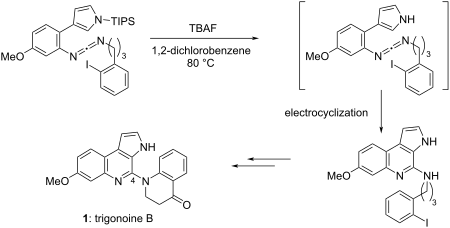
- -iodoaniline (12) and 3-(4,4,5,5-tetramethyl-1,3,2-dioxaborolan-2-yl)-1-[tris(1-methylethyl)silyl]-1H-pyrrole (13) according to Pratt’s conditions (Scheme 3) [29]. Subsequently, to remove the triisopropylsilyl (TIPS) protecting group, compound 14 was treated with tetra-n-butylammonium fluoride (TBAF) in THF

Graphical Abstract

Figure 1: Natural products possessing the pyrrolo[2,3-c]quinoline skeleton.
Scheme 1: Total synthesis of marinoquinolines and the failure of the introduction of a tetrahydroquinoline mo...

Scheme 2: Retrosynthetic analysis of the pyrrolo[2,3-c]quinoline ring construction.
Scheme 3: Synthesis of N-substituted 4-aminopyrrolo[3,2-c]quinoline 18.

Scheme 4: Synthesis of the tetrahydroquinoline moiety through cycloamination.

Scheme 5: Synthesis of trigonoine B (1).
Synthesis of dibenzosuberenone-based novel polycyclic π-conjugated dihydropyridazines, pyridazines and pyrroles
- Ramazan Koçak and
- Arif Daştan
Beilstein J. Org. Chem. 2021, 17, 719–729, doi:10.3762/bjoc.17.61
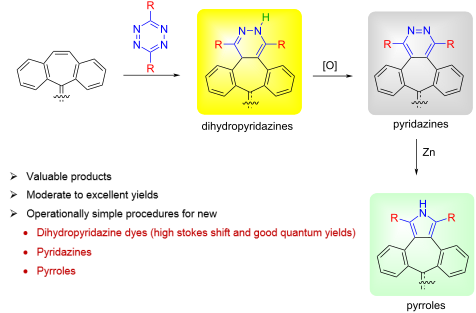
- classic organic dyestuffs. In that study, two highly fluorescent dibenzosuberenone-based dihydropyridazine dyes, 3a,b, were synthesized, and it was found that they can be used as a selective and sensitive sensor of fluoride anions (Scheme 1, Table 1) [55]. In another work, we reported the design
- tautomerization A with a [1,7]-H shift 13 would be formed. Alternatively, in the second mechanism, 13 is thought to occur by tautomerization B and a [1,5]-H shift (Scheme 9). Photophysical properties In our previous work, we examined the photophysical and fluoride sensing properties of dihydropyridazine

Graphical Abstract

Figure 1: Structures of dibenzosuberenone 1 and pyridazine and pyrrole derivatives.

Figure 2: Structures of s-tetrazines 2a–l.

Scheme 1: Inverse electron-demand Diels–Alder reactions of dibenzosuberenone (1) with tetrazines 2a–l.

Scheme 2: Inverse electron-demand Diels–Alder reactions between dibenzosuberenone 1 and tetrazines 2ka and 2lb...
Scheme 3: Proposed reaction mechanism for the formation of dibenzosuberenone derivatives 3 and 4.

Scheme 4: Proposed mechanism for the formation of 5l.

Scheme 5: Oxidation of dihydropyridazines 3a–f. All reactions were carried in CH2Cl2 at room temperature (4e:...

Scheme 6: Synthesis of pyrrole 10a. a1.34 mmol 4a, Zinc (for 10aa: 6.68 mmol, for 10ab: 13.36 mmol), 10 mL gl...

Scheme 7: Synthesis of pyrrole 10b. a1.21 mmol 4b, 12.10 mmol Zinc, 118 °C, 2 h. b1.13 mmol 10ba, 1.69 mmol K...

Scheme 8: Synthesis of p-quinone methides 13–16. a1.77 mmol 11, 1.77 mmol 2, 5 mL toluene, 80 °C (13a: overni...

Scheme 9: Proposed mechanism for the formation of 13.

Figure 3: UV–vis spectra of 3c–f and 3k in CH3CN at rt (c = 5 μM).

Figure 4: Fluorescence spectra of 3c–f and 3k in CH3CN at rt (c = 5 μM).
Figure 5: Ambient (top) and fluorescence (bottom, under 365 nm UV light) images of 3c–f and 3k in CH3CN.
β-Lactamase inhibition profile of new amidine-substituted diazabicyclooctanes
- Zafar Iqbal,
- Lijuan Zhai,
- Yuanyu Gao,
- Dong Tang,
- Xueqin Ma,
- Jinbo Ji,
- Jian Sun,
- Jingwen Ji,
- Yuanbai Liu,
- Rui Jiang,
- Yangxiu Mu,
- Lili He,
- Haikang Yang and
- Zhixiang Yang
Beilstein J. Org. Chem. 2021, 17, 711–718, doi:10.3762/bjoc.17.60
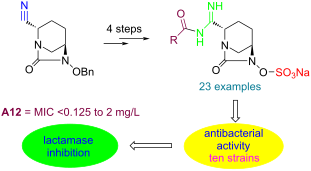
- derivative B22 which was treated with tetrabutylammonium fluoride (TBAF) in THF to obtain the hydroxy derivative C22. Compound C22 was converted to the sodium salt of A22 by using the procedure described for derivative A1. Analogously, compound A23 was prepared starting from 4-aminothiazole-2-carboxylic acid

Graphical Abstract

Scheme 1: Synthesis of intermediate 1. Reagents and conditions: (i) trifluoroacetic anhydride, CH2Cl2, 0–35 °...

Scheme 2: Synthesis of intermediate 2. Reagents and conditions: (i) Pd/C (wet), EtOAc/CH2Cl2, H2, 45 psi, rt,...
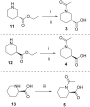
Scheme 3: Synthesis of intermediates 3–5. Reagents and conditions: (i) (Ac)2O, CH2Cl2, rt, 24 h, 95–99%; (ii)...

Scheme 4: Synthesis of compounds A1–21. Reagents and conditions: (i) acetyl chloride, TEA, CH2Cl2, rt, 16 h, ...

Scheme 5: Synthesis of compounds A22 and A23. Reagents and conditions: (i) HATU, DIPEA or DCC, DMAP, DMF or T...
α,γ-Dioxygenated amides via tandem Brook rearrangement/radical oxygenation reactions and their application to syntheses of γ-lactams
- Mikhail K. Klychnikov,
- Radek Pohl,
- Ivana Císařová and
- Ullrich Jahn
Beilstein J. Org. Chem. 2021, 17, 688–704, doi:10.3762/bjoc.17.58
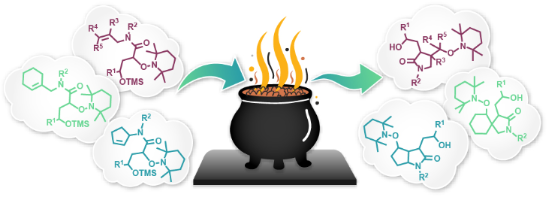
- -bottomed Schlenk flask and evaporated. The crude residue was dissolved in THF (5 mL), the reaction mixture was cooled to 0 °C in an ice/water bath, tetrabutylammonium fluoride (1 M solution in THF, 0.96 mL, 0.96 mmol) was added and the mixture was stirred at this temperature for 30 min. The reaction was

Graphical Abstract
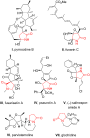
Figure 1: Selected alkaloids containing the pyrrolidone motif.
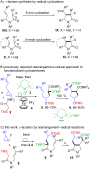
Scheme 1: A) Classical γ-lactam synthesis by atom transfer radical cyclizations; B) previously developed tand...
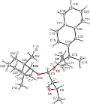
Figure 2: X-ray crystal structure of the major (2R,4S)-alkoxyamine hydrochloride derived from 9j. Displacemen...

Scheme 2: Formation of the α-(aminoxy)amides 9o,p.

Figure 3: X-ray crystal structure of the minor cis-diastereomers of the keto lactam 13j (left) and the hydrox...
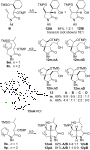
Scheme 3: Thermal radical cyclization reactions of amides 9l–p bearing cyclic units. Conditions: a) t-BuOH, 1...

Scheme 4: Epimerization of spirolactams 12m,n.

Scheme 5: The Dess–Martin oxidation of lactams 12l–o. Conditions: a) DMP (1.3 equiv), t-BuOH (10 mol %), CH2Cl...
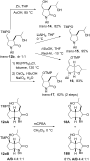
Scheme 6: Selected transformations of the lactams trans-12b and 12o.

Scheme 7: Diastereoselectivity for the formation of α-(aminoxy)amides 9i–k.

Scheme 8: Rationalization of the diastereoselectivity for the formation of the α-(aminoxy)amide 9l.
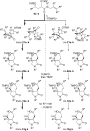
Scheme 9: Rationalization of the thermal radical cyclization diastereoselectivity of alkoxyamines 9a–k. (S)-C...
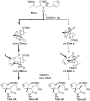
Scheme 10: The stereochemical course for the formation of products 12m,n by thermal radical cyclization of alk...
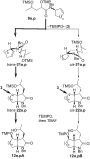
Scheme 11: Formation of bicycles 12o,p.
[2 + 1] Cycloaddition reactions of fullerene C60 based on diazo compounds
- Yuliya N. Biglova
Beilstein J. Org. Chem. 2021, 17, 630–670, doi:10.3762/bjoc.17.55
- nitrophenylfullerenes 48 and 50. Synthesis of conjugate 52 of C60 with ethyl diazo(4-nitrophenyl)acetate. Synthesis of fluoride-containing phenylmethanofullerenes 53–56. Synthesis of “bucky ligands” 57–60. The synthetic route to methanofullerene-based palladium–bisaminoaryl complex 62. Synthesis of N-containing
Valorisation of plastic waste via metal-catalysed depolymerisation
- Francesca Liguori,
- Carmen Moreno-Marrodán and
- Pierluigi Barbaro
Beilstein J. Org. Chem. 2021, 17, 589–621, doi:10.3762/bjoc.17.53
- and 23.1 equiv CH3OH. The potassium fluoride catalyst could be reused in up to three runs with no change in performance, while a 50% drop of the yield was observed afterwards. Me-La is a low-toxic chemical used as substitute for hydrocarbon solvents, with applications in the field of paints, lacquers

Graphical Abstract

Figure 1: Potential classification of plastic recycling processes. The area covered by the present review is ...

Figure 2: EG produced during glycolytic depolymerisation of PET using DEG + DPG as solvent and titanium(IV) n...

Scheme 1: Simplified representation of the conversion of 1,4-PBD to C16–C44 macrocycles using Ru metathesis c...
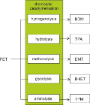
Figure 3: Main added-value monomers obtainable by catalytic depolymerisation of PET via chemolytic methods.

Scheme 2: Hydrogenolytic depolymerisation of PET by ruthenium complexes.

Scheme 3: Depolymerisation of PET via catalytic hydrosilylation by Ir(III) pincer complex.

Scheme 4: Catalytic hydrolysis (top) and methanolysis (bottom) reactions of PET.

Scheme 5: Depolymerisation of PET by glycolysis with ethylene glycol.

Figure 4: Glycolysis of PET: evolution of BHET yield over time, with and without zinc acetate catalyst (196 °...

Scheme 6: Potential activated complex for the glycolysis reaction of PET catalysed by metallated ILs and evol...

Scheme 7: One-pot, two-step process for PET repurposing via chemical recycling.
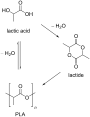
Scheme 8: Synthetic routes to PLA.

Scheme 9: Structures of the zinc molecular catalysts used for PLA-methanolysis in various works. a) See [265], b) ...

Scheme 10: Depolymerisation of PLLA by Zn–N-heterocyclic carbene complex.

Scheme 11: Salalen ligands.

Scheme 12: Catalytic hydrogenolysis of PLA.

Scheme 13: Catalytic hydrosilylation of PLA.

Scheme 14: Hydrogenative depolymerisation of PBT and PCL by molecular Ru catalysts.

Scheme 15: Glycolysis reaction of PCT by diethylene glycol.

Scheme 16: Polymerisation–depolymerisation cycle of 3,4-T6GBL.

Scheme 17: Polymerisation–depolymerisation cycle of 2,3-HDB.

Scheme 18: Hydrogenative depolymerisation of PBPAC by molecular Ru catalysts.

Scheme 19: Catalytic hydrolysis (top), alcoholysis (middle) and aminolysis (bottom) reactions of PBPAC.

Scheme 20: Hydrogenative depolymerisation of PPC (top) and PEC (bottom) by molecular Ru catalysts.

Scheme 21: Polymerisation-depolymerisation cycle of BEP.

Scheme 22: Hydrogenolysis of polyamides using soluble Ru catalysts.

Scheme 23: Catalytic depolymerisation of epoxy resin/carbon fibres composite.

Scheme 24: Depolymerisation of polyethers with metal salt catalysts and acyl chlorides.
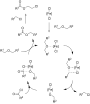
Scheme 25: Proposed mechanism for the iron-catalysed depolymerisation reaction of polyethers. Adapted with per...
Synthesis of trifluoromethyl ketones by nucleophilic trifluoromethylation of esters under a fluoroform/KHMDS/triglyme system
- Yamato Fujihira,
- Yumeng Liang,
- Makoto Ono,
- Kazuki Hirano,
- Takumi Kagawa and
- Norio Shibata
Beilstein J. Org. Chem. 2021, 17, 431–438, doi:10.3762/bjoc.17.39
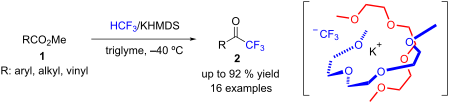
- ], has dramatically improved the prospects. One of the problems facing the treatment of HCF3 for nucleophilic trifluoromethylation reactions is the low stability of the directly generated CF3 anion (CF3−) for decomposing to difluorocarbene (:CF2) and fluoride (F−) (Scheme 1a). Due to the formation of
- highly stable fluoride salts (MF), the breakdown of CF3− into difluorocarbene in the presence of alkali (M+) and other metal cations is favored. In earlier studies, the solvent N,N-dimethylformamide (DMF), was essential for nucleophilic trifluoromethylation by HCF3 since DMF acts as a CF3 anion reservoir
- . Trifluoromethyl ketones. a) Hydrolysis of trifluoromethyl ketones. b) Selected examples of biologically active trifluoromethyl ketones. Chemistry of the CF3 anion generated from HCF3. a) Decomposition of the trifluoromethyl anion to difluorocarbene and fluoride. b) A hemiaminaloate adduct of CF3 anion to DMF. c

Graphical Abstract

Scheme 1: Chemistry of the CF3 anion generated from HCF3. a) Decomposition of the trifluoromethyl anion to di...

Figure 1: Trifluoromethyl ketones. a) Hydrolysis of trifluoromethyl ketones. b) Selected examples of biologic...

Scheme 2: Trifluoromethylation of esters by HCF3 by a) Russell and Roques (1998), b) Prakash and co-workers (...

Scheme 3: Substrate scope of esters 1 for trifluoromethylation by HCF3 under the optimized conditions. aDeter...



