Search results
Search for "lactams" in Full Text gives 144 result(s) in Beilstein Journal of Organic Chemistry.
Structure–property relationships and third-order nonlinearities in diketopyrrolopyrrole based D–π–A–π–D molecules
Beilstein J. Org. Chem. 2017, 13, 2374–2384, doi:10.3762/bjoc.13.235
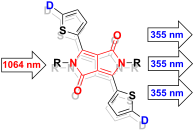
- , diketopyrrolopyrroles (DPP) represent an unique class of organic molecules based on central, fused, and conjugated bicyclic lactams of 2,5-dihydropyrrolo[3,4-c]pyrrole-1,4-dione. After its serendipitous discovery by Farnum et al. in 1974 [1] and subsequent first applications as organic, insoluble, and high-performance




Dialkyl dicyanofumarates and dicyanomaleates as versatile building blocks for synthetic organic chemistry and mechanistic studies
Beilstein J. Org. Chem. 2017, 13, 2235–2251, doi:10.3762/bjoc.13.221
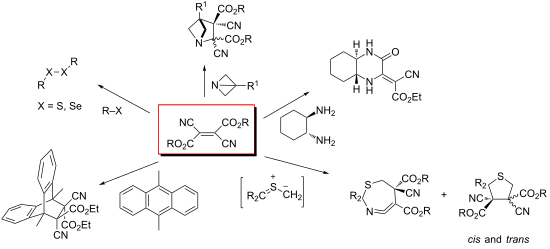
- preserved in the major cycloadduct. A non-concerted course of the reaction via the stabilized zwitterion 18b was proposed to rationalize this unexpected result. In an additional experiment performed in wet THF, mixtures of diastereoisomeric, spirocyclic seven-membered lactams 30b were isolated side by side


Mechanochemical enzymatic resolution of N-benzylated-β3-amino esters
Beilstein J. Org. Chem. 2017, 13, 1728–1734, doi:10.3762/bjoc.13.167

- proteins against the activity of proteolytic enzymes [6][7], or are precursors of numerous active compounds such as β-lactams [8][9]. Finally, β-amino acids are present in numerous natural products [10]. These properties have generated great interest in the development of synthetic methods for the


A speedy route to sterically encumbered, benzene-fused derivatives of privileged, naturally occurring hexahydropyrrolo[1,2-b]isoquinoline
Beilstein J. Org. Chem. 2017, 13, 1413–1424, doi:10.3762/bjoc.13.138
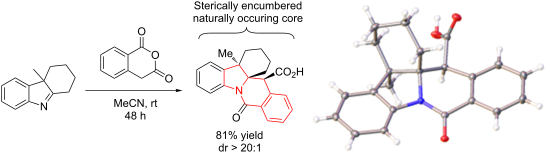
- or generated in situ) with α-C–H dicarboxylic acid anhydrides (known as the Castagnoli–Cushman reaction or CCR [1]) offers a direct entry into lactam frameworks 1 of various sizes (traditionally, δ- and γ- [2][3] and, more recently, ε-lactams [4][5]) containing a carboxylic acid functionality
- which may facilitate or prevent compounds’ binding to DNA or DNA-topoisomerase complex. Depending on the medicinal chemistry context, compounds 10 can be decarboxylated to deliver sterically encumbered tetracyclic lactams 14 lacking the carboxylic acid group as we showed for exemplary compound 10h. The


Effect of the ortho-hydroxy group of salicylaldehyde in the A3 coupling reaction: A metal-catalyst-free synthesis of propargylamine
Beilstein J. Org. Chem. 2017, 13, 552–557, doi:10.3762/bjoc.13.53
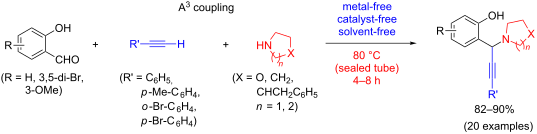
- (MAO) type B inhibitors [6] often used for the treatment of neuropsychiatric disorders such as Alzheimer’s and Parkinson diseases. These alkynylamines are also important building blocks for the synthesis of N-bearing compounds such as β-lactams [7][8], pyrroles [9], pyrrolidines [10], pyrrolophanes [11


Highly reactive, liquid diacrylamides via synergistic combination of spatially arranged curing moieties
Beilstein J. Org. Chem. 2017, 13, 372–383, doi:10.3762/bjoc.13.40
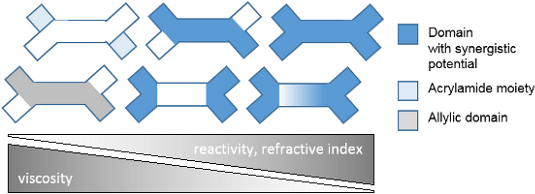
- the preformed five or six-membered lactams and gets even more predominant with increasing chain length of N-alkyl groups [28]. Expanding this concept in view of an optimized spatial layout, we synthesized molecules with additional “internal” (at the molecules’ center), symmetrical allyl functions
- FTIR data and literature [27][28], we propose that some of the possible intramolecular reaction products (intermolecular cyclization products are conceivable as well) start most likely from the formed acrylamide radical as depicted in Scheme 6. Upon subsequent cyclization, either 6-membered δ-lactams
- , or 5-membered γ-lactams can be formed. The emerging FTIR signal at ≈1680 cm−1 strongly indicates the formation of γ-lactams as it can be attributed to the stretching vibration of γ-lactam carbonyl groups [28]. However, the corresponding δ-lactam peak could be located below the amide peak at ≈1645 cm








β-Amino functionalization of cinnamic Weinreb amides in ionic liquid
Beilstein J. Org. Chem. 2016, 12, 2372–2377, doi:10.3762/bjoc.12.231

- , but also in important building blocks widely used in the organic syntheses. They are especially used in the synthesis of β-amino acids [4][5], which are precursors for many biological and pharmacological active compounds, such as β-lactams [6] and β-peptides [7]. The most straightforward approach


p-Nitrophenyl carbonate promoted ring-opening reactions of DBU and DBN affording lactam carbamates
Beilstein J. Org. Chem. 2016, 12, 2086–2092, doi:10.3762/bjoc.12.197
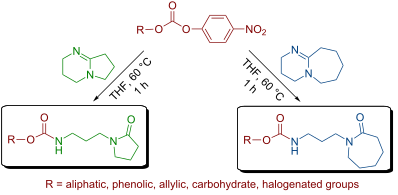
- with a large substrate scope. Keywords: carbonates; DBN; DBU; lactams; p-nitrophenyl; Introduction Among various organic bases, amidines such as DBU (1,8-diazabicyclo[5.4.0]undec-7-ene) and DBN (1,5-diazabicyclo[4.3.0]non-5-ene) having an imino group attached to the α-carbon of the amine are
- products [12]. Subsequently, Ma and Dolphin isolated chlorin-e6 lactams from the reaction of methyl pheophorbide with DBU and DBN promoted by trialkyl triflates [13]. Additionally, the conjugate addition reaction of DBU to diarylpyrone [14] and Baylis–Hillman acetates [15] also gave caprolactam products. A
- . To evaluate the substrate feasibility, one phenol, an allylic alcohol and three sugar alcohols were subjected to the reaction. The 3,4-dimethylphenyl p-nitrophenyl carbonate (9a) and geranyl carbonate 10a gave the corresponding γ-lactams 9b and 10b in 62% and 46% yields, respectively. Similarly, the


Microwave-assisted cyclizations promoted by polyphosphoric acid esters: a general method for 1-aryl-2-iminoazacycloalkanes
Beilstein J. Org. Chem. 2016, 12, 2026–2031, doi:10.3762/bjoc.12.190
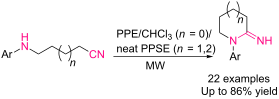
- prepared by cyclization of azidonitriles [15]. These methods usually require drastic reaction conditions and are generally limited to 2-iminopyrrolidines and/or to N-unsubstituted or N-alkyl derivatives. Other methods involve cyclic precursors such as lactams [4][6][7][16], thiolactams [3][6] or 2


Stereo- and regioselectivity of the hetero-Diels–Alder reaction of nitroso derivatives with conjugated dienes
Beilstein J. Org. Chem. 2016, 12, 1949–1980, doi:10.3762/bjoc.12.184
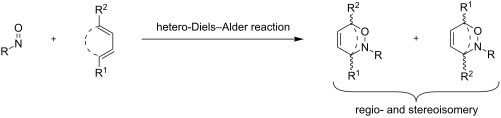
- -lactams 63 (Scheme 16) [95], which is in accordance with the general prediction. The exclusive regioselectivity of this reaction is due to steric effects. Similar conclusions result from the reaction of 1,3-butadienes 65 with various nitroso heterodienophiles 66, giving proximal isomer 67 (Scheme 17) [85
- acids and therefore they were applied to the synthesis of transient acylnitroso intermediates. Moderate to high yields (45–98%) with good diastereoselectivities (de 42–72%) were obtained through the hetero-Diels–Alder reaction of chiral lactams with acylnitroso intermediates. Approach based on the




Rh-Catalyzed reductive Mannich-type reaction and its application towards the synthesis of (±)-ezetimibe
Beilstein J. Org. Chem. 2016, 12, 1608–1615, doi:10.3762/bjoc.12.157
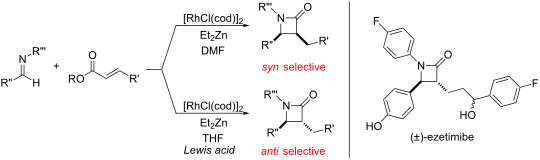
- -1 Hirokoshingai, Kure, Hiroshima 737-0112, Japan 10.3762/bjoc.12.157 Abstract An effective synthesis for syn-β-lactams was achieved using a Rh-catalyzed reductive Mannich-type reaction. A rhodium–hydride complex (Rh–H) derived from diethylzinc (Et2Zn) and a Rh catalyst was used for the 1,4
- Mannich-type reactions have been reported to give β-amino esters and/or β-lactams by using metal enolates [10][11][12][13][14][15][16][17]. In contrast, most of reductive Mannich-type reactions using imines and α,β-unsaturated carbonyl compounds gave β-amino esters, but there are only a few reports for a
- direct synthesis of β-lactams by reductive Mannich-type reactions [14][18][19][20][21]. We recently reported a reductive Mannich-type reaction using a combination of RhCl(PPh3)3 and Et2Zn to give the corresponding syn-β-lactams from α,β-unsaturated esters and imines in good to excellent yields together


Biosynthesis of oxygen and nitrogen-containing heterocycles in polyketides
Beilstein J. Org. Chem. 2016, 12, 1512–1550, doi:10.3762/bjoc.12.148
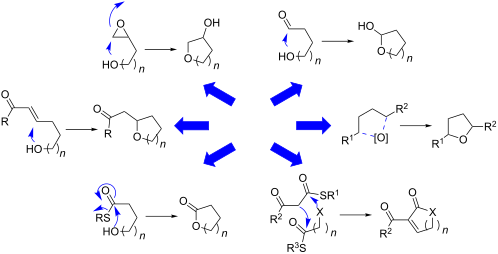
- their standard catalytic repertoire (Scheme 1). They transacylate the thioester of a PKS-bound polyketide onto a nucleophile. If the nucleophile is water, this leads to carboxylic acids. The reactions of backbone hydroxy groups or amines consequently give lactones and lactams. TE domains mostly form
- the respective heterocycles. We will not cover medium-sized and macrocyclic lactones and lactams, but concentrate on small heterocycles with ring sizes between 3 and 6 atoms (for a review about macrolactones see reference [12]). Review 1 Oxygen-containing heterocycles Oxygen-containing heterocycles




From N-vinylpyrrolidone anions to modified paraffin-like oligomers via double alkylation with 1,8-dibromooctane: access to covalent networks and oligomeric amines for dye attachment
Beilstein J. Org. Chem. 2016, 12, 1395–1400, doi:10.3762/bjoc.12.133
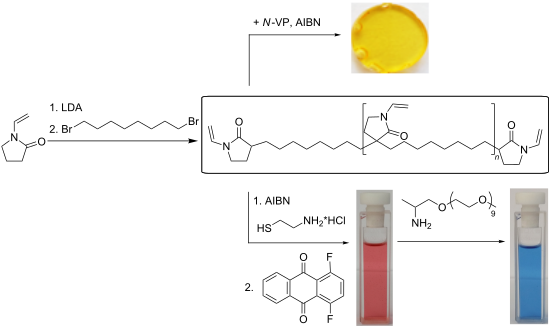
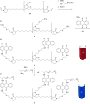
- can easily be monitored with UV–vis spectroscopy as well as with the naked eye. This work contributes to the increasing area of α-alkylation reactions of N-vinyl lactams and the subsequent application of the so obtained compounds to the synthesis of functionalized oligomers. Chemical structure of



Multicomponent reactions: A simple and efficient route to heterocyclic phosphonates
Beilstein J. Org. Chem. 2016, 12, 1269–1301, doi:10.3762/bjoc.12.121
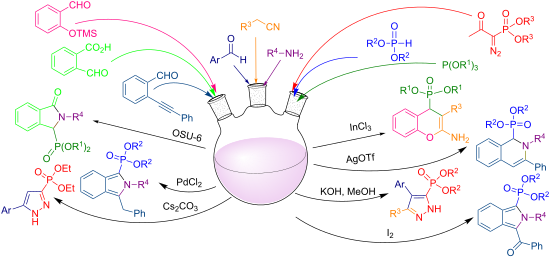
- irradiation. Thus, the development of novel MCR based on phosphorous reagents would allow the synthesis of macrocyclic and medium or large-sized heterocyclic systems, substances which are currently underrepresented in the literature. Further, the design of new biocompatible scaffolds such as β-lactams and


Conjugate addition–enantioselective protonation reactions
Beilstein J. Org. Chem. 2016, 12, 1203–1228, doi:10.3762/bjoc.12.116
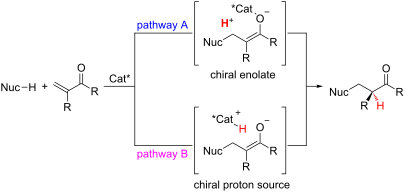
- % yield, 95.5:4.5 to 97:3 er). The resulting nitroalkane adduct 159 could be reduced and cyclized to access α,γ-disubstituted γ-lactams. Ellman and co-workers, in the second example of conjugate addition–enantioselective protonation with nitroalkenes, showed that thioacids 160 could be added in high


One-pot synthesis of enantiomerically pure N-protected allylic amines from N-protected α-amino esters
Beilstein J. Org. Chem. 2016, 12, 957–962, doi:10.3762/bjoc.12.94
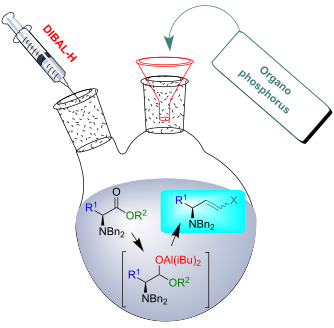
- -membered ring lactams [20]. Finally, a one-pot reduction-olefination involving an α-amino β-hydroxy ester and a phosphonium salt, both bearing free hydroxy groups, has been used in the synthesis of (−)-α-conhydrine [21]. In this work, our aim was to study in more detail this one-pot strategy. Similarly to


1H-Imidazol-4(5H)-ones and thiazol-4(5H)-ones as emerging pronucleophiles in asymmetric catalysis
Beilstein J. Org. Chem. 2016, 12, 918–936, doi:10.3762/bjoc.12.90
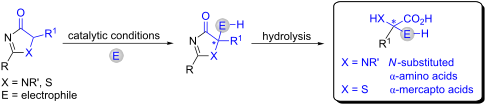
- corresponding halide in the presence of sodium hydride, giving thus access to thioether derivatives of type 68, which can also be converted into γ-lactams such as 69. On the other hand, experiments carried out with pyridyl and quinoylthiazolone substrates reveal that in these cases selectivity is higher than








New synthetic strategies for xanthene-dye-appended cyclodextrins
Beilstein J. Org. Chem. 2016, 12, 537–548, doi:10.3762/bjoc.12.53
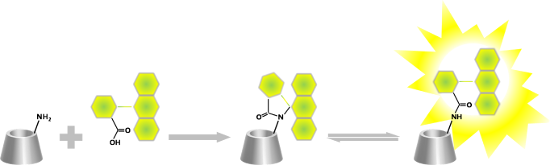
- University, Hlavova 8, 12843 Prague 2, Czech Republic 10.3762/bjoc.12.53 Abstract Xanthene dyes can be appended to cyclodextrins via an ester or amide bridge in order to switch the fluorescence on or off. This is made possible through the formation of nonfluorescent lactones or lactams as the fluorophore


Synthesis of Xenia diterpenoids and related metabolites isolated from marine organisms
Beilstein J. Org. Chem. 2015, 11, 2521–2539, doi:10.3762/bjoc.11.273
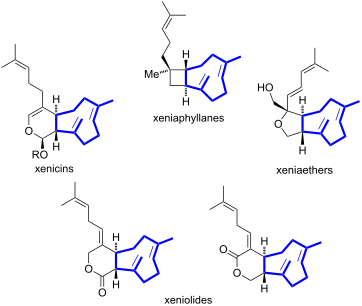
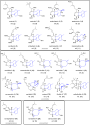
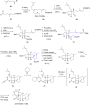
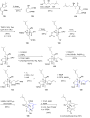
- state, the substituents are oriented with minimal steric hindrance to give the E,E-configured nine-membered ring. Ring contraction reactions of 13-membered lactams afford cyclononenes via intramolecular acyl transfer reactions. The configuration of the double bond derives from precursor D and thus







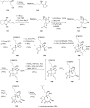
Recent advances in copper-catalyzed C–H bond amidation
Beilstein J. Org. Chem. 2015, 11, 2209–2222, doi:10.3762/bjoc.11.240

- synthesis of a lactam via chelating-group-assisted copper catalysis. As outlined in Scheme 8, the N-quinolin-8-yl substituted amides 27 could be smoothly transformed into lactams 28 and/or 28' via C–H amidation by using Cu(OAc)2 as catalyst and Ag2CO3 as a base. In a specific case, the C(sp2)–H bond could
- (Scheme 8). Almost at the same time, Ge et al. [53] reported a similar intramolecular C–H amidation for the synthesis of lactams using CuCl as copper catalyst. When substrates possessing more than one γ-alkyl C–H bond were used, as the case occurred in Kuninobu and Kanai’s work, the primary C–H was
- underwent C–H amidation with lactams 52 to yield 2-aminoquinoline N-oxides 54 with generally excellent yield. Notably, the catalytic system also allowed a C–H bond amination by using secondary amines 53 for the synthesis of 2-aminoquinoline N-oxides 55. What’s more, the N-oxides could be efficiently reduced


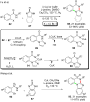


Recent applications of ring-rearrangement metathesis in organic synthesis
Beilstein J. Org. Chem. 2015, 11, 1833–1864, doi:10.3762/bjoc.11.199
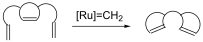
- step starting with 2-methoxyphenol. Later, compound 316 was subjected to a RRM under the influence of catalyst 2 in the presence of ethylene (24) to deliver the expected rearranged product 317 (Scheme 68). Vanderwal and co-workers [66] described the synthesis of polycyclic lactams obtained by arene
- /allene cycloaddition, discovered by Himbert and Henn were found to undergo a RRM in a facile manner in the presence of catalyst 6 to produce complex polycyclic lactams. In this regard, the required building block 319 was obtained from compound 318 by cycloaddition reaction. A variety of complex molecular
- frames were accessed via the RRM sequence under the influence of catalyst 6 in toluene at 50–100 °C in the presence of 24. The procedure is suitable for the preparation of diverse polycyclic lactams with a variety of substitution patterns (Scheme 69). Kotha and Ravikumar [44] have successfully executed


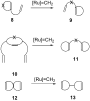


Synthesis of a tricyclic lactam via Beckmann rearrangement and ring-rearrangement metathesis as key steps
Beilstein J. Org. Chem. 2015, 11, 1503–1508, doi:10.3762/bjoc.11.163
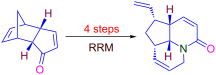
- -rearrangement metathesis as key steps. Here, we used a simple starting material such as dicyclopentadiene. Keywords: allylation; Beckmann rearrangement; lactams; oximes; ring-rearrangement metathesis; Introduction The Beckmann rearrangement (BR), a well-known protocol for the conversion of ketoxime to an
- , reflux, 15 h, CH3CN (c) PPA, reflux for 20 min. Surprisingly, in all these instances no rearrangement product was observed. Interestingly, when the mixture of oximes 8a and 8b was treated with TsCl in the presence of NaOH at rt lactams 9a and 9b were obtained in 66% combined yield for two steps (9a:9b
- lactams 9a and 9b were obtained in 48% yield (9a:9b = 2:1) the ratio of oximes 9a and 9b was calculated based on 1H NMR spectral data (Scheme 3). Having prepared the lactams 9a and 9b, the allylation reaction was attempted with the lactam mixture in the presence of NaH/allyl bromide in dry DMF to generate


Tandem cross enyne metathesis (CEYM)–intramolecular Diels–Alder reaction (IMDAR). An easy entry to linear bicyclic scaffolds
Beilstein J. Org. Chem. 2015, 11, 1486–1493, doi:10.3762/bjoc.11.161
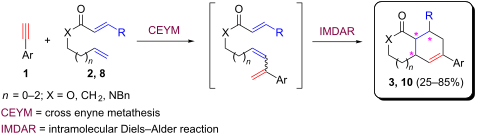
- 1–3). Comparable yields were obtained with either electron-donating or electron-withdrawing substituents in the starting alkyne 1 (Table 2, entries 4 and 5). In addition, 5- and 7-membered bicyclic lactams 3f and 3g were also synthesized in moderate yields (Table 2, entries 6 and 7). Again, all


Synthesis of novel N-cyclopentenyl-lactams using the Aubé reaction
Beilstein J. Org. Chem. 2015, 11, 1060–1067, doi:10.3762/bjoc.11.119

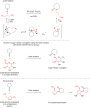
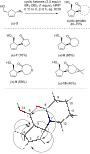
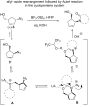
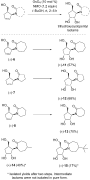
- cyclopentenyl-substituted lactams. Upon dihydroxylation, this affords the N-cyclopentenyl-lactam compounds in racemic form. Given the numerous uses of nucleosides and related compounds, we were interested in the synthesis of carbocylic nucleoside mimics. The attempts and results are described herein. Keywords
- : Aubé reaction; biological activity; carbocyclic nucleosides; cyclopentenylated lactams; cyclopentylated lactams; Introduction One popular method for the synthesis of N-substituted lactams is the Aubé reaction [1][2][3][4]. Over the last few decades, this reaction has gained popularity and resulted in
- between an azido alcohol and a ketone to provide lactams through an in situ-generated hemiacetal as a temporary tether. This helps the azide addition in an intramolecular fashion, followed by ring expansion (Scheme 1) [1][2][3][4]. Recently, we applied this reaction for the synthesis of sugar–lactam




Diastereoselective and enantioselective conjugate addition reactions utilizing α,β-unsaturated amides and lactams
Beilstein J. Org. Chem. 2015, 11, 530–562, doi:10.3762/bjoc.11.60
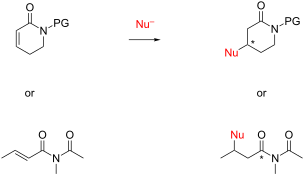
- demonstrated in the synthesis of many natural products, materials, and pharmacological agents. In the last three decades, there has been a significant increase in the development of asymmetric variants of this reaction. Unfortunately, conjugate addition reactions using α,β-unsaturated amides and lactams remain
- underdeveloped due to their inherently low reactivity. This review highlights the work that has been done on both diastereoselective and enantioselective conjugate addition reactions utilizing α,β-unsaturated amides and lactams. Keywords: α,β-unsaturated amides; α,β-unsaturated lactams; conjugate addition
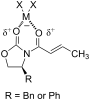
- expanded to include α,β-unsaturated ketones, aldehydes, lactones, esters, nitroolefins, and to a lesser extent α,β-unsaturated amides and lactams. Review The lack of development in the CA of α,β-unsaturated amides and lactams is not surprising because these substrates are significantly less reactive than