Search results
Search for "supramolecular" in Full Text gives 559 result(s) in Beilstein Journal of Organic Chemistry. Showing first 200.
Synthesis of ether lipids: natural compounds and analogues
Beilstein J. Org. Chem. 2023, 19, 1299–1369, doi:10.3762/bjoc.19.96
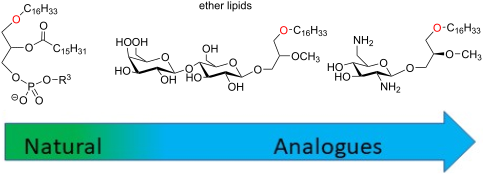
- with biomembranes via supramolecular interactions with the lipids and proteins that are embedded in these membranes. We can hypothesis that their mechanism of action occurs via a direct interaction with membrane proteins or by a modification of the biophysical properties of the membranes. It must be






Exploring the role of halogen bonding in iodonium ylides: insights into unexpected reactivity and reaction control
Beilstein J. Org. Chem. 2023, 19, 1171–1190, doi:10.3762/bjoc.19.86
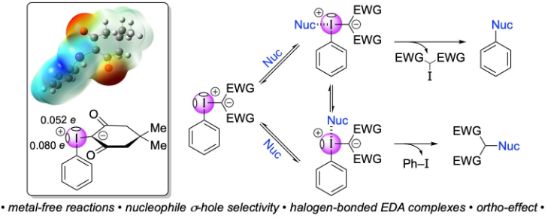
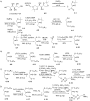
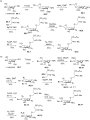
- numerous similar attributes, halogen bonding has also proven to be a viable alternative in methodologies that rely on hydrogen bond initiation. For example, both halogen- and hydrogen bonding can be used in supramolecular chemistry as the binding mechanism in photoresponsive receptors [73][74][75][76][77







Cyclodextrins as building blocks for new materials
Beilstein J. Org. Chem. 2023, 19, 889–891, doi:10.3762/bjoc.19.66
- . CDs are the most studied supramolecular hosts. They provide the most extensive database on molecular recognition in the literature, with more than 100,000 publications [2]. CDs owe their success not only to the unique molecular structure [3], which allows them to act as host compounds, but also to
- , and catalysis [2][5][12]. Molecular encapsulation is not the only application area for these macrocyclic components at present. CDs are versatile molecules. Their 3D structure makes them exceptional building blocks for the design of innovative supramolecular architectures due to the differential
- science that require high performance with minimal environmental impact. They are involved in the construction of interlocked molecules (rotaxanes and catenanes), supramolecular polymers, artificial enzymes, hydrogels, metal–organic frameworks, supramolecular solvents, fibers, nanotubes, nanoparticles
Light-responsive rotaxane-based materials: inducing motion in the solid state
Beilstein J. Org. Chem. 2023, 19, 873–880, doi:10.3762/bjoc.19.64
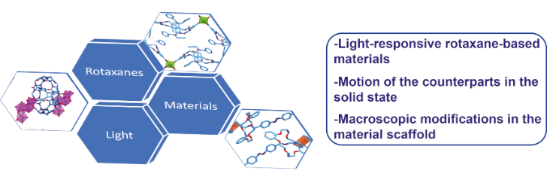
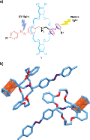
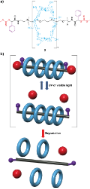
- pseudorotaxanes, the supramolecular interactions between the counterparts are retained, thus constituting stable intertwined species showing analogous properties to those of rotaxanes. The pseudorotaxanes 1 were constituted by a dibenzo-24-crown-8 cyclic component and an ammonium-based thread functionalized with
- supramolecular gels (Figure 2a) [52]. Upon irradiation using a UV-light-emitting diode (LED) and a visible LED as sources, the reversible cleavage of the trithiocarbonate stoppers was accomplished, thus allowing the dethreading [53] of the wheels to take place by the shuttling of the macrocycles along the thread

A fluorescent probe for detection of Hg2+ ions constructed by tetramethyl cucurbit[6]uril and 1,2-bis(4-pyridyl)ethene
Beilstein J. Org. Chem. 2023, 19, 864–872, doi:10.3762/bjoc.19.63
- Xiaoqian Chen Naqin Yang Yue Ma Xinan Yang Peihua Ma Key Laboratory of Macrocyclic and Supramolecular Chemistry of Guizhou Province, Guizhou University, Guiyang 550025, China Guiyang College of Humanities and Science, Guiyang 550025, China 10.3762/bjoc.19.63 Abstract In this paper, tetramethyl
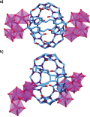
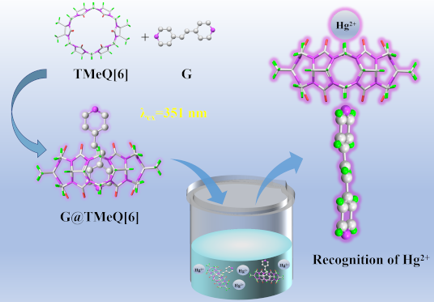
- cucurbit[6]uril (TMeQ[6]) and 1,2-bis(4-pyridyl)ethene (G) were used to construct a supramolecular fluorescent probe G@TMeQ[6]. The host–guest interaction between TMeQ[6] and G was investigated using 1H NMR spectroscopy, single-crystal X-ray diffraction and various experimental techniques. The results show
- form various host–guest inclusion complexes [16][17][18][19][20], which have broad application prospects in supramolecular catalysis [21][22][23], molecular recognition [24][25], and drug delivery [26][27]. In recent years, in the field of supramolecular chemistry, the detection of analytes based on


pH-Responsive fluorescent supramolecular nanoparticles based on tetraphenylethylene-labelled chitosan and a six-fold carboxylated tribenzotriquinacene
Beilstein J. Org. Chem. 2023, 19, 635–645, doi:10.3762/bjoc.19.45
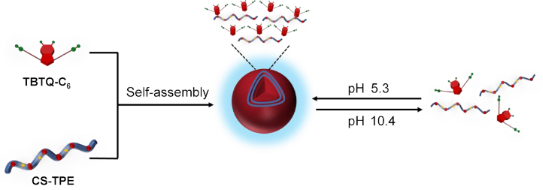
- in the presence of TBTQ-C6 was greatly improved. In addition, the fluorescence of CS-TPE was significantly enhanced by introducing TBTQ-C6, and remained relatively stable with variations in pH for both CS-TPE and TBTQ-C6/CS-TPE. Such pH-responsive supramolecular spherical nanoparticles with stable
- extensive attention owing to their potential applications in biomedicine, chemical sensing and as catalysts [1][2]. It is possible to regulate the formation and breakdown of supramolecular structures using external stimuli, such as pH, light, temperature, enzymes, and competing reagents [3][4]. Among these
- stimuli, pH response is of particular interest in the construction of supramolecular systems for intelligent drug delivery because of the presence of pH gradients in the microenvironment of organs, tissues, and cell organelles [5]. In the past years, pH-responsive and other stimuli-responsive



Phenanthridine–pyrene conjugates as fluorescent probes for DNA/RNA and an inactive mutant of dipeptidyl peptidase enzyme
Beilstein J. Org. Chem. 2023, 19, 550–565, doi:10.3762/bjoc.19.40
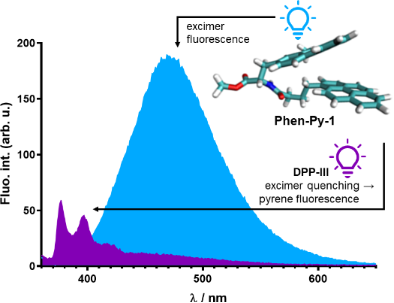
- ]. Excimers are formed when pyrene moieties form supramolecular complexes by intermolecular or intramolecular π–π interactions, causing a significant shift of single pyrene bands to longer wavelengths. Pyrenes are often used as a sensor part of receptor molecules, so their excimer bands switch on/off to
- applications [9]. These compounds have a very large aromatic surface suitable to form self-assembled supramolecular structures by intermolecular π–π interactions and showed excimer fluorescence in thin film and in the solid state. Kawai et al. reported exciplex formation between pyrene and guanine in polar




Discrimination of β-cyclodextrin/hazelnut (Corylus avellana L.) oil/flavonoid glycoside and flavonolignan ternary complexes by Fourier-transform infrared spectroscopy coupled with principal component analysis
Beilstein J. Org. Chem. 2023, 19, 380–398, doi:10.3762/bjoc.19.30
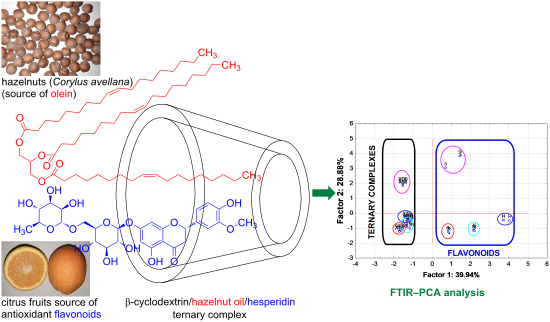
- cheap method for the evaluation of quality and similarity/characteristics of these new types of cyclodextrin-based ternary complexes having enhanced properties and stability. Keywords: antioxidant; cyclodextrin; flavonoid; hazelnut vegetable oil; ternary supramolecular inclusion complex; Introduction
- compounds [5]. The resulting supramolecular inclusion complexes provide enhanced water solubility and bioavailability/bioaccessibility of the nanoencapsulated bioactive compounds, higher oxidative and thermal stability or photostability of labile compounds, and their controlled release [6][7]. Vegetable oil
- FA moieties interact with the β-CD host molecules. This was the reason to use such non-equimolar ratios. If a theoretical 3:1 interaction can be considered, the formation of such β-CD/triglyceride supramolecular system in practice is limited by the steric hindrance. On the other hand, ternary



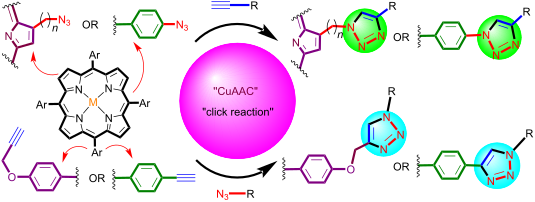
CuAAC-inspired synthesis of 1,2,3-triazole-bridged porphyrin conjugates: an overview
Beilstein J. Org. Chem. 2023, 19, 349–379, doi:10.3762/bjoc.19.29
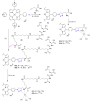
- suggested a weak intramolecular inter-porphyrin communication. Further investigation also revealed that the interaction of the star compound 129 with DABCO and Bipy possibly led to the double star formed by the axial coordination of ligand with zinc centers. The synthesis of supramolecular nanoassemblies
- )porphyrin 130a,b and 6-deoxy-6-azido-PM-β-CD 124 using copper sulfate and sodium ascorbate in THF/H2O (Scheme 26). Furthermore, the supramolecular nanoarchitectures as potential candidates for controlling drug delivery were prepared by complexing the porphyrins 131a,b with tetrasodium
- porphyrin 174 and stirred at room temperature for 24 h, solubilization occurred, resulting in a homogeneous solution. This is due to the formation of a supramolecular assembly in which the hydrophobic adamantane arms of 176b are sequestered by the β-CD arms of porphyrin 174, resulting in water solubility




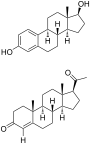
Inclusion complexes of the steroid hormones 17β-estradiol and progesterone with β- and γ-cyclodextrin hosts: syntheses, X-ray structures, thermal analyses and API solubility enhancements
Beilstein J. Org. Chem. 2022, 18, 1749–1762, doi:10.3762/bjoc.18.184
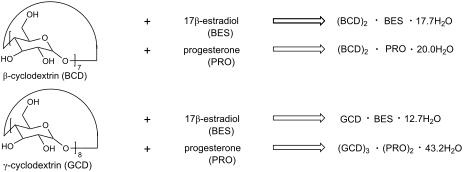
- Alexios I. Vicatos Zakiena Hoossen Mino R. Caira Centre for Supramolecular Chemistry Research (CSCR), Department of Chemistry, University of Cape Town, Rondebosch 7701, South Africa 10.3762/bjoc.18.184 Abstract Overcoming the challenges of poor aqueous solubility of active pharmaceutical



Preparation of β-cyclodextrin-based dimers with selectively methylated rims and their use for solubilization of tetracene
Beilstein J. Org. Chem. 2022, 18, 1596–1606, doi:10.3762/bjoc.18.170
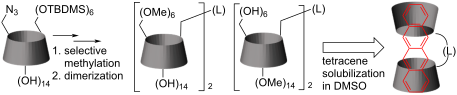
- Konstantin Lebedinskiy Volodymyr Lobaz Jindrich Jindrich Department of Organic Chemistry, Faculty of Science, Charles University, Hlavova 8, 128 43 Prague, Czech Republic Institute of Macromolecular Chemistry, Department of Supramolecular Systems and Self-Assembling Processes, Heyrovského nám. 2
- better effectiveness than other tested supramolecular hosts. Keywords: cyclodextrin; dimer; methylation; solubilization; tetracene; Introduction Cyclodextrins (CDs) are cyclic oligomers of glucose that play an important role in supramolecular chemistry [1]. The structure of any CD contains a
- hydrophobic cavity inside the molecule, while all hydrophilic hydroxy groups are arranged outside the cavity. This feature determines the main practical application of CDs as supramolecular hosts for host–guest interaction. Due to their low cost, low toxicity, and good complexation ability, they are


Supramolecular approaches to mediate chemical reactivity
Beilstein J. Org. Chem. 2022, 18, 1463–1465, doi:10.3762/bjoc.18.152
- reactions by a biomimetic approach [3][4]. Very recently, many efforts have been devoted to study supramolecular catalysis processes [5][6][7][8][9][10][11][12][13][14] in which macrocyclic hosts, self-assembled capsules and metallo-cages were employed as catalysts or nanocontainers. The primary
- characteristic of supramolecular catalysis is that the general modes of activation based on intermolecular interactions can operate on substrates in a selective way, and in confined environment, like the active site of natural enzymes [5][6][7][8][9][10][11][12][13][14]. As a result, molecular recognition of the
- substrate(s) and potentially the transition state is essential in supramolecular catalysis. Supramolecular catalysis finds inspiration in natural enzymes, which show catalytic features such as substrates and products selectivity, efficiency, geometric control, and acceleration of chemical reactivity [1]. If
1,4,6,10-Tetraazaadamantanes (TAADs) with N-amino groups: synthesis and formation of boron chelates and host–guest complexes
Beilstein J. Org. Chem. 2022, 18, 1424–1434, doi:10.3762/bjoc.18.148
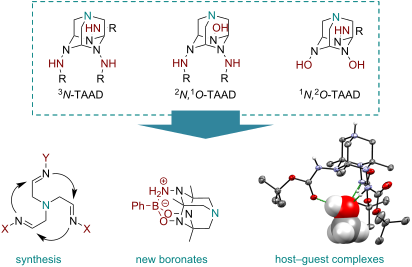
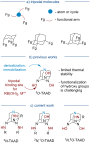
- Tripodal molecules are widely used as chelating ligands for transition metal catalysis [1][2][3], sensors for ions and small molecules [4][5], reagents for surface grafting [6], building blocks for the construction of supramolecular structures [7], polycyclic cage molecules [8], and porous materials [9
- , 21, and 21·HCl as well as the previously described 3O-TAADs 2 do not form such host–guest complexes, although water and methanol molecules are present in their crystal lattices. Thus, the presence of amide/carbamate groups is essential for the assembly of these supramolecular structures. The
- stabilization of the complex through weak hydrophobic interactions of with tert-butyl groups of Boc. We believe that by adjustment of the substituents on the amide/carbamate groups, receptors for supramolecular sensing of alcohols [44] could be designed based on 3N-TAADs of type 4. Further research in this






Cyclodextrin-based Schiff base pro-fragrances: Synthesis and release studies
Beilstein J. Org. Chem. 2022, 18, 1346–1354, doi:10.3762/bjoc.18.140
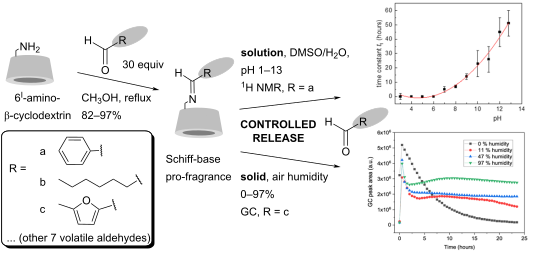
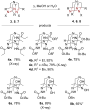
- aldehyde due to the supramolecular interaction between aldehyde and β-CD cavity. It follows from Figures 5–7 that heptanal (2h) is released faster with lower pH values, whereas benzaldehyde (2d) and 5-methylfurfural (2j) show opposite trends. It can be attributed to the lower boiling point (153 °C) and
- that CD-based pro-fragrances combine a chemical barrier, as the aldehydes are linked to the CD via imine bond, and a physicochemical (supramolecular) barrier, as we established that aldehydes formed inclusion complexes in aqueous solution with β-CD. We confirmed from the NMR kinetic study of the imine
- bond decomposition that Shiff base hydrolysis is very fast in acidic conditions and slows down when going to higher pH values. Multiple headspace extraction experiments revealed the role of pH and the presence of supramolecular interaction between aldehyde and β-CD on the rate of aldehyde release from
Computational model predicts protein binding sites of a luminescent ligand equipped with guanidiniocarbonyl-pyrrole groups
Beilstein J. Org. Chem. 2022, 18, 1322–1331, doi:10.3762/bjoc.18.137
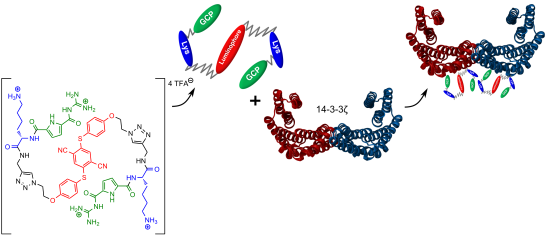
- interactions with other proteins. Here, we use a computational approach to predict the binding sites of the designed hybrid compound featuring aggregation-induced emission luminophores as a potential supramolecular ligand for 14-3-3ζ in the presence and absence of C-Raf peptides. Our results suggest that the
- prediction of two C2 related, dominating binding sites on 14-3-3ζ that may bind to two of the supramolecular ligand molecules. Keywords: AIE luminophores; fluorescence emission; guanidiniocarbonyl-pyrrole; ligand binding; 14-3-3 protein; Introduction The 14-3-3 protein family was one of the first
- option to modulate, inhibit, or stabilize protein–protein interactions (PPI) is the use of specific supramolecular ligands [7][8]. One well-known example of efficient protein binders is the so-called guanidiniocarbonyl-pyrrole (GCP) developed 20 years ago by Schmuck et al. [9]. These compounds are known




Polymer and small molecule mechanochemistry: closer than ever
Beilstein J. Org. Chem. 2022, 18, 1225–1235, doi:10.3762/bjoc.18.128
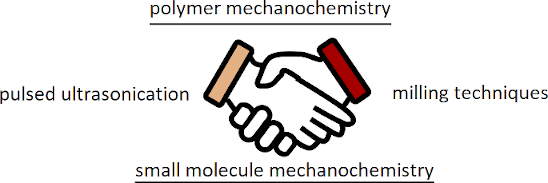
- for polymers as force transmission media have been investigated. In 2021, Otsuka and co-workers reported supramolecular hydrogen-bonding systems as alternative mechanical force transducers [67]. Specifically, the authors synthesized tetraarylsuccinonitrile (TASN) derivatives 6 and 8. TASN is a well
- anvils, which hold promise to become standard low-molecular effective transducers of mechanical forces. This, together with the ability of ball milling to facilitate the formation of covalent and noncovalent supramolecular assemblies, could lead to the direct activation of small mechanophores via the


Post-synthesis from Lewis acid–base interaction: an alternative way to generate light and harvest triplet excitons
Beilstein J. Org. Chem. 2022, 18, 825–836, doi:10.3762/bjoc.18.83
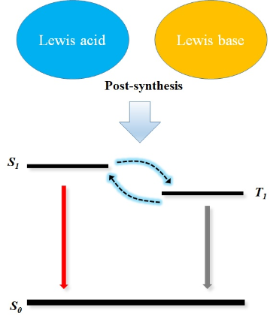
- optoelectronic properties of a fluorene-based copolymer with an sp2 nitrogen heteroatom via supramolecular coordination [33]. The PL emission in solution showed an obvious red-shifted profile. The polymer LED with different molar equivalents of Lewis acids was investigated. The EL peak wavelength was gradually
- . Regarding the materials developed by Lin et al., supramolecular coordination of PF8-co-DAF8 (13, Figure 5) with Lewis acids played an important role. They selected the more rigid 4,5-diazafluorene (DAF) with nitrogen atoms inserted at the 4 and 5-positons of the fluorene moiety [33]. The heteroatomic


Thiophene/selenophene-based S-shaped double helicenes: regioselective synthesis and structures
Beilstein J. Org. Chem. 2022, 18, 809–817, doi:10.3762/bjoc.18.81
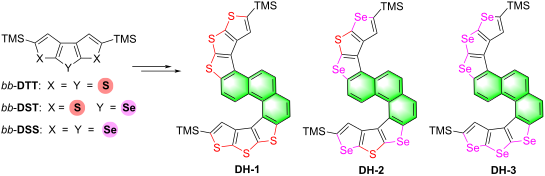
- channels (Figures S4 and S8 in Supporting Information File 2), which is a suitable characteristic for helicene compounds used as supramolecular self-assembly units [34][35][36][37][38][39][40][41]. Spectroscopic features of DH-1–3 The UV–vis absorption spectra of DH-1–3 in dichloromethane are shown in
- arrangement in the crystal packing structures of DH-1 and DH-2 indicate that these compounds may be used as supramolecular self-assembly units. Changes in molecular structure may substantially modulate the optical band gap of heteroacenes, and the replacement of heteroatoms from S to Se could fine-tune their


Heteroleptic metallosupramolecular aggregates/complexation for supramolecular catalysis
Beilstein J. Org. Chem. 2022, 18, 597–630, doi:10.3762/bjoc.18.62
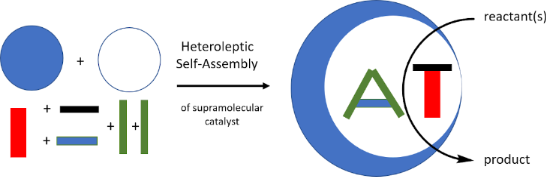
- Prodip Howlader Michael Schmittel Center of Micro- and Nanochemistry and (Bio)Technology, Universität Siegen, Organische Chemie I, Adolf-Reichwein-Str. 2, D-57068 Siegen, Germany 10.3762/bjoc.18.62 Abstract Supramolecular catalysis is reviewed with an eye on heteroleptic aggregates/complexation
- allows, as demonstrated by Nature by the multicomponent ATP synthase motor, a more detailed and refined configuration of purposeful machinery. Furthermore, (metallo)supramolecular catalysis is shown to extend beyond the single "supramolecular unit" and to reach far into the field and concepts of systems
- chemistry and information science. Keywords: heteroleptic complexation; information science; supramolecular catalysis; switching catalysis; systems chemistry; Introduction Supramolecular catalysis [1][2][3] for most chemists is associated with a catalytically active capsule providing either activating


Synthesis of a new water-soluble hexacarboxylated tribenzotriquinacene derivative and its competitive host–guest interaction for drug delivery
Beilstein J. Org. Chem. 2022, 18, 539–548, doi:10.3762/bjoc.18.56
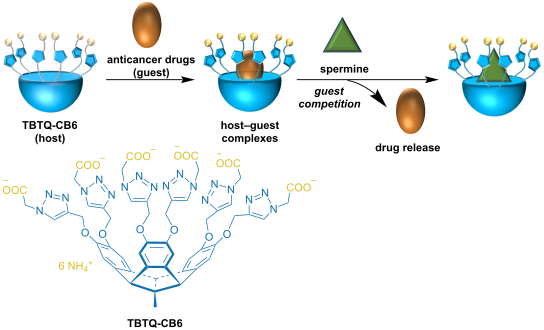
- water-soluble hexacarboxylated tribenzotriquinacene derivative (TBTQ-CB6) was synthesized and used as a supramolecular drug carrier to load the model anticancer drugs dimethyl viologen (MV) and doxorubicin (DOX) via host–guest interactions. The drugs could be effectively released by spermine (SM), a
- novel TBTQ-based host–guest drug delivery system may have potential use in supramolecular chemotherapy. Keywords: competitive substitution; drug delivery; host–guest chemistry; tribenzotriquinacene; water soluble; Introduction Chemotherapy is considered to be one of the most effective strategies in
- , supramolecular chemotherapy has received considerable attention by utilizing a supramolecular strategy to decrease the cytotoxicity of anticancer drugs to normal cells while preserving their cytotoxicity against cancer cells [11]. Supramolecular systems derived from macrocycles [12][13], such as calix[n]arenes





BINOL as a chiral element in mechanically interlocked molecules
Beilstein J. Org. Chem. 2022, 18, 508–523, doi:10.3762/bjoc.18.53
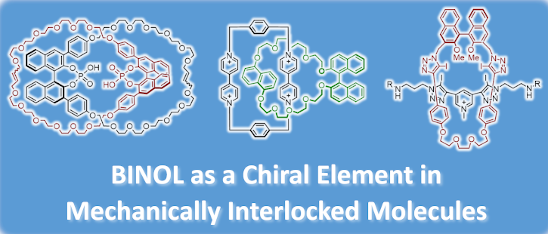
- noncovalent interactions between the subcomponents, MIMs have established themselves as an important subdiscipline of supramolecular chemistry. The introduction of chirality into MIMs is of high interest in order to develop applications in which the chirality can be exploited, e.g., in enantioselective
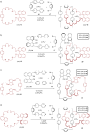
- Incorporating BINOL into MIMs The introduction of axially chiral BINOL units into interlocked compounds can be achieved by different types of supramolecular template strategies that have been developed for MIM synthesis in the past decades, including passive metal templates [33][34], active metal templates [35
- supramolecular template strategies that have been developed in the past decades, including passive metal templates, active metal templates, anion templates, ammonium crown ether templates, and templates based on π–π interactions. This has opened the way for the application of the resulting chiral MIMs. The




Bioinspired tetraamino-bisthiourea chiral macrocycles in catalyzing decarboxylative Mannich reactions
Beilstein J. Org. Chem. 2022, 18, 486–496, doi:10.3762/bjoc.18.51
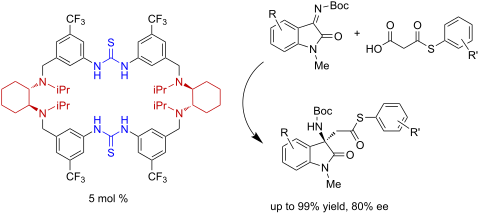
- Mannich reactions; supramolecular catalysis; thiourea; Introduction In the past decades, the development of supramolecular chemistry has enabled abundant host scaffolds and assembly tools for boosting catalytic processes, and stimulated the emergence of supramolecular catalysis [1][2][3][4][5][6][7][8][9




Tetraphenylethylene-embedded pillar[5]arene-based orthogonal self-assembly for efficient photocatalysis in water
Beilstein J. Org. Chem. 2022, 18, 429–437, doi:10.3762/bjoc.18.45
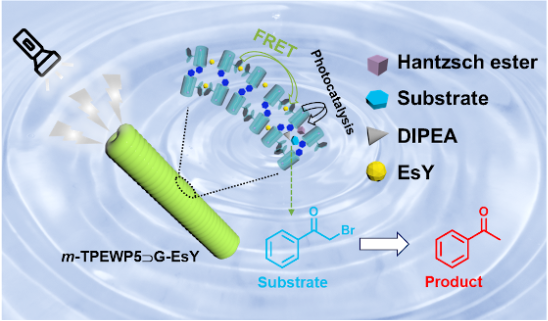
- supramolecular self-assembled nanosystem based on host–guest interactions between water-soluble tetraphenylethylene-embedded pillar[5]arene (m-TPEWP5) and ammonium benzoyl-ʟ-alaninate (G) in an aqueous medium. The obtained assembly of m-TPEWP5 and G showed aggregation-induced emission (AIE) via the blocking of
- assembled donor to the EsY acceptor present in the nanorod assembly. The system comprising m-TPEWP5, G and EsY displayed moderate FRET efficiency (31%) at a 2:1 molar ratio of donor-to-acceptor. Moreover, the obtained supramolecular nanorod assembly could act as a nanoreactor mimicking natural
- ; supramolecular self-assembly; Introduction Photosynthesis is one of the most significant processes in nature, which balances the energy level in living systems [1][2][3]. In particular, green plants absorb photons of light and convert them into another form of energy through photosynthesis similar to solar


![[Graphic 5]](/bjoc/content/inline/1860-5397-18-45-i7.svg?max-width=637&scale=1.18182) G-EsY self-assembled photocat...
G-EsY self-assembled photocat...
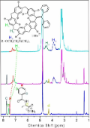


![[Graphic 15]](/bjoc/content/inline/1860-5397-18-45-i17.svg?max-width=637&scale=1.18182) G; (b) m-TPEWP5
G; (b) m-TPEWP5![[Graphic 16]](/bjoc/content/inline/1860-5397-18-45-i18.svg?max-width=637&scale=1.18182) G-EsY. [m-TPEWP5] = 1 × 10⁻⁴ M, [G] = 1 × 10⁻⁴ M, [EsY] = ...
G-EsY. [m-TPEWP5] = 1 × 10⁻⁴ M, [G] = 1 × 10⁻⁴ M, [EsY] = ...

![[Graphic 25]](/bjoc/content/inline/1860-5397-18-45-i27.svg?max-width=637&scale=1.18182) G donor assembly...
G donor assembly...

![[Graphic 43]](/bjoc/content/inline/1860-5397-18-45-i45.svg?max-width=637&scale=1.18182) G-EsY na...
G-EsY na...

![[Graphic 48]](/bjoc/content/inline/1860-5397-18-45-i50.svg?max-width=637&scale=1.18182) G-E...
G-E...
A resorcin[4]arene hexameric capsule as a supramolecular catalyst in elimination and isomerization reactions
Beilstein J. Org. Chem. 2022, 18, 337–349, doi:10.3762/bjoc.18.38
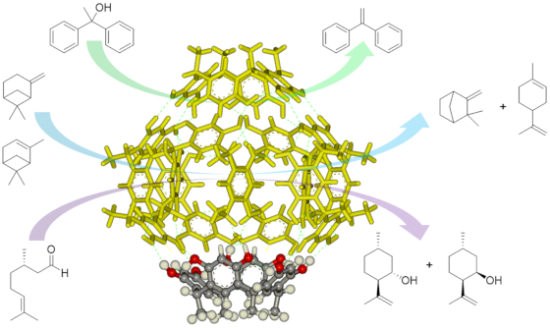
- series of reactions like the carbonyl–ene cyclization of (S)-citronellal preferentially to isopulegol, the water elimination from 1,1-diphenylethanol, the isomerization of α-pinene and β-pinene preferentially to limonene and minor amounts of camphene. The role of the supramolecular catalyst consists in
- compared to many other strong Brønsted or Lewis acids. Keywords: cationic intermediates; encapsulation; organocatalysis; resorcin[4]arene hexamer; supramolecular catalysis; Introduction In enzymatic catalysis, the substrate is selected matching the size, shape and specific functional groups present in
- states of the reaction with impressive accelerations, substrate, and product selectivities. The development of artificial catalytic systems able to activate substrates and to stabilize intermediate species through weak noncovalent interactions is the scope of supramolecular catalysis [1][2][3][4


A Se···O bonding catalysis approach to the synthesis of calix[4]pyrroles
Beilstein J. Org. Chem. 2022, 18, 325–330, doi:10.3762/bjoc.18.36
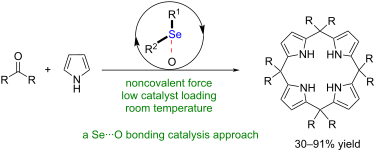
- . Keywords: calix[4]pyrrole; chalcogen bonding; ketones; Se···O bonding interactions; supramolecular catalysis; Introduction Noncovalent catalysis has been established as one of the fundamental concepts in organic synthesis that enables achieving numerous chemical transformations [1]. Among these