Search results
Search for "analogue" in Full Text gives 618 result(s) in Beilstein Journal of Organic Chemistry. Showing first 200.
Amamistatins isolated from Nocardia altamirensis
Beilstein J. Org. Chem. 2022, 18, 360–367, doi:10.3762/bjoc.18.40
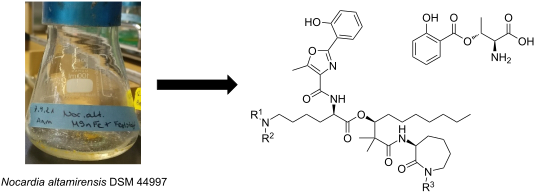
- C35H53N5O7 by the [M + H]+ ion at m/z 656.4019 (calcd for C35H54N5O7, 656.4023). Analysis of 1D and 2D NMR spectra confirmed that the aldehyde group in position 25 is missing. Therefore, compound 3 represents the N-desformyl analogue of 1. Compound 4 (1.9 mg) was obtained as a reddish oil. Its molecular


Diametric calix[6]arene-based phosphine gold(I) cavitands
Beilstein J. Org. Chem. 2022, 18, 190–196, doi:10.3762/bjoc.18.21
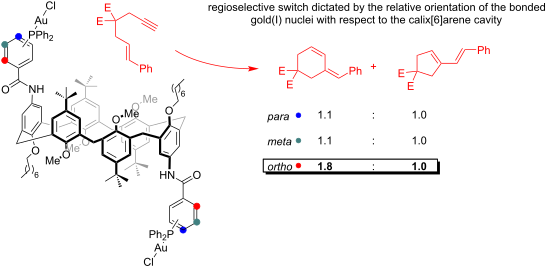
- , Table 1) [38][39]. This result was compared with the one obtained using the macrocyclic analogue A(AuCl)2 (1 mol %). Hence, we did not observe a significant variation in the product distribution (entry 2, Table 1). Analogously, the reactivity in the presence of meta-substituted catalysts B’(AuCl) and B


Chemical and chemoenzymatic routes to bridged homoarabinofuranosylpyrimidines: Bicyclic AZT analogues
Beilstein J. Org. Chem. 2022, 18, 95–101, doi:10.3762/bjoc.18.10
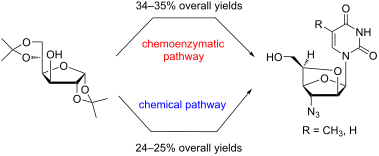
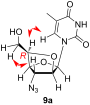
- , University of Delhi, Delhi- 110 015, India 10.3762/bjoc.18.10 Abstract Conformationally restricted diastereomeric homoarabinofuranosylpyrimidines (AZT analogue), i.e., (5′R)-3′-azido-3′-deoxy-2′-O,5′-C-bridged-β-ᴅ-homoarabinofuranosylthymine and -uracil had been synthesized starting from diacetone ᴅ
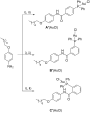
- . [23] synthesized the tricyclic azido-isonucleoside analogue 5 and Imanishi et al. [24] synthesized the azido-nucleoside 6 with a conformationally restricted sugar moiety. Recently, we have developed a greener and efficient chemoenzymatic synthetic methodology for the synthesis of conformationally



Peptide stapling by late-stage Suzuki–Miyaura cross-coupling
Beilstein J. Org. Chem. 2022, 18, 1–12, doi:10.3762/bjoc.18.1
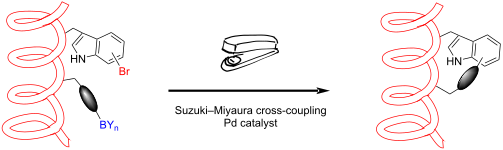
- curve could not be obtained since it requires high inhibitor concentrations. In addition, the wild-type sequence aAxWt was also tested in the competitive FP assay (Kd = 1448 ± 204 nM) against its FITC-labelled analogue fAxWt, which had been determined in a direct assay (Kd = 1191 ± 182 nM). Finally, the
- stability of both peptides P5 and P6 was tested against proteinase K digestion. Whilst the linear analogue P6 is cleaved within a period of 120 min to give three fragments, the stapled peptide P5 allows access to only one of the three cleavage sites: i.e., proteolysis of the Leu–Asp bond within the
- macrocycle. The amide bond in the staple of P5 is connected to two flexible aliphatic chains and may exist in cis and trans configuration. The energy difference in the analogue N-methylacetamide (NMA) favours the trans isomer by about 2.3 kcal mol−1, which corresponds to an expected cis/trans ratio of about


A photochemical C=C cleavage process: toward access to backbone N-formyl peptides
Beilstein J. Org. Chem. 2021, 17, 2932–2938, doi:10.3762/bjoc.17.202
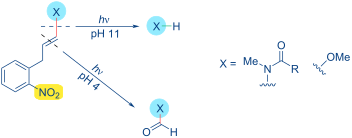
- contrast, photorelease systems based on C–C or C=C bond photocleavage are quite rare [14][15]. We recently reported a vinylogous analogue of this photo-deprotection process, which allowed photocleavage of alkenyl sp2 C–X bonds, rather than benzylic sp3 C–X cleavage [16][17]. We now report that further
- then account for the isolation of the acetylated analogue 9. The photochemical pathway described here represents a formal oxidative olefin cleavage of vinylogous nitroaryl-modified amides and ethers. The pathway adds to the diversity of photochemical pathways known for 2-nitrophenyl systems, and the


Highly stereocontrolled total synthesis of racemic codonopsinol B through isoxazolidine-4,5-diol vinylation
Beilstein J. Org. Chem. 2021, 17, 2781–2786, doi:10.3762/bjoc.17.188
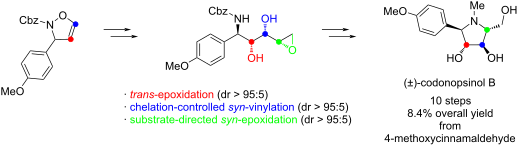
- Bratislava, Radlinského 9, 81237 Bratislava, Slovak Republic 10.3762/bjoc.17.188 Abstract A new highly diastereoselective synthesis of the polyhydroxylated pyrrolidine alkaloid (±)-codonopsinol B and its N-nor-methyl analogue, starting from achiral materials, is presented. The strategy relies on the trans
- hydrogen peroxide catalyzed by phosphotungstic heteropoly acid. Each of the key reactions proceeded with an excellent diastereoselectivity (dr > 95:5). (±)-Codonopsinol B was prepared in 10 steps with overall 8.4% yield. The antiproliferative effect of (±)-codonopsinol B and its N-nor-methyl analogue was
- . Codonopsinol B, together with its N-nor-methyl analogue 2, proved to be a potent α-glucosidase inhibitor (Figure 1). The potency it showed is higher than that of the known natural alkaloids such as radicamines A and B [3][4], and codonopsinol [5]. In contrast, the unnatural enantiomers of 1 and radicamine A


Synthetic strategies toward 1,3-oxathiolane nucleoside analogues
Beilstein J. Org. Chem. 2021, 17, 2680–2715, doi:10.3762/bjoc.17.182
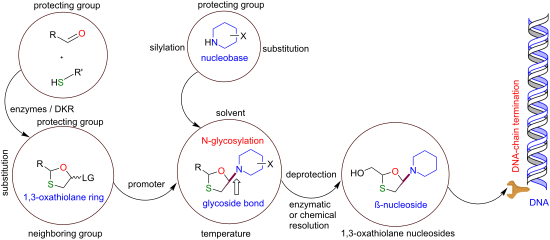
- -oxathiolane ring with different nucleobases in a way that only one isomer is produced in a stereoselective manner via N-glycosylation. An emphasis has been placed on the C–N-glycosidic bond constructed during the formation of the nucleoside analogue. The third focus is on the separation of enantiomers of 1,3
- found that out of four stereoisomers, the β-configured ʟ-(−)-enantiomer 1 (EC50 = 0.02 µM) is more potent in primary human lymphocytes than the β-configured ᴅ-(+)-enantiomer 1a (EC50 = 0.2 µM) in CEM cells [14]. Similarly, the 5-fluoro-substituted analogue of cytidine, i.e., β-configured ʟ
- manner was reported by Chu et al. [22]. Choi et al. [23] produced the 5-fluoro-substituted analogue of a 1,3-oxathiolane nucleoside as a racemic mixture, and the enantiomers were separated using pig liver esterase (PLE) enzyme, which resulted in 5’-butyroyl ester derivatives. They further explained the


Synthesis of highly substituted fluorenones via metal-free TBHP-promoted oxidative cyclization of 2-(aminomethyl)biphenyls. Application to the total synthesis of nobilone
Beilstein J. Org. Chem. 2021, 17, 2668–2679, doi:10.3762/bjoc.17.181
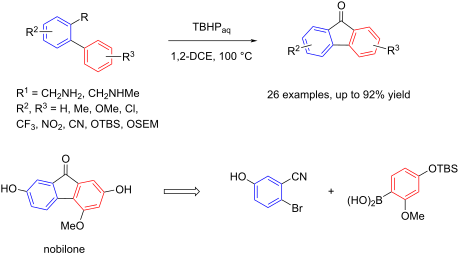
- a yield of 62% employing TBHPaq and the Studer group [55] achieved, with a ring-methylated analogue, up to 72% with TBHP in decane and FeCp2 as initiator. Laha et al. [37] cyclized biphenyl-2-methanol (2k) in 70% yield using TBHP in decane/tetrabutylammonium iodide. Primary amine 2a was chosen as


α-Ketol and α-iminol rearrangements in synthetic organic and biosynthetic reactions
Beilstein J. Org. Chem. 2021, 17, 2570–2584, doi:10.3762/bjoc.17.172
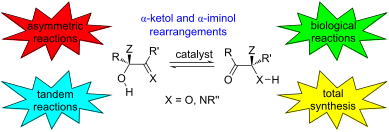
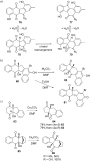
- sulfuric acid, no 102 was formed, only the free alcohol (103) in 56% yield (Figure 19c). As an extension of this method, the authors demonstrated the formation of 105, an analogue of the anesthetic ketamine (106), in 83% yield using silica gel (Figure 19d) [29]. An α‑iminol rearrangement was utilized by
- interconversion of natural products prekinamycin (76) and isoprekinamycin (77) and chemical models of their proposed α-ketol intermediates. a) The natural products are believed to interconvert biologically by a reversible sequence of hydration–rearrangement–dehydration. b) α-Ketol rearrangement of 80, an analogue
- rearrangement of 104 provided 105, an analogue of the anesthetic ketamine (106). Synthesis of tryptamines 110 via a ring-contracting α‑iminol rearrangement. A mechanism for the final step has been proposed to occur through cyclobutyl intermediates 112 and 114 (some steps have been added/modified from the




Silica gel and microwave-promoted synthesis of dihydropyrrolizines and tetrahydroindolizines from enaminones
Beilstein J. Org. Chem. 2021, 17, 2543–2552, doi:10.3762/bjoc.17.170
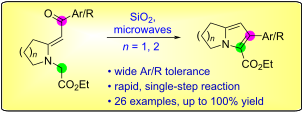
- N-phenacyl analogue 11 (Ar = Ar’ = Ph), the ester-containing enaminone 15a proved to be completely stable during chromatography on silica gel or upon dissolution in acetic acid at room temperature (conditions under which we had observed cyclization of vinylogous amides 11 [18]), and spontaneous
- yields and decomposition was still evident. 2-Bromophenylenaminone 15m gave a disappointing yield of 46% for 19m after a comparatively long reaction time of nine minutes, while the more electron-rich 2-bromo-4,5-dimethoxy analogue 15n gave an even lower yield of 35% in the same reaction time. However




Synthesis of new substituted 7,12-dihydro-6,12-methanodibenzo[c,f]azocine-5-carboxylic acids containing a tetracyclic tetrahydroisoquinoline core structure
Beilstein J. Org. Chem. 2021, 17, 2511–2519, doi:10.3762/bjoc.17.168
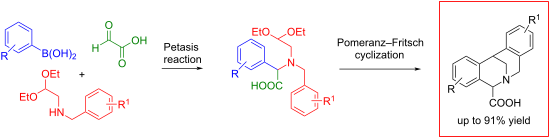
- decarboxylated analogue of 6a, under the reaction conditions that led to products 7a or 8 starting from acid 6a. The substrate for the synthesis of compound 12 was aminoacetal 3f, obtained with moderate 49% yield through the condensation of aminoacetaldehyde diethyl acetal (1) and 3,4-dimethoxybenzaldehyde (2f
- with 4% aqueous HCl solution in THF and with 20% aqueous HCl solution. Conditions: a) 4% HCl (aq), THF, reflux; b) 20% HCl, rt. Three pathways of the synthesis of 12, the decarboxylated analogue of 6a. The chemical behavior of 12 in 4% aqueous HCl solution in THF and in 20% aqueous HCl solution. A


Strategies for the synthesis of brevipolides
Beilstein J. Org. Chem. 2021, 17, 2399–2416, doi:10.3762/bjoc.17.157
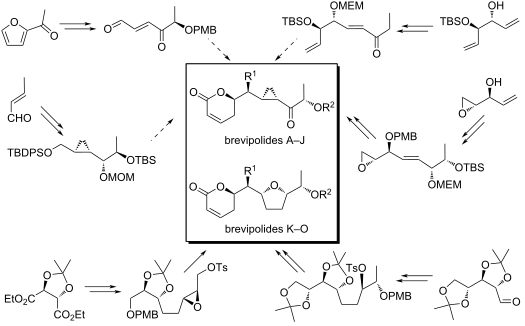
- (10) with an IC50 value of 8.4 μM (Table 1, entry 10). Interestingly, brevipolide analogue 43, which is the reduced form of 6’-epi-brevipolide H, showed even better in vitro cytotoxicity with an IC50 value of as low as 7.0 μM (Table 1, entry 18) [14]. Also an evaluation on Hep-2 human laryngeal


Synthesis of phenanthridines via a novel photochemically-mediated cyclization and application to the synthesis of triphaeridine
Beilstein J. Org. Chem. 2021, 17, 2340–2347, doi:10.3762/bjoc.17.152
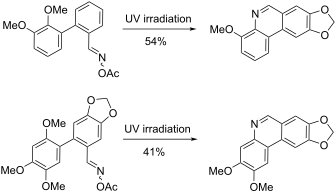
- visible light photoredox-catalyzed cyclizations also afforded phenanthridines (Figure 2, reaction 3) [11]. Inspired by the Rodrıguez and Walton approach, we sought to synthesize the nitrogen analogue of an angucycline known as phenanthroviridone 6, [12] from oxime 7 (Scheme 1). Based on the results


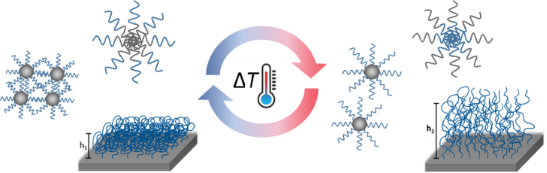
Constrained thermoresponsive polymers – new insights into fundamentals and applications
Beilstein J. Org. Chem. 2021, 17, 2123–2163, doi:10.3762/bjoc.17.138


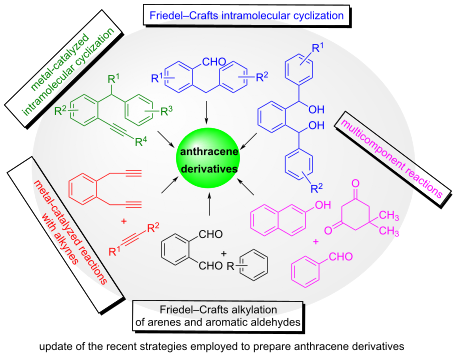
Recent advances in the syntheses of anthracene derivatives
Beilstein J. Org. Chem. 2021, 17, 2028–2050, doi:10.3762/bjoc.17.131
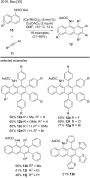
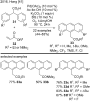
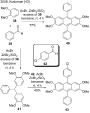
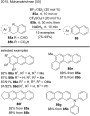
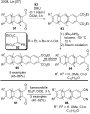
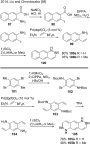
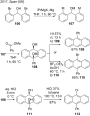
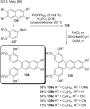
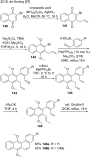
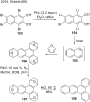
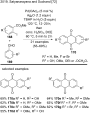
- to obtain polycyclic aza-aromatic compounds. They achieved promising results and obtained the aza-analogue acridine (79) from 2-(phenylamino)benzaldehyde (78) in excellent yield (97%) [51]. In 2012, Balczewski and co-workers reported a new methodology to synthesize 10-OR-substituted anthracenes 82















Progress and challenges in the synthesis of sequence controlled polysaccharides
Beilstein J. Org. Chem. 2021, 17, 1981–2025, doi:10.3762/bjoc.17.129
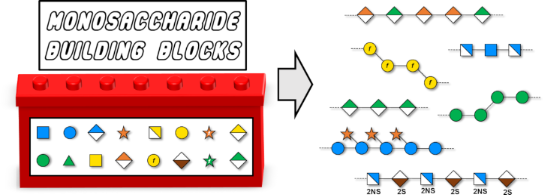
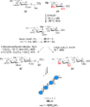
- polymerization of cellobiose fluoride 1 was achieved using a cellulase produced from Trichoderma viride (Scheme 1A). The DP of the acetylated product was shown to be at least 22. Using a purified version of this enzyme, it was possible to obtain a synthetic analogue of Cellulose I [64]. A rough control of DPs
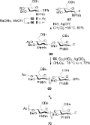
- structures in low yields. To overcome this issue, the products were converted and studied as their acetate analogues, as in the case of a cellulose 20mer obtained with a convergent approach [91][92]. To date, the longest well-defined cellulose analogue produced via chemical synthesis is a 12mer (13, Scheme 2
- (1–3)-Xyl hexamer, an analogue of xylans found in algae cell-walls [206]. TMSOTf promoted the glycosylation of the Bz-protected disaccharide acceptor with the Bz-protected tetrasaccharide trichloroacetimidate donor. Although not yet reported, the authors suggested that this method can be extended to










On the application of 3d metals for C–H activation toward bioactive compounds: The key step for the synthesis of silver bullets
Beilstein J. Org. Chem. 2021, 17, 1849–1938, doi:10.3762/bjoc.17.126
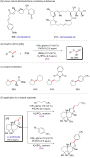
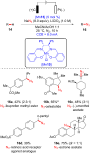
- highly site-selective and wide functional-group tolerant reaction. To test this protocol versatility over biologically relevant scaffolds, a COCF3-leelamine analogue 48 with two sterically differentiated benzylic sites was selectively aminated at the secondary benzylic site. After Tces deprotection, the
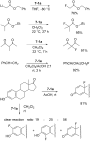
- oxonium species in the methylation step. Abiraterone acetate (53) is a drug used in cancer treatment [138]. The Mn-catalyzed methylation of an abiraterone analogue was achieved by replacing the fluorination step by mesylation in 15% of overall yield and only a single diastereoisomer was observed (Scheme
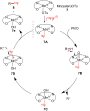
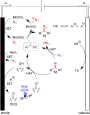
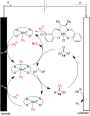
- retinoic acid receptor agonist analogue 63 and an estrone acetate derivative 64 (Scheme 22D). A seminal work involving manganese-catalyzed C–H organic electrosynthesis and photoredox catalysis was reported in the same year by Lei and co-workers, also regarding the azidation of alkyl scaffolds (Scheme 23A




























Cationic oligonucleotide derivatives and conjugates: A favorable approach for enhanced DNA and RNA targeting oligonucleotides
Beilstein J. Org. Chem. 2021, 17, 1828–1848, doi:10.3762/bjoc.17.125
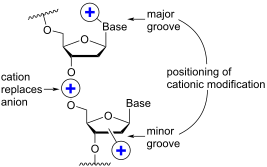
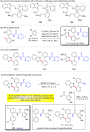
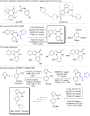
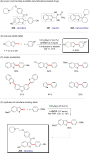
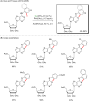
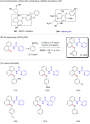
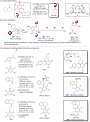
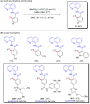
- the C-4 position and/or a combination of both as deposed in Table 3 (A and B), with a selection of amine modifications attached. One of these is the cytosine analogue termed G-clamp (modification 23) which increased the Tm of a DNA duplex by 18 °C when incorporated centrally into a decamer ON (Table
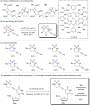
- 38 improved the silencing activity of a siRNA when incorporated into the passenger strand (in the eGFP assay mentioned above). However, a decrease in the silencing activity was observed when incorporated into the guide strand [77]. To design a 2’-O-MOE cationic analogue, the 2'-O-(2-(2-(N,N
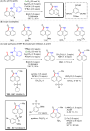
- the ONs without disturbing duplex formation, Matsuda and co-workers developed some 2’-deoxyuridine analogues carrying aminoalkyl groups at the 1'-position (Table 7B). These were intended to be used as an attachment point, and the 1’-aminobutane variant of the 2’-deoxyuridine analogue (monomer 67) was


Development of N-F fluorinating agents and their fluorinations: Historical perspective
Beilstein J. Org. Chem. 2021, 17, 1752–1813, doi:10.3762/bjoc.17.123
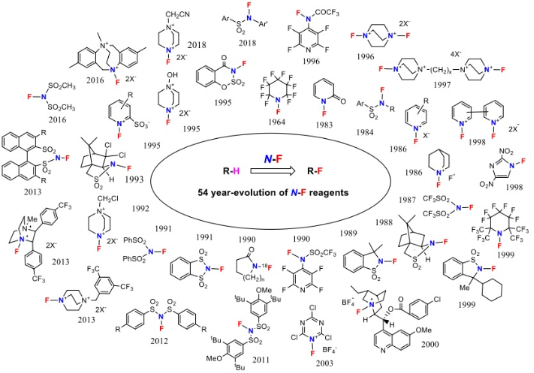
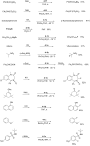
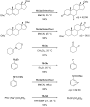
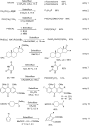
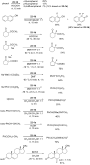
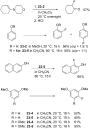
- ] In 1996, the Banks group reported perfluoro[N-fluoro-N-(4-pyridyl)acetamide] (21-3) as a carboxamide analogue of perfluoro[N-fluoro-N-(4-pyridyl)methanesulfonamide] (11-2, see section 1-11) [82]. Its precursor, 21-2, was prepared from pentafluoropyridine by either one of two methods (Scheme 46
- products in very low yields, varying from 27% to 3% depending on the substrate. The fluorinations were accompanied by tar formation and dimerization. Scheme 57 illustrates some representative examples. 1-26. Perfluoro-(N-fluoro-2,2,6,6-tetramethylpiperidine) and its 2,6-dimethyl analogue In 1999, the Banks
- group reported the syntheses of perfluoro-(N-fluoro-2,2,6,6-tetramethylpiperidine) (26-1) and its 2,6-dimethyl analogue 26-2, reagents which do not have α-fluorine atoms adjacent to the N-F site [89] (Scheme 58). These reagents overcame the drawback of perfluoro-N-fluoropiperidine (1-1) which does

























Sustainable manganese catalysis for late-stage C–H functionalization of bioactive structural motifs
Beilstein J. Org. Chem. 2021, 17, 1733–1751, doi:10.3762/bjoc.17.122

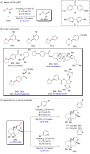
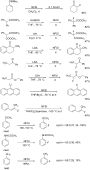
- anticonvulsant drug used to treat epilepsy and anxiety disorders [39], and an analogue of pregabalin was transformed to azidated derivative 11a. It is noteworthy that positional selectivity was observed for the α-position of the carbamate functional group due to the stabilization of the carbon radical by the
- adjacent carbamate group. The naturally available substrate 9b was shown to undergo the azidation process at the less sterically hindered position. An analogue of rasagiline (Azilect®), a Parkinson’s disease drug, successfully underwent benzylic azidation, providing product 11c. Other complex molecules
- candidates with tailored physical and biological properties [47]. For example, ampicillin, an analogue of benzylpenicillin (penicillin G), also used as an antibiotic, contains an amine group at the benzylic position [48]. Likewise, other commercially available small-molecule drugs, such as Plavix








Chemical approaches to discover the full potential of peptide nucleic acids in biomedical applications
Beilstein J. Org. Chem. 2021, 17, 1641–1688, doi:10.3762/bjoc.17.116
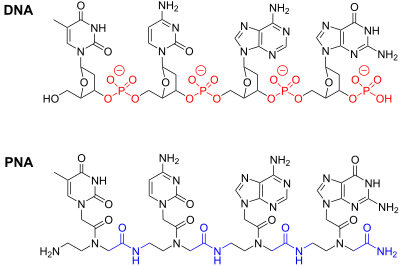
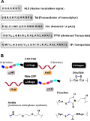
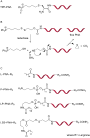
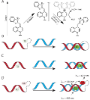
- replaced by an achiral and neutral pseudopeptide backbone having the same number of atoms [2][3]. It is remarkable that this simple design resulted in a nucleic acid analogue that had the right degree of flexibility and favorable conformational properties, enforced by the rotational preferences around
- binding is highly sequence specific as one Watson–Crick base pair mismatch can drop the melting temperature of the complex with PNA by 8–20 °C making PNA an excellent nucleic acid analogue for development of probes and diagnostics. This strong and selective binding has made PNA a key component of assays
- , appears to be the most promising conformationally constrained PNA analogue. Vilaivan and co-workers developed pyrrolidinyl PNA based on an α/β-dipeptide backbone that is one atom longer than the canonical PNA and contains two amide bonds and two cyclic moieties in one monomer (Figure 4) [61]. Cyclobutane








Recent advances in the application of isoindigo derivatives in materials chemistry
Beilstein J. Org. Chem. 2021, 17, 1533–1564, doi:10.3762/bjoc.17.111
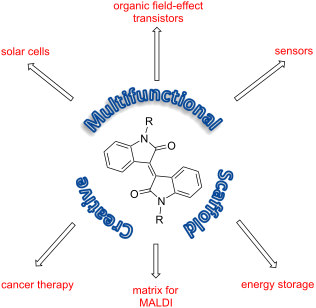
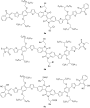
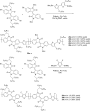
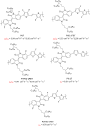
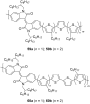
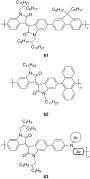
- derivatives is based on the Suzuki reaction. At the same time, pyrene-1-ylboronic acid and 6,6'-dibromoisoindigo were used to introduce a pyrene fragment directly into the isoindigo nucleus, and to obtain a thiophene analogue, pyrenyl-substituted 2-bromothiophene and 6,6'-bis(4,4,5,5-tetramethyl-1,3,2
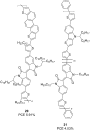
- PCE of the octyl analogue 25b increases to 6.4% [38]. A slight change in the substituent at the nitrogen atom and the introduction of electron-donor methyl or electron-acceptor cyano groups in the thiophene fragment can lead to a sharp deterioration of all characteristics (structure 26: efficiency
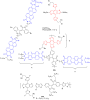
- units was obtained [79]. The study showed that the transition from a less fluorinated analogue (two fluorine atoms on dithiophene) to one containing a larger number of fluorine atoms (two fluorine atoms on dithiophene and two in the 7,7' positions) improves the planarity of the structural units of the














Chemical synthesis of C6-tetrazole ᴅ-mannose building blocks and access to a bioisostere of mannuronic acid 1-phosphate
Beilstein J. Org. Chem. 2021, 17, 1527–1532, doi:10.3762/bjoc.17.110
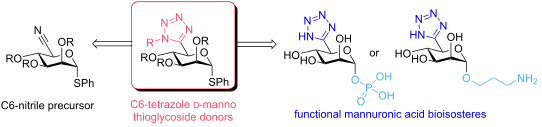
- overall yield for the route increased from 9 to 21%. To demonstrate capability for anomeric linker attachment and conversion to a biologically relevant analogue of mannuronic acid 1-phosphate, 3-aminopropyl glycoside 20 and glycosyl 1-phosphate 21 were synthesised (Scheme 4). The mixture 18/19 was used


Free-radical cyclization approach to polyheterocycles containing pyrrole and pyridine rings
Beilstein J. Org. Chem. 2021, 17, 1490–1498, doi:10.3762/bjoc.17.105
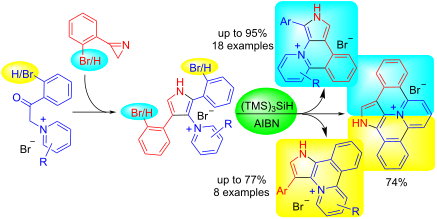
- bromide 8, functionalized with an alkoxycarbonyl group at the C1 position, was also synthesized by the developed approach, starting from azirine 4b (Scheme 3). Iodo-substituted salt 2 should be more reactive towards cyclization as compared to its bromo-analogue, and this can be used to control the


Cascade intramolecular Prins/Friedel–Crafts cyclization for the synthesis of 4-aryltetralin-2-ols and 5-aryltetrahydro-5H-benzo[7]annulen-7-ols
Beilstein J. Org. Chem. 2021, 17, 1481–1489, doi:10.3762/bjoc.17.104
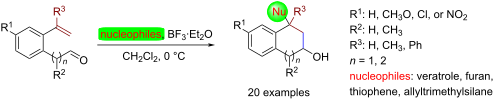
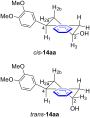
- -hydroxy-4-furyl-tetralin 14af into the PAT analogue 22 (see Figure 1) [26]. The reaction of 14af with p-toluenesulfonyl chloride in pyridine afforded the tosylate 21 in 90% yield, which was then treated with 40% aqueous dimethylamine to produce the tertiary amine containing PAT analogue 22 (cis/trans
- in the side chain. The further manipulation of the hydroxy group affording the PAT analogue demonstrated the synthetic potential for accessing medicinally useful derivatives. Parent structure of 2,4-disubstituted tetralins (1) and selected medicinally useful derivatives 2–4. The speculated
- , b. Conversion of 2-hydroxy-4-(2-furyl)tetralin (14af) into PAT analogue 22. Screening of Lewis acid catalysts.a Dependency of cis/trans ratio of product 14af on conditions and time. Supporting Information The Supporting Information contains experimental procedures, characterization data of all