Search results
Search for "cation" in Full Text gives 768 result(s) in Beilstein Journal of Organic Chemistry. Showing first 200.
Computation-guided scaffold exploration of 2E,6E-1,10-trans/cis-eunicellanes
Beilstein J. Org. Chem. 2024, 20, 1320–1326, doi:10.3762/bjoc.20.115

- hyperconjugation via bending the exocyclic methyl group such that the formal p-orbital at C3 no longer aligns with the C2–C7 bond results in the 6/6/6-tricyclic C3 tertiary cation B2+, which is 13.0 kcal mol−1 higher in energy. In principle, either A2+ or B2+ could be deprotonated to form products. A similar
- energy profile is seen for protonation-induced cyclization of 1, although the 6/6/6-tricyclic C3 tertiary cation is 7.1 kcal mol−1 higher in energy than its preceding intermediate (Figure 2C). A lower energy conformer of 1 exists, but we have been unable to find the corresponding cation A1b+, which


Oxidative hydrolysis of aliphatic bromoalkenes: scope study and reactivity insights
Beilstein J. Org. Chem. 2024, 20, 1286–1291, doi:10.3762/bjoc.20.111
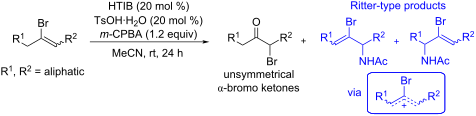
- heterocyclic compounds [20][21][22]. Particularly dialkyl bromoketones have been utilized in natural product synthesis [23][24][25], also as a precursor to reactive oxyallyl cation intermediates [26][27][28], and for their photochemical reactions [29]. However, the direct halogenation of unsymmetrical ketones


Synthesis and physical properties of tunable aryl alkyl ionic liquids based on 1-aryl-4,5-dimethylimidazolium cations
Beilstein J. Org. Chem. 2024, 20, 1278–1285, doi:10.3762/bjoc.20.110

- . With an electrochemical window of up to 6.3 V, which is unprecedented for TAAILs with an NTf2 anion, this new class of TAAILs demonstrates the opportunities that arise from modifications in the backbone of the imidazolium cation. Keywords: conductivity; electrochemical window; ionic liquids; tunable
- use in different fields of chemistry like synthesis [4][5][6][7][8][9], catalysis [10][11][12][13][14] and materials science [15][16][17][18][19][20][21][22][23]. ILs generally consist of an organic cation [24], such as the imidazolium or ammonium ion and an inorganic anion like a halide anion or
- introduced a new class of ionic liquids based on the 1-aryl-3-alkylimidazolium cation in 2009, the tunable aryl alkyl ionic liquids (TAAILs) [29]. This class of ionic liquids allows the modification of physical and chemical properties by variation of the functional groups present at the aryl ring of the


Synthesis of indano[60]fullerene thioketone and its application in organic solar cells
Beilstein J. Org. Chem. 2024, 20, 1270–1277, doi:10.3762/bjoc.20.109
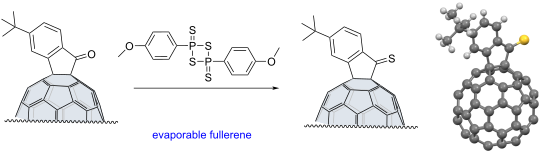
- improving their thermal stability, and more specifically, of designing evaporable fullerene derivatives [16][17][18]. Recently, we reported on perovskite solar cells fabricated with indano[60]fullerene ketone (FIDO), which was synthesized through fullerene cation chemistry. These cells demonstrated long
- fullerene cation chemistry as reported by our group [20][21][22][23][24][25][26]. Conversion from ketone to thioketone is usually achieved by using Lawesson's reagent, which tends to form a trimer structure when reacted with indanone without a substituent at the α position [27][28][29]. Introduction of


Domino reactions of chromones with activated carbonyl compounds
Beilstein J. Org. Chem. 2024, 20, 1256–1269, doi:10.3762/bjoc.20.108
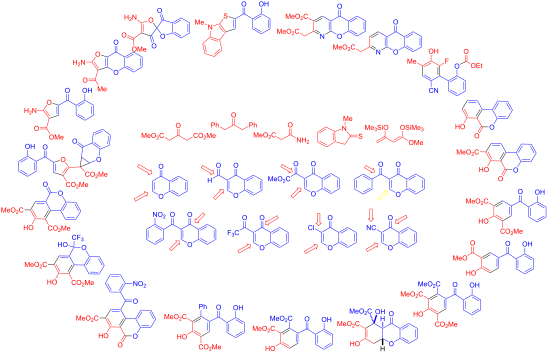
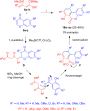
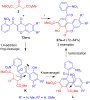
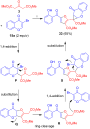
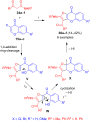
- observed under these conditions, because the electron-withdrawing character of the additional ester group which destabilizes formation of a cation at the neighboring position. The yields were in most cases moderate (42–54%). Two products were obtained in higher yields (71 and 80%). However, no clear trend
- , because the electron-withdrawing character of the CF3 group which destabilizes the formation of a cation at the neighboring position. In addition, the carbon–sulfur bond was not cleaved, due to the lower leaving group ability of sulfur as compared to oxygen. The yields of the two products were moderate. 3









Mechanistic investigations of polyaza[7]helicene in photoredox and energy transfer catalysis
Beilstein J. Org. Chem. 2024, 20, 1236–1245, doi:10.3762/bjoc.20.106
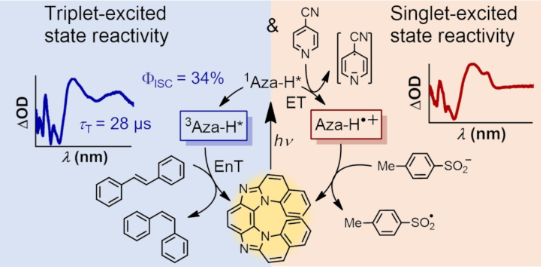
- cation was directly observed confirming the previously proposed mechanism of a three-component reaction. Several steps of the photoredox cycle were investigated separately, providing deep insights into the complex mechanism. The triplet-excited Aza-H, which was studied with quantitative LFP, is formed
- as the ionization product resulting from a consecutive two-photon absorption at the selected high laser intensity [69][70], yielding the corresponding long-lived radical cation with second-order decay that is typical for oxidized/reduced species, and a solvated electron as by-product. The latter is
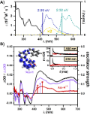
- in equilibrium with the dimeric solvent radical anion in MeCN, it weakly absorbs in our detection window and this species is rather short-lived compared to the triplet as well as the radical cation [71]. The oscillator strengths for the electronic transitions of 3Aza-H (purple) and the radical cation




Stability trends in carbocation intermediates stemming from germacrene A and hedycaryol
Beilstein J. Org. Chem. 2024, 20, 1189–1197, doi:10.3762/bjoc.20.101
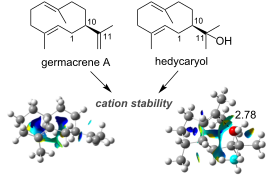
- insecticidal activities [11], and are bio-fuel alternatives [12][13]. Sesquiterpene synthase can convert FPP to various terpenoids via different initial cyclization processes: 1,6-cyclization to yield the bisabolyl cation, 1,7-cyclization to form the cycloheptanyl cation, 1,10-cyclization lead to the
- germacradienyl cation, and 1,11-cyclization resulting in the humulyl cation [14][15]. Deprotonation of the intermediate germacradienyl cation yields germacrene A, a doorway towards the synthesis of many eudesmane and guaiane sesquiterpene hydrocarbons through its reprotonation-induced transannular reactions
- (Scheme 1) [16]. As an alternative to deprotonation, the germacradienyl cation can be captured by water to yield the sesquiterpene alcohol hedycaryol, which is an important intermediate towards the synthesis of sesquiterpene alcohols [17]. The reprotonation of (R)-(+)-1 germacrene A or hedycaryol at the


Bismuth(III) triflate: an economical and environmentally friendly catalyst for the Nazarov reaction
Beilstein J. Org. Chem. 2024, 20, 1167–1178, doi:10.3762/bjoc.20.99
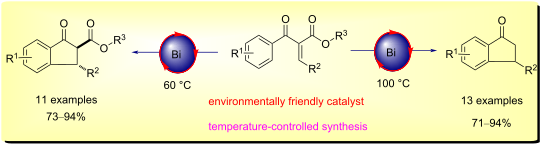
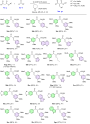
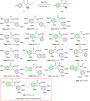
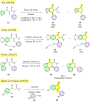
- pentadienyl cation [1][2][3][4][5][6][7][8][9][10][11][12]. Until the past decade, the conditions used for the Nazarov reaction generally involved the use of a stoichiometric amount of a strong Lewis acid (e.g., BF3, TiCl4, SnCl4, AlCl3) in relation to the divinyl ketone derivative [21][22][23]. However




Manganese-catalyzed C–C and C–N bond formation with alcohols via borrowing hydrogen or hydrogen auto-transfer
Beilstein J. Org. Chem. 2024, 20, 1111–1166, doi:10.3762/bjoc.20.98
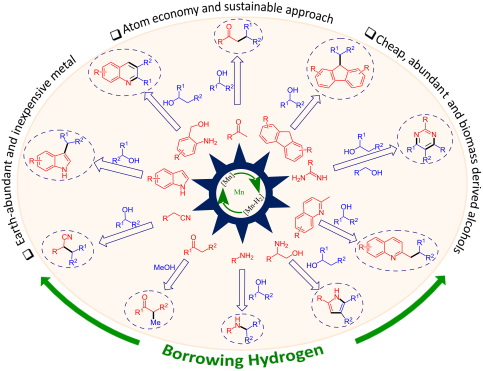
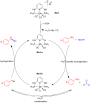
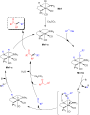
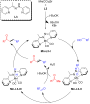
- indicates that the cation-coordinative interaction with the catalyst plays a significant role. Moreover, the mechanistic investigation suggested that the observed selectivity is due to the more reactive potassium manganate hydride towards the hydrogenation of imines to amines than the sodium manganate























Light on the sustainable preparation of aryl-cored dibromides
Beilstein J. Org. Chem. 2024, 20, 1076–1087, doi:10.3762/bjoc.20.95
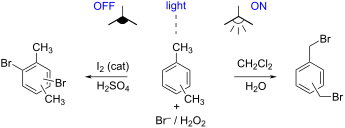
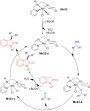
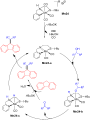
- Ar-SE mechanism, which is reported to proceed through the generation of a mixed molecular halogen [28]. As an alternative to iodine, the trityl cation [29] is reported too. Additional benefits of the method include its ability to work in neutral conditions, and the potential quantitative


Spin and charge interactions between nanographene host and ferrocene
Beilstein J. Org. Chem. 2024, 20, 1011–1019, doi:10.3762/bjoc.20.89
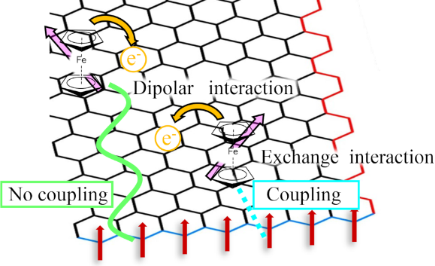
- diamagnetic molecule (S = 0, no spin magnetism) compared with other metallocenes [17]. However, FeCp2 is easily oxidized to a monovalent cation, the electronic structure of which is magnetic (S = 1/2). Electron spin resonance (ESR) spectroscopy revealed the spin magnetism of cationic FeCp2 accommodated in
- cation spins are less than those for edge-state spins. The apparent reduction in Θ for FeCp2-ACFs-150 is attributed to the contribution of FeCp2+ spins having less exchange interaction in the observed magnetic susceptibility. So, the spin magnetism of the guest molecule is induced by host–guest


Enhancing structural diversity of terpenoids by multisubstrate terpene synthases
Beilstein J. Org. Chem. 2024, 20, 959–972, doi:10.3762/bjoc.20.86
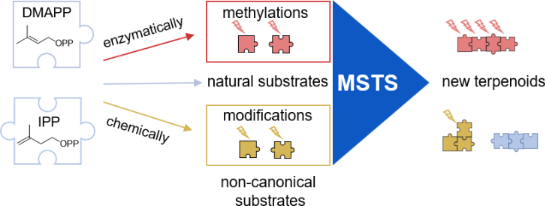
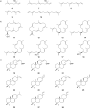
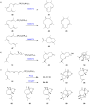
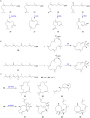
- they often synthesize multiple products from a single substrate through complex cyclization cascades [4][5][6][7][8][9][10]. Based on the mechanism of initial carbocation generation, TSs generally fall into two main classes. Class I TSs generate an allylic cation from a prenyl substrate by






Confirmation of the stereochemistry of spiroviolene
Beilstein J. Org. Chem. 2024, 20, 852–858, doi:10.3762/bjoc.20.77
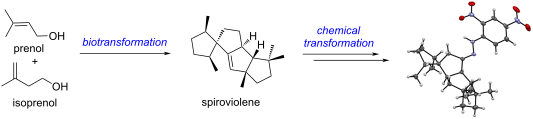
- isotope labeling experiments [6], followed by a 2,7-cyclization, afforded C6 cationic intermediate IM-3 with cyclopiane skeleton. Quench of the cation IM-3 with water would give 4, while upon two 1,2-alkyl shifts of IM-3, followed by deprotonation of cation IM-4, would give spiroviolene (1). On the other
- hand, the originally proposed cyclization mechanism (Scheme 1B) involves a 3,6-cyclization of cation IM-1 through a conformation shown as IM-1A to generate cation IM-5, which was proposed to undergo a dyotropic rearrangement, followed by a 1,2-alkyl shift of cation IM-6 to yield the spirocyclic cation
- IM-7. A key 1,3-hydride shift of IM-7 from the β-face, followed by deprotonation of the formed C2-cation IM-8, would deliver the originally proposed structure 1' [6]. However, no related natural products that would be derived from the intermediates of this pathway have been found so far. A third


Skeletal rearrangement of 6,8-dioxabicyclo[3.2.1]octan-4-ols promoted by thionyl chloride or Appel conditions
Beilstein J. Org. Chem. 2024, 20, 823–829, doi:10.3762/bjoc.20.74
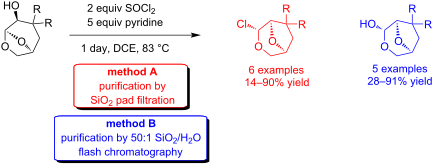
- vicinal proton. These results suggested that the formation of the allylic cation occurred readily from alcohols 15 and 18; however, the transition states leading to the rearrangement products were inaccessible and so only chloride addition occurred. The generation of the rearrangement products from the


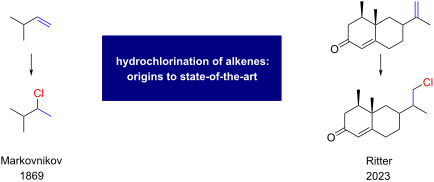
Advancements in hydrochlorination of alkenes
Beilstein J. Org. Chem. 2024, 20, 787–814, doi:10.3762/bjoc.20.72
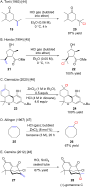
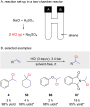
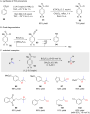
- alkene reactivity is essential. Two reactivity scales for alkenes are available in the literature, one considering the reactivity of the alkene itself (Mayr scale) [25] and the other the stability of the corresponding cation after protonation (hydride affinities) [26]. In the polar hydrochlorination
- ). Conveniently, these parameters are freely available on Mayr's database of reactivity parameters [28]. On the other hand, one can assess the stability of the in situ-generated cation. The greater its stability, the easier the protonation of the alkene will be, making it more reactive towards hydrochlorination
- . Thermodynamic and theoretical data provide hydride affinities, which correspond to the negative heat of formation for the combination of a hydride anion with a given cation in the gas phase (Figure 2) [26][29]. It is noteworthy that, in contrast to the hydride affinity scale, the Mayr scale considers energetic






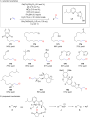
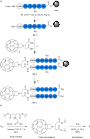
Synthesis and characterization of water-soluble C60–peptide conjugates
Beilstein J. Org. Chem. 2024, 20, 777–786, doi:10.3762/bjoc.20.71
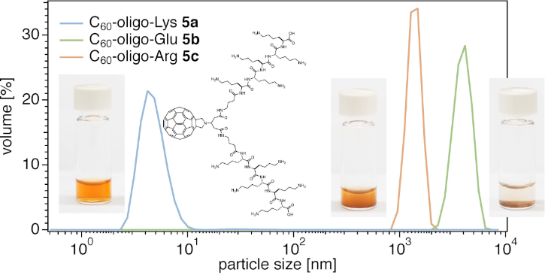
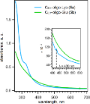
- ) showed much smaller aggregation (dotted green line, ≈12 nm), providing a transparent solution, while C60–oligo-Arg (5c) remained insoluble over the tested pH value range (4.0–9.2). This was presumably due to the strong cation–π interactions between the cationic Arg moieties and the aromatic C60, which is




Recent developments in the engineered biosynthesis of fungal meroterpenoids
Beilstein J. Org. Chem. 2024, 20, 578–588, doi:10.3762/bjoc.20.50
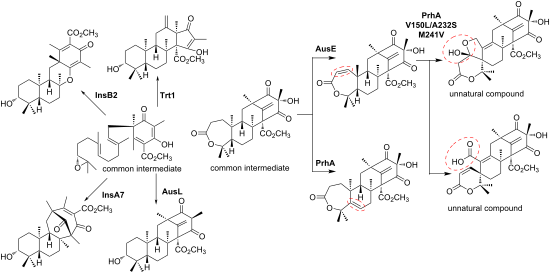
- resulting cation intermediate at C-4' to induce an acyl shift, forming the steroid-like structure of 7 with a 6-6-6-5 ring (Figure 2). Swapping terpenoid cyclases in heterologous expression systems A search of the genome database for Trt1-homolog CYCs revealed the enzyme AusL (41% identity with Trt1) in
- -6-6-5-membered andrastin E (9) (Figure 2) [8]. Like Trt1, AusL and AdrI create the common cation intermediate from 6, but they deprotonate the cationic intermediate from H-1' and H-11, respectively [12]. The differences in the structural bases of Trt1, AusL, and AdrI are quite intriguing, in that
- cyclization process is initiated by the protonation of the epoxide, leading to the formation of a cation at C-7. A cascade of migrations then occurs to form the final backbone: H-6 migrates to the cation C-7, the methyl group at C-13 shifts to C-6, H-10 migrates to C-11, and finally, deprotonation of the






Synthesis of photo- and ionochromic N-acylated 2-(aminomethylene)benzo[b]thiophene-3(2Н)-ones with a terminal phenanthroline group
Beilstein J. Org. Chem. 2024, 20, 552–560, doi:10.3762/bjoc.20.47
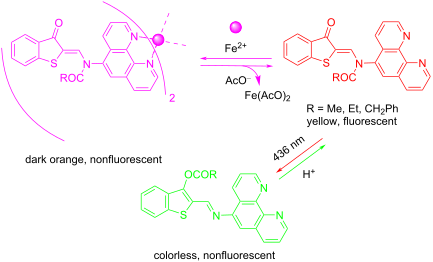
- the phenanthroline unit was also involved in a π–π-stacking interaction (blue plane–green plane in Figure 4), with the plane centroid–plane centroid distance being 3.6998(8) Å (plane shift 1.4919(17) Å, twist and fold angles 1.54° and 1.92°, respectively). Cation-induced transformations of the


Switchable molecular tweezers: design and applications
Beilstein J. Org. Chem. 2024, 20, 504–539, doi:10.3762/bjoc.20.45
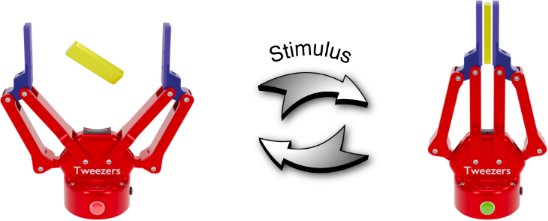
- flourished since the early 2000s. It is worth mentioning, as stated by Leigh in a comprehensive review [15], that a pioneering example of a molecular machine was the photoswitchable molecular tweezers developed by Shinkai [16] in 1981 for photocontrolled cation binding. This novel class of tweezers
- achieved by chemical (hydroxide/proton) or electrochemical (reduction/oxidation) stimuli allowing the enrichment of perylene from a mixture of polycyclic aromatic hydrocarbons (PAHs) in phase-transfer experiments into a perfluorocarbon phase. Metal cation responsive tweezers In the early 2000s, Lehn and co
- -workers introduced a switchable system based on a terpyridine (terpy) ligand (Figure 8), which is structurally similar to the diphenylpyridine units used by Zimmerman in rigid clips, but can change their conformation upon complexation by a metal cation [32][33]. When substituted at the 6 and 6" positions


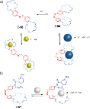


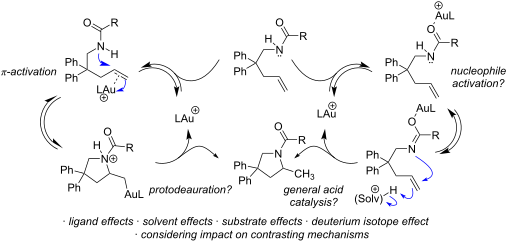
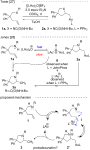
Ligand effects, solvent cooperation, and large kinetic solvent deuterium isotope effects in gold(I)-catalyzed intramolecular alkene hydroamination
Beilstein J. Org. Chem. 2024, 20, 479–496, doi:10.3762/bjoc.20.43
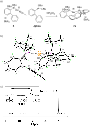
- data plots; where not visible they are smaller than the icon for the data point. (a) Schematic for synthesis of [L–Au–L]SbF6 where L = JPhos. (b) Perspective drawing of the cation in crystalline [Au(P(C4H9)2(C12H9))2](SbF6)CH2Cl2 where P are represented by dotted spheres, Au atoms are represented by







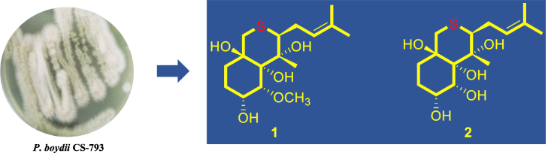
Pseudallenes A and B, new sulfur-containing ovalicin sesquiterpenoid derivatives with antimicrobial activity from the deep-sea cold seep sediment-derived fungus Pseudallescheria boydii CS-793
Beilstein J. Org. Chem. 2024, 20, 470–478, doi:10.3762/bjoc.20.42
- pathway, the bergamotene sesquiterpenoid (I) is presumed to be a key intermediate cyclized from farnesyl diphosphate (FPP) via nerolidyl diphosphate (NPP) followed by a bisabolyl cation [14]. Subsequent oxidation (bishydroxylation) catalyzed by some oxygenase such as P450 would afford the key intermediate


Green and sustainable approaches for the Friedel–Crafts reaction between aldehydes and indoles
Beilstein J. Org. Chem. 2024, 20, 379–426, doi:10.3762/bjoc.20.36
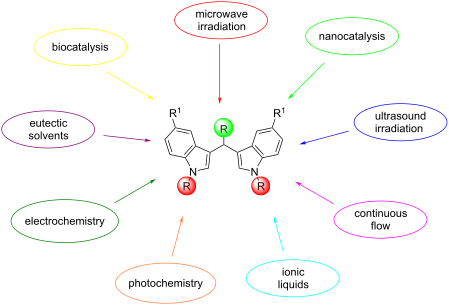
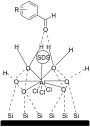
- /SiO2 [75], ZnCl2/SiO2 [76], heteropoly-11-tungsto-1-vanadophosphoric acid, H4[PVV W11O40] (HPV) (20%) supported on natural clay (HPVAC-20) [77], V2O5/SiO2 [78], strongly acidic cation exchange resin (Seralite SRC-120) [79] or HCl/SiO2 [80]. Among all the protocols mentioned above, it is worth




Mechanisms for radical reactions initiating from N-hydroxyphthalimide esters
Beilstein J. Org. Chem. 2024, 20, 346–378, doi:10.3762/bjoc.20.35
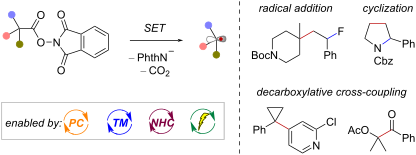
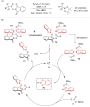
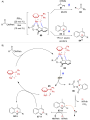
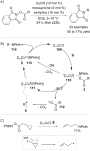
- . Radical intermediate 9 formed upon fragmentation of 25, adds to the styrene acceptor forming radical 26. Finally, a radical-polar crossover event between 26 and the IrIV complex regenerates the IrIII ground state while delivering cation 27 that is then trapped by the oxygen-nucleophile to form the
- radical-polar crossover affords cation 27 that delivers functionalized product 31 upon nucleophilic addition. The Doyle and Knowles groups reported the use of NHPI esters as radical precursors in the context of a radical redox annulation method [48] (Scheme 8A). This transformation occurs through an
- aromatic ring, forming intermediate 41, which was then oxidized to cation 42, thereby completing the photocatalytic cycle. The reaction proceeded by regioselective nucleophilic addition of H2O, accompanied by the loss of MeOH to deliver spirocycle 43. Notably, the dearomative spirocyclization of biaryl








Elucidating the glycan-binding specificity and structure of Cucumis melo agglutinin, a new R-type lectin
Beilstein J. Org. Chem. 2024, 20, 306–320, doi:10.3762/bjoc.20.31
- and subsequent reverse Ni-NTA affinity chromatography resulted in significant co-purification of E. coli contaminants, necessitating an extra purification step, where cation exchange chromatography allowed us to obtain pure fractions of CMA16–291. Of note, this additional purification step was not
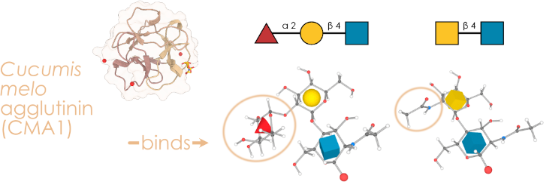
- (Val6 to Asp132) could be modelled, and unambiguous electron density permitted us to locate and model four cation binding sites (three in each structure) and one sugar binding site (Figure 4a,b and Figure S4, Supporting Information File 2). The complexed structures allowed us to shed light on the
- from the expression of CMA1 protein in CHO-S cells. Note the smeared band indicating the presence of glycosylation. (d) Recombinant expression of CMA1 in bacteria. SDS-PAGE gels of the His-tag affinity chromatography and cation exchange chromatography from the expression of CMA1 protein in E. coli BL21


Additive-controlled chemoselective inter-/intramolecular hydroamination via electrochemical PCET process
Beilstein J. Org. Chem. 2024, 20, 264–271, doi:10.3762/bjoc.20.27
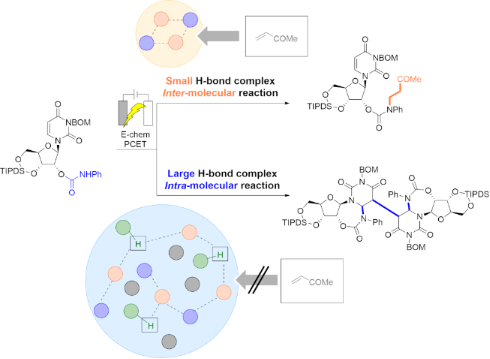
- phenoxide in PhOH, the PhOH molecule is included in the hydrogen bond network along with the tetrabutylammonium cation (Bu4N+) to form a large aggregate. The hydrogen bonding between the amide and phosphate base in the small aggregates was stronger than in the large aggregates, which significantly enhanced