Search for "enantiomeric excess" in Full Text gives 183 result(s) in Beilstein Journal of Organic Chemistry.
Beilstein J. Org. Chem. 2016, 12, 139–143, doi:10.3762/bjoc.12.15
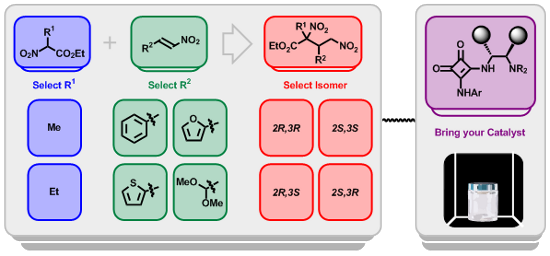
Graphical Abstract
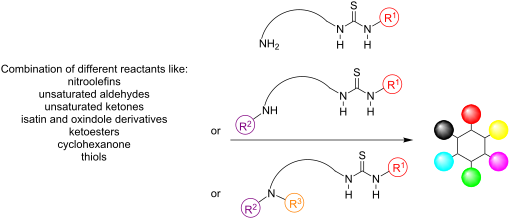
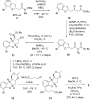
Scheme 1: Overall strategy.
Scheme 2: Boc-protected aminoalcohols used as inputs in a diastereoselective Ugi reaction.
Beilstein J. Org. Chem. 2015, 11, 2654–2660, doi:10.3762/bjoc.11.285
Graphical Abstract
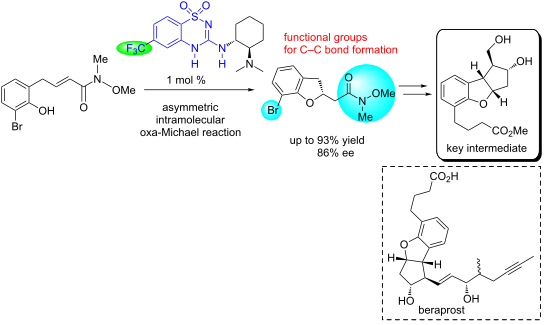
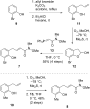
Figure 1: Structure of PGI2 and beraprost (1).
Scheme 1: Retrosynthetic analysis of beraprost (1).
Scheme 2: Preparation of Michael precursors 7 and 8.
Scheme 3: First attempt at the synthesis of 2 from 6.
Scheme 4: Achievement of a formal synthesis of 2.
Beilstein J. Org. Chem. 2015, 11, 2600–2615, doi:10.3762/bjoc.11.280
Graphical Abstract
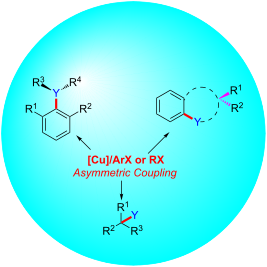
Scheme 1: Copper-catalyzed asymmetric preparation of biaryl diacids by Ullmann coupling.
Scheme 2: Intramolecular biaryl coupling of bis(iodotrimethoxybenzoyl)hexopyranose derivatives.
Scheme 3: Preparation of 3,3’-disubstituted MeO-BIPHEP derivatives.
Scheme 4: Enantioselective synthesis of trans-4,5,9,10-tetrahydroxy-9,10-dihydrophenanthrene.
Scheme 5: Copper-catalyzed coupling of oxazoline-substituted aromatics to afford biaryl products with high di...
Scheme 6: Total synthesis of O-permethyl-tellimagrandin I.
Scheme 7: Total synthesis of (+)-gossypol.
Scheme 8: Total synthesis of (−)-mastigophorene A.
Scheme 9: Total synthesis of isokotanin.
Scheme 10: Synthesis of dimethyl[7]thiaheterohelicenes.
Scheme 11: Intramolecular coupling with chiral ortho-substituents.
Scheme 12: Chiral 1,3-diol-derived tethers in the diastereoselective synthesis of biaryl compounds.
Scheme 13: Synthesis of chiral unsymmetrically substituted biaryl compounds.
Scheme 14: Atroposelective synthesis of biaryl ligands and natural products by using a chiral diether linker.
Scheme 15: Enantioselective arylation reactions of 2-methylacetoacetates.
Scheme 16: Asymmetric aryl C–N coupling reactions following a desymmetrization strategy.
Scheme 17: Construction of cyano-bearing all-carbon quaternary stereocenters.
Scheme 18: An unexpected inversion of the enantioselectivity in the asymmetric C–N coupling reactions using ch...
Scheme 19: Differentiation of two nucleophilic amide groups.
Scheme 20: Synthesis of spirobilactams through a double N-arylation reaction.
Scheme 21: Asymmetric N-arylation through kinetic resolution.
Scheme 22: Formation of cyano-substituted quaternary stereocenters through kinetic resolution.
Scheme 23: Copper-catalyzed intramolecular desymmetric aryl C–O coupling.
Scheme 24: Transition metal-catalyzed allylic substitutions.
Scheme 25: Copper-catalyzed asymmetric allylic substitution of allyl phosphates.
Scheme 26: Allylic substitution of allyl phosphates with allenylboronates.
Scheme 27: Allylic substitution of allyl phosphates with vinylboron.
Scheme 28: Allylic substitution of allyl phosphates with vinylboron.
Scheme 29: Construction of quaternary stereogenic carbon centers through enantioselective allylic cross-coupli...
Scheme 30: Cu-catalyzed enantioselective allyl–allyl cross-coupling.
Scheme 31: Cu-catalyzed enantioselective allylic substitutions with silylboronates.
Scheme 32: Asymmetric allylic substitution of allyl phosphates with silylboronates.
Scheme 33: Stereoconvergent synthesis of chiral allylboronates.
Scheme 34: Enantioselective allylic substitutions with diboronates.
Scheme 35: Enantioselective allylic alkylations of terminal alkynes.
Beilstein J. Org. Chem. 2015, 11, 2591–2599, doi:10.3762/bjoc.11.279
Graphical Abstract
Figure 1: Some chiral, bioactive isoindolinones.
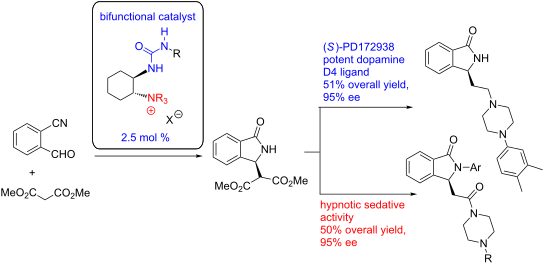
Scheme 1: This work: 1) trans-1,2-cyclohexane diamine-based bifunctional ammonium salts 8 in the asymmetric s...
Scheme 2: Asymmetric cascade, crystallization and decarboxylation reaction.
Scheme 3: Proposed racemization pathways of isoindolinones 9 via retro-Michael process.
Scheme 4: Asymmetric synthesis of (S)-PD172938.
Scheme 5: Coupling of chiral acid 9 with p-tolylpiperazine and CuI arylation of chiral isoindolinones.
Beilstein J. Org. Chem. 2015, 11, 2577–2583, doi:10.3762/bjoc.11.277
Graphical Abstract
Scheme 1: Diastereodivergent cascade Michael/Michael reaction using catalysts with the same absolute chiralit...
Scheme 2: Diastereodivergent enantioselective Michael reaction using ethyl 2-nitropropanoate and β-nitrostyre...
Figure 1: ORTEP diagrams for anti-3a and syn-3o respectively.
Scheme 3: Proposed models to explain the stereochemical outcome of the reaction.
Beilstein J. Org. Chem. 2015, 11, 2435–2443, doi:10.3762/bjoc.11.264
Graphical Abstract
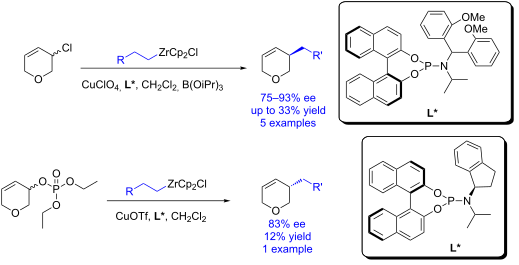
Scheme 1: Previously reported Cu-AAA of alkylzirconium reagents to racemic allyl chlorides [26] and this work.
Figure 1: DoE from 3,6-dihydro-2H-pyran-3-yl diethyl phosphate (2d). Conditions: 4-phenyl-1-butene (2.5 equiv...
Scheme 2: Scope of nucleophiles. Conditions: alkene (2.5 equiv), Cp2ZrHCl (2.0 equiv), 3-chloro-3,6-dihydro-2H...
Figure 2: Reaction kinetics as monitored by in situ 1H NMR spectroscopy from 3-chloro-3,6-dihydro-2H-pyran (2a...
Figure 3: Reaction kinetics as monitored by in situ 1H NMR spectroscopy from 3,6-dihydro-2H-pyran-3-yl diethy...
Figure 4: Kinetic ee analysis using 2a. ee of reaction with 3-chloro-3,6-dihydro-2H-pyran (2a) as measured by...
Figure 5: Kinetic ee analysis using 2d. ee of reaction with 3,6-dihydro-2H-pyran-3-yl diethyl phosphate (2d) ...
Beilstein J. Org. Chem. 2015, 11, 2418–2434, doi:10.3762/bjoc.11.263
Graphical Abstract
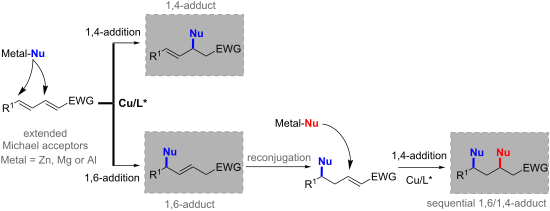
Figure 1: Possible reaction pathways in conjugate additions of nucleophiles on extended Michael acceptors.
Figure 2: Early reports of conjugate addition of copper-based reagents to extended Michael acceptors.
Figure 3: First applications of copper catalyzed 1,6-ACA in total synthesis.
Scheme 1: First example of enantioselective copper-catalyzed ACA on an extended Michael acceptor.
Scheme 2: Meldrum’s acid derivatives as substrates in enantioselective ACA.
Scheme 3: Reactivity of a cyclic dienone in Cu-catalyzed ACA of diethylzinc.
Scheme 4: Efficiency of DiPPAM ligand in 1,6-ACA of dialkylzinc to cyclic dienones.
Scheme 5: Sequential 1,6/1,4-ACA reactions involving linear aryldienones.
Scheme 6: Unsymmetrical hydroxyalkyl NHC ligands in 1,6-ACA of cyclic dienones.
Scheme 7: Performance of atropoisomeric diphosphines in 1,6-ACA of Et2Zn on cyclic dienones.
Scheme 8: Selective 1,6-ACA of Grignard reagents to acyclic dienoates, application in total synthesis.
Scheme 9: Reactivity of polyenic linear thioesters towards sequential 1,6-ACA/reconjugation/1,4-ACA and produ...
Scheme 10: 1,6-Conjugate addition of trialkylaluminium with regards to cyclic dienones.
Scheme 11: Copper-catalyzed conjugate addition of trimethylaluminium onto nitro dienoates.
Scheme 12: Copper-catalyzed selective 1,4-ACA in total synthesis of erogorgiaene.
Scheme 13: 1,4-selective addition of diethylzinc onto a cyclic enynone catalyzed by a chiral NHC-based system.
Scheme 14: Cu-NHC-catalyzed 1,6-ACA of dimethylzinc onto an α,β,γ,δ-unsaturated acyl-N-methylimidazole.
Scheme 15: 1,4-Selectivity in conjugate addition on extended systems with the concomitant use of a chelating c...
Scheme 16: Cu-NHC catalyzed 1,4-ACA as the key step in the total synthesis of ent-riccardiphenol B.
Scheme 17: Cu-NHC-catalyzed 1,4-selective ACA reactions with enynones.
Scheme 18: Linear dienones as substrates in 1,4-asymmetric conjugate addition reactions of Grignard reagents c...
Scheme 19: 1,4-ACA of trimethylaluminium to a cyclic enynone catalyzed by a copper-NHC system.
Scheme 20: Generation of a sterically encumbered chiral cyclohexanone from a polyunsaturated cyclic Michael ac...
Scheme 21: Selective conversion of β,γ-unsaturated α-ketoesters in copper-catalyzed asymmetric conjugate addit...
Scheme 22: Addition of trialkylaluminium compounds to nitroenynes catalyzed by L9/CuTC.
Scheme 23: Addition of trialkylaluminium compounds to nitrodienes catalyzed by L9/CuTC.
Scheme 24: Copper catalyzed 1,8- and 1,10-ACA reactions.
Beilstein J. Org. Chem. 2015, 11, 2038–2056, doi:10.3762/bjoc.11.221
Graphical Abstract
Scheme 1: Polymerization of 7-oxanorbornene in water.
Scheme 2: Synthesis of the first well-defined ruthenium carbene.
Scheme 3: Synthesis of Grubbs' 1st generation catalyst.
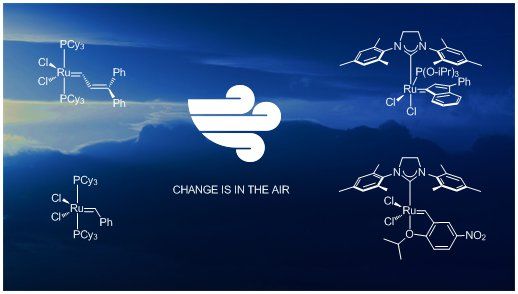
Figure 1: NHC-Ruthenium complexes and widely used NHC carbenes.
Scheme 4: Access to 21 from the Grubbs’ 1st generation catalyst and its one-pot synthesis.
Scheme 5: Synthesis of supported Hoveyda-type catalyst.
Figure 2: Scope of RCM reactions with supported Hoveyda-type catalyst. Reaction conditions: 24 (5 mol %), non...
Scheme 6: Synthesis of 33 by Hoveyda and Blechert.
Figure 3: Synthesis of chiral Hoveyda–Grubbs type catalyst and its use in RO/CM.
Scheme 7: Synthesis of 41.
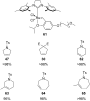
Figure 4: RCM reactions in air using 41 as catalyst. Reaction conditions: 41 (5 mol %), MeOH (0.05 M), 22 °C,...
Figure 5: CM-type reactions in air using 41 as catalyst. Reaction conditions: 41 (5 mol %), 22 °C, 12 h, in a...
Figure 6: Grela's complex (54) and reaction scope in air. Reaction conditions: catalyst, substrate (0.25 mmol...
Figure 7: Abell's complex (61) and its RCM reaction scope in air. Reaction condition: 10 mol % of 61, refluxi...
Figure 8: Catalysts used by Meier in air.
Figure 9: Ammonium chloride-tagged complexes.
Figure 10: Scorpio-type complexes.
Scheme 8: Synthesis of Grubbs' 3rd generation catalyst.
Figure 11: Indenylidene complexes.
Figure 12: Commercially available complexes evaluated under air.
Figure 13: Grela's N,N-unsymmetrically substituted complexes.
Scheme 9: Synthesis of phosphite-based catalysts.
Figure 14: Catalysts used by the Cazin group.
Figure 15: RCM scope in air with catalysts 33, 85 and 98a. Reaction conditions: Catalyst, substrate (0.25 mmol...
Figure 16: Synthesis of Schiff base-ruthenium complexes.
Scheme 10: Schiff base–ruthenium complexes synthesized by Verpoort.
Scheme 11: Synthesis of mixed Schiff base–NHC complexes.
Figure 17: Veerport's indenylidene Schiff-base complexes.
Beilstein J. Org. Chem. 2015, 11, 1509–1513, doi:10.3762/bjoc.11.164
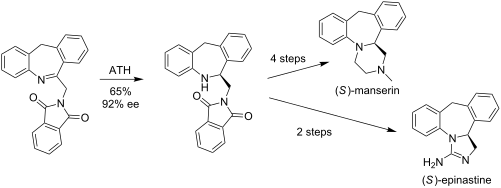
Graphical Abstract
Figure 1: The structure of mianserin 1 and epinastine 2.
Scheme 1: Enantioselective synthesis of (S)-(+)-mianserin.
Figure 2: Catalysts used in ATH.
Figure 3: The ORTEP diagram for X-ray analysis of compound (S)-7.
Scheme 2: Enantioselective synthesis of (S)-(+)-epinastine.
Beilstein J. Org. Chem. 2015, 11, 1194–1219, doi:10.3762/bjoc.11.134
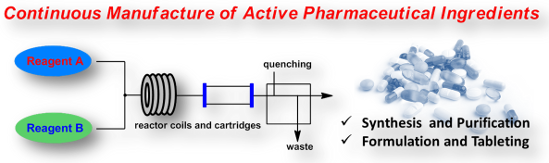
Graphical Abstract
Figure 1: Pharmaceutical structures targeted in early flow syntheses.
Scheme 1: Flow synthesis of 6-hydroxybuspirone (9). Inserted photograph reprinted with permission from [45]. Copy...
Figure 2: Configuration of a baffled reactor tube (left) and its schematic working principle (right).
Scheme 2: McQuade’s flow synthesis of ibuprofen (16).
Scheme 3: Jamison’s flow synthesis of ibuprofen sodium salt (17).
Scheme 4: Flow synthesis of imatinib (23).
Scheme 5: Flow synthesis of the potent 5HT1B antagonist 28.
Scheme 6: Flow synthesis of a selective δ-opioid receptor agonist 33.
Scheme 7: Flow synthesis of a casein kinase I inhibitor library (38).
Scheme 8: Flow synthesis of fluoxetine (46).
Scheme 9: Flow synthesis of artemisinin (55).
Scheme 10: Telescoped flow synthesis of artemisinin (55) and derivatives (62–64).
Scheme 11: Flow approach towards AZD6906 (65).
Scheme 12: Pilot scale flow synthesis of key intermediate 73.
Scheme 13: Semi-flow synthesis of vildagliptine (77).
Scheme 14: Pilot scale asymmetric flow hydrogenation towards 83. Inserted photograph reprinted with permission...
Figure 3: Schematic representation of the ‘tube-in-tube’ reactor.
Scheme 15: Flow synthesis of fanetizole (87) via tube-in-tube system.
Scheme 16: Flow synthesis of diphenhydramine.HCl (92).
Scheme 17: Flow synthesis of rufinamide (95).
Scheme 18: Large scale flow synthesis of rufinamide precursor 102.
Scheme 19: First stage in the flow synthesis of meclinertant (103).
Scheme 20: Completion of the flow synthesis of meclinertant (103).
Scheme 21: Flow synthesis of olanzapine (121) utilising inductive heating techniques.
Scheme 22: Flow synthesis of amitriptyline·HCl (127).
Scheme 23: Flow synthesis of E/Z-tamoxifen (132) using peristaltic pumping modules.
Figure 4: Container sized portable mini factory (photograph credit: INVITE GmbH, Leverkusen Germany).
Scheme 24: Flow synthesis of imidazo[1,2-a]pyridines 136 linked to frontal affinity chromatography (FAC).
Figure 5: Structures of zolpidem (142) and alpidem (143).
Scheme 25: Synthesis and screening loops in the discovery of new Abl kinase inhibitors.
Figure 6: Schotten–Baumann approach towards LY573636.Na (147).
Scheme 26: Pilot scale flow synthesis of LY2886721 (146).
Scheme 27: Continuous flow manufacture of alikiren hemifumarate 152.
Beilstein J. Org. Chem. 2015, 11, 730–738, doi:10.3762/bjoc.11.83
Graphical Abstract
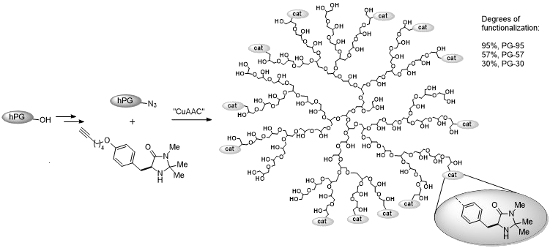
Scheme 1: Synthesis of hyperbranched polyglycerol-supported and G1 dendronized imidazolidin-4-ones 4a–c and 8...
Scheme 2: Synthesis of tyrosine-based imidazolidin-4-one 5. Reaction conditions: (a) 9 (1.0 equiv), MeNH2 (5....
Beilstein J. Org. Chem. 2015, 11, 92–146, doi:10.3762/bjoc.11.13
Graphical Abstract
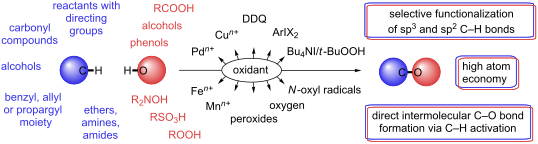
Scheme 1: Cross-dehydrogenative coupling.
Scheme 2: Cross-dehydrogenative C–O coupling.
Scheme 3: Regioselective ortho-acetoxylation of meta-substituted arylpyridines and N-arylamides.
Scheme 4: ortho-Acyloxylation and alkoxylation of arenes directed by pyrimidine, benzoxazole, benzimidazole a...
Scheme 5: Cu(OAc)2/AgOTf/O2 oxidative system in the ortho-alkoxylation of arenes.
Scheme 6: Pd(OAc)2/persulfate oxidative system in the ortho-alkoxylation and acetoxylation of arenes with nit...
Scheme 7: ortho-Acetoxylation and methoxylation of O-methyl aryl oximes, N-phenylpyrrolidin-2-one, and (3-ben...
Scheme 8: Ruthenium-catalyzed ortho-acyloxylation of acetanilides.
Scheme 9: Acetoxylation and alkoxylation of arenes with amide directing group using Pd(OAc)2/PhI(OAc)2 oxidat...
Scheme 10: Alkoxylation of azoarenes, 2-aryloxypyridines, picolinamides, and N-(1-methyl-1-(pyridin-2-yl)ethyl...
Scheme 11: Acetoxylation of compounds containing picolinamide and quinoline-8-amine moieties using the Pd(OAc)2...
Scheme 12: (CuOH)2CO3 catalyzed oxidative ortho-etherification using air as oxidant.
Scheme 13: Copper-catalyzed aerobic alkoxylation and aryloxylation of arenes containing pyridine-N-oxide moiet...
Scheme 14: Cobalt-catalyzed aerobic alkoxylation of arenes and alkenes containing pyridine N-oxide moiety.
Scheme 15: Non-symmetric double-fold C–H ortho-acyloxylation.
Scheme 16: N-nitroso directed ortho-alkoxylation of arenes.
Scheme 17: Selective alkoxylation and acetoxylation of alkyl groups.
Scheme 18: Acetoxylation of 2-alkylpyridines and related compounds.
Scheme 19: Acyloxylation and alkoxylation of alkyl fragments of substrates containing amide or sulfoximine dir...
Scheme 20: Palladium-catalyzed double sp3 C–H alkoxylation of N-(quinolin-8-yl)amides for the synthesis of sym...
Scheme 21: Copper-catalyzed acyloxylation of methyl groups of N-(quinolin-8-yl)amides.
Scheme 22: One-pot acylation and sp3 C–H acetoxylation of oximes.
Scheme 23: Possible mechanism of oxidative esterification catalyzed by N-heterocyclic nucleophilic carbene.
Scheme 24: Oxidative esterification employing stoichiometric amounts of aldehydes and alcohols.
Scheme 25: Selective oxidative coupling of aldehydes with alcohols in the presence of amines.
Scheme 26: Iodine mediated oxidative esterification.
Scheme 27: Oxidative C–O coupling of benzyl alcohols with methylarenes under the action of Bu4NI/t-BuOOH syste...
Scheme 28: Oxidative coupling of methyl- and ethylarenes with aromatic aldehydes under the action of Bu4NI/t-B...
Scheme 29: Cross-dehydrogenative C–O coupling of aldehydes with t-BuOOH in the presence of Bu4NI.
Scheme 30: Bu4NI-catalyzed α-acyloxylation reaction of ethers and ketones with aldehydes and t-BuOOH.
Scheme 31: Oxidative coupling of aldehydes with N-hydroxyimides and hexafluoroisopropanol.
Scheme 32: Oxidative coupling of alcohols with N-hydroxyimides.
Scheme 33: Oxidative coupling of aldehydes and primary alcohols with N-hydroxyimides using (diacetoxyiodo)benz...
Scheme 34: Proposed mechanism of the oxidative coupling of aldehydes and N-hydroxysuccinimide under action of ...
Scheme 35: Oxidative coupling of aldehydes with pivalic acid (172).
Scheme 36: Oxidative C–O coupling of aldehydes with alkylarenes using the Cu(OAc)2/t-BuOOH system.
Scheme 37: Copper-catalyzed acyloxylation of C(sp3)-H bond adjacent to oxygen in ethers using benzyl alcohols.
Scheme 38: Oxidative C–O coupling of aromatic aldehydes with cycloalkanes.
Scheme 39: Ruthenium catalyzed cross-dehydrogenative coupling of primary and secondary alcohols.
Scheme 40: Cross-dehydrogenative C–O coupling reactions of β-dicarbonyl compounds with sulfonic acids, acetic ...
Scheme 41: Acyloxylation of ketones, aldehydes and β-dicarbonyl compounds using carboxylic acids and Bu4NI/t-B...
Scheme 42: Acyloxylation of ketones using Bu4NI/t-BuOOH system.
Scheme 43: Cross-dehydrogenative C–O coupling of β-dicarbonyl compounds and their heteroanalogues with N-hydro...
Scheme 44: Cross-dehydrogenative C–O coupling of β-dicarbonyl compounds and their heteroanalogues with t-BuOOH....
Scheme 45: Oxidative C–O coupling of 2,6-dialkylphenyl-β-keto esters and thioesters with tert-butyl hydroxycar...
Scheme 46: α’-Acyloxylation of α,β-unsaturated ketones using KMnO4.
Scheme 47: Possible mechanisms of the acetoxylation at the allylic position of alkenes by Pd(OAc)2.
Scheme 48: Products of the oxidation of terminal alkenes by Pd(II)/AcOH/oxidant system.
Scheme 49: Acyloxylation of terminal alkenes with carboxylic acids.
Scheme 50: Synthesis of linear E-allyl esters by cross-dehydrogenative coupling of terminal alkenes wih carbox...
Scheme 51: Pd(OAc)2-catalyzed acetoxylation of Z-vinyl(triethylsilanes).
Scheme 52: α’-Acetoxylation of α-acetoxyalkenes with copper(II) chloride in acetic acid.
Scheme 53: Oxidative acyloxylation at the allylic position of alkenes and at the benzylic position of alkylare...
Scheme 54: Copper-catalyzed alkoxylation of methylheterocyclic compounds using di-tert-butylperoxide as oxidan...
Scheme 55: Oxidative C–O coupling of methylarenes with β-dicarbonyl compounds or phenols.
Scheme 56: Copper-catalyzed esterification of methylbenzenes with cyclic ethers and cycloalkanes.
Scheme 57: Oxidative C–O coupling of carboxylic acids with toluene catalyzed by Pd(OAc)2.
Scheme 58: Oxidative acyloxylation at the allylic position of alkenes with carboxylic acids using the Bu4NI/t-...
Scheme 59: Cross-dehydrogenative C–O coupling of carboxylic acids with alkylarenes using the Bu4NI/t-BuOOH sys...
Scheme 60: Oxidative C–O cross-coupling of methylarenes with ethyl or isopropylarenes.
Scheme 61: Phosphorylation of benzyl C–H bonds using the Bu4NI/t-BuOOH oxidative system.
Scheme 62: Selective C–H acetoxylation of 2,3-disubstituted indoles.
Scheme 63: Acetoxylation of benzylic position of alkylarenes using DDQ as oxidant.
Scheme 64: C–H acyloxylation of diarylmethanes, 3-phenyl-2-propen-1-yl acetate and dimethoxyarene using DDQ.
Scheme 65: Cross-dehydrogenative C–O coupling of 1,3-diarylpropylenes and 1,3-diarylpropynes with alcohols.
Scheme 66: One-pot azidation and C–H acyloxylation of 3-chloro-1-arylpropynes.
Scheme 67: Cross-dehydrogenative C–O coupling of 1,3-diarylpropylenes, (E)-1-phenyl-2-isopropylethylene and is...
Scheme 68: Cross-dehydrogenative C–O coupling of alkylarenes and related compounds with N-hydroxyphthalimide.
Scheme 69: Acetoxylation at the benzylic position of alkylarenes mediated by N-hydroxyphthalimide.
Scheme 70: C–O coupling of methylarenes with aromatic carboxylic acids employing the NaBrO3/NaHSO3 system.
Scheme 71: tert-Butyl peroxidation of allyl, propargyl and benzyl ethers catalyzed by Fe(acac)3.
Scheme 72: Cross-dehydrogenative C–O coupling of ethers with carboxylic acids mediated by Bu4NI/t-BuOOH system....
Scheme 73: Oxidative acyloxylation of dimethylamides and dioxane with 2-aryl-2-oxoacetic acids accompanied by ...
Scheme 74: tert-Butyl peroxidation of N-benzylamides and N-allylbenzamide using the Bu4NI/t-BuOOH system.
Scheme 75: Cross-dehydrogenative C–O coupling of aromatic carboxylic acids with ethers using Fe(acac)3 as cata...
Scheme 76: Cross-dehydrogenative C–O coupling of cyclic ethers with 2-hydroxybenzaldehydes using iron carbonyl...
Scheme 77: Cross-dehydrogenative C–O coupling of ethers with β-dicarbonyl compounds and phenols using copper c...
Scheme 78: Cross-dehydrogenative C–O coupling of 2-hydroxybenzaldehyde with dioxane catalyzed by Cu2(BPDC)2(BP...
Scheme 79: Ruthenium chloride-catalyzed acyloxylation of β-lactams.
Scheme 80: Ruthenium-catalyzed tert-butyl peroxydation amides and acetoxylation of β-lactams.
Scheme 81: PhI(OAc)2-mediated α,β-diacetoxylation of tertiary amines.
Scheme 82: Electrochemical oxidative methoxylation of tertiary amines.
Scheme 83: Cross-dehydrogenative C–O coupling of ketene dithioacetals with carboxylic acids in the presence of...
Scheme 84: Cross-dehydrogenative C–O coupling of enamides with carboxylic acids using iodosobenzene as oxidant....
Scheme 85: Oxidative alkoxylation, acetoxylation, and tosyloxylation of acylanilides using PhI(O(O)CCF3)2 in t...
Scheme 86: Proposed mechanism of the oxidative C–O coupling of actetanilide with O-nucleophiles in the presenc...
Scheme 87: Three-component coupling of aldehydes, anilines and alcohols involving oxidative intermolecular C–O...
Scheme 88: Oxidative coupling of phenols with alcohols.
Scheme 89: 2-Acyloxylation of quinoline N-oxides with arylaldehydes in the presence of the CuOTf/t-BuOOH syste...
Scheme 90: Cross-dehydrogenative C–O coupling of azoles with primary alcohols.
Scheme 91: Oxidation of dipyrroles to dipyrrins and subsequent oxidative alkoxylation in the presence of Na3Co...
Scheme 92: Oxidative dehydrogenative carboxylation of alkanes and cycloalkanes to allylic esters.
Scheme 93: Pd-catalyzed acetoxylation of benzene.
Beilstein J. Org. Chem. 2014, 10, 3038–3055, doi:10.3762/bjoc.10.322
Graphical Abstract
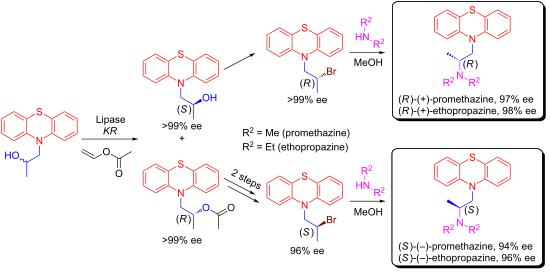
Scheme 1: Chemoenzymatic synthesis of enantioenriched enantiomers of promethazine 9 and ethopropazine 10. Rea...
Figure 1: Dependence of optical purities (% ee) of (R)-(−)-6a (red curve, ■) and (S)-(+)-5 (blue curve, ▲) on...
Scheme 2: Assignment of the stereochemistry of enantiopure alcohol (+)-5 resulting from derivatization with (R...
Figure 2: Description of substituents for determination of the absolute configuration of (+)-5 and ΔδRS value...
Figure 3: 1H NMR (CDCl3, 400 MHz) spectra of the (R)-MPA 11 (red colored line) and (S)-MPA and 12 (blue color...
Figure 4: An ORTEP plot of (S)-(+)-1-(10H-phenothiazin-10-yl)propan-2-ol (S)-(+)-5. The following crystal str...
Scheme 3: Amination of optically active bromo derivatives (R)-(+)-8 or (S)-(−)-8 in toluene.
Scheme 4: Amination of optically active bromo derivatives (R)-(+)-8 or (S)-(−)-8 in methanol.
Scheme 5: The proposed reaction mechanism for amination of optically active (S)-(−)-8 in methanol.
Beilstein J. Org. Chem. 2014, 10, 2388–2405, doi:10.3762/bjoc.10.249
Graphical Abstract
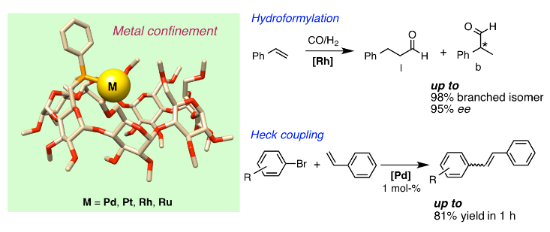
Figure 1: CD-based mono- and diphosphines with inward-pointing phosphorus atoms.
Scheme 1: Complexation of a "PdCl(dmba)" unit by HUGPHOS ligands.
Scheme 2: Reaction of HUGPHOS-1 with [MCl2(PhCN)2] complexes (M = Pd, Pt). Only one isomer with a given MeO–M...
Scheme 3: Synthesis of complexes 3–5.
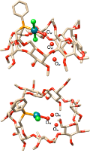
Figure 2: X-ray structure of aqua palladium complex 5 [44] (top: side view; bottom: view from the primary face). ...
Scheme 4: Dehydration of Pd(II) complex 5.
Figure 3: Ruthenium complexes 7 and 8 in Newman projection along the Ru–P bond.
Figure 4: Titration of HUGPHOS-1 with [Rh(CO)2Cl]2 at 25 °C.
Scheme 5: Synthesis of rhodium carbonyl complexes 9–11.
Scheme 6: Synthesis of rhodium complexes 12 and 13.
Scheme 7: Selective formation of complex 14 under 40 bar CO/H2 at 80 °C.
Figure 5: High pressure NMR spectra of 13 under CO/H2 (1:1) recorded in toluene-d8 (at various temperatures a...
Figure 6: IR spectra of 14 recorded in CH2Cl2 at 50 °C under 40 bar of CO/H2 1:1.
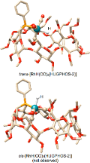
Figure 7: Calculated structures (Spartan 10) of trigonal bipyramidal [RhH(CO)3(HUGPHOS-2)] with the phosphoru...
Scheme 8: Possible mechanism for the hydroformylation of styrene when using monophosphine complexes 12 or 13 ...
Scheme 9: Simplified Heck coupling mechanism when using HUGPHOS-1 or HUGPHOS-2 as ligands. Doted lines stand ...
Beilstein J. Org. Chem. 2014, 10, 2361–2366, doi:10.3762/bjoc.10.246
Graphical Abstract
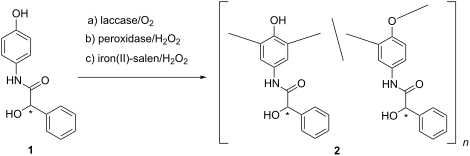
Scheme 1: Oligomerization of N-(4-hydroxyphenyl)mandelamide (1).
Figure 1: 2D ROESY NMR spectrum (600 MHz, D2O) of the racemate 1 complexed with RAMEB-CD.
Figure 2: MALDI–TOF MS spectrum of the oligomers synthesized with laccase from the racemate 1.
Beilstein J. Org. Chem. 2014, 10, 1765–1774, doi:10.3762/bjoc.10.184
Graphical Abstract
Scheme 1: The general form of the Strecker reaction. The reaction (b) is taken from [2].
Scheme 2: The first asymmetric Strecker reaction [4].
Scheme 3: The first asymmetric synthesis of α-aminonitirles via a chiral catalyst [5].
Scheme 4: A reaction model composed of Me-CH=O, HCN, NH3 and (H2O)10 for geometry optimizations to trace elem...
Scheme 5: Possible pathways for the formation of aminonitrile from acetaldehyde.
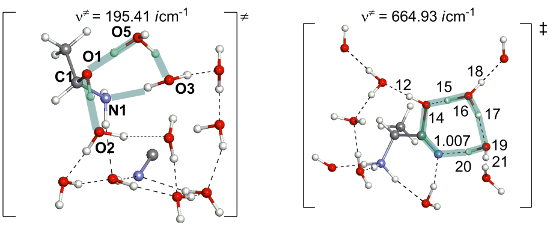
Figure 1: Geometries of transition states along the reaction from acetaldehyde (1) to the aminonitrile 8. Dis...
Figure 2: Energy changes along elementary processes from acetaldehyde to aminonitrile. Bold numbers are defin...
Scheme 6: A short-cut path by the nucleophilic displacement and the concomitant proton transfer. “The first b...
Scheme 7: A contrast of the nucleophilic addition.
Figure 3: Two transition states (A and B) of the nucleophilic addition of (S)-α-phenylethylamine to acetaldeh...
Scheme 8: Elementary processes of the acid-catalyzed hydrolysis of 2-amino-propanonitrile.
Figure 4: Energy changes along elementary processes from 2-amino nitrile 8 to 2-amino acid 16. Brown-color li...
Figure 5: Geometries of transition states along the most favorable route from 2-aminonitrile 8 to 2-amino aci...
Scheme 9: Summary of the present computational work expressed by minimal models.
Beilstein J. Org. Chem. 2014, 10, 1166–1196, doi:10.3762/bjoc.10.117
Graphical Abstract
Scheme 1: Pioneer works of Atherton, Openshaw and Todd reporting on the synthesis of phosphoramidate starting...
Scheme 2: Mechanisms 1 (i) and 2 (ii) suggested by Atherton and Todd in 1945; adapted from [1].
Scheme 3: Two reaction pathways (i and ii) to produce chlorophosphate 2. Charge-transfer complex observed whe...
Scheme 4: Mechanism of the Atherton–Todd reaction with dimethylphosphite according to Roundhill et al. (adapt...
Scheme 5: Synthesis of dialkyl phosphate from dialkyl phosphite (i) and identification of chloro- and bromoph...
Scheme 6: Synthesis of chiral phosphoramidate with trichloromethylphosphonate as the suggested intermediate (...
Scheme 7: Selection of results that address the question of the stereochemistry of the AT reaction (adapted f...
Scheme 8: Synthesis of phenoxy spirophosphorane by the AT reaction (adapted from [34]).
Scheme 9: Suggested mechanism of the Atherton–Todd reaction, (i) and (ii) formation of chlorophosphate with a...
Scheme 10: AT reaction in biphasic conditions (adapted from [38]).
Scheme 11: AT reaction with iodoform as halide source (adapted from [37]).
Scheme 12: AT reaction with phenol at low temperature in the presence of DMAP (adapted from [40]).
Scheme 13: Synthesis of a triphosphate by the AT reaction starting with the preparation of chlorophosphate (ad...
Scheme 14: AT reaction with sulfonamide (adapted from [42]).
Scheme 15: Synthesis of a styrylphosphoramidate starting from the corresponding aniline (adapted from [43]).
Scheme 16: Use of hydrazine as nucleophile in AT reactions (adapted from [48]).
Scheme 17: AT reaction with phenol as a nucleophilic species; synthesis of dioleyl phosphate-substituted couma...
Scheme 18: Synthesis of β-alkynyl-enolphosphate from allenylketone with AT reaction (adapted from [58]).
Scheme 19: Synthesis of pseudohalide phosphate by using AT reaction (adapted from [67]).
Scheme 20: AT reaction with hydrospirophosphorane with insertion of CO2 in the product (adapted from [69]).
Scheme 21: AT reaction with diaryl phosphite (adapted from [70]).
Scheme 22: AT reaction with O-alkyl phosphonite (adapted from [71]).
Scheme 23: Use of phosphinous acid in AT reactions (adapted from [72]).
Scheme 24: AT reaction with secondary phosphinethiooxide (adapted from [76]).
Scheme 25: Use of H-phosphonothioate in the AT reaction (adapted from [78]).
Scheme 26: AT-like reaction with CuI as catalyst and without halide source (adapted from [80]).
Scheme 27: Reduction of phenols after activation as phosphate derivatives (adapted from [81] i ; [82], ii; and [83], iii).
Scheme 28: Synthesis of medium and large-sized nitrogen-containing heterocycles (adapted from [85]).
Scheme 29: Synthesis of arylstannane from aryl phosphate prepared by an AT reaction (adapted from [86]).
Scheme 30: Synthesis and use of aryl dialkyl phosphate for the synthesis of biaryl derivatives (adapted from [89])....
Scheme 31: Synthesis of aryl dialkyl phosphate by an AT reaction from phenol and subsequent rearrangement yiel...
Scheme 32: Selected chiral phosphoramidates used as organocatalyst; i) chiral phosphoramidate used in the pion...
Scheme 33: Determination of ee of H-phosphinate by the application of the AT reaction with a chiral amine (ada...
Scheme 34: Chemical structure of selected flame retardants synthesized by AT reactions; (BDE: polybrominated d...
Scheme 35: Transformation of DOPO (i) and synthesis of polyphosphonate (ii) by the AT reaction (adapted from [117] ...
Scheme 36: Synthesis of lipophosphite (bisoleyl phosphite) and cationic lipophosphoramidate with an AT reactio...
Scheme 37: Use of AT reactions to produce cationic lipids characterized by a trimethylphosphonium, trimethylar...
Scheme 38: Cationic lipid synthesized by the AT reaction illustrating the variation of the structure of the li...
Scheme 39: Helper lipids for nucleic acid delivery synthesized with the AT reaction (adapted from [130]).
Scheme 40: AT reaction used to produce red/ox-sensitive cationic lipids (adapted from [135]).
Scheme 41: Alkyne and azide-functionalized phosphoramidate synthesized by AT reactions,(i); illustration of so...
Scheme 42: Cationic lipids exhibiting bactericidal action – arrows indicate the bond formed by the AT reaction...
Scheme 43: β-Cyclodextrin-based lipophosphoramidates (adapted from [138]).
Scheme 44: Polyphosphate functionalized by an AT reaction (adapted from [139]).
Scheme 45: Synthesis of zwitterionic phosphocholine-bound chitosan (adapted from [142]).
Scheme 46: Synthesis of AZT-based prodrug via an AT reaction (adapted from [143]).
Beilstein J. Org. Chem. 2014, 10, 1064–1096, doi:10.3762/bjoc.10.106
Graphical Abstract
Scheme 1: Synthesis of P-stereogenic phosphines 5 using menthylphosphinite borane diastereomers 2.
Scheme 2: Enantioselective synthesis of chiral phosphines 10 with ephedrine as a chiral auxiliary.
Scheme 3: Chlorophosphine boranes 11a as P-chirogenic electrophilic building blocks.
Scheme 4: Monoalkylation of phenylphosphine borane 15 with methyl iodide in the presence of Cinchona alkaloid...
Scheme 5: Preparation of tetraphosphine borane 19.
Scheme 6: Using chiral chlorophosphine-boranes 11b as phosphide borane 20 precursors.
Scheme 7: Nickel-catalyzed cross-coupling (dppe = 1,2-bis(diphenylphosphino)ethane).
Scheme 8: Pd-catalyzed cross-coupling reaction with organophosphorus stannanes 30.
Scheme 9: Copper iodide catalyzed carbon–phosphorus bond formation.
Scheme 10: Thermodynamic kinetic resolution as the origin of enantioselectivity in metal-catalyzed asymmetric ...
Scheme 11: Ru-catalyzed asymmetric phosphination of benzyl and alkyl chlorides 35 with HPPhMe (36a, PHOX = pho...
Scheme 12: Pt-catalyzed asymmetric alkylation of secondary phosphines 36b.
Scheme 13: Different adducts 43 can result from hydrophosphination.
Scheme 14: Pt-catalyzed asymmetric hydrophosphination.
Scheme 15: Intramolecular hydrophosphination of phosphinoalkene 47.
Scheme 16: Organocatalytic asymmetric hydrophosphination of α,β-unsaturated aldehydes 59.
Scheme 17: Preparation of phosphines using zinc organometallics.
Scheme 18: Preparation of alkenylphosphines 71a from alkenylzirconocenes 69 (dtc = N,N-diethyldithiocarbamate,...
Scheme 19: SNAr with P-chiral alkylmethylphosphine boranes 13c.
Scheme 20: Synthesis of QuinoxP 74 (TMEDA = tetramethylethylenediamine).
Scheme 21: Pd-Mediated couplings of a vinyl triflate 76 with diphenylphosphine borane 13e.
Figure 1: Menthone (83) and camphor (84) derived chiral phosphines.
Scheme 22: Palladium-catalyzed cross-coupling reaction of vinyl tosylates 85 and 87 with diphenylphosphine bor...
Scheme 23: Attempt for the enantioselective palladium-catalyzed C–P cross-coupling reaction between an alkenyl...
Scheme 24: Enol phosphates 88 as vinylic coupling partners in the palladium-catalyzed C–P cross-coupling react...
Scheme 25: Nickel-catalyzed cross-coupling in the presence of zinc (dppe = 1,2-bis(diphenylphosphino)ethane).
Scheme 26: Copper-catalyzed coupling of secondary phosphines with vinyl halide 94.
Scheme 27: Palladium-catalyzed cross-coupling of aryl iodides 97 with organoheteroatom stannanes 30.
Scheme 28: Synthesis of optically active phosphine boranes 100 by cross-coupling with a chiral phosphine boran...
Scheme 29: Palladium-catalyzed P–C cross-coupling reactions between primary or secondary phosphines and functi...
Scheme 30: Enantioselective synthesis of a P-chirogenic phosphine 108.
Scheme 31: Enantioselective arylation of silylphosphine 110 ((R,R)-Et-FerroTANE = 1,1'-bis((2R,4R)-2,4-diethyl...
Scheme 32: Nickel-catalyzed arylation of diphenylphosphine 25d.
Scheme 33: Nickel-catalyzed synthesis of (R)-BINAP 116 (dppe = 1,2-bis(diphenylphosphino)ethane, DABCO = 1,4-d...
Scheme 34: Nickel-catalyzed cross-coupling between aryl bromides 119 and diphenylphosphine (25d) (dppp = 1,3-b...
Scheme 35: Stereocontrolled Pd(0)−Cu(I) cocatalyzed aromatic phosphorylation.
Scheme 36: Preparation of alkenylphosphines by hydrophosphination of alkynes.
Scheme 37: Palladium and nickel-catalyzed addition of P–H to alkynes 125a.
Scheme 38: Palladium-catalyzed asymmetric hydrophosphination of an alkyne 128.
Scheme 39: Ruthenium catalyzed hydrophosphination of propargyl alcohols 132 (cod = 1,5-cyclooctadiene).
Scheme 40: Cobalt-catalyzed hydrophosphination of alkynes 134a (acac = acetylacetone).
Scheme 41: Tandem phosphorus–carbon bond formation–oxyfunctionalization of substituted phenylacetylenes 125c (...
Scheme 42: Organolanthanide-catalyzed intramolecular hydrophosphination/cyclization of phosphinoalkynes 143.
Scheme 43: Hydrophosphination of alkynes 134c catalyzed by ytterbium-imine complexes 145 (hmpa = hexamethylpho...
Scheme 44: Calcium-mediated hydrophosphanylation of alkyne 134d.
Scheme 45: Formation and substitution of bromophosphine borane 151.
Scheme 46: General scheme for a nickel or copper catalyzed cross-coupling reaction.
Scheme 47: Copper-catalyzed synthesis of alkynylphosphines 156.
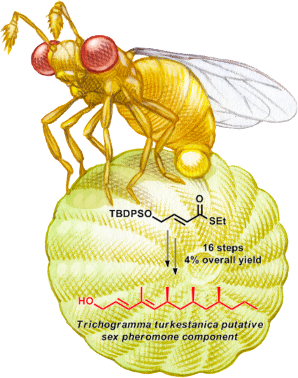
Beilstein J. Org. Chem. 2014, 10, 761–766, doi:10.3762/bjoc.10.71
Graphical Abstract
Figure 1: Originally proposed structures A and B and revised structures 1 and 2 of putative sex pheromone com...
Scheme 1: Application of the iterative conjugate addition protocol for the preparation of 8.
Scheme 2: Deoxygenation and desilylation of 8.
Scheme 3: Vinylogous Horner–Wadsworth–Emmons olefination.
Scheme 4: Synthesis of α,β-unsaturated ester 15 using a Wittig reaction.
Scheme 5: Completion of the synthesis of the putative sex pheromone 2.
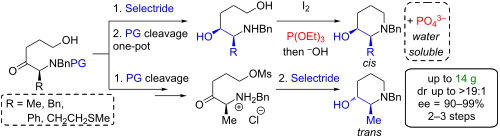
Beilstein J. Org. Chem. 2014, 10, 369–383, doi:10.3762/bjoc.10.35
Graphical Abstract
Figure 1: Natural products and other bioactive piperidine derivatives of type B.
Figure 2: Retrosynthetic analysis of piperidines B (X = OH or leaving group, PG = protecting group).
Scheme 1: Synthesis of the protected amino acids 2. (a) KOH for 1b. b) PG–X = Cbz–Cl (1a–c), Boc2O (1d).
Scheme 2: Synthesis of hydroxy ketones 7 (R = Me (a), Bn (b), Ph (c) and EtSMe (d); PG = Cbz (a–c), Boc (d)).
Scheme 3: Synthesis of amides 5e and 5f and ketone 7e.
Scheme 4: Synthesis of amino alcohols syn-9a–d and oxazolidinone 10a. (for 7a–c conditions A: H2 (1 atm), Pd/...
Scheme 5: Competition between the Michaelis–Arbuzow process and the desired cyclodehydration of amino alcohol...
Scheme 6: Initial synthesis of the trans-piperidinol 11a in diminished enantiopurity. aThe amino alcohol 9a o...
Scheme 7: Synthesis of trans-piperidinol 11a in excellent ee.
Scheme 8: Synthesis of L-733,060·HCl.
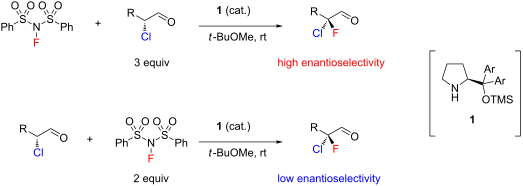
Beilstein J. Org. Chem. 2014, 10, 323–331, doi:10.3762/bjoc.10.30
Graphical Abstract
Scheme 1: Organocatalytic enantioselective fluorination of α-chloroaldehyde 2a [8].
Scheme 2: Determination of absolute configuration of α-chloro-α-fluoro-β-keto ester 6 by X-ray analysis [9].
Scheme 3: Transformation of α-chloro-α-fluoro-β-keto ester 6 to chlorofluoro alcohol 4a.
Scheme 4: Proposed reaction mechanism.
Scheme 5: Fluorination of the enantiomers of 2a.
Scheme 6: Enantioselective fluorination of α-branched aldehyde 12.
Beilstein J. Org. Chem. 2014, 10, 224–236, doi:10.3762/bjoc.10.18
Graphical Abstract
Figure 1: Thiourea, squaramide, P-triamide and cyclodiphosphazane with computed distances between H-atoms.
Figure 2: Urea, squaramide, P-triamide and cyclodiphosphazane coordinated to nitrobenzene, with the computed ...
Scheme 1: Chiral PV-amide catalysts based on BINOL and chinchona backbones.
Scheme 2: Exclusive formation of the mono- and trisubstituted product from thiophosphoryl chloride and anilin...
Figure 3: X-ray structure of 6-dimer. The hydrogen atoms are omitted for clarity, except at all nitrogens.
Figure 4: X-ray structure of 7a-dimer. The hydrogen atoms are omitted for clarity, except at all nitrogens.
Scheme 3: Synthesis of chiral cyclodiphosphazane catalysts 14a/b, 15 and 16.
Figure 5: X-ray structure of 14a. The hydrogen atoms are omitted for clarity, except at nitrogen.
Figure 6: 31P{1H} NMR spectrum in CDCl3 at rt showing C2 symmetry of 14a at rt.
Figure 7: X-ray structure of 15. The hydrogen atoms are omitted for clarity, except at nitrogen.
Figure 8: X-ray structure of 16. The hydrogen atoms are omitted for clarity, except at nitrogen.
Figure 9: Enantiodetermining transition states TS-14a/TS-14b arising from the addition of 2-hydroxynapthoquin...
Beilstein J. Org. Chem. 2014, 10, 163–193, doi:10.3762/bjoc.10.14
Graphical Abstract
Scheme 1: Vogel’s first approach towards the divinylcyclopropane rearrangement [4] and characterization of cis-d...
Scheme 2: Transition states for the Cope rearrangement and the related DVCPR. Ts = transition state.
Scheme 3: Two possible mechanisms of trans-cis isomerizations of divinylcyclopropanes.
Scheme 4: Proposed biosynthesic pathway to ectocarpene (21), an inactive degradation product of a sexual pher...
Scheme 5: Proposed biosynthesis of occidenol (25) and related natural compounds.
Scheme 6: Gaich’s bioinspired system using the DVCPR to mimick the dimethylallyltryptophan synthase. DMAPP = ...
Scheme 7: Iguchi’s total synthesis of clavubicyclone, part 1.
Scheme 8: Iguchi’s total synthesis of clavubicyclone, part 2.
Scheme 9: Wender’s syntheses of the two pseudoguainanes confertin (50) and damsinic acid (51) and Pier’s appr...
Scheme 10: Overman’s total synthesis of scopadulcic acid B.
Scheme 11: Davies’ total syntheses of tremulenolide A and tremulenediol A.
Scheme 12: Davies formal [4 + 3] cycloaddition approach towards the formal synthesis of frondosin B.
Scheme 13: Davies and Sarpongs formal [4 + 3]-cycloaddition approach towards barekoxide (106) and barekol (107...
Scheme 14: Davies formal [4 + 3]-cycloaddition approach to 5-epi-vibsanin E (115) containing an intermediate c...
Scheme 15: Echavarren’s total synthesis of schisanwilsonene A (126) featuring an impressive gold-catalzed casc...
Scheme 16: Davies early example of a formal [4 + 3]-cycloaddition in alkaloids synthesis.
Scheme 17: Fukuyama’s total synthesis of gelsemine, part 1.
Scheme 18: Fukuyama’s total synthesis of gelsemine, featuring a divinylcyclopropane rearrangement, part 2.
Scheme 19: Kende’s total synthesis of isostemofoline, using a formal [4 + 3]-cycloaddition, including an inter...
Scheme 20: Danishefsky’s total synthesis of gelsemine, part 1.
Scheme 21: Danishefsky’s total synthesis of gelsemine, part 2.
Scheme 22: Fukuyama’s total synthesis of gelsemoxonine.
Scheme 23: Wender’s synthetic access to the core skeleton of tiglianes, daphnanes and ingenanes.
Scheme 24: Davies’ approach towards the core skeleton of CP-263,114 (212).
Scheme 25: Wood’s approach towards actinophyllic acid.
Scheme 26: Takeda’s approach towards the skeleton of the cyanthins, utilitizing the divinylcyclopropane rearra...
Scheme 27: Donaldson’s organoiron route towards the guianolide skeleton.
Scheme 28: Stoltz’s tandem Wolff/DVCPR rearrangement.
Scheme 29: Stephenson’s tandem photocatalysis/arylvinylcyclopropane rearrangement.
Scheme 30: Padwa’s rhodium cascade involving a DVCPR.
Scheme 31: Matsubara’s version of a DVCPR.
Scheme 32: Toste’s tandem gold-catalyzed Claisen-rearrangement/DVCPR.
Scheme 33: Ruthenium- and gold-catalyzed versions of tandem reactions involving a DVCPR.
Scheme 34: Tungsten, platinum and gold catalysed cycloisomerizations leading to a DVCPR.
Scheme 35: Reisman’s total synthesis of salvileucalin B, featuring an (undesired) vinylcyclopropyl carbaldehyd...
Scheme 36: Studies on the divinylepoxide rearrangement.
Scheme 37: Studies on the vinylcyclopropanecarbonyl rearrangement.
Scheme 38: Nitrogen-substituted variants of the divinylcyclopropane rearrangement.
Beilstein J. Org. Chem. 2014, 10, 34–114, doi:10.3762/bjoc.10.6
Graphical Abstract
Figure 1: Five and six-membered cyclic peroxides.
Figure 2: Artemisinin and semi-synthetic derivatives.
Scheme 1: Synthesis of 3-hydroxy-1,2-dioxolanes 3a–c.
Scheme 2: Synthesis of dioxolane 6.
Scheme 3: Photooxygenation of oxazolidines 7a–d with formation of spiro-fused oxazolidine-containing dioxolan...
Scheme 4: Oxidation of cyclopropanes 10a–e and 11a–e with preparation of 1,2-dioxolanes 12a–e.
Scheme 5: VO(acac)2-catalyzed oxidation of silylated bicycloalkanols 13a–c.
Scheme 6: Mn(II)-catalyzed oxidation of cyclopropanols 15a–g.
Scheme 7: Oxidation of aminocyclopropanes 20a–c.
Scheme 8: Synthesis of aminodioxolanes 24.
Figure 3: Trifluoromethyl-containing dioxolane 25.
Scheme 9: Synthesis of 1,2-dioxolanes 27a–e by the oxidation of cyclopropanes 26a–e.
Scheme 10: Photoinduced oxidation of methylenecyclopropanes 28.
Scheme 11: Irradiation-mediated oxidation.
Scheme 12: Application of diazene 34 for dioxolane synthesis.
Scheme 13: Mn(OAc)3-catalyzed cooxidation of arylacetylenes 37a–h and acetylacetone with atmospheric oxygen.
Scheme 14: Peroxidation of (2-vinylcyclopropyl)benzene (40).
Scheme 15: Peroxidation of 1,4-dienes 43a,b.
Scheme 16: Peroxidation of 1,5-dienes 46.
Scheme 17: Peroxidation of oxetanes 53a,b.
Scheme 18: Peroxidation of 1,6-diene 56.
Scheme 19: Synthesis of 3-alkoxy-1,2-dioxolanes 62a,b.
Scheme 20: Synthesis of spiro-bis(1,2-dioxolane) 66.
Scheme 21: Synthesis of dispiro-1,2-dioxolanes 68, 70, 71.
Scheme 22: Synthesis of spirohydroperoxydioxolanes 75a,b.
Scheme 23: Synthesis of spirohydroperoxydioxolane 77 and dihydroperoxydioxolane 79.
Scheme 24: Ozonolysis of azepino[4,5-b]indole 80.
Scheme 25: SnCl4-mediated fragmentation of ozonides 84a–l in the presence of allyltrimethylsilane.
Scheme 26: SnCl4-mediated fragmentation of bicyclic ozonide 84m in the presence of allyltrimethylsilane.
Scheme 27: MCl4-mediated fragmentation of alkoxyhydroperoxides 96 in the presence of allyltrimethylsilane.
Scheme 28: SnCl4-catalyzed reaction of monotriethylsilylperoxyacetal 108 with alkene 109.
Scheme 29: SnCl4-catalyzed reaction of triethylsilylperoxyacetals 111 with alkenes.
Scheme 30: Desilylation of tert-butyldimethylsilylperoxy ketones 131a,b followed by cyclization.
Scheme 31: Deprotection of peroxide 133 followed by cyclization.
Scheme 32: Asymmetric peroxidation of methyl vinyl ketones 137a–e.
Scheme 33: Et2NH-catalyzed intramolecular cyclization.
Scheme 34: Synthesis of oxodioxolanes 143a–j.
Scheme 35: Haloperoxidation accompanied by intramolecular ring closure.
Scheme 36: Oxidation of triterpenes 149a–d with Na2Cr2O7/N-hydroxysuccinimide.
Scheme 37: Curtius and Wolff rearrangements to form 1,2-dioxolane ring-retaining products.
Scheme 38: Oxidative desilylation of peroxide 124.
Scheme 39: Synthesis of dioxolane 158, a compound containing the aminoquinoline antimalarial pharmacophore.
Scheme 40: Diastereomers of plakinic acid A, 162a and 162b.
Scheme 41: Ozonolysis of alkenes.
Scheme 42: Cross-ozonolysis of alkenes 166 with carbonyl compounds.
Scheme 43: Ozonolysis of the bicyclic cyclohexenone 168.
Scheme 44: Cross-ozonolysis of enol ethers 172a,b with cyclohexanone.
Scheme 45: Griesbaum co-ozonolysis.
Scheme 46: Reactions of aryloxiranes 177a,b with oxygen.
Scheme 47: Intramolecular formation of 1,2,4-trioxolane 180.
Scheme 48: Formation of 1,2,4-trioxolane 180 by the reaction of 1,5-ketoacetal 181 with H2O2.
Scheme 49: 1,2,4-Trioxolane 186 with tetrazole fragment.
Scheme 50: 1,2,4-Trioxolane 188 with a pyridine fragment.
Scheme 51: 1,2,4-Trioxolane 189 with pyrimidine fragment.
Scheme 52: Synthesis of aminoquinoline-containing 1,2,4-trioxalane 191.
Scheme 53: Synthesis of arterolane.
Scheme 54: Oxidation of diarylheptadienes 197a–c with singlet oxygen.
Scheme 55: Synthesis of hexacyclinol peroxide 200.
Scheme 56: Oxidation of enone 201 and enenitrile 203 with singlet oxygen.
Scheme 57: Synthesis of 1,2-dioxanes 207 by oxidative coupling of carbonyl compounds 206 and alkenes 205.
Scheme 58: 1,2-Dioxanes 209 synthesis by co-oxidation of 1,5-dienes 208 and thiols.
Scheme 59: Synthesis of bicyclic 1,2-dioxanes 212 with aryl substituents.
Scheme 60: Isayama–Mukaiyama peroxysilylation of 1,5-dienes 213 followed by desilylation under acidic conditio...
Scheme 61: Synthesis of bicycle 218 with an 1,2-dioxane ring.
Scheme 62: Intramolecular cyclization with an oxirane-ring opening.
Scheme 63: Inramolecular cyclization with the oxetane-ring opening.
Scheme 64: Intramolecular cyclization with the attack on a keto group.
Scheme 65: Peroxidation of the carbonyl group in unsaturated ketones 228 followed by cyclization of hydroperox...
Scheme 66: CsOH and Et2NH-catalyzed cyclization.
Scheme 67: Preparation of peroxyplakoric acid methyl ethers A and D.
Scheme 68: Hg(OAc)2 in 1,2-dioxane synthesis.
Scheme 69: Reaction of 1,4-diketones 242 with hydrogen peroxide.
Scheme 70: Inramolecular cyclization with oxetane-ring opening.
Scheme 71: Inramolecular cyclization with MsO fragment substitution.
Scheme 72: Synthesis of 1,2-dioxane 255a, a structurally similar compound to natural peroxyplakoric acids.
Scheme 73: Synthesis of 1,2-dioxanes based on the intramolecular cyclization of hydroperoxides containing C=C ...
Scheme 74: Use of BCIH in the intramolecular cyclization.
Scheme 75: Palladium-catalyzed cyclization of δ-unsaturated hydroperoxides 271a–e.
Scheme 76: Intramolecular cyclization of unsaturated peroxyacetals 273a–d.
Scheme 77: Allyltrimethylsilane in the synthesis of 1,2-dioxanes 276a–d.
Scheme 78: Intramolecular cyclization using the electrophilic center of the peroxycarbenium ion 279.
Scheme 79: Synthesis of bicyclic 1,2-dioxanes.
Scheme 80: Preparation of 1,2-dioxane 286.
Scheme 81: Di(tert-butyl)peroxalate-initiated radical cyclization of unsaturated hydroperoxide 287.
Scheme 82: Oxidation of 1,4-betaines 291a–d.
Scheme 83: Synthesis of aminoquinoline-containing 1,2-dioxane 294.
Scheme 84: Synthesis of the sulfonyl-containing 1,2-dioxane.
Scheme 85: Synthesis of the amido-containing 1,2-dioxane 301.
Scheme 86: Reaction of singlet oxygen with the 1,3-diene system 302.
Scheme 87: Synthesis of (+)-premnalane А and 8-epi-premnalane A.
Scheme 88: Synthesis of the diazo group containing 1,2-dioxenes 309a–e.
Figure 4: Plakortolide Е.
Scheme 89: Synthesis of 6-epiplakortolide Е.
Scheme 90: Application of Bu3SnH for the preparation of tetrahydrofuran-containing bicyclic peroxides 318a,b.
Scheme 91: Application of Bu3SnH for the preparation of lactone-containing bicyclic peroxides 320a–f.
Scheme 92: Dihydroxylation of the double bond in the 1,2-dioxene ring 321 with OsO4.
Scheme 93: Epoxidation of 1,2-dioxenes 324.
Scheme 94: Cyclopropanation of the double bond in endoperoxides 327.
Scheme 95: Preparation of pyridazine-containing bicyclic endoperoxides 334a–c.
Scheme 96: Synthesis of 1,2,4-trioxanes 337 by the hydroperoxidation of unsaturated alcohols 335 with 1O2 and ...
Scheme 97: Synthesis of sulfur-containing 1,2,4-trioxanes 339.
Scheme 98: BF3·Et2O-catalyzed synthesis of the 1,2,4-trioxanes 342a–g.
Scheme 99: Photooxidation of enol ethers or vinyl sulfides 343.
Scheme 100: Synthesis of tricyclic peroxide 346.
Scheme 101: Reaction of endoperoxides 348a,b derived from cyclohexadienes 347a,b with 1,4-cyclohexanedione.
Scheme 102: [4 + 2]-Cycloaddition of singlet oxygen to 2Н-pyrans 350.
Scheme 103: Synthesis of 1,2,4-trioxanes 354 using peroxysilylation stage.
Scheme 104: Epoxide-ring opening in 355 with H2O2 followed by the condensation of hydroxy hydroperoxides 356 wi...
Scheme 105: Peroxidation of unsaturated ketones 358 with the H2O2/CF3COOH/H2SO4 system.
Scheme 106: Synthesis of 1,2,4-trioxanes 362 through Et2NH-catalyzed intramolecular cyclization.
Scheme 107: Reduction of the double bond in tricyclic peroxides 363.
Scheme 108: Horner–Wadsworth–Emmons reaction in the presence of peroxide group.
Scheme 109: Reduction of ester group by LiBH4 in the presence of 1,2,4-trioxane moiety.
Scheme 110: Reductive amination of keto-containing 1,2,4-trioxane 370.
Scheme 111: Reductive amination of keto-containing 1,2,4-trioxane and a Fe-containing moiety.
Scheme 112: Acid-catalyzed reactions of Н2О2 with ketones and aldehydes 374.
Scheme 113: Cyclocondensation of carbonyl compounds 376a–d using Me3SiOOSiMe3/CF3SO3SiMe3.
Scheme 114: Peroxidation of 4-methylcyclohexanone (378).
Scheme 115: Synthesis of symmetrical tetraoxanes 382a,b from aldehydes 381a,b.
Scheme 116: Synthesis of unsymmetrical tetraoxanes using of MeReO3.
Scheme 117: Synthesis of symmetrical tetraoxanes using of MeReO3.
Scheme 118: Synthesis of symmetrical tetraoxanes using of MeReO3.
Scheme 119: MeReO3 in the synthesis of symmetrical tetraoxanes with the use of aldehydes.
Scheme 120: Preparation of unsymmmetrical 1,2,4,5-tetraoxanes with high antimalarial activity.
Scheme 121: Re2O7-Catalyzed synthesis of tetraoxanes 398.
Scheme 122: H2SO4-Catalyzed synthesis of steroidal tetraoxanes 401.
Scheme 123: HBF4-Catalyzed condensation of bishydroperoxide 402 with 1,4-cyclohexanedione.
Scheme 124: BF3·Et2O-Catalyzed reaction of gem-bishydroperoxides 404 with enol ethers 405 and acetals 406.
Scheme 125: HBF4-Catalyzed cyclocondensation of bishydroperoxide 410 with ketones.
Scheme 126: Synthesis of symmetrical and unsymmetrical tetraoxanes 413 from benzaldehydes 412.
Scheme 127: Synthesis of bridged 1,2,4,5-tetraoxanes 415a–l from β-diketones 414a–l and H2O2.
Scheme 128: Dimerization of zwitterions 417.
Scheme 129: Ozonolysis of verbenone 419.
Scheme 130: Ozonolysis of O-methyl oxime 424.
Scheme 131: Peroxidation of 1,1,1-trifluorododecan-2-one 426 with oxone.
Scheme 132: Intramolecular cyclization of dialdehyde 428 with H2O2.
Scheme 133: Tetraoxanes 433–435 as by-products in peroxidation of ketals 430–432.
Scheme 134: Transformation of triperoxide 436 in diperoxide 437.
Scheme 135: Preparation and structural modifications of tetraoxanes.
Scheme 136: Structural modifications of steroidal tetraoxanes.
Scheme 137: Synthesis of 1,2,4,5-tetraoxane 454 containing the fluorescent moiety.
Scheme 138: Synthesis of tetraoxane 458 (RKA182).
Beilstein J. Org. Chem. 2013, 9, 2457–2462, doi:10.3762/bjoc.9.284
Graphical Abstract
Scheme 1: Photocyclization–reduction of 2-aminochalcone.
Scheme 2: Experimental setup of continuous-flow photocyclization–reduction cascade.