Search results
Search for "fluoride" in Full Text gives 362 result(s) in Beilstein Journal of Organic Chemistry. Showing first 200.
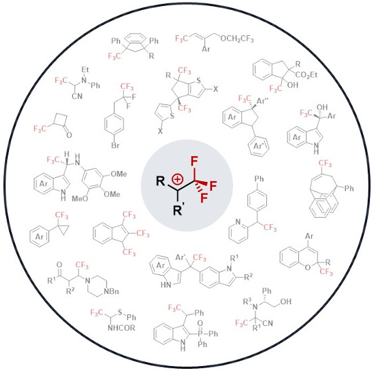
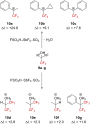
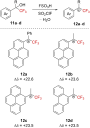
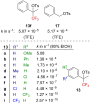
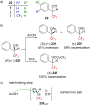
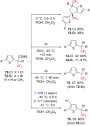
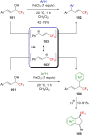
CF3-substituted carbocations: underexploited intermediates with great potential in modern synthetic chemistry
Beilstein J. Org. Chem. 2021, 17, 343–378, doi:10.3762/bjoc.17.32

















19F NMR as a tool in chemical biology
Beilstein J. Org. Chem. 2021, 17, 293–318, doi:10.3762/bjoc.17.28
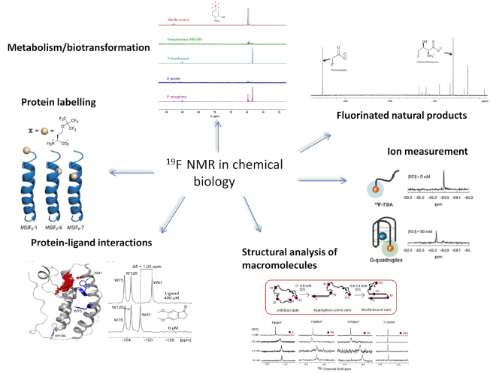
- species [1]. This reflects its low bioavailability, as it is typically found in insoluble minerals, and its physicochemical properties, in particular its high redox potential and the poor reactivity of the fluoride ion in aqueous solution. Despite its near-absence in biology, it is a particularly
- biosynthesis through hBBOX-catalysed GBBNF hydroxylation, both in vitro and in cell lysates [43]. Moreover, by using a competitive substrate for the enzyme, inhibition experiments could be directly employed to determine the IC50 values in the basis of fluoride release, and the extent of GBBNF turnover
- these fluorometabolites, and was instrumental in the discovery of the very first fluorinase, which catalyses the production of 5’-fluoro-5’-deoxyadenosine (5-FDA) from fluoride ion and S-adenosylmethionine (SAM) [1]. While cumbersome as a tool for screening for new fluorometabolites in multiple strains


The preparation and properties of 1,1-difluorocyclopropane derivatives
Beilstein J. Org. Chem. 2021, 17, 245–272, doi:10.3762/bjoc.17.25
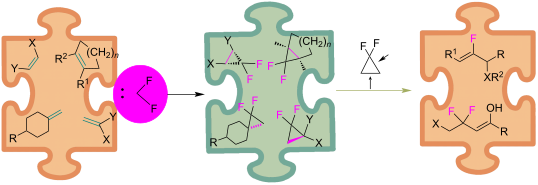
- were increased when potassium fluoride and 18-crown-6 were added to the reaction mixture [20]. Dehydrohalogenation of dichlorodifluoromethane under phase-transfer catalysis: Difluorocarbene can be generated from chlorodifluoromethane by phase-transfer catalysis (PTC) through the reaction with NaOH or
- this method was able to add at moderate temperatures to unreactive alkenes such as butyl acrylate (26) (Scheme 12). Fluoride ions can initiate a chain process, whereby TFDA undergoes desilylation which is followed by a subsequent decarboxylation, and loss of SO2 to form difluorocarbene :CF2 and F−; NaF
- -methylstyrene (7) by MDFA gave the corresponding difluorocyclopropane 8 in 82% NMR yield. The conditions used with MDFA were similar to those for TFDA. Minimal amounts of solvent were applied, keeping the concentrations high. The fluoride trap TMSCl which is both corrosive and volatile, could be replaced by




Total synthesis of decarboxyaltenusin
Beilstein J. Org. Chem. 2021, 17, 224–228, doi:10.3762/bjoc.17.22

- been used in a 1.2-fold excess) turned out to be very laborious. Moreover, the subsequent deprotection to the natural product 1 could not be achieved sufficiently: After treatment of 10a with tetrabutylammonium fluoride (TBAF), the signals of 1 could be detected in a 1H NMR spectrum of the crude


Benzothiazolium salts as reagents for the deoxygenative perfluoroalkylthiolation of alcohols
Beilstein J. Org. Chem. 2021, 17, 83–88, doi:10.3762/bjoc.17.8

- heavily fluorinated thiolate anions and the potential for deleterious side-reactions resulting from β-fluoride elimination [28][29][30][31][32][33][34]. Only a handful of perfluoroalkylthiolate salts are known and, to the best of our knowledge, only one general direct nucleophilic perfluoroalkylthiolation
- affords the key electrophilic 2-alkoxybenzothiazolium species A and the perfluoroalkylthiolate anion. Nucleophilic substitution then affords product 3 and thiocarbamate byproduct B. As a side-reaction, β-fluoride elimination from the perfluoroalkylthiolate anion can occur, leading to a thiocarbonyl
- fluoride species, which can subsequently react with the alcohol, delivering thionoester 4. β-Fluoride elimination is a known decomposition pathway of −SCF3 and has even been exploited in synthetic trifluoromethylthiolation and fluorination processes [32][33][34]. The formation of the side-product 4a could


Progress in the total synthesis of inthomycins
Beilstein J. Org. Chem. 2021, 17, 58–82, doi:10.3762/bjoc.17.7
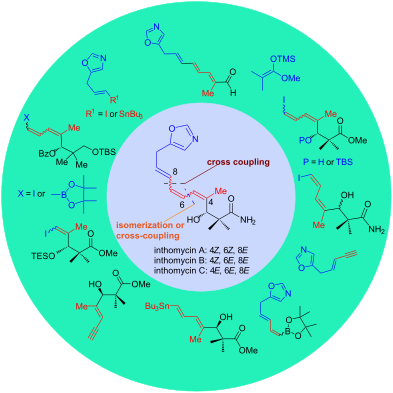
- synthetic efforts toward neooxazolomycin (4), oxazolomycin A (5a), and related antibiotics [17]. The recent review of Lee has mainly focused on the application of copper(I) salt and fluoride-promoted Stille coupling reactions in the synthesis of bioactive molecules including inthomycins A–C (1–3) [18]. The
- %). Deprotection of the TBDMS ether of stannane 40 with tetra-n-butylammonium fluoride (TBAF) in THF and then subsequent Swern oxidation of the crude alcohol gave aldehyde 41 in 71% yield. The aldehyde 41 was treated with ethyl isobutyrate (42) in the presence of LDA to afford the aldol adduct (Z)-(rac)-43 in the
- total synthesis of naturally occurring inthomycin C ((–)-3) in excellent yield and enantiopurity by employing a cationic oxazaborolidinium-catalyzed asymmetric Mukaiyama aldol reaction and Stille coupling as the key steps (Scheme 7). Treatment of compound 75 with tetra-n-butylammonium fluoride (TBAF) in









Recent progress in the synthesis of homotropane alkaloids adaline, euphococcinine and N-methyleuphococcinine
Beilstein J. Org. Chem. 2021, 17, 28–41, doi:10.3762/bjoc.17.4
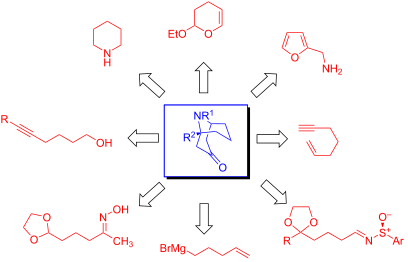
- acid in toluene. After 5 minutes, 1.2 equiv of tributyltin fluoride was added to intermediate A, and at the end of the process, 63a and 63b were obtained after chromatographic purification with 81% yield for 63a and 74% yield for 63b. Finally, the alkenes were oxidized in the presence of osmium


Deoxyfluorination of acyl fluorides to trifluoromethyl compounds by FLUOLEAD®/Olah’s reagent under solvent-free conditions
Beilstein J. Org. Chem. 2020, 16, 3052–3058, doi:10.3762/bjoc.16.254
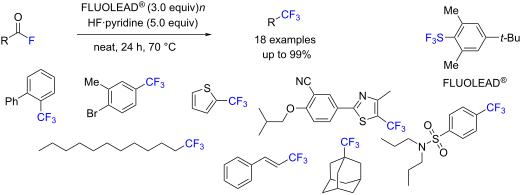
- developed various efficient methodologies for the electrophilic [14][15], nucleophilic [16], and radical [17] trifluoromethylation reactions for more than a decade. In recent years, we also reported the direct introduction of an acyl fluoride unit into aromatic compounds by the Pd-catalyzed cross-coupling
- fluorides have become available in recent years [19][20][21][22][23]. In this context, we were interested in the functional transformation of an acyl fluoride unit into a CF3 motif. Despite the current rich availability of acyl fluorides and a strong market demand for trifluoromethyl compounds, synthetic
- and not as fluorination of acyl fluorides. Thus, the acyl fluoride moiety is commonly sacrificed as a “leaving group” in reactions. On the other hand, the transformation to CF3 derivatives from carboxylic acids are traditionally examined. In 1960, Engelhardt [27] performed the deoxyfluorination of


Controlled decomposition of SF6 by electrochemical reduction
Beilstein J. Org. Chem. 2020, 16, 2948–2953, doi:10.3762/bjoc.16.244
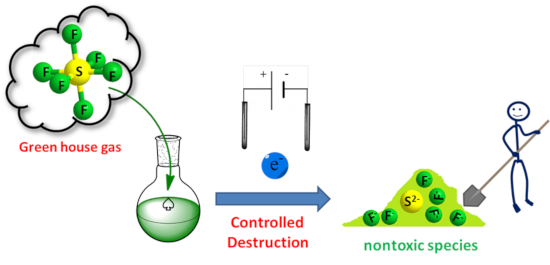
- +/Fc. The exact number of electrons for the full consumption of sulfur hexafluoride was determined and this gas further quantitatively transformed into environmentally benign fluoride anion and sulfur by electrochemical reduction. Keywords: electroreduction; fluoride anion; redox potential; sulfur
- disappearance of SF6 after 6 hours as well as all the fluorinated organic compounds. The only peak detected by 19F NMR is around −153 ppm. This value corresponds to the classical chemical shift range of a fluoride anion. Due to its broad appearance, we can postulate the association with cations coming from the
- ]: They can associate themselves with the F− anions and generate bifluoride HF2 anions or even polyfluorides F(HF). The presence of fluoride anions can produce a Hoffman elimination on the alkyl chain of TBA giving rise to tributylamine, butene, and HF. We can suppose that the anion S2− could also be


Fluorine effect in nucleophilic fluorination at C4 of 1,6-anhydro-2,3-dideoxy-2,3-difluoro-β-D-hexopyranose
Beilstein J. Org. Chem. 2020, 16, 2880–2887, doi:10.3762/bjoc.16.237
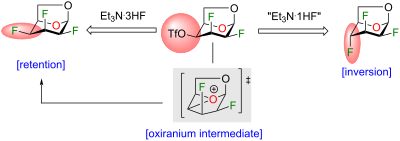
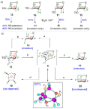
- retention of configuration was unexpected since the fluoride anion would have to approach the more sterically hindered β-face. To account for the retention of configuration (minor product) in the fluorination of compound 13, we proposed the involvement of an oxiranium-like intermediate A (Figure 3b
- reaction mixture was treated under acidic conditions and furnished the desired acetylated analogue 23 in 54% over 3 steps. This synthetic sequence represents a useful alternative to DAST or TBAF (tetrabutylammonium fluoride) that lead to elimination byproducts. Finally, after acetates removal, reduction of



Selective recognition of ATP by multivalent nano-assemblies of bisimidazolium amphiphiles through “turn-on” fluorescence response
Beilstein J. Org. Chem. 2020, 16, 2728–2738, doi:10.3762/bjoc.16.223
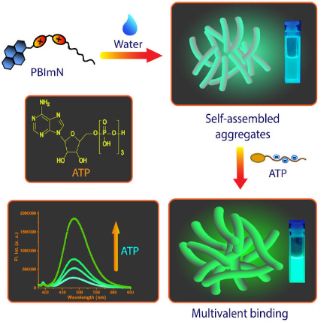
- PBIm12 was also examined in the presence of many other anions such as iodide, bromide, fluoride, acetate, bicarbonate, sulfate, etc. and all of them exhibited only negligible changes in the excimeric emission (Supporting Information File 1, Figure S14). ATP detection in the presence of 150 mM NaCl In


Optical detection of di- and triphosphate anions with mixed monolayer-protected gold nanoparticles containing zinc(II)–dipicolylamine complexes
Beilstein J. Org. Chem. 2020, 16, 2687–2700, doi:10.3762/bjoc.16.219
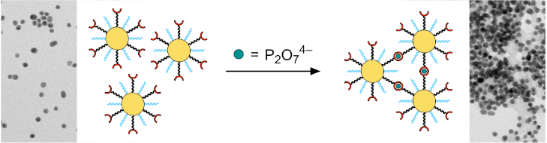
- . AuNP-based probes for inorganic anions, for example, can serve to monitor the water quality [14][15]. An example is the probe for halides that was described by the Sessler group. It comprised AuNPs with immobilized calix[4]pyrrole residues that are known to interact with chloride and fluoride. The


Vicinal difluorination as a C=C surrogate: an analog of piperine with enhanced solubility, photostability, and acetylcholinesterase inhibitory activity
Beilstein J. Org. Chem. 2020, 16, 2663–2670, doi:10.3762/bjoc.16.216
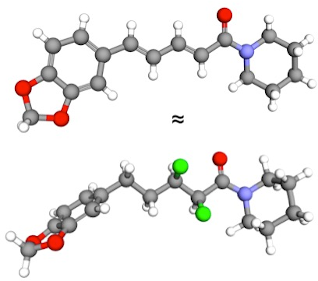
- = tetrahydrofuran, AD-mix-α = commercially available asymmetric dihydroxylation reagent, TBAF = tetrabutylammonium fluoride, DeoxoFluor = bis(2-methoxyethyl)aminosulfur trifluoride. Synthesis of compound 2 via a stepwise fluorination approach (ester series). DIC = diisopropylcarbodiimide, HOBt


Synthesis and characterization of S,N-heterotetracenes
Beilstein J. Org. Chem. 2020, 16, 2636–2644, doi:10.3762/bjoc.16.214

- –Hartwig amination of dibromide 7 with n-hexylamine in the presence of sodium tert-butoxide as base and Pd(dba)2/dppf as the catalytic system. The TIPS group was removed from Hex-SN4 8 upon treatment with tetra-n-butylammonium fluoride (TBAF) and the parent system Hex-SN4 9 was obtained in 80% yield


Activation of pentafluoropropane isomers at a nanoscopic aluminum chlorofluoride: hydrodefluorination versus dehydrofluorination
Beilstein J. Org. Chem. 2020, 16, 2623–2635, doi:10.3762/bjoc.16.213
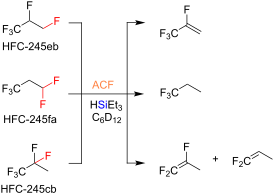
- such as hydrodefluorinations and dehydrofluorinations were observed, followed by hydroarylation and Friedel–Crafts-type reactions under mild conditions. Keywords: aluminum fluoride; C–F bond activation; dehydrofluorination; hydrodefluorination; hydrofluorocarbons; Introduction Hydrofluorocarbons
- pentafluoropropanes (HFC-245 isomers) using chromia-based catalysts, or metal chloride/fluoride (AlF3, MgF2)-supported catalysts at elevated temperatures (350 °C) [11][14][15][17][18]. The group of Lu recently reported the gas-phase transformation of 1,1,1,3,3-pentafluoropropane (HFC-245eb) into 1,3,3,3
- -tetrafluoropropene (HFO-1234ze) using mesoporous nanoscopic aluminum fluoride-based catalysts [19]. The catalysts were prepared via a sol–gel process in the presence of polyols, allowing for the evolution of a large surface area and improved acidic properties when compared to fluorinated Cr2O3 or traditional β-AlF3


Synthesis of novel fluorinated building blocks via halofluorination and related reactions
Beilstein J. Org. Chem. 2020, 16, 2562–2575, doi:10.3762/bjoc.16.208
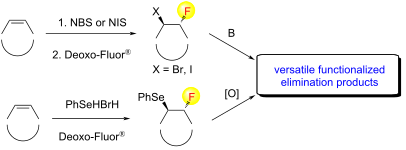
- process, an alkene reacts with a halogen cation to form a halonium ion, which immediately undergoes ring opening by fluoride to form a vicinal halofluoride (see Scheme 1). The overall result is an anti-addition of the XF moiety (X = Cl, Br, I) across the double bond. Since many nucleophilic fluorine
- transformation, and COOH→CF3 transformation), is also an important nucleophilic fluorination method [2][3][4][5][10][11][18]. The synthesis of fluorinated compounds via deoxyfluorination [21][22][23][24][25][26][27][28][29][30] or utilizing sulfur fluoride deoxyfluorinating reagents [31][32] is a highlighted
- topic. It is notable that halofluorination reactions applying sulfur fluoride deoxyfluorinating reagents as fluoride sources are practically unknown [33], but analogous reactions with α-fluoroamines (another class of deoxyfluorinating reagents) were reported [20]. As a result, our main aim was to


Chan–Evans–Lam N1-(het)arylation and N1-alkеnylation of 4-fluoroalkylpyrimidin-2(1H)-ones
Beilstein J. Org. Chem. 2020, 16, 2304–2313, doi:10.3762/bjoc.16.191

- replacement of pyridine by other organic bases/ligands (4-DMAP, 2,2’-bipy, Et3N, TMEDA, 8-hydroxyquinoline) resulted in poorer yields of the target product in all cases (Table 1, entries 6–10). The use of copper(II) fluoride (in contrast to triflate) instead of acetate had practically no effect on the


Photosensitized direct C–H fluorination and trifluoromethylation in organic synthesis
Beilstein J. Org. Chem. 2020, 16, 2151–2192, doi:10.3762/bjoc.16.183
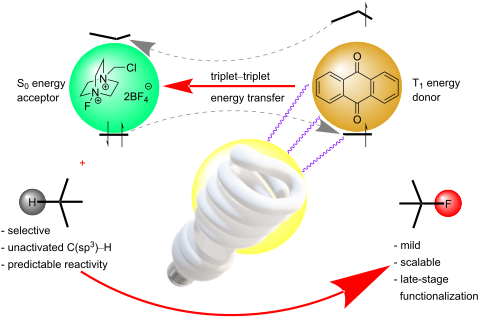
- chemistry [175]. Despite the utility of (diethylamino)sulfur trifluoride (DAST) [176], morpholinosulfur trifluoride and tetrabutylammonium fluoride (TBAF) [4] as nucleophilic fluorine sources, the high reactivity of alternative electrophilic fluorine sources, such as fluoroxysulfates and hypofluorites [177




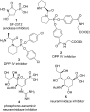
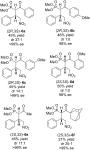
Convenient access to pyrrolidin-3-ylphosphonic acids and tetrahydro-2H-pyran-3-ylphosphonates with multiple contiguous stereocenters from nonracemic adducts of a Ni(II)-catalyzed Michael reaction
Beilstein J. Org. Chem. 2020, 16, 2073–2079, doi:10.3762/bjoc.16.174
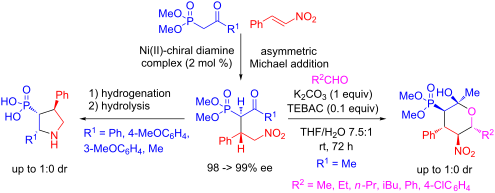
- detected in the reaction even after 72 h in the presence of 1 equiv of potassium phosphate or carbonate with TEBAC (0.1 equiv, Table 1, entries 4 and 5). If potassium fluoride or cesium carbonate were used as a base, the initial phosphonate 6e was consumed in a few hours, but unidentified products were



Selective preparation of tetrasubstituted fluoroalkenes by fluorine-directed oxetane ring-opening reactions
Beilstein J. Org. Chem. 2020, 16, 1936–1946, doi:10.3762/bjoc.16.160
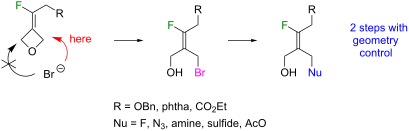
- phthalimidoyl substituents affording preferentially the Z-isomer of 1c. However, heteronucleophiles such as sodium azide, secondary amine and cesium fluoride were unsuccessfully tested. Finally, using the conditions developed by Burkhard and Carreira [26], the opening of the fluoroalkylidene-oxetane ring was


Design, synthesis and application of carbazole macrocycles in anion sensors
Beilstein J. Org. Chem. 2020, 16, 1901–1914, doi:10.3762/bjoc.16.157
- anions also represented different parts of the Hofmeister series. Chloride and nitrate are also common in real-world samples that such sensors might be used to analyse. Fluoride and iodide represented halides at opposite ends of the Hofmeister series. The selectivity pattern for the control membrane
- coefficients for fluoride were due to an abnormally large flow rate of chloride from the reference electrode during a single measurement. This affected the responses for sensors that were used. The ISMs showed modest selectivities. However, incorporating any of the three receptors in the membrane as an
- without carboxylate groups (fluoride, chloride, nitrate, iodide), compared to the control membrane. Optimization of the control membrane's composition (e.g., reducing the amount of anion exchanger or using another plasticizer) could improve its selectivity to some extent, but a disruption of the




Et3N/DMSO-supported one-pot synthesis of highly fluorescent β-carboline-linked benzothiophenones via sulfur insertion and estimation of the photophysical properties
Beilstein J. Org. Chem. 2020, 16, 1740–1753, doi:10.3762/bjoc.16.146
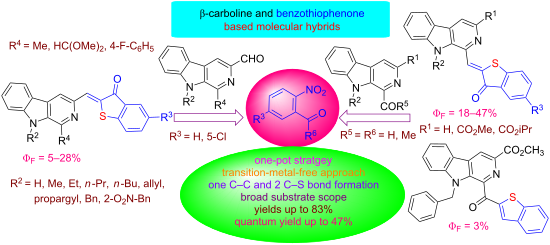
- , β-carbolines are also used as fluorescence standards. Recently, a novel β-carboline-based fluorescent chemosensor was developed by Batra and co-workers for the quantitative analysis of fluoride ions (F−) at ppb level [19]. Sulfur-containing organic compounds are broadly associated with numerous


Pauson–Khand reaction of fluorinated compounds
Beilstein J. Org. Chem. 2020, 16, 1662–1682, doi:10.3762/bjoc.16.138
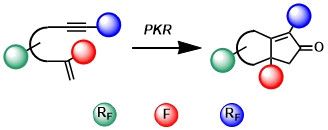
- the PKR of enynes containing a fluoride moiety. Keywords: alkene; alkyne; enyne; fluorine; Pauson–Khand; Introduction The prevalence of fluorine-containing molecules in drug-discovery programs is nowadays unquestionable [1][2][3]. The presence of fluorine atoms or fluorine-containing units at
- groups at the vinylic position, very few examples have been described to date. In this context, our group recently explored the reactivity of 1,n-enynes bearing a vinyl fluoride moiety as the olefin counterpart in the intramolecular PKR [59] (Scheme 18). The study of the behavior of this kind of
- recovered, in agreement with previous precedents describing that trisubstituted alkenes are very unreactive substrates in this kind of process (Scheme 28) [65]. The influence of the introduction a vinyl fluoride moiety on the PKR was also investigated (Scheme 29). The resulting cyclopentenones 57 were




Fluorohydration of alkynes via I(I)/I(III) catalysis
Beilstein J. Org. Chem. 2020, 16, 1627–1635, doi:10.3762/bjoc.16.135
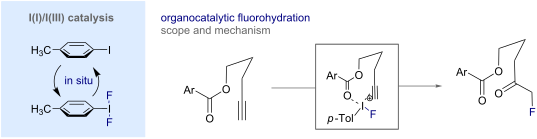
- organocatalyst, Selectfluor® was employed as the terminal oxidant, and an amine/HF complex enlisted as the fluoride source (please see Supporting Information File 1 for full details). The reaction was performed in CHCl3 at ambient temperature and the crude reaction mixtures were analysed by 19F NMR spectroscopy
- -fluoroketone motif from alkynes. Selectfluor®-mediated oxidation of p-TolI in the presence of an amine/HF source, which plays a dual function as fluoride source and Brønsted acid activator, enables in situ generation of p-TolIF2 (Figure 5). From these preliminary mechanistic investigations, conclusions
- . Conformation of the carbonyl group and the fluoride with a torsion angle of φO=C-C-F = −3.7°. CCDC number 2000136. (A) Structure activity relationship of the core scaffold. (B) Exploring the effect of methyl benzoate as an activator. (C) Stoichiometric reaction with p-TolIF2 17 and alkyne 16. Yields refer to


Facile synthesis of 7-alkyl-1,2,3,4-tetrahydro-1,8-naphthyridines as arginine mimetics using a Horner–Wadsworth–Emmons-based approach
Beilstein J. Org. Chem. 2020, 16, 1617–1626, doi:10.3762/bjoc.16.134
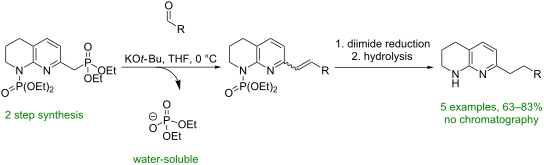
- defluorination, presumably via a Tsuji–Trost-like elimination of the allylic fluoride [18][19]. This sequence represents a marked improvement from the Wittig-including route, lowering the number of synthetic steps and increasing the overall yield [2]. Furthermore, no problematic byproducts are formed, and good