Search results
Search for "leaving group" in Full Text gives 265 result(s) in Beilstein Journal of Organic Chemistry. Showing first 200.
Synthesis of aryl-substituted thieno[3,2-b]thiophene derivatives and their use for N,S-heterotetracene construction
Beilstein J. Org. Chem. 2019, 15, 2678–2683, doi:10.3762/bjoc.15.261
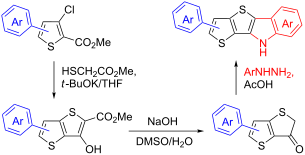
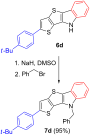
- should be noted that the initial 3-aminoesters 1 are known compounds and can be obtained by the Fiesselmann thiophene synthesis from aryl-substituted acrylonitriles bearing a good leaving group at the C-3 position [22][23][24]. Methyl 3-chlorothiophene-2-carboxylates 2a–k were further involved in the



1,5-Phosphonium betaines from N-triflylpropiolamides, triphenylphosphane, and active methylene compounds
Beilstein J. Org. Chem. 2019, 15, 2603–2611, doi:10.3762/bjoc.15.253

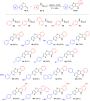
- broad O–H absorption bands in their IR spectra (≈3400–3500 cm−1) and the presence of hydrogen-bonded water molecules in the crystal structure of E-3e (vide infra) indicate. The formation of betaines 3 includes the elimination of the N-phenyltriflamide anion, which is known as an excellent leaving group
- phosphonium betaines, which can formally be named 1,5-phosphonium-carbabetaines, but because of the extended delocalization of the negative charge are better described as 1-phosphonium-5-oxabetaines. The excellent leaving group character of the N-phenyltriflylamide anion ([N(Ph)SO2CF3]−) is a key factor in


Archangelolide: A sesquiterpene lactone with immunobiological potential from Laserpitium archangelica
Beilstein J. Org. Chem. 2019, 15, 1933–1944, doi:10.3762/bjoc.15.189
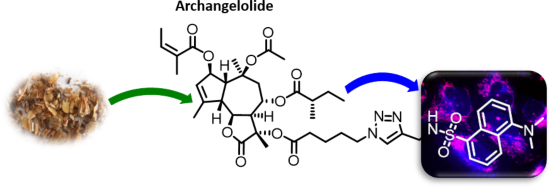
- hydroxy group more acidic and thus a better leaving group in the reaction. Next, the quaternary 11α-hydroxy group was acylated by freshly prepared 5-azidopentanoic anhydride in the presence of 4-DMAP at room temperature. Finally, the azidopentanoate 4 was successively introduced into a click reaction with




The cyclopropylcarbinyl route to γ-silyl carbocations
Beilstein J. Org. Chem. 2019, 15, 1769–1780, doi:10.3762/bjoc.15.170
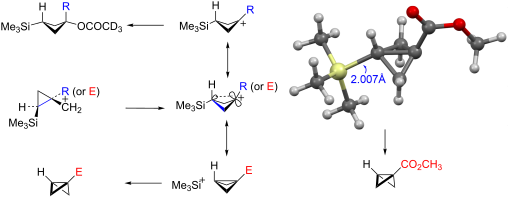
- ). These cations 11 capture solvent molecules to give exclusively products 12 with net retention of configuration, a characteristic of carbocations that are stabilized by this type of rear lobe interaction. A series of cyclopropylcarbinyl substrates 13 and 14 (Figure 2), where X is a leaving group and R is


An improved synthesis of adefovir and related analogues
Beilstein J. Org. Chem. 2019, 15, 801–810, doi:10.3762/bjoc.15.77
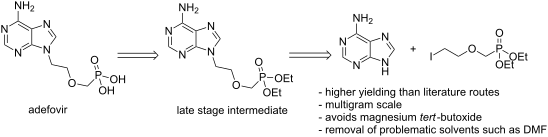
- synthesis of adefovir dipivoxil (2) exploiting phosphonate 33. Impact of the leaving group on in situ conversion of 4 to 6. Impact of base, solvent and temperature on reaction performance and regioselectivity. Supporting Information Supporting Information File 506: Experimental part and NMR spectra.


Diastereo- and enantioselective preparation of cyclopropanol derivatives
Beilstein J. Org. Chem. 2019, 15, 752–760, doi:10.3762/bjoc.15.71
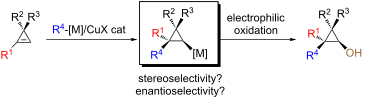
- general structure M–O–LG, with a metal and a leaving group connected to an oxygen atom, have been shown to be an excellent electrophilic oxygen source for nucleophilic organometallic species [72]. Since the original discovery of Müller and Töpel of lithiated peroxides [73], several studies have been




Tuning the stability of alkoxyisopropyl protection groups
Beilstein J. Org. Chem. 2019, 15, 746–751, doi:10.3762/bjoc.15.70
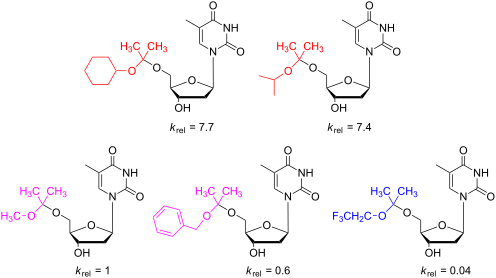
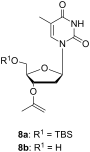
- directly reflected by the observed hydrolysis rate, whereas the changes in polarity of the leaving alcohol do not give marked changes on the rate. The latter is due to the fact that the kinetic effects on the protonation step and the leaving group ability largely cancel each other. In our study, the



An efficient and concise access to 2-amino-4H-benzothiopyran-4-one derivatives
Beilstein J. Org. Chem. 2019, 15, 703–709, doi:10.3762/bjoc.15.65
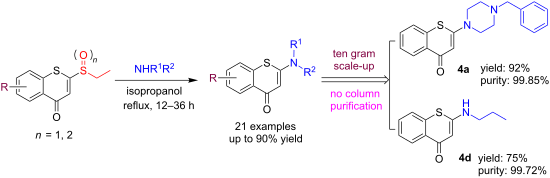
- be the optimum leaving group by thorough investigations on the elimination of sulfide, sulfinyl, and sulfonyl groups at the 2-position of benzothiopyranone. Most 2-aminobenzothiopyranones were obtained in good to excellent yields under refluxing in isopropanol within 36 h. This method is base-free
- -imidazolylbenzothiopyranones [10]. It is well known that the sulfide, sulfinyl and sulfonyl groups are generally used as the leaving group for the synthesis of 2-substituted 4H-chromen-4-ones [11][12][13][14][15][16][17][18][19][20][21][22]. Due to the higher electronegativity of the oxygen atom compared to the sulfur atom
- provided a much higher product yield (Table 2, entries 1, 3 and 5 vs entries 2, 4 and 6, respectively) and sometimes required a shorter reaction time (Table 2, entry 3 vs entry 4) than the corresponding substrate 3a. To further verify the advantage of the sulfinyl group as the optimal leaving group, the


Syntheses and chemical properties of β-nicotinamide riboside and its analogues and derivatives
Beilstein J. Org. Chem. 2019, 15, 401–430, doi:10.3762/bjoc.15.36
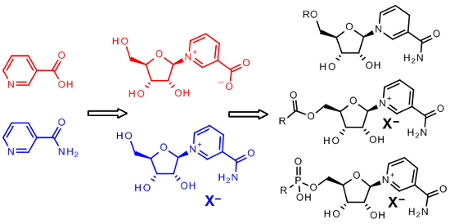
- riboside. The stereochemical outcomes of the synthesis (anomeric ratio) depends on the nature and the stereochemistry of the leaving group X in sugar B (α- or β-anomer), on the nature of the substituents at the amide nitrogen atom in Nam, and on the conditions of glycosylation, such as solvent and




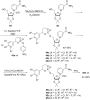


Silanediol versus chlorosilanol: hydrolyses and hydrogen-bonding catalyses with fenchole-based silanes
Beilstein J. Org. Chem. 2019, 15, 167–186, doi:10.3762/bjoc.15.17
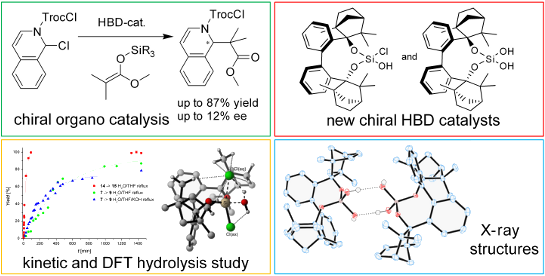
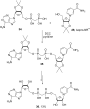
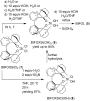
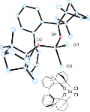
- Nucleophilic substitution at silicon is already discussed with SN2 mechanism, following a backside attack opposite of the leaving group, as well as a front side attack near the leaving group [62][63][64][65][66][67][68]. A backside attack at the silicon in dichlorosilane 7 and monochlorosilanol 8 is blocked by








Synthesis of a tubugi-1-toxin conjugate by a modulizable disulfide linker system with a neuropeptide Y analogue showing selectivity for hY1R-overexpressing tumor cells
Beilstein J. Org. Chem. 2019, 15, 96–105, doi:10.3762/bjoc.15.11
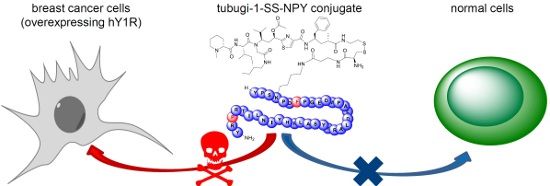
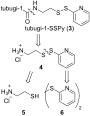
- (Scheme 1) shows that, in addition to tubugi-1 itself, only the readily accessible building block 4 is required to construct the activated compound tubugi-1-SSPy (3) as a universal precursor for peptide–toxin conjugate syntheses [57]. The pyridyl disulfide is a leaving group which can be substituted by




Synthesis of α-D-GalpN3-(1-3)-D-GalpN3: α- and 3-O-selectivity using 3,4-diol acceptors
Beilstein J. Org. Chem. 2018, 14, 2805–2811, doi:10.3762/bjoc.14.258
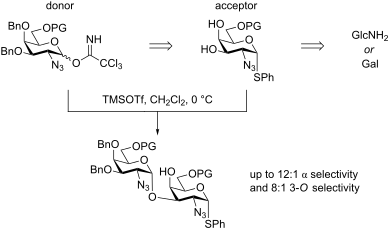
- and faster access to these biologically abundant and relevant α-D-GalpNAc-(1-3)-D-GalpNAc motifs. Undesired migration followed by benzylation of the 3-O-Bz GalN3 using several different benzylation procedures (LG: leaving group). Simple synthesis of two acceptors and two donors from the same common


Photocatalyic Appel reaction enabled by copper-based complexes in continuous flow
Beilstein J. Org. Chem. 2018, 14, 2730–2736, doi:10.3762/bjoc.14.251
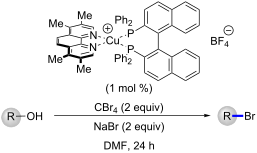
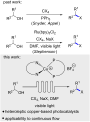
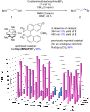
- amount of the formylated product 3 (Table 2, entry 4). A possible explanation for the increased yield of 3 when using TBAB could be due to slower displacement of leaving group by the “bulkier” source of bromide. In attempting to extend the residence time, the flow rate of the reaction mixture was




Synthesis of a leopolic acid-inspired tetramic acid with antimicrobial activity against multidrug-resistant bacteria
Beilstein J. Org. Chem. 2018, 14, 2482–2487, doi:10.3762/bjoc.14.224
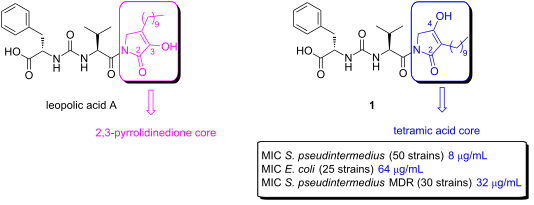
- , we used an aprotic polar solvent like DMF, which weakly solvates the enolates. However, treatment of compound 10 with benzyl bromide and K2CO3 in DMF gave exclusively the C-3 alkylated derivative. Thus, we considered that a hard leaving group such as a sulfonate should play a key role in favouring O


Hypervalent iodine compounds for anti-Markovnikov-type iodo-oxyimidation of vinylarenes
Beilstein J. Org. Chem. 2018, 14, 2146–2155, doi:10.3762/bjoc.14.188
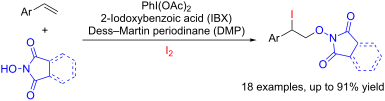
- versatile leaving group for further transformations. The involvement of the iodine in the radical reactions of styrenes is complicated by the fact that unsaturated compounds readily undergo electrophilic iodination with the addition of an external nucleophile [61][62]. The oxidants used for the preparation




D-Fructose-based spiro-fused PHOX ligands: synthesis and application in enantioselective allylic alkylation
Beilstein J. Org. Chem. 2018, 14, 2082–2089, doi:10.3762/bjoc.14.182
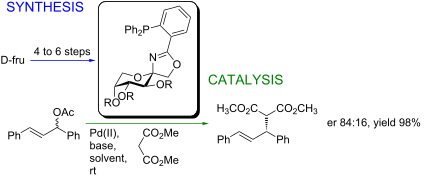
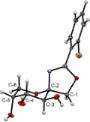
- different substitution pattern at positions 3, 4 and 5. PG: protective group, X: leaving group. Activation of 7 to oxocarbenium ion 9 in the Ritter reaction. Zemplén deacetylation of 10i. Benzylation of 10j to give 10b. Plausible mechanism of the Ritter reaction. For better clarity C-2 is not shown in




Functionalization of graphene: does the organic chemistry matter?
Beilstein J. Org. Chem. 2018, 14, 2018–2026, doi:10.3762/bjoc.14.177
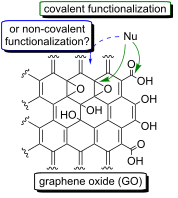
- carbodiimide-promoted reactions [13][14]. As presented in Figure 2, step a, the first step of a carbodiimide-type conjugation involves the generation of an O-acylisourea intermediate, which is highly electrophilic and which bears the urea-based good leaving group. Such activation of carboxyl groups onto a


Acyl-group specificity of AHL synthases involved in quorum-sensing in Roseobacter group bacteria
Beilstein J. Org. Chem. 2018, 14, 1309–1316, doi:10.3762/bjoc.14.112
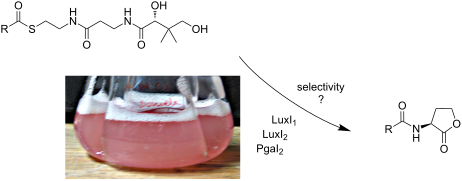
- by substitution of the good leaving group 5’-deoxy-5’-thiomethyladenosine (5) of the thioester group, leading to homoserine lactone 4 formation (Scheme 1). Recently a LuxI-homolog, BjaI [20] preferring acyl-coenzyme A (CoA) substrates instead of the common ACP precursors, was characterized [21]. The


An unusual thionyl chloride-promoted C−C bond formation to obtain 4,4'-bipyrazolones
Beilstein J. Org. Chem. 2018, 14, 1287–1292, doi:10.3762/bjoc.14.110
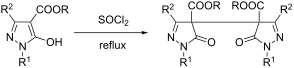
- -substituents at the pyrazole C4 position, like 5-chloropyrazole-4-carbaldehydes or 4-esters, turned out to be particularly useful due to the easy conversion of the chloro substituent into other functional groups or its nature as a good leaving group in ring-closure reactions. In this respect we were interested


A survey of chiral hypervalent iodine reagents in asymmetric synthesis
Beilstein J. Org. Chem. 2018, 14, 1244–1262, doi:10.3762/bjoc.14.107
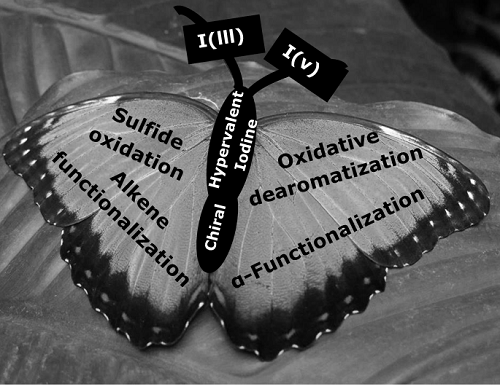
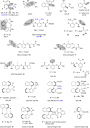
- bonds. The subsequent intramolecular substitution reaction of intermediate 61 having hypervalent iodine as a good leaving group yielded the required heterocycles. After Wirth’s report, Nevado et al. discovered a newly modified chiral iodine reagent 13 analogous to lactate-based chiral iodoarenes [53



Rapid transformation of sulfinate salts into sulfonates promoted by a hypervalent iodine(III) reagent
Beilstein J. Org. Chem. 2018, 14, 1203–1207, doi:10.3762/bjoc.14.101
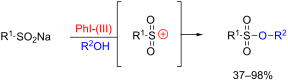
- , decarboxylation, and fragmentation [6][7][8][9][10][11][12][13][14][15][16][17][18][19][20][21][22][23][24][25][26][27]. The sulfonate group is a useful functionality frequently employed as a leaving group in substitution reactions. Production of sulfonates [28] from alcohols generally involves reaction with a
- diol derivative containing a linear chain in only one step. One alcohol is available as a leaving group and the second is protected by conversion into a trichloroacetate moiety (Scheme 4). Conclusion A novel oxidative method for producing sulfonates from sulfinates using hypervalent iodine reagents has


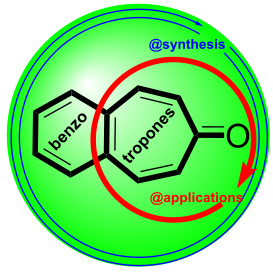
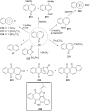
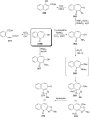
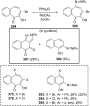
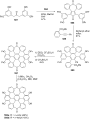
One hundred years of benzotropone chemistry
Beilstein J. Org. Chem. 2018, 14, 1120–1180, doi:10.3762/bjoc.14.98








Phosphodiester models for cleavage of nucleic acids
Beilstein J. Org. Chem. 2018, 14, 803–837, doi:10.3762/bjoc.14.68
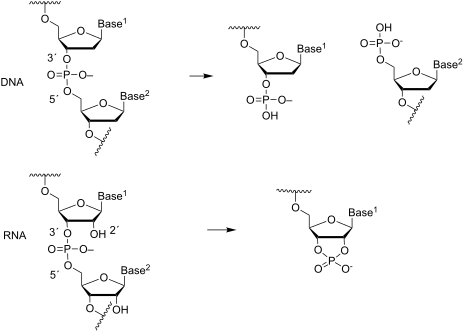
- leaving groups that are less basic than EtO−, such as 5´-O− of nucleoside, the lifetime expectedly is shorter. If the leaving group is very good, such as an aryl group, a synchronous concerted mechanism (ANDN) may take over the stepwise mechanism (AN + DN). Model compounds and experimental tools Studies
- been done with this simple model. One should, however, bear in mind that the p-nitrophenoxy group is a 108 times better leaving group than a 5´-linked nucleoside and, hence, the rate limiting step of these two reactions can well be different, as discussed later in more detail below. In addition, the
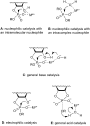
- underlying idea behind the latter application is that protonation of the leaving group by a general acid is not needed with 5´-thiosubstituted analogs, since the sulfide ion is a much better leaving group than the alkoxide ion. Most extensively used thiosubstitution, however, is replacement of either one of



Recent advances in synthetic approaches for medicinal chemistry of C-nucleosides
Beilstein J. Org. Chem. 2018, 14, 772–785, doi:10.3762/bjoc.14.65
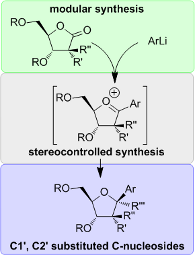
- cleavage proceeds either by activation of a nucleophile that attacks C1' or by stabilization of the leaving group, which could either be the nucleobase or an oxocarbenium ion [31][36]. As such, the oxocarbenium ion is a species formed during the glycosidic bond cleavage, which may be present as an
- acids. Shown is the monomeric building block of nucleic acids. Changes to the nucleotide structure can affect molecular recognition, as well as structure and function. Formation of oxocarbenium ion during glycosidic bond cleavage in nucleosides [31]. The extent of leaving group stabilization and


Sequential Ugi reaction/base-induced ring closing/IAAC protocol toward triazolobenzodiazepine-fused diketopiperazines and hydantoins
Beilstein J. Org. Chem. 2018, 14, 626–633, doi:10.3762/bjoc.14.49
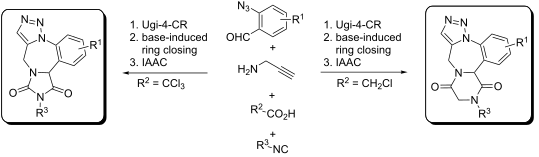
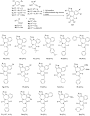
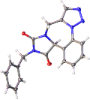
- intermediate. The functionalities required for the secondary transformations like the leaving group (-Cl) for nucleophilic substitution, alkyne and azide for IAAC can be assembled via the Ugi reaction (Scheme 1). Results and Discussion We initiated our studies with the Ugi 4-component reaction of o