Search results
Search for "chiral" in Full Text gives 1074 result(s) in Beilstein Journal of Organic Chemistry. Showing first 200.
A review of recent advances in electrochemical and photoelectrochemical late-stage functionalization classified by anodic oxidation, cathodic reduction, and paired electrolysis
Beilstein J. Org. Chem. 2024, 20, 2500–2566, doi:10.3762/bjoc.20.214
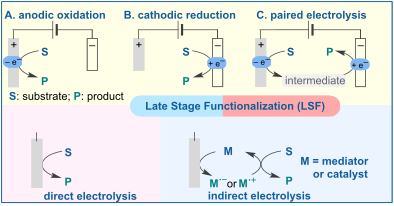
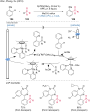
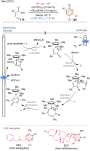
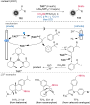
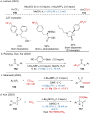
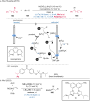
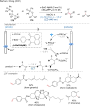
- product (Scheme 34). To date, only a few enantioselective reactions using metal catalysis and electrochemistry have been reported. Very recently, Ackermann and coworkers employed Co(OAc)2 as a catalyst and a salicyloxazoline derivative as a chiral ligand to achieve the electrochemical atroposelective C–H
- annulation of benzamides and allenes [47]. This method demonstrated excellent functional group tolerance, yielding a broad range of C–N axially chiral compounds with good yields and enantioselectivities. The practicality of this strategy was further demonstrated by a decagram-scale synthesis and the LSF of
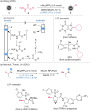
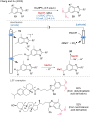
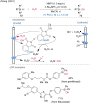
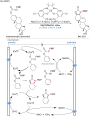
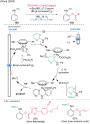
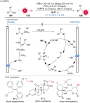
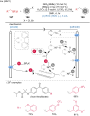
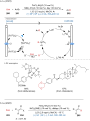
- efficiently, enabling the LSF of benzodiazepine drugs such as diazepam, halazepam, and prazepam. Mechanistically, the Rh complex activates the C–H bond in phenylpyridine and assists in forming a bond with diphenylphosphine oxide, which, after anodic oxidation, yields the target product (Scheme 39). A chiral


























Machine learning-guided strategies for reaction conditions design and optimization
Beilstein J. Org. Chem. 2024, 20, 2476–2492, doi:10.3762/bjoc.20.212

- are applicable to various substrates within the same reaction type [211][212][213][214][215]. For instance, the generality of chiral catalysts for asymmetric or enantioselective catalysis has been a longstanding interest in synthetic chemistry [216]. Angello et al. [53] applied uncertainty-minimizing


Synthesis and conformational analysis of pyran inter-halide analogues of ᴅ-talose
Beilstein J. Org. Chem. 2024, 20, 2442–2454, doi:10.3762/bjoc.20.208
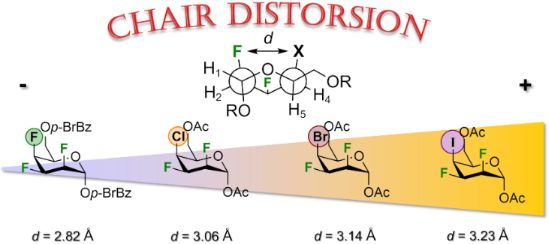
- chiral halides: F, Cl, Br, I) [19]. Only a handful of natural product syntheses have been reported [20][21], despite the promising biological activity of these unique inter-halides [22]. For our part, we recently reported the synthesis of contiguous inter-halide-bearing stereocenters using a Chiron


Facile preparation of fluorine-containing 2,3-epoxypropanoates and their epoxy ring-opening reactions with various nucleophiles
Beilstein J. Org. Chem. 2024, 20, 2421–2433, doi:10.3762/bjoc.20.206
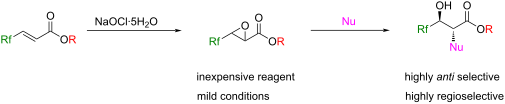
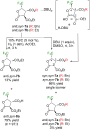
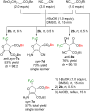
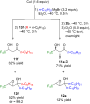
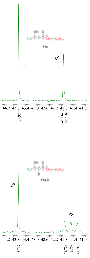
- sequence from the corresponding chiral 4,4,4-trifluoro-3-hydroxybutyrate at low temperature [27][28][29][30], and 2) t-BuO2Li-mediated transformation of the enoates like 1g at −78 °C [31][32] and, to the best of our knowledge, no report has appeared on the convenient methods applicable to the larger scale





Evaluating the halogen bonding strength of a iodoloisoxazolium(III) salt
Beilstein J. Org. Chem. 2024, 20, 2401–2407, doi:10.3762/bjoc.20.204
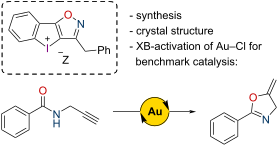
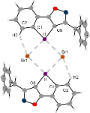
- iodoloisoxazolium for halogen-bonding activation and catalysis. Studies on the synthesis and application of chiral and/or bidentate dicationic derivatives are currently underway in our laboratory. Set of literature-known monocationic cyclic diaryliodonium(III) salts that were applied as XB donors (Z = OTf, BArF24




Asymmetric organocatalytic synthesis of chiral homoallylic amines
Beilstein J. Org. Chem. 2024, 20, 2349–2377, doi:10.3762/bjoc.20.201
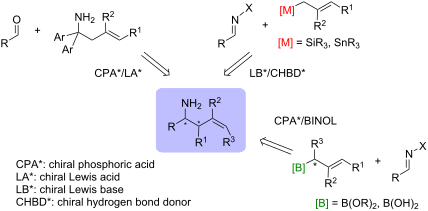
- Nikolay S. Kondratyev Andrei V. Malkov Department of Chemistry, Loughborough University, Loughborough, LE11 3TU, UK Faculty of Science and Engineering, University of Wolverhampton, Wolverhampton, WV1 1LY, UK 10.3762/bjoc.20.201 Abstract In recent decades, the chiral allylation of imines emerged
- as a key methodology in the synthesis of alkaloids and natural products with 4-, 5- and 6-membered cyclic amine motifs. Initially reliant on stoichiometric reagents, synthetic chemists predominantly used N-substituted chiral imines, organometallic chiral reagents and achiral reagents with an
- equimolar chiral controller. However, recent years have witnessed the rise of asymmetric transition-metal catalysts and, importantly, organocatalytic allylation, reshaping the landscape of modern synthetic chemistry. This review explores the latest developments in the asymmetric allylation of imines






Stereoselective mechanochemical synthesis of thiomalonate Michael adducts via iminium catalysis by chiral primary amines
Beilstein J. Org. Chem. 2024, 20, 2313–2322, doi:10.3762/bjoc.20.198
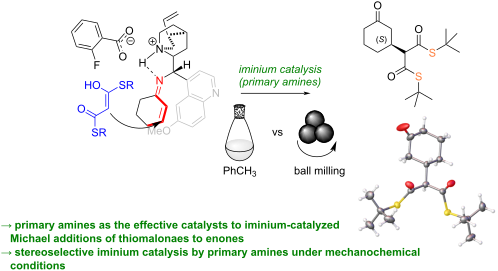
- significant advancement in mechanocatalysis. The stereoselective addition of bisthiomalonates 1–4 to cyclic enones and 4-chlorobenzylideneacetone proceeds stereoselectively under iminium activation conditions secured by chiral primary amines, in contrast to oxo-esters as observed in dibenzyl malonate addition
- hour compared to 24 or even 168 hours in solution-based reactions. It is noteworthy that this represents one of the early reports on the application of iminium catalysis using first-generation chiral amines under mechanochemical conditions, along with the utilization of easily enolizable thioesters as
- studies by Bolm [12][13], and Juaristi et al. [14]. have significantly advanced chiral secondary amine-catalyzed stereoselective reactions under ball milling conditions, representing a widely explored activation mode in mechanochemical-mediated transformations. However, reports on chiral primary iminium


Catalysing (organo-)catalysis: Trends in the application of machine learning to enantioselective organocatalysis
Beilstein J. Org. Chem. 2024, 20, 2280–2304, doi:10.3762/bjoc.20.196
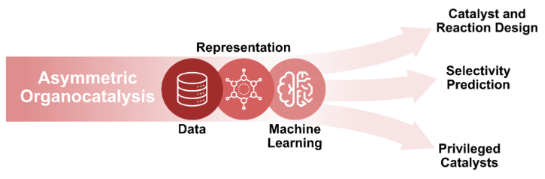
- [96] investigated a bromocyclization catalysed by a chiral phosphoric acid (CPA) and a DABCOnium brominating reagent (Figure 6). The authors calculated transition state conformer ensembles for several flexible DABCOnium systems and performed energy decomposition analysis to separate the interactions


Natural resorcylic lactones derived from alternariol
Beilstein J. Org. Chem. 2024, 20, 2171–2207, doi:10.3762/bjoc.20.187
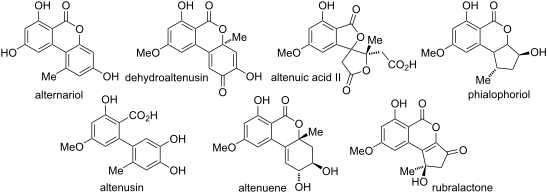
- structure of verrulactone A was later unambiguously confirmed by X-ray crystallographic analysis [160]. Chirality and absolute configurations remained unresolved, where it should be noted that even verrulactones A and B are axially chiral with an assumed significant racemization barrier. At least it has

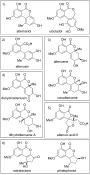
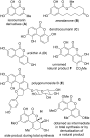


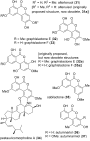

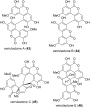


Factors influencing the performance of organocatalysts immobilised on solid supports: A review
Beilstein J. Org. Chem. 2024, 20, 2129–2142, doi:10.3762/bjoc.20.183
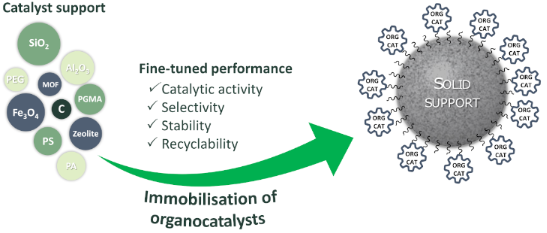
- the support [8][67]. Adsorption is a non-covalent reversible technique for attaching organocatalysts to supports. It offers a facile and modular construction of immobilised chiral catalysts with maintained or even improved activity and stereoselectivity [68][69][70]. The main advantages of catalyst
- and changes in the reaction kinetics. The non-covalent immobilisation of chiral organocatalysts can also be carried out within deep eutectic solvents (DESs). Very recently, a cinchonidine-squaramide organocatalyst was immobilised in three types of natural DESs, namely betaine/sorbitol/water, betaine
- modifications play a more important role. MOFs are a type of porous crystalline polymers where organic ligands are coordinated to metal clusters [80][81][82][83][84][85][86][87][88][89][90]. The framework can be post-synthetically modified by functional organic sites, often specifically chiral functionalities


Diastereoselective synthesis of highly substituted cyclohexanones and tetrahydrochromene-4-ones via conjugate addition of curcumins to arylidenemalonates
Beilstein J. Org. Chem. 2024, 20, 2016–2023, doi:10.3762/bjoc.20.177
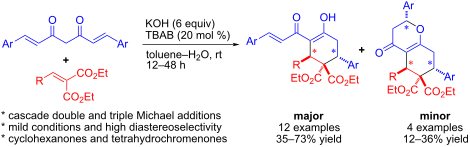
- KOH using TBAB as a suitable phase transfer catalyst in a biphasic medium at room temperature. The scalability of the reaction has also been demonstrated. Our future efforts will involve performing an asymmetric version of this reaction using chiral phase-transfer catalysts and the results will be


Harnessing the versatility of hydrazones through electrosynthetic oxidative transformations
Beilstein J. Org. Chem. 2024, 20, 1988–2004, doi:10.3762/bjoc.20.175
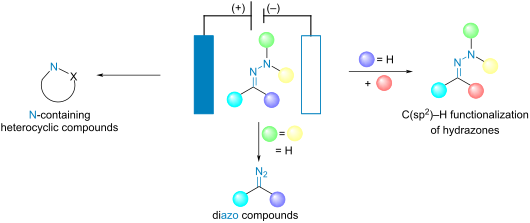
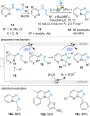
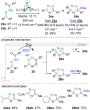
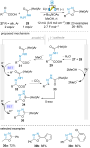
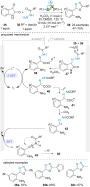
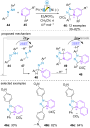
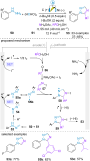
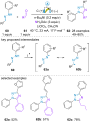
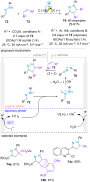
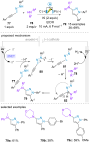
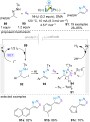
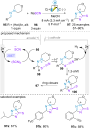
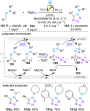
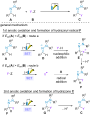
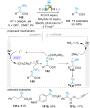
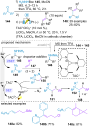
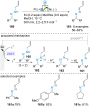
- asymmetric preparation of chiral amines through the addition of nucleophilic partners [21][22] while the azaenamine character of some aldehyde-derived hydrazones has been demonstrated in the coupling with suitable electrophiles such as Michael acceptors [23][24]. Last but not least, the C=N bond of









Access to 2-oxoazetidine-3-carboxylic acid derivatives via thermal microwave-assisted Wolff rearrangement of 3-diazotetramic acids in the presence of nucleophiles
Beilstein J. Org. Chem. 2024, 20, 1894–1899, doi:10.3762/bjoc.20.164

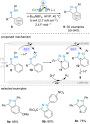
- substituent in the exocyclic acyl group by introducing different N-, O-, and S-nucleophilic reagents into the reaction. The reaction of chiral diazotetramic acids leads exclusively to trans-diastereomeric β-lactams. The use of variously substituted diazotetramic acids, including spirocyclic derivatives, as


Chiral bifunctional sulfide-catalyzed enantioselective bromolactonizations of α- and β-substituted 5-hexenoic acids
Beilstein J. Org. Chem. 2024, 20, 1794–1799, doi:10.3762/bjoc.20.158
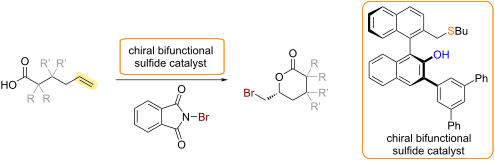
- without substituents on the carbon–carbon double bond have remained a formidable challenge. To address this limitation, we report herein the asymmetric bromolactonization of 5-hexenoic acid derivatives catalyzed by a BINOL-derived chiral bifunctional sulfide. Keywords: asymmetric catalysis
- ; enantioselectivity; halogenation; lactones; organocatalysis; Introduction Catalytic asymmetric halolactonizations of alkenoic acids are powerful methods for the preparation of important chiral lactones in enantioenriched forms [1][2][3][4][5][6][7][8][9][10][11]. A wide variety of chiral catalysts have been applied
- to asymmetric halolactonizations, especially for the synthesis of chiral γ-butyrolactones and δ-valerolactones via the reaction of 4-pentenoic acid and 5-hexenoic acid derivatives (Scheme 1). Notably, however, substituents on the carbon–carbon double bond of alkenoic acid substrates are generally


Harnessing unprotected deactivated amines and arylglyoxals in the Ugi reaction for the synthesis of fused complex nitrogen heterocycles
Beilstein J. Org. Chem. 2024, 20, 1758–1766, doi:10.3762/bjoc.20.154
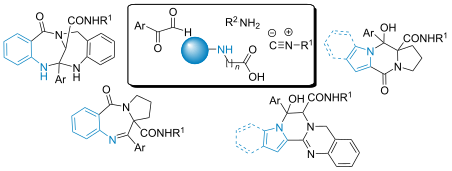
- considering the diastereoselectivity observed when enantiopure (S)-α-methylbenzylamine was used as chiral component in the two-step syntheses from amine surrogates [22], we assayed our new strategy to achieve a one-pot diastereoselective synthesis of benzodiazepinones 6 (Scheme 2, Table 2). Interestingly, the
- pyrrolopiperazinones when enantiopure (S)-α-methylbenzylamine was used as chiral component. In this case, although the relative configuration on C3,C4 remained unchanged ((3R*,4R*)), an equimolar mixture of diastereomers (2(1S),3R,4R) and (2(1S),3S,4S) was obtained (Scheme 7). These results indicate that these
- reactions seem to take place through conjugated additions on the enol tautomer of the Ugi adduct. Indeed, the enolate intermediate would explain the stereochemical results, controlled by the configuration in the hemiaminal intermediate and not by the chiral information on the amine, unlike in the case of


Syntheses and medicinal chemistry of spiro heterocyclic steroids
Beilstein J. Org. Chem. 2024, 20, 1713–1745, doi:10.3762/bjoc.20.152
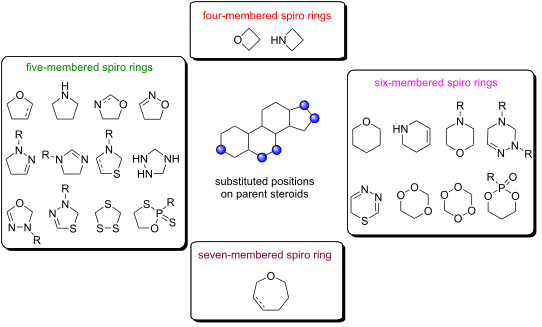
- activity. Synthesizing spiro heterocyclic steroids entails numerous methodologies. Although the inherent stereochemistry of steroids sometimes facilitates the production of a single diastereomer without the need for chiral auxiliaries, nevertheless, their synthesis remains challenging due to the creation
- of a new chiral centre. Advances in understanding ligand–receptor interactions have facilitated the determination of optimal molecular conformations to enhance binding affinity, which can be achieved, in part, by introducing a spiro annelated ring to impart rigidity to the molecule. From a medicinal
- reaction times. Notably, 6-endo N-cyclization to form 2-piperidinones was not observed (Scheme 5). Using this protocol, a series of spiro-β-lactams were synthesized, with only the structure of the aryl moiety being varied. It is noteworthy to consider that the formation of two vicinal quaternary chiral


Chemo-enzymatic total synthesis: current approaches toward the integration of chemical and enzymatic transformations
Beilstein J. Org. Chem. 2024, 20, 1693–1712, doi:10.3762/bjoc.20.151
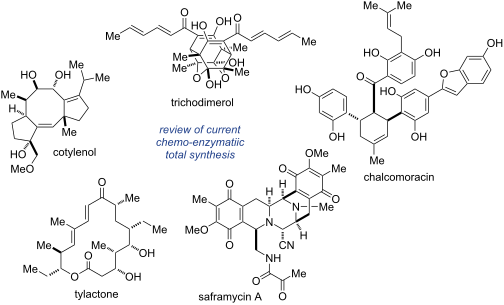
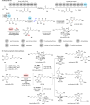
- , enabling the total synthesis of chiral natural products such as 18”-methyl-chalcomoracin (57), guangsangon E (58), and kuwanon J (59). Furthermore, the same research group identified a series of MaDA homologous enzymes in Morus notabilis, designated as MaDA-1–3, which showed distinct stereoselectivities in
- approach, they used a chiral boron catalyst as a Lewis acid and achieved at best an endo/exo selectivity of 1.9:1 in a similar DA reaction. The use of Diels–Alderase in their recent work significantly improved the endo/exo selectivity under mild conditions in water, thereby highlighting the strengths of
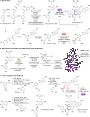
- -half segment 72 was prepared from mixed anhydride 68 (Scheme 8A). Condensation with chiral auxiliary 69 and subsequent diastereoselective alkylation, followed by reductive removal of the auxiliary and iodination of the resulting primary alcohol provided alkyl iodide 70 [78]. Subsequent six-step




Generation of multimillion chemical space based on the parallel Groebke–Blackburn–Bienaymé reaction
Beilstein J. Org. Chem. 2024, 20, 1604–1613, doi:10.3762/bjoc.20.143

- than two chiral centers were not included. This resulted in 271,026,660 library members with nearly 85% expected synthetic accessibility according to the model experiments described in the previous section. Distributions of the resulting chemical space over molecular weight (MW), 1-octanol–water


Benzylic C(sp3)–H fluorination
Beilstein J. Org. Chem. 2024, 20, 1527–1547, doi:10.3762/bjoc.20.137

- from 61–75% across a series of nine benzylic substrates with various substitution patterns on the aromatic ring. In 2018, Yu and co-workers reported a palladium-catalysed enantioselective fluorination of benzylic C(sp3)–H bonds with the use of a transient chiral directing group 6 [43]. This approach








Primary amine-catalyzed enantioselective 1,4-Michael addition reaction of pyrazolin-5-ones to α,β-unsaturated ketones
Beilstein J. Org. Chem. 2024, 20, 1518–1526, doi:10.3762/bjoc.20.136
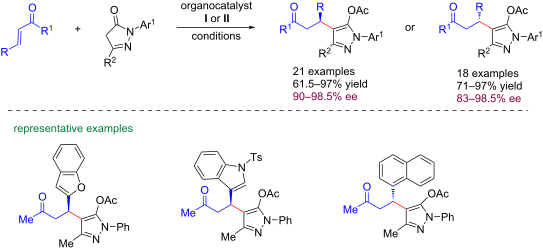
- -covalent catalysis via bifunctional hydrogen-bonding organocatalysts. The C-4 nucleophilicity of pyrazolin-5-ones was also explored in enantioselective reactions with α,β-unsaturated carbonyl compounds through covalent catalysis with chiral amine-based catalysts; however, it has achieved limited success
- who reported a chiral amine-catalysed aza-Michael addition reaction of pyrazolin-5-ones with α,β-unsaturated ketones to access β-(3-hydroxypyrazol-1-yl)ketones (Scheme 1a) [22]. The developed reaction was restricted to α,β-unsaturated ketones with aliphatic substituents (Scheme 1a) [22]. Ji and Wang
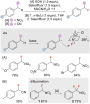
- solvent, as the product 3aa was isolated in reproducible yield (77%) and enantioselectivity 74% ee (Table 1, entry 3). Next, we explored a variety of achiral and/or chiral Brønsted acids A1–6 as additives in order to increase the yield and the enantioselectivity of the reaction (Table 1, entries 4–9). A




Towards an asymmetric β-selective addition of azlactones to allenoates
Beilstein J. Org. Chem. 2024, 20, 1504–1509, doi:10.3762/bjoc.20.134
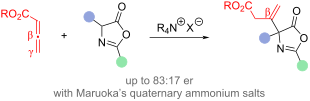
- , Iran 10.3762/bjoc.20.134 Abstract We herein report the asymmetric organocatalytic addition of azlactones to allenoates. Upon using chiral quaternary ammonium salt catalysts, i.e., Maruoka’s binaphthyl-based spirocyclic ammonium salts, the addition of various azlactones to allenoates proceeds in a β
- synthesis approaches. Our group has a longstanding focus on the development of asymmetric organocatalytic methods to access non-natural chiral α- and β-AA [14][15][16][17][18][19]. Hereby we are especially interested in utilizing simple (prochiral) starting materials and carry out stereoselective α
- -functionalizations by reacting them with suited C- or heteroatom electrophiles. α-Amino acid-derived azlactones 1 are amongst the most commonly utilized starting materials to access more diverse chiral α,α-disubstituted amino acids (Scheme 1A) [20][21][22]. More specifically, these compounds can be engaged in a


Selectfluor and alcohol-mediated synthesis of bicyclic oxyfluorination compounds by Wagner–Meerwein rearrangement
Beilstein J. Org. Chem. 2024, 20, 1462–1467, doi:10.3762/bjoc.20.129
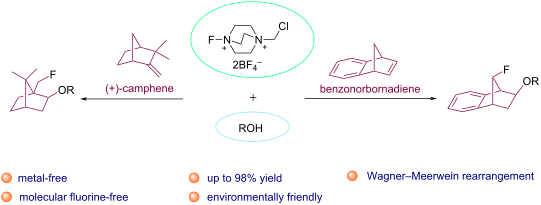
- rearrangement using benzonorbornadiene and the chiral natural compound (+)-camphene as bicyclic alkenes, selectfluor as an electrophilic fluorine source, and water and various alcohols as nucleophile sources. The structure of bicyclic oxy- and alkoxyfluorine compounds was determined by NMR and QTOF-MS analyses
- study, benzonorbornadiene (1a) and the chiral natural product (+)-camphene (1b) were used as bicyclic alkenes. Safe, easily soluble, easy to use, stable solid, reactive and commercial available selectfluor [18][27][28] was selected for electrophilic fluorination source. Water and various alcohols were
- (Scheme 1). The configurations of fluoroalkoxy compounds 3a–j were confirmed by the COSY 2D-NMR spectrum of compound 3a (Supporting Information File 1). Additionally, (+)-camphene (1b), a chiral natural product, was used as another alkene for fluoroalkoxy reactions. From (+)-camphene (1b), fluoroalkoxy


Rapid construction of tricyclic tetrahydrocyclopenta[4,5]pyrrolo[2,3-b]pyridine via isocyanide-based multicomponent reaction
Beilstein J. Org. Chem. 2024, 20, 1436–1443, doi:10.3762/bjoc.20.126
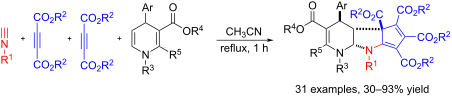
- clearly showed that this reaction has a wide scope of substrates. The obtained compounds 4a–t have four chiral carbon atoms. The multicomponent reaction might result in several diastereomers. On the basis of TLC analysis and 1H NMR spectra of the crude products, only one relative stereochemistry was
- though there are four chiral carbon atoms in the products. It can be found that all reactions proceeded smoothly to give the expected polycyclic compounds 6a–k in satisfactory yields. The substituents on the three components showed very little effect on the yields. These results showed that this reaction


Hypervalent iodine-catalyzed amide and alkene coupling enabled by lithium salt activation
Beilstein J. Org. Chem. 2024, 20, 1405–1411, doi:10.3762/bjoc.20.122

- development of chiral hypervalent iodines by Wirth, Kita, Ishihara, Muñiz, and many others, have firmly established these reagents as useful catalysts for a wide variety of chemical transformations [6][7][8][9][10][11][12][13][14][15][16][17]. A number of features, including low toxicity, high stability, ease

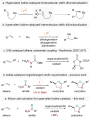


Synthetic applications of the Cannizzaro reaction
Beilstein J. Org. Chem. 2024, 20, 1376–1395, doi:10.3762/bjoc.20.120
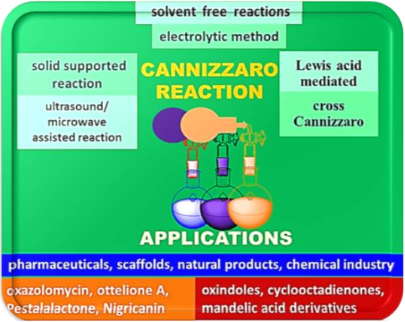
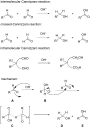
- numerous modified techniques, which established the greener side of the reaction. The use of Lewis acid catalysis in this regard [34][35][36][37][38][39] played a significant role, which also suppressed the epimerization in the case of chiral molecules. Among the various Lewis acid catalysts such as
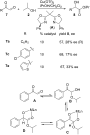
- )3 (Scheme 3). They also extended the approach to study enantioselective Cannizzaro reactions of similar substrates using a Cu bisoxazoline (A) [Cu(OTf)2-PhBox] complex as the chiral catalyst, producing the desired enantiomeric compounds in modest yields and up to 33% ee (Scheme 4). The mechanistic
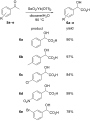
- . where they applied a FeCl3-based chiral catalyst with an N,N′-dioxide ligand [74]. The optimization of the reaction conditions revealed the L–RaPr2–FeCl3 complex being superior and delivering good to excellent results, thus witnessing a broad substrate scope taking different glyoxal monohydrates 1 and