


Search results
Search for "terminal" in Full Text gives 1001 result(s) in Beilstein Journal of Organic Chemistry. Showing first 200.
Chemoenzymatic synthesis of macrocyclic peptides and polyketides via thioesterase-catalyzed macrocyclization
Beilstein J. Org. Chem. 2024, 20, 721–733, doi:10.3762/bjoc.20.66
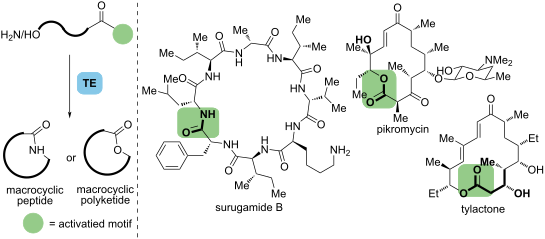
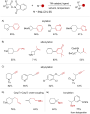
- terminal polyketide synthases (PKSs) in juvenimicin biosynthesis in 2017 [75], which presented a chance to accomplish the chemoenzymatic total syntheses of tylactone and the juvenimicins (Scheme 7). To generate an appropriately activated tylactone hexaketide intermediate 49, two key fragments, aldehyde 42
- tylactone hexaketides, such as NAC thioester and thiophenol ester 49, which serves as the precursor for downstream enzymatic assembly. Thiophenol ester 49 was accepted by the two terminal of tylosin PKS modules (TylGIV and TylGV) in vitro, which are responsible for the last four carbon atoms assembly and


Genome mining of labdane-related diterpenoids: Discovery of the two-enzyme pathway leading to (−)-sandaracopimaradiene in the fungus Arthrinium sacchari
Beilstein J. Org. Chem. 2024, 20, 714–720, doi:10.3762/bjoc.20.65
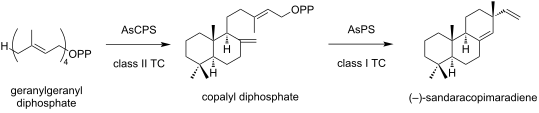
- determined to be (−)-sandaracopimaradiene (Figure 3B). We then turned our attention to the individual function of these enzymes. With this aim, AsPS and AsCPS were expressed in Escherichia coli as N-terminal hexa-histidine-tagged proteins and purified by Ni-affinity chromatography (see Supporting Information



SOMOphilic alkyne vs radical-polar crossover approaches: The full story of the azido-alkynylation of alkenes
Beilstein J. Org. Chem. 2024, 20, 701–713, doi:10.3762/bjoc.20.64
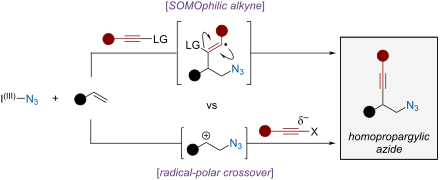
- terminal azide, despite its implication in the synthesis of complex molecules [3][6]. Therefore, the development of a straightforward reaction to synthesize homopropargylic azides would be of general interest. The azido-alkynylation of alkenes would allow to generate the desired motif in a single step


New variochelins from soil-isolated Variovorax sp. H002
Beilstein J. Org. Chem. 2024, 20, 692–700, doi:10.3762/bjoc.20.63
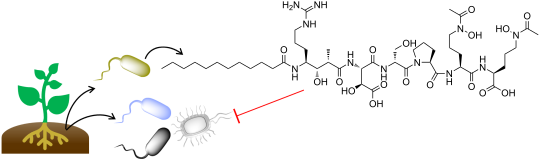
- structure – a linear hexapeptide with β-hydroxyaspartate and hydroxamate functional groups, serving in iron-binding coordination. Three new variochelins C–E (3–5) were characterized by varied fatty acyl groups at their N-termini; notably, 4 and 5 represent the first variochelins with N-terminal unsaturated
- -guanidino-3-hydroxy-2-methylheptanoate, indicating that the N-terminal fatty acyl group is a tetradecanoic acid in 2 (Figure 1 and Figure S10 in Supporting Information File 1). Therefore, compound 2 is concluded to be the known lipohexapeptide variochelin B [5]. Compound 3 has the chemical formula of
- C45H79O17N11, as suggested by the HRESIMS data (m/z 1044.5603 for the [M − H]− ion), indicating the loss of two methylene groups (C2H4) from 1. In addition, the MS/MS fragmentation profile of 3 was consistent with those of 1 and 2, except for the loss of 28 mass units in the N-terminal Nγ-acyl-γ-amino acid


Palladium-catalyzed three-component radical-polar crossover carboamination of 1,3-dienes or allenes with diazo esters and amines
Beilstein J. Org. Chem. 2024, 20, 661–671, doi:10.3762/bjoc.20.59
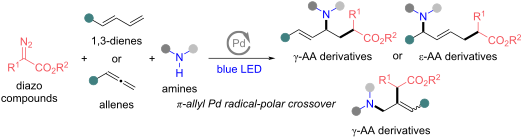
- allenes that were never used as substrates in interrupted radical Heck/allylic substitution reactions. As summarized in Scheme 3, unsaturated γ-AA derivatives were observed in this reaction albeit with poor stereoselectivity. Linear amines containing alkyl, hydroxy, and terminal alkenyl groups were
- [32][33][34][35][36][37][59][60][61][62], upon the loss of dinitrogen. The radical I further adds to the terminal position of 1,3-butadiene (2a) to produce hybrid allylPd radical II, which would exist in equilibrium with π-allyl complex III. Following the classical Tsuji–Trost reaction mechanism, a



Isolation and structure determination of a new analog of polycavernosides from marine Okeania sp. cyanobacterium
Beilstein J. Org. Chem. 2024, 20, 645–652, doi:10.3762/bjoc.20.57
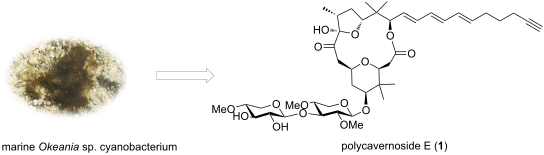
- polycavernosides. Keywords: macrolide glycoside; marine cyanobacterium; marine natural products; polycavernosides; terminal alkyne; Introduction In 1991, an outbreak of food poisoning caused by a species of red algae known as ‘Polycavernosa tsudai’ occurred in Guam, which resulted in killing of three people. Two
- HMBC δH 1.62 (H-23)/δC 84.6 (C-25), δH 2.18 (H-24)/δC 84.6 (C-25), and δH 2.18 (H-24)/δC 68.6 (C-26) revealed a terminal alkyne structure. Additionally, COSY correlations shown in Figure 2 revealed the side chain structure of 1 containing a terminal alkyne and a conjugated trans triene (C-15 to C-26


Production of non-natural 5-methylorsellinate-derived meroterpenoids in Aspergillus oryzae
Beilstein J. Org. Chem. 2024, 20, 638–644, doi:10.3762/bjoc.20.56
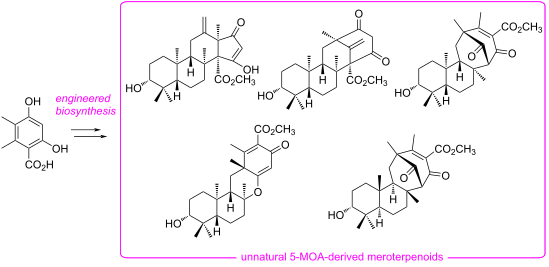
- -dependent monooxygenase InsA4. In this engineered pathway, FncE first synthesizes 5-MOA, which then undergoes farnesylation by FncB, methyl ester formation by InsA1, and epoxidation of the terminal olefin in the farnesyl moiety by InsA4 (Figure 2A). Thus, we heterologously expressed the genes encoding these



Introduction of a human- and keyboard-friendly N-glycan nomenclature
Beilstein J. Org. Chem. 2024, 20, 607–620, doi:10.3762/bjoc.20.53
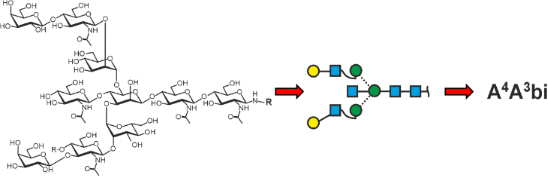
- alphanumeric descriptions of the hundreds and thousands of N-glycan structures. Here, we present a system that describes N-glycans by defining their terminal elements. To minimize redundancy and length of terms, the common elements of N-glycans are taken as granted. The preset reading order facilitates
- Toronto University taught us the term GnGn for the acceptor substrate of fucosyl transferases [28][29]. This “reductio ad essentialia” proved very helpful in our work with glycosyltransferases, e.g., insect hexosaminidase [30] and plant fucosyltransferase [31], which dealt with terminal modifications of
- of glycoproteins solidified our faith in a rather universal applicability of this system [26][27]. But now, back to the meaning of “GnGn”. Gn stands for GlcNAc and the two Gn-s symbolize the two terminal residues of a biantennary N-glycan (Figure 2). The GlcNAcs are attached to the common core



Entry to new spiroheterocycles via tandem Rh(II)-catalyzed O–H insertion/base-promoted cyclization involving diazoarylidene succinimides
Beilstein J. Org. Chem. 2024, 20, 561–569, doi:10.3762/bjoc.20.48
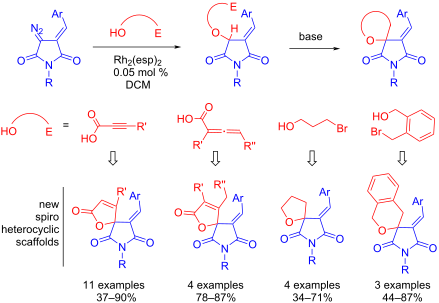
- obtained when unsubstituted propiolic acid was used as OH-substrate (2g). The reasons for this result may be due to the increased reactivity of the terminal triple bond of the propiolic moiety, which favors the participation of the OH-insertion intermediate in side processes. However, we were unable to


Synthesis of photo- and ionochromic N-acylated 2-(aminomethylene)benzo[b]thiophene-3(2Н)-ones with a terminal phenanthroline group
Beilstein J. Org. Chem. 2024, 20, 552–560, doi:10.3762/bjoc.20.47
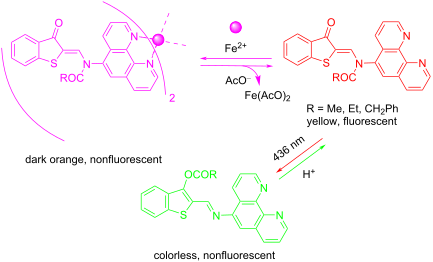
- a terminal phenanthroline receptor substituent was synthesized. Upon irradiation in acetonitrile or DMSO with light of 436 nm, they underwent Z–E isomerization of the C=C bond, followed by very fast N→O migration of the acyl group and the formation of nonemissive O-acylated isomers. These isomers
- sequential addition of Fe2+ and AcO−, we synthesized N-acylated 2-(aminomethylene)benzo[b]thiophene-3(2Н)-ones with a terminal phenanthroline substituent and studied the spectral-luminescent, photochromic and ionochromic properties. The phenanthroline moiety was incorporated into the molecule due to the
- ]thiophene-3(2Н)-ones 2a–c with a terminal phenanthroline substituent was (E)-2-(((1,10-phenanthrolin-5-yl)amino)methylene)benzo[b]thiophen-3(2H)-one (1), obtained by condensation of 3-hydroxybenzo[b]thiophene-2-carbaldehyde with 5-aminophenanthroline in acetonitrile (Scheme 1). (Z)-N-((3-Oxobenzo[b]thiophen


Synthesis and biological profile of 2,3-dihydro[1,3]thiazolo[4,5-b]pyridines, a novel class of acyl-ACP thioesterase inhibitors
Beilstein J. Org. Chem. 2024, 20, 540–551, doi:10.3762/bjoc.20.46
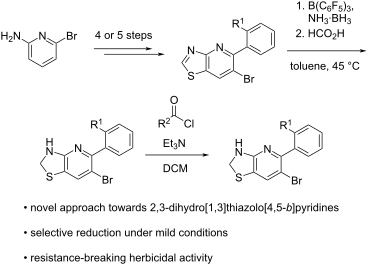
- (SORHA), Triticum aestivum (TRZAS), and Zea mays (ZEAMX). LpFAT A expression and purification: The fat a03 gene from Lemna paucicostata, in which the N-terminal amino acids representing the chloroplast transit peptide were replaced by an N-terminal 6xHis-tag, was cloned into a pET24 vector [3]. The LpFAT


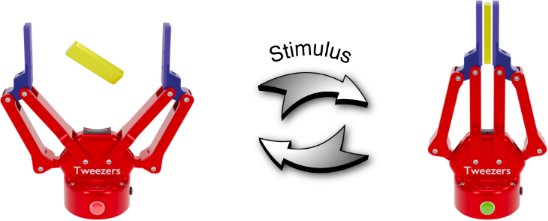
Switchable molecular tweezers: design and applications
Beilstein J. Org. Chem. 2024, 20, 504–539, doi:10.3762/bjoc.20.45




(E,Z)-1,1,1,4,4,4-Hexafluorobut-2-enes: hydrofluoroolefins halogenation/dehydrohalogenation cascade to reach new fluorinated allene
Beilstein J. Org. Chem. 2024, 20, 452–459, doi:10.3762/bjoc.20.40
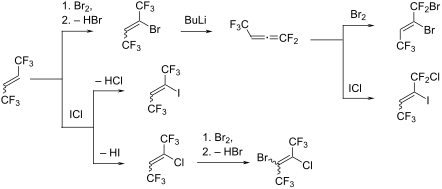
- . In contrast to bromination, the reaction with ICl is less selective and leads to the formation of addition products at both double bonds. At the same time, the reaction proceeded predominantly at the terminal double bond with the formation of a mixture of isomers (Z)-14a and (E)-14b. The content of


Mechanisms for radical reactions initiating from N-hydroxyphthalimide esters
Beilstein J. Org. Chem. 2024, 20, 346–378, doi:10.3762/bjoc.20.35
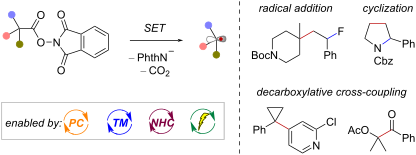
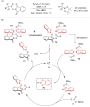
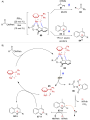
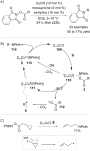
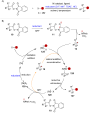
- ] (Scheme 32A). Under these conditions, activation of NHPI ester 160 by SET occurs at the cathode’s surface affording the corresponding radical anion 161 (Scheme 32B). Subsequent fragmentation leads to the cyclohexyl radical (162) which then adds to the terminal carbon of radical acceptor 163, leading to








Discovery of unguisin J, a new cyclic peptide from Aspergillus heteromorphus CBS 117.55, and phylogeny-based bioinformatic analysis of UngA NRPS domains
Beilstein J. Org. Chem. 2024, 20, 321–330, doi:10.3762/bjoc.20.32
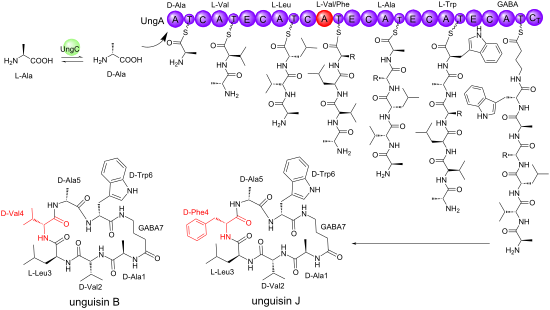
- bond formation. Additional common domains include epimerization (E) domains for converting naturally occurring ʟ-amino acids to ᴅ-amino acids, methyltransferase (MT) domains that typically methylate specific N atoms, and terminal condensation (CT) domains which cyclize the growing peptide chain and
- domains forming their own branch and C domain from modules 1 and 3 clearly distinct to those from modules 2, 4, 5, and 6 (Figure 6). This separation of the non-terminal C domains could be due to modules 1 and 3 lacking an E domain. Again, the domains from UngA and UngA’’ were more closely related than


Elucidating the glycan-binding specificity and structure of Cucumis melo agglutinin, a new R-type lectin
Beilstein J. Org. Chem. 2024, 20, 306–320, doi:10.3762/bjoc.20.31
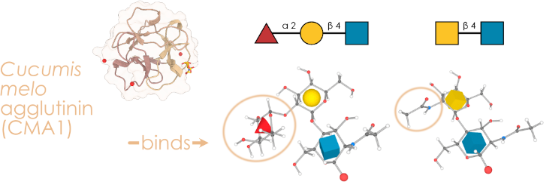
- confirmed and quantified this binding specificity in solution. Finally, we solved the high-resolution structure of the CMA1 N-terminal domain using X-ray crystallography, supporting our functional findings at the molecular level. Our study provides a comprehensive understanding of CMA1, laying the
- abovementioned applications are R-type lectins, especially those derived from plants. Examples include SNA (from Sambucus nigra, binding Neu5Acα2-6 [14]) or RCA1 (from Ricinus communis, binding terminal β-linked galactose [15]). Yet, despite the extensive studies on plant lectins, particularly R-type lectins
- aligned the individual units of the tandem repeat CBM13 domains, indicated by the N-terminal (34-158) and C-terminal units (162-286) and compared those to the domains of ricin (Figure 1b). R-type lectins have a characteristic Q-x-W structural motif close to their binding site, which is highly conserved


Nucleophilic functionalization of thianthrenium salts under basic conditions
Beilstein J. Org. Chem. 2024, 20, 257–263, doi:10.3762/bjoc.20.26
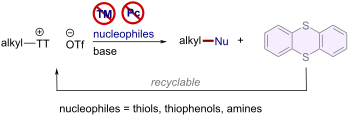
- generation of alkyl radicals [39]. After that, a series of methods for the modification of alkylthianthrenium salts have been developed, including the transition-metal-catalyzed cross-coupling with terminal alkynes [40], sulfonylation with DABCO·(SO2)2 [41][42][43], or alkylation of active alkenes [44][45



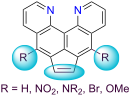
Substitution reactions in the acenaphthene analog of quino[7,8-h]quinoline and an unusual synthesis of the corresponding acenaphthylenes by tele-elimination
Beilstein J. Org. Chem. 2024, 20, 243–253, doi:10.3762/bjoc.20.24
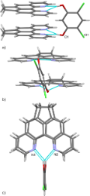
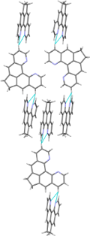
- value lies in the range of 2.51–2.61 Å, strongly resemble the bifurcated hydrogen bonds so characteristic of base 5, additionally reinforced by π-stacking between the terminal components in each H-associated triad (the shortest distance between the antiparallel π-systems of two molecular planes here is




Perspectives on push–pull chromophores derived from click-type [2 + 2] cycloaddition–retroelectrocyclization reactions of electron-rich alkynes and electron-deficient alkenes
Beilstein J. Org. Chem. 2024, 20, 125–154, doi:10.3762/bjoc.20.13
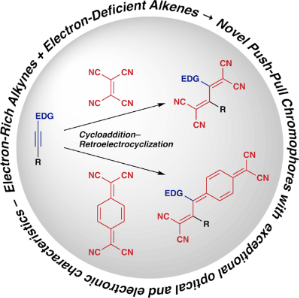
- process. The [2 + 2] CA–RE sequence proceeds successively, as depicted in Scheme 1, where electron-donating groups are denoted as EDGs. During the [2 + 2] CA process, the nucleophilic attack by the terminal alkyne carbon of an electron-rich alkyne on an electron-deficient alkene, such as TCNE and 7,7,8,8
- TCNQ with electron-rich alkynes, the alkyne terminal carbon executes a nucleophilic attack on the exocyclic carbon of the dicyanovinyl (DCV) group of TCNQ, affording dicyanoquinodimetanes (DCNQs) [12][13]. Intense ICT bands of TCBD and DCNQ are observed at around 450–470 nm and 680–710 nm, respectively


Visible-light-induced radical cascade cyclization: a catalyst-free synthetic approach to trifluoromethylated heterocycles
Beilstein J. Org. Chem. 2024, 20, 118–124, doi:10.3762/bjoc.20.12
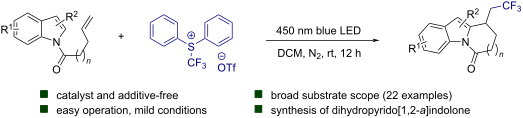
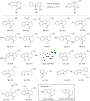
- , Umemoto’s reagent undergoes a homolysis process to generate the trifluoromethyl radical species. The trifluoromethyl radical is trapped by the terminal alkene and forms a relayed radical intermediate 6, which is intercepted by the indole ring realizing an intramolecular cyclization (6-exo-trig). The newly




Multi-redox indenofluorene chromophores incorporating dithiafulvene donor and ene/enediyne acceptor units
Beilstein J. Org. Chem. 2024, 20, 59–73, doi:10.3762/bjoc.20.8
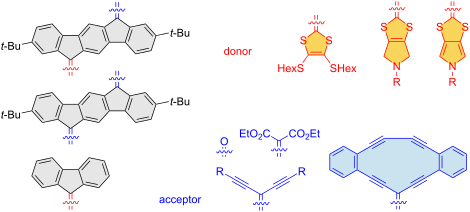
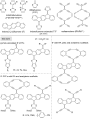
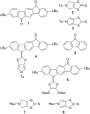
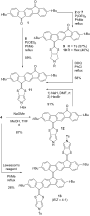
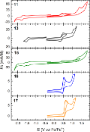
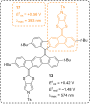
- the terminal alkynes afforded the macrocyclic DTF-IF-RA scaffold 23. Molecular sieves (4 Å) were added to the reaction mixture as this has previously been shown to significantly promote the Glaser–Hay coupling [28]. Compounds 20 and 21 were unfortunately very sensitive compounds that were found to





1-Butyl-3-methylimidazolium tetrafluoroborate as suitable solvent for BF3: the case of alkyne hydration. Chemistry vs electrochemistry
Beilstein J. Org. Chem. 2023, 19, 1966–1981, doi:10.3762/bjoc.19.147
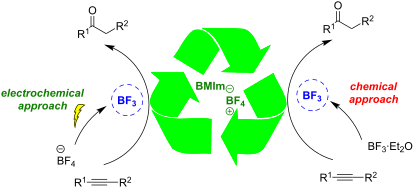
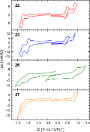
- possibility of obtaining the products of alkyne hydration with analogous or improved yields, using less hazardous precursors to generate the reactive species in situ. In particular, for terminal arylalkynes, the electrochemical route proved to be advantageous, yielding preferentially the hydration products vs
- well-known and useful reaction in organic chemistry, affording carbonyl compounds based on an atom-economical approach. Indeed, the addition of water to the triple bond of a terminal alkyne leads to the formation of the corresponding methyl ketone or aldehyde, in the case of Markovnikov or anti
- hexafluorophosphate (BMIm-PF6) as co-solvent with methanol and water to allow recycling of a phosphine-based Au(I) complex, as an efficient catalytic system for the hydration of terminal alkynes [87]. Moreover, the interesting properties of ILs have also been exploited to synthesize new solid polymeric catalysts for


Long oligodeoxynucleotides: chemical synthesis, isolation via catching-by-polymerization, verification via sequencing, and gene expression demonstration
Beilstein J. Org. Chem. 2023, 19, 1957–1965, doi:10.3762/bjoc.19.146

- automated de novo synthesis of long ODNs would solve or alleviate many of these problems. Significant efforts have been made toward de novo synthesis of long ODNs through engineering of template-independent terminal deoxynucleotidyl transferase (TdT) [17]. While promising, this enzymatic method is unlikely


Aldiminium and 1,2,3-triazolium dithiocarboxylate zwitterions derived from cyclic (alkyl)(amino) and mesoionic carbenes
Beilstein J. Org. Chem. 2023, 19, 1947–1956, doi:10.3762/bjoc.19.145
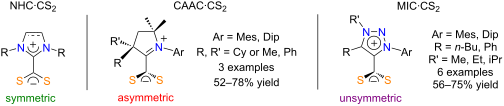
- -disubstituted-1,2,3-triazole derivatives is readily achieved via the copper(I)-catalyzed [3 + 2] cycloaddition of an azide and a terminal alkyne (CuAAC) [63][64][65]. A further alkylation of the N3 position with an alkyl halide is an equally straightforward procedure that ultimately affords a large assortment


Charge carrier transport in perylene-based and pyrene-based columnar liquid crystals
Beilstein J. Org. Chem. 2023, 19, 1755–1765, doi:10.3762/bjoc.19.128
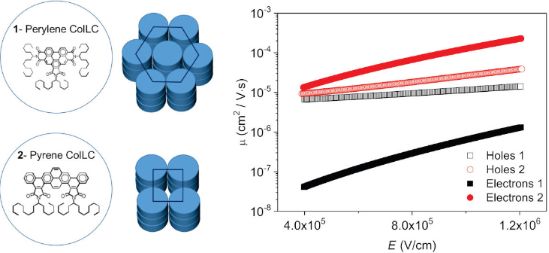
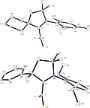
- . In 1-iso, only the two hexagonal imide groups affect the HOMO/LUMO localization, whereas the pentagonal central imide group is little affected. In 2-iso, both pentagonal are relevant to the HOMO/LUMO localization, whereas the two terminal benzene rings are little affected. The cartesian coordinates





