


Search results
Search for "transition states" in Full Text gives 224 result(s) in Beilstein Journal of Organic Chemistry. Showing first 200.
Combined experimental and theoretical studies of regio- and stereoselectivity in reactions of β-isoxazolyl- and β-imidazolyl enamines with nitrile oxides
Beilstein J. Org. Chem. 2016, 12, 2390–2401, doi:10.3762/bjoc.12.233

- the transition state corresponding to the concerted mechanism, e.g., via TS 1a_1−3a (Scheme 4). Interestingly, isoxazolines 9 and 10 with cis orientation of the Az and NMe2 groups, were found to be the products of transition states 1a_3−9 and 1a_3−10, respectively, both based on 1a_3 geometry of
- enamine 1a, whereas transition states based on 1a_1 geometry of the enamine lead to isoxazolines 3a and 8 with trans orientation of the Az and NMe2 groups (Scheme 4). Thus, one could conclude, that the configuration around the double bond of the enamine controls the stereoconfiguration of the isoxazoline
- isoxazolines [46]. It is remarked, that transition states 1a_1−3a and 1a_3−9 have longer lengths of the forming bonds compared to those of transition states 1a_1−8 and 1a_3–10, which indicates an easier attainability of the formers. Calculations of the thermodynamic parameters suggest that transition state




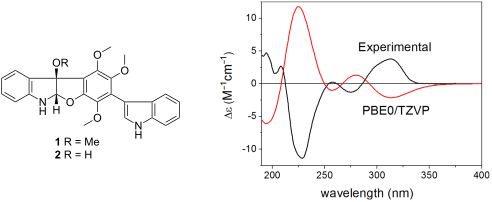
Varioloid A, a new indolyl-6,10b-dihydro-5aH-[1]benzofuro[2,3-b]indole derivative from the marine alga-derived endophytic fungus Paecilomyces variotii EN-291
Beilstein J. Org. Chem. 2016, 12, 2012–2018, doi:10.3762/bjoc.12.188
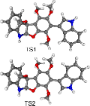
- conformers with M and P helicity (conformer A and B, respectively). The relative energy (kJ/mol) is plotted as the function of the ωC12−C13−C3’−C9 torsional angle. TS1 and TS2 denote the two transition states for the inversion of the helicity. Transition states for the inversion of the helicity [TS1 (ωC12



Stereo- and regioselectivity of the hetero-Diels–Alder reaction of nitroso derivatives with conjugated dienes
Beilstein J. Org. Chem. 2016, 12, 1949–1980, doi:10.3762/bjoc.12.184
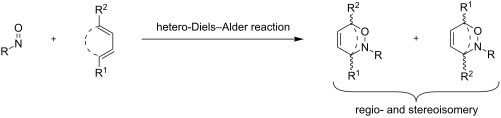
- Pioneering computational studies on the mechanism of the intermolecular nitroso hetero-Diels–Alder reaction by Houk [79][80] demonstrated that the reaction proceeds in a concerted fashion through an asynchronous transition state. In the two calculated transition states (endo and exo), the ratio of the
- lower the chemoselectivity. Moreover, DFT calculations of this type of reaction confirmed the preference for endo transition states. These calculations showed that the acylnitroso species are superreactive, and the activation energies are lower than the isomerization barriers between some cis and trans
- transition states, where the distal isomer is unfavored due to steric repulsions between the side chain and the acetonide group. Chiral dienes: The use of chiral cyclic and acyclic dienes for both acyl and arylnitroso dienophiles is well reported in the literature. This is in part due to the extensive use of


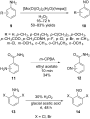


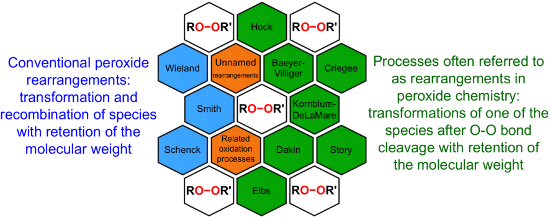
Rearrangements of organic peroxides and related processes
Beilstein J. Org. Chem. 2016, 12, 1647–1748, doi:10.3762/bjoc.12.162
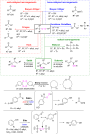
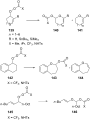
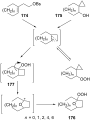
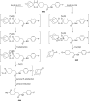
- [222]. The tetramolecular transition states TS1 and TS2 are considered to be the two key steps determining the course of the oxidation: the nucleophilic addition of a peroxy acid molecule to ketone (TS1) and the migration of R and cleavage of O–O bond (TS2). Thus, electrophilic substrates favor TS1 and











On the cause of low thermal stability of ethyl halodiazoacetates
Beilstein J. Org. Chem. 2016, 12, 1590–1597, doi:10.3762/bjoc.12.155

- the vacant p-orbital on the carbene carbon affects the electronic structure of the transition states. The halocarboethoxy carbenes are also more stabilized than the carbene generated from EDA. The energy gain from the transition state to the free carbene is 18–20 kcal/mol for X = F, Cl and Br, but


The hydrolysis of geminal ethers: a kinetic appraisal of orthoesters and ketals
Beilstein J. Org. Chem. 2016, 12, 1467–1475, doi:10.3762/bjoc.12.143
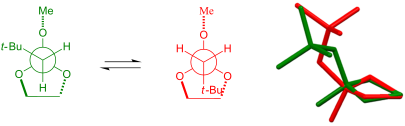
- was any enthalpic barrier to elimination of the protonated methoxy group, geometric scans for potential transition-states were made using Density Functional Theory calculations, by incrementally increasing and fixing the C(2)─OMe bond length for rotamers 16a–c after protonation, and allowing all other


Ring-whizzing in polyene-PtL2 complexes revisited
Beilstein J. Org. Chem. 2016, 12, 1410–1420, doi:10.3762/bjoc.12.135
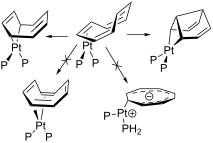
- –NiL2. The experimental barriers range ≈5–6 kcal/mol [69][70][74]. The aforementioned calculations [45][75] yield barriers of 4.2–9.5 kcal/mol in reasonable agreement with the experiment. The structures of these transition states resemble η4 species with the geometry akin to 52 in Figure 15. This is not
- which is in line with the calculations by others. Therefore, the discrepancy must lie in the difference between Pt and Ni. There is also a difference in the metrical details of these transition states. For the Ni examples the Ni–C(1) and Ni–C(4) distances are ≈0.3 Å longer than the Ni–C(2) and Ni–(3
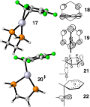
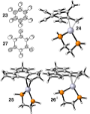
- cyclobutadiene. The computed ground state (15) and transition state (16) for cyclobutadiene–Pt(dpe) on the right. The ground and transition state for ring whizzing in F6C6–Pt(dpe), 17 and 20, respectively. The dominant bonding interaction for two possible transition states, 18 and 19 along with the HOMO, 21 and






Synergistic chiral iminium and palladium catalysis: Highly regio- and enantioselective [3 + 2] annulation reaction of 2-vinylcyclopropanes with enals
Beilstein J. Org. Chem. 2016, 12, 1340–1347, doi:10.3762/bjoc.12.127
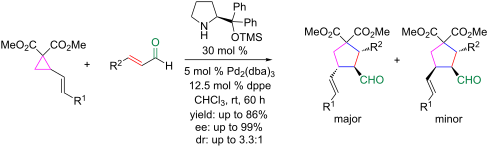
- not shown). The absolute configuration of cyclopentanes 3’ and 3’’ were determined based on the derivatives 7h’ and 7h’’ of 3h (Scheme 2) [95]. We proposed two possible transition states (TS) 8a’ and 8a” to rationalize the observed configurations (Scheme 3). The trans-C=C double bond in iminium ion 4
- product 3a in 83% yield as a colorless oil. Catalytic regio- and enantioselective [3 + 2] annulation reactions of 2-vinylcyclopropanes with enals. Single X-ray crystal structures of 7h’ and 7h’’. The proposed transition states. Screening of lewis acids.a The optimization of reaction conditions.a Scope of


On the mechanism of imine elimination from Fischer tungsten carbene complexes
Beilstein J. Org. Chem. 2016, 12, 1322–1333, doi:10.3762/bjoc.12.125
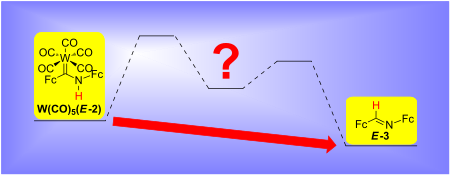
- between TDTS and TDI is the maximum energy span between a given intermediate and all following transition states of the cycle and can be understood as the overall Gibbs free energy of activation of the whole catalytic cycle [65]. This procedure can be translated to competing reaction paths. For pathways
- 1a and 1b (Scheme 3), the rate-determining intermediate (RDI) is W(CO)5(Z-2) and the rate-determining transition states (RDTS’s) are TS(W(CO)5(E-2) → W(CO)5…E-3) (pathway 1a) and TS(W(CO)5(Z-2) → W(CO)5(Z-3) (pathway 1b) giving the overall Gibbs free energies of activation ΔG‡total = 287 kJ mol−1 and
- carbenes E-2/Z-2 from W(CO)5(E-2)/W(CO)5(Z-2) is calculated endergonic (ΔG = 141 kJ mol−1 and ΔG = 167 kJ mol−1, respectively, Scheme 3). Transition states for the carbene dissociation could not be identified. Hence, this initial dissociative step is probably not the one with the lowest energy. Nonetheless




Scope and mechanism of the highly stereoselective metal-mediated domino aldol reactions of enolates with aldehydes
Beilstein J. Org. Chem. 2016, 12, 813–824, doi:10.3762/bjoc.12.80
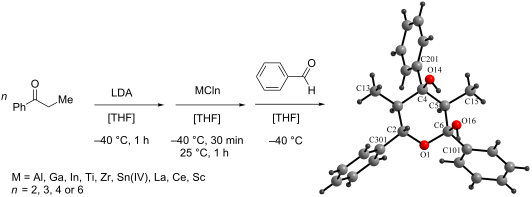
- core potential (ECP) on hexa-coordinate indium [51] as implemented in Gaussian 09 owing to the predicted good results in our earlier work [30]. The remaining coordination sites of indium were occupied by two THF molecules. The minima and transition states of the calculated structures were verified by


Strecker degradation of amino acids promoted by a camphor-derived sulfonamide
Beilstein J. Org. Chem. 2016, 12, 732–744, doi:10.3762/bjoc.12.73
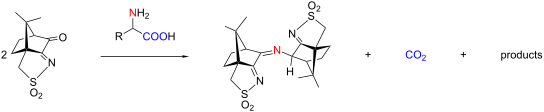
- developed by means of DFT calculations on potential transition states. Keywords: amino acids; camphorsulfonylimine; DFT calculations; NMR characterization; Strecker degradation; Introduction Among the many derivatives of natural camphor, oxoimine 1 (Figure 1) shows an especially versatile chemistry. The C
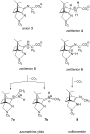
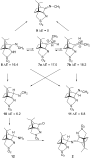
- (Figure 8) as the products [34][35]. We could indeed identify transition states for these reactions. Figure 8 (top) shows the reaction sequence and Figure 9 shows the TS and the change in salient atom distances along the path following the intrinsic reaction coordinate (IRC). A movie is available as
- is an obvious candidate as catalyst. Indeed, water inclusion in reaction paths with high-lying transition states is often observed in water as solvent, as in biochemical reactions, and was demonstrated for, e.g., the analytical detection of sulfenic acids with dimedone [36]. In these systems water





The aminoindanol core as a key scaffold in bifunctional organocatalysts
Beilstein J. Org. Chem. 2016, 12, 505–523, doi:10.3762/bjoc.12.50
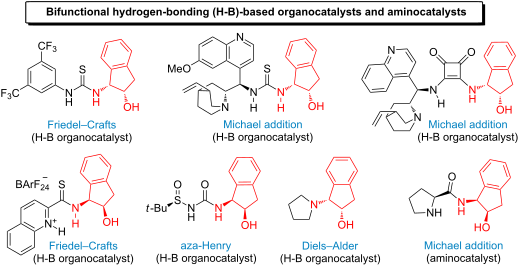
- reaction pathway based on previously reported transition states (Figure 6). The catalyst ent-4 would activate and fix the electrophile through several hydrogen-bonding interactions with the NH groups of the thiourea. Simultaneously, the hydroxy group would be involved in the activation of the nucleophile
- external Brønsted acid. Proposed transition state TS7 for the Friedel–Crafts reaction of indole and α,β-unsaturated acyl phosphonates catalyzed by ent-4. Possible transition states TS8 and TS9 in the asymmetric addition of indoles 2 to the β,γ-unsaturated α-ketoesters 26 catalyzed by ent-4. Transition


Dynamic behavior of rearranging carbocations – implications for terpene biosynthesis
Beilstein J. Org. Chem. 2016, 12, 377–390, doi:10.3762/bjoc.12.41
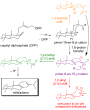
- trajectories initiated from minima and transition states have both been carried out on carbocations [25] and examples of each are described below. While many different quantum chemical methods can be used to carry out trajectory calculations, standard density functional theory (DFT) approaches are most
- structures in the vicinity of transition states, tend to have short lifetimes, on the order of the period of a single-bond stretching vibration. • These lifetimes can be increased via noncovalent interactions with electron-rich groups. Abietadiene – navigating past forks in the road Pathways to abietadiene



Diastereoselective synthesis of new O-alkylated and C-branched inositols and their corresponding fluoro analogues
Beilstein J. Org. Chem. 2016, 12, 353–361, doi:10.3762/bjoc.12.39
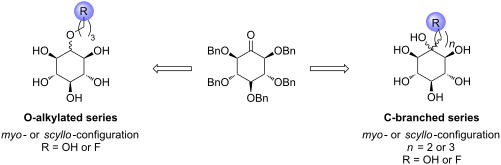
- substituted with the two carbon atoms arm where only compound myo-5 could be obtained. Indeed with the chain being longer, the formation of byproducts originating from cyclization and migration, favored by the proximity of the inositol ring and preferential transition states, was avoided. The synthetic routes


Tandem processes promoted by a hydrogen shift in 6-arylfulvenes bearing acetalic units at ortho position: a combined experimental and computational study
Beilstein J. Org. Chem. 2016, 12, 260–270, doi:10.3762/bjoc.12.28
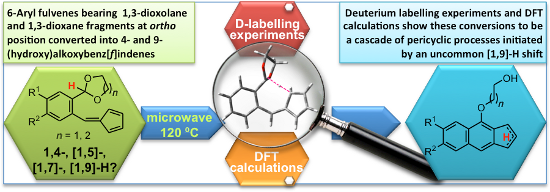
- into the isomeric spirotricycle 12a. The computed energy barriers for these processes are relatively small, 13.9 and 17.0 kcal·mol−1 respectively. Again the differences in the extent of the electronic conjugation in these electrocyclization transition states can give account of the relative stabilities
- characteristics of the respective transition states. The calculations have also shown that the tandem conversions of the starting fulvenes into benz[f]indenes are exergonics, the 9-substituted regioisomer being the thermodynamically-controlled major product, in accordance with the experimental results. Optimized


Synthesis and reactivity of aliphatic sulfur pentafluorides from substituted (pentafluorosulfanyl)benzenes
Beilstein J. Org. Chem. 2016, 12, 110–116, doi:10.3762/bjoc.12.12
- Diels–Alder products (Table 1). Single-point energies of the transition states suggested that pathway a was preferred over b (difference of ca. 10–20 kJ/mol). This was further supported by comparison of Gibbs free energy values. Boltzmann distribution was used to calculate theoretical endo/exo
- selectivity of 16a (98:2) from the differences of Gibbs energy of the transition states. Geometries of the four transition states are depicted in Figure 1. The less abundant transition states (TS-endo-16b and TS-exo-16b) were asynchronous with the differences of bond lengths of 0.662 and 0.556 Å, respectively
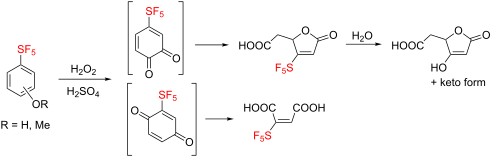
- )acetic acid, which in aqueous solution exists in equilibrium with its enol form. Further experiments are underway to find out whether aerobic microbial degradation of SF5-substituted aromatic compounds follows the same pathway as our chemical oxidation method. Optimized geometries of transition states of


Solving the puzzling competition of the thermal C2–C6 vs Myers–Saito cyclization of enyne-carbodiimides
Beilstein J. Org. Chem. 2016, 12, 43–49, doi:10.3762/bjoc.12.6
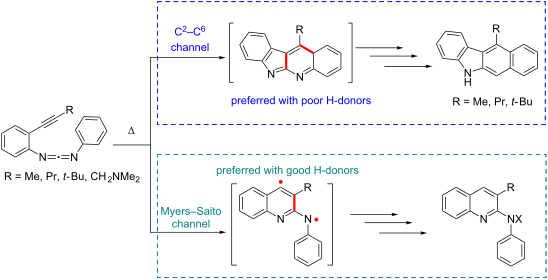
- approach for the diradical species and the transition states (TSs) connecting them while the restricted method was used for closed shell species. The BLYP functional was chosen for computation because the benchmark studies done by Schreiner showed good applicability of BLYP for the enyne-allene system [3


Enantioselective additions of copper acetylides to cyclic iminium and oxocarbenium ions
Beilstein J. Org. Chem. 2015, 11, 2696–2706, doi:10.3762/bjoc.11.290
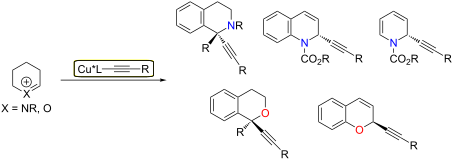
- substrates, suggesting that more stable oxocarbenium ions result in more selective reactions, potentially because they lead to later enantiodetermining transition states. We have also discovered a CuSPh/Ph-Pybox catalyst that enables the formation of diaryl, tetrasubstituted stereocenters via an





2-Hetaryl-1,3-tropolones based on five-membered nitrogen heterocycles: synthesis, structure and properties
Beilstein J. Org. Chem. 2015, 11, 2179–2188, doi:10.3762/bjoc.11.236
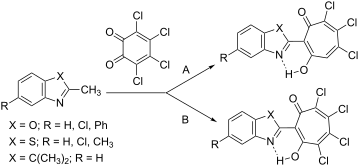
- energy correction (Etot + ZPE, а.u.) and relative energies (ΔE, kcal/mol) of the intermediates and corresponding transition states (Ts) occurring along the reaction path of the formation of 1,3-tropolones 5, and 6a,d,g calculated using the PBE0/6-311+G** method in the gas phase. Total energies with zero
- solution at 293 K. Ф – Quantum yield of the fluorescence. Supporting Information Supporting Information File 519: Experimental section, crystallographic data for compounds 5g, 6e, 11b, 13; optimized geometries of the intermediates and transition states involved in the routes of the formation of 1,3


![[Graphic 3]](/bjoc/content/inline/1860-5397-11-236-i8.png?max-width=637&scale=1.18182) N···H–O equilibrium in solutions of 2-hetaryl-5,6,7-trichloro- and 4,...
N···H–O equilibrium in solutions of 2-hetaryl-5,6,7-trichloro- and 4,...


Computational study of productive and non-productive cycles in fluoroalkene metathesis
Beilstein J. Org. Chem. 2015, 11, 2150–2157, doi:10.3762/bjoc.11.232
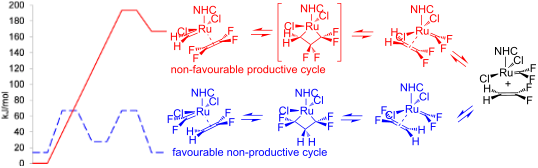
- partial bonding of alkene and the alkoxy group of the alkoxybenzylidene ligand to ruthenium was detected with the exception of a syn–cis arranged alkene, for which just a weak inflexion was observed in analogy to [42]. No large differences in the energies of transition states 3d preceeding the formation
- complex 2k. While both syn- and anti-coordinations of starting complex 2k and subsequent transition states 2l have nearly equal energies, the subsequent non-symmetrical productive metallacyclobutane 2PB is significantly more stable by ca. 60 kJ/mol than symmetrical non-productive metallacyclobutane 2NB
- . The difference in the energies was again more augmented for the subsequent transition states 2m and finally with the alkene coordinated to the alkylidene ruthenium, where the productive complex s2n, a complex of ethylene with difluororuthenium, is by ca. 80 kJ/mol more stable than the non-productive




Conformational equilibrium in supramolecular chemistry: Dibutyltriuret case
Beilstein J. Org. Chem. 2015, 11, 2105–2116, doi:10.3762/bjoc.11.227
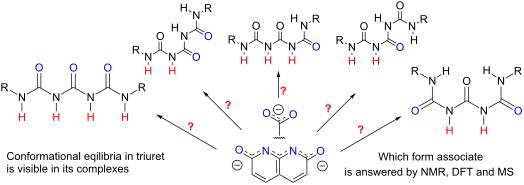
- obtained (Eyring equation). Two forms in 1∙∙∙10 complexes are, most probably 1a∙∙∙10 (high temperature) and 1c∙∙∙10 (low temperature). Between these two rotational transition states exist and one form represented by a local energy minium (Figure 10). These are transition states related to a) conformational
- Gaussian with default settings. For all structures the frequency calculations were ran to be sure that the geometry is in an energy minimum. Except for transition states where one imaginary frequency was obtained all other structures gave only real frequencies. The AIM2000 [71] software was used to
- [62][63] model of solvation (chloroform). The M05 functional suggested for non-covalent interactions [64][65] was used to sustain the methodology from our previous publications [9][10][50][66]. The Synchronous Transit-Guided Quasi-Newton method [67][68] has been used for optimization of the transition


Synthesis of constrained analogues of tryptophan
Beilstein J. Org. Chem. 2015, 11, 1997–2006, doi:10.3762/bjoc.11.216
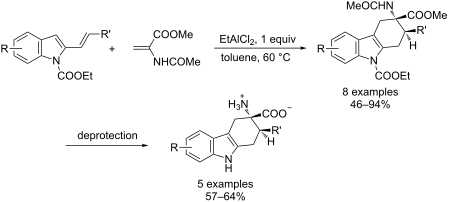
- reaction of 1a with 2 and effective in the reaction of 1b with 2. In this latter case, the reaction outcome could be explained by the formation of two energetically comparable transition states (endo + exo TS) or by the occurrence of a stepwise mechanism. Finally, the results obtained with indole 1i
- 2 afforded the corresponding tetrahydrocarbazoles 5a and 5b in 1:1.3 diasteroisomeric ratio (Scheme 4). As reported for the reaction between 1b and 2 in chloroform, the reaction outcome could be explained by the formation of two energetically comparable transition states (endo + exo TS) or by the


Mechanism, kinetics and selectivity of selenocyclization of 5-alkenylhydantoins: an experimental and computational study
Beilstein J. Org. Chem. 2015, 11, 1865–1875, doi:10.3762/bjoc.11.200
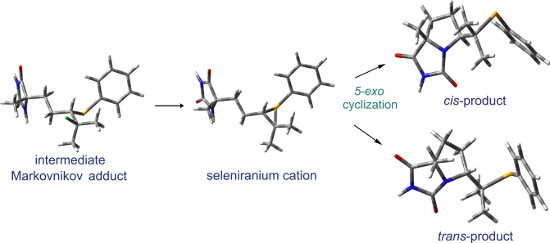
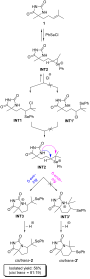
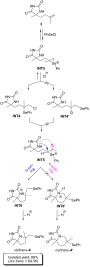
- the internal nucleophile, the amidic nitrogen, to the seleniranium cation yielding the intermediate imidazolinium cations. Their deprotonation is followed by the formation of the fused bicyclic reaction products. Important intermediates and key transition states are studied by using density functional
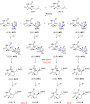
- -membered ((S,R)-INT3 and (S,S)-INT3) or six-membered ((S,R)-INT3’ and (S,S)-INT3’) intermediate bicyclic imidazolinium cations. Energy profiles for both 5-exo and 6-endo pathways are presented in Figure 3. The ring closure reactions are carried out via four transition states: two for the formation of the
- ’ the N-C(6) and Se-C(5) are almost completely formed. Optimized structures of seleniranium cations and transition states are given in Figure 4, while those for imidazolinium cations are given in Figure 5. From the charge analysis (data given in Supporting Information File 1, Table S2) it is possible to





A comprehensive study of olefin metathesis catalyzed by Ru-based catalysts
Beilstein J. Org. Chem. 2015, 11, 1767–1780, doi:10.3762/bjoc.11.192
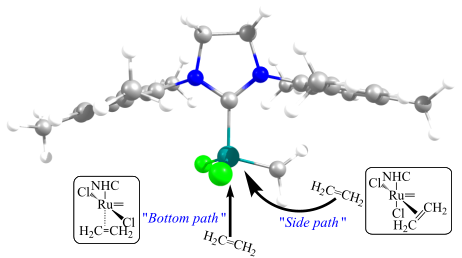
- hand, complex 19 is an example of an asymmetric catalyst, suggesting that the NHC ligand is the source of asymmetry [52]. In this paper we contribute in the understanding of the side- and bottom-bound coordination intermediates and the stability of the corresponding transition states as well as the
- –2.60 Å away from the Ru atom. Transition state for metallacycle formation. The energy of the various transition states for metallacycle formation with respect to the uncoordinated C=C double bond are reported in the 5th column of Table 2, while in the 6th column it is reported the energy of the cis
- transition states with respect to the trans transition state. The numbers reported clearly indicate that at the transition state the bulkiness of the N-substituents plays a more remarkable role. Indeed, while cis C2H4 coordination is favored for all the systems we considered, the cis transition state is




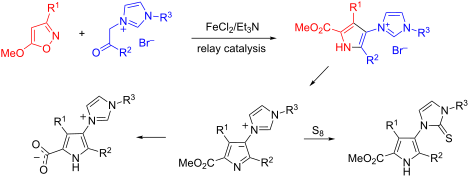
Fe(II)/Et3N-Relay-catalyzed domino reaction of isoxazoles with imidazolium salts in the synthesis of methyl 4-imidazolylpyrrole-2-carboxylates, its ylide and betaine derivatives
Beilstein J. Org. Chem. 2015, 11, 1732–1740, doi:10.3762/bjoc.11.189
- details: energies of molecules, transition states and their Cartesian coordinates of atoms. X-ray details. Acknowledgements We gratefully acknowledge the financial support of the Russian Foundation for Basic Research (Grant No. 14-03-00187) and Saint Petersburg State University (Grant No. 12.50.1565.2013





