


Search results
Search for "π-stacking" in Full Text gives 227 result(s) in Beilstein Journal of Organic Chemistry. Showing first 200.
Supramolecular frameworks based on [60]fullerene hexakisadducts
Beilstein J. Org. Chem. 2017, 13, 1–9, doi:10.3762/bjoc.13.1
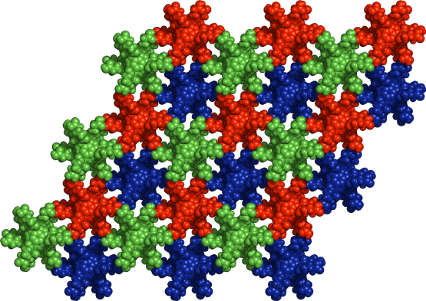
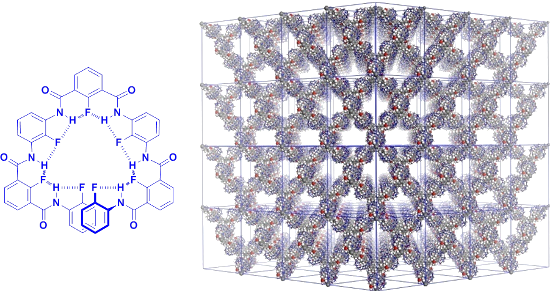
- ][34][35][36][37][38][39][40][41][42][43][44][45] or π–π-stacking [46] that retain porosity in the solid state under activation conditions have been reported so far. One possible way to enhance stability and shape-persistency might be the implementation of polyfunctional building blocks in order to


Synthesis of spiro[isoindole-1,5’-isoxazolidin]-3(2H)-ones as potential inhibitors of the MDM2-p53 interaction
Beilstein J. Org. Chem. 2016, 12, 2793–2807, doi:10.3762/bjoc.12.278
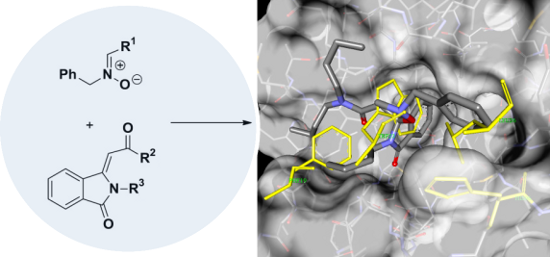
- 180° rotation of the isoindolinone core such that the benzyl group and dialkylamide occupy the Leu26 and Phe19 pockets, respectively. The reoriented binding mode, similar to the MI63 analogue, takes advantage of the π–π stacking interaction with His96 of MDM2 and the benzyl moiety of compound 6e, and


Effects of solvent additive on “s-shaped” curves in solution-processed small molecule solar cells
Beilstein J. Org. Chem. 2016, 12, 2543–2555, doi:10.3762/bjoc.12.249
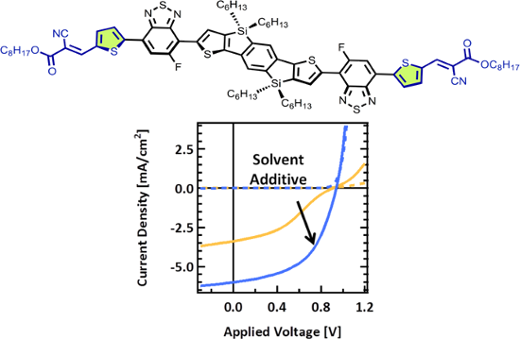
- reflection, suggesting a quite well-ordered film. Additionally, there is a small peak at 1.79 Å−1, corresponding to a spacing of 3.5 Å, which we attribute to π–π stacking. There is a broad feature centered at Q = 1.5 Å−1 which is seen in both films and at all orientations, which is the convolution of two
- with DIO, the alkyl stacking peak is again though is less prominent in-plane, while the π-stacking peak is more prominent. Assuming the alkyl and π-stacking directions are perpendicular, this suggests the material primarily adopts an edge-on orientation. This is in contrast with the preferential “face


A self-assembled cyclodextrin nanocarrier for photoreactive squaraine
Beilstein J. Org. Chem. 2016, 12, 2535–2542, doi:10.3762/bjoc.12.248
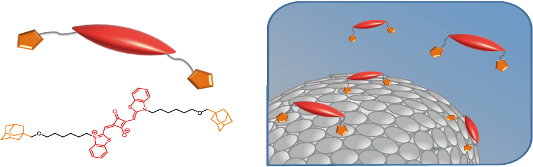
- inclusion between the adamantane groups and the cyclodextrin cavities at the surface of cyclodextrin vesicles (CDVs) results in efficient immobilization of the squaraine on a nanocarrier. In addition, π–π stacking (and hence inactivation) of the squaraine is supressed due to the steric separation of the
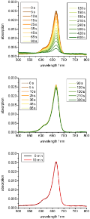
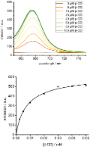
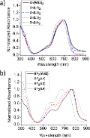
- . In a first set of experiments, we investigated the photochemical properties of AdSq in acetonitrile (Figure 2). The absorption spectrum shows a peak at 665 nm indicative of the presence of squaraine monomers in the solution. A shoulder around 610 nm indicates aggregation of the squaraine due to π–π
- stacking. A comparison of absorption spectra in different solvents revealed that the amount of aggregation is rather low in acetonitrile or ethanol but increases dramatically if water is used as a solvent (see Figure S1 in Supporting Information File 1). This is in agreement with literature and highlights




Sydnone C-4 heteroarylation with an indolizine ring via Chichibabin indolizine synthesis
Beilstein J. Org. Chem. 2016, 12, 2503–2510, doi:10.3762/bjoc.12.245
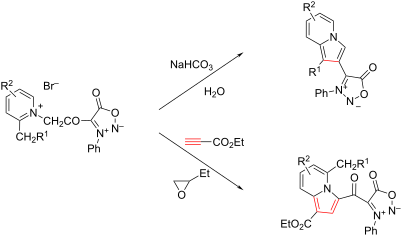
- of 12c include two additional intermolecular C–H···O bonds and an offset π-stacking interaction between the indolizine ring and its inversion-related counterpart, with the shortest centroid···centroid distance 3.718(1) Å. The 1H NMR spectra of compounds 12 confirmed the indolizine structure of the


High performance p-type molecular electron donors for OPV applications via alkylthiophene catenation chromophore extension
Beilstein J. Org. Chem. 2016, 12, 2298–2314, doi:10.3762/bjoc.12.223
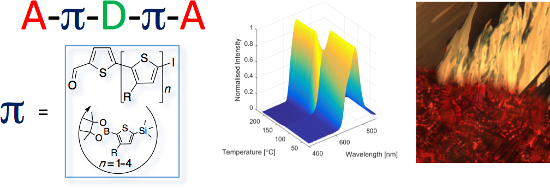
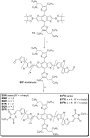
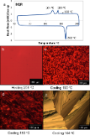
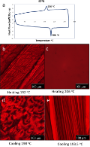
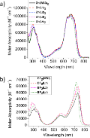
- evident (Figure 5a). However, λmax is dependent on the degree of formation of π–π stacking and development of the lowest energy transition with two clear sharp peaks at 552 nm and 590 nm (λmax) for BMR, while for BPR λmax is at 594 nm with a shoulder at around 630 nm indicating poor formation of the
- cm−2. BPR shows promise with a high FF (74%), however a lower Voc (0.82 V) and a reduced Jsc (14.3 mA cm−2) reduce the PCE to 8.7%. UV–vis data indicate that under these SVA conditions the π–π stacking is not fully developed indicating that optimizing SVA conditions may lead to improved light
- architecture described above. The collected device data are summarized in Table 5, and the J–V curves are shown in Figure 13. Examination of the BTxR UV–vis data for as-cast films (Figure 5d) indicates that BT8R does not have a well-developed π–π stacking peak in as-cast films, unlike BTR. Also, both BT4R and




Synthesis and characterization of fluorinated azadipyrromethene complexes as acceptors for organic photovoltaics
Beilstein J. Org. Chem. 2016, 12, 1925–1938, doi:10.3762/bjoc.12.182
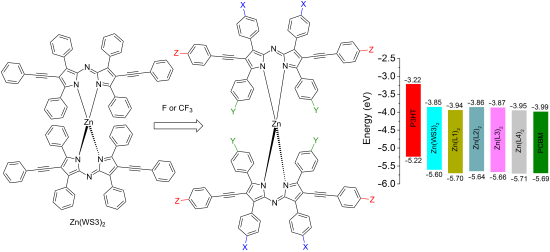
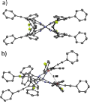
- structure is distorted tetrahedral with favorable π–π stacking distances between the proximal phenyl and pyrrole rings of the two separate ligands (Figure 10a and 10b). The distance between centroids is 3.56 Å for Zn(L2)2, compared to 3.63 Å for Zn(ADP)2 [38]. The shorter distance found for Zn(L2)2 suggests
- a stronger interaction between the proximal phenyl and pyrrole rings than in Zn(ADP)2. Unfortunately, it cannot be determined whether the addition of fluorine or phenylacetylene contributed to the shorter π–π stacking distances without a crystal structure for Zn(WS3)2. Intermolecular favorable π–π
- distorted tetrahedral shape; b) Shows the π-stacking between the proximal phenyl group of one ligand and a pyrrole ring of the opposite ligand. Generic synthetic scheme for fluorinated free ligands, where L# corresponds to the desired ligand number. For instance, L3-ADP and L3-ADPI2 would lead to the




From supramolecular chemistry to the nucleosome: studies in biomolecular recognition
Beilstein J. Org. Chem. 2016, 12, 1863–1869, doi:10.3762/bjoc.12.175
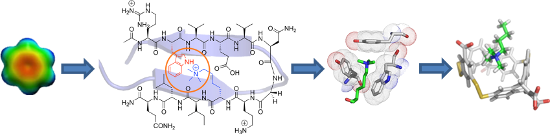
- -helices; aromatic interactions; β-hairpin peptides; cation–π interactions; dynamic combinatorial chemistry; histone; molecular recognition in water; nucleosome; π–π-stacking; post-translational modification; supramolecular chemistry; Review Childhood influences When thinking about how to start writing
- postdoc. Seminal work probing the electrostatic component of π–π stacking and edge-face aromatic interactions as well as cation–π interactions was being published at the time, as well as tantalizing suggestions about their relevance in biological structure and function. In particular, I was inspired by
- -Sanders Model for π–π stacking from 1990 [4]. (d) Kool’s nonpolar isostere of thymidine from 1995 [5].(e) Gellman’s model for π–π stacking in aqueous solution [6]. (a) Model β-hairpin for investigation of aromatic interactions. (b) Examples of noncovalent interactions studied, from weakest to strongest


Synthesis and properties of fluorescent 4′-azulenyl-functionalized 2,2′:6′,2″-terpyridines
Beilstein J. Org. Chem. 2016, 12, 1812–1825, doi:10.3762/bjoc.12.171
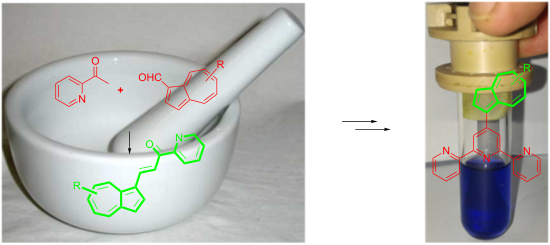
- supramolecular interactions are observed in the crystal packing, via the azulene moieties and the terpyridine groups. In the crystal of 4a, the molecules are organized in columns running along the crystallographic a axis by π–π stacking interactions (3.39–3.64 Å). In the neighboring columns the molecular units
- structures, different twisting was observed that might be responsible for the observed fluorescent profile. The solid-state crystal packing showed π–π stacking interactions between the pyridine rings in face-to-face or T-shape orientation, completed by slipped-off π–π stacked azulenyl moieties according to
- ; found: C, 83.4; H, 5.2; N, 10.8; MS (ESI+, m/z): 402 (100, MH+), 403 (30%). Molecular structure and numbering scheme of 4′-(1-azulenyl)-2,2′:6′,2″-terpyridine (4a, left) and 4′-(1-(4,6,8-trimethyl-azulenyl)-2,2′:6′,2″-terpyridine (4b, right). Packing diagram for 4a showing the π–π stacking and CH–π


Effect of the π-conjugation length on the properties and photovoltaic performance of A–π–D–π–A type oligothiophenes with a 4,8-bis(thienyl)benzo[1,2-b:4,5-b′]dithiophene core
Beilstein J. Org. Chem. 2016, 12, 1788–1797, doi:10.3762/bjoc.12.169
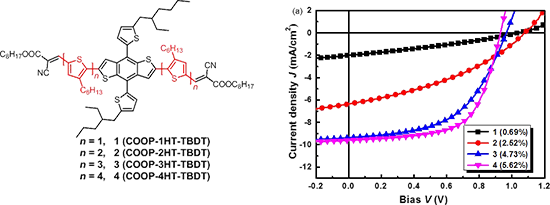
- oligothiophene chains. In the solid state, absorption spectra of these compounds (see Figure 1b) are remarkably broadened and red-shifted relative to those in solutions, which is attributable to strong π–π stacking interaction between the molecular backbones in the solid films [31][32]. It is noticeable that



Synthesis and characterization of benzodithiophene and benzotriazole-based polymers for photovoltaic applications
Beilstein J. Org. Chem. 2016, 12, 1629–1637, doi:10.3762/bjoc.12.160
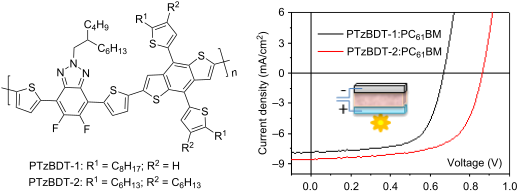
- interchain π–π stacking, BDT is a widely used electron-rich monomer. Moreover, alkyl or aryl groups can easily be introduced to BDT basic units as side groups to finely tune the properties of the resulting polymers, not only in terms of solubility but also contributing, for example, to extend the π


Experimental and theoretical insights in the alkene–arene intramolecular π-stacking interaction
Beilstein J. Org. Chem. 2016, 12, 1616–1623, doi:10.3762/bjoc.12.158
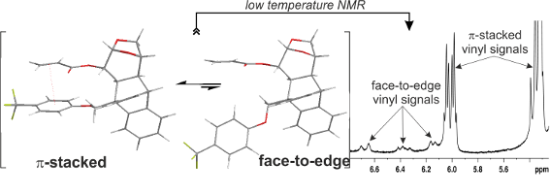
- , Universidad de Valencia, Valencia 46100, Spain 10.3762/bjoc.12.158 Abstract Chiral acrylic esters derived from biomass were developed as models to have a better insight in the aryl–vinyl π-stacking interactions. Quantum chemical calculations, NMR studies and experimental evidences demonstrated the presence
- affected by the electron density of the aromatic counterpart. Keywords: acrylic esters; asymmetric synthesis; biomass; conformational equilibrium; π-stacking interaction; Introduction Noncovalent interactions have demonstrated to have relevant importance in chemistry and biology [1][2][3][4]. Considering
- all noncovalent interactions, π-stacking is perhaps the less well understood, although its application in materials sciences, enzyme design and template-directed synthesis have had a dramatic growth, mainly for arene–arene interactions [1][2][3][4][5][6][7][8]. In particular, the use of π–π overlap as




Creating molecular macrocycles for anion recognition
Beilstein J. Org. Chem. 2016, 12, 611–627, doi:10.3762/bjoc.12.60
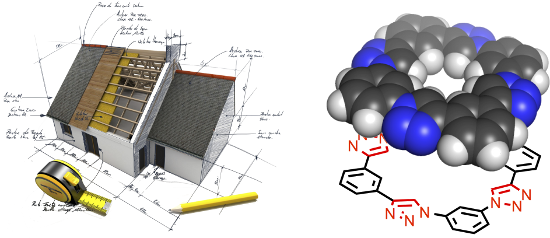
- triazole nitrogens but not past the pyridine with the steric protection provided by a CH group (see the red arrows in Figure 4c for the overlay of the two ligands). The ruthenium complex showed intermolecular π stacking of ligands on neighboring complexes in the solid state; yet terpyridine analogs did not




My maize and blue brick road to physical organic chemistry in materials
Beilstein J. Org. Chem. 2016, 12, 229–238, doi:10.3762/bjoc.12.24
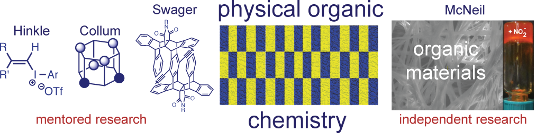
- grateful for his time and advice. While on the academic interview circuit, I was fortunate to have Steven Wheeler (a postdoctoral researcher with Professor Ken Houk at the time) in the audience at one interview. He was developing computational methods to evaluate π-stacking interactions, and was intrigued
- explained by through-space interactions [15]. Steven, who is now an associate professor at Texas A&M University, is changing the way we understand π stacking, XH/π, and ion/π interactions in organic systems [16][17][18][19][20]. During my postdoctoral studies, I remained fascinated with gels and was
- structures, such as ribbons, fibers, and sheets. This self-aggregation is driven by noncovalent interactions, including hydrogen bonding, π stacking, van der Waals interactions, and halogen bonding. Physical interactions amongst these larger structures lead to gel formation. Because noncovalent interactions


Urethane tetrathiafulvalene derivatives: synthesis, self-assembly and electrochemical properties
Beilstein J. Org. Chem. 2015, 11, 2343–2349, doi:10.3762/bjoc.11.255
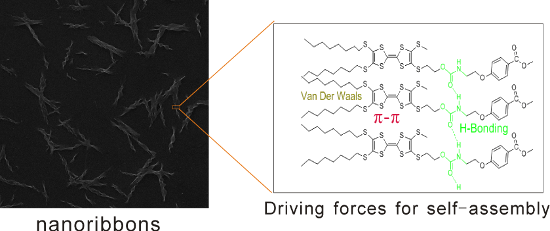
- driving forces for self-assembly of TTF derivatives were mainly hydrogen bond interactions and π–π stacking interactions. The electronic conductivity of the T1 and T2 films was tested by a four-probe method. Keywords: hydrogen bond; nanoribbon; self-assembly; tetrathiafulvalene; urethane; Introduction
- nanomaterials is generally accepted to be the self-assembly of supermolecules, which is constructed through weak noncovalent interactions such as π–π stacking, van der Waals interactions, charge transfer and H-bonding interactions [3][4][5][6]. Generally speaking, H-bonding interactions are the key
- units and urethane groups (Figure 1). The combination of the urethane group (forming hydrogen bonds) and the TTF unit (forming π–π stacking) may promote the formation of nanostructures. To the best of our knowledge, urethane groups have been rarely introduced into the molecular structure of TTF






Supramolecular chemistry: from aromatic foldamers to solution-phase supramolecular organic frameworks
Beilstein J. Org. Chem. 2015, 11, 2057–2071, doi:10.3762/bjoc.11.222
- : applications for molecular recognition and self-assembly Donor–acceptor interaction and π-stacking for folding. In January 2001, I returned to SIOC again. When I left SIOC for Urbana in 2000, I had built a small research group with two graduates. Thanks to the persistence of Professor Xi-Kui Jiang [19][20


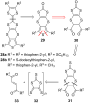
![[Graphic 1]](/bjoc/content/inline/1860-5397-11-222-i19.png?max-width=637&scale=1.18182) 16 and dynamic [2]catenane formed by compounds 17–19.
16 and dynamic [2]catenane formed by compounds 17–19.


Polythiophene and oligothiophene systems modified by TTF electroactive units for organic electronics
Beilstein J. Org. Chem. 2015, 11, 1749–1766, doi:10.3762/bjoc.11.191
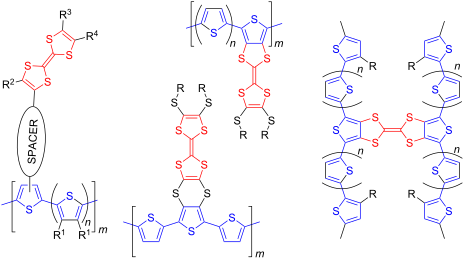
- dimensionality of charge carrier transport [1] by involving π–π stacking interactions. Varying the substituents of the conjugated backbone allows control over the polymer’s effective conjugation length and electronic properties, whilst also influencing the extent of inter-chain interactions. Two of the most
- the preparation of TTF mixed valance state materials, which showed superconducting properties [25]. Fusing the TTF unit with dithiin rings in bis(ethylenedithio)tetrathiafulvalene (BEDT-TTF) led to the extension of 1D π–π stacking intermolecular interactions in a donor sheet of a mixed valance state
- -acceptor into the conjugated backbone led to a polymer with a narrow optical band gap (Egopt = 1.32 eV in CH2Cl2 solution), with the expected lower value of Egopt = 1.26 eV in the film due to π–π stacking interactions. The value of the HOMO/LUMO levels (−5.13/−3.49 eV) in the film were noticeably different


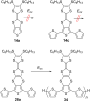


Star-shaped tetrathiafulvalene oligomers towards the construction of conducting supramolecular assembly
Beilstein J. Org. Chem. 2015, 11, 1596–1613, doi:10.3762/bjoc.11.175
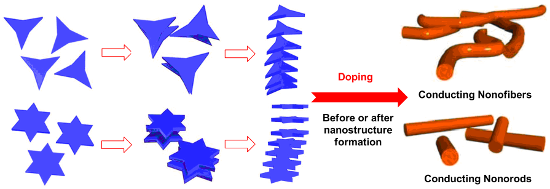
- interactions between molecules having one or more unpaired electrons [3][4], neutral TTF and its derivatives also easily form stacked columnar structures with face-to-face π···π stacking and side-by-side S···S interactions in the crystalline state. Furthermore, weak intermolecular interactions (hydrogen
- bonding, metal coordination, CT interaction, π···π stacking, van der Waals interaction, etc.) play an important role in the formation of the three-dimensional (3D) crystal structures [5]. For the construction of nanostructured objects, π···π, S···S, and other weak intermolecular interactions first
- formed by casting a solution of 48 on a glass surface (Figure 17c). XRD studies on the fiber and the film of 48 revealed that the fiber has a hexagonal alignment, whereas the film has a lamellar structure with lateral order and π···π stacking. It is worth noting that the film of 48 prepared by casting a


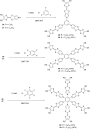


Thiazole-induced rigidification in substituted dithieno-tetrathiafulvalene: the effect of planarisation on charge transport properties
Beilstein J. Org. Chem. 2015, 11, 1148–1154, doi:10.3762/bjoc.11.129
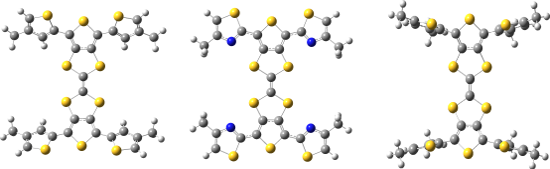
- resolved but there is a non-resolved peak caused by overlap of the cathodic peaks on the reverse scan. Compound 2 appears to show a first oxidation wave at 0.09 V, however, this is an artefact due to a minor degree of aggregation induced by π–π stacking between some of the molecules. This is followed by



Are D-manno-configured Amadori products ligands of the bacterial lectin FimH?
Beilstein J. Org. Chem. 2015, 11, 1096–1104, doi:10.3762/bjoc.11.123
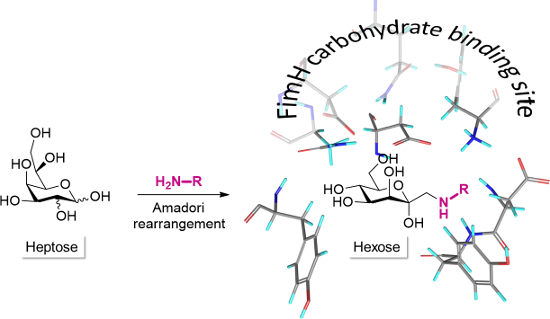
- ]. Obviously, FimH binds α-D-mannosides such as simple methyl α-D-mannoside (MeMan, 1) but not β-mannosides. Mannosides with an aromatic aglycone, such as p-nitrophenyl α-D-mannoside (pNPMan) and 4-methylumbelliferyl α-D-mannoside (3) show an improved affinity to FimH due to π–π-stacking interactions of the


Synthesis of photoresponsive cholesterol-based azobenzene organogels: dependence on different spacer lengths
Beilstein J. Org. Chem. 2015, 11, 1089–1095, doi:10.3762/bjoc.11.122
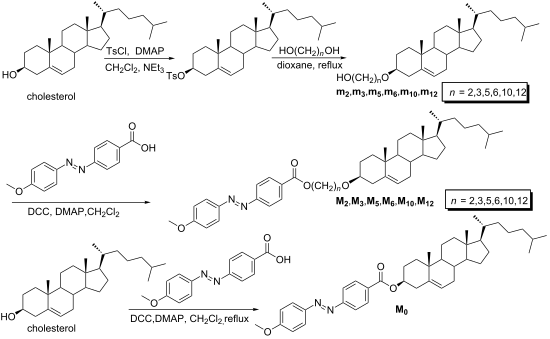
- ], etc. The driving force for the spontaneous formation of gel could be relatively non-covalent interactions such as π–π stacking [4][5][6][7], hydrogen bonding [7][8][9], dipole–dipole [10], and van der Waals interactions [11][12]. A series of cholesterol-based gelators were reported [13][14][15]. These


Indolizines and pyrrolo[1,2-c]pyrimidines decorated with a pyrimidine and a pyridine unit respectively
Beilstein J. Org. Chem. 2015, 11, 1079–1088, doi:10.3762/bjoc.11.121
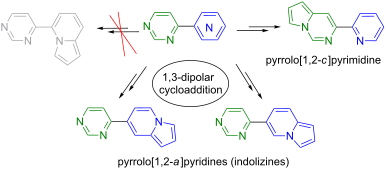
- π-stacking, with shortest ring centroid-to-centroid distances of 3.743 Å in 6 and 3.766 Å in 8. It was ascertained from a search of the Cambridge Structural Database [34] (CSD) that the crystal of 6 is isostructural with that of 4,4’-bipyrimidine as the trans-rotamer (CSD refcode SACPAN). This is


Mechanical stability of bivalent transition metal complexes analyzed by single-molecule force spectroscopy
Beilstein J. Org. Chem. 2015, 11, 817–827, doi:10.3762/bjoc.11.91
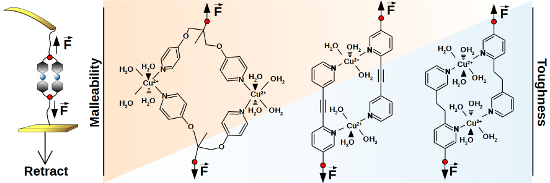
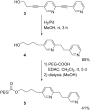
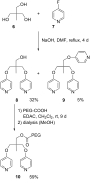
- partially due to the fact that the π–π-stacking of pyridines [50] was a competing interaction. The most probable rupture force, used in the KBE model, was due to the coordination complexes. Methods using the whole data set are strongly influenced by the stacking interaction and would have needed heavily




First principle investigation of the linker length effects on the thermodynamics of divalent pseudorotaxanes
Beilstein J. Org. Chem. 2015, 11, 687–692, doi:10.3762/bjoc.11.78
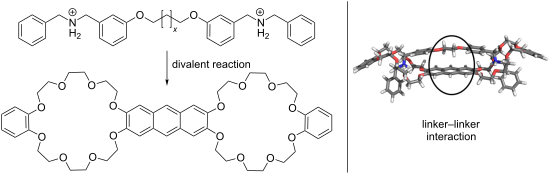
- first principle calculations show clearly that this enhanced binding is due to electronic effects, namely the dispersion interaction of the two linkers. For the shortest linker this interaction results in a nearly ideal π–π stacking. For the two longer linkers ideal packing is not possible due to steric
- dispersive interaction of the linking unit (two phenyl rings and the linker), which in case of the n0 guest fits perfectly on top of the anthracene linker of the DiC8 host. The distance between the linker of the host and the linker of the n0 guest is around 3.7 Å, quite close to an ideal distance for the π–π
- stacking of two benzene rings. The n1 and n2 guest do not perfectly fit with the host (Figure 2). In the n1-case the linker is folded away from the anthracene bridge, and for the n2-case one phenyl ring is twisted away due to steric constraints. The Gibbs energy of association ΔG in the gas phase of the


C-5’-Triazolyl-2’-oxa-3’-aza-4’a-carbanucleosides: Synthesis and biological evaluation
Beilstein J. Org. Chem. 2015, 11, 328–334, doi:10.3762/bjoc.11.38

- , the 1,2,3-triazole motif is exceedingly stable to basic or acidic hydrolysis and interacts strongly with biological targets through hydrogen bonding to nitrogen atoms as well as through dipole–dipole and π-stacking interactions [39]. Recently, a synthetic approach towards 3-hydroxymethyl-5-(1H-1,2,3





