Search results
Search for "addition reaction" in Full Text gives 190 result(s) in Beilstein Journal of Organic Chemistry.
Silver and gold-catalyzed multicomponent reactions
Beilstein J. Org. Chem. 2014, 10, 481–513, doi:10.3762/bjoc.10.46
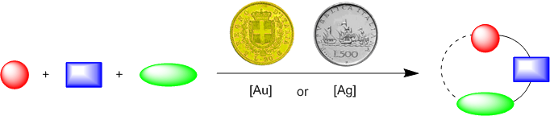
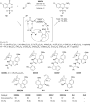
- alkyne π-complex I with the acidification of the acetylenic hydrogen atom. Deprotonation by the imine produces the electrophilic iminium ion with simultaneous production of the Au(I)-acetylide II. An addition reaction produces propargylamine III and regenerates the gold cation. Amine III is trapped with


New hydrogen-bonding organocatalysts: Chiral cyclophosphazanes and phosphorus amides as catalysts for asymmetric Michael additions
Beilstein J. Org. Chem. 2014, 10, 224–236, doi:10.3762/bjoc.10.18
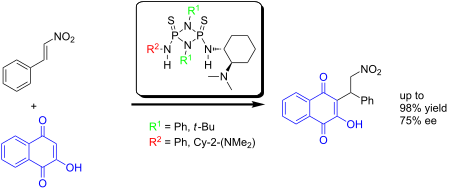
- on the selectivity and also on the efficacy with electron-withdrawing groups. While the flexible open-chain triamide catalysts (6, 7a) proved to be strong promoters of the addition reaction with excellent yields, we assumed that the rigid cyclodiphosphazanes 14a/15/16 would be more selective catalyst
- lower accuracy of the employed SVP-basis set in describing H-bonded systems. Conclusion A series of new phosphorus (tri)amides, which includes the first chiral PV-cyclodiphosphazane, is synthesized and is successfully employed as HB organocatalysts in the Michael addition reaction of 2


One-pot cross-enyne metathesis (CEYM)–Diels–Alder reaction of gem-difluoropropargylic alkynes
Beilstein J. Org. Chem. 2013, 9, 2688–2695, doi:10.3762/bjoc.9.305
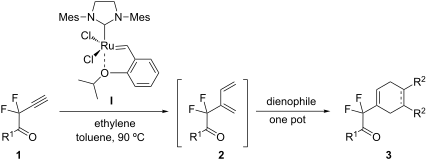
- moiety via vinylalkylidene intermediates [4][5][6]. This is an atom economical process since it is an addition reaction and non-olefin byproducts are formed. Furthermore, a sequential use of EYM and Diels–Alder reactions generates highly functionalized carbo- and heterocyclic frameworks [7][8][9][10][11


Garner’s aldehyde as a versatile intermediate in the synthesis of enantiopure natural products
Beilstein J. Org. Chem. 2013, 9, 2641–2659, doi:10.3762/bjoc.9.300
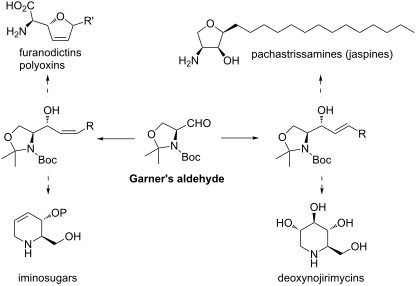
- for the introduction of chirality to substrates. This review presents a general overview of the synthesis and use of Garner’s aldehyde in natural product synthesis. Particular attention will be paid on the preservation of chiral information in the addition reaction of nucleophiles to the aldehyde
- formed the nucleophile reductively from pentadecyne with iBu2AlH in THF [44]. This vinylalane provided the syn-adduct 16 in modest stereoselectivity (1:2 anti/syn). For the addition reaction to be feasible for asymmetric synthesis, the configurational integrity during this step is important. Garner and
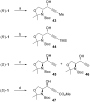
- many others have demonstrated that there is practically no epimerization of the α-carbon center of 1 during the addition reaction [38]. While working on the synthesis of thymine polyoxin C, Garner coupled the lithium salt of ethyl propiolate with (R)-1 (Scheme 9) in HMPT/THF at −78 °C. The reaction was




Regioselective 1,4-trifluoromethylation of α,β-unsaturated ketones via a S-(trifluoromethyl)diphenylsulfonium salts/copper system
Beilstein J. Org. Chem. 2013, 9, 2189–2193, doi:10.3762/bjoc.9.257
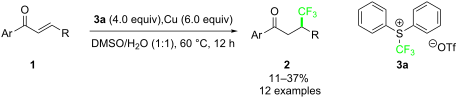
- Michael addition reaction, even in a racemic, non-stereoselective fashion [1][2][3][4][5]. The nucleophilic trifluoromethylation to conjugated alkenes essentially occurs solely via a 1,2-addition [1][2][3][4][5][6][7][8][9][10][11], not a 1,4-addition (Scheme 1), with the exception of non-general examples


Acid, silver, and solvent-free gold-catalyzed hydrophenoxylation of internal alkynes
Beilstein J. Org. Chem. 2013, 9, 2002–2008, doi:10.3762/bjoc.9.235
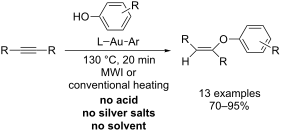
- the addition reaction [11]. Additionally, these cationic gold species can be generated through the reaction of chlorogold compounds with silver salts [1][2][3][4]. Recently, there has been growing interest in developing approaches that generate a catalytically active species under acid-free and silver
- could promote this reaction, JohnPhosAuCl and other gold compounds were investigated under the same reaction conditions (Table 1, entries 2–7). In all cases, the chlorogold compounds were unable to catalyze the addition reaction and analysis of the crude reaction mixtures revealed only starting
- 18). The effectiveness of different gold catalysts on the addition reaction was also studied (Table 1). While 1 was effective at promoting the addition reaction, an arylgold compound bearing a bulkier Buchwald ligand (2) afforded lower yields of the vinyl ether. Adding an additional equivalent of t


Flow Giese reaction using cyanoborohydride as a radical mediator
Beilstein J. Org. Chem. 2013, 9, 1791–1796, doi:10.3762/bjoc.9.208
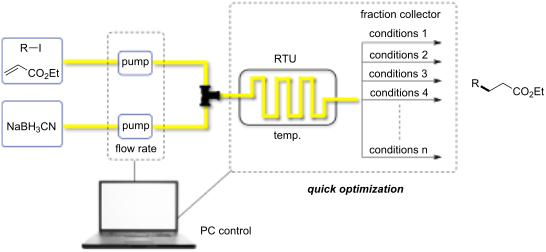
- reductive radical addition reaction, better known as the Giese reaction, was historically carried out most by using tributyltin hydride as the radical mediator [8][9]. Recently borane derivatives such as borohydride reagents [10][11][12][13] or NHC-boranes [14][15][16][17][18] can be used in simple radical


Computational study of the rate constants and free energies of intramolecular radical addition to substituted anilines
Beilstein J. Org. Chem. 2013, 9, 1620–1629, doi:10.3762/bjoc.9.185

- was therefore employed in further calculations. Corrections for intramolecular London dispersion and solvation effects in the quantum chemical treatment are essential to obtain consistent and accurate theoretical data. For the investigated radical addition reaction it turned out that the polarity of
- similar for 1–3 (121–123°). This angle is substantially larger than for the 5-exo cyclization (108.2°). This is shown for the addition of 1 in Figure 1. Substitution at the radical center We investigated the influence of radical substitution on the rate and the free energy of the addition reaction next
- addition reaction of 9 that has the most electrophilic radical center due to ester substitution. The more nucleophilic radicals 8 and 10 react slower than 1. The –OMe group in 10 is a better electron donor than the –Me group in 8, which should make it more nucleophilic and lead to a slower radical addition


Bioinspired total synthesis of katsumadain A by organocatalytic enantioselective 1,4-conjugate addition
Beilstein J. Org. Chem. 2013, 9, 1601–1606, doi:10.3762/bjoc.9.182
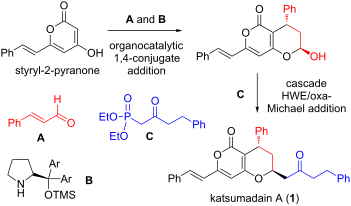
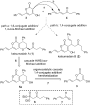
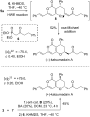
- strategy was designed as a fallback, in which katsumadain A could be accessed from the lactol 5a and phosphonate 6 via a tandem Horner–Wadsworth–Emmons (HWE)/oxa-Michael addition reaction [16]. In turn, 5a could be derived from 3 and cinnamaldehyde (7) by an organocatalytic enantioselective 1,4-conjugate
- the electrophile 4. However, all of these reactions failed to provide satisfactory results and only lead to the recovery or the substantial decomposition of the starting material. We then turned our attention to the organocatalytic conjugated addition reaction. Among the various documented conditions


Homolytic substitution at phosphorus for C–P bond formation in organic synthesis
Beilstein J. Org. Chem. 2013, 9, 1269–1277, doi:10.3762/bjoc.9.143

- Me3M–PPh2 (M = Sn, Si) and V-40 (Table 9) [26]. Secondary and tertiary alkyl iodides participate in the addition reaction while primary alkyl iodide results in direct phosphination prior to the expected addition. Not only acrylate ester but also acrylamide, vinyl sulfone, and acrylonitrile are good


Catalytic asymmetric tandem Friedel–Crafts alkylation/Michael addition reaction for the synthesis of highly functionalized chromans
Beilstein J. Org. Chem. 2013, 9, 1210–1216, doi:10.3762/bjoc.9.137
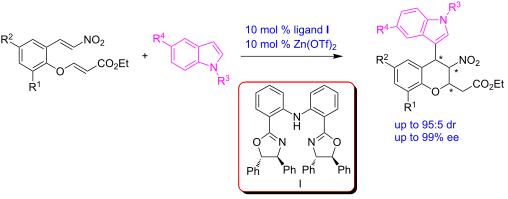
- Jiahuan Peng Da-Ming Du School of Chemical Engineering and Environment, Beijing Institute of Technology, Beijing 100081, China 10.3762/bjoc.9.137 Abstract The enantioselective tandem Friedel–Crafts alkylation/Michael addition reaction of indoles with nitroolefin enoates catalyzed by a
- reaction has appeared [50]. Herein, we wish to detail our independent research on the asymmetric tandem Friedel–Crafts alkylation/Michael addition reaction of indoles with nitroolefin enoates catalyzed by bis(oxazoline)-Zn(OTf)2 complexes, resulting in functionalized chiral chromans (dihydrobenzopyrans) in
- enantioselectivities were observed in these cases. 3k was obtained in moderate stereoselectivity (Table 5, entry 11). Conclusion In conclusion, we have developed a convenient catalytic asymmetric tandem Friedel–Crafts alkylation/Michael addition reaction of nitroolefin enoates 1 with indoles 2 catalyzed by a


Synthesis of functionalized spiro[indoline-3,4’-pyridines] and spiro[indoline-3,4’-pyridinones] via one-pot four-component reactions
Beilstein J. Org. Chem. 2013, 9, 846–851, doi:10.3762/bjoc.9.97
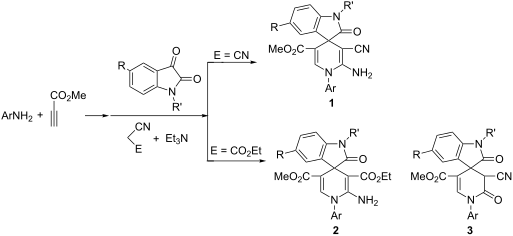
- functionalized spiro[indole-3,4’-pyridines] via the four-component reaction prompted us to study the reaction scope further [25]. Another widely used electron-deficient alkyne reagent, methyl propiolate, was utilized to replace dimethyl acetylenedicarboxylate as one component. The addition reaction of aniline to
- methyl propiolate to give the active adducts, 3-arylaminoacrylates, usually needs more than twelve hours. Thus, we decided firstly to let arylamine and methyl propiolate react in ethanol at room temperature for 24 hours. TLC analysis indicated that the addition reaction had finished, and TLC analysis


A computational study of base-catalyzed reactions of cyclic 1,2-diones: cyclobutane-1,2-dione
Beilstein J. Org. Chem. 2013, 9, 594–601, doi:10.3762/bjoc.9.64
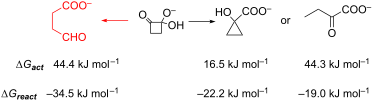
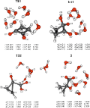
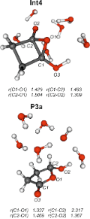
- of an extended conformation Int2’ was attempted. However, such a structure collapsed upon geometry optimization in a concerted proton transfer–nucleophilic addition reaction to intermediate Int2a. By a simple acid–base equilibrium (alcoholate–carboxylic acid → alcohol–carboxylate), this intermediate





Efficient synthesis of β’-amino-α,β-unsaturated ketones
Beilstein J. Org. Chem. 2013, 9, 486–495, doi:10.3762/bjoc.9.52

- nucleophilic addition reaction of Grignard reagents to N-carbamoyl β-amino Weinreb amides (Scheme 2) [18]. Conjugate addition of (R)-N-benzyl-N-methylbenzylamide to methyl cinnamate under basic conditions led to β–aminoester 5 with high diastereoselectivity (dr >94%) [11][12]. Subsequent transformation of the


New simple synthesis of ring-fused 4-alkyl-4H-3,1-benzothiazine-2-thiones: Direct formation from carbon disulfide and (E)-3-(2-aminoaryl)acrylates or (E)-3-(2-aminoaryl)acrylonitriles
Beilstein J. Org. Chem. 2013, 9, 460–466, doi:10.3762/bjoc.9.49
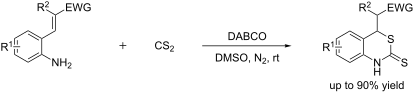
- expected to construct 4-alkyl-4H-3,1-benzothiazine-2-thione derivatives through a one-pot base-promoted intermolecular addition/intramolecular Michael addition reaction. Results and Discussion In our initial study, we examined the tandem reaction with various bases and solvents to optimize the reaction


Recent advances in transition-metal-catalyzed intermolecular carbomagnesiation and carbozincation
Beilstein J. Org. Chem. 2013, 9, 278–302, doi:10.3762/bjoc.9.34
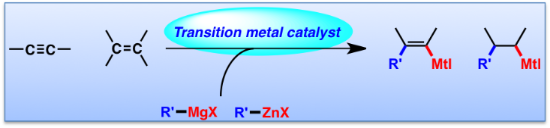
- ][139][140][141][142][143]. Manganese-catalyzed regioselective allylmetalation of allenes was reported (Scheme 53) [144]. The regioselectivity of the manganese-catalyzed addition reaction was opposite to that of the rhodium-catalyzed reactions, and vinylmagnesium intermediates were formed. Although


A new synthetic protocol for coumarin amino acid
Beilstein J. Org. Chem. 2013, 9, 254–259, doi:10.3762/bjoc.9.30
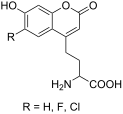
- experimental results, DBU is the best base among the three, and the reaction can be carried out at room temperature to obtain a relatively good yield. Alkylation of DEAM is widely used to synthesize α-amino acids [13], which was also applied here to prepare the coumarin amino acids. Through Michael addition
- reaction of DEAM to terminal alkene 5, malonate 6 was formed in high yield, and it was followed by the total hydrolysis of compound 6 with concentrated aqueous HCl solution to afford the coumarin amino acid 1. We found that the hydrolysis needed a high concentration of aqueous HCl solution (12 M) and a


Thioester derivatives of the natural product psammaplin A as potent histone deacetylase inhibitors
Beilstein J. Org. Chem. 2013, 9, 81–88, doi:10.3762/bjoc.9.11
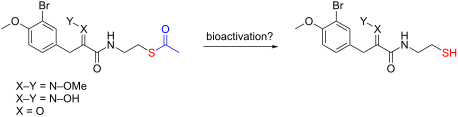
- could potentially be responsible for thioester hydrolysis. We prepared and used synthetic probe 10 [30] (Scheme 3) in order to test this hypothesis. Coumarin-based probe 10 is known to react extremely fast with thiols through a Michael addition reaction. While the fluorescence of 10 is efficiently



















Facile synthesis of functionalized tetrahydroquinolines via domino Povarov reactions of arylamines, methyl propiolate and aromatic aldehydes
Beilstein J. Org. Chem. 2012, 8, 1839–1843, doi:10.3762/bjoc.8.211
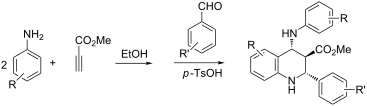
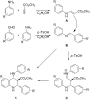
- aryl amines could be used in the reaction to give more polysubstituted tetrahydroquinolines. Thus, after the addition reaction of one kind of arylamine with methyl propiolate had been completed, the aromatic aldehyde and the second arylamine were introduced to the reaction system. By using this method


Automated three-component synthesis of a library of γ-lactams
Beilstein J. Org. Chem. 2012, 8, 1804–1813, doi:10.3762/bjoc.8.206
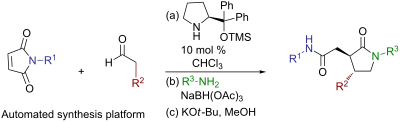
- protocol, we explored the use of various chiral amines in the conjugate addition reaction of propionaldehyde (2{1}) to N-phenylmaleimide (1{1}) (Table 1). Although the achiral pyrrolidine was found to be an efficient catalyst in the reaction [12], this led to a ~1:1 mixture of racemic succinimide
- reductive amination/lactamization reaction was performed in methylene chloride [12]. However, in order to combine this step with the previous Michael addition step, we thought to perform the reaction in chloroform (Scheme 3). In fact, when the Michael addition reaction between propionaldehyde (2{1}) and N


Organocatalytic tandem Michael addition reactions: A powerful access to the enantioselective synthesis of functionalized chromenes, thiochromenes and 1,2-dihydroquinolines
Beilstein J. Org. Chem. 2012, 8, 1668–1694, doi:10.3762/bjoc.8.191
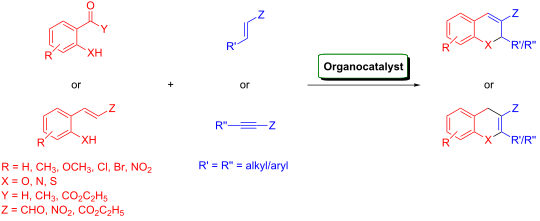
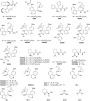
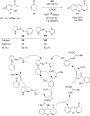
- -unsaturated ketones have also responded as Michael acceptors in the organocatalytic tandem Michael addition reaction towards the synthesis of tetrahydroxanthones. Córdova et al. [50], in 2007, reported the first organocatalytic asymmetric synthesis of tetrahydroxanthenones through the domino Michael–aldol
- , and the power of tandem/domino/cascade-Michael addition reactions promoted by chiral organocatalysts has been intensely studied within this field. In this review, we have outlined some significant works concerning the organocatalytic enantioselective Michael addition reaction from three different






Arylglycine-derivative synthesis via oxidative sp3 C–H functionalization of α-amino esters
Beilstein J. Org. Chem. 2012, 8, 1564–1568, doi:10.3762/bjoc.8.178
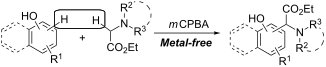
- arylglycine derivatives has attracted considerable attention. Over the past years, many methods have been developed for the preparation of arylglycine derivatives [3]. Among these, the addition reaction of a carbon nucleophile to imines or iminium ions through Mannich-type reaction appears more useful (Scheme


C2-Alkylation of N-pyrimidylindole with vinylsilane via cobalt-catalyzed C–H bond activation
Beilstein J. Org. Chem. 2012, 8, 1536–1542, doi:10.3762/bjoc.8.174
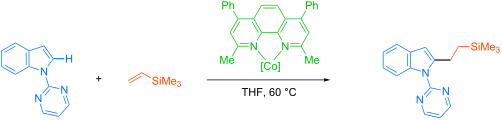
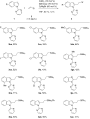
- as a directing group for rhodium-catalyzed C2-alkenylation [36], was entirely ineffective. Vinylsilanes bearing dimethylphenylsilyl and triphenylsilyl groups were amenable to the addition reaction with 1a, affording the adduct 3ab and 3ac in modest yields. Vinyltriethoxysilane also reacted with 1a in




Synthesis and evaluation of new guanidine-thiourea organocatalyst for the nitro-Michael reaction: Theoretical studies on mechanism and enantioselectivity
Beilstein J. Org. Chem. 2012, 8, 1485–1498, doi:10.3762/bjoc.8.168
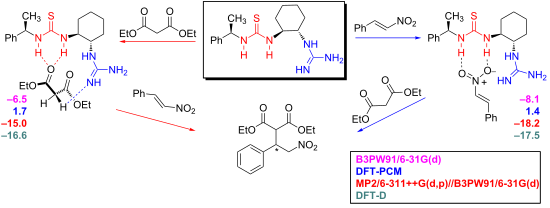
- Organic Chemistry I, University of Erlangen-Nuremberg, Henkestraße 42, 91054, Erlangen, Germany 10.3762/bjoc.8.168 Abstract A new guanidine-thiourea organocatalyst has been developed and applied as bifunctional organocatalyst in the Michael addition reaction of diethyl malonate to trans-β-nitrostyrene