


Search results
Search for "antifungal" in Full Text gives 282 result(s) in Beilstein Journal of Organic Chemistry. Showing first 200.
Fluorocyclisation via I(I)/I(III) catalysis: a concise route to fluorinated oxazolines
- Felix Scheidt,
- Christian Thiehoff,
- Gülay Yilmaz,
- Stephanie Meyer,
- Constantin G. Daniliuc,
- Gerald Kehr and
- Ryan Gilmour
Beilstein J. Org. Chem. 2018, 14, 1021–1027, doi:10.3762/bjoc.14.88
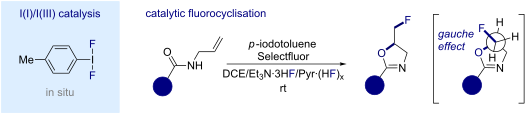
- siderophore antibiotic D-fluviabactin, the cytotoxic agent westiellamide, the antifungal macrodiolide leupyrrin A1 and the antitumour compound BE-70016 (Figure 1). In addition, synthetic polymers based on the 2-oxazoline building block constitute versatile platforms for a range of biomedical applications

Graphical Abstract

Figure 1: Selected examples of bioactive compounds containing the 2-oxazoline motif.

Figure 2: The catalytic difluorination of alkenes (top) and the proposed fluorocyclisation via the same I(I)/...

Figure 3: Substrate scope. aReaction conducted on 1 mmol scale. bReaction time increased to 40 hours. cReacti...

Scheme 1: Exploring diastereocontrol and the synthesis of the fluorohydrin 3. Yields in parentheses were dete...

Figure 4: X-ray molecular structure of compound 2c. Thermal ellipsoids shown at the 50% propability level. To...
5-Aminopyrazole as precursor in design and synthesis of fused pyrazoloazines
- Ranjana Aggarwal and
- Suresh Kumar
Beilstein J. Org. Chem. 2018, 14, 203–242, doi:10.3762/bjoc.14.15
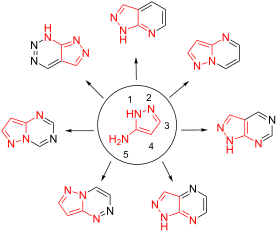
- pharmacological activities such as: anticancer [1][2], anti-inflammatory [3][4], antioxidant [5], antibacterial [6][7][8], analgesic [9], antiviral [10][11], antimicrobial [12][13], antifungal [6], antiglycemic [14], antiamoebic [15] and antidepressive [16][17]. Considering the immense biological properties
- Pyrazolo[3,4-b]pyrazines have received great attention because of their interesting biological activities such as inhibition of protein kinases [137], blood platelet aggregation [138], bone metabolism improvers [139] as well as antifungal [140], antibacterial [141], antiparasitic [142] and antiviral [143

Graphical Abstract

Figure 1: Selected examples of drugs with fused pyrazole rings.

Figure 2: Typical structures of some fused pyrazoloazines from 5-aminopyrazoles.

Scheme 1: Regiospecific synthesis of 4 and 6-trifluoromethyl-1H-pyrazolo[3,4-b]pyridines.

Scheme 2: Synthesis of pyrazolo[3,4-b]pyridine-6-carboxylates.

Scheme 3: Synthesis of 1,4,6-triaryl-1H-pyrazolo[3,4-b]pyridines with ionic liquid .

Scheme 4: Synthesis of coumarin-based isomeric tetracyclic pyrazolo[3,4-b]pyridines.

Scheme 5: Synthesis of 6-substituted pyrazolo[3,4-b]pyridines under Heck conditions.

Scheme 6: Microwave-assisted palladium-catalyzed synthesis of pyrazolo[3,4-b]pyridines.

Scheme 7: Acid-catalyzed synthesis of pyrazolo[3,4-b]pyridines via enaminones.

Scheme 8: Synthesis of pyrazolo[3,4-b]pyridines via aza-Diels–Alder reaction.

Scheme 9: Synthesis of macrocyclane fused pyrazolo[3,4-b]pyridine derivatives.

Scheme 10: Three-component synthesis of 4,7-dihydro-1H-pyrazolo[3,4-b]pyridine derivatives.

Scheme 11: Ultrasonicated synthesis of spiro[indoline-3,4'-pyrazolo[3,4-b]pyridine]-2,6'(1'H)-diones.

Scheme 12: Synthesis of spiro[indoline-3,4'-pyrazolo[3,4-b]pyridine] derivatives under conventional heating co...

Scheme 13: Nanoparticle-catalyzed synthesis of pyrazolo[3,4-b]pyridine-spiroindolinones.

Scheme 14: Microwave-assisted multicomponent synthesis of spiropyrazolo[3,4-b]pyridines.

Scheme 15: Unexpected synthesis of naphthoic acid-substituted pyrazolo[3,4-b]pyridines.

Scheme 16: Multicomponent synthesis of variously substituted pyrazolo[3,4-b]pyridine derivatives.

Scheme 17: Three-component synthesis of 4,7-dihydropyrazolo[3,4-b]pyridines and pyrazolo[3,4-b]pyridines.

Scheme 18: Synthesis of pyrazolo[3,4-b]pyridine-5-spirocycloalkanediones.

Scheme 19: Ultrasound-mediated three-component synthesis of pyrazolo[3,4-b]pyridines.

Scheme 20: Multicomponent synthesis of 4-aryl-3-methyl-1-phenyl-4,6,8,9-tetrahydropyrazolo [3,4-b]thiopyrano[4...

Scheme 21: Synthesis of 2,3-dihydrochromeno[4,3-d]pyrazolo[3,4-b]pyridine-1,6-diones.

Scheme 22: FeCl3-catalyzed synthesis of o-hydroxyphenylpyrazolo[3,4-b]pyridine derivatives.

Scheme 23: Ionic liquid-mediated synthesis of pyrazolo[3,4-b]pyridines.

Scheme 24: Microwave-assisted synthesis of pyrazolo[3,4-b]pyridines.

Scheme 25: Multicomponent synthesis of pyrazolo[3,4-b]pyridine-5-carbonitriles.

Scheme 26: Unusual domino synthesis of 4,7-dihydropyrazolo[3,4-b]pyridine-5-nitriles.

Scheme 27: Synthesis of 4,5,6,7-tetrahydro-4H-pyrazolo[3,4-b]pyridines under conventional heating and ultrasou...

Scheme 28: L-Proline-catalyzed synthesis of of pyrazolo[3,4-b]pyridine.

Scheme 29: Microwave-assisted synthesis of 5-aminoarylpyrazolo[3,4-b]pyridines.

Scheme 30: Microwave-assisted multi-component synthesis of pyrazolo[3,4-e]indolizines.

Scheme 31: Synthesis of fluoropropynyl and fluoroalkyl substituted pyrazolo[1,5-a]pyrimidine.

Scheme 32: Acid-catalyzed synthesis of pyrazolo[1,5-a]pyrimidine derivatives.

Scheme 33: Chemoselective and regiospecific synthesis of 2-(3-methylpyrazol-1’-yl)-5-methylpyrazolo[1,5-a]pyri...

Scheme 34: Regioselective synthesis of 7-trifluoromethylpyrazolo[1,5-a]pyrimidines.

Scheme 35: Microwave-assisted synthesis of 7-trifluoromethylpyrazolo[1,5-a]pyrimidine carboxylates.

Scheme 36: Microwave and ultrasound-assisted synthesis of 7-trifluoromethylpyrazolo[1,5-a]pyrimidines.

Scheme 37: Base-catalyzed unprecedented synthesis of pyrazolo[1,5-a]pyrimidines via C–C bond cleavage.

Scheme 38: Synthesis of aminobenzothiazole/piperazine linked pyrazolo[1,5-a]pyrimidines.

Scheme 39: Synthesis of aminoalkylpyrazolo[1,5-a]pyrimidine-7-amines.

Scheme 40: Synthesis of pyrazolo[1,5-a]pyrimidines from condensation of 5-aminopyrazole 126 and ethyl acetoace...

Scheme 41: Synthesis of 7-aminopyrazolo[1,5-a]pyrimidines.

Scheme 42: Unexpected synthesis of 7-aminopyrazolo[1,5-a]pyrimidines under solvent free and solvent-mediated c...

Scheme 43: Synthesis of N-(4-aminophenyl)-7-aryloxypyrazolo[1,5-a]pyrimidin-5-amines.

Scheme 44: Base-catalyzed synthesis of 5,7-diarylpyrazolo[1,5-a]pyrimidines.

Scheme 45: Synthesis of 6,7-dihydropyrazolo[1,5-a]pyrimidines in PEG-400.

Scheme 46: Synthesis of 7-heteroarylpyrazolo[1,5-a]pyrimidine-3-carboxamides.

Scheme 47: Synthesis of 7-heteroarylpyrazolo[1,5-a]pyrimidine derivatives under conventional heating and micro...

Scheme 48: Synthesis of N-aroylpyrazolo[1,5-a]pyrimidine-5-amines.

Scheme 49: Regioselective synthesis of ethyl pyrazolo[1,5-a]pyrimidine-7-carboxylate.

Scheme 50: Sodium methoxide-catalyzed synthesis of 3-cyano-6,7-diarylpyrazolo[1,5-a]pyrimidines.

Scheme 51: Synthesis of various pyrazolo[3,4-d]pyrimidine derivatives.

Scheme 52: Synthesis of hydrazinopyrazolo[3,4-d]pyrimidine derivatives.

Scheme 53: Synthesis of N-arylidinepyrazolo[3,4-d]pyrimidin-5-amines.

Scheme 54: Synthesis of pyrazolo[3,4-d]pyrimidinyl-4-amines.

Scheme 55: Iodine-catalyzed synthesis of pyrazolo[3,4-d]pyrimidinones.

Scheme 56: Synthesis of ethyl 6-amino-2H-pyrazolo[3,4-d]pyrimidine-4-carboxylate.

Scheme 57: Synthesis of 4-substituted-(3,6-dihydropyran-4-yl)-1H-pyrazolo[3,4-d]pyrimidines.

Scheme 58: Synthesis of 1-(2,4-dichlorophenyl)pyrazolo[3,4-d]pyrimidin-4-yl carboxamides.

Scheme 59: Synthesis of 5-(1,3,4-thidiazol-2-yl)pyrazolo[3,4-d]pyrimidine.

Scheme 60: One pot POCl3-catalyzed synthesis of 1-arylpyrazolo[3,4-d]pyrimidin-4-ones.

Scheme 61: Synthesis of 4-amino-N1,C3-dialkylpyrazolo[3,4-d]pyrimidines under Suzuki conditions.

Scheme 62: Microwave-assisted synthesis of pyrazolo[3,4-b]pyrazines.

Scheme 63: Synthesis and derivatization of pyrazolo[3,4-b]pyrazine-5-carbonitriles.

Scheme 64: Synthesis of 2-thioxo-pyrazolo[1,5-a][1,3,5]triazin-4-ones.

Scheme 65: Synthesis of 2,3-dihydropyrazolo[1,5-a][1,3,5]triazin-4(1H)-one.

Scheme 66: Synthesis of pyrazolo[1,5-a][1,3,5]triazine-8-carboxylic acid ethyl ester.

Scheme 67: Microwave-assisted synthesis of 4,7-dihetarylpyrazolo[1,5-a][1,3,5]triazines.

Scheme 68: Alternative synthetic route to 4,7-diheteroarylpyrazolo[1,5-a][1,3,5]triazines.

Scheme 69: Synthesis of 4-aryl-2-ethylthio-7-methylpyrazolo[1,5-a][1,3,5]triazines.

Scheme 70: Microwave-assisted synthesis of 4-aminopyrazolo[1,5-a][1,3,5]triazine.

Scheme 71: Synthesis of pyrazolo[3,4-d][1,2,3]triazines from pyrazol-5-yl diazonium salts.

Scheme 72: Synthesis of 2,5-dihydropyrazolo[3,4-e][1,2,4]triazines.

Scheme 73: Synthesis of pyrazolo[5,1-c][1,2,4]triazines via diazopyrazolylenaminones.

Scheme 74: Synthesis of pyrazolo[5,1-c][1,2,4]triazines in presence of sodium acetate.

Scheme 75: Synthesis of various 7-diazopyrazolo[5,1-c][1,2,4]triazine derivatives.

Scheme 76: One pot synthesis of pyrazolo[5,1-c][1,2,4]triazines.

Scheme 77: Synthesis of 4-amino-3,7,8-trinitropyrazolo-[5,1-c][1,2,4]triazines.

Scheme 78: Synthesis of tricyclic pyrazolo[5,1-c][1,2,4]triazines by azocoupling reaction.
Volatiles from the tropical ascomycete Daldinia clavata (Hypoxylaceae, Xylariales)
- Tao Wang,
- Kathrin I. Mohr,
- Marc Stadler and
- Jeroen S. Dickschat
Beilstein J. Org. Chem. 2018, 14, 135–147, doi:10.3762/bjoc.14.9
- -pyrone 17 exhibited a moderate antifungal and weak antibacterial effect, while the lactone 9 was moderately cytotoxic, but devoid of significant antimicrobial activity. The chlorinated aromatic compound 14 only weakly inhibited the sensitive test organisms Chromobacterium violaceum and Mucor hiemalis
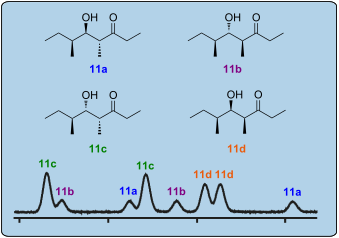
- -5,6-dihydro-2H-pyran-2-one (9) and 6-nonyl-2H-pyran-2-one (17). Volatiles from Daldinia clavata MUCL 47436. 13C NMR data (chemical shifts in ppm) for 11a–d (125 MHz, C6D6). In vitro antibacterial, antifungal and cytotoxic activity of compounds 9, 14 and 17 in comparison with positive controls

Graphical Abstract

Scheme 1: A selection of widespread fungal volatiles.

Figure 1: Total ion chromatogram of a representative headspace extract from Daldinia clavata MUCL 47436. Peak...

Scheme 2: Identified volatiles from Daldinia clavata MUCL 47436.
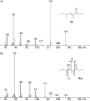
Figure 2: Mass spectra of volatiles from D. clavata that were identified by synthesis.

Scheme 3: Synthesis of manicone (10).

Scheme 4: Synthesis of a racemic mixture of all four diastereomers of 11.
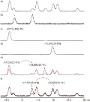
Figure 3: Gas chromatographic analysis of 11 on a homochiral stationary phase. a) Synthetic mixture of all ei...

Scheme 5: Enantioselective synthesis of (4R,5S,6S)-11c and (4S,5R,6S)-11d.

Scheme 6: Epimerisations of (4R,5S,6S)-11c and (4S,5R,6S)-11d under basic conditions.
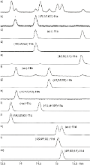
Figure 4: Gas chromatographic analysis of 11 on a homochiral stationary phase. a) Synthetic mixture of all ei...

Scheme 7: Proposed biosynthesis for (4R,5R,6S)-11a.
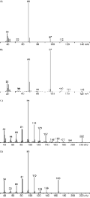
Figure 5: Mass spectra of a) 6-methyl-5,6-dihydro-2H-pyran-2-one (9), b) 6-propyl-5,6-dihydro-2H-pyran-2-one,...

Scheme 8: Synthesis of 6-methyl-5,6-dihydro-2H-pyran-2-one (9) and 6-nonyl-2H-pyran-2-one (17).
Vinylphosphonium and 2-aminovinylphosphonium salts – preparation and applications in organic synthesis
- Anna Kuźnik,
- Roman Mazurkiewicz and
- Beata Fryczkowska
Beilstein J. Org. Chem. 2017, 13, 2710–2738, doi:10.3762/bjoc.13.269

- with aldehydes and ketones in THF in the presence of K2CO3 leading to allylamines 61, which are an important class of compounds due to their biological activities (Scheme 40) [56]. They are used, inter alia, as chemotherapeutic agents, enzyme inhibitors, and antifungal compounds [57][58][59]. The

Graphical Abstract

Scheme 1: Generation of phosphorus ylides from vinylphosphonium salts.

Scheme 2: Intramolecular Wittig reaction with the use of vinylphosphonium salts.

Scheme 3: Alkylation of diphenylvinylphosphine with methyl or benzyl iodide.

Scheme 4: Methylation of isopropenyldiphenylphosphine with methyl iodide.

Scheme 5: Alkylation of phosphines with allyl halide derivatives and subsequent isomerization of intermediate...

Scheme 6: Alkylation of triphenylphosphine with vinyl triflates in the presence of (Ph3P)4Pd.

Scheme 7: Mechanism of alkylation of triphenylphosphine with vinyl triflates in the presence of (Ph3P)4Pd as ...

Scheme 8: β-Elimination of phenol from β-phenoxyethyltriphenylphosphonium bromide.

Scheme 9: β-Elimination of phenol from β-phenoxyethylphosphonium salts in an alkaline environment.

Scheme 10: Synthesis and subsequent dehydrohalogenation of α-bromoethylphosphonium bromide.

Scheme 11: Synthesis of tributylvinylphosphonium iodides via Peterson-type olefination of α-trimethylsilylphos...

Scheme 12: Synthesis of 1-cycloalkenetriphenylphosphonium salts by electrochemical oxidation of triphenylphosp...

Scheme 13: Suggested mechanism for the electrochemical synthesis of 1-cycloalkenetriphenylphosphonium salts.

Scheme 14: Generation of α,β-(dialkoxycarbonyl)vinylphosphonium salts by addition of triphenylphosphine to ace...

Scheme 15: Synthesis of 2-(N-acylamino)vinylphosphonium halides by imidoylation of β-carbonyl ylides with imid...

Scheme 16: Imidoylation of β-carbonyl ylides with imidoyl halides generated in situ.

Scheme 17: Synthesis of 2-benzoyloxyvinylphosphonium bromide from 2-propynyltriphenylphosphonium bromide.

Scheme 18: Synthesis of 2-aminovinylphosphonium salts via nucleophilic addition of amines to 2-propynyltriphen...

Scheme 19: Deacylation of 2-(N-acylamino)vinylphosphonium chlorides to 2-aminovinylphosphonium salts.

Scheme 20: Resonance structures of 2-aminovinylphosphonium salts and tautomeric equilibrium between aminovinyl...

Scheme 21: Synthesis of 2-aminovinylphosphonium salts by reaction of (formylmethyl)triphenylphosphonium chlori...

Scheme 22: Generation of ylides by reaction of vinyltriphenylphosphonium bromide with nucleophiles and their s...

Scheme 23: Intermolecular Wittig reaction with the use of vinylphosphonium bromide and organocopper compounds ...

Scheme 24: Intermolecular Wittig reaction with the use of ylides generated from vinylphosphonium bromides and ...

Scheme 25: Direct transformation of vinylphosphonium salts into ylides in the presence of potassium tert-butox...

Scheme 26: A general method for synthesis of carbo- and heterocyclic systems by the intramolecular Wittig reac...

Scheme 27: Synthesis of 2H-chromene by reaction of vinyltriphenylphosphonium bromide with sodium 2-formylpheno...

Scheme 28: Synthesis of 2,5-dihydro-2,3-dimethylfuran by reaction of vinylphosphonium bromide with 3-hydroxy-2...

Scheme 29: Synthesis of 2H-chromene and 2,5-dihydrofuran derivatives in the intramolecular Wittig reaction wit...

Scheme 30: Enantioselective synthesis of 3,6-dihydropyran derivatives from vinylphosphonium bromide and enanti...

Scheme 31: Synthesis of 2,5-dihydrothiophene derivatives in the intramolecular Wittig reaction from vinylphosp...

Scheme 32: Synthesis of bicyclic pyrrole derivatives in the reaction of vinylphosphonium halides and 2-pyrrolo...

Scheme 33: Stereoselective synthesis of bicyclic 2-pyrrolidinone derivatives in the reaction of vinylphosphoni...

Scheme 34: Stereoselective synthesis of 3-pyrroline derivatives in the intramolecular Wittig reaction from vin...

Scheme 35: Synthesis of cyclic alkenes in the intramolecular Wittig reaction from vinylphosphonium bromide and...

Scheme 36: Synthesis of 1,3-cyclohexadienes by reaction of 1,3-butadienyltriphenylphosphonium bromide with eno...

Scheme 37: Synthesis of bicyclo[3.3.0]octenes by reaction of vinylphosphonium salts with cyclic diketoester.

Scheme 38: Synthesis of quinoline derivatives in the intramolecular Wittig reaction from 2-(2-acylphenylamino)...

Scheme 39: Stereoselective synthesis of γ-aminobutyric acid in the intermolecular Wittig reaction from chiral ...

Scheme 40: Synthesis of allylamines in the intermolecular Wittig reaction from 2-aminovinylphosphonium bromide...

Scheme 41: A general route towards α,β-di(alkoxycarbonyl)vinylphosphonium salts and their subsequent possible ...

Scheme 42: Generation of resonance-stabilized phosphorus ylides via the reaction of triphenylphosphine with di...

Scheme 43: Synthesis of resonance-stabilized phosphorus ylides in the reaction of triphenylphosphine, dialkyl ...

Scheme 44: Synthesis of resonance-stabilized phosphorus ylides via the reaction of triphenylphosphine with dia...

Scheme 45: Generation of resonance-stabilized phosphorus ylides in the reaction of acetylenedicarboxylate, tri...

Scheme 46: Synthesis of resonance-stabilized phosphorus ylides via the reaction of dialkyl acetylenedicarboxyl...

Scheme 47: Synthesis of resonance-stabilized ylides derived from semicarbazones, aromatic amides, and 3-(aryls...

Scheme 48: Synthesis of resonance-stabilized ylides via the reaction of triphenylphosphine with dialkyl acetyl...

Scheme 49: Synthesis of resonance-stabilized ylides in the reaction of triphenylphosphine, dialkyl acetylenedi...

Scheme 50: Synthesis of N-acylated α,β-unsaturated γ-lactams via resonance-stabilized phosphorus ylides derive...

Scheme 51: Synthesis of resonance-stabilized phosphorus ylides derived from 6-amino-N,N'-dimethyluracil and th...

Scheme 52: Generation of resonance-stabilized phosphorus ylides in the reaction of triphenylphosphine, dialkyl...

Scheme 53: Synthesis of resonance-stabilized phosphorus ylides via the reaction of triphenylphosphine with dia...

Scheme 54: Synthesis of 1,3-dienes via intramolecular Wittig reaction with the use of resonance-stabilized yli...

Scheme 55: Synthesis of 1,3-dienes in the intramolecular Wittig reaction from ylides generated from dimethyl a...

Scheme 56: Synthesis of 4-(2-quinolyl)cyclobutene-1,2,3-tricarboxylic acid triesters and isomeric cyclopenteno...

Scheme 57: Synthesis of 4-arylquinolines via resonance-stabilized ylides in the intramolecular Wittig reaction....

Scheme 58: Synthesis of furan derivatives via resonance-stabilized ylides in the intramolecular Wittig reactio...

Scheme 59: Synthesis of 1,3-indanedione derivatives via resonance-stabilized ylides in the intermolecular Witt...

Scheme 60: Synthesis of coumarin derivatives via nucleophilic displacement of the triphenylphosphonium group i...

Scheme 61: Synthesis of 6-formylcoumarin derivatives and their application in the synthesis of dyads.

Scheme 62: Synthesis of di- and tricyclic coumarin derivatives in the reaction of pyrocatechol with two vinylp...

Scheme 63: Synthesis of mono-, di-, and tricyclic derivatives in the reaction of pyrogallol with one or two vi...

Scheme 64: Synthesis of 1,4-benzoxazine derivative by nucleophilic displacement of the triphenylphosphonium gr...

Scheme 65: Synthesis of 7-oxo-7H-pyrido[1,2,3-cd]perimidine derivative via nucleophilic displacement of the tr...

Scheme 66: Application of vinylphosphonium salts in the Diels–Alder reaction with dienes.

Scheme 67: Synthesis of pyrroline derivatives from vinylphosphonium bromide and 5-(4H)-oxazolones.

Scheme 68: Synthesis of pyrrole derivatives in the reactions of vinyltriphenylphosphonium bromide with protona...

Scheme 69: Synthesis of dialkyl 2-(alkylamino)-5-aryl-3,4-furanedicarboxylates via intermediate α,β-di(alkoxyc...

Scheme 70: Synthesis of 1,4-benzoxazine derivatives from acetylenedicarboxylates, phosphines, and 1-nitroso-2-...
Exploring mechanochemistry to turn organic bio-relevant molecules into metal-organic frameworks: a short review
- Vânia André,
- Sílvia Quaresma,
- João Luís Ferreira da Silva and
- M. Teresa Duarte
Beilstein J. Org. Chem. 2017, 13, 2416–2427, doi:10.3762/bjoc.13.239
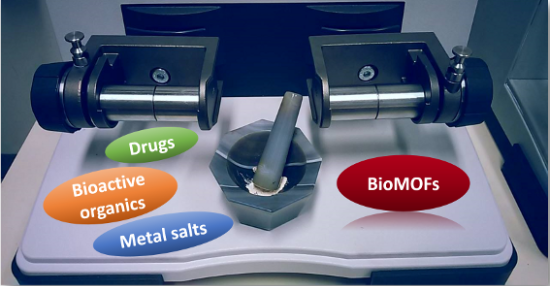
- achieve a controlled release of biologically active copper ions and it has shown to be an effective antifungal agent against representative yeast and mold [135]. Friščić et al. also reported the synthesis of coordination polymers and BioMOFs using LAG by grinding together zinc oxide and fumaric acid. In

Graphical Abstract

Figure 1: a) Detailed supramolecular packing of a gabapentin–Er network; b) view along the b-axis of the supr...

Figure 2: a) Mechanochemical reactivity between the excipient MgO and carboxylic acid NSAID molecules; b) NSA...

Figure 3: Mechanochemical reaction to form Cu3(BTC)2 and the structure of Cu3(BTC)2·(HKUST-1) as reported by ...

Figure 4: Mechanochemical syntheses of coordination polymers from ZnO and fumaric acid. Reprinted with permis...
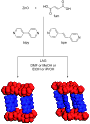
Figure 5: Mechanochemical synthesis of pillared MOFs from ZnO, fumaric acid and two auxiliary ligands (bipy a...

Figure 6: a) Synthesis of ZIF-8; b) fragment of the crystal structure of ZIF-8. Reprinted with permission fro...

Figure 7: a) Mechanochemical reaction of salicylic acid with Bi2O3 yielding bismuth mono-, di- and trisalicyl...
Sulfation and amidinohydrolysis in the biosynthesis of giant linear polyenes
- Hui Hong,
- Markiyan Samborskyy,
- Katsiaryna Usachova,
- Katharina Schnatz and
- Peter F. Leadlay
Beilstein J. Org. Chem. 2017, 13, 2408–2415, doi:10.3762/bjoc.13.238
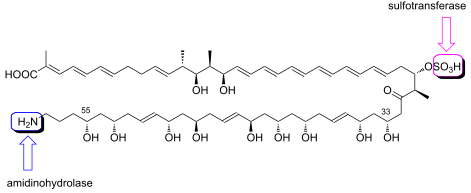
- polyene clethramycin (1a, Scheme 1), originally isolated as an antifungal and as an inhibitor of pollen tube outgrowth from a plant-associated Streptomyces hygroscopicus strain [5]. Clethramycin (together with desulfoclethramycin (1b)) is also a product of the prolific strain Streptomyces malaysiensis
- DSM4137 (formerly Streptomyces violaceusniger DSM4137) [6] and it co-occurs with the closely-related antifungal mediomycins A (1c) and B (1d, Scheme 1) in Streptomyces mediocidicus ATCC 23936 [7]. Mediomycins are also produced by Streptomyces blastmyceticus [8]. The genes for the assembly-line PKS for
- mediomycin from S. blastmyceticus have been recently reported, encoding a separate extension module for all 27 cycles of chain extension [8]. These systems are attractive targets for knowledge-based engineering to produce novel antifungal compounds. A member of this class of polyketides, tetrafibricin from

Graphical Abstract

Scheme 1: The structures of clethramycin, mediomycins and related linear polyenes.

Scheme 2: The biosynthetic gene clusters for mediomycin (med) from Streptomyces mediocidicus and clethramycin...

Figure 1: HPLC–UV–MS analysis of polyenes. A) LC–UV (360 nm) trace of mycelium methanol extract from DSM4137 ...

Figure 2: HPLC–UV–MS analysis of polyenes from DSM4137 wild type and mutants. A) LC–UV (360 nm) trace of myce...

Scheme 3: The parallel pathways for the biosynthesis of mediomycin A.

Figure 3: HPLC–UV–MS analysis of in vitro assays with amidinohydrolase Medi4948 and sulfotransferase Slf from ...
Fluorination of some highly functionalized cycloalkanes: chemoselectivity and substrate dependence
- Attila Márió Remete,
- Melinda Nonn,
- Santos Fustero,
- Matti Haukka,
- Ferenc Fülöp and
- Loránd Kiss
Beilstein J. Org. Chem. 2017, 13, 2364–2371, doi:10.3762/bjoc.13.233
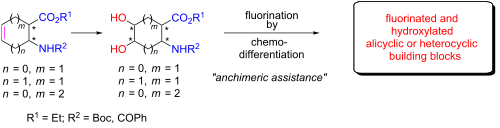
- , cispentacin) are relevant antifungal agents [19]. Therefore we have selected some five and six-membered alicyclic dihydroxylated β-amino ester stereo- and regioisomers as model compounds [23][24][25][26], derived from cyclopentene or cyclohexene β-amino acids. These were used in order to evaluate their

Graphical Abstract

Scheme 1: Fluorination of diol derivative (±)-1.

Scheme 2: Fluorination of diol derivative (±)-4.

Figure 1: X-ray structure of fluorohydrine derivative (±)-5.

Scheme 3: Fluorination of diol derivative (±)-6.

Scheme 4: Fluorination of cyclohexane-derived diol (±)-8.

Scheme 5: Proposed route for the formation of compounds (±)-10 and (±)-11.

Scheme 6: Fluorination of diol derivative (±)-12.

Scheme 7: Fluorination of diol derivative (±)-14.

Scheme 8: Proposed route for the formation of compounds (±)-15, (±)-16 and (±)-17.

Scheme 9: Fluorination of N-Cbz-protected diol derivative (±)-18.

Scheme 10: Fluorination of diol derivative (±)-20.

Scheme 11: Fluorination of meso diol derivative 24.
Diosgenyl 2-amino-2-deoxy-β-D-galactopyranoside: synthesis, derivatives and antimicrobial activity
- Henryk Myszka,
- Patrycja Sokołowska,
- Agnieszka Cieślińska,
- Andrzej Nowacki,
- Maciej Jaśkiewicz,
- Wojciech Kamysz and
- Beata Liberek
Beilstein J. Org. Chem. 2017, 13, 2310–2315, doi:10.3762/bjoc.13.227
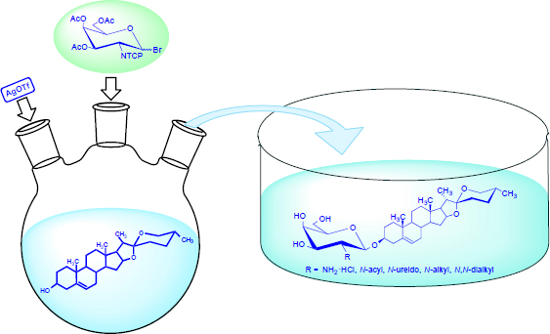
- /bjoc.13.227 Abstract The synthesis of diosgenyl 2-amino-2-deoxy-β-D-galactopyranoside is presented for the first time. This synthetic saponin was transformed into its hydrochloride as well as N-acyl, 2-ureido, N-alkyl, and N,N-dialkyl derivatives. Antifungal and antibacterial studies show that some of
- , particularly antifungal [3][4][5][6] and antitumor [7][8][9]. The aglycone part of a saponin is termed sapogenin. Diosgenin, yamogenin, tigogenin, smilagenin and sarsapogenin are the most abundant sapogenins in nature [10]. They are linked via a glycosidic bond to a sugar unit, mainly D-glucose. Diosgenyl
- diosgenyl saponins are used in folk medicine in many countries. Such herbal medicines exhibit anti-inflammatory, antibacterial, antifungal, antiviral, diuretic and expectorant activities [2][11]. Importantly, these also help fight cancer cells [12][13][14]. Although saponins, in which D-galactose is

Graphical Abstract

Scheme 1: Synthesis of diosgenyl 2-amino-2-deoxy-β-D-galactopyranoside (4).

Figure 1: Derivatives of diosgenyl glycosides 5–13.
Syntheses of 3,4- and 1,4-dihydroquinazolines from 2-aminobenzylamine
- Jimena E. Díaz,
- Silvia Ranieri,
- Nadia Gruber and
- Liliana R. Orelli
Beilstein J. Org. Chem. 2017, 13, 1470–1477, doi:10.3762/bjoc.13.145
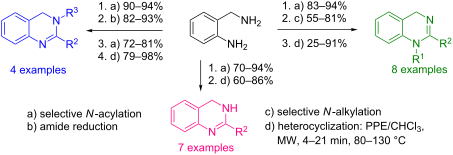
- analogues, dihydroquinazolines, also represent heterocyclic cores of pharmacological interest. Some derivatives containing this motif have shown antimicrobial [11] and antifungal properties [12]. Their activity as selective T-type calcium channel blockers [13][14][15] and as inhibitors of β-secretase (an

Graphical Abstract

Figure 1: 3,4-Dihydroquinazolines 1 and 1,4-dihydroquinazolines 2.

Scheme 1: Synthetic pathways for the preparation of 3,4-dihydroquinazolines 1 and 1,4-dihydroquinazolines 2.

Scheme 2: Synthesis of compounds 3a–c.

Scheme 3: Benzylic oxidation of 1,4-dihydroquinazolines (a) and 3,4-dihydroquinazolines (b).
Sustainable synthesis of 3-substituted phthalides via a catalytic one-pot cascade strategy from 2-formylbenzoic acid with β-keto acids in glycerol
- Lina Jia and
- Fuzhong Han
Beilstein J. Org. Chem. 2017, 13, 1425–1429, doi:10.3762/bjoc.13.139
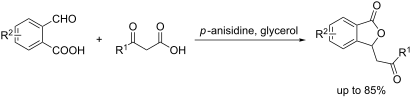
- [3][4][5], exhibit a broad spectrum of pharmacological activity, such as antibacterial, anti-HIV, antifungal, antibiotic, antitumor and immunosuppressive effects [6][7][8][9][10]. In addition, the one-pot cascade transformation has proven to be the key step in organic syntheses because of its broad

Graphical Abstract

Scheme 1: Synthesis of 3-substituted phthalides from substituted 2-formylbenzoic acids and β-keto acids.
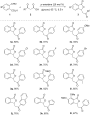
Scheme 2: Substrate scope of the synthesis of 3-substituted phthalides. General reaction conditions: 1 (0.5 m...

Scheme 3: Possible mechanistic pathway.
Urea–hydrogen peroxide prompted the selective and controlled oxidation of thioglycosides into sulfoxides and sulfones
- Adesh Kumar Singh,
- Varsha Tiwari,
- Kunj Bihari Mishra,
- Surabhi Gupta and
- Jeyakumar Kandasamy
Beilstein J. Org. Chem. 2017, 13, 1139–1144, doi:10.3762/bjoc.13.113
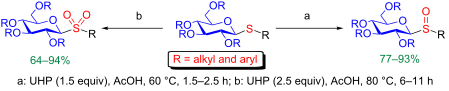
- for the construction of highly functionalized natural products [1][2]. Sulfur moieties are found in several therapeutically important molecules that possess antibacterial, antifungal, anti-ulcer, anti-atherosclerotic, antihypertensive activities, etc. [3][4]. Sulfur compounds also play an important

Cycloheximide congeners produced by Streptomyces sp. SC0581 and photoinduced interconversion between (E)- and (Z)-2,3-dehydroanhydrocycloheximides
- Li Yang,
- Ping Wu,
- Jinghua Xue,
- Huitong Tan,
- Zheng Zhang and
- Xiaoyi Wei
Beilstein J. Org. Chem. 2017, 13, 1039–1049, doi:10.3762/bjoc.13.103
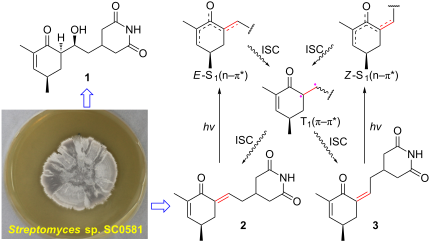
- 2 and 3 was observed and verified and the possible reaction path and mechanism were proposed by theoretical computations. The antifungal and cytotoxic activities of 1–6 were evaluated and suggested that 2,3-dehydrogenation results in the loss of the activities and supported that the OH-α is
- important to the activities of cycloheximide congeners. Keywords: antifungal activity; cycloheximide derivatives; E/Z photoisomerization; Streptomyces sp; theoretical conformational analysis; Introduction The glutarimide-containing antibiotics represent a fascinating class of natural products that exhibit
- without the toxic side-effects could provide a viable lead of therapeutic drugs or agricultural pesticides. During the course of our searching for bioactive microbial metabolites [8][9], a culture extract of Streptomyces sp. SC0581 was found to show antifungal activity against the phytopathogen

Graphical Abstract
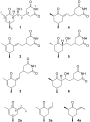
Figure 1: Structures of 1–6 and 2a–4a.
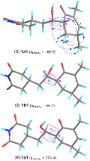
Figure 2: Representatives of the theoretical dominant conformers of (4R,6R,αS)-1 ((S)-1a1 and (S)-1b1) and (4R...

Figure 3: Comparison of the experimental ECD spectrum of 1 with the M11/TZVP calculated spectra of (4R,6R,αS)-...

Figure 4: Comparison of the experimental ECD spectrum with the BH&HLYP/TZVP calculated spectra of the mixture...
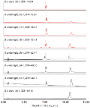
Figure 5: UPLC analysis of photoreaction products of 2 (around tR = 7.5 min) and 3 (around tR = 11.5 min).

Figure 6: Potential energy surfaces of 2a/3a in the S0, S1, and T1 states, geometries of key points in the su...
New approach toward the synthesis of deuterated pyrazolo[1,5-a]pyridines and 1,2,4-triazolo[1,5-a]pyridines
- Aleksey Yu. Vorob’ev,
- Vyacheslav I. Supranovich,
- Gennady I. Borodkin and
- Vyacheslav G. Shubin
Beilstein J. Org. Chem. 2017, 13, 800–805, doi:10.3762/bjoc.13.80
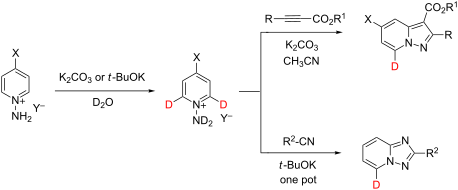
- treating asthma and post-stroke patients [16]. 1,2,4-Triazolo[1,5-a]pyridines show antifungal [17], antitumor [18], and cytotoxic [19] activities. Both types of heterocyclic cores are readily available from N-aminopyridium salts and related pyridinium-N-imines via 1,3-cycloaddition reaction [20] or

Graphical Abstract

Figure 1: pKa values for N-aminopyridinium cation hydrogen atoms according to DFT M06-2X 6-31+G(d,p) calculat...

Scheme 1: H/D exchange of N-aminopyridinium salts 1a–c and their reaction with acetylenes.

Scheme 2: Possible pathways for the formation of 8.

Figure 2: Relative stability of 3-CO2Et-substituted dihydropyrazolo[1,5-a]pyridines by the M06-2X 6-31+G(d,p)...

Scheme 3: Synthesis of deutero 1,2,4-triazolo[1,5-a]pyridines.
N-Propargylamines: versatile building blocks in the construction of thiazole cores
- S. Arshadi,
- E. Vessally,
- L. Edjlali,
- R. Hosseinzadeh-Khanmiri and
- E. Ghorbani-Kalhor
Beilstein J. Org. Chem. 2017, 13, 625–638, doi:10.3762/bjoc.13.61
- pharmacological activities. For example, abafungin (Figure 1) is an antifungal drug marketed worldwide for the treatment of dermatomycoses. It works by inhibiting the enzyme sterol 24-C-methyltransferase [1][2][3][4]. Febuxostat, also known by its brand name adenuric is a xanthine oxidase inhibitor that helps to

Graphical Abstract

Figure 1: Selected examples of bioactive thiazole derivatives.

Figure 2: Some natural sources of thiazoles.

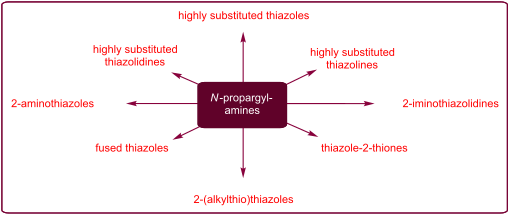
Figure 3: Some important thiazole-based compounds derived from N-propargylamines.

Scheme 1: The synthesis of thiazole-2-thiones 3 through the thermal cyclocondensation of N-propargylamines 1 ...

Scheme 2: (a) One-pot synthesis of 2-benzylthiazolo[3,2-a]benzimidazoles 6 through a base-catalyzed cascade r...
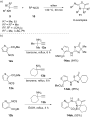
Scheme 3: (a) Synthesis of 2-iminothiazolidines 11 from N-propargylamines 9 and isothiocyanates 10. (b) Synth...

Scheme 4: (a) Synthesis of 2-aminothiazoles 17 through the reaction of ethyl 4-aminobut-2-ynoate salts 15 wit...

Scheme 5: Synthesis of 5-(iodomethylene)-3-methylthiazolidines 27 described by Zhou.

Scheme 6: Mechanism that accounts for the formation of 27.

Scheme 7: Clausen’s synthesis of fluorescein thiazolidines 30.

Scheme 8: Synthesis of multiply substituted thiazolidines 33 from N-propargylamines 32 and blocked N-isothioc...

Scheme 9: (a) Microwave-assisted cyclization of N-propargyl thiocarbamate 34. (b) Synthesis of thiazoles 39 t...

Scheme 10: Synthesis of thiazolidines 42 (42’) from the reaction of β-oxodithioesters 40 (40’) with N-propargy...

Scheme 11: Synthesis of 5-(dibromomethyl)thiazoles 44 via halocyclization of N-propargylamines 43 described by...

Scheme 12: Synthesis of dihydrothiazoles 46 through the treatment of N-propargylamides 45 with Lawesson’s reag...

Scheme 13: Synthesis of thiazoles 49 by treatment of silyl-protected N-propargylamines 47 with benzotriazolylt...

Scheme 14: Mechanism proposed to explain the synthesis of 2,5-disubstituted thiazoles 49 developed by Sasmal.

Scheme 15: Mo-catalyzed cyclization of N-propargylthiocarbamate 50.

Scheme 16: (a) DABCO-mediated intramolecular cyclization of N-(propargylcarbamothioyl)amides 53 to the corresp...

Scheme 17: Proposed mechanism for the generation of the iodine-substituted 4H-1,3-thiazines 56 and 4,5-dihydro...
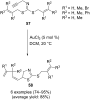
Scheme 18: Au(III)-catalyzed synthesis of 5-alkylidenedihydrothiazoles 58 developed by Stevens.
Synthesis of 1-indanones with a broad range of biological activity
- Marika Turek,
- Dorota Szczęsna,
- Marek Koprowski and
- Piotr Bałczewski
Beilstein J. Org. Chem. 2017, 13, 451–494, doi:10.3762/bjoc.13.48
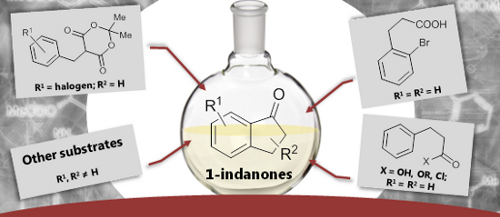
- antibacterial activity against Escherichia coli and Bacillus subtilis, and antifungal activity against Aspergillus niger and Penicillium notatum. Among the synthesized series of 1-indanone derivatives 64, the highest antibacterial activity was exhibited by derivatives 64k and 64l, whereas the most potent
- antifungal activity was revealed for derivatives 64h and 64j. The authors have also studied anti-inflammatory properties of these derivatives using the carrageenan induced paw edema method in rats. The anti-inflammatory activity of the synthesized compounds was compared with standard indomethacin (a non
- antiviral and antifungal molecule produced by bacteria. Because of its interesting biological activity, Mitchell and Liebeskind have decided to synthesize abicoviromycin (168) derivatives [78]. In spite of the potent biological activity, abicoviromycin (168) is extremely heat- and acid-sensitive. Moreover

Graphical Abstract

Figure 1: Biologically active 1-indanones and their structural analogues.

Figure 2: Number of papers about (a) 1-indanones, (b) synthesis of 1-indanones.

Scheme 1: Synthesis of 1-indanone (2) from hydrocinnamic acid (1).

Scheme 2: Synthesis of 1-indanone (2) from 3-(2-bromophenyl)propionic acid (3).

Scheme 3: Synthesis of 1-indanones 5 from 3-arylpropionic acids 4.

Scheme 4: Synthesis of kinamycin (9a) and methylkinamycin C (9b).

Scheme 5: Synthesis of trifluoromethyl-substituted arylpropionic acids 12, 1-indanones 13 and dihydrocoumarin...

Scheme 6: Synthesis of 1-indanones 16 from benzoic acids 15.

Scheme 7: Synthesis of 1-indanones 18 from arylpropionic and 3-arylacrylic acids 17.

Scheme 8: The NbCl5-induced one-step synthesis of 1-indanones 22.

Scheme 9: Synthesis of biologically active 1-indanone derivatives 26.

Scheme 10: Synthesis of enantiomerically pure indatraline ((−)-29).

Scheme 11: Synthesis of 1-indanone (2) from the acyl chloride 30.

Scheme 12: Synthesis of the mechanism-based inhibitors 33 of coelenterazine.

Scheme 13: Synthesis of the indane 2-imidazole derivative 37.

Scheme 14: Synthesis of fluorinated PAHs 41.

Scheme 15: Synthesis of 1-indanones 43 via transition metal complexes-catalyzed carbonylative cyclization of m...

Scheme 16: Synthesis of 6-methyl-1-indanone (46).

Scheme 17: Synthesis of 1-indanone (2) from ester 48.

Scheme 18: Synthesis of benzopyronaphthoquinone 51 from the spiro-1-indanone 50.

Scheme 19: Synthesis of the selective endothelin A receptor antagonist 55.

Scheme 20: Synthesis of 1-indanones 60 from methyl vinyl ketone (57).

Scheme 21: Synthesis of 1-indanones 64 from diethyl phthalate 61.

Scheme 22: Synthesis of 1-indanone derivatives 66 from various Meldrum’s acids 65.

Scheme 23: Synthesis of halo 1-indanones 69.

Scheme 24: Synthesis of substituted 1-indanones 71.

Scheme 25: Synthesis of spiro- and fused 1-indanones 73 and 74.

Scheme 26: Synthesis of spiro-1,3-indanodiones 77.

Scheme 27: Mechanistic pathway for the NHC-catalyzed Stetter–Aldol–Michael reaction.

Scheme 28: Synthesis of 2-benzylidene-1-indanone derivatives 88a–d.

Scheme 29: Synthesis of 1-indanone derivatives 90a–i.

Scheme 30: Synthesis of 1-indanones 96 from o-bromobenzaldehydes 93 and alkynes 94.

Scheme 31: Synthesis of 3-hydroxy-1-indanones 99.

Scheme 32: Photochemical preparation of 1-indanones 103 from ketones 100.

Scheme 33: Synthesis of chiral 3-aryl-1-indanones 107.

Scheme 34: Photochemical isomerization of 2-methylbenzil 108.

Scheme 35: Synthesis of 2-hydroxy-1-indanones 111a–c.

Scheme 36: Synthesis of 1-indanone derivatives 113 and 114 from η6-1,2-dioxobenzocyclobutene complex 112.

Scheme 37: Synthesis of nakiterpiosin (117).

Scheme 38: Synthesis of 2-alkyl-1-indanones 120.

Scheme 39: Synthesis of fluorine-containing 1-indanone derivatives 123.

Scheme 40: Synthesis of 2-benzylidene and 2-benzyl-1-indanones 126, 127 from the chalcone 124.

Scheme 41: Synthesis of 2-bromo-6-methoxy-3-phenyl-1-indanone (130).

Scheme 42: Synthesis of combretastatin A-4-like indanones 132a–s.

Figure 3: Chemical structures of investigated dienones 133 and synthesized cyclic products 134–137.

Figure 4: Chemical structures of 1-indanones and their heteroatom analogues 138–142.

Scheme 43: Synthesis of 2-phosphorylated and 2-non-phosphorylated 1-indanones 147 and 148 from β-ketophosphona...

Scheme 44: Photochemical synthesis of 1-indanone derivatives 150, 153a, 153b.

Scheme 45: Synthesis of polysubstituted-1-indanones 155, 157.

Scheme 46: Synthesis of 1-indanones 159a–g from α-arylpropargyl alcohols 158 using RhCl(PPh3)3 as a catalyst.

Scheme 47: Synthesis of optically active 1-indanones 162 via the asymmetric Rh-catalyzed isomerization of race...

Scheme 48: Mechanism of the Rh-catalyzed isomerization of α-arylpropargyl alcohols 161 to 1-indanones 162.

Figure 5: Chemical structure of abicoviromycin (168) and its new benzo derivative 169.

Scheme 49: Synthesis of racemic benzoabicoviromycin 172.

Scheme 50: Synthesis of [14C]indene 176.

Scheme 51: Synthesis of indanone derivatives 178–180.

Scheme 52: Synthesis of racemic pterosin A 186.

Scheme 53: Synthesis of trans-2,3-disubstituted 1-indanones 189.

Scheme 54: Synthesis of 3-aryl-1-indanone derivatives 192.

Scheme 55: Synthesis of 1-indanone derivatives 194 from 3-(2-iodoaryl)propanonitriles 193.

Scheme 56: Synthesis of 1-indanones 200–204 by cyclization of aromatic nitriles.

Scheme 57: Synthesis of 1,1’-spirobi[indan-3,3’-dione] derivative 208.

Scheme 58: Total synthesis of atipamezole analogues 211.

Scheme 59: Synthesis of 3-[4-(1-piperidinoethoxy)phenyl]spiro[indene-1,1’-indan]-5,5’-diol hydrochloride 216.

Scheme 60: Synthesis of 3-arylindan-1-ones 219.

Scheme 61: Synthesis of 2-hydroxy-1-indanones 222.

Scheme 62: Synthesis of the 1-indanone 224 from the THP/MOM protected chalcone epoxide 223.

Scheme 63: Synthesis of 1-indanones 227 from γ,δ-epoxy ketones 226.

Scheme 64: Synthesis of 2-hydroxy-2-methylindanone (230).

Scheme 65: Synthesis of 1-indanone derivatives 234 from cyclopropanol derivatives 233.

Scheme 66: Synthesis of substituted 1-indanone derivatives 237.

Scheme 67: Synthesis of 7-methyl substituted 1-indanone 241 from 1,3-pentadiene (238) and 2-cyclopentenone (239...

Scheme 68: Synthesis of disubstituted 1-indanone 246 from the siloxydiene 244 and 2-cyclopentenone 239.

Scheme 69: Synthesis of 5-hydroxy-1-indanone (250) via the Diels–Alder reaction of 1,3-diene 248 with sulfoxid...

Scheme 70: Synthesis of halogenated 1-indanones 253a and 253b.

Scheme 71: Synthesis of 1-indanones 257 and 258 from 2-bromocyclopentenones 254.

Scheme 72: Synthesis of 1-indanone 261 from 2-bromo-4-acetoxy-2-cyclopenten-1-one (260) and 1,2-dihydro-4-viny...

Scheme 73: Synthesis of 1-indanone 265 from 1,2-dihydro-7-methoxy-4-vinylnaphthalene (262) and bromo-substitut...

Scheme 74: Synthesis of 1-indanone 268 from dihydro-3-vinylphenanthrene 266 and 4-acetoxy-2-cyclopenten-1-one (...

Scheme 75: Synthesis of 1-indanone 271 from phenylselenyl-substituted cyclopentenone 268.

Scheme 76: Synthesis of 1-indanone 272 from the trienone 270.

Scheme 77: Synthesis of the 1-indanone 276 from the aldehyde 273.

Scheme 78: Synthesis of 1-indanones 278 and 279.

Scheme 79: Synthesis of 1-indanone 285 from octa-1,7-diyne (282) and cyclopentenone 239.

Scheme 80: Synthesis of benz[f]indan-1-one (287) from cyclopentenone 239 and o-bis(dibromomethyl)benzene (286)....

Scheme 81: Synthesis of 3-methyl-substituted benz[f]indan-1-one 291 from o-bis(dibromomethyl)benzene (286) and...

Scheme 82: Synthesis of benz[f]indan-1-one (295) from the anthracene epidioxide 292.

Scheme 83: Synthesis of 1-indanone 299 from homophthalic anhydride 298 and cyclopentynone 297.

Scheme 84: Synthesis of cyano-substituted 1-indanone derivative 301 from 2-cyanomethylbenzaldehyde (300) and c...

Scheme 85: Synthesis of 1-indanone derivatives 303–305 from ketene dithioacetals 302.

Scheme 86: Synthesis of 1-indanones 309–316.

Scheme 87: Mechanism of the hexadehydro-Diels–Alder (HDDA) reaction.

Scheme 88: Synthesis of 1-indenone 318 and 1-indanones 320 and 321 from tetraynes 317 and 319.

Scheme 89: Synthesis of 1-indanone 320 from the triyn 319.

Scheme 90: Synthesis 1-indanone 328 from 2-methylfuran 324.

Scheme 91: Synthesis of 1-indanones 330 and 331 from furans 329.

Scheme 92: Synthesis of 1-indanone 333 from the cycloadduct 332.

Scheme 93: Synthesis of (S)-3-arylindan-1-ones 335.

Scheme 94: Synthesis of (R)-2-acetoxy-1-indanone 338.

Figure 6: Chemical structures of obtained cyclopenta[α]phenanthrenes 339.

Scheme 95: Synthesis of the benzoindanone 343 from arylacetaldehyde 340 with 1-trimethylsilyloxycyclopentene (...
Biosynthetic origin of butyrolactol A, an antifungal polyketide produced by a marine-derived Streptomyces
- Enjuro Harunari,
- Hisayuki Komaki and
- Yasuhiro Igarashi
Beilstein J. Org. Chem. 2017, 13, 441–450, doi:10.3762/bjoc.13.47
- , Kisarazu, Chiba 292-0818, Japan 10.3762/bjoc.13.47 Abstract Butyrolactol A is an antifungal polyketide of Streptomyces bearing an uncommon tert-butyl starter unit and a polyol system in which eight hydroxy/acyloxy carbons are contiguously connected. Except for its congener butyrolactol B, there exist no
- -like structures [4][5][6][7][8]. Butyrolactol A (1) is an antifungal polyketide first isolated from Streptomyces rochei S785-16 [9] (Figure 1). The left half of 1 is the hydrophobic unconjugated tetraene system including one Z-olefin with a terminal tert-butyl group, whereas the hydrophilic polyol
- structure and the antifungal potency, no further research has been reported for 1. There are two interesting aspects in the structure of butyrolactol A (1). First, among the polyketides, a tert-butyl group has been found exclusively in metabolites of marine cyanobacteria except for 1 [11][12][13][14

Graphical Abstract

Figure 1: The structure of butyrolactol A (1).

Figure 2: Cyanobacterial polyketides bearing a tert-butyl group.

Figure 3: Actinomycete metabolites possessing a contiguous 1,2-diol system.

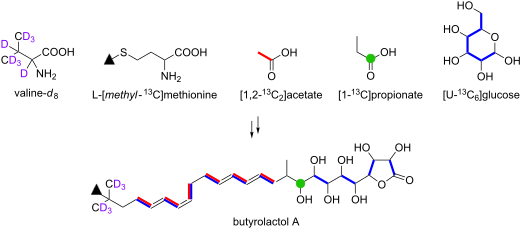
Figure 4: Feeding experiments of 13C-labeled precursors into 1 detected by 2D-INADEQUATE NMR experiments. (a)...

Figure 5: Organization of the biosynthesis gene cluster for 1. Blue, transcriptional regulator; pink, PKS for...

Figure 6: Biosynthetic pathway of hydroxymalonyl-ACP. Adapted from [24].
Figure 7: Incorporation of L-valine-d8 into 1. (a) 1H NMR spectrum of natural 1 and 2H NMR spectrum of L-vali...

Figure 8: Incorporation of 13C- and 2H-labeled precursors into 1.
Brønsted acid-mediated cyclization–dehydrosulfonylation/reduction sequences: An easy access to pyrazinoisoquinolines and pyridopyrazines
- Ramana Sreenivasa Rao and
- Chinnasamy Ramaraj Ramanathan
Beilstein J. Org. Chem. 2017, 13, 428–440, doi:10.3762/bjoc.13.46
- anticancer [2][3], antifungal [4], amoebiasis, trypanosomiasis, bilharziasis [5][6], and schistosomiasis [7][8]. Some are cell adhesion inhibitors [9] brandykinin receptor antagonists [10][11] and chymase inhibitors [12]. Quinoxaline derivatives are known to act as aldose reductase (ALR2) inhibitors and are

Graphical Abstract

Figure 1: Selected active pyrazinoisoquinolines, 2-oxopiperazines and aldose reductase inhibitors (ALR2).

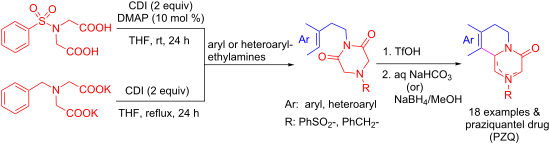
Scheme 1: Comparison of previous reports with present work for piperazine-2,6-dione synthesis.

Scheme 2: Coupling of N-benzenesulfonyliminodiacetic acid with primary amines using CDI/DMAP.
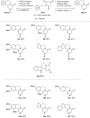
Scheme 3: Formation of ene-diamides 9a–g and pyrazinones 10a–f.

Scheme 4: Mechanism for the formation of substituted pyrazinones.

Figure 2: HRMS spectra of aliquot generated from cyclization reaction of 7c.

Figure 3: ORTEP diagrams of compound 9b and 10a.

Scheme 5: Synthesis of 3-phenylpyrazinone.

Scheme 6: Synthesis of 4-N-benzyl-1-N-(aryl/heteroarylethyl)piperazine-2,6-dione.

Scheme 7: Cyclization of pyrazinoisoquinolines.

Scheme 8: Synthesis of the drug praziquantel 1.
Computational methods in drug discovery
- Sumudu P. Leelananda and
- Steffen Lindert
Beilstein J. Org. Chem. 2016, 12, 2694–2718, doi:10.3762/bjoc.12.267

Graphical Abstract

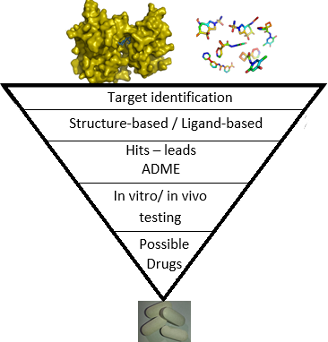
Figure 1: Schematic representation of a computer-aided drug discovery (CADD) pipeline. CADD methods are broad...

Figure 2: FDA approved drugs Saquinavir and Amprenavir for the treatment of HIV infections. (a) The structure...

Figure 3: (a) The crystal structure showing the binding of Dorzolamide (orange) to carbonic anhydrase II (pur...

Figure 4: The best ligand binding site identified by SiteHound in HIV-1 protease. The ligand binding pocket i...

Figure 5: Binding mode prediction. The known inhibitor Dorzolamide is docked into Carbonic anhydrase II cryst...

Figure 6: The molecular structure of Raltegravir. Raltegravir is an FDA approved drug used in the treatment o...

Figure 7: An example alchemical thermodynamic cycle for a protein–ligand binding free energy calculation. The...
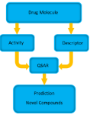
Figure 8: Schematic diagram showing the steps involved in QSAR. Known drug molecule activity and descriptor d...

Figure 9: A few drugs discovered with the help of ligand-based drug discovery tools. (a) Zolmitriptan: used a...
Selective synthesis of thioethers in the presence of a transition-metal-free solid Lewis acid
- Federica Santoro,
- Matteo Mariani,
- Federica Zaccheria,
- Rinaldo Psaro and
- Nicoletta Ravasio
Beilstein J. Org. Chem. 2016, 12, 2627–2635, doi:10.3762/bjoc.12.259
- are a very important field of research as traditional coupling methods, although they proved effective in industrial applications, generate harmful metal waste and many byproducts [3]. Thioethers are important building blocks for the synthesis of antibacterial and antifungal agents [4][5] and as

Graphical Abstract

Figure 1: Overview of the structures of the alcohols 1a–i used in the present work.

Figure 2: Structures of thiols 2a–f used in the present work.

Figure 3: Structures of thioethers 3a–p synthesized.

Figure 4: Product distribution during reaction of 5b and 2a over a solid acid catalyst.

Figure 5: Product distribution during reaction of 1c and 2e.

Scheme 1: Racemization of (R)-1-phenylethanol during the reaction with benzylmercaptan (2a) in the presence o...

Scheme 2: Reaction of cinnamyl alcohol 1i and benzylmercaptan (2a).

Figure 6: Recyclability test of SiAl 0.6 catalyst in the reaction of 1a and 2a.
Selective and eco-friendly procedures for the synthesis of benzimidazole derivatives. The role of the Er(OTf)3 catalyst in the reaction selectivity
- Natividad Herrera Cano,
- Jorge G. Uranga,
- Mónica Nardi,
- Antonio Procopio,
- Daniel A. Wunderlin and
- Ana N. Santiago
Beilstein J. Org. Chem. 2016, 12, 2410–2419, doi:10.3762/bjoc.12.235
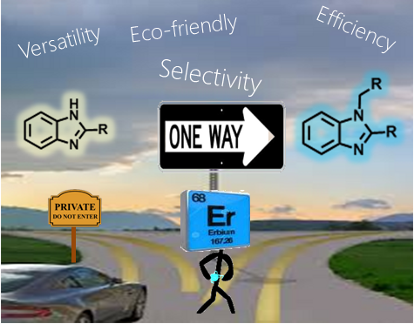
- ][7] or benzothiazole [8][9] rings in numerous compounds is an important structural element for their biological and medical applications. For example benzimidazoles are widely spread in antiulcer, antihypertensive, antiviral, antifungal, anticancer, and antihistaminic medicines, among others [10][11

Graphical Abstract

Scheme 1: Formation of the benzimidazole core.

Scheme 2: Proposed mechanism for the formation of 1,2-disubstituted benzimidazoles b and 2-substituted benzim...

Figure 1: ESP maps and charge density on carbonylic oxygen atoms for the studied aldehydes obtained at the BP...
An effective one-pot access to polynuclear dispiroheterocyclic structures comprising pyrrolidinyloxindole and imidazothiazolotriazine moieties via a 1,3-dipolar cycloaddition strategy
- Alexei N. Izmest’ev,
- Galina A. Gazieva,
- Natalya V. Sigay,
- Sergei A. Serkov,
- Valentina A. Karnoukhova,
- Vadim V. Kachala,
- Alexander S. Shashkov,
- Igor E. Zanin,
- Angelina N. Kravchenko and
- Nina N. Makhova
Beilstein J. Org. Chem. 2016, 12, 2240–2249, doi:10.3762/bjoc.12.216

- viruses [35], anti-HIV and anticancer [36][37], antimicrobial and antifungal activities as well as cytotoxicity to MCF-7 cells [38][39]. Based on these observations we therefore aimed at combining the spiropyrrolidinyloxindole motif with hetero-annelated 1,2,4-triazine scaffolds. Recently, we have already

Graphical Abstract

Figure 1: Bioactive 2,3’-spiropyrrolidinyloxindoles.

Scheme 1: Earlier studied cycloaddition reaction.

Scheme 2: Synthesis of dipolarophiles 1a–c.

Scheme 3: Synthesis of dispirocompounds 4a–o.

Figure 2: Synthesis of dispiro compounds 4a–o. Reaction conditions: heating the mixture of compounds 1 (0.5 m...

Scheme 4: Synthesis of dipolarophiles 1d–f.

Figure 3: Synthesis of dispiro compounds 4p–t. Reaction conditions: heating the solution of compounds 1 (0.5 ...

Figure 4: Key interactions in {1H-13C}HMBC spectrum of 4f.

Figure 5: General view of 4c in the crystal in thermal ellipsoids representation (50% probability). Hydrogen ...

Figure 6: General view of 4e in the crystal in thermal ellipsoids representation (40% probability). Hydrogen ...

Figure 7: General view of 4r in the crystal in thermal ellipsoids representation (50% probability). Hydrogen ...

Figure 8: Modes of approach of azomethine ylide (R = H, Ph).
Evidence for an iterative module in chain elongation on the azalomycin polyketide synthase
- Hui Hong,
- Yuhui Sun,
- Yongjun Zhou,
- Emily Stephens,
- Markiyan Samborskyy and
- Peter F. Leadlay
Beilstein J. Org. Chem. 2016, 12, 2164–2172, doi:10.3762/bjoc.12.206
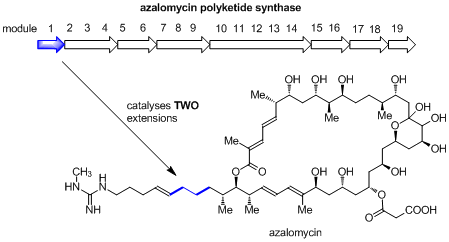
- polyketide. Two of these are the near-identical PKSs (Figure S1, Supporting Information File 1) for the antifungal 36-membered marginolactones azalomycin 1a–c (from Streptomyces malaysiensis (formerly Streptomyces violaceusniger) DSM4137) and kanchanamycin 1d [35][36] from Streptomyces olivaceus Tü4018; and

Graphical Abstract

Figure 1: The structures of marginolactones azalomycin and kanchanamycin, and of the β-lactones ebelactone A ...

Scheme 1: Comparison of the bioinformatic prediction for ebelactone biosynthesis with the known structure of ...

Scheme 2: Proposed model for iteration of module 1 of AzlA1 in azalomycin biosynthesis. The 4-guanidinobutyry...

Figure 2: LC–MS analysis of azalomycin F4a production. a) DSM4137 wild type; b) Δazl (azl disrupted mutant); ...
Synthesis of the C8’-epimeric thymine pyranosyl amino acid core of amipurimycin
- Pramod R. Markad,
- Navanath Kumbhar and
- Dilip D. Dhavale
Beilstein J. Org. Chem. 2016, 12, 1765–1771, doi:10.3762/bjoc.12.165
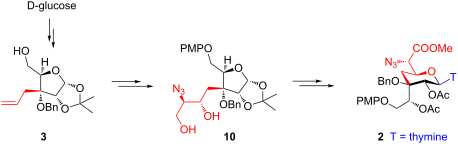
- , antiviral, antibacterial and antifungal [2]. Peptidyl nucleosides in which the sugar part is in the furanose form are common, however, the sugar framework in the pyranose form, with a nucleobase and a peptide linker at either ends, are rare in nature. A few examples of this category are amipurimycin and
- miharamycin that are known as antifungal agents [2]. Amipurimycin (1) isolated from Streptomyces novoguineensis sp. nov., displays antifungal activity against pyricularia oryzae – a causative agent in rice blast disease [3][4]. Goto and co-workers have proposed the primary structure of amipurimycin (1, Figure
- configurations at the C6’, C2” and C3” of the cis-pentacin are still undefined. Thus, the partially unresolved structure, a potent antifungal activity, the unexplored mode of action and the limited synthetic study make amipurimycin (1) an attractive target for futher investigation. As of now, a total synthesis

Graphical Abstract

Figure 1: Antifungal antibiotic amipurimycin (1).

Scheme 1: Retrosynthesis of 2.
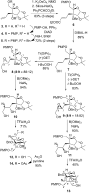
Scheme 2: Synthesis of 1,3-anhydrosugar 12 and 13.

Scheme 3: Formation of 2,7-dioxabicyclo[3.2.1]octane 12/13.

Figure 2: Conformational analysis of 13 and 14.

Figure 3: Geometrically optimized conformation of 12 and 13 respectively by DFT study.
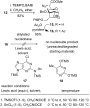
Scheme 4: Glycosylation of 16.

Scheme 5: Glycosylation attempt by changing protections.

Scheme 6: Synthesis of nucleoside 2.
Rearrangements of organic peroxides and related processes
- Ivan A. Yaremenko,
- Vera A. Vil’,
- Dmitry V. Demchuk and
- Alexander O. Terent’ev
Beilstein J. Org. Chem. 2016, 12, 1647–1748, doi:10.3762/bjoc.12.162
- activities, including antibacterial, antiviral, antifungal, anti-allergic, anti-oxidant, and anti-inflammatory [348][349]. The treatment of endoperoxide 238 with Et3N gave 1,4-diketone 240 in quantitative yield instead of expected hydroxy ketone 239 (Scheme 73) [350][351][352]. The endoperoxide 238 is

Graphical Abstract
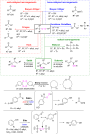
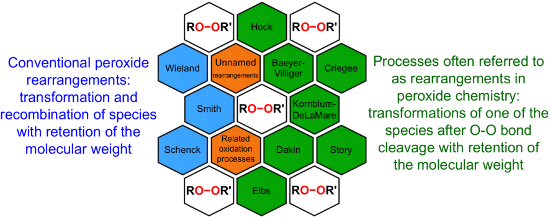
Figure 1: The named transformations considered in this review.

Scheme 1: The Baeyer–Villiger oxidation.

Scheme 2: The general mechanism of the peracid-promoted Baeyer–Villiger oxidation.

Scheme 3: General mechanism of the Lewis acid-catalyzed Baeyer–Villiger rearrangement.

Scheme 4: The theoretically studied mechanism of the BV oxidation reaction promoted by H2O2 and the Lewis aci...

Scheme 5: Proton movements in the transition states of the Baeyer–Villiger oxidation.

Scheme 6: The dependence of the course of the Baeyer–Villiger oxidation on the type of O–O-bond cleavage in t...
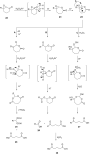
Scheme 7: The acid-catalyzed Baeyer–Villiger oxidation of cyclic epoxy ketones 22.

Scheme 8: Oxidation of isophorone oxide 29.

Scheme 9: Synthesis of acyl phosphate 32 from acyl phosphonate 31.

Scheme 10: Synthesis of aflatoxin B2 (36).

Scheme 11: The Baeyer–Villiger rearrangement of ketones 37 to lactones 38.

Scheme 12: Synthesis of 3,4-dimethoxybenzoic acid (40) via Baeyer–Villiger oxidation.

Scheme 13: Oxone transforms α,β-unsaturated ketones 43 into vinyl acetates 44.

Scheme 14: The Baeyer–Villiger oxidation of ketones 45 using diaryl diselenide and hydrogen peroxide.

Scheme 15: Baeyer–Villiger oxidation of (E)-2-methylenecyclobutanones.

Scheme 16: Oxidation of β-ionone (56) by H2O2/(BnSe)2 with formation of (E)-2-(2,6,6-trimethylcyclohex-1-en-1-...

Scheme 17: The mechanism of oxidation of ketones 58a–f by hydrogen peroxide in the presence of arsonated polys...

Scheme 18: Oxidation of ketone (58b) by H2O2 to 6-methylcaprolactone (59b) catalyzed by Pt complex 66·BF4.

Scheme 19: Oxidation of ketones 67 with H2O2 in the presence of [(dppb}Pt(µ-OH)]22+.

Scheme 20: The mechanism of oxidation of ketones 67 in the presence of [(dppb}Pt(µ-OH)]22+ and H2O2.

Scheme 21: Oxidation of benzaldehydes 69 in the presence of the H2O2/MeReO3 system.

Scheme 22: Oxidation of acetophenones 72 in the presence of the H2O2/MeReO3 system.

Scheme 23: Baeyer–Villiger oxidation of 2-adamantanone (45c) in the presence of Sn-containing mesoporous silic...

Scheme 24: Aerobic Baeyer–Villiger oxidation of ketones 76 using metal-free carbon.

Scheme 25: A regioselective Baeyer-Villiger oxidation of functionalized cyclohexenones 78 into a dihydrooxepin...

Scheme 26: The oxidation of aldehydes and ketones 80 by H2O2 catalyzed by Co4HP2Mo15V3O62.

Scheme 27: The cleavage of ketones 82 with hydrogen peroxide in alkaline solution.

Scheme 28: Oxidation of ketones 85 to esters 86 with H2O2–urea in the presence of KHCO3.

Scheme 29: Mechanism of the asymmetric oxidation of cyclopentane-1,2-dione 87a with the Ti(OiPr)4/(+)DET/t-BuO...

Scheme 30: The oxidation of cis-4-tert-butyl-2-fluorocyclohexanone (93) with m-chloroperbenzoic acid.

Scheme 31: The mechanism of the asymmetric oxidation of 3-substituted cyclobutanone 96a in the presence of chi...

Scheme 32: Enantioselective Baeyer–Villiger oxidation of cyclic ketones 98.

Scheme 33: Regio- and enantioselective Baeyer–Villiger oxidation of cyclic ketones 101.

Scheme 34: The proposed mechanism of the Baeyer–Villiger oxidation of acetal 105f.

Scheme 35: Synthesis of hydroxy-10H-acridin-9-one 117 from tetramethoxyanthracene 114.

Scheme 36: The Baeyer–Villiger oxidation of the fully substituted pyrrole 120.

Scheme 37: The Criegee rearrangement.

Scheme 38: The mechanism of the Criegee reaction of a peracid with a tertiary alcohol 122.

Scheme 39: Criegee rearrangement of decaline ethylperoxoate 127 into ketal 128.

Scheme 40: The ionic cleavage of 2-methoxy-2-propyl perester 129.

Scheme 41: The Criegee rearrangement of α-methoxy hydroperoxide 136.
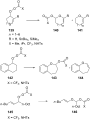
Scheme 42: Synthesis of enol esters and acetals via the Criegee rearrangement.

Scheme 43: Proposed mechanism of the transformation of 1-hydroperoxy-2-oxabicycloalkanones 147a–d.

Scheme 44: Transformation of 3-hydroxy-1,2-dioxolanes 151 into diketone derivatives 152.

Scheme 45: Criegee rearrangement of peroxide 153 with the mono-, di-, and tri-O-insertion.

Scheme 46: The sequential Criegee rearrangements of adamantanes 157a,b.

Scheme 47: Synthesis of diaryl carbonates 160a–d from triarylmethanols 159a–d through successive oxygen insert...

Scheme 48: The synthesis of sesquiterpenes 162 from ketone 161 with a Criegee rearrangement as one key step.

Scheme 49: Synthesis of trans-hydrindan derivatives 164, 165.

Scheme 50: The Hock rearrangement.

Scheme 51: The general scheme of the cumene process.

Scheme 52: The Hock rearrangement of aliphatic hydroperoxides.
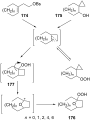
Scheme 53: The mechanism of solvolysis of brosylates 174a–c and spiro cyclopropyl carbinols 175a–c in THF/H2O2....

Scheme 54: The fragmentation mechanism of hydroperoxy acetals 178 to esters 179.

Scheme 55: The acid-catalyzed rearrangement of phenylcyclopentyl hydroperoxide 181.

Scheme 56: The peroxidation of tertiary alcohols in the presence of a catalytic amount of acid.

Scheme 57: The acid-catalyzed reaction of bicyclic secondary alcohols 192 with hydrogen peroxide.

Scheme 58: The photooxidation of 5,6-disubstituted 3,4-dihydro-2H-pyrans 196.

Scheme 59: The oxidation of tertiary alcohols 200a–g, 203a,b, and 206.

Scheme 60: Transformation of functional peroxide 209 leading to 2,3-disubstitued furans 210 in one step.

Scheme 61: The synthesis of carbazoles 213 via peroxide rearrangement.

Scheme 62: The construction of C–N bonds using the Hock rearrangement.

Scheme 63: The synthesis of moiety 218 from 217 which is a structural motif in the antitumor–antibiotic of CC-...

Scheme 64: The in vivo oxidation steps of cholesterol (219) by singlet oxygen.

Scheme 65: The proposed mechanism of the rearrangement of cholesterol-5α-OOH 220.

Scheme 66: Photochemical route to artemisinin via Hock rearrangement of 223.

Scheme 67: The Kornblum–DeLaMare rearrangement.

Scheme 68: Kornblum–DeLaMare transformation of 1-phenylethyl tert-butyl peroxide (225).

Scheme 69: The synthesis 4-hydroxyenones 230 from peroxide 229.

Scheme 70: The Kornblum–DeLaMare rearrangement of peroxide 232.

Scheme 71: The reduction of peroxide 234.

Scheme 72: The Kornblum–DeLaMare rearrangement of endoperoxide 236.

Scheme 73: The rearrangement of peroxide 238 under Kornblum–DeLaMare conditions.

Scheme 74: The proposed mechanism of rearrangement of peroxide 238.

Scheme 75: The Kornblum–DeLaMare rearrangement of peroxides 242a,b.

Scheme 76: The base-catalyzed rearrangements of bicyclic endoperoxides having electron-withdrawing substituent...

Scheme 77: The base-catalyzed rearrangements of bicyclic endoperoxides 249a,b having electron-donating substit...

Scheme 78: The base-catalyzed rearrangements of bridge-head substituted bicyclic endoperoxides 251a,b.

Scheme 79: The Kornblum–DeLaMare rearrangement of hydroperoxide 253.

Scheme 80: Synthesis of β-hydroxy hydroperoxide 254 from endoperoxide 253.

Scheme 81: The amine-catalyzed rearrangement of bicyclic endoperoxide 263.

Scheme 82: The base-catalyzed rearrangement of meso-endoperoxide 268 into 269.

Scheme 83: The photooxidation of 271 and subsequent Kornblum–DeLaMare reaction.

Scheme 84: The Kornblum–DeLaMare rearrangement as one step in the oxidation reaction of enamines.

Scheme 85: The Kornblum–DeLaMare rearrangement of 3,5-dihydro-1,2-dioxenes 284, 1,2-dioxanes 286, and tert-but...

Scheme 86: The Kornblum–DeLaMare rearrangement of epoxy dioxanes 290a–d.

Scheme 87: Rearrangement of prostaglandin H2 292.

Scheme 88: The synthesis of epicoccin G (297).

Scheme 89: The Kornblum–DeLaMare rearrangement used in the synthesis of phomactin A.

Scheme 90: The Kornblum–DeLaMare rearrangement in the synthesis of 3H-quinazolin-4-one 303.

Scheme 91: The Kornblum–DeLaMare rearrangement in the synthesis of dolabriferol (308).

Scheme 92: Sequential transformation of 3-substituted 2-pyridones 309 into 3-hydroxypyridine-2,6-diones 311 in...

Scheme 93: The Kornblum–DeLaMare rearrangement of peroxide 312 into hydroxy enone 313.

Scheme 94: The Kornblum–DeLaMare rearrangement in the synthesis of polyfunctionalized carbonyl compounds 317.

Scheme 95: The Kornblum–DeLaMare rearrangement in the synthesis of (Z)-β-perfluoroalkylenaminones 320.

Scheme 96: The Kornblum–DeLaMare rearrangement in the synthesis of γ-ketoester 322.

Scheme 97: The Kornblum–DeLaMare rearrangement in the synthesis of diterpenoids 326 and 328.

Scheme 98: The synthesis of natural products hainanolidol (331) and harringtonolide (332) from peroxide 329.

Scheme 99: The synthesis of trans-fused butyrolactones 339 and 340.

Scheme 100: The synthesis of leucosceptroid C (343) and leucosceptroid P (344) via the Kornblum–DeLaMare rearra...

Scheme 101: The Dakin oxidation of arylaldehydes or acetophenones.

Scheme 102: The mechanism of the Dakin oxidation.

Scheme 103: A solvent-free Dakin reaction of aromatic aldehydes 356.

Scheme 104: The organocatalytic Dakin oxidation of electron-rich arylaldehydes 358.

Scheme 105: The Dakin oxidation of electron-rich arylaldehydes 361.

Scheme 106: The Dakin oxidation of arylaldehydes 358 in water extract of banana (WEB).

Scheme 107: A one-pot approach towards indolo[2,1-b]quinazolines 364 from indole-3-carbaldehydes 363 through th...

Scheme 108: The synthesis of phenols 367a–c from benzaldehydes 366a-c via acid-catalyzed Dakin oxidation.

Scheme 109: Possible transformation paths of the highly polarized boric acid coordinated H2O2–aldehyde adduct 3...

Scheme 110: The Elbs oxidation of phenols 375 to hydroquinones.

Scheme 111: The mechanism of the Elbs persulfate oxidation of phenols 375 affording p-hydroquinones 376.

Scheme 112: Oxidation of 2-pyridones 380 under Elbs persulfate oxidation conditions.

Scheme 113: Synthesis of 3-hydroxy-4-pyridone (384) via an Elbs oxidation of 4-pyridone (382).

Scheme 114: The Schenck rearrangement.

Scheme 115: The Smith rearrangement.

Scheme 116: Three main pathways of the Schenck rearrangement.

Scheme 117: The isomerization of hydroperoxides 388 and 389.

Scheme 118: Trapping of dioxacyclopentyl radical 392 by oxygen.

Scheme 119: The hypothetical mechanism of the Schenck rearrangement of peroxide 394.

Scheme 120: The autoxidation of oleic acid (397) with the use of labeled isotope 18O2.

Scheme 121: The rearrangement of 18O-labeled hydroperoxide 400 under an atmosphere of 16O2.

Scheme 122: The rearrangement of the oleate-derived allylic hydroperoxides (S)-421 and (R)-425.

Scheme 123: Mechanisms of Schenck and Smith rearrangements.

Scheme 124: The rearrangement and cyclization of 433.

Scheme 125: The Wieland rearrangement.

Scheme 126: The rearrangement of bis(triphenylsilyl) 439 or bis(triphenylgermyl) 441 peroxides.

Scheme 127: The oxidative transformation of cyclic ketones.

Scheme 128: The hydroxylation of cyclohexene (447) in the presence of tungstic acid.

Scheme 129: The oxidation of cyclohexene (447) under the action of hydrogen peroxide.

Scheme 130: The reaction of butenylacetylacetone 455 with hydrogen peroxide.

Scheme 131: The oxidation of bridged 1,2,4,5-tetraoxanes.

Scheme 132: The proposed mechanism for the oxidation of bridged 1,2,4,5-tetraoxanes.

Scheme 133: The rearrangement of ozonides.

Scheme 134: The acid-catalyzed oxidative rearrangement of malondialdehydes 462 under the action of H2O2.

Scheme 135: Pathways of the Lewis acid-catalyzed cleavage of dialkyl peroxides 465 and ozonides 466.

Scheme 136: The mechanism of the transformation of (tert-butyldioxy)cyclohexanedienones 472.

Scheme 137: The synthesis of Vitamin K3 from 472a.

Scheme 138: Proposed mechanism for the transformation of 478d into silylated endoperoxide 479d.

Scheme 139: The rearrangement of hydroperoxide 485 to form diketone 486.

Scheme 140: The base-catalyzed rearrangement of cyclic peroxides 488a–g.

Scheme 141: Synthesis of chiral epoxides and aldols from peroxy hemiketals 491.

Scheme 142: The multistep transformation of (R)-carvone (494) to endoperoxides 496a–e.

Scheme 143: The decomposition of anthracene endoperoxide 499.

Scheme 144: Synthesis of esters 503 from aldehydes 501 via rearrangement of peroxides 502.

Scheme 145: Two possible paths for the base-promoted decomposition of α-azidoperoxides 502.

Scheme 146: The Story decomposition of cyclic diperoxide 506a.

Scheme 147: The Story decomposition of cyclic triperoxide 506b.

Scheme 148: The thermal rearrangement of endoperoxides A into diepoxides B.

Scheme 149: The transformation of peroxide 510 in the synthesis of stemolide (511).

Scheme 150: The possible mechanism of the rearrangement of endoperoxide 261g.

Scheme 151: The photooxidation of indene 517.

Scheme 152: The isomerization of ascaridole (523).

Scheme 153: The isomerization of peroxide 525.

Scheme 154: The thermal transformation of endoperoxide 355.

Scheme 155: The photooxidation of cyclopentadiene (529) at a temperature higher than 0 °C.

Scheme 156: The thermal rearrangement of endoperoxides 538a,b.

Scheme 157: The transformation of peroxides 541.

Scheme 158: The thermal rearrangements of strained cyclic peroxides.

Scheme 159: The thermal rearrangement of diacyl peroxide 551 in the synthesis of C4-epi-lomaiviticin B core 553....

Scheme 160: The 1O2 oxidation of tryptophan (554) and rearrangement of dioxetane intermediate 555.

Scheme 161: The Fe(II)-promoted cleavage of aryl-substituted bicyclic peroxides.

Scheme 162: The proposed mechanism of the Fe(II)-promoted rearrangement of 557a–c.

Scheme 163: The reaction of dioxolane 563 with Fe(II) sulfate.

Scheme 164: Fe(II)-promoted rearrangement of 1,2-dioxane 565.

Scheme 165: Fe(II) cysteinate-promoted rearrangement of 1,2-dioxolane 568.

Scheme 166: The transformation of 1,2-dioxanes 572a–c under the action of FeCl2.

Scheme 167: Fe(II) cysteinate-promoted transformation of tetraoxane 574.

Scheme 168: The CoTPP-catalyzed transformation of bicyclic endoperoxides 600a–d.

Scheme 169: The CoTPP-catalyzed transformation of epoxy-1,2-dioxanes.

Scheme 170: The Ru(II)-catalyzed reactions of 1,4-endoperoxide 261g.

Scheme 171: The Ru(II)-catalyzed transformation as a key step in the synthesis of elyiapyrone A (610) from 1,4-...

Scheme 172: Peroxides with antimalarial activity.

Scheme 173: The interaction of iron ions with artemisinin (616).

Scheme 174: The interaction of FeCl2 with 1,2-dioxanes 623, 624.

Scheme 175: The mechanism of reaction 623 and 624 with Fe(II)Cl2.

Scheme 176: The reaction of bicyclic natural endoperoxides G3-factors 631–633 with FeSO4.

Scheme 177: The transformation of terpene cardamom peroxide 639.
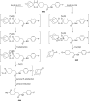
Scheme 178: The different ways of the cleavage of tetraoxane 643.

Scheme 179: The LC–MS analysis of interaction of tetraoxane 646 with iron(II)heme 647.

Scheme 180: The rearrangement of 3,6-epidioxy-1,10-bisaboladiene (EDBD, 649).

Scheme 181: Easily oxidized substrates.

Scheme 182: Biopathway of synthesis of prostaglandins.

Scheme 183: The reduction and rearrangements of isoprostanes.

Scheme 184: The partial mechanism for linoleate 658 oxidation.

Scheme 185: The transformation of lipid hydroperoxide.

Scheme 186: The acid-catalyzed cleavage of the product from free-radical oxidation of cholesterol (667).

Scheme 187: Two pathways of catechols oxidation.

Scheme 188: Criegee-like or Hock-like rearrangement of the intermediate hydroperoxide 675 in dioxygenase enzyme...

Scheme 189: Carotinoides 679 cleavage by carotenoid cleavage dioxygenases.
Total synthesis of leopolic acid A, a natural 2,3-pyrrolidinedione with antimicrobial activity
- Atul A. Dhavan,
- Rahul D. Kaduskar,
- Loana Musso,
- Leonardo Scaglioni,
- Piera Anna Martino and
- Sabrina Dallavalle
Beilstein J. Org. Chem. 2016, 12, 1624–1628, doi:10.3762/bjoc.12.159
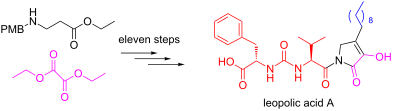
- residue, which in turn, is connected to the ureido dipeptide L-Phe-L-Val. The compound showed antifungal and antibacterial activity against Mucor hiemalis and Staphylococcus aureus with a MIC of 32 and 16 μg/mL, respectively [2]. Compounds containing the isomeric 2,4-pyrrolidinedione ring system (tetramic
- acids) are widespread among the fungal metabolites and show a number of biological activities, i.e., antibacterial, antiviral, antifungal and anticancer. More than one hundred of them have been isolated from a variety of natural sources [3]. Conversely, natural compounds with a simple 2,3

Graphical Abstract

Figure 1: Structure of leopolic acid A.

Scheme 1: Synthesis of leopolic acid A. Reagents and conditions: a) p-methoxybenzylamine, EtOH, rt, 12 h, 98%...
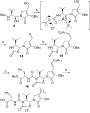
Scheme 2: Synthesis of compound 17. Reagents and conditions: a) Oxalyl chloride, DMSO, CH2Cl2, TEA, −78 °C to...



